Category Archives: Common Core

#3TT Workshop — Digital Writing in the Writer’s Workshop

Three educators. Three states. Three demographics. All practicing Readers and Writers Workshop in our Secondary Classrooms. Read more about us here.

We are the Modern PLC, and every Wednesday, we share our behind-the-scenes collaboration as we talk about the most urgent moving parts of our classroom pedagogy.

Despite the proliferation of e-readers, tablets, and digital reading and writing technology, recent research is making digital texts look a little less appealing.  This article discusses the slow reading, complex-text, and comprehension literacy skills we just can’t get from reading electronically.  This one has lots of great links to the reasons digital reading “fail[s] to adequately recreate certain tactile experiences of reading on paper that many people miss and, more importantly, prevent people from navigating long texts in an intuitive and satisfying way.”

As Shana’s school in West Virginia is increasingly making the move to one-to-one technology, digital learning, and an increased emphasis on electronic reading and writing, she wondered how this shift would impact writers’ literacies.  Her discussion with Amy follows.  Please join the conversation in the comments!

writing rhet and digital media_1Why is one-to-one technology such a big deal? Does every child really need a laptop or a tablet?  Isn’t their generation suffused with enough technology as it is?

Shana: I surveyed my students this year, and 98% of them have a smartphone with data access that they’re accustomed to using all day.  This troubled me–there was no space in their routine for slowing down their thinking.  I don’t think the reader’s-writer’s workshop works without deliberate attention to reading, writing, talking, revising, thinking, and pondering.  So, I invited my students to simplify their lives this year by putting away all smartphones, but wondered if I was being a hypocrite when we wrote frequently on the laptops I keep in my classroom.

Now that it’s November, I’ve decided I’m not actually a hypocrite–the experience of writing drafts in print, revising and workshopping them, and then transferring them to a published form digitally is far different than the instant-gratification experience of using a smartphone.  Still, though, I watched a student just yesterday play a game on his smartphone while he waited for his computer to boot up.  My students don’t seem to know how to handle free moments to just think, or wonder, or daydream–at stoplights, in hallways, or just waiting for a computer to load.  I worry that this reliance on technology to fill their time will prevent this generation from thinking slowly enough to learn, grow, solve problems, and just think.

Amy:  Just like the literacy gap that happens between children who grow up in print-rich home and those who do not, I’ve started to see a digital literacy gap. Haven’t you? The idea that students are digital natives does not mean they are digitally savvy. Most of my students do not have internet access at home, but they do have cell phones. They can text like thumb-numbing tornadoes, but they cannot format a Word document to save their lives. And since their thumbs do not work so well on iPad keyboards, most tap at the keys like chickens pecking at the dirt. They are slow typists. Now, having said that — that does not mean that I do not think they should learn how to write digitally, format correctly, and type efficiently. All students in this age need to become digitally savvy, and I haven’t found that one mandatory technology class in high school is enough to help them get there. No even close. As English teachers, our role shifts as the literacy shifts. If we are not including some element of digital literacy, I think we do many students a huge disservice.

Shana: “Thumb-numbing tornadoes.” Amy, you are a wordsmith.  I agree that our role shifts as literacy shifts–it’s scary to have to learn new skills fast enough to teach them to our readers, but it’s our reality.  I know writing at Three Teachers Talk has helped me immensely to learn how to write and publish digitally–and it’s a skill that has benefited my readers and writers in the classroom.

What are some authentic best practices related to digital writing?

Amy:  The cool thing about writing is that the skills we need to write on paper are not so far from the skills we need to write digitally. Typing excepted. We still need to think on the page, study models, learn from experts, practice drafting, review and revise… And publishing can be so much more fun — at least I think so. We have the opportunity to share our writing much more through digital means than we had via paper. I like that. I like that my students can share writing with yours. Yours can share writing with mine. I know, we could stuff a big fat envelope with student essays, but I am not so likely to do that. I will however send you my students’ blog links.

Shana:  In a perfect world, my school would mandate a typing class for all ninth-graders that includes not just keyboarding skills (which they are TERRIBLE at), but also digital publication skills.  There are vast opportunities for meaningful discourse that can take place between readers, writers, and thinkers when we get students writing and publishing digitally.  I still very much believe in the power of print writing–but, I know, thanks particularly to Amy, how valuable digital writing is, too.  As Whitman says– “Do I contradict myself?  Very well, then I contradict myself.  I am large, I contain multitudes.”  I can’t wait to have our students writing digitally with one another!

What are your thoughts on digital vs. print writing?  Join the conversation in the comments, and check out yesterday’s discussion of digital vs. print reading.


Mini-Lesson Monday – Strengthening Dialogue With Punctuation

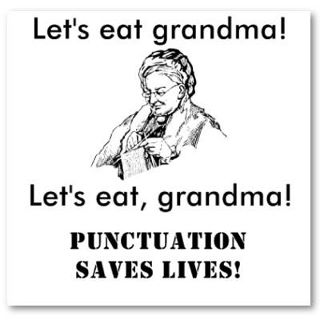
Punctuation_Saves_Lives2After reading second drafts of my students’ narratives, I was wowed by so much of their writing.  Thoughtful leads, powerful topics, intriguing plot structures.  But, despite a mini-lesson on the conventions of writing dialogue last week, some of their characters’ conversations were lacking.  I needed to design a responsive mini-lesson accordingly.

Objectives — Using the language of the Depth of Knowledge Levels: Synthesize your knowledge of how punctuation works with narrative speech conventions to craft thoughtful dialogue; Construct dialogue based on your knowledge of a character’s personality.  Or, from the Common Core: Write narratives to develop real or imagined experiences using effective technique, well-chosen details, and well-structured event sequences.

Lesson — While reading drafts, I set aside a few exemplary pieces of student work in terms of dialogue.  In each class period, there were at least two students whose dialogue was superior.  It was subtle, nuanced, and really added to the characters’ depth.

I asked students to open their writer’s notebooks to the Craft Study section and I projected one example of a student’s work on the board using my document camera.  “Good dialogue isn’t just about what a character says,” I begin. “It’s also about how they say it.  A greeting can really change based on phrasing or punctuation.”

I point to the example on the board.  It’s Logan’s, and in his dialogue, his mom is yelling at him for getting drunk:

“LOGAN WAITMAN SANDERS!” Mom hollered. “Just WHAT do you think you are doing, young man?!  And…and…YOU, Jeremy!  You should be ashamed of yourself!”

Everyone laughs, and I ask a volunteer to read the dialogue aloud.  Dylan does, with perfect angry-Mom-inflection.  He makes Logan shrink back in his seat a little.

I ask the class, “Why did Dylan know how to read that dialogue so perfectly?”  They volunteer: the capitalization helped; he knew when to raise his voice.  “How did he know to stutter?”  They say: the dots (ellipses, I add helpfully) told him to stutter.  “How did he know to sound kind of incredulous while yelling?”  They reply: the exclamation points, and especially that exclamation point mixed with a question mark.  “How did he know when to pause?”  They know: commas.

I put up other kinds of punctuation on the board–dashes, periods, italics–and we discuss what effect each of those would have on a character’s dialogue.  Students jot all this down in their notebooks.  Then, I pass back their drafts and ask them to find a partner.  “Now that you know how to really make dialogue more personal, revise your dialogue in your drafts.  Work with a partner to determine whether or not your dialogue has the effect you want it to when you revise–write a line, then ask your partner to read it aloud the way Dylan read Logan’s.”

Students take ten minutes per person to revise, then we launch into writer’s workshop with the remainder of class.  I write beside them on the board, working on my own dialogue in my NaNoWriMo novel.

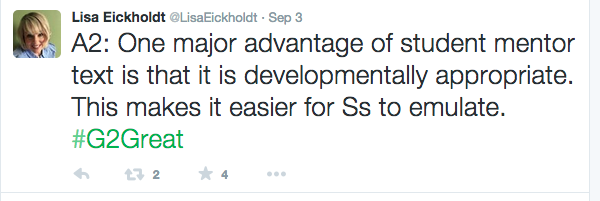
In each of my other classes, we repeat this exercise with drafts that contain good dialogue.  It’s so important to use student work as mentor texts–students see that great writing is attainable, not just imitable, when we show them their peers’ successes.

Follow-Up — After today’s revision and writing workshops, students will have one more day in class to keep working on their drafts before turning them in again.  I’ll hope to see much improved dialogue, and as such, I’ll ask writers to answer a question on their self-evaluations about how their dialogue enhances their characterization.

#3TTWorkshop–Teaching Vocabulary Through Independent Exploration

FullSizeRender

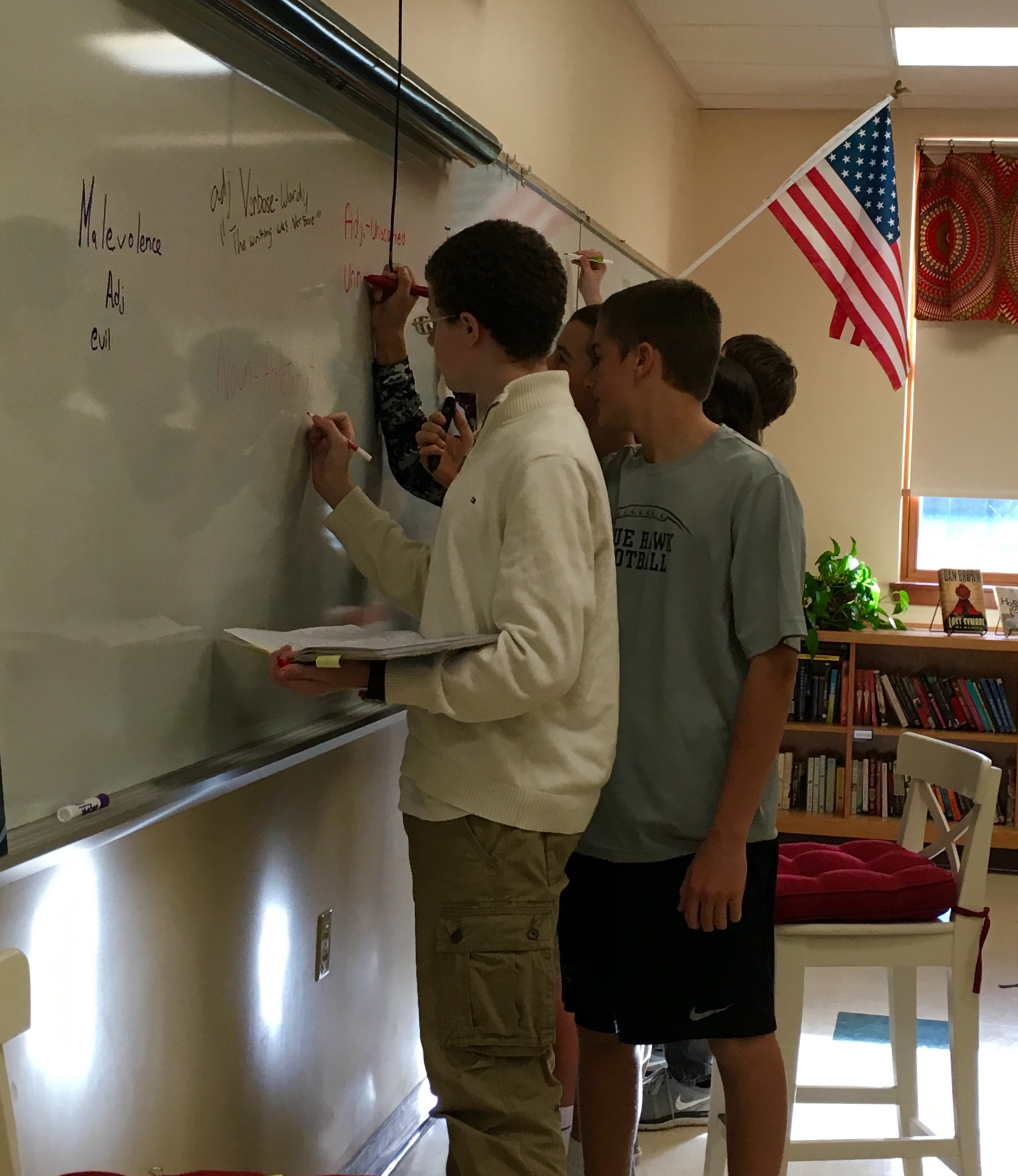
Students in Jackie’s classroom write vocabulary words on the board.

Three educators. Three states. Three demographics. All practicing Readers and Writers Workshop here.

We are the Modern PLC, and every Wednesday, we share our behind-the-scenes collaboration as we talk about the most urgent moving parts of our classroom pedagogy.  This week’s conversation between Jackie and Shana explores the value of shifting away from the more traditional modes of rote memorization and more toward wordplay.

1. Why do you integrate vocabulary study into your classroom, and how do you approach it?

Jackie:  This is my first year integrating vocabulary into my freshman classes.  Previously I had taken a traditional approach, relying on the Oxford-Sadler books in my junior/senior Advanced Composition classes.  The problem was that by the end of the year, many of my students would forget the twenty or so words we had memorized every other week.  I knew something had to change, so I returned to the words of my mentors, Penny Kittle and Linda Rief, to gain a better understanding of how they approached vocabulary.  Now instead of having my students memorize lists of prescribed vocabulary, they find four words per week and store them in the dictionary section of their writer’s notebooks.

Shana: I love the study of words, so one of the things I always find myself noticing about an author is the type of vocabulary he or she employs.  Diction makes up a great deal of a writer’s style, so I think it’s important to study it.  I am fortunately not required to adhere to a certain program or set list of words, so I tend to approach the study of vocabulary more along the lines of noticing words that are in our reading and writing.  I don’t have a formula or routine for vocabulary study, although as a general rule I try to set aside mini-lesson or quick-write time about every two weeks.

IMG_1333

Ryan’s words for this week include “nebulous,” “jettison,” “inchoate,” “unnerving”, and “aphorism,” all of which he found from his independent reading book Little Brother by Cory Doctorow.

2. What is the inherent value of vocabulary study?

Shana: Something I’ve been thinking a lot about is the inherent value of vocabulary study.  Vocabulary acquisition is just one little piece of the puzzle that makes up literacy, but it seems to get so much attention from the powers that be.  For example, last year our school had two schoolwide goals–one of them was “vocabulary.”  What does that even mean?  Do we want our teachers teaching more “vocabulary words?”  Do we want our students memorizing more “vocabulary words?”  What is the difference between academic and non-”academic vocabulary?”  I’m just not sure that vocabulary acquisition is as big a piece of the literacy puzzle as our testing/curriculum planners believe.

Jackie: I agree wholeheartedly with you, Shana.  I am not required to teach vocabulary, but every year I tell my students that reading helps build one’s vocabulary.  The more I thought about it though, the more I wondered how these skills translated, how my students would develop their own lexicons if they never actually stopped to think about the words they were reading.

Unlike your school, though, my school’s major initiative has been towards Common Core-based instruction.  Fortunately, part of the College and Career Readiness Anchor Standards for Language requires students to “also have extensive vocabularies, built through reading and study, enabling them to comprehend complex texts and engage in purposeful writing about and conversations around content.”  I believe vocabulary study shouldn’t be about isolated memorization; instead, it should allow students the freedom for wordplay.  When students are given the freedom to not only pick their own vocabulary words but also share them with their peers, they are more likely to explore definitions, find connections, and play with usage.  I receive more questions about context clues, Latin roots, and parts of speech during bi-weekly vocab lessons than I have at any other point in my career.

Fitting Self-Assessments into Competency Based Grading

fotolia-33988899-xs-photogalleryThis year my school shifted to competency based grading.  For those unfamiliar with this, grading is centered on students’ mastery of the Common Core competencies.  While I have found it differs from state to state, our school has integrated competency based grading by requiring all classes to follow a grading percentage of 80 percent summative assessments and 20 percent formative assessments.  In addition, students are allowed to retake summative assessments as many times as they would like assuming they initially approached the assessments having prepared with good effort.

For me, as an English teacher, this process of retakes and revisions isn’t new.  That being said, the idea of 80 percent of my students’ grades being summative assessments is most certainly a shift.  In the past, while their final product has always served as a large portion of their grade (over 50 percent), it hasn’t counted quite as much as it does now.

I value formative assessments; I cherish the time my students spend cracking apart texts, mimicking authors’ craft, and simply reading.  For many of us, high school was a formative experience.  The time we spent exploring who we were paid off long term, yet competency-based grading values the final product more than the process.

To a degree, I take fault with this.  I understand that once students enter the workplace they are assessed based on their final products.  In the same breath, I also believe that high school must provide a platform for students to explore their interests in a safe and supportive environment that values process.  My life has largely looked like the reverse of my gradebook—80 percent of my time is spent reading, writing, brainstorming, drafting, discussing, and working, while maybe 20 percent of it is actually publishing, sharing, or posting my work.  I learned this process in high school.

Because summative assessments count for so much this year, I hate (even more than usual) applying a specific number to my students’ work.  In turn, to compensate for this competency based grading, I ask my students to assess themselves.

Every time my students hand in a paper or summative assessment like a notebook check, they grade themselves, writing a brief “metacognition analysis” in which they explain their writing, thought process, and reasoning.  In turn, instead of being blind sided by my grades, they have a say in how and even whether or not they met the competencies of the assignment.  Typically, they’re spot on with their grading.

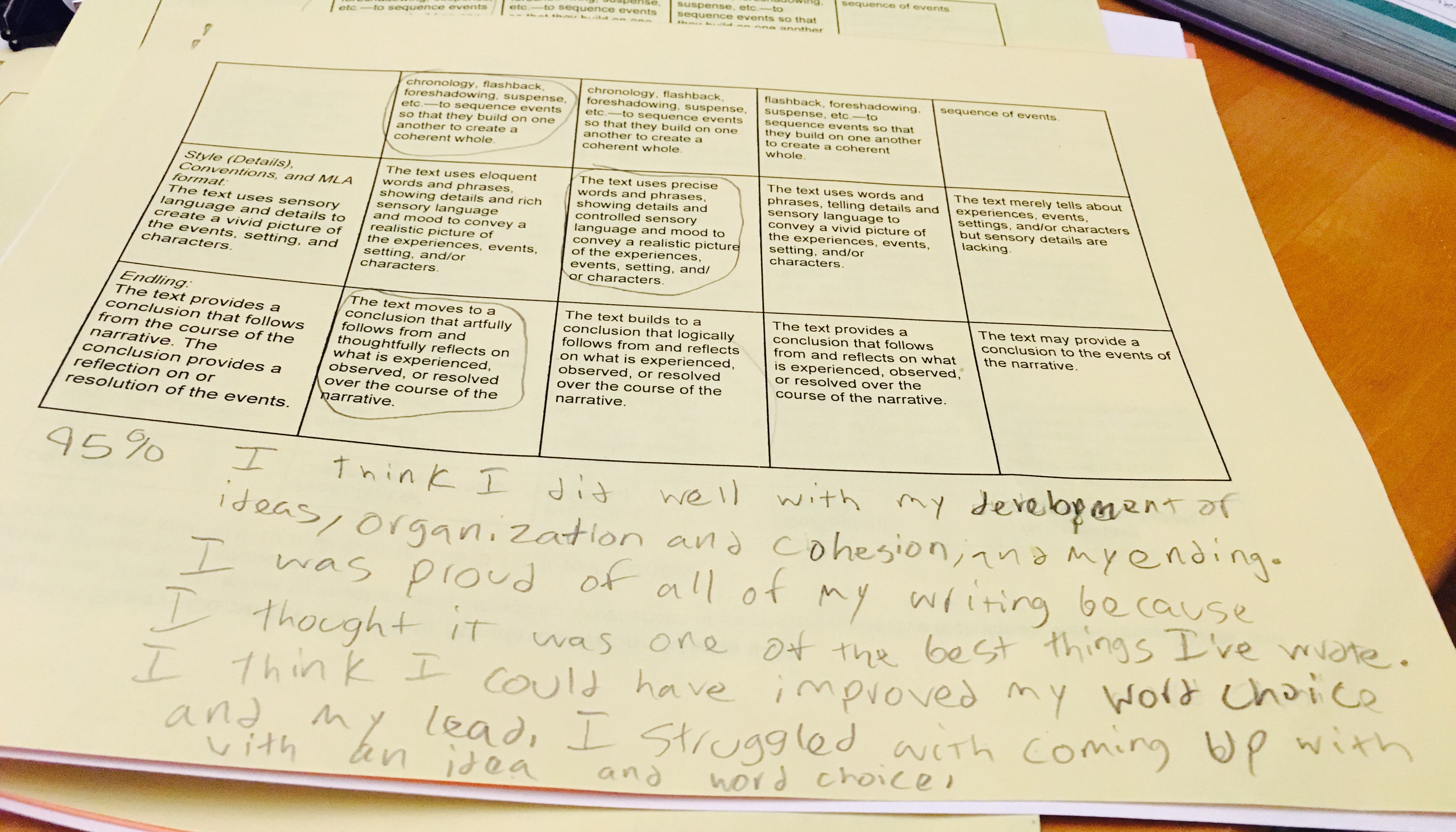
FullSizeRenderNicole wrote, “I think my essay deserves that grade because I worked really hard on it.  I ended up printing it 4 times because every time I printed it I would self edit and have someone else edit it so that it came out just how I wanted it.  Just like always, I put a lot of my personality and voice into this piece.  I wanted people to laugh when they read it.  I added lots of detail about tiny situations and background.”

Ryan, had a similar assessment, “I think I did well with my development of ideas/organization and cohesion, and my ending.  I was proud of all of my writing because I thought it was one of the best things I’ve written.”

Ultimately students are also willing to honestly discuss their shortcomings.  Maddie targeted areas she hoped to improve in future pieces: “I feel I did well but could’ve been better.  I struggled with creating sensory details, but I feel I wrote this piece pretty well.  I would like to try and make this story more vivid, putting the reader in my position.” 

While I’m still addressing these changes and gauging my own understanding of competency based grading, self-assessments are the single most important change I’ve made in my classroom this year.  After I’m done reading rubrics, circling boxes, and checking off competencies, their voice is the resounding voice I hear.

Do you have competency based grading in your school?  Have you shifted to the 80:20 grading system? What changes have you made to better meet the needs of your students?

#FridayReads — Oh, Mercy! Have I got a plan for this mentor text

Usually I read about four books at a time. This makes for a mess on the bedside table, the coffee table, the kitchen table. I rarely use bookmarks, which is a shame because I have quite a lovely collection.

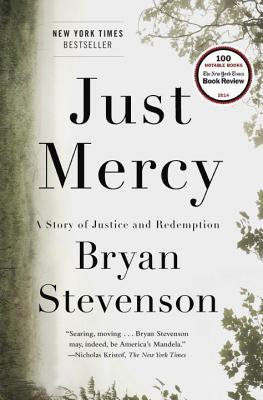
I end up leaving books split open and sound asleep right where I left them –sometimes just so I can remember the parts I know I want to use in class. I refuse to read on until I capture the sentence or passage that gives me pause. Such is the case with my new now bent-spine-copy of Just Mercy, a Story of Justice and Redemption by Bryan Stevenson. I’ve been stuck on page 18.

Here’s a portion of the passage I will use with my AP Lang students. You will, of course, find the rest of it when you buy the book, or here.

     When I first went to death row in December 1983, America was in the early stages of a radical transformation that would turn us into an unprecedentedly harsh and punitive nation and result in mass imprisonment that has no historical parallel. Today we have the highest rate of incarceration in the world. The prison population has increased from 300,000 people in the early 1970s to 2.3 million people today. There are nearly six million people on probation or on parole. One in every fifteen people born in the United States in 2001 is expected to go to jail or prison: one in every three black males babies born in this century is expected to be incarcerated.

     We have shot, hanged, gassed, electrocuted, and lethally injected hundreds of people to carry out legally sanctioned executions. Thousands more await their execution on death row. Some states have no minimum age for prosecuting children as adults; we’ve sent a quarter million kids to adult jails and prisons to serve long prison terms, some under the age of twelve. For years, we’ve been the only country in the world that condemns children to life imprisonment without parole; nearly three thousand juveniles have been sentenced to die in prison.

     We also make terrible mistakes. Scores of innocent people have been exonerated after being sentenced to death and nearly executed . Hundreds more have been released after being proved innocent of noncapital crimes through DNA testing. Presumptions of guild, poverty, racial bias, and a host of other social, structural, and political dynamics have created a system that is defined by error, a system in which thousands of innocent people now suffer in prison.

…..

     We are all implicated when we allow other people to be mistreated. An absence of compassion can corrupt the decency of a community, a state, a nation. Fear and anger can make us vindictive and abusive, unjust and unfair, until we all suffer from the absence of mercy and we condemn ourselves as much as we victimize others. The closer we get to mass incarceration and extreme levels of punishment, the more I believe it’s necessary to recognize that we all need mercy, we all need justice, and — perhaps — we all need some measure of unmerited grace. 


Before we ever read the text, and I did pull much more of it than I’ve posted here, we’ll spark our thinking with an image like this, posted at The Sentencing Project, and then write our initial responses in our writer’s notebooks:

Next, we will TALK. I know my students will want to share what they think about this graphic. Many will identify personally with it because they know a family member or a friend who’s served prison time.

When I introduce them to Stevenson’s text, I’ll give them a purpose for reading — besides just comprehending the message (identifying the purpose is a breeze since he tells us the reason he writes the book) — I want my students to notice the structure, the progression between ideas, the repetition and patterns they will see in the language. All the clues that build the tone.

I will ask them to mark the text, noting their thinking about these things. Without a purpose for reading, too many of my students struggle with the stamina they need to make it through even a page when I ask them to read critically.

Next, we will TALK. Talking will help some students understand what they read. It will help other students clarify their understanding. Some students will have noted what I asked them to notice as they read. I will rely on them to help the others — skill level is just one way my students are diverse.

I will also hand them a stack of questions that prepare them to write. They will read something like this:

What do you know about the writer based on what he writes?

What is the Stevenson’s purpose? Why does he come out and tell us so plainly?

What are the facts in this piece? What are opinions? How do you know?

What do you notice about the structure, any patterns, repetition? What do they do for the message?

How does Stevenson move between ideas?

And then we will write. Maybe I’ll give a prompt like this: Based on the text, and our discussion, is Stevenson’s opening argument effective, why or why not?  Maybe I’ll ask students to come up with their own analytical-style question to respond to. (I like this idea a lot.)  [see Talk Read Talk Write]

That’s probably enough for one class period, but my mind is still stirring:

  • What if I ask students to problematize the issue? Who are the stakeholders? Think all the way around the issue. Why do they care? Why do we care? What kinds of questions do we have about the claims Stevenson makes? What kinds of evidence do we need to convince us they are valid? How and when could anything regarding this issue change?
  • What if I ask students to identify just one of Stevenson’s claims and then research it? I assume the author provides support throughout the book. I’ll know when I keep reading. But what if students did a bit of research and then collaborated on substantiating Stevenson’s claims. Collaborative writing can be a powerful learning experience.
  • What if I ask students to brainstorm other issues Stevenson’s text suggests? We could probably create a pretty elaborate bubble map of ideas. These could lead to student choice in research topics.

What do you think? Any other ideas?

©Amy Rasmussen, 2011 – 2015

Weekly One-Pagers to Develop Writing Fluency

IMG_9425

Janelle, now in college, appreciates the one-pagers belatedly

This summer, Amy and I talked a lot about what we wanted for our students.  While there were lots of complex ideas tossed around, we knew that our goals boiled down to two simple ones:  for our students to become real writers and real readers.

We had lots of structures in place to help our students become authentic, fluent readers–weekly reading homework, daily booktalks, reading conferences, reading workshops, and more.  But writing was a bit different.  Daily quickwrites and longer compositions were already in place, but I wanted to add something more to get students writing more regularly outside of class on topics of their choice.  I wanted them to gain the same fluency with writing that they did through their weekly reading homework.

So, I was reminded of something I used to require my AP and Honors English students to do–a weekly one-pager.  Every Monday, a one page, single-spaced, typed paper was due.  I offered topic suggestions, but ultimately, students could choose what to write about.  I decided to revive this routine, inspired by Kelly Gallagher’s powerful claim that students should be writing four times as much as teachers could ever assess.  Why shouldn’t all students–not just the AP and Honors level students–write this much?

This year, I only have one Honors class, but all four of my English classes write weekly one-pagers.  We have a section in our notebooks called “Weekly Writing,” which is rapidly filling up with writing on a variety of topics.  During bi-weekly notebook collections, I check to see that these weekly one-pagers are being completed, but I don’t “grade” them–that’s not the point.  The point is to build writing fluency.

These one-pagers are low stakes–ten points apiece, so on a particularly busy week, if students just don’t have time to write, it’s no big deal.  But the frequent follow-up and sharing activities we do in class with these writings, combined with the autonomy students have in their topics, make the missed one-pager a rare occurrence.

I was initially inspired to create this routine by some of my greatest college professors, for whose classes a written response was due each day.  Alan Frager’s “study guides,” Tom Romano’s “one-pagers,” and Don Daiker’s “reading responses” were handed in at the start of each class period.  By writing a short paper every single day for most of my college years, I developed incredible writing fluency.  I knew I wanted my students to develop this written fluency as well, partially in preparation for their own college experiences, but also to bridge the gap between a writer’s thoughts and his words on the page.

As evidenced by Janelle’s testimony above, building this writing fluency pays off.  Already this year, students are remarking that it’s becoming much easier to write a full page, after only writing eight of them thus far.  I’m enthused by the growth I see in all my students’ writing fluency, and looking forward to seeing how much they can develop as writers by the end of this school year thanks to the weekly one-pager.

What routines are in place in your classes to help build students’ writing fluency?

Studying Vocabulary Through Choice Reading

IMG_2886“Reading increases one’s vocabulary,” I tell incoming freshmen every fall. But up until now, I have had little evidence to support this claim. It is true that reading exposes students to new words, but I never went out of my way to help students sort through these new words.

Instead, as a junior English teacher, I regularly taught SAT vocabulary as part of my Advanced Composition curriculum. Students completed chapters from the Sadlier-Oxford Vocabulary Workshop books and took quizzes every other week. While some students relished the challenge, many saw little relevance to their own lives, retaining few words by the end of the year.

In turn, this year I have turned from my well-worn Sadlier Oxford books and have instead had students reference their independent reading books for new words. Students develop their own lists of eight words every other week. My goal in doing this is not only to have students slow down their reading, but to also expose them to diction and complexity within their independent books. Once again, like many of the mini-lessons within the workshop classroom, this practice also turns into a lesson on craft and intention within a writer’s work.

Too often students skim over large words, failing to activate context clues and prior knowledge to help them draw out meaning. By creating vocabulary lists, students must practice these skills while also recording definitions, synonyms, passages, and parts of speech.

The benefit is twofold: students have a say in their vocabulary and immediately see both the relevance and payoff of understanding a new word. At the same time, having independent vocabulary lists eliminates cheating and encourages independence. Instead of worrying about students’ wandering eyes during quizzes, I spend time helping students understand the words they have picked. In addition, independent vocabulary lists provide insight into students’ reading levels and comprehension. I have learned more about my students’ reading lives simply by becoming aware of the words they find challenging.

Every other week, students complete a summative assessment that helps gauge their understanding of their eight vocabulary words. Two weeks ago I had students complete “Rock and Roll Vocabulary,” an activity that requires students to roll dice and answer questions about their vocabulary corresponding to specific numbers. This week students will complete a grid about various words.

While I am still new to this vocabulary approach, I feel confident in my students’ choices. Oftentimes I have seen the typical “SAT words” pop up in multiple lists, reinforcing that students will indeed choose challenging vocabulary. The process is far from perfect, and my students and I are still ironing out some of the flaws. Some students intentionally pick easy words, but the next assessment will require them to rank the difficulty of their words. In addition, I allow retakes of vocabulary summative assessments considering students made a “good faith effort” according to our school’s retake policy. Finally, not all independent books offer complex language, which can be a struggle for students who love the content yet can’t seem to find their eight or so words. In those instances, students may pull from in-class readings, articles, and textbooks. If they still struggle, I have books of SAT vocabulary they may choose from instead.

While this method of teaching is somewhat nontraditional, it provides students with continued say in their education. Not only are they empowered by their newfound words, but also by the end, I hope my students will see that reading truly does increase one’s vocabulary.

Mini-lesson Monday: Student Writing as Our Mentors for Sentences

I read Learning by Teaching by Donald Murray this summer, and I finally understand the importance of using student writing as the main text in my writing class. While I’ve believed students can learn from

I lurked on this chat. Many positive examples of learning from student writing.

I lurked on this chat. Many positive examples of learning from student writing.

reading one another’s work, and I’ve often asked them to read and give feedback — on drafts and published pieces — I’ve never thought to actually use the text to teach a concept. I don’t know why. I supposed I’ve always relied on mentor texts by The Pros for that.

I am changing my tune. Here’s a bit of a lesson that worked better than I could have imagined.

Objectives:  Using the language of the Depth of Knowledge levels, students will write about their lives, and share their writing. They will recognize a wide variety of sentence structures. They will identify patterns, devices, and/or figurative language and discuss its effectiveness in creating meaning. They will revise their writing, formulate their own sentences, and apply their understanding to future writing assignments.

Lesson: Project the image, and ask students to write in their writer’s notebooks one sentence that answers the question. Remind them about what they know about various sentence structures and how punctuation works within a sentence.

“We can pack a sentence with a lot of information if we punctuate it correctly. Pay attention and see how you do. You can write any sentence, but try to not write a simple one.”

Give students about five minutes to write.

Next, ask for a couple of volunteers who are willing to write their sentences on the board. Be sure they understand that there is no judgment.

“We just want to talk about sentences.”

While two or three students write their sentences on the board, ask the other students in the class to read their sentences to each other.

one sentence

One at a time, read the student sentences on the board. Ask:  “What do you notice?”

Ethan sentenceTalk through the various comments students make, noting parallels, punctuation, clauses, word choice, etc.

Watch for teaching points. Ethan’s sentence on the left gave us a lot to talk about:  parallelism, use of semi-colons, colons, …

Next, ask students to return to their notebooks. “How can you make your sentence better?”

Allow time for revision (and time permitting, more sharing.)

Why this lesson works, especially for a writing lesson at the beginning of the year:  It’s just a sentence!

And sometimes we get a bonus gift like this one my class got from Edward:Edward C sentence

“I am the guy who picks people up when I, myself, am down; I am the guy who cares so much over things so little; I am the missing piece to a puzzle that has been forgotten; I am now by a sad and quiet shell of my former self; I am Edward Campos.”

The class hushed. All eyes turned to Edward.

“Wow,” I said, “Thank you for sharing this writing today. You’ve made yourself vulnerable, and we value that.

“First of all, we need to know that you are okay. Will you explain a little more what you mean here?”

Edward explained that he used to be fun and outgoing. He felt strong and powerful. Then at the end of last year and over the summer he learned his friends weren’t really his friends so much. Now, he feels alone and like he’s not the person he used to be.

“Hey, everyone, how many of you have ever felt like Edward?

“Look around, my friend, do you see all those hands? Everyone here has been where you are. We understand. You have new friends here.”

Two girls at Edward’s table leaned forward and touched his arm. “We’ll be your friends,” they said smiling.

And he smiled back.

Of course, because I am me — and I never leave a teaching moment untapped — we talked about the structure of Edward’s sentence. And we talked about the word choice:  “Why ‘forgotten’ instead of ‘lost’?”

When we watch for teaching moments in student writing, we will find them. Every single time.

Follow up:  In class the next day we did some free-writing in our notebooks in response to the spoken word poem “Hands” by Sarah Kay. Before we wrote I reminded students to pay attention to their sentences. Then instead of sharing the whole of what we wrote with the class, we only shared our favorite sentence. I consider this valuable formative assessment.

Now, I will hold students accountable for crafting their sentences with care in their upcoming writing assignment.

“The words of the world want to make sentences,” said Gaston Bachelard. I say, “We have to help them.”

Please share your best tips on getting students to pay attention to their sentences.


©Amy Rasmussen, 2011 – 2015


I’m Teaching Writing to the Whole 5th Grade — Now What?!

I received this note in a Facebook message:  I had big changes in my classroom assignment this year… moved from 2nd grade to 5th… turns out… after getting there I got the assignment of teaching writing to the entire 5th grade…. not what I really signed up for…. I have not only NEVER formally taught writing (as a process) beyond complete sentences… and moving toward paragraphs…. but I never even had a class in in it in college….. any suggestions on where to start and where to go with it? I will have 4 units of 12 days each during the year with each of the 5th grade classes….. suggestions?

Say you had to analyze the tone, what adjective would you use? concerned? riled? desperate? beseeching?

Let’s look at the clues:  “big changes,” “turns out,” “entire,” “not what I really signed up for,” “NEVER,” and all those “…..”

I could write an entire post on why the kind of changes this teacher has had thrust upon her is so disrespectful to her as an educator, as a professional. But I won’t. I just needed to say that.

Of course, I answered, and I will offer support and help any way I can. You would, too.

Maybe others have similar experiences and are new at teaching writing. Here’s how I answered my friend:

Yes, I have suggestions! Haha. Tons of them. You know I teach AP Language and Composition, right? Just writeThat’s juniors in high school, but good writing is good writing. Your instruction with your 5th graders can look very similar to mine. (And I hope it will.)

Here’s the non-negotiables in my writing class:

Writer’s notebooks. I use the black composition notebooks. Students cover them, personalize them, and make them mean something other than just a notebook for school. We write in them every day as a way to explore our thinking. I might give a prompt, or read a poem, or watch a news clip…whatever, and then I ask students to think and respond. These quickwrites become places to mine for ideas for topics we might develop into more formal pieces. Writer’s notebooks are required and loved in writing classes where students have choice and autonomy, two important components of effective writing instruction.

Mentor Texts. Mentors are texts that look like the writing I want students to practice. For example, if we are writing narrative, I want students to read good narrative writing. If we are writing book reviews, we need to study the structure of book reviews, etc. The authors of these mentors become our “writing coaches.” We study the moves the writers make, and then we try to make those moves in our own writing. Students learn from good models. They do not learn from poor, fix-the-grammar-and-punctuation worksheets or anything of that ilk. Research on that is plentiful.

Choice. When students have choice in the topics they write about, they are more apt to take ownership and care about their writing. Just like you and me — we do not want told what books we have to read, TV shows we have to watch, or essays we must write that show we learned something from pd. Topics matter so much to the effort students will put into their writing. We have to let students choose what they want to spend their time focusing on. Sometimes we need to nudge them. Sometimes we need to help them narrow the topic. But they need to always have a choice if we want to really teach them anything about writing. Save the formal test-like prompts for practice after students learn how to mine for ideas and develop those ideas in writing they want to do. Test writing can serve as a genre in itself later.

Time. Schedule time within the school day for kids to write. Let them know you are there to help. When they write with us, 1) we know they are writing and not a friend or parent, 2) we see their process and know where the struggles are.

Conferences. Meet with writers throughout the writing process, beginning, middle, and end. Ask questions that provoke their thinking. Let them talk about their ideas. Avoid giving advice, rather validate the students’ ideas and speak to them as writers. (Focus on the writer and his needs over the writing and what it needs — avoid the red pen at all costs.)

Modeling. Write in front of your students. This is probably the most effective instructional tool you have. Students need to see the messiness of the writing process. They need to know it is hard — even for a teacher. I try to write every assignment I ask my students to write. I start writing in front of them and let them see my thinking, my errors, my revision, my re-organization, all of it. Too many student writers think they should be able to write well in a one shot in the dark deal. That’s why they refuse to revise. We have to show them that writing is difficult and confusing and time consuming. We have to give them opportunities to see the struggle, so we can convince them that the work is worth it when we’ve finally been able to say what we want and need to say in our writing.

Talking. “Writing floats on a sea of talk,” I heard Penny Kittle say. Talk with students about their ideas, their process, their everything concerning writing. Encourage them to talk with one another. Talk and Write. Read and Talk and Write. Talking works to stimulate thinking and provoke the pen to action.

Celebrating. Feedback matters, even at the sentence level. Invite students to share their writing. This can be a sentence or a complete piece. Celebrating good writing along the way is a more effective feedback tool than a grade at the end of publication. Whips Around the Room that invite all students to share a favorite sentence or passage, Author’s Chairs that invite students to read a best draft, Posting on Blogs and inviting students to read one another’s work and leave comments, are all ways to celebrate writing — and help students understand the importance of audience.
Some of my favorite RESOURCES:

National Writing Project — Resources page

Read Write Reflect — Katherine  Sokolowski’s blog — the reflective practices inside a 5th grade classroom

The Nerdy Book Club — a community of readers (and teachers of readers) — read about books, reading, writing, and more!

Two Writing Teachers blog — more tips on teaching young writers that you can digest in one sitting

Moving Writers blog — Rachel and Allison show they are the best mentor text finders on the planet

And of course, my own blog: Three Teachers Talk where we write about Readers and Writers Workshop

Lucy Calkins quoteBOOKS you will consider life savers:

In the Middle by Nancie Atwell

Read Write Teach by Linda Reif
Write Beside Them by Penny Kittle

And I haven’t read this one yet, but who doesn’t want to be unstoppable? The Unstoppable Writing Teacher by Colleen Cruz
I imagine you are overwhelmed. No, I cannot really imagine. I do know that you are smart though, and you love children and teaching. You will do a wonderful job inspiring students to write — that is half the battle.

The learning comes from doing. Get your students writing. The more they write the better they will write. I see it every year.

Best blessings,

Amy

Did I leave anything out? What advice do you have for this emerging writing teacher?

©Amy Rasmussen, 2011 – 2015