Category Archives: AP English

Mini-Lesson Monday: College Applications and the Six Word Memoir

College applications are a daunting endeavor for many of my students each year. Their mailboxes and email inboxes fill with opportunities to apply everywhere from the local community college, to pricey Ivy League schools across the country, to study abroad programs in countries they may never have heard of.

As if that wasn’t enough to sort through, lurking in these countless pages and pamphlets is another overwhelming prospect – The college application essay. Also known as the “tell us who you are as a human, what your soul’s greatest desires might be, and every intimate struggle you’ve had that define you as a young adult” essay. No wonder my announcement that our first paper in AP Language will be the college application essay is usually met with huge sighs of relief. However, that relief is also somewhat short lived as we start to take a look at prompts:

  • Reflect on a time when you challenged a belief or idea. What prompted you to act?
  • Please tell us why you think you would be a good fit for __________.
  • Consider something in your life you think goes unnoticed and write about why it’s important to you.

As I tell my AP classes, “Colleges want to know the real you. The honest, gritty, learned from your mistakes, can bring something unique to their campus you. Your transcripts say keep-calm-and-apply-to-college-27-resized-600a lot about your work ethic, experiences, values, and achievements, but once you put pen to paper, you are a writer, and your story might just help them see the real you and decide that you are far too good to pass up.”

Their horrified looks usually tell me I should follow up with an explanation along these lines:


Don’t worry. We are going to do this together. Sharing your story might not be easy, but take it from this girl, everyone has a story to tell. I was your stereotypical upper-middle-class white girl with loving parents and a blissfully happy childhood. I pretty much seized up when my senior composition teacher said that we needed to write something deeply emotional and challenging in our college application essays. He had me convinced my happy life was going to keep me from going to college. Without a car wreck, lost dog, or deeply wounded heart, what compelling story did I have to tell?

Well, it turns out that one can write from the heart no matter the circumstances, and that’s what I want you to use for your own applications. An experience, belief, value, or direction for your life, can all be deeply emotional and revealing of the type of person any college would want to accept. I spoke about my desire to be a teacher in my application. Teaching is in my blood, and I had known I wanted to be a teacher since I was little. My dad used to bring home an extra gradebook for me and I’d line up my babies and stuffed animals and teach class. See…? I have the beginnings of a narrative right there. I expanded on what it would mean to me to become a teacher and how I knew the patience and passion I already possessed would not only make me a good teacher someday, they would make me a great addition to any campus because true teachers know the value of lifelong learning.


So…how to help students concisely sum up who they are?

Examples, examples, examples.

Let’s try six words. Total.

Objective: Using the language of the Depth of Knowledge levels, students will create six word memoirs as written artifacts in their writer’s notebooks to either spark ideas for drafting their college application essays, or serve as possible opening sentences for those essays.

Lesson: The timing of this lesson is after several class periods of having students explore who they are and what they value through quick writes and other activities. On one occasion, I have students write a quick write on the story they would tell to demonstrate positive elements of their character. We share stories about helping those in need, commitment in the face of certain defeat, and encounters with temptation, and then bullet point some of the “college friendly” attributes these stories suggest.

During another class period, I had students read, analyze, and then emulate Amy’s recent suggestion of the poem “Possibilities.” This was the first year I used this poem during this unit, and I could not be more happy with the results. Students did some beautiful work in analyzing Szymborska’s structure in order to write a poem with their own preferences. I made sure to discuss with students the variety of topics that Szymborska uses in the poem from straightforward preferences of activities and food to those that reveal character and life experiences. I challenged students to do the same with some wonderful results.

Finally, for this specific lesson, I reminded students of my suggestion to keep their college application essays brief, as most applications would demand that they be so with limited word counts.

“So today, I want you to be really brief. Six words brief. We’re going to try to capture some of who you are and what you believe in exactly six words.”

I begin by sharing with them a few six word memoirs of my own and talking them through sixwordthe back stories. We then head to Smith Magazine’s Six Word Memoir page so students can look around. They are to write down a few favorites and also write what they think the larger message of those snapshot memoirs might be. We discuss at our tables and then share out a few to discuss what their favorites might reveal about the authors that crafted them.
Throughout the lesson, I remind students that just as we saw in “Possibilities,” brief snippets can reveal an awful lot about who we are. This is our goal in the college application essays as a whole, and this is our goal in the exercise.

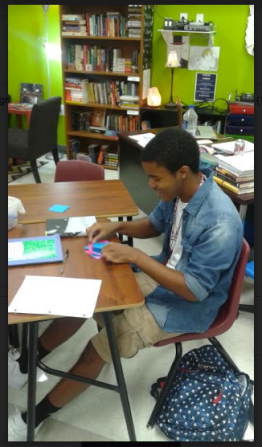
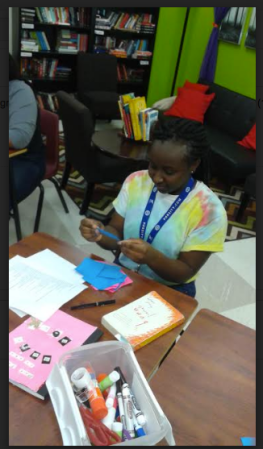
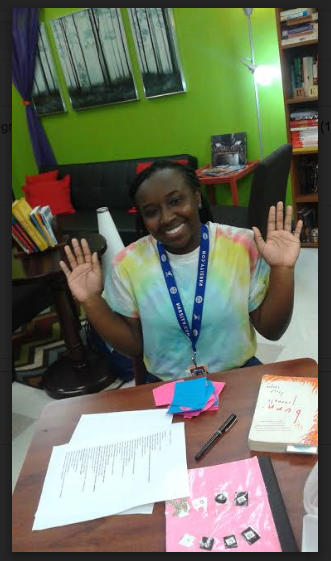
Students spend some time drafting, sharing, and then praising the work of their peers. I suggest to students that these memoirs might be great hooks for their essays, they might spark an anecdote they could include along the way, or they might simply keep students focused on their own beliefs and values in order to use those to guide what they write about themselves.

Follow-Up:  Students are working hard on their college application essays and will be doing some peer editing early this week with submission to follow later in the week. To extend the work even further, I’ll be sharing a unique extension activity with my classes.

On September 22nd, 2016, the team at Six Word Memoirs will be participating in the 3rd annual Character Day, which is a global discussion about the importance of developing true character in the world’s citizens. I’ll be encouraging my students to participate with some of the six word memoirs they’ve already created and perhaps with contributions they craft especially to speak to developing, according to the Six Word Memoir site, “curiosity, empathy, and grit.”

How do you challenge your students to write about themselves in meaningful ways? Please share your ideas in the comment section below! 

Mini-lesson Monday: Remembering 9/11 and a study of language

Our students are too young to remember the events of 9/11. And while we are not history teachers, I do think we have a responsibility and an opportunity to help them try to make sense of the horrors of that September morning and how it impacts their lives today.

hyrum

Pvt. Hyrum Chase Rasmussen

In church yesterday, the congregation stood and sang three verses of “The Star Spangled Banner.” This song has new meaning for me since my son Hyrum joined the Army this summer. It may have new meaning for you if you’ve been following the Colin Kaepernick-taking-a-knee-event-fall-out-and-discussion. I want my students to be able to make sense of their world and one way I can help them do that is to provide them with thought-provoking pieces that help them make connections. Maybe one of these texts will help them find their own “new meaning.”

In honor of September 11, the every day people and every day heroes who lost their lives, the families who still mourn loved ones, the soldiers who valiantly died facing foes in foreign lands, and the men and women willing to serve today in a time of unrest and war, this is the lesson that I will share with my students today.

Objective:  Using the language of the Depth of Knowledge levels, students will react to a first-hand account of 9/11 in their writer’s notebooks. They will formulate ideas on how this one story relates to our growing theme of what it means to be courageously human. Students will then analyze a text and compare the writer’s use of language to a text read previously.

Lesson:  We’ve already discussed the question, “What does it mean to be courageously human?” a phrase I borrowed from a text we read last week. (I read Chequan Lewis’ piece as a read aloud, wanting students to just listen and enjoy his use of language. Then, later we read it again and analyzed the literary and rhetorical devices he uses to create the meaning. I modeled how to annotate and asked students to write their own notes in the margins — something I will expect them to do throughout the year.)

Today I will remind students to read texts with pens in hand, noting the writer’s interesting use of language, any points of confusion, any words they don’t know, the structure of the text, and any and all devices the writer uses to craft meaning. Today’s text is the masterful piece Leonard Pitts, Jr. wrote September 12, 2001.

After students have time to read, annotate, and discuss in small groups, we will come together as a class and craft an anchor chart that details the moves Pitts makes in comparison to those craft moves made by Mr. Lewis. I will charge students to model these moves in their own writing throughout the year.

Follow up:  The anchor chart will hang in the room as a reminder that writers are intentional in the moves they make as they craft meaning. Students will be expected to be intentional in their own writing as they work on various forms of writing in class and on their blogs this year.

I Prefer a Community of Confident Writers — Our Jump into Understanding a Writer’s Craft


Before spring term was over, I’d written two pages of notes in the back cover of my writer’s notebook. I titled it “Remember to Do Things to do Differently.” I’m a bit ambitious — and I realize, often, too hard on myself. Although I knew my students learned last yearemember-to-do-things-differentlyr, I wasn’t confident that they couldn’t have learned more.
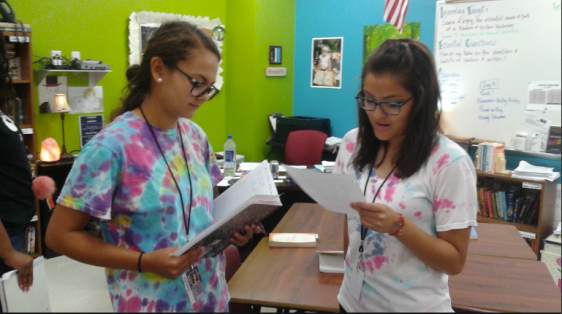
I imagine you’ve been there, too. Always second guessing.

One of the things I knew I needed to improve was my relationships with students — I needed them to be good and strong, faster.  I also needed to help students jump in quicker to the complexities of craft analysis without scaring the poor little dears.

So last week, the second week of school, I did what Lisa just wrote about yesterday. I “Encourage[d] Students to Start Sharing Who They Are,” and I did it by sharing a favorite poem by Wislawa Szymborska: “Possibilities.”

I asked students to study the poet’s language in each line and then write their own “Possibilities” poem, imitating the poet’s sentence structure and word play. I gave them a copy of my annotations and wrote my own poem as a model.

This proved to be an excellent lead into the rhetorical analysis students must be able to do in AP Language. I was able to see which students quickly understood how to look closely at an author’s craft — and which ones did not.

The best part though was what I learned about my students. All their preferences!!

Last Friday, when their poems were due, we did our first Author’s Chair share in class.

First, to help students build confidence, they read their poems to a partner.

faithsharing-possibilitiespoem

sharingpossibilitiespoems

Then, volunteers sat in our Author’s Chair and read their poems to the class.

While the student read his poem, everyone else sat with sticky note and pen in hand ready to offer “blessings,” things they liked about the author’s use of language, or connections they could make to his ideas.

sharingintheauthorschair

After each writer shared, the class flooded him with “blessings.” Smiles grew wide, trust blossomed, and the community that I felt was missing for too long a time last year took root.readingblessings

Bonus:  When students read their little notes, carefully crafted by peers who listened to
their writing, their confidence as writers grew. Too bad we ran out of class time. I might have run out of sticky notes if all students would have felt the desire to share.

readingblessings2

I wouldn’t have minded.

I would not have minded at all.

ciarawithblessings

I would love to hear your ideas on building community and/or introducing students to rhetorical analysis. Please join the conversation and share in the comments.

#FridayReads — Picture Books in AP English

Sometimes speakers make you want to write. Last week when I listened to Lester Laminack was one of those times.

The North TX Council of Teachers of English Language Arts one-day conference was one week ago today. As president I had the honor of calling the meeting to order, and looking out at the audience of almost 600 ELA teachers, grades K-12, I could not help but think how fortunate the children in Texas are to have such dedicated teachers, teachers who want to help kids write, teachers who practice writing themselves.

Listening to Lester’s keynote as he talked about his writing process made my memories swirl, and my fingers get itchy.

I was not the only one.

Screen Shot 2016-06-17 at 3.29.59 PM

I left wondering:  What if more teachers stirred that kind of memory moment in the students we want to move as writers?

Picture books have that power. Elementary teachers know this. They read books aloud to little writers. They talk about meaning around moments their students can relate to.

Sometimes I think we secondary teachers forget the power in stories. We forget that seemingly simple things can spark big thinking. I want to remember.

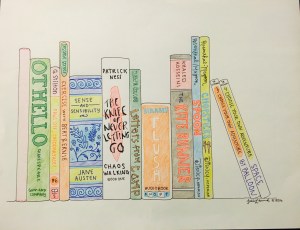
Here’s a list of 15 of the books I will read with my not-so-little writers in the coming year: Screen Shot 2016-06-17 at 4.45.37 PM

Saturdays and Teacakes by Lester Laminack

All the Places to Love by Patricia MacLachlan

The Other Side by Jacqueline Woodson

The Hundred Penny Box by Sharon Bell Mathis

Is There Really a Human Race? by Jamie Lee Curtis

Harold and the Purple Crayon by Crockett Johnson

The Dot by Peter H. Reynolds

Chrysanthemum by Kevin Henkes

Henry’s Freedom Box by Ellen Levine

The Wretched Stone by Chris Van Allsburg

I Want my Hat Back by Jon Klassen

It’s a Book by Lane Smith

The Dark by Lemony Snicket

The Secret Olivia Told Me by N. Joy

Beautiful Oops by Barney Saltzburg

And I’ll probably use several of these:  wordless picture books

Please share your suggested titles for picture books you use in your secondary classroom.


Try It Tuesday – The ‘Secret’ to Workshop Success

At this point in the school year, teachers do a lot of counting. Counting days, counting essays left to grade, counting books missing from a classroom library (Seriously people, it’s not cool to steal from teachers. Your growing passion for reading is the bee’s knees, but my own kid may have to pay her way through college at the rate I spend on books for you. Might you return them? Please? Thank you). At graduation this past weekend, I found myself counting seniors I had taught and I began imagining all the opportunities in front of them. Interestingly enough, this year, I looked at those seniors and saw…books.

Zak raved about Ready Player One early this year. It was one of my first workshop successes.
Zoey emailed me over the weekend a few months back about The Girl on the Train.
Jenna plowed through Brain on Fire recently, after Zoey’s recommendation.
Larissa swears that Walden will change your life.
Ellen blushed when she told me she absolutely loved The Sociopath Next Door.
I counted at least eleven kids that read and sobbed over A Monster Calls.

Birds singing and happy little clouds everywhere.

And now…for a moment of full disclosure in the opposite direction. As my department makes the transition to workshop, sometimes the numbers are overwhelming and scary. We are one of only a handful of high schools moving to this model in the entire country. The path before us is paved by K-8 workshop instruction, but the number of secondary schools already doing workshop is relatively limited. This makes the sheer volume of curriculum we’re creating staggering and models hard to find.

On top of those numbers we have extremely limited common prep time, surface level understanding of the best way to break up our 86 minute class periods most effectively, and hundreds of new classroom texts we are working to keep track of (not to mention read). All with three preps for most of my colleagues and a grand total of one hour of collaborative PLC time per week.

In short, this transition isn’t easy and it’s already had some pretty sobering/ugly/weep-worthy moments.

We’re wrestling with very real questions about how to hold students accountable for their skill progression, how to keep track of meeting student need most effectively, how to appropriately conference with all of our students in large classes throughout the school year, and how to balance a need for college/career readiness with our desire to afford students the choice that will fuel their passions for both reading and writing.

At the end of the day, and the end of school year in which we have all been working to

IMG_1112

AP Language Super Readers – Simrah discovered nonfiction, Louise (our school salutatorian) delved into the study of language, and Ellen and Kaley blew through Brain on Fire.

incorporate more and more workshop practice into our daily instruction (knowing we will be expected to operate in the workshop model to fidelity next year), we are tired. Tired, overwhelmed, and nervous.

However, the visual of an Escher-like hellscape I’ve just created for you, thankfully, isn’t the whole story. As I reflect back on this move to workshop, the overwhelming nature of the preparation involved ultimately pales in comparison to the positive feedback I’ve received from students.

I was sitting on the patio a few nights ago with my husband discussing the class-feedback forms my students had just emailed to me (What did you learn from this class? What did you enjoy? What should I work on for next year?) with the completion of our regular class work and impending exam week. I expressed to him how proud I was of the number of students who commented on reading more, enjoying writing more, and basically being more invested in English class than any other year I can remember.

It sort of dumbfounded me as I recalled the emails over the course of the year. The casual

IMG_1090

My 2A AP Language Crew – Dema read Black Boy after a book talk, Bennett read Ishmael and says it changed his life, and Larissa fell in love with American Classics.

conversations with kids that showed their deep thinking about topics they cared about. Countless peer to peer discussions with overheard snippets such as “Oh, I loved that book. You need to read it” and “Yeah, I just couldn’t put it down” and “This topic sentence is really good, but if you combine it with this idea, the paragraph will make more sense.”  The longer I talked with my husband, and the more I recounted the year in student snapshots, the more surprised I was to realize that my stories of the year had little to do with content I “taught” and everything to do with the students themselves – what they were doing with the content. The difference of 2015-2016 was choice and encouragement to be readers and writers. In short…workshop.

So with my recent numerical obsession (did you know it’s only two more sleeps until the last day of school?!), I compiled the following rundown of my first year of exploring the workshop model:


Workshop by the Numbers

1 – Teacher playing around with workshop. Discovering its benefits, its challenges, and its similarity to and differences from her current instruction. Exhausting in the way teachers love. Some call it masochistic. I call it professional development.

IMG_1100

We learned how to make paper cups on the last day with our seniors…a nod to the practicality of English class…then we read. 

3 – Teachers (Talk) who journeyed to the wild North during February to instruct the Franklin High School English department on the day to day of workshop instruction. Exhilarating.

11 – Colleagues opening their lesson plan books and starting almost from scratch to first play with and then make a full transition next year to the workshop model. Collaborative.

117 – Students who read for 10 minutes of every class period we shared, wrote and reflected during every period of second semester, and changed as readers and writers in ways I’ve not seen before in my 13 years of teaching. Thrilling.

180 – Days in the school year to remind students that they will grow as readers and writers with practice, passion, and a commitment to question, explore, and expand their views of the world. Daunting.

2088 – Hours of summer to read the 16,983 books on my “To Read” list (No time for love, Doctor Jones…or sleep for that matter). Delicious.


So many opportunities.

But now, I am going to be brutally honest once again. As previously stated, the move to workshop can be scary. It’s new. New to us, our students, and in a formal sense, it’s relatively new to secondary education altogether.

However, here’s the part that sort of sounds like cheating:

Though teachers, myself included, are very rarely afforded the opportunity to take it easy, there are few things easier than throwing open the doors on choice and seeing what happens. Of course, there are many systems that need developing in my classroom and so much of workshop requires routine and consistency, but the heart and soul of workshop is really

IMG_1116

1B AP Language and Composition – The seniors have left us, but this crew still has final projects to present

choice – choice, talk, and lots of writing – all of which mainly require simply being honest with, invested in, and responsive to student need. No, it’s not totally easy. It can’t be a free for all. It can’t be totally haphazard. But it can be trial and error. It can be learn as you go. It can be beautifully impactful.

To provide proof, here is a sampling of student reaction from my class-feedback form this year. I tried a lot of different things. I messed up a lot. We backtracked often. I sometimes forgot to book talk. I sometimes didn’t provide enough modeling or take the time to write every time they did, but we worked with choice, we wrote more, and we talked more than ever before.

Here are just a few reactions from my AP Language and Composition class:


Hello,
This year I really learned to be literate. AP Lang actually taught me that I can read books that I want to read and no matter what they are I can discuss them in a scholarly way because even if the book is something like poetry or a comic it is still a book. I’ve learned that all books have something to teach and that’s why they were written in the first place. I’ve read some amazing books this year and I’ve learned how to discuss my opinions on things using a higher vocabulary and assertions that are beyond the obvious. I’ve learned that you can look at anything in life a little deeper and you might just learn something. My tendencies to look deeper into things was fostered and practiced through books and reading so thank you Mrs. Dennis for helping me become a scholar. The first time you called us scholars I didn’t really think you were serious, but now I feel it. I feel like I want to spend my entire summer reading and I plan on trying to finish a large chunk of my I want to read page because reading truly and utterly makes one a better person. Reading makes you a better thinker, citizen and friend. Language is truly a beautiful thing. Also, you should know that coming into this class I was intimidated and almost dropped. English is not my strongest suit as I want to go into premed, but now I can be a poetic Doctor am I right??
Thank you also for always being a nice person and a smiling face to see in the morning.
Love,
Nimmi
Mrs Dennis,
I loved this class, a lot. I’ve never really felt like I’ve learned much from English classes, but in AP Lang this year, I’ve grown so much as a writer and a reader and a thinker. Part of that is the class itself, part of that is the practice work we’ve done throughout the year that forced us to think for ourselves (I actually like doing one pagers now), and a big part of that is you as a teacher. You made us want to be smart. I wouldn’t change a thing, and I think that I’ll probably look back on this class as one of the most valuable I’ve taken in high school. I’ll miss having you as a teacher next year!
Thanks for everything,
Maddie
Mrs Dennis,
I always thought becoming a man would require some sort of coming of age. Some sort of ‘killing the beast and dragging it home’ type situation…
I began this year as a boy and ended it as a man. Throughout the year I became increasingly disillusioned with being a dependent, in ideology and in living situation. I read books about Manliness, articles about what it “means” to be a man and looked far and wide for what the distinction was.
There is no amount of *physical contact*, “macho” rites of passage, or waking up one day transformed that made me into a man. Oddly enough, it was sharing my feelings that made me a man. The turning point was the day you told us “Feel free to share more feelings in your one pagers”.
“Sharing my feelings” translated to me having to figure out WHAT I felt and believed and WHY.
Instead of having some book tell me that I should be principled and have virtue (which is simple enough for me, and not only a manly thing) AP Lang and you made me feel like I had a SAY in my own life and thoughts. AP Lang made me no longer dependent on others for what I believe and why, giving me the ability to evaluate, challenge, qualify AND support things.
AP Language and Composition MADE A MAN OUT OF ME.
I am eternally grateful,
Bennett
Encourage everyone to read Walden, strongly encourage. It’s life-changing.
Continue teaching everyone to question ideas or anything at all; I think that was really fundamental in my growth as a student as well.
Larissa

And here, ladies and gentlemen, is the secret formula…

It’s no secret at all.

These are the simple changes I made to my daily practice. And though I have a lot of work to do in regards to running a true workshop classroom each and every day, the results this year have felt amazing. Give it a try!

  • Provide 10-15 minutes per class period for students to read books of their choosing. It’s time well spent. Best spent, actually. 
  • Conference with students during that reading time to better understand what, how, and why they read. This will assist you in recommending further reading and in determining mini lessons your students need to make them better readers and writers.
  • Have students write each and every day. Encourage them to write without stopping (building fluency), revise something every time they write (building capacity to internalize the writing process), share that writing (to build community), and take pride in that writing by choosing and developing ideas.
  • Use additional class time for more conferences with students around what they are reading and writing. Students can work individually, in pairs, or in small groups during this time, depending on the mini lesson for the day.

Of course, readers and writers workshop involves so much more, but this is where I started this year. This is what resulted in the student response above.

If my calculations are correct, I have roughly 25 years left in the classroom (holy, holy, holy). That’s 3000 students (conservatively) over 4500 days. Talk about an opportunity. Or rather, 4500 opportunities.

What books will they love?

What great stories will they tell?

Whose life will change by becoming a reader and a writer?

I can’t wait to find out. Because the secret to workshop success is no secret…it’s the students.

IMG_1352

3A Sophomores – Trevor said he read more than he ever has, Errin and I read Metamorphosis  together, Josh read (and loved) Moby Dick, and Lauren’s “To Read” list is two pages long. 

What moves have you made to workshop that have made a difference in your practice? Please feel free to leave your comments and questions below!


Imagining Our Ideal Bookshelves

My students are selfie experts; somehow, through practice, they have discovered the perfect angle, the right light, the exact method to fit ten people into one frame—while still managing to make their head look normal-sized.  In those fleeting snapshots, they capture the essence of who they are (or at times who they want to be), if only for a second.

I believe that the books we read can serve as small photographs of our hopes, dreams, desires, and curiosities.  They provide a  snapshot of who we were, who we are, or who we want to become.

FullSizeRender-2

Julia’s highly organized ideal shelf

As a final project, my AP Literature and Composition students completed an “ideal bookshelf,” inspired by the book My Ideal Bookshelf and a quick write I completed in Penny Kittle’s summer class two years ago.  The assignment was relatively simple—create your own ideal bookshelf of the books that “represent you—the books that have changed your life, that have made you who you are today, your favorite favorites” (La Force xi).  Since this is an AP Literature class, I added a twist—I wanted students to stock their shelves with books that not only transformed them as a person, but also developed them as a reader.

As each student presented on their shelf, they transformed from self-assured seniors to wide-eyed children who relayed the story of the first book they had ever fallen in love with.  Many of them spoke of how they either found or developed their passion for art,

FullSizeRender-3

Max’s science-based book shelf

coaching, theatre, computers, and physics through books they had found over 18 years.  The books they listed did more than just challenge them as readers; these books had the power to inspire, entertain, and heal.  As Claudia wrote about The Sisterhood of the Traveling Pants, “I have no real idea what is so special about it, but I’m not going to question its magical powers when it does so much good for me.”


What I loved most is how these shelves found life through details; Julia’s shelf held her drawing notebook, Cam’s his favorite cookbook, and Payton’s was adorned with her grandmother’s locket, which she uses as a bookmark.  Some shelves were neat and orderly, perfectly stacked, while others, like Sammie’s were a bit more scattered.  As Sammie put it, “I don’t know what I want to do as a profession; I am still figuring it out.  That partially explains the disarray that is my bookshelf.  I couldn’t decide which would be more practical, stacking or leaning.  The result is a bookshelf with a little bit of both.”

FullSizeRender-1

Sammie’s slightly scattered ideal shelf

As my seniors complete the next three weeks and begin the process of preparing for college, I want them to walk away with the writing and analytical skills we’ve honed all year, but more than anything, I want them to remember why they fell in love with reading in the first place.  I want them to question why books are powerful and understand that the universality of a novel’s message can change readers.  I want them to read for knowledge and depth and challenges, but I also want them to accept that not everything needs to be analyzed, dissected or picked apart.  In fact, sometimes we read for escapism, for love, for adventure.  For many, this might be the last English class they take.  Hopefully, it is only the start of a lifetime of reflective reading and ideal bookshelves.


#FridayReads & Becoming (Twitter) Literary Critics

I am beat. My students are beat. I know you know exactly how that feels.

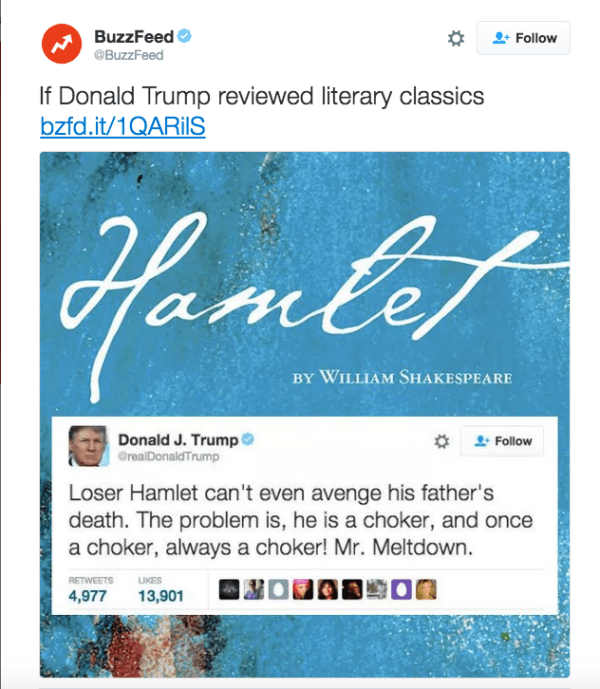
In an effort to lighten the mood but keep the idea of books and reading alive, my students and I had a little fun with Donald Trump. Now, it doesn’t matter what you think of the man or his politics, his tweets make pretty good mentor texts.

Screen Shot 2016-05-26 at 7.38.47 PM

I’m not the only one to think so — actually, I got the idea from someone Buzzfeed. Some clever writer put together a list of tweets, written as if Mr. Trump critiqued literature. Brilliant.

Screen Shot 2016-05-26 at 7.40.19 PM

So to have a little end-of-year fun, I asked my students to consider Trump’s sentence structure, and then write their own reviews based on the most recent books they’d read. Really, my only requirements:  a clear tone, but they didn’t have to be mean, and correct spelling and punctuation.

Here’s a few for your reading pleasure. Of course, the review makes the most sense if you are familiar with the books students refer to — I get that not everyone is as versed in YA like they might be the canon.

(Side Note:  To those who say students will never move beyond YA or ‘easy’ reading when it’s all about choice. Um, wrong again.)

What kind of end-of-year fun with books and reading — or anything else– have you had with your students? Please share in the comments.

Try It Tuesday: Getting Smarter After the AP Test (Now, with More Reading!)

“I just feel smarter when I read.”

Kathy smiled a bit nervously as she sat chatting with me after school the other day. We were days away from the AP Language and Composition test, and Kathy was nervous. Talk super fast, plead questions with your eyes, five questions without time for a response, nervous. She had little reason to be, and yet, here she sat, absentmindedly fiddling with the corner of her notebook, talking through strategy, looking for reassurance. How many essays again? How much time to write? How many multiple choice passages? “Will I pass?”

Ahhh. There’s the question.“Will I pass?”

“Do you feel ready?” I ask.
“Sort of.”
“You’re nervous, aren’t you?”
“Yes.”
“Why is that?”
“This isn’t my best subject, Mrs. Dennis. It’s not how my brain works,” she says looking me square in the eye.

I smile and change the subject a bit.

FullSizeRender (1)

Kathy seemed tickled I was going to write about our conversation, but this smile is a usual occurrence.

“Remember when you read A Room of One’s Own?”

Kathy smiles back and confirms, “I loved it.”
I pause. Let her take the bait. “Why is that?” I ask carefully.

“Her personality reminds me of…me. She talks about women and changing their place in
society for the better. It’s powerful,” her smile grows.

“It’s pretty empowering, isn’t it? To see yourself in someone else. To connect like that.”

“It is,” she said leaning closer,”You know…I just feel smarter when I read.”

After a brief chuckle from both of us, I told her I was going to quote her. I scribbled down her heartfelt admission in my notebook and looked back to Kathy.

“You’re ready,” I said smiling. “More importantly…you’ve grown.”

Amy has written beautifully about AP test scores. About how the score isn’t everything and about  how growth in an AP class is about more than testing data. Kathy’s sentiment solidified for me that come July, the scores will be what they are. Influenced by a million factors out of my control. But what is in my control is to advocate to my students that reading and writing are not only the best test prep, but in my humble opinion, the best way to grow as a human being. We become better communicators, problem solvers, compassionate adults, and the list goes on and on.

I found this youtube video recently and I plan to show it to my students at the beginning of next year. It speaks perfectly to the power of reading and how, in Kathy’s words, it can just make you feel smarter.

With that, I move confidently in the direction of my AP Language students’ final project for the year. It’s usually met with shocked surprise (Wait? We’re actually doing something after the AP test?), but ultimately, some of the best projects my students complete all year come out of the final few weeks of school.

My AP Language class uses mentor texts from The Language of Composition, an FullSizeRender (2)anthology of essays arranged thematically, throughout the year to explore a variety of topics. Students read several essays (some classic and some contemporary), bring in pieces they locate to synthesize with the unit, and write several long and short pieces in relation to the thematic unit’s essential question. We then use a unit to mirror one of the specific skills related to the AP Language exam.

For example, at the beginning of the year, we study a unit on Education. To answer the unit’s essential question of To what extent do our schools serve the goals of a true education?, we work with:

  • Francine Prose’s “I Know Why the Caged Bird Cannot Read” 
  • Emerson’s “from Education
  • Additional choices from James Baldwin, Sherman Alexie, David Sedaris, and David Foster Wallace”

Students focus on argument in the unit (one of the three types of essays they will write for the exam, but I would argue, one of the most necessary skills for college and career readiness), so we look for how the authors craft their arguments and write about whether we would defend, challenge, or qualify the claims they make. We practice argument prompts during this unit, students find current event articles and IMG_0130give one-minute speeches in defence or challenge of the editorial perspectives, and ultimately have a panel discussion where students take on the persona of an author from the unit and must represent his/her views and synthesize those views with the other authors in the panel.
For their final projects, students team up to select a unit of interest from the text that we have not worked with together. Topics include a wide variety of interesting reads and students explore questions that keep them thinking, even after the AP test. For example:

  • Language: How does the language we use reveal who we are? 
  • Popular Culture: To what extent does pop culture reflect our society’s values? 
  • Environment: What is our responsibility to the natural environment? 

With over half a dozen chapters not utilized in our class study, there’s something there for just about everyone.

Students select a unit and are responsible for:

  • Reading the central essay – from authors like Barbara Ehrenreich
  • Reading the classic essay – from authors like Twain and Orwell
  • Choosing three additional essays to add to their experience

Then, the synthesis begins. Students must create their own addition to the unit that thirdanswers the essential question from their own perspective. In the past, I’ve had students present TED talks, create satirical videos to “sell” the topic, and write essays to add their own voices to the thematic study. Somewhere, either in the introduction
to their product or as a part of it, students must include the voices of the authors they read from the previously published works as well.

Next year…poetry. I am baby-stepping toward multigenre and I can’t wait to see what poems my students can write and find.

In the end, I hope my AP students, some of whom I have had two years in a row now, realize that our time together was spent not to prepare them for a test (not solely, anyway) but to help them become more informed and understanding citizens.

In other words…smarter.

How are your post AP students fairing? What sorts of fun are you having to wrap up the year? We’d love to hear about it in the comments below!


Mini-lesson Monday: All Good Writing Begins with a Good Question

One of the hardest things I ask my students to do all year is choose their own topics. We start generating ideas on the first day of school. We watch video clips, read quotes and short passages, listen to poems, look at cartoons — and we write responses. We create various versions of writing territories in our writer’s notebooks. We have many ideas stored in our well-used notebooks by this time each year.

But with every writing task, students seems to always start the topic journey right back at square one, even when I remind them that they have a mine of ideas sitting in the pages of their composition books. I’ve decided that just like me they like the process of discovery.

My goal is to get them to move past topic discovery into writing discovery. Too often, students think they have to know what they want to say before they ever start writing. No wonder so many kids have a hard time approaching the blank page. (See NCTE’s 10 Myths of Learning to Write #4)

The last writing assignment my students complete each year is a multi-genre type piece wherein they show they’ve improved in the various writing modes we’ve practiced throughout the year. They have almost total choice in terms of what they write, and they have most of the choice in terms of the forms they write in.

I have just two mandatory suggestions (oxymoron intended):  one piece must be a Rogerian argument, and somewhere in their master piece, students must show they know how to use an academic database to find valid sources, and then they must use the sources in the correct context, and cite the sources correctly.

We look at a few mentor texts that use multiple genres within the same piece. Narrative, informative, persuasive — plus images and info-graphics, or other types of forms that present information, including videos and interviews. My favorite is the award-winning feature article, Snowfall: Avalanche at Tunnel Creek by John Branch.

Once students know their end-goal: the creation of their own multi-genre writing piece that shows off their writing journey for the year, they must choose a topic. Some will want to stick with a topic they’ve written about multiple times this year. Depending on the topic, and the student, I may be oaky with that.

This mini-lesson came about in an attempt to help students figure out a topic that they know enough about to ask questions but not so much about that they could answer all of them.

Objective:  Using the language of the Depth of Knowledge Levels, students will construct a list of things that make them wonder; they will formulate questions about a self-selected topic derived from their wonderings. They will then categorize the questions in sets that make sense. Finally, they will determine which questions may best be answered through a specific genre or form of writing.

Lesson:  I tell students that we are about to play in our notebooks. “Turn to a new page, and write a list of all the things you wonder about,” I say. They usually sit there writing nothing, so I get them started:  “I wonder if teens got paid to go to school if they would want to learn more.”

Most students start to write, but I keep wandering the room, stating things that make me wonder as students list their own wonderings in their notebooks.

“I wonder when the state of Texas will get wise to the lack of wisdom in state testing. I wonder why students choose to do their APUSH homework over AP English. I wonder if the Dallas Cowboys will ever win the Superbowl again.”

Once students have at least a half a page of wonderings, I ask them to talk with one another in their small groups. “Perhaps your peers will remind you of something else you wonder about. Add it to your list.”

“Okay, look at your list and zero in on one topic that you think you can find the answer to with a little bit of research. Now, let’s think all the way around this topic.”

I ask students which of my wonderings I should use as a model for their next step, and they tell me the one about the Cowboys. I write it on the board. “Okay, help me come up with questions that look at this from every perspective possible — like who has a stake in whether the Cowboys win the Superbowl again.”

When was the last time the Cowboys won the Superbowl?

Who led the Cowboys to the Superbowl in the past?

How many times have the Cowboys been in the Superbowl?

Is the Cowboys coach as good as the coaches in the past? Are the players as good as the players in the past?

What is different or the same about the NFL?

What do the Cowboys need to do to win more games?

Who would be a better quarterback than Tony Romo?

Does the current team consist of Superbowl quality players?

Which teams are in the way of the Cowboys going all the way again?

Some questions get silly — pretty sure the Dallas Cowboy Cheerleaders don’t matter all that much to the reality of getting to the Superbowl. Sorry, girls — but students get a hang of the idea. “Ask as many questions as you can think of. After you write a list of your own, ask your peers for help in writing others.”

Next, we need to put our questions in categories. I ask students to talk with one another and determine which of our questions about the Cowboys might go together. We decide we’ve got questions about 1. the history of winning the Superbowl, 2. similarities and differences in the game, the coach, the players, 3. current Cowboys, 4. the opponents.

We talk about what genres and forms might work to convey the best answers to our questions.

“Compare and contrast the differences. That’d be easy,” someone says.

“The history of the Cowboys’ past wins would be information, right?” another student says.

“What could be the topic of a persuasive piece?” I ask.

“The question about the ability of the current players. Easy.”

I tell students that they get the idea, and I charge them with reading through their questions and categorizing them into groups that seem to go together.

I remind them:  “All good writing begins with a good question.” And they’re off.

Follow up:  Students should use their questions and their categories to guide the choices they make as they write their end-of year multi-genre pieces. In conferences, I read through questions, helping students add to and clarify. I remind them that form helps determine meaning, so as they make choices, they need to think about the best way to share meaning with their intended audiences. Students will present their writing projects as their final exams.

Writing Myself Out of a Wreck

Note: This post was supposed to run this morning. Must not have clicked the right button last night. So, here’s my thinking of late. Better late than not at all. (I think that’s the mantra of many of my students.)

I have a confession:  I am pretty much a wreck.

I could blame it on my son who joined the Army and left for basic training the afternoon of Mother’s Day, or I could blame it on another son who called to say he’s marrying a girl he’s known a month and I’ve never met, or I could blame it on this Empty Nester thing that’s barely three days new and haunting me with shutting doors and creaking floors.

I could blame it on the AP Language exam my students take today.

It’s the same every year — well, not that son part, thank God — but definitely the wreck part.

Every year I wonder if I taught enough, had them write enough, gave enough feedback. I wonder if I helped them grow as critical thinkers and accomplished writers. I wonder if they will read the prompts correctly. I wonder if they’ll answer the questions. (I’d be happy with a thesis statement.) I wonder if they’ll remember we learned to read footnotes. I wonder if they’ll cite their sources. I wonder if they’ll write enough to show they are bright and honest and eager and loving young adults.

Oh, wait.

That’s right.

No matter how my students do on this high-stakes test, the important things — the things that matter to me, and should matter to the world — are the things that cannot be measured in 55 multiple choice questions and three essays.

I just needed to write myself into that reminder.

_________________________________________________________________

Today I read  Enjoy the Best Year Ever with a Mantra by Ruth Ayres and loved her Why I Write mantra. I took up the pen to write my own. It’s still a work in process, but I’m kinda likeing it, and I’m no longer a wreck.

Why I Write

I write to make myself feel better.

I write to discover what I want to say.

I write to hear my voice within the chaos.

I write to play with colorful words (and pens).

I write to show my students I am a writer — and because it’s hard.

I write to share my thinking, my hoping, my planning, my longings.

I write to be remembered and to be worth remembering.

I write to know I belong.

I write to advocate for literacy and learning and the lives of my kids.

I write to become a better reader (and I read to become a better writer).

I write to tell stories.

I write to walk the walk and talk the talk of my English teacher self.

I write because it is better than the spa.


Have a go at it. What is your mantra?