Author Archives: Shana Karnes

#FridayReads: 7 Author-Talks Students Love

IMG_0473

This week’s author-talks

As my students and I returned from a full nine days of Thanksgiving break this week, getting back into the groove of workshop was tough–for all of us.  I was totally whacked out from frantically finishing NaNoWriMo, and the kids were all out of sorts from too much turkey and not enough routine.

I needed something that would hook them back into the magic of reading and writing workshop–wonderful books, but more than that…wonderful authors who write those books.  So this week and next, my booktalks are all author-talks…book pairings by high-interest authors students love, whose stories captivate and amaze and inspire.  Here are seven book pairings by the same author that are insanely popular with my readers.

Rainbow Rowell, Fangirl & Carry On Fangirl goes over well with my seniors for two reasons–one, it was drafted during NaNoWriMo, and two, it begins on the first day college for the main character, Cath.  Cath is an unabashed fangirl who writes her own fanfiction–and that’s where Carry On comes in.  Carry On is the fanfic that Cath spent most of Fangirl writing.  For a generation who grew up reading as many alternate-ending fanfics for Harry Potter as they did, this unique pairing is a instant hit.

Inside-Countdown-2

Inside Countdown

Deborah Wiles, RevolutionCountdown – Penny Kittle has been singing the praises of Revolution for two years now, first at UNHLit and then again this year at NCTE.  It’s a brilliant multigenre novel that blends photos from the sixties with the narrative of a girl struggling to deal with that tumultuous time in history herself.  Countdown, the first book in the series, is even more popular with my students than Revolution is.  The series helps bring to life something they study in history class again and again, all in a unique, compelling format.

Chris Lynch, Freewill & Inexcusable – The award-winning Inexcusable tells a story of sexual violence from the perpetrator’s point of view.  Kids are compelled by this tale’s unique presentation of a controversial event, and it helps boys and girls alike gain a new perspective on an act that is often discussed but rarely experienced.  After they read Inexcusable, I recommend the Printz-nominated Freewill, the story of a boy who is oddly compelled to create totems in his wood shop class after a rash of local teens begin committing suicide.  Themes of grief, guilt, and creative outlet make this one a hit with my students too, as does the unique fact that it’s told in second person point of view.
wintergirls

Inside Wintergirls

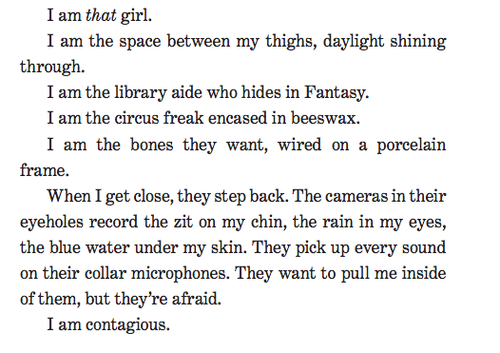
Laurie Halse Anderson, The Impossible Knife of Memory & Wintergirls – Most students at our school read Speak in ninth grade, and they begin to appreciate Laurie Halse Anderson even more when they read Wintergirls, the story of a teen who battles bulimia and anorexia.  The writing in this book is stunning, and the plot is compelling.  When kids finish this un-put-down-able book, I recommend The Impossible Knife of Memory, in which a teen girl struggles with her father’s PTSD after his return from Iraq.  The novel hooks both boys and girls, as it follows both the father and daughter’s struggle.

Matt de la Pena, The Living The Hunted – In The Living, Shy is excited to get a job on a cruise liner…until “The Big One”–a major earthquake on the Pacific coast–hits.  Most of the passengers and crew aboard the cruise ship are killed, save for a few, including Shy, and a few people also on the dinghy he clings to for life.  When Shy learns a secret that people will kill for, he goes from just being one of the living to being one of the hunted.  This believable suspense series hooks my students.

Screenshot 2015-12-03 at 4.18.48 PM

Inside Symphony for the City of the Dead

M.T. Anderson, Feed & Symphony for the City of the Dead – I learned about Symphony for the City of the Dead, a powerful book detailing the siege of Leningrad during World War II, while standing in line to register for ALAN.  Kim McCollum-Clark told a few of us teachers and librarians about this amazing story, which pairs gripping exposition with historical photographs from the time period.  Amid brutality, Dmitri Shostakovich wrote a symphony for his dying city that uplifted both its citizens and the Allied forces working to free them.  The spies and death and music of the book intrigue my students, and I recommend to them Feed when they finish.  Feed is eerily plausible, the story of a future in which smartphones aren’t in our hands, they’re in our heads.  The feed contains advertisements, social media, news, sports, and anything we currently look at on our phones–all behind your retinas.  When an accident disables Titus’ feed, he struggles with life beyond the feed, and it’s a haunting cautionary tale my students are compelled by.

Jason Reynolds, The Boy in the Black Suit & All-American Boys (with Brendan Kiely) – I picked up The Boy in the Black Suit last year at ALAN, and this year I scored All-American Boys after Amy’s recommendation.  In Black Suit, the main character wears a black suit every day for his job at a funeral home, although his peers think it’s some weird tribute to his mother’s recent death.  Matt feels like he is barely getting by until he meets Lovey, who is a model of strength despite dealing with even more tragedy than he.  All-American Boys is a timely novel that alternates between points of view of Rashad and Quinn as both boys–one black, one white–deal with an incident involving Rashad, a fist-happy cop, and Quinn as a witness.  It is haunting and beautifully written and incredibly eye-opening for my readers.

What author-talks are guaranteed to engage your readers?  Please share in the comments!

#3TT Workshop — Digital Writing in the Writer’s Workshop

Three educators. Three states. Three demographics. All practicing Readers and Writers Workshop in our Secondary Classrooms. Read more about us here.

We are the Modern PLC, and every Wednesday, we share our behind-the-scenes collaboration as we talk about the most urgent moving parts of our classroom pedagogy.

Despite the proliferation of e-readers, tablets, and digital reading and writing technology, recent research is making digital texts look a little less appealing.  This article discusses the slow reading, complex-text, and comprehension literacy skills we just can’t get from reading electronically.  This one has lots of great links to the reasons digital reading “fail[s] to adequately recreate certain tactile experiences of reading on paper that many people miss and, more importantly, prevent people from navigating long texts in an intuitive and satisfying way.”

As Shana’s school in West Virginia is increasingly making the move to one-to-one technology, digital learning, and an increased emphasis on electronic reading and writing, she wondered how this shift would impact writers’ literacies.  Her discussion with Amy follows.  Please join the conversation in the comments!

writing rhet and digital media_1Why is one-to-one technology such a big deal? Does every child really need a laptop or a tablet?  Isn’t their generation suffused with enough technology as it is?

Shana: I surveyed my students this year, and 98% of them have a smartphone with data access that they’re accustomed to using all day.  This troubled me–there was no space in their routine for slowing down their thinking.  I don’t think the reader’s-writer’s workshop works without deliberate attention to reading, writing, talking, revising, thinking, and pondering.  So, I invited my students to simplify their lives this year by putting away all smartphones, but wondered if I was being a hypocrite when we wrote frequently on the laptops I keep in my classroom.

Now that it’s November, I’ve decided I’m not actually a hypocrite–the experience of writing drafts in print, revising and workshopping them, and then transferring them to a published form digitally is far different than the instant-gratification experience of using a smartphone.  Still, though, I watched a student just yesterday play a game on his smartphone while he waited for his computer to boot up.  My students don’t seem to know how to handle free moments to just think, or wonder, or daydream–at stoplights, in hallways, or just waiting for a computer to load.  I worry that this reliance on technology to fill their time will prevent this generation from thinking slowly enough to learn, grow, solve problems, and just think.

Amy:  Just like the literacy gap that happens between children who grow up in print-rich home and those who do not, I’ve started to see a digital literacy gap. Haven’t you? The idea that students are digital natives does not mean they are digitally savvy. Most of my students do not have internet access at home, but they do have cell phones. They can text like thumb-numbing tornadoes, but they cannot format a Word document to save their lives. And since their thumbs do not work so well on iPad keyboards, most tap at the keys like chickens pecking at the dirt. They are slow typists. Now, having said that — that does not mean that I do not think they should learn how to write digitally, format correctly, and type efficiently. All students in this age need to become digitally savvy, and I haven’t found that one mandatory technology class in high school is enough to help them get there. No even close. As English teachers, our role shifts as the literacy shifts. If we are not including some element of digital literacy, I think we do many students a huge disservice.

Shana: “Thumb-numbing tornadoes.” Amy, you are a wordsmith.  I agree that our role shifts as literacy shifts–it’s scary to have to learn new skills fast enough to teach them to our readers, but it’s our reality.  I know writing at Three Teachers Talk has helped me immensely to learn how to write and publish digitally–and it’s a skill that has benefited my readers and writers in the classroom.

What are some authentic best practices related to digital writing?

Amy:  The cool thing about writing is that the skills we need to write on paper are not so far from the skills we need to write digitally. Typing excepted. We still need to think on the page, study models, learn from experts, practice drafting, review and revise… And publishing can be so much more fun — at least I think so. We have the opportunity to share our writing much more through digital means than we had via paper. I like that. I like that my students can share writing with yours. Yours can share writing with mine. I know, we could stuff a big fat envelope with student essays, but I am not so likely to do that. I will however send you my students’ blog links.

Shana:  In a perfect world, my school would mandate a typing class for all ninth-graders that includes not just keyboarding skills (which they are TERRIBLE at), but also digital publication skills.  There are vast opportunities for meaningful discourse that can take place between readers, writers, and thinkers when we get students writing and publishing digitally.  I still very much believe in the power of print writing–but, I know, thanks particularly to Amy, how valuable digital writing is, too.  As Whitman says– “Do I contradict myself?  Very well, then I contradict myself.  I am large, I contain multitudes.”  I can’t wait to have our students writing digitally with one another!

What are your thoughts on digital vs. print writing?  Join the conversation in the comments, and check out yesterday’s discussion of digital vs. print reading.


#3TT Workshop — Digital Reading in the Reader’s Workshop

Three educators. Three states. Three demographics. All practicing Readers and Writers Workshop in our Secondary Classrooms. Read more about us here.

We are the Modern PLC, and every Wednesday, we share our behind-the-scenes collaboration as we talk about the most urgent moving parts of our classroom pedagogy.

Despite the proliferation of e-readers, tablets, and digital reading and writing technology, recent research is making digital texts look a little less appealing.  This article discusses the slow reading, complex-text, and comprehension literacy skills we just can’t get from reading electronically.  This one has lots of great links to the reasons digital reading “fail[s] to adequately recreate certain tactile experiences of reading on paper that many people miss and, more importantly, prevent people from navigating long texts in an intuitive and satisfying way.”

As Shana’s school in West Virginia is increasingly making the move to one-to-one technology, digital learning, and an increased emphasis on electronic reading and writing, she wondered how this shift would impact readers’ literacies.  Her discussion with Amy follows.  Please join the conversation in the comments!

digireadWhen much of the research points to poorer reading comprehension and lower rates of retention in electronic reading, why are some schools moving toward digital reading?
Shana:  My school recently adopted a new textbook series across multiple content areas that contains a small print book and a massive digital one.  This online textbook features texts, activities, tests, and quizzes that can only be accessed digitally.  By and large, my students have reported immense dissatisfaction with their reading experiences in this digital format–in history class, English, and math.  I wondered if that was because they just weren’t used to reading digitally, but during our reading conferences, they disagreed.  They use e-readers, they read articles on their phones constantly, and they have become accustomed to taking their state tests on computers.  Most students reported that they were more tired after reading digitally, that they didn’t retain the information well in that format, and that they were frustrated by their inability to interact with a physical text by annotating, highlighting, etc.  

After talking with students and experimenting with digital vs. print reading myself, plus reading the articles linked above (and many more), I felt really frustrated about the de-emphasis of print reading in schools.

Amy:  Interesting question. I haven’t seen this move toward digital reading myself. My district does have 1:1 iPads, and I know there was a big technology push just prior to me moving to my school, but I’ve never heard that students should be reading digitally instead of reading in print. I’d probably throw a bit of a fit if I did. Personally, I love paper. I love everything about print on the paper page. I’ve moved to digital in a lot of ways — my students create and write on their own blogs, and they turn most of their drafts in using Google docs, but when I sit down to confer with them, I’d much rather have a look at the printed page. It seems easier to zero in on skills that shine brightly or those that need some work — but that is probably just preference.

It’s an interesting argument though, and really, if I believe so much in the importance of digital writing — and I most definitely do — shouldn’t I also believe in the importance of digital reading? Hmm. Now, you’ve got me thinking.

Shana:  I love paper reading and writing, too, Amy.  This is probably why my desk is currently cluttered with books, notebooks, and stacks of paper.  Certainly electronic reading would be cleaner…but it lacks the tangible presence of print that shows me my progress through a book, a student’s writing process, and physical thinking on a page.

Why are physical textbooks, literary anthologies, and notebooks being phased out of our students’ educational routines?

Amy:  I don’t know much about how this might look in other teachers’ classrooms, districts, or states, but I have not used a literature textbook or anything like an anthology in several years. I find them cumbersome. When my students and I read short passages for analysis, I make copies. I need readers writing on the page. If a text is too long, I give them QR codes, and they all know how to annotate digitally with an app on their iPads (I didn’t teach this. They learned it last year or the year before.) I use a lot of texts that can easily be found online, e.g., columns by Leonard Pitts, Jr., and articles from The New Yorker. For full-length texts, we read in book clubs where my students all purchase their own books, or borrow one of mine. Annotating is a valuable skills, and using a textbook makes doing that quite difficult.

Shana: I love the QR code idea for a longer text!  I’ve always felt that it sucks a bit of the joy of learning reading skills out of students when receive a thick, copied packet that I ask them to read and annotate.  I’m with you on providing print copies of columns, articles, or books to students for teaching specific reading skills.  I love when students check out a book from the classroom library that was previously annotated during a book club reading.  They always ask who read the book previously, and their notes become part of that new reader’s experience with the book.  That experience of seeing a prior reader’s interaction with text on a page is just not possible with textbooks or digital reading.

What are your thoughts on digital vs. print reading?  Join the conversation in the comments, and check back tomorrow as we discuss digital vs. print writing.

Mini-Lesson Monday – Strengthening Dialogue With Punctuation

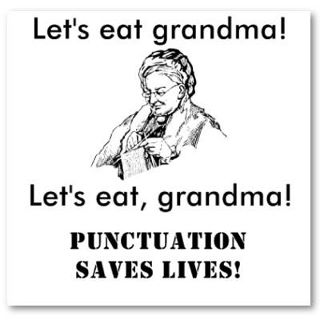
Punctuation_Saves_Lives2After reading second drafts of my students’ narratives, I was wowed by so much of their writing.  Thoughtful leads, powerful topics, intriguing plot structures.  But, despite a mini-lesson on the conventions of writing dialogue last week, some of their characters’ conversations were lacking.  I needed to design a responsive mini-lesson accordingly.

Objectives — Using the language of the Depth of Knowledge Levels: Synthesize your knowledge of how punctuation works with narrative speech conventions to craft thoughtful dialogue; Construct dialogue based on your knowledge of a character’s personality.  Or, from the Common Core: Write narratives to develop real or imagined experiences using effective technique, well-chosen details, and well-structured event sequences.

Lesson — While reading drafts, I set aside a few exemplary pieces of student work in terms of dialogue.  In each class period, there were at least two students whose dialogue was superior.  It was subtle, nuanced, and really added to the characters’ depth.

I asked students to open their writer’s notebooks to the Craft Study section and I projected one example of a student’s work on the board using my document camera.  “Good dialogue isn’t just about what a character says,” I begin. “It’s also about how they say it.  A greeting can really change based on phrasing or punctuation.”

I point to the example on the board.  It’s Logan’s, and in his dialogue, his mom is yelling at him for getting drunk:

“LOGAN WAITMAN SANDERS!” Mom hollered. “Just WHAT do you think you are doing, young man?!  And…and…YOU, Jeremy!  You should be ashamed of yourself!”

Everyone laughs, and I ask a volunteer to read the dialogue aloud.  Dylan does, with perfect angry-Mom-inflection.  He makes Logan shrink back in his seat a little.

I ask the class, “Why did Dylan know how to read that dialogue so perfectly?”  They volunteer: the capitalization helped; he knew when to raise his voice.  “How did he know to stutter?”  They say: the dots (ellipses, I add helpfully) told him to stutter.  “How did he know to sound kind of incredulous while yelling?”  They reply: the exclamation points, and especially that exclamation point mixed with a question mark.  “How did he know when to pause?”  They know: commas.

I put up other kinds of punctuation on the board–dashes, periods, italics–and we discuss what effect each of those would have on a character’s dialogue.  Students jot all this down in their notebooks.  Then, I pass back their drafts and ask them to find a partner.  “Now that you know how to really make dialogue more personal, revise your dialogue in your drafts.  Work with a partner to determine whether or not your dialogue has the effect you want it to when you revise–write a line, then ask your partner to read it aloud the way Dylan read Logan’s.”

Students take ten minutes per person to revise, then we launch into writer’s workshop with the remainder of class.  I write beside them on the board, working on my own dialogue in my NaNoWriMo novel.

In each of my other classes, we repeat this exercise with drafts that contain good dialogue.  It’s so important to use student work as mentor texts–students see that great writing is attainable, not just imitable, when we show them their peers’ successes.

Follow-Up — After today’s revision and writing workshops, students will have one more day in class to keep working on their drafts before turning them in again.  I’ll hope to see much improved dialogue, and as such, I’ll ask writers to answer a question on their self-evaluations about how their dialogue enhances their characterization.

#FridayReads: 14 Titles My Students Always Re-Read

NCLast week, Dylan looked at me with utter dismay when I told him that I still didn’t have the third book in the Maze Runner series.  Then, he brightened.  “I was actually kind of confused about some things that happened in The Scorch Trials.  Can I re-read it while I’m waiting for the third book to get returned?”

“Of course,” I agreed.  Musing, I jotted down some titles in my notebook that I wanted to re-read–my usual favorites, of course, but also books I’d only read once and had just loved–The Night Circus, Station Eleven, Zeitoun.  It made me wonder about what other books students wanted to re-read, so this past week, I asked them about it during conferences.  Lots of titles emerged, and I soon saw a pattern emerge–there were four reasons why they wanted to read particular books again and again.

HPSeries.  It quickly became apparent that if a new book in a series was coming out, re-reads were necessary.  “I’ve read the whole Harry Potter series three or four times,” Ryan told me.  “I understood all the hidden references and more about the characters the second and third times.”  Olivia agreed: “Those books are so complex there’s no way to understand everything in them the first time you read them.”

Anna read the whole Percy Jackson series twice “because I was in middle school and the struggle was real in finding books I enjoyed.  So I just re-read ones I knew I enjoyed!”

Shailyn read the Twilight series twice, and is reading it again now for the third time since the 10th anniversary editions were just released.  “I just loved the story,” she said.

Books that were being made into movies.  Mylana was adamant about this category: “I had to re-read Paper Towns really quick before the movie came out so I could tear it apart with how it didn’t compare to the book.”

Kaylee laughed and agreed: “I re-read The Fault in Our Stars for the same reason!!”

EPReally gripping stories.  “American Sniper was tough to re-read, but I did, because the story was so powerful.  I just wanted to experience it again,” Ryan said.

Eleanor and Park was the most beautiful love story I’ve ever read,” Olivia said, “so I’ve read it three times!”

“I re-read All the Bright Places, because it was probably the best book I’ve ever read,” Shailyn said.

“I read The Giver and The Help twice because I wanted to pay more attention to the moral story line and internal struggle in all of us that was portrayed so candidly in those books,” Anna said.

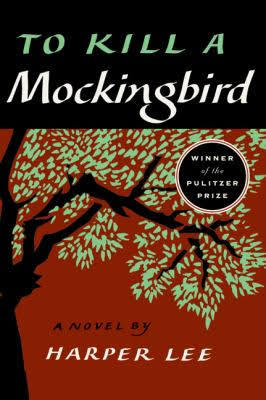
AFBooks they were assigned in school.  Mockingbird was popular in this category: “I’ve read To Kill a Mockingbird numerous times because it’s my favorite, it’s a classic, and because I discover new details about the trial and Boo and Atticus each time I re-read it,” Olivia said decisively.

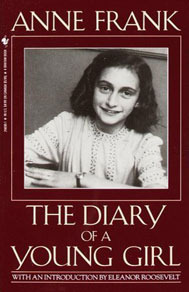
“I re-read The Diary of Anne Frank because I read it first as an assignment, but then re-read for fun because I wanted to think more about her time period vs. ours,” Mylana said.

“I had to re-read The Book Thief after it was assigned to me because I just wanted to focus on the storytelling the second time through,” Jonathan agreed.

What titles do your students (and you) love to re-read?  Share in the comments!

Mini-Lesson Monday: Imitating Poetry

Reading more poetry with my students has been a goal of mine these past few years, and it’s been a goal I feel has been readily achieved with ideas like creating Heart Books or reading novels in verse.

But writing poetry–well, that’s a different story.

Students who aren’t accustomed to writing poetry need a scaffold before they can leap into free verse composition without a topic, genre, or form prompt.  For this scaffold, I use imitation.

Objectives — Using the language of the Depth of Knowledge Levels:  Identify patterns of language, structure, and punctuation in a given poem; Modify the style of the given poem to suit your purpose; Create a poem in the style of a given poem.

41KeFnbnPfL._SX330_BO1,204,203,200_Lesson — Before the mini-lesson, I will have already booktalked two of Mary Oliver’s books–A Poetry Handbook and Dog Songs, which is always a favorite with my students.  As the mini-lesson begins, I’ll read to them from Oliver’s chapter on imitation.

“You would learn very little in this world if you were not allowed to imitate,” Oliver begins. “Before we can be poets, we must practice; imitation is a very good way of investigating the real thing.”

“I have some poems here today for us to imitate and investigate,” I follow up.  I pass out the following options, lately garnered from my incredible poetry seminar with Mary Ann Samyn:

“Read over these quickly, and choose one you’d like to imitate.  Then open to a fresh page in your notebook.”

“I’m going to write with you, and I’m going to choose ‘A Display of Mackerel,'” I say.  “It seems long, but look how short the lines and stanzas are.”  I put my chosen poem under the document camera.  “Now, this poem is about a display of fish, and I want to imitate it and write about a display of something.  There’s a pretty big display of colorful objects in my room…” I trail off.

“Your library!” Nathan helpfully supplies.

“Yep,” I agree.  “I’m going to imitate this poem and write about my bookshelf.  I’m just going to change a few words per line, but I’m going to keep all the punctuation and the numbers of words the same.  It’s so easy to write poetry this way.”

On the document camera, I begin my imitation next to Doty’s original:

They lie in parallel rows,                   They rest in slumped rows,

on ice, head to tail,                           on shelves, spine to spine,

each a foot of luminosity                   each a sheaf of wisdom

“See how easy that is?  I keep Doty’s structure, punctuation, and even some of his words.  I just change a few to make the poem about my display of books, rather than his display of mackerel.  Now you take a few minutes to give this a start.”

We set about writing together.

After 10-15 minutes, we each have a full imitation poem.  We break into small groups, working with others who imitated our same poem.  We read our poems aloud.  Feedback is given on what we notice–similarities to and diversions from the original, and the effects of both.

Follow-Up — We’ll practice imitation a few more times before we leap into writing poetry independently.  When we do, I’ll ask, as always, that my students create a small anthology of their work on that genre–some samples of their early forays into poetry through imitation, as well as a few examples of their own independent attempts.  I’ll definitely include my “A Display of Books” in my own anthology, as I find it a lovely description of my library that I’d like to preserve.

My Imitation Poem: “A Display of Books”
by Shana Karnes & Mark Doty

They rest in slumped rows,
on shelves, spine to spine,
each a sheaf of wisdom

creased with cracked spines,
which divide the plots’
most gripping sections

like bands of color
in a double rainbow.
Vibrant, luminous

prismatics: think indigo,
the wildly rainbowed
spectrum of a springtime rain,

think sun spearing through clouds.
Wonder, and wonder,
and all of them in every way

unique from one another
–everything about them
a onetime blend of letters. Thus,

they’re all creative expressions
of a million different souls,
each a tenuous effort

of the soul’s footprint,
writer’s essence. As if,
after a lifetime of drafting

at this printing, the author’s
taken irreversible steps,
each as permanent

in its inked completion
as the one next door
Suppose we were shoulder-to-shoulder,

like these, the same but different
from our universe
of neighbors—would you want

to be yourself only,
unduplicatable, doomed
to be in print? They’d prefer,

plainly, to be award winners,
forever honored. Even now
they seem to be straining

forward, heedless of their lifelessness.
They don’t care they’re ink
and simple paper,

just as, presumably,
they didn’t care that they were imagined:
all, all for all,

the rainbowed shelf
and its acres of brilliant words,
in which no verb is singular,

or every one is. How eager they seem,
even on shelves, to be different, selfish,
which is the price of publication.

#FridayReads: Learning to WRITE WHAT MATTERS with Tom Romano

IMG_9890With the release of his newest book, Write What Matters, this year marks the tenth year I’ve been reading and writing beside the words of Tom Romano.  If you’ve not discovered his wisdom on injecting writing voice into student work, his guidance about writing to discover, or his brilliance in coining multigenre…you’re missing out.

This summer, at the UNH Literacy Institutes, Tom Newkirk talked at length about the guts it took for Tom Romano to publish Clearing the Way in 1987–the first “teacher book” of its kind.  Guided by the research of Donald Graves and his contemporaries, Romano explains the text’s origins to his reader:

“This book is born out of my own struggles to write well and fourteen years of working hard with teenage writers.  Both the writing and the working have been worth it.  They are fine passions.

Thus began my pedagogical education–I read Clearing the Way in my very first English methods course in 2005.  Chapters like “The Crucial Role of Conferencing,” “A Creative Current,” and “Literary Warnings” showed me the possibilities if I created a classroom full of passion and verve and real writers.

IMG_9889Next I happened upon Crafting Authentic Voice, in Romano’s own writing methods class at Miami University in 2007.  A quote from page five of this book hangs prominently in my classroom to this day: “Voice is the writer’s presence on the page, the writer’s DNA.”  I point to those words when I endeavor to help students develop voice.  Chapters like “Enter Craft,” “The Five-Paragraph-You-Know-What,” and “Imitation” have guided my teaching of writing, and I see in those topics the work of Katie Wood Ray, Penny Kittle, and Georgia Heard.

Blending Genre, Altering Style I read in my Master’s level writing methods course, again with Romano himself.  This book helped me flesh out the nuts and bolts of teaching multigenre, which remains to this day both the most effective, enriching work I do with my students, and their very favorite thing.  Reading and writing about chapters like “The Many Ways of Poems,” “Genres Answered,” and the practical “Evaluation and Grading” led me to present with Romano on the many possibilities offered by multigenre at NCTE13.

I’d been teaching five years and was already living in West Virginia when I read Fearless Writing, seeking more guidance about teaching writing.  Practical chapters like “Easing into Poetry Through Imitation,” “Crafting Narrative,” and “Self-Assessment: Raising the Blinds” pushed me to take my teaching of many genres to new heights, with wonderful student results.

Last year, thrashing in the throes of a difficult PhD program, I sought wisdom from Romano in Zigzag, where his chapter “Meltdown” showed me empathy, peace, and guidance.  “I’d never been more at peace with a big decision,” Romano writes of leaving his own doctoral program.  I did the same, and I’m at peace too.

Now, as I prepare to welcome my first child into the world, I’m contemplating where my career will take me.  I’ve long known I don’t want to try to sustain my level of involvement with teaching high schoolers while trying to be a mom.  But I don’t want to leave the amazing, sustaining, nurturing community of teachers and writers and thinkers I engage with here at TTT, or at NCTE, or on Twitter.  I don’t want to leave my tribe, as Penny Kittle says.

Screen Shot 2015-10-23 at 5.34.59 AMAnd, again, Romano is here to guide me through my next steps–Write What Matters: For Yourself, For Others is lately ordered from Amazon and on its way to me.  I know that chapters like “Trust the Gush,” “Risk and All,” and “Who Are You to Presume to Write?” will guide me as I wonder about my future teacher-writer identity.  I know that this book is what I need right now:

Many want to write. But sometimes they lose heart. They are cowed in the face of so many fine writers of fiction, memoir, poetry, columns, and creative nonfiction. Their confidence wanes. If you want to write, but are hesitant, let Tom Romano lift your confidence. In Write What Matters you will find discussions of writing processes that make sense, demonstrations of effective strategies to try, advice about developing productive habits to get your writing done, and examples of illuminating writing from fearless writers, both professional and novice. Your voice, your vision, your way with words matter. They are tied to your identity. You know that you are more alive when you put words on paper. Accept that you not only want to write. You need to write. Write What Matters will help you learn to dwell in your written words and craft them into writing worth reading by others.

Pick up Write What Matters, or any of Tom’s many other works of wisdom and power.  Let Tom Romano lift your confidence–in your writing, your teaching, and your passion.  His words, and he, have been my single most reliable, important mentors as I seek to be a teacher of writing, a teacher-writer, and a plain old Saturday-morning-notebook-storyteller.

The Importance of Narrative: Stories That Stay With Us

I was reading a weekly one-pager yesterday and came upon this little note from a student:

IMG_9850

This student, Aleigha, had taken an elective writing class with me as a sophomore.  Now, as a senior, she wanted to revisit the story she’d begun two years ago, and give it a different ending.  I was surprised that Aleigha had remembered that story, and that its ending had nagged her for two years.  I was even more surprised, as I started to read her one-pager, that I remembered her story, too–a fictional narrative in which two soulmates are torn asunder by circumstance.  She’d ended the story unhappily, leaving the two protagonists separate.  In this year’s one-pagers, though, she’s slowly bringing them back together.

Aleigha’s narrative was powerful to her, and personal, despite its fictional genre.  Her peers’ feedback indicated that her characters’ situations were relateable–that everyone wants people in love to end up together, because it’s something we all strive for as humans.  Narratives give us something to root for.

During a Google Hangout this summer, Jackie talked about her students’ writing of narratives, and how “the transformative power of common stories” brought out their best and most vulnerable writing.  “Every child has a story to tell,” agrees Don Graves.  Because of this truth, narratives are my favorite genre to teach.

We all have a story to tell–a story that stays with us, that we can’t get out of our minds, no matter how long it’s been since the idea was seeded.

As my students write their narratives, I’m shocked by how naturally the words are flowing out of their pens.  When the topic is powerful, I feel like I have little to do in the way of writing instruction–I simply have to get out of the way and let them write.  I have mini-lessons planned on pacing, setting, sensory details, and characterization.  But I’m finding beautiful writing already extant in their drafts:

“Every time I step onto the ice, it takes me to my childhood,” Mitchell’s story begins.

Kaylee stuns me with: “The musky smell of burning wood rose into the air as the sound of water crackling split the silence.”

“Realizing you’re gay, and accepting you’re gay, are two very different things,” another story leads with.

The brilliant Tom Newkirk explains why students are able to effortlessly write this way in Minds Made for Stories:  “The hero of the story is a narrative itself…Narrative is there to help us ‘compose’ ourselves when we meet difficulty or loss. It is there to ground abstract ideas, to help us see the pattern in a set of numerical data, to illuminate the human consequences of political action. It is home base.”

We make sense of the world by weaving its happenings into a story–by the time our students come to their notebooks with an idea, they’ve already rehearsed this story many times.  They are just bursting to tell it.  It is home base.

While narrative may not be considered the most “rigorous” of genres, I believe it is the most important one.  It is the writing that demands to be done–the genre that is the most personally fulfilling, the most emotionally wrenching to write, but the most necessary to exorcise from our minds.  Let your students write their stories–write your own beside them–and watch your community of writers bloom.

Whole-Class Novels: To Teach, Or Not to Teach?

This past summer Shana and Jackie found that we’d both taken on a unique experiment within some of our classes–we had decided to strip them of whole class novels and instead focus on independent reading, book clubs, and smaller whole-class texts.  As workshop teachers confident in the power of choice reading, we each felt that this shift would be both empowering and inspiring within our classrooms.  After our year of experimentation, we both left our classrooms with unique perspectives on the power of whole-class novels as well as how we would incorporate them moving forward.

Over the next three days, we will post our insights and discussion we’ve had over the past week using Google Docs.  Please, join the conversation in the comments!

imagesQuestion 1: How did you decide to get rid of of whole class novels?

Jackie: Last year I was faced with a unique opportunity: the English Department voted to end popular College Preparatory Advanced Composition course.  Despite the well established curriculum, I tossed aside the typical whole class novels in favor of independent reading. As a primarily freshman English teacher, I am required to teach one Shakespeare play and To Kill A Mockingbird.  Advanced Composition gave me the opportunity to focus on smaller whole class reads and mentor texts within daily writing workshops without devoting whole units to one book.

Shana:  After six years of teaching, I wasn’t really sure why I felt compelled to teach whole-class novels.  Every year, when I picked up Catcher in the Rye, I dreaded my job.  I hated that book, and I had no idea how to get my students to love it or connect with it.  It felt like a chore to drag my students through “reading” that text (mostly they were SparkNoting it, sometimes with the assistance of their football coaches–true story).  I knew that not every student loved every novel that I did (particularly Their Eyes Were Watching God), and I knew that I didn’t love every novel my students read on their own (particularly everything by Nicholas Sparks).  I started to wonder–what would my teaching be like if I didn’t feel compelled to teach a whole-class novel…merely because I should?

Jackie: The eye opening experience for me was definitely during my first year of teaching.  I began integrating independent reading into my curriculum and I suddenly found out how many voracious readers I had in class.  My teaching was getting in the way of these students’ education! I like how Shana puts it–I also knew that my students didn’t love the novels I did (Speak by Laurie Halse Anderson) and in the end, if I gave them freedom, I too would learn much more about literature, reading, and teenagers.

Shana:  I like that Jackie mentions the issue of devoting whole units to a book–I loved having the freedom to design units of study that weren’t anchored around a novel, but rather a different genre.

Rye_catcherQuestion 2: What were the positives of having no whole class novels and what were the negatives?

Jackie:  After a year, I have found both positives and negatives to removing whole class novels.  Getting rid of whole class novels allowed me more time to focus on the positive aspects of the workshop model.  Naturally student choice led to easier student buy-in, and I spent less time convincing students of the value of reading.  As a result, we spent more time cracking apart smaller whole class reads like essays, poems, and articles and truly contemplating the author’s choices and craft.  Additionally, I liked that I could assess students and discuss their growth based on their own reading goals and progress.  

I have yet to find a solution to the “be on this page by this day” debacle that comes with teaching whole class novels.  Too often whole class novels lead to less differentiation and more stress, which can lead to the “gotcha” feel that comes with discussing larger, longer texts.  

That being said, there was a lot that I missed about having whole class novels.  Losing a longer common text meant that students didn’t have the common classroom experience of connecting over both the successes and frustrations of working through a complex text together.  I was surprised by how much students want to discuss their reading with classmates.  While reading can at times feel solitary and maybe even isolating during the actual act, in reality, reading complex texts is a communal activity that unites groups through a variety of perspectives, opinions, and interpretations.

Shana:  The positives were that I felt like my curriculum map was much more relaxed and flexible, in contrast to the years where I felt like I had to teach a minimum number of novels and “fit them in.”  I also loved seeing my students’ love of reading skyrocket as they engaged in choice and challenges on only an independent or small-group basis.

The negatives were more nebulous–I just felt like something was missing.  Our learners crave a challenge, and navigating a difficult novel is a challenge all readers relish if they have autonomy in their reading of that novel.  Reading a novel together provides an opportunity for me to create instruction that scaffolds a student’s reading skills up to the level of that novel, allowing them to participate in a reading experience they may not have been able to enjoy otherwise.

I also really missed being able to ascertain the barometer of a class’s feelings on a certain theme or issue through discussions of a complex text.  Crime and Punishment explores issues of morality, regret, and psychology in a far more complex way than “The Tell-Tale Heart” ever could, and although both stories have very similar themes, the novel lends itself to the sustenance of thought, evolution of a character, and length of a reading experience that I so craved for my students.  I also think that some reading skills specific to stamina, fluency, and automaticity cannot be practiced or taught effectively without a lengthy text, so I felt that last year, my students missed out on practicing those skills.

Jackie: While we both feel similar in the value of whole class novels , I know that neither of us would return to a set list of novels.  Whole class novels allow us to engage in common discussions but independent reading lays the groundwork for students’ stamina and confidence.  I don’t start my first round of literature circles until the second quarter because of this.  As much as students need a communal reading experience, I believe they first need a taste of independence and success.
Shana:  I still haven’t figured out the whole reading schedule thing either, nor how to create buy-in for every single student so that they autonomously, independently want to read a novel.  I struggle with the this-page-by-this-day conundrum, too, mostly because I feel like that creates a certain accountability that kids get hung up on, because it relates to the dreaded word GRADES. 

More of our discussion will follow tomorrow.  Be sure to join the conversation today in the comments!

Click here to read day two of our discussion.

Mini-Lesson Monday: Connecting to Poetry with Heart Books

Today is my first day back with my students, since my excellent student teacher departed on Friday.  Having observed their learning and their needs for the past six weeks, I have lots of goals for them in mind.  But, most urgently, I am struck by how much I want readers to connect more authentically to literature–to nurture their investment in, and passion about, literacy.  I want to begin helping them do that by creating and curating Heart Books, which I heard the excellent Linda Rief present about at NCTE in 2013.  Thank you to the very thorough Vicki for this excellent description of Heart Books.

Objectives — Using the language of the Depth of Knowledge Levels:  Identify a topic/theme to explore in heart books; Collect and display a variety of poems about this topic/theme over time; Connect your poems to your topic and yourself.

IMG_9708

My heart map

Lesson — We’ll begin the lesson by returning to the Heart Maps (here’s a great handout on those) we created early on in the school year.  “Choose one topic on your heart map that you’d like to explore further.  On my heart map, I think I’m going to choose my students–this kind of includes themes of learning, growth, and teaching, too,” I’ll explain.

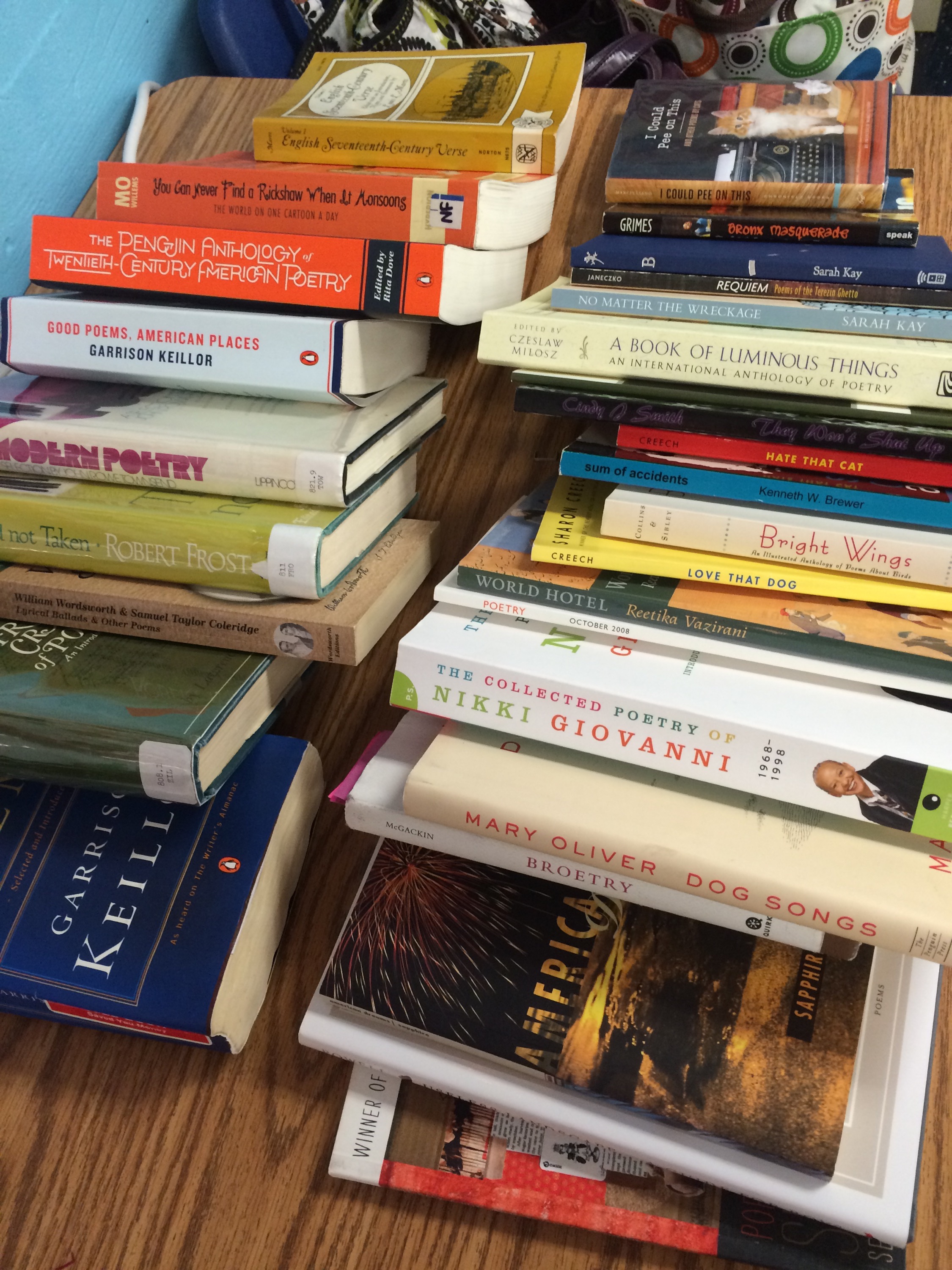
Once students choose topics from their heart maps and expand on what themes they might include, we’ll create a new section in our writer’s notebooks called HEART BOOKS.  Then, we’ll browse various poetry anthologies and collections (check Amy’s selection out if you seek inspiration for building your poetry shelf!), searching for poetry that matches their selected theme.  I’ll ask students to copy the poem into their notebooks once they’ve made a selection.

IMG_9709

My poetry shelf, unshelved

From there, Linda Rief suggests having heart-bookers illustrate the poem, write a response about why it was chosen, and research the poet to find out what he or she might have to say about reading and writing.  I’ll encourage my students to do the same, but also will ask them to make a note of their favorite bits of language from the poem–words, phrases, or even punctuation.  The craft moves poets make are valuable teachers of writing.

Follow-Up — Next class, I’ll ask students to share in groups their Heart Books.  Perhaps we’ll have a notebook pass in which we write in one another’s notebooks, responding to each other’s poems.

For the remainder of the year, once per month, I’ll set class time aside for curating Heart Books.  By the end of the year students will have created a personal anthology of ten poems that help them explore a key theme in their Heart Maps.

What routines do you have in place that help your students connect to literature and explore personal themes?