Author Archives: Shana Karnes

#FridayReads: Fast YA Picks

My life has been pretty hectic lately–full of some wonderful things–but it’s left little to no time for reading.

When life hits me hard, I don’t like to slog through a difficult classic, or plod through some dense nonfiction.  I like to crest down the hill of a reading rollercoaster, at top speed, with some fast-paced YA literature.  Here are three great YA titles I’ve read of late, at full speed.

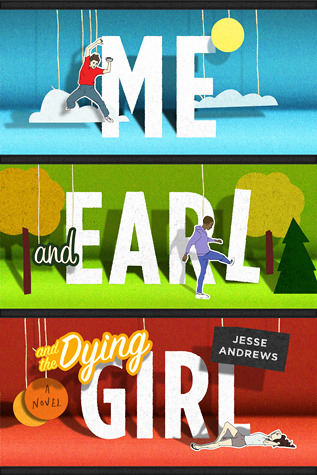
12700353Me and Earl and the Dying Girl by Jesse Andrews – This book is full of voice and fun, and I absolutely loved it.  The narrator, an awkward teen named Greg, is encouraged by his mom to befriend Rachel, a cancer-stricken childhood friend.  Together with his film-making Earl, Greg sets out to try to make Rachel smile during her last days on earth, through awkward jokes and films and companionship.

This story rang much truer for me than The Fault in Our Stars, as it seems to reflect more accurately what teens go through when sudden death strikes their midst.  I adored Greg’s sarcastic writing voice, which is often self-deprecating and rather obtuse.  The believable plot, humorous writing, and fast pace of this book made it the perfect Saturday morning distraction from my busy life.

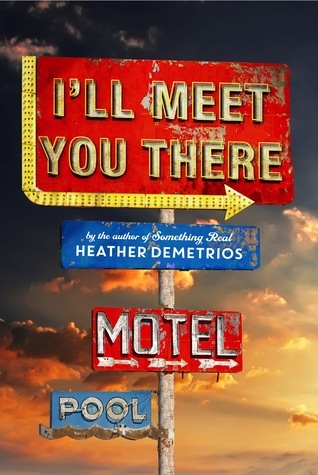
21469068I’ll Meet You There by Heather Demetrios – Augh, this book!  It was the only YA I heard Penny Kittle recommend at UNH this summer, so I knew it had to be good, and when I picked it up, I was not disappointed.  The protagonist, Skylar, is working her way through her post-graduation summer, excited for college and a departure from her small town.  That is, she’s excited until her friend Josh returns from war in Afghanistan, missing a leg.  She’s excited until her widowed mother falls into a funk of depression and alcoholism.  She’s excited until she realizes she may never be able to leave her small town, and this book is the story of her quest for freedom.

This book had so many great themes–issues of war, teenage love, poverty, familial duty, and friendship make this story appealing to many students.  Additionally, Demetrios’ writing is gripping and beautiful, and she made me laugh, cry, and hold my breath for the brief afternoon it took me to read this compelling novel.

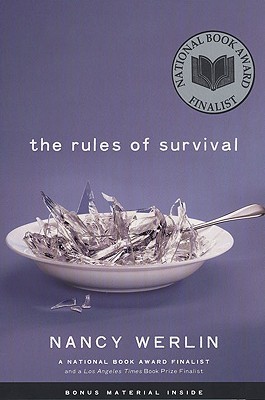
6219358The Rules of Survival by Nancy Werlin – I’m in the middle of this book, and I’m so happy I picked it up.  It was an impulse buy when I was sucked in by the cover–a National Book Award Finalist stamp, and a picture of a bowl full of broken glass.  It’s the story of a boy named Matt and the life he lives with his physically and emotionally abusive mother.  He tells his story often through letters to his younger sibling, and it is a story of hope, desperation, and heartbreak.  The writing is beautiful, personal, and simple, making the sheer plot of the story that much more poignant.  Most powerful are the five simple rules Matt lives by:

  1. Sometimes, the people who mean you harm are the ones who say they love you.
  2. Fear is your friend. When you feel it, act.
  3. Protect the little ones.
  4. If you coped before, you can cope now.
  5. Always remember: in the end, the survivor gets to tell the story.

These books fly off the shelves of my “Life in High School” section, allowing my students and I to become lost in the stories of others, blissfully distracted from our own lives through reading.  I highly recommend these three YA picks if you’re looking for a good, fast read.

What are some great YA titles you or your students have loved recently?

Readers & Writers Workshop–Beyond English and Into Journalism

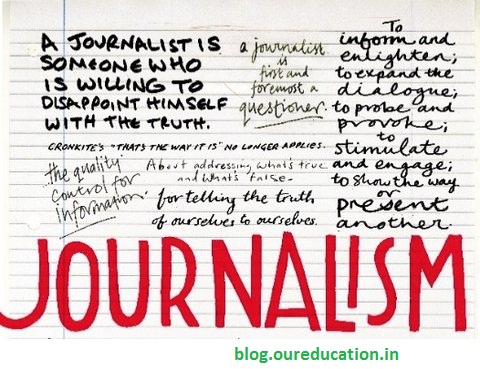
dotCJR-blog480Are any of us really just English teachers?

It has been rare in my teaching tenure to only teach English–and in my current position, my schedule is no different.  I teach Yearbook and Newspaper, in addition to four English classes.

Learning the content of those new-to-me courses has been one of the biggest (and most fruitful) challenges of my teaching career.  While writing instruction is naturally paramount in journalism courses, teaching photography, design, AP style, and the interview process were foreign concepts to me prior to starting this job.

So, when I discovered that I’d be teaching journalism, I did what any good teacher does–I began to research.  This article describing the four properties of powerful teaching–presence, personality, passion, and preparation–reminded me that I had the first three qualities when it came to teaching journalism.  I just had to do the work of preparation.

After a long summer of workshops and self-teaching, I felt well-versed in lens aperture and the inverted pyramid, but I wasn’t sure how I wanted to structure my journalism courses.  When I boiled down the values I wanted my young journalists to prize, though, they came down to doing good writing, good research, and good thinking–all values that are foundational parts of the readers and writers workshop.

So, each day in Newspaper and Yearbook, we begin with ten minutes of reading.  I confer with students and we discuss how to read like writers.  We analyze how a writer sets a scene, much like how a photographer composes a picture.  We note the author’s style, filing away their craft moves for use in our own copy writing.  We speculate about the writer’s inspiration for the story, trying to find our own topics to write about.

After two booktalks (often nonfiction), we then move into a quickwrite, thinking in writing for ten minutes about a variety of subjects–sometimes responding to simple questions, sometimes practicing journalistic writing skills, and sometimes brainstorming ideas for articles, photo stories, or coverage.

A ten- to fifteen-minute mini-lesson follows, taught either by me or the editor-in-chief of the day’s publication.  These mini-lessons are based on trends the editors and I notice as students submit their work.  Yesterday we worked on strengthening our headlines; today we’ll focus on brushing up on the conventions of AP style in our copy.

We leave ourselves with a sixty-minute writers’ workshop every day, which is packed full of collaboration, conferring, and chaos.  That last hour is productive until the bell rings, with every student journalist working toward a unique deadline or assignment, receiving guidance from any and every other person in the room.

Watching and participating in the organized, creative chaos of a journalistic writers’ workshop is probably my favorite time of day.

I asked two students how they felt that the workshop enhanced their journalistic learning.  Ryan feels the quickwrites are most valuable:  “Your notebook allows you to open up and be yourself when you write,” he says.  “You learn to still have a voice in journalism, which is usually just really formulaic.”

“I really like that you learn while you write,” he emphasizes, repeating that twice in our brief conference.

Gabi agrees.  “You’re learning as you do the writing–learning from your mistakes–rather than having concepts spoonfed to you,” she says.  “I think everyone likes to learn hands-on, by actually writing, instead of just reading other people’s articles.”

In what electives or non-English classes do you employ the workshop model?

Weekly One-Pagers to Develop Writing Fluency

IMG_9425

Janelle, now in college, appreciates the one-pagers belatedly

This summer, Amy and I talked a lot about what we wanted for our students.  While there were lots of complex ideas tossed around, we knew that our goals boiled down to two simple ones:  for our students to become real writers and real readers.

We had lots of structures in place to help our students become authentic, fluent readers–weekly reading homework, daily booktalks, reading conferences, reading workshops, and more.  But writing was a bit different.  Daily quickwrites and longer compositions were already in place, but I wanted to add something more to get students writing more regularly outside of class on topics of their choice.  I wanted them to gain the same fluency with writing that they did through their weekly reading homework.

So, I was reminded of something I used to require my AP and Honors English students to do–a weekly one-pager.  Every Monday, a one page, single-spaced, typed paper was due.  I offered topic suggestions, but ultimately, students could choose what to write about.  I decided to revive this routine, inspired by Kelly Gallagher’s powerful claim that students should be writing four times as much as teachers could ever assess.  Why shouldn’t all students–not just the AP and Honors level students–write this much?

This year, I only have one Honors class, but all four of my English classes write weekly one-pagers.  We have a section in our notebooks called “Weekly Writing,” which is rapidly filling up with writing on a variety of topics.  During bi-weekly notebook collections, I check to see that these weekly one-pagers are being completed, but I don’t “grade” them–that’s not the point.  The point is to build writing fluency.

These one-pagers are low stakes–ten points apiece, so on a particularly busy week, if students just don’t have time to write, it’s no big deal.  But the frequent follow-up and sharing activities we do in class with these writings, combined with the autonomy students have in their topics, make the missed one-pager a rare occurrence.

I was initially inspired to create this routine by some of my greatest college professors, for whose classes a written response was due each day.  Alan Frager’s “study guides,” Tom Romano’s “one-pagers,” and Don Daiker’s “reading responses” were handed in at the start of each class period.  By writing a short paper every single day for most of my college years, I developed incredible writing fluency.  I knew I wanted my students to develop this written fluency as well, partially in preparation for their own college experiences, but also to bridge the gap between a writer’s thoughts and his words on the page.

As evidenced by Janelle’s testimony above, building this writing fluency pays off.  Already this year, students are remarking that it’s becoming much easier to write a full page, after only writing eight of them thus far.  I’m enthused by the growth I see in all my students’ writing fluency, and looking forward to seeing how much they can develop as writers by the end of this school year thanks to the weekly one-pager.

What routines are in place in your classes to help build students’ writing fluency?

Why We Should Challenge Our Students–And Ourselves

I’ve recently found myself in a learning situation I’ve rarely experienced before–a classroom where I am the slowest, lowest, and neediest learner.  The one whose work is nowhere near the level of everyone else’s.  The one who asks the dumbest questions.  The one who is silent and stricken after asking the dumb question.
IMG_9356

My own messy attempt at a poetry exercise

Those of us who grow up to become English teachers are skilled readers and writers, for the most part, and we were generally successful in educational settings.  We loved reading, we enjoyed writing papers, we received positive feedback from our teachers about our work, and we got good grades.  This is eminently true of my own educational experience, so I’ve never been able to truly empathize with how my struggling students might feel about our class time together.

The work of learning is tough in general, but standing out as the worst learner is a pretty unsettling feeling, I’m finding out.

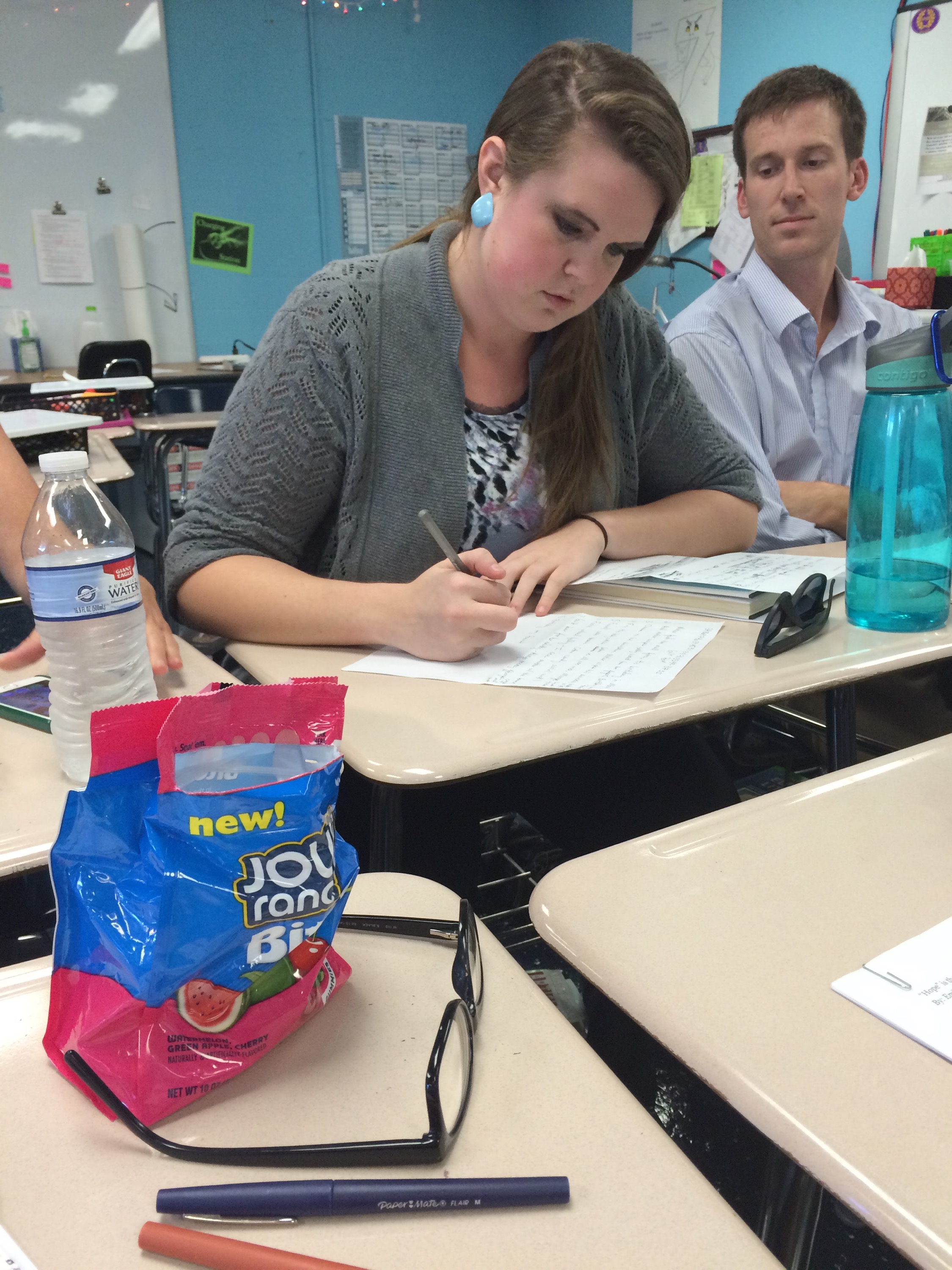
The poetry workshop I’m involved in, which has shattered my confidence as a writer (while simultaneously strengthening my writing skills) is taught by award-winning poet Mary Ann Samyn.  This Bolton Professor for Teaching and Mentoring is the leader of our little band of misfit poets, and has been “poem-ing it up” for decades.

Mary Ann’s resulting ease with the language of writing and teaching poetry is obvious to witness.  She has clearly internalized and automatized much of the vocabulary of poetry–she tosses out phrases about meter and iambs and syllables and line breaks with such grace that I can tell she’s been thinking and talking about poetry for years.  “A line of poetry is a unit of measure,” she said.  I hastened to write down that line, marveling at its simple wisdom.
IMG_9355

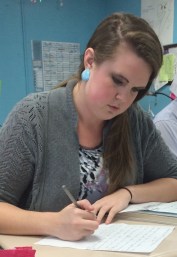
My classmate, an MFA student, scrawls her own messy poem

It occurred to me, as I jotted down that poetic utterance of Mary Ann’s, that this is how I must sound to some of my students–as though I’m speaking another language.

As I sit in the workshop on Thursdays, surrounded by MFA students who have years of experience as real writers of fiction, nonfiction, and poetry, as well as teacher-poets who have published their own verse, I feel so lost.  I am in a world I don’t feel I belong to–I do not yet identify as a poet, but I feel surrounded by them, trying to do the work of writing poetry and reading poetry and thinking about teaching poetry.  I wonder if I’ll ever get to their level as they gently question me about my writing, trying to make sense of my meaning, and give me suggestions about my work.

Regardless of how I view myself in the group, one thing is clear during the workshop–I am part of the community of poets, for 90 minutes every other Thursday.  I give and receive feedback in the same way the other writers do.  I participate in the exercises everyone else does.  I write poetry within the same time constraints as the others.  I am treated as a poet, even if I don’t think I am one.

Being part of a writing community with such rigor is hard, but it’s valuable.  I would never use the word “fun” to describe my time in the Bolton workshop, but I would argue that perhaps the best learning is not fun.  I find myself determined to write poetry alongside those real poets, even as I dread reading my words aloud to them moments later.  In Drive: The Surprising Truth About What Motivates Us, Daniel Pink argues that my drive to do this is innate to all learners:

“We have three innate psychological needs—competence, autonomy, and relatedness. When those needs are satisfied, we’re motivated, productive, and happy.”

I make an effort to improve as a poet because I need to feel competent, much like our students work to improve as readers and writers because they desire competence, too.  In all educational situations, learners perform not because of the dangling promise of a grade, the threat of failure, or the pressure to comply with a controlling teacher.  They perform because they want to prove competence to themselves.

I asked a few students about this topic.  This summer, Shailyn read the Pulitzer-winning All the Light We Cannot See by Anthony Doerr.  She said the vocabulary was difficult, the book was long, and the writing style was strange–it was one of the toughest books she’s read.  “Why did you have the confidence you could read it?” I asked her.  “When you encountered those challenges, what made you say, ‘I don’t care.  I’m gonna read this anyway.’?”

“Because I have goals.  I like to feel challenged, and when I finally figured out how [the protagonists’] stories came together, I felt satisfied.  And I felt like I learned a lot from that book when I finished it,” she said.  Shailyn wanted to know that she was a competent reader–comprehending that book showed her she was.

Hunter, too, recently finished a book that challenged him.  “I hate this book,” he told me in the midst of Lone Survivor.  “You can abandon it,” I reminded him.  “No!” he said, forcefully.  “I’ve gotten two-thirds of the way through it.  I’m not giving up now.”  Hunter finished the book of his own accord, exercising his autonomy.

Lakynn agreed that learning is intrinsically motivated.  “You feel better about yourself when you’re more educated about a topic,” she told me.  “If you’re not knowledgeable about something, you can’t relate to someone more educated.  You want to learn about things so you can have those conversations with people about them,” she explained.  The social aspect of a learning community is evident and powerful here–Lakynn sought information about the Republican presidential candidates to fulfill her relatedness needs.

The more I talked with students, the more I discovered that what I thought was frustration with my difficult learning experience was actually profound satisfaction.  Yes, my confidence was crushed–I thought I was a good writer.  But knowing that I had so much room to grow created a hunger for more knowledge–I needed to learn, to belong, to feel competent again.  And so, I leave the Bolton workshop energized, confused, and with my mental wheels turning, every time.  The rigor of that learning–the toughness of it–is what makes it so satisfying.  I’ll remember that the next time I sit down beside the accomplished poets in my class, and every day I design lessons for my students.

Our students flourish when we create an authentic, rigorous learning community for them to be part of.  Difficult books, intimidating writing pieces, and high expectations combine to create an ideal situation in which autonomous learning can occur.  The beauty–and the learning–lie in the challenge.

I’ll leave you with a gem from one of Mary Ann Samyn’s collections of poetry, Beauty Breaks In:

Beauty breaks in everywhere.
Welcome to the wind-powered poem.
Like the ocean or the woodcut of the ocean.
I heard the hardest thing and listened.
Syntax says, you first. Shimmer half-scolds.
I said, I am loved. Sometimes a correction happens.
Fear made it one full week. A human action.
I stopped making it worse than it was.
Mini-Lesson Monday: Self-Monitoring Reading Homework

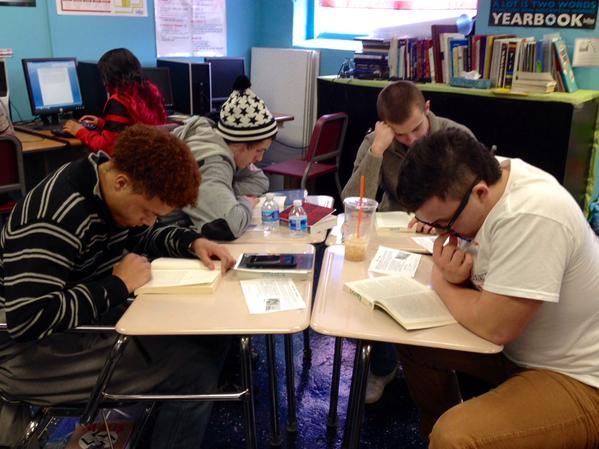
It’s the fourth week of school, and some students are starting to panic as their weekly reading homework grades are showing up in our online gradebook.  When they come to me, concerned, I ask, “Have you been doing your reading homework?”

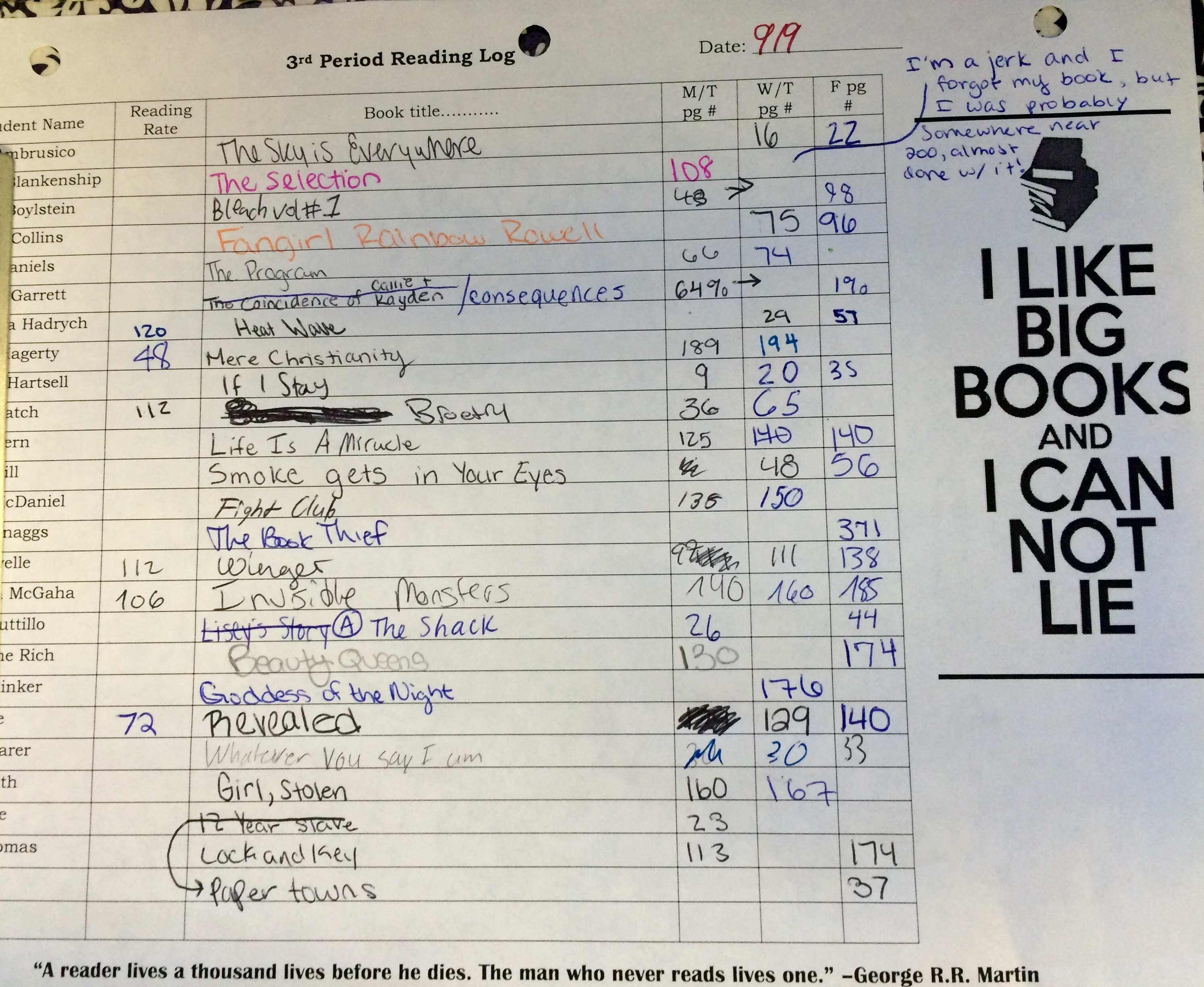
Sheepish grins, embarrassed blushes, and nervous giggles follow.  I know I need to give my students some tangible reminder of why they need to be reading two hours per week.

Objectives — Using the language of the Depth of Knowledge Levels:  Calculate how much you can read in two hours; Estimate how your reading rate will change over a two-hour time period; Assess your own reading fluency and growth.  Or, from the Common Core: Read and comprehend complex literary and informational texts independently and proficiently.

IMG_9336

Shailyn, Justin, and Mrs. Karnes’ paint strip bookmarks

Lesson — We begin class, as always, with independent reading.  I ask students to pay attention to what page they’re starting on and start a timer for 15 minutes on the board.

At the end of the 15-minute reading period, I ask students to count the number of pages read and multiply that number by eight to calculate their reading rate.  They complete their calculations and jot down their reading rates as I pass out paint strips and Sharpies.

“Today I want to remind one another about the importance of frequent reading.  We can’t become better readers without lots of practice reading, which is why your weekly homework is to read for two hours.  So, we’re going to make some bookmarks reminding us why we read, and also reminding us how much we should be reading.”

I ask students to take out their phones and look up a quote about reading.  Once we all choose quotes, I model on the document camera, writing my chosen quote on my own paint strip.  Students grab some Sharpies and a paint strip in their favorite color and doodle their quotes on their paint strip bookmarks.

IMG_9335

Students modify their reading rates in the Reading Rate column

“Once you’ve gotten your quote down, add your reading rate to your paint strip, nice and small.  You’ll want to change your reading rate whenever you switch books, and you’ll also want to note your new reading rates on the log sheet as it goes around each day.”

Then, I ask students to think about what might happen to their reading rates over time.  Jared predicts, “I think if I sit down for a solid two hours and read, I might read more than my reading rate.  When I really get going I can read pretty fast.”  Shailyn predicts, “My reading rate will increase…majorly!”

“What about if you read a harder book?” I ask.

“Um, I think I’d probably start out slow at the beginning, but as I get into the book, I’ll read it faster,” Shailyn adds.

“Awesome,” I say.  “We’ll have to see what happens.  So, as you use your bookmarks in the coming weeks, keep an eye on how your reading rate changes week to week, and how quickly or slowly you read your required number of pages.  I’ll check in with you in reading conferences soon.”

Follow-Up — Now that students have a tangible reminder of their reading homework to use as a bookmark, they can hold themselves more accountable.  The quotes give them a rationale for reading, and the written reading rates give them a reminder of their reading goals.  By self-monitoring both, students can assess their own reading progress far better than I can, and we’ll confer about that self-assessment during class for weeks to come.

#FridayReads: Matching Reluctant Readers to the Classics

IMG_9287On Tuesday, during a lull in class, Tyler was staring at the ceiling.

This isn’t unusual, or even discouraged, as our ceiling is covered with tiles that represent books.

“What’s that book up there?” he asked, pointing. “The one with the fire?”

“That’s Fahrenheit 451, by Ray Bradbury,” I replied.  I know that Tyler is a volunteer for our fire department.  I also know that he hasn’t had a lot of positive experiences with reading, so I tailored my impromptu booktalk to my knowledge of him specifically.

Fahrenheit 451 is a book about a fireman.  But he’s not an ordinary fireman–instead of putting out fires, he starts them.”

Tyler looked incredulous, and a bit offended.  “So he’s an arsonist?”

“He is, but that’s the job of the whole fire department in this book. Their job is to start fires to burn books and maintain censorship. Anyone whose house has books in it is the target of the department–they burn the house, and the books inside.”

“That’s messed up!” Tyler said, eyebrows raised.

“Right?!?” I agree, equally outraged for his benefit.  I tell Tyler some more of the plot–the corrupt fire chief, the terrifying mechanical hound, the strange professor that Guy happens upon.  “But eventually the main character–his name is Guy–gets curious.  He’s never read a book.  He starts to wonder, do they really need to be burned?  So, one day, at one house, he takes one.”

“The hound goes after him, don’t he?” Tyler predicts.

IMG_9289“He does.  And a lot of other crazy stuff happens.  I love that book so much…the way that Guy changes is so cool.  I really grew to love him by the end.”

Then, he asks the best question:  “Do you have that book?”  We cross to the bookshelf and I thank the gods–it’s there.

I give it to him, and he starts reading right away.

Tyler has abandoned a lot of books, but I think he’ll finish this one.  This was a case of matching the right book with the right reader at the right time, as Teri Lesesne says.

Tyler wants to read this book, despite its difficulty–he has reading strategies to cope with the challenges in vocabulary, sentence structure, and chronology that he’ll encounter.  I have faith that he will employ those strategies and grow as a reader and a thinker, as I have seen many a student do before, with greats like The Poisonwood BibleTheir Eyes Were Watching GodPride and Prejudice, and Brave New World.

We don’t need every single student to read all of those books.  They are gorgeous works of art that I hope everyone will discover, but thinking the only way to expose students to those books is to make everyone read them isn’t the way to do that.  Our student readers will find the classics on their own, if we give them the tools and the hunger to do so.  Tyler has the tools, and the hunger, so he found Fahrenheit–all because of a simple desire to know more, to find out why firemen would act so radically, sparked by the depiction of a flame on our classroom’s ceiling.

How do you match your readers with classic texts?

A What-to-Read Conference: Books on Bullying

Many of my reading conferences happen at the bookshelf, as students finish one book and begin the search for another.  Here’s one example I just can’t stop thinking about.

Yesterday, a former student of mine came down to my room to borrow a book.  This particular student didn’t start out as a reader, so I was really excited to see him seeking reading material independently a year later.

“Do you have Winger?” he asked me.  We walked to the bookshelf and looked for it–all my copies were checked out.

“Why are you interested in Winger?” I asked him.

“Christina told me about it this summer,” he explained.  I smiled–books were still going viral, beyond our classroom community and into the summer months.

“Well, they’re all checked out.  What is it about that book that interested you?”

“The bullying,” he said, looking away.  Bullying?  I was surprised for a moment that this particular student was curious about bullying–he was a popular kid.  He drove a cool car, had a boisterous and charismatic personality, and had a trail of lovesick girls whose eyes followed his every move.  But then my surprise faded–all high school students, no matter how popular, confident, or smart they seem, struggle with their peers’ meanness.

I had to decide–what do I teach into here?  This student as a reader, or as a vulnerable teen?  I am no longer his teacher–so I don’t have to teach him as a reader, right?

Wrong.  I chose to treat this as a reading conference…but in doing so, I knew I was giving this student the tools to deal with the issue of bullying.

411MJMpTseL._SY344_BO1,204,203,200_I began to suggest alternate books about bullying, and I promised him that I’d set Winger aside for him when it was returned.  He ended up leaving with Thirteen Reasons Why, but I also suggested Nineteen MinutesYaqui Delgado Wants to Kick Your Ass, Simon vs. the Homo Sapiens Agenda, The Truth About Alice, Speak, Wonder, Aristotle and Dante Discover the Universe, and By the Time You Read This, I’ll Be Dead. 

I knew that when that student finished Thirteen Reasons Why, he’d be back.  I knew that I could guide him toward more books about this issue he was curious about, and that our future conferences could help him climb a reading ladder about bullying.

“Reading ladders take students from one level of reading to the next logical level…We can help them stretch as readers by showing them books that mirror what they already like but that…will challenge them more,” says Teri Lesesne in Reading Ladders.  By continuing to guide this student toward more complex books about the same issue, not only would I be helping him to grow as a reader, I would be offering him more titles that could help shed more light on the difficult issue of bullying.

Penny Kittle is fond of saying “reading saves lives.”  My own classroom library is emblazoned with the quote “We read to know that we are not alone.”  This student was seeking salvation, solace, and information in books.  He wanted to know that he wasn’t the only one feeling the way he felt, and he hoped to find a story that showed him a triumph over bullying was possible.  That he sought this guidance in a library shows the power of teaching readers…not books.

How to Respond to All Writers–Students and Professionals Alike

In a workshop classroom, all authors are mentors.  They are teachers of the craft of writing, and the foundation of the workshop model is built on acknowledging and celebrating them as such.  All writers are apprentices of other writers–Stephen King notes this in On Writing, Katie Wood Ray points this out in Wondrous Words, and Penny Kittle champions this in Write Beside Them.

This week, we’ve practiced treating two types of writers as mentors in our classroom–published authors and student writers.

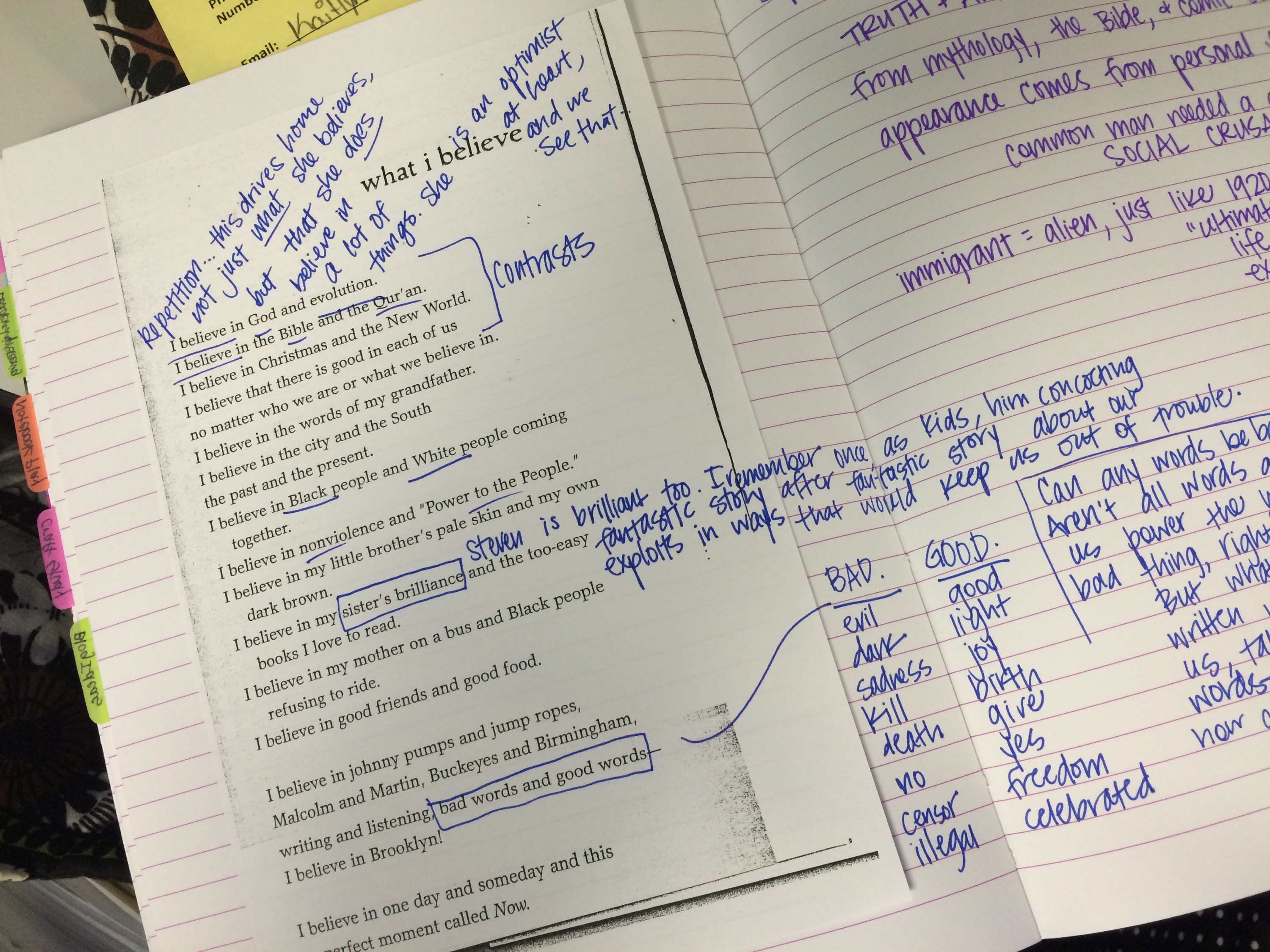
Once we set up our writer’s notebooks, we began filling them with all things personal to us.  Heart maps, important photos, our hands, lifelines, reading histories, and more.  Then, we turned to adding the words of other writers.

IMG_9251

My writing atop Jacqueline Woodson’s

I wanted to show students the power of other writers’ words.  I wanted to teach them to read poetry not to “torture a confession out of it…to find out what it really means,” as Billy Collins writes, but to celebrate the act of simply reading that poem.  So, we glued in an excerpt from Jacqueline Woodson’s Brown Girl Dreaming.  I modeled for students how to respond to Jacqueline as a real writer, to notice and note her craft moves, to be inspired by her ideas and write more about our own feelings on those topics.  We wrote atop her poem, prioritizing our responses, reactions, and ideas rather than some analysis or “dulling down” of her meaning.  Responding personally and authentically to published authors will become an important part of our daily routine in our writer’s workshop.

I invited students to enter into a written dialogue with the authors we read.  So, as I settled down this weekend to begin reading a tall pile of student writing that had been turned in, I knew I had to walk the talk, as Amy always reminds me I must.  I ask students to treat authors as real people worthy of critical response, so why would I treat my student writers any differently?  I’ve always struggled with how to grade/evaluate/respond to student writing, but I’m thinking about it in a new way this year.  I just want to have conversations with my students about their writing, whether it’s in the form of a writing conference or in a weekend session with a stack of papers.  I know that when these conversations occur, student growth will follow.  In the excellent Portfolio Portraits, edited by Don Graves and Bonnie Sunstein, Linda Rief writes in an essay IMG_9248titled “Finding the value in Evaluation:”

I have discovered that students know themselves as learners better than anyone else.  They set goals for themselves and judge how well they reach those goals.  They thoughtfully and honestly evaluate their own learning with far more detail and introspection than I thought possible.  Ultimately, they show me who they are as readers, writers, thinkers, and human beings.

My thinking aligns with Linda’s.  When I remove myself from the role of “grader” or “evaluator,” I become an authentic reader of my students’ writing.  I invite students to assess their own writing, which in the words of Linda Rief “shows the value in evaluation.”

So this weekend, I read my students’ writing like I read books.  I noted beautiful lines they wrote, jotted down spiffy words they harnessed, and responded to thought-provoking ideas I saw them getting at.  I asked them questions, wondered about their meanings, and looked very much forward to reading more of their words in the future.  I will confer with students as I return their papers, and we’ll talk about how they might move forward with some of the topics, ideas, and stories they’d begun in these early writings.

In our classroom, we consider our responses to published writing as important as the writing itself.  The value of reading and writing lies in the interaction between the reader and the words, as Louise Rosenblatt describes.  When I transfer that value from the way I want my students reading writing to the way I want to read my students’ writing, new and important opportunities for student learning occur.

Simplify, Simplify: An Invitation

We’re six days deep into the school year here in West Virginia, and I am so happy, fulfilled, and content.  The start of this year has been the smoothest of my seven years, and our readers and writers workshop is coming together more quickly than it ever has.  I think it’s because of all of the invitations and welcomes that have been flying around our classroom, rather than the commands and directives of years past.

Amy’s post on inviting students to just talk helped me simplify the structure of my first week of lessons.  I strove to make our first days together as inviting as possible–as laid back, relaxed, and caring as I could.  Students were drawn to our classroom library with an invitation to check out whatever book they’d likethoreau-simplify.  They were intrigued by an invitation to write daily–nulla dia sine linea, in the words of the inimitable Donald Murray–as we set up our writer’s notebooks.  I invited students to just read for pleasure, to just listen to a poem to enjoy it, and to just write for fun.
My invitations all centered around simplicity.

I want to slow down my thinking this year.  It seems my brain is always flying at a hundred miles a minute, and I bet my students’ minds are too.  I will invite my students to simplify their thinking–to streamline their thought processes, open their minds, and just write.  Just read.  Just talk.

This year, I’m inviting everyone in our classroom–adults and students–to put away their phones.  We read this article to understand why that may be necessary, as our devices can distract us without our consent.  Part of this conviction came after I read M.T. Anderson’s Feed, an award-winning YA novel about the mindlessness technology can fill our lives with.

I’m inviting learners to resist letting their lives be frittered away by detail, to simplify, simplify.  We will do more with less, and we will do all of our reading, writing, and thinking more deliberately.  These first six days have been marked by that simplicity, and I hope to continue that trend all school year long.

What are your goals this school year?  What do you hope to achieve with your learners?

Mini-Lesson Monday: Read Like A Writer

B9qMI_GIMAEriTZEstablishing the structure of the readers and writers workshop is one of the things I’m most excited about for the beginning of the school year.  The way these early lessons are structured will make all the difference in the way students view our work, our time, and our goals as a team of learners.  As such, “reading like a writer” is one of the earliest mini-lessons I teach when we return to school.

Objectives – Using the language of the Depth of Knowledge Levels:  Make observations about how a writer conveys what he conveys; Apply what you learn to your own writing.  Or, from the Common Core:  Analyze how style and content contribute to the power, persuasiveness or beauty of the text.

Lesson – My students and I begin this lesson by discussing the notion of apprenticeship.  Many of them are studying a trade–electrical work, HVAC, autobody repair, etc.  They are able to quickly explain that an apprentice studies a master in order to learn how to master a particular set of skills.

I then share with students Katie Wood Ray’s excellent description of writing being a craft apprenticeship:  “Like any other craftspeople, professional writers know that to learn their craft, they must stand on the shoulders of writers who have gone before them” (Wondrous Words, pp. 10-11).

Next, I invite students to turn to their newly-selected choice reading books and open to the first page.  I work beside them, opening my own book.  “Usually when I start a book, I’m mostly paying attention to who the characters are, when and where the book is set, and all of those usual details,” I say, thinking aloud, modeling my process.  “Now, I want to re-read this first page of chapter one and pay attention to how this story is written, instead of what the story is about.  I want to learn from this writer.”

We re-read, and after a few minutes, I ask students to talk with their tables about what they’ve noticed.  After some time, I model once more my process.  “I’m just going to take one skill I noticed this writer using and try to name it.  This particular writer is using lots of repetition here on page one–see how the beginnings of all of these sentences look the same?”  I’m pointing to the writing, displayed on the document camera.  “I like how the repetition draws my attention to what comes next in those sentences–I think it might be important.  I’d like to use repetition in my personal narrative.”  I invite students to name one craft move that they might also use in their personal narratives, and to jot that skill down in their writer’s notebooks.  They use each other as resources if their own books didn’t offer anything they felt truly drawn to.

Follow-Up – Following the mini-lesson, we’ll move into writer’s workshop.  At the beginning of the year, we’re crafting personal narratives, and we’ll study a variety of mentor texts to help us understand the possibilities of what that genre might look like.  As we do, I’ll continue to reinforce the idea of reading like writers–apprentices to the craft of writing.

What are some of your earliest mini-lessons? Share in the comments!