 “It takes a village to raise a child.” –African Proverb
Being a mother and a teacher, this proverb speaks true to me on a daily basis. Would you ever make it through a day as a mother or a teacher without the help of one, ten, or even twenty people? No!
We can work every day to raise that child, but we should also focus on raising readers, as reading is imperative to a child’s success in life. It should and does take a village to raise a reader!
I’d like to share how I utilize the village as a developing reader, as a teacher, and as a parent. My “village” has been very important throughout my life in making me a reader and motivating my students to be readers.
 For myself, I think back to high school and to one of my favorite teachers. My favorite teacher took my class to the library and he picked us each out a book that HE thought WE would like. Now, I loved to read, and I also did whatever I was told. He picked Silas Marner for me.
I read it. I loved it. I won’t ever forget the book.
He and my other high school English teacher are two of the main reasons why I do what I do on a daily basis. The motivation of “the village” made a difference, but I have learned a great deal about student readers in the last ten years… it is also about CHOICE.
I see this in my own kindergartener when he gets so excited about bringing home every spider book in the library and telling me I have to read it to him even though I hate spiders. He is ecstatic, so I read it as I cringe with the turn of each page. But then I look at the smile on his face and the wonder in his eyes and all of the information soaking into his brain and I know that it is worth it! I am raising readers at home. It is simple for me there. We read before bed. We read when we are bored.But it takes this portion of “the village” to understand choice. It is not so easy in the classroom. With this, we have to keep relying on “the village”.
 “The village” allows us to steal and share. Steal and share: the motto of a good teacher. I must say that I get a lot of my ideas from here at Three Teachers Talk. I also steal ideas from many virtual “villages” like the group I run on edCommunities, Pinterest, and Twitter daily! This is a list of ways that I access “My Village.”
- For the Steal – What are you Reading?: My colleagues share with me every time they see something I might like. I have taught them to steal for me. This colleague steal came to me today! My co-worker came in to me first thing today and said, “I found an idea you HAVE to do next year!” A school she just visited had a laminated paper on every door and the teacher wrote what they were reading at that time. Way to get teachers involved! Thanks for the steal!
- Get “The Village” Involved: Get your students, coworkers and community involved in days like “National Read Aloud Day” and the National Education Association’s “Read Across America Day.” This year students, staff and board members read aloud all day long on National Read Aloud Day. Every year on Read Across America Day, 9th graders and 1st graders read a Dr. Seuss book and then write a paragraph about it. These are both learning experiences for both sets of students! I bring in authors and writers that will have an impact on our students for years to come. One of the best presentations this year was skyping with a Holocaust survivor about her book Facing The Lion after one of my student boys suggested I read the book that I bought at a reading conference to put on my shelf for a little more nonfiction.
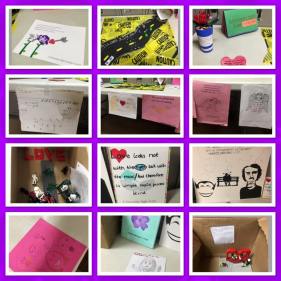
- Display It: We display our favorite books above the book shelves so that more students can see great books right away. We also display great poetry during Poetry Month outside in the hallway to be involved in A Poem A Day. When my students start to love reading poetry, then I sneak in a way for them to love speaking poetry and hold a Poetry Out Loud Contest. Two of my students went to the state level in Illinois this year! My students display artwork about books we have read in the hallways as well. This means that more people see these and could spark an interest for them. Our “village” is visually decorated with the main idea-reading!
- Follow the Leaders: Our “village” is virtual. We can follow the greats like Donalyn Miller and Penny Kittle and teaching blogs like this one. They inspire and make my creative brain go wild on a daily basis. Because of these women, our English Department has a successful Reading Program that is based on choice with guidelines. The students have to meet reading requirements and genres per semester, but they pick the books they want to read. We read silently every day; and I mean WE. I read with them. I cry in front of them over books. I get mad in front of them over books. I teach them how to fall into books on a daily basis.Then we all talk about what books we love. We do speed book dating with books, the kids talk about books when they tell me their page numbers that I track on a google sheet. This is the best informal and quickest way to let a whole class hear about a book. All of these ideas and more have come from Miller, Kittle and Three Teachers Talk.

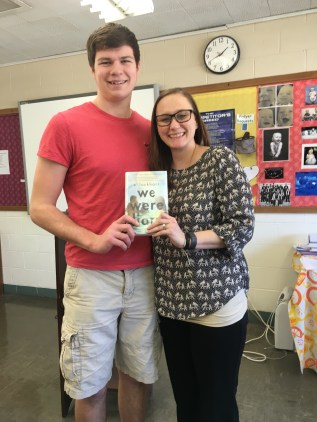
- Take Notice: My greatest finds and success stories come from the “village” (school) hallways. I teach 9th, 10th and some 12th graders, so I don’t see some students after they leave me their sophomore year. I see them in the hallway and don’t ever miss a chance to sneak a peek at their reading choices. I would have never picked up We Were Liars if I wouldn’t have stopped to chat with a junior boy this year about the book that I noticed he was flying through. I knew it had to be good!
These five ideas have led to a bond in our “village” of readers. Giving them choices every day leads them to trust me and understand that I am aware of their interests. They trust me for advice on which book to read next because I know what they enjoy as readers. More importantly, it leads them to trust me as I teach them whole class lessons. They trust when I say they will love To Kill A Mockingbird, The  Odyssey, Shakespeare and Poe that I know what I am talking about and they buy into me and my love for the works. I can not raise readers on my own. I am constantly calling on my “village” of colleagues, friends, students, community members, and administrators to help me raise a high school full of readers. It takes a village.
These five tips may help you think about the village you can access to develop lifelong readers. I would love to be a part of your “village.” Join me at mynea360.org in the Integrating Reading and Writing Group. We will steal and share from each other as we build a “village” of readers.

 My little Ruthie Karnes–our first child–arrived on the scene last Monday at 10:20 am, forever altering my life in the most wonderful of ways. Somehow, my entire world (and worldview) has shifted to center around her.
 Lesson one: hard work and fun are not mutually exclusive. When learning is difficult, it’s incredibly engaging, provided we are capable of achieving the skill with guidance, effort, and practice. I
  The biggest lesson I’ve learned this week, though, is that much like any school year, it’s all worth it. The hard work and tears and sleep deprivation and laughter and constant conferring and feedback and trying to find missing library books all adds up into something beautiful–a community of real readers and writers who will leave my classroom with (I hope) a love of literacy and all that entails. And it’s the same for motherhood–when I see Baby Ruth and her sweet smile (I know it’s not real yet, but it’s still really cute), I somehow don’t care about all the chaos that my life has become. I just know that I’ll keep trying to grow–as a teacher and a mom.
 I am the English teacher who may or may not have written on her teaching job applications and cover letters, “I love books” as the attention getter. My friends made fun of me, but I honestly did not care. How else was I supposed to communicate my passion for reading to people who are looking to hire an English teacher? My passion continues to burn bright, perhaps brighter than ever before.
 (I feel like I should make a metaphor about books and donuts because I love both…a lot…!)
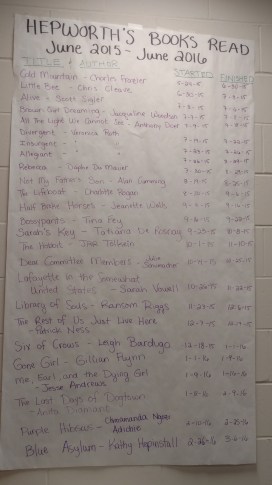 I love tracking when I start and finish a book because it has led to a lot of great conversations with students about the importance of meeting page goals and reading two hours every week. Many times, students and I compare our after school schedules and realize that we are very similar with very busy schedules.
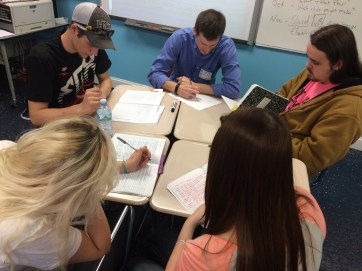
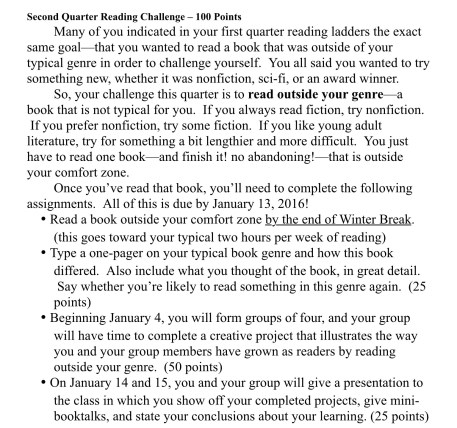 Lesson: With their first quarter reading ladders on hand, I’ll ask students to reflect on their goals from that ladder with their tablemates. I expect that each table will arrive at the consensus that they wanted to challenge themselves in terms of genre or text difficulty.

 After breaking her silence to her therapist, in their time between pages 122-125, Callie exposes her scars and tells what she uses. At one point in this segment, she says “Guess I’ll never wear a strapless ball gown,” from which I related in my own thoughts as feeling like I would never be good enough. Callie’s thoughts—as well as my own, but not in the book of course—were at most unexplained until later in the text. Cut took a vast amount of effort to read, and for this I praise McCormick for putting the amount of effort she did into writing this title.

 I love pop-psych self-help books. I love books written by professors. This book, by University of California professor Sonia Lyubormisky, happens to be both. I love this book so much I bought a second copy because my first copy had too many post-it notes on it.
 If you’re like me, you read this description of flow and thought, “Oh, that’s just another word for the reading zone, only made more general for activities that aren’t reading.”



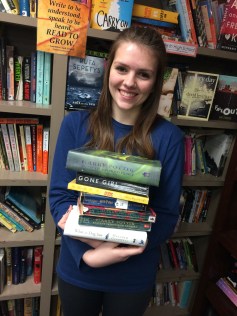 Emma’s Top 10 List: Books That Gave Me The Feels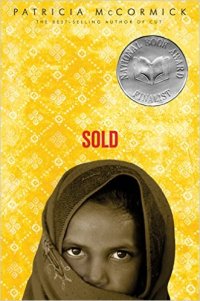


 A few weeks ago, in preparation for a unit on personal narrative, I was rereading (for at least the 4th time) a chapter from Penny Kittle’s



 Three Teachers Talk