Author Archives: Lisa Dennis

We Cannot Act Alone – Equity For Every Classroom by Cornelius Minor and Lisa Dennis

3TT Corn Chat

Rattling around the dimly lit corners of the teachers’ lounge and shuttered mall locations of Successories nationwide, one can find the oft-quoted sentiment that teaching may well be the greatest act of optimism.

However, I would argue that today’s teacher is far more likely to embody optimism by learning.  

When we stretch, scrutinize, professionally and personally grow, challenge, inquire, and courageously push ourselves to learn for the sake of better understanding and connecting to our students, then we are better educators and better leaders and better agents of change in our classrooms.

Because we need far more than optimism. We need realism.

At the upcoming NCTE conference this November in Houston, Texas, a convention focused around raising student voice, the passionate crew from Three Teachers Talk will be honored to share with a you a talk entitled, “Accomplice”-ing Great Things: An Action Plan for Equity, Inclusivity, and Allied Partnerships in ELA Classrooms.

Additionally, in the realm of hardcore fangirling, I am pinching myself to report that the incredible, incomparable, inimitable Cornelius Minor has agreed to be our Chair for the session. As Lead Staff Developer for Columbia University’s Reading and Writing Project, Mr. Minor is a tour de force in the fight for equity in the classroom whose passion and persistence is blessedly catching to all those who yearn to do better and be better for our students.

The crew at Three Teachers Talk has been in love with Cornelius Minor for years. I had the pleasure of first hearing Mr. Minor speak at the 2016 NCTE conference in Atlanta, Georgia. I recall being so struck by his words that I uncharacteristically approached him after the session. My thanks for his message turned into some sort of incoherent blubbering, I’m sure, but Mr. Minor smiled that blazing smile he’s known for and gave me a hug saying, “We’ll talk soon, ok?”

Maybe my teacher universe didn’t really pitch wildly at that moment, forever altering the trajectory of my work with students, but really, it did.

Among countless brilliant insights Cornelius shared that morning in Atlanta, I was particularly struck by his statement that it’s our job as educators to teach children how to “maintain partnerships” in order to “define our culture.” I recalled this statement recently as Amy, Shana, and I brainstormed on ways to best share our ideas at the NCTE’s 2018 Convention – Raising Student Voice.

Thus, our work as accomplices to our students came to the forefront of our planning, and a few things became clear.

Chief among them; We cannot become who students need us to be if we act alone.

This work toward equity is deeply personal, beautifully nuanced, and to many of us, it is brilliantly new. We are in a constant state of knowing that for far too many children, there is a savage gulf between what education promises and what education is.

We know the research. Girls are underrepresented in science and technology. Children of color continue to be suspended at exponential rates compared to their white peers. Poor children are more likely to attend schools with fewer resources. These outcomes are sexist. They are racist. They are classist. School, as an institution, continues to perpetuate them. We can change this, and we are certain that the way forward is together.

In the spirit of moving forward together, we’ve invited Cornelius to join us for a very special Twitter chat.

So that we can share as much as possible, we’ll be using an “Ask Me Anything” chat format. AMAs, as they are commonly called, are a little different from traditional Twitter chats.

Cornelius will be moderating, but he won’t be posing the questions. You will!

For one hour, you will be able to ask Cornelius anything about literacy, education, equity, activism or Fortnite.

We’re looking forward to seeing where this goes! We’ll put a little bit about Cornelius below so you can get to know him before the chat. Feel free to comment below too with any questions that you hope he’ll answer as we Tweet the night away. 

Can’t wait to see you in the Twittersphere!
Thursday, May 10th at 8:00 p.m. (EST) / 7:00 p.m. (CST)!
#3TTweets 


Here’s a sampling of some of Mr. Minor’s recent (brilliant) thinking:

“We Can Do Better” from the March/April publication of ILA’s  Literacy Today. 

“Five Steps to Launching a Schoolwide Social Justice Movement” from Education Week Teacher

A two-part interview conducted with Laura Hancock at Literacy Junkie


What questions do you have for Cornelius Minor? Leave them in the comment section below as we look forward to watching Cornelius’s fingers fly over the keys on May 10th! Please join us and spread the word for this important discussion with one of today’s foremost educational leaders on equity. 


Racing to the Finish Line: What Does Your Workshop Practice Need Most Right Now?

My Spring Break brain is still turned on. Fortunately, this means I’ve been very good at sleeping the past few days. Unfortunately, it means my capacity to focus and otherwise try to be brilliant is at an all-time low for April. It would seem my enthusiasm is likewise dormant, as I’m struggling to harness my usual oompah-pah for school, running, parenting, you name it.

What to do? What to?

b1ae4985-4a2c-4306-ac08-4838ccd725ff

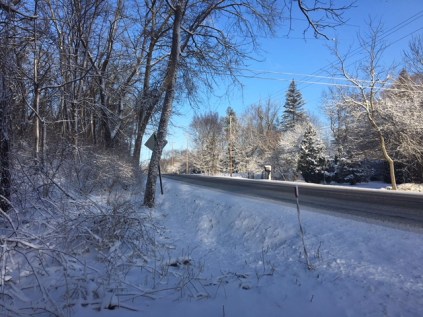
The view from my driveway during Spring Break.


I could stare at a thermometer and attempt to inch the mercury up with nothing by my sheer will and determination to curtail this never-ending winter.

I could establish a formal countdown of the school days as I’ve noticed several students and colleagues have done. (Ok, ok. I’ve done this already. There are exactly 40 days left of school.)

I could count and recount how many summative writing assessments I have left to grade, even if it’s likely true that I’m spending more time counting than I am actively providing feedback to my students.

So. There. Where does that leave me? Counting a lot, apparently, which is something I don’t particularly enjoy.

Still Thursday. Still 40 days to go. Still staring out the window at the 42-degree rain.

So. There. Where does that leave us?

For that, I look to you, dear readership of Three Teachers Talk.

help me

This is an all call for a bump in creativity, a burgeon to our daily workshop flow, a change of pace. Do you need more book recommendations for your classroom? Workshop friendly prep for an AP test? Ideas for mentor texts in a specific area of study? Blog posts that commiserate your struggles, or successes, or both? What can the writers and contributors at Three Teachers Talk focus on to help you most in the coming weeks? How can the writers at Three Teachers Talk help make these last few weeks of the 2017-2018 school year all kinds of amazing in your classroom?

When your inbox pings with a post from 3TT, what insight would tickle your fancy, make your day, or just help ease the stress of wrapping up the year in a workshop classroom? We’ve got writers who teach from Foundational Freshmen to AP Language/Literature, coach current teachers, prepare pre-service teachers, and everything in between.

We all need a little help now and then, so we’d love to hear from you:

Please take a moment to fill out this quick survey and let Three Teachers Talk help move your workshop practice forward to round out this year and/or get you rolling for the next.

And as always, remember the rich archive of posts on a variety of topics that you can search on the right side of the screen at threeteacherstalk.com. You can search by keyword, contributor, and/or topic. The special sauce for your next few weeks of teaching may already be right here!

As a collaborative community of educators, we look forward to hearing from you and pointedly adding to the amazing wealth of workshop knowledge that Three Teachers Talk readers and writers share. Have a great weekend!


Screen Shot 2017-05-01 at 8.44.22 PM

Also, a friendly reminder, if you would like to write a guest post for Three Teachers Talk, please send your ideas to me at lisadennibaum@gmail.com. We are always looking for fresh voices, ideas, and experiences. Thanks!

March Madness – A Book Bracket that Breaks a Few Rules

As I write this post, I can’t help imagining what it will feel like at this time Thursday night when I am up to my eyeballs (finally) in all things Spring Break. I’m envisioning an episode of This is Us, an adult beverage, and perhaps some Easter candy the bunny just won’t get a chance to deliver. Maybe I’ll throw caution to the wind and rent a movie, stay awake for the entire thing, and put extra butter on my popcorn. Don’t try and hold me back, friends – I’m going to let ‘er rip. This girl is going to calorically navigate every day of this vacation.

Because let’s face it, sometimes we need to break the rules and revel in what feels good. Sometimes we need to abandon the stress, irritation, and seemingly endless march of…March.

Sometimes we need to break the rules.

Now I know, if I were you, I would be reading on in great anticipation of a reflective post that smacks at the very heart of pushing aside what’s prescribed and going instead with the deeply personal, life-altering, philosophy-bending, workshop work that fuels lives rich in reading, writing, and empathetic connections across our school communities.

Well…did I mention I am only four class periods away from vacation? 344 total class minutes. 18 total hours on the clock. 27 miles there and back to my nice warm bed. Dozens of warm smiles and well wishes for a well-deserved break to all my lovely students and colleagues.

Some will voyage to lands far and wide. Some will go on great adventures.

I will gladly go to my couch. My brain is fried.


As such, I wanted to share with you my experience with a March Madness Book Bracket, in the hopes that if you haven’t tried this yet, you’ll consider it for next year, or even better, you will ditch the March Madness component and just create your own Book Battle for April or May of this year to stir up passions around the current favorite titles in your classroom.

Personally, this idea came from two places:

  1. A random picture I saw on Twitter at some point that highlighted the excitement around a classroom book battle.
  2. March Madness Hoopla (punny is as punny does) here at Franklin High School.

Our school is blessed with a great number of hugely passionate, committed, and just all around awesome teachers and administrators across the building. This past month, Franklin saw the advent of our annual March Madness school-wide event. The incomparable Pat Gain, AP Environmental Science teacher to the stars, organizes an extravaganza the brings the whole school together in excitement, friendly competition, and support of Franklin’s Relay for Life and Best Buddies. Students earn raffle tickets for possible school spirit, teams organize to battle it out on the court, and the entire school gathers for a pep rally to watch the championship games and other fun at week’s end. This year, it inspired me to jump on the bandwagon and create a book bracket in my room.

IMG_9931.jpg

After the fact, I found this awesome March Madness Book Bracket that includes book trailers, printable brackets, a bracket reveal video, and the wherewithal to organize it all way ahead of time and share it so classes across the world can vote. You can vote in their championship matchup between The Hate You Give and Scythe right now! These people have t-shirts. It’s legit.

Meanwhile, I’ll be over here with my humble pie and share with you what I did and what I want to try to do for next year.

First, a disclaimer. I said I broke rules. I did. But it still worked.

  • There was no actual bracket to fill out.
  • I don’t know a lot (enough, much, anything) about basketball.
  • My bracket had no actual lines.

But it all worked out. Check it out below.

Mrs. Dennis March Madness Book Bracket 2018…

  1. Each of my classes did a quick write on their favorite read so far this year. We chatted after writing, reminisced about great books, added to our “I Want to Read” lists, and then put some titles up on the board. Over the course of a few days, the suggestions for awesome books grew, and I picked 16 that represented the most consistently raved about and most passionately advocated for in each class.
  2. I matched up the books somewhat appropriately in logical pairings. Two classics up against one another. Two historical fiction texts. Two books in verse. Etc.
  3. I printed images of the book covers for each title and set up a rudimentary book bracket on the back wall.
  4. A Google Form shared on Google Classroom gave my students the opportunity to vote in any/all of the matchups they felt compelled to vote for. I also shared this Google Form with other members of the English Department and encouraged them to share the link with their students and to vote for their own favorites.
  5. After the initial matchups, I was left with eight books in illogical pairings, so I had students vote for their top four choices one week, their top two the next, and now we’ve arrived at Championship Week.
  6. Before voting each round, students lobbied for the books they felt should move on to the next round. Which were the most worthy of advancing? Which changed student thinking? Which were the page-turners? It was awesome to hear kids going to the mat for their choices, and even when their favorites lost, they continued to try and sway people to still give the book a try. It did make it to the Big Dance after all.

Franklin March Madness Book Bracket Every Year From Now On…

  1. Start the whole process earlier. Give students a chance to pick up a book or two from the bracket and add fuel to the fire of how many kids have a book in the race.
  2. Complete actual brackets for some random and cheap prizes from my Kelly Gallagher-inspired Bag of Fun Crap.
  3. Random pairings. I love the idea from the link above to let the chips fall where they may and let books battle au natural. This eliminates my perceived issue of illogical matchups. Brackets are made to be busted!
  4. Measure twice, cut once. My book covers were almost too big. I had to move furniture! The hallway may be a more appropriate space and would promote the matchups to a wider audience as well.
  5. My pithy neighbor Brandon suggested that tape between the matchups would make it look a lot more like an actual bracket. Touché.
  6. Expand the empire and work to involve more students, more grade levels, more opinions, more passionate pleas for books to advance. More. Madness.

IMG_0107.jpg

My March needed a bit of madness and I look forward to doing it again next year. Though we didn’t have any actual brackets to fill out ahead of time, or league sanctioned seeding, or even actual matchups past the first round, the results involved a whole lot of passionate talk and writing around books.

When students hustle in the room to see which books are winners, as opposed to hurridly taking one last glance at their phones before the bell rings, I consider it a slam dunk.

(He he…told you I needed a vacation).

Our bracket is down to The Nightingale by Kristin Hannah and When Breath Becomes Air by Paul Kalanithi. Which one would be your winner? Which books could go the distance with your classes this year? Please leave your comments below!


Lisa Dennis teaches English and leads a department of incredible English educators at Franklin High School near Milwaukee. Her knowledge of basketball is limited, but her support of underdogs is fierce. Let’s Go, Loyola! Follow Lisa on Twitter @LDennibaum. 

Politically Motivated: Positively Harnessing Student Passion in a Time of Uncertainty and Fear


Yesterday morning, I stood outside for 17 minutes. Per the instructions of my administration to maintain the opportunity for all students to learn without interruption should they choose, after a moment of silence in our school for the victims of the Parkland shooting, if students chose to participate in the national walkout, teachers were to follow only if every student in his/her class left the building. After a few seconds of looking around at one another, one by one my sophomores stood up and filed quietly out of the room.

Outside, a small group of students had prepared statements to lead the several hundred students gathered in the chilly March sunshine through 17 minutes of reflection, support, and silence. The group was large, diverse, respectful, and unified, if not in purpose (likely a few students were carried out more by curiosity than conviction), then in the experience itself. A hush I’m not used to experiencing in the company of several hundred high school students quickly fell on the chilly March morning and the group stood in near silence, listening to their peers eloquently unite the crowd in peaceful purpose.

Teaching in time when I feel that I must often couch statements with a reminder that logic and facts should not be considered political, I must again come to you today and suggest that the overwhelming pride I felt in the students gathered in front of our school yesterday, and at the student-led debrief/discussion held during our resource period afterwards, had nothing to do with the politics of their statements. It has everything to do with the way I saw students, our students, standing together in support of one another to promote safety, unity, and empathy, not only for our schools but for our communities.

Several weeks ago, after the tragedy unfolded at Marjory Stoneman Douglas High School, I was compelled to write about how we can help our students (Shana too wrote beautifully about positive activism in the classroom), those young people who were not even alive when the shooting took place at Columbine in 1999, process such violence and uncertainty as a constant shadow to their educations. Little did I know that our school too would need to process an alleged threat to safety, a school day where several hundred students stayed home out of fear, social media-fed rumors of possible violence, and countless discussions with students who said time after time that even though this particular brand of violence has been taking place for the entirety of their educations, they didn’t know what to do. They didn’t know how to feel. They didn’t know how to cope.

They just want it to stop.

I looked at their faces and saw fear, anger, and pain that frankly frightened me, and for the millionth time this year, I knew I needed to figure out what we could do.

Discussion, writing, reflecting, sharing, and hugging was working, but much like this past month, something felt different.

These kids needed to DO something.

My colleague Sarah and I decided to have our AP Language students write letters to their representatives, expressing their researched opinions on how to end the violence of mass shootings. Their arguments would be their own, bolstered by research to better understand the issue, their own positions, and their audience.

social changeWe were clear with students from the very beginning that this was not an assignment in support of any particular political agenda. Instead, it was an exercise in better understanding our preconceived ideas and more deeply, and diplomatically, developing our rationale for how to bring about change  As long as their research came from credible sources, students could argue for changes to gun laws, support of the 2nd amendment, mental health considerations, school security, or any other defensible position to end mass gun violence. They could write to state or local representatives, as long as they researched that representatives current position on related issues, providing students with key insights to audience consideration we’ve previously only talked about or tried to emulate through blogging.

Supported with ideas from Kelly Gallagher’s incredible argument unit published over the course of 12 days on his personal blog, Sarah and I helped students through pointed research to build letters rich in ethos, persuasive argument, and pathos that could only be provided by the very students whose passions for activism have been flamed because they are so heavily and personally burdened with the threat of this particular brand of violence.

Over the course of the past two weeks, I have:

  • Seen students come in more for help/feedback with this assignment than any other throughout the year. When I asked a student after school yesterday, what had him so dedicated to crafting this particular summative he said, “Because my school work matters, but this assignment is going outside of the school. It matters outside of these walls.”
  • Watched young people who before could not identify who their state or federal representatives even are, research these people and their positions on key issues, and write directly in response to those issues in order to argue to an authentic audience.
  • Helped students channel their feelings of helplessness into purpose, simply by picking up a pen.

What these kids have produced is incredible. I am so proud of the way they have positively focused their overwhelming emotions into powerfully convincing letters to the men and women with means and opportunity to make changes to protect our students from further disaster.

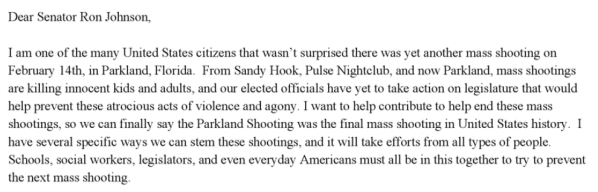
Here are a few excerpts from letters that have started rolling in. In the coming days, we will get the letters printed, addressed, and mailed to Madison and Washington.


mass2


mass3


mass4


mass1


I am a firm believer that addressing issues in a constructive manner is a significant step toward positive change. We owe it to our students to provide them with, encourage them around, and support their efforts in making positive changes in their own communities. Though unequivocally necessary as a foundation to an informed electorate, we will not raise the citizens this nation so desperately needs on standards, skills, and summative assessments alone. A new reality is built on the combined knowledge and passions of the humans willing to take risks in support of that reality.

I will certainly never stop teaching my students that deconstructing a prompt is the best way to dig into a timed writing task or that commas don’t occur only where you would naturally take a breath, but I will also never stop supporting them in all they have to teach to us. Our students deserve our help in amplifying their voices to bring about a better world. In this, our jobs have never been so important.


Lisa Dennis teaches English and leads a department of incredible English educators at Franklin High School near Milwaukee. Follow Lisa on Twitter @LDennibaum. 


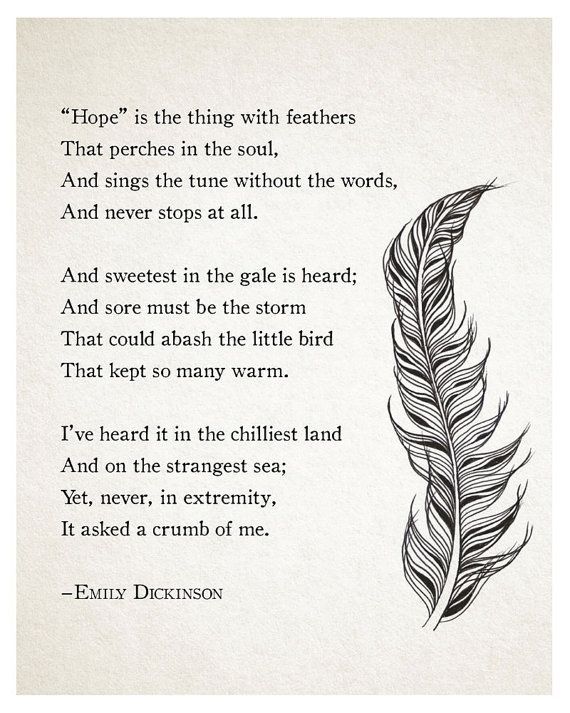
Hope is the Thing with Feathers – Teaching in a Time of Overwhelming Tragedy

How does one process news like that of the school shooting in Broward County yesterday? What do we do when the classroom bell rings for us today, but a school just like ours will instead be dealing with the loss, hurt, pain, fear, emptiness, and uncertainty of another mass shooting? What can we say to adolescents whose educational experiences are littered with pox far beyond even the terribly usual trials young people can and must endure?

Painfully, we’ve all had more than enough practice at wrestling with such questions, but attempting to digest the senseless slaughter of innocent school children within the walls of our professional workplaces is never easy. Blessedly, it feels far from normalized. Horrifically, by the sheer number of circumstances we’ve been presented with over the past few years, it does, in fact, become almost routine.

Basically, the haunting normalcy of these events leaves in its wake a sense of utter helplessness, despair, and at times, hopelessness.

As a teacher, as a mother, as a wife, as a daughter, as an educator who teaches next door to her very best friend and works with people she considers family, I am close to lost. The what if of such a scenario playing out at yet another school, let alone my own, is something beyond terrifying. It rips into the realm of disorienting, numbing, paralyzing.

My own daughter starts kindergarten next year. While a completely idealized reflection of my personal experience would only be partially true, I know for certain my teachers and parents did not need to explain to me what I should do, at the tender age of five (or ten, or eighteen), if someone should enter our place of learning, intent on carrying out an act of chaos that would put my life in danger.

That I might not come home from school because of the actions of someone with a gun, was not my reality.

It is now the reality of our students, our colleagues, and our own children.

To say I am disappointed by inaction is an understatement. Pointedly, I’m terrified to imagine the scale of an event it will take for change to occur. I’m disheartened by the unending cycle of condolences, followed by outrage, followed by a seemingly patient and quiet resignation to our circumstances as we wait for the next special report to interrupt our regularly scheduled hand-wringing and begin the cycle all over again.

Our students, sadly,  have little choice but to see these events as a part of their education. While the events at Columbine, an event we could not know and would shutter to imagine as a prelude to so many more school shootings, were a deeply disturbing occurrence in only the last two months of my own high school experience, our students already count this most recent tragedy as one among many.

As educators, we have little choice but to wish fervently, speak passionately, and push daily against such vile intrusion into our schools, all the while preparing solemnly for the possibility that our communities could see just such a tragedy.

So what do we do today?

The normalcy of routine can be reassuring to some. I could go about my way of logical fallacy presentations and book club discussions on modern nonfiction texts today. And most likely we will. But I feel like we all might need something more.

In reading Tricia Ebarvia’s post on Moving Writers this morning, I felt her searching in much the same way I am. Her initial list of possibilities is recognizable to many of us and a place to start:  “hug your kids a little tighter, tell them they’re valued, be a little kinder, read to them, remind them that they’re safe but to look out for one another, urge them to reach out to adults, and so on.”

Her beautiful post goes on to suggest a variety of approaches from classroom discussion, to the analysis of political cartoons, to reflecting on the words of our nation’s leaders in the wake of yesterday’s events.

A few months back, in the days after another mass shooting, this time in a church, Shana reflected on Kylene Beers’ piece “Once Again,” suggesting we really consider the purpose for which we teach in order to best move ourselves and our students forward with purpose and passion. I love Shana’s heart in this piece and her wrestling with the raw emotion of such events by asking teachers to reflect on whether making meaning or making life meaningful should be our goal. 

So with a lot of options, I think today, I am going to write with my students. The thrust of Ebarvia’s post today is the avenue we can take that will most likely feel familiar, as both embedded workshop practice and proven activity to handle stress. I am going to give my students space to write.

A few minutes. An extended session. Whatever the class needs.

The writing can be open response. It can be prompt related if we think our students need it. It can also be response to beautiful words. Poetry saves souls, I am convinced, and Ebarvia must have been thinking along the same lines. Several of the poems Tricia shares are powerful reminders of the depth of the human spirit, how we cope with tragedy, and what it means to be human. Student reflection on these will bring wondering, questions, hope, fear, pain, and maybe unexpected release.

I’ll humbly add the following piece. I think this is what my classes will reflect on today : hope2

We are going to use our writer’s notebooks to pour out some emotion and let it linger on the page. Coping and healing can begin in our classrooms. We need not be counselors, but we can do what we’ve always done…provide the safest emotional space possible for all of us to deal with the increasing lack of safety that surrounds us.

As educators, we share common challenges, but thankfully we also share a common purpose. Together we can move our students and thereby the world to a better place. I’m glad to be wrestling with all that it means to be human with you.

Be well today, friends.


Lisa Dennis teaches English and leads a department of incredible English educators at Franklin High School near Milwaukee. Follow Lisa on Twitter @LDennibaum. 

Trigger Warning – Whole Class Novels

Ideas don’t sneak up on me. They hit me from just beyond my peripheral vision like a swift backhand to the kneecap. I can’t possibly go on as I had been only moments before. The ideas explode onto my consciousness, and then my to-do list, and then leap onto my calendar, and then to most of my waking moments until I actually do something about them, or surgically remove them somehow from my obsessive brain.

Translation: I had been happily proceeding about my merry workshop way with the start of the second semester, until this weekend when I met Kate Roberts from The Educator Collaborative via her recent blog post “The Healthy Skeptic.”

And now I can’t stop thinking about whole class novels. Or the brilliance of Kate Roberts. Or whole class novels. Or nostalgically gazing in the rearview mirror of my career at some whole class novels.

However, it would be disingenuous of me to paint my work with whole class novels, even The Scarlet Letter, with rose-colored glasses (Sorry. Hester has enough to deal with. I shouldn’t try to make this punny). Self-reflection and engaging students in honest dialogue, often reveals that my students, like most students, were experts in the art of fake reading. We were experiencing texts together, in many cases for far too many weeks at a stretch, but few were reading.

So while the merit of the texts in and of themselves might be harder to shake, it was easy to admit that the value to my students was relatively low in comparison to the amount of time we took, form writing we constructed, and smiling/nodding (on a good day) that was had.

I wasn’t teaching the readers, that’s for certain. And if students aren’t reading, I’m not really teaching reading either. We’re unnaturally drawing out the process for avid readers at best, turning young people off to or supporting preexisting negative feelings about reading at worst, and going through the motions far more often than our nation’s tenuous relationship with literacy can afford.

Yesterday, I found myself in a nearby district sitting around a huge conference table with two administrators, one reading specialist, and a dozen or so high school English teachers. I had been asked to come in and talk about Franklin’s experiences with high school workshop as this department weighs their options in moving forward with balanced literacy, daily practice, and all the options to start parting ways with traditional, and explore the unknown. This group of educators had incredible questions, a healthy amount of skepticism I think, and most importantly, a sincere desire to do right by their students.

We talked a lot about the nonnegotiables of workshop, considerations when structuring daily lessons, the difference between engagement and compliance, fake reading, assessment, classroom libraries, and the notion that teaching students to be English teachers leaves far too many students on the sidelines, nodding along or possibly disengaging from reading once and for all.

Mostly we talked about control. How hard it is to let go. How necessary it is to work to balance the power in your classroom. How creating a “reading love fest” as one cross-armed gentleman yesterday suggested, really is the best way I have found to get kids seriously, joyously, consistently reading. Is it a personal savior for every single kid? Sadly, no. Does it solve some problems and create countless more, absolutely. But here is the bottom line in my book: Letting go of some control to hand it over responsibly to the students whose education we are entrusted to support is one giant step toward getting our students to value that education that so many take for granted, can’t afford to really embrace, or think they don’t need for one societal reason or another.

Letting go of some control and embracing the very specific needs of the students can come in many forms. Right now, I’m thinking about how it might impact the selection of a whole class novel.

booklove

This needs to look different and it must be intentional in every class, and my estimation of what my students need is only going to take me so far. Selection of a whole class text must serve the purposes of addressing the specific needs of the students in front of me.

My ninth grade teachers know, from speaking directly with their students, that most read, but don’t necessarily challenge themselves. Additionally, many have had longer texts read to them (excellent!) but have rarely finished a longer piece independently (not good!). In this case, the team feels that starting the year with a pointedly chosen whole class text is needed to really help students see what they can be looking for, thinking toward, and discovering when they read on their own. Many simply don’t have that skill developed deeply enough yet, to really do the type of critical thinking we’re asking them to do. And if that’s the case, the changes that their skills will develop independently are markedly lessened.

At the upper levels, I now have students who have been working in the workshop for over a year. As evidenced by students with books across campus, there is more reading happening now than in years past. However, the push toward challenge is spotty and in some cases, the real depth of understanding when challenge is pursued seems even spottier. In this case, our AP Language classes are considering using Between the World and Me by Ta-Nehisi Coates to not only tackle some recent unrest in our own school community but to work carefully together to analyze author craft across the main ideas of this dynamic text.

The key is to choose with purpose. To invite student input into that choice. To spend a reasonable amount of time working with the text (3-4 weeks is a general recommendation based on my recent experience and the advice of those far more seasoned than I). To have student-centered goals in mind. To celebrate the text without covering every inch of it, and possibly killing the book AND a student’s hope of becoming a reader in the process.

Our students deserve what our careful analysis of their needs would suggest we best use our limited class time for. The unifying study of a text can be just such an activity. Your professionalism, the unique make-up of your classroom, and the social events/factors that should drive national discourse – these are some of the most important factors in selecting any curriculum; however, the goal should always be the same. We want our students to value the power that comes with better understanding the human experience. Powerful books can take us there. Let’s read them together.


Lisa Dennis teaches English and leads a department of incredible English educators at Franklin High School near Milwaukee. Her personal mission statement is a work in progress but needs to involve equal parts readers, writers, thinkers, believers, and dreamers. Follow Lisa on Twitter @LDennibaum. 

Assessment Graffitti – Guest Post by Margaret Lopez

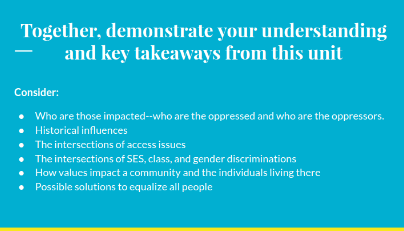
After a largely discussion and low stakes writing-based unit on Social Justice with three texts (Half the Sky, Hillbilly Elegy, and Ghettoside), I was contemplating a final activity to assess their understanding.  I wanted evidence of their thinking.  I wanted my students to show me, in any format, they “got” the unit–that they understood what injustices exist in the world, how they’re connected to privilege and access, and what solutions are necessary to equalize the playing field.  

But I didn’t want to have another seminar.

I didn’t want to give them time to write.

I didn’t want to read another article.

And, full disclosure, I certainly didn’t want cumbersome grading as we are in the final stretch and up to our necks in their year-long inquiry project.

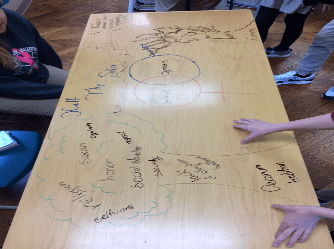
I wanted something new, something we hadn’t done all year.  So, I decided to let my students do something forbidden–I equipped them with Expo markers and let them draw on the furniture.

Disclaimer:  I checked before to see that Expo markers washed off my classroom tables with a little elbow grease and Clorox wipes.  Please do so before!

I simply gave my students these instructions:

Lopez

Then, I stepped aside.  Students had about 30 minutes to complete their visual and were immediately engaged (likely because they were drawing on school property).  

Lopez2

Dev and Lisa collaborating on a cause and effect analysis of Appalachia according to Hillbilly Elegy. 

As they were collaborating, students were discussing the issues we had examined throughout the weeks, Students talked about the values of the oppressors compared with those who are oppressed, and how those intersect with community values.  Students connected historical roots with the current issues discussed in their books, structures of power and privilege that exist, and what solutions should be invested in.  Their purposeful talk around the assessment proved they had read deeply, thought critically, and synthesized multiple issues.

The products were great–original and insightful.  Students gained more listening to their peers explain their group’s visual at the end of class because the conversation was extended and connected, again synthesizing ideas between the texts and our world.

Lopez3

A live tree and dead tree representing opportunity and access for males versus females in Half the Sky.

Lopez4

Graham explains his group’s problem-solution web for the violent community discussed in Ghettoside. 

Lopez5

Emma explains the culture of have and have-nots that exist in other countries between males and females, emphasizing the barriers to equality.

While I ushered students out of the classroom, I heard the ultimate combination of compliments:

  • I feel like that actually assessed my thinking.
  • This unit was great, you should do it next year.
  • That was fun!

Mission accomplished.


Maggie Lopez has six years of teaching experience at large public high schools in Louisville, Houston, and now Chicago.  A graduate of Miami University, she had the pleasure of learning from the workshop masters and is on a continual quest to challenge, inspire, and learn from her hilariously compassionate juniors and seniors. 


Screen Shot 2017-05-01 at 8.44.22 PM

Care to join the conversation? We’d love to add your voice! Please email guest post ideas to Lisadennibaum@gmail.com.

Sit Down Next to a Child

The closing of a semester is a stressful time.

Exams are looming for both students and teachers, papers are stacking up behind, on, and under my desk, and I’m certain that my desire to crawl headfirst into a hole (with a book?) isn’t a positive indicator of mental stability.

It’s also usually the time of year (one time at least) that I look back and wonder:

Did I guide them toward appropriate challenge?
Did we study enough mentors to shine a light on the path of reading like a writer?
Did I book talk a variety of books wide enough to hook readers at all interest levels?
Are these students better scholars and citizens for walking into my room every other day for the past four and a half months?
Will they remember any of what we did, thought, explored together?

Did I do enough?
Was our classroom experience together ENOUGH for these kids? 

Often, I fear the answer is no.

With half the year gone, I sense a blur behind me and a haze in front of me, and here I sit wondering how I can do more without killing myself in the effort, because despite all the hopeful posts of great tips and tricks and successful tidbits to help kids become better readers, writers, thinkers, citizens…I don’t feel the warm satisfaction of someone who knows it’s been enough.

  • Several students are in danger of failing.
  • My struggle with manageable methods to hold students accountable for their work/thinking hangs over my planning, and reflection, and lack of free time.
  • There is a persist voice in the back of my brain that tells me there just aren’t enough days in the school year, hours in the day, or minutes in the history of the universe to meet the diverse needs of my students, the administrative demands of documenting student progress, or the expectations I have of myself to provide the timely feedback to students that will most benefit their authentic learning.

And then…

I sat down next to Leila.

enough

A quiet, but determined student, Leila and I have sometimes struggled during the year to let her insights shine. From anxiety to a difficult home situation, there have been tears after a graded discussion when Leila couldn’t bring herself to speak, writer’s conferences where the draft was so muddled with tangents that the heart of her message was lost, and plenty of weeks when reading goals were nowhere near met, because life and the chaos it could bring her got in the way.

But we’ve grown together. Slowly.

Leila is the type of student that packs up methodically after last period. Sometimes she has a question. Sometimes I can tell she just wants to softly say goodbye without the bustle of 27 other students in the room. Sometimes she’ll shyly ask if I’ve read her draft yet or how she did in discussion that day.

She wants to connect.

And often, we do – chatting for a few minutes before she needs to catch the bus.

But shame on me, there are times I feel rushed – hurrying to a meeting, wanting to sit down and get to a stack of papers, resisting the urge to pack up and run screaming from the building after a day of craziness (not often, but sometimes).

Yesterday, however, I got the end of semester reminder that I needed. Leila asked if she could talk to me about a personal problem. Family struggles were weighing heavily on her slight shoulders, and could I listen for a few minutes because she needed to “talk to an adult I really trust”?

I put down the stack of books I was distractedly organizing and looked Leila straight in the eye. She smiled weakly and I came out from behind my desk to sit right down next to her.

Her struggles are the struggles of countless students: split family, terrible treatment by a parent, a struggling single mother, a student who wants to succeed from a deep need to exist as something positive in a world that has shown her far too much negativity in her 16 short years.

And as I listened to Leila struggle through and very carefully chose my words to let her know I really heard and appreciated her, a buried spark was re-lit. The soft glow inside when you feel truly connected to another human in this vast expanse of brisk passings, hurried exchanges, and impersonal interactions.

It had been exactly six school days since I had had a meaningful sit down with a student. In the name of providing time to “do work,” I had not conferred with kids, talked up a book, or written a word with them. They were working. I was working. We were coexisting and it felt…cold.

A few weeks back, I had a big, fat, slam a door fight with my husband.

It had been a few days (weeks?) during which we had let the hectic schedule of daily life hollow out a growing gulf between us. From the depleted shells we can all become after a day at work, to the endurance needed to weather the willful meltdowns of our spirited daughter, to the dog who needs to be walked despite windchills below zero, to the painful universal truth illustrated by conversations centered around, “I don’t know, what do you want for dinner?”, we were operating in triage mode almost each and every minute.

As a result, we were successfully coexisting, forging ahead, making steady progress, and maintaining stasis. We were not, however, connecting or particularly enjoying the experience.It wasn’t until we sat down next to each other and took the time to engage in meaningful conversation, that we fully realized how empty the very “full” days had been.

Such is the way of it with our students. Not the dinner conversations and toddler meltdowns, obviously, but the need to reconnect…or work to sustain the connections we’ve forged before too much stress, distraction, work time, or any sort of “other” gets in the way and makes it awkward.

So as this first semester comes to an end, I am trying to avoid the nagging questions of whether or not I have been, done, or provided enough in class so far this year.

When you become the trusted adult to any child who needs you, you have not only done enough, you are enough. 

img_9050-1

Sending anyone and everyone that needs it, a virtual hug today. Whether you find yourself at the end of the semester, or jumping headfirst into the new term, your work is important and valued.

Each and every time you sit down next to a child, it’s an opportunity. How blessed we are to have it.

So take a seat. You deserve it and your kids need it.


Lisa Dennis teaches English and leads a department of incredible English educators at Franklin High School near Milwaukee. Her new semester will start with State of the Union conferences for each student to reflect on the semester passed, set goals for the upcoming term, and connect. Follow Lisa on Twitter @LDennibaum. 

Remembering How Good Readers Read – Guest Post by Brandon Wasemiller

Happy New Year, Three Teachers Talk! We hope your new year is off to a magnificent start. Hot off the presses from Franklin High School, my colleague Brandon Wasemiller writes about challenging our toughest students to value their voices and embrace the opportunities that reading can hold in their lives and their academic experiences with participation in The Global Read Aloud. 


We often talk about sparking the love of reading in our students. It is our daily, yearly, and career-defining struggle. Over the past few weeks, I tried something new because I was really struggling with a Tier II Intervention class (A class I have taught in the past but was reassigned to this year). I was giving book talks, getting to know the students, helping them with their books, teaching them how to be readers; but nothing was sticking. Most of them didn’t even try.   

It wasn’t until the second week of class that I came to a realization through a reading engagement survey, a pre-assessment, and a set of conferences. It was an idea that slapped me across the face and helped me guide the class. They’ve been nonreaders for so long that they have forgotten what it is to BE a reader.I have to re-teach these kids how to read.

And with that, I was off.

A fellow teacher, collaborator, and 3TT All-Star told me about a great project–The Global Read Aloud. A way for teachers and students in different classrooms (and most of the time different states) to collaborate and talk about the same book at the same time. So what was the chosen book? A Monster Calls by Patrick Ness.

(Listen, quick aside here,  but if you haven’t read A Monster Calls yet, what are you even doing?)

And so we began reading A Monster Calls. I tried to think of as many ways as possible to teach this book and make it fun and interesting. I started teaching them about active reading and about thinking while reading. I modeled for them how I read, and I had them track questions and comments throughout, but honestly, I felt like I was spinning my tires.

Then, one day, I pulled out the good ole Audible app and I played the audiobook. The chapters (The Wildness of Stories”, “The First Tale”, and “The Rest of the First Tale”) all feature two distinct characters. Conor, a young boy who is suffering through his mother’s battle with cancer, and a gigantic Yew Tree that turns into a monster at 12:07 to tell Conor stories. At the end of listening to all three chapters, we had a discussion as a class. To my sheer amazement, every single student discussed what happened and had amazingly in-depth responses to my questions.

So what was different? Why did the audiobook reach them better than some of my other activities?

And it hit me.

They are listening and experiencing a real and authentic reading experience.

They are actively engaged and plotting along with a READER who is emphasizing words, speaking in different voices for multiple characters, and emphasizing italicized and stylized words, all helping us as readers paint a picture of the novel in our heads. These are the qualities that good readers do independently. These are the qualities my students needed to re-learn.


I have a memory that I don’t think I will ever forget. I was probably six or seven, and I was at my grandma’s house. Every day, after nap time, my grandma would have story time and she would read from this book of Disney short stories. She would read us a few and she always did the voices. My grandma was Br’re Rabbit and talked in a thick southern accent, she was Mickey and squeaked her voice. My brother, sister and I were her captive audience. Our favorite story, however, was the Tale of the Headless Horseman.

One dark, rainy afternoon (I’m being serious, it really was dark and stormy) my grandma stepped out of the bathroom and her head was tucked inside a jacket and the jacket was zipped all the way up. The effect was that she seemed to have no head. She sat down to read the tale of The Headless Horseman as the Headless Horseman. She performed the tale of Ichabod Crane and his race to get across the bridge before losing his head.

That was not story time, that was an experience. I was there on the bridge racing to save my life, I was looking at the evil horseman careening towards me as I begged the horse to ride faster, I was there as the Horseman drew his sword and prepared to strike….

The idea for this unit came to me as I remembered that sometimes enjoyment in reading is lost because we lose what it is that makes us readers.

When you’re a kid, your parents read to you in different voices. When you read out loud to your parents or to teachers at a young age, they encourage you to read like they do. They help you sound out words, understand what a comma does in a sentence, what it sounds like to read a sentence as a question or exclamation; and then at some point–after the training wheels are off–we no longer read out loud.

So we have students who hate reading because it has been force fed to them for so many years. We get them into Workshop and spark the passion of reading, but they have forgotten how to read. My hope for this unit is that it will help those students.

And so, with this new realization, I decided to have my students tell a tale of their own using A Monster Calls as my mentor text.


Prep: Find chapters that will challenge the students to be readers.

I decided to use chapters featuring two distinct characters. Conor and the monster. Students had to create two distinctly different voices (yes, having a monster voice was a requirement) and they had to deal with sarcasm, anger, frustration, and other emotions throughout the chapter. brandon1

There were three chapters all about seven to eight pages long, so I made three groups of seven to eight students per group. Each group was responsible for a chapter, BUT each individual student had to read–out loud–one page. (Huge selling point here, I just kept telling them “It’s only one page!”)

Mini Lesson – Active Reader Annotating

I told my students that the goal for our first class was to focus on how characters speak throughout the chapter. However, for me, this was an opportunity to teach them how to be an active reader and note taker. I did the first page myself under the document cam.

brandon2I annotated after each line of dialogue for how the character spoke. “What emotions are being expressed here?”  I also told them that we needed to pay attention to italicized words and what they are there for.

We looked at the line “‘He’s been very good, Ma,’ Conor’s mum said winking at him from behind his grandma, her favorite blue scarf tied around his head” (41).

“So why is the word VERY italicized?” I asked. The class then talked about sarcasm and how his mom says it that way as an “inside joke” between her and Conor. “It’s so that Conor’s mom shows him that she gets that this is hard for Conor to handle. She wants him to know she is on his side” one student amazingly pointed out. These are the kinds of things I want them to notice. Not so much content, but style and sentence fluency.

Then they set off on their own! It was time for them to work in their small groups and annotate their chapter–together. I knew that I wanted them to collaborate together so I printed out each chapter on extra large (11×17 to be exact) paper, and set them up in areas that they could circle up and all work together. I gave them the space to work it out and let them discuss the dialogue. If they couldn’t get it, I encouraged them to read it aloud to each other and discuss.

I was amazed at how well they did in their chapter prep work. Often there are students who will push back because they are scared to read out loud, but I found that having only one page, and six other students doing the same thing helped them through their stage fright.

The last step of that day: I let them chose the page they will be reading aloud for the audiobook chapter.


Practice (Group and Individual)

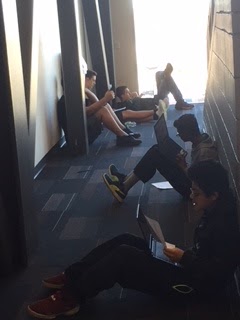
I opened the next class by reading a chapter to them. I did my deep intimidating monster voice, I did my frustrated Conor voice, and I did my mean grandmother voice. I put myself out there and it made the kids smile (and yes laugh) but that is the point. Model for them what you are looking for, voices and all.
brandon6

I told them that they need to practice and become comfortable with their reading of the page and now is the time to do that. Armed with Screencastify (an easily downloadable Chromebook extension for most computers) and a copy of their individual page with annotations, I send them out to record themselves. After they turn the recording into me, I listen and give feedback. I did my best to coach them away from monotone reading, whispering, reading too fast, or too slow, or most importantly, NOT doing a monster voice.

Clearance and Final Recording

The students were set to go.  As one final step, I called each group into the hallway and had them rehearse the whole chapter, as a full group, for me. I gave them my last bits of feedback and sent them back into the room to do a final recording.


I am already looking forward to revising this unit–make it even better. I feel that it can work in any and all classrooms. So much can be learned by understanding how a book is meant to be read and it is our jobs to help the students learn that.

What do you think of reading aloud and making group chapters come to life? Do you see your students struggling to be authentic readers? How have you encouraged students to have authentic reading experiences in your classroom?


Brandon Wasemiller has been teaching a Franklin High School for the past four years. He graduated from the University of Milwaukee-Wisconsin where he majored in Secondary English Education. When he is not teaching, Brandon coaches multiple sports (Girls XC and Baseball) and enjoys listening to audiobooks while at the gym.
 

And The Winner Is…

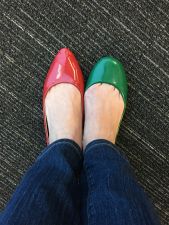
Greetings to you from the last day of school (Help me. Please, someone send help.), first (or second, you lucky devil) day of Winter Break, or the day you may be wearing two different color shoes. shoes

All of us here at Three Teachers Talk wish you the merriest of holidays, most enjoyable of breaks from school, and a fun, festive, and largely literary 2018. May the time you have with family and friends the next few days recharge your spirit, soul, and heart.

Leave a comment below with what you’ll be reading in the coming days! My to read list is four miles long, but a good recommendation is hard to pass up!

I am finally savoring the tragic beauty of Jeff Zentner’s Goodbye Days. It’s gorgeous, heart-breaking, and so cleverly phrased that I can’t wait to curl up and fly through the rest.

We are also tickled with holiday spirit to announce the winner of our signed copy of Tom Newkirk’s Minds Made For Stories!

winner

Derek Rowley – Maplewood Richmond Heights High School, St. Louis, MO

Congratulations, Derek! Thank you SO much for reading, sharing, and learning along with us.

Look for another giveaway in the coming weeks: Tom Newkirk’s Embarrassment is a must read on “the true enemy of learning – embarrassment.” Who will the lucky winner be?

Heartfelt wishes to you and yours for a joyous, and well deserved, break. See you in 2018!