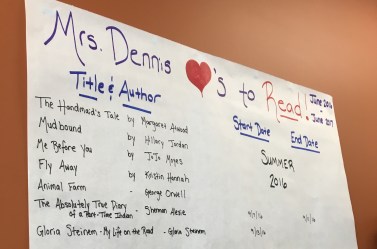
Author Archives: Lisa Dennis

Try it Tuesday: Revising a Goal…Card

Part of being relatively new to the workshop model is acceptance of personal limits on time, resources, and physical strength (I carry a lot of books around these days, but my twig arms persist). What workshop instructors can’t be short on is creativity, sales skills, or copies of  All the Light We Cannot See

So, as I start my second year exploring workshop, I find that some things need major overhaul (my capacity to read all of the books I want to read and share with kids) and some need tweaking (I’m going to try not to tear up while book talking The Kite Runner next year,..but no promises).

Last spring, I wrote about trying to motivate my readers with a visual reminder of the goals they were setting for their weekly reading. We created goal cards and placed them in our choice reading text at the point we wanted to read to (and beyond!) in the coming week. The card looked like this:

IMG_0172

Great. Except…not so great.

The goal card, meant to be inspirational, looked like a standings report at a track meet. Numbers, checkmarks, and most hideous of all, math. 

So, in the spirit of innovation, I went back through our former posts to find one I remembered from Shana about self-monitoring reading homework by calculating reading rates and then making bookmarks out of paint samples to inspire her readers. Beautiful shade progressions to symbolize change, quotes to inspire reading greatness, and reading rates, all tucked neatly in a text: IMG_9336

Great. Except…not so great.

Wisconsin hardware and paint stores now seem to only carry single color swatches or detailed color wheels in elaborate weekend warrior pamphlets, neither of which hold a place in a book in influential fashion.

Enter, my revised goal cards. A marriage of inspiration, functionality, and good old fashioned visual cues:

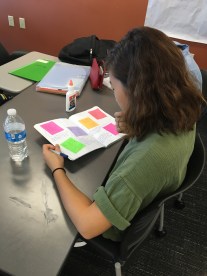
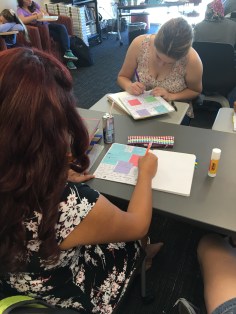
Students spent a few minutes finding quotes about books and reading that spoke to them. With my sample under the document camera as a guide, students created goal cards that reminded them of the importance and power of reading, and of not only setting goals, but keeping those goals visible in their daily reading.

Instead of using these cards as bookmarks, however, we calculated our reading rates (How many pages did you read during our ten minute reading? Multiply it by six and then double it for a two hour goal in your current text.), wrote them on the first page of our writer’s notebook under our text goals for the year, and then put the goal card in the book at the approximate place we’d reach in the text when we’d read for two hours.

Goal setting is important. As I tell the kids, it’s so important that we need to get our goals in print and on our minds to see them daily and make reading a habit.

Visual cues can help. In fact, sometimes they make the difference between passive participation (Sure, Mrs. Dennis. I’ll read for ten minutes in class…) and the active engagement we all seek.

What tweaks have you made to your workshop practice this year? Any major overhauls? Please share your ideas in the comments below. 

Mini-Lesson Monday: Narrative Analysis with StoryCorps

We all have a story to tell.

In fact as writers, we have countless stories to tell. We tell of our experiences, fears, hopes, dreams, and even those trivial events that sometimes add up to more “life” than we could have imagined.

We tell the stories of others too. Real and imagined people that speak to us in words we’ve heard and sometimes, in the words we long to hear.

I wax poetic with my students like this often, but especially early in the school year. I want them to feel my passion for the power of stories and encourage them to develop their own passion for expression. As Morris (protagonist from one of my daughter’s favorite children’s books The Fantastic Flying Books of Mr. Morris Lessmore) beautifully states, “Everyone’s story matters.” 

With this in mind, my American Literature collaborative team (Shout out to Brandon, Catherine, and Erin!) worked this year to develop a unit of narrative writing that asks students to look at the stories they tell and how those stories can be interconnected. Everyone’s story matters, and in this case, they get to have even more meaning as students craft individual tales that relate to their chosen thematic focus.

Students, having already selected, listened to, and analyzed an episode of This American Life for elements of author craft in a narrative (hook, chronological/detail choices, and word choice), partnered up or formed a group of three, and selected a theme out of a hat (dangers of conformity, vanity as downfall, the power of choice, etc.) they would explore, both individually and in their groups.

The overarching assignment is to craft an individual narrative that fits the theme and ultimately orally record the stories in a podcast that highlights the interconnectedness of the individual work. Students are graded individually on their narratives, but the podcasts are a group effort and will be played for the class.

storycorps


Objectives — Students will listen to several examples of 2-3 minute stories from NPR’s StoryCorp in order to practice narrative technique identification and analysis one more time before drafting their own stories. Students will discuss and share their insights on narrative impact of what they heard in an effort to purposefully craft their own narratives.

Lesson  — According to their website the initiative of StoryCorp is to “preserve and share humanity’s stories in order to build connections between people and create a more just and compassionate world.” 

In class, we had spoken already about the power and purpose of stories and students had come up with some wonderful ways stories enrich and fulfill us. Stories:

  • explain, or attempt to explain, where we come from and/or why we are here.
  • allow us to express what we believe or hope.
  • reveal who we are or who we want to be.

I shared with students that we were going to listen to some short pieces that told unrelated stories on the surface, but each would link back to some of the reasons we tell stories at all. Students were asked to record what they heard in the hook, insights on which details were included and why, and word choice (all elements they will be scored on when writing their own narratives).

I started by playing a sample story and then walking them through my own analysis. “Traffic Stop” is a piece that details police brutality in 2009 against a black man who was raised by white parents. The piece pretty brutally (I did have to mute three or four seconds of the piece where a police allegedly uses a racial slur that is inappropriate for the classroom) relates the story of a young man who is pulled over by police, searched but cleared, and then is assaulted by police when he questions why the officers are searching his car.

After I played the piece, I projected some of my own analysis. The hook involved the young man’s mother saying that she never would have thought skin color would make a difference for her son, but she painfully learned she was wrong. Word choice vividly captured the pain, fear, and confusion of the young man who was beaten by police. The chronology includes context for the horror of the event, a play by play of the few moments of the traffic stop, and details about the young man’s mother seeing his injuries in the hospital. My analysis was that the elements chosen were specifically selected and organized to convey the disbelief that something like this could happen to an innocent person and the role that race played in the event.

We then listened to two more stories. Students wrote down their take-aways in their writer’s notebooks and discussed after each piece. We shared out ideas and pulled insights back to those class generated elements of why we tell stories.

Finally, I had students listen to one last piece, detail their analysis on a half sheet of paper and turn it in to me for some formative feedback.

Follow-Up — We are about to start mini-lessons on hook, chronology, word choice, and parallelism (thank you Common Core) in drafting these narratives. I plan to reach back to the insights shared during this class in order to help students make purposeful choices in crafting and revising their narratives.

Everyone’s story matters. 

What tools do you use to get students thinking intentionally about their writing craft? Please share your ideas in the comment section below! 

Using the Whole Book: A Nose-to-Tail #FridayReads

“Some books you read. Some books you enjoy. But some books just swallow you up, heart and soul.” 

I love this quote from Joanne Harris. I love her book, Chocolat, and truth be told, I really love the movie adaptation’s casting of Johnny Depp as Roux… for aesthetic reasons. Seems there’s a lot of love up in here.

Speaking of book love. It’s a rare and wonderful treat to see a student experience this type of consumption through reading, but it’s delicious when it happens in my own life as well.

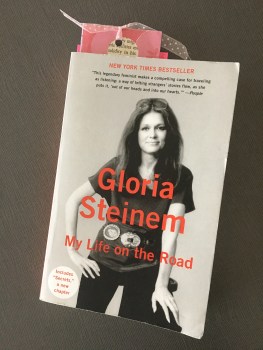
My heart has been most recently consumed by Gloria Steinem’s new memoir My Life on the Road and this week it became a text I was sharing with everyone.

Now, don’t hurt me, but I’m a bit too young to have really appreciated Gloria Steinem’s political prowess, revolutionary movement for equality, and inspirational professional ascension to feminist icon firsthand. I had, however, heard the name and when I heard an interview with Steinem on NPR, I was immediately hooked by her candor.

Steinem was on All Things Considered, discussing the inspiration for her new book, and I caught the interview on my way home from work.

img_6045

Bookmark courtesy of one crafty Shana Karnes

Safety alert: I used the Amazon app on my phone to purchase the book while at a stoplight. Unwise, but enthusiastic. Book love makes you crazy.

Steinem’s explanation of her text as part analysis of family dynamics, part travel journal, part personal exploration of leadership, and honest look at how we all live, had me intrigued. The fluency of her voice had me convinced that her prose would float off the page as beautifully as her words were floating through my car radio. Her stories had me laughing and almost crying just in the course of a six or seven minute interview.

In short, I knew this would be a captivating book.

What I wasn’t prepared for was just how relatable, inspirational, and downright touching this memoir is.

And thus began my very public consumption of and by this text. In the course of a week, I have:

  • Book Talked this book to all my classes. I explained the above reading story to my kids and shared a passage with them where she talks about being a reader and writer. Perfect for my readers and writers! “Writing, which is solitary, is fine company for organizing, which is communal” (40). 
  • Shared several pages with my 9th grade colleagues working on character development in their classes. Steinem goes into rich detail about her father and the struggles her family endured at the whims of his wandering spirit. She then talks pointedly about how her own travel (detailed later in the book and familiar to those that know and devoured Eat, Pray, Love by Elizabeth Gilbert) was most likely inspired by her youth, even though she wanted nothing more as child then stability. Students could relate to those first few instances in life where we start to see our parents in our behaviors. (I’m personally turning into my father).
  • Used that same section on character as a mentor text with my sophomores to discuss narrative purpose. Steinem’s anecdotes about her father in this section are reminiscent of The Glass Castle by Jeannette Walls, but at the same time made several of my students laugh out loud when we were reading. The author’s voice here shows poignancy through her choice of heartwarming and heartbreaking stories about her youth. We analyzed each of the anecdotes that Steinem shares in this section by having students break up into groups and evaluate how the author might have intended to use that anecdote in her self-proclaimed purpose to show how she had long been embarrassed by her father.
  • Utilized a specific quote with my AP students for a quick write. We are currently studying education and focusing on an essential question of “To what extent do our schools serve the goals of a true education?” I projected Steinem’s quote of “When humans are ranked instead of linked, everyone loses”(44) on the board and asked students to quick write on their reactions to this in light of our unit essential question.

I have also raved about this book to my husband, colleagues, friends, and three-year-old daughter, to whom I’ve suggested that she must travel, embrace her power as a woman, and learn from everyone she can. She asked if we could play Candy Land. I may have a ways to go with that one.

But at the end of the day (and week, yay!), this is a book that tells the story of what it means to explore the world and find a home wherever you are and does so with a voice that will make you want to read, share, and repeat. As a bonus, it details the life of a budding writer. For students to read and digest the struggles, joys, and challenges involved speaks deeply to what we ask them to explore in our classrooms each day.

What texts have consumed you recently? How are you sharing them with your classes? Please comment below! 

Steinem, Gloria. My Life on the Road. Random House, 2015.

Try it Tuesday:Workshop Thievery

Disclaimer: Theft is wrong. The end.

Steal is a strong word (pun very much intended). Borrow? Swipe? Thieve? Pinch?

That last one makes me feel like a 1930’s gangster, so we’ll go with that.

I’m here to confess that I’ve been pinching materials from this very blog, and I’m pathologically not remorseful.

Pilfering and plundering are practices most teachers subsist on, so it’s only natural that as the fearless English Department at Franklin High School begins its first official year of workshop instruction, we are lifting everything we can get our hands on.

And while the prospect of taking our fresh and shiny Understanding By Design curriculum templates and matching our standards based curriculum with the workshop delivery model is daunting (to say the least), it’s also afforded me an opportunity to look at countless new practices and bring added excitement to this new routine through new ways of helping students read and write everyday.

Amy.
Shana.
Faithful readers of the Three Teachers Talk blog.
I stand before you (or sit during my prep), a grateful swindler.

Today’s Try it Tuesday matches (snatches) Amy’s Blessings Cards (or an even more detailed and awesome Blessing Card Mini -Lesson here) with Shana’s Write-Around, and the reflections my students produced were fantastic.


  1. To support my belief that students preparing for in depth analysis, college/career readiness, the AP Language test, and life should know what’s going on in the world img_5673around them, part of my AP summer work is for students to sign-up for a news story as it breaks or develops over the summer.Students are to read several editorials about the topic and draw their own conclusions as to the impact this story has on a given community (either local, national, or international).As one of their first assignments of the year, they take their research on the topic and present a one minute speech to the class. The scores are formative, but they tell me a lot about students’ abilities in using text evidence to support a claim and the basic professional communication skills they do (or do not) possess.
  2. As a positive form of peer assessment during our very first public speaking opportunity, I used Amy’s idea of blessings cards. Each table grabbed a card for each presenter (I split speeches up over several days) and put his or her name on the card.When the speaker was finished and I was hurriedly writing formative feedback on the rubric, students talked at their tables and bullet pointed blessings on the speaker’s img_5672card. We had reviewed the rubric before speeches began, so students could provide positive feedback directly related to their assessment criteria. When all the speakers were finished for the day, we showered our presenters with blessings.Lots of smiles.
  3.  Once all of our speeches were complete, I shared several pictures from Shana’s post about write-arounds. We took a look at how writing/reflection can be guided by objects that give permanence to our experiences.
    I had students glue their blessings cards to a page in their response section of their writer’s notebook and then reflect on the experience. They could write about what they felt went well, goals for their future public speaking adventures, and/or anything that came to mind in relation to the experience.As I peeked over shoulders, I knew my stolen ideas were paying off for this reflection with such statements as:

    “Mrs. Dennis says that some people fear public speaking more than death. I know what she means. But this class seemed to think I had my act together though, so that’s cool.”


    “I’m never going to like this. I know it. I am never going to like public speaking. But I can get better at it.


    “I almost passed out up there. For real. But I had a notecard and it kept me basically organized. Next time, I’ll try breathing while I’m speaking. Maybe that will help too.” 


Classroom community and comfort within that community are not givens. Both must be built with intentionality. Workshop demands that we take time and honor the process around building readers, writers, and in this case, speakers to, because many of our students are not initially comfortable with the roles we are asking them to take on.

By examining the process with a growth mindset,  we put value upon the feedback that comes from not only the teacher, but peers and self reflection as well.  This feedback serves to support and motivate students as they move forward and start to become the community that will serve to encourage, challenge, and motivate better reading and writing throughout the year.

Steal these ideas. Please.

How do you encourage community building for your readers and writers? We would be blessed to have you share some ideas in the comments below.


Mini-Lesson Monday: College Applications and the Six Word Memoir

College applications are a daunting endeavor for many of my students each year. Their mailboxes and email inboxes fill with opportunities to apply everywhere from the local community college, to pricey Ivy League schools across the country, to study abroad programs in countries they may never have heard of.

As if that wasn’t enough to sort through, lurking in these countless pages and pamphlets is another overwhelming prospect – The college application essay. Also known as the “tell us who you are as a human, what your soul’s greatest desires might be, and every intimate struggle you’ve had that define you as a young adult” essay. No wonder my announcement that our first paper in AP Language will be the college application essay is usually met with huge sighs of relief. However, that relief is also somewhat short lived as we start to take a look at prompts:

  • Reflect on a time when you challenged a belief or idea. What prompted you to act?
  • Please tell us why you think you would be a good fit for __________.
  • Consider something in your life you think goes unnoticed and write about why it’s important to you.

As I tell my AP classes, “Colleges want to know the real you. The honest, gritty, learned from your mistakes, can bring something unique to their campus you. Your transcripts say keep-calm-and-apply-to-college-27-resized-600a lot about your work ethic, experiences, values, and achievements, but once you put pen to paper, you are a writer, and your story might just help them see the real you and decide that you are far too good to pass up.”

Their horrified looks usually tell me I should follow up with an explanation along these lines:


Don’t worry. We are going to do this together. Sharing your story might not be easy, but take it from this girl, everyone has a story to tell. I was your stereotypical upper-middle-class white girl with loving parents and a blissfully happy childhood. I pretty much seized up when my senior composition teacher said that we needed to write something deeply emotional and challenging in our college application essays. He had me convinced my happy life was going to keep me from going to college. Without a car wreck, lost dog, or deeply wounded heart, what compelling story did I have to tell?

Well, it turns out that one can write from the heart no matter the circumstances, and that’s what I want you to use for your own applications. An experience, belief, value, or direction for your life, can all be deeply emotional and revealing of the type of person any college would want to accept. I spoke about my desire to be a teacher in my application. Teaching is in my blood, and I had known I wanted to be a teacher since I was little. My dad used to bring home an extra gradebook for me and I’d line up my babies and stuffed animals and teach class. See…? I have the beginnings of a narrative right there. I expanded on what it would mean to me to become a teacher and how I knew the patience and passion I already possessed would not only make me a good teacher someday, they would make me a great addition to any campus because true teachers know the value of lifelong learning.


So…how to help students concisely sum up who they are?

Examples, examples, examples.

Let’s try six words. Total.

Objective: Using the language of the Depth of Knowledge levels, students will create six word memoirs as written artifacts in their writer’s notebooks to either spark ideas for drafting their college application essays, or serve as possible opening sentences for those essays.

Lesson: The timing of this lesson is after several class periods of having students explore who they are and what they value through quick writes and other activities. On one occasion, I have students write a quick write on the story they would tell to demonstrate positive elements of their character. We share stories about helping those in need, commitment in the face of certain defeat, and encounters with temptation, and then bullet point some of the “college friendly” attributes these stories suggest.

During another class period, I had students read, analyze, and then emulate Amy’s recent suggestion of the poem “Possibilities.” This was the first year I used this poem during this unit, and I could not be more happy with the results. Students did some beautiful work in analyzing Szymborska’s structure in order to write a poem with their own preferences. I made sure to discuss with students the variety of topics that Szymborska uses in the poem from straightforward preferences of activities and food to those that reveal character and life experiences. I challenged students to do the same with some wonderful results.

Finally, for this specific lesson, I reminded students of my suggestion to keep their college application essays brief, as most applications would demand that they be so with limited word counts.

“So today, I want you to be really brief. Six words brief. We’re going to try to capture some of who you are and what you believe in exactly six words.”

I begin by sharing with them a few six word memoirs of my own and talking them through sixwordthe back stories. We then head to Smith Magazine’s Six Word Memoir page so students can look around. They are to write down a few favorites and also write what they think the larger message of those snapshot memoirs might be. We discuss at our tables and then share out a few to discuss what their favorites might reveal about the authors that crafted them.

Throughout the lesson, I remind students that just as we saw in “Possibilities,” brief snippets can reveal an awful lot about who we are. This is our goal in the college application essays as a whole, and this is our goal in the exercise.

Students spend some time drafting, sharing, and then praising the work of their peers. I suggest to students that these memoirs might be great hooks for their essays, they might spark an anecdote they could include along the way, or they might simply keep students focused on their own beliefs and values in order to use those to guide what they write about themselves.

Follow-Up:  Students are working hard on their college application essays and will be doing some peer editing early this week with submission to follow later in the week. To extend the work even further, I’ll be sharing a unique extension activity with my classes.

On September 22nd, 2016, the team at Six Word Memoirs will be participating in the 3rd annual Character Day, which is a global discussion about the importance of developing true character in the world’s citizens. I’ll be encouraging my students to participate with some of the six word memoirs they’ve already created and perhaps with contributions they craft especially to speak to developing, according to the Six Word Memoir site, “curiosity, empathy, and grit.”

How do you challenge your students to write about themselves in meaningful ways? Please share your ideas in the comment section below! 

Ugly Cry Round Two – #FridayReads

Hi. My name is Lisa, and I’m a book hugger. “Hi, Lisa…” 

I feel like I can tell you this. Like you’ll understand and still let me sit near, if not at, the cool kids’ table. See, last week I was a dork. This week I’m a book hugger. Is that super dork? Literate dork? Biliophilic dork?

Either way, I’ll own it. That’s totally fine. In fact, if I know myself at all, as I hugged my copy of Kristin Hannah’s The Nightingale this morning,  my eyes were probably a bit wild too, breath bated, satisfied smile projecting my hope that pens would fly across the pages of our “I want Read” lists. Basically, when I book talk, I feel like the author is standing next to me. “Get them interested, Lisa.  Get them thinking. Sell it. Put my book in their hands, and hearts, and minds.”

So obviously…no pressure.

One of my AP Language students, Zach, smiled as I stood hugging my book today.img_5539 “Mrs.Dennis,” he said with a coy smile, “you’re super emotional.”

Who? Me?

Well…ok. Maybe. I do love a good cry. The “cathartic, wring you out, snot on the back of your hand, tell everyone to read the book” cries are my favorite (Please see my unraveling at the hands of A Monster Calls by Patrick Ness). But I know that you know; you’ve been there. Whether the tears actually fall or not (and they should, trust me, it feels great), a book that captures you can feel like a conversation with a good friend, an exploration of pure emotion, and a learning experience that leaves you a better person. Talk about a worthwhile human endeavor.

So, I quickly reflected and responded to Zach’s observation. “True, true. Hallmark commercials make me cry, but with books, that shows a pretty deep connection, doesn’t it? When the characters in a book are so real that you feel their struggle. When their stories remind you of your own, even if their life experiences are completely different from yours. That’s what I want for you. That’s why I’m up here hugging this book. Human connection.”

With further reflection, it’s how I have chosen each of the books I’ve book talked so far this year. No, they haven’t all made me cry, or I know for a fact that I’d be missing a significant portion of my audience; however, they have all been books that have touched me in different ways, to different degrees, and in different parts of my life.


So far this year, I’ve book talked:

Mudbound by Hilary Jordan – This text started my summer reading and while it’s justly won acclaim for it’s themes surrounding racial tension in the south, betrayal, and the secrets that can bury a family, I spoke to my classes about the rich voice Jordan is able to give a wide variety of characters. With a new narrator each chapter, you see this story from all angles and each is more personable and heartbreaking than the next.

The Handmaid’s Tale by Margaret Atwood – I finished this book right before summer break and I book talked it then too. It has quickly become one of my favorites as a cautionary tale and an all too real examination of how gradually, but how drastically people can become complacent to the loss of personal freedom. I took students down a “let’s imagine” path by asking them which events in their daily lives they inadvertently take for granted, but would certainly miss if they were denied the privilege. What if it was the right to have your own money that was denied? Or the right to travel? Or learn?

The Nightingale by Kristin Hannah – The characters became family to me. I realized that the terrible trials of World War II were occurring when my grandmothers were the same age as the main characters. Just because the pictures of the time period are in black and white, doesn’t mean the stories to come out of that time period are any less real. Or relatable. Or powerful (I hug what I love. I loved this book. It may be my current favorite piece of fiction). My three copies of this book disappeared today. I was tickled.

The Absolutely True Diary of a Part-Time Indian by Sherman Alexie – This is the first book I read this school year. I took it down in three days and could not stop laughing. I told my students that my connection to this book surprised me, and I think that’s part of the endearing quality of protagonist Junior’s voice. He hooked me with fart jokes. Certainly not my usual forte, but Junior’s search for hope is so real. And as I said to students, we all search for hope in different capacities. Junior searches off the reservation. I search the room during reading time. Just as Shana suggested, reading outside your comfort zone can offer some big rewards.

A Monster Calls by Patrick Ness – We’ve been well over this one. Ugly. Cry.
Though an additional sell, at the moment, is the forthcoming movie based on the book. My students want to take a field trip, but I’ve only committed to investigating the release date, if they get on reading the book. All six of my copies are currently gone from the library shelves. Win.


So, as I wrote last week when I was working to get to know my students, I feel it’s important to share who you are as a person, as much as you share who you are as a teacher, and illustrating you are a reader and writer is a part of that
img_5537-1opportunity/responsibility. With that in mind, showing you are a passionate reader is even more impactful. I feel like my students are getting to know the real me (dork and all). It’s the very best way to start building honest relationships. The kind that build trust, and thereby, community.

I’ve carefully chosen some of my favorite texts to book talk, followed my colleague Catherine’s lead in making my reading life visible, and jumped into this year with the goal of spreading my enthusiasm about books to another set of students through an honest look at what moves me, in a sincere effort to move them.  So far, so good. I just need some extra Kleenex boxes in room.

Try it Tuesday: 3 Easy Ways to Get to Know One Another

“I’m pretty sure my students are going to know I’m a dork,” I said to my husband last weekend, “from day one.” 

I had been working on updating the pictures I include on my “Getting to Know Mrs. Dennis” PowerPoint (dork alert), and noticed how having a child has really brought out the dork I think I once tried to suppress. I’m sure my daughter, now only three, will delight in that fact someday.

I’d be lying to you if I said that I’ve lost my cool over the years. That becoming a mom turned me from Audrey Hepburn into Jill Taylor (90’s sitcom references only serve to solidify my dorkdom).  To be honest, I never really had the cool. I had the kind, the careful, the detail-oriented, the poofy hair, and the braces, but not the cool.

But cool isn’t me. Watching Stranger Things with a bowl of pretzels and a glass of milk is me. Reading The Nightingale at stoplights because I can’t put it down is me. Pretending to be a bear at the zoo to make my kid smile is me.

And this week, at school, I’ve been introducing my students to the real, dorky, punny, excitable, overly-optimistic me, and it’s going really, really well.

As I told one of my classes on our very first day together, “I’m going to push you all year to share yourself with this class, on paper, in discussions, through conferences. We need to build community in here so we all feel safe enough to share things that actually matter to us. And I’d be a hypocrite

photo6

Gentetically linked dorks. Poor kid.

if I preached that to you, but didn’t clue you in to the deeply dorkish, flawed, silly, person I am. I’ll be endlessly dedicated and passionate to our growth as readers and writers this year, and I’ll be looking for the same from you. To start, we need to get to know each other. I’m Mrs. Dennis and I promise to be real with you.”

Building community is why I teach. I want my students to feel that self expression can help make them more comfortable in their own lives and thereby help them connect to others, regardless of the differences they once perceived. In building community, it’s so terribly important to be honest (though considerate) and real (though appropriate), that I spend several class periods at the start of the year working to make that possible for my students.

Here are a few of the first day activities that have my students learning about this new community we’ve just created. I tell them on the first day that our class is about the study of what it means to be human, so we start with getting to know the humans around us, as understanding breeds trust and comfort (key components to any successful group, but especially in a workshop classroom).

  • Share Parts of Who You Are: Last week, I introduced myself to students with the PowerPoint linked here. It includes plenty of pictures, a few policies and expectations, and a lot of who I am. I try to incorporate the people I love, the fun I had over the summer, and some of the background that supports the joy I find in the classroom. I encourage students to ask questions, and this year we had a few laughs over the antics of my summer with a precocious three year old. Horribly embarrassing public tantrums are hilarious in the retelling, thankfully.
  • Encourage Students to Start Sharing Who They Are: I also took Amy’s advice and made time for decorating our writer’s notebooks. I shared some of the pictures and song lyrics I used to decorate mine. We discussed the power of making something their own and turning an ordinary notebook into something that they would hopefully look forward to writing in. I took song requests for work time, students laughed about my complete lack of artistic ability, and we had fun. Rigorous, no. Important, yes. But we followed up that activity with a quick write where students chose to respond to either a quote about conformity from Marcus Aurelius or a quote about the origins of cruelty from Lucius Seneca. They supported their viewpoints with an example from something they’ve read and current events. Boom. 
  • Keep Learning and Sharing Well Into the New Year: Over the years, I’ve done countless ‘get to know you’ activities. Three Truths and a Lie. Interview Questionnaires. Find a Friend. Scavenger Hunts (See below. It’s not pretty). This year, I combined a traditional questionnaire, a twist from a colleague, and a plan to use a little time each class period talking with kids about some silly things that make them tick. On day one, I wanted to get students writing. We have only 18 minute class periods that day, so time is precious. I had kids turn in summer work and get down to a quick write in their notebooks and chat with their classmates after drafting. To take attendance, I had students write their first names (as they would like me to call them) and last names on an index card. I collected the cards and then handed them back the next day to test my knowledge of students names. But I wanted more. I now plan to use the cards to learn about my kids and share some fun with them too. I had them flip the cards over and write:
    • Personal anthems (songs that capture your soul)
    • Spirit animal
    • Dream job when you were 5 and today
    • Book that speaks to your heart
    • Extracurricular passions

So far, I’m seeing smiles and enthusiasm, and hearing lots of discussion. Students are already talking about themselves as readers and writers. 

Not always so. In my first year of teaching, a colleague had me take my five classes of freshmen through a textbook scavenger hunt. They sat silently at their desks (model students) and searched their new textbooks for answers to the questions on the worksheet I’d run off for them on “fun” green paper. I’m bored just typing about it.

Thank the heavens and Fitzwilliam Darcy (Pride and Prejudice and Dorks – my forthcoming novel), I’ve grown to trust myself and the value I see in learning about my students and building relationships. The energy it brings to the start of the year has been incredible.


Mini-lesson Monday: Poetic Literary Movements

This year was a balancing act. Bridging the old and the new. The curriculum I’m used to and the possibilities of workshop. Along with that came plenty of challenges, but also plenty of opportunities to improve on what I know by learning more about what my students can create with choice.

This lesson is from my American Literature class (sophomores) and occurred this past April when we were studying Realism. Students had conducted some research on what thematic and stylistic elements characterized the Realist movement in America and I turned to poetry to make the 19th Century ideas come to life.

Objective/s: Using the language of the Depth of Knowledge Levels, students will analyze their Realism research and examples of Realist poetry in order to synthesize characteristics of the time period with original ideas in the form of Realist inspired poetry.

Lesson: Students came to class with notes they took on American Realism. I had asked them to research the major authors of the time period, famous works, common themes and stylistic elements of writing from that time, and the historical events that led to a shift away from Romanticism.

We started by taking a look at Stephen Crane’s “I Saw a Man Pursuing the Horizon.”

I saw a man

I modeled for students my own analysis, suggesting the elements of Realism I saw in the poem. The clash of Romantic thought and Realist. The futility Realists saw in trying to escape reality. The simple construction of sentences and relatively plain diction.

We then talked about connections to these realist ideas today. “Many of us are Romantics,” I said, “I think I’m one. But I bet many of you are Realists too. What does that look like in your life?”

I asked students to jot down some ideas in their writer’s notebooks of everyday events that speak to these same themes…what some would call the ordinary struggles of life. As I walked around and took a look at the ideas my students were generating, several jumped out at me:

  • Watching someone get bullied and not knowing how to help
  • Dealing with the hand you’re dealt
  • Unavoidable accidents
  • The ‘you’ no one would suspect

Holy poetry material! I shared aloud several examples of ideas I saw from their notebooks and then shifted to have them look at one more example to solidify the simplicity (and power) of realist diction and images.

“Now, I am of the opinion that some of the best poetry is exceedingly simple. The raw, honest truth of life, just like some of the ideas I saw when I walked around and peeked into your notebooks. Let’s take a look at one more example of realist poetry – a modern example.” I showed students  “The End,” a poem (no author found) I discovered when searching for examples of Realism:


The End

It didn’t come with a bang

or a big explosion.

It didn’t come with an inevitable apocalypse

or an armageddon.

It didn’t come with collision

or a war.

It didn’t end with a dying sun

or a waking moon.

It didn’t end in breached dimensions

or shattered realities.

It didn’t end with entropy.

It came when Existence stopped dreaming

And fell into a deep sleep.


Students read the poem silently a few times and I asked them to write down the lines that they felt were especially impactful, powerful, and/or moving. I then read the poem out loud and we discussed our thoughts on the lines they wrote in their notebooks.

Next up was time to explore. Students took their knowledge of Realism, their explorations of realist topics, and our discussion on the power of simple construction with simple ideas and set to work on their own realist poems in their notebooks.

Follow up: After students had time to work on their poems, I had them share at their tables. Each table elected one student whose poem they thought was particularly pointed and either that student stood to read it or asked someone else at the table to read his/her work. We always talk about taking pride and ownership in our writing to build community. Sometimes this means letting someone’s enthusiasm over the work of his/her peers fuel an energetic reading of the work as well. Kids love to read the work of their peers and I can see in the faces of the authors a pride often unmatched when they read their own work.

A few class periods later, I asked them to find additional poems with Realist characteristics. We used these as mentor texts for small group discussion and to compare with our own work.
Do you sometimes have to bridge the gap between old school and workshop? How do you make the old seem new again? Please share in the comments below.

Try It Tuesday: 11 Weeks to Regroup

In Wisconsin, we talk a lot about the weather. This may be due, in part, to the fact that it’s downright frigid, cold, and/or disturbingly chilly for (conservatively) seven months of the year. Block off October through April for likely snow (and as a special bonus, when I was nine years old, it snowed eight inches on May 10th), September and early May for possible winter jacket wear, and viola! Summer arrives and all residents are forbidden from complaining about heat. Ever.

must-see-imagery-wisconsin-summer-one-day

Thankfully, I find myself at the start of that all too brief period when summer is brand spanking new. In the last three days I’ve picnicked with my family, gone kite flying in the park, attended a Sam Beam concert, returned to running after a few weeks break, randomly decided to try yoga last night, cleaned out two closets, and finally had time to finish reading The Handmaid’s Tale (I am in love by the way. Mandatory reading for all progressively minded ladies and the men that love them, I think.  I’d never stand for being Ofnick, though I love my husband so, and that’s really the point of the dystopian adventure, yes? A quick bucket of ice water to the face in avoidance of complacency.)

Then, two nights ago, I picked up Hillary Jordan’s Mudbound and I cannot put it down. And you know what? I don’t have to. It’s summer.

But I digress. Over the past few weeks, the Three Teachers have been reflecting on the school year that was. Its trials, tribulations, successes, explorations, and even goodbyes (That’s four links to awesome posts, by the way. Enjoy!) And as we approached the end of the school year, and worked to reflect on so many experiences and experiments of thought, I noticed an underlying current of…weariness. Or rather, some well veiled (crippling) stress and (abject) exhaustion.

Now, don’t get me wrong. We love our work. We love our students, we love to read, we love to write, and we love to challenge ourselves and our craft. We love to blog. However, the reality is, it’s hard work and the four of us are tired (I love that Three Teachers Talk is really four teachers. Surprise! More bang for your workshop buck.) Between the four of us we have a wedding to plan, a new baby to attend to, a toddler to wrangle, grandbabies to dote after, and full time employment as teachers, readers, and writers. Any teacher on the planet will tell you – we love what we do, but sweet mother of mercy, can an educator get a nap up in here?

So here is my summer edition of Try it Tuesday:

I want you to rest.

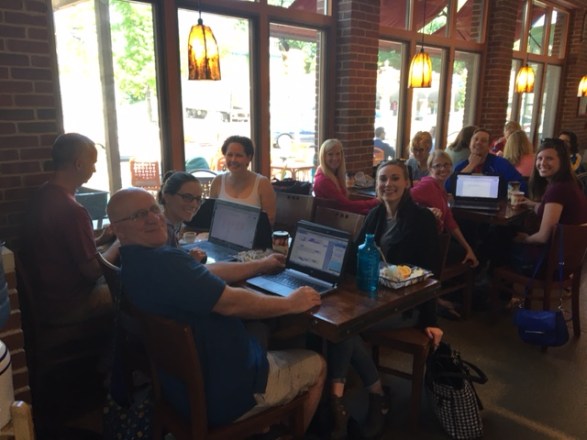
I know it’s contrary to our nature. I know that just four paragraphs ago I detailed all that I’ve crammed into the last three days (It’s like my soul sensed a vacuum created by the absence of school and sucked up anything and everything to fill the sudden void. Panic! Panic!) I know many of us have conventions to prepare for, curriculum to refine, classrooms to organize, final exams to score, and some have relatively beleaguered personal lives that need attention (My daughter asked me this morning if we were going to sit down to eat our toast today or take it in the car. Sigh. This lesson in slowing down brought to you by a three year old.)  I also know we are dedicated to a fault. Please see the following…my beautiful English colleagues working on the day after school let out.

IMG_1516

Exhibit A: This was day one of summer. Our entire team got together to finish up some district level curriculum work. They are all so sweet to look so pleased to be there.

The summer will be rich with opportunities, no doubt. Some of us will be blessed with opportunities to travel, attend workshops, dig into pedagogical texts, reflect on our craft, and excitedly (because teachers are downright adorkable) plan for next year.

But it can wait. A week? Two? I’m not sure. I’m betting it differs for everyone. But there is a reason we all get vacation at one time or another. Be it a stretch of summer or smaller breaks throughout the year, we all need to rest. In order to be our best selves when we return to the classroom, we all need time to recharge. I have eleven weeks, five of which already have one or more meetings in them. So right now…I’m going to take a few deep breaths and stare. At everything. Or nothing. Could be both. 

Don’t let anyone make you feel like you don’t deserve this break. Without it, I fear, many of us wouldn’t make it. Not for lack of trying, of course, but teacher burn out is horribly high with time away. And we all know the percentage of the coming weeks that we will (happily) dedicate to continued work as educators will be high anyway. Then, before you know it, we’ll be back at it.

IMG_1499

All quiet. For now.

So, take a bit of time for you. Catch up on Scandal or check out that Downton Abbey you’ve heard so much about (It’s over, you know, but I won’t tell anyone you’ve never seen it.) Pay someone to cut your lawn. Get in the car and drive with no real destination in mind. Sit next to the pool (Do you have one? Can I come over?) Sit down at a table to eat your breakfast, take more than 27 minutes for lunch, and demand that someone else make you dinner. Stare. 

IMG_1593

Heck, read a…wait. That suggestion’s a bit loaded.

Oh, alright. Read a book.

Read several.

I know I can’t stop you and why would I want to try?

I’m right there with you (Did I mention Mudbound is incredible?) 

Enjoy! You deserve it.

What are you doing to take a much needed break? Post your plans in the comments below!


Try It Tuesday – The ‘Secret’ to Workshop Success

At this point in the school year, teachers do a lot of counting. Counting days, counting essays left to grade, counting books missing from a classroom library (Seriously people, it’s not cool to steal from teachers. Your growing passion for reading is the bee’s knees, but my own kid may have to pay her way through college at the rate I spend on books for you. Might you return them? Please? Thank you). At graduation this past weekend, I found myself counting seniors I had taught and I began imagining all the opportunities in front of them. Interestingly enough, this year, I looked at those seniors and saw…books.

Zak raved about Ready Player One early this year. It was one of my first workshop successes.
Zoey emailed me over the weekend a few months back about The Girl on the Train.
Jenna plowed through Brain on Fire recently, after Zoey’s recommendation.
Larissa swears that Walden will change your life.
Ellen blushed when she told me she absolutely loved The Sociopath Next Door.
I counted at least eleven kids that read and sobbed over A Monster Calls.

Birds singing and happy little clouds everywhere.

And now…for a moment of full disclosure in the opposite direction. As my department makes the transition to workshop, sometimes the numbers are overwhelming and scary. We are one of only a handful of high schools moving to this model in the entire country. The path before us is paved by K-8 workshop instruction, but the number of secondary schools already doing workshop is relatively limited. This makes the sheer volume of curriculum we’re creating staggering and models hard to find.

On top of those numbers we have extremely limited common prep time, surface level understanding of the best way to break up our 86 minute class periods most effectively, and hundreds of new classroom texts we are working to keep track of (not to mention read). All with three preps for most of my colleagues and a grand total of one hour of collaborative PLC time per week.

In short, this transition isn’t easy and it’s already had some pretty sobering/ugly/weep-worthy moments.

We’re wrestling with very real questions about how to hold students accountable for their skill progression, how to keep track of meeting student need most effectively, how to appropriately conference with all of our students in large classes throughout the school year, and how to balance a need for college/career readiness with our desire to afford students the choice that will fuel their passions for both reading and writing.

At the end of the day, and the end of school year in which we have all been working to

IMG_1112

AP Language Super Readers – Simrah discovered nonfiction, Louise (our school salutatorian) delved into the study of language, and Ellen and Kaley blew through Brain on Fire.

incorporate more and more workshop practice into our daily instruction (knowing we will be expected to operate in the workshop model to fidelity next year), we are tired. Tired, overwhelmed, and nervous.

However, the visual of an Escher-like hellscape I’ve just created for you, thankfully, isn’t the whole story. As I reflect back on this move to workshop, the overwhelming nature of the preparation involved ultimately pales in comparison to the positive feedback I’ve received from students.

I was sitting on the patio a few nights ago with my husband discussing the class-feedback forms my students had just emailed to me (What did you learn from this class? What did you enjoy? What should I work on for next year?) with the completion of our regular class work and impending exam week. I expressed to him how proud I was of the number of students who commented on reading more, enjoying writing more, and basically being more invested in English class than any other year I can remember.

It sort of dumbfounded me as I recalled the emails over the course of the year. The casual

IMG_1090

My 2A AP Language Crew – Dema read Black Boy after a book talk, Bennett read Ishmael and says it changed his life, and Larissa fell in love with American Classics.

conversations with kids that showed their deep thinking about topics they cared about. Countless peer to peer discussions with overheard snippets such as “Oh, I loved that book. You need to read it” and “Yeah, I just couldn’t put it down” and “This topic sentence is really good, but if you combine it with this idea, the paragraph will make more sense.”  The longer I talked with my husband, and the more I recounted the year in student snapshots, the more surprised I was to realize that my stories of the year had little to do with content I “taught” and everything to do with the students themselves – what they were doing with the content. The difference of 2015-2016 was choice and encouragement to be readers and writers. In short…workshop.

So with my recent numerical obsession (did you know it’s only two more sleeps until the last day of school?!), I compiled the following rundown of my first year of exploring the workshop model:


Workshop by the Numbers

1 – Teacher playing around with workshop. Discovering its benefits, its challenges, and its similarity to and differences from her current instruction. Exhausting in the way teachers love. Some call it masochistic. I call it professional development.

IMG_1100

We learned how to make paper cups on the last day with our seniors…a nod to the practicality of English class…then we read. 

3 – Teachers (Talk) who journeyed to the wild North during February to instruct the Franklin High School English department on the day to day of workshop instruction. Exhilarating.

11 – Colleagues opening their lesson plan books and starting almost from scratch to first play with and then make a full transition next year to the workshop model. Collaborative.

117 – Students who read for 10 minutes of every class period we shared, wrote and reflected during every period of second semester, and changed as readers and writers in ways I’ve not seen before in my 13 years of teaching. Thrilling.

180 – Days in the school year to remind students that they will grow as readers and writers with practice, passion, and a commitment to question, explore, and expand their views of the world. Daunting.

2088 – Hours of summer to read the 16,983 books on my “To Read” list (No time for love, Doctor Jones…or sleep for that matter). Delicious.


So many opportunities.

But now, I am going to be brutally honest once again. As previously stated, the move to workshop can be scary. It’s new. New to us, our students, and in a formal sense, it’s relatively new to secondary education altogether.

However, here’s the part that sort of sounds like cheating:

Though teachers, myself included, are very rarely afforded the opportunity to take it easy, there are few things easier than throwing open the doors on choice and seeing what happens. Of course, there are many systems that need developing in my classroom and so much of workshop requires routine and consistency, but the heart and soul of workshop is really
IMG_1116

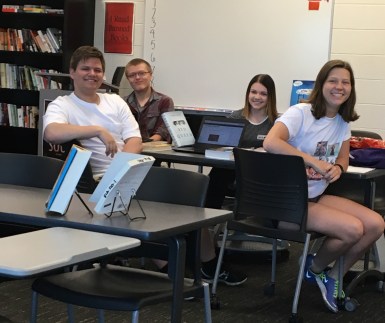
1B AP Language and Composition – The seniors have left us, but this crew still has final projects to present

choice – choice, talk, and lots of writing – all of which mainly require simply being honest with, invested in, and responsive to student need. No, it’s not totally easy. It can’t be a free for all. It can’t be totally haphazard. But it can be trial and error. It can be learn as you go. It can be beautifully impactful.

To provide proof, here is a sampling of student reaction from my class-feedback form this year. I tried a lot of different things. I messed up a lot. We backtracked often. I sometimes forgot to book talk. I sometimes didn’t provide enough modeling or take the time to write every time they did, but we worked with choice, we wrote more, and we talked more than ever before.

Here are just a few reactions from my AP Language and Composition class:


Hello,
This year I really learned to be literate. AP Lang actually taught me that I can read books that I want to read and no matter what they are I can discuss them in a scholarly way because even if the book is something like poetry or a comic it is still a book. I’ve learned that all books have something to teach and that’s why they were written in the first place. I’ve read some amazing books this year and I’ve learned how to discuss my opinions on things using a higher vocabulary and assertions that are beyond the obvious. I’ve learned that you can look at anything in life a little deeper and you might just learn something. My tendencies to look deeper into things was fostered and practiced through books and reading so thank you Mrs. Dennis for helping me become a scholar. The first time you called us scholars I didn’t really think you were serious, but now I feel it. I feel like I want to spend my entire summer reading and I plan on trying to finish a large chunk of my I want to read page because reading truly and utterly makes one a better person. Reading makes you a better thinker, citizen and friend. Language is truly a beautiful thing. Also, you should know that coming into this class I was intimidated and almost dropped. English is not my strongest suit as I want to go into premed, but now I can be a poetic Doctor am I right??
Thank you also for always being a nice person and a smiling face to see in the morning.
Love,
Nimmi
Mrs Dennis,
I loved this class, a lot. I’ve never really felt like I’ve learned much from English classes, but in AP Lang this year, I’ve grown so much as a writer and a reader and a thinker. Part of that is the class itself, part of that is the practice work we’ve done throughout the year that forced us to think for ourselves (I actually like doing one pagers now), and a big part of that is you as a teacher. You made us want to be smart. I wouldn’t change a thing, and I think that I’ll probably look back on this class as one of the most valuable I’ve taken in high school. I’ll miss having you as a teacher next year!
Thanks for everything,
Maddie
Mrs Dennis,
I always thought becoming a man would require some sort of coming of age. Some sort of ‘killing the beast and dragging it home’ type situation…
I began this year as a boy and ended it as a man. Throughout the year I became increasingly disillusioned with being a dependent, in ideology and in living situation. I read books about Manliness, articles about what it “means” to be a man and looked far and wide for what the distinction was.
There is no amount of *physical contact*, “macho” rites of passage, or waking up one day transformed that made me into a man. Oddly enough, it was sharing my feelings that made me a man. The turning point was the day you told us “Feel free to share more feelings in your one pagers”.
“Sharing my feelings” translated to me having to figure out WHAT I felt and believed and WHY.
Instead of having some book tell me that I should be principled and have virtue (which is simple enough for me, and not only a manly thing) AP Lang and you made me feel like I had a SAY in my own life and thoughts. AP Lang made me no longer dependent on others for what I believe and why, giving me the ability to evaluate, challenge, qualify AND support things.
AP Language and Composition MADE A MAN OUT OF ME.
I am eternally grateful,
Bennett
Encourage everyone to read Walden, strongly encourage. It’s life-changing.
Continue teaching everyone to question ideas or anything at all; I think that was really fundamental in my growth as a student as well.
Larissa

And here, ladies and gentlemen, is the secret formula…

It’s no secret at all.

These are the simple changes I made to my daily practice. And though I have a lot of work to do in regards to running a true workshop classroom each and every day, the results this year have felt amazing. Give it a try!

  • Provide 10-15 minutes per class period for students to read books of their choosing. It’s time well spent. Best spent, actually. 
  • Conference with students during that reading time to better understand what, how, and why they read. This will assist you in recommending further reading and in determining mini lessons your students need to make them better readers and writers.
  • Have students write each and every day. Encourage them to write without stopping (building fluency), revise something every time they write (building capacity to internalize the writing process), share that writing (to build community), and take pride in that writing by choosing and developing ideas.
  • Use additional class time for more conferences with students around what they are reading and writing. Students can work individually, in pairs, or in small groups during this time, depending on the mini lesson for the day.

Of course, readers and writers workshop involves so much more, but this is where I started this year. This is what resulted in the student response above.

If my calculations are correct, I have roughly 25 years left in the classroom (holy, holy, holy). That’s 3000 students (conservatively) over 4500 days. Talk about an opportunity. Or rather, 4500 opportunities.

What books will they love?

What great stories will they tell?

Whose life will change by becoming a reader and a writer?

I can’t wait to find out. Because the secret to workshop success is no secret…it’s the students.
IMG_1352

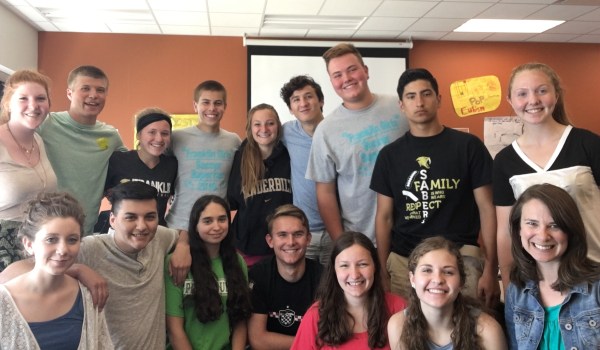
3A Sophomores – Trevor said he read more than he ever has, Errin and I read Metamorphosis  together, Josh read (and loved) Moby Dick, and Lauren’s “To Read” list is two pages long. 

What moves have you made to workshop that have made a difference in your practice? Please feel free to leave your comments and questions below!