Author Archives: Amy Rasmussen

A Little Learning with Big Outcomes

Last week was tough. If you teach in TX, you probably know what I mean.

December means STAAR/EOC testing, and while I teach readers and writers in 11th and 12th grade English classes at a large senior high school, many of my students carry the label of “re-tester.” (It’s an ugly label; isn’t it?)

All week students who have yet to successfully pass all five exams required to graduate filed into testing rooms to try again. This meant many disruptions for students not testing.

All week the English hall, along with other rooms, became the testing center. Classes displaced. Students out of comfort zones. Just a bit of chaos.

We know how well this works for learning.

In an effort to get my students settled in, back in our classroom and back in our routine

Julian shares his haiku

Julian sharing his haiku

of workshop, we played with words.

Testing disrupted our writing project, a series of letters in a variety of forms with a variety of tones, all related to a self-selected thematic link. We needed a revision workshop, but my seniors were not having it. With just 10.5 days until winter break, plus 8.5 until the end of term, many are already playing XBox and watching Netflix in their heads. (Me, too, but at least I’m fighting it.)

Since we read our choice books at the beginning of every class period, and I work daily to hold students who have not read a book on their own throughout high school accountable, I am constantly trying something new.  Today the new turned pretty cool.

We wrote book reviews in the form of haiku.

The tremendous thinking about word choice — well, it was kind of magical. (If only students would always think about word choice with such care.) Here’s a sampling of our book review poetry:

A book can contain

many life lessons that we

can use in our lives.

~Cesar Perez

The Playbook by Kwame Alexander

Are her thoughts her own

or does the tightening coil

control her whole being?

~Maria Cruz

Turtles all the Way Down by John Green

my life was stolen

but after 18 years I

got to hug my mom

~Grace Foust

A Stolen Life by Jaycee Dugard

being arrested

for helping his ex-girlfriend

Being black is hard.

~Di’Myrius Owens

Dear Martin by Nic Stone

her eyes captured me

I lost myself in her heart

Owned me from the start

~Axel Ibarra

The Oxygen Thief by Anonymous

Looking for a path

Twisted and in need of help

How do I escape?

~Jesse Borjas

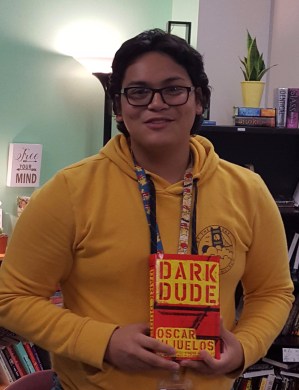
Dark Dude  by Oscar Hijuelos

Running for freedom

Garret escapes boot camp

Fear, risk run with him

~Cris Velasquez

Boot Camp by Todd Strasser

Black lives do matter.

Police brutality sucks.

assume all black steal

~Alondra Rosales

All American Boys by Jason Reynolds & Brendan Kiely

The first hand account

No excuses for mistakes

Kill Osama Bin

~McKenzie Bowie

No Easy Day by Mark Owen

This simple activity led to a complex discussion about the power of words and why we need to revise our writing in order to craft with purpose. We discussed adding figurative language, creating imagery, using complex sentences. I taught how to write appositive phrases, a grammar move my students did not know.

And as students moved into their writing groups, they talked about their plans for revision. Teaching writers does not get much better than that.

When our students take on the identify of writers, they talk like writers, and they write with purpose — choosing words and phrases and making moves like real writers do.

Side note:  Some of my students produces haikus that revealed needs in their reading lives. For example, one student wrote that Fahrenheit 451 was set in WWII, and another showed confusion in the change of point of view in All American Boys. Their book review haikus gave me an action plan for reading conferences. Bonus!

Amy Rasmussen teaches senior English and AP English Lang & Comp in North TX. She loves to get her students talking about the things that matter to them. She also loves to get them talking about the things that matter to us all:  books and words and poetry and writing and serving people everywhere. Follow her @amyrass and @3TeachersTalk.

“Did you know Gucci has a book?” I do now.

“Hey, Miss, did you know Gucci has a book? I want to read it.”

“Really? You are telling me you actually want to read book?”

“Yeah, but only that one.”

I go to my computer, click on Amazon, and look for a new book by Gucci. I find:

Screen Shot 2017-12-04 at 4.28.59 PM

These cannot be the books Daniel is talking about. I know this kid. He was in my junior English class last year — part of the class with the tissue issue, and now I had him as a senior.

“How do you know Gucci has a book?” I asked.

“I saw it on his Instagram,” Daniel said, showing me his phone.

Dear Reader, you are ahead of me on this, aren’t you?

I admit to being on the edge of old. I had no idea before this conversation with this student that his Gucci was not handbags and luxury leather goods. Because Daniel tends to mumble, it took me a while to figure out he was referring to Gucci Mane.

Daniel’s favorite rapper had a new book.

So I bought it.

When I first met Daniel, we had trouble. He sat in the back of the room, fake reading, sleeping, tossing pencils, goofing off so others laughed. I moved him to the front, and he slid low in his chair and sulked. Every day. And every day when I conferred with readers, I leaned over Daniel’s shoulder and asked what I could do to help him want to be a part of my class.

Eventually, he responded. He told me he’d read Gary Soto’s books in 10th grade. I wasn’t sure I could believe him, fake-reading tough guy and all, but I passed him the two Soto books I have in my library. He read them both.

Then, he started reading Matt de la Pena’s books. Ball Don’t Lie took Daniel a long time to get through, but he finished it and started Mexican Whiteboy. I’m pretty sure he read four books that semester — more than he’d ever read in his 16 years.

In conferences I asked Daniel about his life outside of school. He told me he wanted to work on cars like his brother and that he took the bus to the career center after my class every day, so he could take courses in auto mechanics. Based on our conversations, I do not think another general ed teacher had ever talked to this young man about what mattered to him:  cars.

hattie-teacher-student-relationships

Source: Hattie, J. (2009). Visible Learning: A Synthesis of Over 800 Meta-Analyses On Achievement. Routledge.

In education, we hear about the importance of building relationships a lot, and my experience with Daniel is a testament to the power of taking the time to get to know a student. Because he knew I cared, Daniel started to care about his English class. He began asking for help and coming to tutorials. He started showing up in spirit and not just as a warm body slumped in a chair. He felt like he belonged.

Did Daniel excel? Not exactly. But he passed, which was something a bit surprising to both of us after his I’m-too-cool-for-school-to-do-anything rocky start.

Flash forward to this year. I moved to senior English, and Daniel got his original schedule changed so he could be in my class. He walked in my room the first day with the same too-cool attitude. (Appearances are everything, and I know this game.) Again, I gently started conversations.

When Daniel scored an A on his first essay, he pretty much called me a liar. On his

Reading Boot Camp by Todd Strasser

Reading Boot Camp by Todd Strasser

next essay, he told me he stayed up all night so his brother could help him, so he wouldn’t show up to class empty handed. When we did a project on careers, and he presented to the class, Daniel spoke with confidence and detail about the field of auto mechanics. He’s read at least two books this fall and a lot of articles in The Wall Street Journal. This past Friday he came to tutorials for an hour, so I could review what he needed to do to pass his last state exam so he can graduate this spring. I don’t know if he will, but I sure hope so.


There are thousands of young men like Daniel in our schools. I wonder if teachers have the time, resources, and energy to give them the attention they need. There are 28 students in Daniel’s class this year. There were 32 in his class last fall.

There is one of me.

I cannot help but think of the famous starfish story. You know the one that ends with “I made a difference to that one.” I know I’ve made a difference to Daniel. I still call him a punk. He still mumbles when he talks to me. But he knows I like him. I really like him. And he even let me interview him, so you can like him, too. (The smile at the end is the best part.)

Choice matters! If you are reading this post, you probably already believe that as much as I do. I hope you do. Daniel’s story is not unique. We make a difference to many young people just like him when we open spaces for talk, engage in real conversations about what matters to them, and allow for self-selected reading in our instruction.

I would love to hear the stories of your Daniels. Please share in the comments.

Amy Rasmussen teaches English IV and AP English Language at a large senior high school in North Texas. She spends a ton of money on books with the hope of helping every child develop as a reader. And while she does not listen to rap, she does learn a lot from those who do. Follow her @amyrass 

#NCTE17 — So Much to Remember, So Much to Do

Confession:  I do not have the energy to write this post.

NCTEStLouisI had an amazing learning experience at NCTE in St. Louis. I met Twitter friends for the first time face-to-face. I got to present with my amazing and faithful blogging buddies — and Tom Newkirk! I loaded my shoulder bag with loads of new books for my classroom library complements of the book vendors in the exhibit hall. I talked with some fascinating educators and attended fantastic sessions — all tattooed my heart with meaningful messages. I saw Linda Rief talk about her heart books and Nancie Atwell, Kelly Gallagher, and Penny Kittle advocate for choice reading and more talk and more diverse books and more time to read and write with students. I attended CEL and presented with my newfound friend, Sarah Zerwin, who is writing a book on going gradeless, my newest quest. I did not sleep much. Does anyone sleep much at NCTE?

You’d think that after a week-long break I’d have caught up. Not so. Remember how I wrote about my family coming for Thanksgiving? They did. We laughed and ate and camped and ate.

And. It. Was. Awesome.

JennaRyanKellyDevin

My newly weds. Two daughters and two new son-in-laws.

HyrumMeZach2017

Hyrum, my soldier, and his twin, Zach

campingThanksgiving2017

On the 3rd day of camping, we are a motley crew but somehow still smiling.

But I am tired.

Yesterday I returned to school like I assume most every teacher in America did. The stack of papers needing grading shouted at me as I flipped on the lights. 111 emails flash danced in my inbox. One plant gave up its withered ghost, and four of my bookcases must have wrestled with the devil. Before the first bell, I sat at a table and breathed. Amazing what a few deep breaths will do.

So, yes, I have a lot to remember about NCTE. My notebook begs to be revisited, and when I get a minute or two, I will write a post that showcases the best of my learning at this inspiring convention.  In the meantime, since I did not preview my part of our presentation at NCTE like my writing partners did, I include it here. Most of my notes are in the slides, so maybe my message will make a little sense without my commentary. At least I hope so. Personally, I think our 3TT presentation was awesome! I learned so much from our journey into doing more with narrative. If you were not there, I wish you could’ve been!

Happy almost December, my friends. May your days be merry and bright right on up to the December holidays. Maybe then we will get some sleep.


Amy Rasmussen teaches senior English and AP Language at a large and spirit-filled high school just north of Dallas. She is the mother of six adult children and grandmother to five. She loves to read and write and share her love of reading and writing with anyone who will listen. She also loves to sleep and believes that good pillows make the best of friends. Follow Amy @amyrass and @3TeachersTalk.

Part II. Continuing the Crusade for my Readers — Guest Post by Charles Moore

If you read my post from three weeks ago you understand my plight. I’m fighting an important battle, and it’s a battle I can’t bear to lose. I strive desperately to move each one of my students towards a love of reading. Reading comes easy to some of them; it’s so hard for others.

It’s working. I’m seeing momentum build with my readers. Several of them came back from this weekend having read on their own!!!

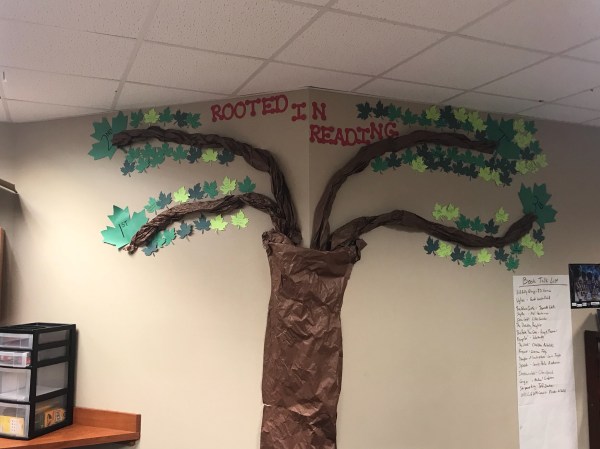
Tree

Our Rooted in Reading tree is growing!!!

So what, exactly, have I been doing?

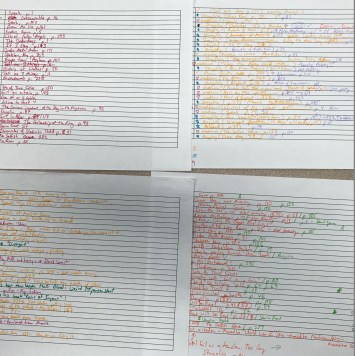
As previously mentioned, I had to find out where all my students were as readers. That took Conference Logsseveral weeks of tracking movement. I recorded their progress as often as possible and, most of the time, checked with them every day. Our gradebook software makes creating rosters super easy, and I made a page for each class that I use to take notes. For some kids, it’s just their page numbers and notes about how they feel about their current books. For others, my substantial readers, it’s a record of our conferences and their answers to thoughtful questions about themselves as readers. My goal is to have more of these types of conferences. Either way, it’s a daily map of the reading lives of each student.

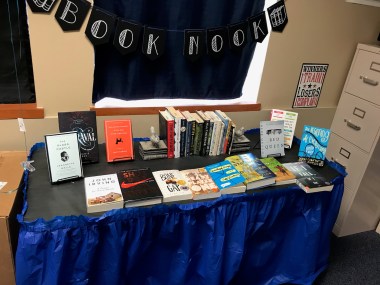
One thing I am not scared to do is move a kid out of a book that I put them in the day Book Nookbefore; even if that student was in a different book the day before that and another the day before that. The key to that whole process, thought, is my classroom library. It’s beautiful and I love it. I know it from top to bottom. It holds many books that I’ve read and so many books I haven’t read…yet. It’s crucial that I can take a book out of a student’s hand and hand them a new book on the spot. 

For instance, a baseball player, in my second period class, finished Scythe a week or two ago. He even buddied up with one of our Assistant Principals, and they talked almost daily about it. He moved into The Book Thief last week but didn’t connect with it and read 80 pages in 10 days. Friday, he “punted” that book and took home The House of the Scorpion and finished almost half of it this weekend. This story repeats itself over and over in my classroom.

We have to work to get students in the right book and just like with us, sometimes so much depends on what is going on in their lives and where they are emotionally.

I mentioned before how I’m talking books every day. Book talks allow them to plan for the next book and the one after that. I think it’s important that they have a list of books to read next, and the more they internalize this process, the closer they are to being a life-long reader. Of course, I’m here to guide them, but I want to see them seeking the books themselves.

Encouraging and supporting readers with my dedication to their reading lives is probably the most important part of this. Sharing my life as a reader with my students is crucial. They know how I loved Red Queen, and how I struggled with The Hate You Give.

I write poems on the board from Rupi Kaur, r.h. sin, and my own.

I show them the books I buy, and we conspire to keep it a secret from my wife.

Last week one of my students gave me We Should all be Feminists. She knows I have a daughter and I should take this kind of thinking into account in my life with her. I spent the next several days engaging with this student and her table group around the thoughts I took from the book. They know I read it, and that connection is authentic.

We spend too much class time each week on our independent reading for us to not be “readers.”

It’s my mission to guide them to the life of a reader, and I have to live it as much as I expect them to.

Clear Creek ISD June 2017 (1)

Charles Moore is the chauffeur to a 7 year old diva and loves coaching linebackers and teaching Senior English in League City, Tx. He can never finish a book because his students steal them. Follow Charles on Twitter @ctcoach

Ready or Not, #NCTE17, Here We Come

Sometimes November is too much fun.

I keep telling myself that as I plan for my six children, two new son-in-laws, and five little grandkiddos to come home for Thanksgiving — not two or three days after I get a good night’s sleep and recover from the extraordinary time I expect to have at NCTE this week — but one, less than 24 hours!

Oh, I am excited. No question about that. There is nothing like family for the holidays, especially my big and boisterous one. But the getting ready? Just a little crazy.

I already know my refrigerator is not big enough, and I don’t have enough beds. (How can I put my daughters’ new husbands on the floor? Would their mothers put my daughters on the floor?) I’ve been on a mad hunt, shopping on Facebook Marketplace, for enough beds. Thank God I live in a huge metroplex with lots of people selling lots of stuff.

I won’t even mention how my sweet husband decided we needed new carpet, which if you’ve ever done that deal in a small home packed with 32 years of “Oh, I might need that” you know what an exhausting move-and-shove-and-throw-that-out time that is.

So, all that to say this:  Who is ready for NCTE?

My heart is, but my head is not. Neither are my presentations. (Did you notice that s? I did it to myself: I’ve got THREE. NCTE with this 3TT writing team, a 5 minute Ignite spiel, and my first ever CEL.) Shana’s promised to remind me how I feel right now when proposals come due for 2018. Frantic does not quite cover it. Can I take another day off? I just took off Friday. Instead of putting slides together, I bought a trundle bed.

If you will be in St. Louis, I hope you will find me. Flag me down. Wave across the room. Introduce yourself. Come to one of my sessions and say, “Hi!” Shake my hand or give me a hug. I could use a hug or two or twelve.

Reclaiming Narrative and Amplifying Our Voices_ Using Story to Invite Fearless Inquiry and Intellectual Challenge for Our Students and Ourselves

NCTE is my favorite conference. It fuels me for the whole year. I cannot wait to get there.

I remember the first session I attended at NCTE last year — a Thursday workshop tribute to Thomas Newkirk. So many of the teacher leaders I admire spoke on how Tom’s work has influenced and strengthened their’s: Tom Romano, Jeff Wilhelm, Penny Kittle and so many others.

Tom’s been a blessing to my work, too. I am a better teacher and a better person because I know Tom Newkirk. Penny Kittle told me once, “Tom is the smartest person I know.” I have to agree. He is so wise. He is kind, too.

Tom Newkirk is our session chair!

Writing that out still gives me a thrill. (I refuse to call it pressure. Tom Newkirk will be listening to us talk about narrative. HE IS AN EXPERT ON NARRATIVE! He wrote a book about narrative! Okay, maybe a little pressure.)

So, all this to say:  Who is ready for NCTE?

I will be.


Are you ready? What are you most excited about at NCTE? Please share in the comments.

Amy Rasmussen is not usually a procrastinator. She keeps lists so she can mark things off lists. Someday soon she will get her act together — certainly before 12:30 on Friday. Amy teaches AP Lang and English IV at a large senior high in north TX. Follow her @amyrass and @3TeachersTalk.

After the Hurricane, a Crusade for my Readers — Guest Post by Charles Moore

Lightning woke me at 4:30 this morning. Friday is my “sleeping late day.” I usually roust Clear Creek ISD June 2017 (1)myself around 5:30 and head to the bus barn to pick up a bus for the varsity football game. The much needed rest was not coming today. Please forgive my anxiety with storms these days. It doesn’t seem to abate. Nor do my thoughts of teaching and coaching and facilitating our Student Council.

Last week was Homecoming Week in Charger Nation. This means dress-up days, a
parade and a carnival. Throw in a day of PSAT testing for fun. It was the end of the first nine weeks grading period; a grading period interrupted by something called Harvey. Heck, we can talk about my son’s soccer practice and robotics meetings. My daughter missed her dance class to be a member of the Homecoming Court. You’ve never seen a girl smile so big as when she rode in the back of that convertible holding a tiara on her lap for dear life.

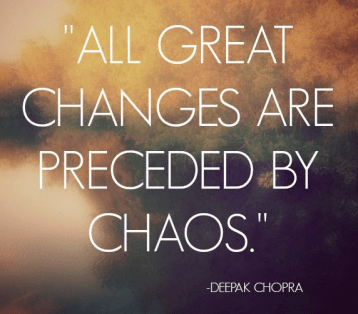
There is a hurricane metaphor in here somewhere, but I can’t find it. The best word for last week is: chaos.

Chopra chaos quote

And yet…I never stop thinking, just like this morning, about my job. Really, I can’t stop thinking about how I do my job and how I can get better at it.

I can’t stop thinking about how I’ve changed as a teacher these last couple of years. Specifically, I’m thinking about how learning about workshop has made me a better teacher, coach, and Student Council Sponsor. My whole approach to this teaching life changed. I ask the kids to take more stake in their learning. I demand that they explore and discover and use me as a resource. It works.

This initial nine weeks was crazy. What with our natural disaster and the recovery and the fact that it was going to only be eight weeks long to begin with. Somehow we made it.

Workshop did that.

What workshop didn’t do was make my students readers. Most of them just didn’t read the first nine weeks of school and their teacher didn’t do a good job engaging them in their self-selected books.

I vowed to change that in the second nine weeks. I sat down with each class roster and noted the progress of every single student in each of my classes. I studied them. I conferred with them about their reading lives. Data emerged. I found that my students fell into one of two categories: Reader or Non-reader. Now that’s an earth shattering breakthrough, I know. The important thing about it is that I knew which one each student was.

So I went to work moving kids out of the books that bogged them down and into books that could engage them. To move them, though, I had to get into their heads and learn about their thinking. What interested them? Not just cars and cliques or dragons and swords, but what themes and what sorts of characters grabbed their attention.

I looked at their college essays and talked to them about what was happening in their lives. I engaged them in talk of who they thought they were. I assigned quick writes about their life as a reader and asked what appealed to their thinking. I checked the progress of my non-readers every day.

Constant Conferring was crucial. Every. Single. Day.

Coach Moore Book Talk List

Keeping a visible record of book talks

Also, I committed to book talks. Every single day.

This is hard for someone who doesn’t have a lot of time to read during this time of year. But I found ways to get books in front of them. I might talk about a book on Monday and then read a short selection from it on Tuesday. Rinse and repeat.

I went down to the school library and checked out books that I’ve read that aren’t in my classroom library. They love it. I tell students over and over, “I need you to finish that one quickly because its on my ‘Next to Read’ list.” I have at least 30 books on that list.

Our results vary. Some kids jumped straight into a new book and took off while others still struggle to find time outside of class. Some students tell me how they find time to read on the bus to their cross country meet or at work at the tanning salon. Most of them are trying and I think that’s really the most I can ask of them. It’s not, however, all I can demand of myself.

I crusade to make them life-long readers and writers. I will not relent. I want them to find the joy in reading that I know is there and if we have to do the hard work together, then I’m all in.

Charles Moore is a senior English teacher at Clear Springs High School in League City, TX. He enjoys leisure swimming, reading, and coaching linebackers. Follow Charles on Twitter @ctcoach and read Charles’ other posts here and here.

Please, Add Your Questions about Narrative– #3TTchat tonight 8ET/7CT

Last week I asked my students the same question I often ask teachers when I facilitate professional development workshops:  What do students today need?

My students talked in their table groups and then shared their ideas. Most said in one way or another:  We need to feel validated and to share our voices.

I don’t know of a better way to accomplish both then by infusing narrative into every aspect of my teaching.

Tonight is our inaugural #3TTchat with our guest Tom Newkirk, author of Minds Made for Stories and the new book Embarrassment: And the Emotional Underlife of Learning (among others).

Screen Shot 2017-10-23 at 6.02.59 AM

If you are a regular reader of this blog, you’ve certainly noticed we’ve focused on narrative, specifically Newkirk’s books, lately. I wrote about how teaching itself embraces the drama of story and later shared some of the quotes that resonated enough to change the way I talk about writing with my students — and the way I teach it. Lisa shared her beautiful argument Narrative Writing: Giving Voice to the Stories that Matter Most.

We are shoulders deep into planning our session for NCTE:  Reclaiming Narrative and Amplifying our Voices:  Using Story to Invite Fearless Inquiry and Intellectual Challenge for Our Students and Ourselves. (We present Friday at 12:30. We hope you will come!)

If you haven’t had a chance to read Tom’s books, we hope you will still join us as we chat with him on Twitter. And if you have some time between now and then, or any time really, perhaps you’ll find value in this Heinemann podcast with Tom about Embarrassment and how it is the “true enemy of learning,” or a sample chapter of Minds Made for Stories. You’ll see why we at Three Teachers Talk have made such a fuss.

In preparation for our chat tonight — and for our presentation at NCTE, we’d love for you to ask some questions about infusing narrative into our teaching practices, or just share with us some of your favorite ideas or best experiences with students and narrative reading or writing. We’d love to include you in the conversation tonight and in St. Louis at #NCTE17.

While you’re thinking:  This is the quick write my students and I will write today: What’s your story?

Shouldn’t Students Know How to Assess Their Independent Reading?

I have a love/hate relationship with the word authentic.

A few years ago when I participated in the North Star of TX National Writing Project, I wrote my action research goal to align with North Star’s definition of authenticity: “authenticity is connecting student learning with significant audiences, tasks, and purposes.” Of course, I still believe in this definition; I just struggle with redefining it for the individual students in my classroom.

Let’s take self-selected, independent reading for example. How do we ‘authentically’ assess this reading? Shana’s written about this topic lately in posts about too much measurement and alternatives to reading logs. She even started this google doc, a resource for assessing independent reading sans reading logs. There are some great ideas there.

I’m still not satisfied.

A few weeks ago I wrote about shifting control to invite more learning in which I write about shifting the finding to my students, giving them the opportunity to find mentor texts and create text sets we will study in class. I know this empowers students — they want to feel some element of control.

I decided to take the same idea of shifting and apply it to how I might assess student choice reading. Quite simply, I asked students to help me figure it out.

First, I reminded my readers why I am so adamant about independent reading and determined to hold them accountable. Then, I invited students to talk about how I might actually do it and asked that they write down their ideas. They seemed eager to help me figure it out. I listened in — grabbing my camera just in time — to capture some pretty rich conversation.

These are the ideas my class generated.

  • have reading partners that check each other
  • write a summary of what we’e read once a week (Me: “You really want to write more? Them: “No.”)
  • talk about our books for a minute or two*
  • record ourselves reading aloud (I asked:  “The whole book?” They said smiling: “Why not?”)
  • read together
  • summarize in a Google Classroom Q & A
  • pick a line from the page and write about how you feel about the line*
  • write about first impressions when we start a book
  • set reading goals then determine if we meet them by our reading rates*
  • write small summaries (Me: “You really want to write more? Them: “No.”)
  • talk about our books*
  • check for annotations
  • find our reading style
  • do book talks*
  • read novels in groups (Me: “We already do Book Clubs six times a year.” Them: “Oh, yeah.”)
  • write a blog post every week — what page we’re on and something we learned, not a summary because we can find those online
  • require us to finish at least one book every two weeks
  • book talks with our table — explain it to them*
  • write book summaries (Me: “What’s with the summaries?”)
  • check annotations
  • expand on quotes*
  • keep a reading log
  • write a one page summary every week (Me: “For real? a summary?”)
  • keep a reading log
  • create a sticky note system where we mark each hour, a start and end for that day
  • provide an incentive — candy? (Me:  “This will never happen.”)
  • give us due dates, but some will find this stressful
  • give grades to persuade and motivate (Me: “Exactly what I don’t want to do.” and under my breath: Can we give grades a rest already?)
  • write summaries? (Me, sighing: “At least you questioned it.”)
  • show progression through a book rather than setting a due date

And then these two responses:

  • The only way to actually PROVE someone is reading is if they read aloud.
  • You can’t really force [reading] upon someone; people need motivation.

Honestly, I was hoping for more. Something more — shall I say — authentic.

See? Students don’t really know how to assess pleasure reading either. Maybe that’s the whole point.

On that list above, the ideas with the asterisks? — those are things we already do. Plus, more. We study craft in our choice books:  sentences and passages. We pull ideas for expository and argumentative writing from our books. We review literary terms and analyze ways writers use them to enhance and craft meaning. We even occasionally swoon over a particular passage (well, I usually model swooning. It’s hard to get 17 year olds to swoon.)

I still do not know how to “grade” choice reading, and I’ve decided that it’s okay. Maybe I’ll take participation grades when I see students moving through their books at a fairly decent pace or after I confer with them and check for understanding. Maybe I’ll just keep listening in as my readers talk about their reading and lean over shoulders reading as they update their book lists in their notebooks.

I do know this:  The more I make everyday a reading day, a day we celebrate our lives as readers, the more students want to identify as readers.

And somedays they surprise us with their enthusiasm:

Michael came to class on Monday raving about his book. I pretty much shouted “Stop talking until I get my phone and can record you!”

How’s this for authentic reading assessment?

Please share your thoughts on assessing readers in the comments. Have you shifted yet?

Amy Rasmussen loves to read, and she loves her readers. The first book she remembers falling in love with was Anne of Green Gables, but her first memories of recall vaguely  The Boxcar Children. Amy models her reading life with her senior English and AP Language students by reading about books, talking about books, writing about books, and spending money on books for her readers to explore and enjoy. She firmly believes:  “It takes just one right book to make a reader. It’s just that every reader probably needs a different just right book.” Follow Amy on Twitter @amyrass and @3TeachersTalk


18 Quotes & a Call for Connection

We all know the value of mentor texts. We use them for read alouds, to model thinking, to dig deep and find meaning, to teach an author’s moves, sentence structure, and more. Some of us collect them, storing them safely among other valuable collections.  We keep a stash for studying craft, earmarking books in the hopes of remembering why we saved that page for later.

I have 11.8K tweets “liked” –many saved to read later and think about how I can share them with my readers and writers. I am a constant planner.

I also have a constant need for connection and a way to grow. Maybe that’s why Twitter swallowed me when I first signed on in 2011. Even my children, teenagers then, complained I was “always on the iPad.”

Sometimes it helps to take a step back. Evaluate our surroundings. Get a better grip.

Awhile ago I learned a thing or two about myself. I learned what drives me. Tony Robbins has a TED Talk called Why We Do What We Do I found helpful, as did this quiz What is your driving force? (I’ve shared both with students, and we’ve had interesting and insightful conversations.)

My driving needs are connection and growth. No wonder I have an obsession with mentors. No wonder I like to write and share what I learn and how I teach. No wonder I like you to read this blog and to share what you learn and how you teach. You are my Personal Learning Connection.

Screen Shot 2017-10-23 at 10.21.54 PM

Sometimes teachers get lucky. We work in departments that feed our needs. We find colleagues in Facebook groups and Twitter feeds. We reach out to living mentor texts (Shana coined that term a few years ago) who help us reach higher toward the goals we set for ourselves.

I am blessed to have many living mentor texts. My colleagues on this blog for sure. (We have an ongoing WhatsApp chat that keeps us grounded and sane. Mostly.) And many of you readers who’ve reached out with questions in emails, trusting that I might have answers for your questions. You’ve mentored me, too.

I am blessed to call Penny Kittle and Donalyn Miller both friends and mentors. They’ve shaped me in too many ways to say. There’s Katie Wood Ray and Tom Romano (thanks to Shana’s friendship) who’ve shared experiences and stories over meals at NCTE. There’s all the teacher-writers of the stacks of professional books that weigh down the shelves nearest my desk in my classroom and my bed. They mentor with each page.

And there’s Tom Newkirk — who, as Penny put it, is “the smartest man I know.” I met Tom at the UNH Literacy Institute when Shana, Jackie, and I took his class on Boys and Literacy. He is caring, kind, and oh, so brilliant. When I read his books, I feel his passion for literacy and learning — and I feel smarter.

I wrote last week about teaching as if teaching is story, thoughts that sparked while reading Minds Made for Stories. The sparks continue.

Three Teachers Talk will present at NCTE on Friday, November 17 at 12:30 pm. We titled our session: “Reclaiming Narrative and Amplifying Our Voices: Using Story to Invite Fearless Inquiry and Intellectual Challenge for Our Students and Ourselves.” Tom Newkirk is our chair. How amazing is that?

In preparation for our our presentation, Tom’s agreed to join us for the first ever #3TTchat on Twitter, Monday, October 30 at 8ET/7CT. We will discuss the power of narrative in all types of writing as explained in Minds Made for Stories — and Tom’s new book Embarrassment:  And the Emotional Underlife of Learning

I pulled some quotes from Minds Made for Stories last night in prep for that chat. I think you’ll see the genius in Tom’s thinking and what it can do for us as reading and writing teachers. I thank Tom, a true living mentor text, for shifting my thinking about the way I talk about writing with my students, the way I view writing with my students. The way I teach writing.

From Part I of Minds Made for Stories:

“[Narrative] is the “mother of all modes,” a powerful and innate form of understanding” (6).

“Narrative is there to help us “compose” ourselves when we meet difficulty or loss. It is there to ground abstract ideas, to help us see the pattern in a set of numerical data, to illuminate the human consequences of political action. It is home base” (5).

“Photosynthesis is a story; climate change is a story; cancer is a story, with antecedents and consequences. To the extent these phenomena can be told as stories, readers will have a better chance of taking in the information” (11).

“We don’t read extended texts through sheer grit, but we are carried along by some pattern the writer creates. Even if our goal is to learn information, we don’t do that well if that information is not connected in some way — and as humans the connection we crave is narrative” (13).

“. . . the ‘hamburger’ format with the opening and closing paragraphs being the two buns and the body being the meat. . . is a disservice to students, and to nonfiction writing, but also an insult to hamburgers. . .” (16).

“. . . when we strip human motives from our teaching, I suspect we make learning harder and not easier” (17).

“Nonfiction. . .is all about moves, motion through time. Not static structures” (17).

“Even writing that takes a form we would not call narrative (e.g., the lab report) still is built on narrative, a causal understanding of the world that is as basic to us as, well, our intestines. This claim is true for even the most specialized academic writing; even research reports must tell a story” (19).

“[Narrative] is part of our deep structure as human beings” (27).

“If we view [narrative] as a deep structure of thinking and understanding, it affects all discourse and plays a much bigger role; we have literary minds, primed for story” (28)

“Yes, we need to teach students the conventions of various genres, and we can’t assume that because they can read and write fictional stories or autobiographical pieces that they can write arguments or reports. Only a magician would think that. But it does mean that the narrative thread, the anecdote, the story of human interest, the apt metaphor are crucial tools in all forms of discourse — as they speak to our need for causality and story. They form a deep structure” (28).

“Narrative is not a type of writing, or not merely a type of writing. It has deeper roots than that. It is a property of mind, an innate and indispensable form of understanding, as instinctive as our fear of falling, as our need for human company. Good writers know that and construct plots–itches to be scratched–that sustain us as readers. We are always asking, “What’s the story?” (34).

#3TTchat-2

“Voice is a constant, a human presence, a sensibility, a character, a narrator and guide” (38).

“Openings should be read very slowly, reread if possible. So much is happening. So many commitments are being made–which is why writers often find them so nerve-racking to write. Openings establish the topic, suggest the problem to be examined, convey sense of the narration and tone of the piece, risking at any millisecond that the reader will go elsewhere” (42).

“. . .in all analytical writing there needs to be conflicting perspectives, contending solutions, weaknesses and strengths, even good guys and bad guys. If these positions can be attached to spokespersons, so much the better. Writing is dialogic, involving multiple voices, orchestrated by the author. To comprehend a text is to be attuned to this conflict” (42).

#3TTchat-3

“I am not contending that literary analysis or argument looks like narrative fiction. But arguments that sustain reading must have a dramatic core, a plot. Like a good piece of music, there needs to a be a pattern of tension and resolution, problem and solution, anticipation and fulfillment. When done well, the sensation of reading doesn’t feel like we are working in a tightly contained form, tyrannized by a thesis, the stern father who sits at the head of the table and rules over all. Rather, we feel a mind at work; the sensation is of a journey that may take us to a thesis but invites new questions along the way” (49).


I hope you will join us in our Twitter chat next Monday. Let’s value our connections and share our stories as teachers, writers, and individuals striving to learn and grow and change for the betterment of our students and ourselves. Let’s celebrate the learning we’ve experienced with our students this fall.

We need to be living mentor texts for one another.

This work is hard. When we connect and share, we make it easier.

We already know it is worth it.

Amy Rasmussen connects with friends on Twitter @amyrass and @3TeachersTalk and on Facebook and Instagram. She’d also like to connect her students’ blogs to yours — wouldn’t it be great if they read and commented on each others’ writing? (Email amyprasmussen@yahoo.com if interested.) Amy teaches senior English and AP Language at a large senior high school in Lewisville, TX (Go Farmers!). 
What if We Teach as if Teaching is a Story?

Sometimes I feel like a fraud. I spend all this time thinking, talking, teaching, and writing about workshop, and I love it, honestly– but sometimes teaching beats me up. You know?

Students ignore my feedback on their writing. They refuse to capitalize their i’s. They grab a random book off the shelf during reading time, thinking I won’t notice. They lie.

And usually I shake it off, tighten up the gloves, push off the ropes, and go for another round. But sometimes I don’t wanna.

When I get like this, and thankfully, it’s not too often, I have to stop and remind myself I possibleam teaching children. Teenagers, yes, but still kids who are not intentionally trying to drive me to an early retirement. They just don’t feel the passion for books, reading, writing, and language like I do — yet. Many have played the game of school so long they don’t see that they could actually like it if they’d play a different way.

Teaching is a puzzle, isn’t it? That’s what makes responsive teaching so important. We have to keep trying so all students have the learning experiences they need to grow, to change, to become.

Last week I attended a professional development meeting with George Couros, author of the Innovator’s Mindset. I jotted tons of Couros’ quotes in my notebook, all important to the kind of teacher I keep striving to become:

“How do you cultivate questions of curiosity and not compliance?”

“Data driven is the stupidest term in education.”

“Your childhood is not their childhood. Nostalgia is what gets us stuck.”

“Relationships matter! Nobody in this room is as interesting as YouTube. If you are all about the content, you are already irrelevant.”

“You need to make the positives so loud that the negatives are hard to hear.”

“Would you want to spend the whole day learning in your own classroom?”

“Every day is where your legacy is created.”


I think the workshop classroom IS the innovator’s classroom. It’s process over product and the whole kit ‘n caboodle.

8-characteristics-of-the-innovators-mindset

We are the risk takers in Secondary ELA. We advocate for choice and challenge. We confer with students, reflecting on their needs and on our practice — maybe more than those teachers who reuse lesson packets with their novel studies. We improve our instruction by networking and sharing ideas on mentor texts (check out this thread), assessments, mini-lessons, and how to match students with the just right books. We start with questions and often end with them as well.

No wonder it is hard.

Lately, I’ve been rereading Tom Newkirk’s book Minds Made for Stories (3TT is presenting at #NCTE17 on narrative with Tom as our chair.), and I keep coming back to this little bit on page 43:

Two Absurdly Simple Rules for Reading and Writing

If we had to pass on advice, under the limitation of twitter characters, here would be my advice for writers and readers:

  1. Read as if it is a story.
  2. Write as if it is a story.

More than ninety characters to spare.

Now, what does that have to do with this post on one teacher’s weariness, some student attitudes, and workshop as innovator’s mindset? Maybe everything.

What if we teach as if teaching is a story?

Newkirk asserts, “Reading. . . is not a treasure hunt for the main idea; it is a journey we take with a writer.” He explains that in reading we seek patterns of anticipation, tension, and resolution. We seek experiences.  He states, “. . . it makes basic sense to read dramatically, even when what we read does not easily fall into any dramatic genre… we can dramatize just about any text. We can ask what is at stake. What problem, issue, “trouble” is prompting the writing? What needs to be solved? What are the contending positions or alternatives?” In reading we take action as we link ideas. “Good writing has a sense of motion, pace, anticipation, and . . . “plot.” Critical reading is all about friction–trouble” (44).

Newkirk asserts that this provocation is equally valuable in our own writing: “What situation . . .calls for explanation? What problem [will] my writing solve?” These questions imply “a need to have our say” in response to the “tension, a friction, a puzzle, and incompleteness” our questions provoke. He writes, “If we’re only saying, “Me, too” or “I agree,” endorsing what everyone believes, arguing for the obvious, making no “news,” there would be no call to continue the conversation. Nothing is caused” (44-45).

There’s so much more in this book by Newkirk, and maybe it’s a stretch to think of teaching as if teaching is a story, but try this little exercise:  read that bit from Tom’s book again through the lens of teaching instead of reading or writing. Do you see it?

Workshop teacher-friends, we are on a journey. Many of us take risks on our campuses, going against the norms of traditional practices, feeling the tension when we offer ideas in planning meetings. We feel the friction from students set in routines that have left them weak in literacy skill and lacking in desire. We cause friction. We generate energy. We dramatize everything we love about books and authors and reading. We foster stories of change as young people begin their own journeys into more robust reading and writing lives.

And when we think it’s not working, we must remember we asked for it. (I asked for it.) We “caused” because we care enough to take the path that leads to student growth. I’ll end with this by Newkirk:

“Our best chance to grow, perhaps our only chance, is to travel.”

Amy Rasmussen teaches AP Lang and senior English at Lewisville High School just north of Dallas. She loves to cause a bit of trouble, share her love of books (Have you read John Green’s new one yet? Sooo good!), go on long drives with her handsome husband, hug her grandkids, and share her passion for workshop instruction. Follow Amy on Twitter @amyrass and @3TeachersTalk — and if you’d like to contribute to Three Teachers Talk, send her an email, amyrasmussen7@gmail.com. We are looking for regular contributors.