Author Archives: Amy Rasmussen

Q & A: How do book clubs work in a Readers-Writers Workshop classroom?

Questions Answered

Book clubs, or literature circles as some like to call them, can be a real bonus when it comes to not only getting some students to read, but in helping students talk about books in meaningful ways and learn about literature through discussion.

I like to think of Book Clubs as discovery:  Students lead the learning. They choose the books they’ll read (often within parameters I give them) set their reading schedules, generate questions about their books, and engage in small group discussions. Each group discovers something, or a series of somethings, that strikes them as readers. Book Clubs by nature are collaborative, yet they can be powerfully personal.

“I really liked being able to just read the book and discuss it like a real book club would, not with any assignment. It gave me the freedom to enjoy the book and not have to focus on finding anything specific.”  Emily, 11 grade

When I first started doing Book Clubs with my students many years ago, I didn’t have a clear purpose or direction, and that often created a bit of chaos for me and my students. Although most students did the reading, I didn’t have a plan on how to teach into the reading or any notion of how to authentically assess learning.  I knew I didn’t want to teach books but to teach readers, and I knew what that meant when it came to self-selected independent reading — but not for book clubs.

I’ve learned that to have success with the negotiated choice of book clubs, I must do some heavy thinking before I ever choose the book titles. (My hope this coming year is that my students will choose the titles. I’ve never trusted myself enough to try trusting them to choose. I’m learning.)

Here’s a little list of questions I try to answer in order to clarify my purpose and to make a plan for accelerating learning within student book clubs:

  • What are my goals for my readers? What are my goals for my writers?
  • How can I help my readers and writers set their own goals?
  • What books can I offer as choices that will help students meet these goals? Do I include a variety of books that will meet the various reading levels of my students?
  • How will I help students set expectations for their reading and discussions?
  • How will I know if students are really reading? How can I help my students hold one another accountable?
  • What whole-class, skills-based mini-lessons might I teach when students are engaged in book clubs?
  • How might my students collaborate with other students who may be reading different books?
  • How might my students collaborate with other students, perhaps on a different campus, who may be reading the same books?
  • How will I assess student learning, based on the instructional goals I set for book clubs?

The answers to these questions guide my planning. Many of the answers look the same when applied to self-selected independent reading and student choice in writing. The routines of workshop remain the same:  We read, talk, write, and talk — every day. And I do a whole lot of listening.

There’s so much to say about book clubs, and I don’t think there’s a one-size-fits-all way to make them work. We have to know our students. We have know their needs and align those needs with instructional goals and practices that best meet them. I think book clubs are one good option for doing so, and I can’t wait to get them started in the fall with my seniors. I’m thinking we’ll do at least two rounds: memoirs and something social sciences, but fiction with multiple or unique perspectives could be interesting.

I’m still thinking.

Amy Rasmussen just spent a week in Chicago at a conference on poetry, hosted by The Poetry Foundation. Her notebook now sings with melodic musings and personal poems. In a few weeks, Amy will start a new position, teaching senior English at Hebron High School in Lewisville, TX. She’s excited about learning with young people again everyday. Follow her @amyrass


Guest Post: Culturally Relevant Texts and Striving Readers By Lauren Nizol

screen-shot-2017-05-01-at-8-44-22-pmI’ve been thinking about culturally relevant texts and how they encourage striving readers to reach for increasingly complex texts. 

Gloria Ladson-Billings, a pioneer in the field of culturally relevant pedagogy, believes that students need opportunities to find themselves in the books they read and be held to “high expectations.” To build strong readers, we need to expose all students to complexity and nuance, not just those who we consider advanced. 

pexels-photo-1759524

Photo by Luis Quintero from Pexels

I work as a literacy interventionist in my district with teachers and students to close literacy gaps. This year, I had an eye-opening experience with a freshman who reads at an intermediate level and selected Born a Crime, by Trevor Noah, as his lit circle book. 

If you aren’t familiar with this book, it is often a summer read for some of our juniors going into AP Language. Noah, comedian and anchor of The Daily Show, masterfully recalls his childhood in apartheid South Africa, all while interspersing his trademark humor and rich historical details. Despite its levity, it’s a hard book, dense with context that even strong readers may find challenging in places. 

And yet, this freshman thrived with this book. Even though he didn’t grow up in South Africa, he grew up in an area that he describes as “the projects”.

After working with me one day to develop a text-response strategy, this young man excitedly ran back to his teacher and told her about “this sticky note annotation strategy” that both his teacher and I had been modeling all year for him. He had a great sense of pride and engagement in his reading that we had never seen before. And when the time came for discussion, he had a great deal to contribute to his group.

This book transformed him as a reader. 

This had me thinking… what if instead of assigning the “appropriate” leveled text to striving readers, we focus more on finding a text relevant to them?

Often reading intervention programs focus on simplistic texts. Overtime, students who read at a lower than grade levels may miss out on context-rich literacy experiences. 

Literacy is about building equity, and if we aren’t giving striving readers the same opportunities as thriving readers, then we are limiting their access to diverse and timely ideas. 

All readers, but especially those who are striving, need books that mirror their reality.

At the heart of a strong reading intervention lies a teacher’s ability to connect readers to texts that engage, excite, and encourage them as readers. It’s about the just-right-text, not the just-right-level. 


Lauren Nizol (@CoachNizol) is a literacy interventionist, ELA 9 teacher and co-director of the Wildcat Writing Den, a campus writing center in metro-Detroit. You can find her laughing easily with her husband and three sons while spending time in the great outdoors this summer. Visit her blog at www.learningonramps.org

Q & A: How do you confer with readers without causing a distraction?

Questions Answered

Recently, I facilitated a readers-writers workshop training with a small team of brilliant teachers in Minneapolis. We shared an inspiring two days together, exploring and discussing how to shift instructional practices to allow for choice, challenge, and the authentic moves readers and writers make as they mature in their craft. In these trainings, I tend to talk a lot about conferring. I think it’s the linchpin that makes all the essential parts of a workshop pedagogy work. (It’s also the thing I still struggle with the most.) Towards the end of our time together, one young teacher said, “Have you tried everything? It sounds like you’ve tried everything.”

Pretty much.

At least it feels like it. I’ve pretty much tried anything and everything I think will help my students want to read and write — and want to improve as readers and writers. (I am still learning. Send me ideas!) And when it comes to conferring with my readers, I’ve tried a lot of things.

One thing I know for sure:  The expectations we set matter — a lot.

When I work with teachers, I get this question often:  How do you confer with readers without causing a distraction?

I don’t. I want to cause a distraction, especially for the one student I’m conferring with at that moment, perhaps for the couple of students sitting near enough to listen into our conversation, maybe for the student across the aisle who needs to know it’s not as scary as she may think to talk to a teacher about a book.

Besides — I may only distract a reader for a moment before I move on to the next reader. Right? And with a class of thirty students, it may take several days to loop back around to distract that reader again.

Sure, I could ask students to come to me — maybe at my desk or at the side of the room or just a step outside the door (I’ve tried all these locations), but scooting up in my rolling chair, or kneeling beside them, at their space seems much more authentic to me — less threatening, more inclusive. In my experience, our conversations are richer when my readers share their space with me.

I know it can be hard to concentrate and read when someone is talking, even in whispers, to someone else a couple of feet away. (I tried reading on a plane yesterday, but the couple next to me kept talking, talking, talking, and I finally took a nap.)

Expectations matter. If we build a culture of reading within our learning communities, where all students know we expect them to read during sacred reading time, and all students expect us to talk to them about their reading lives, every student will come to expect our conferences. It’s part of the overall workshop routine. It’s a huge part of what makes self-selected independent reading work on the daily.

The weight of the distraction just doesn’t come close to the impact of regular one-on-one conversations with our readers.


Note:  This post is a part of a series. It’s based primarily on the most frequent questions about readers-writers workshop asked at our workshop trainings. For more see here.

Amy Rasmussen lives, loves, and teaches in North Texas. She will be at a new-to-her high school in the fall — teaching seniors! This week she is in Chicago at a conference sponsored by The Poetry Foundation. So cool! If you have questions about Secondary Readers-Writers Workshop, shoot her an email amy@threeteacherstalk.com. While she doesn’t claim to be an expert, Amy’s been imperfectly practicing the routines of workshop for a long time. Maybe she can help.


Q & A: How do I know what mini-lessons to teach? #3TTWorkshop

Questions Answered

When I first started trying to implement readers-writers workshop, I was the master of the quickwrite and pretty much nothing else. It wasn’t until after a lot of volume writing that didn’t go far in helping students improve in style or structure that I knew my instruction was missing something. I had to teach into these quickwrites. Ohhh.

Over time, I’ve learned how to develop lesson plans that not only engage students in the non-negotiables of workshop instruction, but to actually feel confident that I am teaching the ELAR standards.

We all have standards, right? These might be Common Core —  or determined by whichever state we teach. Texas has their own standards (Of course, it does).

The beauty of workshop instruction is that we can practice independent reading and writing — and teach into students’ skills development independently. We just have to plan accordingly. . . and leave space, knowing we will do more on the fly.

Take a look at this —

Minlessons

So how do we know what mini-lessons to teach?

When planning, I start with my state standards. In Texas we have Student Expectations, SE’s. Each one of those can be a mini-lesson. I introduce the SE to students, model what it looks like in a text or task. We discuss, question, and practice it by applying it to our own independent reading or writing.

Then, I pay attention. Sometimes, based on formative assessment or conferring, I may need to teach the mini-lesson again to the whole class, or sometimes small student groups or specific individuals.

These are the mini-lessons I plan in advance. However– and this is a big however — just because I know I must “teach” the standards, does not mean readers and writers must “master” them. (Don’t even get me started on standardized testing.) When it comes to writing, especially, student writers may choose not to apply specific moves in their own writing. That’s the beauty of teaching writers instead of teaching to rubrics or a specific format (Ugh, five-paragraph essay). Real writers makes choices depending on their intent for meaning and their audience. I love how Linda Rief explains more about this here.

So what do responsive mini-lessons look like?

These are the pop ups — the ones I know I’ll need to teach on the fly — based on what I see in students’ learning and growth. Maybe students are struggling with strong thesis statements or putting punctuation in places that actually aid the meaning of their sentences. I respond to their needs, and I teach specific mini-lessons, using mentor texts, to help students see how language works to craft meaning.

There is no list of mini-lessons we may teach in any given year. Your students’ needs are different than mine, and probably different than the teacher next door. Lean in, listen, identify their needs as readers and writers, that’s the best way I know how to know what mini-lessons my students need me to teach them.


Amy Rasmussen has taught all levels of high school English, except AP Lit, which is still on her teaching bucket list. She lives in North Texas and will be at a new-to-her high school in the fall. Alas, all gap years must come to an end. Follow Amy on Twitter @amyrass — and if you have questions about Secondary Readers-Writers Workshop, shoot her an email amy@threeteacherstalk.com. While she doesn’t claim to be an expert, Amy’s been imperfectly practicing the routines of workshop for a long time. Maybe she can help.

Binge Learning: New Episodes Available Now –Guest Post by Karry Dornak

Summer me, 1995: No cable. Has four local channels: 6, 10, 25, and 44. Watches classic TV shows (The Addams Family, The Beverly Hillbillies) because it’s either that or soap operas. Also sits patiently through commercials.

Summer me, 2019: Highly annoyed that I can’t binge The Handmaid’s Tale because Hulu only releases new episodes weekly. Too impatient to sit through sixty-second ads; considers paying double the amount for the ad-free subscription.

Screen Shot 2019-06-13 at 1.58.44 PM

Wait, how did I go from watching thirty-year-old sitcom reruns complete with low-budget commercials for personal injury attorneys to feeling entitled to an entire season of a just-released show with absolutely no ads (and why are they no longer called commercials)?

Because on-demand access to content is a given in today’s world. Except, sometimes, in classrooms.

So I’ve been thinking, how can we make the content in our classrooms (the lessons, the skills, the texts, even the assessments) less Summer ‘95 and more Summer ‘19?

  1. We have to be okay with handing control and ownership of learning over to our students. Teachers are no longer the keepers of knowledge like they were in 1995. What if we thought of our lessons as “episodes” and our units as “series?” Could we release an entire season at once to allow our students to “binge” and work through the material faster than if we release one lesson at a time? Check out Kelly Gallagher’s blog post on building volume in your classes. Even though he and I approach the topic differently, I think we share the same goal.
  2. What if we could create a simple algorithm (check out how the Netflix algorithm works here) to personalize learning for our students? I’m thinking it would need to be two parts: an interest/genre survey plus an ongoing standards-based assessment checklist. The genre survey would ensure that I am equipped to recommend texts based on a student’s interests, and the current standards-based assessments would help create specific and personalized learning paths for each student to follow with their text.
  3. How can we remove “ads” from our learning experiences? In other words, interruptions to the real learning? These may be masquerading as “activities” that seem fun and purposeful to us, but the students may just be wanting to fast-forward through them to get it over with.

The bottom line is, we have to remember how our students are used to accessing content and information. It may not be how we grew up, but we do share some of their same expectations for instantaneity and personalization. While we may not have all of the answers for how to make this happen in our classrooms, I think it would be fun to try.

The results just might surprise us.

Karry Dornak is waiting: for next week’s episode, for the third book in the Scythe trilogy, for education as a whole to catch up to the 21st century. She would love to hear your ideas about making this a reality! Connect with her on Twitter @karrydornak.

Q & A: How do I do this on my own without other colleagues teaching this way? #3TTWorkshop

Questions Answered (1)

Believe me when I say I understand. Completely. I think many other teachers who took off the old shoes of making all the choices in their English classes and tiptoed, stomped, or danced into workshop instruction understand, too. Sometimes we are the only one hearing the music.

This was me most of the time.

Of course, working with colleagues in highly functioning PLC’s is advantageous. If we’re lucky, we’ve been in a few grade level teams, or even full departments with colleagues who embrace the choice and challenge readers-writers workshop offers and collaborate well. Other times we have to stick with our knowledge of what works best for growing readers and writers and make our own instructional choices, based on what we know is best for the students relying us in our own classrooms. It’s always our own students who matter most.

So how do I do workshop on my own without other colleagues teaching this way?

Here’s the advice I got when I asked a similar question to someone with a whole lot more experience than me in all things authentic reading and writing instruction:   Nod your head a lot, and then close your door.

That’s pretty much what I did for the first eight years when I was figuring out how to manage a classroom library, give students choice in the books they read, hold them accountable in some way for their reading, get them writing more (and better), using mentor texts, conferring semi-regularly, and trying not to lose my mind when I’d go to team meetings and hear “I’m teaching ________ (insert title from the canon) and making students do study questions, along with these specific annotations. Do you want a copy of my test over the book?” Thanks by no thanks.

We teach readers, not books. And maybe it’s just me, but when I hear teachers say “I make my students do ____”, I kind of cringe. Study questions, annotations for all (done with a teacher’s specific rules for notes instead of the reader’s own rules), and tests over books:  Sandpaper on teeth.

When I shifted my instruction to include choice, student engagement soared. I was converted, and I hungered for more ways to fully move into workshop instruction. But at the time, I was the only convert on my campus. I was lonely there.

However, I had company outside my school. Everyone who determines to make this shift does. You may just have to find it.

First off, there’s this blog. I started it with two brilliant teachers, Heather and Molly, I met at a summer institute of the North Star of TX National Writing Project, a site of National Writing Project. We wanted a place to write about how we applied our learning from our institute with our students, and we wanted a space that helped us stay connected. I was teaching at a Title I high school in a district just north of Dallas; Molly had just moved to a high school with a focus on project-based learning in Longview; Heather taught middle school in a district east of Ft. Worth. (If you know north TX, you know we spanned a distance geographically.) I tell you this history for a few reasons:

The National Writing Project advocates for authentic writing instruction, and it is one of the best networks of educators, willing to collaborate and share, I know. If you can link to a site near you, you will never do this work alone.

Three Teachers Talk has grown as my learning about workshop instruction has. Heather and Molly moved in exciting career directions different than mine, and at times this blog has really been one teacher talking as I tried to figure things out. (Note: Writing helps us figure things out.) Then, when I attended the University of New Hampshire Literacy Institute and took a two week class taught by Penny Kittle, and learned with Shana, Erica, and Emily, a similar blog-writing collaboration happened.

We started writing regular posts here called Our Compass Shifts because we were all working to shift our thinking about instruction and apply the learning from Penny’s class with our own readers and writers. Our teaching souls clicked. The Modern PLC. Emily and Erica wrote with us for awhile, but like Heather and Molly they moved on to other good things. We remain friends, but Shana — Shana remains as Diana exclaims of Anne in Anne of Green Gables, my “bossom friend. A bosom friend—an intimate friend, you know—a really kindred spirit to whom I can confide my innermost soul.”

To continue improving, growing, striving to do right by our students, I think we all need at least one bossom friend. I’ve got two in Shana and Lisa, two of the other admins on this blog. (Angela, you’re up-and-coming.)

I had to find them though. I couldn’t keep my classroom door shut and not step in to learning opportunities that helped me grow. Growing takes action.

So how do I do workshop on my own without other colleagues teaching this way?

Seek out connections with others who are making workshop work. All of the contributors on this blog have been where you are. Read their posts. Leave comments. Ask questions. Email me directly if you can’t find answers amy@threeteacherstalk.com. Like everyone else in the teaching world, I’m busy, but I will do my best to help. (And your questions may turn into blog posts. That’s how I met the amazing Lisa Dennis.)

Join a network of passionate educators on Twitter. There’s chats for you. #TeachWrite #DistruptTexts #buildyourstack #3TTworkshop #titletalk #NerdyBookClub #APLitchat #teachlivingpoets all come to mind. So many teachers moving the work of choice and challenge — and equity — forward. If you are new to Twitter and don’t know who to follow, follow us @3TeachersTalk; then, check out who we follow — educators like you.

Read books by those who’ve built a movement, and join in on discussions. Some of our favorite teacher-writers are active on Twitter, and they share brilliant ideas regularly. Thomas Newkirk, Tom Romano, Penny Kittle, Kelly Gallagher, Linda Rief, Cornelius Minor to name a few.

Also, Shana put together a fabulous resource page here. It’s not exhaustive, but it’s a good start.

I know joining chats, reading books, and connecting online does not replace collaboration on a campus, but it does work to help us grow in our practice.

Just like my daughter has online friends who are in the #houseplantclub, and my sister has online friends who play Pokemon Go, teachers — eager to make workshop work for their students — can find the support they need to make this ever-important pedagogy of engaging students as they grow in their identity as readers and writers work.

Press on, my friends, we are here for you.

Amy Rasmussen calls herself a literacy evangelist –among other things. Wife to a lovely man, and blessed to be the mother of six and grandmother of seven (five of which are boys), she loves to read and teach and share ideas that just might make the world a little brighter — for everyone! Follow her @amyrass — and join the conversation around workshop instruction on the Three Teachers Talk Facebook page. Go here see other Q & A posts about Secondary Readers-Writers Workshop.

I’ve Been Thinking…About Heroes (Or What I’ve Learned from Eighth Graders This Year) Guest Post by Elizabeth Oosterheert

Theater1

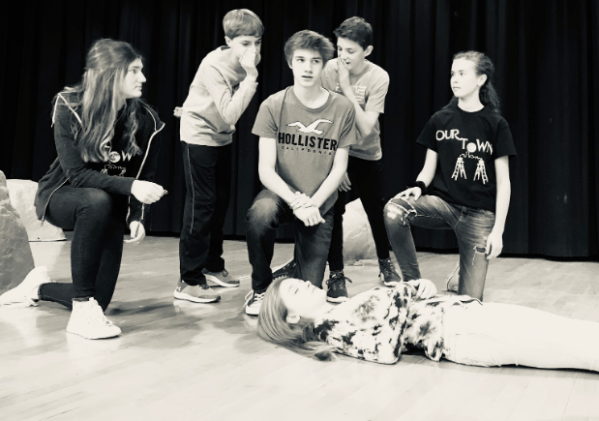
Eighth Grade Theatre Troupe members rehearse a scene from Peter Pan

Every great story has a beginning, middle, and end, not necessarily in that order.

We are all great stories…Phil Kaye

As the first days of June open like flowers, I’m thinking about the courage, complexity, and vulnerability of the eighth graders I taught this year…and all that I learned as we wrote together, and spent time on stage.

My students suffered. They experienced everything from abuse, to the death of a parent and coach, to Stage IV cancer. It was heartrending. And it was glorious, because they used tragedy to craft some of the most beautiful, honest writing I’ve ever read from middle school students, and their wounds gave them authenticity on stage, as many of them joined my theatre troupe.

What were our favorite mentor texts?

TheaterIn  writing workshop, my students’ favorite things to compose were Spoken Word poetry and film analysis. When I asked students what their favorite mentor text was at the end of the year, most of them chose “Tony Steinberg: Brave Seventh Grade Viking Warrior” by Taylor Mali.

In a poem that Mali says took him three years to write, he recounts what it was like to lose a seventh grade student to cancer, and also incorporates some of his best teaching memories.

Mali masterfully employs the metaphor of the Viking ship,  their belief in Valhalla, and the importance of dying valiantly in battle.

Students selected a captivating line or  image from the poem, and wrote from that. Not surprisingly, in a year when cancer was impacting so many of my students’ families, this poem resonated with them.

Following is an excerpt from a co-authored poem written by Trevan and Hayden, after listening to and writing beside the “Tony Steinberg” mentor text:

We’ve seen cancer take more than hair.

We’ve seen it take joy,  peace, and life.

Cancer has stolen our coach’s joy,

and torn the heart of his son like a gift ripped away from a child.

Cancer

/kansər/

A disease caused by an uncontrolled division of abnormal cells in a part of the body sometimes causing death.

Cancer can be battled, beaten like a knight in shining armor overcoming an army.

We watched it advance…


The Outsiders DallasIn addition to being inspired by Spoken Word poets, particularly Taylor Mali and Phil Kaye, my students enjoyed the autonomy of writing about memorable characters when we studied book and  film analysis. Our favorite mentor text for character study was “Katniss Everdeen is my Hero” by Sabaa Tahir, published in the New York Times.

In using this mentor text, students had the opportunity to borrow many excellent craft moves, such as the way that Tahir opened her commentary by explaining how she first “met” Katniss Everdeen.

Writing in front of my students, I imitated this craft move by sharing my first encounter with Dallas Winston, the toughest member of Pony’s gang, in S.E. Hinton’s The Outsiders.

Dallas Winston and I met on a summer’s day in 2002.

Countless colleagues had urged me to read The Outsiders, yet for some reason the book and I had never crossed paths. At the time, I wondered how a story written so many years ago could still resonate with teenagers. Days away from the birth of my first child, I decided to embrace stillness long enough to give the gold-dusted pages a try, reasoning that my advanced pregnancy made everything other than reading–from tying my shoes to my habit of  swimming a mile every morning–a challenge.

Resting beneath the branches of an ancient pine tree in my front yard, with only a few persistent sparrows for company, I read the book in one afternoon, ignoring everything but the words on the pages as the characters’ lives entranced me as deeply as any magic spell.

Of all the characters in Pony’s gang, it was Dallas Winston who hooked me from his first appearance. Dallas is a character of contradictions, claiming a stone cold heart,  yet lending his gun to two desperate boys and helping to shelter them in Windrixville. Scorning love, but ultimately dying for it. Dallas’ character stayed with me long after I read Pony’s last words about him. I wondered about the tough but broken hearted boy who died under a streetlight with an unloaded gun and Two Bit’s jet handled switchblade.. To some, he died a nameless hoodlum, but Pony knew the truth.  Dallas died young, reckless, and gallant, a true gentleman in a blood soaked jacket who got what he wanted.

So I could write much more about the  eighth grade heroes I taught this year. Like Dallas, they are gallant. They have broken hearts that are healing as they leave eighth grade and look forward to their high school chapters. They’ve reminded me that one is never too young to harness the healing power of the written word.

Elizabeth Oosterheert is a middle school language arts teacher and theatre troupe director at Pella Christian Grade School in Pella, Iowa. She loves writing, and sharing the stage with seventh and eighth graders. Her favorite stories are Peter Pan, The Outsiders, & Our Town. You can find her on Twitter @oosterheerte.

How do you read enough to match students with books? #3TTWorkshop

Questions Answered (1)The verb is the key. How do we read enough in order to help students find books they want to read? We read. We have to read — a lot. And we have to know our students.

The reading part is fairly simple. Well, as simple as carving out the time for it, which I know can be a challenge. Maybe it’s a matter of belief. I have to believe my time reading books I may not normally choose for myself will be worth it. I have to believe that YA literature has substance. I have to believe that my students will read, and most likely read more, when I can recommend books because I have read them.

We find time for the things we value. Simple as that. If we value our readers, we must do the things that help them want to read, and reading books that appeal to adolescent readers is a major part of it.

Book Stack

My Current To Read Next Stack

Personally, I like books in print because I like to save favorite sentences and passages that I might be able to use for craft lessons as I read. But audiobooks are a time saver I trust. I usually have at least two books I’m reading at any one time, hardcopy and in Audible. (I started The 57 Bus by Dashka Slater yesterday; I’m halfway through listening to There There by Tommy Orange.)  And honestly, there are some books I just can’t finish, but that doesn’t mean I haven’t read enough to know if I might have a student who wants to give it a try. I can read enough to know if a book might engage one of my readers.

I have to know my readers. The best way I know to get to know them is by talking to students one on one.

Again, the time issue.

Short personal writing can be a real time saver, especially at the beginning of the year or a new semester. Lisa’s Author Bio idea is one of my favorites, ever. I also like to use Meg Kearney’s Creed poem and have students compose their own. Writing like this gives students permission to show themselves, and it gives me an invitation to see into their lives. This is what I need to help match students with books.

A follow up question to the How do you read enough . . .? is often:  How can I find books my students will want to read? or What are some great books for seniors? for 7th graders? for sports enthusiasts? for dog lovers? for a student born in Pakistan? for a group of kids into becoming Insta famous?

I don’t know.

Your school librarian will, most likely.

(Really, I may have some ideas for a few of those questions….but that’s not the point.)

Create a partnership with your school librarian. Hopefully, you still have one. This person loves books and advocates for books and readers. This book expert is a friend to self-selected independent reading, and this professional has access to book lists with descriptors and synopses. (And sometimes funds to add books to the school library.)

Of course, you can find all kinds of book lists online:  Pernille Ripp posts great lists on her blog. The Assembly on Literature for Adolescents of the NCTE (ALAN) shares picks. Young Adult Library Services Association (YALSA) has Best of the Best lists. Edith Campbell recently posted a list of 2019 middle grade and YA books, featuring and written or illustrated by Indigenous people and people of color. And, of course, this list I crafted before Christmas — all recommendations from the contributors on this blog.

To make self-selected independent reading work, which is a vital part of an authentic literacy focused pedagogy, we have to do the work. We have to read, and I wish I could remember where I heard it first:  Reading YA literature is a powerful form of professional development. Isn’t it?

Amy Rasmussen reads a ton of books on the porch, in the yard, by a pool, on her bed in North Texas. She will be spending a lot of her summer with teachers facilitating PD around readers-writers workshop in secondary English classes. Her favorite. She’s also going to be doing a lot of writing. And a little poetry study at the Poetry Foundation Summer Teachers Institute in Chicago. Follow her @amyrass


Making the Micro, Macro: An End-of-Year Mixtape Musing –Guest Post by Anne Barnhart

The soundtrack to the end of any school year for me includes musical bytes of all kinds looping through my brain. This year, cue the part of Twenty One Pilots’ “Ride” when they repeat “I’ve been thinking too much.” Big facts, Tyler Joseph, big facts.

I’ve been thinking about (as I’m sure we all do) what I could, would, should have done. What I can, shall, will do next year to make it all better, to rectify all that went wrong or undone. The end of each year benevolently gifts the space to sit and interrogate our year, ask it questions, contemplate its potential answers, revel in the hope of possibility of its wisdom.

In the Secondary Readers-Writers Workshop world, there is a LOT to think about and…I’ve definitely been thinking too much (help me.) In all of this thinking, I’ve been asking myself a seemingly simple question — What is working on a micro level, something that emerged spontaneously, that can be applied for macro impact, becoming a part of my larger set of routines and systems?

I (and my students) use mixtapes often in our Writer’s Notebooks.  Here, for example, is a class-created model we made together for our class read of Alexie’s Absolutely True Diary of a Part Time Indian after a visit to our local Tomaquag Museum. We use them to make connections to theme & character, across time & literature, with each other & our own selves–but no matter how we use them, they help us to analyze and to reflect.  

So, in the spirit of mixtapes, here is my Spotify mixtape of songs and ideas of what works in small ways in other parts of my practice to make a big impact in the workshop model–I invite you to listen as you read…

mix tape

Screen Shot 2019-06-13 at 2.17.56 PM

  • Patience [with Meeting Ourselves Where We Are]” by Tame Impala-I meet kids where they are. It’s part of my daily teacher mindfulness practice, my ability to zoom out to look at the whole learner, my understanding that these kids (like all of us) are “Just growin’ up in stages[…]Livin’ life in phases.” But sometimes the weight of learning objectives, success criteria, and common assessments threatens the integrity and philosophy of the Workshop model. I find myself wondering–How can I more intentionally balance living in both worlds in order to ensure that I honor my meet-ourselves-where-we-are-right-now across all workshop spaces?


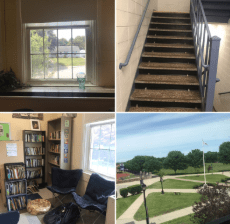
  • “Go [Explore Unique Spaces to Write]” by The Black Keys–Participating in and Places.pngfacilitating the Rhode Island Writing Project’s Open Air Institute and listening to David Whyte’s discussion of genius loci on his On Being interview in 2016 helped me grow my practice of place-based writing in Creative Writing by encouraging something as simple as facing the window, occupying a stairwell, sitting somewhere else in class, writing somewhere on campus. The power of writing in new spaces is something I have come to understand profoundly myself and hope to share it, but I’m left wondering: How can I heed the advice of the Black Keys and remind myself, “You gotta go” explore new spaces so all students can experience the transformative nature of “place”?


  • “Missed Connections [Within Writer’s Notebooks]” by The Head and the Heart I love connections. They’re the stuff of learning. I encourage them through MsBmy Barnhart Brownie Points system which creates class to class, class to self, class to whatever connections (check out my system here), but I cannot help but imagine (and “I get the feeling [some of] you’ve been here before/From a missed connection” like I have) what impact they might have within our own Writer’s Notebooks themselves. How might I leverage more purposefully and systematically how students engage with their entire body of work to look for connections in theme, in craft, in insight?


Feel free to reach out via social media or email (see bio below) to help me explore my questions, but really I want to end with a little remix of John Dewey and propose this:

“To be playful and serious at the same time is possible, and it defines the ideal [Writers Workshop space]” — What is one song and question that would play from your mixtape? What micro moves that you already do could make a macro impact with your ever-evolving Workshop model?

Tweet it out, tag @3TeachersTalk #3TTWorkshop, and continue the conversation!

Together, we’ll get by because, like Mavis Staples and Ben Harper sing, “We get by with help from our kin/We get by through thick and through thin.”
Anne Barnhart spends her school years facilitating learning of and learning alongside some amazing Rhode Island teenagers at Westerly High School and some amazing Rhode Island educators through The Center for Leadership and Educational Equity. Summers? She spends reading, writing, and growing with the Rhode Island Writing Project. Follow her @Ms_Barnhart on Twitter or contact her abarnhart@westerly.k12.ri.us with suggestions, questions, or resources.

Q & A: How does workshop work to prepare students for college? (Or I love teaching these books) #3TTWorkshop


Questions Answered (1)I’ve been asked this question in several different ways:  How do we do this for college prep courses? How does workshop work in an AP English class? If I’m not teaching books from the canon, how am I preparing students for college? And we’ve written about it a lot on this blog. (See here and here and here and here and here and here for starters.)

Sometimes I think we have misplaced ideas about what is expected of students in college — especially if we were English majors, and our students may not be —  and perhaps some skewed ideas of what rigor looks like when it comes to high school English classes.

I first clued in when I read Readicide by Kelly Gallagher. No doubt, I killed the love of reading — and the love of the literature I loved — the way I “taught” the books I expected my students to read. (Most didn’t.) Since then, I’ve studied, practiced, implemented, revised, and stayed up late thinking about how I need to revise my instruction in order to best meet the needs of my students. All of my students — not just those in a college prep or AP English or those going to college — but every student in every English class in preparation for the rest of their lives. I want them to be fully confident in their literacy and all the gifts that will give them in whatever future they choose.

My students, not just those in advanced classes, or on a college-bound track, need to know how–

  • to think critically about their ideas and the ideas of others
  • to articulate their thoughts in writing (in multiple modes) and orally (with clarity and confidence)
  • to support their thinking with valid sources
  • to revisit their ideas and revise them when they encounter viewpoints that require them to extend, modify, or change their thinking
  • to verify sources, and identify and analyze bias

There’s power in these skills, opportunity and freedom — for our students and for ourselves. We do not need a list of “AP suggested novels” to teach them.

What we need is to build communities in our classrooms where students feel safe to engage in inquiry, share their thoughts, receive feedback, and give themselves to the learning process. Study guides, worksheets, TpT lesson plans, and the same ol’ same ol’ approach to teaching the same ol’ books will not cut it. Just because a book is considered of literary merit does not make the learning around it rigorous. Rigor is not in the text but in what students do with the text. (For more on this, see Jeff Wilhelm’s article “Teaching Texts to Somebody! A Case for Interpretive Complexity“)

What we need is to to know our state ELA standards or the AP English Course and Exam Description as provided by College Board. (I think the AP English Course descriptions scream “workshop.”) Then, begin thinking about and hunting for mentor texts, written in a variety of modes, that 1) prompt students to think in different ways about a different topics, 2) engage students in inquiry and class discussion, 3) spark ideas for research, and all along the way, invite students to write beside these mentors:  What do you think? What do you notice? What do you wonder?

At least this is the genesis of answering the question:  How does workshop work to prepare students for college? There’s so much more to it.

Resources that have helped me:  Write Beside Them and Book Love by Penny Kittle, Dr. Paul Thomas’ blog. Currently reading: Why They Can’t Write by John Warner, and the #1 on my summer reading list Handbook of Research on Teaching The English Language Arts 4th edition, edited by Diane Lapp and Douglas Fisher.

I once did a two day workshop, helping a district coordinator move her teachers into the readers-writers workshop model. In a reflection after our training, one teacher-participant wrote:  “I’ve been teaching for 24 years, and feel like I’ve been told I’ve been doing it wrong all along.” Nope.

But. . .

What if we could do instruction better?


Amy Rasmussen lives in North Texas where she thinks, ponders, and writes about how to motivate, engage, and teach today’s adolescent readers and writers. She will be spending a lot of her summer facilitating PD focused on readers-writers workshop in secondary English classes. Follow her @amyrass — and she’d love it if you follow this blog!