Author Archives: Amy Rasmussen

Have you asked students what they need? It is not too late

I am great at taking notes. I am lousy at looking back at them (a lot like my students).

But my student teacher is done with his semester, and am back reading and writing with my students each day. We’ve done a little AP exam crunch — our exam is today — and we are all ready for that test to be over. I’ve got 14.5 days before the summer bell rings, and my students leave me. Fifteen days to solidify my students’ identities as readers and writers, not just students reading and writing for an English class.

It’s been a hard row with this group. This group, especially my brightest students who let grades motivate their every move. There’s a disconnect the size of the Mississippi when it comes to showing evidence of learning and whining about grades.

Maybe I notice it more because I haven’t been with them every class period for the past six weeks. But something’s got to give.

So I opened up my notebooks and read notes from the class Penny Kittle taught at the University of New Hampshire Literacy Institute in 2014. Don Murray leaped from the page:

“If you understand your own process, you stop fighting against it.”

“We have to respect the student, not for his product, but for the search for truth in which he is engaged.”

“If you don’t leave a conference wanting to write more, there’s a problem with the feedback.”

“We work with language in action. We share with our students the continual excitement of choosing one word instead of another, in choosing a true word.”

“Mule-like stubbornness is essential for every writer.”

“One teacher in one year can change a child’s view on reading.”

All reminders of what I love about teaching writers and what I hope for all my students. And I’ve got 14.5 days before the summer bell rings, and my students leave me.

Recently, I read a great post by Tricia Ebaria titled “One Important Thing I Can Learn from Students.” This part resonates:

Rather than join the chorus of end-of-the-year countdowns, instead of giving in to fatigue (or cynicism), what if we reframed our thinking and asked ourselves: What’s the one important thing I can still do with my students? After all, it’s never too late to do work that is meaningful and important to our students and to the world.

Or how about this question: What’s the one important thing I can still learn about my students? studentswriting
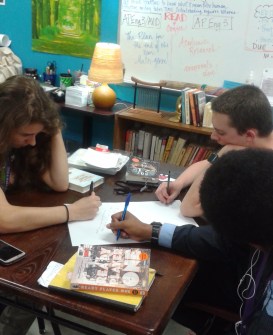
So today I asked two questions to help me focus on students’ needs, and to help students focus on our need to keep learning:

1. Have your grown as a reader and a writer this year? And we talked about if the answer is no then we’ve both failed.

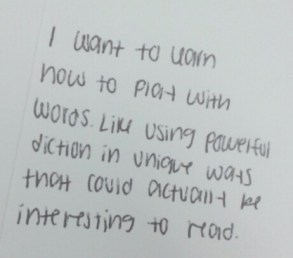
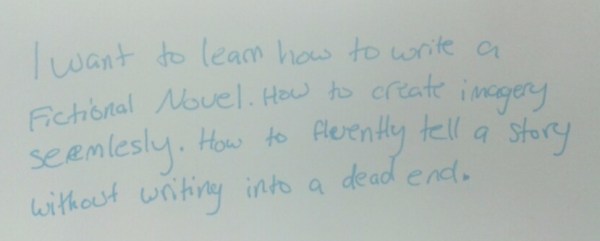
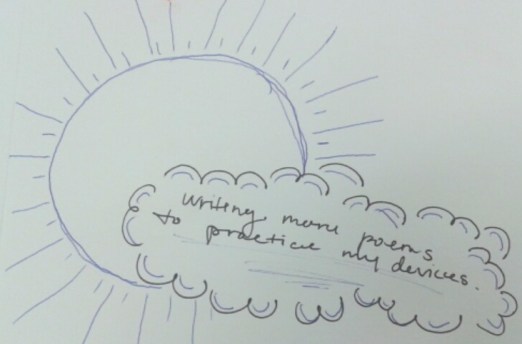
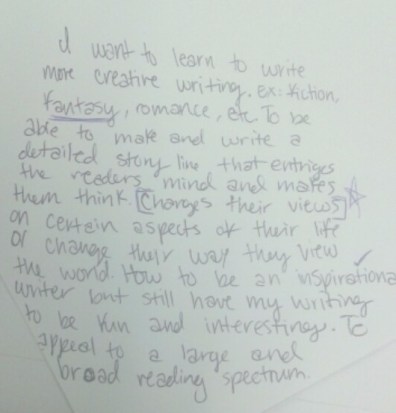
2. What’s one thing you still want, or need, to learn regarding reading and writing before your senior year and beyond? And students wrote their responses at their tables.

Some responses gave me pause. Others made me crazy. Many gave me hope that we still have time so every student can answer question one with a resounding YES.
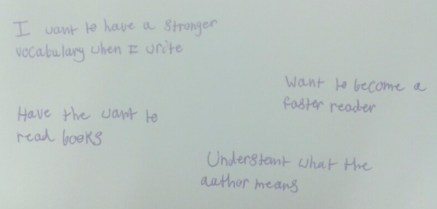
student want 5

“Because we’ve really done nothing in class this year” is my first thought, right? But I have to wonder: Why does this students still feel this way?
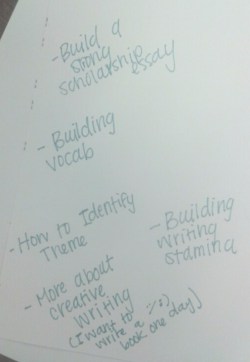
student want 6

student want 8

student want 3

I’m celebrating the word PLAY.

student want 1

student-want-2.jpg

student want 4

Hmmm. 

We have to be willing to be vulnerable. We have to be willing to ask our students what they need from us as their teachers. If we don’t, we may miss the point of teaching them all together.

I learned valuable things about my students and how they feel about their growth. This lesson is enlightening and humbling. And frightening.

I am almost out of time.

So we started in our writer’s notebooks. Updating our currently reading lists and talking about the books we’ve read, we’ve started, abandoned, and we’ve finished. We updated our challenge cards and checked our progress.

I book talked Goodbye Days by Jeff Zentner, my new favorite (I wrote about it here), and American Street by Ibi Zoboi, and let students know I had a fourth copy of The Hate U Give by Angie Thomas. All books I’d read when Joseph was teaching and was dying to share with kids. Students eagerly reached for them, even tussling over Zentner’s book. (TBH I shudder just a bit when I think about not getting these new books back with it being so close to the end of the year.)

Next, I showed them an idea for their end-of-year writing — a pretty monumental task for teens already dreaming of days out of the classroom. But I think I sold them on how it can answer my question #2.

Multi-genre. Thank you, Tom Romano, and Shana for showing me how a marvelous multi-genre project can light a fire within my writers and let them showcase their interest, their talents, and the learning they’ve acquired this year.

We looked at samples. We talked about topics and research and genres. We talked about how the topics we choose can potentially help us learn the things we still need and want to learn.

We got excited about writing. I think some even got excited about learning.

So with 14.5 days left in the school year, we committed to a pretty intensive end-of-year plan.

I have a mule-like stubbornness when it comes to teaching readers and writers. Certainly some of that will wear off on my students, and maybe someday they’ll look back on their notes and their writing from their junior year in high school and recognize they’ve learned and grown in their “search for truth” as a writer.

How are you utilizing your end-of-year time? Please share in the comments.

Amy Rasmussen lives in north Texas and teaches AP English Language and English 3 at Lewisville High School. She loves talking books, daughters’ weddings (two this year), and grandbabies. Facilitating PD for other teachers making the move into a workshop pedagogy delights her. Amy adheres to the words of Emerson: “We aim above the mark to hit the mark,” and Jesus: “Love one another.” Imagine a world if we all aim higher. Follow Amy on Twitter @amyrass.


Two Take-Aways from Mentoring my Student Teacher

Next week I get my students back. For 12 weeks I’ve had Joseph as a student teacher, and I’ve come to really miss my kids. It’s an exciting time.

I am hoping I get my writing mojo back, too. I’ve struggled with topics to write about since I haven’t been working with my students day to day. One of my favorite parts about being a reflective practitioner is my itching need to think about, write, and share my experiences in the classroom. Thanks for reading this writing.

This is the fourth student teacher I’ve mentored. It is the first time I’ve given up control. Maybe it’s because I’ve learned how. Maybe it’s because Joseph is just that awesome at stepping into the role of teacher. It’s probably Joseph. I have learned a lot from Joseph over the past several weeks, and I’ve learned a lot about my teaching practice as I have become the observer.

In every aspect of my practice, I have become more purposeful. When I return to my classroom next week, I will be sharper, more intentional in my planning and instruction, and how I interact with my students day to day.

Here’s two top take aways — and why I think every teacher, especially teachers who practice a workshop pedagogy — should offer to mentor a preservice teacher eager to enter our discipline and our profession:

Perception changes everything. My first conversation with Joseph was in the fall. He spent several weeks during the semester observing my classes two days a week. After his first visit he said something like this:  “That was unlike any English class I’ve ever been in. I was always bored in English. I didn’t know a class could look like this.”

Don’t most new teachers step into their roles and teach the way they were taught?

I did. I assigned writing with prompts and due dates instead of teaching writing with mentors and modeling. I pulled out the textbook, assigned a lead weight book to every student, used the suggested lesson ideas and the questions for guided discussion and the activities in each chapter. I chose every novel for the whole class, torturing children with booklets of questions to “aid their understanding” or dialectical journals to “write their thinking” for the complex texts I chose. The students I taught year one certainly still dream about Dickens, and quizzes about characters and setting and plot. I was a nightmare.

Joseph conferring

Conferring with readers during independent reading time.

New teachers have to believe there is a better way. I know some university education programs prepare students for choice and workshop. (Shana was blessed at the University of Miami with the likes of Tom Romano for a professor.) But many programs do not come close to preparing students for the realities of teaching, much less the research-based practices of readers-writers workshop.

Experienced workshop teachers can change that one student teacher at a time.

Research-based Practices in Reading and Writing Instruction. Even more than usual, I’ve turned to research to back up and refine my thinking. I’ve studied Lou LaBrant thanks to Dr. Paul Thomas and his blog. I’ve read more blogs by thoughtful educators like Tricia Ebaria and books by teacher leaders who inspire great ideas — favorite faithfuls like Penny Kittle’s Book Love and Write Beside Them, and I have re-read conference notes and remembered the why and the how of this pedagogy called readers-writers workshop.

I’ve been able to support my thinking with research, and I’ve learned through my reading the importance of validating that research. Research is important to the choices I make in my classroom.

My confidence grows as I read the work of people who are smarter than me and usually more experienced. I nod along, making notes in the margins, get giddy when I think “I do that.” And as my confidence grows, I am more apt to take risks. When I take risks, my students are more likely to take risks. Risks are exciting in a writing class where we celebrate the process over the product. We go on the journey of discovery together.

Sharing this research with Joseph is like a backpack of confidence. Depending on where he lands as a teacher, and the input and control of administration, he may need it to back up his workshop approach to teaching readers and writers. Knowing Joseph will begin his career with evidence-based practices may take away some of the other frightening struggles of first year teaching. I hope so.

I look forward to seeing Joseph step into a classroom of his own. His students will be lucky ones.

What advice can you give Joseph as he steps into his career in English education? Please share in the comments.

Amy Rasmussen lives in north Texas and teaches AP English Language and English 3 to the Fighting Farmers at Lewisville High School. She also facilitates professional development for other teachers making the move into a workshop pedagogy. She adheres to the words of Emerson: “We aim above the mark to hit the mark,” and Jesus Christ: “Love one another.” Imagine a world if we all love more than we think we can. Follow Amy on Twitter @amyrass.

A Question/Response to Whole Class Novels: This time for ESL

Recently, I found this in my inbox:

Hi Amy –

We exchanged messages a couple of years ago when I was at a different school, discussing largely AP students, if I recall.

Last summer, my husband and I moved, and I am in a new district with new “clientele,” so to speak. We are finishing Neverwhere, which went over better than I thought it would with this extremely reluctant bunch of readers. I won grant money and purchased a class set of Billy Lynn’s Long Halftime Walk Home, largely because I remembered that you recommended it.

Here is what I’m up against: I have regular seniors, most of whom are ESL. Most of my little darlings are low level and struggle with reading. Because I only have one class set for three classes of kids, we do some independent reading in class, and then we take turns reading it out loud. I pause them A LOT because I have to “interpret” what we read – especially when we read Othello, and even with Neverwhere. They have reading projects and journal prompts, we have class discussions.

But I feel like I’m failing them somehow. That I’m not doing enough.

If you have any resources for Billy Lynn that you can share, I would appreciate it. I’m questioning whether this is the right book to read with them, but since I have a good number who want to go into the military upon graduation, I think maybe I can grab those kids and then others will follow.

Thank you so much for any guidance you can provide.


A while ago, I wrote about Billy Lynn’s Long Half Time Walk in two different posts. Once about how I added it to my book club list and loved the author’s craft and the other an excerpt for a craft study. I have never read this book with students as a whole class novel. I’ve never even been very successful in getting a lot of students to read it for their book clubs.

Just because I love a book, bless it, use a passage out of it, doesn’t mean my students will want to read it, too. That is the beauty of choice. It is also sometimes the struggle.

Am I surprised more students do not choose this book? Yes. Dallas Cowboys after all. But I get why they don’t — many of my students do not want to read books that are set so close to come — they cannot wait to get out of here. But that’s a post for another day.

This is my response to my teacher-friend’s email:

Hello,

Thanks for reaching out. I hope your move has proved a positive one. I know it is hard to change districts and schools.

Regarding Billy Lynn’s Long Halftime Walk:  While I loved the book when I read it and found several passages I could use to study author’s craft with my students, I have never taught it as a whole class novel. So — I do not have any resources that go along with this book. I do have a few ideas that may help liven up your students experience with it though.

Teaching second language learners can be hard, especially seniors who want to check out of the learning so early. Pulling from my ESL training and my own experiences with students similar to those you describe, I’d probably do a few things, which you may already be doing.

1. Small discussion groups. Just like I do book clubs, I’d divide my students up into small groups. I’d give each group a short list of open-ended questions that relate to my skills-focus for choosing this book (theme, plot, characterization, etc), and I’d model how a discussion about literature might go — similar to how my friends and I talk about books in our book club. We would talk a lot. You mentioned that you already do journal prompts. I’d be sure that students write their thinking in response to these prompts before these discussions. Activate the thinking power.

2. Quickwrites. Besides journal prompts, I’d ask students to think about and write in

dallas_cowboys_stadium_05_by_jonzicow

jonzicow.deviantart.com

response to topics thematically related to the book. I might show a photo of Dallas Cowboys Stadium and ask students to think about attending a game there. What does it look like on the inside, what does it smell like during a big game, how many people work there? I may find data about how much the stadium cost, how many seats it has, something about the huge jumbotron. I might find a sports interview clip filmed within the stadium and ask students to watch it and respond to some component of the interview. Maybe I’d find a video of the Dallas Cowboy Cheerleaders (try outs, community service — not just game shots) and ask students to respond somehow. All these things will helps students understand and visualize the setting.

iraq-war

contempissues.wikispaces.com

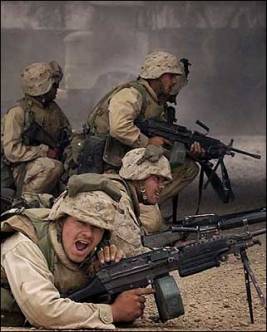
3. Other Visuals. ESL students needs lots of them. And if we want students to understand more complex texts, we must give them the background knowledge needed to stick the new learning to. (I often forget this.) So — I’d use photos of young soldiers in war zones, as buddies, delivering first aid. I’d be sure my students know where Iraq is on a world map. I’d help them understand the idea of a “reality TV show” so they could visualize what this company of soldiers is dealing with at the stadium that day. This ties in to the multiple conflicts the book addresses:  Billy’s individual conflict — “Should I stay or should I go” and the conflict with the TV show and the “rich” businessmen-type attitudes.

4. Movie clips. I am not always a fan of using movies in class, but this might be a great opportunity to compare scenes in the book with scenes in the film. What is similar? What is different? Why do the makers of the movie make the choices they do? Do they keep the integrity of the book?

5. Craft studies. I’d pull significant passages from the book to study for specific reading and writing skills — again trying back to why I chose this book for a whole class read in the first place. If my focus is theme, I’d find passages we can read and determine themes that relate to the over-all theme. If I’m using the novel to become better writers, I’d pull passages where the author does something interesting with language. We’d study the passage. Maybe write our own passage, mirroring what the author did.

Finally, I’d be okay with not reading the whole of the book. When I plan lessons, I focus on the skills [needed to get to the endgame whatever that may be for the unit.] Once I’m sure I’ve covered the learning targets, and students have learned what they needed to by reading this book, I’d be okay giving students the option to read the rest of the novel on their own.

When we focus on teaching a book instead of teaching the reader/writer, we can often get bogged down. I am in no way saying this is you, but it is a whole lot of teachers on my own campus and in schools where I conduct PD. We must focus on the learner and not the book. The best way I know how to do that is with a focus on skills:  modeling, mini-lessons, reading, writing, talking. A lot.

I hope you find these ideas helpful. I would love to know how your experience with Billy Lynn plays out.

Best blessings,

Amy

What ideas would you add to help a class of primarily English Language Learning students read and comprehend a whole class text? Please add your comments.

Amy Rasmussen teaches AP English Lang & Comp at Lewisville HS in North TX. She’s enjoyed the semester watching her student teacher face Teenage Angst, but he is good, very, very good, and will be a great teacher. Her next adventure is helping Mr. G build his classroom library. Follow Amy on Twitter @amyrass or @3TeachersTalk

Add Your Drop in the Ocean

I am a big proponent of teachers walking the talk of writing. If we teach it, shouldn’t we know the struggles our students face as they apply our teaching? Shouldn’t we experience similar struggles so we have ideas on how to help our kids? This seems like such a simple thing, yet so many teachers surprise me when they do not claim the title of writer.

I am a writer. And I have become an evangelist for teachers as writers.

My co-writers here at Three Teachers Talk and I extend the invitation again:  please write with us. We’d love to publish the experiences you’re having with your readers and writers. Share your successes and your struggles. Share a student-made list of their favorite authors or poems or books. Share student work. Share your reflections.

Just share.

teamwork quote

To write a guest post, please complete this simple form. We’ll get back to you ASAP.


A Lot of Dancing, Please — Guest Post by Billy Eastman

My beautiful and vivacious and pernicious six-year-old daughter frequents a Kindergarten class. She pretends her way through life these days; it’s a problem. But, a problem I refuse to address. Because, one day, that problem with vault her to success in something.

Violet uses a wheelchair. She doesn’t use it all the time. Most of the time, she traverses time and space with arm crutches — but at school, she uses her wheelchair so she doesn’t become fatigued from chasing other small people around.

The other day, an adult at Violet’s school admitted something to me:  she caused Violet to school hallwaytip over in her wheelchair in the hallway (Don’t worry, no daughters were harmed in the making of this short narrative). Really, Violet wasn’t hurt, but the big person was distraught.

I thanked her. For tipping my daughter’s wheelchair over in the hallway. You see, they were dancing. An educator was dancing with Violet in her wheelchair. They were spinning and twirling and tipping and falling. I prefer that.

So, this is what we should prefer in our classrooms as well:  possibilities, no limitations, risk and reward, fear and excitement, falling down, getting up and saying “I’m OK, and some dancing (at least on the page). A lot of dancing, please.

Random undiscernibly identifiable adult:  please continue to dance with Violet in the hallways.

Teachers:  dancing is better than walking in straight lines with bubbles in your mouth.

And, this clearly applies to reading, writing, and thinking—which is what I was writing about this whole time.

Billy Eastman is a curriculum coordinator for English Language Arts and World Languages and Culture in League City, TX. He enjoys talking with folks and finding ways to make smart ideas happen. Follow Billy on Twitter @thebillyeastman


Goodbye Days: a Craft Study and a Gorgeous Grand Slam

I love language. I love sharing my love of language with students.

When I read a book, I often dog-ear the pages, thinking of how I might use a passage to help my writers. Sometimes a book just does me in — so many beautiful words I cannot keep up. It’s a bonus if the story does me in.

Like Goodbye Days by Jeff Zentner. 30649795

If you haven’t read this book, oh, you’ll want to. Zenter’s first book, The Serpent King, kissed my soul. Goodbye Days took a hammer to it.

In a good way.

I started marking passages at page 36. I think because I forgot to think about it. Just read the first line of this YA novel:  “Depending on who — sorry, whom — you ask, I may have killed my three best friends.”

Mini-lesson opportunity one (whom), two (parenthetical with the dash), three (participial phrase), and four (voice)– all in one sentence.

The first time I really thought about using language from YA novels to teach my writers was in a class at UNH Literacy Institute taught by Penny Kittle. She showed us mentors of sentences and passages, pulled from the books she introduced to her students. She talked about how these craft studies also could serve as quickwrite prompts and book talks. A triple play.

Since then, Shana (who sat with me in Penny’s class) and I upped the ante:  some of our favorite mentors are hard-hitting home runs. But the following passage from Goodbye Days –It’s a gorgeous Grand Slam.


Excerpt from Goodbye Days by Jeff Zentner (p36)

     I feel like I’m watching something heavy and fragile slide slowly off a high shelf. My mind swirls with mysteries. The eternities. Life. Death. I can’t stop it. It’s like staring in the mirror for too long or saying your name too many times and becoming disconnected from any sense of yourself. I begin to wonder if I’m even still alive; if I exist. Maybe I was in the car too.

     The room dims.

     I’m tingling.

     I’ve fallen through ice into frigid black water.

     I can’t breathe.

     My heart screams.

     This is not right. I’m not fine.

     My vision narrows, as if I’m standing deep in a cave, looking out. Spots form in front of my eyes. The walls are crushing me.

     I’m gasping. I need air. My heart.

     Gray, desolate dread descends on me — a cloud of ash blocking the sun. A complete absence of light or warmth. A tangible, mold-scented obscurity. A revelation:  I will never again experience happiness.

     Air. I need air. I need air. I need air. I need.

     I try to stand. The room pitches and tosses, heaving. I’m walking on a sheet of Jell-O. I try again to stand. I lose my balance and fall backward, over my chair, thudding on the hardwood floor.

     It’s one of those nightmares where you can’t run or scream. And it’s happening to me this moment in the dying light of this day of dying. AND I AM DYING TOO.


What writing mini-lessons could you teach with this passage?

Will You Share Your AP Scores? Here We Go Again

I am not mean very often, but last week I was mean. Okay, not mean exactly, but certainly snarky.

I friend asked me about my AP scores. Innocent question. Struck a nerve.

I’ve written about AP English and AP test scores in the past, and I imagine as long as I teach AP English Language and Composition, I will continue to do so. I really do not mean to be snarky, but the more I talk with kids about their reading lives, the more I keep hoping more and more teachers Aim Higher — not just in AP classes, but in all English classes.

In the signature line of my school email, I include this quote by Emerson:  “We aim above the mark to hit the mark.”

I like that it helps me focus on what matters in my practice:  Teaching beyond a test. Always teaching beyond a test.

So what does this look like in my practice? Mostly, it looks like helping readers find their way back to a love of reading. After all, the best readers are usually the best writers, and the best readers and writers are usually the best test takers.

When Jessica asked me about my test scores last week, I know she was just working on building a case for choice books on her campus, a case for a workshop pedagogy. And while my scores did improve 50% the first year I moved to readers-writers workshop, no testing data captures the learning that happens in my classroom. No data shows an accurate picture of my students’ growth as readers and writers.

See for yourself:

For our midterm last week, my students wrote self-evaluations of their reading lives. Their words are much more valuable than mine when it comes to adding weight to the debate for time to read and choice of books in all English classes.

Leslie is a talker. She speaks with a beautiful Spanish accent and loves to use the new

LeslieandGiselle

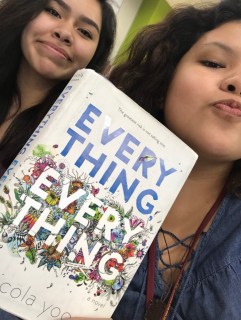
Giselle and Leslie, Nicola Yoon fans, dying for the movie!

vocabulary words she’s studying. I often have to hush her table because these girls like to talk about what they are reading during reading time. The fuss over Everything Everything by Nicola Yoon is on-going. They LOVE that book! Leslie writes:

“My reading goal for next nine weeks is seven books, I want to reach my reading goal and I will make it happen by reading more and do it because I enjoy it not just because I have to do it. I can gladly say that I love reading now, back then I used to be allergic to books and never touch them to read the beautiful stories that they have inside their covers.  After I become the perfect reader I intend to become the perfect writer.”

Giselle’s list of books she’s read so far this year reads like a spine poem. When she writes about whole class novels, she means our book club titles. I use book clubs to push many students into reading more complex books.

Lissbeth has been in the U.S. for three years. She titled her post “No Excuses for Not Reading.” My favorite line: “One of the things that I have learn thanks to my English teachers, is that reading is not just something you do for entertainment, it can also become a lifestyle.” Of course!

image2

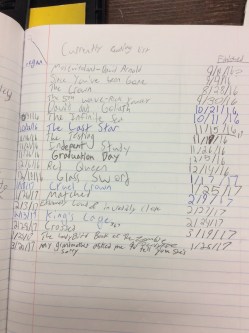
Audrey’s Currently Reading list

Already a reader when she entered my class, Audrey explains her reading experience since last August:

I have learned some about myself as a reader. I’ve learned that I like to stay in my reading comfort zone, but with a little nudge I’m able to read other genres and enjoy it. I’ve learned that I’m always growing as a reader. My reading rate can always improve. My vocabulary can always improve. As a reader I know that with due time, and with a lot of reading and determination, I can read ANYTHING!” [Note: If you read Audrey’s full post, when she mentions me giving the class a list, she’s referring to our book club choices. I do not have a list of all the books in my classroom library.]


Some students are in my block class, so I’ve only had them since mid January.

Cheyenne, who has read 14 books since the beginning of the semester, feels pretty strongly

blogger2bpt2b5

Cheyenne’s book stack

about the whole class novel. She writes: “I definitely have a deep dislike for class novels. This has more to do with the fact that I hate being forced to read certain books by certain deadlines, for me, it defeats the thrill, if you will, of reading the book in the first place.”

This year was the first time since middle school that I have been excited to read in class, and that was because we weren’t assigned a class book to read and we got to choose a book we wanted to read,” Rachel writes.

If you don’t believe some students lose a love of reading because of school, ask them. Ask them questions about what happened. Every kid I know was once an excited reader. Few are when they get to me in 11th grade.

Reghan confirms this in her post. She writes:

From elementary school through middle school, I read every kind of book, big or small. From nonfiction books about the unsinkable, sunken ship: the Titanic, to fantasy books about alternate universes and dystopian societies, I was a reader.

“Until my freshman year of high school.

“Ninth grade wasn’t easy for me. A lot went on that year with my family and personal life, causing me to be unfocused on school, my grades, and reading…and my transcript made that very obvious. I don’t think I read even one book in that entire year, summer included. This carried into my sophomore year, as well as part of my Junior year too. Zero books read, many to go.

“Being in AP English this semester and having to work hard to stay afloat has helped me tremendously and it wouldn’t be possible without my teachers . . . I’ve read four books this nine weeks including: Paper Towns by John Green, Will Grayson, Will Grayson by John Green and David Levithan, Extremely Loud and Incredibly Close by Jonathan Safran Foerand Sharp Objects by Gillian Flynn and I’m on my fifth: Columbine by Dave Cullen. That’s more than I’ve read in the last three years, combined. I’ve been introduced to books that I’ve never heard of and books that I never would’ve picked on my own. In fact, thanks to our assigned book clubs, I now have a new favorite book which is the aforementioned, Extremely Loud and Incredibly Close.

” I credit Mrs. Rasmussen with my progress because of her belief that we as students are more likely to read if we’re choosing books that we want, not that our chosen for us. In my experience, any book that has been chosen for me by a teacher, has been uninteresting and/or hard to finish. Being able to choose has only helped me and there’s proof in the numbers. Not only has this freedom improved my desire to read, but it has showed me who I am and what I like as a reader.”

And then there’s Ciara, who wrote “The Oprah Winfrey (with a little twist) Show.” Here’s a reader I am still working on, but oh, her writing voice. And her taste in TV shows! (We’ve bonded lately over quite a few.)


So in a post with AP test scores in the title, I give you a post about what students have to say about their reading lives.

That’s gonna be my answer every single time.

I happen to be assigned to teach AP English Language and Comp, but what I teach is how to love reading to students who miss it. Most of them miss it.

What are you doing about it?


Amy Rasmussen lives in north Texas and teaches AP English Language and English 3 to the Fighting Farmers at Lewisville High School. She also facilitates professional development for other teachers making the move into a workshop pedagogy. She adheres to the words of Emerson: “We aim above the mark to hit the mark,” and Jesus Christ: “Love one another.” Imagine a world if we all love more than we think we can. Follow Amy on Twitter @amyrass.

Does Manga Belong in Your Classroom Library?

I had a hard time figuring Noelani out. She was a seemingly confident young woman who was pretty vocal about not liking to write. I think her actual words were: “I hate it.”

In my class, we use our independent reading books as mentors to help us become better writers, so I needed a bridge, someway to help Lani want to write. For most of my students, the books they choose create that bridge. I wasn’t so sure about the books Lani chose week after week after week.

sketch_of_anime_girl_drawing_by_sketchpuppy

sketchpuppy.deviantart.com

I used to hate the idea of students reading manga. But throughout the school year, Lani kept returning to this genre. When we chatted about the books she was reading, Lani showed a lot more interest and a lot more enthusiasm when she talked about this genre than when she talked about any other. And she was able to discuss not just pretty complicated plot moves, but the rhetorical moves of the authors she loved, confidently proving my bias toward manga wrong.

For part of our midterm exam, students wrote top ten lists based on some of their favorite books. Here’s Lani’s:

Top 10 Mangas with Interesting Plots by Noelani Cevis

Deadman Wonderland Vol.2 by Jinsei Kataoka and Kazuma Kondou

In the first volume, the mangaka tells the reader about the earthquake that destroyed half of Tokyo and introduced the main character, Ganta, who is a middle school student and also survivor of the earthquake that took place 10 years earlier. One seemingly normal day, a man in crimson, grinning madly, called the ‘Red Man’ slaughters Ganta’s classmates and imbeds a red shard in his chest instead of killing him. A bit later Ganta is sentenced to death and is sent to a private prison called Deadman Wonderland. Personally, to me the plot is interesting and hooked me right away so I would like to continue reading this series.Alice in country

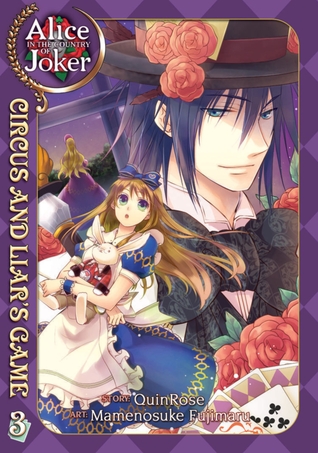
Alice in the Country of Joker: Circus and Liar’s Game Vol.3 by Quin Rose and Mamenosuke Fujimaru

Continuing Alice Liddell’s story after getting out of the Country of Hearts, we find Alice stuck in the Country of Joker now! In this Country there’s something a bit weird going on, and Alice has to get to the bottom of it. In the first volume, she met up with old friends and was told about a festival that is happening soon in the country. In the second volume, she meets the Jokers and the point of view switches to tell you a bit of what’s happening on their side of the story. It’s a fun, easy to read, adventure manga that unlike Deadman Wonderland, has a happier feel to it but also is mysterious enough to keep the reader intrigued.

No Matter How I Look at It, It’s You Guys’ Fault I’m Not Popular! (A.K.A. WataMote) by Nico Tanigawa

Tomoko Kuroki is a fifteen-year-old girl who thought she would get popular once she entered high school because she played a lot of otome-games. Little did she know that in reality she would be a unsociable loner: the exact opposite of what she thought she would be. The manga follows her through high school as she works on her social skills and tries to become popular. Honestly, I have a connection to this girl because I feel like we’re similar to each other. I wanted to see how high school goes for her compared to how it is going for me.

Sumomomo Momomo: The Strongest Bride on Earth Vol.2  by Shinobu Ohtaka

Koshi Inuzuka, a high school student and son of the Dog clan, and Momoko Kuzuryu, daughter of the Dragon clan and high school student, have been betrothed by Momoko’s father to produce a strong child. However, Koshi doesn’t like Momoko like she likes him. In fact, they just met! But instead of giving up after being turned down by Koshi, she continues to pursue him while protecting him from assassins coming to kill him to keep him from marrying Momoko. It’s a hilarious martial arts love story that I have only just gotten into but will definitely continue reading.

Noragami by Anoragamidachitoka

Yato is supposedly the God of War and Calamity, however he is dirt poor and not very popular at all and will do any odd job from babysitting to evil slaying for just 5 yen. His goal for the future is to become very popular and rich and in the process of trying to reach that goal meets a girl named Hiyori Iki who just so happens to be the only human that can see him. To reach his goal of being rich and famous he goes on adventures and gets caught up in trouble with his new friend Hiyori. Lately, gifs of this anime have been all over Tumblr and they highlight this manga in funny and interesting ways.

Blood Lad Vol.5 by Yuuki Kodama

Staz is a vampire who refuses to attack humans like those before him and instead stays inside watching anime and reading manga. One day a girl named Fuyumi accidentally ends up in the Demon World and meets Staz, but their meeting is soon cut short by a demon fight happening close by. To save his allies, Staz jumps into the fight, but while he isn’t paying attention, Fuyumi is eaten by a carnivorous plant and turned into a ghost. Afterwards Staz pledges to find a way to bring her back to life. I began watching the anime of this before I read the manga but I soon stopped watching the manga and instead started the manga it was really good and funny and interesting so I would like to continue reading this series.

Horimiya Vol.8 By HERO and Daisuke Hagiwara

Horimya follows the lives of a boy named Miyamura and a girl named Hori and their experiences during high school. It’s a cute story filled with romance, laughs, tears, and everything in between. I read a lot of dark type mangas so having a few cute, easy going ones like this are refreshing and fun to read.

Oresama Teacher Vol.11 by Izumi Tsubaki

Mafuyu, a former gang leader, is a high school girl determined to live a normal life after being caught by the police and transferred to a new school. However, it turns out that the reason she became a delinquent is also a student at this new school and the new school is full of delinquents! Will Mafuyu be able to live a life as a normal high school girl like she wanted? I still don’t know the answer, even though I’m reading this right now, because the manga is so crazy it’s hard to really tell what’s going on sometimes. It’s a fun manga to read though and ilabyrinth of magics full of laughs.

Magi: The Labyrinth of Magic Vol.19 by Shinobu Ohtaka

Magi is told through the eyes of a magi named Aladdin who was secluded his whole life and originally didn’t even know what he was. When he finally is let out to see the world he meets a boy named Alibaba, and they meet a girl named Morgiana. The manga follows each of them through their adventures together and apart. It’s a very action packed manga with not a lot of romance, but that’s alright because there are lots of cute or funny moments in it still, which is a nice change of pace from what I usually read.

Inuyasha Vol.31 by Rumiko Takahashi

Inuyasha is about a half-demon named Inuyasha who was trapped by his dying lover during the Sengoku period and a 15-year-old girl named Kagome who is pulled into an enshrined well, which happens to lead back to the Sengoku period from the present time. It follows their adventures through the Sengoku period trying to find the woman who trapped Inuyasha and all the pieces of the shattered Shikon Jewel. This manga has the perfect mix of action and romance that will have you excited one moment and angry the next. It’s very interesting and fun and addictive.


Lani left me a better reader and writer than she was when she entered my class. She read many other genres besides manga, and even admitted “Those were pretty good books.” She is now a senior, eager to graduate in a short nine weeks.

About her reading life, Lani says, “Although I don’t read much these days, I love reading. It’s a fun hobby, and it’s a good way to get away from things when I need a break from everyday life.”  Outside of school she is interested in anime, video games, Japanese and Korean language/culture, music, interior design, travel, and skin care. At school she is involved with AVID and orchestra. Lani describes herself as anxious, insecure, and soft.

I see her as a young woman ready to conquer her goals and attack adventures, similar to the heroes in these books she’s read.

What are your thoughts about manga? Do you include these books in your classroom library? Please leave your ideas and suggestions in the comments.

Amy Rasmussen lives in north Texas and teaches AP English Language and English 3. She leads professional development on advancing readers and writers through a workshop pedagogy anywhere the call takes her. Amy adheres to the words of Emerson: “We aim above the mark to hit the mark,” and Jesus: “Love one another.” Imagine a world if we all love higher. Follow Amy on Twitter @amyrass

disclosure

Assigned Reading often Fails where Choice Reading Soars

Sometimes things just hit me wrong. A joke that’s more cutting than cute. A meeting where complaining is the conversation. A book that gets ruined in the rain. A comment on social media that shows we are ignorant or arrogant or just right out rude.

I get asked often about whole class novels. If you’ve read this blog awhile, you know I am not a fan, not a fan in the traditional teacher-makes-all-the-choices-and-all-students-read-the-same-book-at-the-same-speed kind of fan. I do think there’s a place for a shared novel experience. I also think there’s a place for a lot more conversation about the pros and cons of it.

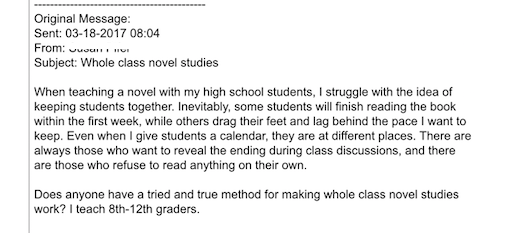
If you read the posts in the NCTE Connected Community Teaching and Learning Forum, perhaps you saw this one Whole Class Novel Studies, which began with this request for help:

Wholeclassnovel

This teacher shares a legitimate concern. I would imagine that most of us who reflect upon our practice and want to do what’s best for students have at some point shared this struggle.

Those of us who read Penny Kittle’s Book Love (or perhaps we came to similar conclusions on our own) understand that every room of readers means many readers reading at a variety of reading rates. And we know it’s not just because students aren’t interested, are too busy, seem apathetic. It just makes sense:  students will be at “different places in their books” because students are all different.

We keep trying to make them all the same.

In response to this teacher’s query, four very helpful teachers shared what works for them. There are some good ideas here. Then, this response, which made my head nod:

Wholeclassnovel2

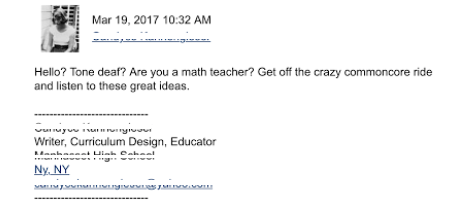
Followed by this one, which…well, you’ll see:

Wholeclassnovel3

Did a professional just dis another professional? Did a curriculum designer and educator on a public ELA forum just dis Dick Allington, one of the lead researchers on reading acquisition and best practices in literacy instruction?

This is just wrong. Wrong on many levels.

Now, I know that Mr. Allington was being sly in his comment here. He wanted to furrow some foreheads and force some frowns. I’m sure. And it worked to instigate some important discussion, which many of us would like to see more often.

One person commented from the perspective of a parent:

“When my son received the summer reading list to prepare for his first year in high school, Amy Tan’s Joy Luck Club topped the list. Being the rule follower I am, I forced that copious and joyful reader to trudge through that text. He didn’t read a thing in English class for the next four years. A brilliant reader and thinker, totally disenfranchised. As Allington said, he didn’t read the text.

“…the abusive pedagogy of the whole class novel described here is oppressive and culturally irresponsible. Sure, there are strategies that teachers can employ that mediate the boredom and disengagement. There are methods that utilize a whole class novel as a shared or mentor text and as a model for instruction or springboard for discourse. And there are a few teachers that can engage the readers throughout a methodical plodding through a classic text. But the question remains: what exactly is taught with the whole class novel? Are you teaching the novel itself? The habits of mind to diffuse any text? Or the student? When do they do their own thinking, independent practice, with influential and engaging texts?”

Shona, you won my heart. My four sons were very similar to yours. All avid readers but not when it came to reading for school.

Yetta wrote this comment:

“Richard Allington is raising a very important curricular issue.  Why should readers only read books chosen by other folks? Self selection of books is a concept that needs to be part of every class concerned with reading development including fiction and non fiction.

Book clubs, reading discussion groups, etc. are organized by many teachers to involve and support students with self selection of reading materials.”

Followed by Yvonne:  “Self-selection works. I was/am always surprised by what students choose to read. Students  amaze me.”

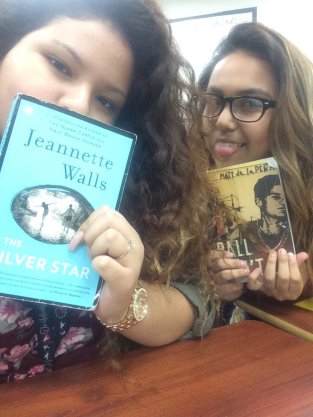
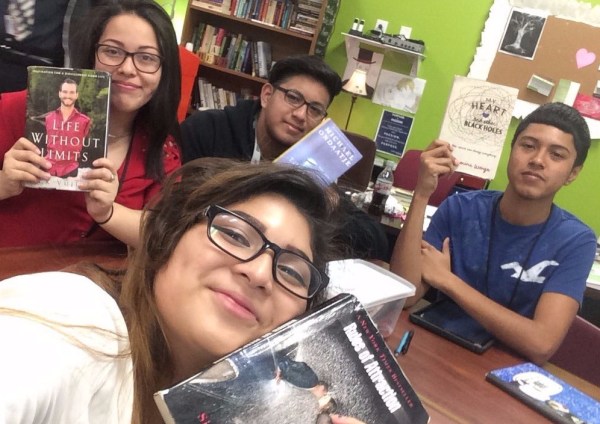
LeslieandYoly

Leslie and Yoly with their favorite reads of the fall

Me, too. And students will read more when they have choice. When we couple volume with instructional practices that teach students what readers do when they get stumped or confused or even bored, using mini-lessons and shorter whole class texts, we help students learn how to navigate and improve their own reading lives.

Shona continues, quoting from the work of Louise Rosenblatt, a researcher who has shaped much of my work:

“A history of the teaching of English (Applebee, 1974, 1996) reports in all periods dissatisfaction at the lack of success in achieving the humanistic goals of literature teaching that school profess and the failure to understand that the traditional approach conflicts with these aims. Literature is treated as primarily a body of knowledge about literary works rather than as a series of experiences. To produce readers capable of critically evoking literary works for themselves and deriving the pleasures and insights claimed for literary study evidently requires different methods and a different educational climate from the from the traditional teacher-dominated explication of literary texts” (p. 71).”

Think about this for a second:  What does Rosenblatt mean by a “series of experiences”? Ones the teacher carefully crafts through engaging and interesting novel studies, or experiences each student knows how to create for him or herself

Reading in English classes cannot be about the books. Reading in English classes must be about the readers. 

I know what some may say. I’ve heard it a lot:  “But I loved English is high school. I read every book. I wrote every paper on every book. I enjoyed the discussion around those books. That’s why I wanted to become a teacher.”

Yes, I know. Me, too. And you know what (and this is embarrassing to admit):  It wasn’t until I was a teacher myself, dragging sophomores through To Kill A Mockingbird in 1st through 3rd period and juniors through The Scarlet Letter in 6th and 7th when I had this epiphany:  “There are some students who are so different than I was when I was in school. They don’t read. They don’t do their homework.”

How naive. How sad that I was so unprepared for the readers I would face in my classroom.

In Lisa’s post last week, among other things, these few sentences rang true for me, too: “Students bought any books they needed for independent reading, and I happily progressed with assigning reading, providing study guides, giving content quizzes, lather, rinse, repeat. This is what I knew. This is what I had experienced myself. This is how I was taught to teach.”

Assigning reading

Providing study guides

Giving content quizzes

For the first three years of my career, this is how I taught, too. I thought I was supposed to teach great literature — and then test on it — instead of helping students become readers who engage with great literature.

I believe we can do both. I believe when we keep the student — his abilities and needs, her interests and desires — as the pilot of our pedagogy, we can do both.

the quiet table reads

My quiet table — readers all.

I know you can click on that link at the top of this post and read the thread on the NCTE forum about whole class novels. I hope you do. In case you don’t, I’ll quote a bit of what Dr. Paul Thomas wrote:

“Teaching ELA/English involves a unique (compared to other disciplines, although somewhat shares by math) tension between our obligations to teaching disciplinary content (knowledge such as Fitzgerald wrote The Great Gatsby as a part of American literature) and also literacy skills . . .

“And thus many high school teachers become trapped in teaching, for example, The Scarlet Letter to make students experts on that specific novel and/or the work of Hawthorne, all as part of gaining so-called cultural knowledge of American literature.

“In that pursuit, often the process negatively impacts students’ eagerness, joy in reading and writing because, as Yetta and others have noted, assigned reading often fails where choice reading soars.

I appreciate Dr. Thomas delineating disciplinary content and literacy skills in such a way. Perhaps this distinction is at the core of the tension between what often seems like two sides of our field: #teamstudentchoice and #teamteachercontrol.

Dr. Thomas goes on to caution against “demonizing” those who choose one approach over the other, and this is where, I’ll be honest, I might be a bit like Screwtape, except in a good way.

My writers and I hold fast to our tag line:  Mentors with Insights, Ideas, and Resources for Secondary Readers & Writers Workshop. We write this blog to encourage others to take a chance on choice, to share student reflections and accomplishments, to promote current books and diverse authors, to show how choice works, and research matters. And sometimes it’s hard to not speak up and speak out a whole lot more.

This semester I have this amazing student teacher. (Anyone in north TX hiring?) He’s brilliant, proactive, a natural. He “gets” our students, and they love him. Throughout the fall semester, Joseph observed my classroom. After “hello” the first thing Joseph said to me was “I have never been in an English class like this. I was so bored with English is high school.” Joseph has stepped right into a workshop pedagogy and embraced its benefits, as a student and as a teacher.

But I share Joseph with a teacher down the hall. He joins her each afternoon and mostly watches as she assigns reading, provides study guides, and gives content quizzes. Heavy boots walk back to my classroom every single day.

And this makes crazy.

We can do so much more. We owe our students so much more.


Maybe we can help each other out:  How do you have critical conversations about choice and workshop and the wonders of books with your colleagues? Please share in the comments.


For more from Dr. Thomas see his post “We Teach English” Revisited. For more on the research around student learning and choice, see Rosenblatt, Krashen, Allington, LaBrant, and this post on Donalyn Miller’s blog.


Amy Rasmussen lives in north Texas and teaches AP English Language and English 3 to the Fighting Farmers at Lewisville High School. She adheres to the words of Emerson: “We aim above the mark to hit the mark,” and Jesus Christ: “Love one another.” Imagine a world if we all love more than we think we can. Follow Amy on Twitter @amyrass.

FTC guideline affiliate links

Window, Mirrors, and Gigantic Doors: Inviting Sound into Uneasy Silences

For weeks I’ve worked on a list of books to use for book clubs in our junior English classes. I believe that students must have options that challenge, yet engage, and allow them to see themselves and/or others within the pages. It’s that whole windows and mirrors and doors analogy. Jillian Heise describes it well in this post. I’ll just quote a part that struck me:

Dr. Rudine Sims Bishop originated the idea that many now reference. She talks about windows as “offering views of worlds that may be real or imagined, familiar or strange.” And about mirrors, “…we can see our own lives and experiences as part of the larger human experience.” But she also talks about sliding glass doors which “readers have only to walk through in imagination to become part of whatever world has been created or recreated by the author.” The thing is, it’s the third part of it, the sliding glass door that seems to often be left out, but is perhaps the most important part – it’s the part that, in my interpretation, allows us to step into those other worlds and become part of them for the time we are in that book – and isn’t that the power of reading? Being able to develop empathy, understanding, new perspectives by living in someone else’s shoes for a short time. Especially for books as powerful as the ones being written about these real issues that are affecting kids in their lives today, this mirror, window, sliding door access becomes even more important for them to see they have a place in our society, no matter what perspective they may bring.”

I’d like to offer an addition, not just sliding glass doors that  “allow us to step into those 8124672460_6b6f1ef826_zother worlds and become part of them for the time we are in that book,” although that interpretation is certainly vital to developing readers who love books and to gaining empathy.

What about other doors — like the kinds we have to push or pull to get through — the doors that make us work: cathedral doors, fortress doors, iron doors, or doors with scary knockers? These doors require effort. These doors may make us uncomfortable. And sometimes they require courage.

Some books can change us if we view them this way. They can change our students. And I’m not just talking about lexile levels, or complexity of ideas. I am talking about content. The content that exposes our flaws and weaknesses, the content that pushes our thinking, moves us out of our comfort zones, and makes us face, as Dr. Kim Parker puts it, “the lived experience of so many folks of color in this country.”

I am a white woman who teaches students of color. I grew up in a middle class family with conservative ideals. I go to church regularly, and I practice my religion. I had parents who were married for 55 years and taught me the value of hard work, education, and persistence. I am different from most of the students in my classroom. I enjoy a privilege in this country most of them have never experienced.

So what does this have to do with doors?

I choose the big ones.

Awhile ago I conducted a PD session with a group of teachers, mostly white women who like me teach mostly students of color. I showed some of the spoken word videos I use with my students:  “Spelling Father” by Marshall Davis-Jones and “Knock Knock” by Daniel Beatty. I shared articles about undocumented immigrants and Syrian refugees. I read an except from Homegoing by Yaa Gyasi where a character’s wife is kidnapped and he desperately tries to find her, showing her picture around the streets, and finally being accosted by a policeman after he accidentally brushes into a white woman. The policeman rips up the man’s only picture of his 8-months-pregnant wife. The year:  pre-Civil War.

We viewed and read texts. We wrote quickwrites and analytical responses. We discussed author’s craft and studied the moves the writers make to create meaning. Everyone read. Everyone wrote. Everyone engaged in the learning.

Later, the conversation turned to engagement, and I asked the questions:  “What are you doing to make the learning matter to your students? How are you discussing the issues that echo in their lives?”

I gave them time to talk, and I wandered the room, listening in to table discussions. I heard some valuable exchanges, but I also heard: “Oh, I don’t even go there. I’d lose control.”

Hmm.

How will we ever change as a society if we don’t ever go there? How will our students, no matter their color, ever learn to talk about tender and sizzling issues, ever learn to deal or challenge or change them, if their teachers never go there?

We cannot make excuses. We have to invite the hard topics into our classrooms. We have to provide books that are windows, mirrors, sliding doors, and gigantic wooden ones. Not only for the sake of the students we teach but for our profession.

How will we ever have more teachers of color if our students of color do not have better experiences in their English classes?

At NCTE last November, I met Dr. Kim Parker in person for the first time. She read her credo and she sealed a place in my heart with her sincere desire to do right by the students in her care. I share her credo here because it so closely echoes my own. I don’t think she’ll mind:

Ze’Voun tells me that he never knew that reading books could matter so much, could be so enjoyable. He is a young man who is Black, brilliant, and bored. He is a writer and a reader for whom schools seem to be increasingly less designed. When he disappears from my class without any explanation, I learn, a few weeks later, that he has been assigned to an out of school placement program, joining other boys who are–likely–as Black, brilliant, and bored as he.

I believe in rage, and I believe in action. I believe in a world where staying woke matters.  

My most essential work is making classrooms spaces where kids like Ze’Voun can read and write in ways that matter to them–from diss tracks; to letters to the local police department reminding them that Black Lives Matter, too, and that wearing their hoodies is not a crime; to Tweets to favorite authors thanking them for books that are just for him; to books that affirm, reflect, and extend his existence as a brilliant Black boy. Opening up spaces inside classrooms where they can speak a variety of Englishes as they explore the origins of Ebonics, where they can engage and delight with canonical and multicultural texts and write about their understandings, and where they are creators of texts that validate and stretch their identities is some of “the work my soul must have.”

Though Ze’Voun never returned, I continue to hold space in my classroom for other young people who have similar needs and desires, who are hungry for the diverse texts that reach them. I continue to hold on to a belief, and a dream, that the work I do must be as diverse as the students I teach. As escapist, as validating, as powerful as the texts they read. As whole, as free, as happy as we all wish, hope, and need to be.

This what I’ve dubbed Right Now Literacy. We have to give every student the commitment, resources, and opportunities they need to learn the reading and writing skills they need right now, to live and thrive in the world we are in right now.

Dear reader, I ask you the same questions I asked those teachers at that PD:  What are you doing to make the learning matter to your students? How are you discussing the issues that echo in their lives? 

Please answer in the comments. Let’s share our best practices and best resources for pushing ourselves and our students through the doors that can change us at the core. (And next week I’ll try to remember to share my new book club lists.)

FTC guideline

Amy Rasmussen lives in north Texas and teaches AP English Language and English 3 to the Fighting Farmers at Lewisville High School. She adheres to the words of Emerson: “We aim above the mark to hit the mark,” and Jesus Christ: “Love one another.” Imagine a world if we all love more than we think we can. Follow Amy on Twitter @amyrass.