Tag Archives: writing

Fart Jokes in 12th Grade

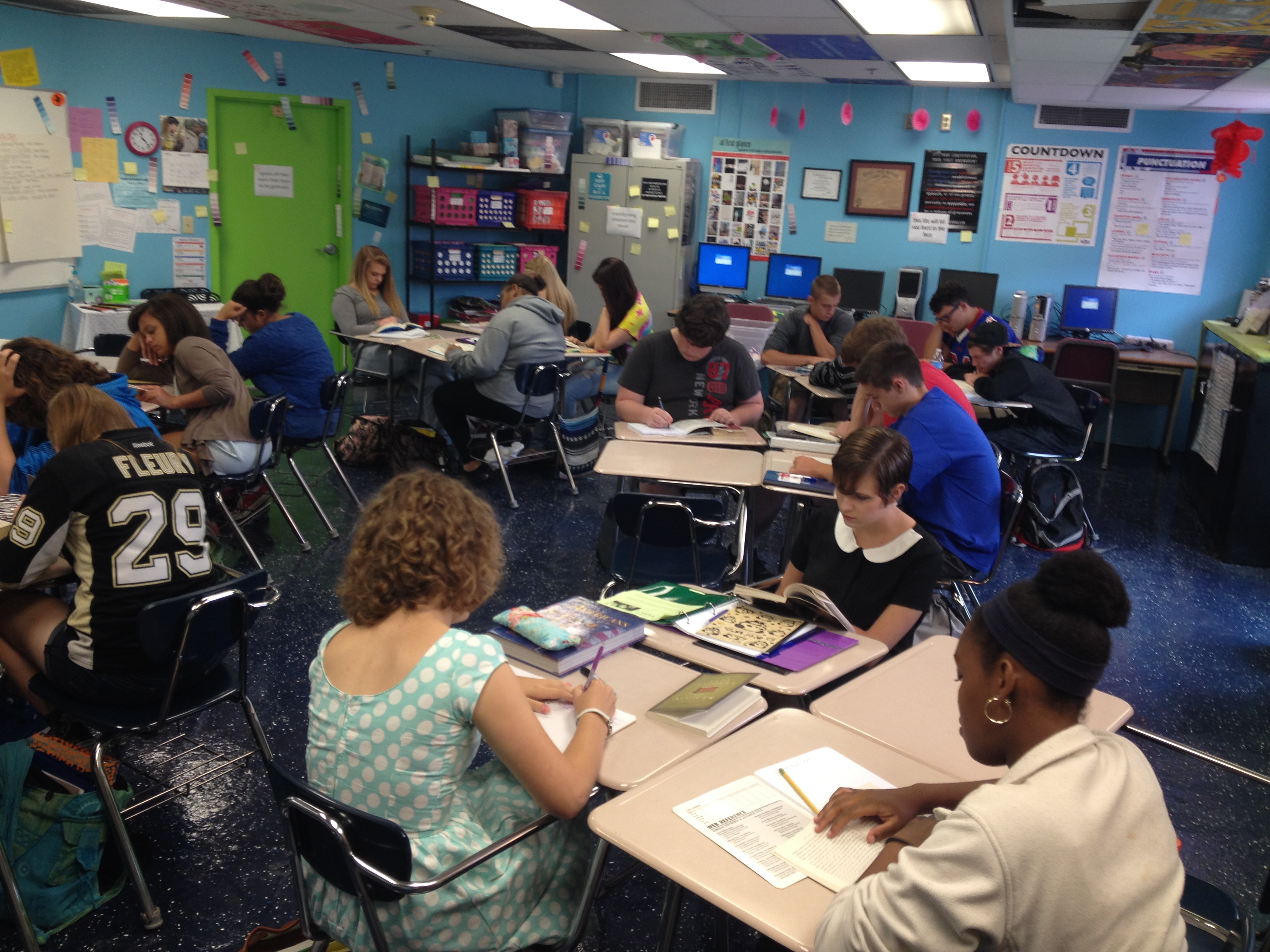
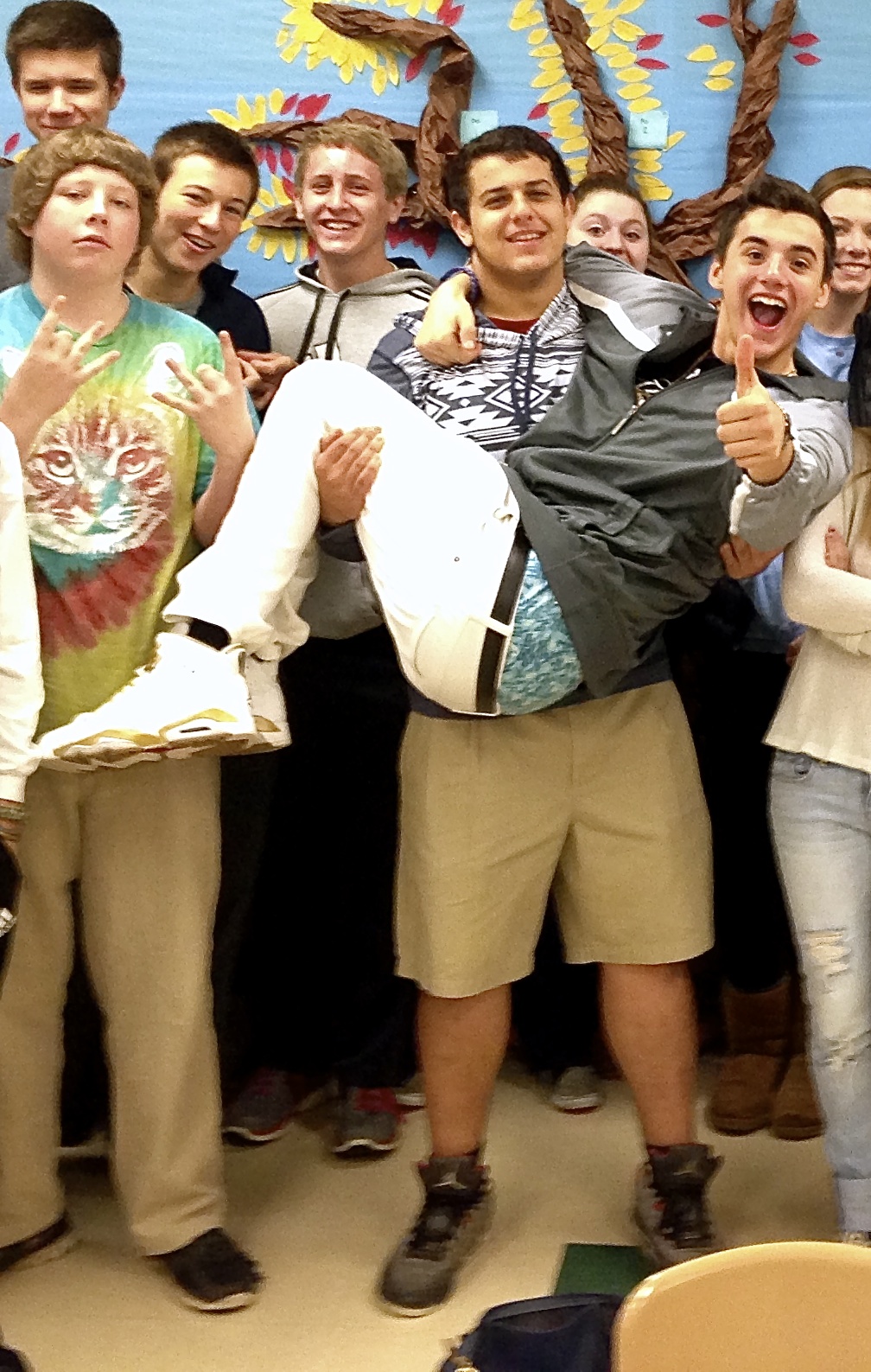
photo 2-2Three minutes into silent reading, someone farted. I have the band-aid colored desk-chair combos, which meant that one vibrating toot was magnified against the metal frame of the guilty student’s seat. The room stayed silent for half-a-minute and then erupted in laughter. The girls quietly chuckled, but there was no way the boys could settle back into their books, so we moved on to our minilesson and called it quits.

My boys can’t get enough of lowbrow humor. Their writer’s notebooks and fictional stories are full of crass humor—farts, sexual innuendo, embarrassing stories, and offensive humor. For years, I chalked up their obsession with these topics to immaturity. I love a good fart joke or sarcastic paper, but I never truly understand the point.

Newkirk argues that humor is a mode of exploration for students, particularly boys. Instead of chastising them for vulgar or lowbrow humor, teachers should capitalize on boys’ love for the weird, gross, and funny. He pointed out that classic literature is full of crass humor, citing Beowulf and Shakespeare as examples. Boys, he noted are inclined to read humorous literature and use these as mentors for their own writing.

Too often though, teachers either don’t understand boys’ humor or they fear that the silliness somehow undermines the assignment. This shouldn’t be the case. Just as we give girls the room to explore emotionally charged pieces about self-confidence or dating, we must also give boys the opportunity to investigate their own questions, which may very well include both humor and violence, as Shana discusses. In an excerpt Newkirk gave us from Boy Writers, author Ralph Fletcher notes that “some of the crass humor in their writing (burping, farting, dirty diapers) tries our patience, but many boys are simply making ‘text-to-text’ connections between their writing and the kind of humor they read in books.” These connections are invaluable when it comes to capturing the attention of our male students.

IMG_2367In turn, we must allow our boys a space to explore humor. Sometimes jokes are just funny, but other times, they soften heavy themes in literature. They open up deeper discussions that are otherwise inaccessible or uncomfortable. As Newkirk writes in Misreading Masculinity, “[Humor] provides a forum for negotiating and sustaining male friendships, and of making overtures to girls. It allows us all to laugh at the peculiarities of our bodies, as we escape, if only briefly, from our embarrassment at the sounds they involuntarily make and the smells they produce” (Newkirk 167). Will students toe the line between inappropriate and appropriate humor? Most likely. Will they take their jokes too far? Potentially. But learning is about testing our surroundings and studying voices to find our own. At the end of the day, I’d much rather my students explore their world through laughter than not, fart jokes and all.

Just Let Them Write: Boys and Autonomy

“Just let them be boys.”

This aphorism about dealing with boys is a long-standing one, but I learned last week in Tom Newkirk’s class on boys and literacy that it’s much easier said than done.

First, after reading a pretty fascinating article in The Atlantic, I realized that modern society doesn’t often let our boys be boys.  The economy, family structures, and workplaces of America have changed drastically in the past twenty years, and the traits and skills that used to make men successful and fulfilled have gone away.

Second, I listened to my fellow teachers discuss their classrooms this week at UNH, and I was struck by the language of control prevalent in teaching narratives:  “I make them;” “I let them;” “I shoot down their ideas;” “They have to;”…these were the words teachers used to describe their students’ activities.

These are phrases of division, of separation, of a differentiation of teacher and student, expert and learner, master and subject.  Having just read Daniel Pink’s Drive, the phrase “The opposite of autonomy is control” has been stuck in my mind.  It seems that even in the academically enlightened setting of the New Hampshire Literacy Institutes, many teachers still practice a teaching philosophy of control and compliance, rather than one of equity and autonomy.  Further, many of these speakers were women–so this was an issue not just of control, but of furthering the claims of the Atlantic article mentioned above regarding emasculation.

Our class talked about violence a lot, and whether it was acceptable in writing.  Ralph Fletcher’s Boy Writers taught me that violence in boys’ writing was as natural as the sunrise.  Newkirk addresses this issue as well, defining violence in general as “the intentional infliction of pain…on another,” and specifying that “writing would be a violent act if it caused pain to others…for example, if it caused readers to feel threatened or humiliated.”  Too many teachers in our class had a strict no-kill, no violence, etc. rule about writing topics–the opposite of autonomy.

Most reading and writing boys do doesn’t involve intention to inflict physical pain or harm.  Their topics may be provocative, but most of the time, it’s just boys working out things that are on their minds–huge issues like death, love, violence, and sexuality.  Adults do this all the time too–these are issues many of us haven’t quite worked out, so why should we deny children an opportunity to explore them through writing or other means?

Thanks to reading texts like Boy Writers, Misreading Masculinity, and Peter Johnston’s excellent Choice Words, I feel like I understand and enjoy many themes in my boy students’ writing. In fact, the first time I met my husband was in my freshman English class, where I wrote a story about a serial killer who stole college students’ identities and test scores by ripping off their faces and stitches them over his own. My professor asked me to share it in front of the class and I still recall the nervous giggling that followed my sharing, including Jon’s wide eyes. As a writer, I was just proud of creating a fictional voice so creepy and plausible, but the embarrassment of that experience shamed me to a degree that I’ve shied away from all fictional writing since.

As a teacher, I don’t want to quash a student’s creativity, violent or not. I love my boy writers and respect the sanctity of their writer’s notebooks, in which their fantasy lives can be explored and reflected upon in private. For them to grant me access to those fantasy lives through writing is a sign of respect and trust, and I wouldn’t want to violate that by censoring their thoughts, showing them to administrators, or asking them to share with the class.

But most of all, I want to distinguish between feeling “uncomfortable” and feeling threatened or unsafe.  Hearing me read my serial killer story probably made some of my freshman English students feel uncomfortable, but no one felt scared–I did not threaten anyone in the room, nor did my fictional narrator.  In fact, the end of the story revealed that the killer’s actions were mostly motivated by justice, revenge for his victims’ pervasive academic dishonesty.

Feeling uncomfortable, though, is something I believe is essential to learning.  Disequilibrium is the space in which our worldviews are challenged, where we achieve the Vygotskyan zone of proximal development.  We are confronted with new knowledge and are close enough to it to assimilate it into our existing schema.  An open, unfettered workshop classroom is one place where this kind of development can (and should) occur.  Rules like no violence, no swear words, no sex, no freedom, prohibit the opportunity for disequilibrium–and real social learning–to occur.  We cannot fear our students’ inner minds.  We must acknowledge the distinction between fantasy and reality in books, in writing, and in our kids.

Further, we must value that chasm, and respect our students’ varied and important processing strategies.  Writing these issues out is a way to come to understand them, so we must forsake this antiquated notion of creating control and compliance in classrooms.  Given choice, given autonomy, our students will read and write their ways toward understanding beyond our classes and into their adulthood, as we do.  We are the same as our students, grappling with concepts in writing (like I am here, now) and are no better than or superior to them.  Eliminate authority, cultivate autonomy, and just let them write.

Our Year-In-Review

As we round out the 2014-2015 academic school year, I would like share our Year-In-Review from us here at TTT and dedicate it to all of our loyal and contributing teacher friends who share in our experiences throughout the year.  Playing with the Reading Writing Workshop model is always exhilarating and fresh and exciting and freeing and thought-provoking.  It’s always propelling us, as educators, to break through barriers and teach with our most authentic teaching souls.

So, to capture the essence of how we have all explored the model this school year; here are highlights that allow us to celebrate the risks, the questions, the stumbles, the ‘ah-ha’s, the setbacks, and of course…the successes.  As we are all still progressing through this last month of our current school year, we hope that resurfacing some of our favorite moments will ignite the fire that keeps us all educating with fierce passion, deep inquiry, and continual evolution.

The calm zen of the RWW in Texas.

The calm zen of the RWW in TX.

First up: The lovely Amy Rasmussen who never ceases to amaze all of us with her wit, wisdom, and wildly insightful thinking.  Here is a woman who has taken the RWW by storm and has not looked back; the only time she does is to pick up, dust off, and gently guide those who are trying to find their way through the process.  She is an excellent mentor and extraordinary educator who ensures that her Advanced Placement students are gifted the wonders of the RWW. Here is a collection of how Amy has guided us through the intricacies of customizing the RWW for our own learners:

A Feedback Protocol for Revision Workshop

5 Reasons Why Reading Conferences Matter — Especially in High School English

5 Ways to Enjoy the Last Month of School


A reminder of student movement and achievement.

A reminder of student movement and achievement in NH.

Next: Jackie Catcher’s name could not be more appropriate.  We know the catcher’s responsibility on the field is to guide the team to strategic success; Jackie does the same infield – in her classroom. She moves her students with her unyielding dedication through continual infused literacy by craftily customizing projects and lessons that engage students. She is a powerhouse who, through all the struggles and obstacles of a second year educator, never ceases to find innovative ways to educate and inspire.  Most importantly, she is always a learner first and shares her inquiry with others to not only think collectively, but to create success-driven solutions.  Here is some of her story:

Building My Library Around My Students

Unraveling the Mystery of Poetry

The Question That Changes My Students’ Writing


A bright and energetic learning environment in WV.

A bright and energetic learning environment in WV.

Thirdly: The always-invigorating Shana Karnes. Shana is a shining light to her students, yet her light shines brightly for the world of evolving educators as well.  She is open to sharing her passion, her innovative thinking, and the way she creatively customizes the RWW for her students in the throws of West Virginia.  Shana never loses sight of how vital piles and piles of literature are for the growth of her young readers and emerging writers.  She knows how to roll up her sleeves and do the work right beside her scholars.  It is through the sheer joy of all things literacy, that Shana explores the world of the RWW:

We Learn Facts from Fiction

Teach Readers, Not Books: A Case for Choice Reading in ALL Classes

The Value of Talk


The shelves where our identities are qualified, our ideas solidified, and our passion realized.

The shelves where our identities are qualified, our ideas solidified, and our passions realized in NY.

Rounding it out: Erika Bogdany.  Through the RWW I have challenged my students, and they in turn, have challenged me.  They push me continually with their own inquiries and want to be more fluid writers.  They challenge my writing by offering suggestions and insight that I have bestowed upon them; the gift of creating a safe community for all learners to read, write, risk, and share.  It is through the RWW that students find pride in their work, volume in their voice, crafted secrets in their writing, and beauty in themselves.  It is with passion and grace that students flutter and flop; yet learn how to fly:

All it Takes is a Tutu and Some Focus

Beyond These Four Walls

Today We Draw


We hope that our moment of reflection and celebration continues to provide you ideas and inspiration throughout the remaining time you have with your unique readers and writers this year.  We’d love to continue hearing your voices, feedback, and generous insight while we round out this school year…and look forward to the year ahead!

An Invitation: Are You Walking the Talk in Your Content?

Now, that is the way to walk the talk.

knowyourphrase.com

knowyourphrase.com

I attended a Vocal Majority concert Saturday. This is one awesome men’s chorus. When the emcee introduced a quartet, I sat up a bit. There, singing with The Essentials was the choir director from my high school. Wow, what a voice.

As he sang, I kept thinking: There is a teacher who walks the walk. His presence on the stage, singing first in a group, then in a quartet, and later even as a soloist, shows that he knows exactly what his students must do — and feel — when they engage in activities and performances in the LHS choir.

Credibility is huge.

I think about this as I talk with other English teachers. I should stop being surprised when I learn that they do not read — “unless it’s a book I’m about to teach, of course.”

I’ve heard that more than once.

Perhaps even a bigger concern than not reading:  many English teachers are not writers.

The thing that has helped me be a better writing instructor — not attending conferences or classes, not reading pedagogy books — the single most thing that’s improved my ability to teach writing:  Becoming a writer myself.

I understand the struggle to think of ideas, the headache of revision, the joy of finally getting something right. My students need to know that I know what all of this feels like.

Like my colleague the choir teacher, I try to walk the walk of my content. I am an individual intent on improving my literacy skills, just like I want my students to be. I talk about my reading life, and I share my writing life with my students, regularly.

I think they trust me more because they know I read as much as I ask them to read. I write as much as I ask them to write, and every major assignment I give to them I write myself (plus this blog and a book I’ve been working on for awhile now.) I even write blog posts about improving my writing: 5 Ways to Meet Your Writing Goals.

It is not hard to have credibility. But it does take commitment.

The Best Writing Teachers are Writers Themselves.

A couple of weeks ago, i joined in a #litlead chat. The topic turned to teacher-bloggers and why and how to become one. A few participants in that discussion spoke out and said they were nervous about starting their own blogs, but they know it is a good idea. I’m sure their reasons for wanting to blog are varied, but there are three possible truths:

Teachers who blog are more likely to 1) reflect on their practices, 2) seek out new ideas for topics to write about, 3) show their students that they practice the craft of writing — like they hope their students will do.

I offered to let those nervous about blogging to wade it a little and publish a piece here at Three Teachers Talk. One stipulation: You have to be an advocate for readers and writers workshop. (That is the main topic of this blog after all.)

So think about it:  Do you walk the talk and walk the walk? Do your students see you as an adult with passion for your content outside the classroom walls?

Would you like to write a guest post? Send me an email with your idea, and I’ll respond and set up a date. (amyprasmussen@yahoo.com)

I’d like to help you walk a better walk.

©Amy Rasmussen, 2011 – 2015

The Question That Changes My Students’ Writing

My first year of teaching I taught thesis statements as these grandiose sentences that establishedimages the entire infrastructure of a paper. I conducted minilessons and writing units just on how to write a three-pronged thesis, which would inevitably lead into a five-paragraph essay. While this technique was arguably successful in its own right, it was also highly limiting. Because the three-pronged thesis set students’ papers up with a distinct outline right from the beginning, it didn’t allow students to delve deeper into their topics. If anything, it actually limited their exploration of their topic or research because it set too stringent of guidelines.

It wasn’t until I read Kelly Gallagher’s Write Like This that I found one of the single-most valuable suggestions for student writers. Somewhere in this treasure trove of practical suggestions, Gallagher changed my approach to teaching theses with one question. Instead of asking what the point of the paper was, he questioned what the student wanted their reader to learn. Now during mini-conferences I ask students, “What do you want your reader to take away from this piece?” Not only does this question prompt them to acknowledge and think about their audience, but it also makes them recognize the value of their writing as a reputable, informative piece. As students answer this question, I jot down their responses, asking them additional questions to deepen my understanding of the subject. Eventually, when the point of the essay has become clear, I give them the notes I have taken and say, “This is your thesis,” showing them that the information we want our readers to take away is really the mission of our essay as a whole. From these notes, we formulate their thesis together to better address the overall message of their paper.

In the end, this approach oftentimes transforms students’ papers from flat, five-paragraph essays, to papers that delve deeper into the content. My freshmen recently finished their five-page research papers while my juniors and seniors completed eight-page TED talks. I used this approach during the initial conferences to help them hone in on the issues they wanted to research. After our conference, Emily’s essay transitioned from a simple history of prosthetic limbs to a deeper exploration of the rapid evolution of modern prosthesis and the technology needed to make them more lifelike. Sarah, on the other hand, found that her fascination with the Russian mafia also led into a deeper exploration of a lethal new drug called Krokodil, which is being trafficked through Russia. Each time students were able to isolate what they found to be fascinating about their topic and then ultimately use that as a jumping point for the rest of their paper. In the end, asking this one question helps students clarify an otherwise intimidating thesis while also helping them to polish their approach to the subject.

Students Need Real-Life Writing

suit-and-tieWe live in a technical world. People rarely see one another face-to-face anymore, which is why writing has become our hypothetical suit-and-tie. To get a job, one uploads and sends a cover letter and resume. To apply to college, one submits a college essay. To correspond with a colleague, one sends an e-mail. To be engage in online discussions or to communicate on social media, one must post or blog or tweet or comment. More than ever before, we are our words. We live in an age where we can look and act like slobs behind the screen while our words tell a different story. It’s empowering and liberating but also terrifying. Terrifying because too often our students don’t understand the value of formality in writing.

This has become even more apparent as I, a 26-year-old, am both exposed to and part of a generation of socially illiterate people. We, as well as our students, understand text language, chatting, posting, and tweeting, but our colloquial language seeps into our every day interactions, handicapping us in other ways.

While students can effectively communicate with their peers, they have not received the training to engage in formal written conversations—the types of conversations that drive the academic and business world. In turn, students arrive in college lazily piecing together informal e-mails to their professors that poorly represent their abilities and knowledge. We assume that because they have grown up as Internet babies and that because they are constantly on their phones, they understand the unwritten rules of Internet writing, but they don’t. This year I have made it a point to inject the discussion of voice, formality, and audience into my reading and writing units in an attempt to widen my students’ understanding of and comfort with writing.

In all of my classes I have sought to push my students outside of their comfort zones by exposing them to diverse mentor texts and assignments that force them to play with words. For many students, voice is a challenging concept. They struggle with finding a voice in their own writing, which makes it even more imperative students be exposed to comedic, sardonic, opinionated, and academic pieces. The only way to develop voice is to study it. Not all of the pieces I show my students are high brow; I pull from a variety of sources ranging from blog posts to articles from The Atlantic. But the pieces I choose are intended to show that a wide range of writers and voices exists. The more students understand that there is no one-size-fits-all structure, the sooner they will be willing to dabble in their sarcastic or silly side.

In learning about voice, students must also understand the value in formality and audience in their writing. Too often the e-mails I receive from students look like a long rambling text message. We’ve all received them—the ones riddled with grammatical errors, making us cringe and wonder if they’ve learned anything this year! Teens quickly become comfortable with the fact that teachers are the only people reading their writing. Students become overly comfortable with teachers reading their writing at times. We’re seemingly safe and familiar; we know their quality of work. Exposing their writing to new eyes and ears increases the stakes and makes their work more relevant.

This year, I was determined to push my lower level freshmen beyond the classroom and get them engaging with mentors. I could tell my students to work hard, which I did many times over, but in the general scheme of things, I was their teacher (akin to their mom). So I recruited a Navy Seal, an elementary school teacher, a forensic anthropologist, a photojournalist and others to do the job for me. Students were required to research a career. While they completed their research, I sat down with each student and helped him or her to draft an e-mail that they would send to a professional with which I paired them. Oftentimes I would return to find my students’ e-mails plagued with the same grammatical errors I’d seen so many times before,Depositphotos_7626816_m only this time, I was with them on the sending end.

My mini-conferences turned into minilessons on the importance of editing and the impression it had on the e-mail recipient. Students struggled with how to start their e-mails, how to address the recipient, and how to sign their name at the end. We practiced online manners, thanking the professionals for their time and answers while also noting something the student found to be interesting or appealing from the professional’s answers. In the end, their attention to detail paid off. A forensic science professor who teaches college students included the following in his e-mail:

“I was taken aback when I saw that he is only in ninth grade; I have students much older who do not bother to write properly and it disappoints me.  I am not your friend on FB nor are you texting me so no need for brevity at the expense of complete and correctly written sentences.  Salutations?  Maybe next year.

I have a 12 year old son so I think I will have him peer over my shoulder as I write to Carter so he can see how polished someone so young can be.  Thanks!”

Our students are going to college arguably without knowing or understanding the importance of voice, formality, and audience. To prepare them for life beyond high school, we must strive to incorporate real-life writing assignments into our classrooms. While some of my students may never write a research paper after they graduate from high school, I know that nearly all of them will use e-mail, apply for jobs, and engage on social media.

My role as an educator is to help mold and train productive and intelligent citizens and while giving them lifelong skills that translate beyond the classroom. Part of this is continuing to develop and adapt my classroom to better fit the needs of 21st century students. So regardless of what my students do in their free time whether they enjoy lounging in sweatpants with a tub of Doritos or taking selfies in a bathroom mirror, I want them to sound like poised, intelligent, and confident individuals. I want the world to be open to them—both online and in real-life.

Writing but Not Writing

It’s been almost a year since I decided to write a book. I’ve lied a lot. No, not in the book, but in telling people I am writing one. To be a writer I know I need to write more. I’m just not good at it.

I feel like every student I’ve ever taught must feel.

I sit to write, and I get distracted. Compulsive, too. My inbox has to be empty. My Twitter feed has to be “read.” My notifications have to be noted. My apps have to be updated.

This is a problem.

I know what all those writers say, giving advice–playing with my psyche.  One of the things that fills my news feed is quotes by authors. At one time I thought that was a good idea.

Just this morning:

“The writer’s only responsibility is to his art. He will be completely ruthless if he is a good one.” ~William Faulkner

“The discipline of the writer is to be still and listen to what his subject has to tell him” ~Rachel Carson

“Teach yourself to work in uncertainty.” ~Bernard Malamud

Oy! I thought if I got writing tips from published writers I’d find some tips for writing more and writing better. Mostly, I just get depressed.

I don’t like uncertainty. Who has time to be still? Is my art teaching or writing? (See that conflict with time?)

I know one thing:  I understand my students more. And I haven’t even asked them to write a book. I’ve only tried to get them to care about their writing. Play with words and structure and meaning. Create something that brings a smile because it works for you.

It’s harder than it sounds. I know because I practice it every time I sit to write. And the struggle doesn’t away.

I’m not giving up, but there are days I want to.

Like a week ago when I asked Heather to read my introduction and give me feedback, and she shot me through the heart. Not on purpose–I know that. But sheesh, I was not quite prepared to be so vulnerable.

I imagine much like a student or two who’ve read my purple pen and wondered “What the heck? I bled to write that.”

This morning I got up early to write.

I wrote.

But not a bit in this so called book.

This is a problem.

Not the Same Old AP Writing Teacher

ocsWriting takes time. I imagine most English teachers know this. However, I am not sure most English teachers allow students enough time to produce their best work.

I speak from experience. You might be able to relate.

Traditionally, I would give students a writing assignment. We’d pre-write a day, sometimes two. We’d draft a day, sometimes two. We’d revise (or I’d hope they’d revise) maybe a day–or none at all, depending on the student. We’d publish our work and turn it in for a grade.

Oh, how incredibly dull . . .and ineffective. No wonder so many students hated writing.

This year we do writing differently. We are writing a lot more like real writers.

We start with reading. We read an engaging and complex mentor text. The author becomes our writing coach for as long as we are working on the assignment. The piece my students are writing now is a feature article modeled after the work of John Branch in Snowfall:Avalanche at Tunnel Creek, which recently won a Pulitzer Prize. We read the first four pages or so together, stopping to talk about the many devices Branch uses to craft the introduction to this piece. We discussed the rhetorical appeals and how Branch uses them to build credibility and create emotion. Students were mesmerized by the narrative. It’s a lovely day in my teaching life when every sentence in a text has something worthy of taking note–I had to stop myself in Snowfall. Too much talk, and we lose the rhythm of the article.

After we read, my students and I looked at the embedded photos with the captions and watch a couple of the videos. We discussed why the author included these in the piece where and how he did. I then told students that they would be creating their own article, and John Branch just became their writing coach.

Students chose topics after a lot of class discussion and responses to my probing questions in their writing notebooks.

  • If you didn’t have to go to school, or work, or any other responsibility, what would you do with your time?
  • If you could have dinner with three famous people, past or present, who would you invite to dine?
  • If you could travel in time, what era would you want to return to?
  • Where to you see yourself in five years?
  • What do you want your life to be like in 10 years?
  • What is something you have always wondered about?

Students chose some interesting topics:  One young woman is writing about building schools in Mexico, another is writing about neurobiology, and another is writing about hiking across Europe. A young man is writing about what life was like during Jesus’ time, another is writing about game design, and another is writing about becoming a pastry chef.

Initially, I had students jot their topics on a sticky note, so I could see if what they had chosen was “doable.” (We all know those students who choose topics that are so broad, and perhaps the students’  skills are so immature, that there is no way they will ever be able to write anything interesting.) I wrote some quick feedback, pretty much either “Run with it,” or “Wait! narrow this down,” and most students were ready to write.

Then I had this idea that I’d been playing with in some consulting I’ve conducted with North Star of TX madewithOver-2Writing Project. It’s a working structure to get students thinking. And if I teach it right, students will learn four different modes of writing in one go:  definition, narrative, examples, and argument.

I wrote my own working piece, and my students and I read it together. Then I asked them for suggestions on where I could improve and where I could add research. You can see my working document here: Authenticity.

Students then began crafting their own four paragraphs. This ended up being the final summative assessment for fall semester due to the deaths in my family and my many absences. Turned out to be a pretty good resting place.

When we return to class next week, these are our next steps:

First, we will return to Snowfall and read and discuss the piece in more detail. You know, to get us back in the reading and writing groove after our two weeks break.

Then, we will project a few student work samples on the board and talk through them the same way that students did with mine, offering suggestions on improvement and where research may work to advance the meaning. Every student who wants whole class help will have the chance to ask for it. Others might choose to just get help from their small writing groups. Either is fine, as long as all students share their work and get feedback.

Eventually, we will work on revising our structure, moving around paragraphs, and making our writing follow Branch’s award-winning article. Of course, I will pull sentences to study and conduct other mini-lessons all throughout our writing process. And I will confer with students regularly. We will add photos and videos (hopefully originals), and we will polish and polish and polish before we publish.

For the first time ever, I am in no hurry. I will not allow our time to be regulated by grading periods– well, until the very last one at the end of the year.

We will write.

We will revise.

We will confer and share and grow as writers.

And eventually, we will publish.

And celebrate.

I’d love to know how or what you have changed as a writing teacher. Please share.

Authenticity: Making it Real with Student Blogs

North Star of Texas Writing Project (NSTWP), in which I am a teacher consultant, asserts that authenticity is connecting student learning with significant audiences, tasks, and purposes.

image

Blogging with my students is one way in which I make that connection happen. Writing posts and commenting on the work of our peers has become an integral part of my readers/writers workshop classroom.

photo: Petras Kudaras

During the second week of school, once schedule changes calm down a bit, I introduced the idea of blogging to my students. This year I wrote a post on my class blog and imbedded an article that made them see that blogging can have value to their futures. You can see that here.

I’ve had students use Edublogs as their blog platform in the past, and I know some teachers have their students use Kidblogs. I decided to go with WordPress this year. I thought using the “real world” blog platform would be a good idea. You know, just in case some students loved the idea and kept writing long after they leave my classroom. Finally, eight weeks into the school year, I am glad I went this route, but the set-up, especially with my 9th graders took a lot longer than I’ve had to spend in the past. (Most of my students are not as tech savvy as many technology advocates would like to believe. For more on that read this post:  Digital Novices vs Digital Natives.)

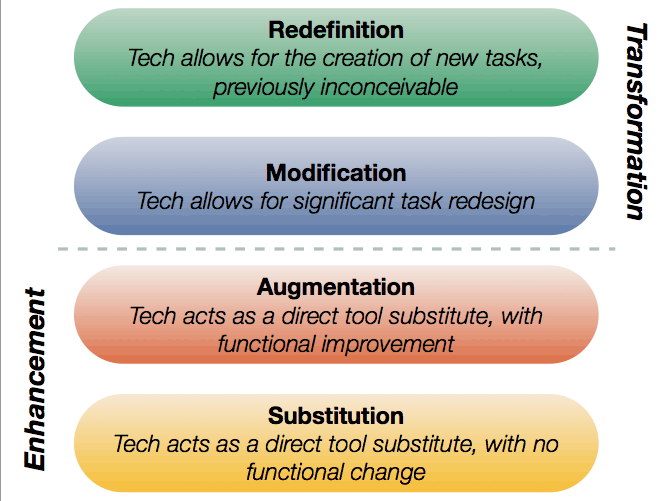
These are some ways I’m transforming my teaching by using student blogs this year (See this SAMR model for ideas on instructional transformation):

Timed Writing. I need students to be able to think quickly about a topic, organize their thoughts, and write effectively in a short period of time. Years ago I had students complete timed writings on paper with a pen, and I’d take the stack of essays home and laboriously grade them. By having students post to blogs, my classroom is getting close to being green. We do very little writing on paper anymore. I can read student posts with the swipe on my finger on my iPad, and I try to leave comments that inspire improvement in their writing. Sometimes I put the score from a rubric. Most times I say something I like about what students have written. They like that kind of feedback best, and it usually prompts some kind of improvement in their next post–something that rarely happened with the marks of my red pen.

For our first timed writing, students wrote about their reading lives. We spend 10 minutes at the beginning of each class period reading our self-selected books. I conference with each student, brief one-on-one chats. I learned more while reading student posts about their reading habits than I did in the prior eight weeks of school. I posted a reflection of my own reading life on my class blog with the actual assignment, and then students wrote on theirs. The response to our wide reading warmed my teacher heart. Read a few of these students’ posts, and you will see why: Helen–A Path Led by Wise Words; Gina–Lay Down the Bridges; Mian–A Passion for Books; Emilio–Reading Life

Our second timed writing, students wrote an argument in response to our in-class study of Ralph Waldo Emerson’s “The American Scholar.” Some student posts were thoughtful and wise; most were ineffective and needed major revisions. All students wrote and showed what they’d learned from their reading and our class discussions.

Persuasive Practice. The AP Lang exam and the 10th grade STAAR test both require students to be effective persuasive writers. I like this blogger’s post:  Blogging is the New Persuasive Essay. As I teach my students how to use persuasive techniques, I also want them learning about their world. They have to know “stuff” to build their credibility after all. So every Monday my students write a post that they base upon something they read in the news. They scan headlines until they find a topic that interests them. Then they pull an idea from the article, and then they write an argument based on that idea. So far, we haven’t delved too deeply in the art of persuasion; we’ve talked mostly about form and structure and a few rhetorical devices, but some of my students have taken ownership of this weekly recurring assignment. Here’s a few to give you an idea:  Kathryn–Words Hurt; Ashley–Recycled Look or Recycled Lives; Jason–Smoking is Safer? Impossible; Adrian–Chemical Mistakes

Published Polished Pieces. As we move through different genres of writing, I need my students to fully immerse themselves in the process of creating effective and moving texts. We started the year with a focus on narrative. I know, it’s not on the AP exam or the STAAR test anymore. But story is so important. It’s what connects us as humans, and it’s story that has helped create a classroom community where students are not afraid to take risks and throw their hearts out on the page. While a few student narratives are not as polished as I would have liked prior to publication (grades being due always seems to interfere with authenticity), if you read just these three, you’ll see why story is important. I can be a better teacher to these PreAP students because of what I know from these posts. Esmeralda–Memories; Mercedes–What Do You Think About Moving? Bryanna–Why Batman?

I remember learning from Kelly Gallagher that students should write more than I can ever grade. Well, of all things in my teaching life, I’ve finally figured that one out the best. I cannot read every post my students write, but I can read a lot, and I can give a lot of feedback in a way that is meaningful so that students respond. We just started reading and leaving feedback for one another. I can already tell that this will be more valuable than just me giving feedback. After we spent two class days reading one another’s narrative posts, I had students tell me on their own narrative evaluations:  “I knew I could do better after I read other people’s.” For an example of our student feedback, read the comments on this one: Amy–Forever a Bye. The instruction I gave students was 1) Be polite but honest, 2) Bless something you think the writer did well, 3) Press a moment that needs more detail or description, 3) Address an issue of concern in regard to style, grammar, etc. For our first time, I’m proud of these students for the feedback they gave their friend.

Engaging student writers is often more than half the battle. So many times they have the attitutde “What’s in it for me?” By allowing students to choose their topics, and allowing them to express their true and authentic voices, I get better participation, and I get better writing, and I get to know the hearts and minds of my students.

That is all I ever really want.

photo: Dee Bamford

#NCTE13  Writing Teachers (Re)Inventing Literacy Instruction by Following the North Star

Could We Just Get Students to Read and Write in All Content Areas?

So one of the problems on my campus is the fact that students don’t read. Oh, I know some do, but by and large, the majority of our students are not readers. As a school we are struggling with this new problem of practice, trying to define “complex language.” We’ve spent hours with this already, and have yet to come to a consensus. In frustration last week, after discussing this for two and a half hours, my colleague wrote on the bottom of our PD group’s thinking sheet:  “Could we just get students to read and write in all content areas?”

Really. It could be that simple.

A few years ago, our campus began whole-school reading. Built into our daily schedule is a 30 minute Advisory time, where a good number of minutes could be used for independent reading– if only teachers would enforce it. Most students like to read when they are given their choice of the right books. But if teachers are not reader themselves, it’s no wonder they don’t care if their students read.

Mine do, but that’s not surprising. The students in my English classes read for 10 minutes at the beginning of every class. So, if their advisory teachers are mandating reading, my students should be reading at least 25 minutes during every school day. That’s not a lot, but it is something.

Of course, independent reading will not solve all our problems. Students need to think deeply about texts, not just increase their fluency, and non-readers will abandon a book rather than struggle through it. That’s why if we really want to get our students to develop complex language skills, we must get them to practice complex reading. This is the kind of reading teachers must do with their students. You know, modeling close reading, modeling thinking about a text? And I think English teachers who know how to do this need to be given the opportunity to teach math and science and choir and business teachers how to read closely with all students.

We can talk about complex language all day as a staff. We can define it and put the definition on the walls of our classrooms, but that won’t do a thing until all teachers in all content areas start reading complex texts with their students. (And maybe it’s too much to ask, but imagine the growth if every student wrote in every class every day, too.) Hey, friends in other content areas, I’m glad to show you how.


Does your school have a wide reading program or other reading initiatives that include reading and writing in all content areas?