Tag Archives: reading

Dumpster Diving for a Book Shelf

shelfieMy husband called, “Hey, there’s a book shelf by the dumpster. Do you want it?”

Funny that he asked. I know he knew I’d say yes.

I put the tall black shelf by the door to my room, which was pretty much the only open spot. But most of my classroom library sat cozy on the opposite side of the room. I did not know what books to put on this new shelf.

It sat empty waiting for three months.

There’s nothing quite so unsettling as an empty shelf in a bibliophile’s classroom, but my husband made me promise not to buy any more books. This is hard.

Finally, I got smart and labeled the shelves “1st period Suggests You Read,” “2nd Period Suggests You Read,” etc.

Slowly, I started moving books that students talked about, the ones they told me they liked. Then I Favorites book shelvesnoticed that a few students started returning their books to these shelves, and after we did Speed Dating with a Book a few weeks ago — we put all of our to-read-next titles on these shelves.

Now, instead of having most of our book choices on the bright green wall across the room, students walk past this shelf as they come and go.

Pretty good deal for a dumpster find.

©Amy Rasmussen, 2011 – 2015

Persepolis by Marjane Satrapi

persepolisIn honor of ALA’s recently released 2014 Banned Books List, I can’t help but recommend the second most banned book Persepolis by Marjane Satrapi.   Persepolis was one of the three graphic novels that made the top ten list this year. The book is criticized for its use of gambling, offensive language, and political viewpoints as well as for being “politically, racially, and socially offensive” and for having “graphic depictions.” In reality, this graphic memoir isn’t afraid to tackle the horrifying and at times comedic realities of growing up in a community faced with political turmoil. After all, Satrapi wanted readers to recognize that Iranians are normal people, just like everyone else. They enjoy music and parties and clothes; the difference is that the characters in Persepolis are living during the Iranian Revolution. Satrapi begins her narrative at six years old, relaying the stories of every day life as the Shah’s regime is overthrown, the Islamic Revolution takes hold, and the war with Iraq destroys her community.

What I love most about Persepolis is its ability to attract my reluctant readers, particularly my students who would otherwise steer clear of the international shelf in my classroom library. These students are drawn to the simple black-and-white cartoons and the rebellious teen protagonist. They love her quirky sense of humor and her obsession with American music icons like Michael Jackson. Like many of our students, she is an angsty teen coming of age. The difference is that she grows up during political conflict and war. Her world is changing around her, war has becomes standard, and she, as a teenager, is attempting to find normality in completely abnormal circumstances. But it’s Marji’s ability to navigate this morbid world and go through complex transformations that make her come alive on the page.

I tend to use graphic novels towards the beginning of the year when my students are becoming acclimated to analyzing writer’s craft (or even when they need a refresher on it). Oftentimes students are more in tune to looking at the details of drawings than of writing; they find it easier to pick out the eccentricities of images yet rarely do they question why the artist made the choices they did. Graphic novels give them the opportunity to do just this.

I have students work in small groups to analyze the artistic decisions of the illustrator. For example, in Persepolisthe scene to the right, Marji has been taken into custody by the Women’s Branch of the Guardians of the Revolution, a group in charge of monitoring women’s wearing of the veil. When they stop to study the images, students notice the repetitive stern expression of the guardian and the way Marji’s face appears to melt into squiggly lines as the frames progress. They notice the transition of the lines surrounding the word bubbles from smooth curved lines to sharp zig-zags. They recognize changes in font size and effects as well as the underlying narrative strand at the bottom of the frame that shows internal dialogue. As they analyze these details, they also begin questioning the choices that lead to the depictions of these conversations and emotions and what they ultimately mean in the context of the story. By the end, the graphics take on a more complex tone. The images come alive, the artist’s intentions become clearer, and they have immersed themselves in a new lens that allows them to take a second look at literature.

Growing Readers

Autumn in my New Hampshire school district.

Autumn in my New Hampshire school district.

In New England, where I teach, time is measured by temperature. New Englanders cherish Indian summers (the bout of warmth before fall settles in); we sense the bite of autumn, and can smell an oncoming snow. We are a community of seasons, and ultimately these changes dictate the course and development of our year. In turn, to show the development of my classes’ reading progress throughout the year, I drew my inspiration from what New England is famous for—its foliage. To visually represent my classes reading progress within the reading workshop, I developed a reading tree.

The concept of the tree is simple: for every book read, students received a leaf. On the leaf they wrote their initials, the book they read, and the author. They would then staple the leaf to their class’ branch. In turn, students had a visual representation of their individual progress (because they put their initials on the leaves) as well as their class’ progress. They would look to the tree to see what books were the most popular/appeared on the tree most often.

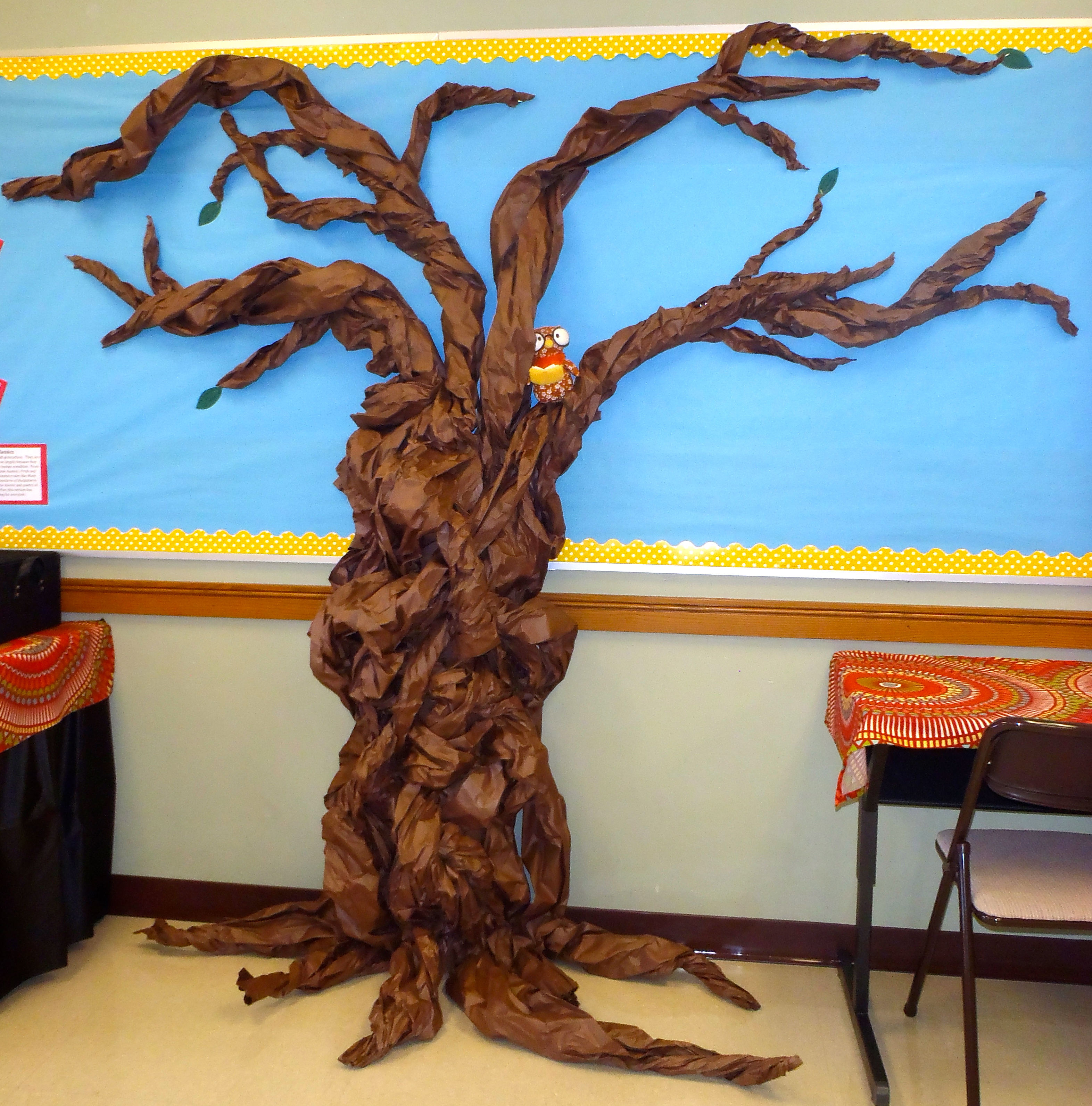
The bare tree before students arrived.

The bare tree before students arrived.

The reading tree exhibits student work and promotes individual success. In addition, it also reinforces teamwork since students look to see how their class is doing as a whole. Furthermore, the tree inspires friendly competition between classes. When I first introduce the tree, I tell students that the class with the most books read wins an ice cream party at the end of the year. This year, due to increased federal health regulations on snacks during the school day, my rules have changed. Instead, students will be able to drop two of their lowest reading scores. Unlike last year, I will tally the total books per class every quarter instead of at the end of the year to determine each quarter’s winner.

Construction for the tree is relatively simple and can be used from year to year.

Materials:

  • One concrete form tube sawed in half. I purchased mine from Home Depot and they sawed it in half for me
  • Two cans of brown spray paint. I used a textured spray paint similar to Rust-oleum’s multicolored textured spray paint, but you can use any type
  • A ream of brown paper—the same type you use to cover bulletin boards
  • A staple gun and staples.
  • Four packs of different colored paper for the leaves.
  • Brown or black duct tape
  • Bulletin board

Process:

  1. Spray paint the concrete form tube with the two cans of brown spray paint. This will serve as your trunk.
  2. Pull large sections of the paper of the ream and begin twisting the paper. As you twist the paper, begin stapling it to the concrete tube using the staple gun. Continue ripping off multiple pieces of paper from the ream, twist and intertwine them as you go along. This will make your trunk look three-dimensional and more realistic. Leave long ends on the bottom. Twist these to a point to create the roots of the tree.
  3. Before you get to the top of the trunk, fashion what looks like a strap. I did this by taking a piece of the brown paper and folding it to make a 2’ X 6” rectangle to wrap around the top of the trunk and affix to the wall. I reinforced the back of the piece of paper with brown duct tape. I then put this strap around the front of the trunk where the bulletin board first meets the concrete tube. I stapled the strap to the tree then the excess ends of the strap to the bulletin board to ensure that the tree wouldn’t fall over once it was complete.
  4. Finally, I continued twisting individual brown pieces of paper and then layering them by twisting multiple pieces together to create a thicker branch. Make sure to create a branch for each of your classes that will be participating.
  5. As you create the larger branches, staple them to the bulletin board. Because the paper is pliable, it is easily to manipulate to look more like a tree. Add smaller branches by twisting additional paper scraps.
  6. Cut out small leaves and store them in a jar or bag to give out to students as they finish their books. I usually have a volunteer cut them out for me so that I have a bulk amount for each quarter.
  7. Get excited to watch your tree (and readers) blossom!
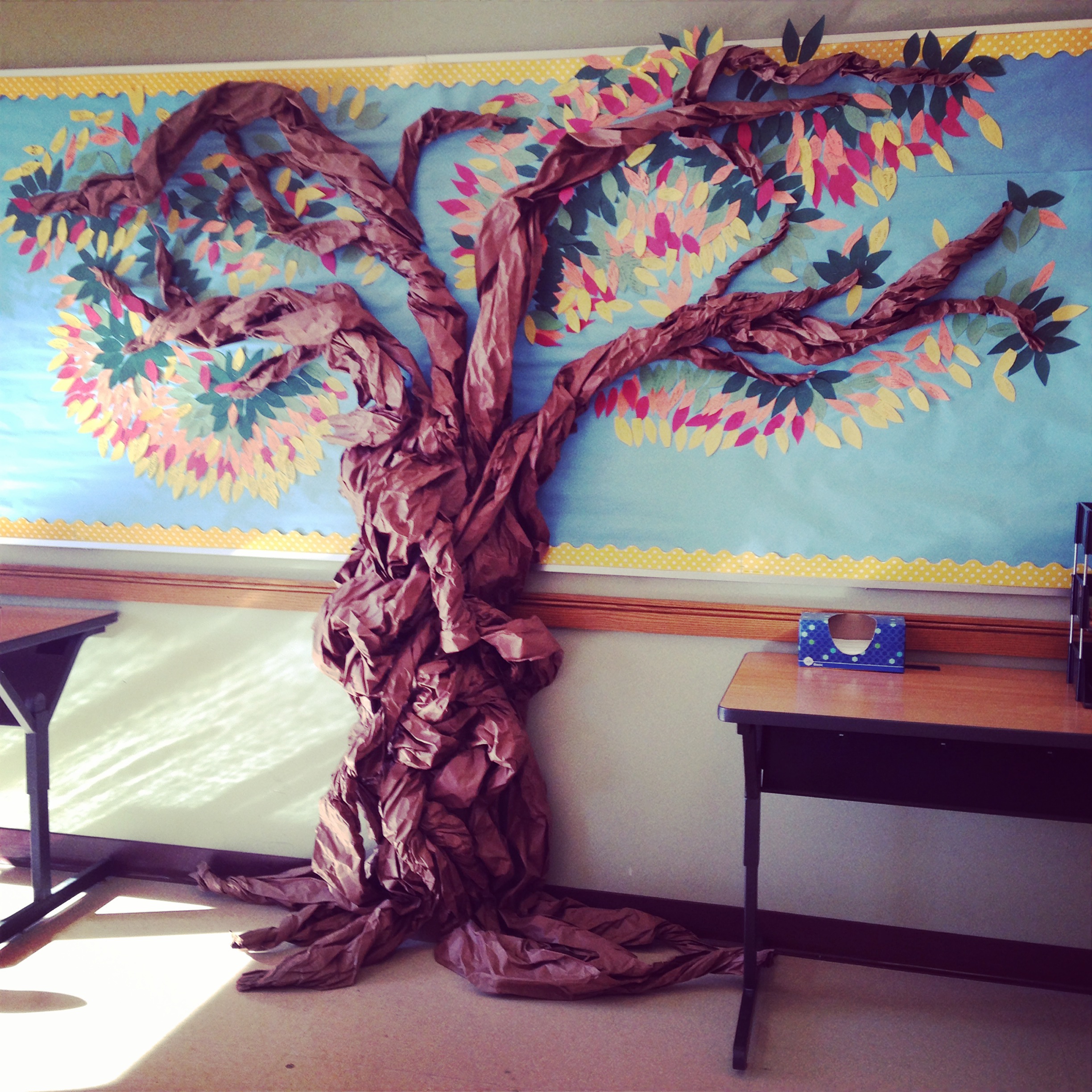
    The reading tree full of leaves at the end of last year.

    The reading tree full of leaves at the end of last year.

While the tree may look complex, it does not take an extraneous amount of time to complete or teach to students. Last year, I allowed my classes to pick which branch they would like to use. Furthermore, I color coded the leaves based on the quarter. Each quarter, I would let my students pick the new leaf color. Green was the first quarter, red was second, orange was third, and yellow was fourth. Just as fall foliage shows the change of seasons in New England, the changing leaves showed my students their development and growth as readers throughout the year.


Mentor Texts Are Everywhere!

This time last year I was amidst a mad dash – a mad dash in seeking out, organizing, asking about, researching, contemplating, and gathering the ‘best of the best’ of mentor texts.  I had just learned what a mentor text was (text that, well, mentors!) and wanted to make sure I had a plethora to kick off the school year.  And, I did.  I had gathered so many I wasn’t even sure when, and in what context, I would be using them.  But, they were ready and I felt confident that I was too.

This year, it’s a bit of a different story.  After implementing the Reading Writing Workshop model in my urban oasis for the first time this past school year, I realized there is no longer a need to be dashing about.  Mentor texts are everywhere!  Literally.  They are in the morning’s newspaper.  They reside in the autobiographies I always find myself engaging in (and of course, loving).  Articles promulgating the Twitter circuit for the purposes of dissecting content and craft.  Classics, more modern, and everything in between became focal points of inquiry and investigation.  Students’ independent reading books shed light on crafty moves authors strategically choose to utilize.  On occasion, an excerpt from professional development texts deserved a public viewing (sometimes with scrutiny, sometimes not).  Nothing is off limits.

So, it is no wonder that as I have been reading a vast array of literature this summer; I have new mentor texts lined up for this coming school year that I am thrilled to explore with my students.  So, grab your Writer’s Notebook and flip to your Next-To-Read list.   I hope you not only fall in love with these pieces, just as I have, but they inspire you to think about what you’re reading and how you’d like to share them with the brilliant and inquisitive minds occupying your learning community.

Making Meaning with Texts: Selected Essays by Louise Rosenblatt was first introduced to me in this summer’s UNH Literacy Institute via Penny Kittle’s Book Love course.  This piece sent a buzz all throughout the campus as we were asked to read it for homework and come prepared to discuss it the next day.  Before the night was through, classmates were chronicling their amazement and joy with Twitter posts such as:  “Reading Louise Rosenblatt for homework and keep saying “Amen, sistah!” in my head. #unhlit14″.  So, you can only imagine how this Reading Theorist evoked an awakening in us all.

IMG_20140630_221534

It was when I came to this paragraph that I realized I had just stumbled upon an incredible mentor text; not only for myself as an educator, but for students as well.  What better way to expose students to the questioning and thinking behind our reading and writing than by sharing the source with them?  These questions are going to guide us through our reading (and writing) journeys this year.  We are going to study these questions, make sense of them, put them into practice; but, we are also going to really delve into why Rosenblatt has chosen these questions to guide us.  See, that’s where exploring craft and an author’s intention becomes our focal point.


battle 1

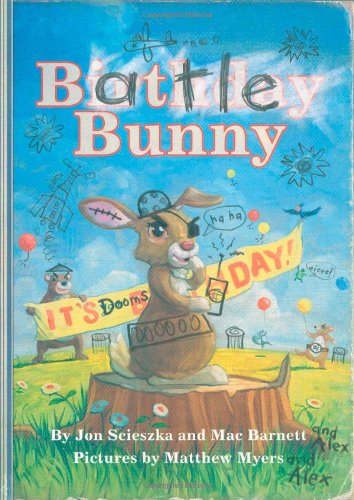
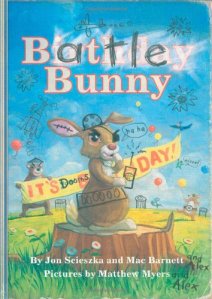
Battle Bunny by Jon Scieszka and Mae Barnett is a clever and witty piece that is sure to get students charged up about editing and revising.  How could it not?  This entire piece chronicles the the narrator’s (yes, the bunny) stylistic and creative writing journey.  The entire story is marked up, crossed out, reworded, and illustrated to show the power of the writing process.  It’s beautiful.

While I educate students ages 16-21, and this piece (I’m sure) was not intended for that audience, I believe this mentor text will be a lighthearted way to quell some of the fears that override their writers’ anxiety.  We know, many students are uncomfortable and afraid to revise, rework, or allow their time-intensive writing pieces to become ‘messy’.  Yet, that’s what produces the most profound writing.

battleI know this may be a risky move in my classroom.  Yet, I’m going to take a chance.  I anticipate shared laughter as we navigate this piece together.  I also plan to explore the bunny’s intentions and make it relevant for our work as writers:  Why did he feel the need to rewrite the story?  Do the illustrations add to the message he is portraying?  Do any of his original thoughts (verse his revisions) feel more powerful to you?  What intentional moves did he make in re-creating this story?  And on and on.

IMG_20140812_121342

Destined to Witness: Growing up Black in Nazi Germany by Hans J. Massaquoi is a piece I have not been without this entire summer.  And, although I’m finished reading it, I find myself flipping through the pictures over and over; it’s that profound. Massaquoi is a mentor of life, overcoming adversity, obtaining the (perceived) impossible, and what it truly means to be human.

Journalist by trade, Massaquoi takes such grace in his every word, sentence, and strategic ‘move’ that’s crafted.  This book encapsulates 443 pages of sheer brilliance and I want students to be exposed to this kind of writing because they too, have the ability to craft such beauty.

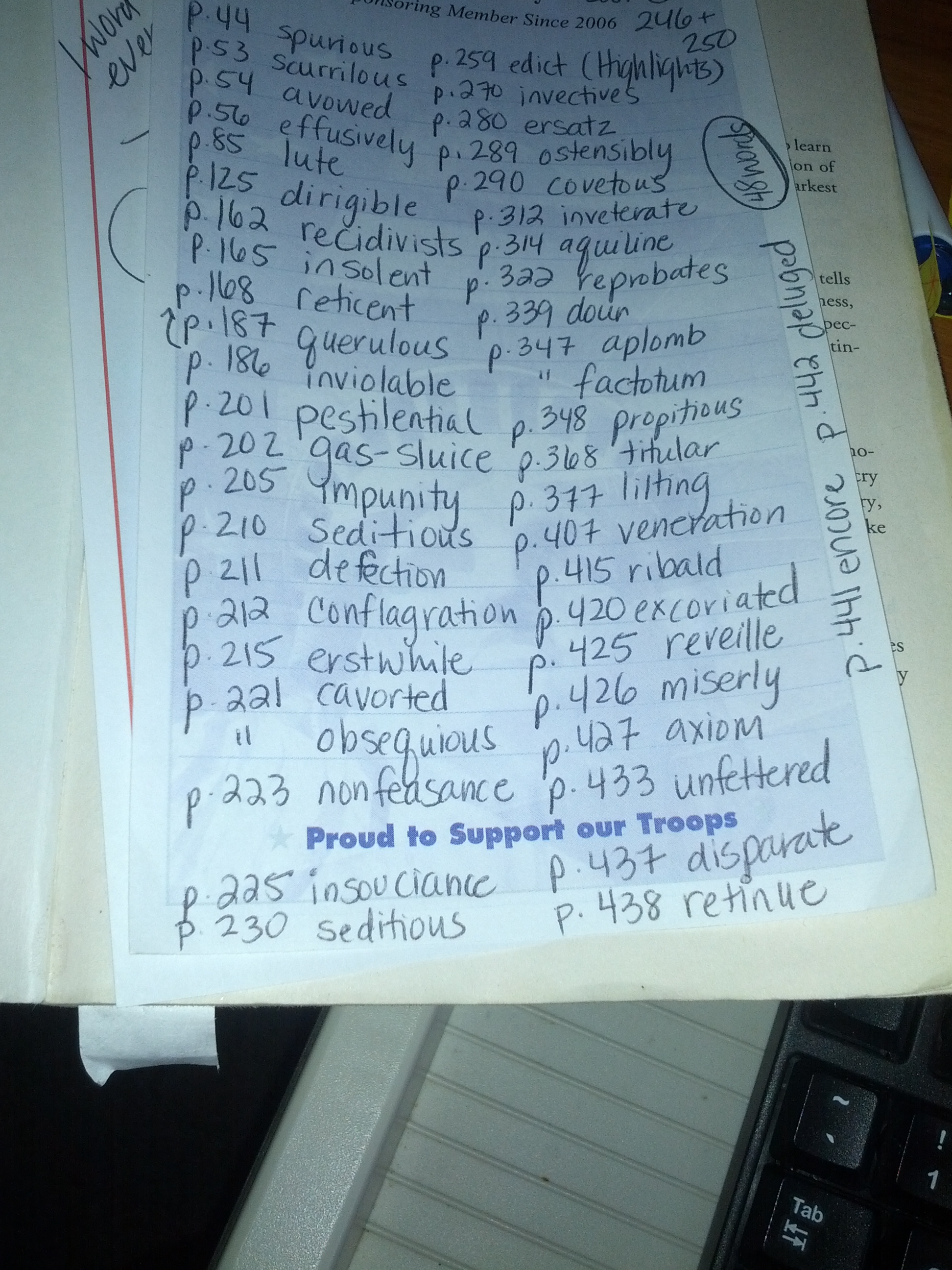
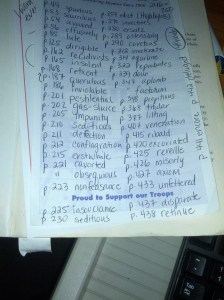
I also want them to catch a glimpse into my journey while reading this piece (note post-its) because I want to share what I found fascinating.  I want to explore some of the word choices (see my unknown word list) IMG_20140812_121513and talk strategy.  I want to use some of these words within my own vernacular and challenge students to do the same.  Most importantly, I want to show them that reading is a process; not one to shy away from.  And yes, sometimes it takes work, but overtime it becomes natural…and wildly fulfilling.
I can’t help but think, above and beyond the work I plan to do with this text, that the historical context won’t propel students in their study of history as well.  World War II and the Holocaust have rarely been depicted from the racial standpoint in which Massaquoi portrays.  This just may be a piece that peaks enough intrigue among students that they too will add it to their Next-To-Read list.  That’s my goal.
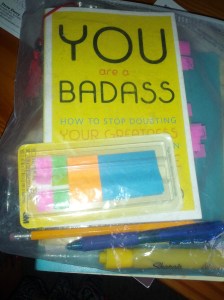


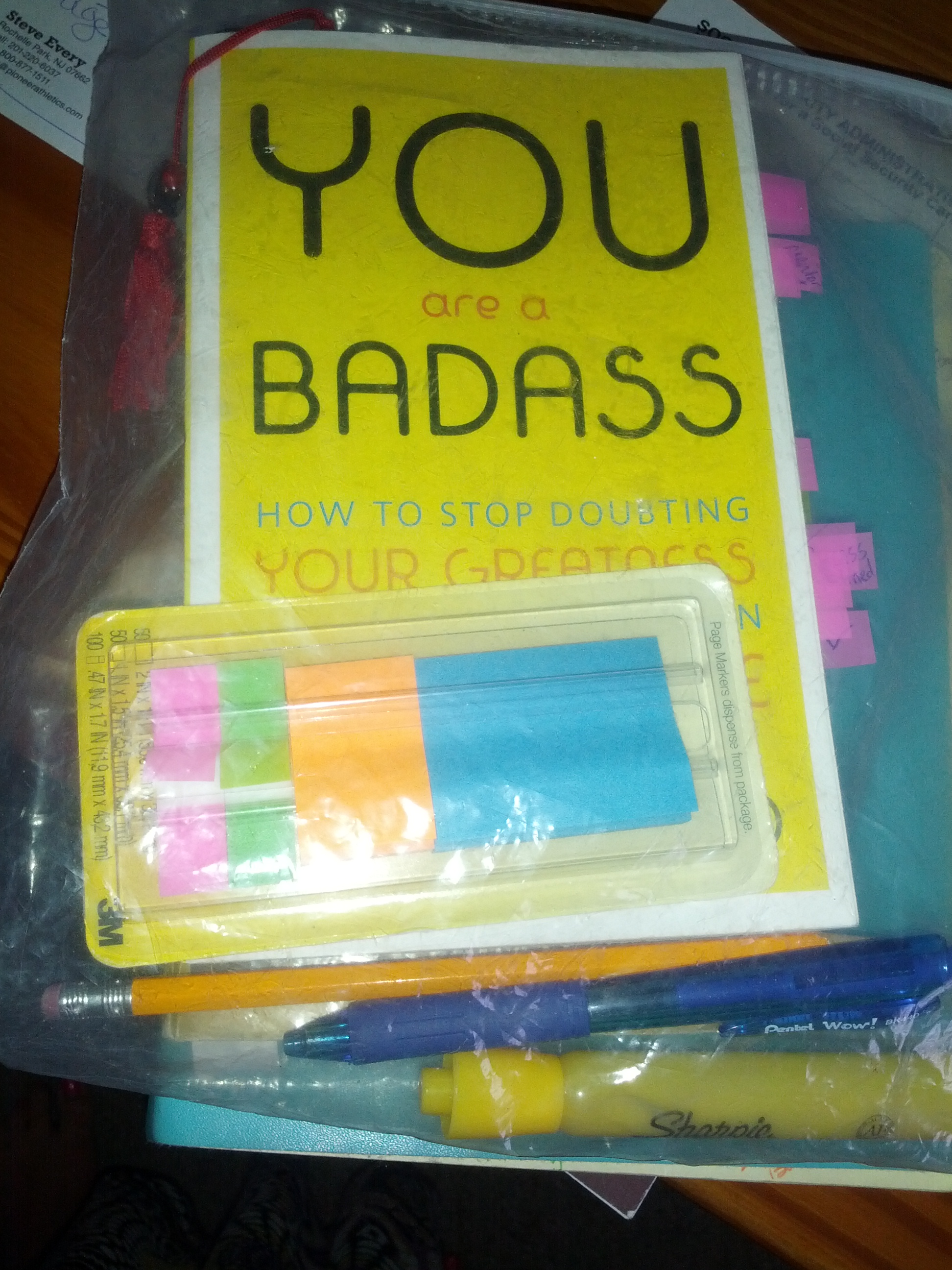
IMG_20140812_124058You are a Baddass: How to Stop Doubting Your Greatness and Start Living an Awesome Life by Jen Sincero has found its way into my Survival Book Kit and I love it!  I’m just past the first thirty pages, yet I have not stopped laughing.  Yes, out loud.

Sincero most definitely has a way with words.  She is edgy and a straight shooter for sure.  Yet, she is able to talk about really serious life-changing ideas in a way that feels ‘light’.  Not your typical self-improvement piece.

I want students to see how infusing humor among the serious can be oh-so-powerful.  Utilizing analogies to talk about the conscious and subconscious mind provides readers visuals…imagery.  A way to process this vitally important information that can shape their lives.  In only the most positive of ways.

I plan to choose the excerpts from this text skillfully.  I want students to have access to the content and the craft…as always.  I do foresee really rich one-on-one reading conferences with those that decide it’s time to make a change in their lives, or at the very least are up for a great laugh, and decide to take this piece on independently.

I hope my four have inspired you.  I really do.  I hope it will do the same for my students.  I encourage you to also share your favorites, here on this site.  As we all gear up for an incredible year to come, and we are swiftly shifting into our ‘going back to school’ mode, this is a wonderful time to start thinking about what we’re reading in a way that lends itself to the idea of being a mentor text.  Articles, books, poetry, graphic novels…all are welcome.



Reel Reading for Real Readers: The Goldfinch

ReelReading2This is by far the coolest thing I’ve seen in a long time. Check out this Pinterest board with all the art mentioned in the new Pulitzer Prize winning book The Goldfinch by Donna Tartt.

Oh, my lovely!

Art in the Goldfinch

I tried an audio book for the first time, and I am kicking myself for waiting so long to “read” this way. Maybe it’s this book. I don’t know, but the descriptions fascinate me. Maybe that’s why the artwork posted on this Pinterest board fascinates me so.

I love this novel, and I cannot wait to share it with students. At one point the narrator even refers to his AP English class. I have some students who will love this book as much as I do.

I cannot wait for us to talk about it — oh, and all this art!

Reel Reading for Real Readers: Between Shades of Gray

20130207-190708.jpgI’ve wanted to read this book for some time now, but it wasn’t until I was searching the shelves at my  favorite Salvation Army that I got my hands on it. (That’s a post for another day:  Building a Killer Classroom Library by Hanging out at Charity Shops) I have a students who is passionately interested in WWII literature. He’s already read two books a

bout it this grading period. I will put Between Shades of Gray in his hands as soon as I am finished with it.

I’m doing a good job this year of talking about a lot of books. Of my 140 students, I’m down to just threefake readers. Many students are reading slowly, but they are reading. I’ve decided I need to do a bit more than just talk about books. I need to step up my use of videos and book trailers to get them interested. The only problem? Every time I use visual images like this, I have more than one student who wants the book. I want to believe that this is a good problem, but it’s pretty sad when not everyone gets a copy of a book when they are excited about it.

Here’s a clip of Ruta Sepetys talking about the story behind the story.  I just know I’m going to need more than one copy.

Could We Just Get Students to Read and Write in All Content Areas?

So one of the problems on my campus is the fact that students don’t read. Oh, I know some do, but by and large, the majority of our students are not readers. As a school we are struggling with this new problem of practice, trying to define “complex language.” We’ve spent hours with this already, and have yet to come to a consensus. In frustration last week, after discussing this for two and a half hours, my colleague wrote on the bottom of our PD group’s thinking sheet:  “Could we just get students to read and write in all content areas?”

Really. It could be that simple.

A few years ago, our campus began whole-school reading. Built into our daily schedule is a 30 minute Advisory time, where a good number of minutes could be used for independent reading– if only teachers would enforce it. Most students like to read when they are given their choice of the right books. But if teachers are not reader themselves, it’s no wonder they don’t care if their students read.

Mine do, but that’s not surprising. The students in my English classes read for 10 minutes at the beginning of every class. So, if their advisory teachers are mandating reading, my students should be reading at least 25 minutes during every school day. That’s not a lot, but it is something.

Of course, independent reading will not solve all our problems. Students need to think deeply about texts, not just increase their fluency, and non-readers will abandon a book rather than struggle through it. That’s why if we really want to get our students to develop complex language skills, we must get them to practice complex reading. This is the kind of reading teachers must do with their students. You know, modeling close reading, modeling thinking about a text? And I think English teachers who know how to do this need to be given the opportunity to teach math and science and choir and business teachers how to read closely with all students.

We can talk about complex language all day as a staff. We can define it and put the definition on the walls of our classrooms, but that won’t do a thing until all teachers in all content areas start reading complex texts with their students. (And maybe it’s too much to ask, but imagine the growth if every student wrote in every class every day, too.) Hey, friends in other content areas, I’m glad to show you how.


Does your school have a wide reading program or other reading initiatives that include reading and writing in all content areas?


A Book Talk and A Writing Lesson in One Easy Go

Since I try super hard to not work on the weekends, I wasn’t sure how I was going to be completely prepared for my lesson on Monday. I locked my classroom door on Friday, knowing I was short a mentor text.

Then, while sitting by the lake, enjoying the breeze and this novel a friend recommended, the text blurred my eyes, and I did the unthinkable: I crimped down the corner. Then I did it again and again and again.

I love it when the stars align, and the tools I need to teach writing appear in my own independent reading. I notice things and want to share them with students. And I know that they will see what I want them to see and understand why it matters because they see my passion in the discovery of something I want to show them. Studying author’s craft becomes easy when I share from the books I am currently reading.

Here’s a slice from Night Film by Marisha Pessl, a hauntingly beautiful book that’s written in multi-genre. (You want to check it out. I promise.)

The sagging green couch along the far wall was covered with an old blue comforter where someone had recently crashed–maybe literally. In a plate on the coffee table there was an outbreak of cigarette butts; next to that, rolling papers, a packet of Golden Virginia tobacco, an open package of Chips Ahoy!, a mangled copy of Interview, some emaciated starlet on the floor along with a white sweatshirt and some other clothes. (As if to expressly avoid this pile, a woman’s pair of black pantyhose clung for dear life to the back of the other beach chair.) A girl had kissed one wall while wearing black lipstick. An acoustic guitar was propped in the corner beside an old hiker’s backpack, the faded red nylon covered with handwriting.

I stepped over to read some of it: If this gets lost return it with all contents to Hopper C. Cole, 90 Todd Street, Mission, South Dakota 57555.

Hopper Cole from South Dakota. He was a hell of a long way from home.

Scribbled above that, beside a woman named Jade’s 310 phone number and hand-drawn Egyptian eye, were the words: “But now I smell the rain, and with it pain, and it’s heading my way. Sometimes I grow so tired. But I know I’ve got one thing I got to do. Ramble on.”

So he was a Led Zeppelin fan.

Oh, the details, the description, the diction, the syntax. You can see it, too, right?

If I want my students to become effective writers, I have to show them effective models. It’s as simple as that. It’s even simpler when I can show them models from books I’m reading. Then they get a book talk and a writing lesson in one easy go.

I love it when that happens.

Day One Disaster?

Our Compass Shifts 2-1  Fact has it that my wonderful Personal Learning Network (PLN) was back in the swing of things well before the 2013-2014 school year started in the boroughs of New York City.  So, for the entire last week of August and into the beginning of September, I was watching magic take place all over the country through my computer!

I was with Amy @amyrass, in Texas, as she embarked on her first day of Writer’s Notebooks which brought tears to those who were starting their writing journey together; as honest writing so often does.  Shana’s @litreader themed library, standing tall against newly painted bright blue and green walls, inspired her students to embrace literature from the moment they walked into their West Virginia oasis.  Out in California, Emily’s @booknerdkim community of learners were so enthralled to be engaging in the Writing Workshop, that decorating their individual notebooks became a source of (very!) friendly competition.  I was taking note.  I was excited.  I was ready.

Or, so I thought.

Day One has arrived.  I am channeling the beauty of the work being done throughout the country and greeting my students with smiles and complete calm.  Yes, calm.  And yes, I myself am a bit in awe that “I” and “calm” have been partnered to describe the beginning of this journey.

Day One comes and goes in the blink of an eye, as it so often does, and I find myself sitting alone in my classroom with a wild mix of emotions.  I’ve taught my classes; students have left the building and are transitioning into their evening lives; and as I look around I notice…there are no traces left behind that any learning has taken place.  Chairs are pushed in, supplies are neatly organized in each table’s bin, and the floors are still glossy from this summer’s wax.  Did anything happen in here?

As I journeyed home that night, uncomfortable and uncertain, I was unsettled with how calm I remained.  As I reflected on the day I was consumed by the flat energy, the lack of bubbling conversation, the quiet minds, the mechanical smiles…  I couldn’t help but wonder that if I was the most prepared and ready to educate than ever before, how could Day One be so disappointing?  And, if I was this disappointed, I couldn’t imagine what students must be feeling.  Sigh.

Day Two comes, as it always does.   As I’m getting situated to begin the day, there is a knock on the door.  I look at the clock and it is 8:33a.m. – not time for class.  Surprised to see this student with a huge smile on his face peering through the tiny window separating us, I open the door.  There are no words, only actions.  He passes me, what seems to be a blank composition notebook.  I look at him with a puzzled look.  His smile grows.

“I wrote.  Here.”

As I walk back into the classroom alone, I open this Writer’s Notebook.  I happen upon pages of text…full pages, with words scratched out, abbreviations, acronyms, exclamation points, (unintentional) disregard for punctuation, grammar and spelling.   Yesterday, when asked, he thought he was being honest about not being a writer.  So, as I carefully maneuver through and reach the end, I am moved by how brave this student is.  He is courageous to explore his stream of consciousness – in writing- for the first time.  He is an evolving man full of character.  He is willing.  He is hungry.  He is fighting for more.  He shared this all with me. 

Mid-week students’ energy starts surfacing; hands are finding their way into the air in hopes of answering a question; the buzz (I so desperately missed) is starting to fill our community with a new excitement; and while this year is going to be unique (as all others are) we seem to be starting to find our groove.  This groove is calm yet exciting; quiet yet intellectually stimulating, and most importantly…it’s all ours to explore and share as a collective.

Day Five greets me (again!) before the start of the school day.  A student comes rushing toward me with an urgency that stops me in my tracks (hands full of bags, books, and dangling keys) as I’m just about to unlock the door to unload.

“Ms. Bogdany, I LOVE my book!  I was reading last night and shut off the TV so I could concentrate more.  My mom asked me why I was doing that.  She said, “You never shut the TV off to read.  What are you doing?!” I explained that I wanted to focus on my book because I’m really starting to like it.  I still want to read Jesus Land, but I’m going to finish this one first!”

Without interruption, and as we move over the threshold from the hallway to our shared learning space (where I finally put down everything I am carrying), this wonderful young woman continues.

“Yesterday, when I was on the bus, I was reading.  You know my boyfriend he’s in your other class.  When we got to his house he said, “You know we have to read for fifteen minutes.”  I told him of course I knew!  I took out my book, he took out his and we read.  It was awesome!”

I’m smiling, and in my head thinking “Forty-five minutes…forty-five minutes of reading, but we can start with fifteen!”  And just as the bell begins to sing, there is one last message this student wants to leave me with before she rushes to her class.

“You know, Ms. Bogdany, my twin siblings; they’re not good at reading.  I wasn’t either when I was young.  Actually, people told me my mom should pull me from school because I was never going to learn.”

Yes, people actually told her that.

“So, I know what they’re going through and I want to help them be better.  Tonight (Friday) we are going to sit as a family and read; I’m going to help them with their books from school.   I want to do this every week with them.”

My heart starts to swell.

“I’m scared though.  Next year I want to go away to college so who will help them get better?”

While I’m not sure I have the answer to this, and so many other questions, I do know that what seemed to be a disastrous Day One was really an illusion.  I recently heard someone say, “My mind shuts off and my soul takes over.” I made the mistake of allowing my mind to interpret quiet and calm for an educational atrocity.  Students are listening.  They are engaged.  They are passionate.  I am now taking solace in knowing I don’t always have to be swinging from rafters and tap dancing on tables to educate.  My soul truly believes in the power of calm.


Reel Reading for Real Readers: Pride and Prejudice

20130207-190708.jpgSome of my colleagues might think I am anti-classics, but this is assuredly not so. I just hate how we commit what Kelly Gallagher calls Readicide by reading them to death in English classes. Pride and Prejudice by Jane Austen is my all time favorite:  book and movie. The characters speak to me, and I’d know them on the street; I’ve read of them so many times. I even fantasize about living in turn of the century rural England. Well, maybe not fantasize, but I would like to travel to the English countryside someday.

Official Movie Trailer:  Pride and Prejudice

I want students to read this book. I do not want them to hate it. Therefore, I will talk it up. Quote some characters, show them this movie trailer, and offer a bribe or two if I have to: “I’ll bake you tiny cakes and bring you tea.” Whatever.

“My good opinion once lost is lost forever.” — Darcy, Pride and Prejudice

Do you remember that scene in You Got Mail? Meg Ryan’s character has praised Elizabeth Bennett and in subtle ways thrown down the challenge to Tom Hank’s character to read the book. He tries. For her. It’s the sweetest thing ever.

My daughters and I love all things Jane Austen. When the movie Becoming Jane came out, we were on a girls’ trip in Florida where the drivers love their horns, and we shook hands with a young man named Mr. Stubbs who was missing half a finger. The four of us walked into the movie theater, and we waltzed out humming the score and discussing literature. This mother’s perfect evening, surrounded by loving daughters who talk about books.

I’m all about building relationships with my students. By sharing my love of Pride and Prejudice with them– and why I love it, they will see a glimpse into me. The me outside the English class. The me who loves being a mom. Who goes to the movies. Who takes her girls to Florida on vacation. Who finds irony in people’s names.

If my students know me, I have a better chance of knowing them. Books and literature are so much more than reading material.

So, let’s play a bit here. What’s your favorite CLASSIC text, and why?