Tag Archives: reading

Book Talks & How To Do Them–#3TTWorkshop


img_0331-1

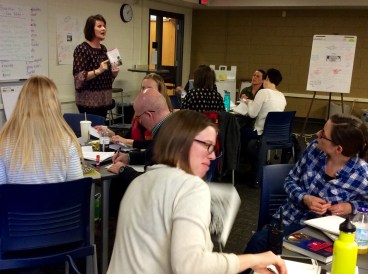
Amy booktalks during our visit to Franklin High School

Conversation Starter:  What’s a book talk and why do you do them?

Shana:  Booktalks are a structured way to fangirl about my favorite things in the world: books.  I do two booktalks per class, right after independent reading wraps up.  They’re a great way to transition from the relaxed reading mood of the classroom and move into the fast-paced work of critical reading and writing, but they’re also the number one change I’ve made to my teaching that has influenced how much I can get my kids reading.  Three years ago, I only did booktalks whenever the mood struck or whenever I got new books into my library, but now I do two a day, every day, no matter what–and it’s made an incredible difference.

Amy: You are an inspiration in consistency, Shana. I’ve done better at doing book talks this year than I have in the past. I try to do two a day as well — one non-fiction book and one fiction. I always seem to fall off the wagon at some point though. The demon, impending testing, pulls me to the dark side every year. I’m putting up a good fight this time around, and I have a plan to reinvigorate, not just my book talks, but the reading that’s happening in my room. Curiosity and intrigue: my goal for better book talks.

Is there a set protocol for a book talk — like length, reading a passage, etc?

Shana:  Just talking books is the biggest nonnegotiable for me.  While most days I do follow a protocol–one fiction, one nonfiction; 2-3 minutes per book; always share a passage, a brief plot teaser, and my own reading experience; try to mention a student who’s read the book–some days I just have to gush over a book that’s been recently returned, or a book I am reminded of during conference time, or some new items I’ve purchased.  Either way, I talk books every day, no matter what, which helps students become accustomed to exposure to new titles, adding books to their what-to-read lists, and hearing about trends in authors, genres, or topics.

Amy:  Remember at Penny Kittle’s Book Love class at UNH two years ago how she had everyone model a book talk? She set no guidelines other than modeling a few for us. After just a few turns, it became clear:  The best book talks are short, energetic, and introduce the book in some insightful or clever way. I try to do that.

When I read the books in my library, I look for passages for craft studies or beautiful sentences we can use as mentors. Sometimes I share those in book talks without doing the study — we just enjoy the language or listen to the voice of the narrator. I’ve started asking questions and trying to get my students to think about the topics the writers might address in the books. Just another way to get my readers to make a connection with writing.

The hardest books to book talk are the ones I haven’t read yet, but even those are doable when we show genuine excitement about the book. Why would I have a book in my library if I am not excited about students reading it? That’s a pretty easy sell in and of itself. It’s fun to get students to ask questions about the cover and to read the comments.

41drZBnWSzL._SY344_BO1,204,203,200_How do you decide which books to talk about within each unit?

Shana:  This is pretty easy for me since most of my units of instruction are themed.  For reading units themed around a topic, I find lots of books about that topic, or that contribute an alternate perspective to whatever central text we might be reading.  (Example:  While reading Siddhartha and thinking about coming of age and going on journeys, Outliers, Marcelo in the Real World, The Other Wes Moore, Paper Towns, and Their Eyes Were Watching God fit right into our unit.)  While in the  midst of a writing unit, I think about books that might serve as mentor texts in terms of topic or structure, or that are written by authors who serve as good mentors in general.  Other times, I have no rhyme or reason to my booktalks, because I simply MUST talk about a new book (like Dumplin’, which I just read and LOVED and had to booktalk randomly.)

Amy:  I structure my units more around genre than theme, so my book talks are more random than yours. Hey, maybe that’s the problem with my consistency!

My students and I talk a lot about aesthetic and efferent reading. I want them to understand the importance of making connections with the books they choose to read, and lately, I’ve seen that there is a real disconnect. Just because students choose books does not mean they are making personal connections to them. This is in part why so many of my students this year are having a hard time sticking with the books they choose. Because I know many are abandoning books so quickly, I’ve been working on getting students to talk a lot more about topics and how writers approach these topics. My hope is that my non-readers will find interest in learning about things, even if they are not interested in reading for the pleasure of it.

I’ve done several book talks this year around a topic; for example, depression, which is one of my 11th graders’ favorite topics to write about this year. Forgive Me, Leonard Peacock, Every Last Word, My Heart and Other Black Holes all flew out of my hands, and I had to get more copies.

Do you ever have students conduct book talks?

Shana:  Very occasionally, I do, when it’s really authentic.  When a student finishes a book and just raves about it during a conference, I ask them to share that enthusiasm with the class.  Last quarter, I asked all students to read a challenge book and then complete their choice of follow-up activities with the book–one choice was a booktalk, and the students who shared about the titles they loved did spark some interest in their peers.  However, those booktalks didn’t go over as well as the ones that arose from sheer exhilaration, so I think my future goal will be to limit student booktalks to spontaneous ones only.

Amy:  Like you, I rarely have students conduct book talks — at least the way I do. I’ve tried, but you are right, without the spontaneous excitement about the book, the other students just do not respond the same as they do when I conduct the book talks.

However, I do have students talk about books with one another. Most of the time it’s pretty informal:  Talk to your table mates about what you are reading. Sometimes it’s a little more formal:  Speed dating with a book, which is one of our favorite ways to share books.

What are some other ways you talk about books with your students?

Shana:  Basically, I bombard them with talk about books all the time.  When I see current or former students in the halls, I ask them what they’re reading.  When they come to visit me, I urge them to leave the room with a new book.  I make lots of segues in conversations from all topics to all books (mostly because this is just what I do in real life…ask anyone who knows me).  I also share with students all the time what I’m reading, and why they might like a given book.

Amy:  We are so much alike! I love to have former students borrow books, and I talk about books with every person who will listen — and some who don’t. I also try to get students to engage with me on Twitter, using the hashtag #FridayReads to share what they are reading each week. A few students set up accounts and we follow each other on Goodreads. I love those kids! I’ve also started a favorite quotes wall, and I’ve asked students to pull significant lines that lead to theme and/or beautiful sentences that show author’s craft. Getting students to pay attention as they read, noticing how writers use language to create meaning, leads to significant improvements in their own writing. Without fail, it’s my best readers who are also my best writers. If only more students would get that.

Do you have topic ideas you would like us to discuss? Please leave your requests here.

Holden

Today I asked my colleague, Elaine Miskinis, if I could share her writing with the TTT community.  Elaine teaches Sophomore English, Junior English, and AP Language and Composition.  I am fortunate to pass my freshmen along to her while receiving her juniors in return. She perfectly sums up the struggles of first semester, the hope that comes with second, and the transformative power of literature. ~Jackie

Rye_catcherThe plan?  Spend the hour and a half between the end of the school day and kiddo pick up time entering my students’ midterm grades, doing some lesson planning for “Hamlet” and cleaning and organizing my room in preparation for third quarter.

The reality?  A student who is failing with a single digit average came to finish his midterm.  He mentioned, in passing, that reading Catcher in the Rye made him realize some things about himself.   Any conversation that opens with “The Catcher in the Rye made me realize…” is never going to be a short conversation.  It’s just the nature of that novel and the power it holds.

Long story short, he’s experienced some significant trauma and, like Holden, nobody has really been there to help him to process it.  He said, “You know how Holden is really smart, but he’s failing because he just can’t get out of his own head and move on from what he’s experienced?  I think that’s like me.”  Over an hour later we came up with a plan to get him someone to talk.  We also scrapped any plans of turning him into a model student this year and replaced them with the goal of helping him so that he, in his words, “Can stop pretending to be happy and actually start to feel it”.

So, now my classroom is a fire hazard of papers and books, my planning for Monday stands at “Wing It” and I have two bags of papers that have come home with me that still need to be logged into my grade book.  But, this was one of those days that will likely stand out when I think about why I teach. And, more specifically why I value teaching literature.  For every kid who whines and “Spark Notes” and skims, there might be one kid in the back of the room who looks like he’s disengaged and disconnected but who, in reality is so much in his own head at that moment, and possibly even so far in the head of a character that he’s lost in ways we can’t begin to see.

It’s easy to forget the power of novels, especially the ones we teach year after year and it’s easier still to forget the power we hold as teachers, especially when we’re consumed with midterms and grades and planning, and frankly, all of the things that really, in the end don’t amount to a whole lot.  Today was an important reminder to me of what it’s really about and why what we do really does matter.  I don’t know that we’ll be able to help this kid in any substantial way, although I certainly hope we will, but I do know that he felt comfortable broaching the topic with me this afternoon because he had Holden Caulfield there to lean on.  It makes me wonder how often these small, important moments get lost as we focus on assessments and core competencies and all of the minutia of our lives as teachers.  Sometimes it just has to be about more than that, and about more than reading check quizzes and essays.  Sometimes it has to be about letting our kids hang out with characters for a while to learn that they’re not alone.

Mini-lesson Monday: Moving Past Identify

When my students and I talk about reading, we talk about writing.  If they pay attention to not just what the writer means in the words on the page, but how the writer crafts that meaning with words on the page, they move much quicker into the rhetorical analysis they must do on the AP Language exam in the spring.

But it is not easy. So many of my readers read below grade level. They struggle with fluency, so their reading is slow and laborious, and as a result, they miss out on much of the flow of the language that leads to constructing meaning as they read. If they cannot comprehend, how can they analyze craft?

They are pretty good at identifying devices and figurative language and the like though. They are pretty good at identifying structure. They’ve learned writers have different ways of approaching a topic, but they are not so good at discussing why. Why did the writer craft the text that way? What does that move do to further the writer’s message? What effect does it create? What is the tone?

So, this lesson came about as a way to help my students practice some critical thinking about how writers make choices with language — and as a bonus, introduce my readers to four new book titles.

Objective:  Using the language of the Depth of Knowledge levels, students will recognize a variety of structural and craft moves in fiction and non-fiction texts.  They will identify patterns and compare effectiveness through discussion. They will analyze the tone. They will summarize their discussion in their writers’ notebooks, and apply their understanding to future reading and writing assignments.

Lesson: Introduce three new titles as choices for independent reading by providing copies of the first few paragraphs of The Other Wes Moore, Nothing to Envy– Ordinary Lives in North Korea, and The Dog Stars. In small groups, giving each group one (or more of the passages depending on the time you want to take for the lesson) instruct students to read the passage and determine the structure and the craft moves the writer makes to begin the books. Ask:  Why do you think the writer chose to begin the book this way? What does that beginning do to capture the reader’s attention? Why might it be an effective way to do so? What is the tone of the passage? How do you know?

Help students recognize the effect of beginning a text with a passage of dialogue versus startling information versus first person narrative. What are the similarities? What are the differences? What structure do you find the most engaging? Why?

The Other Wes Moore by Wes Moore

Nothing to Envy, Ordinary Lives in North Korea by Barbara Demick

The Dog Stars by Peter Heller

Follow-up:  Students will apply their understanding to their independent reading books, and as homework will write a one-page response that analyzes the first few paragraphs of their books.

Integrating Reading & Writing Instruction: Craft Studies & Mentor Texts

This is a continuation of our post from yesterday.

#3TTWorkshopWhat are you reading now, and/or what are your latest finds that could be strong mentor texts?  

Jackie:  For fun, I am currently reading Ready Player One by Ernest Cline, and for AP Literature, I am currently reading Othello.  I read Ready Player One as a departure from my typical YA reads.  I was never a gamer or 80s enthusiast, so I wanted to “challenge” myself by choosing a new genre.  Ernest Cline brilliantly writes action pieces.  Somehow he manages to translate the video game structure into a novel AND make it interesting for non-gamers like me; I am planning to use an excerpt to discuss movement of time either when we work on our multi-genre project this year or our fictional writing next year.  

Most recently, my CP freshmen read the picture book The Promise by Nicola Davies as a mentor for our narrative fiction unit.  In my academic freshman classes, we recently completed process papers based on The Compound by S.A. Bodeen.  Mentors for these included “What you will need in class today” by Matthew Foley and “Instructions for a bad day” by Shane Koyczan.  Students used each as a mentor text by which to craft their own poems and then eventually built them into unique survival guides ranging from “How to survive a zombie apocalypse” to “How to survive a friend’s breakup.”  As Shana said yesterday, I like pairing professional work with my own to show them the messy process of writing, so prior to class I get a head start on my own piece and then I continue developing it while projecting my writer’s notebook on the board at the beginning of workshop time.    

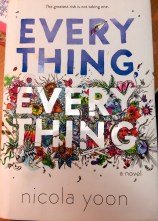
img_1056-1Shana:  I just finished the beautiful Everything, Everything by Nicola Yoon.  I love it as a mentor text because it’s a bit multigenre, and it’s an engaging YA love story, AND it’s gorgeously written.  With tons of parallel structure and a short-chapter format, it’s a quick read but one that lends itself to lots of frequent re-reading.  I’ll use this text for craft studies at the sentence and paragraph level to teach things like repetition, parallel structure, and varied sentence structure.

Another book I just read was Caitlin Doughty’s memoir Smoke Gets In Your Eyes, and Other Lessons from the Crematory, which I usually booktalk with Mary Roach’s Stiff.  This tale of Caitlin’s experiences working in a crematory will be useful for my students to analyze at the chapter level, during which she employs narrative to blend her adult experiences in the crematory with the formative experiences of her youth in order to make a claim about the nature of human life and death.  It’s a powerful example of the use of narrative within nonfiction.

I also recently read Memoirs of a Teenage Amnesiac by Gabrielle Zevin, which tells the story of a high school senior who falls and loses all memory of everything after sixth grade.  As a result, most of her life story is revealed through dialogue with other characters, so this will be a fantastic mentor text at the whole-text level–how can we craft a short story that uses dialogue to reveal movement through time, a character’s background, or a character’s personality traits–all without that dialogue being spoken by that character?


How will you integrate your current reads into your practice?

Shana:  I like to share this article about noticing beautiful writing with my students.  We use it as the basis for two sections in our notebook–“Quotes & Craft Study” and “Wondrous Words.”  I like to break down with my students why a particular line or paragraph or chapter in a piece of writing is so powerful–at the word level, the structural level, the punctuation level.  When we read like writers, we can notice all of those details and begin to imitate them in our own writing.  

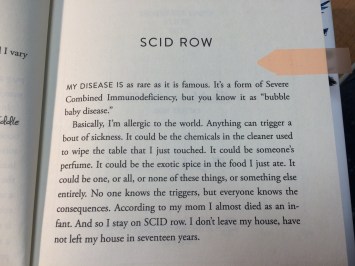
img_1057My students asked for more craft study and grammar instruction in their midterm exams.  With our new notebook setups, I’m hoping to create a routine for the wordplay we’ll need to constantly return to in order to strengthen our use of punctuation, specific diction, sentence structures, and other craft moves.  I want to employ more “triple-plays,” as Penny Kittle calls them–books that act as a booktalk, a quickwrite, and a craft study mini-lesson.  For example, I’ll take the chunk of Everything, Everything pictured at right and make copies of it for my students to glue into their notebooks.  Beneath it, we’ll imitate the parallel structure of the sentences, and the exercise will serve to teach parallelism, talk up the book itself, and be a quickwrite we’ll call “it could be.”

Jackie:  Inspired by a course we took this summer with Tom Newkirk, my colleague and I are putting together a superhero unit for our academic Freshman English classes.  The unit will involve both a persuasive essay and a comic strip students make about a hero in their life.  In turn, I’ve been skimming comics and graphic novels to find inspiration for students.  

In this unit, students will practice storyboarding their own comics while studying the use of craft like onomatopoeia, movement of time, and internal and external dialogue.  My hope is that these building blocks will provide a foundation for us to further discuss the use of colors to portray goodness and evil within a comic (or novel) as well as the use of framing or perspective in the pieces as well.

Please join the conversation–how do you approach the study of craft with your student writers?

4 Monthly Challenges to Beat the Winter Reading Slump

New England winters lend themselves to steamy mugs of cocoa, plush blankets, and chilly evenings curled around a book.  Despite the ideal environment, halfway through the year, some of my students hit a reading slump.  The initial momentum of the reading initiative subsides, leaving students a bit more lackluster come second semester.

In turn, here are four challenges I plan to integrate over the next three months to beat the winter slump and reinvigorate students’ passion for reading.

1. January: Reading Bingo and Challenge Lists

The New Year, or for us, the second semester lends itself to fresh reading goals.  Goal-setting and self-reflection aside, I love reading challenges that push students to step out of their reading comfort zone and delve into new genres.  This year I comYA-Reading-Bingo-Challenge-2014piled a variety of reading challenge lists that I’ll be printing out on bookmarks to provide to my students.

I personally love the #26BookswithBringingUpBurns challenge, which has readers fulfilling challenges like reading “A book set somewhere you’ve always wanted to visit” and “A book with a color in the title.”  I’m also enjoying Rebeccah Giltrow’s BookaShelf 2016 Reading Challenge, which has participants base their book choices on the alphabet.  For example, “A” stands for “a book with an apocalyptical theme.”  Finally, Random House’s “YA Reading Bingo” is the perfect way to get students reading through rows of books while competing with one another to fill in a bingo card.

2. February: Book Trysts and Library Dates 

February lends itself to romance with Valentine’s Day, so to celebrate our book love, students will set up blind dates for some of their favorite books.  They will cover their choices in brown packing paper and write “dating profiles” including intriguing qualities readers will hopefully fall for.

In addition, students will participate in a library “date” with a friend from class.  Inspired by this “date night at the library” post by The Dating Divas, I created a list of entertaining and useful tasks and challenges for students to complete.  From “finding a book authored by someone with the same name” to “finding a book that has been made into a movie,” this friendly competition will put books in students’ hands while also promoting conversations revolving their reading.

3. March: March Madness and the Literary Hashtag Challenge

As March Madness approaches, my basketball students will be building teams and taking bets.  I know little about basketball…but I do know about books, which is why I’m hoping to create a March Madness that looks similar to Shana’s last year.  For those looking to create student-based teams, Principal Justin Cameron’s “Fantasy Reading League” at Frederick W. Hartnett Middle School gets the entire school involved in the competition together.

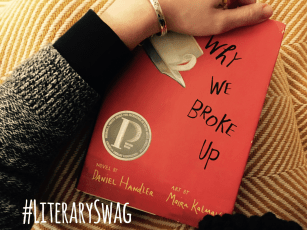
Finally, in March I will launch a new literary hashtag challenge that asks students to IMG_1801.PNGexhibit their reading lives outside of school.  Students will e-mail a Twitter or Instagram class account with literary images that include the following hashtags: #LiterarySwag (a hashtag for fashionistas who know books can serve as a stylish statement piece for any outfit), #Shelfie (a hashtag for beautiful bookshelves), #IReadEverywhere (a hashtag to highlight reading in unique places), and my favorite #BookFace (a hashtag that pushes people to be a bit more creative with their book covers).

By putting new books in students’ hands, I’m hoping to inspire a little competition, a lot of conversation, and a passion that will turn them into lifelong readers.


How do you reinvigorate students’ passion for reading?  What tips do you have to make it through the winter reading slump?


10 Pedagogical Must-Reads for Workshop Teachers

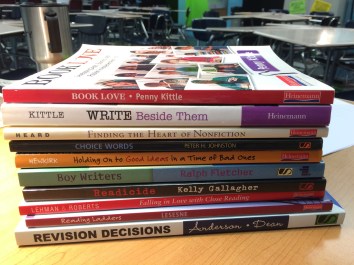
IMG_0650I met with my new student teacher a few weeks ago, and he asked me to borrow any books that might help him get going on the readers-writers workshop–the “theory” version of Jackie’s starter kit.  He’s been in my classroom before, so he knows the general routine and character of our work, but he wanted to know the ins and outs of how I thought and planned and conceptualized the whole thing.

I sat at my desk and looked at all of the titles I had on hand, remembering how influential reading them for the first time had been.  As a result, it was hard not to just dump my entire professional bookshelf onto a cart for him, but I managed to pick out a few titles that have guided me most adeptly in one aspect or another of my current classroom practice.

  1. Book Love by Penny Kittle – This was the book that helped to solidify my vision of an ideal classroom.  Before I read it, I had already been doing many of the best practices Penny mentions–writer’s notebooks, choice reading, personalized writing.  But I didn’t know how to bring it all together until Book Love.  As such, this is my #1 recommendation for any teacher looking to jump-start their individualized workshop curriculum.
  2. Write Beside Them by Penny Kittle – This book introduced me to the concepts of mentor texts, reading like a writer, and best draft/publication of writing.  I learned about quickwrites, constant revision, writing conferences, and a great deal more of what are now standard routines in my classroom.  This is the book for anyone curious about the big picture of writing instruction.
  3. Finding the Heart of Nonfiction by Georgia Heard – I was raised in the tradition of literature as containing mostly fiction and poetry, but Penny’s books helped me see the great value of nonfiction.  I wanted to know how to integrate it well into my thematic units, and this book helped me do that.  Georgia’s book is full of wisdom about finding the soul of good nonfiction writing and matching it to your students’ needs.
  4. Choice Words by Peter Johnston – This book taught me how to talk to students.  It is my #1 recommendation for anyone looking to address those pesky Speaking and Listening standards in the Common Core–this book teaches you about the delicate, volatile power of a few choice words between you and your students.  I re-read it every year, and it might be the most important book in this stack.
  5. Holding On to Good Ideas in a Time of Bad Ones by Tom Newkirk – This book is subtitled “Six Literacy Principles Worth Fighting For,” and Tom Newkirk certainly made me want to engage some of my former teachers in fisticuffs when I finished it.  This text is full of common-sense brilliance that will transform the way you think about why we teach reading and what kinds of texts we teach.
  6. Boy Writers by Ralph Fletcher – Why do my students keep writing about violent gun battles?  Why do they always ask if they can swear in their writing?  What’s up with the complete unwillingness of my boys to be vulnerable?  If you’ve asked yourself these questions…this book is for you.  Ralph writes about everything you ever wondered about boy writers and how to move them forward in their writing.
  7. Readicide by Kelly Gallagher – Schools have been killing reading for many years, Kelly argues, and then presents ways you can stop the slaughter.  He fires away at pop quizzes, assigned chapters, multiple-choice tests, and all the practices that steer our students toward SparkNotes.  Then he reveals ways to get students authentically engaging in literature in a way that doesn’t kill their love of reading.
  8. Falling in Love with Close Reading by Chris Lehman and Kate Roberts – After finishing Readicide and wanting to abandon the eight or so whole-class novels I once felt chained to, I wasn’t sure how to teach close reading skills.  This book answered that question for me, and more.  Chris and Kate reveal how to use poems, articles, short stories, and selections from novels to get kids interacting with the beauty and power of language in all kinds of texts.
  9. Reading Ladders by Teri Lesesne – When all of your students have finally found a book they will actually read–then what?  Teri Lesesne taught me how to help students climb a reading ladder of text complexity with this book.  It’s a tough battle to get all kids reading, but it’s even tougher to get them to all challenge themselves once they are.  Reading ladders are the solution to the increasing complexity question–now they’re a consistent part of my instruction.
  10. Revision Decisions by Jeff Anderson and Deborah Dean – After reading the first nine books on this list, I still wasn’t sure where grammar instruction fit in.  I knew to have students read like writers and learn from language and sentence structures that way, but I wasn’t sure how to structure my mini-lessons, until I read this book.  Jeff and Deborah helped me find strong craft study lessons and bring them into the classroom in a way that appealed to students and also benefited them immediately in their writing.

This is by no means an exhaustive list–That Workshop Book by Stephanie Harvey, Read Write Teach by Linda Rief, The Book Whisperer by Donalyn Miller, and many other integral titles were simply not on my shelf when I gave this stack to Mike.  But these top ten are ones I wouldn’t be the same teacher without.

What other titles are essential to your practice?  Please share in the comments!

Update:  Here are must-read folks that readers have suggested via Twitter and Facebook, as well as in the comments:

  1. Lucy Calkins
  2. Nancie Atwell
  3. Linda Rief
  4. Katie Wood Ray
  5. Donalyn Miller
  6. Don Graves
  7. Donald Murray
  8. Peter Elbow
  9. Ariel Sacks
  10. James Moffett
  11. Louise Rosenblatt

4 Questions We Answer about Exams #3TTWorkshop

We read this tweet, and first of all, let me just say how honored we are to be included with the likes of Screen Shot 2015-12-22 at 10.44.35 AMPenny Kittle and Kelly Gallagher. The link took us to this post:  Reading (R)evolution post where we read about three high school English teachers much like us who are committed to independent reading and working hard to do right by their students. They asked about semester exams, and since Shana and I recently had a conversation that answered many of their questions, we jumped on the opportunity to share that discussion. We think our friends at Mamaroneck High School will find it helpful– maybe you will, too.

#3TTWorkshop Meme

Do you have topic ideas you would like us to discuss? Please leave your requests here.


What are your thoughts on mid-terms/finals and what should be on them?

Shana:  By their very nature, a lengthy exam of any sort measures a student’s fluency with reading and writing, and that’s one of the reasons I like them.  I’ve been thinking a lot this year about sustaining length of thought and what that looks like–not just thinking about one subject for a long period of time, but continuing to read and write and experiment with that subject for a long period of time.  Thus, I’ve tried to create routines that foster fluency, and a lengthy exam is one way to measure whether or not I’ve been successful with that goal.

As for the exam itself, I believe the format matters most.  If we never do worksheets with multiple-choice answers during class time, why start now?  I try to make my exam mirror our daily routines in class–there is a section for independent reading, for sustained writing, for critical reflection, and for goal setting.

Amy:  Like you, I like the idea of measuring fluency with a lengthy exam — and while I do not think one exam on any one day can give an accurate measure of a student’s knowledge, I do think that sometimes it can give us a clear picture of a student’s growth. The exam itself is only one part though. Really, it all comes down to our alignment. How tightly do we align our standards and the skills we need students to master to our lessons and to our assessments, both formative and summative, within our unit cycle? Our semester and final exams should be another extension of that alignment. Too often, it is not.


What does a 2-hour exam look like?

Shana:  My written exams all start with a message from me to my students–a missive that this is not an exam one can or should study for, but rather one where students have the opportunity to demonstrate growth, effort, risk-taking, and clear thinking.

From there, I separate the exam into options by subject, and for each subject, I give students a choice of three tasks to complete.  For example, subject one is independent reading, and option one is creating a video booktalk, option two is creating a themed top ten list, and option three is creating a book trailer.

Amy:  When I first moved to a workshop pedagogy, the thing I had to learn is the idea of skills-based instruction and helping students form habits of mind that relate directly to improving as readers and writers. I was no longer teaching a book. Thinking about the skills helped me choose mentor texts and design mini-lessons that would move my readers and writers. Since my instruction changed, I knew my exams had to change as well. And my exams never look the same from year to year.

In my previous district, and especially for grades 9th and 10th, which take the Texas state assessment, half of the semester exam was a common assessment created by the district. It mirrored the state assessment and could be used as a diagnostic tool to measure student growth as they prepared for the end-of-course exam. The other half of the assessment we created in grade-level teams. The second half was difficult because I was the only workshop teacher devoting time to independent reading and writing on my campus. I was able to convince my team to assess skills rather books, but even then, it was difficult to craft an assessment that reflected the practices in my classroom instruction when I was the only teacher with those practices.

A two-hour exam needs to give students the opportunity to show what they have learned about reading and writing, and I absolutely agree:   it needs to mirror the practices we do in our daily instruction, but I also think it needs to give students the opportunity to show how their mastery of those practices help them tackle the kinds of critical reading and writing they must do in their lives beyond my classroom. For example, my students read independently and for sustained periods of time throughout the semester because I want them to learn to appreciate both the efferent and aesthetic value of books –we discuss this a lot as I conduct book talks, and they discuss books with each other. We read to enjoy but we also read to learn. My students write arguments on their blogs weekly, so one option for at least part of their semester exam is to write an argument about their reading. They marry what they’ve gleaned from their independent reading with the skills they’ve learned about writing. (I often give this portion of the exam in advance since it takes time for me to read and assess, but I’ve also given it as a timed writing on exam days. Students know the specifics of what I am looking for in their writing — this ties directly to the AP writing rubric I use to assess their blog posts — so I am able to score these holistically. And quickly.)


What should major assessments like an exam measure?

Shana:  What makes a good reader or writer is not necessarily comprehensively covered in any set of curricular standards that I know about.  Instead of feeling obligated to adhere strictly to the Common Core standards, or our WV Next Generation standards.  Because what we value in our classroom is the process of becoming a strong reader and writer, my exam highlights process as well as product.

In addition, some things I really value, like students’ ability to talk to me and one another about their learning using specific academic vocabulary and evidence-based claims, are not measurable by a written exam.  Thus, I assess those things at other times, like during conferences, rather than during exam week.  I don’t feel obligated to try to assess “everything” on one exam–it’s simply impossible to do so.

Amy:  Ideally, an exam should allow students the opportunity to show they have learned the material, right? If our exams are cumulative, and test the acquisition of skills, students should be able to earn credit by showing mastery — or at least growth — as indicated by their exam scores. This goes back to what I said before about alignment. It also represents a big problem in what I see with “grades.” Too often students receive scores on tasks that have more to do with their responsibility (or lack thereof) than on what they have actually learned. Take this scenario:  say a student does not complete x, y, and z assignments for whatever reason. By nature of many grading policies, she receives zeroes for not doing the work instead of not being capable of doing the work. A major assessment should be an assessment that evaluates a student’s ability as it relates to what we have taught, and if she didn’t do x, y, and z, the final assessment should be a last stop measure to show she’s learned what we needed her to learn that semester.

Shana:  I completely agree with the gap between grades and ability.  The whole grade-feedback-evaluation-assessment-ability conundrum has been frustrating us for a while, I know.  Some of my students did not finish the exam by the end of the week, but I won’t hold that against them–they will take it home over break and return it to me in the New Year.  I’m not sure, really, if I ever feel confident “grading” an exam item by item.  Instead, I consider the urging I give at the beginning of my exam–deep thought, strong effort, and time spent–and give a letter grade based on how well it is apparent that the student did those things well.


What would your ideal semester-ending assignment look like?

Shana:  I usually end the first semester with a series of activities like I described above, but I always end the second semester with a multigenre project of some sort.

For my first semester exam, Amy and I brainstormed together how to preserve student choice, our values of having students create products rather than just complete tasks, and how to allow for the showcasing of learned skills rather than a “gotcha” mentality with new material.  In our notebooks, we jotted down ideas and I wrote this up.  I made it available to students the Monday before finals week, so they’d have about a week and a half to work on it.  I think what’s important is that the last activity is reflection and goal-setting–looking back on 2015, and looking forward to 2016.

For this year’s end-of-course assignment, I’m excited to do a spin on Tom Romano’s literature relationship paper, in which students create a multigenre series of writings focusing on their relationship with and reading of a text.  I hope to have students re-read a favorite independent reading novel and write in many genres that include reflection, craft analysis, narrative, poetry, and more.  With that end goal in mind, I have designed more written product assignments that deal with narrative and analysis than I usually do.

Amy: My midterm exam is much different than my end-of-course exam. I loved how we talked through what our exams would look like when we were together at NCTE. As you know, what you wrote up will work well for me. Thanks for sharing that and saving me the time of having to write my own. I did a few revisions, and mine looks like yours, except with one less choice of options — and it is only for 50% of the test. Students will work on it in class the week or so leading up to the end of the semester. We have a week and a half after winter break.

The other 50% will be practice for the critical reading part of the AP exam. The 90 minute block will be enough time to take a full-length practice test, important for stamina, and then talk through a few of the passages. Of course, the second portion of the exam will be more diagnostic for me than anything — although we have analyzed texts in much the same way the exam asks students to do.  I haven’t decided how, or if, I’ll take a grade on it yet — my students are all over the place in terms of their critical reading abilities, so no doubt there will be a curve somewhere. I thought about taking a grade on the level of thinking I see in their annotations, but that isn’t fair. Not everyone needs to annotate the same way to truly think about a text. What I may do is have students write a one page reflection about that critical reading test after they take it, maybe set some goals for how they want to continue to grow as a reader during the spring semester. If they are honest with themselves, this reflection would be more specific about tackling complex texts than the reflection they write about their independent reading for the first portion of the exam. (And now I am just thinking as I write.)

Like yours, my students do a complex writing piece at the end of the year, which combines several different genres of writing. For the past few years, we’ve studied multi-modal feature articles and then written our own. On exam day we present our favorite parts to the class. Here’s a few examples of students’ published work from last year. Anthony wrote “Current and Future Sources of Energy,” Maribel wrote “Beauty Unlimited and Undefined,” Bryan wrote his immigration story. These types of assessments are my favorite.

Students take ownership of their writing and take pride in their finished products. They also evaluate their writing process and give themselves their own grade. After all, they do all the work:  thinking, planning, researching, drafting, revising. They are the ones who know if they’ve accomplished what they set out to do.

Please join the conversation:  What are your thoughts on exams in a workshop classroom?

Writing My Wrongs: How I’m Learning From My Mistakes

FullSizeRender

A student caught sneaking his independent reading book into his lit circle novel…this is a first.

Every year I arrive at the second quarter with a new approach, idea, or plan.  This will be the solution! I think.  This will sustain momentum.  This will help us make it through the slump.  This will be the difference between dreading quarter two and praying for quarter three, but year after year, I am wrong.  For the past three years I’ve convinced myself it is the book—Lord of the Flies is too boring; they can’t appreciate Bradbury’s language in Fahrenheit 451.

The problem isn’t with my students though—it’s with me.  I am doing it wrong, and while I am ashamed to admit the honest truth, I realize now the error of my ways.

I “gave up” traditional teaching three years ago, when I transitioned to a workshop model of education.  I carved out time for reading, instated notebooks, poured over workshop guides, and asked countless questions of my mentors and colleagues.  The bare bones were in place, and I was convinced that I had the structure necessary to shift from a teacher-centered classroom to a student-centered classroom built on choice.  In many cases I did; every start of the school year began smoothly with excited readers and passionate writers.  We told stories, read poetry, shared quick writes, and analyzed craft, but I dreaded quarter two, the quarter when together, we would read our first of three required whole class novels.

Quarter two was when I lost their voices, their attention, and their passion.  With whole class novels, our focus shifted from “who are you and what are you thinking?” to “who is your author and what is he thinking?” 

Under the weight of scaffolding, curriculum standards, core competencies, and competency based rubrics, my mini-lessons focused on literary terminology instead of literary exploration.  To me, reading mini-lessons meant teaching the same terms I’d grown up with: symbolism, Freytag’s pyramid, direct and indirect characterization, round and flat characters, etc.  This meant my lessons shifted from writing-centered lessons that started with the question, “What do you notice about the author’s craft?” to terminology-centered lessons, that started with, “Apply your understanding of (fill in the blank) to the book.”  The latter produced significantly less empowering results.

So, I asked and probed my students.  I peppered them with questions during study halls and extra help; I snuck in questions with the straggling Writer’s Club members after meetings, gave out surveys, and chatted at lunch with colleagues.  And while I was convinced that it was because I was “forcing” them to read unrelatable classics, I couldn’t shake the fact that I was missing something bigger.

By the time I sat down with my living mentor Linda Rief at a coffee shop in Exeter, I realized I was doing it wrong in quarter two.  The pieces gradually added up—I knew the three reading options I had given them for literature circles weren’t choices at all.  I was hoping they would read the books in their entirety, but I knew that this year would lend itself to additional groans, frustration, and abandonment.  At the end of the day, I was a workshop teacher defaulting to a traditional methodology or worse, was I a traditional teacher pretending to run a workshop?

The two greatest pieces of advice came first via my special educator mother, who asked, “Why not just teach them good writing?  Isn’t that what classics are?” And second through Linda Rief, who pointblank asked me why I needed to teach plot triangles anyways.

Were there successes in my literature circle unit? Most definitely.  Sure, the vast majority didn’t fall in love with Golding, and it breaks my heart that they couldn’t revel in the beauty of Bradbury’s language, but in final surveys, nearly every student appreciated the time they had to discuss the novels in small groups.  They enjoyed talking about the stories with peers, and while not all of them loved the books, many pointed out that this was the first time they engaged in authentic conversations about literature without a teacher moderating the discussions.  They learned; they just didn’t learn the way I had hoped.

Part of me feels like I lost four weeks that we could have spent more effectively growing together as readers and writers while looking at the beauty of craft in book clubs centered on young adult lit of their choosing.  The other part of me feels like I failed my students in providing this idealized version of what I hoped our class would be and then slamming them back to reality with the same sort of stock analysis I question.

I am impatient when it comes to growth, particularly when it comes to my teaching.  While I understand my students’ needs as developing readers and writers, I am quick to judge my own struggles.  Even as an intern, one of my personal goals was “to be at the level of a second year teacher.”  I repeated this mantra knowing full well that the only way to be at the level of a second year teacher was to be a second year teacher.

All I can promise my students is that I will continue to reflect, move forward, and become the teacher they deserve.  But alas, growth takes time, trial, and error.  It requires me to unravel years of traditional education, analyze what works, what doesn’t, what I should carry with me, and what I can discard.  It will take time for me to unwind my own brain just as I ask my students to unwind theirs.  I am still learning to be a writer, a reader, a student, a teacher, and that takes time, time that sometimes feels all too precious when I only have one year with my kids.  Fortunately, teaching is like writing.  Every day, I begin the process of drafting a new story, and every year, I get the chance to revise my work.

Mini-Lesson Monday: Plot Pyramids in Reading and Writing

2000px-Freytags_pyramid.svgThis year I experimented with literature circles to not only explore four of the popular whole class reads associated with our ninth grade curriculum but to also inject some choice into the required reading.  This was my first time attempting literature circles and while I recognized the potential struggles, my hope was to inspire open conversations about these complex and challenging texts.  In the past, class conversations with my students were dead and lackluster.  They were oftentimes reduced to leading plot-based questions. This year though, I couldn’t take a second quarter of policing reading, empty conversations, and painful silences, which meant I opened class time to small group conversation and taught reading skills through mini-lessons.  My classroom shifted from teacher-centered lessons on books to student-centered conversations on reading.

Objectives: Using the language of the Depth of Knowledge Levels, students will draw, identify, and label the multiple components of Freytag’s Pyramid.  They will construct a plot pyramid using class notes and apply the concepts learned within the mini-lesson to construct their own plot pyramid based on their literature circle’s chosen book.  Students will summarize the moments within the book that coordinate with the various points on the plot pyramid, citing evidence from their book to support their analysis.  Finally, using guiding questions, students will discuss and critique the author’s use of plot to move the story forward.

 Lesson:  I began class with a recap on Freytag’s Pyramid.  Many of my students had seen this traditional plot triangle in sixth grade but hadn’t revisited the concept since then.    They understood that plot provides the backbone of the story, yet to them, plots looked rather one-dimensional, rising perfectly at a 45-degree angle, peaking smack in the center of the story through one climax, then cleanly declining at the same 45-degree angle.

Avid readers know this is far from the case: if every book had the stereotypical plot-triangle-shape, there’d be no sense in reading.  It would be as perfectly predictable as Hallmark’s line of holiday movies (although I admit I love them just the same).  Good readers understand that plots are messy; they jut out at multiple angles, taking longer to rise in some cases or providing a false climax only to plateau and eventually rise farther.

IMG_1288I typically like to use novels I am currently reading and/or studying to model my analysis of plot.  This year I discussed Invisible Man by Ralph Ellison as an episodic novel since I am studying it with my AP Literature students.  Other options include previously studied short stories, whole class reads, or popular novels-turned-films.
I then provide students with time and guiding questions to draw and create their own plot triangle that they will then present to the class.  As they chart their plots providing explanations and evidence, they must also answer the following: What makes your plot shape distinctive? How might it differ from other books you’ve read?  What is the climax? How did your group decide on the climax? Why do you think the author decided to place the climax where they did?  How did the structure impact your personal reading of the piece?  Did the structure create suspense or the did the rising action last too long?

The conversation part of this is key; my students’ success derived directly from their ability to sit with their peers and draw out the plot’s structure.  In the end, many students struggled with distinctly placing the climax.  This gave me time to sit with groups and help guide their understanding.  They had deep conversations over the artistic choices of their authors, arguing that Golding could have decreased his rising action in Lord of the Flies or that Steinbeck’s decision to place Lennie’s death at the end of Of Mice and Men had the greatest impact.

Some students claimed that there were multiple climaxes in their novels while others were adamant that only one existed.  These discussions culminated in consensus, which students then shared with their peers. In the end, each group arrived with a firmer understanding of how plot can guide readers through suspense, excitement, and tragedy.

Follow-Up: This mini-lesson is two-fold.  It serves as a basis for deeper literary analysis, but it also provides a starting point for my next free writing unit.  Over the next couple weeks, students will harvest an idea from their writer’s notebooks, workshop the pieces, and finalize them prior to the holiday.

Using their knowledge of plot from our literature circles, they will apply these concepts to their own stories, completing exercises from The Plot Whisperer Workbook by Martha Alderson to help structure their narratives, fiction, and poetry.  I’m hoping that this recycled mini-lesson and common concepts will reinforce the interconnectedness of reading, writing, and craft.

How do you approach plot with your students? What mini-lessons do you make a point of revisiting throughout your year?

Mini-Lesson Monday: Introducing Thematic Units through Poetry

d284bf40a1804c66d4fff674f59b350eSince the Freshman English curriculum is set up thematically, I like to introduce quarter themes through poetry.  While I love the quarter’s discussion of larger themes, students oftentimes lose the goal, purpose, or relevance of these themes as the quarter progresses.

In turn, I make it a point to introduce the quarter’s themes independently as a pre-reading exercise.  Instead of asking questions specifically about lit circle or whole class novels, I lead in with poetry that will help students begin teasing out the bigger ideas from the beginning.

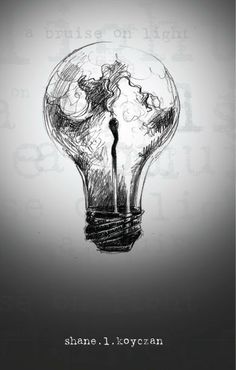
Objectives: Using the language of the Depth of Knowledge Levels, students will identify the central theme of the poem “Trolls” by Shane Koyczan, stating its message, and quoting from the text.  They will interpret the meaning through individual quick writes and group discussions, and they will apply the concepts learned from their discussions to the books they are currently reading in literature circles.

Lesson: The Freshman Team’s Quarter two theme is “darkness of man’s heart,” which I introduced this year through Shane Koyczan’s poem “Trolls.”  The purpose of this quick write is threefold: it introduces students to denotation and connotation; it allows us to discuss second person point of view, and it provides a smooth transition into our quarter theme.

First I hand out the printed copy of “Trolls” and I play the video for students.  Students then perform a five-minute quick write to the poem by either pulling an idea or a quote from the poem and using it as a sentence starter or by responding to the poem as a whole.  Regardless of their method, their goal is to connect pencil to paper for a full five minutes until I tell them to finish up their line.  During this time I model my own writing on my document projector.  Our quick write time is followed by two minutes of Kelly Gallagher’s “RADaR marks” in which students return to their writing, colored pencils in hand, to quickly review and revise their work.

I love the immediate reaction and rawness of their writing in these moments, which makes it the perfect time to turn and talk within our groups.  I first model my writing then ask students to share theirs, urging them to read at least one line from their responses.  These quick writes provide the necessary steps to build a writer’s community.  The more students share these tidbits, the more willingly the engage in the writing process with each other at every step.

It is these individual discussions that lead to greater questions about Koyczan’s use of denotation and connotation to describe both mythical trolls and Internet trolls.  We talk about his intentions in starting the poem with the fairytale line of “Once upon a time” as well as his reliance on second person to not only garner solidarity with his audience but to attack cyberbullies.

Once we’re done discussing the intricacies of the language, I send them back to their groups to contemplate what Koyczan has to say about the darkness of man’s heart.  Starting with poetry allows them to grapple with major themes in a small burst.  Spoken word poetry plants these ideas before they even begin to delve into more complex novels.

Follow Up: This quarter is the first time I have done literature circles.  My students chose from Lord of the Flies, Fahrenheit 451, or a combination between Of Mice and Men and Animal Farm.  I used Koyczan’s poem to practice our literature circle roles and then to use our roles as a basis for discussion in the literature circle groups.

Because “Trolls” was short, accessible piece, students were able to discuss the theme before we even began our reading of our exploration of our lit circle books.  That being said, this process of discussion, while simple, allows students to explore themes, thus building the necessary foundation for them to further examine these themes within their novels.

Here are some additional poems to pair with literature themes:

Theme: Loss of Innocence—Poem: “Jellyfish” by Sarah Kay

Theme: Individual and Society—Poem: “To This Day” by Shane Koyczan

Theme: Identity—Poem: “Names” by Rachel Rostad or “We Wear the Mask” by Paul Laurence Dunbar paired with “Masks”  by Shel Silverstein,

Theme: Love—Poem: “How Falling Love is Like Owning a Dog” by Taylor Mali

Theme: Coming of Age—Poem: “On Turning Ten” by Billy Collins

Theme: Invasion of Technology—Poem: “Look Up” by Gary Turk

What theme-poem pairings do you use in your classroom?  What suggestions would you add to this list?