My AP Lang and Comp students have been writing. A lot.
We’ve analyzed arguments and written short analysis essays. We’ve read powerful OpEd pieces like this and this and this, and we’ve written responses and modeled these writers’ craft moves. We’ve written arguments on our blogs and had a bit of fun modeling Neil Pasricha’s Awesome writing as we practiced using figurative language and specific examples in our essays. We’ve read about the importance of serious reading, and written one-pagers to defend, challenge, or qualify. Lately, we’ve studied the work of Bryan Stevenson in Just Mercy and watched his TED talk.
I sensed my students needed something a little different, but I needed to keep them writing. So with just one class last week, instead of using a full mentor text to inspire great writing, we used a sentence.
I pulled this quote from Stevenson’s talk:

And then I asked students to write anything they wanted: poems, essays, stories, whatever. The only requirement? Use that line somewhere in your own writing.
Then, on Friday, students moved to our “writer’s chair” and shared their writing. Our community responded with sticky note blessings.
Several students were reluctant to share. “Mine isn’t good,” more than one student said.
“We are a community of writers,” I encouraged. “This is a safe place, and we all want to know what you have to say. Truly, no pressure.”
After a few volunteers, Martina finally rose to share her response to Stevenson’s quote. Her voice was soft yet powerful:
It’s the sigh of relief and relaxed muscles from knowing you did the right thing. It’s liberating and lightweight–the world suddenly doesn’t seem to be positioned heavily on your shoulders. It can be the doubt and little knock of guilt on the back of your head knowing you did the wrong thing. It’s the tempting feeling of doing correct actions, but not being able to when you’re being held against a wall by your own conscious.
It’s difficult to see greener grass on the other side of the horizon when it’s fertilized with the negative aspects of your actions. Learning to realize and move on from what cages you in is the only form of developing into a healthier person–sometimes this ends up being all it takes for it to be “The right thing to do.”
“Always do the right thing even if the right thing is the hard thing”
As kids we grow up with love from family, the goodnight kisses from your parents after a bedtime story, the reassurances of “It’s Okay” after a tumble on the playground, and the form of love that lingers in the atmosphere when you’re around the individuals that raised you. As we grow our love transforms into something deeper, something more emotional, something dangerous. It might have started with a crush on the new individual at work, the butterflies twisting and turning in your belly are a pure indicator that you’ve deeply fallen in a midst of hearts and dazy clouds of love.
Often times, things go wrong. Abusive relationships exist and they are common amongst the men and women in our society. Nearly half (43%) of dating college women report experiencing violent and abusive dating behaviors, Nearly 1.5 million high school students nationwide experience physical abuse from a dating partner in a single year, and one in seven men age 18+ in the U.S. has been the victim of severe physical violence by an intimate partner in his lifetime.
The right thing in this case is following your heart. Men and women trap themselves in abusive relationships because loving the one person that hurts you seems to be the right thing. Other times, allowing yourself to step away from the relationship/situation is not an option and it becomes a tough obstacle to get out of the arms that hold a restricting grasp on you. There’s always help, there’s always somebody there. Reach out for the right motives even if it’s the hard thing to do.
Never let a person of interest degrade your actions or make themselves superior to you. The most damaging thing to do–and often hardest–is staying in an abusive relationship. Love is a beautiful thing, don’t let anybody damage that for you. Instead, do the right thing for your health, mind, and body without the harm of anyone or anything.
Two students shared poems, others shared why they think that quote is important, and others wrote arguments of a sort like Martina’s. All were important reminders to me to let students choose how they show they are learning.
Of course, the shared experience of reading their work was pretty fabulous, too.
One of the best things I can do as a teacher of writers is to offer opportunities for students to share their writing. I know the more we share with one another, the better our writing will become. If I remain the only audience (or even mostly their only audience — my students do write on their blogs and leave feedback for each other), some students may never make the connection between writing and truly conveying meaning. Too many just care about the grade.
By just taking a line last week and then asking students to write whatever they wanted, and then sharing… we built trust in our community and we celebrated that we really are on our way to becoming better writers.
What have you tried lately that improved some aspect of your classroom community? Join in the conversation and share in the comments.


 The thrill of competition, win or lose, can make the ordinary far more fun. This typical Sunday night, for example, involved good friends, good food, and a good amount of jawing about a sport none of us have ever played, but still feel the need to critique. Any other Sunday night would find me waist deep in student papers. A different kind of fun, for sure.
 idea for the active engagement section of the class.
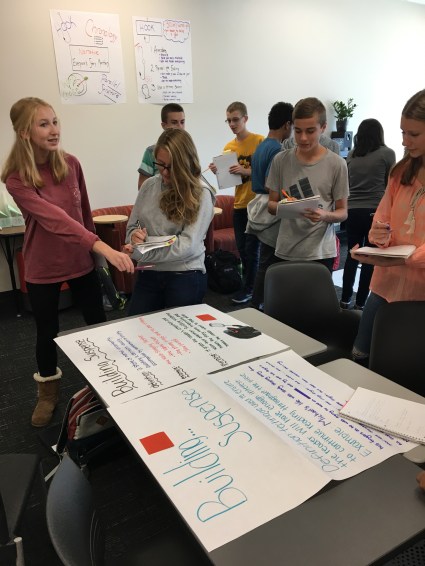
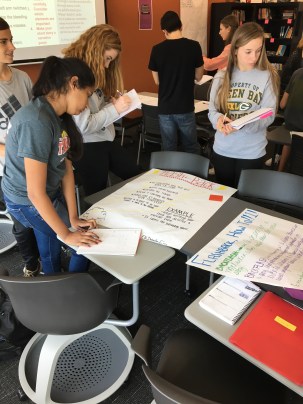 Students completed their charts and we distributed them around the room. With their small groups, students traveled to each poster pairing and took notes on the techniques, discussing with their classmates places in their own stories they could utilize the technique. In addition, students were deciding which poster they felt more accurately covered the technique and would fit in well with the logical detail needed for our classroom anchor chart wall.



 However, I have been able to sharpen my powers of observation, and through these observations I’ve been able to deepen my sense of the readers I work with.
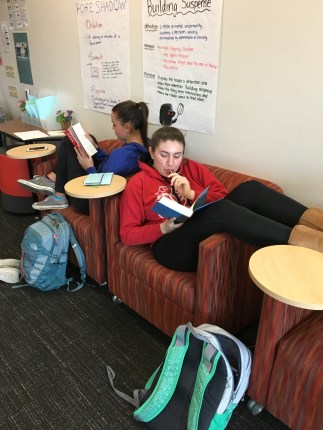
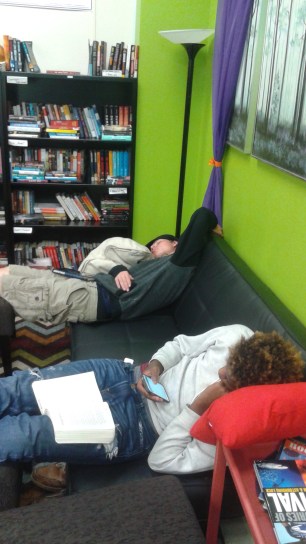
  When students have an opportunity to read in class, I observe body language. Different readers have different methods of getting physically “into” a book. Some fold the book in half like a newspaper and bring the book inches from their eyes. Others put their heads on their desks. To the untrained eye, teen readers can look slouchy, lazy, or inches away from napping. These are students who have entered what Nancie Atwell calls “the reading zone” — they are so immersed in a story that they are lost to the outside world and are unaware of how others are perceiving them in that moment.







 .
. 


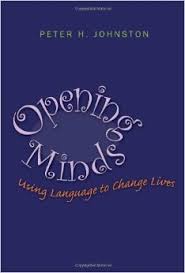 I’ve been reading Peter Johnston’s excellent Opening Minds with my preservice teachers, and it’s a must-read. One of the skills Johnston says the most open-minded students possess is that of social imagination, or being able to understand “what others are feeling, to read people’s faces and expressions, to imagine different perspectives, to make sense of abstract ideas, and to reason through this.” In other words–empathy on all levels. It strikes me that this is both a reading skill and a life skill.
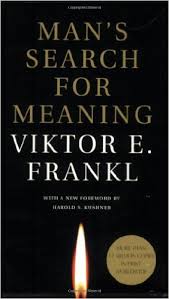 The next day in class, we’ll refer back to the article before beginning independent reading time. “As you read today, pay attention to the characters in your book–are their lives more happy, or more meaningful?”
 This summer my social media has been clamoring about content warnings and safe(r) spaces within an academic community. To what extent do we as educators bear responsibility for how our students respond to the material we may present to them?
 Also interesting was that what I know about my readers’ personal lives didn’t always square with what they wrote about their reading topics. Some of my readers seem to want to read books that mirror their real-life struggles. Others want to veer far away from those topics.
 Three Teachers Talk