Tag Archives: Readers Writers Workshop

Writing Workshop: Assessment and Hope

return and talkThis summer, we’d like to return and talk about some of our most useful, engaging, or popular posts.  Today’s post, written by Amy in 2012, reminds us that writing isn’t just done for assessment–it’s done to get kids to love reading and writing.

Please return to this topic and talk with us in the comments–how do you help kids write to write, and not write for a grade?


Students should write more than teachers can ever grade. I heard this first from Kelly Gallagher, author of the book Readicide, a book, among others, that helped me frame my curriculum around Workshop. If I remember correctly, he said that his students write four times more than he grades. Really?

I pondered this for a long while, and I still struggle, but I think I have some of it figured out. I thought for a long time that my students would not write unless I graded what they wrote. Every assignment:  “Is this for a grade?” Every answer: “Yes, everything is for a grade.” The refrain got old.

Then I tried something new: I began writing with my students on the first day of school, and I had some kind of writing activity every single day. I don’t remember where I read it, but when I was researching the work of the reading writing workshop gurus a couple of years ago, I know I read:  if you struggle with time and have to choose between reading or writing, choose writing.

It’s the complete opposite of what I thought:  My students are struggling readers. How do I give up reading when I know they need it? I thought about it more and realized: If I teach writing well, students will be reading. And they will be reading a lot.

So let me explain how this works for me. Remember, I teach AP English Language and Composition (that’s the top 11th graders) and English I (that’s on-level freshmen)–two extremes.

Writing Every Day

There are many ways to get students to write every day. Of course, some ways will get them to take their writing more seriously than others. I find that when I give them an audience, students will put a lot more effort into what comes out their pens. Audience matters!

Topic Journals. Following the advice of Penny Kittle, author of Write Beside Them, I created “topic journals” that students write in once a week the first semester. I bought composition notebooks and printed labels, using various fonts, of the topics: love, conflict, man vs. man, man vs. self, man vs. nature, war, death, gender, hope, redemption, family, romance, hate, promise, temptation, evil, compromise, self-reliance, education, friendship, guilt, doubt, expectation, admiration, ambition, courage, power, patience, fate, temperance, desire, etc. I created 36 notebooks; one for each student in my largest class.

I introduced the topic journals to my AP students first. I set up the scenario:  “I will be teaching 9th grade. I need your help. Do you remember what it was like to be new to high school? nervous, anxious, a little bit obnoxious? I created these notebooks so you could write and give advice to my younger, less advanced students.”

The first task was to turn to the first page in the journal and define the topic. Many looked up the terms in the dictionary or online. They wrote a quickwrite explaining what the topic meant. Then on the next page they wrote about anything they liked as long as their writing fit the topic. I had them sign their posts with their initials and the class period. I told them that they could choose their form (a letter, a narrative, an advice column) as long as they remembered that their audience was 9th graders, and whatever they wrote had to be school appropriate. “If you write about bombs or offing yourself or anyone else, you’re off to see the counselor or the police.” These are good kids, most of them in National Honor Society. They took my charge to help my younger students seriously. This exercise often worked as a lead into our critical reading or class discussion that day, and sometimes students chose a piece they’d started in a topic journal to continue exploring for a process piece.

You can imagine how I introduced the journals to my freshmen. I began by saying, “You know I teach AP English, right? That’s the college-level English class. Well, those students would like to offer you advice about high school, life, and whatever else you might have to deal with the next few years. They are going to write to you in these topic journals. Your job when you see these notebooks on the tables is to choose the one that “calls” to you. First, you will read the messages the older students wrote for you, and then you will respond. Remember to use your best writing.” I then set the timer and had students read and write for 10-15 minutes, depending on the lesson I planned that day. Sometimes I had students share out what they wrote; most often we tucked the notebooks away for another week.

Students constantly fought over a couple of the topics:  love, death, and evil were their favorites. I am certain that is telling (and it did help me when selecting titles for book talks.)

While students wrote in topic journals, I read what students had previously written in the notebooks kids did not select. I’d write a quick line or two in response to something in that notebook. I always used a bright orange or green pen, so students could tell I’d had my eyes in that journal. They knew I was reading them, but they never knew when or what entry. This helped hold them accountable for not only the content of what they were writing but also the mechanics of how they were writing it.

Assessment? Formative. Students have to think quickly and write about a topic on a timed test for the AP exam (11th grade) and STAAR (9th grade).

Blogs

At first I only set up a class blog, and I had students write in response to posts I put on the front page and in response to an article I put on an article of the week page (another Gallagher idea). It didn’t take me long to realize that students would write more and take more ownership of their craft if they created their own blogs. The first year I had students set up blogs I taught gifted and talented sophomores, and I was nervous. Nervous that something would happen:  they’d post inappropriate things, they’d do something to get themselves and me in trouble, they’d be accosted by trolls out to hurt children through internet contact. I chose Edublogs.org as the platform because I could be an administrator on the student blogs, and I had my kids use pseudonyms. This was overkill. Yes, I did have to change two things that year:  one student called his blog Mrs. Rasmussen. I told him my husband didn’t appreciate that much. Another kid used a picture of a bomb as his avatar. Not funny. All-in-all my students did great, and they wrote a lot more (and better) than they ever did for me on paper. I was a stickler for errors and created this cruel scoring guide that said something like: A=only one minor error, B=two minor error, C=three minor errors, F=four or more errors. Students that had never gotten a C in their lives were freaking out over F’s. “Sorry, kiddo, that’s a comma splice. That’s a run-on.” I had more opportunities to teach grammar mini-lessons than I ever had in my career. But see, these kids cared about their grades.

My 9th graders now–not so much. They care about a lot of things, but if I punish them for comma errors or the like, they shut down and stop writing. I learned to be much more careful. Now, I work on building relationships so they trust me to teach them how to fix the errors themselves. It takes a lot more time, but in the end, student writing improves, and students feel more confident in their abilities. I am still working on getting my 9th graders to be effective writers. So far, I have not accomplished that too well, as is evidence of their EOC scores this year.

This past year my AP English students posted on their blogs once a week. I told them that I would read as many of their posts as I could, but I would only grade about every three. I wouldn’t tell them which ones I’d be grading. I let students choose their topics, but since I had to teach them specific skills to master for the AP exam, I instilled parameters. They had to choose a news article that they found interesting, and then they had to formulate an argument that stemmed from that article. The deadline was 10 pm on Monday–every week. This assignment accomplished two of my objectives:  students will become familiar with the world around them, and students will create pieces that incorporate the skills that we learn in class. When I turned to social media to promote student blogs, I got even more ownership from my students.

Assessment? Formative or Summative. Students apply the skills they learned in class regarding grammar, structure, style, devices, etc. Scored using the AP Writing Rubric for the persuasive open-ended question.

Twitter in the Classroom

One of these days I will write a post about the many ways I used Twitter in class this year. For now, let me just tell you:  Twitter was the BEST thing I added to my arsenal of student engagement tools. Ever.

When I began asking students to tweet their blog url’s after they wrote on Mondays, I started leaving quick and easy feedback via Twitter. It was so easy! Kids would tweet their posts; I’d read them; re-tweet with a pithy comment. Within minutes of the first couple of tweet exchanges, students were posting and tweeting more. They were getting feedback from me, and they were giving feedback to one another. They began building a readership, and that’s what matters if students blog. Just because they are posting to the world wide web does not mean anyone is reading what they write. But, a readership, especially one that will leave comments, that’s a whole new story.

Assessment? Formative. Students share their writing and make comments about their peers’ writing. Critical thinking is involved because students only have 140 characters to express their views.

Student Choice. Sometimes.

In a perfect writing class, I am sure students get to choose what they write about every time. This does not work in an AP English class where I am trying to prepare students for that difficult exam. Once a week my students complete a timed writing where they respond to an AP prompt. The guidelines for AP clearly state that the essays are scored as drafts; minor errors are expected. My students must practice on-demand writing. There is no time for conferencing or for taking these essays through the writing process. Unless–we revisit. And sometimes we do. Students are allowed to re-assess per our district grading policy if they score below an 85. 85 is difficult for many of my students, so lots of them re-assess. To do so, students must come in and conference with me about their timed writing. I am usually able to pick out the trouble spots quite easily, and it’s through these brief conversations that I get the most improvement from student writing. Often, instead of conferencing with me, students will evaluate their essays with one another.

I show several student models of higher scoring essays and teach students how to read the AP Writing Rubric. Then, in round robin style, students assess their own essays and at least three of their peers. I remind students not to be “nice” to their friends and give a score that’s undeserved. This will not help anyone master the skills necessary for the AP exam. Rarely do students give themselves or their peers scores higher than I would.

My students also write process papers. For AP reading workshop students choose a book from my short list. After reading and discussing the books with their Book Clubs, students have to write an essay that argues some topic from the book. I model how to structure an essay. I model how to write an engaging introduction. I model how to imbed quotes and how to write direct and indirect citations. I model everything I want to see in this type of writing.

I allow several weeks in my agenda to take these papers through the writing process, and students do most of the work outside of class (not so with my 9th graders).

  • Day one students generate thesis statements, and we critique, re-write, and re-critique.
  • Day two students bring drafts that we read and evaluate in small groups. (I have to teach them that a draft is a finished piece that they are ready to get feedback on–not a quickwrite. So many students type up their rough draft and call in good. This makes me crazy! And I tell them that I will not read their first draft unless they come before or after school or during lunch. They must work on their craft before I will spend my time reading it.)
  • Day three students bring another draft that we read and evaluate again. Sometimes, depending on where my kids are in terms of producing a good piece, I will take these up and provide editing on the first page. Never more than the first page!
  • Day four students turn in their polished papers. I score them holistically on a rubric that aligns with the AP Writing one, or if it’s my 9th graders, I score them on the appropriate STAAR writing rubric.

My freshmen students need a much more hand holding, and we do a lot of writing on lined yellow paper. Most often, especially at the first of the year, they get to choose their own topics. However, I have to give them a lot more structure because on the new Texas state test. 9th graders have to write two essays (about 300 words each): a literary essay, which is an engaging story, and an expository essay, which explains their thinking about a given prompt. Students use the yellow paper to draft during class. I wander the room, answering questions and keeping kids on task. I also try to write an essay every time I ask students to do so. I use these essays as mentor texts in addition to mentor texts I find by professional authors.

Usually I begin class with some kind of mini-lesson if students are in the middle of drafting. I might show students a paragraph with a description that uses sensory imagery and instruct them to add some description in their own writing. Or, I might teach introductory clauses and have students revise a sentence to include one or two or three. This way I am able to get authentic instruction that my students need right there in the middle of their writing time. When I score these student papers, I specifically look for the skills I’ve explicitly taught. If I do it right, I will have read my students papers one or two times during their writing process, prior to them ever turning in their final draft.

Notice I said “if I do it right.” I rarely do it right. I am still learning to budget my time and get to every kid. I am still learning to get every kid to write. I am writing English I curriculum this summer, which I will use in the fall. I hope to get some of my challenges with my struggling students worked out as I focus more purposefully on the standards. I realized this year that while I am teaching writing as a process all the time, I am not necessarily targeting the standards that fit into the process. I am thinking about this a lot lately.

This is still my burning question:  how can I get kids who hate to read and write to participate in writing workshop so their writing improves and their voices are heard?

I am turning to the gurus as I research and think this summer. Jeff Anderson’s book 10 Things Every Writer Should Know has been an excellent start.

Mentor Texts Are Everywhere!

return and talkThis summer, we’d like to return and talk about some of our most useful, engaging, or popular posts.  Today’s post, written by Erika in 2014, reminds us of her process for finding mentor texts–they’re everywhere!

Please return to this topic and talk with us in the comments–how do you find, organize, or utilize mentor texts?


This time last year I was amidst a mad dash – a mad dash in seeking out, organizing, asking about, researching, contemplating, and gathering the ‘best of the best’ of mentor texts.  I had just learned what a mentor text was (text that, well, mentors!) and wanted to make sure I had a plethora to kick off the school year.  And, I did.  I had gathered so many I wasn’t even sure when, and in what context, I would be using them.  But, they were ready and I felt confident that I was too.

This year, it’s a bit of a different story.  After implementing the Reading Writing Workshop model in my urban oasis for the first time this past school year, I realized there is no longer a need to be dashing about.  Mentor texts are everywhere!  Literally.  They are in the morning’s newspaper.  They reside in the autobiographies I always find myself engaging in (and of course, loving).  Articles promulgating the Twitter circuit for the purposes of dissecting content and craft.  Classics, more modern, and everything in between became focal points of inquiry and investigation.  Students’ independent reading books shed light on crafty moves authors strategically choose to utilize.  On occasion, an excerpt from professional development texts deserved a public viewing (sometimes with scrutiny, sometimes not).  Nothing is off limits.

So, it is no wonder that as I have been reading a vast array of literature this summer; I have new mentor texts lined up for this coming school year that I am thrilled to explore with my students.  So, grab your Writer’s Notebook and flip to your Next-To-Read list.   I hope you not only fall in love with these pieces, just as I have, but they inspire you to think about what you’re reading and how you’d like to share them with the brilliant and inquisitive minds occupying your learning community.

Making Meaning with Texts: Selected Essays by Louise Rosenblatt was first introduced to me in this summer’s UNH Literacy Institute via Penny Kittle’s Book Love course.  This piece sent a buzz all throughout the campus as we were asked to read it for homework and come prepared to discuss it the next day.  Before the night was through, classmates were chronicling their amazement and joy with Twitter posts such as:  “Reading Louise Rosenblatt for homework and keep saying “Amen, sistah!” in my head. #unhlit14″.  So, you can only imagine how this Reading Theorist evoked an awakening in us all.

IMG_20140630_221534

It was when I came to this paragraph that I realized I had just stumbled upon an incredible mentor text; not only for myself as an educator, but for students as well.  What better way to expose students to the questioning and thinking behind our reading and writing than by sharing the source with them?  These questions are going to guide us through our reading (and writing) journeys this year.  We are going to study these questions, make sense of them, put them into practice; but, we are also going to really delve into why Rosenblatt has chosen these questions to guide us.  See, that’s where exploring craft and an author’s intention becomes our focal point.

battle 1

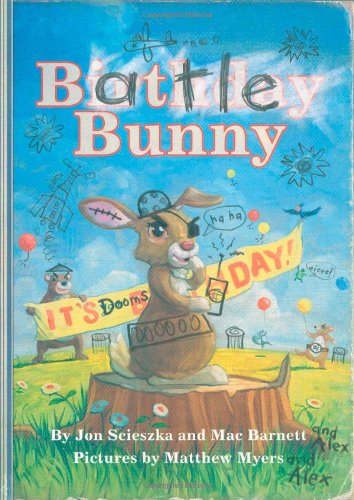
Battle Bunny by Jon Scieszka and Mae Barnett is a clever and witty piece that is sure to get students charged up about editing and revising.  How could it not?  This entire piece chronicles the the narrator’s (yes, the bunny) stylistic and creative writing journey.  The entire story is marked up, crossed out, reworded, and illustrated to show the power of the writing process.  It’s beautiful.

While I educate students ages 16-21, and this piece (I’m sure) was not intended for that audience, I believe this mentor text will be a lighthearted way to quell some of the fears that override their writers’ anxiety.  We know, many students are uncomfortable and afraid to revise, rework, or allow their time-intensive writing pieces to become ‘messy’.  Yet, that’s what produces the most profound writing.

battleI know this may be a risky move in my classroom.  Yet, I’m going to take a chance.  I anticipate shared laughter as we navigate this piece together.  I also plan to explore the bunny’s intentions and make it relevant for our work as writers:  Why did he feel the need to rewrite the story?  Do the illustrations add to the message he is portraying?  Do any of his original thoughts (verse his revisions) feel more powerful to you?  What intentional moves did he make in re-creating this story?  And on and on.

IMG_20140812_121342

Destined to Witness: Growing up Black in Nazi Germany by Hans J. Massaquoi is a piece I have not been without this entire summer.  And, although I’m finished reading it, I find myself flipping through the pictures over and over; it’s that profound. Massaquoi is a mentor of life, overcoming adversity, obtaining the (perceived) impossible, and what it truly means to be human.

Journalist by trade, Massaquoi takes such grace in his every word, sentence, and strategic ‘move’ that’s crafted.  This book encapsulates 443 pages of sheer brilliance and I want students to be exposed to this kind of writing because they too, have the ability to craft such beauty.

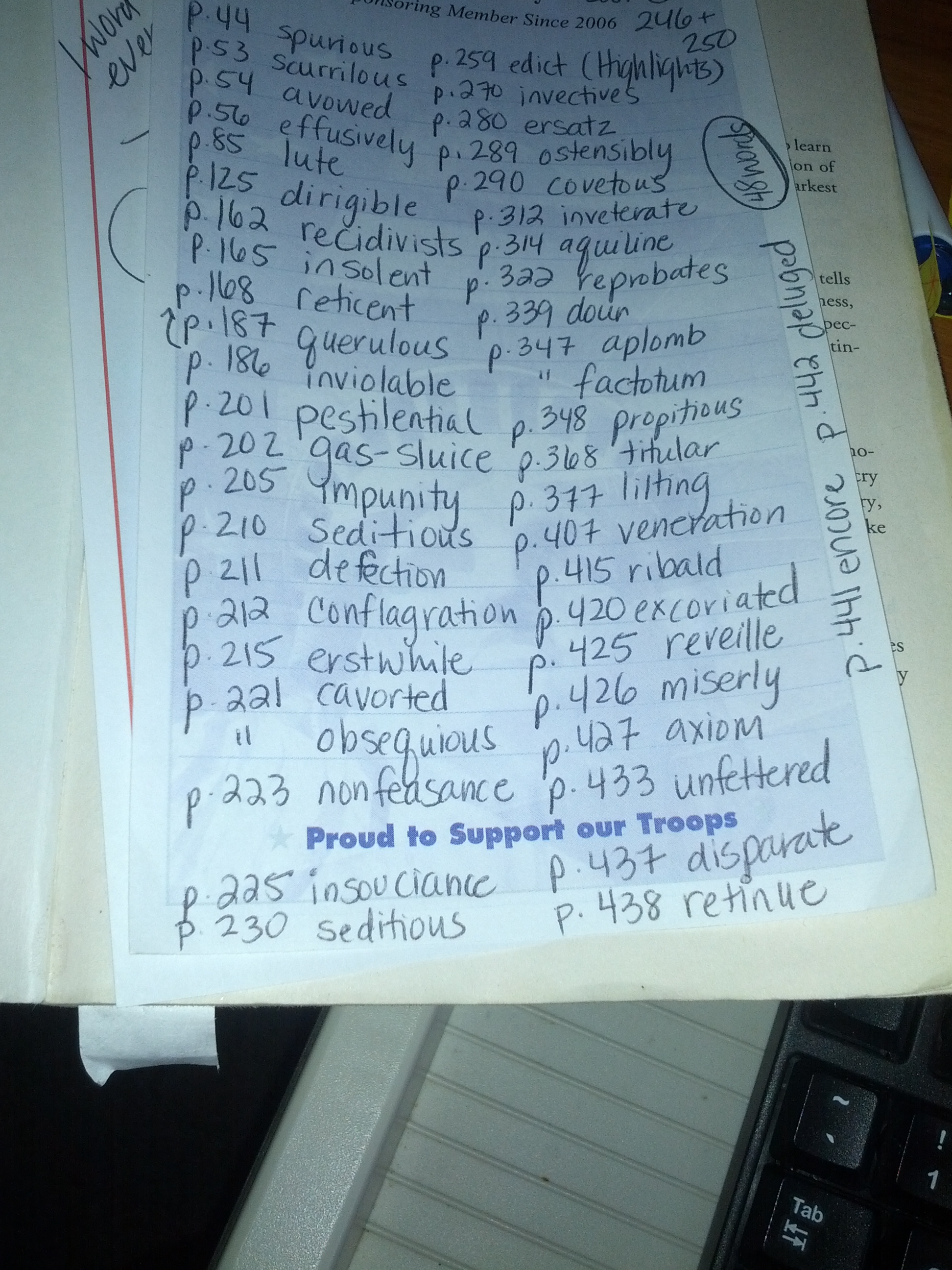
I also want them to catch a glimpse into my journey while reading this piece (note post-its) because I want to share what I found fascinating.  I want to explore some of the word choices (see my unknown word list) IMG_20140812_121513and talk strategy.  I want to use some of these words within my own vernacular and challenge students to do the same.  Most importantly, I want to show them that reading is a process; not one to shy away from.  And yes, sometimes it takes work, but overtime it becomes natural…and wildly fulfilling.

I can’t help but think, above and beyond the work I plan to do with this text, that the historical context won’t propel students in their study of history as well.  World War II and the Holocaust have rarely been depicted from the racial standpoint in which Massaquoi portrays.  This just may be a piece that peaks enough intrigue among students that they too will add it to their Next-To-Read list.  That’s my goal.

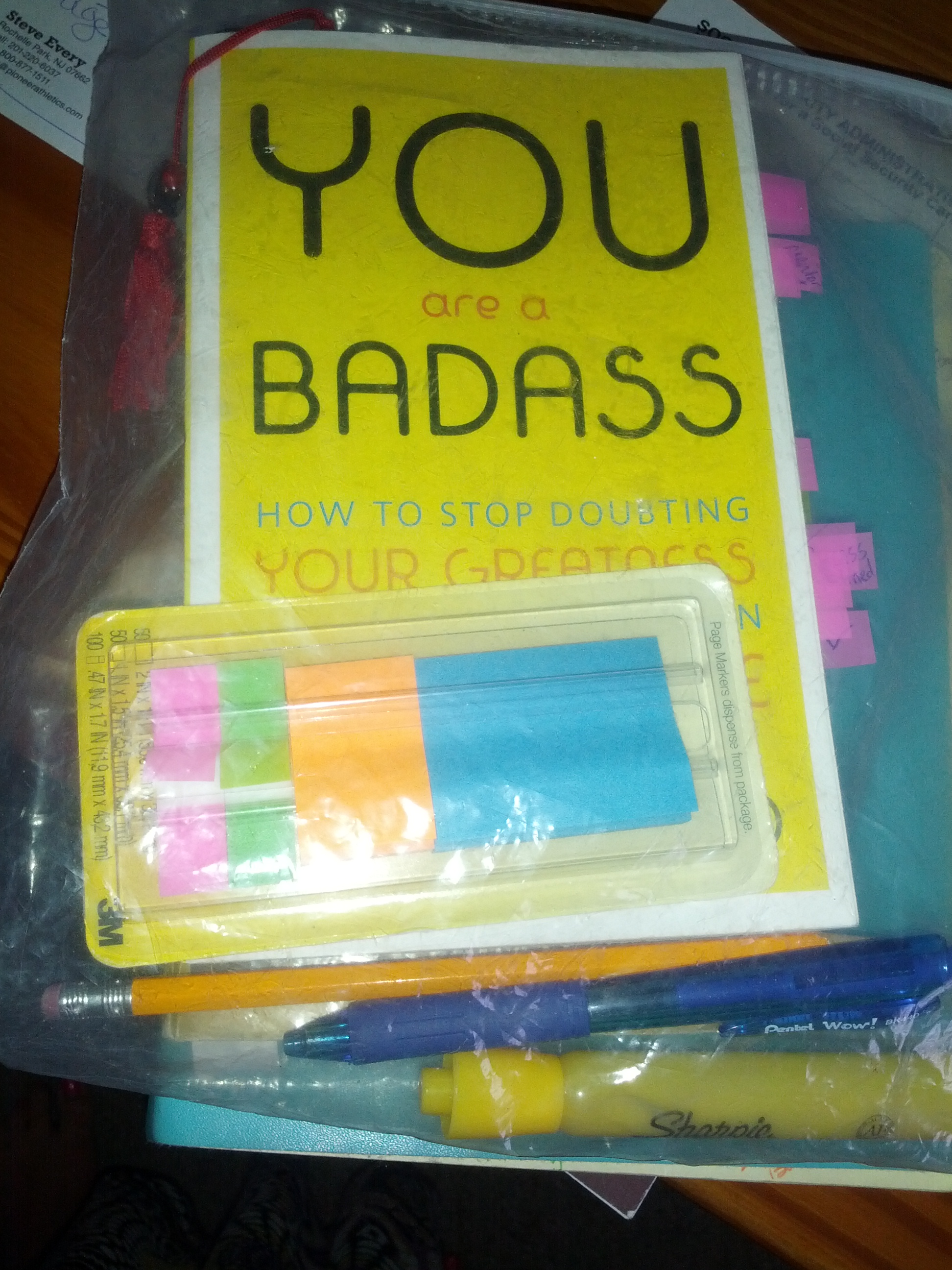
IMG_20140812_124058You are a Baddass: How to Stop Doubting Your Greatness and Start Living an Awesome Life by Jen Sincero has found its way into my Survival Book Kit and I love it!  I’m just past the first thirty pages, yet I have not stopped laughing.  Yes, out loud.

Sincero most definitely has a way with words.  She is edgy and a straight shooter for sure.  Yet, she is able to talk about really serious life-changing ideas in a way that feels ‘light’.  Not your typical self-improvement piece.

I want students to see how infusing humor among the serious can be oh-so-powerful.  Utilizing analogies to talk about the conscious and subconscious mind provides readers visuals…imagery.  A way to process this vitally important information that can shape their lives.  In only the most positive of ways.

I plan to choose the excerpts from this text skillfully.  I want students to have access to the content and the craft…as always.  I do foresee really rich one-on-one reading conferences with those that decide it’s time to make a change in their lives, or at the very least are up for a great laugh, and decide to take this piece on independently.

I hope my four have inspired you.  I really do.  I hope it will do the same for my students.  I encourage you to also share your favorites, here on this site.  As we all gear up for an incredible year to come, and we are swiftly shifting into our ‘going back to school’ mode, this is a wonderful time to start thinking about what we’re reading in a way that lends itself to the idea of being a mentor text.  Articles, books, poetry, graphic novels…all are welcome.

Growing Your Classroom Library

return and talkThis summer, we’d like to return and talk about some of our most useful, engaging, or popular posts.  Today’s post, written by Shana in 2015, shows us how to get creative when building a classroom library.

Please return to this topic and talk with us in the comments–what are your tips for building your classroom library?


FullSizeRender[1]Yesterday was our last real day of school, and it was a busy one.  My students spent our last class periods together sharing their final multigenre writings with one another, clearing out their writing portfolios, and packing up their notebooks.

They also flooded me with classroom library books and sheepish smiles.

“Sorry,” Riley said, as she entered my classroom with a shopping bag full of books.  “I didn’t realize I had like 12 of your books at home.”

“I opened a cabinet and found like 20 of your books!” Emily said.

“If I bring back all your books, can I borrow like five for the summer?” Jordan asked.

“I found The Book Thief and almost just kept it, for the irony,” Hailey explained.

Now that all the books that are usually on kitchen tables, under beds, and piling on nightstands have begun to find their way back onto my bookshelves, things are looking a little crowded:

FullSizeRender

The five bookshelves in my classroom are mostly full of independent reading books–a class set of literature and grammar books, dictionaries, and book club collections provided by my department find their homes on the bottom shelves, but everything else has been a labor of love to build on my own.

FullSizeRender[4]I began building my library six years ago, and started with anything I could find at Half-Price Books.  I spent $20 a month in the clearance section, netting $1-2 finds that built my sci-fi and YA sections, and used my staff ID to get an extra 10% off.  During the holidays, HPB ran promotions for free $5 or $10 gift cards with the purchase of a $25 gift card, and I took advantage of those aggressively.

Next, I discovered Barnes & Noble‘s very generous 25% teacher discount, and shopped mainly in their clearance section, which was always well stocked with “former bestsellers.”  This was perfect, as a book had been out just long enough to generate buzz among my students.  I became a bit of a regular there, and began to ask the manager if he had any damaged, extra, or reject books he didn’t want.  He obliged, providing me with class sets of The Perks of Being a WallflowerWaiting to Exhale, and Tuesdays with Morrie–totally gratis.  I also got lots of hardcover books that were being replaced by paperback editions, again, for free.

Next, I discovered the generosity of my school’s PTA, which granted teachers up to $100 per year in classroom supplies.  Every year, my $100 was spent at Wal-Mart, Half-Price Books, or any other purveyor of cheap books.

FullSizeRender[3]By the time the summer of 2013 rolled around, my library was in decent shape–I had about 800 books, mostly paperback, mostly YA and general fiction.  I traveled to New Hampshire to take Penny Kittle’s course about informational writing, and fell in love with nonfiction.  I also met my amazing friends Amy, Jackie, Erika, and Emily, who told me about DonorsChoose.  I created, and funded, several projects–especially ones that helped me get lots of nonfiction–right away, which increased the number of books in my library up to about 2,000–all without a dime of my own money.

I also created DonorsChoose projects that were funded every October by U.S. Cellular, a partner of DonorsChoose.  Depending on your state, big businesses or even celebrities may fund your existing projects of up to $1000.  I used this partnership to fund two $1000 grants, growing my library up to about 3,000 books.

FullSizeRender[2]For my next brainstorm, I began to write letters to local big-box businesses, asking for donations of gift cards to purchase books.  Target, Sam’s Club, Kroger, and Wal-Mart all granted me gift cards, nearly monthly, of up to $50 per month.  Target in particular was wonderful, as their website offers a wide variety of books, especially great nonfiction finds, and free shipping on purchases of $50 or more.

When I finally got an iPhone in October of 2014, I joined Instagram and followed lots of bookish accounts.  Through these book fanatics, I learned about Book Depository, which offers discounted books with free shipping to anywhere in the world; Books-a-Million, which has a wonderful bargain section and an awesome used books market; and the glorious world of GoodReads giveaways, where free ARCs can be won by one and all.  Thriftbooks, too, has cheap books (around $3 each) and free shipping over $10.

This summer, I’ll take a week of rest, then begin to write book donation request letters, a DonorsChoose grant, and a variety of Morgantown-specific grants.  I’ll focus on replacing lost or stolen books, getting newly-paperback titles, and building shelves I think are a little weak.  I hope you’ll use this slew of resources to build your library, and your readers’ choices, too!

What are your favorite strategies for building your library?

Confession: I’m dating a “non-reader”

return and talkThis summer, we’d like to return and talk about some of our most useful, engaging, or popular posts.  Today’s post, written by Jackie in 2014, reminds us that many of our students can easily come to love reading.  It’s up to us to help reshape their reading identities.

And, we offer a special congratulations to Jackie and Eric–whose wedding is tomorrow!

Please return to this topic and talk with us in the comments–how do you help kids identify as readers?


“I don’t like to read.”

These words slipped off the tongue of my date as he sat across from me digging into a burger. I could’ve excused myself to the bathroom then slipped out the restaurant’s back door. Instead, I sat, paralyzed by his open admission.

Does he not realize I teach English? My quaint dreams of cozy dates at used book shops and Sunday mornings curled around novels dissipated. I couldn’t possibly share my life with a non-reader. I spent months fostering a love for literature in my students. I handpicked books for my teens, stocked my shelves with the latest releases, and inhaled literature in my free time. Dating a non-reader was like sleeping with the enemy.

The date was dead.

Or so I thought.

Two years later, we are still together, and Eric has proven to be one of my most valuable assets in understanding self-identified non-readers. Just as I had pigeon-holed Eric into an archetype of resistant male readers, he had categorized me into the antiquated outline of his high school English teachers—the ones who made him hate reading in the first place.

Eric’s teachers were staunch traditionalists. They assigned classics then tested, quizzed, and sucked any joy or personal exploration out of the books, leaving a pulpy mess of literary repulsion. Eric didn’t identify as a reader because his teachers had given him every reason to not identify as one: he struggled with literary analysis and didn’t enjoy fiction. Like many of my students, he skated through English relying on online cheat sheets to get around reading the required books.

This same resistance to identify as a reader plagues many students who step into my classroom. They have fixed perceptions of what a reader is or should be— a person who reads fast, favors classics and fiction, and enjoys literary analysis. Self-identified non-readers see no room in reading for personal growth, gratification, interest, exploration, and pleasure. Ultimately, they see no room for who they are as a person when they recognize that the only celebrated books within English classrooms are those that fit a set standard of literary merit.

Eric's "to read" shelf

Eric is drawn to informational books. Here are some of the books on his “to read” shelf.

Eric was a self-identified non-reader simply because he did not favor traditional literary classics that his teachers drilled in high school. Yet when I first met him, he voraciously read online articles. Gradually he found his niche in books that dealt with scientific theories and particle physics. Recently, Eric completed The Quantum Story: A History in 40 Moments by Jim Baggott, a 410 page book, and he is halfway through A Short History of Nearly Everything by Bill Bryson, which is 478 pages. Furthermore, he listens to audiobooks on his commute to and from work and our bookshelves are packed with volumes on his to-read list, including On the Origin of Species by Charles Darwin and Discoveries and Opinions of Galileo.

If Eric is a “non-reader,” he is exactly the type of student I want in my classroom—the type who has a personal, vested interest in his or her reading and seeks to learn from the material. Gradually, I

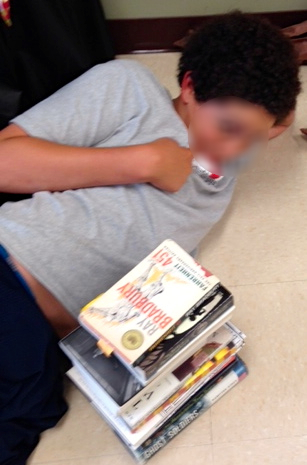
Trevor's Reading

Trevor poses with his stack of books read throughout the year.

have come to find Eric’s reading patterns in my own students. Trevor who hated reading found his niche amongst non-fiction books like Ghost Soldiers by Hampton Sides and Into the Wild by Jon Krakauer while Ben, who was rarely interested in whole class reads, challenged himself with diverse genres ranging from science (Stiff by Mary Roach and The Double Helix by James D. Watson) to historical fiction (The Book Thief by Markus Zusak). These students need the time and space to not only figure out how to define themselves as readers but to also establish a sustainable reading pattern.

By definition, readers are individuals who “look at and understand the meaning of letters, words, symbols, etc.” (Merriam-Webster Dictionary). Thus, as long as a student can read, they are readers—classics, fiction, and stereotypes aside. But as English teachers, we must not only show them that this is the case, but also we must help them to foster reading lives that reach beyond the classroom. A generation

of apathetic teen readers doesn’t have to lead to a generation of

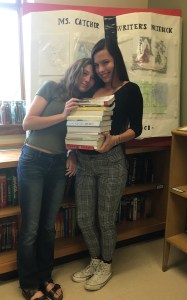
Ben's reading

Ben with this stack of twelve books.

apathetic adult readers.

This past weekend while winding the back roads of a coastal Maine town, Eric and I spotted a library book sale. I would usually be the one to erratically swerve to the side of the road and park on a sidewalk if it meant gathering additional books for my classroom library, but this time, it was Eric. As I sorted through the stacks of books, I looked up to find Eric with a stack equal to my own. This was exactly the type of person I could spend my life with.

A Reader’s Workshop Starter Kit to Jumpstart the Process

return and talkThis summer, we’d like to return and talk about some of our most useful, engaging, or popular posts.  Today’s post, written by Jackie in 2014, shows us how to jumpstart readers workshop and includes a helpful starter kit.

Please return to this topic and talk with us in the comments–what are some of your most useful workshop tools?


Think back to your first day of teaching on your first year of teaching. What were you feeling? Happy, nervous, excited, afraid?IMG_1776 Fear. Fear was the first thing I experienced when I stood in my classroom on the first day of school. That and enthusiasm, excitement, eagerness, and hope, but ultimately, I was afraid, knee shaking, stomach churning nervous as I stood in front of my new class. Fear comes with the unknown, which is why my nerves of being a new teacher were compounded by my entry into the workshop model. The concept of the workshop model is simple, yet it’s a structure that so few of us grew up with. In turn, as I transitioned my classroom, I found my nerves could be categorized into the fear of breaking tradition, the fear of parents, the fear of students not reading, and the fear of proving rigor. I was not alone though. Interns and teachers who were new to workshop model faced many of the same fears. In turn, I created a reader’s workshop starter kit to provide my colleagues with concrete documents that helped them establish the workshop model in their classroom. The starter kit includes the following documents:

  • Elements of a Reading Workshop by Penny Kittle
  • Reading Letter for parents
  • Calculating Reading Rates & Reading Rates Log Sheet
  • Weekly Reading Recording Sheet
  • Excel Sheet Weekly Reading Recording Sheet
  • Book Conference Log
  • Questions to Ask While Conferencing
  • Book Talk Outline
  • Resources for Helping Students to Find New Books

Whether you are a new teacher or simply new to the reader’s workshop, I hope this starter kit will make your journey a bit easier. Enjoy every step and savor even the smallest successes. If you have any questions or comments about starter kit, please feel free to contact me at Jackie.catcher@gmail.com.

Click Here to Download the Reader’s Workshop Starter Kit

7 Moves in My Workshop Schedule

return and talkThis summer, we’d like to return and talk about some of our most useful, engaging, or popular posts.  Today’s post, written by Amy in 2015, reminds us how we might structure our days in a workshop classroom.

Please return to this topic and talk with us in the comments–what are the moves in your workshop schedule?


Quite often teachers ask me what the daily schedule looks like in my workshop classroom.

This is a hard one. I think mainly because it is not about the schedule as much as it is about the routines we start putting into place at the beginning of the school year.

I’ve had a lot of adapting to do this year. Moving to a new school and adjusting my lessons to fit 85 minute class periods where I see my students twice a week for sure and every other Friday (sometimes.) This is quite a change from 50 minute class periods where I saw my students five days a week.

Our normal routines  — and these are non-negotiables that make workshop work — consist of reading, conferring with readers, talking about books, writing in our notebooks, revising in our notebooks, sharing a bit of our writing, and learning or reinforcing a skill, then….it all depends on our workshop task. That’s why writing about my daily schedule is hard.

Here’s the best I can do without going into a long explanation.

READ — 10 to 15 minutes. This is sacred and silent reading time. Students choose books that interest them. I CONFER with my readers, most often with a specific focus, depending on my reader.

TALK about books. Sometimes I do a book talk, reading a few pages of the book, or holding

fabian

Fabian was so excited to share an insight from his book I could not get the camera to take the photo fast enough.

a book interview like Erika does. Sometimes a student does a book talk, if I’ve talked to her first and know she’s passionate about the book she’s just read. Sometimes I ask my students to just talk about the books they are reading, then ask them to write down any titles they think they might like to read next. Shana wrote about the Value of Talk, and I agree completely: “Talk is one of the most valuable tools at work in my classroom.”

WRITE in our writer’s notebooks. Everyday we need to have our students thinking on paper. When I forget, or think we do not have time to open our notebooks and write — in response to a poem, or a video, or a story, or about the books students are reading, or about whatever — I regret it.

Discussions are richer when we write first. Discoveries are more insightful when we write first. Writing is better when we write, just thinking about our ideas, first.

Then, something I learned from Penny Kittle, we always read what we wrote and REVISE. Penny modeled revising with a different color, and I ask my writers to do the same. I simply say, “Read over what you just wrote. How can you make your writing better? Maybe add a phrase or two that develops your thinking more. Maybe change a word or two that adds a punch. Maybe you can remove some words and make your thinking more concise. Where can you add figurative language or a list or an interesting style move?” (When I check writer’s notebooks, I always look for evidence of revision. We work on establishing the habit of revision, daily.)

SHARE some of our thinking. Sometimes we pair up and read our writing to a shoulder partner. Sometimes I ask for volunteers to share out their writing with the class. Sometimes I randomly call on someone (and I usually allow them to opt out at least once if they are uncomfortable reading aloud). Sharing is an important part of our community, and from the first day of school, we work on establishing a safe and respectful community where we can all grow as readers and writers.

Learn, or reinforce, a skill via MINI-LESSON. (If I introduce something totally new, like one of the AP English Language exam prompts, obviously, the mini-lesson will not be so mini. On these days, the mini-lesson time and the workshop time allotment swap places. Sometimes I need the focused direct instruction time because it saves time in the long run.)

Our routines usually take about 35 to 45 minutes. That leaves us about half the class period to hold a workshop. This might be a readers workshop if we are practicing close reading or if we are preparing for a Harkness discussion. This might be a writers workshop if we are composing a piece of writing or studying the moves of a favorite author.

Of course, if we are writing, I change my hat and confer with my writers.

I would love to know the workshop routines you establish with your readers and writers. Please share in the comments.

©Amy Rasmussen, 2011 – 2015

Try It Tuesday: Cite the Research that Drives Your Practice

In a session at the NTCTELA Conference a couple of weeks ago, Cris Tovani began her session asking us to reflect on this statement:  I can site the research that supports the beliefs that drive my practice. This got me thinking — not just about Cris’ inspiring session but about how we make decisions regarding the best practices we bring into our classrooms.

Do we have research that supports the moves we make as we teach our students to become better readers and writers?

It’s an important question. And for those of us who instruct via  readers and writers workshop, the research can be a powerful motivator to keep doing what we know works for our kids.

My favorite go-to research? The article by Richard Allington and Rachael Gabriel: Every Child, Every Day. They outline six easy-to-implement essentials to effective reading instruction — and learning to teach reading is not something I got much of in my education classes to become a high school English teacher. But many high school students still need help learning how to read, especially my ELL population. Every English teacher can implement these six essentials.

If you’ve never read Every Child, Every Day, I challenge you to read it. If you haven’t read it in awhile, I challenge you to read it again. Then, give yourself a quiz:  Does this research support the moves you make as you teach your students to become better readers and writers? If not, what will you do about it?

The resources at the end of the article can lead us down a rabbit hole but not take us on a goose chase. These researchers provide us with important information:  We can read about effective practices and then bring those practices into our classrooms. We can share these articles with colleagues and administrators with the hope of garnering more support for instructional practices that our best for our students — and proven to work.

If you’ve ever wondered why student reading engagement and success begin to wane as kids begin to enter middle school, read You Can’t Learn Much from Books You Can’t Read, another text by Allington.

If you teach in a low SES school like I do, you may find “The Early Catastrophe: the 30 Million Word Gap by Age 3” by Betty Hart and Todd R. Risley interesting. It’s a popular read. It might spark some thinking as to why so many of our students read far below grade level — and give you a poke in the gut to do more about child poverty.

Then, because the validity of that article sparked lots of commentary by other educators who wrote other research articles, spend some time reading “Debunking the Word Gap.” (Aha and Aha. And lots of validation for my practice. Choice and voice matter!)

If you don’t follow the blog of Paul Thomas, The Becoming Radical, you may want to. Thomas gets me thinking with everything he writes. I especially appreciate his post of yesterday: “To High School English Teachers (And All Teachers).” (Where I found the Debunking article and so much more and had to update this original post.)

Remember that rabbit hole?  I read every link Thomas shares and added to my research storehouse, tweeting links to colleagues, and I found a text by Ralph Ellison I’ll use with my AP Lang class in the fall. Bonus.

Of course, if you really want to explore and extrapolate, look up the articles Penny Kittle cites in Book Love or Donalyn Miller cites in The Book Whisperer or any other of your favorite teacher-leaders cite in their books.

It’s summer. Time to enjoy a little (not so light) reading. I promise, the research is worth it!

Please leave your suggestions for other insightful research articles in the comments.

Finding Solace in our Students

IMG_2666

End of the year pics with friends and books.

The shooting in Orlando this weekend has weighed heavily on my mind for the past few days; it has settled into the back of my brain, penetrating my thoughts whenever I get a moment to rest between the hectic last days of school.  While I only know victims through six degrees of separation, I can’t help but see the images of friends, family, and students in the 49 faces of those murdered.

I’m not sure if it is the lockdown drills at school that make these tragedies feel all the more chilling and real, or if it’s the targeting of LGBTQ+ populations when I, oftentimes for the first time, watch young people finding their true identities in my classroom, but this time I feel nauseous and weak and powerless.

To think that this is the world my students are graduating into and growing up in, is frightening.

But as I scrolled through the profiles of the deceased, I found a statement from the father of victim Mercedez Flores.  He wrote, “We must all come together, we must all be at peace, we must all love each other, because this hatred cannot continue for the rest of our lives.”  That is what the workshop classroom allows me to share with my students—a corner of this peace and love.  It opens a door for me to connect with them on a personal level, allowing them to find not only acceptance but also stories, understanding, and success in their books.  Allowing them to open up to new literature and explore themselves as a reader sends the message that I not only value them as learners, but I value them as diverse people with a wide variety of needs, curiosities, and interests.  This avenue may only be minor, but in the wake of all the hatred and fear, I hope my classroom is a respite from the world.  A place where students can learn to at least respect one another’s differences without judgment or condescension, a place where we can explore the difficult themes and navigate challenging conversations in safety.

IMG_2693Everyday gives me a little more hope that this next generation has begun thinking about the innumerable struggles they will have to face.  As one of my students wrote about the universality of To Kill A Mockingbird, “For an innocent man to be found guilty is a miscarriage of justice, but for an innocent man to be found guilty for being black is a result of bigotry and prejudice, and shouldn’t happen…Sadly, as seen with Trayvon Martin, Mike Brown, and others, racism still does exist in this country. To Kill A Mockingbird is a constant reminder of how far we have come and how far left we still have to go when it comes to overcoming racism.”  Charlie’s words remind us that stories show us both the fallibility and overwhelming strength of the human condition.
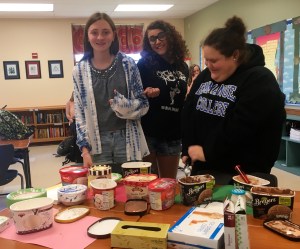
Yesterday morning, as I prepared for my last day of classes (we still have three more days of exams), I reminded myself that teaching allows me to model a life of acceptance and love, of caring and compassion, of concern and advocacy.  It may not be much in the general scheme of things, but it is the most productive way I can handle the tragedies our country continues to face.  Between cramming in grading and pulling together final assessments, I spent invaluable time writing notes to my classes, collecting ice cream toppings for our last day parties and signing the backs of photos of my students with the books they read this year.

The best part is that the love is returned as graduating seniors from years prior show

IMG_2701

Ice cream parties to finish up our yearlong adventure together.

up at my door to hug me good bye and have me sign their yearbooks.  College students visit to update me on their lives, current students voluntarily help me pack up my room, and former students spend their first summer afternoon organizing my bookshelves for future students.  For all the hate that exists in this world, there is far more kindness, far more compassion, and far more love.  I know because my students remind me of this every day.


Try It Tuesday – The ‘Secret’ to Workshop Success

At this point in the school year, teachers do a lot of counting. Counting days, counting essays left to grade, counting books missing from a classroom library (Seriously people, it’s not cool to steal from teachers. Your growing passion for reading is the bee’s knees, but my own kid may have to pay her way through college at the rate I spend on books for you. Might you return them? Please? Thank you). At graduation this past weekend, I found myself counting seniors I had taught and I began imagining all the opportunities in front of them. Interestingly enough, this year, I looked at those seniors and saw…books.

Zak raved about Ready Player One early this year. It was one of my first workshop successes.
Zoey emailed me over the weekend a few months back about The Girl on the Train.
Jenna plowed through Brain on Fire recently, after Zoey’s recommendation.
Larissa swears that Walden will change your life.
Ellen blushed when she told me she absolutely loved The Sociopath Next Door.
I counted at least eleven kids that read and sobbed over A Monster Calls.

Birds singing and happy little clouds everywhere.

And now…for a moment of full disclosure in the opposite direction. As my department makes the transition to workshop, sometimes the numbers are overwhelming and scary. We are one of only a handful of high schools moving to this model in the entire country. The path before us is paved by K-8 workshop instruction, but the number of secondary schools already doing workshop is relatively limited. This makes the sheer volume of curriculum we’re creating staggering and models hard to find.

On top of those numbers we have extremely limited common prep time, surface level understanding of the best way to break up our 86 minute class periods most effectively, and hundreds of new classroom texts we are working to keep track of (not to mention read). All with three preps for most of my colleagues and a grand total of one hour of collaborative PLC time per week.

In short, this transition isn’t easy and it’s already had some pretty sobering/ugly/weep-worthy moments.

We’re wrestling with very real questions about how to hold students accountable for their skill progression, how to keep track of meeting student need most effectively, how to appropriately conference with all of our students in large classes throughout the school year, and how to balance a need for college/career readiness with our desire to afford students the choice that will fuel their passions for both reading and writing.

At the end of the day, and the end of school year in which we have all been working to

IMG_1112

AP Language Super Readers – Simrah discovered nonfiction, Louise (our school salutatorian) delved into the study of language, and Ellen and Kaley blew through Brain on Fire.

incorporate more and more workshop practice into our daily instruction (knowing we will be expected to operate in the workshop model to fidelity next year), we are tired. Tired, overwhelmed, and nervous.

However, the visual of an Escher-like hellscape I’ve just created for you, thankfully, isn’t the whole story. As I reflect back on this move to workshop, the overwhelming nature of the preparation involved ultimately pales in comparison to the positive feedback I’ve received from students.

I was sitting on the patio a few nights ago with my husband discussing the class-feedback forms my students had just emailed to me (What did you learn from this class? What did you enjoy? What should I work on for next year?) with the completion of our regular class work and impending exam week. I expressed to him how proud I was of the number of students who commented on reading more, enjoying writing more, and basically being more invested in English class than any other year I can remember.

It sort of dumbfounded me as I recalled the emails over the course of the year. The casual

IMG_1090

My 2A AP Language Crew – Dema read Black Boy after a book talk, Bennett read Ishmael and says it changed his life, and Larissa fell in love with American Classics.

conversations with kids that showed their deep thinking about topics they cared about. Countless peer to peer discussions with overheard snippets such as “Oh, I loved that book. You need to read it” and “Yeah, I just couldn’t put it down” and “This topic sentence is really good, but if you combine it with this idea, the paragraph will make more sense.”  The longer I talked with my husband, and the more I recounted the year in student snapshots, the more surprised I was to realize that my stories of the year had little to do with content I “taught” and everything to do with the students themselves – what they were doing with the content. The difference of 2015-2016 was choice and encouragement to be readers and writers. In short…workshop.

So with my recent numerical obsession (did you know it’s only two more sleeps until the last day of school?!), I compiled the following rundown of my first year of exploring the workshop model:


Workshop by the Numbers

1 – Teacher playing around with workshop. Discovering its benefits, its challenges, and its similarity to and differences from her current instruction. Exhausting in the way teachers love. Some call it masochistic. I call it professional development.

IMG_1100

We learned how to make paper cups on the last day with our seniors…a nod to the practicality of English class…then we read. 

3 – Teachers (Talk) who journeyed to the wild North during February to instruct the Franklin High School English department on the day to day of workshop instruction. Exhilarating.

11 – Colleagues opening their lesson plan books and starting almost from scratch to first play with and then make a full transition next year to the workshop model. Collaborative.

117 – Students who read for 10 minutes of every class period we shared, wrote and reflected during every period of second semester, and changed as readers and writers in ways I’ve not seen before in my 13 years of teaching. Thrilling.

180 – Days in the school year to remind students that they will grow as readers and writers with practice, passion, and a commitment to question, explore, and expand their views of the world. Daunting.

2088 – Hours of summer to read the 16,983 books on my “To Read” list (No time for love, Doctor Jones…or sleep for that matter). Delicious.


So many opportunities.

But now, I am going to be brutally honest once again. As previously stated, the move to workshop can be scary. It’s new. New to us, our students, and in a formal sense, it’s relatively new to secondary education altogether.

However, here’s the part that sort of sounds like cheating:

Though teachers, myself included, are very rarely afforded the opportunity to take it easy, there are few things easier than throwing open the doors on choice and seeing what happens. Of course, there are many systems that need developing in my classroom and so much of workshop requires routine and consistency, but the heart and soul of workshop is really

IMG_1116

1B AP Language and Composition – The seniors have left us, but this crew still has final projects to present

choice – choice, talk, and lots of writing – all of which mainly require simply being honest with, invested in, and responsive to student need. No, it’s not totally easy. It can’t be a free for all. It can’t be totally haphazard. But it can be trial and error. It can be learn as you go. It can be beautifully impactful.

To provide proof, here is a sampling of student reaction from my class-feedback form this year. I tried a lot of different things. I messed up a lot. We backtracked often. I sometimes forgot to book talk. I sometimes didn’t provide enough modeling or take the time to write every time they did, but we worked with choice, we wrote more, and we talked more than ever before.

Here are just a few reactions from my AP Language and Composition class:


Hello,
This year I really learned to be literate. AP Lang actually taught me that I can read books that I want to read and no matter what they are I can discuss them in a scholarly way because even if the book is something like poetry or a comic it is still a book. I’ve learned that all books have something to teach and that’s why they were written in the first place. I’ve read some amazing books this year and I’ve learned how to discuss my opinions on things using a higher vocabulary and assertions that are beyond the obvious. I’ve learned that you can look at anything in life a little deeper and you might just learn something. My tendencies to look deeper into things was fostered and practiced through books and reading so thank you Mrs. Dennis for helping me become a scholar. The first time you called us scholars I didn’t really think you were serious, but now I feel it. I feel like I want to spend my entire summer reading and I plan on trying to finish a large chunk of my I want to read page because reading truly and utterly makes one a better person. Reading makes you a better thinker, citizen and friend. Language is truly a beautiful thing. Also, you should know that coming into this class I was intimidated and almost dropped. English is not my strongest suit as I want to go into premed, but now I can be a poetic Doctor am I right??
Thank you also for always being a nice person and a smiling face to see in the morning.
Love,
Nimmi
Mrs Dennis,
I loved this class, a lot. I’ve never really felt like I’ve learned much from English classes, but in AP Lang this year, I’ve grown so much as a writer and a reader and a thinker. Part of that is the class itself, part of that is the practice work we’ve done throughout the year that forced us to think for ourselves (I actually like doing one pagers now), and a big part of that is you as a teacher. You made us want to be smart. I wouldn’t change a thing, and I think that I’ll probably look back on this class as one of the most valuable I’ve taken in high school. I’ll miss having you as a teacher next year!
Thanks for everything,
Maddie
Mrs Dennis,
I always thought becoming a man would require some sort of coming of age. Some sort of ‘killing the beast and dragging it home’ type situation…
I began this year as a boy and ended it as a man. Throughout the year I became increasingly disillusioned with being a dependent, in ideology and in living situation. I read books about Manliness, articles about what it “means” to be a man and looked far and wide for what the distinction was.
There is no amount of *physical contact*, “macho” rites of passage, or waking up one day transformed that made me into a man. Oddly enough, it was sharing my feelings that made me a man. The turning point was the day you told us “Feel free to share more feelings in your one pagers”.
“Sharing my feelings” translated to me having to figure out WHAT I felt and believed and WHY.
Instead of having some book tell me that I should be principled and have virtue (which is simple enough for me, and not only a manly thing) AP Lang and you made me feel like I had a SAY in my own life and thoughts. AP Lang made me no longer dependent on others for what I believe and why, giving me the ability to evaluate, challenge, qualify AND support things.
AP Language and Composition MADE A MAN OUT OF ME.
I am eternally grateful,
Bennett
Encourage everyone to read Walden, strongly encourage. It’s life-changing.
Continue teaching everyone to question ideas or anything at all; I think that was really fundamental in my growth as a student as well.
Larissa

And here, ladies and gentlemen, is the secret formula…

It’s no secret at all.

These are the simple changes I made to my daily practice. And though I have a lot of work to do in regards to running a true workshop classroom each and every day, the results this year have felt amazing. Give it a try!

  • Provide 10-15 minutes per class period for students to read books of their choosing. It’s time well spent. Best spent, actually. 
  • Conference with students during that reading time to better understand what, how, and why they read. This will assist you in recommending further reading and in determining mini lessons your students need to make them better readers and writers.
  • Have students write each and every day. Encourage them to write without stopping (building fluency), revise something every time they write (building capacity to internalize the writing process), share that writing (to build community), and take pride in that writing by choosing and developing ideas.
  • Use additional class time for more conferences with students around what they are reading and writing. Students can work individually, in pairs, or in small groups during this time, depending on the mini lesson for the day.

Of course, readers and writers workshop involves so much more, but this is where I started this year. This is what resulted in the student response above.

If my calculations are correct, I have roughly 25 years left in the classroom (holy, holy, holy). That’s 3000 students (conservatively) over 4500 days. Talk about an opportunity. Or rather, 4500 opportunities.

What books will they love?

What great stories will they tell?

Whose life will change by becoming a reader and a writer?

I can’t wait to find out. Because the secret to workshop success is no secret…it’s the students.

IMG_1352

3A Sophomores – Trevor said he read more than he ever has, Errin and I read Metamorphosis  together, Josh read (and loved) Moby Dick, and Lauren’s “To Read” list is two pages long. 

What moves have you made to workshop that have made a difference in your practice? Please feel free to leave your comments and questions below!


Imagining Our Ideal Bookshelves

My students are selfie experts; somehow, through practice, they have discovered the perfect angle, the right light, the exact method to fit ten people into one frame—while still managing to make their head look normal-sized.  In those fleeting snapshots, they capture the essence of who they are (or at times who they want to be), if only for a second.

I believe that the books we read can serve as small photographs of our hopes, dreams, desires, and curiosities.  They provide a  snapshot of who we were, who we are, or who we want to become.

FullSizeRender-2

Julia’s highly organized ideal shelf

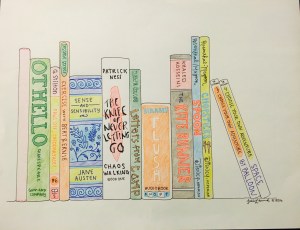
As a final project, my AP Literature and Composition students completed an “ideal bookshelf,” inspired by the book My Ideal Bookshelf and a quick write I completed in Penny Kittle’s summer class two years ago.  The assignment was relatively simple—create your own ideal bookshelf of the books that “represent you—the books that have changed your life, that have made you who you are today, your favorite favorites” (La Force xi).  Since this is an AP Literature class, I added a twist—I wanted students to stock their shelves with books that not only transformed them as a person, but also developed them as a reader.

As each student presented on their shelf, they transformed from self-assured seniors to wide-eyed children who relayed the story of the first book they had ever fallen in love with.  Many of them spoke of how they either found or developed their passion for art,

FullSizeRender-3

Max’s science-based book shelf

coaching, theatre, computers, and physics through books they had found over 18 years.  The books they listed did more than just challenge them as readers; these books had the power to inspire, entertain, and heal.  As Claudia wrote about The Sisterhood of the Traveling Pants, “I have no real idea what is so special about it, but I’m not going to question its magical powers when it does so much good for me.”


What I loved most is how these shelves found life through details; Julia’s shelf held her drawing notebook, Cam’s his favorite cookbook, and Payton’s was adorned with her grandmother’s locket, which she uses as a bookmark.  Some shelves were neat and orderly, perfectly stacked, while others, like Sammie’s were a bit more scattered.  As Sammie put it, “I don’t know what I want to do as a profession; I am still figuring it out.  That partially explains the disarray that is my bookshelf.  I couldn’t decide which would be more practical, stacking or leaning.  The result is a bookshelf with a little bit of both.”

FullSizeRender-1

Sammie’s slightly scattered ideal shelf

As my seniors complete the next three weeks and begin the process of preparing for college, I want them to walk away with the writing and analytical skills we’ve honed all year, but more than anything, I want them to remember why they fell in love with reading in the first place.  I want them to question why books are powerful and understand that the universality of a novel’s message can change readers.  I want them to read for knowledge and depth and challenges, but I also want them to accept that not everything needs to be analyzed, dissected or picked apart.  In fact, sometimes we read for escapism, for love, for adventure.  For many, this might be the last English class they take.  Hopefully, it is only the start of a lifetime of reflective reading and ideal bookshelves.