Tag Archives: Mentor Texts

YA Fiction That’s Funny and Full of Voice

After millions of snow days, my student teacher, Mike, and I are finally wrapping up our Siddhartha self-reflection unit and jumping into a new writing unit I’m really excited about–comedy!  We’ll study satire, sketch comedy, stand-up, commentary, and monologues for mentor texts, then work with our students to craft strong comedy writings that exemplify the skills of pacing, payoff, “punch-up,” and one other skill that I think is the most important:

Voice.

Writing voice, for me, is where humor, sarcasm, and personality come alive in a piece of writing.  “Voice,” Tom Romano writes, “is the writer’s presence on the page.”  Voice is the most elusive quality of writing to teach, I think, because it’s not really quantifiable and cannot be duplicated or imitated.  Each writer must craft his own authentic voice.
img_1738

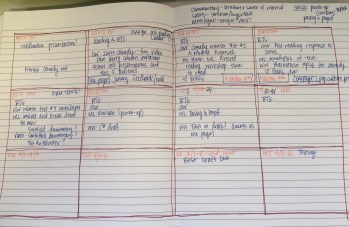
Brainstorming the bare bones of a comedy unit

While discussing the very bare bones of our comedy unit, we brainstormed mentor texts, seed prompts, and writing skills.  After we hammered those out, Mike wondered about which books to booktalk for the unit.  “Nonfiction comedy is easy,” he said.  “Bossypants, Yes Please, Confederacy of Dunces.  But I’m not sure what to booktalk for fiction.”

“But YA fiction is so hilarious!” I exclaimed.  I started rattling off narrators who cracked me up.  Their writing voices were the perfect mentor texts for our students, who’d be focusing on crafting a humorous writing voice over the course of the unit.

“Looks like I know what I’ll be brushing up on for my weekend reading,” Mike remarked.  So here, in part, is a list of what I recommended to him–YA fiction that’s funny and full of voice.

The Absolutely True Diary of a Part-Time Indian by Sherman Alexie — This novel, paired with illustrations by the narrator, is loosely based on Alexie’s own upbringing somewhere between two identities–his poor Indian self who lives on the rez, and his striving-to-succeed “white” self who attends a better school up the road.  It’s infused with Alexie’s signature wry humor even against a pretty dark plot backdrop.
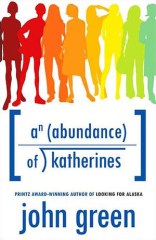
49750An Abundance of Katherines by John Green — This is, to me, the funniest of Green’s novels, although all of his narrators are pretty hilarious.  Colin Singleton has dated 19 girls named Katherine, and has been dumped by all of them.  If that’s not funny enough as it is, Colin is trying to write a mathematical formula for relationships and likes to find anagrams in random places.

The Disreputable History of Frankie Landau-Banks by e. lockhart — For me, Frankie is the female version of James Dean in Rebel Without a Cause.  Determined to subvert the male-dominated traditions at her private school, Frankie gets into all kinds of mischief, and I loved her headstrong voice.

American Born Chinese by Gene Luen Yang — This excellent graphic novel pairs multiple storylines, all of which are made hilarious primarily through dialogue and stylistic choices in Yang’s illustrations.  From antagonists so dumb they’re funny to Yang’s monkey alter ego, this is a humorous look at growing up different in America.

Anna and the French Kiss by Stephanie Perkins — I identified so much with the quirky narrator of this novel.  Forced to change schools right before her senior year, Anna is self-deprecating, sarcastic, and delightfully bewildered when she moves to the International School of Paris.  There’s also a great cast of hilarious supporting characters here.

Dumplin’ by Julie Murphy — I just loved Willowdean, the narrator of this terrific, important novel.  Most of her snide comments are made through internal monologues, but her interactions with her mom through dialogue are also quite funny, too.  Like Part-Time Indian, there are some heavier themes, but all in all I smiled throughout most of this book.
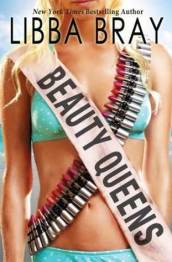
9464733Beauty Queens by Libba Bray — An all-girls’ Lord of the Flies, this book was fantastic for a variety of reasons.  The colorful cast of alternating narrators means there’s someone every reader can identify with, the interactions between those characters are often ridiculous and hysterical, and interwoven with it all is a series of broadcasts from a corrupt third party who are so evil it’s funny.

Noggin by John Corey Whaley — I finally read this book after it was stolen from my library countless times, and it’s hilarious from page one.  The story of a boy whose head is transplanted onto another teen’s body after he dies of cancer, Travis’ tale is at turns heartbreaking and hilarious as he tries to navigate the world five years after he last left it.  A fantastic series of supporting characters elevated the humor in this book for me, too.

Me and Earl and the Dying Girl by Jesse Andrews — For me, this was a more realistic version of The Fault in Our Stars.  I found Greg’s writing voice engaging and entertaining right away, and it made me read this book in one sitting.  His frequent addresses to the reader combined with his hilarious interactions with his friend Earl made Greg a favorite narrator of mine, and makes me eager for Jesse Andrews to write some more books!

Winger by Andrew Smith — All of Andrew Smith’s writings are hilarious at times, but for me Winger was the funniest.  Ryan Dean West is a scrappy fifteen-year-old making his way through freshman year at a private school, and his escapades with his rugby teammates, his crush, and his teachers made for a lot of laughs–up until I completely broke down in sobs for the last 30 pages or so of the book.  Still, Ryan Dean’s voice was so great that I couldn’t wait to devour this book’s sequel, Stand-Off.

What are some of the best-voiced YA books you’ve read that have cracked you up?  Please share in the comments!

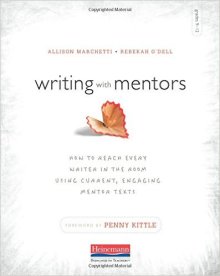
Writing With Mentors: A Nonnegotiable of Writers Workshop

41dIMvzIynL._SX395_BO1,204,203,200_

WRITING WITH MENTORS by Allison Marchetti & Rebekah O’Dell

Reading Allison Marchetti and Rebekah O’Dell‘s Writing With Mentors is reminding me of the summer, three years ago, that I committed to making the move to readers and writers workshop.  Like my new friends in Franklin, Wisconsin, I already had many of the structures of workshop in place–I just didn’t know how to fit them all together.

As I read and wrote and thought beside the likes of Penny Kittle, Amy, Jackie, Erika, and my other UNH friends, I learned quickly which parts of my instruction to keep and tweak, and which parts to flat-out jettison.  While I felt like my reading workshop practices were solid, I knew I needed to completely rethink the way I designed writing instruction.

I wish I’d had Writing With Mentors that summer.

That summer, I learned that I shouldn’t be designing lessons around a staid form like a persuasive essay or a literary analysis.  I needed to begin thinking about having my students write authentic, interesting pieces on topics of their choice–but I didn’t know how.

img_0791

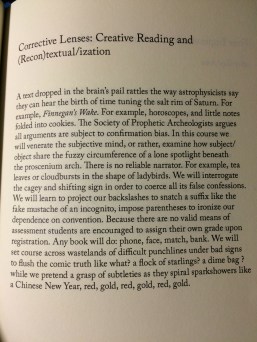
I immediately saw Gregory Pardlo’s DIGEST, full of prose poems, as a mentor text.

I learned how to read like a writer, how to look at the craft and structure of my favorite authors’ works.  I began to see mentor texts everywhere, and in fact too many places–I was exhausted by trying to keep track of everything I wanted to share with my students, and even resolved to read less as a teacher.  I wanted to offer a variety of rich mentor texts to my students without losing my mind–but I didn’t know how.

I learned that my writing process was as unique as my handwriting, and that process has value just as much as a written product does.  I wanted to restructure my unit planning, my gradebook, and my classroom routines to reflect that–but again, I didn’t know how.

Over three years, through trial and error, I’ve figured out how to reckon with a lot of those issues, but I would have known instantly had I read Writing With Mentors then.  This book succinctly showed me great writing units and products, how to plan for them, and how to select and organize current, engaging mentor texts.

img_0480

Books are at the center of my writing instruction–literally.

It reminded me that when we read–even to study the craft moves of a mentor author–we must read as readers first, for the “pleasures of story time” and to “hear the rhythms of good writing” (65).

It affirmed my habit of designing new units each year, complete with brand new mentor texts, to meet the needs of my current students and the sociopolitical climate in which we live and read and write.

It helped me cement mentor texts, alongside the writer’s notebook, conferring, and authenticity, as nonnegotiables of a successful writers workshop–because, in Allison and Rebekah’s words, “mentor texts enable complete creativity and individuality to emerge in student writing and writing instruction” (3).

And it reminded me that when students leave our classrooms, “mentor texts will always be present” (167).  When we teach students to write with mentors, they remain capable of reading like writers as they engage with print and media and other real-world texts.   Since getting my students to become lifelong readers and writers is my ultimate goal, this book is now an important mentor to me.

Writing With Mentors is the book to pick up when you put the textbook down, toss out your binders of writing rubrics, or throw up your hands when you read your 94th crappy plagiarized paper in a row.  If you’re seeking to rejuvenate, organize, and revamp your writing instruction, don’t undergo three years of trial and error like I did…let Allison and Rebekah help you write, more happily, successfully, and authentically, with mentors.

Have you read Writing With Mentors?  Share your feedback in the comments!


Integrating Reading & Writing Instruction: Craft Studies & Mentor Texts

This is a continuation of our post from yesterday.

#3TTWorkshopWhat are you reading now, and/or what are your latest finds that could be strong mentor texts?  
Jackie:  For fun, I am currently reading Ready Player One by Ernest Cline, and for AP Literature, I am currently reading Othello.  I read Ready Player One as a departure from my typical YA reads.  I was never a gamer or 80s enthusiast, so I wanted to “challenge” myself by choosing a new genre.  Ernest Cline brilliantly writes action pieces.  Somehow he manages to translate the video game structure into a novel AND make it interesting for non-gamers like me; I am planning to use an excerpt to discuss movement of time either when we work on our multi-genre project this year or our fictional writing next year.  

Most recently, my CP freshmen read the picture book The Promise by Nicola Davies as a mentor for our narrative fiction unit.  In my academic freshman classes, we recently completed process papers based on The Compound by S.A. Bodeen.  Mentors for these included “What you will need in class today” by Matthew Foley and “Instructions for a bad day” by Shane Koyczan.  Students used each as a mentor text by which to craft their own poems and then eventually built them into unique survival guides ranging from “How to survive a zombie apocalypse” to “How to survive a friend’s breakup.”  As Shana said yesterday, I like pairing professional work with my own to show them the messy process of writing, so prior to class I get a head start on my own piece and then I continue developing it while projecting my writer’s notebook on the board at the beginning of workshop time.    

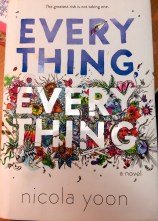
img_1056-1Shana:  I just finished the beautiful Everything, Everything by Nicola Yoon.  I love it as a mentor text because it’s a bit multigenre, and it’s an engaging YA love story, AND it’s gorgeously written.  With tons of parallel structure and a short-chapter format, it’s a quick read but one that lends itself to lots of frequent re-reading.  I’ll use this text for craft studies at the sentence and paragraph level to teach things like repetition, parallel structure, and varied sentence structure.

Another book I just read was Caitlin Doughty’s memoir Smoke Gets In Your Eyes, and Other Lessons from the Crematory, which I usually booktalk with Mary Roach’s Stiff.  This tale of Caitlin’s experiences working in a crematory will be useful for my students to analyze at the chapter level, during which she employs narrative to blend her adult experiences in the crematory with the formative experiences of her youth in order to make a claim about the nature of human life and death.  It’s a powerful example of the use of narrative within nonfiction.

I also recently read Memoirs of a Teenage Amnesiac by Gabrielle Zevin, which tells the story of a high school senior who falls and loses all memory of everything after sixth grade.  As a result, most of her life story is revealed through dialogue with other characters, so this will be a fantastic mentor text at the whole-text level–how can we craft a short story that uses dialogue to reveal movement through time, a character’s background, or a character’s personality traits–all without that dialogue being spoken by that character?


How will you integrate your current reads into your practice?

Shana:  I like to share this article about noticing beautiful writing with my students.  We use it as the basis for two sections in our notebook–“Quotes & Craft Study” and “Wondrous Words.”  I like to break down with my students why a particular line or paragraph or chapter in a piece of writing is so powerful–at the word level, the structural level, the punctuation level.  When we read like writers, we can notice all of those details and begin to imitate them in our own writing.  

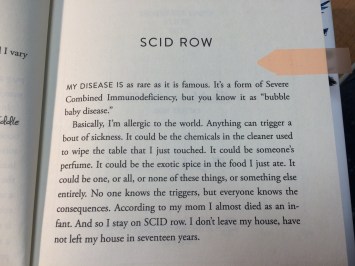
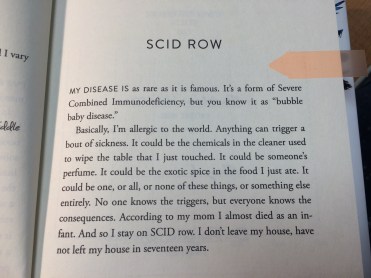
img_1057My students asked for more craft study and grammar instruction in their midterm exams.  With our new notebook setups, I’m hoping to create a routine for the wordplay we’ll need to constantly return to in order to strengthen our use of punctuation, specific diction, sentence structures, and other craft moves.  I want to employ more “triple-plays,” as Penny Kittle calls them–books that act as a booktalk, a quickwrite, and a craft study mini-lesson.  For example, I’ll take the chunk of Everything, Everything pictured at right and make copies of it for my students to glue into their notebooks.  Beneath it, we’ll imitate the parallel structure of the sentences, and the exercise will serve to teach parallelism, talk up the book itself, and be a quickwrite we’ll call “it could be.”

Jackie:  Inspired by a course we took this summer with Tom Newkirk, my colleague and I are putting together a superhero unit for our academic Freshman English classes.  The unit will involve both a persuasive essay and a comic strip students make about a hero in their life.  In turn, I’ve been skimming comics and graphic novels to find inspiration for students.  

In this unit, students will practice storyboarding their own comics while studying the use of craft like onomatopoeia, movement of time, and internal and external dialogue.  My hope is that these building blocks will provide a foundation for us to further discuss the use of colors to portray goodness and evil within a comic (or novel) as well as the use of framing or perspective in the pieces as well.

Please join the conversation–how do you approach the study of craft with your student writers?

Finding Mentor Texts & Craft Studies

#3TTWorkshop MemeWhat prompted you to begin the process of noticing examples of mentor texts or craft study?
Jackie:  When I first started teaching, finding mentor texts proved to be difficult.  While I knew what made writing strong or well-crafted, I didn’t always know what I was looking for.  Instead, I would eat up a plot line, soaking in word choice (I have always loved words), but rarely did I stop to think about how an author sculpted a line or page or chapter.  Finally, after struggling with structuring a piece of fiction writing, I referred back to To Kill A Mockingbird by Harper Lee.  Intrigued by her ability to create a scenes that showed the progression of time, I read and re-read the novel, observing her intentional moves as a writer.  Gradually, I began understanding the value of mentor texts to my own writing.  

The skill is not easy, and I have learned more about myself as a reader in the time I have taught than I ever did during my schooling.  While reading like a writer does slow down the reading process, it also makes me appreciate the artistry of writing.  It makes me aware of my own moves as a writer and how writing, like any other form of art, is about discipline, awareness, and interpretation.

Shana:  I didn’t know about the concept of mentor texts, or craft studies, or imitating great writers, or even reading like a writer…until I took Penny Kittle’s UNHLit class in 2013.  Everything that summer blew my mind, and I was hungry to begin looking for strong examples of real writing for my students to study, imitate, and craft.  I learned about lots of authors, nonfiction writers, poets, journalists, and more while I was at UNH, and in the year following I learned to think back to my own favorites and ask my students for their recommendations when I needed more mentor texts.

Once I began thinking about writing instruction in terms of products I wanted my students to create, I learned to start searching for examples of those strong products.  Sometimes I seek out a specific genre of mentor text if I want to teach a unit about narrative fiction.  Other times, I find an amazing mentor text and design a unit around getting kids to create that specific genre.


Describe your process as you search for examples of mentor texts and craft studies.

Shana:  I read much more slowly now.  Almost all of my reading is of texts that could be used for craft study in my classroom, or books that might go well on the shelves of my classroom library.  I think about writing and reading in such new ways now that I almost unconsciously note a good page for a booktalk, a beautiful line for craft study, or an interesting segment of writing for a mentor text.  

To build an arsenal of texts for use in my classroom, I began to scour the award lists for the National Book Award, the Pulitzer Prize, the Man Booker Prize, and lists of recommendations by groups like ALA, Kirkus, and more.  I also value the recommendations of literacy greats in our field like Donalyn Miller, Carol Jago, and Penny Kittle.  I want strong, complex writing to hand my students, so that they can absorb the craft of good writing through constant, diverse exposure.

img_1057

The page I’ll booktalk from Everything, Everything by Nicola Yoon

Now, most of the mentor texts I discover are incidental–I stumble upon a lovely sentence in a book I’m reading, or I see someone tweet a link to a good article, or I’m struck by a student’s craft as I’m reading their writing.  I try to give a published example, a student example, and my own example as an “in-progress” mentor text, in keeping with the recommendations of Katie Wood Ray in Wondrous Words.

Jackie:  Now that I have begun practicing reading as a writer, I am more aware of the mentor texts that surround me every day.  It took about a year of intentionally slowing down my reading, contemplating the craft, and thinking about where to file the piece within my units for me to develop this practice.  

From Pinterest finds to articles to book excerpts to poems, I am constantly searching for pieces that will inspire and engage my students.  Most of my finds feed into mini-lessons that tackle current skills with which my students struggle.  For example, Many of my students grapple with the use of second person point of view and use it as a default instead of intentionally employing it to reach out to and connect with their audience.  After the November Paris attacks, I found a piece that brilliantly uses second person point of view to help students develop empathy with Syrian refugees.  This piece serves to not only guide them but also make them think about the intentional moves needed to connect with one’s readers.

I also look for mentor texts in classic literature and young adult reads.  These short excerpts teach my students phenomenal craft while dually serving as a mini-book talk.  The writing sells itself.  I always have students request The Glass Castle by Jeanette Walls after I use the first chapter as a mentor text for multi-scene narratives as well as a craft study for opening lines.  The same goes for when I use The Goldfinch by Donna Tartt when I use a short explosion scene to discuss snapshot narratives.

Tomorrow we’ll discuss how we employ found mentor texts in our classrooms.  Join the conversation in the comments–how and why do you seek out mentor texts?


Using Picture Books as Secondary Mentor Texts

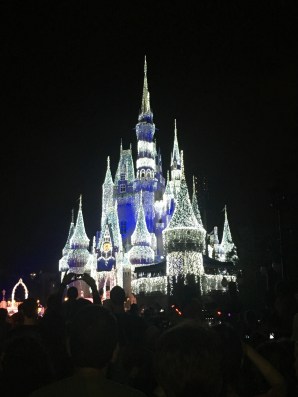
This year my family ditched the traditional Christmas festivities for a week in Orlando,

IMG_1606

Disney started his work as a cartoonist in high school.  How can we carve these same creative spaces for our own students?

Florida.  Swapping fur boots for flip flops, we ran around Walt Disney World, weaving in and out of storybook rides and watching teeny princesses wobble around Cinderella’s castle.  Only now that I am grown do I have a true appreciation for the sheer magnitude of Walt Disney’s brilliance.  He built a physical world of stories.

Disney doodled his way through high school; he honed his craft through drawing and photography classes.  Unfortunately, few curricula allow for the same creative exploration for students.  Oftentimes, the countless possibilities for storytelling and narration tend to center on only real-life experiences, personal narratives, when in reality, writing fiction opens up an entirely different world for self-exploration.

This year I swapped out our traditional multi-scene personal narrative for a story unit in which I taught many of the same narrative craft marks using a combination of fiction and non-fiction mentor texts.

The greatest challenge I faced was in finding short, succinct, and well-crafted stories that weren’t twenty pages long.  While I love short stories, I knew many of my freshmen would not only lose stamina if asked to write such lengthy pieces , but they would also struggle with translating the story structure of these mentors into their own pieces.  I began my hunt for a strong mentor text in, of all places, the children’s section of the library.

Objectives:  In alignment with the Common Core, students will write narratives to develop real or imagined experiences or events using effective technique, well-chosen detail, and well-structured event sequences. Using the language of the Depth of Knowledge levels, students will recognize a wide variety of craft marks in fictional writing.  They will identify patterns and compare effectiveness through discussion. They will formulate their own stories, revising them, and finally applying their understanding to future writing assignments.

Lesson:  I find writing fictional stories intimidating.  My plots seem to sag in some areas, or my dialogue doesn’t feel authentic, but many of my students love leaving their reality to explore their own creative worlds.  The vast majority read fiction, so its only natural that their reading interests feed into their writing curiosity.  The problem is that their greatest mentor texts are, on average, 250 pages long.

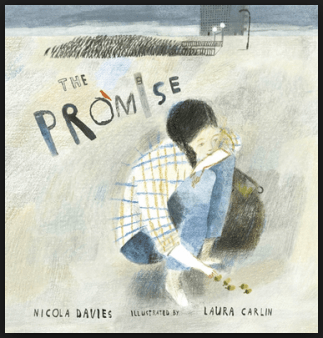
Screen-Shot-2014-11-07-at-1.51.36-PM-1514mm8The Promise written by Nicola Davies and illustrated by Laura Carlin is a beautifully crafted story of a girl growing up in a hardened city. After stealing a purse from a pedestrian, the main character makes a promise out of desperation, only to realize that the purse she has stolen has no value and is instead full of acorns, which she must now plant across the city.  The story reads more like a poem and has a cyclical ending that allows students to see the succinct structure of a short story.
Prior to sharing the story I type up the entire story book (which comes out to two pages) so that the students may access the text without the pictures.  I present it to them as a short story, and we read it aloud like any other mentor text, but I do not tell them it is a picture book!

I ask students to look at the structure of the story—what do they notice about how the author formatted the story as a whole.  Since we just finished studying plot in our literature circles, many of the students dig in to find the rising action and climax while others simply read and re-read to comb through the intricacies of the structure.  Almost all of the students notice The Promise’s cyclical ending that reinforces the story’s themes of redemption and the beauty of nature.

I have them return a second time to the story to look at the writer’s craft.  Students make a list of author’s moves within their writer’s notebook.  If they see something that intrigues them but they aren’t sure of the name, I have them describe what they notice and we develop a name for the skill together as a class.  Finally, we compile our observations onto a large sticky note that remains on display throughout the unit.  Students must then choose two of the craft marks to experiment with in their own writing.

Finally, once we have finished working with the piece, I reveal to students that The Promise is a picture book and I read it aloud.  Oftentimes students are shocked to hear that such a complex story is written for children, but their initial reading makes them value the intricacy of the writer’s work even more.

Follow-Up:  Not only did my students fall in love with the writing process, but they also asked thoughtful questions and engaged in deeper conversations about their writing.  One of my favorite conversations between two jocks involved the complexity of a fight between an alien, human, and zombie.

As a final follow-up, I had students complete a self-revision sheet.  They peer reviewed each other’s work and finally wrote a metacognitive reflection in which they discussed the craft moves they made and how they structured their story.

The freedom to write fiction or nonfiction opened doors for many of the students who tend to struggle with developing ideas while reinforcing many of the craft marks we studied (leads, plot, sensory details, concrete details, internal and external dialogue) in our snapshot narrative unit. As Griffin said, “It’s the best thing I’ve ever written because I’ve gone back and looked at my work in the past.  Fiction is easier because you can make up whatever you want.”


Mini-lesson Monday: Thinking about Complexity

Many of my writers seem stuck in simple sentences. I think this has something to do with their reading fluency. When I ask them to read me a few lines out loud, they read in monotone with faltering phrases and seemingly little knowledge of the workings of punctuation. One of the best assessment tools I have for knowing what my readers need to help them become better writers is these few moments of one-on-one read alouds– them to me — in conferences. These conferences also remind me how closely my reading and writing instruction must be aligned. If my students cannot read well, I cannot really expect them to write well. (And it shows the huge variance of abilities in my AP Language classes.)

In an effort to move my readers and writers into more complexity, and to get them to start paying more attention to sentence structure in their independent reading, I know I must expect them to take action with what they learn. But I do not want to mandate anything I cannot keep up with, nor anything that will make students not want to read. So I decide to start a new challenge with our “quotes board” — the one that’s remained largely empty for most of this year.

Objective:  Using the language of the Depth of Knowledge Levels students will recognize and identify interesting and complex sentence structures; they will then copy the sentence into their writer’s notebooks and/or onto a notecard to use it as a mentor; then in their weekly blog posts, they will write and practice their craft, including at least one beautifully constructed sentence in their post. (If they choose to share their mentor sentence, they will pin it to our “quotes board” to display it for the week.)

Lesson:  First, I remind students that we’ve talked about sentence boundaries and sentence structure since the beginning of the year. I tell them that today we’re going to learn two different types of sentences:  periodic, and loose or cumulative, and look at how writers link details and ideas within sentences that create description and often rhythm.

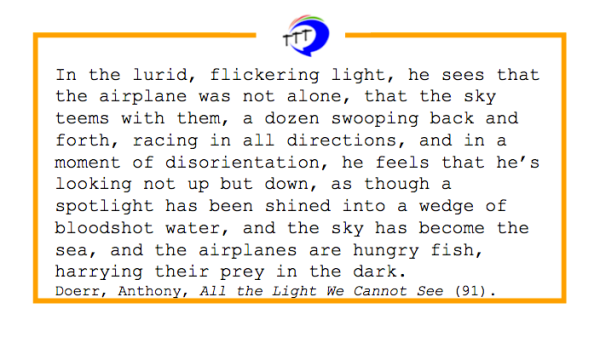
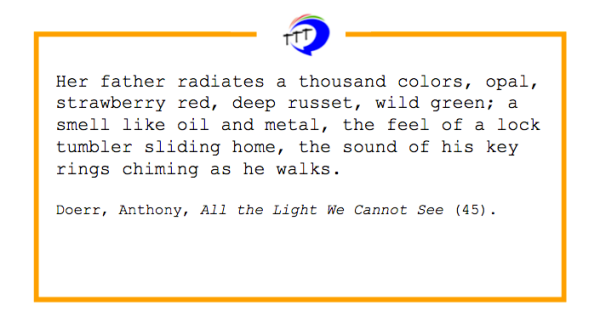
I say, “We are going to study sentences from the 2015 Pulitzer Prize Winner All the Light We Cannot See by Anthony Doerr. Doerr is our writing coach for the week. Let’s see what we can learn about writing more interesting sentences.”

I project the loose sentence, and we talk about where the independent clause lies within it. “How do all the details trailing off of the main idea make the sentence more interesting? What do you notice?”

loose sentence 1

After we’ve discussed the loose sentence, and I feel like students understand what makes it loose and how to identify this type of sentence, we move to the periodic sentence.

I project the following periodic sentence, and we talk about where the independent clause lies within it. “Why put the main idea of the sentence at the end?” I ask.

periodic sentence 1

We discuss why the author might have chosen to craft the sentence this way. “What does putting the main clause of the sentence at the end do for the meaning?” I ask.

Next, we study a few other beautifully crafted sentences I pulled from the novel. (There are so many!) Each time encouraging students to talk with one another to first identify the independent clause and then determine if the sentence is loose or periodic or an interesting combination. I remind them to discuss the meaning of the sentence and why the structure might matter.

We study.

beautiful sentence

and

beautiful sentence 2

And before we move into searching for loose and/or periodic sentences in our own independent reading books, I ask students to practice reading these four sentences aloud to one another.

“Pay attention to the rhythm of the sentence and what the punctuation does to create that rhythm,” I say. I give them a few moments to read sentences to one another at their tables. Low stakes. They know one another well, and there is no pressure. They help each other read, which is exactly what I want in my community of learners.

Follow up: I ask students to pay attention to the sentences in their independent reading books. “Watch for loose or periodic sentences,” I say, “and here’s the challenge:   When you find one, write it out on a notecard, and post it on the quotes board. Let’s see how many of these beautiful sentences we can collect this week.”

And remember to write at least one loose or periodic sentence in your blog post this week. Let’s work on crafting beautiful sentences like Doerr in our own works.

Mini-Lesson Monday: Sentence Boundaries and Adding Some Variety

Sorry, I forgot to record the book’s title.

Even the students in my AP English class struggle with correct punctuation and varying their sentences. In one-on-one conferences, I’ve started to remind them more often to pay attention to how the author of their self-selected books craft meaning. I used to get glossy-eyed blank stares, but students are beginning to understand that writers make intentional moves to draw us in, and keep us within, the pages of their books.

“As a writer, you must do that, too,” I remind them.

This lesson grew out of a conferring conversation with a student who told me:  “I just do not understand all the comma and semicolon stuff, but I have a pretty good idea of what I want to say in my writing.”

Objective:  Using the language of the Depth of Knowledge levels, students will recognize the sentence boundaries and the variety of sentence structures in their self-selected books. They will make observations about the author’s use of punctuation in these sentences, assessing the writer’s effectiveness in crafting meaning. Students will then use their author as a mentor as they apply their knowledge of sentence boundaries and sentence variety and create, revise, and rewrite sentences in their own pieces of writing. Finally, through peer-to-peer conferring, students will evaluate the accuracy and effectiveness of one another’s sentences.

Lesson:  Every student needs their independent reading book. If a student is reading a book of poems, or a graphic novel without many sentences, you will want to supply a stand in book for this lesson or ask the student to find a book she’s previously read.

Tell students that you’ve noticed in their writing that they are ready to make their sentences more sophisticated. Correctness is one way to do this. Varying the length of sentences is another way. Instruct students to turn to a random page in their books, say page 51. Ask them to read the page in search of one long sentence and one short sentence. Give students sentence stips or blank paper and have them write out the sentences they find in their books. They should spell and punctuate the sentences exactly like the author does.

sentence boundaries lessonNext, in small groups, ask students to discuss with one another the structure of the sentences. They might put all the short sentences together and compare them. Then they might put the long sentences together and look at how the authors use commas to separate ideas. Some students will know more about grammatical terms than others, and that is okay. The idea is to get students noticing how writers compose within the boundaries of standard English and to get them to understand how punctuation works to craft meaning. Ask questions that help them discover why boundaries and variety work to produce effective writing.

You may choose to have students imitate the sentences they chose from their books. Imitation is a useful tool for many writers.

Using self-selected books, not just to practice wide reading, but to teach students to read like writers, adds an important element to the workshop classroom. Our writing improves when we take the time to notice and apply the skills of professional writers.

Follow up:  Have students review a piece of their own writing. The writing can be in any stage of the writing process. They should study their writing to evaluate their use of sentence boundaries and variety. Encourage students to revise their writing as necessary, remembering to use the author of their books as their mentors.

Extension:  This lesson works to have students study leads, similar to what Jackie wrote about in the mini-lesson Pick up Lines and Leads. It also works to have students search their books for sentences that include imagery.


©Amy Rasmussen, 2011 – 2015

#FridayReads — Oh, Mercy! Have I got a plan for this mentor text

Usually I read about four books at a time. This makes for a mess on the bedside table, the coffee table, the kitchen table. I rarely use bookmarks, which is a shame because I have quite a lovely collection.

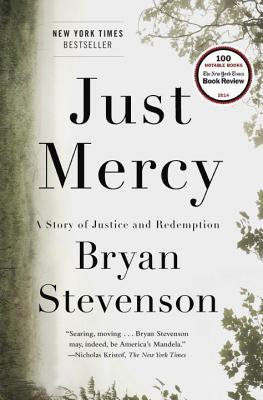
I end up leaving books split open and sound asleep right where I left them –sometimes just so I can remember the parts I know I want to use in class. I refuse to read on until I capture the sentence or passage that gives me pause. Such is the case with my new now bent-spine-copy of Just Mercy, a Story of Justice and Redemption by Bryan Stevenson. I’ve been stuck on page 18.

Here’s a portion of the passage I will use with my AP Lang students. You will, of course, find the rest of it when you buy the book, or here.

     When I first went to death row in December 1983, America was in the early stages of a radical transformation that would turn us into an unprecedentedly harsh and punitive nation and result in mass imprisonment that has no historical parallel. Today we have the highest rate of incarceration in the world. The prison population has increased from 300,000 people in the early 1970s to 2.3 million people today. There are nearly six million people on probation or on parole. One in every fifteen people born in the United States in 2001 is expected to go to jail or prison: one in every three black males babies born in this century is expected to be incarcerated.

     We have shot, hanged, gassed, electrocuted, and lethally injected hundreds of people to carry out legally sanctioned executions. Thousands more await their execution on death row. Some states have no minimum age for prosecuting children as adults; we’ve sent a quarter million kids to adult jails and prisons to serve long prison terms, some under the age of twelve. For years, we’ve been the only country in the world that condemns children to life imprisonment without parole; nearly three thousand juveniles have been sentenced to die in prison.

     We also make terrible mistakes. Scores of innocent people have been exonerated after being sentenced to death and nearly executed . Hundreds more have been released after being proved innocent of noncapital crimes through DNA testing. Presumptions of guild, poverty, racial bias, and a host of other social, structural, and political dynamics have created a system that is defined by error, a system in which thousands of innocent people now suffer in prison.

…..

     We are all implicated when we allow other people to be mistreated. An absence of compassion can corrupt the decency of a community, a state, a nation. Fear and anger can make us vindictive and abusive, unjust and unfair, until we all suffer from the absence of mercy and we condemn ourselves as much as we victimize others. The closer we get to mass incarceration and extreme levels of punishment, the more I believe it’s necessary to recognize that we all need mercy, we all need justice, and — perhaps — we all need some measure of unmerited grace. 


Before we ever read the text, and I did pull much more of it than I’ve posted here, we’ll spark our thinking with an image like this, posted at The Sentencing Project, and then write our initial responses in our writer’s notebooks:

Next, we will TALK. I know my students will want to share what they think about this graphic. Many will identify personally with it because they know a family member or a friend who’s served prison time.

When I introduce them to Stevenson’s text, I’ll give them a purpose for reading — besides just comprehending the message (identifying the purpose is a breeze since he tells us the reason he writes the book) — I want my students to notice the structure, the progression between ideas, the repetition and patterns they will see in the language. All the clues that build the tone.

I will ask them to mark the text, noting their thinking about these things. Without a purpose for reading, too many of my students struggle with the stamina they need to make it through even a page when I ask them to read critically.

Next, we will TALK. Talking will help some students understand what they read. It will help other students clarify their understanding. Some students will have noted what I asked them to notice as they read. I will rely on them to help the others — skill level is just one way my students are diverse.

I will also hand them a stack of questions that prepare them to write. They will read something like this:

What do you know about the writer based on what he writes?

What is the Stevenson’s purpose? Why does he come out and tell us so plainly?

What are the facts in this piece? What are opinions? How do you know?

What do you notice about the structure, any patterns, repetition? What do they do for the message?

How does Stevenson move between ideas?

And then we will write. Maybe I’ll give a prompt like this: Based on the text, and our discussion, is Stevenson’s opening argument effective, why or why not?  Maybe I’ll ask students to come up with their own analytical-style question to respond to. (I like this idea a lot.)  [see Talk Read Talk Write]

That’s probably enough for one class period, but my mind is still stirring:

  • What if I ask students to problematize the issue? Who are the stakeholders? Think all the way around the issue. Why do they care? Why do we care? What kinds of questions do we have about the claims Stevenson makes? What kinds of evidence do we need to convince us they are valid? How and when could anything regarding this issue change?
  • What if I ask students to identify just one of Stevenson’s claims and then research it? I assume the author provides support throughout the book. I’ll know when I keep reading. But what if students did a bit of research and then collaborated on substantiating Stevenson’s claims. Collaborative writing can be a powerful learning experience.
  • What if I ask students to brainstorm other issues Stevenson’s text suggests? We could probably create a pretty elaborate bubble map of ideas. These could lead to student choice in research topics.

What do you think? Any other ideas?

©Amy Rasmussen, 2011 – 2015

Poems to Write Beside

Last evening was #poetrychat. We talked about poems that inspire writing. Here’s a list of all the poems mentioned. I wrote them in my notebook, and then I pinned them to my poetry board. Then I read and wrote a bit.

Eyes Fastened with Pins by Charles Simic

The Fall of Icarus by WC Williams

Musee des Beaux Arts by W. H Auden

This is Just to Say (a book) by Joyce Sidman

Making a Fist by Naomi Shihab Nye

Where Dreams Come From by Marge Piercy

Where I’m From by George Ella Lyon

Hailstones & Halibut Bones by Mary O’Neil (elementary)

(anything by Douglas Florian) (elementary)

Change by Charlotte Zolotow

Legacies by Nikki Giovanni

How to Live by Charles Harper Webb

A Passionate Shepherd to His Love by Christopher Marlowe

Still I Rise by Maya Angelou

(poems by Tony Medina and @SirJohnBennett and Claudia McKay)

The First Day by Joseph Green

Days by Billy Collins

Wild Geese by Mary Oliver

(other poems by Billy Collins, Christina Rosetti, and Sandra Cisneros)

For the Young Who Want To by Marge Piercy

Possibilities by Wislawa Szymborska

Those Winter Sundays by Robert Hayden

Do you have other favorites to write beside or to ask students to write beside? Please leave your suggestions in the comments.

And Happy Writing!

I plan to read and write to one poem every day this month. I find it fulfilling. Strange word, maybe, but there it is. Once I get the pen moving, I can write for hours. That’s what I need is hours of writing time.

How and what are you writing this summer?

Why Assignment Sheets Might Be Killing Your Students’ Writing

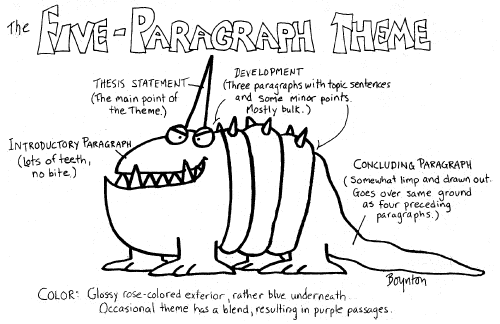
58090ec056811830ee936030edb1c9dbMy first year of teaching, I didn’t realize that the “five-paragraph essay” was a dirty phrase. My  internship year I painstakingly dragged my freshmen through the essay outlining process, watching them regurgitate homogeneous essays about symbolism in Lord of the Flies. At the end of our six-week study of the book, I slogged through 25 nearly identical essays, all of which had eloquent yet oddly familiar intro, body, and conclusion paragraphs. I’ll readily admit that despite the dull content, I felt victorious. My students had completed literary analysis essays and I had taught the foundation of essay structures.

It was that summer that my perception on structured essays changed. Two days into taking Penny Kittle’s writing course at the University of New Hampshire’s Literacy Institute, I realized that I had committed a cardinal sin of workshop teachers. Admitting to teaching the five-paragraph essay (let alone the sandwich method of paragraph-writing) was like confessing to enjoying McDonald’s burgers at an elegant chophouse: the cut (or concoction) of meat might serve the same purpose, to fill me up, but the quality was quite different. In turn, I was feeding my students homogeneous writing, a detailed equation to a subject that couldn’t be distilled down to simple mathematics. If I expected greatness, I needed to break beyond the boundaries of such a restrictive form of writing. After all, an introduction + body paragraphs + conclusion didn’t guarantee a solid essay; if anything, it guaranteed an entirely unspectacular essay.

This process of digesting the material and then providing a summary of the structure was far too easy for students. Not only did it place the onus on me to provide a set guide of instructions, but it also required me to complete the majority of analysis. Instead of my students engaging with the text and delving into the intricacies of structure and craft through individual exploration and group discussions, I was basically pre-digesting the material before offering it to them.

IMG_1845

Students analyzing an author’s craft in front of the class.

This year I have made a point to wean my students, particularly my juniors and seniors, off the assignment outlines they so desperately desire. Instead, my students now receive a half-page sheet simply telling them the type of essay they are writing (cause and effect, definition, personal narrative, etc.), the mentor texts they may refer back to, the page length requirement, and the due date.

Initially, they were frustrated with this format. As one student said during our career building unit in which we practiced writing cover letters and resumes for celebrities, “Ms. Catcher, do you have an assignment sheet for this or something?” When I pointed out the paper I had given to him previously, he replied, “No, I mean something that tells me how to write this paper.” We discussed the numerous mentor texts we had read and dissected and how these as well as our class discussions ultimately provided the basis we to develop our pieces. As a class, we asked questions of the text and author, starting broad by looking at the overall tone, voice, structure, intended audience, and progression of the piece. Then, independently or within small groups, we delved into more of the intricacies—what examples were provided, word choice, sentence structure, punctuation, and transitions. Students have gradually learned that there is no set solution for getting an A, which also means that they are forced to read and reread mentor texts to gain a firm understanding of a piece’s intricacies.

My problem from the beginning was that I was too busy telling my students how to write an essay to allow them to discover the messy albeit enlightening connection between reading, writing, and modeling. As we complete the last six weeks of school, I have noticed a significant difference in the structure and craft of my students’ work. They are relying more readily on mentors to help guide them in their process, and I can see both their group and independent analysis directly translate into their writing. For the past three years, I have harped on my students about showing rather than telling, but as the year comes to a close, I can finally say that I have internalized my own advice when it comes to my teaching.

How do you inspire students to rely on mentor texts instead of assignment sheets?  What steps have you taken throughout the year to make them more independent and confident writers?