Tag Archives: learning

Ready or Not, #NCTE17, Here We Come

Sometimes November is too much fun.

I keep telling myself that as I plan for my six children, two new son-in-laws, and five little grandkiddos to come home for Thanksgiving — not two or three days after I get a good night’s sleep and recover from the extraordinary time I expect to have at NCTE this week — but one, less than 24 hours!

Oh, I am excited. No question about that. There is nothing like family for the holidays, especially my big and boisterous one. But the getting ready? Just a little crazy.

I already know my refrigerator is not big enough, and I don’t have enough beds. (How can I put my daughters’ new husbands on the floor? Would their mothers put my daughters on the floor?) I’ve been on a mad hunt, shopping on Facebook Marketplace, for enough beds. Thank God I live in a huge metroplex with lots of people selling lots of stuff.

I won’t even mention how my sweet husband decided we needed new carpet, which if you’ve ever done that deal in a small home packed with 32 years of “Oh, I might need that” you know what an exhausting move-and-shove-and-throw-that-out time that is.

So, all that to say this:  Who is ready for NCTE?

My heart is, but my head is not. Neither are my presentations. (Did you notice that s? I did it to myself: I’ve got THREE. NCTE with this 3TT writing team, a 5 minute Ignite spiel, and my first ever CEL.) Shana’s promised to remind me how I feel right now when proposals come due for 2018. Frantic does not quite cover it. Can I take another day off? I just took off Friday. Instead of putting slides together, I bought a trundle bed.

If you will be in St. Louis, I hope you will find me. Flag me down. Wave across the room. Introduce yourself. Come to one of my sessions and say, “Hi!” Shake my hand or give me a hug. I could use a hug or two or twelve.

Reclaiming Narrative and Amplifying Our Voices_ Using Story to Invite Fearless Inquiry and Intellectual Challenge for Our Students and Ourselves

NCTE is my favorite conference. It fuels me for the whole year. I cannot wait to get there.

I remember the first session I attended at NCTE last year — a Thursday workshop tribute to Thomas Newkirk. So many of the teacher leaders I admire spoke on how Tom’s work has influenced and strengthened their’s: Tom Romano, Jeff Wilhelm, Penny Kittle and so many others.

Tom’s been a blessing to my work, too. I am a better teacher and a better person because I know Tom Newkirk. Penny Kittle told me once, “Tom is the smartest person I know.” I have to agree. He is so wise. He is kind, too.

Tom Newkirk is our session chair!

Writing that out still gives me a thrill. (I refuse to call it pressure. Tom Newkirk will be listening to us talk about narrative. HE IS AN EXPERT ON NARRATIVE! He wrote a book about narrative! Okay, maybe a little pressure.)

So, all this to say:  Who is ready for NCTE?

I will be.


Are you ready? What are you most excited about at NCTE? Please share in the comments.

Amy Rasmussen is not usually a procrastinator. She keeps lists so she can mark things off lists. Someday soon she will get her act together — certainly before 12:30 on Friday. Amy teaches AP Lang and English IV at a large senior high in north TX. Follow her @amyrass and @3TeachersTalk.

What if We Teach as if Teaching is a Story?

Sometimes I feel like a fraud. I spend all this time thinking, talking, teaching, and writing about workshop, and I love it, honestly– but sometimes teaching beats me up. You know?

Students ignore my feedback on their writing. They refuse to capitalize their i’s. They grab a random book off the shelf during reading time, thinking I won’t notice. They lie.

And usually I shake it off, tighten up the gloves, push off the ropes, and go for another round. But sometimes I don’t wanna.

When I get like this, and thankfully, it’s not too often, I have to stop and remind myself I possibleam teaching children. Teenagers, yes, but still kids who are not intentionally trying to drive me to an early retirement. They just don’t feel the passion for books, reading, writing, and language like I do — yet. Many have played the game of school so long they don’t see that they could actually like it if they’d play a different way.

Teaching is a puzzle, isn’t it? That’s what makes responsive teaching so important. We have to keep trying so all students have the learning experiences they need to grow, to change, to become.

Last week I attended a professional development meeting with George Couros, author of the Innovator’s Mindset. I jotted tons of Couros’ quotes in my notebook, all important to the kind of teacher I keep striving to become:

“How do you cultivate questions of curiosity and not compliance?”

“Data driven is the stupidest term in education.”

“Your childhood is not their childhood. Nostalgia is what gets us stuck.”

“Relationships matter! Nobody in this room is as interesting as YouTube. If you are all about the content, you are already irrelevant.”

“You need to make the positives so loud that the negatives are hard to hear.”

“Would you want to spend the whole day learning in your own classroom?”

“Every day is where your legacy is created.”


I think the workshop classroom IS the innovator’s classroom. It’s process over product and the whole kit ‘n caboodle.

8-characteristics-of-the-innovators-mindset

We are the risk takers in Secondary ELA. We advocate for choice and challenge. We confer with students, reflecting on their needs and on our practice — maybe more than those teachers who reuse lesson packets with their novel studies. We improve our instruction by networking and sharing ideas on mentor texts (check out this thread), assessments, mini-lessons, and how to match students with the just right books. We start with questions and often end with them as well.

No wonder it is hard.

Lately, I’ve been rereading Tom Newkirk’s book Minds Made for Stories (3TT is presenting at #NCTE17 on narrative with Tom as our chair.), and I keep coming back to this little bit on page 43:

Two Absurdly Simple Rules for Reading and Writing

If we had to pass on advice, under the limitation of twitter characters, here would be my advice for writers and readers:

  1. Read as if it is a story.
  2. Write as if it is a story.

More than ninety characters to spare.

Now, what does that have to do with this post on one teacher’s weariness, some student attitudes, and workshop as innovator’s mindset? Maybe everything.

What if we teach as if teaching is a story?

Newkirk asserts, “Reading. . . is not a treasure hunt for the main idea; it is a journey we take with a writer.” He explains that in reading we seek patterns of anticipation, tension, and resolution. We seek experiences.  He states, “. . . it makes basic sense to read dramatically, even when what we read does not easily fall into any dramatic genre… we can dramatize just about any text. We can ask what is at stake. What problem, issue, “trouble” is prompting the writing? What needs to be solved? What are the contending positions or alternatives?” In reading we take action as we link ideas. “Good writing has a sense of motion, pace, anticipation, and . . . “plot.” Critical reading is all about friction–trouble” (44).

Newkirk asserts that this provocation is equally valuable in our own writing: “What situation . . .calls for explanation? What problem [will] my writing solve?” These questions imply “a need to have our say” in response to the “tension, a friction, a puzzle, and incompleteness” our questions provoke. He writes, “If we’re only saying, “Me, too” or “I agree,” endorsing what everyone believes, arguing for the obvious, making no “news,” there would be no call to continue the conversation. Nothing is caused” (44-45).

There’s so much more in this book by Newkirk, and maybe it’s a stretch to think of teaching as if teaching is a story, but try this little exercise:  read that bit from Tom’s book again through the lens of teaching instead of reading or writing. Do you see it?

Workshop teacher-friends, we are on a journey. Many of us take risks on our campuses, going against the norms of traditional practices, feeling the tension when we offer ideas in planning meetings. We feel the friction from students set in routines that have left them weak in literacy skill and lacking in desire. We cause friction. We generate energy. We dramatize everything we love about books and authors and reading. We foster stories of change as young people begin their own journeys into more robust reading and writing lives.

And when we think it’s not working, we must remember we asked for it. (I asked for it.) We “caused” because we care enough to take the path that leads to student growth. I’ll end with this by Newkirk:

“Our best chance to grow, perhaps our only chance, is to travel.”

Amy Rasmussen teaches AP Lang and senior English at Lewisville High School just north of Dallas. She loves to cause a bit of trouble, share her love of books (Have you read John Green’s new one yet? Sooo good!), go on long drives with her handsome husband, hug her grandkids, and share her passion for workshop instruction. Follow Amy on Twitter @amyrass and @3TeachersTalk — and if you’d like to contribute to Three Teachers Talk, send her an email, amyrasmussen7@gmail.com. We are looking for regular contributors.

Why We’ll Read More Than an Article of the Week in Senior English

I wish I were kidding. I am still laughing, but this is not funny.

Last week was my first week back to school. We had five days of shifting classes; schedule changes like shuffling cards with every student vying for their winning hand, or at least two out of four classes stacked with friends.

This is my first year to teach senior English (I still have one section of AP Lang), and I felt a mixture of excitement and dread all summer. Twelve years of reading, or not. Twelve years of playing the game of school, or not.

How do I get students to want to read, want to write, want to explore and question and challenge when it’s possible they just want to be done with school? I am pretty sure that’s how I felt senior year. Granted, that was a loooong time ago, but I do not remember any teachers’ names, any books I read for school, anything I learned the year before I graduated.

I wonder if that’s normal. Somehow I don’t think it should be.

But I do not want my seniors to remember me. I want them to remember learning something that adds value to their lives. I want them to remember learning something that adds value to my life as they vote beside me for elected officials, move into my neighborhood, become my doctor, or perhaps teach beside in the classroom next door.

I know the routines of a workshop pedagogy will help me do that, of this I am certain.

We’ll read and think and write and talk. We’ll share our thinking and our writing in small groups and as a class. We’ll talk about books and the themes that resonate and why that might be so. And we’ll write about the things that matter in our lives.

We started all of this in five short days.

I also got a little panicky.

If you are familiar with Kelly Gallagher’s work, you’ve probably heard him talk about why he started Article of the Week. He said he’d given his students, seniors, an article to read, and while circling the room and checking in with small groups, he asked a couple of kids how their reading was going. “Okay,” they said, “except we don’t know who this Al Quaeda guy is.”

Uh huh, seniors. Seniors who had no idea what was happening in their world.

I’m not too sure mine do either.

2017 Face Palm Experience #1:

We’d just looked at images of the destruction from Hurricane Harvey. We’d done some thinking in our notebooks about how these images made us feel and what we could do to help in the efforts to aide our fellow Texans. I walked the room, listening in as students read from their notebooks. Then, I heard this:

“Can a hurricane happen on a lake?” Student A said, “I mean like would a hurricane ever happen on Lake Lewisville?”

I stopped. Wouldn’t you?

Student B answered, “Uh, hurricanes happen on an ocean.”

“So what ocean is by Houston?” said Student A.

“That’s the Gulf of Mexico,” said Student B.

And Student A asks “So what ocean is that, the Pacific?” as she reaches for her cell phone.

I wish I were confident she planned on looking up information about hurricanes and oceans and weather patterns. Somehow I doubt it. I’ve asked her to put her phone away 47 times in five days. (So far phones have not been an issue except with this student.)

Now, I am left wondering:  Will whatever we do in room E111 be enough to prepare my students for the world beyond the halls of our high school? The responsibility is a lead weight on my shoulder.

I sure hope I can carry it.


Amy Rasmussen is the mother of six amazing young adults, grandmother of five smart and sassy little people, and wife to a brilliant marketer, sales exec, life coach, and dog lover. She teaches readers and writers in AP Language and English IV in North TX and facilitates professional development on the workshop model of instruction at every opportunity. She loves God, her family, the U.S.A., and all humans everywhere. Follow Amy on Twitter @amyrass

Our Day One Writing: Personal User Manuals

I’ll be honest. I’ve started this post three times. At first bemoaning why I can’t believe summer is over. Then whining that I didn’t get enough done, and finally, justifying why I can’t seem to get in a writing groove. None of it matters. I started back to school yesterday. Kids come next Monday.

I will be ready. And I’ll love it.

I’ve spent hours working on my new room. It’s almost done (I’ll post photos soon), and I classroom culturefigure if I can get my room perfect, everything else will fall into place. Misplaced priorities? Maybe, but that’s how I roll. The aesthetics in my classroom matter to me, and if you’ve visited (and many teachers and admin from around TX did last year), you know what I mean. Book shelves just right. Colors and furnishings that invite. Places to chart skills taught and showcase students’ thinking. All of this matters to the culture I work hard to cultivate in my classroom.
And while I’ve worked, I’ve thought about the students whose names rest on my rosters. Who are they as readers and writers? Who are they as individuals with needs and wants and passions? How can I help them know of their potential and of the possibilities that await them not just this year but beyond?

I’m teaching seniors for the first time this fall. Since my school is on an accelerated block schedule, I will have these students for one semester. Just one. One semester at the end of their high school experience. One semester to create a community, build a culture, bridge gaps, shape literacy identities as individuals about to face the big wide world — hopefully as citizens unafraid to face their fears, and the frightening things in our society.

One semester to read and write and think — together. One semester with a dream for a lifetime.

I’ve read a lot about the importance of building community lately, and I’ve talked a lot about the first day of school in most of the pd I’ve facilitated. I used to think, especially with my AP Lang classes, I had to knock ’em dead with my syllabus the first day, list my expectations, explain my grading policy, discuss my plan for how and what they would learn. Scare them into understanding the complexities of my AP class. I blew a lot of opportunities over the years. That “my” got in the way a lot.

How can it be “our” learning community if I am the one laying out all the learning plans? If I am the only one talking about what the learning must look like?

I wrote this post Talking about the First Day of School in 2015. Funny because I’m in the same canoe this year, wondering about how I will welcome students on Day One. The last thing I want is to ignite the fear, flight, freeze response, which so often happens with that same ole same ole flood of student expectations. Students are already experiencing high levels of stress the first day of school. I do not want to accelerate it

I’ve thought about reading the poem “Possibilities” by Wislawa Szymorzska. I wrote about how my students and I used this poem to begin our understanding of rhetorical analysis last year. I’ll do that again, but it’s probably better as a week two activity.
TeacherAuthorBio

author bio, Linda Sanchez, Wylie ISD

I’ve thought about reading author bios and asking students to write their own. Lisa and I wrote about our successes with students writing author bios last year and even modeled writing author bios with our teacher friends during pd this summer. So many talented teacher writers! Author bios are a new favorite, but they’re probably not for day one.

I’ve thought about jumping right in and setting up our writer’s notebooks. I stocked up

composition notebooks

I bought 170. The cashier at Walmart scanned them one by one.

and have one for each student ready at the bell. Now, I’m wondering if setting the notebook up is as important as just writing down some thinking on the first day of school.

Susan Barber wrote about her First Day of Class activity, and the idea of beginning with reflection resonates with me. I just don’t know about a trek to the football field — our students graduate at the UNT Coliseum miles away, and TX weather means it’s still hot hot hot. I can already hear whining. I love Susan’s idea though and want to think about this more.

I keep coming back to community. And culture.

My instruction works because of the community we build as readers, writers, listeners, and speakers. Or is it a culture we create as readers, writers, listeners, and speakers? Is it possible to have one without the other?

When Lisa was in town, we sat in my car in a parking lot and talked about this very thing. Lisa shared her wisdom: “Community is the classroom. It’s more immediate.” Mentioning her teaching before her move to workshop, she said,  “I built community to help us get through the things students didn’t like — like Huck Finn.”

Interesting. So community is good — sharing likes, dislikes, working toward a common goal, getting along, respecting one another.

We talked about get-to-know you games, icebreakers, we’ve all used on the first day of school. Many of them good ideas for building community. Then Lisa asked: “Do we get-to-know for the get-to-know — or the value of learning who are students are as readers and writers?”

Ah, the beginnings of building a culture.

“Culture is more pervasive,” Lisa said, “A culture of learning in an English class values reading, writing, talking, and thinking that goes on — that has demands beyond the classroom.”

And now I’m wondering:  On the first day of school, how do I build a community that begins creating a culture, a culture that validates, shapes, and inspires my students’ identities as thinkers, readers, writers, citizens, and humans that goes beyond the classroom?

Not an easy feat. But maybe there’s an easy start.

I don’t know why I clicked on this headline, but I think I’ve found my first day of school: “Completing this 30 minutes exercise makes teams less anxious and more productive.”

I think we will write personal user manuals. It’s a task business leaders are using to help

user_guide

I’d like a better name than “user.” Any ideas?

their teams work better. Why not try it in the classroom?

The article states, “The user manual aims to help people learn to adapt to one another by offering an explicit description of one’s personal values and how one works best with others. This shortens the learning curve for new employees, and helps everyone avoid misunderstandings.” Since student talk and collaboration is central to my instruction, I think writing one-page user manuals about ourselves might put us on the fast track to better communication and the culture that fosters better learning.

Abby Falik, founder and CEO of Global Citizen Year, states: “My User Manual is one of the ways I practice leading out loud. It’s a living document that describes my innate wiring and my growing edge, while putting it out to the world that I know I am – and aim to always be — a work-in-progress.” And the article includes the structure Abby used to write her manual and a link to the manual itself. Mentor text, y’all!

Abby’s user manual centers around these six topics:

  1. My style
  2. What I value
  3. What I don’t have patience for
  4. How to best communicate with me
  5. How to help me
  6. What people misunderstand about me

I’m thinking of including prompts that probe other topics more specific to what I need to know about my students literacy histories — kind of like a reading/writing territory — and topics that can jump start connections and trust between students. Maybe things like:

Describe yourself as a reader.

What is your favorite book? Who is your favorite author?

Write a simile about your writing life. 

When it comes to English class, where do you feel you want to grow the most?

List ten things you like to do in your spare time.

Of all your memories, which three are the most indelible?

What five adjectives describe your disposition?

I also like these questions I read regarding building trust in Adolescents on the Edge by Jimmy Santiago Baca and ReLeah Cossett Lent, a book I just started and am already loving for content, stories, and ideas:

Have you experienced fair treatment, either by family or by the system?

How do you express appreciation? Do you often receive appreciation for your acts?

How important is it for promises to be kept, either those made to you or those you make to others?

Do you feel that you are a part of decision making that affects your life?

Are you dependable? Do you feel others are dependable?

How do you generally resolve conflicts?

How important is truthfulness to you?

Too much? Maybe. But students will have choice in what they answer — and how. And like any time we write like this, we will talk first. Talk matters in a writing classroom.

Of course, I will write my own user manual. If I get my act together, I’ll have it ready on Day One as a way to introduce myself to my students. Hopefully, I can write it in a way that lets them know that while I am intense, passionate, and purposeful in helping them grow as readers and writers, I am also pretty vulnerable, and an introvert on a stage cast in the role of extrovert.

I’m thinking we will use our user manuals a lot. I’ll include a copy of each students’ in my conferring notebook for easy access and review when I meet with them. We’ll share with our table mates. We’ll share in our book clubs and in our writing groups. We’ll share when we do group projects or collaborate on writing.

We will use our manuals like leaders in business do because “the ability to share your thoughts and ideas openly, honestly, and without fear of judgment—has been repeatedly proven the key to innovative, happy teams. Whether you’re a manager or young employee, writing and sharing a user manual has a clear business payoff. The better a team knows one other, the easier it will be for them to navigate conflict, empathize with one another, and feel comfortable sharing, critiquing, and building upon one another’s ideas.”

What do you think? How will you (or did you, if you’ve already gone back) start building your classroom culture?


Amy Rasmussen is the mother of six amazing young adults, grandmother of five smart and sassy little people, and wife to a brilliant marketer, sales exec, life coach, and dog lover. She teaches readers and writers in AP Language and English IV in North TX and facilitates professional development on the workshop model of instruction at every opportunity. She loves God, her family, the U.S.A., and all humans everywhere. Follow Amy on Twitter @amyrass


Want to RENEW! Get the book by @ShawnaCoppola

I have never written a book review. (Okay, maybe that’s not true. I think I remember writing one in 4th grade over a biography of Marie Curie, the first biography I ever read.)

I have never written a review of a teaching book. But I am going to try.

I am a teaching book junkie. I have stacks of them, but I rarely read the whole of them. I cannot even tell you why, and I admit there is great irony here because as I write this, I am also trying to write my own book for teachers (I have been for four years, sigh.) If I ever get it written, I hope you’ll read it.

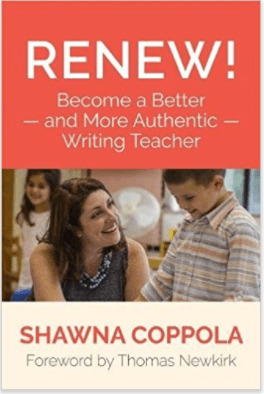
In the mean time, I have to tell you about Shawna Coppola’s new book RENEW!

I read the whole of this book in one afternoon! Thank you, Shawna, for writing so much of my own thinking about “Becoming a Better — and More Authentic — Writing Teacher.”

Shawna’s voice sings with passion and positivity. She paints the pages with possibilities! I know, I am gushing (and that’s probably too many p’s.) But here’s the thing —

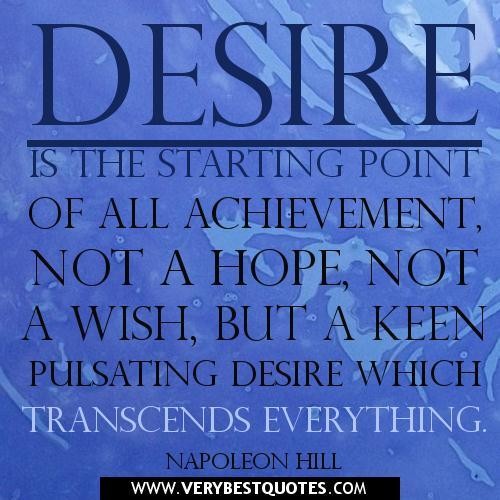
I know so many ELA teachers who do know know how to teach writing. I know many more who are not confident teaching writing. I know even more who are not writers themselves, so it’s no wonder that teaching writing is difficult. Teaching writing is hard. A book like RENEW! not only gives us a starting place, it gives us desire.

desire-is-the-starting-point-of-all-achievement-not-a-hope-not-a-wish-but-a-keen-pulsating-desire-which-transcends-everything-napoleon-hill

I am doing a lot of thinking lately around the idea of transcending. How do we go beyond our limits into something more, something better, something real and sustaining?

Let me share with you some of the passages I marked in RENEW!. I think you’ll see why this book is a must read for any teacher who needs a bit, or a lot, of renewal when it comes to teaching students to write.

“. . . if we are truly willing to honor the individuality of our student writers, the RENEW!uniqueness of each community of learners, and the ever-changing nature of our global landscape, we must continually rethink, revise, and renew our practice. Otherwise — to paraphrase Dewey — we rob “today’s students of the tomorrow today’s students deserve” (10).

“Broadening our ideas about what writing “is” can be scary, as if we are opening up a Pandora’s box. But in all reality, continuing to teach our student writers through a narrow, outdated lens — one that, in overvaluing written composition, does not accurately tell a story about the world of writing beyond most schools and classrooms — harms their development as writers by limiting the kinds of composing they are exposed to and encouraged to practice” (51).

“Teaching our writers how to develop their own tools is infinitely more sustainable than using preexisting tools. Quick survey:  How many of you use the graphic organizer your sixth-grade teacher taught you to use to write a persuasive piece? That graphic organizer may have been helpful to you then (although I doubt it was helpful to 100 percent of your classmates), but how useful is it you now?” (62).

“What message or “story” are we sending our student writers with a single overall score? Not only does it imply that their worth as a writer can be whittled down to one letter or number (which itself can mean different things for different teachers and even within different units of study), but that the worth of writing itself can be whittled down this way” (73).

“. . . readers of writing are human, an done person’s response to a composition may not perfectly align with another’s (If it did, what a drab, boring world we’d be living in!)” (79).

“Which is more likely to help students learn:  offering them specific feedback about their work, behavior, or performance, or slapping a score on a piece of paper?” (82).

“. . .when we engage in a semi-regular habit of writing, we can much more genuinely speak to those incredibly fantastic moments that writers experience on occasion, like the amazing feeling of completing a particularly difficult draft or writing something that makes a reader spontaneously laugh out loud. Anyone who’s ever taught a group of students of any age knows that when we are faking our way through something, or at the very least “phoning it in” by only engaging on a superficial level with what we are purporting to teach, students can smell our lack of authenticity a mile away. They know, even subconsciously, that they are being sold a decidedly moldy bill of goods” (92).

That’s all well and good, right? But here’s the beauty of Shawna Coppola’s book — she gives us the research that supports each of her positions AND she gives charts and graphs and resources to help us rethink, revise, and renew our approach, instruction, and practice as we become better teachers of writing. This book is chock full of everything good when it comes to writing instruction. It is a book I will return to again and again.

I hope you’ll read it. I hope you’ll share it with every ELA teacher you know. Really, it is just that good.


Amy Rasmussen lives in north Texas and teaches AP English Language and English 4 (new prep in ’17.) She loves talking books, daughters’ weddings (two this year), and grandbabies (five). She also loves facilitating PD for other teachers making the move into a workshop pedagogy. Amy adheres to the words of Emerson: “We aim above the mark to hit the mark,” and Jesus: “Love one another.” Imagine a world if we all aim higher. Follow Amy on Twitter @amyrass. And she really hopes you will follow this blog!

Every Teacher a Reader. Every Teacher a Writer.

Do any of you follow the Middle and High School Secondary ELA group on Facebook?

Now, I am not trying to pick any fights, but I’m just going to say it:  Some of the comments drive me straight over a rocky cliff. Honestly, I tend to get a little snarky if I spend too much time there. (Sorry, not sorry.)

Today an ELA teacher posted “Writing sucks.” What?! I sure hope a student never hears her say that. Yesterday a teacher posted this question:

“Silent reading…have you built it into your routine? For how long? Do you find your struggling readers or non-readers (at home) love this time? I currently have built it in for the first 15 minutes since I know many of my 6th grade sts do not read at home. I think it works, but just brainstorming other ways to do things for next year. Just curious what you all do! I would be curious if HS teachers still give time to silent read, too.”

I had a hard time reading the thread with comments like “They won’t read, or forget their books… It turns into wasted time.”

Of course it does, if teachers do not establish the all out importance of reading, the benefits of reading, the time commitment to grow as readers; if teachers do not walk the talk of readers, share their reading lives, promote books and match books to kids and beat the drum of reading. Every. Single Day. We have to help students value reading.

The same holds true for writing. We have to help students value writing. We have to help students value the struggle of writing well.

Are we teacher-writers who model the difficult task of writing? Do we share the struggle of getting thoughtful ideas on the page and revising and revising and revising to convey the meaning we intend to the audience we intend? Writing well means we make intentional choices and we develop the habits of writers. Read Donald Murray’s “Habits of Writing,” and then internalize his last line: “Consider my habits of writing, but develop your own by studying what you did when the writing went well, and make what you discover your own writing habits.” (If you really want to build your writer-mojo, I suggest Murray’s books, The Essential Don Murray:  Lessons from America’s Greatest Writing Teacher, and Learning by Teaching.)

We can learn to write well. We can learn to teach writing well as we discover our own writing habits and guide students into developing their own. But this will never happen if we do not write.

readerswriters

I’ve written about walking our talk before — and I believe it more every day. I think we owe it to our students to be actively engaged in the learning process the same way we ask them to be actively engaged. I can never be a good enough reader. I can never be a good enough writer.

So, this summer I commit to keep working on my craft. I will read. I will write.

If you are reading this post, I know I am preaching to the choir. I know you already share at least some of my beliefs about reading and writing. Thank you for that!

I invite you to share your reading and your writing, to amplify our collective voices as teachers who read and write, and walk our talk — even during the summer. Shana posted our summer posting plans yesterday. I hope you’ll join us on our Facebook page, our Instagram feed, and on Twitter. And as Austin Kleon famously asserts:  Show your Work!

Let’s spread it far and wide!

Amy Rasmussen lives in north Texas and teaches AP English Language and English 4 (new prep in ’17. She loves talking books, daughters’ weddings (two this year), and grandbabies (five). She also loves facilitating PD for other teachers making the move into a workshop pedagogy. Amy adheres to the words of Emerson: “We aim above the mark to hit the mark,” and Jesus: “Love one another.” Imagine a world if we all aim higher. Follow Amy on Twitter @amyrass. And she really hopes you will follow this blog!

8 Ways Listening Leads to Learning

not-listeningWe teachers often talk too much. Research on listening suggests that adults spend an average of 70% of their time engaged in some sort of communication; of this average, 45% is spent listening compared to 30% speaking, 16% reading and 9% writing. I would argue that this data does not represent teachers in the classroom. We tend to talk more than we listen.

I wonder how many of us have thought of teaching as communication.

Think about this definition of communication: “Two-way process of reaching mutual understanding, in which participants not only exchange information, news, and ideas and feelings but also create and share meaning. In general, communication is a means of connecting people or places.”

Now, think about how much richer our classroom environments could be if we planned, prepared, and presented our lessons through this lens of communication — with the goal of reaching mutual understanding, exchanging information, ideas and feelings, and creating and sharing meaning. To do so, we must listen more than we speak.

What about the time, we may ask, what about the content knowledge we must impart?

When we exchange our need to talk with our students’ vital need to have us listen, we

  1. transform our teaching by looking for ways to invite students into conversations
  2. better utilize the time we have with our students, meeting their needs in one-on-one and small group discussions
  3. deliver information in new ways, other than students listening to lectures or taking notes from slide presentations, or completing worksheets
  4. break down walls many adolescents have built against school and against authority — they know we see them as the unique individuals they are, and they respond
  5. provide opportunities for students to learn from one another so we may listen as they share with one another
  6. help students discover and take ownership of their needs, both personally and academically — talk often works as a lead into deeper thinking
  7. facilitate communication that leads students to take on the characteristics and behaviors of readers and writers — or in a biology class as scientists, or in a history class as historians.

Fostering room for more listening is the first move into creating a culture of conferring.

Does it make us vulnerable? Yes! and facing our vulnerability is where our growth as teachers takes root, taps into strategies that nurture our learners, and eventually blossoms into the instruction and learning experiences we want for all students.

How do you make room for listening in your classroom? Please share in the comments.

Amy Rasmussen lives in north Texas and teaches AP English Language and English 3 to the Fighting Farmers at Lewisville High School. She adheres to the words of Emerson: “We aim above the mark to hit the mark,” and Jesus Christ: “Love one another.” Imagine a world if we all love more than we think we can. Follow Amy on Twitter @amyrass.

Why Conferring Matters

Conferring is the interaction missing from many of our students lives.

Consider this:  the current generation thrives on one-on-one attention. They do not remember a time before social media, and many live much of their lives online via their smartphones. They turn to instantaneous interactions that have a direct impact on how they feel about themselves:  Snapchat, Vine, and Instagram over Facebook, which they are abandoning in droves because “it’s for old people.”

Our students crave immediate feedback. They seek personal communication — and they need it.

Think of the implications of this virtual-reality world on long-term relationships and problem-solving. We have already seen how it impacts our students in the classroom: short attention spans, skimming versus sustained reading to name a couple, not to mention the addiction to notifications.

Our students need to experience and understand the importance of eye contact, facial expressions, and body language, and how these physical features create non-verbal communication. They need to interpret and explicate tone.

The students in our classrooms today are different from Millenials. Anyone born after 1995 earns the new title of Generation Z, also called iGen, Centennials, Founders, and my favorite title: Gen Edgers.

As a whole, these students use technology as their primary source of communication — to validate, and to feel validated.

They also value genuine relationships, loyalty, and honesty and are increasingly more careful than the previous generation with the friendships they form online. They want to know their voices matter and that they are okay just being themselves instead of being the perfectly-phrased word count they must craft online.

Our students need opportunities to share thoughts, feelings, ideas, and knowledge in non-threatening situations through real face-to-face conversations.

Conferring opens opportunities to meet the needs of our students at the core of their longing.

When we invite students to talk and affective filters lower. Students relax. They respond.

When teachers confer with genuine interest in the well-being of the child, we grant students permission to be their genuine selves. Research on the brain shows that “positive comments and positive conversations cause a chemical “high,”” and with less pretense and stress, students experience more learning.

Conferring gives students the chance to share their stories; and besides creating trusting relationships, conferring allows us to meet them where they are and help them advance in knowledge and skills from there.

On-going regular conferences ensure that every student receives the one-on-one interaction and instruction they deserve. Peter Johnston reminds us that every student has a personal history that affects our ability to help them advance in their literacy skills.

Through conferring we learn the cultural and personal backgrounds that shape our learners, along with the experiences that shaped them in the past as readers. Both are important factors. By asking questions that invite students to recall their learning histories, we initiate future learning.

Conferring also sparks critical thinking, creativity, and curiosity.

No matter the teaching style — be it an English class where the teacher makes the choices about books and writing topics, or a workshop inspired classroom where students choose what they read and write, or even a classroom of another content area — when conferring becomes a norm, students proactively engage in learning, which results in more growth, independence, and mastery of content and concepts.

Our students learn to ask questions, ponder responses, and seek for interesting ways to show they are learning. Differentiation happens naturally.

Imagine the opportunities students may create and the innovative energy they will have in the future if they experience this kind of learning in their secondary schools.

The children in our classrooms are part of the fastest growing force in the workplace and the marketplace. Their influence is changing companies, marketing styles, and consumer habits.

This generation wants to make a difference in the world. They are pragmatic, self-aware, goal-oriented, and self-taught via YouTube. They’ve grown up “dealing with too much vs. too little information their entire lives.”

They will soon become our peers standing in voting lines, our colleagues standing near the copy machines, maybe even our bosses, or perhaps the officials that govern our cities and our states.

As adults we must provide each child with the education that prepares them for the future they are moving into.

We cannot keep teaching the way we have always taught with one-size-fits-all lesson plans and instructional models. We cannot keep making all the choices about books and reading or essay topics.

We must talk to our students one-on-one about what matters to them personally. Our future, and theirs, depends on it.

And for the teacher who worries about time, conferring provides a means of easy and accurate formative assessment, which saves valuable time spent grading:  time teachers may spend planning effective lessons or conferring with more students.

When done with fidelity, conferring improves the effectiveness of our teaching. I don’t know one teacher who doesn’t want that.

Please share your thoughts on conferring in the comments. What are your conferring routines?

Amy Rasmussen lives in north Texas and teaches AP English Language and English 3 to the Fighting Farmers at Lewisville High School. She adheres to the words of Emerson: “We aim above the mark to hit the mark,” and Jesus Christ: “Love one another.” Imagine a world if we were to all aim higher to love our fellow man. Follow Amy on Twitter @amyrass.

My Top 5 Gurus – Who Are Yours?

Thank you, Melville Publishing for picture....
These people, places, and collections of great knowledge have made me a better teacher.  They are my gurus, my distant teachers, and my life-savers when the screws are put to me in the classroom, and for the 987th time, when the students have “turned the tables” on me, as my new favorite artist Adele sings.  Thank you, gurus, for moving me.  Thank you for holding the mirror up.  Thank you for forcing me to look into the teacher I thought I was after 11 years and igniting a flame that has burned up the dross in my classroom on a daily basis.  What remains after such an intellectual bonfire amidst the students and myself are the ashes from which knowledge, compassion, inspiration, communication, and fellowship arise.  It truly is a “beautiful collision” (thank you, David Crowder).

#1. The Buck Institute for Education – This organization acts as my collective teacher, from its web resources to its handbooks in print to its well-trained educators, whose blogs and conference opportunities have inspired me to let project based learning completely change my life.  I love teaching because of what BIE has taught me.  Check out their website and their blogs for new educators in PBL.  Fantastic research and downloadable resources! (PBL Do-It-Yourself is a life-saver!)

#2.  Aimee Buckner – Her tried and true suggestions for using reader’s/writer’s notebooks in Notebook Know-How and Notebook Connections have given me many ideas that actually work.  I wanted to know how someone specifically used the notebooks in an authentic and real way, and she even included actual copies of posts from her kids!  It’s fantastic!

#3. Cooperative Catalyst – This is an amazing consortium of bloggers, writers, teachers, and others who write about education, trends, needs for change, pedagogy, social issues, etc.  I have found all sorts of new gurus here!  Posts are by various authors – thus, the “cooperative.”  It is said of this blog that the more voices that join, the deeper the discussion goes.  Many of the authors here can also be followed on Twitter.

#4. Don Tapscott – His books Growing Up Digital and Grown Up Digital have exceeded my expectations of what I thought I might learn about technology.  Not only did I learn about the digital natives I teach, or the “hand-held” generation who have never known life with a record player, 8-track, or rotary phone….  But through his work I learned about myself.  My modeling of appropriate use of technology and my role as a respectful contributor in the digital marketplace is equally important to what they can teach me about new tech and devices.  Follow him on Twitter, where the nuggets of wisdom just keep coming…. (@dtapscott)

#5. TED – Two words: pure awesomeness.  TED is so awesome it might actually make you go blind.  Watch videos, learn what’s out there, [if you have cash – ha!] go to a conference and get goodies (then tell me what they were!), or just download the talks.  This conglomeration of cutting edge technology, insightful and charismatic speakers, and world-changing ideas has really given me great classroom engagement pieces.  The videos are mind-blowing at times, sobering at others.  If you haven’t tuned in to TED, run, don’t walk, and start with this amazing video, with technology now a few years old: “The Sixth Sense.”  Follow TED on Twitter: @tedtalks, @TEDnews, @ted_com.

Now, to you: who are your gurus and distant teachers?  And who will you then teach “everything you know”?