Tag Archives: craft study

A Novel in Verse to Study Craft

I recently read my first Ellen Hopkin’s novel in verse — all 666 pages. I’d often wondered why some of my most reluctant readers, girls mostly, would stick with and finish Hopkin’s books. Now I know.

While the thickness of the book is intimidating, the number of words on each page is not. The poems are short and beautifully worded, using language that makes the storyline pop like a 3D movie.

Impulse is the story of three characters, all with distinct voices, portrayed in their own series of poems. The point of view shifts from character to character, which I love because that adds to the complex thinking students must do to understand what is happening in the story.

All three characters suffer from some of the worst abuses that can happen in the lives of individuals. All are in a facility trying to figure out themselves and their horrid lives — primarily as result of the actions of adults.

This morning while checking my Twitter feed I was reminded of the need to introduce students to books as mirrors and windows. Students should be able to see themselves within the characters they read about, and they should be able to see into the lives of others that they may never know. Sometimes books allow students to do both. Impulse is one of those books.

I think it would be interesting to use this poem from page 2 as an exercise in imitation. What four verbs might students choose to write into their four sentence poem?

The Thread

Wish

you could turn off

the questions, turn

the voices,

turn off all sound.

Yearn

to close out

the ugliness, close

out the filthiness,

close out all light.

Long

to cast away

yesterday, cast

away memory,

cast away all jeopardy.

Pray

you could somehow stop

the uncertainty, somehow

stop the loathing,

somehow stop the pain.

Starting with the Ending

I am not one of those people who jumps to the last few pages to read how a book ends before I’ve ever started it. I do not understand those people. At all. I like to savor a good book, take it slow, breathe in and out the beauty of the language. OR, I like to devour it in one sitting, holding my breath and wanting more. So, it’s a little surprising that I’ve pulled the last paragraph of a book to use as a craft study.

I promise it gives nothing away. I also promise:  you may just shudder at the loveliness of the language like I do.

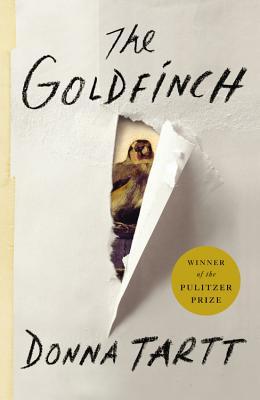
If you have not read The Goldfinch by Donna Tartt, you must. Find the time. It’s worth it.

I don’t know if I can motivate my students to read this lovely book though– it is thick with 771 pages, and the story itself is long, and there are times your love/hate relationship with the main character makes you want to shout the house down. But I’ll try. Because I love it.

This is why:

The Goldfinch by Donna Tartt P771

Whatever teaches us to talk to ourselves is important:  whatever teaches us to sing ourselves out of despair. But the painting has also taught me that we can speak to each other across time. And I feel I have something very serious and urgent to say to you, my non-existent reader, and I feel I should say it as urgently as if I were standing in the room with you. That life — whatever else it is — is short. That fate is cruel by maybe not random. That Nature (meaning Death) always wins but that doesn’t mean we have to bow and grovel to it. That maybe even if we’re not always so glad to be here, it’s our task to immerse ourselves anyway:  wade straight through it, right through the cesspool, while keeping eyes and hearts open. And in the midst of our dying, as we rise from the organic and sink back ignominiously into the organic, it is a glory and a privilege to love what Death doesn’t touch. For if disaster and oblivion have followed this painting down through time — so too has love. Insofar as it is immortal (and it is) I have a small, bright, immutable part in that immortality. It exists; and it keeps on existing. And I add my own love to the history of people who have loved beautiful things, and looked out for them, and pulled them from the fire, and sought them when they were lost, and tried to preserve them and save them while passing them along literally from hand to hand, singing out brilliantly from the wreck of time to the next generation of lovers, and the next.


Let’s just take it sentence by sentence. Then let’s choose a sentence we like and respond to it. That’s enough for now.


A Lesson in Craft: The Yellow Birds

If you have not read The Yellow Birds by Kevin Powers, go buy it and start reading it today. It’s that good. Maybe I loved it because Powers is a poet, and his poetry flows into the language on every page. Maybe I loved it because I have similar fears as the mothers portrayed in this book. At least one of my sons will join the Army in a year.

Whatever the reason, I love this novel, and I know many of my students will appreciate the beauty of it, too.

Many passages are worthy of study, but when I read myself into this one, I knew that the discussion around it in class would be powerful. What do you think students might discover about language by reading this?

I hadn’t know what I was doing then, but my memories of Murph were a kind of misguided archaeology. Sifting through the remains of what I remembered about him was a denial of the fact that a hole was really all that was left, an absence I had attempted to reverse but found that I could not. There was simply not enough material to account for what had been removed. The closer I got to reconstructing him in my mind, the more the picture I was tying to re-create receded. For every memory I was able to pull up, another seemed to fall away forever. There was some proportion about it all, though. It was like putting a puzzle together from behind: the shapes familiar, the picture quickly fading, the muted tan of the cardboard backing a tease at wholeness and completion. I’d think of a time when we sat in the evening in the guard tower, watching the war go by in streaks of read and green and other, briefer lights, and he’d tell me of an afternoon in the little hillside apple orchard that his mother worked, the turn and flash of a paring knife along a wrap of gauze as they grafted uppers to rootstocks and new branches to blossom, or the time he saw but could not explain his awe when his father brought a dozen caged canaries home from the mine and let them loose in the hollow where they lived, how the canaries only flitted and sang awhile before perching back atop their cages, which had been arranged in rows, his father likely thinking that the birds would not return by choice to their captivity, and that the cages should be used for something else: a pretty bed for vegetables, perhaps a place to string up candles between the trees, and in what strange silences the world worked, Murph must have wondered, as the birds settled peaceably in their formation and ceased to sing. And I’d try to recall things until nothing came, which I quickly found was my only certainty, until what was left of him was a sketch in shadow, a skeleton falling apart, and my friend Murph was no more friend to me than the strangest stranger.

Sentence Imitation with We Were Liars

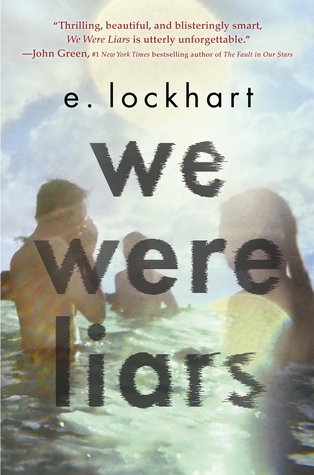
I listened to the audiobook, and liked the novel so much I had to go and buy it in hardback for my classroom library. The story still haunts me. (I read it soon after I read Jellicoe Road, and that story haunts me, too. These two books make an interesting pairing.)

The following is the beginning of chapter two in We Were Liars. It’s an compelling list of sentences that create the the basics of what we need to know about our protagonist. It will be an interesting passage to use for sentence imitation.

I wonder what my students will say about themselves.


We Were Liars by E. Lockhart P4

My full name is Cadence Sinclair Eastman

I live in Burlington, Vermont, with Mummy and three dogs.

I am nearly eighteen.

I own a well-used library card and not much else, though it is true I live in a grand house full of expensive, useless objects.

I used to be blond, but now my hair is black.

I used to be strong, but now I am weak.

I used to be pretty, but now I look sick.

It is true I suffer migraines since my accident.

It is true I do not suffer fools.

I like a twist of meaning. You see? Suffer migraines. Do not suffer fools. The word means almost the same as it did in the previous sentence, but not quite.

You could say it means endure, but that’s not exactly right.


What is the “soundtrack of your rebellion?”

I liked this book in a lot of ways, and I hated it in others. Maybe because my heart is too soft for all the heartache and suffering of these children. The mother in me couldn’t stand it. Maybe because my Christian heart couldn’t stand the hypocrisy of so many people calling themselves Christian, the parents included. My friend raved about how her students devour this book. It has left me unsettled, but I do think many students will like the emotion this book evokes. It’s just not my kind of emotion.

This is a passage that I think my students will be able to make a connection:

Jesusland by Julia Scheers P159

That day I realized I wasn’t immune to my father’s violence. For years, while my brothers were whipped and I was spared, I thought I had some kind of biological privilege — that my father wouldn’t harm his own genetic material. But in their absence, my father didn’t have anywhere to train the spotlight of his rage on but me.

So when my parents left for another missionary meeting in California and the nurse from my dad’s clinic who was staying with me caught Scott climbing out of my bedroom window one morning, I left home. If my father wanted to choke me over a forgotten milkshake, what would he do to me for losing my virginity?

I moved in with my brother Dan and his three roommates at Purdue and found a part-time job as a busgirl at the Howard Johnson’s Hotel on Highway 52. I biked to work, and to Harrison –an hour’s ride away–if I couldn’t find someone to drive me. I didn’t go to school if I wasn’t in the mood for it, and a couple of teachers threatened to flunk me before passing me with D’s.

Although I was dirt poor–I paid half of Dan’s rent, and frequently resorted to eating off the room service trays I was sent to collect from the hotel hallways–I was happy. I didn’t have to go to church, spent hours watching MTV, and didn’t need permission to do anything. I was free.

I listened to Van Halen’s “Running with the Devil” on my Walkman as I rode through the streets of Lafayette on my bike, rewinding the cassette tape again and again.

It was the soundtrack of my rebellion. That was me, running with the devil. Doing bad things and liking it.


I wonder how students would respond to this question:  What is “the soundtrack of [your] rebellion”?

Beautiful Sentences

Sometimes we just enjoy the beauty of the language. I don’t usually write in my novels, but I did mark “I love this sentence” in the margins when I read this book.

I do not know how many of my students will read this novel, although it is a Pulitzer Prize winner, I am not sure many students will be interested in the musings of a dying Calvinist minister as he writes letters to his young son. They might.

I will show them the lovely language.

Like this sentence on page 71 of Gilead by Marilynne Robinson:

“As you read this, I hope you will understand that when I speak of the long night that preceded these days of my happiness, I do not remember grief and loneliness so much as I do peace and comfort — grief, but never without comfort; loneliness, but never without peace. Almost never.”

Teacher friends, do you have favorite beautiful sentences that you share with students?

Mentor Texts Are Everywhere!

This time last year I was amidst a mad dash – a mad dash in seeking out, organizing, asking about, researching, contemplating, and gathering the ‘best of the best’ of mentor texts.  I had just learned what a mentor text was (text that, well, mentors!) and wanted to make sure I had a plethora to kick off the school year.  And, I did.  I had gathered so many I wasn’t even sure when, and in what context, I would be using them.  But, they were ready and I felt confident that I was too.

This year, it’s a bit of a different story.  After implementing the Reading Writing Workshop model in my urban oasis for the first time this past school year, I realized there is no longer a need to be dashing about.  Mentor texts are everywhere!  Literally.  They are in the morning’s newspaper.  They reside in the autobiographies I always find myself engaging in (and of course, loving).  Articles promulgating the Twitter circuit for the purposes of dissecting content and craft.  Classics, more modern, and everything in between became focal points of inquiry and investigation.  Students’ independent reading books shed light on crafty moves authors strategically choose to utilize.  On occasion, an excerpt from professional development texts deserved a public viewing (sometimes with scrutiny, sometimes not).  Nothing is off limits.

So, it is no wonder that as I have been reading a vast array of literature this summer; I have new mentor texts lined up for this coming school year that I am thrilled to explore with my students.  So, grab your Writer’s Notebook and flip to your Next-To-Read list.   I hope you not only fall in love with these pieces, just as I have, but they inspire you to think about what you’re reading and how you’d like to share them with the brilliant and inquisitive minds occupying your learning community.

Making Meaning with Texts: Selected Essays by Louise Rosenblatt was first introduced to me in this summer’s UNH Literacy Institute via Penny Kittle’s Book Love course.  This piece sent a buzz all throughout the campus as we were asked to read it for homework and come prepared to discuss it the next day.  Before the night was through, classmates were chronicling their amazement and joy with Twitter posts such as:  “Reading Louise Rosenblatt for homework and keep saying “Amen, sistah!” in my head. #unhlit14″.  So, you can only imagine how this Reading Theorist evoked an awakening in us all.

IMG_20140630_221534

It was when I came to this paragraph that I realized I had just stumbled upon an incredible mentor text; not only for myself as an educator, but for students as well.  What better way to expose students to the questioning and thinking behind our reading and writing than by sharing the source with them?  These questions are going to guide us through our reading (and writing) journeys this year.  We are going to study these questions, make sense of them, put them into practice; but, we are also going to really delve into why Rosenblatt has chosen these questions to guide us.  See, that’s where exploring craft and an author’s intention becomes our focal point.


battle 1

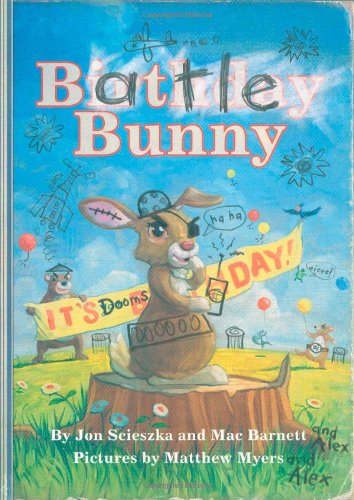
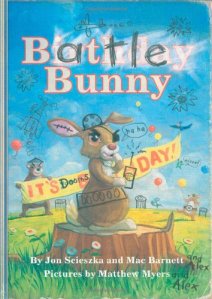
Battle Bunny by Jon Scieszka and Mae Barnett is a clever and witty piece that is sure to get students charged up about editing and revising.  How could it not?  This entire piece chronicles the the narrator’s (yes, the bunny) stylistic and creative writing journey.  The entire story is marked up, crossed out, reworded, and illustrated to show the power of the writing process.  It’s beautiful.

While I educate students ages 16-21, and this piece (I’m sure) was not intended for that audience, I believe this mentor text will be a lighthearted way to quell some of the fears that override their writers’ anxiety.  We know, many students are uncomfortable and afraid to revise, rework, or allow their time-intensive writing pieces to become ‘messy’.  Yet, that’s what produces the most profound writing.

battleI know this may be a risky move in my classroom.  Yet, I’m going to take a chance.  I anticipate shared laughter as we navigate this piece together.  I also plan to explore the bunny’s intentions and make it relevant for our work as writers:  Why did he feel the need to rewrite the story?  Do the illustrations add to the message he is portraying?  Do any of his original thoughts (verse his revisions) feel more powerful to you?  What intentional moves did he make in re-creating this story?  And on and on.

IMG_20140812_121342

Destined to Witness: Growing up Black in Nazi Germany by Hans J. Massaquoi is a piece I have not been without this entire summer.  And, although I’m finished reading it, I find myself flipping through the pictures over and over; it’s that profound. Massaquoi is a mentor of life, overcoming adversity, obtaining the (perceived) impossible, and what it truly means to be human.

Journalist by trade, Massaquoi takes such grace in his every word, sentence, and strategic ‘move’ that’s crafted.  This book encapsulates 443 pages of sheer brilliance and I want students to be exposed to this kind of writing because they too, have the ability to craft such beauty.

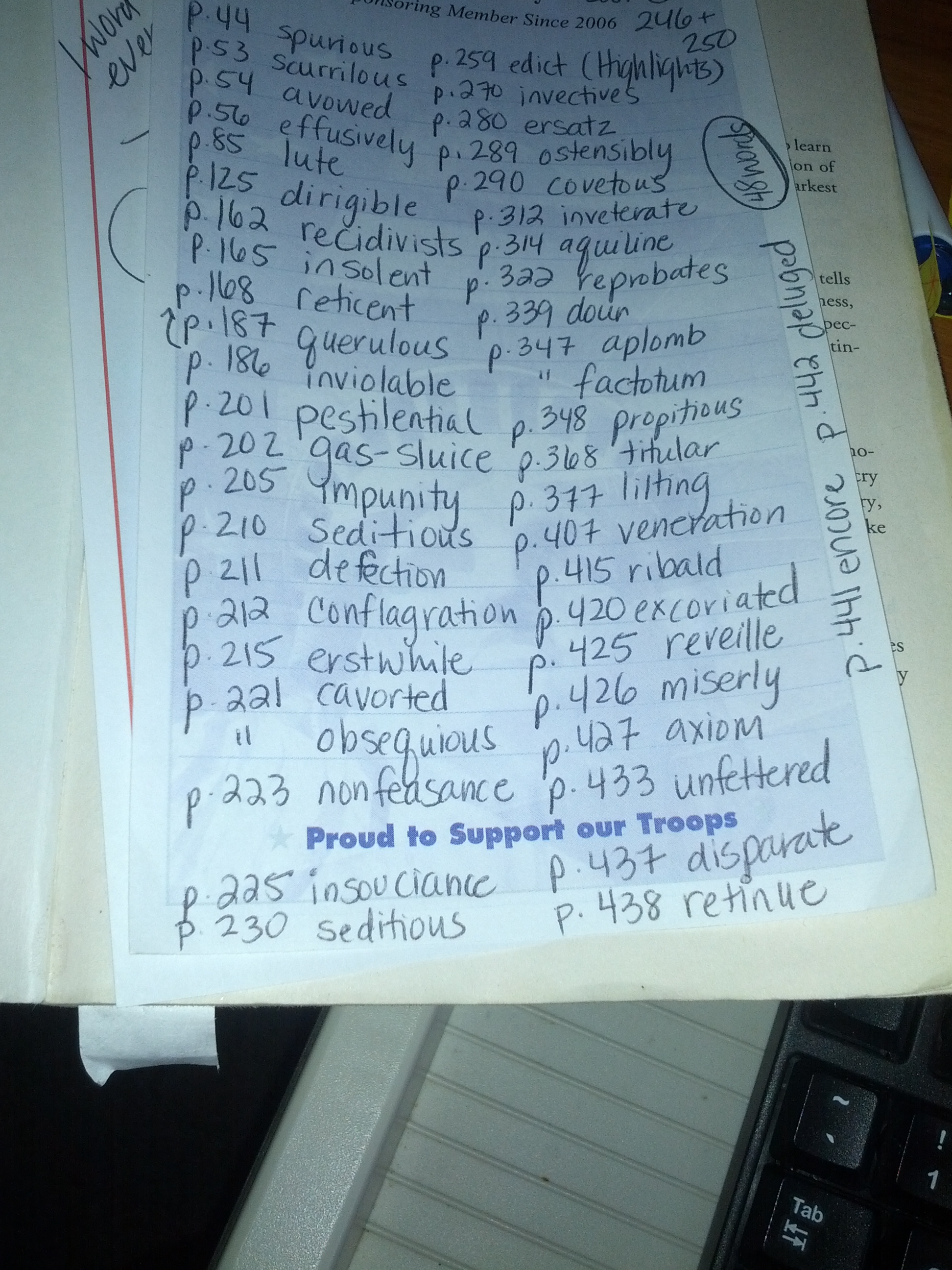
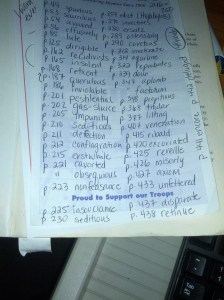
I also want them to catch a glimpse into my journey while reading this piece (note post-its) because I want to share what I found fascinating.  I want to explore some of the word choices (see my unknown word list) IMG_20140812_121513and talk strategy.  I want to use some of these words within my own vernacular and challenge students to do the same.  Most importantly, I want to show them that reading is a process; not one to shy away from.  And yes, sometimes it takes work, but overtime it becomes natural…and wildly fulfilling.
I can’t help but think, above and beyond the work I plan to do with this text, that the historical context won’t propel students in their study of history as well.  World War II and the Holocaust have rarely been depicted from the racial standpoint in which Massaquoi portrays.  This just may be a piece that peaks enough intrigue among students that they too will add it to their Next-To-Read list.  That’s my goal.
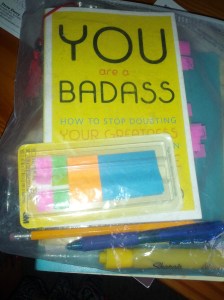


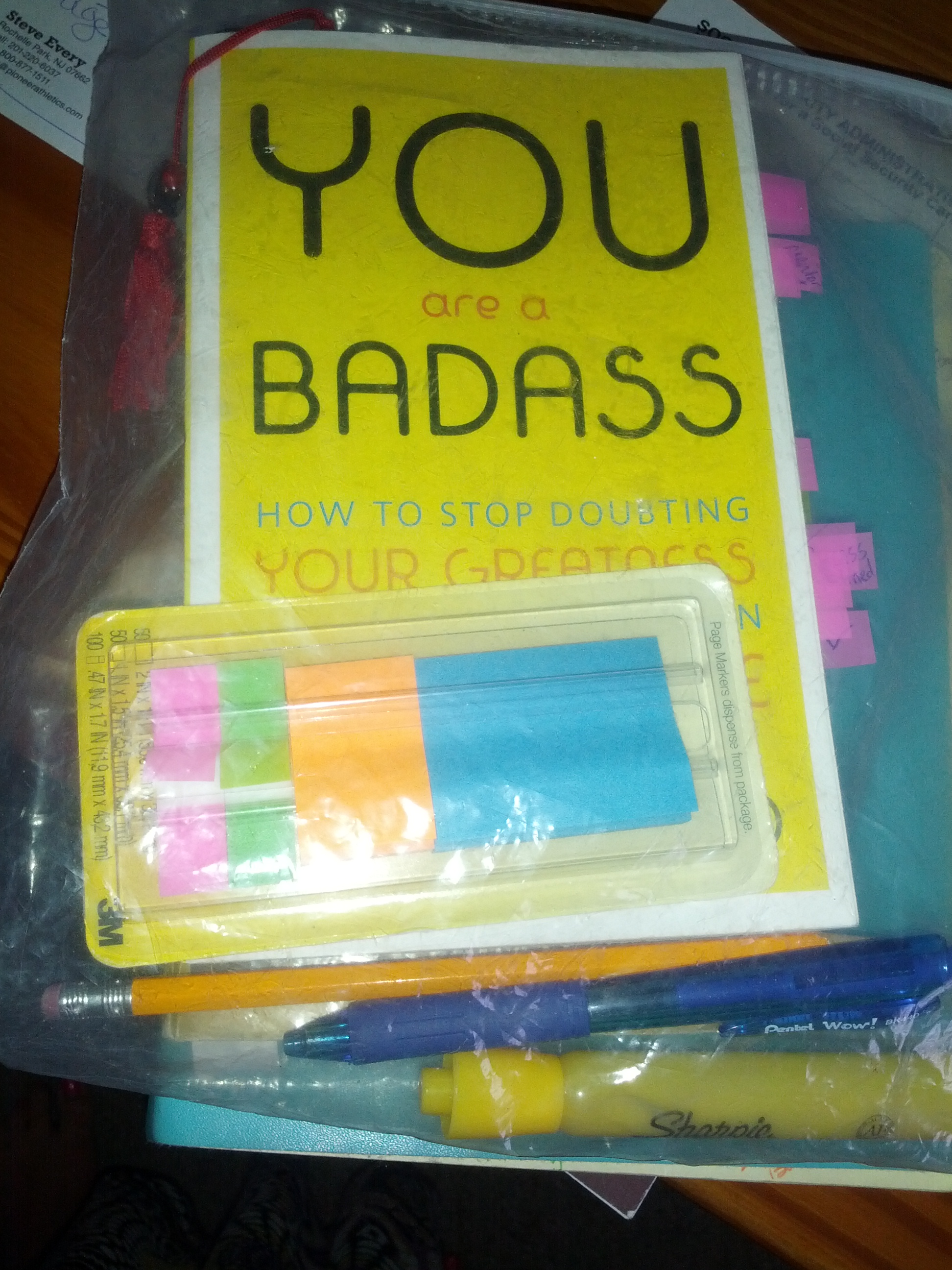
IMG_20140812_124058You are a Baddass: How to Stop Doubting Your Greatness and Start Living an Awesome Life by Jen Sincero has found its way into my Survival Book Kit and I love it!  I’m just past the first thirty pages, yet I have not stopped laughing.  Yes, out loud.

Sincero most definitely has a way with words.  She is edgy and a straight shooter for sure.  Yet, she is able to talk about really serious life-changing ideas in a way that feels ‘light’.  Not your typical self-improvement piece.

I want students to see how infusing humor among the serious can be oh-so-powerful.  Utilizing analogies to talk about the conscious and subconscious mind provides readers visuals…imagery.  A way to process this vitally important information that can shape their lives.  In only the most positive of ways.

I plan to choose the excerpts from this text skillfully.  I want students to have access to the content and the craft…as always.  I do foresee really rich one-on-one reading conferences with those that decide it’s time to make a change in their lives, or at the very least are up for a great laugh, and decide to take this piece on independently.

I hope my four have inspired you.  I really do.  I hope it will do the same for my students.  I encourage you to also share your favorites, here on this site.  As we all gear up for an incredible year to come, and we are swiftly shifting into our ‘going back to school’ mode, this is a wonderful time to start thinking about what we’re reading in a way that lends itself to the idea of being a mentor text.  Articles, books, poetry, graphic novels…all are welcome.


Read Like a Writer

Katie Wood Ray quoteI didn’t know what it meant to read like a writer until I stumbled upon Teaching That Makes Sense. I love that site, and I printed out every pdf doc available, reading everything as I punched three holes and secured them in a big fat binder. Honestly, I do not remember half of all those helpful things, but I am grateful that the light finally dawned, and I realized that reading like a reader and reader, and reading like a writer, are not the same.

How did I make it through my higher education and not know that? OR maybe I did, and I just didn’t flip the switch that made me realize the need to ‘pay attention’ and explicitly teach it to my students.

I am sure the simplicity of TTMS helped. I thank Steve Peha for that.

Reading like writers is the basis for analysis. I’d learned the importance of teaching students to analyze at the numerous Pre-AP workshops and AP Summer Institutes I’d attended. I’d never learned about how to teach students how to teach themselves how to analyze — quite simply by paying attention to how the author constructs meaning.

I’d been pulling passages from the classic texts we were (not) reading. I’d given released prompts and

asked students to complete timed writings. I’d done all kinds of cruel and unusual assignments because I didn’t get that to read like a writer is the crux of good writing instruction. (It’s also the crux of good reading instruction.)

Now, I teach my students to pay attention. As we read our self-selected books, we watch for the ways the author crafts meaning. We notice imagery and what it does for the author’s message. We notice figurative language that helps create this imagery. We might underline sentences that speak to us boldly or whisper to our souls. And we talk about how these elements create tone and theme. But more importantly, we talk about why these sentences speak to us as people.

In my class at UNH this summer, a classmate asked Penny Kittle if there was a list of examples from books to use for this study that Penny calls “play.” Penny shook her head and said:

“No list of books will ever teach this for you. You must change the way you read.”

I agree. Now, when I read, I look for gold. I read because I love the story, but I also read to find beautiful language that I can share with my students. I project passages on the board that we read together. Sometimes we just read and enjoy the language. Sometimes we write a response to the meaning of the text. Sometimes we analyze the elements, talking about why the author used the device and how that device affects the meaning.

Sometimes students model this language in their own writing. Most learn to pay attention as they read. Because once they get it, they are the ones projecting the passages they find, and sharing their own golden language.

Every other Monday on this blog I will post examples of the types of texts I use in my class for craft studies. If you have your own favorite passages, some kind of gold you’ve found in your reading, please share in the comments.

Writing as Imitation

Before you go judging me for referencing Weird Al in a sophisticated professional blog, please stick with me till the end – then you can judge me.

So, I’m sure most of you have seen the latest parody of Robin Thicke’s Blurred Lines by Weird Al. If not here it is for your viewing pleasure.

WORD CRIMES


Clearly, it is nerdy English teacher humor (as my husband would call it). And although it was funny, what actually intrigued me was a video of Weird Al that I stumbled upon after viewing his latest parody. The video was an interview that centered around his motivation as an artist and how he goes about composing his work. As I watched the video there was a brief part that struck me. See if you hear the same thing I noticed. (hint fast forward to 53 seconds into the clip)


See if you heard the same things I heard:

  • “It is sort of an exercise”
  • “I pretend like I’m them (the musicians) and I study their body of work.”
  • I pick it (the music) a part musically and figure out what are the little idiosyncrasies that make them tick stylistically.”

I know for many students the fear of the blank page is paralyzing. Just a thought, but what if we had learners imitate the writing of other great writers – even just as, “sort of an exercise.” I know I sure would be elated if I had learners carefully picking a part piece of writing in order to study stylistic elements and then turn around and try to use those same elements in their own writing. There is no question that Weird Al had to put a lot of work and thought into making the lyrics of his song parody work together just like the actual song and I’m confident that we would be pretty impressed with what our learners came up with if given the opportunity.

Not sure where to start? Don Killgallon has a great resource for any grade level that just might be what you need to try it out!


Sentence Composing for Elementary School

Sentence Composing for Middle School

Sentence Composing for High School


A Text Study with Paired Passages that will haunt your heart

This wasn’t my typical spring break. This year I spent most every waking hour either snuggling a tiny new grand baby or chasing her 17 month old sister. Grandmother heaven. Especially since my daughter and my only grandchildren live 1300 miles away from my home in Texas.

I spent my late evenings reading a handful of books from my towering TBR pile. Two have left scars on my heart. And as I look at my beautiful and innocent granddaughters, I pray: “Please protect these babies.”

The girls in these books were not so blessed. Both suffered abuse and heartache. I know it’s fiction. I get that it’s not real. But the haunting images so artfully crafted by these authors have shaped my thinking in ways that I’d never considered. My compassion swells for those trapped in darkness and fear.

And I hope I can serve as rescuer to anyone who needs a person to trust. I know many students come to school hurting, hungry, hopeless. If only we can offer solace and provide peace, comfort, safety. If only we can help them fight their way to light and love, and help them be the actors in their own inspiring stories instead of always being acted upon–

My students will want to read these books, so I will chat about them and share these passages.  They are rich enough for text study and I’m sure will inspire some insightful conversation.

from My Book of Life by Angel by Martine Leavitt p122

Skills Focus:  tone, symbolism, hyperbole, metaphor

The worst thing was

Serena ending up being stolen

by someone else’s story–

just a character in his story,

and the ending she wanted to have

got him instead,

just a part of his stupid story . . .

that was the worst thing of all.

I threw up again,

maybe with a chunk of heart,

and Call came in and I said,

do you see any bits of heart in there?

He said, you’re losing it,

said, this could all be over in a minute

if you take your candy,

and I forgot to answer because I was thinking,

he can’t have her anymore,

I’m writing a new end to her story,

I’m taking Serena’s story back.

Question:  Explain how the author uses the word story in this poem?

 from Girlchild by Tupelo Hassman p40

Skills Focus:  tone, details, euphemism, diction

Babysat

The metal flash of a pair of wire strippers, the unexpected shine on a Phillips head, these things cause the same fear in me, the same gut-tightening, ass-puckering panic as the midnight gleam of a switchblade. Chain locks have the same effect. And lightbulbs. You can find all of these at your local hardware store.

Sometimes Carol goes with Tony to Guido’s Pizza and leaves me at Ace. Tony is her boyfriend and he says having a six-year-old around all the time cramps their style, but I don’t like him anyway, be cue when I’m with them he either hogs the Close Encounters game or he hogs Carola and I never get a chance at either one.

Ace smells like orate hand cleaner and WD-40, and I pretend not to hear the adult talk that passes across the counter between the men of the town about certain women of the town as they pay the Hardware Man for their wood screws and drill bits. I also pretend like I never have to go potty. Because I don’t need help, but the Hardware Man will want to help me anyway. And when he helps me, the lights go out.

Question:  Explain how the author creates a tone of dread.

Paired passages question:  Explain how the passages are similar.