Tag Archives: books

Best High-Interest Books for Teens

This year, Amy and I were determined to make our exams authentic.  One of the options for the reading portion of the exam was for our students to create top 10 lists, and many of them did.  Their lists are funny, honest, and so valuable for helping spread the word amongst readers about good books.  Below is Aleigha’s list of recommendations for high-interest books that will hook teens and get them to fall in love with reading–feel free to share them with your students!

img_1175Aleigha’s Top 10 List:  Best High-Interest for Teens

  1. Fangirl by Rainbow Rowell

Though this book was funny and lighthearted it still had the ability to change my life.  It really helped me realize that you should appreciate your siblings while they are close to you.  Seeing how quickly Cath and Wren distanced themselves in college put my relationship with my siblings into perspective.

  1. Eleanor & Park by Rainbow Rowell

This book is so much different from your usual love story. By that I mean it’s extremely realistic. It changed my life because I could picture myself as Eleanor. It was one of those books that are so realistic it’s kind of scary not many love stories can make you envision yourself as the character.

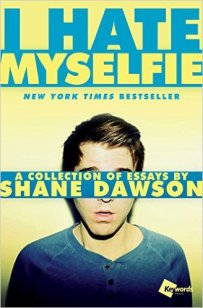
  1. I Hate Myselfie by Shane Dawson

hatemyselfieI have never laughed so hard while reading a book. This guy literally takes everything that should have been traumatic to him and turns it into humor. This book changed my life because it taught me that it is important to laugh at your own pain. You shouldn’t take everything so seriously.

  1. Looking for Alaska by John Green

This book for me is one that really set an example. It breaks away from the normal click of kids you have in high school and puts a group of complete opposites in a single friend group. That was one of my favorite things about this book. It just kind of made me feel like it’s okay for me to talk to the jock or the pothead.

  1. All the Bright Places by Jennifer Niven

This book is very eye opening. It is about two teenagers who bond over a mental illness and fall in love it. It makes you very aware of the signs of depression and makes you analyze not only yourself but others. This book has the ability to change lives because it teaches you about the sensitive topic of depression.workinprogress
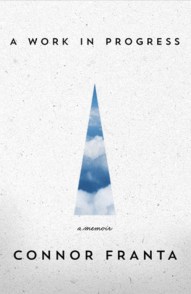
  1. A Work in Progress by Connor Franta

The author of this book is a Youtuber who tells you all about his life in high school and his YouTube journey. The book itself contains a lot of life lessons. He tells a story and then wraps it up with a lesson at the end. I enjoyed this book a lot because it shows how a normal really small town kid can become really successful with hard work.

  1. We Were Liars by e. lockhart

If we’re being honest, the only reason this book changed my life is because it just made me really depressed. I was just extremely upset once I reached the end of it. I didn’t want to believe what had happened was true and I cried for the main character. And then I cried because what other reaction can you have to a book that ended so terribly. So I guess this book changed my life because it made me realize that I cry more for fictional characters than I do for people I actually know.  

  1. The Fault in our Stars by John Green

Again another book that screwed me up emotionally. This one really does make you cherish your life and your friends. If after reading this you are not greatful for what and who you are blessed with that will be a surprise. Everytime I read this book I don’t just form my own imaginary relationship with Augustus Waters. I also find myself being very thankful that I have experienced little loss in my life.  This book is another one that puts it all into perspective.

  1. Every day by David Levithan

Every day is a book about a person who wakes up in a different body every day. He never has the chance to experience what it is like to have a family or best friend. This book is perksofbeinglife changing for me because it makes you appreciate the blessing of continuity. I think having a constant in your life is something that we all take for granted.

10. The Perks of Being a Wallflower by Stephen Chbosky

The Perks of Being a Wallflower is one of those books that make you really cherish your friends. Until you find out what happens to Charlie as a child, you assume the book is about a young boy coming out of his shell. As u read through the book, you experience the ups and downs of friendship and watch Charlie become a whole new person. This book has made me really appreciate my friends.

Holden

Today I asked my colleague, Elaine Miskinis, if I could share her writing with the TTT community.  Elaine teaches Sophomore English, Junior English, and AP Language and Composition.  I am fortunate to pass my freshmen along to her while receiving her juniors in return. She perfectly sums up the struggles of first semester, the hope that comes with second, and the transformative power of literature. ~Jackie

Rye_catcherThe plan?  Spend the hour and a half between the end of the school day and kiddo pick up time entering my students’ midterm grades, doing some lesson planning for “Hamlet” and cleaning and organizing my room in preparation for third quarter.
The reality?  A student who is failing with a single digit average came to finish his midterm.  He mentioned, in passing, that reading Catcher in the Rye made him realize some things about himself.   Any conversation that opens with “The Catcher in the Rye made me realize…” is never going to be a short conversation.  It’s just the nature of that novel and the power it holds.

Long story short, he’s experienced some significant trauma and, like Holden, nobody has really been there to help him to process it.  He said, “You know how Holden is really smart, but he’s failing because he just can’t get out of his own head and move on from what he’s experienced?  I think that’s like me.”  Over an hour later we came up with a plan to get him someone to talk.  We also scrapped any plans of turning him into a model student this year and replaced them with the goal of helping him so that he, in his words, “Can stop pretending to be happy and actually start to feel it”.

So, now my classroom is a fire hazard of papers and books, my planning for Monday stands at “Wing It” and I have two bags of papers that have come home with me that still need to be logged into my grade book.  But, this was one of those days that will likely stand out when I think about why I teach. And, more specifically why I value teaching literature.  For every kid who whines and “Spark Notes” and skims, there might be one kid in the back of the room who looks like he’s disengaged and disconnected but who, in reality is so much in his own head at that moment, and possibly even so far in the head of a character that he’s lost in ways we can’t begin to see.

It’s easy to forget the power of novels, especially the ones we teach year after year and it’s easier still to forget the power we hold as teachers, especially when we’re consumed with midterms and grades and planning, and frankly, all of the things that really, in the end don’t amount to a whole lot.  Today was an important reminder to me of what it’s really about and why what we do really does matter.  I don’t know that we’ll be able to help this kid in any substantial way, although I certainly hope we will, but I do know that he felt comfortable broaching the topic with me this afternoon because he had Holden Caulfield there to lean on.  It makes me wonder how often these small, important moments get lost as we focus on assessments and core competencies and all of the minutia of our lives as teachers.  Sometimes it just has to be about more than that, and about more than reading check quizzes and essays.  Sometimes it has to be about letting our kids hang out with characters for a while to learn that they’re not alone.

Using Picture Books as Secondary Mentor Texts

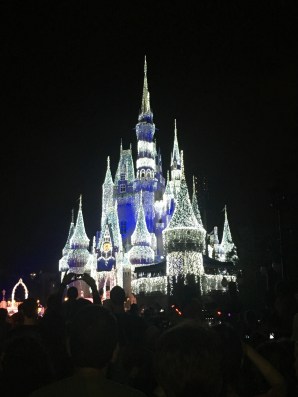
This year my family ditched the traditional Christmas festivities for a week in Orlando,

IMG_1606

Disney started his work as a cartoonist in high school.  How can we carve these same creative spaces for our own students?

Florida.  Swapping fur boots for flip flops, we ran around Walt Disney World, weaving in and out of storybook rides and watching teeny princesses wobble around Cinderella’s castle.  Only now that I am grown do I have a true appreciation for the sheer magnitude of Walt Disney’s brilliance.  He built a physical world of stories.

Disney doodled his way through high school; he honed his craft through drawing and photography classes.  Unfortunately, few curricula allow for the same creative exploration for students.  Oftentimes, the countless possibilities for storytelling and narration tend to center on only real-life experiences, personal narratives, when in reality, writing fiction opens up an entirely different world for self-exploration.

This year I swapped out our traditional multi-scene personal narrative for a story unit in which I taught many of the same narrative craft marks using a combination of fiction and non-fiction mentor texts.

The greatest challenge I faced was in finding short, succinct, and well-crafted stories that weren’t twenty pages long.  While I love short stories, I knew many of my freshmen would not only lose stamina if asked to write such lengthy pieces , but they would also struggle with translating the story structure of these mentors into their own pieces.  I began my hunt for a strong mentor text in, of all places, the children’s section of the library.

Objectives:  In alignment with the Common Core, students will write narratives to develop real or imagined experiences or events using effective technique, well-chosen detail, and well-structured event sequences. Using the language of the Depth of Knowledge levels, students will recognize a wide variety of craft marks in fictional writing.  They will identify patterns and compare effectiveness through discussion. They will formulate their own stories, revising them, and finally applying their understanding to future writing assignments.

Lesson:  I find writing fictional stories intimidating.  My plots seem to sag in some areas, or my dialogue doesn’t feel authentic, but many of my students love leaving their reality to explore their own creative worlds.  The vast majority read fiction, so its only natural that their reading interests feed into their writing curiosity.  The problem is that their greatest mentor texts are, on average, 250 pages long.

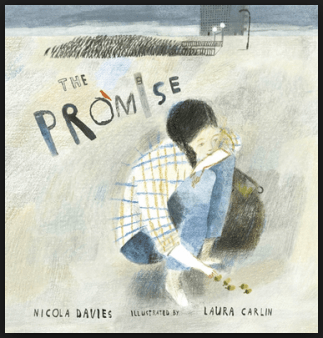
Screen-Shot-2014-11-07-at-1.51.36-PM-1514mm8The Promise written by Nicola Davies and illustrated by Laura Carlin is a beautifully crafted story of a girl growing up in a hardened city. After stealing a purse from a pedestrian, the main character makes a promise out of desperation, only to realize that the purse she has stolen has no value and is instead full of acorns, which she must now plant across the city.  The story reads more like a poem and has a cyclical ending that allows students to see the succinct structure of a short story.

Prior to sharing the story I type up the entire story book (which comes out to two pages) so that the students may access the text without the pictures.  I present it to them as a short story, and we read it aloud like any other mentor text, but I do not tell them it is a picture book!

I ask students to look at the structure of the story—what do they notice about how the author formatted the story as a whole.  Since we just finished studying plot in our literature circles, many of the students dig in to find the rising action and climax while others simply read and re-read to comb through the intricacies of the structure.  Almost all of the students notice The Promise’s cyclical ending that reinforces the story’s themes of redemption and the beauty of nature.

I have them return a second time to the story to look at the writer’s craft.  Students make a list of author’s moves within their writer’s notebook.  If they see something that intrigues them but they aren’t sure of the name, I have them describe what they notice and we develop a name for the skill together as a class.  Finally, we compile our observations onto a large sticky note that remains on display throughout the unit.  Students must then choose two of the craft marks to experiment with in their own writing.

Finally, once we have finished working with the piece, I reveal to students that The Promise is a picture book and I read it aloud.  Oftentimes students are shocked to hear that such a complex story is written for children, but their initial reading makes them value the intricacy of the writer’s work even more.

Follow-Up:  Not only did my students fall in love with the writing process, but they also asked thoughtful questions and engaged in deeper conversations about their writing.  One of my favorite conversations between two jocks involved the complexity of a fight between an alien, human, and zombie.

As a final follow-up, I had students complete a self-revision sheet.  They peer reviewed each other’s work and finally wrote a metacognitive reflection in which they discussed the craft moves they made and how they structured their story.

The freedom to write fiction or nonfiction opened doors for many of the students who tend to struggle with developing ideas while reinforcing many of the craft marks we studied (leads, plot, sensory details, concrete details, internal and external dialogue) in our snapshot narrative unit. As Griffin said, “It’s the best thing I’ve ever written because I’ve gone back and looked at my work in the past.  Fiction is easier because you can make up whatever you want.”


4 Monthly Challenges to Beat the Winter Reading Slump

New England winters lend themselves to steamy mugs of cocoa, plush blankets, and chilly evenings curled around a book.  Despite the ideal environment, halfway through the year, some of my students hit a reading slump.  The initial momentum of the reading initiative subsides, leaving students a bit more lackluster come second semester.

In turn, here are four challenges I plan to integrate over the next three months to beat the winter slump and reinvigorate students’ passion for reading.

1. January: Reading Bingo and Challenge Lists

The New Year, or for us, the second semester lends itself to fresh reading goals.  Goal-setting and self-reflection aside, I love reading challenges that push students to step out of their reading comfort zone and delve into new genres.  This year I comYA-Reading-Bingo-Challenge-2014piled a variety of reading challenge lists that I’ll be printing out on bookmarks to provide to my students.
I personally love the #26BookswithBringingUpBurns challenge, which has readers fulfilling challenges like reading “A book set somewhere you’ve always wanted to visit” and “A book with a color in the title.”  I’m also enjoying Rebeccah Giltrow’s BookaShelf 2016 Reading Challenge, which has participants base their book choices on the alphabet.  For example, “A” stands for “a book with an apocalyptical theme.”  Finally, Random House’s “YA Reading Bingo” is the perfect way to get students reading through rows of books while competing with one another to fill in a bingo card.

2. February: Book Trysts and Library Dates 

February lends itself to romance with Valentine’s Day, so to celebrate our book love, students will set up blind dates for some of their favorite books.  They will cover their choices in brown packing paper and write “dating profiles” including intriguing qualities readers will hopefully fall for.

In addition, students will participate in a library “date” with a friend from class.  Inspired by this “date night at the library” post by The Dating Divas, I created a list of entertaining and useful tasks and challenges for students to complete.  From “finding a book authored by someone with the same name” to “finding a book that has been made into a movie,” this friendly competition will put books in students’ hands while also promoting conversations revolving their reading.

3. March: March Madness and the Literary Hashtag Challenge

As March Madness approaches, my basketball students will be building teams and taking bets.  I know little about basketball…but I do know about books, which is why I’m hoping to create a March Madness that looks similar to Shana’s last year.  For those looking to create student-based teams, Principal Justin Cameron’s “Fantasy Reading League” at Frederick W. Hartnett Middle School gets the entire school involved in the competition together.

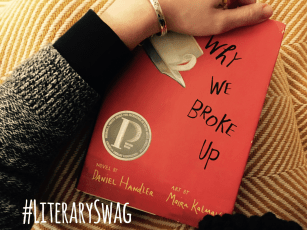
Finally, in March I will launch a new literary hashtag challenge that asks students to IMG_1801.PNGexhibit their reading lives outside of school.  Students will e-mail a Twitter or Instagram class account with literary images that include the following hashtags: #LiterarySwag (a hashtag for fashionistas who know books can serve as a stylish statement piece for any outfit), #Shelfie (a hashtag for beautiful bookshelves), #IReadEverywhere (a hashtag to highlight reading in unique places), and my favorite #BookFace (a hashtag that pushes people to be a bit more creative with their book covers).

By putting new books in students’ hands, I’m hoping to inspire a little competition, a lot of conversation, and a passion that will turn them into lifelong readers.


How do you reinvigorate students’ passion for reading?  What tips do you have to make it through the winter reading slump?


10 Pedagogical Must-Reads for Workshop Teachers

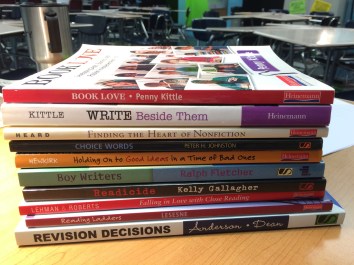
IMG_0650I met with my new student teacher a few weeks ago, and he asked me to borrow any books that might help him get going on the readers-writers workshop–the “theory” version of Jackie’s starter kit.  He’s been in my classroom before, so he knows the general routine and character of our work, but he wanted to know the ins and outs of how I thought and planned and conceptualized the whole thing.

I sat at my desk and looked at all of the titles I had on hand, remembering how influential reading them for the first time had been.  As a result, it was hard not to just dump my entire professional bookshelf onto a cart for him, but I managed to pick out a few titles that have guided me most adeptly in one aspect or another of my current classroom practice.

  1. Book Love by Penny Kittle – This was the book that helped to solidify my vision of an ideal classroom.  Before I read it, I had already been doing many of the best practices Penny mentions–writer’s notebooks, choice reading, personalized writing.  But I didn’t know how to bring it all together until Book Love.  As such, this is my #1 recommendation for any teacher looking to jump-start their individualized workshop curriculum.
  2. Write Beside Them by Penny Kittle – This book introduced me to the concepts of mentor texts, reading like a writer, and best draft/publication of writing.  I learned about quickwrites, constant revision, writing conferences, and a great deal more of what are now standard routines in my classroom.  This is the book for anyone curious about the big picture of writing instruction.
  3. Finding the Heart of Nonfiction by Georgia Heard – I was raised in the tradition of literature as containing mostly fiction and poetry, but Penny’s books helped me see the great value of nonfiction.  I wanted to know how to integrate it well into my thematic units, and this book helped me do that.  Georgia’s book is full of wisdom about finding the soul of good nonfiction writing and matching it to your students’ needs.
  4. Choice Words by Peter Johnston – This book taught me how to talk to students.  It is my #1 recommendation for anyone looking to address those pesky Speaking and Listening standards in the Common Core–this book teaches you about the delicate, volatile power of a few choice words between you and your students.  I re-read it every year, and it might be the most important book in this stack.
  5. Holding On to Good Ideas in a Time of Bad Ones by Tom Newkirk – This book is subtitled “Six Literacy Principles Worth Fighting For,” and Tom Newkirk certainly made me want to engage some of my former teachers in fisticuffs when I finished it.  This text is full of common-sense brilliance that will transform the way you think about why we teach reading and what kinds of texts we teach.
  6. Boy Writers by Ralph Fletcher – Why do my students keep writing about violent gun battles?  Why do they always ask if they can swear in their writing?  What’s up with the complete unwillingness of my boys to be vulnerable?  If you’ve asked yourself these questions…this book is for you.  Ralph writes about everything you ever wondered about boy writers and how to move them forward in their writing.
  7. Readicide by Kelly Gallagher – Schools have been killing reading for many years, Kelly argues, and then presents ways you can stop the slaughter.  He fires away at pop quizzes, assigned chapters, multiple-choice tests, and all the practices that steer our students toward SparkNotes.  Then he reveals ways to get students authentically engaging in literature in a way that doesn’t kill their love of reading.
  8. Falling in Love with Close Reading by Chris Lehman and Kate Roberts – After finishing Readicide and wanting to abandon the eight or so whole-class novels I once felt chained to, I wasn’t sure how to teach close reading skills.  This book answered that question for me, and more.  Chris and Kate reveal how to use poems, articles, short stories, and selections from novels to get kids interacting with the beauty and power of language in all kinds of texts.
  9. Reading Ladders by Teri Lesesne – When all of your students have finally found a book they will actually read–then what?  Teri Lesesne taught me how to help students climb a reading ladder of text complexity with this book.  It’s a tough battle to get all kids reading, but it’s even tougher to get them to all challenge themselves once they are.  Reading ladders are the solution to the increasing complexity question–now they’re a consistent part of my instruction.
  10. Revision Decisions by Jeff Anderson and Deborah Dean – After reading the first nine books on this list, I still wasn’t sure where grammar instruction fit in.  I knew to have students read like writers and learn from language and sentence structures that way, but I wasn’t sure how to structure my mini-lessons, until I read this book.  Jeff and Deborah helped me find strong craft study lessons and bring them into the classroom in a way that appealed to students and also benefited them immediately in their writing.

This is by no means an exhaustive list–That Workshop Book by Stephanie Harvey, Read Write Teach by Linda Rief, The Book Whisperer by Donalyn Miller, and many other integral titles were simply not on my shelf when I gave this stack to Mike.  But these top ten are ones I wouldn’t be the same teacher without.

What other titles are essential to your practice?  Please share in the comments!

Update:  Here are must-read folks that readers have suggested via Twitter and Facebook, as well as in the comments:

  1. Lucy Calkins
  2. Nancie Atwell
  3. Linda Rief
  4. Katie Wood Ray
  5. Donalyn Miller
  6. Don Graves
  7. Donald Murray
  8. Peter Elbow
  9. Ariel Sacks
  10. James Moffett
  11. Louise Rosenblatt

#FridayReads A Must-Read Book: All American Boys

I saw a tweet last week that read something like this:  “What if you look like the people others are afraid of?”

The context was the Syrian refugees, I’m sure. The terrors in Paris blasted the news. So many dead. So many injured.

So many with no place to go.

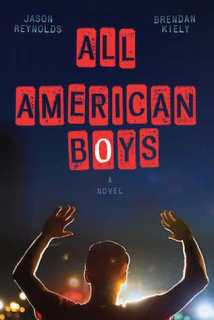
My heart hurt, and I am not sure about the timing, but I’m quite 25657130sure God told me to read the book All American Boys by Jason Reynolds and Brendan Kiely, the story of two American teens who attend the same high school:  one white, one black. Both with families who love them. Both caught in a situation that represents many we’ve heard over and over again:  “the repercussions of a single violent act that leaves their school, their community, and, ultimately, the country bitterly divided by racial tension.”

For the past couple of weeks my students and I have read some of the writing of Leonard Pitts, Jr. We read his work to learn to become better writers. Among others, we read “We need a better plan to probe police shootings,” and “We don’t want to watch police — but we have to.” We talked about Pitt’s message, and we analyzed his craft.

We questioned what we know has happened way too often, and we shared ideas and opinions about how the actions of some affect the lives of many.

We sat in a circle: Black and White and Chin and Mexican. We talked. And listened. We tried to understand.

All American Boys is a story for every classroom library. It’s a story for every classroom teacher. Every administrator. Every parent. Every police officer.

We must invite candid stories and candid conversations about race into our learning environments. How else will we ever learn to see past color into hearts and minds and hope?

Booklist Starred Review states: “. . .this hard-edged, ripped-from-the-headlines book is more than a problem novel; it’s a carefully plotted, psychologically acute, character-driven work of fiction that dramatizes an all-too-frequent occurrence. Police brutality and race relations in America are issues that demand debate and discussion, which this superb book powerfully enables.”

If you add one book to your reading list this fall, I hope it is All American Boys. It ranks right up there with Forgive Me, Leonard Peacock for books that will stay with me forever.

I need about 10 copies for my classroom library.

#FridayReads: 6 Ways to Stir Up Your Daily Book Talk

I’m not sure if it is because we are on the cusp of cold weather or that we just ended quarter one, but my students are dragging.  They rub their eyes more in the morning, carry in larger cups of coffee, and stoop a little lower in their chairs.

This lethargy seeps into even my strongest classes, which is why I like to change up my approach to book talks from time to time to re-energize students before they dive into their independent reading books.  Here are five ways I stir up my book talks.

  1. Musical Chairs: Music is naturally energizing and I love getting books in students’ hands FullSizeRenderquickly. This is “played” like typical musical chairs, the main difference is that students who sit in a chair also get to look at the book that has been placed on the desk behind them (I have separated desks and chairs so I face the chairs outwards).  The student left without a chair writes a “mini-book talk” on the board, which includes the title of the book they have read this year, the author, how many stars it would receive out of five, and a quick sentence to get readers interested.
  2. Group Book Talks: Getting students chatting about books is one way to ramp up energy at the start of class. My desks are grouped into fours, so students turn to their group members and book talk their current book (or a book they read prior).  Oftentimes there are repeat book talks from books I previously shared, but I reiterate the value of multiple perspectives and opinions.  What others notice as readers might be something I never thought to share.
  3. Guest Book Talks: I’ve spent years chatting with my favorite library staff about new YA books,FullSizeRender-3 but sadly it didn’t dawn on me to tap into their brilliance until this year.  Our phenomenal librarian Kathy Vetter book talked Between the World and Me by Ta-Nehisi Coates to my AP Literature students, and our AV and computer lab guru, Melissa Ciotti, book talked Little Brother by Cory Doctorow to my freshman classes.  By the end of their visits, all copies had been checked out of both the classroom and school libraries.  Next up, I have a PE teacher…and hopefully our principal! Students need positive reading role models in all of their educators.
  4. Speed Dating: I have mentioned speed dating with books multiple times before, but it is one of my favorite ways to get books off my shelves and into my students’ hands. I typically put the desks in a circle and have students rotate the books every minute or so, but I love Amy’s approach as well.
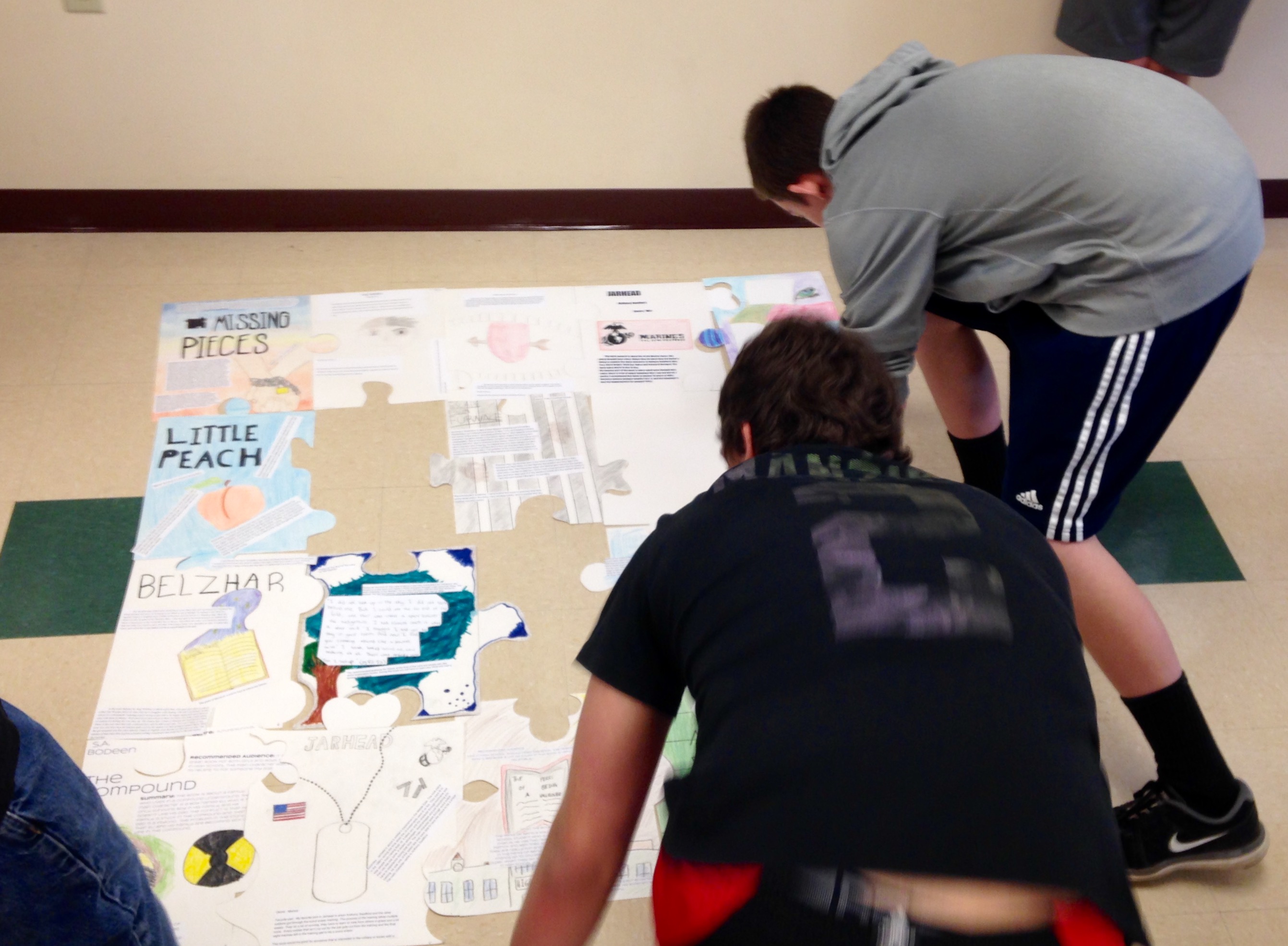
  5. Book Talk Puzzle: This is a longer project, but I love the final product.
    Students piece together their final book talk puzzle.

    Students piece together their final book talk puzzle.

    Students write out book talks on large puzzle pieces.  I have students discuss their favorite parts of the book and to whom they might recommend it.  Finally they draw their favorite scene, symbols, or images from the book.  Once the puzzle pieces are complete, we share our final products, build the puzzle, and put it on display for our peers.

  6. Book Trailers: I had my Advanced Composition students complete book trailers last year. The final films were phenomenal and provided excellent material for this year’s book talks.  I oftentimes play the film for my students then read an excerpt to expose them to the language.  There are some brilliant book trailers here and sprinkled across the Internet and TTT.

What do you do to change up your book talk schedule during the year? What are some unique ways you introduce your students to various titles?

#FridayReads: 14 Titles My Students Always Re-Read

NCLast week, Dylan looked at me with utter dismay when I told him that I still didn’t have the third book in the Maze Runner series.  Then, he brightened.  “I was actually kind of confused about some things that happened in The Scorch Trials.  Can I re-read it while I’m waiting for the third book to get returned?”

“Of course,” I agreed.  Musing, I jotted down some titles in my notebook that I wanted to re-read–my usual favorites, of course, but also books I’d only read once and had just loved–The Night Circus, Station Eleven, Zeitoun.  It made me wonder about what other books students wanted to re-read, so this past week, I asked them about it during conferences.  Lots of titles emerged, and I soon saw a pattern emerge–there were four reasons why they wanted to read particular books again and again.

HPSeries.  It quickly became apparent that if a new book in a series was coming out, re-reads were necessary.  “I’ve read the whole Harry Potter series three or four times,” Ryan told me.  “I understood all the hidden references and more about the characters the second and third times.”  Olivia agreed: “Those books are so complex there’s no way to understand everything in them the first time you read them.”

Anna read the whole Percy Jackson series twice “because I was in middle school and the struggle was real in finding books I enjoyed.  So I just re-read ones I knew I enjoyed!”

Shailyn read the Twilight series twice, and is reading it again now for the third time since the 10th anniversary editions were just released.  “I just loved the story,” she said.

Books that were being made into movies.  Mylana was adamant about this category: “I had to re-read Paper Towns really quick before the movie came out so I could tear it apart with how it didn’t compare to the book.”

Kaylee laughed and agreed: “I re-read The Fault in Our Stars for the same reason!!”

EPReally gripping stories.  “American Sniper was tough to re-read, but I did, because the story was so powerful.  I just wanted to experience it again,” Ryan said.

Eleanor and Park was the most beautiful love story I’ve ever read,” Olivia said, “so I’ve read it three times!”

“I re-read All the Bright Places, because it was probably the best book I’ve ever read,” Shailyn said.

“I read The Giver and The Help twice because I wanted to pay more attention to the moral story line and internal struggle in all of us that was portrayed so candidly in those books,” Anna said.

AFBooks they were assigned in school.  Mockingbird was popular in this category: “I’ve read To Kill a Mockingbird numerous times because it’s my favorite, it’s a classic, and because I discover new details about the trial and Boo and Atticus each time I re-read it,” Olivia said decisively.

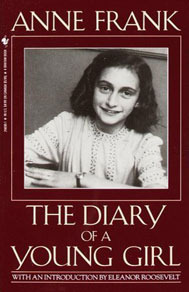
“I re-read The Diary of Anne Frank because I read it first as an assignment, but then re-read for fun because I wanted to think more about her time period vs. ours,” Mylana said.

“I had to re-read The Book Thief after it was assigned to me because I just wanted to focus on the storytelling the second time through,” Jonathan agreed.

What titles do your students (and you) love to re-read?  Share in the comments!

#FridayReads: Whole-Class Novels to Teach, and How to Frame Them

This past summer Shana and Jackie found that we’d both taken on a unique experiment within some of our classes–we had decided to strip them of whole class novels and instead focus on independent reading, book clubs, and smaller whole-class texts.  As workshop teachers confident in the power of choice reading, we each felt that this shift would be both empowering and inspiring within our classrooms.  After our year of experimentation, we both left our classrooms with unique perspectives on the power of whole-class novels as well as how we would incorporate them moving forward.

Today is the third and final installment of our week-long discussion using Google Docs.  Please, join the conversation in the comments!

41Cx8mY2UNL._SY344_BO1,204,203,200_Question 6: How is it different to be forced to teach a certain novel versus to be able to choose the ones you teach?

Jackie: I will readily admit that I am “forced” to teach To Kill A Mockingbird and Macbeth at the freshman level.  That being said, I love teaching both of them and am fortunate that my students respond well to both pieces.  The challenges are certainly different though.  I must create student buy-in or else my students will drag through the next four to six weeks of our unit.  I frame each lesson to fit their needs and I make sure to fit the book into a workshop structure the best I can to create consistency.

I do believe that teachers must have a choice in what they teach, though.  We must be allowed to tailor our lessons to fit the needs of our students.  Independent reading allows us to understand our students as readers and individuals, which in turn, allows us to further assess what books our students might connect with best.  Fortunately for me, the freshman team I work on is progressive and forward-thinking.  They’re always willing to try new things, which oftentimes involves integrating contemporary works.

Shana:  This summer in Tom Newkirk’s class, he innocently posed this question to our class:  “Why is the defining novel about race in our country written by a white woman?”  He was referring to To Kill a Mockingbird, of course, as many of us were discussing its lately-released sequel.  That question, so casually tossed into our midst, made me think about why the canonized novels taught in schools are often so heavily prescripted.  Why does Harper Lee have a voice of authority about being black in America?  Why do my rural students need to read a particular story about race?  I know why it’s important to read stories about people different than us–I would argue that it’s essential to building empathy and a broader worldview to read widely–but why does Harper Lee hold the monopoly on that topic, and not someone like Toni Morrison or Zora Neale Hurston?

As usual, I have raised more questions than I’ve even attempted to answer, but I’m still not sure of the correct solutions.  I think it’s preposterous to have a rote schedule of “books to teach” for all teachers in a school when it’s blatantly obvious that the community of every classroom is different, which means the culture of its students is always unique, which means that no child ever needs the same book at the same time.

Jackie: It’s funny that you bring up Tom Newkirk’s question.  As I was sitting next to you, I had one of those hide-your-face-moments when I thought, “Oh geez, I teach To Kill A Mockingbird!”  As I said earlier, I am required to teach this book, and while I love it, it does not meet the needs of all of my students.  Teaching in New Hampshire, I have a predominantly white population.  This means that their understanding of race relations and their exposure to diverse literature is rather whitewashed.  We desperately need new, diverse voices to help our students understand and empathize with a variety of individuals.  The precious few books we read together should be based on the needs and interests of our students instead of being dictated by a one-size-fits-all approach.

Question 4: What is the most effective way to frame a whole-class novel and create student buy-in?

Jackie: At the beginning of the school year I discuss the different types of reading we encounter as lifelong students.  I explain that, as a reader, I read for pleasure as well as for knowledge.  Oftentimes those two paths can and may cross, but typically my personal reading life looks drastically different from my professional reading life.  I love pouring through popular YA lit, but in the same breath, I can’t get enough of dissecting poetry with my AP Literature class.

This same pattern applies to my students’ reading within our classroom.  As a class we must learn to maintain a fruitful and engaging personal reading life that allows us to not only learn from our literature but to also explore our own interests and passions.  That being said, we mustn’t overlook the power of dissecting and discussing language and craft as a class.  Reading whole class novels reinforces the fact that no two people read a book the same way.

Shana:  If choice is the golden guide to teaching of reading, then I think the culture of a classroom must dictate the novel we read.  While A Raisin in the Sun was immensely popular in my inner-city Cincinnati classroom, it completely flopped here in West Virginia when I tried to teach it.  The inverse is true of Huck Finn; wildly successful in WV, but a total fail in Ohio.  Thus, I seek to hear the themes my students return to again and in again in their writing and conversations–this year, we are engaged in many discussions about political rhetoric, the origin of power, and the struggle that class/social/financial/ethnic differences create.  Thus, I’ll seek out novels that explore those themes to help us engage with them more fully.

In closing, we leave you with a list of the most successful whole class novels we have taught as well as a list of the books we would teach our current students if given the opportunity.

Most successful novels I taught, from Shana:28c4d1f2e8d048f702c3dbf0990aca8c

A Separate Peace by John Knowles

The Absolutely True Diary of a Part-Time Indian by Sherman Alexie

Macbeth by William Shakespeare

Fahrenheit 451 by Ray Bradbury

What I’d love to teach, based on my current students, from Shana:

Peace Like a River by Leif Enger

Boy21 by Matthew Quick

Poisonwood Bible by Barbara Kingsolver

Into the Wild by Jon Krakauer

Most successful novels I taught, from Jackie…(you’ll notice some repeats):51BWES5VL2L

Of Mice and Men by John Steinbeck (read aloud and performed as a play)

On Writing by Stephen King

The Absolutely True Diary of a Part-Time Indian by Sherman Alexie

The Glass Castle by Jeannette Walls

Macbeth by William Shakespeare

Fahrenheit 451 by Ray Bradbury

What I’d love to teach, based on my current students, from Jackie:

Sold by Patricia McCormick

Here, Bullet by Brian Turner

One Flew Over the Cuckoo’s Nest by Ken Kesey

All the Light We Cannot See by Anthony Doerr

Be sure to join the conversation today in the comments! We would love to hear your perspective on whole class novels and how you incorporate them into your classroom.

Click here to read day two of our conversation.

Click here to read day one of our conversation.

Whole-Class Novels: Why Do We Teach Them, Anyway?

This past summer Shana and Jackie found that we’d both taken on a unique experiment within some of our classes–we had decided to strip them of whole class novels and instead focus on independent reading, book clubs, and smaller whole-class texts.  As workshop teachers confident in the power of choice reading, we each felt that this shift would be both empowering and inspiring within our classrooms.  After our year of experimentation, we both left our classrooms with unique perspectives on the power of whole-class novels as well as how we would incorporate them moving forward.

Here is day two of our insights and discussion we’ve had over the past week using Google Docs (click here for day one).  Please, join the conversation in the comments!

Question 3: After a year without whole-class novels, how did you feel?MTI5MzY0OTk4NTM0MjQwNzM0

Jackie: At the beginning of the year, I felt like a rebel.  The thought of not only allowing but also empowering students through independent reading went against the entire curriculum within our department.  All of my colleagues taught whole class novels, which meant that none of my students had experienced the pure freedom of choice.  That being said, three-quarters of the way through the year, I missed whole class novels.  Despite having unique successes with the independent reading, my classes lacked the communal experiences of reading, discussing, and simply just enjoying (or sometimes hating) a novel together.  By the end of the year, I found that both my students and I missed some components of reading whole class novels.

Shana:  I reflected on my teaching after a year without whole-class novels (mind you, many novels were read through book clubs, literature circles, reading challenges, and independent reading), but I felt like the one thing that was lacking in all of my instruction was the idea of sustenance.  I wasn’t seeing my students sustain an idea for an extended period, or grapple with an issue over time, or try to live with a topic for more than two drafts and three weeks.  The case was the same in their reading and writing–I wanted them to have more length in their thought processes and I wanted us to engage in those long thought processes together.

Question 4: Why is teaching a whole-class novel valuable?  More specifically, why do we do it, and what skills are taught?

brave-new-world-bookShana:  I am not sure why I used to teach whole class novels, or, specifically, why I taught the novels I taught.  I know that there were valuable instructional methods behind the way I taught them (thematic units, Socratic circles, exploratory essays), but I don’t know if I had a sound rationale behind the obligation I felt to actually teach multiple novels to all of my students.

After a year without them, though, I find that the collective classroom experience of reading, interpreting, and discussing a novel produces a route for a unique connection to a text that cannot be achieved without reading as a group.  I missed the experience of coming to a new, shared understanding of a text as a whole class, and I felt that my students missed out on that experience as well.  I don’t believe that when I read plays independently in my undergraduate Shakespeare capstone that I would have comprehended, connected to, or engaged as passionately with those plays alone as much as I did through our frequent in-class discussions, activities, and writings.  I don’t want my students to miss out on that experience either.

Jackie: This year I am teaching AP Literature for the first time.  I took the challenge believing that this new course would be somewhat of a paradigm shift for me compared to my contemporary-lit based freshman English class.  The more I prepared, the more I yearned to discuss my thoughts, questions, and analyses of texts.  I went so far as to ask everyone around me to read these canonical classics and discuss them with me.  Preparing to teach AP Lit reinforced the social significance of reading literature.  At its base, dissecting stories as a group is interesting and engaging.  Beating the crap out of them is not.  I agree with you, Shana, in that the experience of sharing a text is one of the blessings of being in an English classroom.  Once students graduate from high school, they rarely have the opportunity to interact with texts in a classroom setting.

Shana: I love that the way you prepared to teach was to ask friends to read books with you, then discuss them.  You engaged in an authentic book club there, as I know you have your students do now.

More of our discussion will follow tomorrow.  Be sure to join the conversation today in the comments!