Tag Archives: Book Talks & Book Reviews

The Right Book May Be an Audiobook

headphones_bookMatching the right student to the right book is at the heart of the reader’s workshop, and lucky for one and all, there are plenty of great books to go around–even for the most reluctant readers.  As a reader’s workshop leader, teachers must be well versed in a variety of genres to do their jobs well:  young adult, nonfiction, and even the classics.  But what about audiobooks?

Admittedly…I’m a book snob.  I was dedicated to paper books for years, until I got married and my early-to-bed husband complained about my reading lamp’s brightness.  Enter my very first e-reader, with which I quickly fell in love.  I reasoned that even though I wasn’t reading a book, per se, I was still reading.  I still wasn’t on board the audio train, though; after all, listening isn’t the same as reading.

Enter my best friend’s move to Virginia Beach, then a 10-hour drive away from our native Cincinnati.  What was I supposed to do for 10 hours whilst driving to visit her?!  “Listen to an audiobook,” she suggested.  “Duh.”  So, I grabbed Thirteen Reasons Why on CD from our library, and (12 hours and a one-state detour thanks to being so caught up in the book that I wound up in Maryland later) I was hooked on audiobooks.

It’s important to note that listening skills are not the same as reading skills, but in the battle to build literacy, one is a scaffold to the other.  While decoding can only happen when a reader is looking at text, the analysis of universal themes, practice of reading strategies, and ability to make connections can happen with any text, written or oral.

“Understanding the message, thinking critically about the content, using imagination, and making connections is at the heart of what it means to be a reader and why kids learn to love books.” –Denise Johnson

Were it not for audiobooks, my own reading life would almost certainly be suffering right now, as I’m so busy and sleep-deprived with an infant, but I love listening to my favorite murder-mystery series in my spare moments.  In countless conferences with my student athletes, I’ve come to realize that their practice and travel schedules keep them incredibly busy on nights and weekends, and audiobooks have helped them remain readers in their busiest seasons, too.

I strongly believe that audiobooks can save, strengthen, and supplement any rich reading life, and as such, I take great pains to recommend this medium to my students, often in the following categories.

51NcMaqTCsL._SY344_BO1,204,203,200_Series – A great way to immediately get students hooked on audiobooks is to recommend a series they’ve already started.  Sequels to titles like The Maze Runner, The Knife of Never Letting Go, Percy Jackson, Harry Potter, Legend, Divergent, City of Bones, and more are great gateways to the world of audiobooks.

Books read by their own authors – Many writers read their own audiobooks, and it’s fascinating to hear the nuances of Michael Pollan’s or Malcolm Gladwell’s writing as he reads it aloud.  The likes of Maya Angelou, Neil Gaiman, Barbara Kingsolver, and even Barack Obama have deigned to offer themselves to readers in audio form.  It’s endlessly fascinating to me to add a new dimension to “reading like a writer” when I listen like one, too.

20910157Humor – Similarly, so many amazing essayists, comedians, and satirists read their own audiobooks.  Amy Poehler, Tina Fey, David Sedaris, Mindy Kaling, Neil Patrick Harris, and more are just a few of the folks whose movies or TV shows I’ve watched, and who’ve then joined me in my car or at the gym in audiobook form.

Challenge Books – Books that for one reason or another–length, difficulty, topic, multiple narrators–are challenging are great candidates for audiobooks.  I don’t think I could’ve made it through Unbroken, Behind the Beautiful Forevers, Thinking Fast and Slow, or other lengthy, difficult tomes had I not listened to them rather than read them.  Their tough topics and intimidating lengths would have been much too off-putting for me, and many students find themselves in similar situations.  Audio is my favorite way to scaffold students up to the level of a slightly too difficult text.

Whatever’s always checked out – No one could ever find Winger, Crank, Paper Towns, Because I Am Furniture, My Book of Life By Angel, Boy21, Red Queen, or The 5th Wave this year–they were just way too in demand.  Instead of waiting for those titles to be returned, many students opted to download the audio version instead.

What are your thoughts on the world of audiobooks?  Which titles are your favorite?

#FridayReads & Becoming (Twitter) Literary Critics

I am beat. My students are beat. I know you know exactly how that feels.

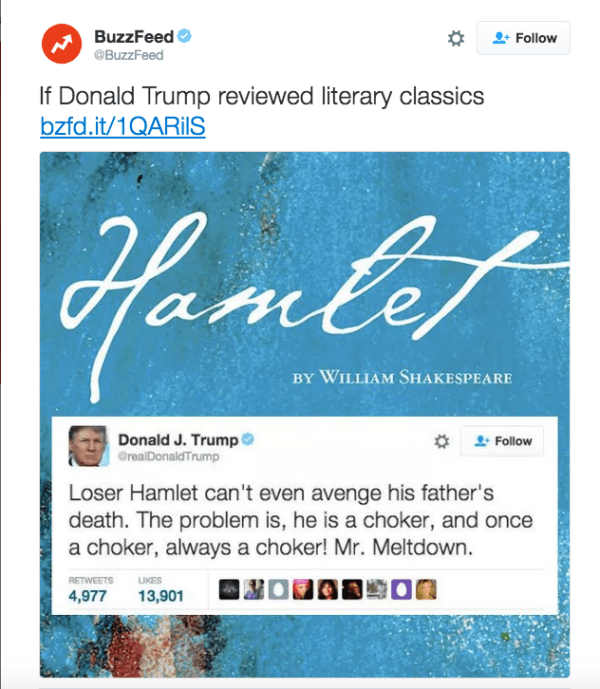
In an effort to lighten the mood but keep the idea of books and reading alive, my students and I had a little fun with Donald Trump. Now, it doesn’t matter what you think of the man or his politics, his tweets make pretty good mentor texts.

Screen Shot 2016-05-26 at 7.38.47 PM

I’m not the only one to think so — actually, I got the idea from someone Buzzfeed. Some clever writer put together a list of tweets, written as if Mr. Trump critiqued literature. Brilliant.

Screen Shot 2016-05-26 at 7.40.19 PM

So to have a little end-of-year fun, I asked my students to consider Trump’s sentence structure, and then write their own reviews based on the most recent books they’d read. Really, my only requirements:  a clear tone, but they didn’t have to be mean, and correct spelling and punctuation.

Here’s a few for your reading pleasure. Of course, the review makes the most sense if you are familiar with the books students refer to — I get that not everyone is as versed in YA like they might be the canon.

(Side Note:  To those who say students will never move beyond YA or ‘easy’ reading when it’s all about choice. Um, wrong again.)

What kind of end-of-year fun with books and reading — or anything else– have you had with your students? Please share in the comments.

Top 10 Books That Will Drastically Change Your Mood

img_1534I don’t know about the weather where you live, but it has been raining cats and dogs for a week here in West Virginia.  Baby Ruth and I are dying to go out for a walk, a coffee, a Target run–anything!!–but the rain is keeping us indoors and we’re feeling rather glum.

Luckily, I have a solution–reading.  It can transport us to other worlds, brighten our days, and alter our moods for the better.  Her little bookshelf is full of great titles by Shel Silverstein, Eric Carle, and other children’s greats, and mine is full of great titles like the ones my awesome student Giulia recommends below.

Giulia made a Top 10 List of books to drastically change your mood when reflecting on her semester’s reading last winter.  She realized that no matter what she was embroiled in–school, work, friends–these ten books could rip her away from reality and change her mood.  So if you’re looking for something to sweep you away, check out Giulia’s list below…and make sure you have these titles in your classroom library!

Giulia’s Top 10 Books That Will Drastically Change Your Mood

71VBpx0qsmLThe Glass Castle by Jeannette Walls

This is one of the few non-fiction books I’ve read. I was more interested in this non-fiction book because the events that took place in The Glass Castle were completely insane so it seemed more like a fiction book. I think this is why I was more intrigued. This girl went through the majority of her life with the most ridiculous parents. They traveled America and went on all these adventurers that most people would consider insane. One part of the book that really stuck out to me was when this girl was little, she was boiling hot dogs on the stove, BY HERSELF, and something happened where the boiling water spilled down the front of her body and she had third degree burn and scars for the rest of her life.

The Book Thief by Markus Zusak

This is one of the rare books where I’ve seen the movie first then read the book, and come to find out that the book was way way way better than the movie. Both the movie and the book made me cry like a baby, but the book was more interesting, obviously. The book is based around a little girl who is growing up in Germany during the Holocaust. She begins to find that she is fascinated with books and does anything she can to get as many books as she can. Her family also faces the fears of hiding a Jew in their basement. Everything that happens in this book seems so fragile to me because I basically get to see this little girl grow up and face the world.

The Sky is Everywhere by Jandy Nelson

This book was recommended to me by a friend and usually I like to discover good books on my own, but I decided to read it. It was a nice love story mixed with humor. I love when authors do that. This girl is in high school and her older sister just died so she’s living with her crazy grandma and uncle. She and her sister’s dead boyfriend begin to fall for each other, but they both know it’s a big no no. They finally start to come back to reality and realize that they aren’t actually falling for each other, they are just trying to find comfort in one another. Throughout the entire book, this girl is STRUGGLING to find her way out of a hole she fell in when her older sister died. It’s touching and humorous and I loved every single bit of it.

sun_375wI’ll Give You the Sun by Jandy Nelson

This book and the previous book both have the same author, Jandy Nelson. I’m assuming Jandy either grew up with a rather odd family or she has a rather odd imagination because both the families in each of these books are not your typically family. This is one of the first books I’ve read where one of the main characters is gay. It was definitely interesting, but not weird at all. The two main characters are a set of twins, both struggling with the divorce of their parents. One child is a boy and the other is a girl. Basically, they are both trying to get into this really nice art school, but the boy is trying harder than the girl. Throughout their childhood they are super close, like best friends, but as they grow older, there are a couple specific events that happen that tear them apart. This book, while wildly outrageous, was fun to read. It may seem confusing and slow at the beginning, to the point where you might contemplate finishing it, but it was totally worth finishing.

Everyday by David Levithan

I just recently read this book so it is fairly fresh in my mind. I was crazy about this book in the beginning, like I thought this was my favorite book of all time, and then it ended. It was maybe one of the worst endings I’ve ever read, but besides the ending, this book was ridiculously amazing. There were some things that were never answered, but then I keep thinking of how awesome the beginning of the book was and all I can do is fantasize about it. There is a boy and he is currently sixteen, and he wakes up in a different body every day. But there’s a catch. He only wakes up in sixteen-year-olds’ bodies, and it only happens in Maryland. It’s a little more complicated than that, but that’s the gist of it. On top of all that, he begins to fall for this girl that he only meets one day. He then continues to spend the rest of his “life” trying to find the girl he fell in love with all while trying not to harm any of the bodies that he inhibits. Crazy book, but ridiculously intriguing.

5152478Wintergirls by Laurie Halse Anderson

This book actually disgusted me in so many ways, but it was sooo good. These two girls have been best friends for a while, then one of them dies. Before the one girl dies, they make a pact to be skinner than the other… gross. The girl that’s still alive is literally insane. She starts hearing/seeing her dead friend. This girl continues to be as skinny as humanely possible. At one point I think her weight was a little less than 90 pounds, which is extremely poor for your health. She’s just having a hard time dealing with her friend’s death, so she is trying to feel better about herself by working out and eating basically nothing to reach her desired weight. The ending seemed a little rushed, but the rest of the book made up for it. I’ve never, in my life, read a book that seemed so realistic like this before. I didn’t know people like these girls actually existed or that it was so extreme.

Ugly Love by Colleen Hoover

I began to start reading books by Colleen Hoover because I wanted to take a break from some of the harsher books I’d been reading, so any of Colleen’s books are a nice book to read if you want to chill. The majority of them are all romance books, but not the cheesy kind. The main character is a girl who just moved into an apartment with her brother because she has a new job and is attending college at the same time, so she needed some help. Come to find out, her brother’s friend is insanely good-looking, so she is attracted to him immediately. There is something that this boy is hiding from her, but every time she tries to pry it from him, he immediately closes up. Warning: there is an EXTREMELY heart-breaking part in this book where I cried for a good ten minutes before continuing on with the rest of the book. The best part is that the movie is coming out in 2016 and I didn’t even know there was supposed to be a movie! So I’ve already made plans to go see it and determine if it will be as good as the book.

Dark Places by Gillian Flynn

I read this book shortly after I read Gone Girl, and this book was an intense, short read. I have always been intrigued with the most profuse, disgusting, murderous books I can find, and this book definitely hit that level. This family is based on a girl whose family was murdered when she was a little girl. Everyone in her family is dead except for her, her brother, and her deranged father. She lives by herself because her father fell off the face of the earth and her brother is in prison for supposedly murdering the rest of her family. Ever since she was young, this girl was told to believe that her brother was responsible for the murder of her family, but as she grows older, she begins to wonder whether or not her brother was actually capable of something so insidious. She starts to dig deeper into the history of the murder and discovers the real murderer, along with her family’s mysterious past. This book was simultaneously disgusting and captivating and I love how Gillian Flynn writes.

Gone_Girl_(Flynn_novel)Gone Girl by Gillian Flynn

Everything I’ve ever read up until the point of reading Gone Girl didn’t matter to me (until I continued reading other books). This book was that good. I mean I’ve never read any type of thriller like this before in my life and I will never forget this book. It wasn’t the shortest book, but I finished it in two days, and that’s quick for me. The book is centered around this man whose wife goes missing and of course, he is the main suspect. He begins to find clues to lead him to his wife’s whereabouts, which become more gruesome as the “scavenger hunt” goes on. I REFUSE to watch the movie because I know nothing can beat the book. It was excruciatingly hard for me to set this book down. While some of the book was rather sexually descriptive and intense, I still loved it. The ending made me mad, but a good kind of mad.

Sharp Objects by Gillian Flynn

I read this book after I read Dark Places and while I liked this book a little less, it was still amazing. I don’t know how Gillian Flynn comes up with all the insane, nasty events that occur in her books, but it’s all brilliant. This girl is a journalist and lives by herself, but she just heard about a good story to write about back in her hometown, where her deranged mother, father, and younger sister. So she travels back to her hometown and is temporarily living with her family. As she does some research about the murders in town, she starts to link them back to her family. This girl is also not the most stable, so she has a terrible habit of making her body a canvas, and by this I mean she is constantly carving words into her body with any sharp object she can find. While the girl may seem somewhat crazy, it is nothing compared to her mother. One part of the book sticks out to me where the girl was spying on her mother who was taking care of a friend’s baby. When her mom thought no one was looking, the mom bit the baby’s cheek hard enough to draw blood. Obviously, the mother is crazy as well, but everything ties in at the end. The ending is the best part.


What titles do you and your students love that drastically alter your mood?  Please share in the comments!

#FridayReads — A Book about Death to Teach Writing?

Last Saturday my niece and I attended the North TX Teen Book Festival.

Hundreds of teens stormed the book sales and stood in lines to get signatures from their favorite authors. Authors shared stories about their craft and their books while grouped in panels with interesting names like “‘Just a Small Town Girl’ Small towns — Big Stories,” and “‘The Book Boyfriend’ Sometimes Boys in Books are Better,” and “‘We’re Young and We’re Reckless, We’ll Take This Way Too Far’ Exploring mature situations in YA.

Raistlyn took notes. She is 14, a prolific poet, and is writing a novel.

Screen Shot 2016-04-26 at 9.09.01 PM

New books added to by to read next list.

For our last event of the day, we crowded in an overflowing room to listen to Holly Black, James Dashner, Sarah Dessen, Gayle Forman, Ruta Sepetys, Margaret Stohl talk about what it is like when books become movies. We oohed and aahed and laughed as they told of their experiences. (Margaret Stohl is funny!)

School busses lined the streets, and I cheered that so many teachers thought to bring their students. I did not. We were out of school the day before, and thanks to my poor planning, I never got around to getting a field trip approved.

I kicked myself after.

But I got a lot of great book recommendations, and my TBR tower is now named Eiffel.

I only bought one book. (Don’t tell. My husband and I have a bet to see who can resist 18883231buying books the longest.) I bought Denton Little’s Death Date by Lance Rubin because I heard the author talk with such excited wonder about this story and his experience writing it.

It’s the story of a boy who knows the date of his death. He knows because that’s the way it goes in his world — everyone knows the day they will die. Morbid, you say? Maybe.

But this is a comedy.

Hooked me. I need more books with laughs in my classroom library, and so far, this one does not disappoint. Here’s the excerpt I will share when I book talk this book:

Excerpt from Denton Little’s Deathdate by Lance Rubin p 66-67

I know different people and cultures have varying approaches to death, so in case you don’t know about the tradition of the Sitting, here’s the deal:  whilst waiting for death, you sit. You generally end up in a room of your house, probably the family room (ideally not the living room because the irony of that is too hilarious and stupid), where you’re joined by your immediate family and whoever else has been invited:  cousins, aunts, uncles, grandparents, girlfriends, best friends, and so on. Everybody communes and celebrates and waits for something to happen.

And something always happens.

Heart attack, stray bullet, seizure, fallen bookshelf or tree, stabbing, tornado, tumble down the stairs, strangling, drug overdose, fire, aneurysm. Not to mention the basics:  old age, cancer, pneumonia, other fatal illnesses. People have gone to great lengths to try and survive, but you just can’t. This guy, Lee Worshanks, in Pennsylvania, spent years working on what he called a Safety Room, the perfect place in which to spend his deathdate:  ideal temperature, rubber walls, dull-edged furniture, the works. When the Big Day rolled around, the room’s complicated security system somehow malfunctioned, and Lee found himself locked out. After hours of failed attempts to get inside his perfect room, he went a little nuts. He ended up electrocuted by some kind of circuit panel in the basement. So pretty much every possible variation on death in a house has happened to at least someone in the past few decades.

But you don’t know what the variation is, and you don’t know when in the day it will happen. That’s why the Sitting has always seemed insane to me. Who would ever want to be sitting in a room with their family for twenty-four hours straight? How is that anybody’s idea of a happy way to die?

Besides liking the narrator’s voice, I love how Rubin structures some of these sentences. This is a great passage to discuss syntax.  Look at that stand alone single sentence paragraph. Look at the lists and the use of the colon. And I love all those sentences that start with conjunctions. My students think that’s a grammatical error, and that leads to interesting discussions about why a writer might start a sentence with and or but or so.

I also love that example:  “This guy, Lee Worshanks, in Pennsylvania, spent years working on what he called a Safety Room, the perfect place in which to spend his deathdate. . .”

My students struggle with developing their ideas by using appropriate and convincing evidence. Here, right in a passage from a YA novel, is an example of an example I will use to illustrate examples with my writers. (My nerd factor is pretty high right now, isn’t it?)

Here’s the thing:  I loved attending that book festival with my niece. I loved listening to authors talk about their writing. I loved getting new ideas for books to share with my readers. And I really love that I found this one little passage in a pretty clever book about how we face and talk about death I can use with my students.

Reading is fun. Isn’t it?

*Note:  Did you know there’s a site that will predict the date you will die?

Try it Tuesday: Book Talks on the Big Screen

A few months back, my family was featured on a commercial for a local furniture store. We got paid handsomely to sit on a couch and look happy (easy) and cute (easy for my toddler). No dialogue. No acting. Just…sitting. It was well within my wheelhouse.

When the commercial ran, my daughter Ellie would race up to the screen in our living room, point excitedly, and exclaim, “LOOK! It’s ME!” Anytime she heard the telltale voice of the announcer, she would drop whatever she was doing and run to see if she was “in the television” again.

Her reaction was adorable (I’m biased), and pretty typical for a little kid who loves smiling for pictures and seeing herself in videos, but it would seem that as we grow, our perception of ourselves on screen tarnishes a bit. I mostly noticed how painfully true it is that the camera adds ten pounds. How cruel.  Thankfully, others often aren’t paying attention to such trivialities (I hope).

What’s important is the content.

In our classrooms, content takes many forms, but no matter the medium, we’re looking for the message to come through loud and clear. For example,  I teach my students when we work with speaking and listening standards that if we keep the message on pointe (Hurry in for the one day sale…) and organized (Hurry in today; it’s a one day sale), our audience will hopefully focus on the content (Wow, I could save serious bank on a sofa…todayand not our appearance (Hey, she looks like she packed on a few pounds. Ten. It looks like she packed on ten pounds). 

So, let’s consider what this means for readers workshop in our classrooms.

Book talks are central to a readers workshop. As such, many of us do them each and everyday. Amy and Shana recently discussed how and why they book talk in class, and one of the most useful quotes I took away from that post was when Amy reiterated the essence of a book talk, saying, “The best book talks are short, energetic, and introduce the book in some insightful or clever way.”

It’s simple: We want to hook our audience. The content is clear (This book is fantastic and you’ll love it too! ) and so is our mission (Read this book!).

With all this in mind, I’m going to ask you to come with me to a place that might make some of your a bit uncomfortable. However, in terms of risk-reward for the promotion of choice reading, this will be well worth the effort.

Let’s take our book talks to the big screen! 

Just as Ellie loved seeing herself on screen, students of the digital age delight in the visual medium. So, to add to our book talk repertoire, and even broaden the audience for books that delight our reading communities, here are three simple ways to switch up book talks in your classroom and keep things fresh and clever (personal screentime optional!). 


  1. Guest book talks caught on tape! Several months ago, I read and delighted in Jackie’s post on ways to stir up book talks. One of the suggestions I got rolling with was the guest book talk. Jackie insightfully wrote that “students need positive reading role models in all of their educators.” How true!

    I grabbed my phone and went down to Señora Ovalle-Krolick’s room. She had been speaking passionately just a few days before about Richard Wright’s Black Boy. I have yet to read this classic and I knew that her enthusiasm for the text would captivate my students. Before she could say no, I handed her the book and told her that I needed her passion. I asked her to tell me a bit about the book, her reading of it, and why she was recommending it. Her video, captured in one take, spoke beautifully about the text and her connection to it.

    Due to scheduling, it wasn’t possible to ask Alejandra to come to each of my classes, but with the video below, I was able to share it with all of my students. I’ve been working on my Social Studies neighbor next. He’s set to book talk via video next week. And all we need is my phone to get recording!

    https://www.facebook.com/lisa.n.dennis.7/videos/10154184296661549/?l=2213863947109559232

  2. Go big or go home – book talks on our school’s student newscast. Each week, the fantastic video production students at Franklin High School produce The Saber Roar. In recent months, I’ve helped an amazing student, Tasha Kappes, start a segment entitled Saber Reads. Students, teachers, and administrators (even a few from the district office!) have signed up to book talk some of their favorite selections!

    Here is Jessica Lucht, one of my amazing AP students book talking  The Young Elites by Marie Lu right around minute 2:45.

    In this episode, zip to minute 3:40 to see a book talk I did with my colleague, bestie, and partner in crime, Erin Doucette on Kristin Hannah’s The Nightingale. 

  3. Borrow brilliance from the internet. I learned about Reel Reading from Amy. Book trailers combine all of the elements of a great book talk, with the added bonus of moving pictures, music, and sometimes analysis or quotes.  In a post from several years ago, Amy’s students came through with some wonderful book trailers.Jackie talked about using book trailers in this post from last year, and I used a few of her links when I was feeling stuck in supplementing my own book talks recently.

    Just last week I wanted to book talk the Pulitzer Prize winning book The Road by Cormac McCarthy. I found the book trailer below the hooked several students with its haunting music and connection to the movie that was made from the book.

What ideas do you have for taking book talks to the big screen? What questions do you have? Please feel free to leave your comments and questions below! 

Books That Gave Me The Feels

I’m a big fan of all kinds of reading–sweep-me-away books, books that are dense and time-consuming, mysteries that puzzle me when I’m trying to fall asleep, books that break my heart, and more.

I think the teenage version of that whole entire category is “the feels.”

Books that are powerful, that grip us and force us to grapple with them, are what “the feels” are all about.  This is what I hope my students read for the rest of their days–far beyond the measly month or so they have left of high school.  I’m heartened by Emma’s recommendation list below–her blend of mystery, YA, and nonfiction that just rips at her heartstrings–because I know she’s already discovering books that give her the feels, and I hope she’ll continue doing so beyond our classroom.

img_1549-1Emma’s Top 10 List: Books That Gave Me The Feels
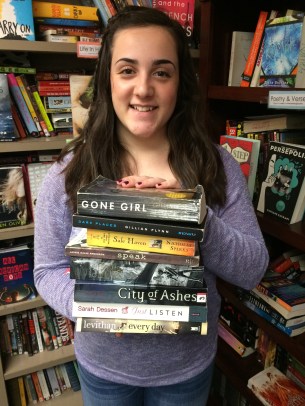
  1. Stolen by Lucy Christopher – 

This book is crazy good. It has the most twisted and unexpected plot line in the history of books. With kidnappers then romance it is just freaky good. It would keep basically any reader captivated. A mixture of romance and just plain old creepiness.

  1. Gone Girl by Gillian Flynn –

I love weird creepy things and this book is exactly that. It is an amazing mystery with a heart dropping twist that left me feeling sick to my stomach. If you are a disturbed human being like myself, this is a must read.

  1. 13 Reasons Why by Jay Asher –

The overall idea of this book is sort of hard to wrap your head around. Suicide is a sensitive subject and this book makes it very real, almost as if you are living through the events. It is an interesting way of telling the story.

  1.  The Hunger Games by Suzanne Collins –

Though cliché, this series is very good, and perfect for my list because it pulls out a lot of emotions. All the action and loss and real world situations that are incorporated make it a very good read.

  1. If I Stay by Gayle Forman –

very emotional book that weighs life and death. It is an interesting way of telling a romance story while keeping the reader on their toes the whole time for fear that it might end forever.51clOkezoKL._SX329_BO1,204,203,200_

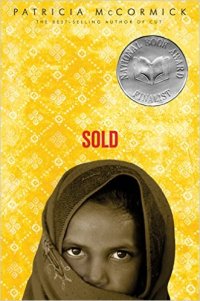
  1. Sold by Patricia McCormick –

More than anything this book is written beautifully, but the story is also very touching. The real life of a poor girl who gets put in situations out of her control is truly touching. It is a very easy read but very worth is because it is so touching.

  1. The Lovely Bones by Alice Sebold –

This book is good because it is told from the point of view of Susie, a girl who was murdered. It’s a cool way of an outsider point of view to the family who is struggling with their daughter’s death.

  1. The Fault in Our Stars by John Green –

On the more romantic side of my feels, this book ripped my heart out, along with every female heart in America. Illnesses are no joke and this book displayed the worst of circumstances, losing the one you love. It was a difficult book to read without crying.300x300

  1. Mere Christianity by C.S. Lewis –

On the complete opposite spectrum of any book genre. This book gives my Spiritual feels a tug. This isn’t a story with mystery or romance, it is just real life, telling you straight up how it is and I don’t know about you, but I’m a mess and when that is brought to my attention, the emotions start flowing. Plus, C.S. Lewis is a beast.

  1. 50 Shades of Grey by E.L. James 

I’ll start by apologizing for adding this book to my list but I don’t read many books so I don’t really have a choice. But hey, if awkwardness doesn’t give you the feels, what does? I can say with certainty that this novel will make you feel some type of way. Whether it’s good or bad, that’s up to you to decide.

“Plus, C.S. Lewis is a beast.” Don’t you just love that?!

What books give you and your students the feels?  Share in the comments!

Book Talks & How To Do Them–#3TTWorkshop


img_0331-1

Amy booktalks during our visit to Franklin High School

Conversation Starter:  What’s a book talk and why do you do them?

Shana:  Booktalks are a structured way to fangirl about my favorite things in the world: books.  I do two booktalks per class, right after independent reading wraps up.  They’re a great way to transition from the relaxed reading mood of the classroom and move into the fast-paced work of critical reading and writing, but they’re also the number one change I’ve made to my teaching that has influenced how much I can get my kids reading.  Three years ago, I only did booktalks whenever the mood struck or whenever I got new books into my library, but now I do two a day, every day, no matter what–and it’s made an incredible difference.

Amy: You are an inspiration in consistency, Shana. I’ve done better at doing book talks this year than I have in the past. I try to do two a day as well — one non-fiction book and one fiction. I always seem to fall off the wagon at some point though. The demon, impending testing, pulls me to the dark side every year. I’m putting up a good fight this time around, and I have a plan to reinvigorate, not just my book talks, but the reading that’s happening in my room. Curiosity and intrigue: my goal for better book talks.

Is there a set protocol for a book talk — like length, reading a passage, etc?

Shana:  Just talking books is the biggest nonnegotiable for me.  While most days I do follow a protocol–one fiction, one nonfiction; 2-3 minutes per book; always share a passage, a brief plot teaser, and my own reading experience; try to mention a student who’s read the book–some days I just have to gush over a book that’s been recently returned, or a book I am reminded of during conference time, or some new items I’ve purchased.  Either way, I talk books every day, no matter what, which helps students become accustomed to exposure to new titles, adding books to their what-to-read lists, and hearing about trends in authors, genres, or topics.

Amy:  Remember at Penny Kittle’s Book Love class at UNH two years ago how she had everyone model a book talk? She set no guidelines other than modeling a few for us. After just a few turns, it became clear:  The best book talks are short, energetic, and introduce the book in some insightful or clever way. I try to do that.

When I read the books in my library, I look for passages for craft studies or beautiful sentences we can use as mentors. Sometimes I share those in book talks without doing the study — we just enjoy the language or listen to the voice of the narrator. I’ve started asking questions and trying to get my students to think about the topics the writers might address in the books. Just another way to get my readers to make a connection with writing.

The hardest books to book talk are the ones I haven’t read yet, but even those are doable when we show genuine excitement about the book. Why would I have a book in my library if I am not excited about students reading it? That’s a pretty easy sell in and of itself. It’s fun to get students to ask questions about the cover and to read the comments.

41drZBnWSzL._SY344_BO1,204,203,200_How do you decide which books to talk about within each unit?

Shana:  This is pretty easy for me since most of my units of instruction are themed.  For reading units themed around a topic, I find lots of books about that topic, or that contribute an alternate perspective to whatever central text we might be reading.  (Example:  While reading Siddhartha and thinking about coming of age and going on journeys, Outliers, Marcelo in the Real World, The Other Wes Moore, Paper Towns, and Their Eyes Were Watching God fit right into our unit.)  While in the  midst of a writing unit, I think about books that might serve as mentor texts in terms of topic or structure, or that are written by authors who serve as good mentors in general.  Other times, I have no rhyme or reason to my booktalks, because I simply MUST talk about a new book (like Dumplin’, which I just read and LOVED and had to booktalk randomly.)

Amy:  I structure my units more around genre than theme, so my book talks are more random than yours. Hey, maybe that’s the problem with my consistency!

My students and I talk a lot about aesthetic and efferent reading. I want them to understand the importance of making connections with the books they choose to read, and lately, I’ve seen that there is a real disconnect. Just because students choose books does not mean they are making personal connections to them. This is in part why so many of my students this year are having a hard time sticking with the books they choose. Because I know many are abandoning books so quickly, I’ve been working on getting students to talk a lot more about topics and how writers approach these topics. My hope is that my non-readers will find interest in learning about things, even if they are not interested in reading for the pleasure of it.

I’ve done several book talks this year around a topic; for example, depression, which is one of my 11th graders’ favorite topics to write about this year. Forgive Me, Leonard Peacock, Every Last Word, My Heart and Other Black Holes all flew out of my hands, and I had to get more copies.

Do you ever have students conduct book talks?

Shana:  Very occasionally, I do, when it’s really authentic.  When a student finishes a book and just raves about it during a conference, I ask them to share that enthusiasm with the class.  Last quarter, I asked all students to read a challenge book and then complete their choice of follow-up activities with the book–one choice was a booktalk, and the students who shared about the titles they loved did spark some interest in their peers.  However, those booktalks didn’t go over as well as the ones that arose from sheer exhilaration, so I think my future goal will be to limit student booktalks to spontaneous ones only.

Amy:  Like you, I rarely have students conduct book talks — at least the way I do. I’ve tried, but you are right, without the spontaneous excitement about the book, the other students just do not respond the same as they do when I conduct the book talks.

However, I do have students talk about books with one another. Most of the time it’s pretty informal:  Talk to your table mates about what you are reading. Sometimes it’s a little more formal:  Speed dating with a book, which is one of our favorite ways to share books.

What are some other ways you talk about books with your students?

Shana:  Basically, I bombard them with talk about books all the time.  When I see current or former students in the halls, I ask them what they’re reading.  When they come to visit me, I urge them to leave the room with a new book.  I make lots of segues in conversations from all topics to all books (mostly because this is just what I do in real life…ask anyone who knows me).  I also share with students all the time what I’m reading, and why they might like a given book.

Amy:  We are so much alike! I love to have former students borrow books, and I talk about books with every person who will listen — and some who don’t. I also try to get students to engage with me on Twitter, using the hashtag #FridayReads to share what they are reading each week. A few students set up accounts and we follow each other on Goodreads. I love those kids! I’ve also started a favorite quotes wall, and I’ve asked students to pull significant lines that lead to theme and/or beautiful sentences that show author’s craft. Getting students to pay attention as they read, noticing how writers use language to create meaning, leads to significant improvements in their own writing. Without fail, it’s my best readers who are also my best writers. If only more students would get that.

Do you have topic ideas you would like us to discuss? Please leave your requests here.

Best Books About Life and How to Live It

Amy and I have been talking a lot lately about how to help our students connect meaningfully to the books they’re reading independently.  This focus on personal connections stems from our recent reading of  Louise Rosenblatt’s work, our effort to make our instruction authentic, and our noticing of the ease with which our students disconnect from the world.

One activity we gave our students the option to complete was the creation of their own Top 10 Lists, like this one.  Emily’s list is titled “Life and How to Live It,” and it is full of her own personal connections.  It’s reflective of Emily’s desire to become a published other, full of her love for literacy and learning about the world through reading.  I hope her passion spreads to your students when you share this list with them.

img_1502Emily’s Top 10 List: Life and How to Live It
Here, I present to you my top ten favorite books all loosely based around my personal favorite theme to read about: life and the different outlooks different people have on life. Some see the good in life, some see the bad, and others get to see both. Each one of us will face hardships throughout our lifetime while later on finding that one thing that makes us feel as if we have a purpose to exist. When we first open our eyes at the beginning of each day, we are faced with the option to treat this day like a curse, hiding away from this beautiful life we are given to live, or to focus our attention on the positives we have. The choice is yours.

The Giver by Lois Lowry

The Giver is hands down my favorite book of all time. I first read it in middle school and have been in love with it since then. The idea is basically that Jonas, the main character, lives in a utopian society with no bad whatsoever. At age 12 everyone in this society receives their career, and Jonas has a difficult time dealing with the career he has been given. I love this book for a few reasons: one is the way that the book itself is written, and the other is the story behind it. I love the idea that Jonas is the only one who gets to see the bad in the utopian society, because to me it sends the message that what may seem perfect, deep down has repressed secrets we all can’t see.

Of Mice and Men by John Steinbeck

Of Mice and Men: a classic. In this tale Steinbeck tells the story of George and Lennie, two friends who take on the hardship of the Great Depression. Lennie, however, takes on more considering he is practically a father figure to George. Times get hard, but they don’t give up on each other. In the end, Lennie realizes that sometimes no matter how much you love something, if it’s not what is best for you then you can and will be able to survive without it, no matter how hard it is. I think overall this is the reason why I love this book so much.

Tuesdays with Morrie by Mitch Albom

This book brings me to tears–a lot of tears. Based on the true story of a young man who is happy in his life, living a life full of money and materialistic things. On the other side of the story, his old college professor Morrie is diagnosed with a deadly disease and must reunite with Mitch to teach him the things in life that are truly important. I love the idea behind this story, that in life we get lost in materialistic things and lose sight of the things that are most important in this short life we are given.

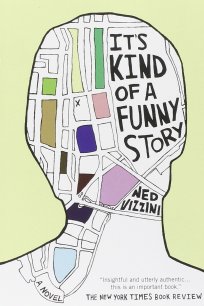
717Tx5+P+7LIt’s Kind of a Funny Story by Ned Vizzini

The relationship between myself and this book is remarkable. I can honestly say that I personally connect to it more than most other readers. This book is about a young man who deals with severe depression and one night decides to admit himself into the hospital after contemplating suicide. He then spends a week in a psychiatric hospital, learning things about himself and everyone else. Vizzini actually spent time in a psychiatric hospital before writing this book which makes it that much better considering he can grasp the inside look on what it’s really like. I, myself, have spent time behind the doors of a psychiatric hospital, and strangely enough my story started off almost the same way Craig’s did.

Perks of Being a Wallflower by Stephen Chbosky

Yet another amazing book that has the ability to bring tears to my eyes. The Perks of Being a Wallflower follows the story of Charlie, a freshman in high school who is struggling with depression and anxiety issues. Through letters, he talks about the good days and the bad, along with what is going through his mind. Charlie befriends Patrick and Sam who being to show him that it is okay to be different from everyone else.

Looking For Alaska by John Green

Looking for Alaska by John Green is a beautifully written story of a young boy who develops the nickname Pudge at a private high school where he meets and falls in love with the beautiful Alaska Young. So much happens while they are there together and he learns a life lesson. She teaches him to not be afraid of life, to go out and grab it because it can be a lot shorter than we expect.

Paper Towns by John Green

Paper Towns tells the heart-warming story of Quentin Jacobson who has secretly been in love with the girl next door, Margo. Margo taught Quentin a lesson which is the main reason I love this book so much – she taught him to go through life without being afraid of adventure. This is one of my top favorite books because I relate to Margo and her adventurous personality. I love Morgantown but I have always wanted to move somewhere where I can start completely over – the idea of recreating myself in a new place is thrilling.

410BrI9l37L._SY344_BO1,204,203,200_Skinny by Ibi Kaslik

Many teenage girls face a deadly mental illness – anorexia. Skinny tells the story of Giselle and how her battle with anorexia has flipped her life around. It also tells the story of her younger sister, Holly, and how her sister’s disease is effecting her life as well. The writing in this book was not my favorite, but it was still a great read. I love the idea that someone would want to put the issue of anorexia into words. My favorite part of the book, and the main reason it made my list of favorites, is the fact that it not only goes into the mind of the person facing the anorexia but someone close to her as well.

Afterparty by Ann Redisch Stampler

When I first started reading this book I didn’t think I would make it through but I’m glad I decided to finish it. Afterparty follows the story of a quiet girl who moves to a new town and decides it’s time for a change. She meets new people and gets to experience new and exciting things. This is something I have always wanted to do, which is why it made this list. Getting into a new place where you get to start completely over is more than exhilarating.

Everyday by David Levithan

Have you ever wondered what it would be like to be someone else for a day? To get inside of their minds and read their deepest secrets? A, the main character in Everyday, gets to wake up in a new body each and every day. To me, the idea of this is both terrifying and fascinating. When I was reading this I was thinking about the psychological aspects of this because I want to become a psychologist one day so I will be in people’s mind, understanding then, just as A does.

What other titles teach readers about life and how to live it?  Please add your recommendations in the comments!

Best High-Interest Books for Teens

This year, Amy and I were determined to make our exams authentic.  One of the options for the reading portion of the exam was for our students to create top 10 lists, and many of them did.  Their lists are funny, honest, and so valuable for helping spread the word amongst readers about good books.  Below is Aleigha’s list of recommendations for high-interest books that will hook teens and get them to fall in love with reading–feel free to share them with your students!

img_1175Aleigha’s Top 10 List:  Best High-Interest for Teens
  1. Fangirl by Rainbow Rowell

Though this book was funny and lighthearted it still had the ability to change my life.  It really helped me realize that you should appreciate your siblings while they are close to you.  Seeing how quickly Cath and Wren distanced themselves in college put my relationship with my siblings into perspective.

  1. Eleanor & Park by Rainbow Rowell

This book is so much different from your usual love story. By that I mean it’s extremely realistic. It changed my life because I could picture myself as Eleanor. It was one of those books that are so realistic it’s kind of scary not many love stories can make you envision yourself as the character.

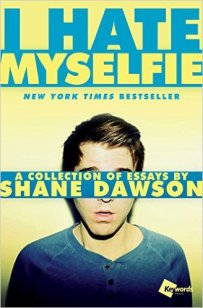
  1. I Hate Myselfie by Shane Dawson

hatemyselfieI have never laughed so hard while reading a book. This guy literally takes everything that should have been traumatic to him and turns it into humor. This book changed my life because it taught me that it is important to laugh at your own pain. You shouldn’t take everything so seriously.
  1. Looking for Alaska by John Green

This book for me is one that really set an example. It breaks away from the normal click of kids you have in high school and puts a group of complete opposites in a single friend group. That was one of my favorite things about this book. It just kind of made me feel like it’s okay for me to talk to the jock or the pothead.

  1. All the Bright Places by Jennifer Niven

This book is very eye opening. It is about two teenagers who bond over a mental illness and fall in love it. It makes you very aware of the signs of depression and makes you analyze not only yourself but others. This book has the ability to change lives because it teaches you about the sensitive topic of depression.workinprogress

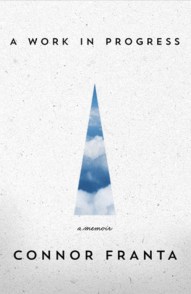
  1. A Work in Progress by Connor Franta

The author of this book is a Youtuber who tells you all about his life in high school and his YouTube journey. The book itself contains a lot of life lessons. He tells a story and then wraps it up with a lesson at the end. I enjoyed this book a lot because it shows how a normal really small town kid can become really successful with hard work.

  1. We Were Liars by e. lockhart

If we’re being honest, the only reason this book changed my life is because it just made me really depressed. I was just extremely upset once I reached the end of it. I didn’t want to believe what had happened was true and I cried for the main character. And then I cried because what other reaction can you have to a book that ended so terribly. So I guess this book changed my life because it made me realize that I cry more for fictional characters than I do for people I actually know.  

  1. The Fault in our Stars by John Green

Again another book that screwed me up emotionally. This one really does make you cherish your life and your friends. If after reading this you are not greatful for what and who you are blessed with that will be a surprise. Everytime I read this book I don’t just form my own imaginary relationship with Augustus Waters. I also find myself being very thankful that I have experienced little loss in my life.  This book is another one that puts it all into perspective.

  1. Every day by David Levithan

Every day is a book about a person who wakes up in a different body every day. He never has the chance to experience what it is like to have a family or best friend. This book is perksofbeinglife changing for me because it makes you appreciate the blessing of continuity. I think having a constant in your life is something that we all take for granted.

10. The Perks of Being a Wallflower by Stephen Chbosky

The Perks of Being a Wallflower is one of those books that make you really cherish your friends. Until you find out what happens to Charlie as a child, you assume the book is about a young boy coming out of his shell. As u read through the book, you experience the ups and downs of friendship and watch Charlie become a whole new person. This book has made me really appreciate my friends.

Five things you can do to guarantee your students will read

“Pull up a chair. Take a taste. Come join us. [Books are] so endlessly delicious.”
― Ruth Reichl

I’ve spent a lot of time with the love birds my children gave me for my birthday. They are beautiful. Marianne and Colonel Brandon And scared. I made the mistake of not reading enough about them before I tried my hand at training. Now, I am having to back track just to get them to like me. I knew better. Should have done my research.

It all starts with trust. Every day I put my hand inside the cage, hold it there, and just talk. I talk about the weather — it’s been quite tragic in north TX lately. I talk about the book their names come from — Sense and Sensibility. (My daughter dubbed them Marianne and Colonel Brandon.) I talk about how we will be the best of friends if they will just trust me.

Colonel Brandon bit my finger and held on so hard I stamped my feet for five full seconds hoping he would let go.

I’ve even tried speaking my limited Spanish. (The birds came from a Mexican vendor at an outdoor market.)

“Hola, buenos dias.”

Sitting on the floor near the cage is my school bag. In it is my conferring notebook. It holds a roster with check marks for books read and pages for each student where I record our conversations about books and reading.

This morning I was finally able to get Marianne to step up on to a perch and gently pull her from the cage. She sat on the top, eating happily on a millet twig. Progress.

I flipped through the notebook, remembering conversations I’ve had with students this fall.

“I used to love to read,” Henry told me, but then I didn’t like textbooks so I didn’t read anything again until 8th grade.

“What do you mean textbooks, you mean like an anthology of stories and poems and such?”

“Yes, those,” he said, “I hated those, so I just didn’t read anything in middle school. Then my teacher in 8th grade let us choose the books we wanted, and I read a ton. Hunger Games, Divergent, all those dystopian books. Then in 9th and 10th it was back to textbooks. I stopped reading.”

Henry was a hard sell at first. I’d already set up the routines in my reader’s workshop classroom. He missed the read arounds, the notebook set up, the initial book talks with the titles I know students love every year. And just like with my birds, I started wrong with Henry.

I expected him to step up without question into our reading world. He didn’t.

I had to back track and build some trust. I’d do a book talk and then set the book not far from him. I’d talk to other students about their reading near enough so Henry could hear. I’d ask Henry questions and I’d listen to his answers, so he would know I cared about him as a person more than as a reader.

And Henry started reading.

Henry has read four books since September when he joined my class:  Article 5, Friday Night Lights, Peace Like a River, and Labron James’ Dream Team.  Not bad for a young man who went two years without reading anything in 9th and 10th grade.

For any teacher who says independent reading just doesn’t work for you or your students, I issue this challenge:  Backtrack and try again.

Five things you can do to guarantee your students will read:

  1. Read. The more you read books you think your students will enjoy, the more you will be able to talk about books your students will enjoy. Don’t have a clue about YA? Read anything by Matthew Quick, A.S. King, Jandy Nelson, or John Green (my personal favorites). You’ll have a good start.
  2. Share book talks daily. Talk about books you know students love. If you don’t know titles, ask your librarian for help, read book lists like this one, read lists we’ve shared in previous posts.
  3. Show book trailers. I used to post book trailers on this blog. You’ll find many post with trailers, interviews, and other ideas here.
  4. Get students talking. The more students talk to one another about their reading the better your chances of getting all students to read. One favorite activity in my classroom is speed dating with a book.
  5. Give students time. I heard it first from Penny Kittle:  “If they aren’t reading with you, they are not reading without you.” We must give students time to read during class. Too many teachers and administrators think silent reading is not a good use of instruction time. FALSE. The only way to become a reader — or to become a better reader — is to read. If we want students to develop the habits of life-long readers, we must help them develop the habits in class where we can help them 1) stay focused, 2) learn what readers do when they get stuck, 3) practice choosing books for learning and for pleasure, 4) make plans for future reading.


What tips can you share for anyone who’s struggling with independent reading? Please leave your suggestions in the comments. Thanks!