Tag Archives: AP English

Doing More with Essential Questions: Where and How Do I Belong?

As I read through Cyndi Faircloth’s post a few weeks back on Applying Essential Questions in Workshop, it got me thinking about the role of essential questions in my own classroom. As Cyndi said, I needed to do more. Using the essential question to choose mentor texts, guide quick writes, and frame discussion, we had done. I also encourage students to see the essential question as something answered by each and every text we encounter.

But this was about doing more. This was about students answering the question for
themselves; students lending their unique voices as “texts.” I was going to need to look at this from another angle.

My AP Language and Composition students recently finished a unit on community. Theyimageworked in and around the essential question, “What is the relationship of the individual to the community?” Through the study of a variety of essays, including everything from Henry David Thoreau’s “Where I Lived and What I Lived For,” to Scott Brown’s “Facebook Friendonomics,”  to student selected current event articles, I watched my scholars analyze text to connect author’s purpose with rhetorical strategies. However, beyond that, I was blessed to be able to witness a conceptual development in these classes too. 
Students seemed genuinely surprised when they considered just how many communities they are a part of: geographical, family, faith, school, sports, friend, experiential. But when they started to consider their roles within those communities and words like responsibility, conformity, and balance began to dominate class discussion, I knew they were really on to something.

Students spoke of the dangers of conformity alongside the necessity for it. They explored the freedom found in chosen communities and the often unwelcome responsibilities to those communities we fall into by default. I saw them wrestle with the concept that communities rise and fall based on the actions and inactions of their members, and then saw evidence in more than one journal entry of the very real concern students have for their own part in that equation.
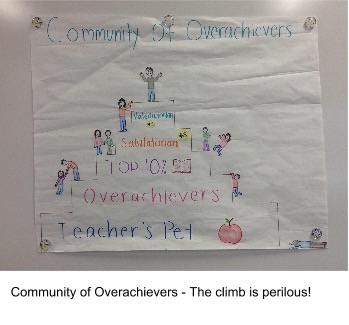
image_2As these kids get ready to head off to a world beyond the insulated suburban existence most of them have known all their lives, they know many of their foundational communities will be changing. For some, this change can’t come soon enough. For others, I think it will be a rude awakening. And still others, a chance to move toward the authentic selves that they so desperately need to discover.

To bring this unit to a close, I wanted to harness all the unique inquiry that we had experienced. To do so, I borrowed from my American Literature class. Throughout this year, my sophomores have started each unit by doing a bit of research on literary movements in American Literature (somewhat of a snoozefest to many). I wanted them to have some contextual understanding of the mentor pieces we would study, and so they gathered information on historical events responsible for the movement, major themes of works at the time, elements of style popular during the period, connections to music and art, and famous authors working within that movement.

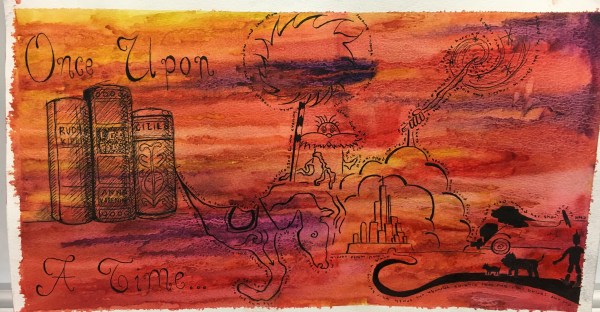
Students gathered and compared their research findings in small groups and then were charged with symbolically representing their research on poster sized paper. For the imaginative qualities of Romanticism, we saw Sponge Bob. The Transcendentalist faces of Emerson and Thoreau became flowers in a pot, watered by Walt Whitman. Mark Twain held up a mirror to a map of the American South. In image_1short, students captured the movements and we hung up the evidence to remind us of the context of what we were exploring.

And so, for my AP Language students, I chose to end their unit on community by bringing
them together in small groups as well, to choose a specific community and illustrate an answer to the unit essential question. I figured if they answered the question without a specific community in mind, we’d get a lot of generic posters with people holding hands around the world – thank you, Google.

Instead, they had to choose specific communities to show their understanding of the complexity of the essential question and then supply textual evidence from the mentor texts we explored in order to support those symbolic meanings.

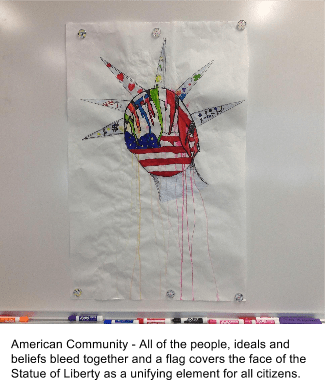
imageStudents shared some phenomenal work and I was impressed not only with the depth of their thinking, but the synthesis of texts this activity produced. And, because my own artistic development was apparently arrested in the second grade, it was such fun to see some of my visually gifted kids shine through the use of a new medium.

Zoey and Alyssa, who created the Statue of Liberty visual said the exercise allowed them to express their “artistic qualities – which is many times put on the back burner in AP courses.”

Creative expression of understanding put on the back burner? Shame on us.

And I know for a fact that AP classes aren’t the only place to suffer a similar fate. If we are going to do more with essential questions, we need to not only have students to be directly involved in answering them, but also give our kids more voice in the demonstration of their learning.

Ultimately, it was an assessment that combined creativity, common core standards, direct connection to the unit essential question, analysis, entertainment, synthesis, and genuine student enthusiasm. Not bad for mid-February in the frozen North.

How do you use essential questions to effectively deepen critical thinking? Please share your comments.


TTT welcomes Lisa Dennis, inspiring teacher and innovative leader at Franklin H.S. in Franklin, WI, as a visiting contributor on this blog.

Choice Doesn’t Necessarily Mean Personal Connection: A reflection for a do-over


I have started this post four times, and I cannot think of a pithy way to begin. You know, some clever opening, some hook to get the reader’s attention — some startling statement.

My creativity got swallowed by analysis. Well, kind of.

I figure I must be doing something wrong because my students cannot analyze to save their lives. They can talk around a text and say absolutely nothing quiet well though.

So all afternoon and into the evening I’ve thought about thinking. I’ve thought about my students’ thinking.

And I’ve determined the problem: Many of my students are not doing it.

They sit and wait, looking around the room, waiting for someone else to speak up and do the thinking for them. It’s like a Mexican standoff, and something’s gotta give.

105997-clint-eastwood-mark-wahlberg-s-jkzn

Last week I listened to Dr. Margaret Hill talk about the importance of connections and how standards must include opportunities for students to make both efferent connections and aesthetic ones. The only way to truly learn is to make personal connections, Peg reminded me, citing Louis Rosenblatt’s Transactional Theory.

How can I provide more opportunities for students to connect to the learning?

Yesterday I read an article about mindfulness and how when it’s practiced in schools it is helping children’s well-being. Some experts say the practice of mindfulness is even an essential —  a way to reduce depression, extend focus, truly learn.

How can I help students get and stay in the present?

This morning I watched the TED Talk by Shonda Rhimes “The Year I Said Yes to Everything,” and how playing again has helped her find “the hum,” the thrill and joy in her life and in her life’s work.

How can I introduce more play into my classroom?

Today in class most of my students crashed into a brick wall of higher-thinking they could not go through, over, or around. Many didn’t even try. I came home from school worn out and weary.

Then I read this post by Tricia Ebarvia, and I stalked her blog until I read the post “Steps toward an Inquiry-based Classroom,” and a missing piece walked right into my puzzle.

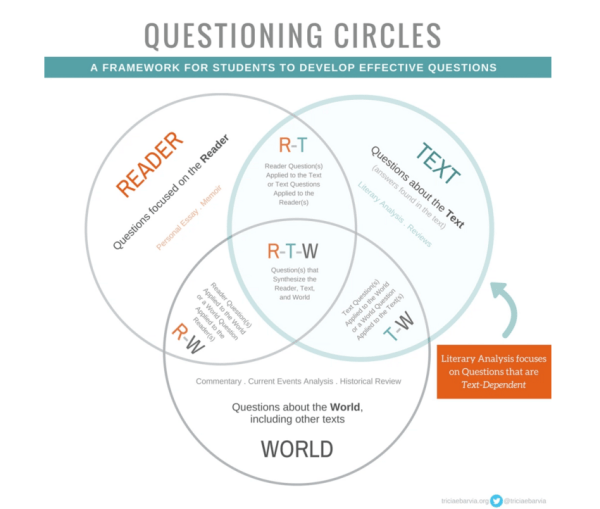
Tricia made me think about the on-going need for curiosity and student-generated questions. The ongoing need for purposeful and personal inquiry. She shared the chart below, citing the work of Christenbury and Kelly, NCTE, and Jeff Wilhem. And I got it.

Screen Shot 2016-02-18 at 7.18.15 PM

My students do not care enough about the books they’ve chosen to read. They do not care enough about the topics they’ve chosen to write about. I haven’t been paying enough attention, or I would have realized this sooner:  Choice does not necessarily mean personal connection.

I am glad I have time this year for do-overs.

It’s time to back up a few steps, so we can step into better opportunities for engagement, growth, and learning.

Maybe we’ll mediate.

Maybe we’ll play.

But we will certainly play with developing effective questions.

Mini-lesson Monday: Moving Past Identify

When my students and I talk about reading, we talk about writing.  If they pay attention to not just what the writer means in the words on the page, but how the writer crafts that meaning with words on the page, they move much quicker into the rhetorical analysis they must do on the AP Language exam in the spring.

But it is not easy. So many of my readers read below grade level. They struggle with fluency, so their reading is slow and laborious, and as a result, they miss out on much of the flow of the language that leads to constructing meaning as they read. If they cannot comprehend, how can they analyze craft?

They are pretty good at identifying devices and figurative language and the like though. They are pretty good at identifying structure. They’ve learned writers have different ways of approaching a topic, but they are not so good at discussing why. Why did the writer craft the text that way? What does that move do to further the writer’s message? What effect does it create? What is the tone?

So, this lesson came about as a way to help my students practice some critical thinking about how writers make choices with language — and as a bonus, introduce my readers to four new book titles.

Objective:  Using the language of the Depth of Knowledge levels, students will recognize a variety of structural and craft moves in fiction and non-fiction texts.  They will identify patterns and compare effectiveness through discussion. They will analyze the tone. They will summarize their discussion in their writers’ notebooks, and apply their understanding to future reading and writing assignments.

Lesson: Introduce three new titles as choices for independent reading by providing copies of the first few paragraphs of The Other Wes Moore, Nothing to Envy– Ordinary Lives in North Korea, and The Dog Stars. In small groups, giving each group one (or more of the passages depending on the time you want to take for the lesson) instruct students to read the passage and determine the structure and the craft moves the writer makes to begin the books. Ask:  Why do you think the writer chose to begin the book this way? What does that beginning do to capture the reader’s attention? Why might it be an effective way to do so? What is the tone of the passage? How do you know?

Help students recognize the effect of beginning a text with a passage of dialogue versus startling information versus first person narrative. What are the similarities? What are the differences? What structure do you find the most engaging? Why?

The Other Wes Moore by Wes Moore

Nothing to Envy, Ordinary Lives in North Korea by Barbara Demick

The Dog Stars by Peter Heller

Follow-up:  Students will apply their understanding to their independent reading books, and as homework will write a one-page response that analyzes the first few paragraphs of their books.

A Question about Equity

I have this idea stuck in my head, and it keeps spinning like the record player my sister broke when I was 11.

When we think about equity in an English class, what comes to mind?

I hope fairness, impartiality, “justice in the way people are treated,” says Webster.

But what does equity look like? What does it look like every day in an English class?

Too many days I spend too much time with my students who do not do the assignments than those who do. Is that equitable?

Too many days I find the time to talk to the talkative students about their lives outside of class, but I rarely take the time to talk to the quiet kids who have a gentle grace, pay attention, complete assignments. Is that equitable?

A week or so ago I conducted a training, and one of the teachers asked something like this:  “Do you still have students who do not read, or do not move forward, in your workshop pedagogy?”

Yes.

Will I keep encouraging, pushing, pulling, doing everything I — and my extensive network of workshop teachers –can possibly think of to help that student want to read and grow in her literacy skills?

Of course.

But let’s be real. I offer choice reading in my classroom. I offer choice of writing topics on every writing assignment (except timed writings when we specifically practice for the AP English exam.)

I’m going to have to allow the student choice when it comes to actually reading.

I can tell you this though:  More students read and grow and become avid readers than ever did when I chose all the books, all the prompts, all the everything.

And this brings me to the real question spinning in my head:  What does equity look like when it comes to instruction in an English class?

Choose one:

a. A teacher chooses six books for her students to read in a given school year, all books shining with literary merit. She teaches in a school where the majority of her students live in poverty. The children come from diverse homes where they face some struggles, but they seem eager to learn. She believes that since the more affluent school across town requires its students to read these six lofty books, she must require her students to read them. (Maybe her administrator even told her she has to teach these books– she’s just doing what she’s told.) This teacher wants her students to have the same rich literary experiences with these books she had in high school. She wants them to think about literature and analyze the language. She want them to grow in cultural literacy. All good goals. But probably, more than anything, she wants them to be on equal footing with the students across town. She wants them to have the same advantages and the same knowledge about the world’s great books.

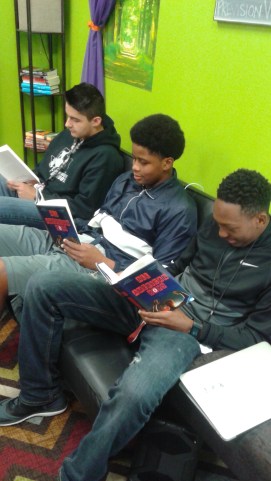
b. A teacher allows her students to self-select the books they read. She models the moves of a reader. She talks about rich literature, what makes a compelling story, hboys readingow characters and plot lines develop and how they mirror their lives. She challenges students to consume pages, develop stamina, and grow in fluency. She gives them opportunities to read more and read harder because she knows the value of reading in building confidence and competency. She introduces different genres, authors, themes. She surrounds them with shelves weighed down by high-interest books and gives them time to read in class. To this teacher, it is not about the book — or the six books of lofty literary merit — it is about the reader. Readers who read 12 books in a year instead of just six. This teacher knows if she makes a reader she can make a life.  And the skills gained through reading extensively transfer to their writing and permeate like energetic friends into the reading they must do in other classes.

I am going to go with b.

Equity is not in the books we require students to read in English classes. Equity is in the skills and the fluency and the stamina students need to read those books if they chooses to read them.

Too many students in high school read below grade level. The only way to help them read better is to read more. Six books (and I’ll question if he really reads them) is not enough. So much research helps us understand this. Donalyn Miller collected a lot of it for easy access here. And Penny Kittle cites scores of it in the bibliography of Book Love.

I met with a reader today. I asked her about the reading she did as a sophomore in her Pre-AP class. “Did you read last year?” I asked.

“Uh, no, not really,” she said. “I only read two books last year. But I only remember one.”

Two books.


And before you jump all over me, I know there is option c. Yes, we can have a mix of both, but I will hold my ground:  If we are not advancing readers and writers, we are doing it wrong.


#3TTWorkshop — Making Workshop Work in AP English Part 2

This is a continuation of yesterday’s post — a conversation between Amy, AP Language teacher, and Jackie, new AP Literature teacher

Do you think it’s important that students read classic literature in an AP class?

Amy:  In an AP Literature class, yes. In classes leading up to AP Literature, yes, in sound bites and shorter texts. However, balance is key. Do we give students some say in what they read for our classes — not just what they may choose to read on their own? Are our students reading and growing as readers? Do we approach the text with the goal to help them do so, or do we approach the text and teach the book instead of the reader?

In a conversation the other day, one teacher said she likes to use classic literature because the conversations around the complexity help even her struggling students learn. Of course, that is probably true, but learn what? Those conversations will not help those students become better readers. The only way to become a better read is to read. If students are not reading the books we choose, we have to be okay with that. We have to admit that perhaps our goals for that specific unit, and that novel, are different than choosing the book because we know all students will read it. We have to decide we are okay will students not reading. I wrote a pretty long post about this whole debate here.

Jackie:  In AP Literature, yes, my students must read classic literature.  Because the AP Literature test Jackieclassroomboysis centered on the canon of “higher literary merit” books, I do teach set texts like Invisible Man by Ralph Ellison and Othello, but I stress from the beginning that in this course we are continuing to develop our reading lives as both academics and hobbyists.  Fortunately, many of my students arrive at my door with a passion for reading, but as I saw at the beginning of the year, far too many of them haven’t read a book for enjoyment since their freshman year.  Their lives become too busy and the first thing that seems to go is reading.

In turn, while I teach multiple whole class texts to fulfill the needs of the test, I also make space for independent reading.  The vast majority of my AP Literature students are seniors, and I know that this is their last English class before they move onto college.  In turn, my greatest goal beyond providing them with the necessary skills for deep critical thinking, is to reinvigorate their passion for literature and love of books.  

Where does teaching writing fit into your AP curriculum?

Amy:  I tell my students:  Ours is primarily a writing class. Before we even get settled in, students know they will write a lot — in all kinds of different modes and to a vast audience they build themselves. When I first changed my approach to teaching, I began with writer’s workshop. I’d heard Penny Kittle present, giving ideas from Write Beside Them, and that book became my curriculum guide. Today, I urge teachers who are thinking of shaking up their teaching, to take the first wobbly step into writer’s workshop. Depending on your book shelves and your library, it might be easier. Of course, it depends on your own confidence, too. If a teacher isn’t comfortable teaching writing, it’s probably because she hasn’t practiced being a writer herself. That has to be step number one. Write. Write beside your students so they see you struggle. Read articles and books on writing by writers. I’ve been reading the works of Donald Murray, a suggestion given to me personally by Penny Kittle. Murray’s books have enriched so many aspects of my writing life — and my teaching life. Try Learning by Teaching, and you will know exactly what I mean.

Jackie: It’s funny that you say your class is primarily a writing class; for me, AP Literature is primarily a reading class.  At the beginning of the year, I challenged my students to read 25 books…and I don’t just mean books of higher literary merit.  I wanted students to fall in love with reading again, which can be quite tricky when it comes to a class centered on analyzing books.  Even today during a mid-year progress presentation, a student talked about how he initially felt guilty picking up a YA book, but how this book helped him fall in love with reading again.  As you said, I too practice my craft alongside my students, only this year, it’s all about reading beside my students, which I do every year, but it’s fun to analyze many of the pieces for the first time with my students.  I don’t hold back when it comes to admitting my own questions about a text.  Learning beside my students makes the social process of the workshop model that much more authentic.  

Amy: Besides teaching my students to write arguments, since that is what the AP exam is all about, I also teach my students to write everything. We start with narrative, move into information, determine the difference between persuasive and argument, and practice research and synthesis as we go. My students write on their blog, usually about topics they read about in the news, although I’m going to try to mix this up in the spring and open their topics up to ones they find in their independent reading.

Diego and Tia deep into discussion around revisions.

Diego and Tia deep into discussion around revisions.

Blog writing is practice writing. I read as many posts as I can get to, and I try to leave feedback that helps the writer grown. The whole process starts out rough. Students think they they can pour out their thoughts on the page and then publish without doing much revision. We talk about this. We talk about audience, purpose, form. We even explore what Bloggers do to appeal to their audiences, and we try to build a readership (although I need to do a better job and take more time on this.) The whole point is to expand the classroom — to give my readers a reason to write that is other than Mrs. Rasmussen said so. Does every student buy in? No, but I get many more students to buy in to becoming writers, and many of them ask me if they can write on their blogs more than I require.

Of course, we also move through process papers, using mentor texts, studying the moves of writer’s, mirroring and modeling his or her craft, practicing revision and revision and revision before finally publishing. This year we’re writing about four of these essays a 9 weeks, which isn’t as much as I would like, but it’s a good amount for my writer’s this year.

Jackie: I am building from the bottom up this year.  With the help of a phenomenal mentor, Sheridan Steelman, I am learning how to marry the workshop classroom with the traditional AP Literature curriculum.  AP Lit is all about recognizing the beauty of language and the craft moves an author makes as they frame an idea or concept.  I’m that weird teacher that is so moved and excited by my students recognition of beauty in a piece that I jump out of my chair and cheer.  It’s okay though, I’m surrounded by word nerds!

During the first half of the year has involved analyzing writers’ craft to gain a better sense of the author’s goals and purpose.  We do write plenty of analysis essays, some being short timed pieces while others are lengthy explorations of deeper themes.  We also co-write papers in small groups, which forces students to rely on one another as they tackle the writing process.  Next semester I look forward to exploring more creative writing outlets as students mirror some of the craft within their independent novels.

Above all, my favorite writing my students do is the writing in their critical reading notebooks.  I love thumbing through the raw reactions to students’ YA literature and personal reading novels as well as the the pages of scribbled notes on characters and connections from their novels of higher literary merit.  
Join the conversation. What ideas do you have for a balance of choice and required in an AP English class? How do you manage the writing?

#3TTWorkshop — Making Workshop Work in AP English

#3TTWorkshop Meme


How do you balance teaching the workshop model with also teaching to a test?

Amy:  First of all, teaching to a test is not good practice. We know that. I know we want to prepare students to take and pass the AP exam, but if we structure our classes around test prep, we are doing a disservice to our students. We provide the only 11th or 12th grade English classes our students will take — we have a responsibility to help them understand how language (and literature) works, how it moves the world, how it relates to our lives. And we have a responsibility to help every student advance as readers and writers — no matter where they are in their abilities when they come to us. If we do these things we are doing our jobs, if not, we are not. Test prep does not help with either of these responsibilities. As a matter of fact, it can inhibit it.

Jackie: I am a first year AP Literature teacher, so I still have the underlying anxiety that comes with teaching my first class of AP students.  I love these students–they are kind, passionate, mature, and motivated.  They work tirelessly to succeed and they have a passion for literature and thirst for knowledge unmatched by any of the students I’ve taught in the past.  In turn, I want to do everything in my power to provide them with the steps to succeed, but I have found, as the year goes on, that I cannot simply focus on the test.  In the beginning, I felt like every assignment I designed began with the thought, how will this help them on the exam?! Once I shoved aside my anxieties and found my stride, I focused less on their testing success and more on what I truly wanted them to walk away with at the end of the year.  I am blessed with the gift of teaching students the individual pleasure of reading paired with the social process of dissecting intricate texts.  

Created by Jackie's student. Doesn't it embody the essence of AP Lit?

Created by Jackie’s student. Doesn’t it embody the essence of AP Lit?

How do you balance whole class novels with independent reading in AP classes?

Amy:  My students and I do not read any whole class novels. It’s not that I am against them. It is that I have not found a book that I think will work to move all of my students. Wait, that’s not quite true. When I read David and Goliath by Malcolm Gladwell, I thought “Here is a book that would make for a whole class read.” The book is an argument, and within each chapter is an argument that supports the overall one. That would be a good book for all AP Language students. Have I used it as a whole class read yet? No, but if I can find the funds to buy enough copies, someday I will.

Jackie: Unlike Amy, I do teach whole class novels.  Last year I experimented with teaching no whole class novels in my junior-level Advanced Composition course.  The experience had its pros and cons, but I found that I missed the common experience of reading a sustained text together.  It wasn’t something I wanted to do everyday in my classes, but one of the reasons I loved studying English in graduate school was to gain the communal opportunity of cracking apart texts and sharing perspectives.  In AP Literature I reinforce the concept that literary analysis isn’t a competition; it is instead a social experience that requires us to open up to our peers in pursuit of greater knowledge and understanding.

While I teach whole class novels, I do not believe AP Literature classrooms must revolve around them. Instead, AP Lit classes should have a smattering of diverse novels and plays with a large focus on poetry, short stories, and even excerpts.

My AP students just finished Invisible Man by Ralph Ellison, a 580 page episodic novel that is the most used novel on the test.  It is brilliant in so many ways, relevant and valuable.  It discusses issues of race and police brutality that eerily parallel issues we face today.  For many, it is also the first whole class novel on race my students read that was actually written by a black man (they read To Kill A Mockingbird their freshman year and The Adventures of Huckleberry Finn their sophomore year).  I choose the novel because it is invaluable, but I also acknowledge that it is LONG.  If I taught lengthy canonical texts constantly, my students would hate me.  I would hate me.

20160105_090107 (1)

Fabian reading to his table mates. He’s so involved in the story of Extremely Loud & Incredibly Close he could not wait for our book club discussions.

Amy: We read a ton of short text together; discuss them, analyze them, write about them. We enjoy many rich reading experiences together — all centered around short texts. I’ve heard a lot of noise lately around the argument for a literary canon so students enjoy shared experiences versus independent reading and the lack thereof, and I think the dichotomy is wrong. Can we only have shared experiences around whole class reading? No. It’s not that those of us who advocate for choice reading do not facilitate rich reading experiences and discussions with our students as whole classes, it’s that we choose to do so with shorter texts rather than full-length novels — or we choose to do so with themes instead of one book.

My experiences with too many students not reading longer texts I pulled from the canon — and the length of time it took to complete a unit — made me choose to let the novel go. Too many students faked their way through the classic literature I forced them to read my first few years teaching. (They brag about it later on Facebook.) And by offering choice, whether it be self-selected reading or book clubs, I have better chances of advancing all of my readers, not just the few who commit to doing all the reading.

We have a lot to say, so join us tomorrow for part two of this discussion. And as always, please join the conversation in the comments.

Mini-lesson Monday: Thinking about Complexity

Many of my writers seem stuck in simple sentences. I think this has something to do with their reading fluency. When I ask them to read me a few lines out loud, they read in monotone with faltering phrases and seemingly little knowledge of the workings of punctuation. One of the best assessment tools I have for knowing what my readers need to help them become better writers is these few moments of one-on-one read alouds– them to me — in conferences. These conferences also remind me how closely my reading and writing instruction must be aligned. If my students cannot read well, I cannot really expect them to write well. (And it shows the huge variance of abilities in my AP Language classes.)

In an effort to move my readers and writers into more complexity, and to get them to start paying more attention to sentence structure in their independent reading, I know I must expect them to take action with what they learn. But I do not want to mandate anything I cannot keep up with, nor anything that will make students not want to read. So I decide to start a new challenge with our “quotes board” — the one that’s remained largely empty for most of this year.

Objective:  Using the language of the Depth of Knowledge Levels students will recognize and identify interesting and complex sentence structures; they will then copy the sentence into their writer’s notebooks and/or onto a notecard to use it as a mentor; then in their weekly blog posts, they will write and practice their craft, including at least one beautifully constructed sentence in their post. (If they choose to share their mentor sentence, they will pin it to our “quotes board” to display it for the week.)

Lesson:  First, I remind students that we’ve talked about sentence boundaries and sentence structure since the beginning of the year. I tell them that today we’re going to learn two different types of sentences:  periodic, and loose or cumulative, and look at how writers link details and ideas within sentences that create description and often rhythm.

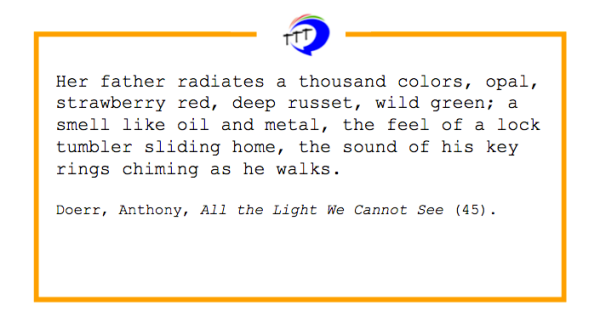
I say, “We are going to study sentences from the 2015 Pulitzer Prize Winner All the Light We Cannot See by Anthony Doerr. Doerr is our writing coach for the week. Let’s see what we can learn about writing more interesting sentences.”

I project the loose sentence, and we talk about where the independent clause lies within it. “How do all the details trailing off of the main idea make the sentence more interesting? What do you notice?”

loose sentence 1

After we’ve discussed the loose sentence, and I feel like students understand what makes it loose and how to identify this type of sentence, we move to the periodic sentence.

I project the following periodic sentence, and we talk about where the independent clause lies within it. “Why put the main idea of the sentence at the end?” I ask.

periodic sentence 1

We discuss why the author might have chosen to craft the sentence this way. “What does putting the main clause of the sentence at the end do for the meaning?” I ask.

Next, we study a few other beautifully crafted sentences I pulled from the novel. (There are so many!) Each time encouraging students to talk with one another to first identify the independent clause and then determine if the sentence is loose or periodic or an interesting combination. I remind them to discuss the meaning of the sentence and why the structure might matter.

We study.

beautiful sentence

and

beautiful sentence 2

And before we move into searching for loose and/or periodic sentences in our own independent reading books, I ask students to practice reading these four sentences aloud to one another.

“Pay attention to the rhythm of the sentence and what the punctuation does to create that rhythm,” I say. I give them a few moments to read sentences to one another at their tables. Low stakes. They know one another well, and there is no pressure. They help each other read, which is exactly what I want in my community of learners.

Follow up: I ask students to pay attention to the sentences in their independent reading books. “Watch for loose or periodic sentences,” I say, “and here’s the challenge:   When you find one, write it out on a notecard, and post it on the quotes board. Let’s see how many of these beautiful sentences we can collect this week.”

And remember to write at least one loose or periodic sentence in your blog post this week. Let’s work on crafting beautiful sentences like Doerr in our own works.

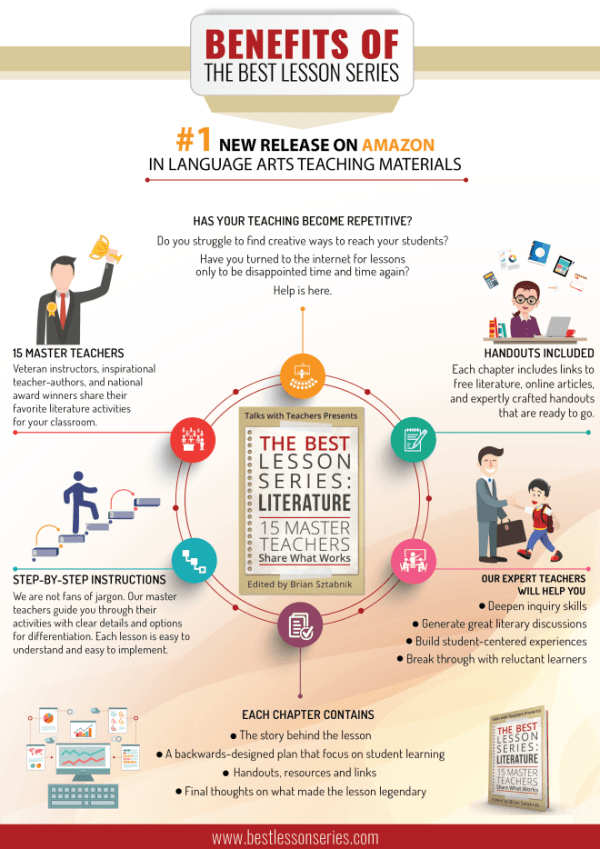
The Best Lesson Series: What Makes a Work of Literature?

NTCE Affiliate Breakfast with Shanna Peeples, 2015 National Teacher of the Year

A few weeks ago I read this post by Shanna Peebles, the 2015 National Teacher of the Year, “Building Bridges with Visual Literacy.” She writes about her lesson in the book The Best Lesson Series, a book in which I also contributed a favorite lesson. Shana includes the background of her lesson, an experience and a realization she had when she began working with refugee students many years ago.

Reading Shana’s blog, I reflected on my own refugee students. Mine come from Myanmar, most having walked through Thailand at night holding the hands of younger siblings while moving toward their fathers who left their villages months before to secure passage for their families. These children grew up fast and they hope for much. They study hard because they know the value of education.

They represent the reason that I teach literacy: It is through literacy that we gain power.

The way to grow as literate individuals is to read. I’ve heard my mentors say it again and again: “The only way to develop readers is to get them reading” and “The only way to learn to read is to, well, read.”

Of course, the same holds true for writing.

The lesson I contributed to The Best Lesson Series pertains to both. Here’s the background of my lesson:

I am not one of those readers who jumps to the last few pages to read how a book ends before I have ever started it. I do not understand those people. At all. I like to savor a good book, take it slow — sip the beauty as I breathe in the language, sigh with pleasure as I see how the words work to shape meaning. Or, I like to devour a book in one sitting, curled up on the couch, holding my breath and gasping for more. So, it’s a little surprising that I pulled the last paragraph of a book to use as a craft study.

I promise it gives nothing away. I also promise:  You may just shudder at the loveliness of the language like I do. Or not. Seems some critics panned The Goldfinch by Donna Tartt while others raved about its uniqueness and style (See the Vanity Fair article “It’s Tartt, But Is It Art?. Of course, critics cannot seem to agree on what makes a text literature either. (See the Harper’s Magazine article “What Is Literature? In Defense of the Canon”.)

The author of the article about Tartt’s work poses the same question I ask my students to ponder each year:  What makes a work of literature, and who gets to decide?

Since mine is a workshop classroom where our primary focus is writing, students choose the books they read. That is not to say we do not read high-quality complex literature or read literature as a whole class. We read many passages together and learn skills that students then apply to their independent reading and the novels they discuss in book clubs four times a year.

My goal with books is to develop readers, and too many of my students did not read when I made all the decisions about their reading. However, many of my students do not know how to choose books they might enjoy or books with enough complexity to challenge their thinking. The drive to fulfill my goal to develop readers becomes multifaceted. Allowing choice means I must constantly be on the lookout for richly written passages that we can study, and I must read volumes of high-quality literature, YA and adult alike, so that I may match my adolescent readers with good books.

I love the last paragraph of The Goldfinch because I can use it for several learning opportunities. This short passage can teach us much about what makes a work of literature. I agree with researcher and reading theorist Louise Rosenblatt:  “Students need to be helped to have personally satisfying and personally meaningful transactions with literature. Then they will develop the habit of turning to literature for the pleasures and insights it offers.”

And that’s the whole point, isn’t it?  We help our students love literature so they learn from it as we do.

____________________________________________________________________________________

It’s an honor to be a part of this work. I am surrounded by inspiring educators with intriguing and thought-provoking ideas, and I hope you will consider adding this title to your professional library so you will be surrounded, too.

Teachers sharing with teachers what works. That’s the best pd I know.

benefits of best lesson series


Mini-Lesson Monday: Talking Tone and a Bit More Reasoning in Our Writing

I sat at our staff Christmas party talking to a colleague about the essays my students just drafted. We read and analyzed several pieces by Leonard Pitts, Jr, talking about the effectiveness of his style, arguing over his opinion, justifying our own. The task was to write their own OpEd piece, responding to a topic in the news or a topic of their choice. Most chose interesting topics:  How the world defines beauty, Should armed guards protect our schools, Does keeping a home clean matter in the long run..

A few students wrote clearly articulated arguments that show intentional craft moves.

Many showed intentional craft moves but wrote little in the way of argument — or anything close to critical thinking about their topics. In short, some of my writers say pretty much nothing, but they say it very very well.

Therein lies the problem:  How do I get some of my students to think critically about their topics so they can write critically about their topics?

Sitting at that dinner, my friend and colleague, Mary Heffner, shared an activity she’d recently done with her students to help them understand tone. I decided that not only would it help my students understand tone (which most failed to consider when they began writing — “Do I have to remind them of every little thing?” she says with a sigh), but it could help them reason through the beliefs they have about their topic and write stronger sentences they might use when they revise.

Objectives — Using the language of the Depth of Knowledge Levels: Define the tone of your essay; Construct reasons to express why your topic should be expressed by that tone word; Create sentences and synthesize your knowledge of punctuation, syntax, and sophisticated vocabulary to express your reasons while using this tone; Revise your writing to include these well-constructed sentences.

Lesson — (Prior to reading their drafts, I asked students to identify the tone of their pieces and write it in the top right corner of their papers. I determined quite easily that many of my writers thought they felt a certain way about their topics but were having trouble expressing that tone.)

First, I ask writers to clarify their choice of tone word by putting a short list of common adjectives that describe tone on the board:  infuriated, excited, confused, sorrowful, scornful, exasperated, concerned. We quickly define what each word means. I then tell students what I noticed when I look at the tone word they wrote on their papers and when I read their essays. “Some of you have a misconnect — you think you’re taking a certain tone, but you have little or no evidence of it in your writing. (Time permitting we might revisit one of Pitt’s pieces that we read as our mentor text and analyze the tone.)

“The other thing I noticed in your writing is a lack of reasoning. Today we are going to practice getting both a clear tone and powerful reasoning into our arguments.

“Once you have your tone word, and you know this is how you feel about your topic, you will write five reasons that support your topic and demonstrate this tone. Sometimes you can even use the tone word, or a synonym of it, in your reasoning sentences.”

Then I show students my own reasons I wrote to add to my writing. My topic “longer vacation time over the holidays.” The tone “emphatic.”

Reasons:

  1. Two weeks vacation time hardly covers the travel time when a family must drive far distances to share just a moment with their loved ones.
  2. Teenagers thrive on rest and relaxation.
  3. If families spent more time together we may have fewer problems in our society.
  4. Teachers work too hard, sometimes even taking work home over the break, to not enjoy more one-on-one time with their families over the holidays.
  5. With a longer, more relaxing, break, students and teachers would return to school more rejuvenated and infused with energy to embrace the love of learning.

As they read through my reasons, I ask students to talk to one another about my word choice:  How do I show I emphatically care about this topic?

Follow up — Students will revisit their drafts and work on clarifying gaps in reasoning. They will add their five new sentences to make their arguments stronger and more logical.

Reflection — As we move into our next writing piece, I will be more purposeful in directing students to think about tone. We will spend more time thinking through our reasoning before we begin writing.

Sometimes I assume too much, and I end up having to take us back and start again.

Writing critically is hard for many of my students — although their style is improving. I remind myself that I must continue to give them interesting and thought-provoking things to think about — their words and many of their worlds are so limited.


#3TTWorkshop — How to Hold Students (and Ourselves) Accountable for Reading

Three educators. Three states. Three demographics. All practicing Readers and Writers Workshop in our Secondary Classrooms. Read more about us here.

We are the Modern PLC, and every Wednesday, we share our behind-the-scenes collaboration as we talk about the most urgent moving parts of our classroom pedagogy.

Reading accountability and grading our students’ reading goes hand in hand. Both are parts of a workshop classroom that can seem daunting, and sometimes we have to be flexible until we figure out what works well for our students and for us. Let’s start the conversation with accountability.

How do you hold students accountable for their reading?

Amy:  More than any other year, holding students accountable for their reading is driving me crazy. I’ve tried passing a clipboard like I learned from Penny Kittle. Many of my students cannot get their heads wrapped around a simple “Write down the page number you are on” and then “tally your reading for the week.” I see my students for half a class period on Mondays and then every other day the rest of the week. Seems if they miss the chart at the first of the week they never get it caught up.

Last year I tried an online reading chart. Each student had a page in a spreadsheet that I asked them to keep updated. I gave them a couple of minutes in class right after independent reading time. That worked a little better, but it was more difficult for me to access at a glance. I really like to get a true state of the class.

The past few weeks, I’ve started walking around on Mondays and recording page numbers myself. I decided to try this since my students were moving into book club reading. I can see if they are on target with the reading goal for their groups. It’s worked better, but this is not the kind of accountability I want to inspire in my readers. I’ve made myself the accountable one, and I am outnumbered.

Jackie: I’ve had a love-hate relationship with accountability like you, Amy.  The initial passing-around-the-clipboard method did not work for me either.  I shifted to checking individually two years ago.  I have a spreadsheet in which I enter their page numbers and reading rates on Mondays.  The spreadsheet then immediately calculates the percentage they completed and whether they fulfilled their reading rate for the week.  It isn’t a perfect system and I would much rather be conferencing with students instead of checking page numbers, but there are both pros and cons.

On the bright side, I do like checking in with every student on Mondays, and with a class of 24, it takes me about 13-15 minutes to record pages for the entire class.  The other benefit is that I also immediately know when students didn’t complete the number of pages they were capable of reading for that week.  Instead of telling them they didn’t complete the assignment though, we have a conversation about their reading overall.

Honestly, for my freshmen, this form of accountability is key.  It is less important for my AP Literature students, but I enjoy walking through the class every Monday, touching base with every student, and ultimately starting my week off by acknowledging their reading successes.

Amy:  Like you, Jackie, I do enjoy checking in with every student on Monday morning. The time is a trade off though, since I try to hold reading conferences when students are silently reading. I just don’t feel like I have the time to really talk to my students who are not getting their reading time in (That might be the crux of my frustration — I have too many students still not doing enough reading), and now meeting with each student for a longer reading conference on a regular basis takes that much longer. Seems like time eats my lunch every day.

I ask my AP Language students to read three hours a week in their self-selected books each week. Some students read voraciously, and I find these readers don’t necessarily like keeping track of the pages they read each week. I love that they read because they want to — something I hope for all my students, so I do not want to penalize them for not marking an accountability chart.

Besides just noting how many pages students read each week, what other accountability structures do you have in place?

Amy:  In our writer’s notebooks, we keep track of the books we start, abandon, and finish. We also pull vocabulary words –5 words a week — from our independent reading to put in our personal dictionaries. I know you and Shana just discussed vocab last week.

This year as another accountability piece,  I started asking students to complete an occasional reading one-pager. I have mixed feelings about this because I know the value of reading for reading’s sake, but marking the reading chart wasn’t working, and I have a difficult time conferring as often as I’d like. I also need my students to practice writing about literature. All they want to do is summarize, and the one-pager is one way to help them move beyond that.

I hope to get my students to think about accountability as self-evaluation. We talk a lot about the reason for reading:  We build fluency, acquire vocabulary, gain empathy, and learn information. “How has your reading this week helped you do that?”

Jackie: We also keep track of the books we start, abandon, and finish.  Students add to their “Books Read” list at the beginning of their writer’s notebook and they check off the books they complete.  Students also pull four words per week from their independent reading and log them in their WNB dictionaries.

Like you, I tried one pagers from Kelly Gallagher two years ago, but they were difficult to track and my strongest readers oftentimes slowed down their reading to avoid the one pagers.  I believe they can work, but I haven’t found a perfect fit just yet.  My AP Literature students do keep a critical reading journal (CRJ), which I started using this year thanks to Sheridan Steelman’s help.  Sheri is a phenomenal AP Literature teacher I met at UNH Literacy Institute.  Her structuring of CRJs has helped me gain even further insight into my AP Lit students’ needs and successes.

At the end of the day, my greatest source of information comes from the conferences I have with my students.  Students want to talk about their books, and it is a pleasure to sit beside them and learn every day.

So how do you grade your students on their reading?  

Jackie:  My school has competency based grading, so I file reading initiative grades under “formative assessments.”  I look at reading time as purely formative in the sense that it is necessary practice time for students to explore their interests while also building reading stamina.

Students in my CP Freshman English class must read two hours in their independent reading books while students in my AP Literature class must read three hours.  Each student has an individual reading rate, which they calculate and recalculate throughout the year. I adjust their reading times based on whether or not students are completing whole class or literature circle novels.  Students then receive a weekly reading initiative grade out of 20 points.  At the end of the day though, this structure is in place to help students carve out time for reading.  

One of the greatest complaints from my AP Lit students at the beginning of the year was that they didn’t have time to read anymore.  They loved it but it had been a long time since they’d picked a book on their own.  After a quarter of independent reading, Jessica said, “I love independent reading.  It gives me a break from everything” while Claudia said, “I have read more this quarter than I have in the past year.”

Amy:  I wish I didn’t have to give a grade for reading. I wish I didn’t have to give a grade for a lot of the work we do in class, but that is a topic for another day. All my little reading checks equate to a reading grade, all formative, except for a self-evaluation of their reading lives students complete about every nine weeks — that’s a summative assessment I model after a reading ladders assignment I learned from Penny Kittle.

Really, when it comes to grades, if my students show me growth and improvement, the grading is easy. It’s all about moving as readers. Eventually, most students come to realize that — and they thank me for making reading matter again.

How do you handle reading accountability and reading grades in your workshop classroom? Please add to the conversation by making a comment.

Do you have topic ideas you would like us to discuss? Please leave your requests here.