Craft Study for a Monday: Billy Lynn’s Long Halftime Walk, again

For now, my new favorite book is Billy Lynn’s Long Halftime Walk by Ben Fountain. 

This surprises me. Maybe it’s the setting — Dallas Cowboys’ Stadium. Maybe it’s the protagonist — Billy, a 19 year-old-soldier. (I have twenty-year-old twin sons who want to join the military in a few years.)

Maybe it’s Fountain’s poetic language. It startles and soothes. It makes my mother’s heart shake.

I’ve dog-eared pages and underlined lines. I’ve even posted about this book in February.

Here’s the part I will share in class this week. My students are working on a major writing project. They chose their own topics. They’ll write in a variety of forms. But, even with only a few weeks left in the school year, I still need to show them beautiful language. I still want them to work on their craft.

“Look at Fountain’s style,” I’ll say. “What do you notice just on this one page?”

And we’ll talk about word choice and repetition. We’ll talk about lists and mood. We’ll talk about intentional fragments and why an author might make that kind of choice when writing a sentence.

My students will notice many things in this short passage. There are so many things to notice.

That’s probably why I am in love with this book. Thank you, Mr. Fountain.

excerpt from Billy Lynn’s Long Halftime Walk 

Don’t be scared, Shroom said. Because you’re going to be scared. So when you start to get scared, don’t be scared. Billy has thought about this a lot, not just the Zen teaser of it but what exactly does it mean to be scared out of your mind. Shroom, again. Fear is the mother of all emotion. Before love, hate, spite, grief, rage, and all the rest, there was fear, and fear gave birth to them all, and as every combat soldier knows there are as many incarnations and species of fear as the Eskimo language has words for snow. Spend any amount of time in the realms of deadly force and you will witness certain of its fraught and terrible forms. Billy has seen men shrieking with the burden of it, others can’t stop cursing, still others lose their powers of speech altogether. Lots of sphincter or bladder control, classic. Giggling, weeping, trembling, numbing out, classic. One day he saw an officer roll under his Humvee during a rocket attack, then flatly refuse to come out when it was over. Or Captain Tripp, a pretty good man in the clutch, but when they’re really getting whacked his brow flaps up and down like a loose tarp in a high wind. His soldiers might feel embarrassed for him, but no one actually thinks the worse of him for it, for this is pure motor reflex, the body rebels. Certain combat stress reactions are coded in the genes just as surely as cowlicks or flat feet, while for a golden few fear seems not to register at all. Sergeant Dim, for example, an awesome soldier who Billy has seen walking around calmly eating Skittles while mortars rained down mere meters away. Or a man will be fearless one day and freak the next, as fickle and spooky as that, as pointless, as dumb. Works on your mind, all that. The randomness. He gets so tired of living with the daily beat down of it, not just the normal animal fear of pain and death but the uniquely human fear of fear itself like a CD stuck on skip-repeat, an ever-narrowing self-referential loop that may well be a form of madness. Thus all our other emotions evolved as coping mechanisms for the purpose of possibly keeping us sane? And so you start to sense the humanity even in feelings of hate. Sometimes your body feels dead with weariness of it, other times it’s like a migraine you think you can reason with, you bend your mind to the pain, analyze it, break it down into ions and atoms, go deeper and deeper into the theory of it until the pain dissolves in a flatus of logic, and yet after all that your head still hurts (114-115).

Note: The book is being made into a movie with a Veteran’s Day 2016 release date. Rarely, do I like the movie as well as the book, but I still go see them.

©Amy Rasmussen, 2011 – 2015

The Modern PLC

1. Send out a Doodle for easy scheduling.

2. Receive Doodle responses and confirm date/time that works for four educators in four different states in two time zones.

3. Wait a week or so.

4. Sign into Google and click on hangout.

5. Invite friends.

6. Wait for Jackie, who when she finally connects calls herself “the 90 year old collaborator” although she is the youngest of the group by close to a decade.

7. Catch up. Chat. Plan. Collaborate on this blog for a good three hours on a Saturday morning.

Screen Shot 2015-04-18 at 6.02.01 PM

Erika, where are you?

We shared struggles and successes. We laughed. And we planned how we can write and share and learn and grow — a lot of it right here at Three Teachers Talk.

This, my friends, is the Modern Professional Learning Community.

Not long ago I read Live From Small Town America: Teachers Who Blog to Stay in Touch.

Well, I can tell you — it’s not just teachers in small towns.

Erika in NYC and me in Dallas both make the nation’s Top 10 for largest cities. (Of course, I am in a suburb north of Dallas but still..)

Educators are making connections all over the world. Blogging, Twitter chats, Facebook Groups, and more. And most of the educators who make these connections will tell you that the professional development they engage in online gives them more engagement, more information, more ideas, more solutions than most of what they receive on their home campuses.

If you are reading this blog, you already know this.

So, I am wondering:  How do we get more of our colleagues to engage in online PD? How do we change the model of PD in our schools to reflect the kind of sharing and growth we experience online?

Maybe most importantly, how can we model the kind of collaborative work we do online for our own professional growth for our students, so they can do it, too? Is that even possible?

©Amy Rasmussen, 2011 – 2015

Shelfie Saturday

sticker,375x360.u1While my last name is Catcher, I’m far from a natural athlete. In fact, my high school softball career ended after I “caught” a stray throw with my forehead, landing me in the ER with a swollen eye and thirteen stitches. Still, I can appreciate a brilliant sports story, the type that moves beyond the game and captures the essence of teamwork, leadership, and friendship. The “Sports” section of my classroom library does just this.

Over the past year, I have cultivated the sports section to reflect the varied abilities, ages, and interests of my students. I teach freshmen, juniors, and seniors ranging from struggling to gifted readers. Because of my diverse students, my library must appeal to 14-year old freshmen and 18-year old seniors alike. Fortunately, sports can oftentimes bridge this age gap while also pushing students to gradually engage with more complex texts.

My somewhat anemic-looking sports section.  Many of the books (particularly the ones not pictured here) have waiting lists and won't return to this shelf until the end of the year.

My somewhat anemic-looking sports section. Many of the books (particularly the ones not pictured here) have waiting lists and won’t return to this shelf until the end of the year.

My younger students (and even some of my older) tend to gravitate towards popular young adult novels at the beginning of the year, like those written by Matt de la Pena and Mike Lupica. After they exhaust the options on my shelves, they inch towards lengthier and more complex analytical or historical books like Moneyball: The Art of Winning An Unfair Game by financial journalist Michael Lewis or The Punch by sports writer and commentator John Feinstein. More than any other genre, these brilliantly crafted pieces serve as strong mentor texts for a wide variety of mediums including nonfiction, narrative, research, and persuasive writing. This year, books like Ice Time by Jay Atkinson inspired many of my hockey players to explore their sport through personal narratives while Shoeless Joe by W.P. Kinsella served as the basis for one of my freshman student’s research papers on the Black Sox Scandal.

Sports hold leverage within our society, particularly amongst teenagers. From die-hard fans to benchwarmers, both athletes and non-athletes can appreciate a sports story, particularly when it transports us into a world packed with suspense and action.

Join the conversation by posting your own shelfies!  Share a shelfie with #shelfieshare and let us know if it’s a #classroomshelfie, #bookstoreshelfie, or other miscellaneous find.

Keeping Them Reading: Speed Dating with a Book

Confession:  I have never been speed dating.

I just love the idea of it.

In 2012 I wrote about an activity we did in my AP English class that got everyone talking as we prepared for the AP exam. I hadn’t even thought about that, until I started to write about our latest foray into the talkative world of speed dating with books.

Neydy and LauraI know many teachers have tried some version of this activity. I want to add my voice to theirs:  this is a F.U.N. way to get students talking about what they have read and what they might want to read — both important factors in helping students of all ages develop their identities as readers.

How to Speed Date with a Book

As students entered my classroom, I asked them to

1) find a book from the shelves that they had read and liked enough to share with another person,

2) find a second book that they thought they might like to read — maybe they liked the cover or the title; maybe they had heard someone talk about this book. Didn’t matter.

Everyone needed two book.

Then, we tried this “speed dating” thing.

First, we formed two circles, one inside the other. One circle faced outward. The other faced inward.
Students stood in front of one another, and I with the easy job stood with the timer and the camera.

“One minute,” I said, “You’ve got to stay on topic, and talk about one or both of the books in your hand for one minute. Your goal is to ‘sell’ the other person on why they want to read these books.”

GO!

 We talked books for as many minutes as it took for every student to talk one-on-one with every other student. It was exhausting. And wonderful.

After we completed all our rounds, we set all of the books out on one table, and students picked up their writer’s notebooks and turned to their “What Shall I Read Next?” lists, adding any titles they might want to read during the last two months of school. Every student wrote down at least one book. Some wrote down several.

Why Talking About Books Must Be a Constant

I teach juniors in high school. Before this year, most of my students did not consider themselves readers. They have had to learn what it means to

a. like books,

b. like to read books,

c. like to talk about books,

d. know how to find books they like.

The moment I stop holding up books at the beginning of class, reading a bit, and encouraging them to give it a try, many they stop reading.

They are one year and a couple of months away from graduating high school, and they are Baby Readers, fledglings not ready to leave the roost and fly off on their own. (In more ways than one, I know.)

I don’t know if my readers will be strong enough to keep reading when they leave me the first week in June.

I hope so.

In the mean time, I will keep up the talk and keep up the expectations:

You must read if you are a student in my class.

You are a reader who reads every single day.


What are some activities you do to keep your babies reading?


©Amy Rasmussen, 2011 – 2015

Persepolis by Marjane Satrapi

persepolisIn honor of ALA’s recently released 2014 Banned Books List, I can’t help but recommend the second most banned book Persepolis by Marjane Satrapi.   Persepolis was one of the three graphic novels that made the top ten list this year. The book is criticized for its use of gambling, offensive language, and political viewpoints as well as for being “politically, racially, and socially offensive” and for having “graphic depictions.” In reality, this graphic memoir isn’t afraid to tackle the horrifying and at times comedic realities of growing up in a community faced with political turmoil. After all, Satrapi wanted readers to recognize that Iranians are normal people, just like everyone else. They enjoy music and parties and clothes; the difference is that the characters in Persepolis are living during the Iranian Revolution. Satrapi begins her narrative at six years old, relaying the stories of every day life as the Shah’s regime is overthrown, the Islamic Revolution takes hold, and the war with Iraq destroys her community.

What I love most about Persepolis is its ability to attract my reluctant readers, particularly my students who would otherwise steer clear of the international shelf in my classroom library. These students are drawn to the simple black-and-white cartoons and the rebellious teen protagonist. They love her quirky sense of humor and her obsession with American music icons like Michael Jackson. Like many of our students, she is an angsty teen coming of age. The difference is that she grows up during political conflict and war. Her world is changing around her, war has becomes standard, and she, as a teenager, is attempting to find normality in completely abnormal circumstances. But it’s Marji’s ability to navigate this morbid world and go through complex transformations that make her come alive on the page.

I tend to use graphic novels towards the beginning of the year when my students are becoming acclimated to analyzing writer’s craft (or even when they need a refresher on it). Oftentimes students are more in tune to looking at the details of drawings than of writing; they find it easier to pick out the eccentricities of images yet rarely do they question why the artist made the choices they did. Graphic novels give them the opportunity to do just this.

I have students work in small groups to analyze the artistic decisions of the illustrator. For example, in Persepolisthe scene to the right, Marji has been taken into custody by the Women’s Branch of the Guardians of the Revolution, a group in charge of monitoring women’s wearing of the veil. When they stop to study the images, students notice the repetitive stern expression of the guardian and the way Marji’s face appears to melt into squiggly lines as the frames progress. They notice the transition of the lines surrounding the word bubbles from smooth curved lines to sharp zig-zags. They recognize changes in font size and effects as well as the underlying narrative strand at the bottom of the frame that shows internal dialogue. As they analyze these details, they also begin questioning the choices that lead to the depictions of these conversations and emotions and what they ultimately mean in the context of the story. By the end, the graphics take on a more complex tone. The images come alive, the artist’s intentions become clearer, and they have immersed themselves in a new lens that allows them to take a second look at literature.

The Question That Changes My Students’ Writing

My first year of teaching I taught thesis statements as these grandiose sentences that establishedimages the entire infrastructure of a paper. I conducted minilessons and writing units just on how to write a three-pronged thesis, which would inevitably lead into a five-paragraph essay. While this technique was arguably successful in its own right, it was also highly limiting. Because the three-pronged thesis set students’ papers up with a distinct outline right from the beginning, it didn’t allow students to delve deeper into their topics. If anything, it actually limited their exploration of their topic or research because it set too stringent of guidelines.

It wasn’t until I read Kelly Gallagher’s Write Like This that I found one of the single-most valuable suggestions for student writers. Somewhere in this treasure trove of practical suggestions, Gallagher changed my approach to teaching theses with one question. Instead of asking what the point of the paper was, he questioned what the student wanted their reader to learn. Now during mini-conferences I ask students, “What do you want your reader to take away from this piece?” Not only does this question prompt them to acknowledge and think about their audience, but it also makes them recognize the value of their writing as a reputable, informative piece. As students answer this question, I jot down their responses, asking them additional questions to deepen my understanding of the subject. Eventually, when the point of the essay has become clear, I give them the notes I have taken and say, “This is your thesis,” showing them that the information we want our readers to take away is really the mission of our essay as a whole. From these notes, we formulate their thesis together to better address the overall message of their paper.

In the end, this approach oftentimes transforms students’ papers from flat, five-paragraph essays, to papers that delve deeper into the content. My freshmen recently finished their five-page research papers while my juniors and seniors completed eight-page TED talks. I used this approach during the initial conferences to help them hone in on the issues they wanted to research. After our conference, Emily’s essay transitioned from a simple history of prosthetic limbs to a deeper exploration of the rapid evolution of modern prosthesis and the technology needed to make them more lifelike. Sarah, on the other hand, found that her fascination with the Russian mafia also led into a deeper exploration of a lethal new drug called Krokodil, which is being trafficked through Russia. Each time students were able to isolate what they found to be fascinating about their topic and then ultimately use that as a jumping point for the rest of their paper. In the end, asking this one question helps students clarify an otherwise intimidating thesis while also helping them to polish their approach to the subject.

Hoping to See Some Damn Good Sentences

I am thinking about sentences.

For a few days now, I’ve been scoring stacks of essays. (If you teach English, I know you’ve been right here with me. Shana wrote about her disdain for grading and some solutions here.)

Reading student essays can be a joy or a chore. A really long never-ending chore. This time around, it’s like scrubbing the tub with a cotton ball after a team mud race.

With almost every essay, I’m scratching my head wondering how a student gets to be in 10th or 11th grade without learning how to write a clear, concise, complete sentence. Just give me one I want to say.

We could work with that.

So today, I am thinking about sentences and how to help students think about what they want to say before they ever lift their pens. And how talking about their thinking will help with their writing.

I am reminded of the importance of reading. Students must read and read a lot. We must teach them to notice how writers construct meaning by linking words into sentences. We must encourage them to talk about what they notice.

I’m thinking there’s more than one meaning here.

I am reminded of the value of mentor sentences. We must expose students to a variety of single sentences and help them talk through what moves the writer makes in each of them. Word choice, structure, details, figurative language: we must help our students understand how and why writers make intentional choices as they craft meaning.

Then, we must encourage them — and give them time — to practice crafting with intention on their own.

I am reminded of the need for conferences. We must make it a habit to talk with our writers one-on-one, regularly. The more we speak with them as writers, the more they will develop the identities of writers.

Writers take time to craft their sentences.

I recently read this post “5 Ways to Write a Damn Good Sentence,” and I am going to work these tips into my instruction the next few weeks as my students work on their final writing project. I am also going to find some mentor sentences that model each of the first four tips. We’ll practice the fifth one.

Next fall, I will not wait so long.

1. Insert facts.

2. Create images.

3. Evoke emotion.

4. Make promises.

5. Practice, practice, practice.

©Amy Rasmussen, 2011 – 2015

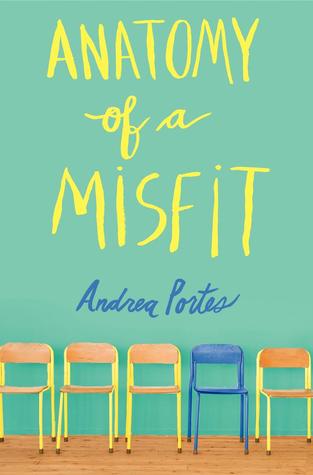
Anatomy of a Misfit by Andrea Portes

18340210This young adult novel was recommended to me by a fellow teacher of reading workshop who said it was immensely popular in her room. I downloaded it on my Nook and began to read it late one night before bed, and stayed up all night to finish.  I laughed on one page, clenched the covers in tension on the next, then cried, then laughed again, thanks to Portes’ masterful narrative skill.

The narrator, Annika, was a unique take on the typical YA protagonist, describing herself as the “third most popular girl in school,” whose Romanian father she calls “Count Chocula.”  Still, Annika finds herself in a number of classic YA conflicts–torn between two boys (Logan, who is unique and thoughtful, but social suicide, and Jared, who is magnetically attractive and popular) and torn between two friend groups (Becky Vilhauer and her evil “mean girls”-esque clique and the victims of that clique’s hurtful gossip).  Annika authentically struggles with these choices in a way I think most teenagers would, so this felt much more real than a John Green book, for example, to me.

As Annika’s unique voice kept me laughing and intrigued, the story grew darker, spiraling into a series of painful climaxes, as the book progressed.  While reflecting on one of these situations, Annika writes:

We tried to be less self-involved.  We tried to look up from our dumb obsessions and notice other people.  We tried to be open, for once.  We tried not to be just another vaguely racist family.  We tried to be enlightened.  We tried to be good.  We tried to be all of the things…we are not.

This beautiful excerpt reflects not just on Portes’ cut-to-the-quick analyses of common situations, but also her writing skill.  My students and I looked at that passage for craft and they created beautiful imitations filled with similar repetitive phrasings.

Portes’ beautiful language made me love this book, but I loved it even more when I read the afterword, which explained the inspiration for the book–Portes’ own high school experience.  Once you read the heart-wrenching conclusion, you’ll understand why I so vastly admire Portes’ blend of autobiography and gorgeous writing skill.


On Annotations and Assessment in Readers Workshop

If you’ve read this blog for a while, you know that I advocate for self-selected reading in all English classes. My students read stacks of books each year that they choose for themselves, and they read four titles for in-class book clubs that they select from my short stack of complex (mostly) contemporary titles.

The question I get the most from teachers who do not practice this choice pedagogy is “How do you know your students are reading?”

My initial response is usually:  “I ask them.”

But if you practice readers and writers workshop in your classroom, you know that it takes a bit more than that to know that students are developing as critical readers.

We do still have to teach.

Shana wrote a post recently about the value of talk in her workshop classroom, and I was intrigued by one of the comments:

I think we should consider what would be the best balance between between teacher and student talk. As the literacy expert in the classroom, I think the reading/language arts teacher’s voice needs to be heard often. While we all can be our own teachers, we will probably learn more with the wise guidance of a teacher.” 

But, of course.

Balance is key. So is authenticity.

These two ideals drive the choices I make in my workshop classroom.

My new friend, Lisa, sent me a question that got me thinking about both as I composed a response. I share her question here and how I replied to this dedicated teacher who is moving herself as she moves her readers.

Question:  Do you assess any annotations the students do with their reading? I’ve included a rubric we have been using to give students some feedback on their annotation of fiction. Their annotations in the text, and thereby their discussions about the texts, has greatly improved!! However, providing feedback on their annotations takes FOREVER. Just curious how you handle any sort of assessment related to students reading their chosen texts.” 

Response: Initially, when I read your question about annotations, I thought of these two questions:

1) Why do you need to leave feedback on the annotations in their books?

2) You said your discussions on the texts have improved. Are those discussions not enough of an assessment on their annotations?

Then I read your rubric, and it got me thinking.

I love the simplicity of the rubric, and I can see how students would notice more and be able to contribute to discussions more thoroughly and completely if they mark their books accordingly; however, I always use caution when it comes to interrupting a student’s reading flow — you know, reading for the sake of enjoyment.

In my own reading life, I rarely mark up a piece of fiction, unless it is for my own book club and I want to remember a significant passage that I loved, or didn’t understand, or a moment in the text that shocked or saddened me so much that I want to bring up in the discussion.

When I have my students engage in book clubs or self-selected reading, I want them to have authentic experiences and discussions about their books. (I quote Louise Rosenblatt on experiential reading at the end of this post.) That hope for authenticity is what drives what I have students do while they read.

And it is hard, and I have to trust that students notice the nuances and the complexities in the language and all the important literary aspects of their books. Sometimes they just don’t.  Sometimes they need to focus just on comprehension. I have to be okay with that.

Here’s how I try to facilitate learning:

1. Model my reading. I show students the books I’ve read for my book clubs and the kinds of passages I’ve marked so I can remember them for discussion. I encourage my students to mark their books in similar ways. Some will, and others never will. Some show me that they can think about their books without ever marking them. I have to let them learn the habits of readers that work for each of them individually, and I have to trust that they will.

This goes for writing, too. Every major writing task I ask my students to do, I do it first. I show them my process and later my product. For my ESL students, this is the single most effective strategy I do. I’ve asked them, and they’ve told me. I know that if this modeling helps my students who struggle with language, I know it helps all of my students.

2. Teach mini-lessons. Say I want students to focus on literary devices. I show them a variety of “beautiful sentences” from various texts; 51 Of The Most Beautiful Sentences In Literature was a perfect resource for this. I pulled several of these pretty slides and put them on a presentation in Drive. I projected them in the front of the room, and students and I talked through what we noticed in these sentences.

We discussed the craft in the sentence and why the author might have made the moves he or she did. This focus on the writing in a text often leads to greater critical reading of a text just as critical reading should lead to better writing.

Next, I asked students to go into their books and look for beautiful sentences. I gave them each a note card, and they had to find two sentences — one for each side of the card — where they could tell where the author did something interesting with language. I instructed them to write the sentence and the page number at the top, and then they were to identify the device/s, interpret the meaning of the sentence, and analyze the meaning, based on what they’d read in the book and what they believed the author was doing there as it related to the meaning as a whole.

What does this assess? A lot.

  • I know immediately if students know how to identify literary and rhetorical devices.
  • I know if students understand what they are reading, especially if the activity is during book clubs, and I’ve read all the titles in which students choose.
  • I know if students can analyze the author’s use of the device versus just summarizing the meaning of the sentence.
  • I know if students are reading their books. They are not going to choose a sentence on page 195, if they haven not read that far. They will not know how to tie their analysis into overall meaning

(The sentences I used for this mini-lesson lead to book talks, too, and I had one girl come in the next day with a copy of Anna Karenina that she’d bought for herself. Hooyah!)

Mini-lessons like this can be done over and over again — perhaps with a different skills focus each time, and the more students see that we are going to ask them to go into their books to focus on a skills, the more likely they are to start marking significant sentences and passages as they read. It becomes a natural move on the reader’s part instead of a mandate by the teacher.

3. Teach Notice & Note signposts. If you are not familiar with Notice & Note, Kyleen Beers and Bob Probst researched the patterns in story arcs and crafted six signposts around the moments in the text that appear the most often in a vast number of fictional pieces — short stories and novels. Students at all levels can apply the signposts as they learn to ask themselves questions as they read. In my experience, their understanding of theme improves dramatically.  If you Google Notice & Note signposts, or join the Facebook group, you’ll find many teachers who share their resources.

My students and I learn the signposts with short stories, and then throughout the year, we practice applying them to our full-length novels. Best thing I’ve done to help students analyze theme, which is SO HARD for some of them. I don’t quite understand why, but it is singularly the thing my students year after year struggle with the most.

For assessment, again, I do a lot with note cards. Quick, short writing snapshots where students can talk to me about what they know. I can grade these easily and leave feedback in the form of questions to direct students to look deeper, or closer, or whatever. I usually score these with check plus, check, or check minus and leave feedback in the form of one thing the student did well and one thing that might need improvement.

4. Write reader’s response. I have 35 composition notebooks that I labeled with thematic topics. I learned this strategy from Penny Kittle (Here’s a handout from 2013 that has a list of topics for notebooks in it.) I morphed her idea with Notice & Note, and it works well for reader’s response, another piece in holding students accountable for their reading and assessing their acquisition of skills.

At the beginning of the year, when composition notebooks are .50, I buy 35, and I label them with a variety of topics like Penny has on her list, plus some. I glue a handout of the signposts inside each one. Then, every once in a while, I’ll pull the notebooks out and set a handful on each table.

Students know to find a notebook that they can tie the thematic elements of their independent reading book to. We write for about 10- 20 minutes, depending on how in-depth I want students to go with their thinking, and then they share out what they wrote with their table mates. (This works as book talks, too, because students hear about what their friends are reading.) I wander the room and listen in. This is formative assessment. If a student has written about theme, shown that he is reading and understands how the book relates to that thematic topic, I know he is learning. Of course, the reverse is also true. I use check marks for grades of this kind of assessment, too.

Now, having told you all of this, I am not saying to ditch your rubric. I am just always trying to figure out how to put more of the responsibly for the learning (and the work) on the students, and probably most important to my sanity — the need to cut my grading time.

Regarding your rubric, I wonder:

A. How can you ask students to practice annotations with short stories?Then when you go to leave feedback on what they have marked, zero in on one or two slices of the rubric — never the whole thing. And be sure your feedback is something that will resonate. All too often students do not care about what we write, they only want to see their grade. I saw this great reminder in a tweet today:  “Put comments on my paper that begin conversations, not end them.”

B. Instead of trying to leave feedback on every students’ annotations for their whole books, how can you ask students to apply what they have learned from annotating?

For example, choose a slice of the rubric. Give students a half sheet of paper (or a notecard) and have them synthesize their annotations into a paragraph or two that answers a question. Something like :  Think about the things you’ve annotated about the characters in your book, how have the behaviors of the protagonist advanced the plot in the story?  Explain how any single or series of choices by the protagonist has surprised, unsettled, or shocked you.

C. How can you use the rubric to guide your conferences?Instead of checking their annotations, ask students to use their annotations as they talk with you about their books.

For example, choose a slice of the rubric. In a one-on-one conference, or in a small group conference if students are reading the same book, ask:  In regard to your annotations about literary elements, what have you noticed about how the author uses them? How do these elements help the author craft the story? Talk to me about some passages or sentences in the book that you’ve been particularly moved by.

You will know if students are paying attention as they read., and you’ll know so much more because your assessment shoots over the annotation itself and gets to the thinking behind why we want students to annotate in the first place.

Lisa and I would love to know your thoughts on annotations and assessment? Please leave a comment


©Amy Rasmussen, 2011 – 2015

Oh, the Learning in One Well-Chosen Sentence

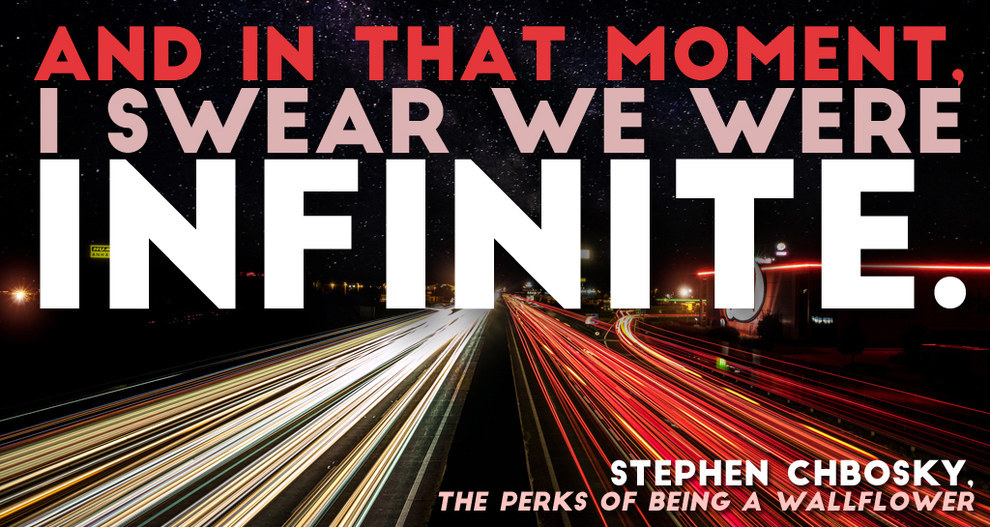
51 Most Beautiful Sentences -- Buzzfeed

First, we read like readers. We talk about meaning. We talk about the story if any students have read the book. Many have. The Perks of Being a Wallflower never stays on the shelf for long.

I see several students flip to the back of their writer’s notebooks and write the title on their To Read Next lists.

Next, we read like writers. “The writer does a few things interesting in this sentence. What do you notice?” I ask.

We talk about starting a sentence with and, which leads to a discussion about sentence structure. We talk about the word infinite, which leads to a discussion about the word moment.

“What? That’s a contradiction,” someone says.

“Uh huh,” I nod and listen as little conversations bubble up around the room.

Then, from the back, a student says, “Do you see the three we’s in that sentence? Do you?”

I cannot help but grin.

You see it, don’t you?

Oh, sentences. Lovely sentences. Oh, the learning in one well-chosen sentence.

I cannot even imagine how much I would have learned TALKING about sentences all those years ago instead of diagramming them.

Do you have a favorite sentence you like to talk about with your students?

This Buzzfeed article has 51 Beautiful Sentences. I mention this piece in my post tomorrow, too. And if you haven’t visited Notable Sentences for Imitation and Creation, you’ll want to find some time to read it.


©Amy Rasmussen, 2011 – 2015