Mini-Lesson Monday: Reader’s Response to Frame a Unit

Penny Kittle recently shared this article about the diminishing attention span of humans, thanks to the plethora of instant-gratification stimuli that burdens our plugged-in students.  I was reminded of my vow to help my kids simplify their lives, slow down their minds, and just…be.

img_1212

The unit plan Mike and I designed

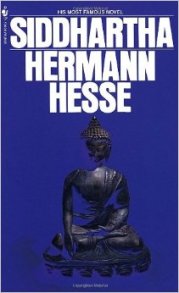
All of this led my student teacher, Mike, and I to design a unit plan around mindfulness, reflection, and deep thinking.  We wanted to use all of Siddhartha, parts of Hamlet, articles like the one above, various poems, the music of Cat Stevens, activities like contour drawing, and exercises like meditation to help our students slow down and explore their minds.


So, today we’re launching this unit of self-reflection and self-exploration, and one of the first mini-lessons we’ll teach is a reader’s response to “The Eight Second Attention Span” article.

Objectives:  Using the language of the depth of knowledge levels, students will identify patterns in Egan’s writing that align with our unit theme, cite evidence in the text of those patterns, and synthesize Egan’s argument with our prior readings.  Or, from the Common Core:  students will read closely to determine what the text says explicitly and make logical inferences from it; cite specific textual evidence when writing or speaking to support conclusions drawn from the text.

41drZBnWSzL._SY344_BO1,204,203,200_Lesson:  We’ll pass out copies of the article for students to read and annotate, and they’ll also have their writer’s notebooks out.

“First,” I’ll say, “let’s read this article and just identify Egan’s argument.  What is he saying?  Underline or highlight key lines or facts that help make his point.”  We’ll read and annotate together, me using the document camera to model.

“Once you’ve figured out what Egan is saying here, go ahead and jot it down in your notebook in your own words.  What’s the gist of what he’s talking about?”

After the jot, students will talk in their table groups about the article and what they’ve noticed.  We’ll share out as a class and make sure our thinking is in sync.

img_1157

Nonlinguistic storytelling through doodles–one of my proposed solutions from my response. We’ll do this exercise later in the unit.

“Okay, so Egan ends by offering two solutions to this problem.  What are they?”  Gardening and deep reading, students will offer.


“Let’s write a response for a while in our notebooks and brainstorm what our own solutions to this problem would be.”

We’ll all write, me modeling once again on the document camera.  Then students will share in small groups what their proposed solutions are.

Follow-Up:  I’ll ask students to practice one of their two proposed solutions are over the course of the week, then request a one-pager reflecting on the experiment.  We’ll apply our reading of the article, our practice of deep thinking, and our reflection on all of it to our unit of study as we move forward in our exploration of our themes.


Best High-Interest Books for Teens

This year, Amy and I were determined to make our exams authentic.  One of the options for the reading portion of the exam was for our students to create top 10 lists, and many of them did.  Their lists are funny, honest, and so valuable for helping spread the word amongst readers about good books.  Below is Aleigha’s list of recommendations for high-interest books that will hook teens and get them to fall in love with reading–feel free to share them with your students!

img_1175Aleigha’s Top 10 List:  Best High-Interest for Teens

  1. Fangirl by Rainbow Rowell

Though this book was funny and lighthearted it still had the ability to change my life.  It really helped me realize that you should appreciate your siblings while they are close to you.  Seeing how quickly Cath and Wren distanced themselves in college put my relationship with my siblings into perspective.

  1. Eleanor & Park by Rainbow Rowell

This book is so much different from your usual love story. By that I mean it’s extremely realistic. It changed my life because I could picture myself as Eleanor. It was one of those books that are so realistic it’s kind of scary not many love stories can make you envision yourself as the character.

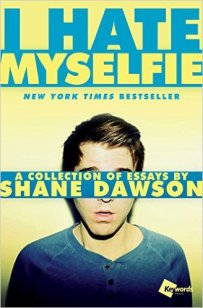
  1. I Hate Myselfie by Shane Dawson

hatemyselfieI have never laughed so hard while reading a book. This guy literally takes everything that should have been traumatic to him and turns it into humor. This book changed my life because it taught me that it is important to laugh at your own pain. You shouldn’t take everything so seriously.

  1. Looking for Alaska by John Green

This book for me is one that really set an example. It breaks away from the normal click of kids you have in high school and puts a group of complete opposites in a single friend group. That was one of my favorite things about this book. It just kind of made me feel like it’s okay for me to talk to the jock or the pothead.

  1. All the Bright Places by Jennifer Niven

This book is very eye opening. It is about two teenagers who bond over a mental illness and fall in love it. It makes you very aware of the signs of depression and makes you analyze not only yourself but others. This book has the ability to change lives because it teaches you about the sensitive topic of depression.workinprogress

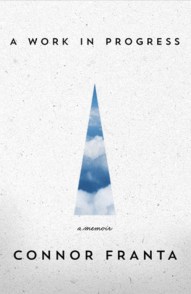
  1. A Work in Progress by Connor Franta

The author of this book is a Youtuber who tells you all about his life in high school and his YouTube journey. The book itself contains a lot of life lessons. He tells a story and then wraps it up with a lesson at the end. I enjoyed this book a lot because it shows how a normal really small town kid can become really successful with hard work.

  1. We Were Liars by e. lockhart

If we’re being honest, the only reason this book changed my life is because it just made me really depressed. I was just extremely upset once I reached the end of it. I didn’t want to believe what had happened was true and I cried for the main character. And then I cried because what other reaction can you have to a book that ended so terribly. So I guess this book changed my life because it made me realize that I cry more for fictional characters than I do for people I actually know.  

  1. The Fault in our Stars by John Green

Again another book that screwed me up emotionally. This one really does make you cherish your life and your friends. If after reading this you are not greatful for what and who you are blessed with that will be a surprise. Everytime I read this book I don’t just form my own imaginary relationship with Augustus Waters. I also find myself being very thankful that I have experienced little loss in my life.  This book is another one that puts it all into perspective.

  1. Every day by David Levithan

Every day is a book about a person who wakes up in a different body every day. He never has the chance to experience what it is like to have a family or best friend. This book is perksofbeinglife changing for me because it makes you appreciate the blessing of continuity. I think having a constant in your life is something that we all take for granted.

10. The Perks of Being a Wallflower by Stephen Chbosky

The Perks of Being a Wallflower is one of those books that make you really cherish your friends. Until you find out what happens to Charlie as a child, you assume the book is about a young boy coming out of his shell. As u read through the book, you experience the ups and downs of friendship and watch Charlie become a whole new person. This book has made me really appreciate my friends.

Holden

Today I asked my colleague, Elaine Miskinis, if I could share her writing with the TTT community.  Elaine teaches Sophomore English, Junior English, and AP Language and Composition.  I am fortunate to pass my freshmen along to her while receiving her juniors in return. She perfectly sums up the struggles of first semester, the hope that comes with second, and the transformative power of literature. ~Jackie

Rye_catcherThe plan?  Spend the hour and a half between the end of the school day and kiddo pick up time entering my students’ midterm grades, doing some lesson planning for “Hamlet” and cleaning and organizing my room in preparation for third quarter.

The reality?  A student who is failing with a single digit average came to finish his midterm.  He mentioned, in passing, that reading Catcher in the Rye made him realize some things about himself.   Any conversation that opens with “The Catcher in the Rye made me realize…” is never going to be a short conversation.  It’s just the nature of that novel and the power it holds.

Long story short, he’s experienced some significant trauma and, like Holden, nobody has really been there to help him to process it.  He said, “You know how Holden is really smart, but he’s failing because he just can’t get out of his own head and move on from what he’s experienced?  I think that’s like me.”  Over an hour later we came up with a plan to get him someone to talk.  We also scrapped any plans of turning him into a model student this year and replaced them with the goal of helping him so that he, in his words, “Can stop pretending to be happy and actually start to feel it”.

So, now my classroom is a fire hazard of papers and books, my planning for Monday stands at “Wing It” and I have two bags of papers that have come home with me that still need to be logged into my grade book.  But, this was one of those days that will likely stand out when I think about why I teach. And, more specifically why I value teaching literature.  For every kid who whines and “Spark Notes” and skims, there might be one kid in the back of the room who looks like he’s disengaged and disconnected but who, in reality is so much in his own head at that moment, and possibly even so far in the head of a character that he’s lost in ways we can’t begin to see.

It’s easy to forget the power of novels, especially the ones we teach year after year and it’s easier still to forget the power we hold as teachers, especially when we’re consumed with midterms and grades and planning, and frankly, all of the things that really, in the end don’t amount to a whole lot.  Today was an important reminder to me of what it’s really about and why what we do really does matter.  I don’t know that we’ll be able to help this kid in any substantial way, although I certainly hope we will, but I do know that he felt comfortable broaching the topic with me this afternoon because he had Holden Caulfield there to lean on.  It makes me wonder how often these small, important moments get lost as we focus on assessments and core competencies and all of the minutia of our lives as teachers.  Sometimes it just has to be about more than that, and about more than reading check quizzes and essays.  Sometimes it has to be about letting our kids hang out with characters for a while to learn that they’re not alone.

Mini-lesson Monday: Moving Past Identify

When my students and I talk about reading, we talk about writing.  If they pay attention to not just what the writer means in the words on the page, but how the writer crafts that meaning with words on the page, they move much quicker into the rhetorical analysis they must do on the AP Language exam in the spring.

But it is not easy. So many of my readers read below grade level. They struggle with fluency, so their reading is slow and laborious, and as a result, they miss out on much of the flow of the language that leads to constructing meaning as they read. If they cannot comprehend, how can they analyze craft?

They are pretty good at identifying devices and figurative language and the like though. They are pretty good at identifying structure. They’ve learned writers have different ways of approaching a topic, but they are not so good at discussing why. Why did the writer craft the text that way? What does that move do to further the writer’s message? What effect does it create? What is the tone?

So, this lesson came about as a way to help my students practice some critical thinking about how writers make choices with language — and as a bonus, introduce my readers to four new book titles.

Objective:  Using the language of the Depth of Knowledge levels, students will recognize a variety of structural and craft moves in fiction and non-fiction texts.  They will identify patterns and compare effectiveness through discussion. They will analyze the tone. They will summarize their discussion in their writers’ notebooks, and apply their understanding to future reading and writing assignments.

Lesson: Introduce three new titles as choices for independent reading by providing copies of the first few paragraphs of The Other Wes Moore, Nothing to Envy– Ordinary Lives in North Korea, and The Dog Stars. In small groups, giving each group one (or more of the passages depending on the time you want to take for the lesson) instruct students to read the passage and determine the structure and the craft moves the writer makes to begin the books. Ask:  Why do you think the writer chose to begin the book this way? What does that beginning do to capture the reader’s attention? Why might it be an effective way to do so? What is the tone of the passage? How do you know?

Help students recognize the effect of beginning a text with a passage of dialogue versus startling information versus first person narrative. What are the similarities? What are the differences? What structure do you find the most engaging? Why?

The Other Wes Moore by Wes Moore

Nothing to Envy, Ordinary Lives in North Korea by Barbara Demick

The Dog Stars by Peter Heller

Follow-up:  Students will apply their understanding to their independent reading books, and as homework will write a one-page response that analyzes the first few paragraphs of their books.

A Question about Equity

I have this idea stuck in my head, and it keeps spinning like the record player my sister broke when I was 11.

When we think about equity in an English class, what comes to mind?

I hope fairness, impartiality, “justice in the way people are treated,” says Webster.

But what does equity look like? What does it look like every day in an English class?

Too many days I spend too much time with my students who do not do the assignments than those who do. Is that equitable?

Too many days I find the time to talk to the talkative students about their lives outside of class, but I rarely take the time to talk to the quiet kids who have a gentle grace, pay attention, complete assignments. Is that equitable?

A week or so ago I conducted a training, and one of the teachers asked something like this:  “Do you still have students who do not read, or do not move forward, in your workshop pedagogy?”

Yes.

Will I keep encouraging, pushing, pulling, doing everything I — and my extensive network of workshop teachers –can possibly think of to help that student want to read and grow in her literacy skills?

Of course.

But let’s be real. I offer choice reading in my classroom. I offer choice of writing topics on every writing assignment (except timed writings when we specifically practice for the AP English exam.)

I’m going to have to allow the student choice when it comes to actually reading.

I can tell you this though:  More students read and grow and become avid readers than ever did when I chose all the books, all the prompts, all the everything.

And this brings me to the real question spinning in my head:  What does equity look like when it comes to instruction in an English class?

Choose one:

a. A teacher chooses six books for her students to read in a given school year, all books shining with literary merit. She teaches in a school where the majority of her students live in poverty. The children come from diverse homes where they face some struggles, but they seem eager to learn. She believes that since the more affluent school across town requires its students to read these six lofty books, she must require her students to read them. (Maybe her administrator even told her she has to teach these books– she’s just doing what she’s told.) This teacher wants her students to have the same rich literary experiences with these books she had in high school. She wants them to think about literature and analyze the language. She want them to grow in cultural literacy. All good goals. But probably, more than anything, she wants them to be on equal footing with the students across town. She wants them to have the same advantages and the same knowledge about the world’s great books.

b. A teacher allows her students to self-select the books they read. She models the moves of a reader. She talks about rich literature, what makes a compelling story, hboys readingow characters and plot lines develop and how they mirror their lives. She challenges students to consume pages, develop stamina, and grow in fluency. She gives them opportunities to read more and read harder because she knows the value of reading in building confidence and competency. She introduces different genres, authors, themes. She surrounds them with shelves weighed down by high-interest books and gives them time to read in class. To this teacher, it is not about the book — or the six books of lofty literary merit — it is about the reader. Readers who read 12 books in a year instead of just six. This teacher knows if she makes a reader she can make a life.  And the skills gained through reading extensively transfer to their writing and permeate like energetic friends into the reading they must do in other classes.

I am going to go with b.

Equity is not in the books we require students to read in English classes. Equity is in the skills and the fluency and the stamina students need to read those books if they chooses to read them.

Too many students in high school read below grade level. The only way to help them read better is to read more. Six books (and I’ll question if he really reads them) is not enough. So much research helps us understand this. Donalyn Miller collected a lot of it for easy access here. And Penny Kittle cites scores of it in the bibliography of Book Love.

I met with a reader today. I asked her about the reading she did as a sophomore in her Pre-AP class. “Did you read last year?” I asked.

“Uh, no, not really,” she said. “I only read two books last year. But I only remember one.”

Two books.


And before you jump all over me, I know there is option c. Yes, we can have a mix of both, but I will hold my ground:  If we are not advancing readers and writers, we are doing it wrong.


Integrating Reading & Writing Instruction: Craft Studies & Mentor Texts

This is a continuation of our post from yesterday.

#3TTWorkshopWhat are you reading now, and/or what are your latest finds that could be strong mentor texts?  

Jackie:  For fun, I am currently reading Ready Player One by Ernest Cline, and for AP Literature, I am currently reading Othello.  I read Ready Player One as a departure from my typical YA reads.  I was never a gamer or 80s enthusiast, so I wanted to “challenge” myself by choosing a new genre.  Ernest Cline brilliantly writes action pieces.  Somehow he manages to translate the video game structure into a novel AND make it interesting for non-gamers like me; I am planning to use an excerpt to discuss movement of time either when we work on our multi-genre project this year or our fictional writing next year.  

Most recently, my CP freshmen read the picture book The Promise by Nicola Davies as a mentor for our narrative fiction unit.  In my academic freshman classes, we recently completed process papers based on The Compound by S.A. Bodeen.  Mentors for these included “What you will need in class today” by Matthew Foley and “Instructions for a bad day” by Shane Koyczan.  Students used each as a mentor text by which to craft their own poems and then eventually built them into unique survival guides ranging from “How to survive a zombie apocalypse” to “How to survive a friend’s breakup.”  As Shana said yesterday, I like pairing professional work with my own to show them the messy process of writing, so prior to class I get a head start on my own piece and then I continue developing it while projecting my writer’s notebook on the board at the beginning of workshop time.    

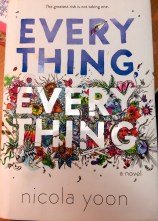
img_1056-1Shana:  I just finished the beautiful Everything, Everything by Nicola Yoon.  I love it as a mentor text because it’s a bit multigenre, and it’s an engaging YA love story, AND it’s gorgeously written.  With tons of parallel structure and a short-chapter format, it’s a quick read but one that lends itself to lots of frequent re-reading.  I’ll use this text for craft studies at the sentence and paragraph level to teach things like repetition, parallel structure, and varied sentence structure.

Another book I just read was Caitlin Doughty’s memoir Smoke Gets In Your Eyes, and Other Lessons from the Crematory, which I usually booktalk with Mary Roach’s Stiff.  This tale of Caitlin’s experiences working in a crematory will be useful for my students to analyze at the chapter level, during which she employs narrative to blend her adult experiences in the crematory with the formative experiences of her youth in order to make a claim about the nature of human life and death.  It’s a powerful example of the use of narrative within nonfiction.

I also recently read Memoirs of a Teenage Amnesiac by Gabrielle Zevin, which tells the story of a high school senior who falls and loses all memory of everything after sixth grade.  As a result, most of her life story is revealed through dialogue with other characters, so this will be a fantastic mentor text at the whole-text level–how can we craft a short story that uses dialogue to reveal movement through time, a character’s background, or a character’s personality traits–all without that dialogue being spoken by that character?


How will you integrate your current reads into your practice?

Shana:  I like to share this article about noticing beautiful writing with my students.  We use it as the basis for two sections in our notebook–“Quotes & Craft Study” and “Wondrous Words.”  I like to break down with my students why a particular line or paragraph or chapter in a piece of writing is so powerful–at the word level, the structural level, the punctuation level.  When we read like writers, we can notice all of those details and begin to imitate them in our own writing.  

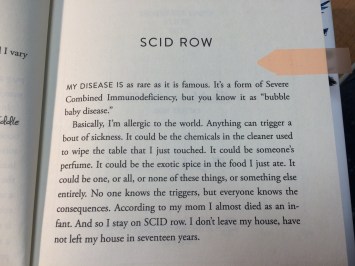
img_1057My students asked for more craft study and grammar instruction in their midterm exams.  With our new notebook setups, I’m hoping to create a routine for the wordplay we’ll need to constantly return to in order to strengthen our use of punctuation, specific diction, sentence structures, and other craft moves.  I want to employ more “triple-plays,” as Penny Kittle calls them–books that act as a booktalk, a quickwrite, and a craft study mini-lesson.  For example, I’ll take the chunk of Everything, Everything pictured at right and make copies of it for my students to glue into their notebooks.  Beneath it, we’ll imitate the parallel structure of the sentences, and the exercise will serve to teach parallelism, talk up the book itself, and be a quickwrite we’ll call “it could be.”

Jackie:  Inspired by a course we took this summer with Tom Newkirk, my colleague and I are putting together a superhero unit for our academic Freshman English classes.  The unit will involve both a persuasive essay and a comic strip students make about a hero in their life.  In turn, I’ve been skimming comics and graphic novels to find inspiration for students.  

In this unit, students will practice storyboarding their own comics while studying the use of craft like onomatopoeia, movement of time, and internal and external dialogue.  My hope is that these building blocks will provide a foundation for us to further discuss the use of colors to portray goodness and evil within a comic (or novel) as well as the use of framing or perspective in the pieces as well.

Please join the conversation–how do you approach the study of craft with your student writers?

Finding Mentor Texts & Craft Studies

#3TTWorkshop MemeWhat prompted you to begin the process of noticing examples of mentor texts or craft study?

Jackie:  When I first started teaching, finding mentor texts proved to be difficult.  While I knew what made writing strong or well-crafted, I didn’t always know what I was looking for.  Instead, I would eat up a plot line, soaking in word choice (I have always loved words), but rarely did I stop to think about how an author sculpted a line or page or chapter.  Finally, after struggling with structuring a piece of fiction writing, I referred back to To Kill A Mockingbird by Harper Lee.  Intrigued by her ability to create a scenes that showed the progression of time, I read and re-read the novel, observing her intentional moves as a writer.  Gradually, I began understanding the value of mentor texts to my own writing.  

The skill is not easy, and I have learned more about myself as a reader in the time I have taught than I ever did during my schooling.  While reading like a writer does slow down the reading process, it also makes me appreciate the artistry of writing.  It makes me aware of my own moves as a writer and how writing, like any other form of art, is about discipline, awareness, and interpretation.

Shana:  I didn’t know about the concept of mentor texts, or craft studies, or imitating great writers, or even reading like a writer…until I took Penny Kittle’s UNHLit class in 2013.  Everything that summer blew my mind, and I was hungry to begin looking for strong examples of real writing for my students to study, imitate, and craft.  I learned about lots of authors, nonfiction writers, poets, journalists, and more while I was at UNH, and in the year following I learned to think back to my own favorites and ask my students for their recommendations when I needed more mentor texts.

Once I began thinking about writing instruction in terms of products I wanted my students to create, I learned to start searching for examples of those strong products.  Sometimes I seek out a specific genre of mentor text if I want to teach a unit about narrative fiction.  Other times, I find an amazing mentor text and design a unit around getting kids to create that specific genre.


Describe your process as you search for examples of mentor texts and craft studies.

Shana:  I read much more slowly now.  Almost all of my reading is of texts that could be used for craft study in my classroom, or books that might go well on the shelves of my classroom library.  I think about writing and reading in such new ways now that I almost unconsciously note a good page for a booktalk, a beautiful line for craft study, or an interesting segment of writing for a mentor text.  

To build an arsenal of texts for use in my classroom, I began to scour the award lists for the National Book Award, the Pulitzer Prize, the Man Booker Prize, and lists of recommendations by groups like ALA, Kirkus, and more.  I also value the recommendations of literacy greats in our field like Donalyn Miller, Carol Jago, and Penny Kittle.  I want strong, complex writing to hand my students, so that they can absorb the craft of good writing through constant, diverse exposure.

img_1057

The page I’ll booktalk from Everything, Everything by Nicola Yoon

Now, most of the mentor texts I discover are incidental–I stumble upon a lovely sentence in a book I’m reading, or I see someone tweet a link to a good article, or I’m struck by a student’s craft as I’m reading their writing.  I try to give a published example, a student example, and my own example as an “in-progress” mentor text, in keeping with the recommendations of Katie Wood Ray in Wondrous Words.

Jackie:  Now that I have begun practicing reading as a writer, I am more aware of the mentor texts that surround me every day.  It took about a year of intentionally slowing down my reading, contemplating the craft, and thinking about where to file the piece within my units for me to develop this practice.  

From Pinterest finds to articles to book excerpts to poems, I am constantly searching for pieces that will inspire and engage my students.  Most of my finds feed into mini-lessons that tackle current skills with which my students struggle.  For example, Many of my students grapple with the use of second person point of view and use it as a default instead of intentionally employing it to reach out to and connect with their audience.  After the November Paris attacks, I found a piece that brilliantly uses second person point of view to help students develop empathy with Syrian refugees.  This piece serves to not only guide them but also make them think about the intentional moves needed to connect with one’s readers.

I also look for mentor texts in classic literature and young adult reads.  These short excerpts teach my students phenomenal craft while dually serving as a mini-book talk.  The writing sells itself.  I always have students request The Glass Castle by Jeanette Walls after I use the first chapter as a mentor text for multi-scene narratives as well as a craft study for opening lines.  The same goes for when I use The Goldfinch by Donna Tartt when I use a short explosion scene to discuss snapshot narratives.

Tomorrow we’ll discuss how we employ found mentor texts in our classrooms.  Join the conversation in the comments–how and why do you seek out mentor texts?


Using Picture Books as Secondary Mentor Texts

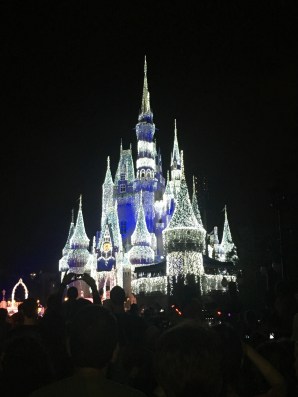
This year my family ditched the traditional Christmas festivities for a week in Orlando,

IMG_1606

Disney started his work as a cartoonist in high school.  How can we carve these same creative spaces for our own students?

Florida.  Swapping fur boots for flip flops, we ran around Walt Disney World, weaving in and out of storybook rides and watching teeny princesses wobble around Cinderella’s castle.  Only now that I am grown do I have a true appreciation for the sheer magnitude of Walt Disney’s brilliance.  He built a physical world of stories.

Disney doodled his way through high school; he honed his craft through drawing and photography classes.  Unfortunately, few curricula allow for the same creative exploration for students.  Oftentimes, the countless possibilities for storytelling and narration tend to center on only real-life experiences, personal narratives, when in reality, writing fiction opens up an entirely different world for self-exploration.

This year I swapped out our traditional multi-scene personal narrative for a story unit in which I taught many of the same narrative craft marks using a combination of fiction and non-fiction mentor texts.

The greatest challenge I faced was in finding short, succinct, and well-crafted stories that weren’t twenty pages long.  While I love short stories, I knew many of my freshmen would not only lose stamina if asked to write such lengthy pieces , but they would also struggle with translating the story structure of these mentors into their own pieces.  I began my hunt for a strong mentor text in, of all places, the children’s section of the library.

Objectives:  In alignment with the Common Core, students will write narratives to develop real or imagined experiences or events using effective technique, well-chosen detail, and well-structured event sequences. Using the language of the Depth of Knowledge levels, students will recognize a wide variety of craft marks in fictional writing.  They will identify patterns and compare effectiveness through discussion. They will formulate their own stories, revising them, and finally applying their understanding to future writing assignments.

Lesson:  I find writing fictional stories intimidating.  My plots seem to sag in some areas, or my dialogue doesn’t feel authentic, but many of my students love leaving their reality to explore their own creative worlds.  The vast majority read fiction, so its only natural that their reading interests feed into their writing curiosity.  The problem is that their greatest mentor texts are, on average, 250 pages long.

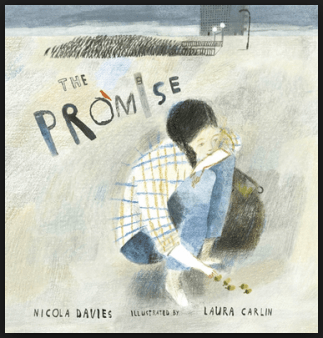
Screen-Shot-2014-11-07-at-1.51.36-PM-1514mm8The Promise written by Nicola Davies and illustrated by Laura Carlin is a beautifully crafted story of a girl growing up in a hardened city. After stealing a purse from a pedestrian, the main character makes a promise out of desperation, only to realize that the purse she has stolen has no value and is instead full of acorns, which she must now plant across the city.  The story reads more like a poem and has a cyclical ending that allows students to see the succinct structure of a short story.

Prior to sharing the story I type up the entire story book (which comes out to two pages) so that the students may access the text without the pictures.  I present it to them as a short story, and we read it aloud like any other mentor text, but I do not tell them it is a picture book!

I ask students to look at the structure of the story—what do they notice about how the author formatted the story as a whole.  Since we just finished studying plot in our literature circles, many of the students dig in to find the rising action and climax while others simply read and re-read to comb through the intricacies of the structure.  Almost all of the students notice The Promise’s cyclical ending that reinforces the story’s themes of redemption and the beauty of nature.

I have them return a second time to the story to look at the writer’s craft.  Students make a list of author’s moves within their writer’s notebook.  If they see something that intrigues them but they aren’t sure of the name, I have them describe what they notice and we develop a name for the skill together as a class.  Finally, we compile our observations onto a large sticky note that remains on display throughout the unit.  Students must then choose two of the craft marks to experiment with in their own writing.

Finally, once we have finished working with the piece, I reveal to students that The Promise is a picture book and I read it aloud.  Oftentimes students are shocked to hear that such a complex story is written for children, but their initial reading makes them value the intricacy of the writer’s work even more.

Follow-Up:  Not only did my students fall in love with the writing process, but they also asked thoughtful questions and engaged in deeper conversations about their writing.  One of my favorite conversations between two jocks involved the complexity of a fight between an alien, human, and zombie.

As a final follow-up, I had students complete a self-revision sheet.  They peer reviewed each other’s work and finally wrote a metacognitive reflection in which they discussed the craft moves they made and how they structured their story.

The freedom to write fiction or nonfiction opened doors for many of the students who tend to struggle with developing ideas while reinforcing many of the craft marks we studied (leads, plot, sensory details, concrete details, internal and external dialogue) in our snapshot narrative unit. As Griffin said, “It’s the best thing I’ve ever written because I’ve gone back and looked at my work in the past.  Fiction is easier because you can make up whatever you want.”


4 Monthly Challenges to Beat the Winter Reading Slump

New England winters lend themselves to steamy mugs of cocoa, plush blankets, and chilly evenings curled around a book.  Despite the ideal environment, halfway through the year, some of my students hit a reading slump.  The initial momentum of the reading initiative subsides, leaving students a bit more lackluster come second semester.

In turn, here are four challenges I plan to integrate over the next three months to beat the winter slump and reinvigorate students’ passion for reading.

1. January: Reading Bingo and Challenge Lists

The New Year, or for us, the second semester lends itself to fresh reading goals.  Goal-setting and self-reflection aside, I love reading challenges that push students to step out of their reading comfort zone and delve into new genres.  This year I comYA-Reading-Bingo-Challenge-2014piled a variety of reading challenge lists that I’ll be printing out on bookmarks to provide to my students.

I personally love the #26BookswithBringingUpBurns challenge, which has readers fulfilling challenges like reading “A book set somewhere you’ve always wanted to visit” and “A book with a color in the title.”  I’m also enjoying Rebeccah Giltrow’s BookaShelf 2016 Reading Challenge, which has participants base their book choices on the alphabet.  For example, “A” stands for “a book with an apocalyptical theme.”  Finally, Random House’s “YA Reading Bingo” is the perfect way to get students reading through rows of books while competing with one another to fill in a bingo card.

2. February: Book Trysts and Library Dates 

February lends itself to romance with Valentine’s Day, so to celebrate our book love, students will set up blind dates for some of their favorite books.  They will cover their choices in brown packing paper and write “dating profiles” including intriguing qualities readers will hopefully fall for.

In addition, students will participate in a library “date” with a friend from class.  Inspired by this “date night at the library” post by The Dating Divas, I created a list of entertaining and useful tasks and challenges for students to complete.  From “finding a book authored by someone with the same name” to “finding a book that has been made into a movie,” this friendly competition will put books in students’ hands while also promoting conversations revolving their reading.

3. March: March Madness and the Literary Hashtag Challenge

As March Madness approaches, my basketball students will be building teams and taking bets.  I know little about basketball…but I do know about books, which is why I’m hoping to create a March Madness that looks similar to Shana’s last year.  For those looking to create student-based teams, Principal Justin Cameron’s “Fantasy Reading League” at Frederick W. Hartnett Middle School gets the entire school involved in the competition together.

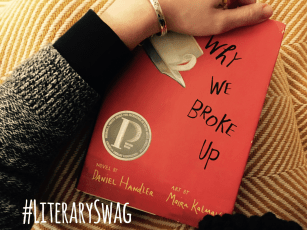
Finally, in March I will launch a new literary hashtag challenge that asks students to IMG_1801.PNGexhibit their reading lives outside of school.  Students will e-mail a Twitter or Instagram class account with literary images that include the following hashtags: #LiterarySwag (a hashtag for fashionistas who know books can serve as a stylish statement piece for any outfit), #Shelfie (a hashtag for beautiful bookshelves), #IReadEverywhere (a hashtag to highlight reading in unique places), and my favorite #BookFace (a hashtag that pushes people to be a bit more creative with their book covers).

By putting new books in students’ hands, I’m hoping to inspire a little competition, a lot of conversation, and a passion that will turn them into lifelong readers.


How do you reinvigorate students’ passion for reading?  What tips do you have to make it through the winter reading slump?


#3TTWorkshop — Making Workshop Work in AP English Part 2

This is a continuation of yesterday’s post — a conversation between Amy, AP Language teacher, and Jackie, new AP Literature teacher

Do you think it’s important that students read classic literature in an AP class?

Amy:  In an AP Literature class, yes. In classes leading up to AP Literature, yes, in sound bites and shorter texts. However, balance is key. Do we give students some say in what they read for our classes — not just what they may choose to read on their own? Are our students reading and growing as readers? Do we approach the text with the goal to help them do so, or do we approach the text and teach the book instead of the reader?

In a conversation the other day, one teacher said she likes to use classic literature because the conversations around the complexity help even her struggling students learn. Of course, that is probably true, but learn what? Those conversations will not help those students become better readers. The only way to become a better read is to read. If students are not reading the books we choose, we have to be okay with that. We have to admit that perhaps our goals for that specific unit, and that novel, are different than choosing the book because we know all students will read it. We have to decide we are okay will students not reading. I wrote a pretty long post about this whole debate here.

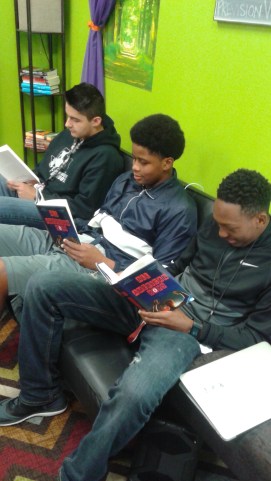
Jackie:  In AP Literature, yes, my students must read classic literature.  Because the AP Literature test Jackieclassroomboysis centered on the canon of “higher literary merit” books, I do teach set texts like Invisible Man by Ralph Ellison and Othello, but I stress from the beginning that in this course we are continuing to develop our reading lives as both academics and hobbyists.  Fortunately, many of my students arrive at my door with a passion for reading, but as I saw at the beginning of the year, far too many of them haven’t read a book for enjoyment since their freshman year.  Their lives become too busy and the first thing that seems to go is reading.

In turn, while I teach multiple whole class texts to fulfill the needs of the test, I also make space for independent reading.  The vast majority of my AP Literature students are seniors, and I know that this is their last English class before they move onto college.  In turn, my greatest goal beyond providing them with the necessary skills for deep critical thinking, is to reinvigorate their passion for literature and love of books.  

Where does teaching writing fit into your AP curriculum?

Amy:  I tell my students:  Ours is primarily a writing class. Before we even get settled in, students know they will write a lot — in all kinds of different modes and to a vast audience they build themselves. When I first changed my approach to teaching, I began with writer’s workshop. I’d heard Penny Kittle present, giving ideas from Write Beside Them, and that book became my curriculum guide. Today, I urge teachers who are thinking of shaking up their teaching, to take the first wobbly step into writer’s workshop. Depending on your book shelves and your library, it might be easier. Of course, it depends on your own confidence, too. If a teacher isn’t comfortable teaching writing, it’s probably because she hasn’t practiced being a writer herself. That has to be step number one. Write. Write beside your students so they see you struggle. Read articles and books on writing by writers. I’ve been reading the works of Donald Murray, a suggestion given to me personally by Penny Kittle. Murray’s books have enriched so many aspects of my writing life — and my teaching life. Try Learning by Teaching, and you will know exactly what I mean.

Jackie: It’s funny that you say your class is primarily a writing class; for me, AP Literature is primarily a reading class.  At the beginning of the year, I challenged my students to read 25 books…and I don’t just mean books of higher literary merit.  I wanted students to fall in love with reading again, which can be quite tricky when it comes to a class centered on analyzing books.  Even today during a mid-year progress presentation, a student talked about how he initially felt guilty picking up a YA book, but how this book helped him fall in love with reading again.  As you said, I too practice my craft alongside my students, only this year, it’s all about reading beside my students, which I do every year, but it’s fun to analyze many of the pieces for the first time with my students.  I don’t hold back when it comes to admitting my own questions about a text.  Learning beside my students makes the social process of the workshop model that much more authentic.  

Amy: Besides teaching my students to write arguments, since that is what the AP exam is all about, I also teach my students to write everything. We start with narrative, move into information, determine the difference between persuasive and argument, and practice research and synthesis as we go. My students write on their blog, usually about topics they read about in the news, although I’m going to try to mix this up in the spring and open their topics up to ones they find in their independent reading.
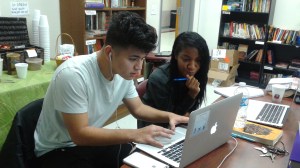
Diego and Tia deep into discussion around revisions.

Diego and Tia deep into discussion around revisions.

Blog writing is practice writing. I read as many posts as I can get to, and I try to leave feedback that helps the writer grown. The whole process starts out rough. Students think they they can pour out their thoughts on the page and then publish without doing much revision. We talk about this. We talk about audience, purpose, form. We even explore what Bloggers do to appeal to their audiences, and we try to build a readership (although I need to do a better job and take more time on this.) The whole point is to expand the classroom — to give my readers a reason to write that is other than Mrs. Rasmussen said so. Does every student buy in? No, but I get many more students to buy in to becoming writers, and many of them ask me if they can write on their blogs more than I require.

Of course, we also move through process papers, using mentor texts, studying the moves of writer’s, mirroring and modeling his or her craft, practicing revision and revision and revision before finally publishing. This year we’re writing about four of these essays a 9 weeks, which isn’t as much as I would like, but it’s a good amount for my writer’s this year.

Jackie: I am building from the bottom up this year.  With the help of a phenomenal mentor, Sheridan Steelman, I am learning how to marry the workshop classroom with the traditional AP Literature curriculum.  AP Lit is all about recognizing the beauty of language and the craft moves an author makes as they frame an idea or concept.  I’m that weird teacher that is so moved and excited by my students recognition of beauty in a piece that I jump out of my chair and cheer.  It’s okay though, I’m surrounded by word nerds!

During the first half of the year has involved analyzing writers’ craft to gain a better sense of the author’s goals and purpose.  We do write plenty of analysis essays, some being short timed pieces while others are lengthy explorations of deeper themes.  We also co-write papers in small groups, which forces students to rely on one another as they tackle the writing process.  Next semester I look forward to exploring more creative writing outlets as students mirror some of the craft within their independent novels.

Above all, my favorite writing my students do is the writing in their critical reading notebooks.  I love thumbing through the raw reactions to students’ YA literature and personal reading novels as well as the the pages of scribbled notes on characters and connections from their novels of higher literary merit.  
Join the conversation. What ideas do you have for a balance of choice and required in an AP English class? How do you manage the writing?