Mini-Lesson Monday: Notebook Passes

While we’ve written often about the value of writer’s notebooks–how to set them up and establish them as part of a learning routine–I’ve been thinking lately about the importance of sharing notebooks, creating a community space for writing, and keeping the writing process transparent.  Similar to how revision is a daily part of workshop, peer feedback is too.  It’s key that we know how to open our notebooks to other eyes so that our writing can grow its best thanks to many brains.  This mini-lesson focuses on a low-risk intro to an open notebook and its role as a workshop norm.

Objective: Using the language of the Depth of Knowledge levels, make predictions about a character’s actions and interpret  their actions thus far; create a response to a peer’s questions and inferences.

41Cx8mY2UNL._SY344_BO1,204,203,200_Lesson:  I love to introduce students to each other’s notebooks through a shared bit of reading.  Early in the year, we’d just finished reading a selection from Fahrenheit 451 about halfway through the novel, and were all intrigued by what in the world was going on with the variety of characters.  What was Guy’s wife doing with herself all day?  Was the fire chief good or evil?  Would Guy become a reader?  Would the mechanical hound eat everyone alive?  There were more questions than answers (as is the norm in workshop, I feel), so we turned to our notebooks.

“Today, we’re going to write a letter to a character we’re fairly interested in.  Maybe you find Guy indecisive and aggravating.  Maybe you think Clarice is a great role model.  Maybe you think Ray Bradbury himself is a genius for predicting so many of today’s technological innovations.  Whoever you’d like to write to, ask them all the burning questions you have and don’t worry about the answers!”  I turn to model on the board, writing to the main character’s wife.

“Be as real as you want–I’m going to write to Millie, who lives in this trancelike state all the time, obsessed with TV and media.  She drives me nuts!  I’m going to really hit her with some hard questions.  But know that we’re going to share our letters, so don’t get too crazy.”

img_0966We’ll take 6-7 minutes to write our initial letters, and I circulate the room as kids work to select and address a character.

“Okay, time up.  Sign your letter, and then I want you to pass your notebook to the person to the left of you.  Whoever gets your notebook is going to write you back–but here’s the catch.  They have to pretend to be the character you addressed.  So if you wrote to Millie, like I did, then whoever gets your notebook will pretend to be Millie and try to answer all of your questions.”

We take a few minutes to read letters, giggle, ponder a response, and then write.  After about 5 minutes of responding, I ask students to close their in-character letters, then return the notebooks to their owners.  When kids get their notebooks back, the volume in the classroom inevitably increases–everyone loves seeing someone else’s words in their notebook, and there are questions about handwriting and the veracity of a response and shouts of laughter at someone’s humor.

“Okay, take a few minutes to read your responses, then summarize both letters with your table.  As a group, talk about all the new insights you reached about these characters.”  The classroom gets loud as everyone shares at small tables.

Follow-Up:  Once small group sharing concludes, I ask for a few volunteers to share exemplars and we discuss those characters in depth as a class.  I love this lesson because it gets students to deeply analyze characters, as well as creates a norm for notebooks as a space for shared writing.  It’s a lengthy lesson–usually consuming the quickwrite and mini-lesson portions of my class–but one that’s worth repeating frequently to get students doing deep analysis and writing to one another in a no-risk way, which lays the groundwork for more vulnerable sharing later.

As we move further into the novel, I’ll ask students to revisit these letters to see if their predictions came true or their questions proved insightful.  Further, when I collect notebooks, I can check for deep understanding of the text with these letters.

How do you use notebooks to create a shared learning space or blend reading and writing instruction?


A Reflection to Reinforce Workshop Non-Negotiables

Establishing an authentic readers-writers workshop community isn’t easy for teachers or for students.  Our discussions this week–on student and teacher buy-in and how to get students to thrive–have focused on helping both teachers and students to grasp the many moving parts of workshop.  While they’re straightforward, these non-negotiables are unfortunately often ones that neither students nor teachers have experienced firsthand in a learning setting:

  • A reading community filled with a diverse classroom library, frequent talk about books, and time to read
  • A writing community centered on a writer’s notebook for play and practice, frequent revision, and constant talk about writing
  • Choice in all matters–in what to read, how to read it, and at what pace, as well as about what to write, how to write it, and at what pace
  • Choice for the teacher, too, in what units to design based on what all parties are interested and invested in
  • Talk, talk talk:  structured talk in the form of student-teacher and peer conferences; discussion about the day’s topics and mentor texts; and an atmosphere of frank honesty

It’s sometimes tough to fit all of those things in every day (or to conceive of how to plan for them) but when we can manage it, it pays off.  Below is a reflection from Carleen–whose thought processes I wrote about here, too–that illustrates her journey from English disenchantment to workshop engagement.  This reflection is from Carleen’s winter midterm, and helps reinforce the value of the non-negotiables of a strong readers-writers workshop.


IMG_1537In the past, I’ve always dreaded going to English class. It was always the same every year with grammar, vocabulary, reading classics that were really boring, and writing about subjects I could care less about. I especially disliked English last year because it was AP. That class always put me in a bad mood. Writing rhetorical analyses almost every day as well as working on the dreaded ORP, which consisted of reading a nonfiction book and writing 20 journal entries and an essay, almost killed me. That class kind of depressed me because I couldn’t understand any of it. … I just stopped caring about my assignments because I didn’t see a good end result. On the bright side, I got a 3 on the AP exam; however, my high school English experience was basically ruined because of that class.

This was a lot of pressure for you, Mrs. Karnes, because you had to deal with my bad experiences. Yet, you have made this class my favorite (out of all my high school classes) and made me actually enjoy English. This semester I actually feel like I’m learning and improving my writing skills, which I’ve always been self-conscious about. I have definitely been reading more and trying to challenge myself with reading books outside my comfort zone. You made me care about my work and in return I worked really hard on my projects and assignments.

I’ve grown more as a writer this year more than any other year. I looked back at my first one-pager, which was dreadful because my sentences were super choppy, and compared it to my recent writing. I found that over the course of the semester, I have become more confident in my writing and I started to really enjoy writing my fanfics. You gave us the freedom to choose what we write about, which helped my writing immensely because I CARED about the topic and I enjoyed doing it. I realize that I’m eventually going to write about things I don’t care about and I probably won’t enjoy doing it, however I have been looking at writing differently now. I don’t really see it as a chore. It’s just something that I do on a weekly basis and it’s become a habit. I no longer see writing in a negative way, which helped me grow as a student.

In the beginning of the year, when you told us that we had to read two hours every week, I got super excited. I was always looking for an excuse to read, which my parents restricted me from. You know I’ve been an avid reader since the beginning of the year and I probably have been reading the same amount since the beginning of the semester (which is to say A LOT); however, with your recommendations, I have read books that I thought I would never read. This class helped me expand my reading repertoire, and I’m really grateful for it. I’m always excited when I leave your “Karnes and Noble” with a new book.


Share your students’ stories of workshop success in the comments!

#3TTWorkshop — Part Two Student and Teacher Buy In

This post is the continuation of a conversation from the previous post in response to an email we received from our friend an UNH colleague Betsy Dye.

How do we help students understand what we mean by choice, especially when they’ve been given ‘choice’ before in the form of ‘choose from this list of books or topics.’?

Shana:  Again, I think modeling is key here.  I show students my roller-coaster of reading, including the trashy romance novels I indulge in despite my Masters degree in literature.  I show them my pile of abandoned books, for “life’s too short to finish bad books.”  I show them classics that I sort of wish I’d read, but never have.  And then I show them my notebook pages of books I’m currently reading or want to read.

It also helps that I have students complete visual and written reading ladders each year, and I show new students the previous year’s ladders to illustrate individualized choice.  And again, here’s where the class reputation comes in handy as well.

Lisa:  ^This. Our stories as readers and writers are gold, especially to some kids who have no such models in their lives. My students laugh at my copy of Don Quixote on my desk. I started it in September. I am 200 pages in. I’ve read over a dozen books since I unintentionally stopped reading that tome, and I had to promise some of my juniors that I would finish it before they graduate next year, but I’ve covered a lot of ground by not allowing myself to get weighted down. Yes, we must press students to finish texts and not become kids that drop book after book without really pushing themselves, but we must also remember that when they do find the one, it can lead to the next one (especially with our gentle guidance) and hopefully many more to come.

In terms of writing, it’s more modeling and the application of the skill each and every day. Sometimes, it seems, it really comes down to endurance. Many kids only write when they have to, which causes them to sit in front of a screen, pound out the required pages, and move on. However, when they get into the habit of writing, when it becomes exploration instead of a narrowly focused task, it becomes less like completing your taxes and more like picking out what to wear. One you do not only do once a year with heavy sighs and confusion because you are basically out of practice and unwilling to do more than the required work. The other provides you with an opportunity to choose, express yourself, and build confidence.

Finally, the classroom library comes to mind. Variety here is key. Students need to see that they aren’t limited by the short list they might receive at the beginning of the year in other classes. If your library has options and you talk about those options often, they will believe. If you build it…they will come.

Amy:  I’ll repeat Shana:  Confer. Confer, Confer. The more we engage in conversations with our students about what we mean by choice and books and writer’s notebooks and everything else in the sphere of workshop, the more they will understand and take ownership of their choices. We must be willing to admit that choice is hard when they’ve never had it, or they’ve only had tiny tastes of it. So many students are afraid of being wrong, afraid of “the grade.” It’s through our conversations that we have the best chance of eliminating these fears and helping students trust themselves along the way.

How do we open the library shelves to our seniors and help them move beyond the four to six novels they’ve read each year for the three previous years?

Amy:  I’ll start with stating the somewhat controversial:  I doubt most of our seniors read

Screen Shot 2016-05-17 at 10.29.37 PM

Not my students’ actual conversation but still. 🙂

all the required novels teachers selected in those earlier years. Every year I ask my juniors how many books they read the year before. Some say they read only the required books. Some admit to starting but not finishing them. Some tell me they didn’t read those books at all. If we are going to make all the decisions about the books we choose for our students, we have to be okay knowing that not all of our students will read them.

Shana:  Ha–I know that kids don’t always read what’s assigned, because little goody-two-shoes me didn’t read what was assigned.  And I loved reading.  In fact, I read John Grisham under my desk while my teacher talked about Catcher in the Rye.  I tell students that story, and show them the many weather-beaten Grisham novels on my mystery shelf, and ask them about their guilty pleasure reads, or their life-changing reads, or their escape-from-reality reads.  [Amy:  or their Wattpad reads] All of those discussions start a conversation about the possibilities choice reading might offer, and we go from there.

Lisa:  I asked. They don’t read. They tell me sweetly, but still, they don’t read. Students I had as sophomores will gladly share with me as seniors all the ways they worked to convince me they read The Scarlet Letter, Uncle Tom’s Cabin, and The Adventures of Huckleberry Finn. 

Amy:  Lisa, I had students publicly confess to not reading a thing in my class in a Facebook group I had several years ago. Stabbed me right in the eye because at the time I had no idea they could be so sneaky — and smart — and still make high grades in my class without reading the same American literature books you mention. It’s like they subconsciously deny the canon!

Lisa:  So…how do we open our shelves and help seniors move beyond the books they never read? By offering up a wealth of books they can read, telling them to look through the books at home they’ve always meant to read, sending them to book recommendation lists, talking with them about what they might want to do after high school and suggesting books in that vein, having them talk with peers who have kept up with reading and have recommendations to share.

I had a student who graduated in 2013 come back to observe some of my classes this week. He book talked Ishmael to my AP students today, and I just received an email from a student saying that he went to Half Price Books and picked up a copy tonight. 

The power of suggestion is strong. If I am surrounded by people working out, I might consider getting off my couch. If I am surrounded by people complaining all the time, I start to complain too. If I am surrounded by readers, I am going to see what all the fuss is about. Many of our students want to read, but they need time. We can provide it. Many of our students want to read but need suggestions. We can provide those. Many of our students want to read, but only what they want to read.

Bingo. Let’s start there and build on it.

How do we help our colleagues get started with workshop?

Lisa:  By inviting Three Teachers Talk to provide professional development! No, seriously. It’s how my team in Franklin saw all the possibility that workshop holds and how to actually make it work day to day. So that comes down to support. Comparatively speaking, curriculum in a textbook is easy. Curriculum you’ve taught for fifteen, twenty, twenty-five years, provides comfort. Running off packets of study-guide questions isn’t too terribly difficult either. Building meaningful lessons from scratch is really hard work. I’ve lived it, and I’ve seen it happen at Franklin as we work to move our 9th and 10th grade classes to workshop. If we didn’t work at it together, it would be infinitely more difficult.

Shana:  Support is essential.  Whether it’s the kind of support one finds in a workplace colleague, or connecting with a like-minded friend via Twitter or a blog, workshop teachers are part of a community just as nurturing as the ones we strive to create in our classrooms.  It warms my heart and fuels my spirit to think of Lisa and Amy working on this craft in their Wisconsin and Texas classrooms, and it invigorates me on days I think I’d rather just run copies of a worksheet.  We’re all trying our best to craft strong, student-centered classrooms, and whatever guidance and support we can provide one another is a non-negotiable.  Pedagogical reading recommendations, webinars, and Twitter chats can all help our colleagues dive into workshop, and be buoys when we need them, too.

Amy:  Yes, to all that, and I can think of two other little things we can do to share this work with our colleagues:

1) invite colleagues to visit our classrooms. I am such a visual learner. When I see a strategy taught, over reading about a strategy in a book, I am much more able to use it successfully with my students. The same holds true for how workshop works. I read Nancie Atwell’s book In the Middle. It is a great book! But I could not imagine how I could make what she described work in my 9th grade classroom with 33 students. It wasn’t until I experienced writing workshop myself via the North Star of TX Writing Project Summer Institute that I got a vision of what workshop looked like.

Too often we teach like castaways on tiny islands, cut off from everyone else. Invite other teachers to walk through, sit a spell, engage in the same routines the students are doing. I think that is the single most powerful way to share the workshop philosophy with other teachers.

2) share student work, excitement, and testimonies. More than our own testifying to the power of workshop, it’s our students’ voices that move teachers. Do you remember the first time you watched one of Penny Kittle’s videos where she interviewed her students? Shana, I think this is the video we watched the summer we met at UNH. I love these boys.

Student voices = the sometimes needed push to fall over the cliff into this exciting workshop way to teach and learn.

Do you have topic ideas you would like us to discuss? Please leave your requests here or in the comments. Thank you for joining the conversation.

#3TTWorkshop — Teaching Students How to Thrive in Workshop

#3TTWorkshop Meme

We received the following request from our UNH-loving friend and inspiring educator Betsy Dye who teaches in Illinois. She got us thinking.

Betsy’s email:

What advice do you have for a teacher about introducing workshop to classes who are unfamiliar with it?  What are some of the effective ways to explain to students what they’ll be doing if they’ve never experienced a workshop classroom before?

While of course I’ve had students who have taken to and embraced the idea of workshop immediately,  I’ve had others who often fall into one or more of the following categories:

–students who have become so apathetic to what they’re doing because of no choice that they now prefer to be told exactly what to do which doesn’t require a lot of effort on their part
or
ninth graders who used to be enthusiastic readers and writers until middle school when whole class novels replaced independent reading and when whole class prompts were assigned for all writing and who’ve consequently lost their passion for reading  and writing
or
students who have been told they will have choices … but then have been pigeonholed when an actual assignment was given (‘you can write about anything you want as long as it happened in the 1700s in England’; you can read anything  you want as long as it’s a fictional historical novel’); these students don’t really trust me when I say I’m all about choice
or
seniors who have spent three years stuck in the whole class read/whole class discuss/whole class write essays cycle, and who have read only about 4 to 6 novels a year

I’ve also had a few colleagues ask how to get started and while I’ve been able to provide a few suggestions, I’d sure love some other input.

Amy:  First of all, I think asking ourselves how we get students, no matter their predisposition, to engage in a workshop-inspired classroom is something we should revisit often. Every year and every new group of students deserves our focus and best efforts so they have the best year of learning possible.

I have to remind myself that just because one group of kids understood and engaged well one year does not mean the incoming group of kids will the next. This year is a perfect example. I’ve wracked my brain, but I must have missed a core piece of the buy-in pie at the beginning of the year because many of the things that have worked in prior years have produced constant push back in this one. I’ve already got two pages of notes with what I want to do differently, or better, next year.

What advice do you have for a teacher about introducing workshop to classes who are unfamiliar with it?

Shana:  My strongest piece of advice is to make sure students know what they’re doing and why they’re doing it during each lesson segment in a workshop structure.  At the beginning of last school year, I had a student named Robert who was constantly angry with me for what he saw as workshop “catching him off guard.”  He didn’t know how to predict what we might do next after ten years of whole-class novel sameness.  He felt afraid that choice amounted to a trick, and that he wouldn’t be able to be as successful as he’d been in previous English classes.  

Robert reminded me that for many of our students, the workshop is wildly unfamiliar, and that for many teens, change is scary.  I had to be deliberate in my language, in our routines, and in my classroom organization in order to constantly reinforce for students what we were doing and why we were doing it.  I made sure to always have an agenda on the board, including a “what’s next” segment that showed how the day’s lesson related to the next class, and also made sure to review and preview during each day’s mini-lesson.  I found that once I reiterated to students that a day’s lesson was going to be used in a specific way, they began to make the connections between lessons that I only saw in my lesson design.

Lisa: Our district has been utilizing workshop for several years in the K-8 realm, but high school workshop is relatively new to our department, and completely new as the prefered delivery method. That said, I think the most important element to stress with teachers is that the enthusiasm they project has a huge impact on student willingness to buy in. This is true with or without choice, but when I am suggesting to my students that they be readers and writers, I need to model, live it, breath it, and love it.

Amy:  One of my first exposures to workshop instruction came from Marsha Cawthon who teaches in Plano, TX. She invited me to visit her classroom. Wow. The walls were painted deep inviting colors, and she’d moved out the ‘school-looking’ furniture and brought in home furnishings. The room welcomed something different. At that time, Marsha told me that when the room is different than what they are accustomed to — desks in rows and stereotypical school posters, etc — students know that the class and the instruction will be different. I started painting my walls, grouping my desks into tables, throwing a rug on the floor, and bringing in cast off furniture and book shelves.

Lisa:  Amy speaks about the impact the physical classroom has on this process. I think that makes a huge difference, too. Our enthusiasm shows in our classroom design. We as teachers know that we are selling a product. That means if we convey our enthusiasm through the way our rooms look, the level of excitement we project about a text through a book talk, and/or our sincere line of inquiry during conferences, students know if we really practice what we preach and use what we are selling. Let your enthusiasm for literature and writing, and in this case they are broad terms because they afford so many options, set the foundation for the year. Ask students a lot of questions, invest in their answers, and moving forward with confidence in what you have to offer them can, and in many cases will, empower them and change them for the better.  

What are some effective ways to explain to students what they’ll be doing if they’ve never experienced a workshop classroom before?

Amy:  Of course, I tell students on day one that the teaching I do and by extension the learning they will do will be different in my classroom. I know they don’t believe me. I teach 11th grade. Talk about kids that are set in their ways. Some checked out of school a long while ago, and they are just going through the motions. Most hope to go to college though — that’s a plus for the AVID program in which all of my students are a part of. I have taught 9th, and 10th grade before though — often the students at these younger grades are even harder to convince that workshop instruction differs from a traditional approach where the teacher makes all the choices in reading and writing. Sometimes kids do not want to make choices. It’s sad, but they are way too jaded already. I know everyone who’s taught for even a little while already knows this. So what can we do?

Rituals and routines. I think that’s at least part of the answer. We set up rituals and routines that we stick through like super glue, and we do not waver or change plans if at all possible. We practice, practice, practice until the routines become the norm. We help students recognize the moments that work and work well. For example, my students read at the beginning of every class period. The routine is set:  walk in the door, get out your books, begin reading. When I am on my game at the beginning of the year, and I welcome students at the door and remind them to sit down and begin reading, I have a much easier time than the daily reminder I end up resorting to. We save valuable reading and instructional time when we get right into our books. Then, when students read, I confer. This routine is the spokes in the wheel that keep my workshop instruction thriving. The more I consistently confer, the more students read and write in abundance and at high levels.

Lisa: I will echo what Amy says with wild abandon. Routine. Use the precious minutes for, as Penny Kittle says, what matters. Again, with our students entering high school with a workshop background, I think the biggest challenge for our official move to workshop next year will be for teachers to learn/grow through experimentation and for students to see what the accelerated expectations are at the high school level. Though, I think for all students, whether they have workshop experience or not, the routine provides a normalcy that quickly unifies the classroom. When students know what to expect every day (time to read, book talk, mini lesson, etc.), expectations have already been set. Then those routines can be built on to encourage consistent reading, deep analysis, focused revision of work, collaboration, and ultimately, the community of readers and writers forms.

Shana:  Again, we are in accord.  Routines and rituals are essential to the workshop.  Once those student-centered practices are made normative, and students know that their risk-taking within a workshop community will not result in punitive actions like bad grades, it is then that we can encourage the freedom and autonomy essential to advancement in a workshop classroom.  In addition to all this, I’ll say that after a few years teaching at my high school, my class established a reputation, and students entered the room trusting my practice rather than questioning it.  Students talk to one another about workshop classes, and those who’ve heard about the concept come in willing to try it out because they know the gist of what it’s all about.

How do you help inspire learning and engage those students who seem to prefer to be told exactly what to do?

Amy:  Everyone on the planet loves to have choices. This includes students who seem to be so apathetic they wait until we make the choice for them. Of course, Don Murray said something like this “Choice without parameters is no choice at all.” Sometimes too much choice looms too large for students. Lighten the load. Lower the stakes. Instead of saying “Read anything you want,” say things like “Why don’t you try a book from these interesting titles?” (and set down a stack of five or six) or “Let’s talk some more one-on- one. I bet I can make a reader of you yet.” This puts the challenge on you instead of on the student. Interesting how many non-responders will respond. Sometimes it takes awhile, but we can almost always win the challenge of engagement.

Shana:  I agree–all choice is no choice.  That’s why I like to consistently model what choice in literacy looks like.  When students see my example–I know the kinds of books I like, and I choose from within those genres, or I know the kinds of writing topics I’m interested in and write within those topic frames–they begin to understand what choice might look like for them.  Lisa’s colleague Catherine wrote about intentional modeling here, and I think that’s an essential part of the workshop.  When students see my passion for creating my own path of literacy advancement, they begin to see what theirs might look like, too.  Oh–and never relenting when kids ask for the easy path helps, too.  🙂

Lisa: What comes to mind immediately is how ironic that teenagers would ever want to be told what to do! In so many areas of their lives, like all human beings, we desire to forge our own path if we are truly given the resources and support to do so. Students often want to be told what to do when they are too afraid to take a risk or too trained to let other people think for them. Shana’s point about being a model is my strategy here too. Never be afraid to be geeky about your love of reading and writing.

Where I think I may have gone a bit wrong in the past is that I would try to translate my love of reading and writing through the texts that only I chose. This will hook some students, but without the ability to take a passion for reading and apply it to what they want to read, I was only ever hitting a few kids with each text. It’s like mushrooms. My husband, sweet as he is, has been trying to get me to like mushrooms for over a decade. Now, I do enjoy food, and I will gladly eat all day long, but I am never going to like mushrooms. In fact, when they appear, I am basically done eating (and yes, mushrooms just appearing is a real, hard hitting issue). Mushroom rants aside, we can’t take what we like and expect kids to invest.

We need to show them that we read and write, that reading and writing connects us to what it means to be humans (all humans), and we can all grow from it. Sometimes it takes a long, long, long time, but with the wide expanse of choice, we have a much better chance of reaching each and every student. And…bribe them. 😉

How do we reinvigorate a student’s passion for reading and writing?

Amy: I hesitate to lay all the blame on middle school, but I do think something happens during these years that can often dampen a love of reading and writing in our students. I remember reading a text by Alfie Kohn wherein he said something like “Just when students are old enough to start making wise choices, we take the choices away from them.” I know some would argue that sixth graders are not very wise, but I’d argue right back. Sure, they are. They are wise to the things they like to read and the topics they like to explore in their writing.

My twin sons had a workshop teacher in middle school — the only two of my seven children who did — I think it was seventh grade. Both Zach and Chase learned to like reading, something that did not happen in middle school. They also learned to write. They chose topics like football and winning the state championship like their older brother. They wrote hero stories about saving their friends as they imagined themselves as soldiers surrounded by gunfire. My boys are now close to 22. Chase has spent his first full week at Basic Training with the Army, and Zach plans on joining the Navy when he returns in a year from his mission in Taiwan. They are both masterful writers and eclectic readers. I owe a lot of thanks to that middle school teacher.

Lisa: Show them you care about what they care about, and you care enough to push them to care about a wider and wider world.  That means meaningful conversations (conferring), opportunities to explore student interests (choice writing/reading), passionately sharing your own ideas and insights (book talks, selection of mentor texts), and subscribing to the motto that variety is the spice of life.

I’ve read a lot in the past few months that I would have thought was out of my comfort zone. For example, I read my first graphic novel, Persepolis. Ahhh-mazing. I’ll be honest. I was judgey about graphic novels before, but now, I am hooked! Once hooked, I book talked the text and shared with students the story of how wrong I was about graphic novels. We talked then about books, genres, and experiences with reading that surprise us. I think it’s good for students to be nudged (shoved) out of their own comfort zones sometimes. At the same time, they aren’t going to jump back in the game without those experiences that come from a place of pure passion and joy. So…we must really get to know our kids, make suggestions that speak to them as best we are able, and then give them time. Time is precious to all of us, but to teenagers, it would seem, they have little to no time to read. We must make time for them in class (give them a taste) and then work with them to make the time (even ten minutes at a time) to keep coming back for more.

Shana:  Confer, confer, confer.  When we talk to kids and find out what they are passionate about, we can help them see the connections between their passions and literacy.  Further, we can introduce them to important links between success in their interests and how reading and writing can put that success within reach–my vocation-driven West Virginia students aren’t interested in the literacy skills that college might require, but they do care about being able to read or write a technical manual.

We can also help students discover new passions through reading–after reading Jon Krakauer’s Into Thin Air in tenth grade, I fell in love with Mt. Everest, and I still read anything I can get my hands on about it.

We’ll continue with part two of this discussion tomorrow. In the meantime, please add your comments. How would you answer Betsy’s questions? What did we leave out?

Try It Tuesday: Getting Smarter After the AP Test (Now, with More Reading!)

“I just feel smarter when I read.”

Kathy smiled a bit nervously as she sat chatting with me after school the other day. We were days away from the AP Language and Composition test, and Kathy was nervous. Talk super fast, plead questions with your eyes, five questions without time for a response, nervous. She had little reason to be, and yet, here she sat, absentmindedly fiddling with the corner of her notebook, talking through strategy, looking for reassurance. How many essays again? How much time to write? How many multiple choice passages? “Will I pass?”

Ahhh. There’s the question.“Will I pass?”

“Do you feel ready?” I ask.
“Sort of.”
“You’re nervous, aren’t you?”
“Yes.”
“Why is that?”
“This isn’t my best subject, Mrs. Dennis. It’s not how my brain works,” she says looking me square in the eye.

I smile and change the subject a bit.

FullSizeRender (1)

Kathy seemed tickled I was going to write about our conversation, but this smile is a usual occurrence.

“Remember when you read A Room of One’s Own?”

Kathy smiles back and confirms, “I loved it.”
I pause. Let her take the bait. “Why is that?” I ask carefully.

“Her personality reminds me of…me. She talks about women and changing their place in
society for the better. It’s powerful,” her smile grows.

“It’s pretty empowering, isn’t it? To see yourself in someone else. To connect like that.”

“It is,” she said leaning closer,”You know…I just feel smarter when I read.”

After a brief chuckle from both of us, I told her I was going to quote her. I scribbled down her heartfelt admission in my notebook and looked back to Kathy.

“You’re ready,” I said smiling. “More importantly…you’ve grown.”

Amy has written beautifully about AP test scores. About how the score isn’t everything and about  how growth in an AP class is about more than testing data. Kathy’s sentiment solidified for me that come July, the scores will be what they are. Influenced by a million factors out of my control. But what is in my control is to advocate to my students that reading and writing are not only the best test prep, but in my humble opinion, the best way to grow as a human being. We become better communicators, problem solvers, compassionate adults, and the list goes on and on.

I found this youtube video recently and I plan to show it to my students at the beginning of next year. It speaks perfectly to the power of reading and how, in Kathy’s words, it can just make you feel smarter.

With that, I move confidently in the direction of my AP Language students’ final project for the year. It’s usually met with shocked surprise (Wait? We’re actually doing something after the AP test?), but ultimately, some of the best projects my students complete all year come out of the final few weeks of school.

My AP Language class uses mentor texts from The Language of Composition, an FullSizeRender (2)anthology of essays arranged thematically, throughout the year to explore a variety of topics. Students read several essays (some classic and some contemporary), bring in pieces they locate to synthesize with the unit, and write several long and short pieces in relation to the thematic unit’s essential question. We then use a unit to mirror one of the specific skills related to the AP Language exam.

For example, at the beginning of the year, we study a unit on Education. To answer the unit’s essential question of To what extent do our schools serve the goals of a true education?, we work with:

  • Francine Prose’s “I Know Why the Caged Bird Cannot Read” 
  • Emerson’s “from Education
  • Additional choices from James Baldwin, Sherman Alexie, David Sedaris, and David Foster Wallace”

Students focus on argument in the unit (one of the three types of essays they will write for the exam, but I would argue, one of the most necessary skills for college and career readiness), so we look for how the authors craft their arguments and write about whether we would defend, challenge, or qualify the claims they make. We practice argument prompts during this unit, students find current event articles and IMG_0130give one-minute speeches in defence or challenge of the editorial perspectives, and ultimately have a panel discussion where students take on the persona of an author from the unit and must represent his/her views and synthesize those views with the other authors in the panel.
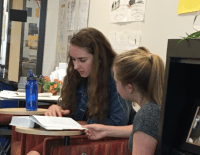
For their final projects, students team up to select a unit of interest from the text that we have not worked with together. Topics include a wide variety of interesting reads and students explore questions that keep them thinking, even after the AP test. For example:

  • Language: How does the language we use reveal who we are? 
  • Popular Culture: To what extent does pop culture reflect our society’s values? 
  • Environment: What is our responsibility to the natural environment? 

With over half a dozen chapters not utilized in our class study, there’s something there for just about everyone.

Students select a unit and are responsible for:

  • Reading the central essay – from authors like Barbara Ehrenreich
  • Reading the classic essay – from authors like Twain and Orwell
  • Choosing three additional essays to add to their experience

Then, the synthesis begins. Students must create their own addition to the unit that thirdanswers the essential question from their own perspective. In the past, I’ve had students present TED talks, create satirical videos to “sell” the topic, and write essays to add their own voices to the thematic study. Somewhere, either in the introduction
to their product or as a part of it, students must include the voices of the authors they read from the previously published works as well.

Next year…poetry. I am baby-stepping toward multigenre and I can’t wait to see what poems my students can write and find.

In the end, I hope my AP students, some of whom I have had two years in a row now, realize that our time together was spent not to prepare them for a test (not solely, anyway) but to help them become more informed and understanding citizens.

In other words…smarter.

How are your post AP students fairing? What sorts of fun are you having to wrap up the year? We’d love to hear about it in the comments below!


Mini-lesson Monday: All Good Writing Begins with a Good Question

One of the hardest things I ask my students to do all year is choose their own topics. We start generating ideas on the first day of school. We watch video clips, read quotes and short passages, listen to poems, look at cartoons — and we write responses. We create various versions of writing territories in our writer’s notebooks. We have many ideas stored in our well-used notebooks by this time each year.

But with every writing task, students seems to always start the topic journey right back at square one, even when I remind them that they have a mine of ideas sitting in the pages of their composition books. I’ve decided that just like me they like the process of discovery.

My goal is to get them to move past topic discovery into writing discovery. Too often, students think they have to know what they want to say before they ever start writing. No wonder so many kids have a hard time approaching the blank page. (See NCTE’s 10 Myths of Learning to Write #4)

The last writing assignment my students complete each year is a multi-genre type piece wherein they show they’ve improved in the various writing modes we’ve practiced throughout the year. They have almost total choice in terms of what they write, and they have most of the choice in terms of the forms they write in.

I have just two mandatory suggestions (oxymoron intended):  one piece must be a Rogerian argument, and somewhere in their master piece, students must show they know how to use an academic database to find valid sources, and then they must use the sources in the correct context, and cite the sources correctly.

We look at a few mentor texts that use multiple genres within the same piece. Narrative, informative, persuasive — plus images and info-graphics, or other types of forms that present information, including videos and interviews. My favorite is the award-winning feature article, Snowfall: Avalanche at Tunnel Creek by John Branch.

Once students know their end-goal: the creation of their own multi-genre writing piece that shows off their writing journey for the year, they must choose a topic. Some will want to stick with a topic they’ve written about multiple times this year. Depending on the topic, and the student, I may be oaky with that.

This mini-lesson came about in an attempt to help students figure out a topic that they know enough about to ask questions but not so much about that they could answer all of them.

Objective:  Using the language of the Depth of Knowledge Levels, students will construct a list of things that make them wonder; they will formulate questions about a self-selected topic derived from their wonderings. They will then categorize the questions in sets that make sense. Finally, they will determine which questions may best be answered through a specific genre or form of writing.

Lesson:  I tell students that we are about to play in our notebooks. “Turn to a new page, and write a list of all the things you wonder about,” I say. They usually sit there writing nothing, so I get them started:  “I wonder if teens got paid to go to school if they would want to learn more.”

Most students start to write, but I keep wandering the room, stating things that make me wonder as students list their own wonderings in their notebooks.

“I wonder when the state of Texas will get wise to the lack of wisdom in state testing. I wonder why students choose to do their APUSH homework over AP English. I wonder if the Dallas Cowboys will ever win the Superbowl again.”

Once students have at least a half a page of wonderings, I ask them to talk with one another in their small groups. “Perhaps your peers will remind you of something else you wonder about. Add it to your list.”

“Okay, look at your list and zero in on one topic that you think you can find the answer to with a little bit of research. Now, let’s think all the way around this topic.”

I ask students which of my wonderings I should use as a model for their next step, and they tell me the one about the Cowboys. I write it on the board. “Okay, help me come up with questions that look at this from every perspective possible — like who has a stake in whether the Cowboys win the Superbowl again.”

When was the last time the Cowboys won the Superbowl?

Who led the Cowboys to the Superbowl in the past?

How many times have the Cowboys been in the Superbowl?

Is the Cowboys coach as good as the coaches in the past? Are the players as good as the players in the past?

What is different or the same about the NFL?

What do the Cowboys need to do to win more games?

Who would be a better quarterback than Tony Romo?

Does the current team consist of Superbowl quality players?

Which teams are in the way of the Cowboys going all the way again?

Some questions get silly — pretty sure the Dallas Cowboy Cheerleaders don’t matter all that much to the reality of getting to the Superbowl. Sorry, girls — but students get a hang of the idea. “Ask as many questions as you can think of. After you write a list of your own, ask your peers for help in writing others.”

Next, we need to put our questions in categories. I ask students to talk with one another and determine which of our questions about the Cowboys might go together. We decide we’ve got questions about 1. the history of winning the Superbowl, 2. similarities and differences in the game, the coach, the players, 3. current Cowboys, 4. the opponents.

We talk about what genres and forms might work to convey the best answers to our questions.

“Compare and contrast the differences. That’d be easy,” someone says.

“The history of the Cowboys’ past wins would be information, right?” another student says.

“What could be the topic of a persuasive piece?” I ask.

“The question about the ability of the current players. Easy.”

I tell students that they get the idea, and I charge them with reading through their questions and categorizing them into groups that seem to go together.

I remind them:  “All good writing begins with a good question.” And they’re off.

Follow up:  Students should use their questions and their categories to guide the choices they make as they write their end-of year multi-genre pieces. In conferences, I read through questions, helping students add to and clarify. I remind them that form helps determine meaning, so as they make choices, they need to think about the best way to share meaning with their intended audiences. Students will present their writing projects as their final exams.

14 Days to Take It Up a Notch

I keep thinking that if I could consider myself an expert at conferring I might actually feel confident in writing a book about it. Then every once in awhile I hear a voice that tells me that the only way to become an expert at conferring is to write about it. Then another voice says, “Can anyone ever be an expert?”

I think about conferring a lot. I know that when I confer regularly with my readers they read more, and they read better. The same holds true for my writers. The more we talk about the moves they make and the meaning they want to convey, the more they take ownership of their work and confidently work at it.

But the consistency in conferring trips me up a lot.

This week I read in a student’s notebook: “I didn’t take the AP exam because my teacher didn’t make me feel like I was good enough. I know that is a terrible excuse to go off an emotion like that. But it also connects with the reason why I don’t do my homework. I get no educational support from anyone. I feel like I’m a nobody that just exists in school. That’s why I turn to music cause it makes me feel special and important.”

That burned. He knew I’d asked to read it. He wrote that for me.

I flip through the notebook and read poem after poem that reflects this student’s sadness, despair, and thoughts of hurting himself. Of course, I take it to the counselor.

I turn to my conferring notes and see that I’ve conferred with this student as much as my others, but he has never let on he was quite so unhappy. We’ve talked of academics, of books, of English things like reading and his writing. I’ve known he’d been depressed in the past. I thought he was doing better.

Now, I wonder. What if more of my students feel this way? What could I have done differently this year that would have let them know I care more about them as people than as English students?

I could have approached conferring differently, more purposefully, more personally. The irony? I wrote about the need to confer with fidelity here, and my first point is about our students’ need for personal attention.

I have 14 days left with my students this year. Surely not enough time.

I’m still going to try.

______________________________________________________________

And now for the rest of the story.


That evening I went to the bookstore thinking I would buy this boy a book. I was on the hunt for the YA novel Someday This Pain will Be Useful to You by Peter Cameron, a book I haven’t read yet — but oh, that title.

No copies available.

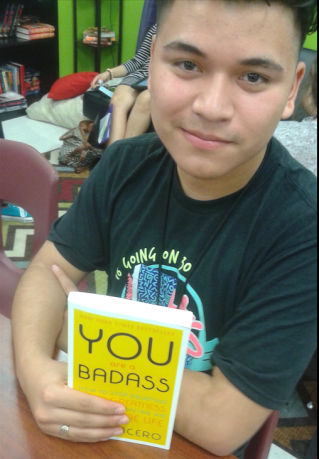
Then, I saw You are a Badass:  How to Stop Doubting Your Greatness and Start Living an Awesome Life.

Screen Shot 2016-05-13 at 1.19.08 PM

Diego:  “…when you feel like you have everything but you are never satisfied” that speaks to me.


Perfect.

The next morning, I scribbled a note inside the cover and called Diego into the hall to give it to him. I told him that I’d read his message and handed back his notebook. We talked a bit, and he assured me that he’d written those poems awhile ago, but he still felt lost at school. I assured him that he was not alone, he needed to believe that every adult in this school cares about him — that’s why we teach here, and the worst thing we could do is take it easy on him because life never will. I gave him the book and watched as he hurried back inside the room and quickly read my note.

I’ll take that smile.

Day 13.


Note:  When I snapped that photo of Diego, one of the girls nearby laughed and said: “Mrs. Rasmussen, taking it up a notch.”

“I’ll be writing about you next,” I said.

Student name and writing used with permission.


Writing Myself Out of a Wreck

Note: This post was supposed to run this morning. Must not have clicked the right button last night. So, here’s my thinking of late. Better late than not at all. (I think that’s the mantra of many of my students.)

I have a confession:  I am pretty much a wreck.

I could blame it on my son who joined the Army and left for basic training the afternoon of Mother’s Day, or I could blame it on another son who called to say he’s marrying a girl he’s known a month and I’ve never met, or I could blame it on this Empty Nester thing that’s barely three days new and haunting me with shutting doors and creaking floors.

I could blame it on the AP Language exam my students take today.

It’s the same every year — well, not that son part, thank God — but definitely the wreck part.

Every year I wonder if I taught enough, had them write enough, gave enough feedback. I wonder if I helped them grow as critical thinkers and accomplished writers. I wonder if they will read the prompts correctly. I wonder if they’ll answer the questions. (I’d be happy with a thesis statement.) I wonder if they’ll remember we learned to read footnotes. I wonder if they’ll cite their sources. I wonder if they’ll write enough to show they are bright and honest and eager and loving young adults.

Oh, wait.

That’s right.

No matter how my students do on this high-stakes test, the important things — the things that matter to me, and should matter to the world — are the things that cannot be measured in 55 multiple choice questions and three essays.

I just needed to write myself into that reminder.

_________________________________________________________________

Today I read  Enjoy the Best Year Ever with a Mantra by Ruth Ayres and loved her Why I Write mantra. I took up the pen to write my own. It’s still a work in process, but I’m kinda likeing it, and I’m no longer a wreck.

Why I Write

I write to make myself feel better.

I write to discover what I want to say.

I write to hear my voice within the chaos.

I write to play with colorful words (and pens).

I write to show my students I am a writer — and because it’s hard.

I write to share my thinking, my hoping, my planning, my longings.

I write to be remembered and to be worth remembering.

I write to know I belong.

I write to advocate for literacy and learning and the lives of my kids.

I write to become a better reader (and I read to become a better writer).

I write to tell stories.

I write to walk the walk and talk the talk of my English teacher self.

I write because it is better than the spa.


Have a go at it. What is your mantra?


Try it Tuesday: Teacher Readers Share the Love

Love what you read and read what you love.

Is this not the life force behind workshop? Behind teaching English? Behind becoming a reader?

Personally, I’m pretty sure my love for reading started in utero. My parents (both educators themselves) read to me and read to me often. The first real memory of a book I have is Disney’s The Penguin that Hated the Cold. Pablo the penguin wanted out of the Arctic. I connected with his desire to swing in a hammock and travel the high seas in a bathtub.

 Next came The Boxcar Children. I used to run out into the backyard of my comfortable suburban home and pretend to be an orphan living in a boxcar. Logical, right?

Soon after, I was devouring the Little House on the Prairie books, the early  Baby-sitters Club books (only those before #100…sorry Ann M. Martin, a girl has her limits), and The Nancy Drew Mystery Stories.  I read under the covers with a flashlight, swinging from the tire swing in my backyard, and sometimes under the dinner table. I only drew the line at reading in the car. Still can’t do it. It makes me vomitous.

The common thread to this early reading, was my love of stories. I chose what I wanted to read and I read voraciously because I was in charge of where I could travel, the conflicts I could watch unfold, and the people I could meet through books. I know my dad wanted me to read more Robert Louis Stevenson, but that was a journey of his childhood. The journeys of my childhood were with Roald Dahl, Beverly Cleary, R.L Stine, and C.S. Lewis.

So where is the balance that we, as English teachers, can bring to our classrooms when it comes to teaching the books we love (or the books we think students “should” read), and our understanding that choice fosters a connection to what we read? A connection that can far outweigh the legitimate literary merit of works we would choose for our students? Where do cultural literacy and passion for literature meet?

Well…I don’t really know. Yet.

What I do know, is that I need to provide opportunities for my students to choose texts that appeal to them. But my job can’t end there. I then need to help them move to more complex and challenging works. Classics included.

How to do that…I don’t really know. Yet. But I am learning.

Here is what I do know – If I am going to build a community of readers, I need to be a reader. If I am going to build a community of writers, I need to be a writer. Lead by example and beautiful things are sure to follow.

Easy, right? Of course we, as teachers, are often readers. The beauty of language, the study of what it means to be human, and the opportunity to live countless lives through reading is what led me to the high school English classroom. But somewhere along the way, I started reading more student papers than novels. More formative assessments than poetry. More parenting books than bestsellers (though I will contend that Oh, Crap! Potty Training is a necessary text for parents with kids of a certain age – Shana, this is the book –  trust me ). But with the advent of workshop, I have read more in the past few months, since Amy and Shana came to Franklin High School for professional development work, than I had in longer than I’d care to admit. And as such, I am able to broaden my repertoire of texts and my students now see me reading. A lot.

In fact, the students at Franklin High School are seeing their teachers read more and more. Not that we weren’t reading before, but as fellow colleague and reader Catherine Hepworth wrote in her guest post, we are now, as teachers working within the workshop model, making our reading far more visible. As a result, I wanted to share some recent reads from my colleagues. Teachers who are fired up about reading, because we love it and want to share the love.


The English Teachers at Franklin High School highly recommend these recent reads:

DemianDemian by Hermann Hesse – recommended by Karin Adelmann

Demian is a coming of age novel. Sinclair, the protagonist, is trying to find his way to what is true and real as he encounters different mentors and situations. The book frequently challenges more conventional ways of thinking.


The Handmaid’s Tale 
by Margaret Atwood– recommended by Lisa Dennis handmaid

As a pretty progressive woman, I can’t believe I haven’t read this book until now. I work; I share a household with my husband; I cook but also know how to shingle a roof, I vote; I raise my daughter to trust herself and know her own mind. And yet, I’ve never read this cautionary tale full of sardonic humor and striking dystopian visions that suggests all that Artwood feared about 1980’s “Morning in America.” The Handmaid’s Tale carefully unfolds the story of Offred, a woman living in the fictional future world of The Republic of Gilead. In a world of declining birth rates, fertile women are assigned to existing families, solely to bare children. Through Offred’s memories of her life before, an American life most of us would recognize, the reader discovers the sharp contrast between the freedom we currently enjoy and the very real limits placed on life when that freedom is lost. Like so many great dystopian novels before and after it, The Handmaid’s Tale is a testament to upholding the values of personal freedom in the face of what life might be like if we forget how precious those freedoms really are. I can’t put it down.

me before youMe Before You by Jojo Moyes– recommended by Erin Doucette

I was hooked on this book from the first page. The book is set in England, so I really enjoyed the voice of the narrator as well as some of the words she chose to incorporate. Me Before You chronicles the sometimes confusing, frequently tumultuous, and always touching relationship between a funny, eccentric, secret-hiding Louisa and formerly adventurous, formerly ruthless, and currently angry, quadriplegic Will. Quirky, unqualified Louisa becomes his care-giver for the 6 months he has left before his pre-planned assisted suicide.

I loved this book. It make me laugh. It made me cry. It made me angry, but best of all, it really made me think about the impossibility of some of the choices we face and the importance of standing by the people we love.

Eleanor by Jason Gurley – recommended by Richard Gould

This is a story of a young girl, Eleanor, whose twin sister dies in a horrible accident. After that, the entire family crumbles. At the age of 14, Eleanor has an experience that she cannot explain, but it seems that someone is trying to contact her in an unimaginable way. As these experiences happen more and more often, Eleanor begins to see a way to repair all the damage to her and her family’s lives. I recommend this book for several reasons. Fist, it features two strong female protagonists. The writing is authentic and the Eleanorcharacters are complex and not without fault. The story delves into “other dimensions” and would appeal to any fan of existential writing. The book is organized through a series of flash backs, flash forwards and time travel, which can be a bit confusing if a reader is trying to quickly read the story; however, this is a book to be enjoyed slowly with frequent pauses to think, not only about the story itself, but about the reader’s own perception of reality. There is a bit of romance, but not too much as the story stays focused on the protagonists’ objectives. The conclusion is satisfying but is not obvious or formulaic. When all is said and done, this book stays with the reader for a long time after it is put down.

Not My Father’s Son by Alan Cumming – recommended by Catherine Hepworth

not my father's sonAlan Cumming, Scottish actor extraordinaire, presents us with two parallel stories about the men in his life and their influence on him. While he is preparing for and filming a genealogy show, he is learning about his maternal grandfather’s escapades in WWII, while at the same time dealing with his own abusive father. It is a very honest and open memoir about one particular moment in his life that is at the same time about his entire life. He is my favorite celebrity and a wonderfully talented writer. I especially enjoyed his memoir because it’s rare that a celebrity gives you this type of glimpse into their heart breaking childhood. When I finished reading, I wanted to rush to NYC and give him a hug.
One More Thing: Stories and Other Stories by B.J. Novak – recommended by Amy Menzel one-more-thing

I like reading short story and essay collections because it mixes things up. It’s like what Mark Twain said about the weather in New England — to paraphrase, “If you don’t like it now, just wait a few minutes.” I can do that. And I’m pretty good at having the memory of Dory when reading story or essay collections. If I read something I don’t like, I forgive, I forget and I swim–I mean, read on. What I really like about Novak’s collection is his thinking. You might know of Novak from The Office fame. He wrote, directed, and starred in the hit sitcom. In this book, he uses his creativity to ponder some what if questions. “What if John Grisham’s publisher mistakenly published one his books with the place holder title of ‘The Something’?” “What if there was one man behind the creation of the calendar?” “What if there was a ‘Best Thing in the World’ Award?” I like how Novak thinks, and I really like that I get to follow his creative thinking in this collection.

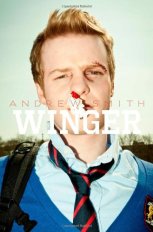
WingerWinger by Andrew Smith – recommended by Leah Tindall

I absolutely loved this book because Smith uses real language, humor and other great writing techniques that will truly appeal to all teens, boys especially. I thought I would take about a month to read in between grading and planning. However, once I started on a Tuesday, I finished it the following Friday evening. I could not stop reading it! I laughed almost every page, and then I cried in the end! I began reading it aloud in a few classes and this inspired several of my students- 3 girls and 4 boys, to be exact- to read it! One of the boys I don’t even have as a student- I was talking to him about it in resource. He didn’t read any books last year and finished this book and loved it! P.S. I love Andrew Smith.

Ready Player One by Ernest Cline – recommended by Sarah Sterbin and Brandon readyWasemiller

Sarah says: I love reading books that are being made into a movie so I can compare them. Ready Player One is hitting the BIG SCREEN in 2017 (I’m really on top of my game). It was an awesome read about living in a world where you can “plug in” to the virtual world. I have recommended this to a lot of my students who are into video games (and those who, like me, like to be harsh critics on the movies based on books), but it is a great story for ALL to read!

Brandon says: This is a book that I could not put down, and when I did I was trying to figure out the next time I could dive back in. Ready Player One was all that I could talk about for the week that I was reading it, and I suggested it to colleagues, family members, and students. This book has everything. A mystery, an dystopian future, life inside of a video game, undying friendship, 80’s references, solid characters, and a real look at how much video games affect our life–and more importantly how they could RUN our lives in the years to come. There is no a single person that I would not suggest this book to. It is unlike anything you have read before, and I highly suggest it to everyone.

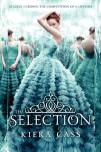
selectionThe Selection by Kiera Cass – also recommended by Sarah Sterbin

This books is a mash up of The Bachelor and Hunger Games. Dystopian feel while seeing the inner workings of a Bachelor type show (with some “ROYALTY”!) I have recommended this to a lot of my students who talk Bachelor/ette with me (guilty pleasure alert), and those who love reading Dystopian stories.

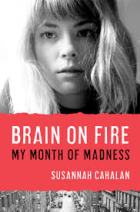
Brain on Fire by Susannah Cahalan – recommended by Brandon Wasemiller brain on fire

I grabbed up this book because I can be a window shopper when it comes to books, and I really liked the cover art on this novel. However, after I read the first page I was hooked, and spent much of my weekend reading through the entire thing. This is a book that takes you into pure madness and back again, and it is great for that reason. Going on a journey with someone as they go insane is a hard journey to take, but Susannah, a writer for the New York Post, brings her story to life. You will find yourself reading just ONE more chapter just to see if things get better.

challenger deepChallenger Deep by Neal Shusterman – also recommended by Brandon Wasemiller

I bought this book on Amazon because I saw that it had a five star rating, and really awesome art on the book jacket–I am so happy I did. The amazing quality that this book has is that it really makes you care about Caden, the main character, and the problems he is going through. Caden is in the real world, but also finds himself on a boat on its way to the deepest part of the ocean, Challenger Deep. You, the reader, are unable to help Caden who is starting to confuse dreams with reality. This book brought me back to the days when my grandma would read James and the Giant Peach to me and do all the different voices as she read, and like James and the Giant Peach, Challenger Deep is a journey of a young man who lives in one world, but escapes to another to work things out, but as a reader you worry that Caden will never come back. What if he is never “himself” ever again?

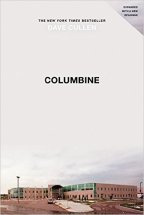
Columbine by Dave Cullen– Brandon’s passion for books cannot be contained. columbine

This was a book that I could not put down. Each chapter builds on the last, and you feel connected to the school, its students, and the tragedy that took place more than a decade ago. I never realized how much I did not know about Columbine. This book expertly tells the story of two very misguided young men, but more importantly, the teachers, administrators, students, and families that were all affected on that day and beyond. I would suggest this book to anyone looking for a great non fiction book, and a really solid look into what great investigative journalism looks like.


Thank you to the enthusiastic teacher readers at Franklin High School for sharing their recommendations. Each new text our students see us reading expands their field of choices and also lets them know that we truly, and gladly, practice what we preach. Because we love it.

What are you reading? What recommendations can you share? Can’t wait to grow our “to read” lists together with your suggestions in the comments below! 


Top 10 Books That Will Drastically Change Your Mood

img_1534I don’t know about the weather where you live, but it has been raining cats and dogs for a week here in West Virginia.  Baby Ruth and I are dying to go out for a walk, a coffee, a Target run–anything!!–but the rain is keeping us indoors and we’re feeling rather glum.

Luckily, I have a solution–reading.  It can transport us to other worlds, brighten our days, and alter our moods for the better.  Her little bookshelf is full of great titles by Shel Silverstein, Eric Carle, and other children’s greats, and mine is full of great titles like the ones my awesome student Giulia recommends below.

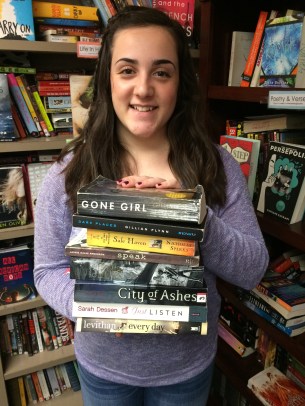
Giulia made a Top 10 List of books to drastically change your mood when reflecting on her semester’s reading last winter.  She realized that no matter what she was embroiled in–school, work, friends–these ten books could rip her away from reality and change her mood.  So if you’re looking for something to sweep you away, check out Giulia’s list below…and make sure you have these titles in your classroom library!

Giulia’s Top 10 Books That Will Drastically Change Your Mood

71VBpx0qsmLThe Glass Castle by Jeannette Walls

This is one of the few non-fiction books I’ve read. I was more interested in this non-fiction book because the events that took place in The Glass Castle were completely insane so it seemed more like a fiction book. I think this is why I was more intrigued. This girl went through the majority of her life with the most ridiculous parents. They traveled America and went on all these adventurers that most people would consider insane. One part of the book that really stuck out to me was when this girl was little, she was boiling hot dogs on the stove, BY HERSELF, and something happened where the boiling water spilled down the front of her body and she had third degree burn and scars for the rest of her life.

The Book Thief by Markus Zusak

This is one of the rare books where I’ve seen the movie first then read the book, and come to find out that the book was way way way better than the movie. Both the movie and the book made me cry like a baby, but the book was more interesting, obviously. The book is based around a little girl who is growing up in Germany during the Holocaust. She begins to find that she is fascinated with books and does anything she can to get as many books as she can. Her family also faces the fears of hiding a Jew in their basement. Everything that happens in this book seems so fragile to me because I basically get to see this little girl grow up and face the world.

The Sky is Everywhere by Jandy Nelson

This book was recommended to me by a friend and usually I like to discover good books on my own, but I decided to read it. It was a nice love story mixed with humor. I love when authors do that. This girl is in high school and her older sister just died so she’s living with her crazy grandma and uncle. She and her sister’s dead boyfriend begin to fall for each other, but they both know it’s a big no no. They finally start to come back to reality and realize that they aren’t actually falling for each other, they are just trying to find comfort in one another. Throughout the entire book, this girl is STRUGGLING to find her way out of a hole she fell in when her older sister died. It’s touching and humorous and I loved every single bit of it.

sun_375wI’ll Give You the Sun by Jandy Nelson

This book and the previous book both have the same author, Jandy Nelson. I’m assuming Jandy either grew up with a rather odd family or she has a rather odd imagination because both the families in each of these books are not your typically family. This is one of the first books I’ve read where one of the main characters is gay. It was definitely interesting, but not weird at all. The two main characters are a set of twins, both struggling with the divorce of their parents. One child is a boy and the other is a girl. Basically, they are both trying to get into this really nice art school, but the boy is trying harder than the girl. Throughout their childhood they are super close, like best friends, but as they grow older, there are a couple specific events that happen that tear them apart. This book, while wildly outrageous, was fun to read. It may seem confusing and slow at the beginning, to the point where you might contemplate finishing it, but it was totally worth finishing.

Everyday by David Levithan

I just recently read this book so it is fairly fresh in my mind. I was crazy about this book in the beginning, like I thought this was my favorite book of all time, and then it ended. It was maybe one of the worst endings I’ve ever read, but besides the ending, this book was ridiculously amazing. There were some things that were never answered, but then I keep thinking of how awesome the beginning of the book was and all I can do is fantasize about it. There is a boy and he is currently sixteen, and he wakes up in a different body every day. But there’s a catch. He only wakes up in sixteen-year-olds’ bodies, and it only happens in Maryland. It’s a little more complicated than that, but that’s the gist of it. On top of all that, he begins to fall for this girl that he only meets one day. He then continues to spend the rest of his “life” trying to find the girl he fell in love with all while trying not to harm any of the bodies that he inhibits. Crazy book, but ridiculously intriguing.

5152478Wintergirls by Laurie Halse Anderson

This book actually disgusted me in so many ways, but it was sooo good. These two girls have been best friends for a while, then one of them dies. Before the one girl dies, they make a pact to be skinner than the other… gross. The girl that’s still alive is literally insane. She starts hearing/seeing her dead friend. This girl continues to be as skinny as humanely possible. At one point I think her weight was a little less than 90 pounds, which is extremely poor for your health. She’s just having a hard time dealing with her friend’s death, so she is trying to feel better about herself by working out and eating basically nothing to reach her desired weight. The ending seemed a little rushed, but the rest of the book made up for it. I’ve never, in my life, read a book that seemed so realistic like this before. I didn’t know people like these girls actually existed or that it was so extreme.

Ugly Love by Colleen Hoover

I began to start reading books by Colleen Hoover because I wanted to take a break from some of the harsher books I’d been reading, so any of Colleen’s books are a nice book to read if you want to chill. The majority of them are all romance books, but not the cheesy kind. The main character is a girl who just moved into an apartment with her brother because she has a new job and is attending college at the same time, so she needed some help. Come to find out, her brother’s friend is insanely good-looking, so she is attracted to him immediately. There is something that this boy is hiding from her, but every time she tries to pry it from him, he immediately closes up. Warning: there is an EXTREMELY heart-breaking part in this book where I cried for a good ten minutes before continuing on with the rest of the book. The best part is that the movie is coming out in 2016 and I didn’t even know there was supposed to be a movie! So I’ve already made plans to go see it and determine if it will be as good as the book.

Dark Places by Gillian Flynn

I read this book shortly after I read Gone Girl, and this book was an intense, short read. I have always been intrigued with the most profuse, disgusting, murderous books I can find, and this book definitely hit that level. This family is based on a girl whose family was murdered when she was a little girl. Everyone in her family is dead except for her, her brother, and her deranged father. She lives by herself because her father fell off the face of the earth and her brother is in prison for supposedly murdering the rest of her family. Ever since she was young, this girl was told to believe that her brother was responsible for the murder of her family, but as she grows older, she begins to wonder whether or not her brother was actually capable of something so insidious. She starts to dig deeper into the history of the murder and discovers the real murderer, along with her family’s mysterious past. This book was simultaneously disgusting and captivating and I love how Gillian Flynn writes.

Gone_Girl_(Flynn_novel)Gone Girl by Gillian Flynn

Everything I’ve ever read up until the point of reading Gone Girl didn’t matter to me (until I continued reading other books). This book was that good. I mean I’ve never read any type of thriller like this before in my life and I will never forget this book. It wasn’t the shortest book, but I finished it in two days, and that’s quick for me. The book is centered around this man whose wife goes missing and of course, he is the main suspect. He begins to find clues to lead him to his wife’s whereabouts, which become more gruesome as the “scavenger hunt” goes on. I REFUSE to watch the movie because I know nothing can beat the book. It was excruciatingly hard for me to set this book down. While some of the book was rather sexually descriptive and intense, I still loved it. The ending made me mad, but a good kind of mad.

Sharp Objects by Gillian Flynn

I read this book after I read Dark Places and while I liked this book a little less, it was still amazing. I don’t know how Gillian Flynn comes up with all the insane, nasty events that occur in her books, but it’s all brilliant. This girl is a journalist and lives by herself, but she just heard about a good story to write about back in her hometown, where her deranged mother, father, and younger sister. So she travels back to her hometown and is temporarily living with her family. As she does some research about the murders in town, she starts to link them back to her family. This girl is also not the most stable, so she has a terrible habit of making her body a canvas, and by this I mean she is constantly carving words into her body with any sharp object she can find. While the girl may seem somewhat crazy, it is nothing compared to her mother. One part of the book sticks out to me where the girl was spying on her mother who was taking care of a friend’s baby. When her mom thought no one was looking, the mom bit the baby’s cheek hard enough to draw blood. Obviously, the mother is crazy as well, but everything ties in at the end. The ending is the best part.


What titles do you and your students love that drastically alter your mood?  Please share in the comments!