One of the most prevalent memories I have from my childhood is being read to. Every week, my mom would load my sister and I in the van and head downtown to the library where we would practice returning, renewing, and selecting new books. I can still see the orange carpet in the children’s library, the shelves that stood only as tall as a seven year old, and hear the crinkle of the plastic covers that protected each precious story like shrink wrap. During the week, my sister and I vied for places on her lap as she read aloud each book. I wouldn’t say she was a theatrical reader, I don’t recall her trying on different voices or even pausing to ask us what we thought, but it was her voice telling a story. Isn’t that the magic of being read to?
Read alouds in K-12 classrooms have immense benefits, although their usage and popularity have ebbed and flowed overtime, as discussed by Steven L. Layne’s book In Defense of Read-Aloud which Amy writes about along with practical strategies for implementation. This summer, I began to notice much discussion around reading aloud in the adolescent classroom and my interest was piqued. My challenge to myself this summer was to try implementing read alouds, not just think alouds, in my classroom.
Admittedly, I got a little scared. Then I chickened out.
Having just hours to submit a book list to the department chair and having never visited the school I was about to teach at, I was unsure how a read aloud would be perceived by my new students and new colleagues. So, I played it safe and opted to start the year with a full class read aloud using one of the required texts, The Crucible (I work with a curriculum that includes highly suggested texts for English 3, American Literature in the state of Utah, which has led me to a balance the requirements while choice). I put students at the center of the read aloud, hoping they would embrace and take ownership of hearing a story versus reading it.
Did I fear a lack of student buy in? Yep. Did I wonder if my pedagogical reasoning would be questioned? At some points. Am I planning for a class-selected read aloud in the coming weeks? Sure am!
Students loved it.
I loved it.
We laughed, we questioned, we build community, and we worked on critical reading skills. We also enjoyed the story–there is power in students hearing a story, even when they’re 16 or 17 years old.
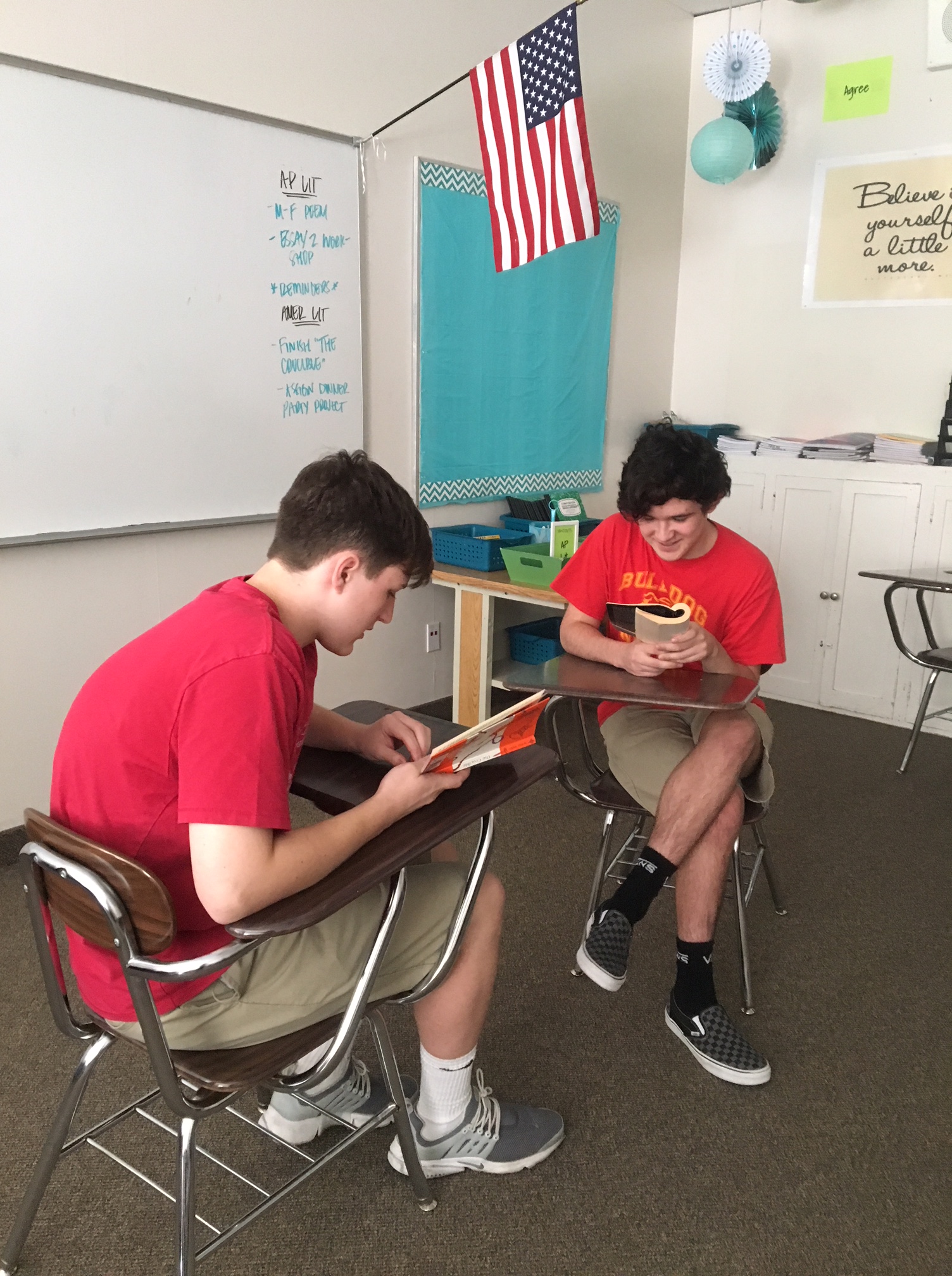
6th period was so into reading, they literally begged me to read the deleted scene between John Proctor and Abigail Williams once they discovered it at the end of the play–how could I say no? While we were all entertained with Sam and Noa’s reading, we were able to discuss how the scene adds to and takes away from the text as a whole, in addition to making inferences about Miller’s choices.
Building upon Layne’s research, here are the benefits I noticed in my classroom:
- Students received a foundation of reading strategies to start the school year. As a play is essentially a “think aloud,” with the narrator teaching students to make inferences about characters, conflict, and the social setting. Prior to starting, we discussed our reading voices, what Chris Tovani has labeled as “Interacting” and “Distracting” voices in Do I Really Have to Teach Reading?. The interacting voice is what makes connections and predictions, asks questions, develops an opinion, and identifies confusion as we are decoding words. The distracting voice is what pulls a reader’s attention away from the text (Tovani 63). For struggling readers, the narrated parts and asides modeled this “interacting voice” and we implemented “Fix Up Strategies,” as defined by Tovani, when our distracting voice overpowered our interacting voice, leading to muddled comprehension. We paused to recap the plot, ask questions, and make predictions during our full class reading. Students had permission to pause the read aloud and we implemented these strategies together and practice themselves.
- Students made connections between the false accusations and lies of Salem and our current world. I never had to answer the age-old English question of “Why are we reading this?” Big win when students understand the relevance of a common text to their world.
- Students became comfortable reading and sharing–many began taking on the person of the accused, answering using “I,” demonstrating they were engaged in the text and thinking like the characters. This has created an environment where their voice and opinions matter.
- Students dug into their choice reads in their own time because much our class time, aside from writers notebook time, was dominated by The Crucible. Without realizing, students began to develop the habit of reading daily on their own time. Sa-weet!
- I gained incredible insight into my students’ preferences, personalities, and habits. I immediately learned who participates in the theater program and who only volunteers when the role is small. I learned who needs to be engaged fully to keep on task and whose brain wanders thus requires reminders to “enter” the scene. I learned who likes to lead, taking charge in the scene as the main character, or play the mother hen and keep everyone “on task” as a narrator. You learn who always brings their book and who always forgets, who annotates and who ponders. It was like watching a collaborative group unfold.
- We built rapport. I believe beginning with a play set the tone that our classroom environment is one where we work together and discuss literature–what we love, what resonates with us, what we can connect to. Our classroom is one where reading is an enjoyable experience.
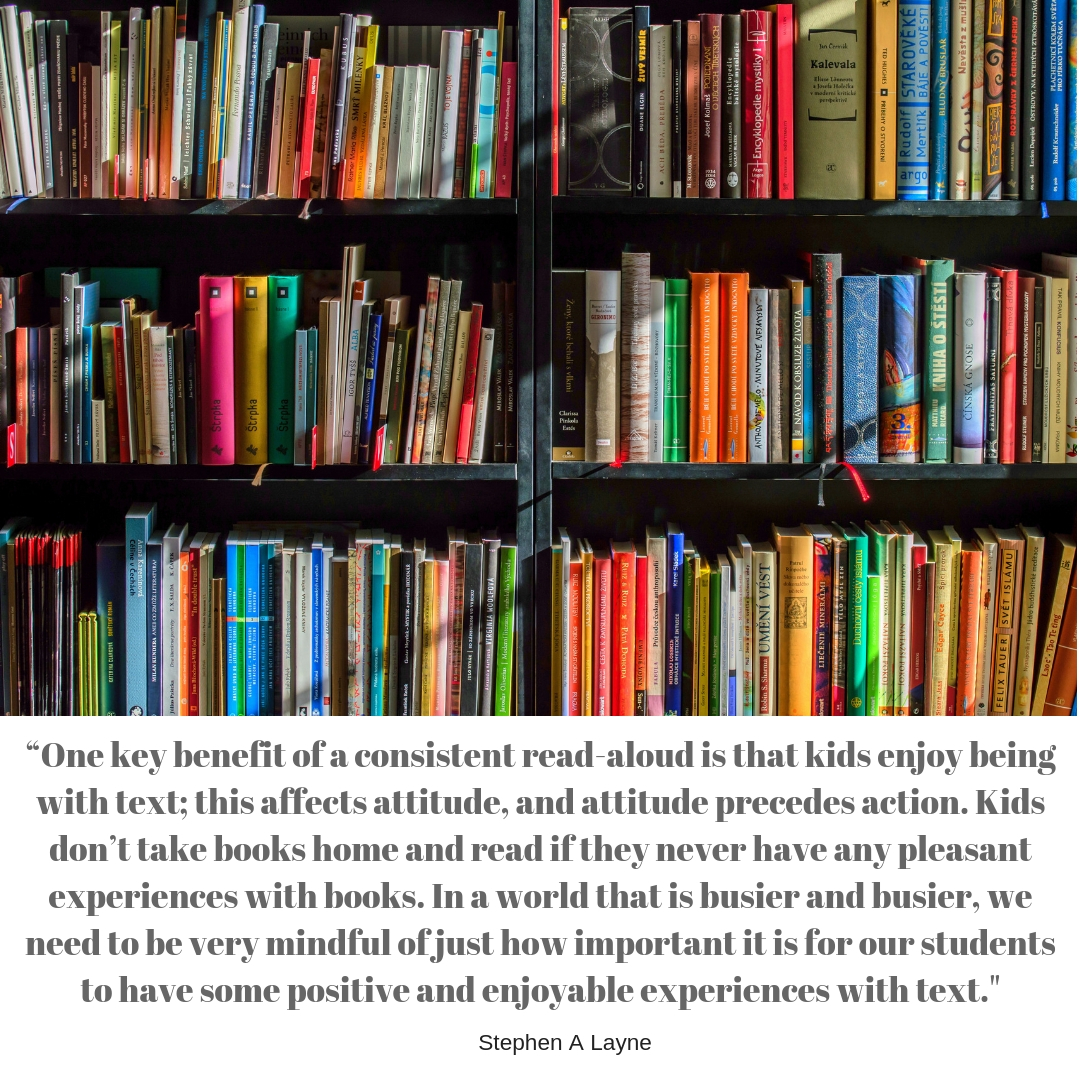
I also wonder if their reading was deepened because we read together as a community, bringing 20+ backgrounds and ideas together to create a collective understanding. Maybe the struggling students thought “I can do this” for the first time. Maybe the advanced student thought “Now I more time to read what I want at home” for the first time in a long time. Maybe other students simply thought “Huh, this wasn’t so bad.”
Part of a read aloud’s magic is its power to change student perceptions around books. My goal, OUR goal, is to create and encourage readers. I encourage you to bring oral reading into your classroom. I am going to be braver in the coming weeks and embrace a full class read aloud, so students can simply enjoy hearing a story for a few minutes each day.
Maggie Lopez has made the move west to Utah where the mountains are a gorgeous golden purple every day and ski season is around the corner. She is indulging in promoting banned books this week with students and currently reading a student rec, Brain on Fire. Follow her on Twitter at @meg_lopez0.


 away books. We presented at the Coalition of Reading and English Supervisors of Texas (CREST) fall conference, and



 We (my teaching partner, Mariana, and I) never questioned the value of the 100-word memoir, the first piece we would take through a full prewriting – drafting – revision process with our students. After all, it’s what Penny and Kelly do in 180 Days. Need we any better reason? No. Turns out, though, there is major added value we hadn’t realized about this little genre as the first text we ask of our students. (My guess is Penny and Kelly knew, but didn’t have space to elaborate in the book.)
 Usually my own post-lesson, reflection phase is a litany of all that I could have, should have done. How refreshing, then, to reflect in a way that identifies value beyond what we’d hoped. What an affirmation that our practice recognizes beliefs we hadn’t even seen.


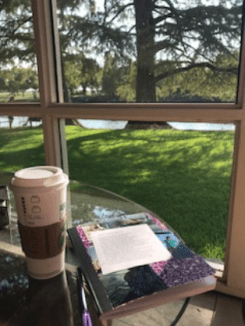 It’s amazing that a place of scenic tranquility and beauty could rouse such feelings of rebellion and determination.

 It’s simple. Ask yourself, “How do I prefer to read, write, create and learn?” I can guarantee that each and every one of us would have a different idea of what that looks like and would choose something different. We don’t all learn the same, so why do we expect our students to. The relationships we build and the space that we provide to our students each year is crucial to allowing them to become readers, writers and creators, and we have to cater to the different needs that allow them to become what we hope they can be. How do we create open spaces where students can, and want, to learn and grow?
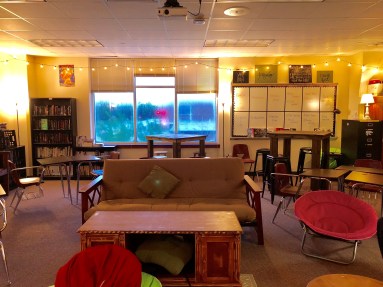 Yes, we confer to learn what books they like and guide them in their writing, but we also need to use it to build our relationship. Conferring during the first week (sometimes two) of school is simply “get to know you” conferring. I ask about reading and writing but I also want to know about the person behind the face and name that I will spend all year with. I write with them and they learn about me, then I confer with them about what they’ve written about their own lives.
 These kids need to hear the words from us, spoken aloud, that tell them, “I care about you.” We can assume they know but hearing it out loud is necessary to their belief in that feeling. Sometimes a simple, “Hey! I care about you guys! Have a great rest of the day!” is something that will make a kids day turn around. Some of these precious souls that come through my door each day don’t see an adult figure, or one that is a positive role model, outside of this school. I need to be that for them. If I’m not, then who?


 Three Teachers Talk