Finding More Time…

neon signage

Photo by Ivan Bertolazzi on Pexels.com

My notes for this blog  (notes that I made in July when I was a VERY different person – pregnant, rested, unfamiliar with the work of Mo Willems…) say that I should write a blog about – not focusing on test prep as testing season begins to rear its ugly head. 

I’m not going to write that blog post…yet (growth mindset…?). 

No, instead, I want to discuss how conferencing and station rotations (which Shelby Scoffield wrote about here just a few days ago) are making my return to the classroom from maternity leave a lot less daunting than I feared it would be. 

First, I really hope that non-moms/dads (paternity leave is just as important as maternity leave) didn’t stop reading…give me a few paragraphs and I’m hoping you’ll find there’s something for everyone. 

Here we go –  there’s a lot of stuff out there about GOING on maternity leave: lesson plans on TPT, blogs, questions about finding subs, questions about who should do the grading while the teacher is gone, questions about structure and organization (elementary teachers rock this part)…and lots and lots of ink shed on how important it is to leave school at school to focus on time with your new baby. Let’s just say I tried my best to go full Elsa and let it all go once our little nugget finally arrived. But with my return to school looming, I knew that I needed to start thinking not just about WHAT we would do when I returned but HOW we would do those things. What attitude did I want for my first few days back? What messaging did I want to send my students? And… I haven’t found a lot out there about HOW to return to class. Apparently, it just goes smoothly for everyone, right?

So with all of that in mind and disappointed that the Internet didn’t just provide a magic answer, I decided to treat this return kind of like the beginning of the school year – a fresh start for us all. So I took a good hard look at what was working for this group of students and what needed to change and began to make plans with those thoughts in mind. 

I also knew that I wanted to hear from the students about their progress while I was gone as soon as possible. So I’m conferencing with all 135 students for 10-15 minutes over the next two weeks. At the suggestion of a friend, I offered them the metaphor of swimming to help them prepare for the conversation. I want to know how they “swam” while I was gone. Did they turn into Michael Phelps and just crush AP Lang while I was gone – putting in extra time, going the extra lap, eating multiple pizzas in a day? Did they just tread water – keeping their Lang muscles moving and loose but not really going anywhere in the pool? Did they get out of the pool completely and take up residence in a nice desert somewhere with no pools or water in sight? I’m going to let them drive the conversation for the first part of our conference – here’s where I am – and then take their temperature (I know, I know – mixed metaphors) to see what they need from me in the next few weeks to feel more comfortable. I’ve made a list of the items they covered while I was gone, and I want us to converse in the last few minutes of the conference about the top 2-3 we should focus on together. Plus, I teach neat students, and it’s going to be nice just to catch up with them. A lot has happened for me in the last 10 weeks; I’m sure a lot has happened in their lives as well. I want to hear about it. 

From here, I’m hoping that the conversation with each student will help put them at ease as we start working together again AND will help me figure out where we are as a group. After these “Check-In Conferences” are over, we will begin our regular writing conferences – looking at pieces they wrote while I was out. 

Now – this second stage of conferencing is where station rotations are key. Before the baby, I would get to work around 7 and stay until 430 or so – holding 15ish conferences throughout the day, using most of my time at school to meet with students and then taking home the grading and the planning. I’m not sure I can sustain that pace right away – if ever again. So I need to find time IN CLASS to make conferences work. Enter MCM’s – for the normal person this is Man Crush Monday – for us, it’s Multiple Choice Monday. 

We work a multiple choice passage from released AP Lang tests every Monday. Normally, students take their MCM individually for 15 minutes. Then, they turn to a neighbor and discuss their responses: “I got A for #1 – here’s how I chose that answer. What did you get? Oh, you got B? Let’s figure this out together.” This process can take anywhere from 5-15 minutes depending on the passage.  I give them the correct answers, and they self score. Then they turn back to their partner and discuss just ONE tricky question now that they know the answer. Finally, we regroup as a class and discuss any questions they are still confused about. I rarely do the talking here but ask for student volunteers who got the question right to explain their thinking. Honestly, if we have to do test prep (and we kind of do), this metacognition/discussion/student driven prep is the best method I’ve ever used. 

So, knowing that I needed some class time to conference, I began looking at how we spent our time and where I could work in conferences routinely. MCMs seemed like the perfect place. Here’s my thinking (and any feedback would be appreciated because while station rotations, MCMs and conferencing aren’t new to me, combining them all together is): 

  • Station 1: Students individually take their MCM
  • Station 2: Students chat in pairs about their MCM results – this would be my empty starting station – students can’t complete this station until they’ve done Station 1 obviously. From here, they would either place their MC answer sheets on my desk/in my hands at the end of this station OR grade their own/discuss and then turn their work in.
  • Station 3: Some kind of writing/peer review station working on a skill we’ve been discussing in class
  • Station 4: Conference with me – I think this would be a good time to group students based on their feedback from the “Check In Conference” and work on those skills in small groups.
  • Station 5: Apply what we discussed in Station 4. (For students who start in station 5 – they will do Station 3 work here and then do Station 5 work where other students do Station 3 work. This group will probably be my most self directed group.)
  • Closing as a whole class – we return to the answers and either grade OR discuss as a whole group. 

For all of these stations, I’m stealing an idea from Catlin Tucker about using video directions at each station so students have your overview of each station, written directions AND a video of verbal directions to rely on. I LOVE the possibilities this simple tweak opens up.

This process can obviously be finetuned, but I’m excited to work in small group conferences into my class every week in another routine way while still maintaining my individual conferences at a less breakneck pace. 

Like I said at the beginning of the blog, I was planning on writing something else entirely. I 100% used this post as a place to process some of my thinking. Thanks for following along – if you have suggestions or feedback, I’d love to hear it. Happy Monday!

Sarah Morris teaches AP English Language and Composition, AP Seminar, and Film as Literature in Murfreesboro, TN. She is currently binging old episodes of Jeopardy with her husband like the two little nerds they are. She tweets @marahsorris_cms.


 

Teacher Identity Matters

This wasn’t the blog I intended to write but one I felt compelled to write. As a teacher consultant, I work in a variety of schools across the nation and overseas. This particular day I was in a school filled with students new to our country, who have tremendous gaps in their literacy backgrounds, and whose parents struggle to make ends meet. In small groups, teachers were discussing their identity as readers and writers.

“I don’t read except for some informational text,” one teacher said. “I just got burned out in college reading all those books I didn’t want to read.”

And who was this teacher? The interventionist. The professional whose job it is to support striving readers: those readers who don’t know how to choose a book, who don’t have the strategies they need to read with understanding, and who haven’t experienced the pleasure in finding a book they love. I wondered how she could instill the joy and love of reading if she didn’t know it for herself. How could she help students develop their identities as readers if she doesn’t view herself as a reader?

Then I heard a teacher in another group say, “I love to read. I don’t think I’ve ever gone a day without reading. And I know I’ve never gone a day without writing something.”

“What?” someone in her group asked incredulously. “You write every day?” It was clear that the other teachers in her group shared that response. What those colleagues didn’t understand was that this was a teacher who was a member of the literacy club that Frank Smith wrote about years ago, a teacher who could open the door for her students to also join this club.

Overhearing these conversations reminded me of conversations with teachers in other schools and made me think about the importance of a teacher’s identity, particularly in a readers and writers workshop:

  • “I can’t get my kids invested in their writers’ notebooks. They won’t use them unless I stand over them.” When asked about her own writers’ notebook, she shyly admitted she hadn’t kept one since college.
  • It was day one of a two-week writing institute for teachers. I explained, “In the mornings we study writing instruction and in the afternoons, we write ourselves.” At the first break, one teacher left with plans not to return. Her colleague explained, “She hates to write.” And who was the disappearing teacher? A high school English teacher.
  • A principal – formerly a high school English teacher – told me, “High school students hate to write. You have to do something to trick them into it.” When one of her teachers asked for supplies to beef up her writers workshop, the principal turned her request down, convinced that those supplies would be a waste of the school’s limited funds.
  • With surprise, I watched one of the most caring teachers I had worked with teach a grammar lesson. “When do you use semi-colons?” she asked. And when a student answered correctly, she threw him a piece of candy. She posed question after question about conventions, tossing out more candy when students gave her the right answers. When we debriefed, she told me that she hated teaching grammar  and didn’t know any other way to engage her students in thinking about the rules.
  • Down the hall from that teacher, I watched another teacher confer with one of her young writers. Opening her writers notebook, the teacher said, “I hated the way this part sounded, so I thought I’d try using a colon and list some ideas, just like what we saw in Barbara Kingsolver’s story the other day. Why don’t you give this craft move a try and let me know what you think.”
  • “Those young adult novels are lousy literature. I would never assign one to my students.”  When I asked about what she had read recently, she told me that she hadn’t read a young adult novel since college but trusted the judgment of her friend the librarian.
  • I watched another teacher confer with a reluctant reader. “You might try tScreen Shot 2020-01-22 at 5.00.36 PMhis one. I loved it,” she suggested as she handed him Kwame Alexander’s Crossover. A few days later, the student shyly asked the teacher for another book just like that one. And the teacher found one and then another for him. Because this teacher read young adult literature, she could bring herself into the classroom in the same way Julie Swinehart did in her blog about summer reading.

Teacher identity matters. Our identity as readers, writers, literary scholars, even editors carries over into the classroom, shaping our interactions with students, the plans we make, the structures we put into place. A teacher who sees herself as a reader can share her enthusiasm and knows the value of providing choice and time for students to read. I wonder if a teacher can create a dynamic readers workshop if she doesn’t love to read?

And what about writing workshop? Can a teacher design and implement a writers workshop if she never writes herself? Or can he promote the value of a writers notebook if he doesn’t keep one himself? Can we nurture our students identities as readers and writers if we aren’t a part of the literacy club?

I wonder.


How do you nurture you identity as a reader? As a writer? What impact does your identity have on your reading or writing workshop?


Tackling the topic of racism in education one book at a time

Commitment:  the state or quality of being dedicated to a cause, activity, etc.

Have you ever committed yourself to something in education that took a lot of reflection to become a better educator?

I made a commitment to myself that I was going to understand the students in our school better and why they are succeeding or struggling. Year in and year out our white students are outperforming our students of color. There are always excuses – they are lazy, they don’t care, their parents don’t care,  etc. I was guilty of these excuses more often than not.  If they would just work harder, they would be more successful.  It was always the students fault and never my fault.  That didn’t sit well with me once I realized how hard my students really work and how much they really do care.  The more I looked into it, the more I needed to learn.  I began to read about race and haven’t stopped in the past three years.

Teachers ask me all the time where to start on this journey. What should they read?

Start by reading books that can open your eyes and give you a new perspective of the world.  Here are a few that inspired me to keep reading:

  1. Between the World and Me by Ta-Nehesi Coates – a letter from Ta-Nehesi Coates to his son about growing up black in America. I don’t normally love audiobooks, but this one should be listened to.
  2. Just Mercy by Bryan Stevenson – true stories about Bryan Stevenson’s work as a lawyer fighting for the rights and justice for those who need it most.  A must read about mass incarceration and the death penalty.
  3. When They Call You a Terrorist: A Black Lives Matter Memoir by Patrisse Khan-Cullors and Asha Bandele – powerful story of how and why #blacklivesmatter began and the story of one woman behind its creation.

I moved from reading personal stories to books about reflecting on my own whiteness and systemic racism:

  1. We Are Not Yet Equal: Understanding Our Racial Divide by Carol Anderson – This should be recommended reading for all high school students in US History courses. It is eye opening read that has helped me educate myself about the oppression that POC have faced repeatedly from the beginning of time.

  2. I’m Still Here: Black Dignity in a World Made for Whiteness by Austin Channing Brown – the author shares her truth on what it is like for her to grow up black in a world made for whiteness.

  3. So You Want to Talk About Race by Ijeoma Oluo – I led a staff book club last year with this book.  Oluo breaks down different topics in each chapter of her book:  white privilege, police brutality, microaggressions, systemic racism, etc.  This is easy to read and a powerful book to reflect on with others.

  4. The Myth of the Model Minority: Asian Americans Facing Racism by Rosalind S. Chou and Joe R. Feagin – It is not just our Latinx/Hispanic students and our black students who face daily racial discrimination. The authors explain how Asian Americans are discriminated against as well and how they are used to continue the divide between whites and other people of color.

  5. White Privilege by Robin DiAngelo –  This was the book we read for our staff book club this fall.  I don’t recommend using this without any additional staff training prior to the book club.  DiAngelo takes on the topic of whiteness and if staff aren’t ready to really reflect on their own whiteness and privilege, it is a hard one to read.

From there I began reading more about making changes in the classroom. 

  1. Everyday Antiracism: Getting Real About Race in School by Mica Pollock – this is filled with essays and questions to help adults critically think about their behaviors and the systems we have set up to keep POC out of power.
  2. Grading for Equity: What It Is, Why It Matters, and How It Can Transform Schools and Classrooms by Joe Feldman – the author explains how many grading practices create inequities for students of color and offers alternative practices that are more equitable to all students.
  3. We Got This.: Equity, Access, and the Quest to Be Who Our Students Need Us to Be by Cornelius Minor – this book is filled with practical strategies that reflective teachers can implement tomorrow in the classroom.

  4. Culturally Responsive Teaching and the Brain: Promoting Authentic Engagement and Rigor Among Culturally and Linguistically Diverse Students by Zaretta Lynn Hammond – be warned, this is a dense book, but using neuroscience research, the author shares ways to create and implement brain-compatible culturally responsive instruction.

My to-read list for 2020 continues to grow.  Here are a few I am anxious to start and share with others:

  1. How to Be an Antiracist by Ibram X. Kendi
  2. We Want to Do More Than Survive: Abolitionist Teaching and the Pursuit of Educational Freedom by Bettina L. Love

  3. Unconscious Bias in Schools: A Developmental Approach to Exploring Race and Racism by Tracey A. Benson

What books have you read that changed you as an educator that I should add to my to-read list for 2020? 

Melissa Sethna has spent the past three years co-leading staff equity professional development at her high school in Mundelein, IL.  She believes in the work and is passionate about helping others reflect on their own beliefs and biases. Students deserve it.   


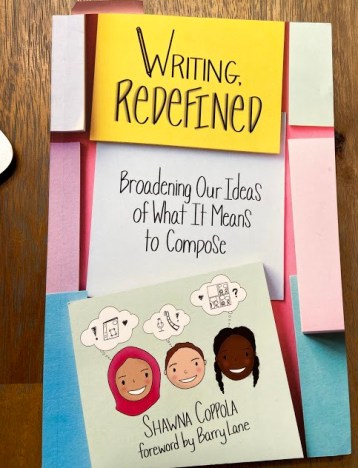
Writing, Redefined: A look at Shawna Coppola’s latest book

You know how there was always a girl a few years ahead of you in high school who was just the coolest? Maybe she had great hair, or drove a vintage VW bug, or was a master at rocking the thrift store finds while you just looked like you were wearing your grandpa’s clothes?

Shawna Coppola is my English teacher version of that girl. She is smart, funny, and insightful. She’s always a few steps ahead of me in my thinking, and I’m always up for the cognitive stretches. Her work makes me a better teacher of teachers and I’m thrilled to be able to share with you her latest book Writing, Redefined: Broadening Our Ideas of What It Means to Compose. (FREE SHIPPING from Stenhouse)

IMG_0380 2

I loved Coppola’s last book Renew: Becoming a Better and More Authentic Writing Teacher. In that text, she takes the reader through exercises to facilitate reflection around instructional practices and it shifted my thinking in so many ways.

This latest book does the same. In this one, Coppola does the same kind of shifting around composition. If you follow her on Twitter (@ShawnaCoppola) then you have seen the bones of this work evolving. Using her own compositional experiences as models, Coppola nudges us (then pushes) to think about what composition means, and who has access to it. Steeped both in research and her unique voice, she takes us through a journey of thinking about composition and why it needs to be redefined.

But the text isn’t just about theory (though there’s such a lovely blend of theory that I appreciate. I love seeing where ideas come from). Coppola also shares real-world examples of her ideas. In fact, authenticity drives much of what she means when she talks about redefining composition. From podcasts to infographics to ‘zines, Coppola illustrates (pun intended) the possibilities when we crack open the definition of composition.

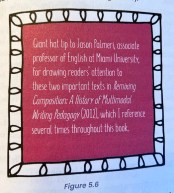
The book is lovely too. It’s full of colorful pull quotes (this one from one of my favorite professors, Jason Palmieri). IMG_0378There are QR codes that take you to more examples, both from students and real-world texts. One of my favorite images comes on page 22 when Coppola uses a throwback image (anyone else have flashbacks to state assessments in the early 80s?) and addresses the yeah-buts (see Tweet below). She doesn’t want you to keep reading without first examining your beliefs and hesitations.
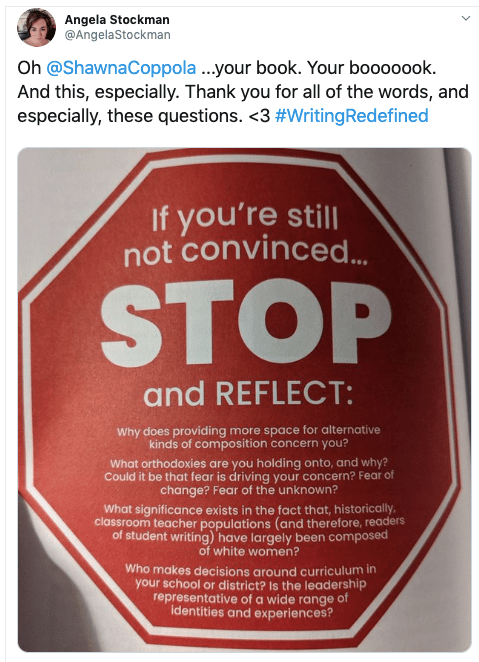
One of the most powerful parts of the text is when Coppola addresses what every nay-sayer says when you start inviting students to use different types of composition. How often do we hear “Yeah, they’re writing, but is it rigorous?” Coppola doesn’t roll her eyes at that question — well, knowing her, she probably does roll her eyes — but, she pushes back on this idea. She encourages us to dig deeper. This tweet from Angela Stockman (another one of my faves) illustrates the point.

Screen Shot 2020-01-21 at 5.37.40 PM

Coppola also cautions us, those of us so willing to dive right in with multi-modal writing, to avoid falling into the craftivities trap where it’s more crafts and less compositional craft. She goes on to outline what the differences between activities and composition are by using three guiding principles: authenticity, intentionality, and richness of learning.

Do yourself a favor and order this book. Read it with colleagues. Tweet Coppola (or me!) to engage in discussion. Grab your notebook and start experimenting with composition.

You will be a better teacher of writers once you redefine writing.

Angela Faulhaber is a literacy coach in Cincinnati, OH. She loves memes and gifs and blackout poetry, all of which are explored further in Writing Redefined

Using Station Rotation to bring life into the English classroom.

I never wanted to be a high school English teacher. In fact, I fought kicking and screaming throughout the teaching credential program. The last thing I wanted to do was discuss symbolism of To Kill a Mockingbird with a bunch of teenagers. 

I had always wanted to teach at the college level. A doctorate would take time, and I needed to make money. Needless to say, I reluctantly entered the teaching profession and started teaching ninth graders as soon as I cleared my credential.

I was lucky to find a school that encouraged teachers to be innovative and creative. I quickly learned that teaching English does not have to be a teacher standing in the front of the room preaching about the importance of theme in literature. 

I was soon introduced to things like Blended Learning, Station Rotation, and Readers Workshop. Because of these models, my teaching has been transformed. 

In order to cater to 35 different learning styles in my classroom, I developed a station rotation model that works for the 48 minute class period. This style of teaching not only allows students to read a variety of different books, but it encourages creativity and discussion to thrive in my classroom. It is organized chaos that works for me and my students. 

Basic rules:

  • Students have the option of what assignment they will complete for that class period. Students walk into the classroom and look at the assignments listed on the board. 
  • Assignments that are difficult and best completed in class have a star next to them. Students are encouraged to complete those assignments in class. The other assignments can be completed at home.
  • Students are required to visit Station 1 sometime throughout the week.
  • Students are required to sit next to new people every day.

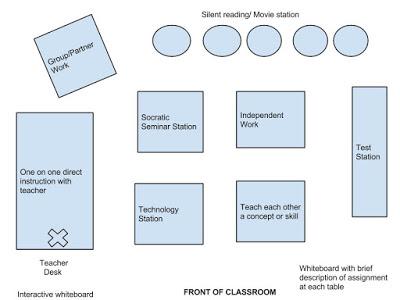
Station 1– Direct one on one instruction with teacher. This station is set up as a long conference table and the teacher is always sitting up in the front.  The teacher sets up the assignment, the students complete a short assignment together on the interactive whiteboard, and then they complete the graded assignment on their own.

Station 2– Individual or Partner work. This station is geared towards getting the students to work together as a group. They usually have to do things like a Google presentation, a podcast, or a film clip.

Station 3– Socratic Seminar Station. This station is geared towards getting the students to talk to each other about a certain idea or concept. They usually have a news article to read and discussion board prompt to respond to. When they are done, the teacher comes to this table and briefly discusses what they learned.

Station 4–Technology Station. This station is geared towards getting the students to learn using various technology and apps. Assignments can include getting onto Twitter, Pinterest, DIIGO, Screen–castify, Instagram, Spreed, etc.

Station 5– Independent Work. This allows the student to work on whatever they need to in that unit. Students work ahead and even begin looking at the unit projects.

Station 6–  Teach each other a skill or concept. This station allows students to teach another person a skill or an idea that they need to master.

Station 7– Test taking station. Here, students study for or complete the unit exam.

Station 8– Silent reading and Movie Watching. This is for students who are confident in their abilities to do the assignments and would like to spend the time reading the book or watching an approved movie version of the book.

I have taught with stations ever since I began my teaching career. It works for any reading that is required in any level English class.

Shelby Scoffield teaches at a high school in Mountain House, California. She loves reading, writing, and playing with her nieces and nephews. Connect with Shelby on Twitter at sscoffield1.

Confessions of a Grown-Up Fangirl

I have finally discovered the cure for a story hangover.

You know the feeling I mean–turning the last page of a book, watching the final scene in a movie, knowing that the work of the creator is done when it comes to the characters and worlds you’ve come to love.

I’ve been known to enter depressions when I get to the end of a beloved book series (Harry Potter, notably), TV series (Bones wrecked me), or classic novel re-read (Pride and Prejudice still upsets me when it ends). But recently, like many in the Star Wars fandom, I was emotionally ravaged by the conclusion of The Rise of Skywalker.

It wasn’t just that I didn’t like the ending of the film (I didn’t); I was also distraught that the nine-movie space opera that spanned 40 years had come to an end.

So, I did what I always do when I’m just not ready for a story to end–I turned to fanfiction.

And I certainly wasn’t the only one–there were thankfully already thousands of stories to read, with no shortage of choices when it came to theme, characters, length, or writing style.

So for weeks now, I’ve continued to immerse myself in the Star Wars world I love, and I’m just now coming up for air. The difference in my emotions is remarkable, as it’s now my choice to exit the story’s universe, rather than it being dictated by a non-negotiable end to a film (in which I left the theater sobbing).

After reading pretty much every “fix-it fic” (fics that seek to change the ending to a more palatable one), I realized that there were still some details I wanted to read about that I couldn’t find in any published stories (like, hello, that Death Star scene should have had much more dialogue!).

So I did basically the nerdiest thing in my life and started writing fanfiction.

Writing stories using someone else’s established characters and worlds was shockingly easy, even though I’ve never really tried to write fiction before. And because of the community of kind and voracious readers in the world of fanfiction, I didn’t even hesitate to hit publish on my stories, which began with notes about how new I was to the writing side of things.

The comments, kudos, and hits kept me motivated to write like nothing else could. I wrote a few short stories that were self-contained, but couldn’t help starting a longer story that I could only write a chapter of at a time. Having readers comment that they were desperate for the next chapter spurred me to write in the early morning hours before school.

In talking with my students, I am constantly shocked by how many of them have had similar experiences–they read and write fanfiction about their favorite books, movies, TV shows, video games, and even musicians and artists. “Fanfiction is always there for me,” my former student Victoria recently told me.

I hope to nudge more students toward reading and writing fanfiction in my classroom, as it’s a wonderful way to grow as a writer and reader. In the meantime, I’ll continue my own reading and writing journey as an enthusiastic, unapologetic, grown-up fangirl.

Shana Karnes teaches 9th graders in Madison, Wisconsin. When she’s not geeking out with her students about literacy, she’s reading with her cats, writing with her coffee, or telling stories to her two young daughters. Connect with Shana on Twitter at @litreader.

Using design challenges to bring rhetoric to life

In Gumption Nick Offerman [aka Ron Swanson] includes an anecdote about author George Saunders seeking to impress his community college guitar teacher with a song he had learned. Unimpressed, the teacher told him, “If you don’t change your life, you’re going to be a very unhappy young man.” Offerman follows it up with this description: “What he then explained to George was that, sure, he had mechanically nailed going through the motions of the song, but without paying any attention to how it sounded.” Essentially, it had no heart.

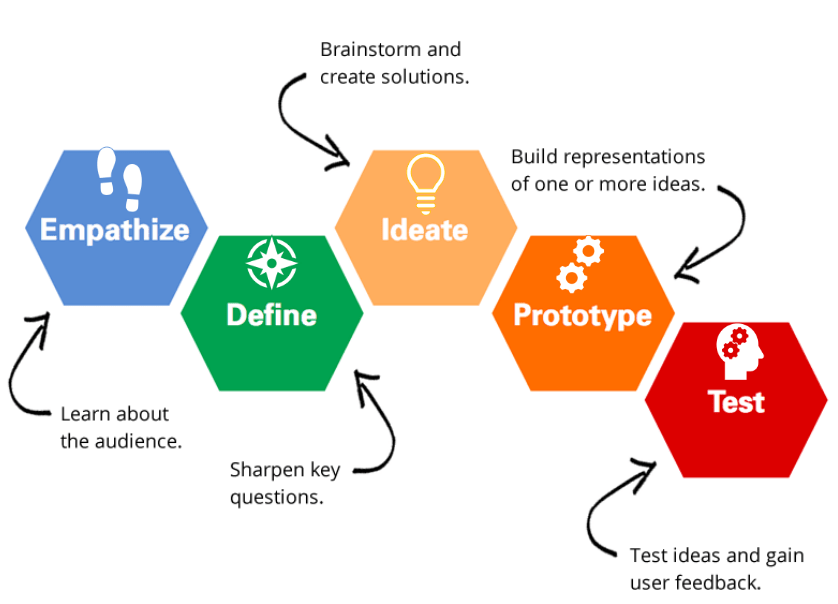
One of the challenges of teaching something like rhetoric is that it can get reduced to terms and concepts that become mechanical. I can teach students to identify pathos or label the audience of a piece, but it somehow feels separate from the real work of analysis or writing that is covered so well here. It can become academic. One of my goals this year was to commit to finding more authentic applications that would allow us to think about rhetoric in less academic ways. As our school district worked with Allison Zmuda to immerse ourselves in personalized learning (more on this here), one of the models we spent time with was the Stanford Design School approach to design thinking, and it opened up some good ideas about how to explore rhetoric through design challenges. This visual captures the heart of the design thinking process:

Design thinking process from the Stanford Design School

What it is

A design challenge essentially lays out a problem for a team solve–they must design a solution using a process–followed by a presentation of their design where it is compared with other teams’ designs. We began to use this process by doing a series of rhetoric challenges throughout the semester. Each asked a team (5-7 students) to focus on a specific, practical rhetorical situation and to design something that forced them to make rhetorical choices based on the audience and purpose. I saw these as formative tasks that allowed students to explore some new argumentation techniques that would get immediate feedback from other teams (we do this kind of game-show/reality TV style) when presented. 

The questions I kept asking myself: what could they build that would show their understanding of rhetoric? What would challenge them to see the value and importance of their rhetorical choices for specific audiences?

What we tried

In Unit 2 (Friday Night Lights: the culture of high school sports), students had considered a range of issues from concussions and CTE to payment of college athletes and competition’s consequences on mental health. For the design challenge (see the full doc here) students had to create a 10-second ad (designed for phones) that repaired the ethos of the NFL or NCAA by pairing the organization with a cause and a spokesperson. They had to wrestle with the rhetorical situation and rhetorical appeals in really interesting ways to make this happen. Other examples of tasks we tried:

  • Unit 3: on solving school shootings (problem-solution structure): “As a team, design a solution to limit or end school shootings in America between 2020-2050 and persuade a specific audience to implement the policy.”
  • Unit 4 perfectionism clip sharing (types of evidence): “Make a problem/solution argument using a variety of types of evidence to capture what it’s like to battle perfectionism and how one can find balance.”
  • Unit 4 t-shirt design: “Design a T-shirt that encourages MHS students to flip the narrative when it comes to their inner critic and negative self-talk.”

Each team would present and go through a round of on-the-spot feedback. I cold-call people from other teams (think Shark Tank)  and ask questions about the content and the presentation method:

  • What was the strength of how that group presented?
  • Did their choice of spokesperson really help the ethos?
  • Between the last two groups, which did a better job of reaching the specified audience?
  • Was their solution stronger than your group’s?
  • If you could change one thing about yours after seeing theirs, what would it be?
  • Which group did the best job of engaging the audience about their ideas? How did they do it?
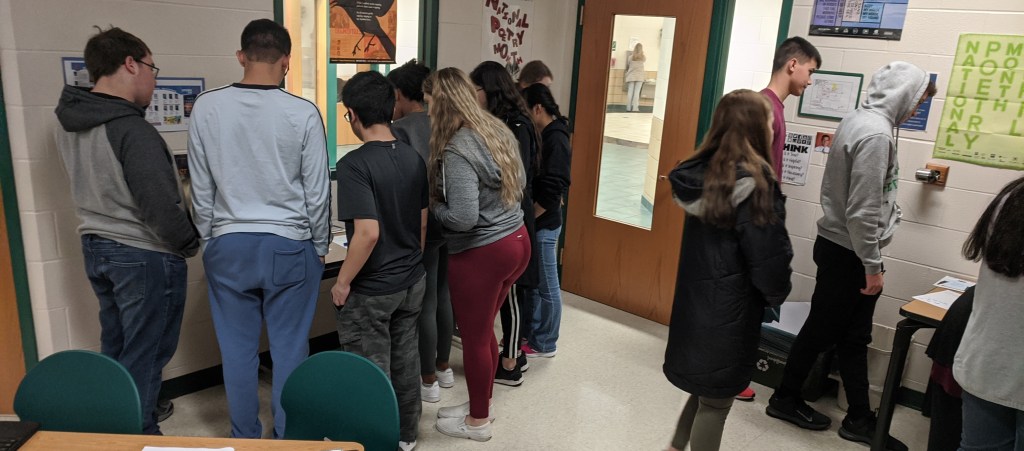
Bell 4 students give feedback on t-shirt designs in a gallery walk.

What I liked

By the end of each design challenge we had spent rich time in collaboration, had meaningful discussions about the functions of our rhetorical choices, and delved more deeply into our content in authentic ways. A few other positives I saw:

  • Making thinking visible through the products/presentations
  • Getting on-the-spot feedback about the value of your rhetorical choices and the social construction of our understanding of rhetoric 
  • Using the design thinking model to talk about the parallels to the writing process

The end goal is to understand the heart of rhetoric better and at a more practical level, and to then make some of the same moves in our writing that we make in the design challenges. To notice more about how it sounds and not just play the right notes. 

Nathan Coates teaches junior English at Mason High School, a large suburban district near Cincinnati, Ohio. He tweets about English-y stuff when he can remember to from @MHSCoates.  

Building Reflection through One-Pagers in AP Lang (and letting kids be kids)

The end of the semester is stressful for teachers and students alike. Students have essays, projects, presentations, and other summative assessments due, and teachers have to assign and grade them.

This semester in AP Lang, I decided to assign an assessment that wasn’t overly-stressful. These are eleventh graders, after all. This is the toughest year of school they’ve had: their semester was full of PSAT, SAT tests, more AP classes than they’ve taken before, and generally harder classes than they’ve seen before. Plus, the stress of growing up is looming. Their senior friends are applying and hopefully getting into college. They can’t deny it anymore. They will be adults so soon.

Meanwhile, they are still kids. They are kids who are taking AP Lang and learning about structure and rhetorical devices; it’s no longer about what they think the message of the text is, like when they were in the lower grades. It’s somehow different. Their brains are full and sometimes fried.

That’s not to say that we don’t have fun in our class. We laugh, we discuss issues, and we learn. We also independently read together.

Our focus on independent reading gives them some autonomy that they don’t necessarily get in other classes. It also means they have a responsibility to pick books, drop books, and read books. A lot of them.

Which brings me back to the last assessment of the first semester. I assigned a one-pager which included reflection, facts, rhetorical analysis, and art. Eleventh grade students don’t usually create art in an AP level assessment (unless it’s an art class, yes), and they loved it. LOVED IT.

I know some AP teachers are all about teaching their students about the “real world” and I get it. Yes, the world is big and tough and sometimes mean. When they are adults, deadlines will matter a lot and sometimes no one will care about an individual’s opinion, and certainly crayons and colored pencils likely won’t be part of their college career or actual career.

But you know what? My students are still in high school. They aren’t adults. They still like to color and draw. (And don’t many adults in the real world like to do this, too?)

I sometimes allow my students soft deadlines – because let’s be “real” – the adult world has soft deadlines, too. For example, this post was supposed to be ready back in December! But real life happened, and the wonderful women who are in charge of this blog gave me a pass, which was necessary and for which I am grateful. I’m okay with teaching my students that the “real world” is like that, too.

Back to the summative assessment: My students brought their semester reading to class: actual copies of books, readers/writers notebooks with lists of what they had read, dropped, and loved. They brought their markers and colored pencils. And they brought their positive energy. It was one of the most fun days of a summative assessment I’ve ever experienced.

We posted our one-pagers in the hall so all of our secondary students can browse them when it’s convenient.

The final one-pagers were fun to make, fun to read, fun to grade, and now that they are publicly posted, they are a great way for students to talk about who reads what and how much. It helps with the development of our reading community, not just with our eleventh grade students, but with all of our secondary students.

I’ve posted about this topic before, but I think it’s worth mentioning again. It’s a nice wrap-up to the semester and it encourages students to celebrate their reading successes, which leads right into deliberate and informed semester two reading goal-setting, which we are working on now. (Stay tuned!)

Please don’t misunderstand. My students write essays and take tests and do research. But I don’t believe that all of those types of assessments are necessary at the end of a semester or school year (there are other times for that). This individualized reflection coupled with the group “going public” by posting in the hallway is powerful. Students see their growth and can celebrate it, but they can also see where others are and maybe set their sights even higher than if they’d stayed private with their goals.

How have you wrapped up your first semester, AP or otherwise? I’d love to learn some new strategies and ideas.

Julie has been teaching secondary language arts for more than twenty years, spending the first fifteen in rural Central Oregon, four in Amman, Jordan, and the most recent school years in Managua, Nicaragua. 

Follow her on twitter @SwinehartJulie

A Return to Flexible Seating

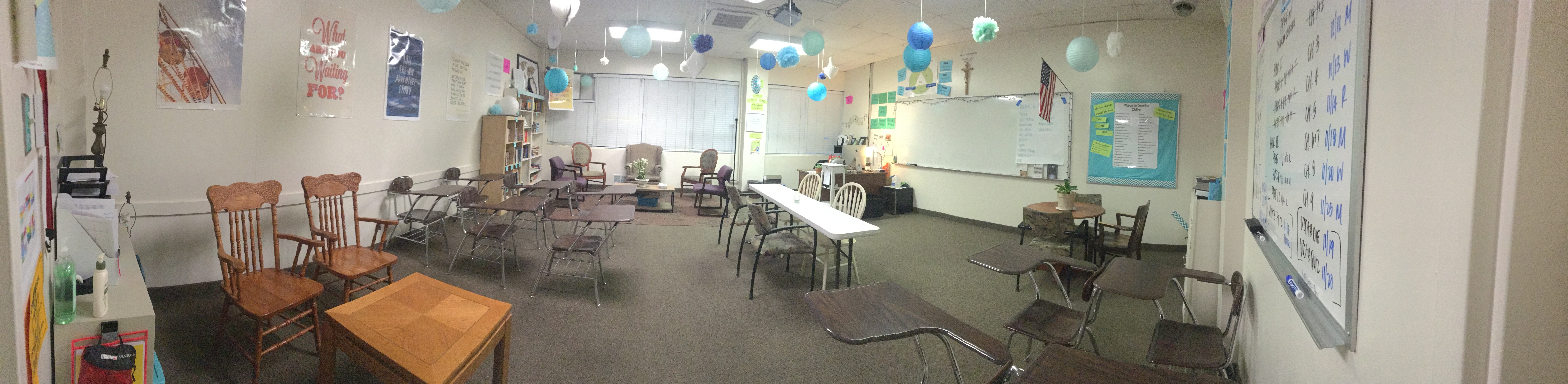
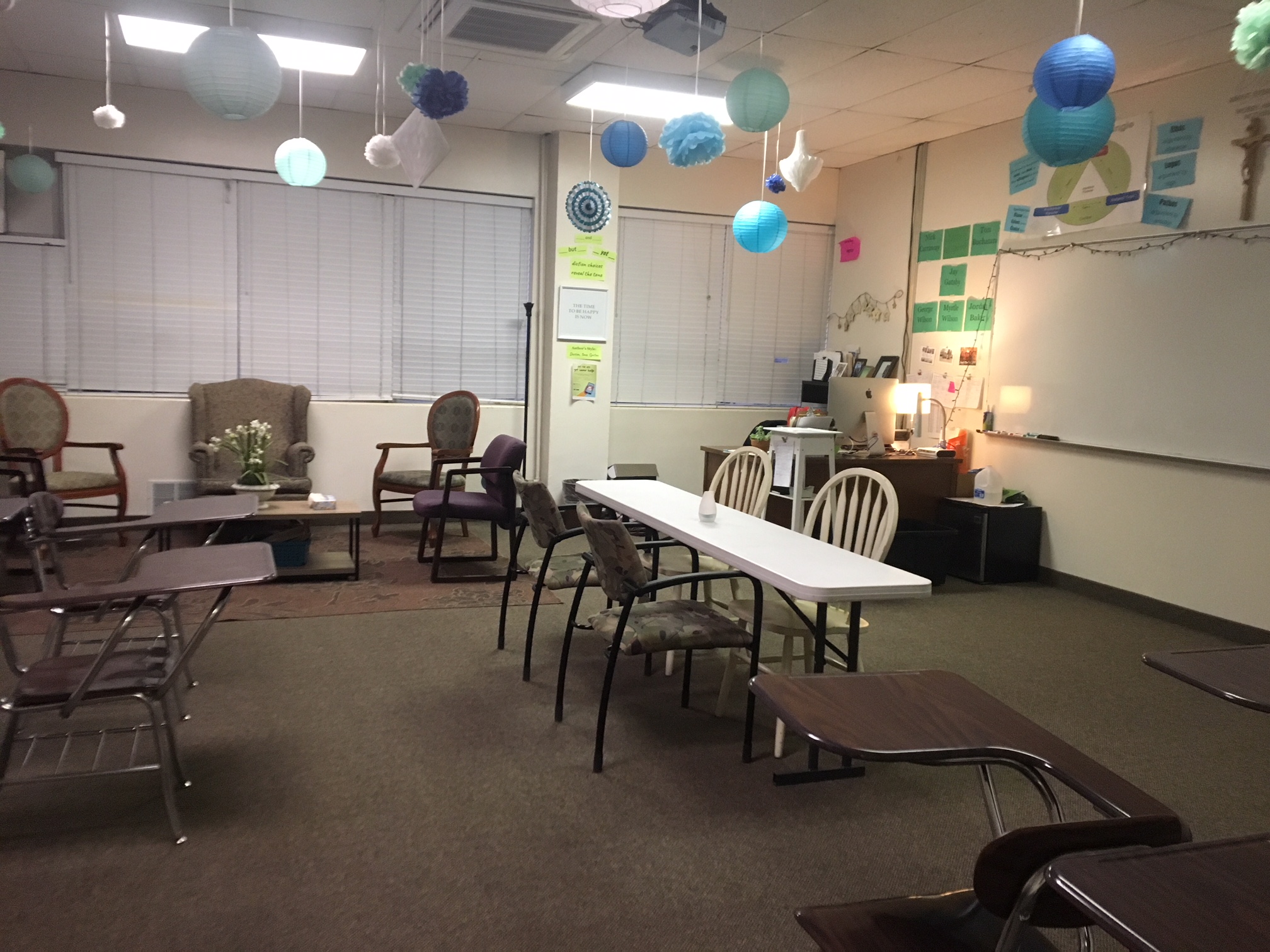
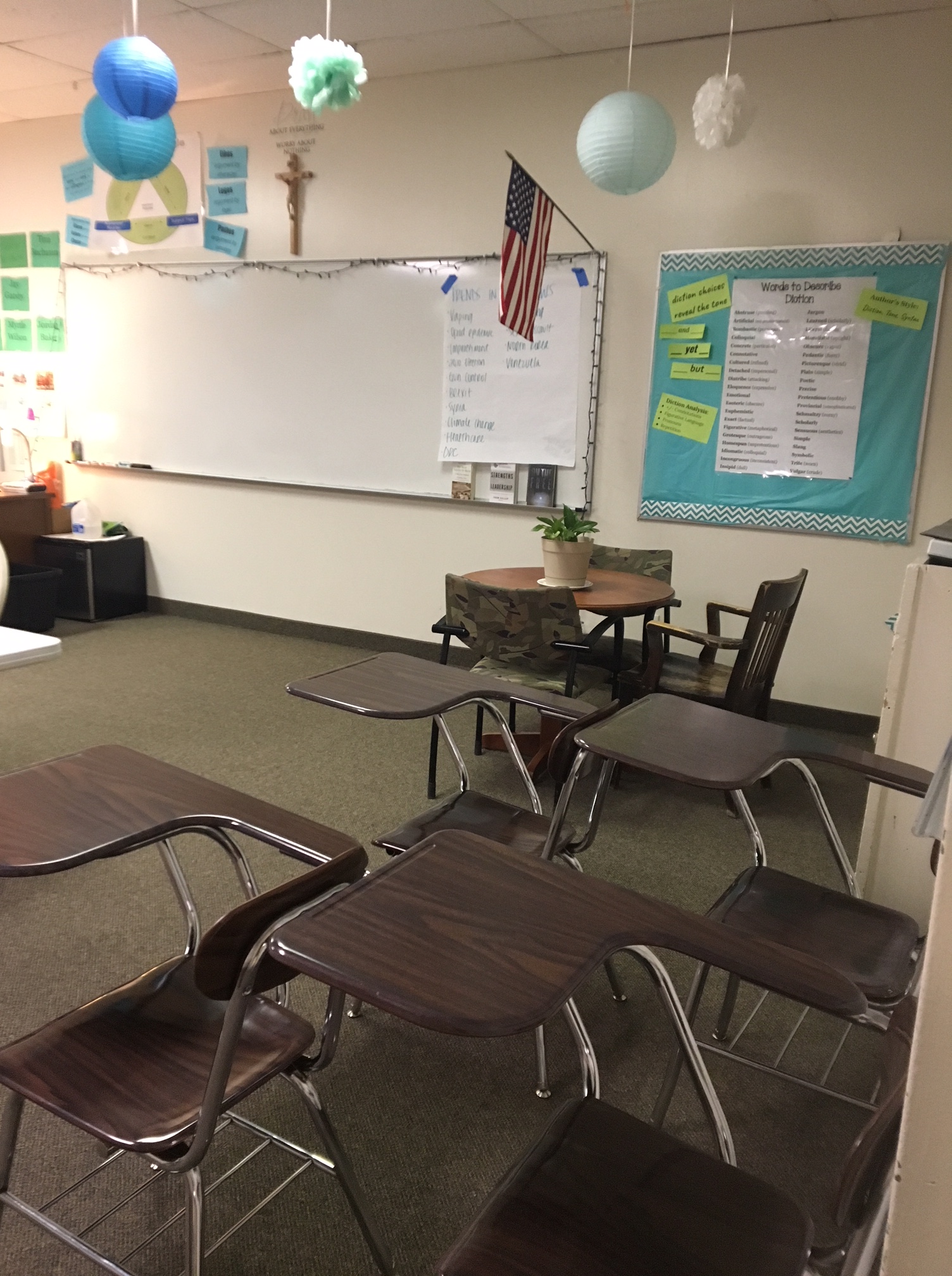
After introducing flexible seating into my junior/senior English classroom last year, I reflected in July about what I liked and didn’t like about the classroom arrangement.  After implementing some changes of my own and many reader suggestions (thank you!), I wanted to reflect over another semester of flexible seating.

Room.JPG

What I changed this fall:

  • Furniture Arrangement:  This year, I made smaller pods of seating. I got rid of the large round tables that ate up a lot of the room and actually moved in more traditional desks (partially due to larger classes).  With the additional space, I was able to fit two smaller tables and a set of chairs for students to work, providing more options for spaces. The room has a nearly-equal balance of seats that require students to use clipboards for writing and desktops or tables.
  • Expectations:  We had a discussion about the purpose and role of flexible seating in the classroom at the end of the second week of school and set guidelines together versus rules.  Students were granted permission to move the furniture to better facilitate group work or sight of the whiteboard, with the stipulation the room comes back to order when the bell rang.  We also discussed the importance of creating a single classroom environment, not one of multiple little pods, and facilitating that through direct eye contact.  I also shared my goal that the classroom feels more like a home than a place of rigid learning, but that homes are to be respected.  
  • Ownership:  While I still reserve the right to ask a student to make a better seating choice, I started the year by asking students to change seating areas each day for the first two weeks.  I believe this established that no one has a “spot,” but we share the space based on need and how we are feeling each day. Additionally, students are required to select a seating new area of the classroom every six weeks or so, which coincides with our school’s midterms and quarters.

Room1.JPG

Room2.JPG

Room3.JPG

IMG_3516.JPG

With larger classes this year, the room is more crowded, but feels more, well, flexible.  Removing the large, cumbersome tables also makes re-arranging the desks and chairs for a Socratic Seminar much easier.  I also have enough desks to facilitate an inner circle of desks and an outer circle of chairs. With smaller tables, groups are naturally formed which is a time saver and I can check in with one area at a time for conferences or work checks. Additionally, with less traditional seating available than with last year’s set up, my students and I have utilized the luxury of the cafeteria tables right outside my door.  While one class period a day may not be able to access these additional workspaces because of the lunch schedule, the cafeteria tables have become an extension of our classroom and great for spreading out groups or when we need more table space.

With very few reminders, students have been respectful and able to flow between small group learning and whole-class learning.  I notice students craning their necks to look at their peers or myself when talking and students.  While some classes are more open to moving daily than others, I find more students are switching around where they sit every few days, are moving based on what we are doing in class, and voluntarily switching seats to accommodate peers.  Students this year take responsibility for their seating choice for the day and have not “claimed” a seat as students did last fall, sitting there through the spring. Sometimes, I confess, the classroom does feel disjointed, like when students are working independently and chatting with those close to them, but I remind myself that at least they’re in a community, not isolated desks of individuals.

While the set-up and general facilitation of non-traditional seating is not always easy and I’d love to make my own place in the classroom just as flexible, students unanimously responded across six classes that they prefer the arrangement and choice to rows of desks, especially for reading time.  So if it works for them, I will make it work for me!

Maggie Lopez wishes everyone a happy, productive 2020 full of excellent books!  She is currently reading “The Lost City of Z” by David Grann after thoroughly enjoying “Killers of the Flower Moon.” You can connect with her @meglopez0.

Novels in Verse in the Senior English Classroom

I have always had a bit of a love/hate relationship with poetry. I know as an English teacher I shouldn’t admit this, but poetry has always been my least favourite genre to teach. While I loved to read poetry as a teenager, I loathed when we had to study it in class as I felt that all the analyzing destroyed it. Unfortunately, some of this mindset has followed me into my teaching career and I have often struggled to really love teaching poetry and I have found that this translated into the way my students have engaged with poetry, as well.

While trying to find a new connection with poetry in my classroom, I have found a few things that have helped. The first was spoken word poetry – the powerful performances of these talented poets sparked some of that old love I used to have for poetry in me and I found that it was easy to translate this excitement into my classes.

The second is what I want to talk about here – my discovery of the novel in verse. The first novel in verse I picked up was Kwame Alexander’s The Crossover when I was trying to find a book to recommend for a sports obsessed reluctant reader. I didn’t realize it was a novel in verse when I first opened it up, but from the moment I started to read it I was hooked. The combination of poetry with a narrative arc spoke to me and I realized that novels in verse could be an accessible pathway to poetry for not just myself, but for my students as well. Since then, I have integrated novels in verse into my classroom in many ways. Sometimes I have held book clubs where all of the novels students can choose to read are novels in verse where other times I have chosen to integrate just one or two titles along with prose novels and graphic novels.

Some of my favourite novels in verse I have used recently in my classes are the following. Some of these books deal with heavy topics (in particular October Mourning), so I would recommend reviewing them before using them with younger students.

Death Coming Up the Hill By Chris Crowe: I stumbled upon this one almost by accident and I am glad I did. It was in the bargain bin at a bookstore I was at and I am glad I discovered it. Death Coming Up the Hill is set during the Vietnam War and follows the story of 17 year old Ashe who is dealing with family issues during the backdrop of the war. The story follows Ashe as he tries to avoid being drafted for a war he does not believe in. This powerful novel in verse is even more impressive as it is written entirely in Haiku with every syllable in the novel representing a fallen solider who actually died during the war.

Enchanted Air: Two Cultures, Two Wings by Margarita Engle: The poetry in this novel is completely compelling. Besides being a novel in verse, it is also a memoir of the author’s experiences growing up between two cultures. Set during the Cold War, we follow Margarita’s childhood as she struggles to reconcile her Cuban heritage with the American world she is growing up in.

October Mourning: A Song for Matthew Shepard by Lesléa Newman: This is a hard read, but a powerful and important one. It may, however, be too much for some students. This novel in verse takes us to October 6, 1998 to tell the true story of when 21 year old Matthew Shepard is lured from a bar and beaten to death simply because he was gay. This novel in verse is tragic and powerful at the same time. 

If you had asked me several years ago if I would ever read a novel in verse, I am not sure that I would have said yes. These three novels in verse, along with several others have changed my opinion and have helped me become a more passionate poetry teacher.

If you want more recommended reads, check out my previous post on integrating authentic voices into our middle years classes.

Pam McMartin teaches Senior English and is the Senior Teacher Librarian at an independent school in Tsawwassen, British Columbia, Canada. She is reluctantly becoming more of a poetry fan the more she exposes herself to powerful, modern works. You can follow her on Twitter @psmcmartin