Category Archives: Writers

Why You Should Get Coached: Part 2. And, 20 Questions to Guide Conferring

I’m about to get coached. And I know it. It’s ahead of a planned observation of a PLC meeting I’ll facilitate. This coaching experience will be, well, different from those I experienced as a classroom teacher. Not only will I be netting my own thinking as my co-coach surfaces it, but also I’ll be observing the questions she casts. I’m hoping to catch more than ideas for how to best support the team of teachers I’ll serve. I’m hoping to hook on to more ways of listening, more ways of asking the right questions, more ways to perfect the timing of my casts.  Like many of you, I began this work through conferring with readers and writers. And, hence Part II of Why You Should Get Coached: to further build your conferring skills. 

When I attended Penny Kittle and Kelly Gallagher’s 180 Days Conference last October, they spoke to this, with urgency. In their eyes, conferring is the single most important strategy for an ELA teacher (I’d argue for ALL teachers but I’m still working on how to angle that for other content areas) AND it’s the one teachers need the most professional development around. In Katie Martin’s Learner Centered Innovation, she cites research from Joyce and Showers (2002) that demonstrates that “teachers who were coached in the classroom implemented 95% of skills over time compared with 5% of their peers that implemented instructional practices in their classroom without coaching.” When you invite a coach to be a part of your classroom story, you’re acquiring direct access to listening and questioning and reflecting skills. Imagine the outcome! When I invited my coach in to observe small group conferring and when I invited him in to observe video of my conferring, my tackle box of strategies swelled. So did my confidence. So did my trust in my coach and my students’ trust in me. This occurred for me because of talk that invited it.

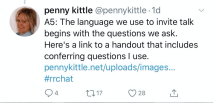
Screen Shot 2019-12-03 at 11.01.01 PMKittle is right: “The language we use to invite talk begins with the questions we ask.” Because coaches’ learning centers around building rapport, trust, and reflective capacity, and because we are (or at least should be!) the most coached in a building, we’re uniquely centered to model questioning and listening and to coach on it.

Here are some of my new favorite questions you might toss out when you need to reel in student thinking. 

  1. What’s on your mind?Screen Shot 2019-12-03 at 11.00.36 PM
  2. And what else?
  3. What all have you tried?
  4. If you were someone else, what do you think you would try?
  5. If you did know the answer, what would you think?
  6. What have you tried in the past that might work here?
  7. On what past successes might you draw on as you do this work?
  8. So how do you feel about _____________?
  9. What’s the most important part of your work?
  10. What are you hoping to accomplish with _________?
  11. What skill or process are you looking to really strengthen with this?
  12. What will guide your decisions about _________?
  13. What might your classmates think (especially in terms of strengths) is important for you to focus on?
  14. Which of these is the biggest challenge right now?
  15. What’s keeping you up at night?
  16. It seems you might be feeling _________. Would you like to talk about that?
  17. Looking back, what would you do differently?
  18. What is most important to you?
  19. What do you think your next steps are?
  20. What was most helpful today?

Your coaches will lean into other, even better questions. And they’ll listen to you because they see your value. Why not toss out an invite?

Kristin Jeschke loves questions and really appreciates (in her new role as Instructional Coach) that she doesn’t have to have the answers. Follow Kristin on Twitter @kajeschke.

Author’s Chair


letter blocks

Photo by Pixabay on Pexels.com

Every educator has the ‘moment.’ I wish I had a cute name for the ‘moment’ that would make it sound both adorable and relatable – but I don’t. I’ve never named it beyond just the description of it to loved ones and close teaching friends and confidants – but I’m betting you know the moment. That moment where you find yourself googling what other careers you can pursue with a degree in English or Education that isn’t teaching. 

You still love the kids. 

You still love the work. 

But, man, has the work felt like work recently. 

And that’s the moment. When you’re drained and empty and tired and the best way forward is a little bit of fantasy: I could just start an Etsy business and live off of that – sure, I don’t really make anything people are interested in buying, but I could. I  could just take a year off and write the great American novel – sure, I don’t have any ideas for that novel, just some opening pages and some really, really vague outlines (in the vein of stuff happens to people and it’s awesome), but I could. I could just find a job doing data entry somewhere – sure the nine to five would be sooo boring and I hate numbers and data and I’m not sure I could fake even a little bit of joy for that process, but I could… maybe…

I found myself here in 2014, and a teacher friend suggested I apply for Summer Institute with my local Writing Project. This experience was and still is a literal life-changing event for me. Finding a group of like-minded teachers who wanted to deeply invest in a research based development of their practice through yearly inquiry projects was transformative. Finding opportunities to both learn from other teachers who were still in the classroom as well as opportunities to teach other teachers was and is encouraging and growth-inspiring. Five years later I’m still active with MTWP and still continuing to grow and learn from that community. 

Currently on maternity leave, I’ve found myself thinking about my practice a lot. I thought I would spend a portion of this time at home -in between feedings and diaper changes – worried about my students or the interim or how the class room was going without me. And, sure, those thoughts have crossed my mind a time or two, but mostly when I’ve thought about school at all I’ve found myself thinking about my practice in a macro-sense from the beginning of my career until now: what are my “greatest hits” if you will.

When I taught sophomores several years ago, I incorporated a game-changing strategy I learned at MTWP: author’s chair. Every two or three weeks, students would share their writing with the entire class. The process was simple.

Students would sign up to share their writing with the class at least once a nine weeks. Usually we would share every second or third Friday, and the sharing would take the entire 45 minutes. The sharing student would move to the front of the room and sit in my chair, stand behind the podium – whatever made them comfortable – and then share a piece of writing. They could share whatever they liked – a polished piece, something from their notebooks, something they wrote just for this occasion. The point wasn’t WHAT they shared but THAT they shared. After they read their piece, the class would simply, in unison, say, “Thank you for sharing.” And the next student would move to the front of the room to share. I would share as well – often sharing bits and pieces of my unfinished great American novel (eye-roll emoji here). It was powerful for me to remember how anxiety inducing it can be to share your writing with other people. Often I think teachers forget this part because we aren’t sharing our writing and don’t have to feel the nerves and/or we forget the painful part of this practice because we’re so focused on the gains that sharing can have for a student. 

This simple practice increased our classroom community: we were all in the writing process together – writing, revising, sharing, receiving and giving feedback. Students were motivated to write more and in addition to what I was asking them to write in class – they brought in songs, poetry, narratives, a choose your own adventure, comics, satires, op-eds. Together, we enjoyed a wonderful season of writing for the sake of writing and sharing, for the most part, because we were proud of what we had written. 

When I moved to teaching only AP Lang, I moved away from author’s chair, mostly for timing reasons. There seemed to be so much to cover in AP and I was still getting my feet wet with the curriculum that I felt like I needed the time. In this moment of reflection for me, I’m realizing -again- that ultimately students just need to write, to write and to share -even when it doesn’t feel like there’s enough time.

Sarah Morris teaches AP English Language & Composition, AP Seminar,  and Film as Literature in Murfreesboro, Tn. She is currently binging The Mandalorian with her three week old daughter – we’re both equally enthused. She tweets at @marahsorris_cms. 


Text Talk: Ink Knows No Borders

In American Literature this year, we are taking a “disrupted” look at the American Dream, noticing its failings and shortcomings through the literature we read as a class. 

After discussions over the summer reading titles and a gallery walk to generate our thinking around the American Dream, we watched an abbreviated version of Chimamanda Adichie’s TedTalk “The Danger of a Single Story” before identifying and discussing the “single stories” in our lives and our world.

We then dug into selections from Ink Knows No Borders: Poems of the Immigrant and Refugee Experience. The collection of poetry features a range of perspectives on adjusting to life as an immigrant as one tries to stay connected to their home culture while adapting to a new place. The poems are both heartbreaking and heartwarming tributes to the courage of the authors.

With a packet of assorted poems, students first processed one poem with their peers, spending time deciphering meaning and making connections.  We then created jigsawed groups where students taught and discussed their poems with a new set of peers. Together, the jigsawed groups began to track thematic connections across the differing, yet similar experiences of the authors.

The poetry offered alternative perspectives while being accessible and real. The poems about names and traditions resonated with my refugee students from Africa, while other students related to the burden of balancing two cultures, one at home and one at school. We Googled more information about the current situation at the Mexico-US border, and one student was brave enough to share his family’s story of obtaining citizenship while another student shared that she fears ICE will take away her parents every day. 

When we discussed the poetry as a full class, students came away with an understanding that often in our country, there is a single story told about immigrants. Students came to the insight that this was misguided and unfair because immigrants founded our country and the United States often promotes the promise that the dream is achievable to all. Students overwhelmingly agreed that we should be more understanding, welcoming, and helpful to people who want to make a better life because we all have stories and hardships.

This text worked well because students discovered new perspectives, connected to their lives and our world, and also gained low stakes poetry exposure, one of my goals for the year. Plus, our conversations made me so happy and hopeful to teach resilient, inclusive young people in this time of division.

Maggie Lopez is grateful for her digital colleagues and an incredibly rewarding profession.  You can find her on Twitter @meglopez0.


Book Club Kits

“The students are asking me if they’re going to get to do book clubs this year,” Julie told me last week. Her junior English students had participated in a few rounds of book clubs last year and it was encouraging to hear that the learning stuck. 

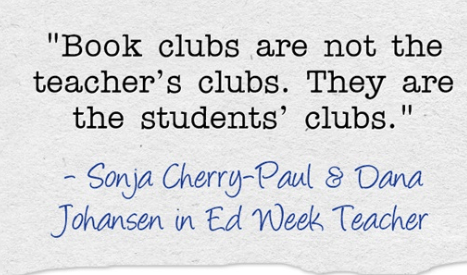
This was validating because last year, teachers worked hard to create experiences with book clubs that were engaging and meaningful (you can read more about that here or here). We noticed that, as Kate Roberts writes in her book A Novel Approach, “Book clubs, when done well, dance along the line of truly authentic student-driven reading and teacher-directed, curriculum-based literacy.” 

But, the fact remained that organizing book clubs was challenging. For many teachers, it felt like an insurmountable task. Even though we work with amazing librarians (shout out to Amanda and John!), if we wanted to use current, engaging titles, it was difficult to collect enough titles to give students choice and have enough copies for everyone. Teachers were hauling books in their trunk to school, then back to the library. The logistics became something that was holding teachers back from implementing a practice we knew was good for kids.

Screen Shot 2019-11-25 at 7.04.22 PM

Teachers Alex White and Kassidy Hammonds spend a few hours on a Friday sorting books for book clubs. Since nobody wants to do that, we had to find a better system.

So, this year, we decided to make book clubs more sustainable using Book Club Kits, an idea I first heard discussed while working with teachers at Anderson High School in Cincinnati, OH. 

What is a Book Club Kit? 

The idea is based off of book club kits at public libraries where librarians put together multiple copies of the same title along with questions and other resources. Put simply, a school Book Club Kit is a collection of multiple copies of multiple titles, along with a possible plan for implementation. 

How do we make a Book Club Kit?

Step one: Collect titles

Hopefully if you’re using book clubs, there’s a culture of literacy in place so students Screen Shot 2019-11-25 at 7.38.34 PMmight be able to help identify titles. If that is not yet part of the culture, there are lots of places you might go to look for ideas. You can visit websites like Nerdy Book Club and Pernille Ripp’s blog and the Disrupt Texts site and hashtag. NoveList Plus, a resource we can access through our public library, also has excellent recommendations. Additionally, there are lots of threads on Twitter where teachers and students share titles.

Identify what students might like. Conduct a survey. Do an inventory of your book room to see what you already have. Ask students for their recommendations. Scour the library. Talk to kids. 

Once we did this, I compiled titles into a document and sent to teachers for feedback. From there we were able to use department funds to purchase enough books for six kits (each kit has enough books for a class set). If you don’t have funds available, you might consider Donors Choose, or participate in the #clearthelist social media campaign.

It was also important that the titles could, as Dr. Rudine Sims Bishop outlines in her scholarly work, act as mirrors, windows, and sliding glass doors for readers. Therefore, we were intentional about having a wide representation in both content and authors (to read more, read Amy’s post here).

Step Two: Cluster the texts

We didn’t want these books to just sit on shelves to be put into hodge-podge book club configurations. Instead, we decided to be intentional about the way we clustered the titles. For example, in freshman ELA, one of the kits is centered around the theme Coming of Age; 10th graders might participate in a book club around novels in verse, or maybe a genre study of mystery titles. In 11th grade, there’s a kit around memoir. A book club around literary non-fiction for 12th graders contains the most complex titles. You might think about these groupings in three main ways: 

  • Genre (novels in verse, mystery, literary non-fiction, etc)
  • Theme (coming of age, overcoming obstacles, etc.)
  • Author Study (Jason Reynolds, Nikki Grimes, K.A. Holt, Kwame Alexander, Sharon Draper are examples of authors whose writing is varied enough and would make great book club possibilities)


Step Three: 

Make it accessible. We put all the books in clear plastic bins. There’s a sign-out sheet to keep track of the kits. Each kit has a list of the titles and how many copies, along with a QR codes that link to a corresponding unit plan one might use with that set of titles. 

I finished organizing the kits last week and already two of them are out in classrooms. We’re getting ready to launch the Mystery Book Clubs once we get back from Thanksgiving and I’m excited to see the way a genre study will play out. 

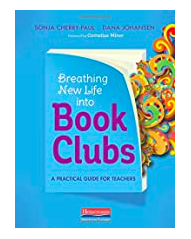
Screen Shot 2019-11-25 at 7.33.04 PMNow that you have your Book Club Kits organized, I strongly encourage you to check out the book Breathing New Life Into Book Clubs by Sonja Cherry-Paul and Dana Johanssen (and if you use the code NCTE19 you get 30% off and free shipping!).

Angela Faulhaber works as a literacy coach in Cincinnati, OH, where she gets to work with the best book nerds in all the land. She just finished reading Beartown by Frederick Backman and is in that sad phase of book-mourning where the next book can never live up. She welcomes your suggestions.


A #FridayReads Come back

How could I forget?

I just remembered I used to celebrate #FridayReads with my students. Every week, after independent reading time, we’d talk about our books, maybe tweet a selfie with them, maybe imitate a favorite sentence. It was probably a Friday when we wrote book reviews in the form of haikus. It was a Friday when we became literary critics. That one was epic.

This year we’ve been having Friday discussions. Reading, talking, listening. That’s worked well — we’ve explored many interesting and important issues — but I completely forgot about doing more with our books. Dang it.

No wonder my students are not reading as much as they have in the past.

I won’t play the What/If game, but it’s staring at me in with weary eyes.

This morning I read about the 2019 National Book Award winners, and while I haven’t read any of them, yet; I gulped at the beauty of these lines, shared by one of the winners as she spoke of her mother–

“As a child, I watched her every move, seeing her eyes fall upon every word everywhere — encountered in the grocery store, on a bus, pamphlets, the package labels, my high school textbooks. She was always wolfing down words, insatiable — which is how I learned the ways in which words were a kind of sustenance, could be a beautiful relief or a greatest assault.”

Words. A beautiful relief or a greatest assault.

On this Friday, I think we will start here. We’ll write in response to this idea:  How are words both a relief or an assault?

Then, we’ll explore books — in anticipation, and hope, that just maybe one of my readers will fall in love with words.


Amy Rasmussen teaches senior English in a large high school in North Texas. She’s still working on building her classroom library to its former glory, and knows she needs to read more herself if she wants to get every student into a book they will love. Follow her on Twitter @amyrass

Organizing Classroom Libraries — One Teacher’s Answers

My job as an English teacher is to empower my students to discover, identify, locate, rediscover, find, and fall in love with the books that speak to their souls and their hearts.

In order to make that happen, I have to have a dynamic classroom library. A year and a half ago, I didn’t have anything on my shelves in my classroom, but because my school, my family, and my colleagues are on board with the vision of robust classroom libraries, my library looks a whole lot better than it did then.

We’ve raided the school book room, collected our main library’s discards, purchased books off of facebook and other “garage” sale type of venues, and we bring back hundreds of pounds of second hand books in our suitcases at every opportunity. (I live in Nicaragua, which complicates the book buying at times.) We spent our entire English department budget on classroom libraries last year, so this fall we felt like kids in a candy store when we were setting up our new classroom libraries.

Each time we are blessed a new influx of books, we have to think about storage, and more importantly, organization. It’s essential that we store and organize our books so that students will be drawn to the shelves and compelled to read new books.
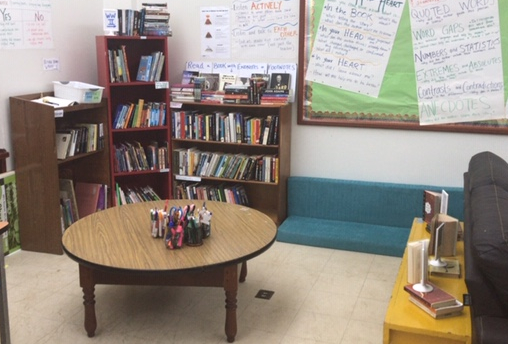
nonfiction corner

I haven’t had any experience that tells me that labeling and micro-leveling books is what makes my students want to read. Quite the opposite. What I read also tells me that labels aren’t for public display on the spines of books or on the front of organizational book baskets. They are tools for teachers to use, which may help them with a cursory understanding of texts before they can get to know them better.

My job as an English teacher is to empower my students to discover, identify, locate, rediscover, find, and fall in love with the books that speak to their souls and their hearts.

My experience and observations tell me that organizing my books by general level and genre is what works best for my classroom library. That rotating book displays pique student interest in titles they might not have noticed or cared about in the past. That topic, passion, and enthusiasm can sell a book to a student a whole lot more convincingly than a level or a label can.

My classroom library is split into four basic sections:

  1. middle school fiction
  2. young adult fiction
  3. contemporary fiction
  4. nonfiction

I do this out of necessity: I teach three sections of seventh grade English and two sections of AP Language and Composition. It’s important to have some distinct sections for these students so they at least have a starting place when they browse for books. They do tend to meet each other in the young adult fiction shelves, and there isn’t much that stops them from “shopping” on all of the shelves.

Within those four sections I have subsections, however.

I have grouped some middle school fiction into some general categories: magic/fantasy, mystery/scary, realistic fiction, historical fiction, books in a series, sports, and shorter/easy reads.
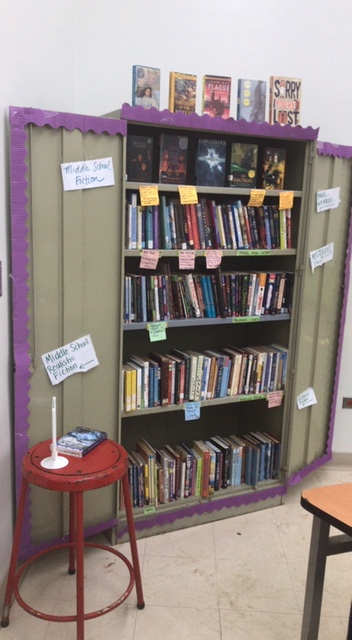
E4EF54D1-344F-4F20-9787-F7D3A99FF7DC

In the young adult fiction section I caved to a student who really wanted a romance section (why not? I thought). I’ve also grouped some of these books into a “books in a series” section, a mystery/horror section, dystopian, and a sci-fi/fantasy section. The section on World War Two shelf was created because I have a number of students who are gravitating towards that topic right now. It’s not comprehensive, and it mixes middle level, young adult, contemporary fiction, and nonfiction, but it is what’s working for my students right now, so it will stay for at least a while.

That’s the whole point. Our classroom library organization is based on what works for my students. It wasn’t prescribed by any “experts” or mandated by anyone outside of my classroom. It’s authentic, preserves student emotions and privacy, and the shelves are open to whomever would like to browse them.

There is a tiny bit of leveling – three levels plus nonfiction, but this leveling is more about maturity and content than text leveling.  It’s certainly not the microlevels of Lexiles, A-Z, or AR that some libraries employ. It’s helpful rather than restrictive.

Because the books are organized into these smaller topic or genre sections, students have a helpful place to start looking that isn’t rigid. I feel like it’s the best of both worlds because it gives students a direction and a guide, but not rules or rails they have to live between.

Simply because of the space and shelves that I have in my room, I’ve added a subgroup of poetry, plays, and picture books section in the nonfiction corner.
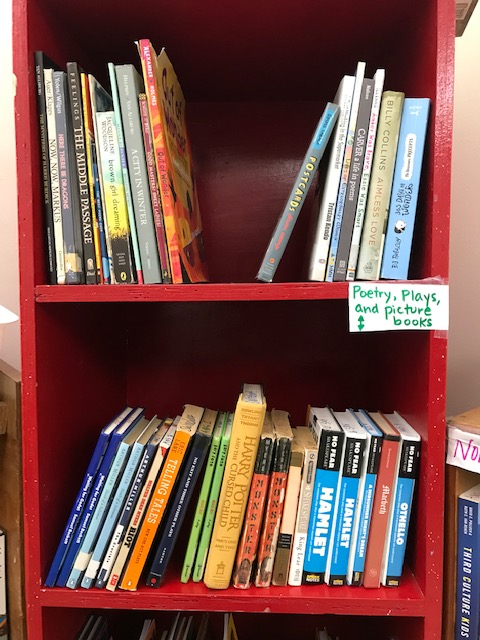
IMG_6777

This is a corner that needs some work. As I add titles to my classroom library, I will deliberately look for poetry and drama, as well as relevant picture books to add to these shelves.

While I have these semi-permanent organizational ideas, I also have some rotating book displays.

Right now, my AP Lang class is starting a research project. One of their sources needs to be a book with either endnotes or footnotes, so I’ve collected many of my classroom library books that meet that requirement and put them on display.
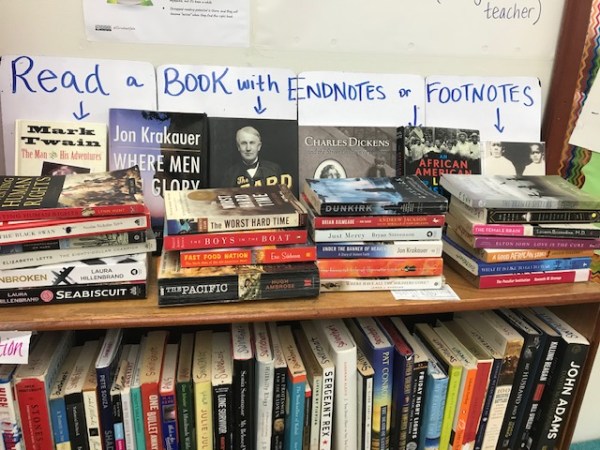
IMG_6720

This display changes about every week or so, sometime with deliberate purpose like this one, and other times it’s just whatever comes to mind. Some recent displays have been around the topics of time travel, aviation, The Great Depression, and sports. Anything goes when it comes to displaying a collection of books.

Another way of displaying and organizing books is by what is popular with students, what the teacher is currently reading, and what’s been book talked in the last day or so.

These are all examples of rotating book displays, and they rotate between every other day, and every couple of weeks. It’s a matter of doing what makes sense for the type of display it is, and what the current needs of the classes are.
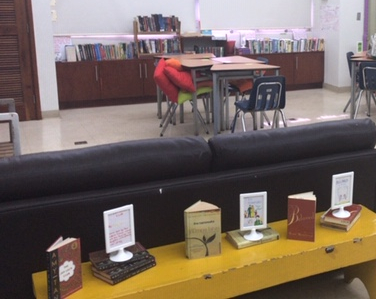
FE67DF8F-CB14-4287-AC11-8D3C87536A16

So once the books are organized and on display, students actually start to look at them! It’s a miracle, and a wonderful feeling when they get interested and excited when they haven’t been in the past.

At that point, a check out and return system becomes key.

Mine is old-fashioned and easy to navigate. It’s a spiral bound notebook and a pen. Pretty simple.

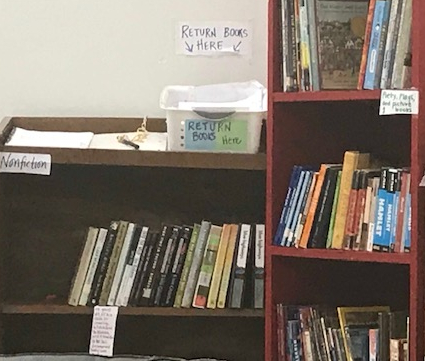
Just because it’s low-tech doesn’t mean it doesn’t work. Quite the opposite. Students know to check out books and put them in the return basket when they are done. Sometimes they cross out the original entry of their  returned book, but mostly all they have to do is put the book in the return basket and I’ll find their name and cross it off and then re-shelve the book.
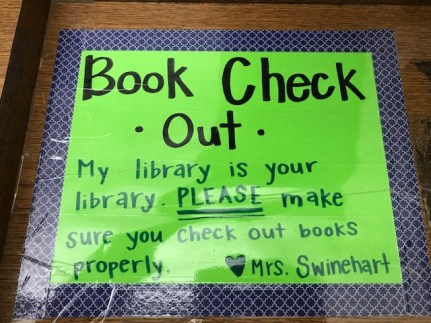
IMG_6782

The return basket is right next to the check out notebook and this sign which reminds students that the honor system is what makes this whole thing work.
IMG_6829 (1)

The classroom libraries in our hall are open to all of our students, so often students from other classes wander in to my classroom looking for books. The system is the same for them as it is for the students I currently have in my classes. All of the students at our school are our students; all of the students have access to all of our classroom libraries.

If some students have books out for a long time, and we don’t see those students on the regular because they aren’t in our own classes, we rely on each other to ask those students about those titles, which means we often get books returned promptly with that simple system. Our department has a shared google doc and we list the students’ names and titles that are checked out, so we all have that information at our fingertips.

Our organizational and check-out systems are thoughtful and simple, and can be adopted by almost anyone. There may be other better, different, or more complicated ideas and systems out there that work for people, but I wanted to share ours because of its simplicity and effectiveness.

How do you organize your classroom library, and what philosophical beliefs to you hold that are behind these practices? I’d love to read your thoughts in the comments.

Julie has been teaching secondary language arts for more than twenty years, spending the first fifteen in rural Central Oregon,  four in Amman, Jordan, and the most recent school years in Managua, Nicaragua. 

Follow her on twitter @SwinehartJulie
What Does It Mean to Be a Writer?

A nonnegotiable in my classroom is that everyone is a writer. We work from day one of class to establish identities as writers: we create writer’s notebooks, we discuss writing routines, we practice writing every day.

But many of my students struggle to see themselves as writers because their definition of “a writer” is so narrow. They are beholden to culturally-entrenched images of Hemingway, Faulkner, Dickens–studious, quill-wielding, miserable, alcohol-fumed, slaves of the pen.

It takes some time to convince kids that despite the intrigue that persona presents, that it’s not true.

I recently encountered a strategy for defining authorship that I continue to return to for its simple brilliance. This school year, I’ve been visiting classrooms of practicing teachers, and one of my favorite places to visit is Gloria Kok’s classroom.

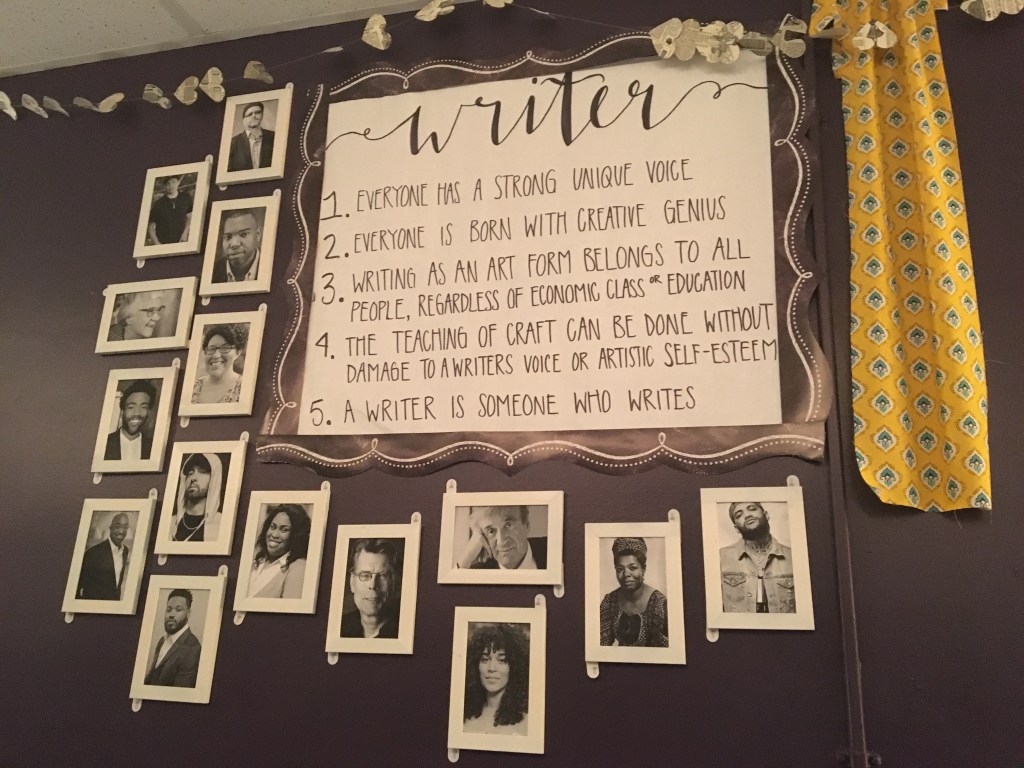
One of the first things that struck me upon entering her room was an entire wall devoted to writers. As I visited over multiple weeks, I realized that her students had created the five points of their working definition of what it means to be a writer. They had also brainstormed personal heroes who fit their definitions. The wall is covered with the likes of everyone from Ta-Nehisi Coates to Oprah Winfrey to Langston Hughes to Tupac.

Frequently, Gloria asks students to use these points to frame their own writing reflections or goal statements. I’ve begun to do this myself, as I’ve visited her classroom so frequently–so much so that I’ve found myself seeking out definitions of what a writer is in my reading and work.

A favorite writing mentor of mine is Donald Murray, whose books I pick up anywhere I find them. I recently acquired Write to Learn, and one of my favorite and most personally relatable definitions of what it means to be a writer comes from his second chapter:

“Not knowing what I will write, or even if I can write, means I will not write what I have written before. I have begun a voyage of discovery. The initial satisfaction from writing is surprise: we say what we do not expect to say in a way we do not expect to say it.”

This approach to writing–that it is an inexpert art full of magic and whimsy, but helped along by the discipline of practice and study–is my personal favorite. The post-it notes papering my desk with quotes by Donald Murray attest to the similarities of our beliefs: these definitions help encourage, refocus, and discipline me on mornings when I do not want to sit down and write.

I encourage you to do the same thing with your students, writers, and even yourself: create a definition of what it means to be a writer. Put it down on paper, hang it on the walls, shout it from the rooftops–whatever works to teach yourself that your belief in yourself as a writer is what matters.

Shana Karnes is a writer who lives in Madison, Wisconsin. Her desk is covered with quotes about writing, pens, poems, abandoned coffee cups, and discarded crayons, stickers, and paint from her children. Connect with Shana on Twitter at @litreader.

Integrating Sketchnotes into Annotations

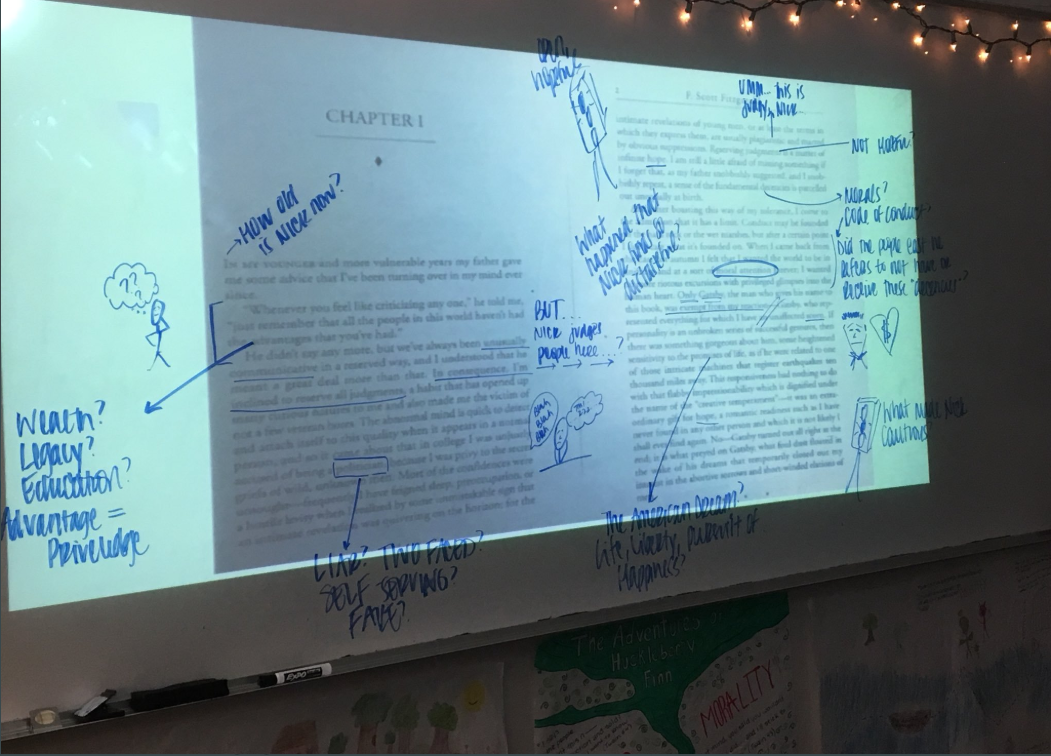
When any unit is designed, I intentionally consider what important academic skills I can either teach students or reinforce to support critical thinking in preparation for academic endeavors after high school.  While the majority of my juniors and seniors are familiar with annotating, we still practice making our internal thinking and interactions with the text visible on paper no matter what we are reading.

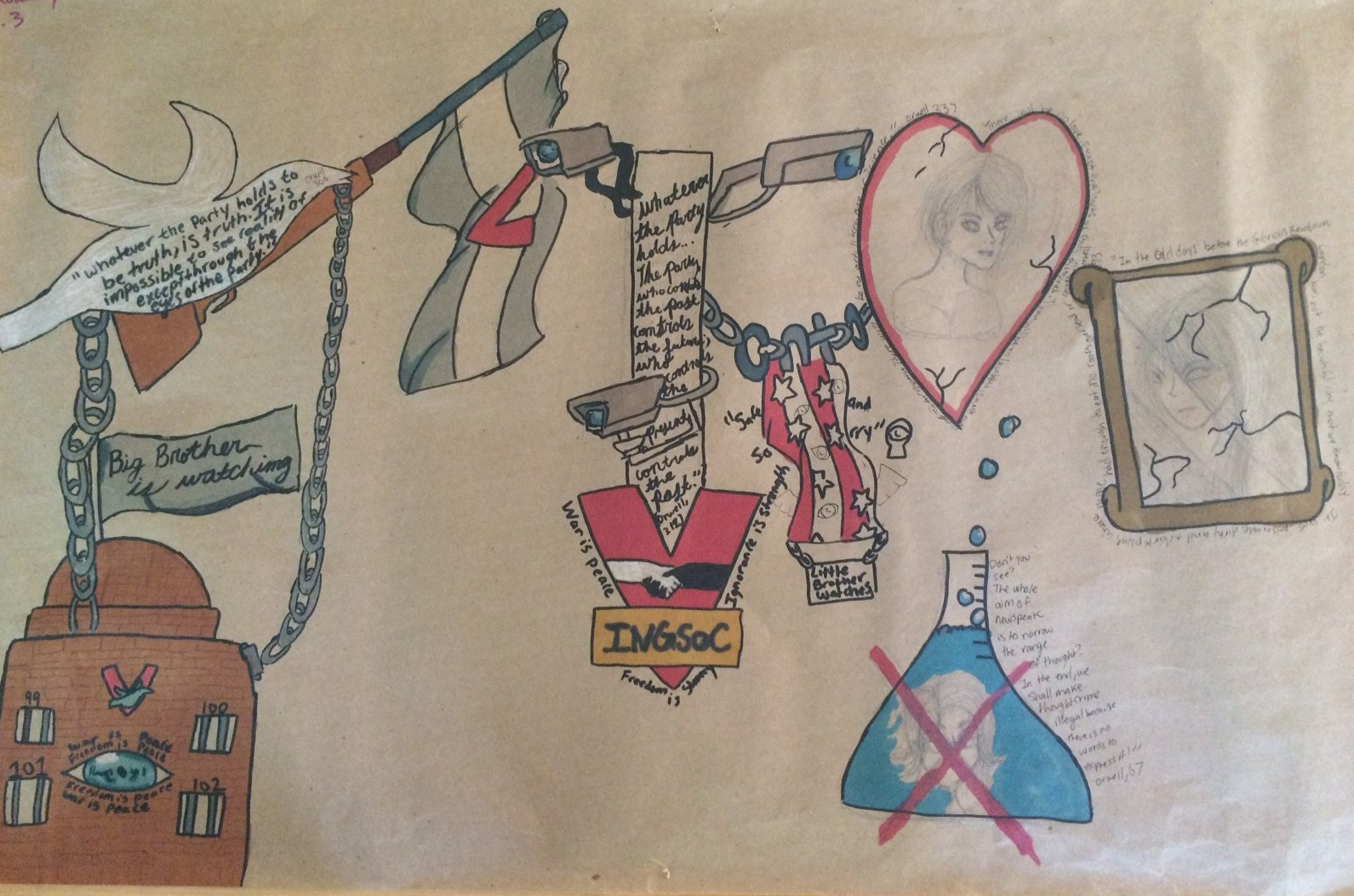
An idea presented at NCTE last year was sketchnoting, which is the practice of creating visual annotations to develop meaning.  Students are encouraged to draw pictures and symbols or icons instead of writing their thinking in the margins, like a visual poem write around or visual 1 Pager.  While I am certainly no artist, just stick figures over here, sketching annotations adds a different dimension to meaning-making.

I love that sketchnotes provide an opportunity for more creative interactions with a text and provide an opportunity to use the right side of the brain.  Sketchnoting simply offers another mode for students to create meaning and retain information (You can watch a great overview from Verbal to Visual and utilize the free resources, too).

Screen Shot 2019-11-07 at 9.46.29 AM

As we dig into our first full class novel, students are assigned pages to annotate or sketchnote as we read, these pages then prompt our TQE (thoughts, questions, epiphanies) discussions.  I started out with a think aloud model for students with the first (rather dry) pages of The Great Gatsby.

While most students begin with traditional annotations, highlighting and marginalia, because that is what they’re more comfortable with, many slowly branch out into adding pictures or visual notations with more practice and after seeing their peer’s examples.  

Aside from having students intentionally interact with a text and build their annotation skills, the annotations and sketchnotes provide scaffolding for the final project, a visual 1 Pager or a “graffiti wall” that encourages students to display their learning visually.  I did this project two years ago with juniors who read –I may challenge this year’s crew to use fewer words.

IMG_1386

Visual notetaking can be a more compelling way to lure students into making meaning with a text or other content.  I am hoping more sketchnotes start popping up on the pages of students’ notebooks and other assignments, in my classroom or others.


Maggie Lopez is awaiting the snow and start of ski season in Salt Lake City, but wishing she was attending NCTE 2019 this month.  She is currently reading Into the Water. Follow her @meg_lopez0.

Shifting our Middle School Reading List to Include Authentic Voices

British Columbia, where I teach, has recently gone through a large shift in educational philosophy and has introduced an entirely new curriculum. The introduction of this new curriculum has required us to reflect on our current curriculum in our Grades 6-12 classes and make changes to reflect the changes required by the province. As well, this has afforded us the opportunity to reflect on our current reading lists and to refresh some of the novels we have our students read.

One of the first areas we focused on was our literature circle unit in our Grade 6 English classes. The unit was one that connected with the Social Studies curriculum our Grade 6 students were also studying and focused on immigration and migration stories. While we still liked the theme of this unit, it became quickly apparent that we needed to refresh our literature circle novels. While each of the novels we used to teach in the unit focused on immigration or migration stories from different parts of the world, not a single novel was written by an authentic voice. Instead, they were all written by caucasian and North American authors. While there are many amazing caucasian and North American authors we want to share with our students, in a unit about the immigrant experience it seemed a little strange that we had no immigrant voices. Many of our students are first generation Canadians whose parents immigrated from many different places in the world and we wanted our students to hear stories from immigrant voices or voices from the cultures being presented in the novels.

This started us on a quest to find new books for this unit. Below are the results of our English team reading as many novels we could find that would suit our criteria and the books we decided to replace our old reading list with:

Inside Out and Back Again: By Thanhha Lai: This beautiful novel in verse tells the story of Hà and her family. Hà has only known life in Saigon and the streets of her neighbourhood. When the Vietnam war starts, however, she and her family are forced to flee Saigon and end up in Alabama where she and her family experience the culture shock of living in a world completely foreign to the one they fled from.

Escape from Aleppo: By N.H. Sendai: This novel is set in the very current events happening in Syria. After the events of the Arab Spring and the war in Syria, 12 year old Nadia and her family are forced to flee their home in Aleppo, Syria. This harrowing and heartbreaking novel tells of what it is like to leave everything you know behind to make the dangerous trek to the unknown as Nadia and her family make their way through their war torn country to seek refuge in Turkey.

The Night Diary: By: Veera Hiranandani: In this novel we are transported to 1947 India where India has just won independence from British rule and the British held Indian territory has been divided into two separate countries: Pakistan and India. Our 12 year old protagonist Nisha is half Muslim and half Hindu and finds that she doesn’t know where she belongs anymore as the Hindu part of her extended family is moved to India and the Muslim part of her family is moved to Pakistan. Nisha and her family are originally resettled in Pakistan, but her father decides it is too dangerous for them to stay there. The story follows their family as they make the dangerous trek to attempt to leave what is now Pakistan to find a safer place to live.

The Only Road: By: Alexandra Diaz: This novel is the first in a series. When Jaime’s cousin Miguel is killed by the Alphas gang in the small town in Guatemala his family has called home for centuries, he knows it is no longer safe. The gang violence that surrounds him every day is so extreme and Jamie is worried he will be the next victim, so he flees with his other cousin Ángela to try and make their way to New Mexico to live with his older brother. This novel follows the dangerous journey they make largely on foot to get from Guatemala to the United States.

With these novel choices we are hoping to revitalize our Grade 6 literature circles and to provide our students with authentic voices sharing important stories of the risks people will take for the safety of their families.

Pam McMartin is English Department Head and Senior School Teacher Librarian at an independent school in Tsawwassen, British Columbia. She is thankfully enjoying her midterm break from school this week and has been working on repainting her bathroom and catching up on her reading (not at the same time) before heading back into the madness of end of the term teaching and marking. You can follow her on Twitter @psmcmartin.

The Power of Authentic Literacy

Let me tell you about my fall, y’all. It’s been a doozy. 

Depending on which list of the top life stressors you look at, I’ve managed to hit two, maybe three, right on the head. And mine is spinning.

I moved last week. If you’ve ever packed and moved during the school year, you know how stupid I planned the timing. The Rockstars and Tylenol PM have kept me functioning. Some.

Sometimes life gets in the way. Sometimes life gets away from us.

new books in honor of my father

My English department surprised me with this gift of books in honor of my father — one of the sweetest things colleagues have ever done for me. My classroom library is growing!

My father passed away the first part of September. And while he was old, and his health had been fading for a while, his death hit me hard. I used to call him when I drove long distances alone to present workshops. I miss our talks. My dad was a quintessential optimist:  wise, encouraging, smart — and he believed in me.

We all need people who believe in us. 

Everyday I try to show my students I believe in them. They’ve been so great with all my spinning. Compassionate, kind, studious. Mostly.

I started at a new school this year, and I’ve remembered how much I love working with young people. I also remember how much I detest the distractions: the drills, the mandatory To-Do’s, the paperwork. But that’s a post for another day.

Most days I fake my way — I’ve yet to find a rhythm.

But that’s okay. I believe in the power of authentic literacy instruction. I know those who read and write and communicate well have a better chance at navigating life than those who don’t. 

So everyday we read. Everyday we write. Everyday we talk about our reading and writing. Every Friday we discuss important issues. I believe these things trump any other use of instructional time. The routines work. But for many students it is hard.
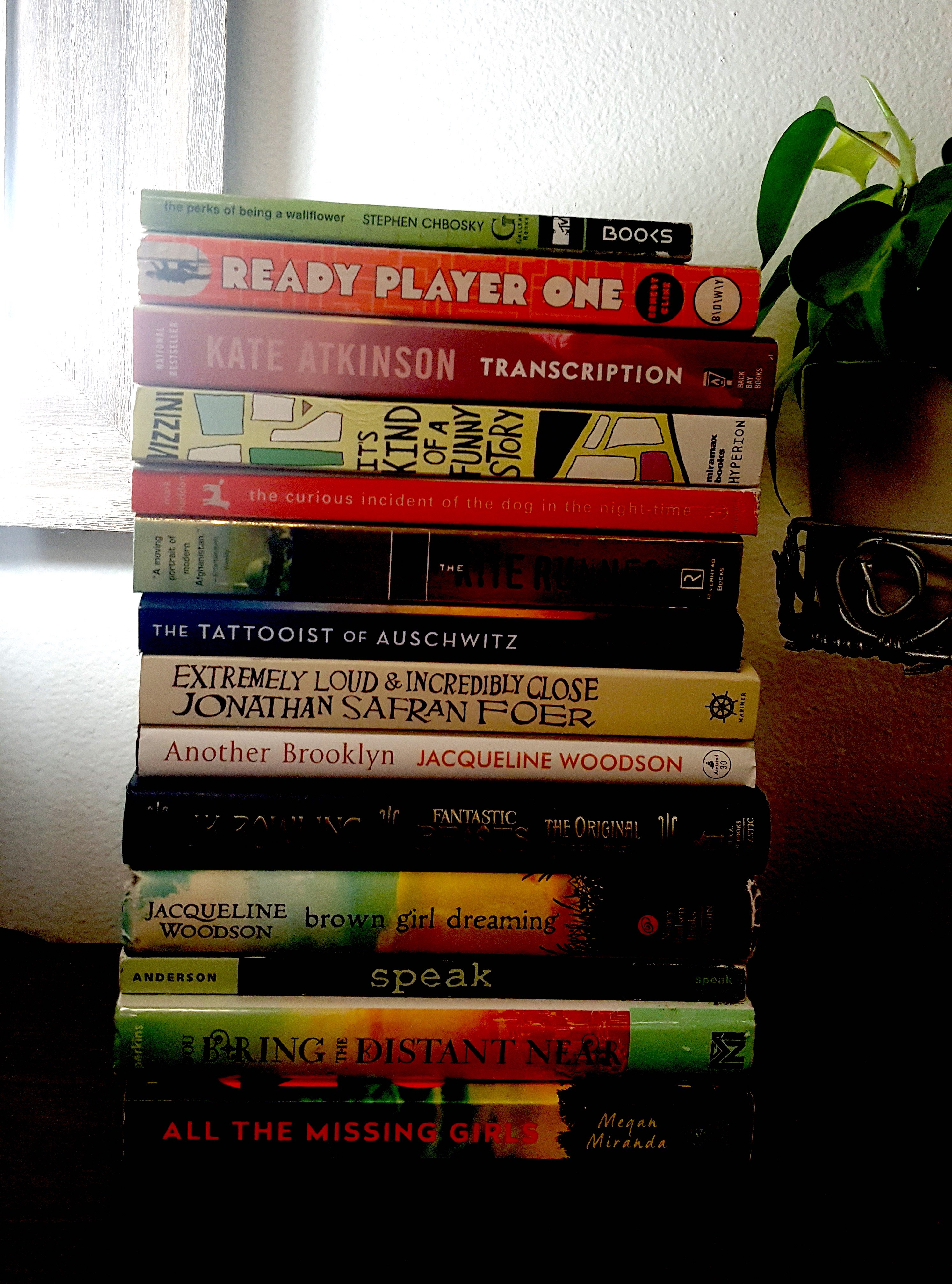
A few students fake their way — they’ve yet to find their reason.

That’s not okay. I will keep trying. Trying to get books in hands that spark joy in reading, trying to develop writers who believe in the power of words and the beauty of language, trying to get the quiet ones to share their thinking with their peers. They often have the greatest insights.

My evaluator visited my class last week. We were analyzing essays, discussing the writer’s craft –noticing the moves and their effect on meaning– and preparing to write our own Op-Eds. As the administrator left the room he whispered, “It’s hard to get them thinking.” 

Yesterday in our writing workshop, right after a little skills-based lesson on making intentional moves as writers, a young man said, “You mean everything I write has to mean something?”

What do you do with that?

I think we have a hard row to hoe, my friends. Gardener, or not, helping our students understand the role of critical thinking in their lives is what may save them. It may save us. It’s saved me for the past few months.

In a Forbes’ article published a year ago, titled “What Great Problem-solvers Do Differently,” we learn five skills that enable people to be great problem solvers:  deep technical expertise and experience; the ability to challenge, change, innovate, and push boundaries; a broad strategic focus rather than a narrow focus; drive/push; and excellent interpersonal skills.

I can’t help wondering how I can help students develop more of these skills while in my English class. I know it’s possible. Possibilities mentor hope.

This week a small group of my students — seniors who are eager yet terrified (their words not mine) to face the world after high school — and I chatted a bit about the responsibilities of adulting. I’m afraid I didn’t quell their fears. I might have quickened them. 

The stress that comes with independence sometimes sends us spinning. 

My students are my witnesses, and while I’d wish it otherwise, perhaps this fall is the most authentic I’ve ever been as a teacher.


Amy Rasmussen teaches senior English in a large suburban high school in North Texas. She tries to write beside her students and wrote this piece as a practice for their Op-Eds. She’s currently trying to unpack and get used to her new commute. Dallas traffic can be a doozy.