Category Archives: Writers

#FridayReads A Must-Read Book: All American Boys

I saw a tweet last week that read something like this:  “What if you look like the people others are afraid of?”

The context was the Syrian refugees, I’m sure. The terrors in Paris blasted the news. So many dead. So many injured.

So many with no place to go.

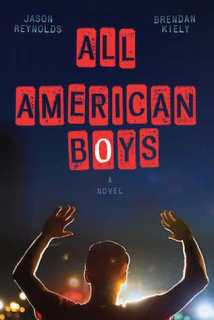
My heart hurt, and I am not sure about the timing, but I’m quite 25657130sure God told me to read the book All American Boys by Jason Reynolds and Brendan Kiely, the story of two American teens who attend the same high school:  one white, one black. Both with families who love them. Both caught in a situation that represents many we’ve heard over and over again:  “the repercussions of a single violent act that leaves their school, their community, and, ultimately, the country bitterly divided by racial tension.”

For the past couple of weeks my students and I have read some of the writing of Leonard Pitts, Jr. We read his work to learn to become better writers. Among others, we read “We need a better plan to probe police shootings,” and “We don’t want to watch police — but we have to.” We talked about Pitt’s message, and we analyzed his craft.

We questioned what we know has happened way too often, and we shared ideas and opinions about how the actions of some affect the lives of many.

We sat in a circle: Black and White and Chin and Mexican. We talked. And listened. We tried to understand.

All American Boys is a story for every classroom library. It’s a story for every classroom teacher. Every administrator. Every parent. Every police officer.

We must invite candid stories and candid conversations about race into our learning environments. How else will we ever learn to see past color into hearts and minds and hope?

Booklist Starred Review states: “. . .this hard-edged, ripped-from-the-headlines book is more than a problem novel; it’s a carefully plotted, psychologically acute, character-driven work of fiction that dramatizes an all-too-frequent occurrence. Police brutality and race relations in America are issues that demand debate and discussion, which this superb book powerfully enables.”

If you add one book to your reading list this fall, I hope it is All American Boys. It ranks right up there with Forgive Me, Leonard Peacock for books that will stay with me forever.

I need about 10 copies for my classroom library.

#3TT Workshop — Digital Writing in the Writer’s Workshop

Three educators. Three states. Three demographics. All practicing Readers and Writers Workshop in our Secondary Classrooms. Read more about us here.

We are the Modern PLC, and every Wednesday, we share our behind-the-scenes collaboration as we talk about the most urgent moving parts of our classroom pedagogy.

Despite the proliferation of e-readers, tablets, and digital reading and writing technology, recent research is making digital texts look a little less appealing.  This article discusses the slow reading, complex-text, and comprehension literacy skills we just can’t get from reading electronically.  This one has lots of great links to the reasons digital reading “fail[s] to adequately recreate certain tactile experiences of reading on paper that many people miss and, more importantly, prevent people from navigating long texts in an intuitive and satisfying way.”

As Shana’s school in West Virginia is increasingly making the move to one-to-one technology, digital learning, and an increased emphasis on electronic reading and writing, she wondered how this shift would impact writers’ literacies.  Her discussion with Amy follows.  Please join the conversation in the comments!

writing rhet and digital media_1Why is one-to-one technology such a big deal? Does every child really need a laptop or a tablet?  Isn’t their generation suffused with enough technology as it is?

Shana: I surveyed my students this year, and 98% of them have a smartphone with data access that they’re accustomed to using all day.  This troubled me–there was no space in their routine for slowing down their thinking.  I don’t think the reader’s-writer’s workshop works without deliberate attention to reading, writing, talking, revising, thinking, and pondering.  So, I invited my students to simplify their lives this year by putting away all smartphones, but wondered if I was being a hypocrite when we wrote frequently on the laptops I keep in my classroom.

Now that it’s November, I’ve decided I’m not actually a hypocrite–the experience of writing drafts in print, revising and workshopping them, and then transferring them to a published form digitally is far different than the instant-gratification experience of using a smartphone.  Still, though, I watched a student just yesterday play a game on his smartphone while he waited for his computer to boot up.  My students don’t seem to know how to handle free moments to just think, or wonder, or daydream–at stoplights, in hallways, or just waiting for a computer to load.  I worry that this reliance on technology to fill their time will prevent this generation from thinking slowly enough to learn, grow, solve problems, and just think.

Amy:  Just like the literacy gap that happens between children who grow up in print-rich home and those who do not, I’ve started to see a digital literacy gap. Haven’t you? The idea that students are digital natives does not mean they are digitally savvy. Most of my students do not have internet access at home, but they do have cell phones. They can text like thumb-numbing tornadoes, but they cannot format a Word document to save their lives. And since their thumbs do not work so well on iPad keyboards, most tap at the keys like chickens pecking at the dirt. They are slow typists. Now, having said that — that does not mean that I do not think they should learn how to write digitally, format correctly, and type efficiently. All students in this age need to become digitally savvy, and I haven’t found that one mandatory technology class in high school is enough to help them get there. No even close. As English teachers, our role shifts as the literacy shifts. If we are not including some element of digital literacy, I think we do many students a huge disservice.

Shana: “Thumb-numbing tornadoes.” Amy, you are a wordsmith.  I agree that our role shifts as literacy shifts–it’s scary to have to learn new skills fast enough to teach them to our readers, but it’s our reality.  I know writing at Three Teachers Talk has helped me immensely to learn how to write and publish digitally–and it’s a skill that has benefited my readers and writers in the classroom.

What are some authentic best practices related to digital writing?

Amy:  The cool thing about writing is that the skills we need to write on paper are not so far from the skills we need to write digitally. Typing excepted. We still need to think on the page, study models, learn from experts, practice drafting, review and revise… And publishing can be so much more fun — at least I think so. We have the opportunity to share our writing much more through digital means than we had via paper. I like that. I like that my students can share writing with yours. Yours can share writing with mine. I know, we could stuff a big fat envelope with student essays, but I am not so likely to do that. I will however send you my students’ blog links.

Shana:  In a perfect world, my school would mandate a typing class for all ninth-graders that includes not just keyboarding skills (which they are TERRIBLE at), but also digital publication skills.  There are vast opportunities for meaningful discourse that can take place between readers, writers, and thinkers when we get students writing and publishing digitally.  I still very much believe in the power of print writing–but, I know, thanks particularly to Amy, how valuable digital writing is, too.  As Whitman says– “Do I contradict myself?  Very well, then I contradict myself.  I am large, I contain multitudes.”  I can’t wait to have our students writing digitally with one another!

What are your thoughts on digital vs. print writing?  Join the conversation in the comments, and check out yesterday’s discussion of digital vs. print reading.


#3TT Workshop — Digital Reading in the Reader’s Workshop

Three educators. Three states. Three demographics. All practicing Readers and Writers Workshop in our Secondary Classrooms. Read more about us here.

We are the Modern PLC, and every Wednesday, we share our behind-the-scenes collaboration as we talk about the most urgent moving parts of our classroom pedagogy.

Despite the proliferation of e-readers, tablets, and digital reading and writing technology, recent research is making digital texts look a little less appealing.  This article discusses the slow reading, complex-text, and comprehension literacy skills we just can’t get from reading electronically.  This one has lots of great links to the reasons digital reading “fail[s] to adequately recreate certain tactile experiences of reading on paper that many people miss and, more importantly, prevent people from navigating long texts in an intuitive and satisfying way.”

As Shana’s school in West Virginia is increasingly making the move to one-to-one technology, digital learning, and an increased emphasis on electronic reading and writing, she wondered how this shift would impact readers’ literacies.  Her discussion with Amy follows.  Please join the conversation in the comments!

digireadWhen much of the research points to poorer reading comprehension and lower rates of retention in electronic reading, why are some schools moving toward digital reading?

Shana:  My school recently adopted a new textbook series across multiple content areas that contains a small print book and a massive digital one.  This online textbook features texts, activities, tests, and quizzes that can only be accessed digitally.  By and large, my students have reported immense dissatisfaction with their reading experiences in this digital format–in history class, English, and math.  I wondered if that was because they just weren’t used to reading digitally, but during our reading conferences, they disagreed.  They use e-readers, they read articles on their phones constantly, and they have become accustomed to taking their state tests on computers.  Most students reported that they were more tired after reading digitally, that they didn’t retain the information well in that format, and that they were frustrated by their inability to interact with a physical text by annotating, highlighting, etc.  

After talking with students and experimenting with digital vs. print reading myself, plus reading the articles linked above (and many more), I felt really frustrated about the de-emphasis of print reading in schools.

Amy:  Interesting question. I haven’t seen this move toward digital reading myself. My district does have 1:1 iPads, and I know there was a big technology push just prior to me moving to my school, but I’ve never heard that students should be reading digitally instead of reading in print. I’d probably throw a bit of a fit if I did. Personally, I love paper. I love everything about print on the paper page. I’ve moved to digital in a lot of ways — my students create and write on their own blogs, and they turn most of their drafts in using Google docs, but when I sit down to confer with them, I’d much rather have a look at the printed page. It seems easier to zero in on skills that shine brightly or those that need some work — but that is probably just preference.

It’s an interesting argument though, and really, if I believe so much in the importance of digital writing — and I most definitely do — shouldn’t I also believe in the importance of digital reading? Hmm. Now, you’ve got me thinking.

Shana:  I love paper reading and writing, too, Amy.  This is probably why my desk is currently cluttered with books, notebooks, and stacks of paper.  Certainly electronic reading would be cleaner…but it lacks the tangible presence of print that shows me my progress through a book, a student’s writing process, and physical thinking on a page.

Why are physical textbooks, literary anthologies, and notebooks being phased out of our students’ educational routines?

Amy:  I don’t know much about how this might look in other teachers’ classrooms, districts, or states, but I have not used a literature textbook or anything like an anthology in several years. I find them cumbersome. When my students and I read short passages for analysis, I make copies. I need readers writing on the page. If a text is too long, I give them QR codes, and they all know how to annotate digitally with an app on their iPads (I didn’t teach this. They learned it last year or the year before.) I use a lot of texts that can easily be found online, e.g., columns by Leonard Pitts, Jr., and articles from The New Yorker. For full-length texts, we read in book clubs where my students all purchase their own books, or borrow one of mine. Annotating is a valuable skills, and using a textbook makes doing that quite difficult.

Shana: I love the QR code idea for a longer text!  I’ve always felt that it sucks a bit of the joy of learning reading skills out of students when receive a thick, copied packet that I ask them to read and annotate.  I’m with you on providing print copies of columns, articles, or books to students for teaching specific reading skills.  I love when students check out a book from the classroom library that was previously annotated during a book club reading.  They always ask who read the book previously, and their notes become part of that new reader’s experience with the book.  That experience of seeing a prior reader’s interaction with text on a page is just not possible with textbooks or digital reading.

What are your thoughts on digital vs. print reading?  Join the conversation in the comments, and check back tomorrow as we discuss digital vs. print writing.
Mini-Lesson Monday: Introducing Thematic Units through Poetry

d284bf40a1804c66d4fff674f59b350eSince the Freshman English curriculum is set up thematically, I like to introduce quarter themes through poetry.  While I love the quarter’s discussion of larger themes, students oftentimes lose the goal, purpose, or relevance of these themes as the quarter progresses.

In turn, I make it a point to introduce the quarter’s themes independently as a pre-reading exercise.  Instead of asking questions specifically about lit circle or whole class novels, I lead in with poetry that will help students begin teasing out the bigger ideas from the beginning.

Objectives: Using the language of the Depth of Knowledge Levels, students will identify the central theme of the poem “Trolls” by Shane Koyczan, stating its message, and quoting from the text.  They will interpret the meaning through individual quick writes and group discussions, and they will apply the concepts learned from their discussions to the books they are currently reading in literature circles.

Lesson: The Freshman Team’s Quarter two theme is “darkness of man’s heart,” which I introduced this year through Shane Koyczan’s poem “Trolls.”  The purpose of this quick write is threefold: it introduces students to denotation and connotation; it allows us to discuss second person point of view, and it provides a smooth transition into our quarter theme.

First I hand out the printed copy of “Trolls” and I play the video for students.  Students then perform a five-minute quick write to the poem by either pulling an idea or a quote from the poem and using it as a sentence starter or by responding to the poem as a whole.  Regardless of their method, their goal is to connect pencil to paper for a full five minutes until I tell them to finish up their line.  During this time I model my own writing on my document projector.  Our quick write time is followed by two minutes of Kelly Gallagher’s “RADaR marks” in which students return to their writing, colored pencils in hand, to quickly review and revise their work.

I love the immediate reaction and rawness of their writing in these moments, which makes it the perfect time to turn and talk within our groups.  I first model my writing then ask students to share theirs, urging them to read at least one line from their responses.  These quick writes provide the necessary steps to build a writer’s community.  The more students share these tidbits, the more willingly the engage in the writing process with each other at every step.

It is these individual discussions that lead to greater questions about Koyczan’s use of denotation and connotation to describe both mythical trolls and Internet trolls.  We talk about his intentions in starting the poem with the fairytale line of “Once upon a time” as well as his reliance on second person to not only garner solidarity with his audience but to attack cyberbullies.

Once we’re done discussing the intricacies of the language, I send them back to their groups to contemplate what Koyczan has to say about the darkness of man’s heart.  Starting with poetry allows them to grapple with major themes in a small burst.  Spoken word poetry plants these ideas before they even begin to delve into more complex novels.

Follow Up: This quarter is the first time I have done literature circles.  My students chose from Lord of the Flies, Fahrenheit 451, or a combination between Of Mice and Men and Animal Farm.  I used Koyczan’s poem to practice our literature circle roles and then to use our roles as a basis for discussion in the literature circle groups.

Because “Trolls” was short, accessible piece, students were able to discuss the theme before we even began our reading of our exploration of our lit circle books.  That being said, this process of discussion, while simple, allows students to explore themes, thus building the necessary foundation for them to further examine these themes within their novels.

Here are some additional poems to pair with literature themes:

Theme: Loss of Innocence—Poem: “Jellyfish” by Sarah Kay

Theme: Individual and Society—Poem: “To This Day” by Shane Koyczan

Theme: Identity—Poem: “Names” by Rachel Rostad or “We Wear the Mask” by Paul Laurence Dunbar paired with “Masks”  by Shel Silverstein,

Theme: Love—Poem: “How Falling Love is Like Owning a Dog” by Taylor Mali

Theme: Coming of Age—Poem: “On Turning Ten” by Billy Collins

Theme: Invasion of Technology—Poem: “Look Up” by Gary Turk

What theme-poem pairings do you use in your classroom?  What suggestions would you add to this list?

#FridayReads: 6 Ways to Stir Up Your Daily Book Talk

I’m not sure if it is because we are on the cusp of cold weather or that we just ended quarter one, but my students are dragging.  They rub their eyes more in the morning, carry in larger cups of coffee, and stoop a little lower in their chairs.

This lethargy seeps into even my strongest classes, which is why I like to change up my approach to book talks from time to time to re-energize students before they dive into their independent reading books.  Here are five ways I stir up my book talks.

  1. Musical Chairs: Music is naturally energizing and I love getting books in students’ hands FullSizeRenderquickly. This is “played” like typical musical chairs, the main difference is that students who sit in a chair also get to look at the book that has been placed on the desk behind them (I have separated desks and chairs so I face the chairs outwards).  The student left without a chair writes a “mini-book talk” on the board, which includes the title of the book they have read this year, the author, how many stars it would receive out of five, and a quick sentence to get readers interested.
  2. Group Book Talks: Getting students chatting about books is one way to ramp up energy at the start of class. My desks are grouped into fours, so students turn to their group members and book talk their current book (or a book they read prior).  Oftentimes there are repeat book talks from books I previously shared, but I reiterate the value of multiple perspectives and opinions.  What others notice as readers might be something I never thought to share.
  3. Guest Book Talks: I’ve spent years chatting with my favorite library staff about new YA books,FullSizeRender-3 but sadly it didn’t dawn on me to tap into their brilliance until this year.  Our phenomenal librarian Kathy Vetter book talked Between the World and Me by Ta-Nehisi Coates to my AP Literature students, and our AV and computer lab guru, Melissa Ciotti, book talked Little Brother by Cory Doctorow to my freshman classes.  By the end of their visits, all copies had been checked out of both the classroom and school libraries.  Next up, I have a PE teacher…and hopefully our principal! Students need positive reading role models in all of their educators.
  4. Speed Dating: I have mentioned speed dating with books multiple times before, but it is one of my favorite ways to get books off my shelves and into my students’ hands. I typically put the desks in a circle and have students rotate the books every minute or so, but I love Amy’s approach as well.
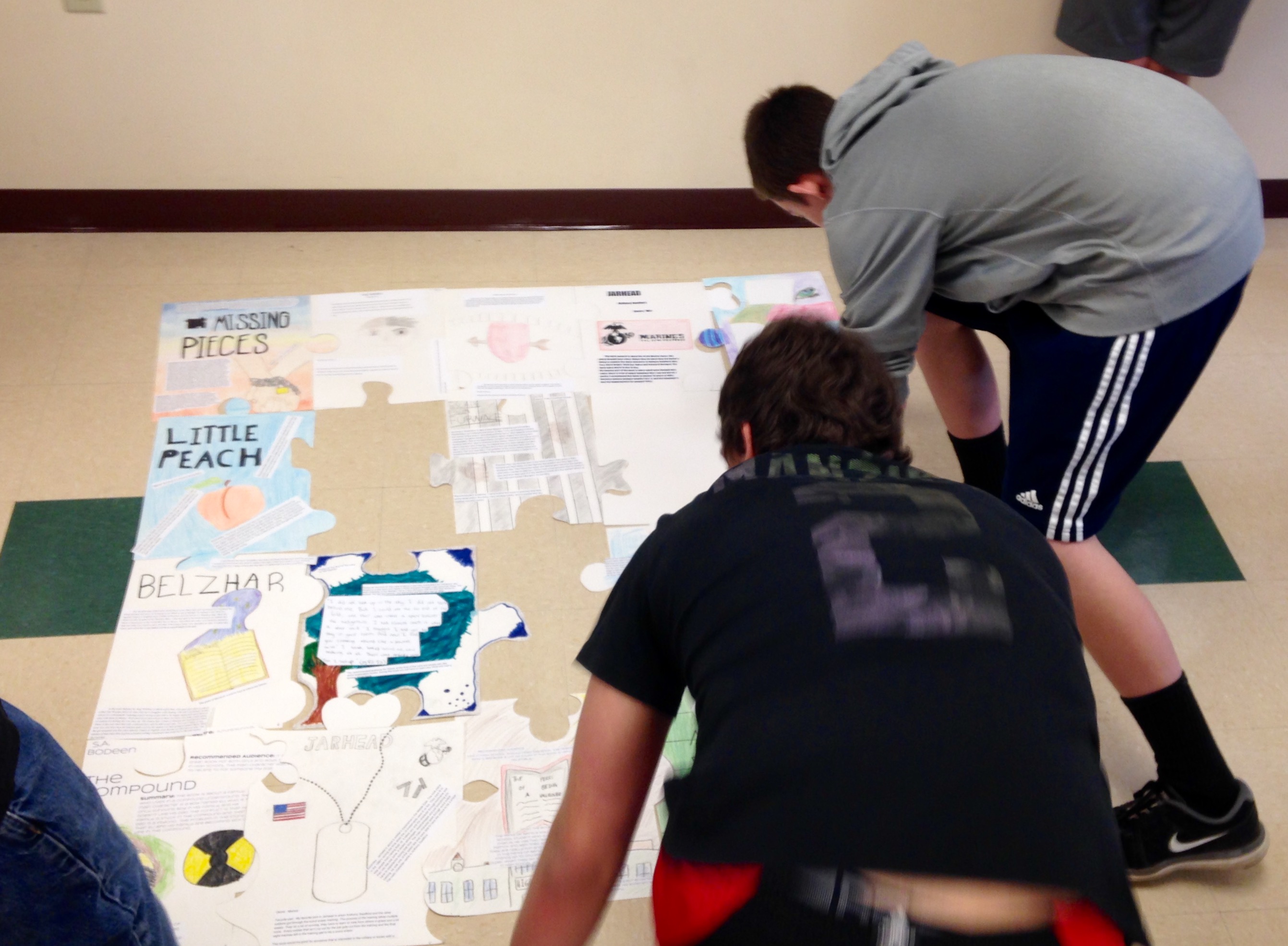
  5. Book Talk Puzzle: This is a longer project, but I love the final product.
    Students piece together their final book talk puzzle.

    Students piece together their final book talk puzzle.

    Students write out book talks on large puzzle pieces.  I have students discuss their favorite parts of the book and to whom they might recommend it.  Finally they draw their favorite scene, symbols, or images from the book.  Once the puzzle pieces are complete, we share our final products, build the puzzle, and put it on display for our peers.

  6. Book Trailers: I had my Advanced Composition students complete book trailers last year. The final films were phenomenal and provided excellent material for this year’s book talks.  I oftentimes play the film for my students then read an excerpt to expose them to the language.  There are some brilliant book trailers here and sprinkled across the Internet and TTT.

What do you do to change up your book talk schedule during the year? What are some unique ways you introduce your students to various titles?

I think reading may not be all that important — What?!

I am not often speechless. But it’s not often I hear statements like this — from teachers no less:

“There are so many other ways for students to get information. I think reading may not be all that important to students today.”

We were into the second hour of a three hour workshop on conferring. We had already brainstormed and charted what we believe are the needs of our students:

  • trust in authority
  • time and attention from adults
  • a caring teacher who is a listener and is consistent with discipline and classroom management
  • technology to learn and communicate
  • critical thinking skills
  • a context for what we want them to learn
  • positivity and discernment
  • a focus on what matters/ability to ignore “the noise” of unnecessary information
  • the opportunity to freely think and to take risks
  • the ability to communicate in ways that are socially acceptable and responsible

We had just read research on reading as detailed by Nancy Motley in the book Talk, Read, Talk, Write. I share it here:

Literacy skills for the twenty-first century are far more complex than in previous generations (Goldman, 2012). In addition to the basics of reading comprehension, today’s students must also know how to read with purpose, integrate new information, resolve conflicting content in different texts, and identify the writer’s perspective (Biancarosa & Snow, 2006). Students can only learn these skills by reading. Because many students enter the classroom with underdeveloped literacy skills, we often replace reading tasks with lecture and interactive activities to ensure that students stay engaged and learn the content, Hoyt (1999) explains.

“…expository reading for many students is often a listening experience. Well-meaning teachers, concerned about textbooks that are too difficult, often create situations where one student reads from the text and others listen or attempt to follow along in the book. This situation does little to build conceptual understandings, and it can actually deter from the learning process as the listeners are engaging in very little reading.”

When teachers “deliver” the curriculum to students, students lose the opportunity to construct meaning for themselves (Tovani, 2000). According to the Reading Next (2006) report (a meta-analysis of adolescent reading), three of the most statistically significant practices for increasing the academic achievement of middle and high school students included:

  1. direct, explicit comprehension instruction
  2. reading and writing skills embedded in content area classrooms
  3. text-based collaborative learning

Put simply,

“When we routinely model and make explicit the methods adults use to read, think, and make connections, students learn to do it, too. Furthermore, they will see that such close, insightful reading is within their reach — that they can do such reading and thinking, which is central to an education.” (Schmoker, 2011).

I am not often speechless. But this teacher’s comment left me chewing my lip. Did he read the research? Did he understand what it meant? Does he really believe that reading is not important?

“If I gave my students The Canterbury Tales and expected them to read it, that just wouldn’t happen. I read it to them, and they get a lot of information, and they come to like it,” this teacher continued.

And I countered, embracing my inner Penny Kittle, as I facilitated another hour of professional development:  “What is your purpose for ‘reading’ The Canterbury Tales — or other texts you choose for your students? What skills are you teaching with that book? How do you know your students are learning them? How are you helping your students develop as readers — because that is our job as English teachers. If we are not helping students become better readers than they were when they came to us, we are not doing our job.””

“Today’s students must … know how to read with purpose, integrate new information, resolve conflicting content in different texts, and identify the writer’s perspective.  Students can only learn these skills by reading.” 

They must also know how to discern viable information from the barrage of biased and unreliable information. And know how to understand a rental agreement when they sign a lease, a sales contract when they purchase a car, a speeding ticket when they get one, a ballot in a voting box when they are standing in line next to you and next to me.

Students can only learn to read by reading.

benefits of reading

What do you think? Is reading important to the students we teach? How would you have responded to my teacher friend?

Mini-Lesson Monday – Strengthening Dialogue With Punctuation

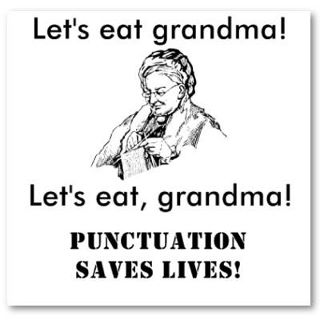
Punctuation_Saves_Lives2After reading second drafts of my students’ narratives, I was wowed by so much of their writing.  Thoughtful leads, powerful topics, intriguing plot structures.  But, despite a mini-lesson on the conventions of writing dialogue last week, some of their characters’ conversations were lacking.  I needed to design a responsive mini-lesson accordingly.

Objectives — Using the language of the Depth of Knowledge Levels: Synthesize your knowledge of how punctuation works with narrative speech conventions to craft thoughtful dialogue; Construct dialogue based on your knowledge of a character’s personality.  Or, from the Common Core: Write narratives to develop real or imagined experiences using effective technique, well-chosen details, and well-structured event sequences.

Lesson — While reading drafts, I set aside a few exemplary pieces of student work in terms of dialogue.  In each class period, there were at least two students whose dialogue was superior.  It was subtle, nuanced, and really added to the characters’ depth.

I asked students to open their writer’s notebooks to the Craft Study section and I projected one example of a student’s work on the board using my document camera.  “Good dialogue isn’t just about what a character says,” I begin. “It’s also about how they say it.  A greeting can really change based on phrasing or punctuation.”

I point to the example on the board.  It’s Logan’s, and in his dialogue, his mom is yelling at him for getting drunk:

“LOGAN WAITMAN SANDERS!” Mom hollered. “Just WHAT do you think you are doing, young man?!  And…and…YOU, Jeremy!  You should be ashamed of yourself!”

Everyone laughs, and I ask a volunteer to read the dialogue aloud.  Dylan does, with perfect angry-Mom-inflection.  He makes Logan shrink back in his seat a little.

I ask the class, “Why did Dylan know how to read that dialogue so perfectly?”  They volunteer: the capitalization helped; he knew when to raise his voice.  “How did he know to stutter?”  They say: the dots (ellipses, I add helpfully) told him to stutter.  “How did he know to sound kind of incredulous while yelling?”  They reply: the exclamation points, and especially that exclamation point mixed with a question mark.  “How did he know when to pause?”  They know: commas.

I put up other kinds of punctuation on the board–dashes, periods, italics–and we discuss what effect each of those would have on a character’s dialogue.  Students jot all this down in their notebooks.  Then, I pass back their drafts and ask them to find a partner.  “Now that you know how to really make dialogue more personal, revise your dialogue in your drafts.  Work with a partner to determine whether or not your dialogue has the effect you want it to when you revise–write a line, then ask your partner to read it aloud the way Dylan read Logan’s.”

Students take ten minutes per person to revise, then we launch into writer’s workshop with the remainder of class.  I write beside them on the board, working on my own dialogue in my NaNoWriMo novel.

In each of my other classes, we repeat this exercise with drafts that contain good dialogue.  It’s so important to use student work as mentor texts–students see that great writing is attainable, not just imitable, when we show them their peers’ successes.

Follow-Up — After today’s revision and writing workshops, students will have one more day in class to keep working on their drafts before turning them in again.  I’ll hope to see much improved dialogue, and as such, I’ll ask writers to answer a question on their self-evaluations about how their dialogue enhances their characterization.

#FridayReads: 14 Titles My Students Always Re-Read

NCLast week, Dylan looked at me with utter dismay when I told him that I still didn’t have the third book in the Maze Runner series.  Then, he brightened.  “I was actually kind of confused about some things that happened in The Scorch Trials.  Can I re-read it while I’m waiting for the third book to get returned?”

“Of course,” I agreed.  Musing, I jotted down some titles in my notebook that I wanted to re-read–my usual favorites, of course, but also books I’d only read once and had just loved–The Night Circus, Station Eleven, Zeitoun.  It made me wonder about what other books students wanted to re-read, so this past week, I asked them about it during conferences.  Lots of titles emerged, and I soon saw a pattern emerge–there were four reasons why they wanted to read particular books again and again.

HPSeries.  It quickly became apparent that if a new book in a series was coming out, re-reads were necessary.  “I’ve read the whole Harry Potter series three or four times,” Ryan told me.  “I understood all the hidden references and more about the characters the second and third times.”  Olivia agreed: “Those books are so complex there’s no way to understand everything in them the first time you read them.”

Anna read the whole Percy Jackson series twice “because I was in middle school and the struggle was real in finding books I enjoyed.  So I just re-read ones I knew I enjoyed!”

Shailyn read the Twilight series twice, and is reading it again now for the third time since the 10th anniversary editions were just released.  “I just loved the story,” she said.

Books that were being made into movies.  Mylana was adamant about this category: “I had to re-read Paper Towns really quick before the movie came out so I could tear it apart with how it didn’t compare to the book.”

Kaylee laughed and agreed: “I re-read The Fault in Our Stars for the same reason!!”

EPReally gripping stories.  “American Sniper was tough to re-read, but I did, because the story was so powerful.  I just wanted to experience it again,” Ryan said.

Eleanor and Park was the most beautiful love story I’ve ever read,” Olivia said, “so I’ve read it three times!”

“I re-read All the Bright Places, because it was probably the best book I’ve ever read,” Shailyn said.

“I read The Giver and The Help twice because I wanted to pay more attention to the moral story line and internal struggle in all of us that was portrayed so candidly in those books,” Anna said.

AFBooks they were assigned in school.  Mockingbird was popular in this category: “I’ve read To Kill a Mockingbird numerous times because it’s my favorite, it’s a classic, and because I discover new details about the trial and Boo and Atticus each time I re-read it,” Olivia said decisively.

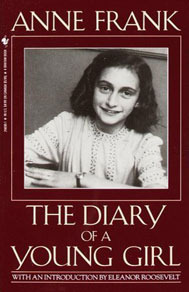
“I re-read The Diary of Anne Frank because I read it first as an assignment, but then re-read for fun because I wanted to think more about her time period vs. ours,” Mylana said.

“I had to re-read The Book Thief after it was assigned to me because I just wanted to focus on the storytelling the second time through,” Jonathan agreed.

What titles do your students (and you) love to re-read?  Share in the comments!

#3TTWorkshop–Individualizing our Students’ Study of Vocabulary

FullSizeRender-1

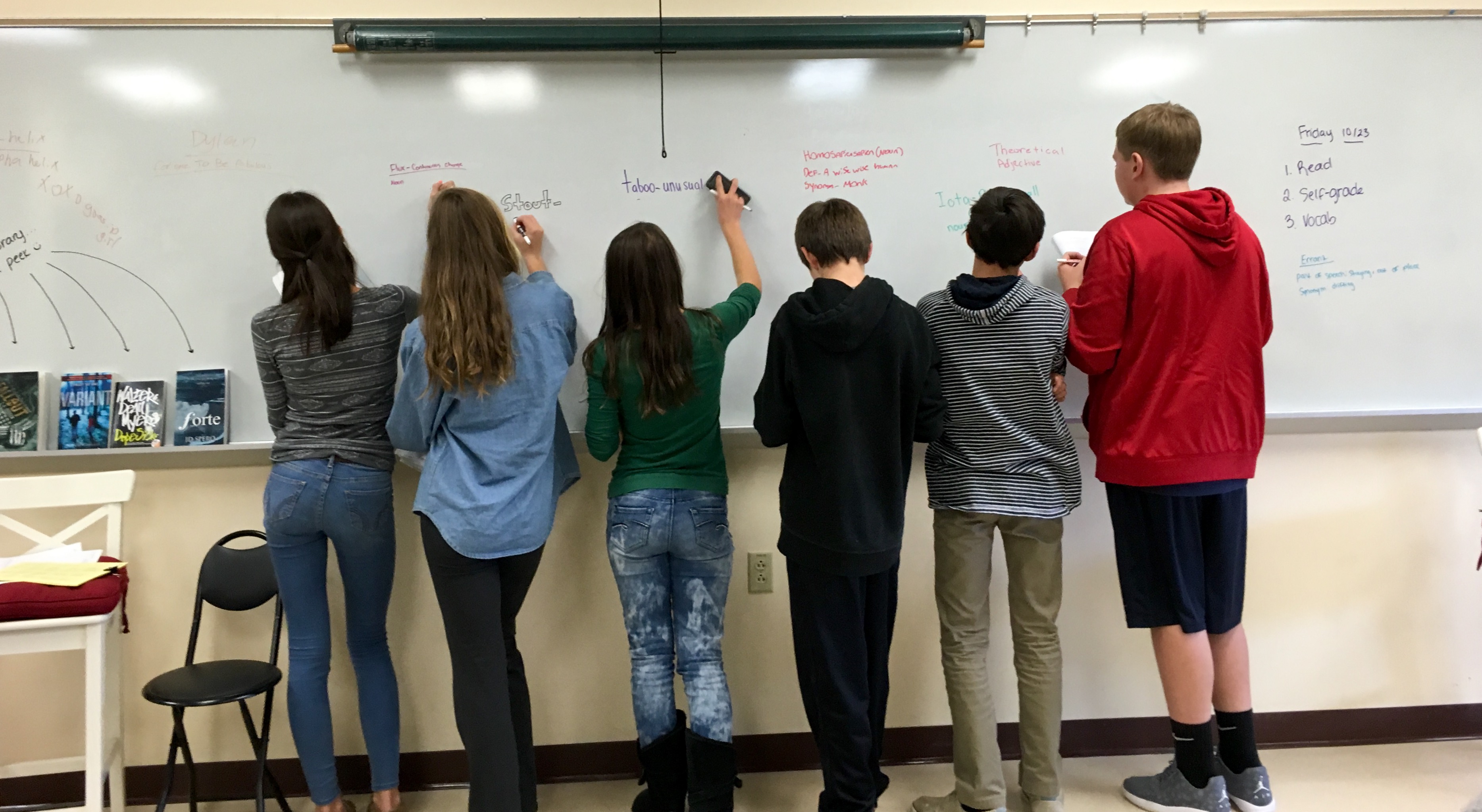
Students in Jackie’s class write their vocabulary words on the board.

Three educators. Three states. Three demographics. All practicing Readers and Writers Workshop in our Secondary Classrooms. Read more about us here.

We are the Modern PLC, and every Wednesday and Thursday, we share our behind-the-scenes collaboration as we talk about the most urgent moving parts of our classroom pedagogy.

Today is the second and last installment of this week’s conversation between Jackie and Shana on vocabulary instruction.  Please join the conversation in the comments!

What are your best vocabulary activities?

Shana: For me, best practices surrounding vocabulary all happen in the writer’s notebook.  Curating a personal dictionary in that particular section, sharing those words with friends, and doing fun, in-class follow-up activities with those words seem to work best to get my kids authentically reading to find new or interesting words in their books.  We do things like write a poem using ten of our words, create a pass-it-along story in which your sentence has to contain a word used contextually, or create an illustration of a particular word and hang it up.  The more play there is involved in our study of words, the more my students actually begin to pay attention to vocabulary in both their reading and writing.

FullSizeRender-2

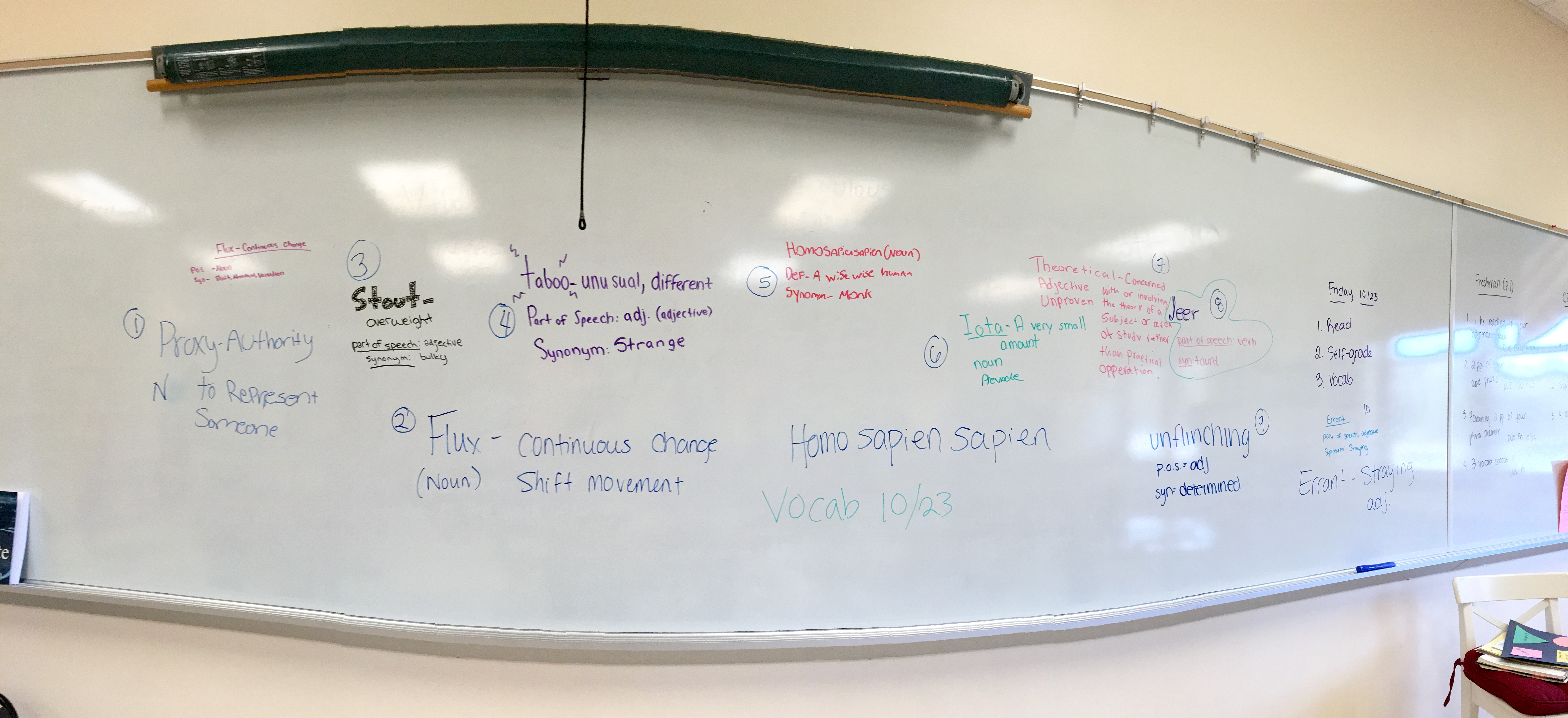
A list of vocabulary words students found in their independent reading books.

Jackie:  For the past couple of years I have wanted to integrate vocabulary instruction into my curriculum, but it wasn’t until this year that I moved forward with the process of carving out a specific section of students’ writer’s notebooks.  As Linda Rief says in Inside the Writers Readers Notebook, “We also need to ask them to pay attention to words in their own reading and their own listening, to notice words that they don’t quite have a grip on as writers and speakers but which they come across fairly often” (Rief 23).  As Linda Rief suggests, my students collect four words from their independent reading book or whole class reads per week.  They record these words as well as the parts of speech, synonyms, and the sentence in which they found the word under a separate dictionary section in their Writer’s Notebook.  

At the beginning of the year I was worried about summative assessments and meeting the needs of my students through our new competency-based grading system.  I “assessed” my students on their vocabulary by having them first memorize the words and then complete whatever the task-at-hand was for that day.  I’ll admit that a quarter into the school year I have already abandoned this method after growing frustrated with the results.  Naturally, students chose easier words when there were higher stakes assessments at hand.  They sacrificed learning for grades and in turn, asked fewer questions, instead focusing more on grades and less on word acquisition.

This is where you helped me most, Shana.  After tossing aside the summative assessments, I had students compile a dictionary of their words on the board, and we spent 15 minutes simply playing with the words and writing stories and poetry.  These biweekly activities breathed life into an otherwise stressful vocabulary lesson.  Soon my students were asking questions about how to use the words through context clues, and I was giving minilessons on integrating words into sentences based on the parts of speech.  For the first time, students began playing with vocabulary instead of trying to find shortcuts around the system.
Do you use independent vocabulary instruction? What activities do you use to help familiarize students with new vocabulary?

#3TTWorkshop–Teaching Vocabulary Through Independent Exploration

FullSizeRender

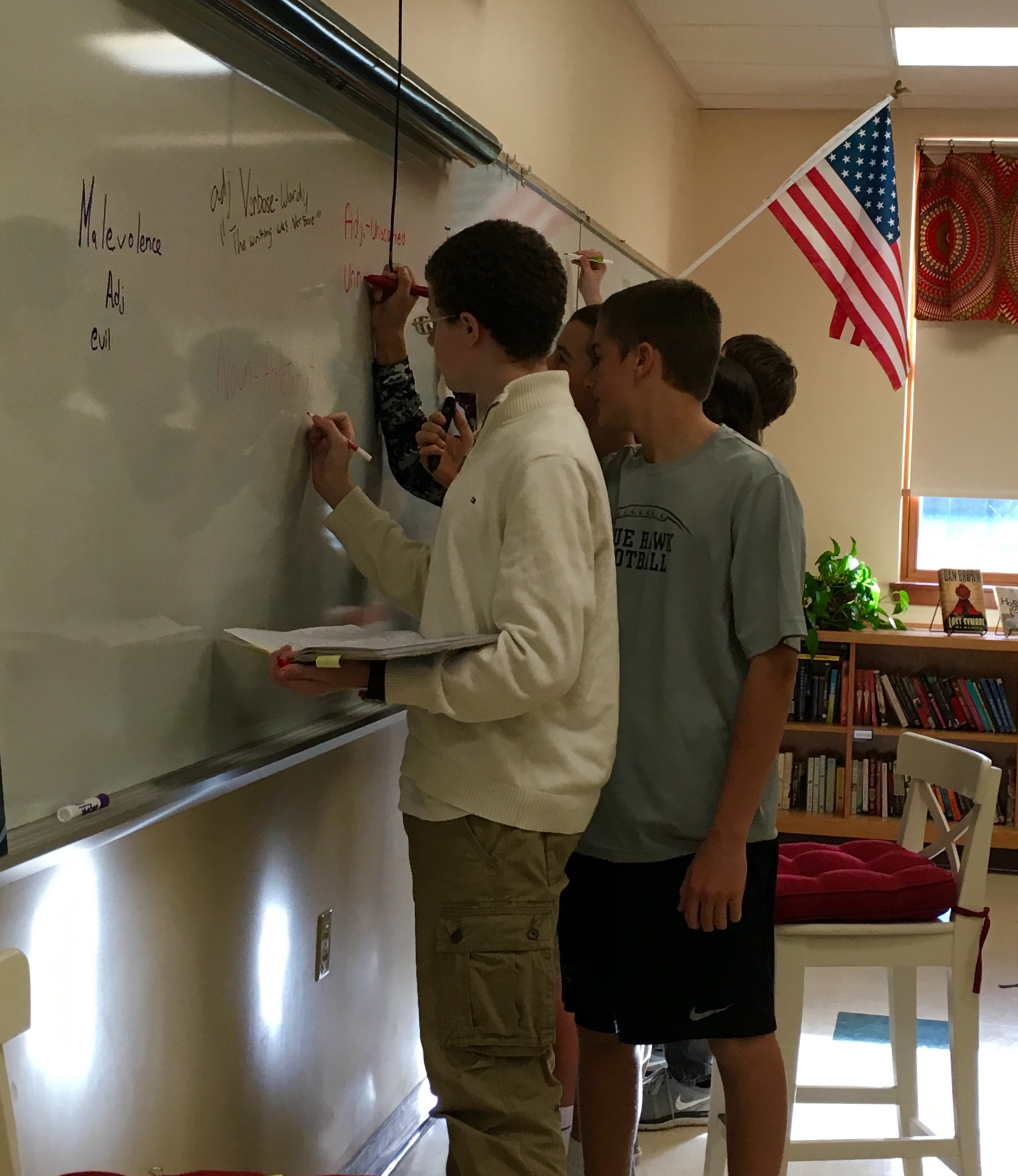
Students in Jackie’s classroom write vocabulary words on the board.

Three educators. Three states. Three demographics. All practicing Readers and Writers Workshop here.

We are the Modern PLC, and every Wednesday, we share our behind-the-scenes collaboration as we talk about the most urgent moving parts of our classroom pedagogy.  This week’s conversation between Jackie and Shana explores the value of shifting away from the more traditional modes of rote memorization and more toward wordplay.

1. Why do you integrate vocabulary study into your classroom, and how do you approach it?

Jackie:  This is my first year integrating vocabulary into my freshman classes.  Previously I had taken a traditional approach, relying on the Oxford-Sadler books in my junior/senior Advanced Composition classes.  The problem was that by the end of the year, many of my students would forget the twenty or so words we had memorized every other week.  I knew something had to change, so I returned to the words of my mentors, Penny Kittle and Linda Rief, to gain a better understanding of how they approached vocabulary.  Now instead of having my students memorize lists of prescribed vocabulary, they find four words per week and store them in the dictionary section of their writer’s notebooks.

Shana: I love the study of words, so one of the things I always find myself noticing about an author is the type of vocabulary he or she employs.  Diction makes up a great deal of a writer’s style, so I think it’s important to study it.  I am fortunately not required to adhere to a certain program or set list of words, so I tend to approach the study of vocabulary more along the lines of noticing words that are in our reading and writing.  I don’t have a formula or routine for vocabulary study, although as a general rule I try to set aside mini-lesson or quick-write time about every two weeks.

IMG_1333

Ryan’s words for this week include “nebulous,” “jettison,” “inchoate,” “unnerving”, and “aphorism,” all of which he found from his independent reading book Little Brother by Cory Doctorow.

2. What is the inherent value of vocabulary study?

Shana: Something I’ve been thinking a lot about is the inherent value of vocabulary study.  Vocabulary acquisition is just one little piece of the puzzle that makes up literacy, but it seems to get so much attention from the powers that be.  For example, last year our school had two schoolwide goals–one of them was “vocabulary.”  What does that even mean?  Do we want our teachers teaching more “vocabulary words?”  Do we want our students memorizing more “vocabulary words?”  What is the difference between academic and non-”academic vocabulary?”  I’m just not sure that vocabulary acquisition is as big a piece of the literacy puzzle as our testing/curriculum planners believe.

Jackie: I agree wholeheartedly with you, Shana.  I am not required to teach vocabulary, but every year I tell my students that reading helps build one’s vocabulary.  The more I thought about it though, the more I wondered how these skills translated, how my students would develop their own lexicons if they never actually stopped to think about the words they were reading.

Unlike your school, though, my school’s major initiative has been towards Common Core-based instruction.  Fortunately, part of the College and Career Readiness Anchor Standards for Language requires students to “also have extensive vocabularies, built through reading and study, enabling them to comprehend complex texts and engage in purposeful writing about and conversations around content.”  I believe vocabulary study shouldn’t be about isolated memorization; instead, it should allow students the freedom for wordplay.  When students are given the freedom to not only pick their own vocabulary words but also share them with their peers, they are more likely to explore definitions, find connections, and play with usage.  I receive more questions about context clues, Latin roots, and parts of speech during bi-weekly vocab lessons than I have at any other point in my career.