Category Archives: Writers

The Jury Has Reached a Verdict

One of the most important aspects of teaching English, particularly to high school seniors, involves empowering students to communicate effectively so that they can self-advocate and positively shape their lives. Whether our students are college-bound or not, chances are that at some point, they will need to sign a rental or purchase agreement or contract. They will need to decode the fine print in credit offers. They will need to contact employers using appropriate tone and content for their purposes.

Many of us make these real-world connections in the classroom, and one of my colleagues, Mrs. Davenport, even gives her students the opportunity to play a “Game of Life” that she developed which features the very real and important texts that our students will one day read and write. Last May, I spoke with my students about the legal difference a comma can make. For example, if a will states that property should be evenly divided between X, Y, and Z, each person would receive 33 1/3%. However, if it states that the property should be evenly divided between X, Y and Z, X would receive 50% while both Y and Z would split the remaining 50% for 25% each. While that would work out well for X, Y and Z would not be as prosperous. We also talked about very real court cases in which commas changed the ruling one way or another.

So like many of you, I already stressed the importance of precise language, but then I was summoned to jury duty. On what would have been my first day of summer vacation, I watched as 260 people narrowed down to 30. After answering questions in the jury pool, my heart sank as mine was the 12th name to be called to the jury. I never win a door prize, but this: I won.

scalesThe case involved a relationship between a land developer and a property seller that began with a pretty standard contract. The dispute arose when, after failing to close on the property according to the original contract, the pair entered into some form of verbal agreement. In short, the developer continued to spend his own money to develop the property but the seller cancelled their partnership without warning. While the jury held sympathies for the developer, and it was clear that there was some form of verbal agreement, we repeatedly returned to the language in both the original contract, in the text messages between the parties, and in the charges as supplied by the judge to reach our verdict. Given how the jury felt, we would have reached a very different decision. However, the specific language gave us no choice but to dismiss the charges against the landowner because any verbal agreement they shared was not specific and did not contain precise terms. Therefore, it was not enforceable.

Millions of dollars were on the line in this case, and it all came down to a handful of words. It became clear through this process that it does not matter whether it is a contract dispute or the murder trial taking place down the hallway (I’m glad I wasn’t selected for that jury!), the very precise way that charges are written changes everything. Our students often fail to see the real-world consequences they might face in the future as a result of not being able to follow language precisely. Now, I have yet another story to share with them. I would love to hear from you – how do you help students understand the power of language in shaping their lives?


 

Let’s Talk Summer Reading–Without the Pressure

Summer is one of my favorite times of year for reading. I love lying out in the sun with a light paperback, curling up in the corner of the couch with a classic, or falling asleep with my e-reader in my hand under a whirring fan.

Summer reading should be fun for everyone, but especially for teachers and students.

Instead, it’s become such a controversial topic–a buzzword laden with hidden meanings and tensions and polarizing sides. Much of the discourse around reading, and education in general, feels exhausting to me lately. Banned books, mandated books, and everything in between can spark vitriol in teachers who profess to love our students, profession, work.

summer-reading_xs.jpgBut, as ever, reading is the great escape.

And we need that escape–I feel like I never get a break from teaching, and when I do, I don’t know how to seize it. But one thing I love doing in the summertime is reading a book without looking for craft mini-lessons, or thinking about a booktalk I’ll give, or which kid I’ll recommend that title to. That kind of reading can wait until August.

So let’s talk about summer reading, without the pressure. I don’t want to argue with anyone about whether students should be assigned books, or required to participate in book clubs, or the danger of the summer slide or the 20 minutes of reading per day.

I just want to talk books.

Here are some genres and titles I’ve loved so far this summer, and I would love desperately need your recommendations. Please leave them in the comments!

download-1.jpgMurder-Mystery

Still Life is the first in the Inspector Armand Gamache series by Louise Penny, and I’ll forever remember reading it in beautiful Canaan Valley, WV during an anniversary getaway. This beautifully written murder-mystery is set in a small town in Canada, and our hero, Gamache, is a quiet observer of human nature, which helps him solve mysteries. I adore the way Penny crafts his thoughts about what he sees, and how many lovely backstories are woven through each mystery in this series.

Page-Turners

download.jpgThe Word Exchange was completely, compulsively, un-put-down-able. Alena Graedon is a new author for me, and her tale of a world that loses its grip on language once a massive tech company monopolizes and commoditizes words was, for me, perfectly timed–I’ve been a little unsettled lately by my observations about how addicted to technology everyone is, and how afraid I am of what it’s doing to my students, and could potentially do to my children. This book spurred me to action in terms of deactivating my Facebook and Instagram accounts and making a conscious effort to leave my phone in another room–to make space to just be, and be bored, and have time to think and wonder and ponder.

download-2.jpgThe Power by Naomi Alderman was just wonderful. It had all the elements of a gripping adventure story, along with a powerful message about what corrupts us. In this novel, women develop an electrostatic power and a society shifts from patriarchal to matriarchal in the space of a few generations as a result. The effect of women suddenly becoming more physically powerful than men leads to widespread revolution in everything from interpersonal relationships to world leadership. It’s beautifully written, too.
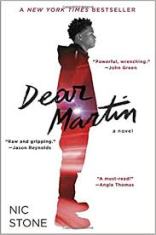
download-3.jpgDear Martin was a book I’d been recommended a thousand times, it seemed, but after reading so many books that felt similar–The Hate U Give, Long Way Down, etc., I just couldn’t pick it up–but I’m so glad I finally did. Nic Stone crafts this novel as a series of letters from young Justyce McAllister to Martin Luther King, interspersed with transcripts of news reports and first-person narrative. It’s complex and thoughtful and plausible and readable and powerful. I loved it.
images.png

Nonfiction

When: The Scientific Secrets of Perfect Timing is Daniel Pink’s latest offering, and as usual, he has an insightful book that has applications for me as an individual, a parent, and a teacher. Pink discusses all the elements of timing that govern our lives, from being a “morning person” to a “night owl,” to the power and importance of building in breaks, taking naps, and seeking out social and alone time. He frames this all in the usual compelling narrative style that makes his writing so readable and interesting to me.

download-4.jpgTeaching Books

180 Days is proving difficult for me to get into. I’ve had it on my desk for over a month, but every time I pick up this collaboration between Penny Kittle and Kelly Gallagher, I feel like I’m having an emotional battle. My former classroom teacher self wars with my preservice teacher professor self wars with my currently nonteaching summer self when I read about the decisions that go into planning for a packed, skill-building, book-loving, writing-doing, meaningful, 180-day school year. I think it just contributes to that overall feeling of exhaustion I have, so maybe I just need to pick it up when I’m a little more rested.


What are you reading this summer? What books and places help you take a break from teaching? Please share in the comments or on Twitter via @3teacherstalk.

Shana Karnes is enjoying summer reading in West Virginia with her two daughters. She spends lots of time at the public library, the university rec center, and Target–because books, running, and iced coffee while shopping are joyful things. Shana works with practicing teachers through the National Writing Project and formerly taught preservice educators and high school students. Let’s talk reading on Twitter–I’m @litreader for a reason!

Settling into Summer: Simple Suggestions to Take the Break You Deserve

This post is for the teachers who can’t turn it off. For the educators who long for summer and then don’t know what to do with ourselves once we get here. For the realists who know it will end all too soon. For the battle-weary who are almost too tired to enjoy it. For those who end the school year, just to jump into more and more work without so much as a nap. You are not alone. Remember, you too are entitled to a break. 


Looking back at my summer posts from the past few years, it would seem that I have a problem. It’s a problem that 97% of Americans would likely sneer at, as summer vacation doesn’t readily suggest problem to the general public. It is, after all, weeks of freedom from work. The option to spend the day in yoga pants. Daytime television access that few get to enjoy (if that’s the right word). An opportunity for extended relaxation reserved for educators who share their very souls for roughly 180 days, plus weekends.

Every year, as summer approaches, I suggest to my colleagues that it doesn’t feel real. Maybe it’s the habit of nine months of all encompassing giving. Perhaps it’s the bone-Rest-Relaxationtired confusion of early June. Maybe it just seems too good to be true, but either way, we wake up one fine morning and school is over. Disbelief likely continues. A bit more guarded excitement bubbles up. Then, because we are hardwired to keep pushing forward at all costs,  we dutifully race into vacation (with a fevered pitch eerily reminiscent of the one we used to make it through the final crazy weeks of the school year) and look around wide-eyed wondering where to start. Having dragged ourselves across the finish line, heads down but thumbs up in our classroom community successes, we snap to once again to “get this summer thing underway.”

If you are anything like me, this frenzied shift in daily responsibility quickly manifests itself in lists. The to-do lists that instantly stretch out five country miles and look strikingly similar to the lists created for the endless responsibilities of work, but pay no attention! Get moving!

No wonder I don’t feel like I’m on vacation…I could fill every minute with need instead of want and find myself in mid-August with a cleaner house, every health related appointment scheduled and managed, minimalist ambitions catalogued and embattled against my concurring desire to shop, habitual Twitter monitoring accomplished in order to continue professional development, email checking to assist students with summer work and stay on top of administrative requests, and end up just as fatigued as I was on the last day of classes, and maybe sunburned too boot.

Don’t get me wrong, the entire summer can’t be spent on want over need. We are adults and there are responsibilities to attend to year round. However, I think what I quickly forget, or habitually ignore, is that based on the taxation of careers, most professionals do in fact take vacations.

What was that again?

Professionals take vacations.

Now, to be honest, I typed that twice, and made it gigantic once, to make myself believe it, because I think I’m terrible at heeding my own insights. When I try to relax, my brain runs on guilt-ridden overdrive: There is so much to be done! There was no time before, and nothing but time now! Fill it up! MAKE something of today! List, list, LIST! 

Welcome to my brain. Don’t stay too long, you may develop anxiety.

Thankfully, this post is helping me process, and here is the insight this therapeutic writing has directed me to: If I don’t figure this out, everyone is going to suffer.

Sunshine and rainbows today, aren’t I? But it’s true. If I don’t shut off my teacher brain, so valuable during the school year to keep me on top of the 5.2 million divergent tasks we tackle in a day, I’m going to suffer during a time I should be recharging. My family is going to suffer because I’ll still be stressed out. My future students will suffer because I won’t get my mojo back to start the year with rested enthusiasm and rejuvenated vigor.

In a few short weeks it will be July 4th, strange psychological turning point for my own summer, so it bears repeating that I need to give myself an actual break. You need to give yourself an actual break. Unplug, get lost, be silly, tune in to your hobbies, hold tight to your passions, reconnect with your own children, have ice cream for dinner, and stay up until 2:00 A.M. reading.

I read once that if you’re sad, you should stand before a mirror and smile at your reflection until you feel happier. Scientifically speaking, your mood will in fact improve, and the smiling will have helped to change your trajectory. Perhaps it’s the same with summer. Do more and more summer everyday, and you’ll get yourself into that habit. More pool lounging, campfire sitting, lemonade sipping fun. Additionally, might I suggest:

  1. Be aware of your drive to keep pushing, and actively work to put the brakes on. Make yourself take a day away. Then two. Perhaps a week or two without work. You’ve got the time, so make the conscious choice to use it and appreciate it. As I rockssuggested to myself and to you last year (when will I ever take my own advice?!) – Remain Calm.
  2. If you must work, as most of us do, treat yourself in small ways. Try not to let the work consume your whole day, or peel away your sun-soaked attitude. Whether it be your casual attire, a shot of flavor in your traditionally black coffee, and/or the guilty-pleasure read you put in your bag to fill mandatory breaks along the way, remember that you get to enjoy these days too because you’ve worked hard to earn them.
  3. If your summer break involves a good deal of work beyond your teaching career, as some of us legitimately need to additional employment over the summer to make ends meet (but that’s a whole other post), try and make small breaks mean more. Completely unplug for a day or take a drive on your own with your journal and spend one day exploring, writing, reading, thinking. Whenever possible, be mindful of the mental and physical breaks you still desperately need after a year in the trenches, and ask for the help from friends, family, and neighbors to get it. It takes a village!
  4. Put a little bit of you into every single day. Take the time to read what your heart desires. Take the time to write for you. Take the time to sleep. Heaven knows that school does not afford much time for napping, once we get rolling again, so employ the summer catnap early and often.
  5. Embrace a little transcendentalism. If you have work to do, try and do it outside. If you are insistent on perfecting your educational practice and/or yoga moves (yes, I stumbled upon a guided script on yoga for teachers…enjoy), connect with nature while you’re doing. Better yet, keep in mind – Thoreau would want you to remember that the nature of our reality is governed by experience. The more you get out and do, as opposed to list, ruminate over, or worry about, the better off that reality will be…just make sure you reflect carefully on your experiences in a small cabin located next to a quiet body of water.

Summer is a gift. Lift your foot off the accelerator for a bit and look around at what you might not notice if you don’t take the time to refuel. You deserve this break. Make it a priority to enjoy it just as much as you use it.


Lisa Dennis teaches English and leads a department of incredible English educators at Franklin High School near Milwaukee. This summer, she’s hoping her new bullet journal is going to assist her in her pursuits to relax. She sees the irony in this and is also ironically powerless to stop it. Follow Lisa on Twitter @LDennibaum 


Summer Time Writing Inspiration

Up here in Canada, we are not quite on summer vacation like many of my colleagues to the south, but we are firmly at that time of year where our minds are more in the next school year than the current one. As we are invigilating our year end exams and saying goodbye to our Grade 12 students, the minds of myself and many of my colleagues are already turned to planning for the next group of students we will be working with in the fall.

While an important part of summer is taking the time to relax, recharge, and delve into my growing pile of guilty pleasure books for reading, I always look forward to the time summer gives me to catch up on my professional reading.

IMG_0729

The Creativity Project – complete with a barcode from my school library!

One such resource that I am so excited to delve into over summer break is The Creativity Project written by Colby Sharp. Colby Sharp may be a familiar name to those of us who have embraced the works of Donalyn Miller’s The Book Whisperer and Reading in the Wild in our classroom practice as he is, among many of his other amazing contributions to the world of education, one of the co-bloggers on the Nerdy Book Club blog.

What has me so excited about this resource is that it combines two of my favourite things and two of the most magical elements of a creative writing class – exciting writing prompts and engaging mentor texts.

In The Creativity Project, Colby Sharp reached out to some of the best authors in the juvenile fiction and YA world – the ones our students are loving and reading- and asked them to create a writing prompt for his book. Contributors to his project include authors such as Kate DiCamillo, Mariko Tamaki, and Lemony Snicket to name just a few. He then shared the prompt of one author with another author and had them write a piece inspired by the prompt for the book. The end result is a book not only chock full of prompts, but also with mentor text gold. After the prompts themselves, the author who created the prompt provides a brief explanation for their inspiration for their prompt, which provides a lovely window into where authors get their inspiration from. The responses to the prompts are honest and raw, humorous and hilarious. There are short stories, poems, and graphic novel panels. What is most wonderful of all is the fact that the pieces are not the final polished pieces, rather they are evidence of published authors engaging in the very tasks we ask our students to do – take a prompt, run with it, and see where it takes you. For another great post on writing prompts, check this one out.

This summer I am hoping to use the Creativity Project to rekindle my own creativity and to use the prompts to get writing again. If I am feeling particularly brave in my next summer blog post, maybe I will share something I have written with you. The next school year, I am excited to see how this book can be used to inspire my students to write.

Pam McMartin is jealously reading the blog posts of her colleagues already on summer break and dreaming of the summer sun, which has been rather absent lately at her school just outside of rainy Vancouver, British Columbia. Her summer plans involve enjoying letting go of the daily schedule, slowing down and enjoying time with her family, and hopefully writing on prompt after prompt from Colby Sharp’s book. Find Pam on Twitter @psmcmartin.

Can’t Turn Off the Teacher

It’s finally summer break! That wonderful time of year when I can shut my brain off entirely–no reading, no writing, no thinking.

That’s the goal, anyway. What ends up happening is a week of mindless Netflix binges (this year it’s Suits, because I want to see Meghan Markle pre-princess), romance novel reads, a few days at the beach, a few household projects tackled.

Then it’s right back into teacher mode, even when I don’t want it to be.

Listening to a podcast? Oh, sounds like a great format for conferring. Texting with my family about a book? Oh, what a great genre for a literary autobiography. Selling a car on Craigslist? Oh, what a great authentic writing piece for my high school students. And the list goes on:

I can’t seem to turn off my teacher brain, even when I crave the break from the school year summer provides.

Image result for when daniel pinkI grapple with this every summer. As a new teacher, I tried to make myself take the whole summer off from thinking about teaching, feeling like I was doing something wrong when I started doodling writing units or reading activity ideas. Later in my career I felt satisfied if I could turn off my teacher brain for just the month of June, and get back into the swing of things starting July 1.

We all need breaks. Daniel Pink’s latest book, When: The Scientific Secrets of Perfect Timing, reminded me of that. He gives some background on the effectiveness and helpfulness of “vigilance breaks” and “restorative breaks,” the latter of which are taken to help sharpen our mental acuity after too much thinking and focus around one task. Without breaks, we lose motivation, make more mistakes, and work less efficiently.

Teachers, you deserve a break.

You need a break.

But if you’re like me, and you just can’t turn off the teacher–that’s okay too. It’s okay to read a book as both a reader and a writer. It’s okay to buy a frozen pizza as a mentor text for the make-your-own-pizza kit you buy to make with your two-year-old. It’s okay that when you say “I love you” to said two-year-old, and she says, “okay,” back, that you think of The Fault in Our Stars and know that she means “I love you too.”

This summer, I hope you’ll find balance as you sink into your off-duty teacher self: taking classes, scrolling Twitter, reading and writing at a pace without deadlines. I hope you’ll embrace the fact that even outside the school year, you can’t turn off the teacher.

Shana Karnes is spending her last summer in West Virginia exploring the wild and wonderful state, taking her kids to various WV landmarks, enjoying the mountains and history. She’s tackling all the projects she totally neglected during the school year–one of which is doing some writing for herself…even though that writing usually winds back around to teaching topics. Find Shana on Twitter @litreader.

Thinking About Next Year – Already?

black and white blackboard business chalkboard

Photo by Pixabay on Pexels.com

Confession: I really struggled with where to take this blog post. I was worried that the onset of summer would bring fewer ideas or less will to write. Instead, I’m starting week three of my break, and my teacher brain hasn’t shut off once. I have too many zipping thoughts percolating upstairs to just focus on one. I’m constantly jotting down ideas for next year. I find my friends zoning out as I bring conversations (sometimes gracefully, oftentimes not) back to my new plans for next year. My TBR list is full of books about teaching (Teaching Argument, anyone?). I’ve jammed my summer schedule full of teaching activities: working with the College, Career and Community Writers Program; attending the AP English Language Reading, AP English Literature training, and summer AP PLC meetings (fondly called AP Allies). The list goes on and on. I might be obsessed with my job.

Confession: That obsession wasn’t always the case. The 2014-2015 school year almost did me in. Long hours, too many responsibilities, too few ‘wins,’ and an overwhelming certainty that I was both doing too much and not enough at the same time had me considering other kinds of employment. The kinds where you can go home at the end of the day and just be home. The kinds that don’t have you bringing home stacks and stacks of papers to grade, that don’t have you dumping hours of planning time into the job, the kinds that allow you to leave the problems of work at work. I’m not a quitter, and I came dangerously close to quitting the profession. I know that I’m not the only one who’s ever felt this way.

Enter the Middle Tennessee Writing Project. Recommended by a fellow teacher, this program rejuvenated my love for teaching, changed the way I approach the profession, reminded me of why I love the calling. We were required to choose from a list of best practices (I chose student agency) and work on improving that aspect of our craft for an entire year. Having just one overarching goal to focus on made the  upcoming year so much more approachable, made measuring any growth I achieved so much easier to ascertain. Focusing on student agency put the students front and center in my classroom again, right where they belong.

In the years since, I’ve continued to work on improving just one best practice every year. Instead of splitting my 100% between various small projects and doing a lot of tasks decently, I try really hard to do one task really well (I’m paraphrasing Ron Swanson here…). I’ve worked on incorporating more writing workshop in my AP classes and offering better feedback.

This year, inspired by the slowchat #DisruptTexts, my PLC is moving away from the whole class novel and implementing more independent reading choice. While brainstorming how this change would affect our writers notebooks and socratic seminar discussion schedule, we came to a few practical realizations:

  1. Modeled after AP argument questions, our essential questions are fairly broad, allowing students can take the questions in lots of different places. This broadness means that we need to spend some time teaching students how to break down each questions into all of its parts and permutations before they can begin to answer the question. This approach models what students are expected to do with each argument question (and to some extent synthesis questions as well).
  2. To address this broadness, we’re building in “intro days” where we spend a short 45 minute period breaking down the question into all of its parts: stakeholders, universal nouns/themes, “so whats,” other questions, connections to the real world, places along the argument spectrum. All essential pieces to consider before beginning to answer the question. We want to demonstrate in our teaching the value of listening, thinking, and planning before speaking, writing, answering.
  3. To highlight each beginning “intro day” for each unit, we plan on giving students colored paper to insert into their writers notebooks and ask them to do their notetaking/brainstorming for that question on that piece of paper. The colored paper will cause each beginning of the unit to stand out in their notebook, clearly separating each unit from other units.
  4. We plan on ending each unit with a socratic seminar and an in class writing – an assessment pairing that will pull together all the rabbit trails and threads we’ve chased throughout the unit. Honestly, we have no idea where these units will go yet. Hopefully, into deeper and deeper questioning and thinking, so we need some way to track the journey. We’ll ask students to collect their final noticings, observations, and remaining questions on another similar colored sheet of paper in their writers notebooks, giving the unit a clear, visual beginning and end.
  5. As we’re introducing choice into student reading and moving away from the whole class novel, we’re asking that students work with a classic American novel, a work of fiction, a podcast, a documentary, and a book of their choice at least once throughout the year. Helping students choose selections will undoubtedly present its own unique problems, but we’re expecting that students will work closely with our amazing librarians, book talk their books in small groups and with the whole group. After each unit, we will ask students to include their book on a class wide google document organized by question, with each selection tagged with universal nouns/themes and a short review. Hopefully this will help other students choose future selections while also crowdsourcing a “if you like this, you might like this” text.
  6. We’re supplementing those independent reading selections with lots of smaller mentor texts. Because we’ll have more room for smaller texts for in-class discussions and the small texts sometimes get lost in the shuffle of the year, we’re going to ask students to create and keep a bibliography for each small text in the beginning of their writers notebooks. They’ll provide the citation for each smaller work and answer two small questions for each entry:What is useful about this text for rhetorical skills/writing? What universal nouns/themes/real world events does this text connect to? Hopefully, this will give students more practical knowledge to pull from for the synthesis/argument questions of the AP test and a way to organize their mentor texts.
  7. Finally, we need to model and practice on a smaller scale what we expect students to do throughout the year with these essential questions and independent reading choices. We can’t just toss kids into the deep end of our new approach to English. So, at the beginning of each semester, we will pose a smaller question and have students go through each step with more in-class support. We will use these smaller questions to teach independent reading selection and question brainstorming while substituting novels, podcast series and documentaries with essays, short stories, and individual podcast episodes.

MTWP’s insistence on best practices and focusing on one improvement a year was a game changer for me. This post is a very small glimpse into what those changes will look like for my classroom. And, to be honest, I feel a little bit like Tantor stepping into the river, but I’m ready to take the plunge. I imagine that if you’re reading this blog on your summer break, you, too, find it hard to turn off your teacher brain even on breaks. As you continue to plan for next year, my wish for you is rest, relaxation, and rejuvenation. But… if you, like me, can’t turn your brain off and you want to share, the comments and Twitter are open. We can tiptoe into that water together.


Sarah Morris teaches AP Language & Composition and Film as Literature in Murfreesboro, Tn. She has been binge watching The Wire and wishes she hadn’t waited this long to start the show.  She tweets at @marahsorris_cms. Happily posting from the AP Reading in Tampa, Fl.


The End is the Beginning

EDIT: Five minutes after scheduling this post last night I got the email from the Book Love Foundation informing me that I won a Book Love Grant. So….didn’t sleep much last night. Too full up with excitement to write this into the post in a more elegant way. My apologies.

Hello Friends,

Today is the 4th of June and this year, my sixteenth yearly journey through teaching, came to its inevitable conclusion. This “end” though is not only about the end of the school year, but the end of a major part of my life. It was a difficult year, full of hard realizations and tough decisions, floods of water and floods of bullets. Yet…I look forward to a new opportunity in August.

If you traced the path from my house to my school you’d see the tracks my tires have worn in the pavement.  For the past 11 years I’ve driven to the same address every morning and traced that route home every night.  For more than a quarter of my life Clear Springs High School felt like home.  Change, I’ve learned, is/was necessary.  Thankfully, I’ve been given the opportunity to transfer to another high school in our district and  i I eagerly anticipate building a new beginning with a new team.

This is a season of change for me as I’m not just leaving the safety of the only high school in which I’ve ever taught-  I’m leaving coaching.  I can’t begin to list all the reasons why I’ve made that decision, but I will share that time with my family is no longer a commodity upon which I’m willing to negotiate.  Its not a matter of letting go of “the dream” of coaching.  I lived the dream, invested time helping so many boys grow into men, and felt the heat under the lights on Friday nights.  Coaching was like poetry.  Poetry can be happy or sad…devastating or celebratory.

While so much will change, a lot will not. I won’t forget where I came from.  The thousands of hours I spent sweating on the grass still inform my instruction just like the classroom helped me be better on the grass.  I’ll still watch football like a coach; I’ll just do it from the stands holding hands with my daughter or with my arm around my wife.

I’m still insatiably hungry; more eager to learn and grow than ever before.  I’ll continue to seek out opportunities to meet people more knowledgeable than I am and who know a better way of doing things that I do. There are so many of those people out there. From national conferences, to team planning periods, its all new to me and couldn’t be more excited.

I will continue seeking the most effective means of maximizing the power of my instructional practices.  I will continue devouring professional texts and building collaborative relationships with the teachers around me.  I’ll keep applying to present at every possible venue from the campus level to the national level.  I will spread the gospel of literacy and hope to help make a small change in this big world.

I will find ways to empower those around me to love what they do as much as I do. I’ll also seek those that already love it as much as I do and can empower me to share in their energy.

I will read and write because it makes me a better teacher of reading and writing.

What stands out when I look back?

  1. Our “Rooted in Reading” tree is one of the most successful moves I’ve ever made in the classroom.  My students BEAMED when we talked about how many books they recorded on the leaves of that tree. Even when it was transplanted at semester, it continued to grow.
  2. I poured my heart into the kids more than ever before.  The other evening when I asked a colleague when he was going to write his book, he replied: “I don’t know, but its going to be about how it is to build strong relationships with kids.”  I couldn’t agree more.  I would guess that I had a 97% success rate of telling each class that I loved them as the bell rang to release them to their next class.  Next year = 100%.
  3. We all moved as readers and writers.  Some more than others.  Some of us (me) had further to move than others.
  4. Sponsoring Student Council was a massively formative experience for me.  I could write a book about our year and how much we accomplished.  Working with kids that signed up for the class, rather than other reasons, was incredible. These kids changed the world for the better.  They changed me too.

What stands out when I look forward?

  1. The CCISD Literacy Institute!!! I can’t wait to get started (this morning) on this very important work.  Cohort 2 gets to stand on the shoulders of giants.
  2. Life Changes: Not just the song by Thomas Rhett (which is great, btw) but I’ve made some big decisions about what is important to me and who are the people that I want to learn from and grow with.
  3. Making changes in this profession that give young people the tools to stave off the yoke of tyranny. (too idealistic?)
  4. Teaching Pre-AP classes.  I’ve never taught anything but on-level classes so I’m thrilled for this opportunity.

The best stories are the stories of discovery.  Its time to write Act II of my story.

Charles Moore is excited to join the faculty of Clear Creek High School.  He recently discovered the joy of writing curriculum.  He loves going to the movies with his wife, driving his classic Corvette and hates building gates (Its the worst). He just finished reading Ten Things We Did (and probably shouldn’t have).

3 Ways to “Wrap Up” Your School Year

I am an unabashed gift giver.

I love tangible ways to express my appreciation for friends, students, family, colleagues, and anyone else I count as important.

…I also love shopping.

But with an impending move to Wisconsin on the horizon, I don’t love clutter in my home–so I am gifting left and right. That was part of the inspiration this year for how I wanted to finish the semester with my students–students I’ve been with for multiple years, in some cases, and others who I’ve only gotten to know and learn with for one semester.

Like any ending, this one tended to color the ups and downs of our school year into a tone more rosy than reality may have painted. With two kids under two, a hectic semester of required assignments, and the ever-present student mood swings offered by snow days, spring break, and finals week, we all struggled at times to stay committed to our work. No school year is ever smooth, or perfect, or simple–but I still like to celebrate its end annually with something tangible. As such, I give each of my students a gift at the end of every year, and have every year since I began teaching.

Here are three ways I “wrapped up” the ending of this school year–literally.


The Gift of Reading

Two groups of my students and I have been together for two years now, and in those two years, I’ve gotten to know these kids (I mean, they’re adults, but I will always refer to my students as “kids” when I think of them) incredibly well. They will be teaching in all content areas, in all grade levels, but still–I can’t seem to turn off my English teacher brain long enough not to say, hmmm, I know exactly what book that forward-thinking history teacher would like.

So this year, I pulled from my own bookshelves one or two books for each of my students–for their personal reading, for their classrooms, or both. In each book, I wrote the student a note, then wrapped each book individually. This time-intensive gesture has been rewarding in spades as my students contact me to tell me they’ve read and loved their books.

The Gift of Writing

We use Google Docs quite frequently, and one of my favorite activities to have students work on is to respond to a writing prompt on a collaborative Google Doc and proceed to write, think, and argue together on one page.

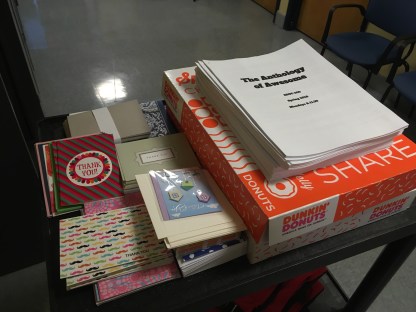
So this year, I printed out every collaborative Google Doc, group-written book review, team-created list of strategies, or class-crafted series of ideal classrooms, social justice non-negotiables, and pedagogically challenging teaching moves that we’d created and bound them together into a class “Anthology of Awesome,” which each student received.

On our last day of class, we shared the anthologies with donuts and coffee. I also brought thank-you notes for students to write to one another–personal messages they hand-wrote and hand-delivered to their critical friends, who had helped read and respond to their work all semester long.

With these pieces of writing in their pockets, my students left class with tangible reminders of the intellectual portion of our time together.

The Gift of Family

For better or for worse, with the end of each school year together, a class is like a family. Some members are dysfunctional, some are estranged, but in general, we’re a bunch of former strangers who now love, appreciate, and respect one another more than we did four quarters ago.

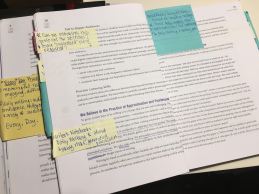
To help us remember this time together, I wrote my classes each a letter that highlighted each student by name, and comprised some of our memories together, our shared goals, and our funny moments. I added this letter to the beginning of our class anthology to serve as a reminder of our Screen Shot 2018-05-30 at 7.11.46 AM.pngstudents’ names and personalities. For my future teachers, I created our ideal school, in which we’d all teach and get to work together forever. In past years, I simply wrote a letter of well-wishes to my kids, and included each student’s name and a little compliment toward them all.


As we wrap up this school year, these simple gifts are things you might consider crafting to help end your year with students on a high note. It’s easy to get caught up in the end-of-semester hubbub of grades, exams, and packing up classrooms, but I hope you’ll pause to commemorate a year of learning as a group in some way with your students, as well.

Please share how you “wrap up” the school year meaningfully with your students! We’d love to know in the comments, on Facebook, or on Twitter!

Shana Karnes will soon be leaving the wild and wonderful mountains of West Virginia for the great lakes of Wisconsin. She is excited to continue her involvement in Appalachian education by leading institutes with the National Writing Project at West Virginia University this summer, but will otherwise be relaxing and devouring as many books as she can during her two daughters’ nap times. Connect with Shana on Twitter at @litreader.

What’s Your Book?

I spent most of Monday trying to organize my books. It’s a bigger deal than it sounds. I love books. My husband loves books. Together we have a massive book-loving marriage. And a problem:  Room.

Recently, we moved across town into a space that is just a tad bigger than the one room apartment we lived in as newlyweds almost 33 years ago. So, today we’ve sorted, remembered, donated, and pledged.

“I read more when the books are our in front of me,” my husband said as he put his favorite sales and marketing books on the shelf. “These are the ones I read again and again.”

“I think you should read this book,” he said, showing me Paradigms. “It’s a fundamental

Toberead

Just one of my to-read-next towers. I’ve also got the AP Lit and Book Love Summer Book Club towers.

book for anyone who is an innovator.”

It’s now atop my to-read-next tower.

“What’s the one book that hooked you as a kid?” he asked as I tried (and failed) to narrow my children’s book collection.

Anne of Green Gables. Easy. ” I said, “Yours?”

My Side of the Mountain.”

Most readers know that one book.

And isn’t it a treat that by definition of our jobs we get to help kids find their books — the ones they want to read, the ones that helps them fall in love with reading — if they haven’t fallen yet?

Today, I’d like to ask you:  “What is your book, the book that made you want to read?”

Our books

Amy Rasmussen lives and works in North Texas. Her classroom library is home to books, books, and more books — all selected to help inspire a love of reading in every single student. Btw, she and her husband have had numerous conversations about the books that made them readers. It was pretty much a first date prerequisite.

Summer Reading: Mentor, Memoir, Music

As any audience of teachers in late May can understand, we’re in that real-time–time warp: The current school year may still be in progress but we are living in the planning of the next. So, in the interest of looking forward — and being inspired by Amy Estersohn’s recent post about book club choices and Lisa Dennis’s about a summer reading list — I thought it might be helpful to share a few titles from my inventory of “Books I Meant to Read This Year but Didn’t” as well as “Books I Knew I Would Have No Chance to Read until Summer.” (By the way, I have no personal or professional stake in promoting any of these books other than inspiring conversation among and providing potential ideas to 3TT readers and beyond.)

Mentors of Our Own180Days_notes

Kelly Gallagher and Penny Kittle, 180 Days Duh. As you can see I couldn’t help but already start this much-awaited piece of pedagogical brilliance. With their perfect balance of philosophy and practicality, Gallagher and Kittle have managed to land directly in the sweet spot of books about practice. What they offer is just general enough to imagine it happening in our own classrooms and just specific enough for it to be highly practical.

beyond_literary_analysisAllison Marchetti and Rebekah O’Dell, Beyond Literary Analysis I will never forget this question that one of my very first mentors taught me to ask: Do we seek to cultivate aspiring English majors or an informed, critical-thinking citizenry? (I know, I want both, too. Alas.) Lisa Dennis discusses in this post the limitations — and, even detriments — to student writing that the traditional literary analysis imposes. Even without having read it, just knowing this book exists fuels my determination (on students’ behalf and my own) to refuse that pain and suffering for even one more year.

Potential Book Talks (or not): Memoir

When They Call You a Terroristpatrisse khan-cullors & asha bandela
The Girl Who Smiled BeadsClementine Wamariya

cultural_memoirWho says we shouldn’t judge books by their covers — and their titles? I won’t apologize for instantly loving these books for their beautiful, ethereal covers and alluring titles. What a happy coincidence that each is filled with the pathos of personal experience that makes memoir so compelling in addition to an earnest and essential reminder about the human beings that live and struggle behind the headlines and the hashtags.
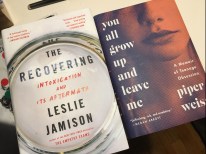
The Recovering (Leslie Jamison) and You All Grow Up and Leave Me (Piper Weiss)memoirs_reading.jpg

Based on what I’ve read so far (30–50 pages of each), neither of these would be near the top of a classroom book-talk or mentor-text list for my classes. But man are these stories irresistible (in this amateur reviewer’s opinion). Weiss’s craft is most apparent in her arrangement of alternating time periods and varying expression of voice, while Jamison’s tends toward stylistic elegance. Due to their “mature” subject matter and in the interest of healthy boundaries, I’m likely to continue reading these not as a teacher but as a regular, private citizen-bibliophile.

Music-Inspired Mentor Texts

abdurraqibThey Can’t Kill Us ‘Til They Kill UsHanif Abdurraqib. The provocative cover of this collection of music/cultural criticism has been taunting me from my shelf all year, even more so after I read an excerpt from Beyond Literary Analysis (see above) in which Marchetti and O’Dell write incisively about channeling students’ love of music into analytical writing. In the book’s introduction, Eve L. Ewing writes, “Abdurraqib makes you realize that the music you listen to isn’t about People Like Us, because it turns out all of us are People Like Us. All of us are frightened and heartbroken and ecstatic and mourning and in love and driving fast down the interstate, and we are blessed enough to live in a time when there are plenty of artists adept to holding that mirror.” Just from this mentor sentence alone, students can practice the power of polysyndeton! From there, I can’t help but imagine students building analytical bridges between the music they love and the qualities that give the music that power.

Creative QuestQuestlove. questloveI’m pretty sure many of my students in Advanced Writing left the course still skeptical of the notion that artists — even accomplished ones — still turn to the work of other artists to inform or inspire their own. So, next year if they don’t believe me, maybe they’ll believe Questlove. In a section of this inspiring and accessible book called “Reduce, Reuse, Recycle,” he celebrates this practice and discusses “covering” the work of other artists not only as a way to work through an artistic slump but as an act of creativity in itself. Thanks, Questlove, for a refreshing take on the concept of mentor texts. He explains, “That’s another thing that creativity is–taking the existing world and making something new from it.” (BTW, I know that’s going on a handout somewhere.) I really loved his discussion of the MTV series Unplugged, which features popular (and typically “plugged-in”) musicians in a stripped-down, acoustic format. I’m determined to figure out a way to use the series to demonstrate the impact of form and tone.

If any of this summer reading evolves into meaningful, practical lessons, I’ll be sure to post the details. In the meantime, though, I hope there might be something here to inspire you or to add to your own never-ending lists (which I’d love to hear about)!