Once upon a time, in a land of equality and compassion…
Attention! Do not open! Live snakes inside…
To the Love of My Life, It is with regret that I must inform you…
The power of the written word to change our perspectives, alter our actions, stir our hearts, and change our lives are just some of the reasons we all work to teach authentic writing with such passion, urgency, and unwavering commitment.
We reach out to our students with mentors, craft study, low-stakes writing, and the call to put their hearts on the page, because we firmly believe that writing can empower, enlighten, and embolden their lives as it has ours.
I am so proud to hold up as evidence, the guest posts on this blog from the past two days. If you’ve not had “beginning of the year, crazy teacher-presession days, I’m trying to learn 172 names, you’ll find me in a corner weeping” time to read those two posts, I cannot recommend that you take the time more highly.
Charles Moore and Megan Thompson, both teachers from flood-ravaged Houston, tell their stories of the start of a school year that will alter their lives and the lives of their students forever. The posts are honest, raw, vulnerable, and everything we ask out students to put on the page from day one. They are informative, persuasive, and narrative at its best, because they come from a place of true connection between content and humanity.
Often, especially at the beginning of the year, I will hear students say, “I just don’t know what to write.” And I hear that. In the face of powerful mentor texts about tragedy, inequality, injustice, and the raw realities of life, it can sometimes feel like my words on the page are very, very small in comparison.
However, this is where our students need the most support. They need to know that their words put on paper are uniquely theirs and that they are important. They fulfill the timeless desire of humanity to express, convince, and connect.
As we get to know our students this year, I think it’s equally important to get to know them well enough to intelligently hand them books to move their reading lives forward AND to get to know them well enough to coax out of them the true stories they have to tell.
We’ll work all year to fine tune the telling of those stories (mini lessons, craft study, feedback galore), but my goal very early in this school year is going to be to help my students get to know themselves right along with me as I get to know them and to help them see that the desire to communicate has always been within them. Regardless of their live experiences, the wonderings of their minds and the musings of their hearts are great voices we need to help students tune back into.
When I got home this past Tuesday, after a twelve hour day of pre-session and open house, my daughter Ellie (age four) was just getting tucked into bed. As I sat down next to her bed and soaked up her barrage of hugs, she smiled broadly and told me she had left something under my pillow that I needed to go get right away.
When I returned to Ellie’s room with the slip of paper below, my four-year old read me a story of about two minutes in length that explained all the markings on the page. It detailed her day  while I was away, her desires to have me stay home so she could hug me whenever she wanted, several additional expressions of love, and a suggestion that we get ice cream this weekend with gummy bears on top. Signed with her name, it was one of the first pieces of evidence I have of her desire to tell her story on the page.
We learn first how to write our names. And when we learn this skill it’s to take ownership of our ideas. To take pride in the sharing of what we’ve created. We can’t let our students lose this. As their skills grow, and they learn all the additional letters to organize into words that tell what they feel, what they need, and what they want others to know, we must validate that exploratory writing in order to encourage it to continue.
It starts so early, this need to share ourselves with ideas and feelings that can’t always be said, and it is up to us as the teachers of these darling children coming of age, to remind them of the power that a page of their ideas with their name at the top can hold, if only they take the time to make those ideas deeply felt and deeply honest.
This school year, as we teach the particulars of the craft of writing, let us remember to encourage our students to share what they need to. Let us encourage them to share what they might not even know/remember is in their hearts and minds, and that it’s important.
We owe it to ourselves and to our students to make our writing instruction about more than answering the prompt, getting it over with, and/or filling a page requirement. Remember the deep desire humans have in expressing ourselves, putting our unique voices in print, and (should we chose) sharing that tiny piece of ourselves with others.
Students may hesitate, but their stories matter. Let’s get them on paper.
Lisa Dennis teaches English and leads a department of incredible English educators at Franklin High School near Milwaukee. Follow her developing story on Twitter @LDennibaum



 the appeal of protractors, highlighters, and color coordinated glitter glue. (That last one should sell itself, no?)
 This thought has been ringing in my ears for days. In context, I found it to be a brilliant way to suggest a necessary departure from formulaic writing instruction. Beyond that, I find it resonating with my continued desire to be both lost and found during this blessing that we call summer vacation.
 (which I’d need 289 pages to dig into, so I’ll avoid that angle) and emotionally (which I will explore, but just a bit. My daughter and I are heading to the park, because I’ve been working on prioritizing). It’s a myth that was making me downright twitchy, because I thought I was “doing summer wrong.”


 to ask me to reach up and adjust the air vent for her, replying to my action on her behalf with a long and drawn out, “Bless you.”


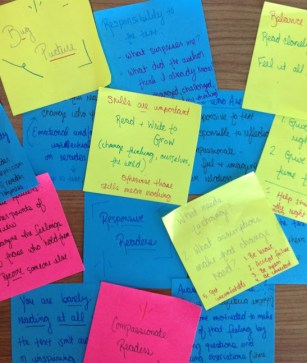 I like to organize my thoughts this way. And, in no way am I suggesting that pulling ideas from a text is malpractice. At the end of the day, of course we need students to think deeply about their reading and demonstrate that thought through talk, written reflection, and/or analysis of some kind.




 audience.

 With that in mind, my colleagues and I have worked hard over the years to provide more authentic assessment opportunities for students to demonstrate their growth during final exams.




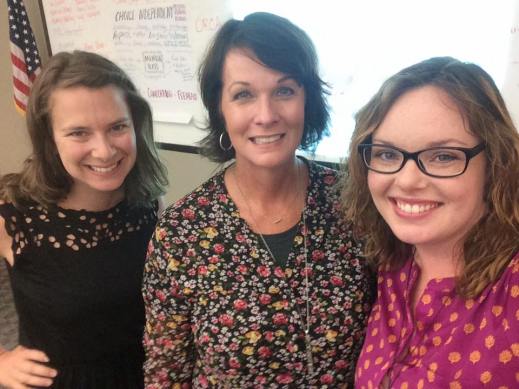
 Three Teachers Talk