Category Archives: Pedagogy

Grateful November and a give-a-way for you

Sometimes thank you has to be enough.

Last evening I joined in #poetrychat and learned from 28 teachers from various parts of the U.S. and Canada about how to more effectively teach grammar by using poetry. Chats like this inspire me, and I want to be a better teacher. Tomorrow I will share this poem with my students as we begin argumentative writing:  The Joy of Writing by Wislawa Szymborska, my new-found favorite poet.

Thanks to all of you who’ve joined in our monthly chats about poetry. I am a better poet, and poetry teacher, than I was last May when TTT started hosting the monthly poetry chat.

Also, I am a better teacher because of you, the readers of this blog. I teach with more intention because I know I will write about the lessons, activities, books, and other resources I use with my students.

Audience matters to every writer, and I consider it a gift that my audience is also my muse. Thank you for your questions that inspire such deep thinking and so many posts.

May November bring a sense of gratitude and rich blessings in the lives of each of our readers. Thank you for your confidence in us as we share the experiences, lessons, and activities from our workshop classrooms.

So what’s the give-a-way already?

Shana, Jackie, and I met online last week to talk about our goals for this blog and how we can support you more fully. We might be able to help more if you give us some direction. So —

We know it’s not much, but it will buy a few books: We’re giving away one $25 Amazon gift card.

Just complete the short 3-5 minute survey, and you’ll be entered automatically. We’ll choose a winner randomly on November 10 and let the winner know via Twitter or email.


3 Lessons from Running a Spooky 5K

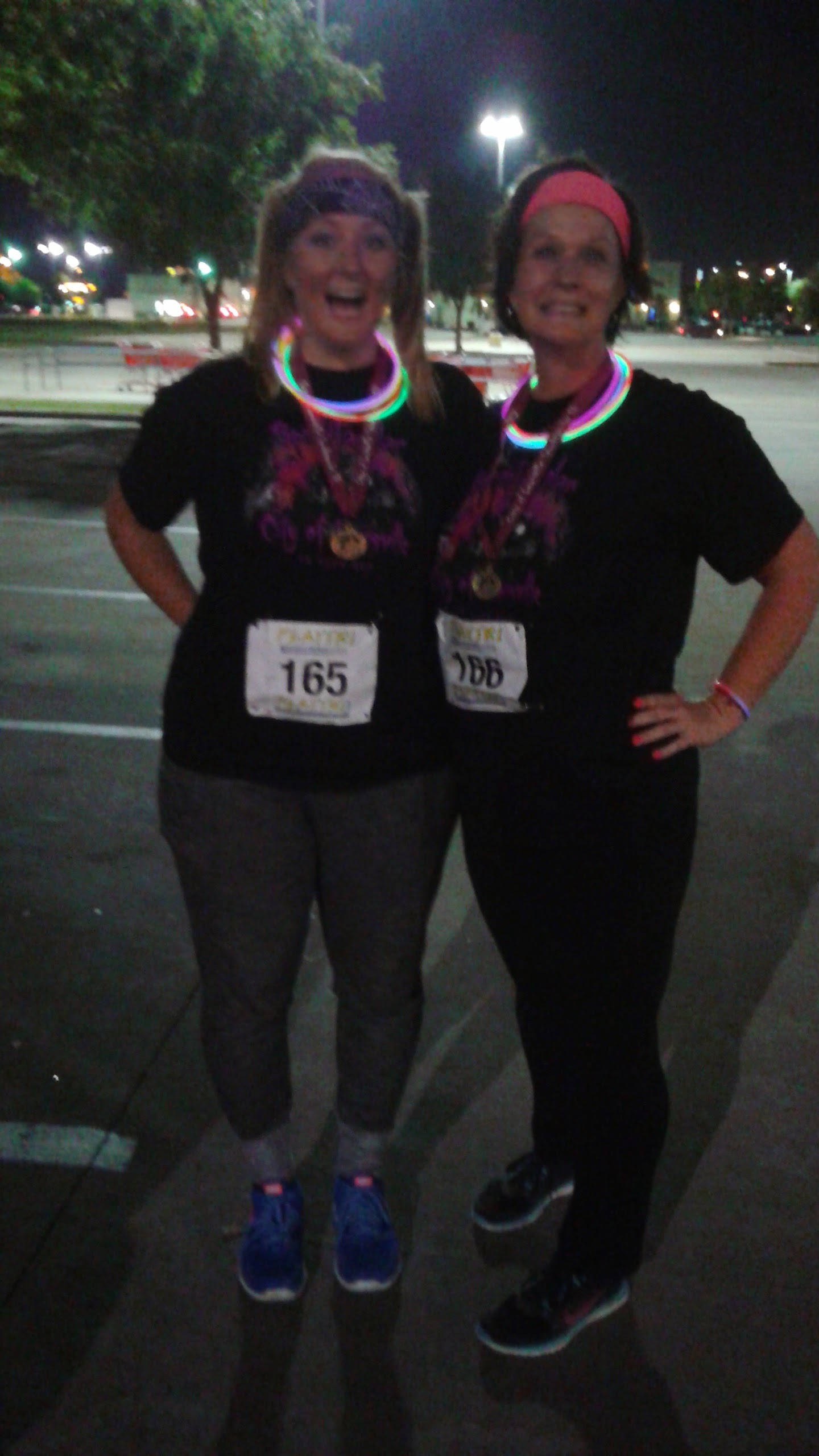
spooktacular runSaturday was the one-year anniversary of the race that changed my perspective about running — the “Spook-tacular 5K.”

I’d trained for about three months, getting up early for interval training before the hot TX sun demanded I go right back inside. Then at dusk going out again to run-a-little-walk-a-lot while my stamina claimed some courage.

Volunteers dressed up as ghouls and witches jumped from behind trees and fences along the pathway. Zombies roamed and groaned their way against the grain of runners. It was all fun and games until I lost sight of my daughter.

That’s when it got spooky. I could not see my daughter Jenna, my running partner who kept me from giving up.

Jenna’s a lot younger than me, so it’s no wonder she didn’t want to hang back and shuffle along. I even told her to run ahead.

But then the doubt started. What if I want to stop? Jenna won’t be here to tell me to power up. How will I keep going if Jenna’s not here to talk me through the sameness of a 3.1 mile jog? You know you hate running, why do you even try?

Two years before I’d tried to become a runner, but I could not make myself enjoy it. Jenna and I’d run one race back then, and I’d stationed myself behind an 70 year old man who ran with a walker. Really he ran with a nurse, but still, and there I was pacing myself behind him. He ran slowly, steady and sure, never stopping to catch a breath or break stride. A vacuum cleaner ate my lungs, but I kept moving. By the end, I thought my rubber legs would kill me.

Obviously, they didn’t.

Now, here I was in much better shape. Jenna and I worked out hard, and I knew I could run this whole race without stopping. I just needed to prove to myself that I could.

So I ran. I steadied my breathing, and I refused to stop. Booing ghosts and all.

I got about a hundred yards from the finish line, and I could hear “Monster Mash” blaring from the pavilion. I knew I’d almost made it when about eight little stick-figure-girls cut a corner and raced past me from behind.

Little cheaters.

I’d run the whole race, slow but steady, and these little adolescents with their long legs and glow sticks ran just long enough to “glisten” as they crossed the finish line right in front of me.

I crossed the finish line complaining. I didn’t even notice my time or relish the fun of finishing. I let them steal that from me.

And I learned some lessons that night:

1) I am stronger than I think I am.

2) I can do hard things, even by myself.

3) I shouldn’t let anyone at anytime steal my celebrations or my joy.

So what does this have to do with teaching? with readers and writers workshop and sharing what I know works? with conferring with my readers and teaching kids to write? with facing a room full of teens each day who need all the skill I’ve got?

Yeah, if you’re reading this post, I know you get it.

We train and practice and learn. We keep talking about books and conferring with our kids. We find joy when they light up about a book — or finally finish one. We focus on the skills we know our students need. We stay positive and hold fast to our pedagogy. We know workshop works. We revision our classrooms to meet the needs of our students — every single day. . . and sometimes every class period.

We keep moving, so our readers and writers will keep moving, too.

©Amy Rasmussen, 2011 – 2015

7 Reasons to Stop Asking about AP Test Scores

The question took me by surprise.

I’d just spent an hour or so sharing how I facilitate readers and writers workshop in my AP English Language classroom. I’d shared a video that showed my students testifying to how much they like having a choice in the books they read and why they feel like they will learn through choice reading this year. I’d shared a mini-lesson on how I teach skills using the books students choose to read, even when they are reading 30 different texts. I’d answered a variety of questions asked by pre-service teachers in Dr. Leavell-Carter’s master’s class at the University of North Texas and started to pack my things.

“What about your AP scores, did they go up?” one young woman asked, “I mean, I just think that would be a double benefit,” she said with a smile.

They say there are no bad questions, but I’ll go to the mat arguing that this is one we really need to stop asking.

I answered as honest as I could: “No. . .well, yes, when I began facilitating writer’s workshop, my scores increased double digits, but I don’t put much stock in AP scores, any standardized test scores, really, there are so many variables, you know; the students and their abilities differ from year to year, and since I’ve only taught in Title I schools where open enrollment is an invitation for all students to take AP classes with no prerequisites or even any preparation for the rigorous coursework, it’s difficult to prepare all students all the time at the same level of learning…”

Then I kicked myself all the way home. Why was I trying to justify my test scores? I’ve written about this before. I have much better proof that workshop works than any kind of testing data:

  1. Many of my students read more during the nine months they spend in my class than they do in

    from Joseph’s reading self-evaluation

    all of the 10 years of school they’ve had prior to coming to me.

  2. Almost all of my students read more books the year they spend with me than they read the year before.
  3. Many students read their first book cover to cover their junior year in my AP English class.
  4. Most students move into complex reading on their own because choice not only gets students reading; it gets them reading critically.
  5. Students tell me every year, “Thank you for allowing me to love reading again.”
  6. My readers learn to see themselves, and to see beyond themselves, by participating in book clubs with peers in non-threatening conversations about literature.
  7. My writers take ownership of their writing and compose beautifully and skillfully crafted texts.

There is no test that measures what my student come to appreciate as readers or what they come to realize as writers.

Sure, I want my students who choose to take the AP exam to do well, but I do not believe it shows what they come to understand about language. (And after scoring essays in Kansas City in June, I believe that even less.) Sure, I’ll keep encouraging my students to take the exam, but I believe most of them will benefit from taking freshman comp in college — even if they read and write well enough to score a 5. At least one English professor agrees with me:

“AP-credits are not always an accurate gauge of student learning. High AP scores in chemistry, for example, may indicate that students understand the basic concepts, but that doesn’t mean they know what to do at a laboratory bench.” (Bobby Fong, college dean and English professor).

I say what’s true for chemistry is also true for English. That doesn’t mean they know what to do when writing an essay for graduate school or a blog post for their employer or reading a report for their business or a decree in a divorce settlement.

Let’s focus on the skills our students need to be successful in the lives that lay before them.

For me, readers and writers workshop helps me do that.


©Amy Rasmussen, 2011 – 2015

Developing Habits of Mind Through Readers and Writers Workshop

Grades might be the death of me. Not grading — I can handle that. It’s my students’ obsession with grades that is beginning to break my already aching back.

Right after we’d spent 75 minutes of our 85 minute class period color-coding our best drafts and revising what we thought was pretty good writing to craft better writing, a student — we’ll call him JWP — asked me if I would read his essay.

I thought he asked for a writing conference.

Not quite.

“Sure, what would you like me to look for in your essay?”

“Um, I don’t know,” he said, “I just want to know what grade I’ll get on this.”

“But, you haven’t done anything with the ideas you got in the discussion today,” I said.

“Yeah, I know. But I really just want to know if this will get me a passing grade.”

I can feel my breathing change. I sigh.

“I am happy to read your essay,” I said taking the paper, noticing the green and red marks from our color-coding session but no blue, orange, or purple. I tried to think fast, not sure of the best way to bridge the obvious gap:  Writing for a grade versus writing to convey meaning because we care about our message and our craft.

I hope what I said to JWP made a difference. I thought of a million things to say but knew he wasn’t in a place to hear anything more that this:  “Are you proud of this piece? Does it represent what you’ve learned about the writing process?”

I guess I’ll know if what I said made a difference when JWP turns in his essay today.

How do we get students to care more about the learning than about the grades?

I believe it has to do with helping them change what they might believe about school. This is hard. My students are juniors in high school with 11 years that have shaped their beliefs. Somehow I have to get them to want more.

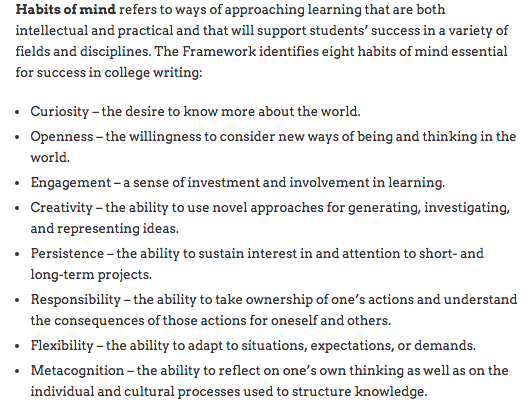
Searching the NCTE website for info unrelated to the topic of this blog post, I found this page, which discusses the Framework for Success in Postsecondary Writing, a collaborative piece by NCTE, NWP, and representatives from Council of Writing Program Administrators that details what it means for the 21 Century student to be “college ready.”

from Framework for Success in Postsecondary Writing

from Framework for Success in Postsecondary Writing

The aha hits me:  These habits of mind are what my readers and writers workshop instruction is all about:  a “way of approaching learning that is both intellectual and practical and that will support students’ success in a variety of fields and disciplines.” At least I try to make it so.

My students need these habits of mind. They need them so they can be successful in college and careers years after they leave my classroom. They need them if they are to be the change agents in the workplace and the world they inherit.

I am persistent. Little by little we embrace this thinking in my classroom. I keep inviting and encouraging.

“Make choices,” I say. “Choose the books you read and the topics you write about. Let’s think about issues that matter to us. Let’s experiment with risk.”

I meet with my learners to help them think through their thinking, conferring with every student as often as I can.

We explore different texts we can write and different authors we want to read. We talk about our reading experiences. We share our writing and our writing processes because everyone has a different way of practicing their craft. We discuss complex texts and practice complex thinking. We choose projects that challenge our comfort and lead to deeper learning.

Many students quickly adjust to the freedom and uncertainty of workshop. Others struggle. Like JWP.

He’ll get there — we have until June.

Do you have JWPs (Just Wanna Pass) or, on the other end of the spectrum, those students who grub for grades? How do you deal with the grades over learning conversations? Please leave a comment and join this conversation.

I’m Teaching Writing to the Whole 5th Grade — Now What?!

I received this note in a Facebook message:  I had big changes in my classroom assignment this year… moved from 2nd grade to 5th… turns out… after getting there I got the assignment of teaching writing to the entire 5th grade…. not what I really signed up for…. I have not only NEVER formally taught writing (as a process) beyond complete sentences… and moving toward paragraphs…. but I never even had a class in in it in college….. any suggestions on where to start and where to go with it? I will have 4 units of 12 days each during the year with each of the 5th grade classes….. suggestions?

Say you had to analyze the tone, what adjective would you use? concerned? riled? desperate? beseeching?

Let’s look at the clues:  “big changes,” “turns out,” “entire,” “not what I really signed up for,” “NEVER,” and all those “…..”

I could write an entire post on why the kind of changes this teacher has had thrust upon her is so disrespectful to her as an educator, as a professional. But I won’t. I just needed to say that.

Of course, I answered, and I will offer support and help any way I can. You would, too.

Maybe others have similar experiences and are new at teaching writing. Here’s how I answered my friend:

Yes, I have suggestions! Haha. Tons of them. You know I teach AP Language and Composition, right? Just writeThat’s juniors in high school, but good writing is good writing. Your instruction with your 5th graders can look very similar to mine. (And I hope it will.)

Here’s the non-negotiables in my writing class:

Writer’s notebooks. I use the black composition notebooks. Students cover them, personalize them, and make them mean something other than just a notebook for school. We write in them every day as a way to explore our thinking. I might give a prompt, or read a poem, or watch a news clip…whatever, and then I ask students to think and respond. These quickwrites become places to mine for ideas for topics we might develop into more formal pieces. Writer’s notebooks are required and loved in writing classes where students have choice and autonomy, two important components of effective writing instruction.

Mentor Texts. Mentors are texts that look like the writing I want students to practice. For example, if we are writing narrative, I want students to read good narrative writing. If we are writing book reviews, we need to study the structure of book reviews, etc. The authors of these mentors become our “writing coaches.” We study the moves the writers make, and then we try to make those moves in our own writing. Students learn from good models. They do not learn from poor, fix-the-grammar-and-punctuation worksheets or anything of that ilk. Research on that is plentiful.

Choice. When students have choice in the topics they write about, they are more apt to take ownership and care about their writing. Just like you and me — we do not want told what books we have to read, TV shows we have to watch, or essays we must write that show we learned something from pd. Topics matter so much to the effort students will put into their writing. We have to let students choose what they want to spend their time focusing on. Sometimes we need to nudge them. Sometimes we need to help them narrow the topic. But they need to always have a choice if we want to really teach them anything about writing. Save the formal test-like prompts for practice after students learn how to mine for ideas and develop those ideas in writing they want to do. Test writing can serve as a genre in itself later.

Time. Schedule time within the school day for kids to write. Let them know you are there to help. When they write with us, 1) we know they are writing and not a friend or parent, 2) we see their process and know where the struggles are.

Conferences. Meet with writers throughout the writing process, beginning, middle, and end. Ask questions that provoke their thinking. Let them talk about their ideas. Avoid giving advice, rather validate the students’ ideas and speak to them as writers. (Focus on the writer and his needs over the writing and what it needs — avoid the red pen at all costs.)

Modeling. Write in front of your students. This is probably the most effective instructional tool you have. Students need to see the messiness of the writing process. They need to know it is hard — even for a teacher. I try to write every assignment I ask my students to write. I start writing in front of them and let them see my thinking, my errors, my revision, my re-organization, all of it. Too many student writers think they should be able to write well in a one shot in the dark deal. That’s why they refuse to revise. We have to show them that writing is difficult and confusing and time consuming. We have to give them opportunities to see the struggle, so we can convince them that the work is worth it when we’ve finally been able to say what we want and need to say in our writing.

Talking. “Writing floats on a sea of talk,” I heard Penny Kittle say. Talk with students about their ideas, their process, their everything concerning writing. Encourage them to talk with one another. Talk and Write. Read and Talk and Write. Talking works to stimulate thinking and provoke the pen to action.

Celebrating. Feedback matters, even at the sentence level. Invite students to share their writing. This can be a sentence or a complete piece. Celebrating good writing along the way is a more effective feedback tool than a grade at the end of publication. Whips Around the Room that invite all students to share a favorite sentence or passage, Author’s Chairs that invite students to read a best draft, Posting on Blogs and inviting students to read one another’s work and leave comments, are all ways to celebrate writing — and help students understand the importance of audience.
Some of my favorite RESOURCES:

National Writing Project — Resources page

Read Write Reflect — Katherine  Sokolowski’s blog — the reflective practices inside a 5th grade classroom

The Nerdy Book Club — a community of readers (and teachers of readers) — read about books, reading, writing, and more!

Two Writing Teachers blog — more tips on teaching young writers that you can digest in one sitting

Moving Writers blog — Rachel and Allison show they are the best mentor text finders on the planet

And of course, my own blog: Three Teachers Talk where we write about Readers and Writers Workshop

Lucy Calkins quoteBOOKS you will consider life savers:

In the Middle by Nancie Atwell

Read Write Teach by Linda Reif
Write Beside Them by Penny Kittle

And I haven’t read this one yet, but who doesn’t want to be unstoppable? The Unstoppable Writing Teacher by Colleen Cruz
I imagine you are overwhelmed. No, I cannot really imagine. I do know that you are smart though, and you love children and teaching. You will do a wonderful job inspiring students to write — that is half the battle.

The learning comes from doing. Get your students writing. The more they write the better they will write. I see it every year.

Best blessings,

Amy

Did I leave anything out? What advice do you have for this emerging writing teacher?

©Amy Rasmussen, 2011 – 2015

My Classes are Only 45 Minutes — How Do I Do Workshop?

It’s a movement, you know — this instructional practice called Readers and Writers Workshop. More and more educators are catching the vision and clarifying their focus as English educators. (There’s also a lot of nay-sayers, which I think means they are afraid. Let’s be patient with them.)

I received an email that asked a question that I wish I would have had answered for me years ago when I made the leap into choice reading and the workshop pedagogy. It’s important, so I knew it needed to be a post on this blog:

English I teacher asked:  I have a question for you about classroom routine. I felt I needed to ask someone who can answer with authority about this because there is significant resistance from teachers on my campus to the whole idea of workshop, especially from my department chair. For various reasons that I won’t bore you with, we need to do a “by the book” implementation. We will be under a lot of negative scrutiny no matter what we do, but things will go better if we are following some sort of precedent on certain details.

I’ve found specific information about block schedule and the frequency of in-class silent sustained reading, but I haven’t found anything for non-block schedules. We are non-block with 45 minute periods. I think I read on your blog that you used to use Workshop in a non-block schedule. When you did that, how often did you do the in-class reading?

I am glad you asked about non-block scheduling for workshop instruction. Yes, it is doable! I taught class periods of 50 minutes five times a week prior to moving to my current school. When I was first trying to figure it out, the best advice I got was from Penny Kittle. She told me:  “You choose to do this, which means you choose not to do that.” Here’s how I interpreted that:

If I have 50 minutes with my students each day. Every minute matters, so I must be intentional in the choices I make. 

I used to choose whole class novels and read at least part of the novels in class. I used to assign students guided questions to help their understanding of those novels. I used to give lists of vocabulary words and ask students to define, write sentences, create images. I used to give writing prompts and writing homework. I used to expect students to read and write outside of class without ever showing them the messiness, the thinking, the discovering of ideas and emotions and writer’s moves on the page. I used to make all the choices, and I expected my students to go along for the ride.

Some did. Many did not. It finally started to dig at me that many was so much greater than some.

I choose not to do any of those things now.

Now, my students and I choose to read books we find interesting, engaging, and important to our lives. We read, discuss, and write about how the ideas inside these books are windows to the world outside our own, and how they are mirrors into the joys, aches, and heartbreaks we see inside ourselves and within our families.

I wrote about 7 Moves in My Workshop Schedule a while ago. These moves are non-negotiable:  read, confer, talk, write, revise, share, mini-lesson. 

To make these workshop moves work, we must also include these tools as non-negiotables:  writer’s notebooks, mentor texts, high interest books.

As you begin to plan for your 50 minutes, think about this:  How can you ensure that all students read, write, listen, and speak in every class period? (These are best practices for English Language Learner’s, which in my experience means they are best practices for all students.)

You specifically asked about the frequency of in-class independent reading in a class period of 45 minutes.

Read every day. Every day. Every day.

If you want students to become voracious readers, time is the greatest gift you can give them. Students need to know that you trust reading as your ally. If you believe that through reading students will grow in fluency, stamina, vocabulary acquisition, comprehension… and empathy, which has been written about here Scientific American and here Psychology Today you must make it a priority. So how might this look in your classroom:
She asked for a book that would help her learn science and accomplish her reading goals. Students will challenge themselves if we let them.

She asked for a book that would help her learn science and accomplish her reading goals. Students will challenge themselves. Really, they will.

Read at the beginning of every class period — 10 minutes. You do not need a bell ringer or any other focusing task when students know that the expectation is to come in the room and get to reading. The first chapter in Steve Gardiner’s book Sustained Silent Reading offers some great information — and quotes Nancie Atwell on the importance of choice. Encourage and challenge students to read outside of school. Help them create goals, and them help them hold themselves accountable to reaching them.

Confer when students are reading. Make this a norm. Conferring moves readers workshop instruction forward. And students want and need us talking to them about their reading, about their thinking, and about their lives. One-on-one instruction happens here, and it is through this teacher move that belonging, identifying, coaching, challenging, and empowering happens.

When you create a classroom culture of reading, discipline begins to care for itself. It’s a matter of setting expectations and then being consistent with them. If I have a student who refuses to read, which happens at times, especially early in the year, I make sure she knows that she has that right, but she does not have the right to interfere with anyone else’s right to read. Sustained Silent Silence instead of Sustained Silent Reading gets boring after a while.

You’ve read, and you’ve conferred. Now, you make other choices about what to include in your instruction. These are ideas that work for my students:

Write about their reading. Now, I’m not advocating for dialectic journals or questions about plot and setting, but it is important that students become reflective about their reading. Find a balance here. We do not want reading to turn to work, and demanding that students write about their reading way too much may turn them off to reading.  Think about the books you and I read. How often do we have to write an essay about a novel we read?
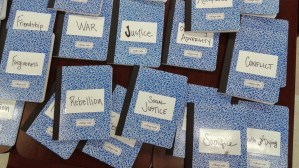
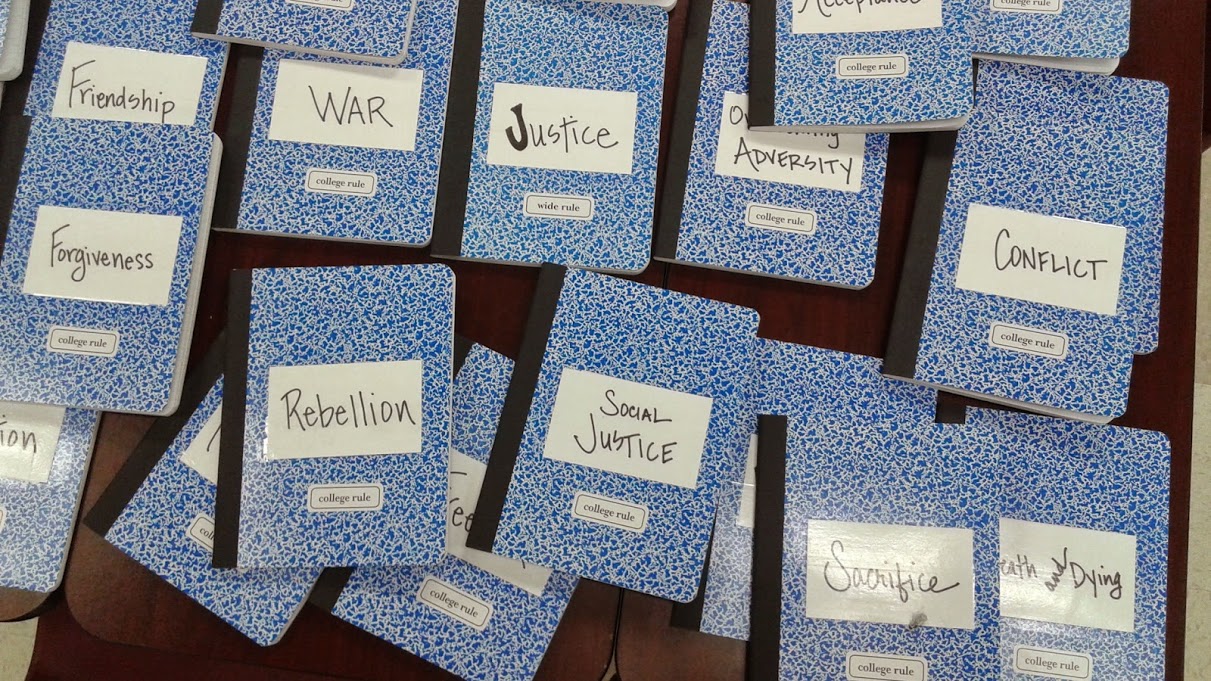
The topic notebooks in my classroom. We write in them about every three weeks. This is a fun way to share our thinking about our books.

Penny Kittle taught me about topic or “big idea” notebooks, and I’ve had a lot of success with these. (That link is to Penny’s Book Love handout, which has other great ideas for students to write about their reading.)

Teach skills in mini-lessons. I decide on mini-lessons based on two things: 1) my standards, 2) student needs based on what I learn in conferences.

Say I need to teach them about using the appeals in an argument, I may teach a mini lesson on logical appeal one day. Then I will ask students to do some flash research and find evidence of this appeal in either their independent reading, a news article, or an online text. We’ll share our findings and do a lot of talking — Why’d the writer use that appeal? How does it contribute to the argument? etc. Then, students will know I need to see them use that appeal in their own writing. We write (and confer) for the rest of the class period. Or, we share our writing in our writers’ groups.

Or, say I’ve conferred with half the class about their reading. I’ve found that half of those students are having trouble finding books with enough higher-level vocabulary to add to their personal dictionaries. I know I need to teach a mini-lesson on text complexity and what it means to challenge ourselves as readers. I may choose a few books with similar topics or themes and show my students a reading ladder:

Tears of a Tiger by Sharon Draper

Dopesick by Walter Dean Meyers

Homeboyz by Alan Sitomer

Tyrell by Coe Booth

The Absolute True Diary of a Part time Indian by Sherman Alexie

Letters to an Incarcerated Brother by Hill Harper

We’ll talk about why one book may be more complex than others. I might challenge students to read all of these titles and then tell me if I have the ladder right. (I may not, I haven’t read every one of these books, but I think I’m on the right track.) I’ll teach students about syntax and how that impacts text complexity as much, or more, than vocabulary. Then, I’ll challenge students to keep track of the complexity of the books they choose, not only by keeping their personal dictionaries up to date, but by adding codes to their reading lists. E – easy, C – comfortable, D – difficult. I show them my writer’s notebook and how this tracking helps me understand my reading habits.

Allow time to work. The greatest indicator that workshop works in my classroom is student engagement. When I allow students time to complete writing in class with me available to talk to and ask questions, they engage in the writing process more efficiently and effectively. I’ve let go of wanting a product, and now we enjoy the process of writing. We discover as we write. We revise because we know our writing improves as we revisit it. We share our writing because all voices in our classroom matter. The only way to accomplish these things is to build time to write right into the class schedule.

I wrote Choose to Become a Classroom of Writers a while ago. I still believe focusing on writing creates the smoothest transition to workshop instruction. Why? Because writers are readers first. Check out this post of 40 Inspiring Quotes about Reading from Writers. (Just a little proof.)

But that’s probably another post for another day.

Best blessings to you as you take off on this wonderful adventure with your students. Write any time: for support, for clarity, for whatever you might need. You’re blessing the lives of children. Our future –our society — needs educators like you.

Press forward (nay-saying department manager and all).

Warmly,

Amy

Dear reader, any advice you can offer our friend?

 ©Amy Rasmussen, 2011 – 2015

What I Didn’t Teach This Year

The end of the year is upon us (finally!), and I’ve been reflecting as I always do.  This year, though, I’m thinking about something I’ve rarely considered before–not just what I taught, what worked, or what I want to do next year.  I’m thinking about all the things I didn’t teach this year.

There are 180 precious days in a school year, and the way my school is structured means I spend 90 days with each set of students.  That seems so fast.  There was no time to waste, so here’s what I didn’t fill that time with:

FullSizeRender

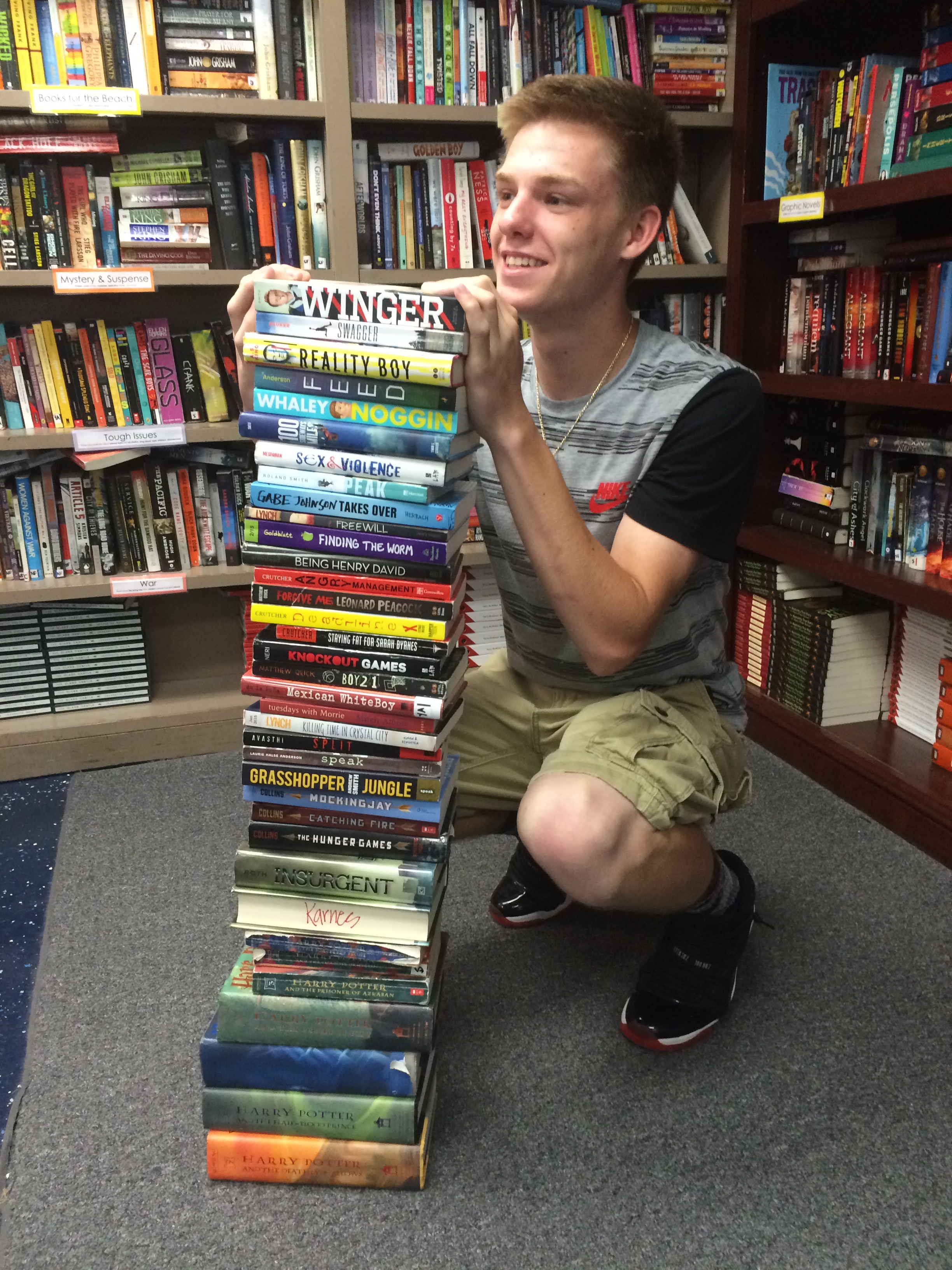
As Sabra stepped up for her reading ladder picture, she said, “This is pretty good for someone who didn’t finish a book until your class!”

Whole class novels.  This was a controversial choice for me, given that I love so many authors of American literature–Mark Twain, Walt Whitman, Nathaniel Hawthorne, etc.  But, no matter what novels I’ve chosen in the past, there’s always a student that book isn’t right for.  Fahrenheit 451, The Absolutely True Diary of a Part Time Indian, The Glass Castle, Maus–none of them is a perfect match for every child.  I’ve used a wide variety of strategies to get students to be able to read those books, and every ounce of passion I can muster to get them to want to read those books, but still–students have been conditioned to not read, to just get on SparkNotes, or ask an older sibling, or use Wikipedia.  When the stacks of matching novels come out, groans abound and engagement tangibly disappears.  I’ve seen this.  I’ve battled it.  No more.

So, I scratched whole class novels altogether.  Students worked in book club groups twice, and engaged in independent reading challenges two other times.  We read tons of short stories, articles, essays, and middle-length writings together.  But we didn’t read a single whole-class novel, and my readers still thrived.

IMG_8294

“I found myself as a reader this year,” Jordan writes.

Did my students grow as readers this year?  Yes.  I watched students who hated reading come to love it.  I watched students who couldn’t read well at all increase their stamina, passion, and skills related to reading.  I watched students who were good readers but bored with books fall in love with nonfiction, poetry, graphic novels, or award winners as they discovered new genres.  I watched students who loved to read flourish and challenge themselves with complex texts and childhood favorites alike.  Most of all, I watched a community of real readers spring up in my classroom–students recommending books to one another, self-selecting books and keeping long to-read lists, telling me all about their finds at Barnes & Noble.  These readers have become truly independent.  “Now,” Taylor writes, “I think I can read anything that’s put in front of me…and enjoy it.”

FullSizeRender

Isaac performs a poem for Nathan on poem-in-your-pocket day.

A movie.  As I’ve walked the halls this last week or so, I hear the unmistakeable sounds of cinema from behind closed classroom doors and darkened rooms.  I have no doubt that students are watching relevant films–movie adaptations of Romeo and Juliet in English, Forrest Gump in History, etc.  But this year, I felt I had absolutely no extra time…there was SO MUCH I wanted to do!  I used to love showing O Brother Where Art Thou with The Odyssey, and my students really delved into the symbolism of both texts.  But this year, my SmartBoard was full of YouTube videos, slam poets, or the still, quiet images of a document camera showing some writing.

I didn’t have time to show a movie, but I also wasn’t pressured by the crush of hours of grading that usually prompted me to show films in the past.  I’ve taken Kelly Gallagher’s rule about student work to heart–students should be doing four times as much reading and writing as we could ever grade.  So, I’ve read and responded to about a quarter of my students’ work, and let self-evaluations, peer conferences, and notebook passes do the rest.

Most of what I taught last year.  Last year was great, don’t get me wrong–but this year, my students were a new batch.  They’re different kids than last year’s group, so the same things won’t work for them.  After seven years in teaching, I know that.  I didn’t waste time trying to figure that out…I just started fresh.  I know I’ll do the same thing next year…out with the old, and in with the new.

IMG_0054

Shailyn read almost all of my YA fiction, and wrote reviews about nearly every book for our school newspaper.

Tests or formal essays.  Tom Romano likes to call the typical English essay a “five-paragraph you-know-what,” and it truly is a dirty little assignment.  At an NWP workshop I attended, each teacher was asked to bring some samples of student writing.  All around me emerged typed, double-spaced, Times New Roman, size 12, thesis-at-the-end-of-the-first-paragraph essays.  From my own bag came photocopies of messy scrawls in notebooks, multimedia This I Believes, strongly-voiced commentaries, poetic musings developed from quickwrites, and lengthy, involved, multigenre research papers.  No two pieces looked alike, and they certainly looked nothing like most other teachers’ samples.

I’d be lying if I said I didn’t feel a faint nostalgia for my own high school days, when I took pride in being able to punch out a perfectly formatted five paragraph essay in just under an hour, and which made absolutely no sense but looked great, and which constantly netted me As.  But I listened to my neighbors rant about poorly integrated in-text citations and incoherent thesis statements, I dismissed that nostalgia and read my own students’ work for what truly matters–good writing, heart and soul on a page, and authenticity at work.  As my husband said when he saw me dwarfed behind a pile of multigenre papers to grade, “I could read some of those for you.” “You wouldn’t know what to look for,” I said.

“Good writing is just good writing,” he replied, and he is right.  As the year ends, my students are good writers and good readers–not all of them are great, and there are kids I feel I could’ve pushed harder, but all are certainly better than they were when the year began.  I’ll look forward to our last day of class, when I’ll gift them each a new composition notebook and a pile of classroom library books to read over summer…and to months beyond, when I get to hear their stories of summer literacy in the fall.

Resources to Make Your Move to Readers and Writers Workshop

When you believe in the power of the workshop classroom, research that supports it starts jumping at you like my dog when he sees me put on my running shoes. “Okay, Jag, give me a second. You can go with me.”

So when educators ask me for resources that support my Readers and Writers Workshop instruction, I am happy to share. Come, go with me — and bring all of your students!

Of course, a pretty good resource is Three Teachers Talk, right? The four of us who write here all practice this pedagogy in our unique classrooms in WV, NH, NY, and TX respectively. Erika wrote a great post of our Year in Review that reads like a highlight reel.

Of course, we have different teaching styles, but we all value specific things that never change in our practice:  choice, time, talking, reading, writing, conferring, modeling, sharing, publishing. I wrote about these 7 Moves in My Workshop Schedule recently.

Our presentation at NCTE last fall was all about starting and maintaining workshop in high school English classes. Jackie shared A Reader’s Workshop Starter Kit to Jumpstart the Process. Erika shared Landscape of Workshop: We Have Arrived. Shana shared Non-negotiables Across the Landscape of Workshop. And I shared The Landscape of Workshop in AP English.  (Our proposal for 2016 was not accepted, but we are mostly over the bitter and will keep advocating for RWW every chance we get.)

If you need research to back the why of readers and writers workshop in addition to what we might share in our posts, you might start with Donalyn Miller’s blog post: “I’ve Got Research. Yes, I Do. I’ve Got Research. How About You?” — Donalyn shares a list of articles and books that support why readers workshop is the best pedagogy for all students.

My colleagues and I believe the best book for secondary readers workshop is Book Love by Penny Kittle. Her argument for independent, choice reading resonated with me the moment I read it.

Donalyn Miller’s the Book Whisperer is another great resource for readers workshop. Although Donalyn taught middle school, many of the ideas she shares work with my AP English Language and Composition students.

For writers workshop, Write Beside Them, also by Penny, is my favorite. That is the book that changed me as an educator.

Another excellent resource for writers workshop is Learning Through Teaching by Don Murray. This is the most recent book Penny recommended to me to help with my own writing. Oh, boy, is it helping!

So, yes, please ask for resources. And if you are already a workshop believer, please share them. Every student I know will thank you.

Do you have resources you share that we might find valuable here at TTT? Please leave your thoughts in the comments.

Okay, I Will Share My AP Testing Data

A new friend asked me if I would share any AP testing data that I’ve gathered since embracing Readers and Writers Workshop. I had to think about it since I rarely think about it. I do appreciate the question though because it led to this post.

I need to tell you right up front:  While I appreciate the AP exam as a high-stakes test, I do not lay a lot of value on testing data for many reasons.

So many factors figure into how a group of students tests each year, and looking at figures from one year to the next, and trying to compare numbers with different groups of students has never made sense to me. The only real valid data is the growth I measure from the fall when students walk into my door until they leave me in the spring. However, I can tell you that the first year I implemented Readers and Writers Workshop and gave up whole class novels in favor of encouraging students to read books of their choice and taught skills with short, sophisticated, complex texts, my students’ scores were 12% higher than my students’ scores the year before.

The best I can do to respond to your question is to quote Stephen Krashen in the article “Free Reading:”  “. . .research strongly suggests that free reading is the source of our reading prowess and much of our vocabulary and spelling development, as well as our ability to understand sophisticated phrases and write coherent prose. The secret of its effectiveness is simple: children become better readers by reading.”

And…  “Research has . . .shown that SSR is at least as effective as conventional teaching methods in helping children acquire those aspects of reading that are measured by standardized tests, and pleasure reading provides a great deal that these tests don’t measure.”

The first two years I taught AP, I tried to do it like I learned at my APSI. I assigned the traditional novels taught in American literature: The Scarlet Letter, Huckleberry Finn, The Great Gatsby, The Awakening, The Grapes of Wrath — because the other AP teacher on my campus did. I can tell you, my students did not read. They even told me later that they didn’t — lots of joking about that on Facebook a few years after they left me. They knew how to play the fake-reading game perfectly.

I know Krashen’s research centers on much younger grades than our students in AP English; however, reading is reading, and students gain skills by doing it — skills that improve their lives far beyond those tested on one day in May as they sit for the AP English exam.

My students just wrote end-of-year reading evaluations on their blogs. Here’s a few of the highlights about reading this year in their own words. This is the kind of data I value:

“Being apart of a reading community has benefited me deeply within my entire life. Even though I didn’t read as much as I wanted to, the reading that I did do was very beneficial. Reading helped me expand my vocabulary a lot. Sometimes when I would speak to my mom I would use a word that I learned from the book I was reading and she would just look at me like she didn’t know who I was. Reading also helped me become a better writer. So many different books that I read helped me use different structures, understand how to use rhetorical devices, and use my upper level vocabulary.”  DeDe, currently reading Thirteen Reasons Why by Jay Asher

“Being part of a reading community as a student opened my mind how others thought of the book we were currently reading together. Occasionally, I’m an ostrich that’s always in the ground; thoughts to myself, ideas to myself, and the “this is what this means” mentality. I’ve slowly learned how to use the point of view of others by implementing it into my own work. In addition, this year’s English class did not feel like a burden compared to previous years. The freedom of choice we were given provided us with the decision to pick a book we enjoyed.” Doreen, currently reading The Goldfinch by Donna Tartt

“I believe the place I need to improve as a reader is being able to find the hidden meanings or putting everything together in order for me to understand a book. Sometimes without me noticing I just read to read and I forget what I read and have to read the paragraph or page again in order for me to understand it. I need to read and take everything under consideration and understand what it is that I’m reading and at the end put it back together. Maybe my problem is that I try to read too fast.” Johnny, currently reading The Alex Crow by Andrew Smith

“Being part of a reading community benefited me because I always felt like I needed to be reading a book. It felt splendid being a part of something, especially something I would of never thought I would be a part of.  I understood the importance of reading. The more you read, the better writer you will become. I realized what genre of books I liked and which ones I didn’t. Most importantly I explored a different variety of books and read a minimum of 12 books. Something I had never done before. Usually I would read a minimum of 3 books every year.” Lizbeth, currently reading Playing Dead byJulia Heaberlin

“My journey began with Escape From Camp 14. I moved through different genres and difficulty levels thereafter: Anna and the French kiss, Allegiant, High School Bites, The Glass Castle, The Curious Incident of the Dog in the Night-Time, Where’d You Go Bernadettte, The Art of Secrets, The Hot Zone, Little Bee, The Joy Luck Club, Down the Rabbit Hole, Room, Incendiary, The Wright 3, and most recently, Y. During this time, I abandoned The Kite Runner, The Thirteenth Tale, Ready Player One, Saving Fish From Drowning, Telegraph Avenue, and Station Eleven.   Even I find it odd, that out of the entire list, I enjoyed The Joy Luck Club more than any other. I say this because I’m not the patient type- I like constant action, fueled excitement. The Joy Luck Club almost counters that expectation, and if I had to describe it, I might even consider calling it boring.” Nawoon, currently choosing — just abandoned Station Eleven

This evaluation by Jasmine is too good to not share the whole of it. And this one by Shaniqua.

I just need to share one more thing, a little gift I got today as I read student reading evaluations. I know most teachers get these at one time or another.

It is the thing that keeps us going.

Laura wrote:

“I still need to improve on not judging a book by it’s cover. For us to GROW as people, we must get out of our COMFORT ZONE and pick up a shattered book because it needs someone to appreciate it’s language. As much as reading conference were sometimes nerve wrecking for me, they helped me get a second opinion on my progress in class as a human and not merely as a student. I can never thank Mrs. Rasmussen enough for dedicating chunks of her life to her students. Positivity in a world were criticism is many people’s issue is so rare and pure. She truly cares about each of us and sees past our struggles and attitudes and tries her best to help us understand it’s okay to have emotions and display them for others to see.  I’ve learned it’s more important to turn our conflicts into beautiful gifts instead of becoming a bitter person.”

Don’t you think that is better than any testing data?

©Amy Rasmussen, 2011 – 2015


Our Year-In-Review

As we round out the 2014-2015 academic school year, I would like share our Year-In-Review from us here at TTT and dedicate it to all of our loyal and contributing teacher friends who share in our experiences throughout the year.  Playing with the Reading Writing Workshop model is always exhilarating and fresh and exciting and freeing and thought-provoking.  It’s always propelling us, as educators, to break through barriers and teach with our most authentic teaching souls.

So, to capture the essence of how we have all explored the model this school year; here are highlights that allow us to celebrate the risks, the questions, the stumbles, the ‘ah-ha’s, the setbacks, and of course…the successes.  As we are all still progressing through this last month of our current school year, we hope that resurfacing some of our favorite moments will ignite the fire that keeps us all educating with fierce passion, deep inquiry, and continual evolution.

The calm zen of the RWW in Texas.

The calm zen of the RWW in TX.

First up: The lovely Amy Rasmussen who never ceases to amaze all of us with her wit, wisdom, and wildly insightful thinking.  Here is a woman who has taken the RWW by storm and has not looked back; the only time she does is to pick up, dust off, and gently guide those who are trying to find their way through the process.  She is an excellent mentor and extraordinary educator who ensures that her Advanced Placement students are gifted the wonders of the RWW. Here is a collection of how Amy has guided us through the intricacies of customizing the RWW for our own learners:

A Feedback Protocol for Revision Workshop

5 Reasons Why Reading Conferences Matter — Especially in High School English

5 Ways to Enjoy the Last Month of School


A reminder of student movement and achievement.

A reminder of student movement and achievement in NH.

Next: Jackie Catcher’s name could not be more appropriate.  We know the catcher’s responsibility on the field is to guide the team to strategic success; Jackie does the same infield – in her classroom. She moves her students with her unyielding dedication through continual infused literacy by craftily customizing projects and lessons that engage students. She is a powerhouse who, through all the struggles and obstacles of a second year educator, never ceases to find innovative ways to educate and inspire.  Most importantly, she is always a learner first and shares her inquiry with others to not only think collectively, but to create success-driven solutions.  Here is some of her story:

Building My Library Around My Students

Unraveling the Mystery of Poetry

The Question That Changes My Students’ Writing


A bright and energetic learning environment in WV.

A bright and energetic learning environment in WV.

Thirdly: The always-invigorating Shana Karnes. Shana is a shining light to her students, yet her light shines brightly for the world of evolving educators as well.  She is open to sharing her passion, her innovative thinking, and the way she creatively customizes the RWW for her students in the throws of West Virginia.  Shana never loses sight of how vital piles and piles of literature are for the growth of her young readers and emerging writers.  She knows how to roll up her sleeves and do the work right beside her scholars.  It is through the sheer joy of all things literacy, that Shana explores the world of the RWW:

We Learn Facts from Fiction

Teach Readers, Not Books: A Case for Choice Reading in ALL Classes

The Value of Talk


The shelves where our identities are qualified, our ideas solidified, and our passion realized.

The shelves where our identities are qualified, our ideas solidified, and our passions realized in NY.

Rounding it out: Erika Bogdany.  Through the RWW I have challenged my students, and they in turn, have challenged me.  They push me continually with their own inquiries and want to be more fluid writers.  They challenge my writing by offering suggestions and insight that I have bestowed upon them; the gift of creating a safe community for all learners to read, write, risk, and share.  It is through the RWW that students find pride in their work, volume in their voice, crafted secrets in their writing, and beauty in themselves.  It is with passion and grace that students flutter and flop; yet learn how to fly:

All it Takes is a Tutu and Some Focus

Beyond These Four Walls

Today We Draw


We hope that our moment of reflection and celebration continues to provide you ideas and inspiration throughout the remaining time you have with your unique readers and writers this year.  We’d love to continue hearing your voices, feedback, and generous insight while we round out this school year…and look forward to the year ahead!