Summer is one of my favorite times of year for reading. I love lying out in the sun with a light paperback, curling up in the corner of the couch with a classic, or falling asleep with my e-reader in my hand under a whirring fan.
Summer reading should be fun for everyone, but especially for teachers and students.
Instead, it’s become such a controversial topic–a buzzword laden with hidden meanings and tensions and polarizing sides. Much of the discourse around reading, and education in general, feels exhausting to me lately. Banned books, mandated books, and everything in between can spark vitriol in teachers who profess to love our students, profession, work.
 But, as ever, reading is the great escape.
And we need that escape–I feel like I never get a break from teaching, and when I do, I don’t know how to seize it. But one thing I love doing in the summertime is reading a book without looking for craft mini-lessons, or thinking about a booktalk I’ll give, or which kid I’ll recommend that title to. That kind of reading can wait until August.
So let’s talk about summer reading, without the pressure. I don’t want to argue with anyone about whether students should be assigned books, or required to participate in book clubs, or the danger of the summer slide or the 20 minutes of reading per day.
I just want to talk books.
Here are some genres and titles I’ve loved so far this summer, and I would love desperately need your recommendations. Please leave them in the comments!
 Murder-Mystery
Still Life is the first in the Inspector Armand Gamache series by Louise Penny, and I’ll forever remember reading it in beautiful Canaan Valley, WV during an anniversary getaway. This beautifully written murder-mystery is set in a small town in Canada, and our hero, Gamache, is a quiet observer of human nature, which helps him solve mysteries. I adore the way Penny crafts his thoughts about what he sees, and how many lovely backstories are woven through each mystery in this series.
Page-Turners
 The Word Exchange was completely, compulsively, un-put-down-able. Alena Graedon is a new author for me, and her tale of a world that loses its grip on language once a massive tech company monopolizes and commoditizes words was, for me, perfectly timed–I’ve been a little unsettled lately by my observations about how addicted to technology everyone is, and how afraid I am of what it’s doing to my students, and could potentially do to my children. This book spurred me to action in terms of deactivating my Facebook and Instagram accounts and making a conscious effort to leave my phone in another room–to make space to just be, and be bored, and have time to think and wonder and ponder.
 The Power by Naomi Alderman was just wonderful. It had all the elements of a gripping adventure story, along with a powerful message about what corrupts us. In this novel, women develop an electrostatic power and a society shifts from patriarchal to matriarchal in the space of a few generations as a result. The effect of women suddenly becoming more physically powerful than men leads to widespread revolution in everything from interpersonal relationships to world leadership. It’s beautifully written, too.
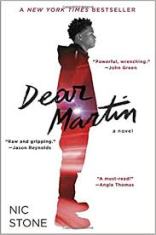 Dear Martin was a book I’d been recommended a thousand times, it seemed, but after reading so many books that felt similar–The Hate U Give, Long Way Down, etc., I just couldn’t pick it up–but I’m so glad I finally did. Nic Stone crafts this novel as a series of letters from young Justyce McAllister to Martin Luther King, interspersed with transcripts of news reports and first-person narrative. It’s complex and thoughtful and plausible and readable and powerful. I loved it.

Nonfiction
When: The Scientific Secrets of Perfect Timing is Daniel Pink’s latest offering, and as usual, he has an insightful book that has applications for me as an individual, a parent, and a teacher. Pink discusses all the elements of timing that govern our lives, from being a “morning person” to a “night owl,” to the power and importance of building in breaks, taking naps, and seeking out social and alone time. He frames this all in the usual compelling narrative style that makes his writing so readable and interesting to me.
 Teaching Books
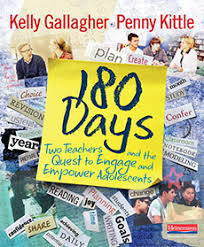
180 Days is proving difficult for me to get into. I’ve had it on my desk for over a month, but every time I pick up this collaboration between Penny Kittle and Kelly Gallagher, I feel like I’m having an emotional battle. My former classroom teacher self wars with my preservice teacher professor self wars with my currently nonteaching summer self when I read about the decisions that go into planning for a packed, skill-building, book-loving, writing-doing, meaningful, 180-day school year. I think it just contributes to that overall feeling of exhaustion I have, so maybe I just need to pick it up when I’m a little more rested.
What are you reading this summer? What books and places help you take a break from teaching? Please share in the comments or on Twitter via @3teacherstalk.
Shana Karnes is enjoying summer reading in West Virginia with her two daughters. She spends lots of time at the public library, the university rec center, and Target–because books, running, and iced coffee while shopping are joyful things. Shana works with practicing teachers through the National Writing Project and formerly taught preservice educators and high school students. Let’s talk reading on Twitter–I’m @litreader for a reason!

 tired confusion of early June. Maybe it just seems too good to be true, but either way, we wake up one fine morning and school is over. Disbelief likely continues. A bit more guarded excitement bubbles up. Then, because we are hardwired to keep pushing forward at all costs, we dutifully race into vacation (with a fevered pitch eerily reminiscent of the one we used to make it through the final crazy weeks of the school year) and look around wide-eyed wondering where to start. Having dragged ourselves across the finish line, heads down but thumbs up in our classroom community successes, we snap to once again to “get this summer thing underway.”
 suggested to myself and to you last year (when will I ever take my own advice?!) –
 Back in February, Julie Swinehart blew up the blog with a blockbuster post that celebrates student reading in beautifully public ways. While our book talks, writers notebook reading lists, and a plethora of other practices make reading lives central to our work, celebrations of success stir up excitement around that work that can be deliciously contagious. So, scroll through and get excited about some ways we can help students spread their reading success all over our classrooms next year.


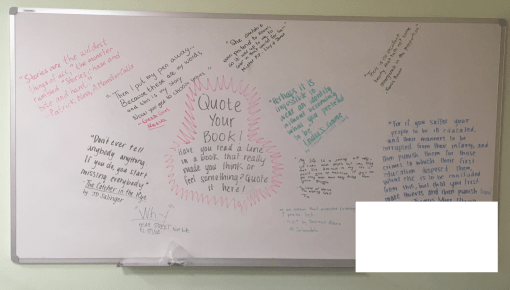
 4. That same teacher also keeps a quote wall on her white board. The words we read can reach us in beautiful ways, and when students experience that kind of moment, they are encouraged to share those lines on the white board. It’s another public display of a healthy reading life. It’s a conversation starter, and it helps build a sense of community within the classroom.
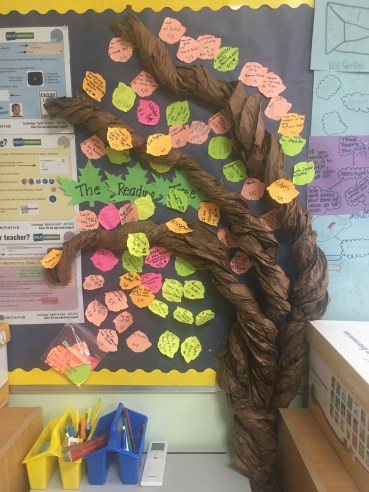
 5. Another teacher in our department keeps poster paper on her walls. Students add titles to the lists as they complete their books. Because names are attached, students can reach out to one another with questions or when they want to talk to each other about a book that they read, too. It’s another public acknowledgment and conversation starter, which is part of what we need when we build reading communities.


 I grapple with this every summer. As a new teacher, I tried to make myself take the whole summer off from thinking about teaching, feeling like I was doing something wrong when I started doodling writing units or reading activity ideas. Later in my career I felt satisfied if I could turn off my teacher brain for just the month of June, and get back into the swing of things starting July 1.


 Published on August 29th of this school year, this post from Charles Moore struck a serious chord with readers. A beautiful reflection on how difficult circumstances demand we love our students all the more, especially early in the school year, this post is the second all-time most viewed of any post on Three Teachers Talk, second only to the home page itself. Little did we know just how many posts this year would deal with our ever-growing need to build relationships with our students in the face of life-threatening adversity. In terms of building community in his classroom, Charles


 Lisa Dennis teaches English and leads a department of incredible English educators at Franklin High School near Milwaukee. She can’t wait to start her summer reading and looks most forward to sharing the summer with her recent 4K graduate, Ellison. She’s my reason.

 Three Teachers Talk