Category Archives: Readers Writers Workshop

New Q & A Posts Starting: If you’ve got questions about readers-writers workshop, we may have answers #3TTWorkshop

Yesterday I had a little chat with my five-year-old granddaughter who had just got in Elletrouble with her mom and dad for running away instead of coming when they called her. She’d had a scuffle with her little brother and didn’t want to stop playing long enough to get a talking to. (I can’t say I blame her. No one likes thinking they are in trouble.) After a dose of parental guidance and a tad of time, I knelt beside Elle and asked if we could talk. She melted me.
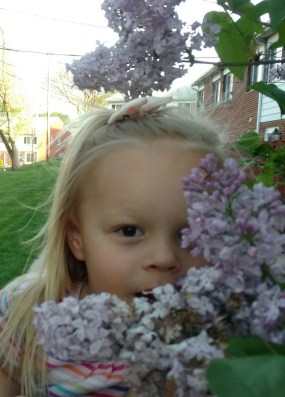
Elle reminds me of her mother — so full of spunk it could be dangerous. She’s fire and ice and double-dog-daring. She has the memory of a growing elephant, and she asks THE best questions. She’s fearless and inquisitive dolled up in loud and loving chaos.

As I knelt on the pavement in the park yesterday, looking into sparkling brown eyes, I couldn’t help but send a plea:  Please, God, do not let life and school and standardization hurt this highly-spirited mighty wisp of a darling intelligent diva.

I know I share concern with most parents and grandparents. And as teachers, we feel well-deep concern for many of the children we work with every day year after year.

Peanuts tired tomorrow cartoonIt can be emotionally exhausting.

That’s where I was a year ago:  Flat on my back exhausted. Overwhelmed. Overcome. There were several factors that added to my distress. I won’t go into details, but let’s just say this about one last straw:  I’ve become wary of some assistant principals, especially those assigned to evaluate English departments when they have zero literacy experience, — and they do not believe in edu research and data-informed practice. Boy, howdy.

Thus, my gap year, which went by faster than my Elle running from her mother.

Have I missed it? You’d have to define it.

I’ve missed working with teens every day. I have not missed some of their parents. I have not missed the effects of some of their trauma.

I’ve missed working with insightful and forward-thinking colleagues. I have not missed others’ same-old-same-old attitudes or platitudes.

I’ve missed helping writers write and readers read — more — and better. I have not missed trying to break the habits of inauthentic and limiting literacy instruction (only writing to prompts, taking fill-in-the-blank tests, worksheets . . .)

I’ve missed the joy of sharing daily book talks — books I’ve loved, books that gave me pause, books I hope to read, books I-couldn’t-get-into-but-maybe-you-can. I have not missed grades or justifying independent reading without them.

I’ve missed exploring and discussing current events, lyrics, art, poetry, and good books; diving into inquiry, writing from the heart — adolescents have keen insight and so much talent! I have not missed anything test-prep related (test-proctoring included).

I’ve missed my students and the relationships we build around becoming better humans. I have not missed the late work or grading policies that kept me perpetually behind.

I know there’s more — the good, the bad, and the ugly that goes into this profession of teaching. When I first entered the classroom, I had no clue. (I’d bet this is most of the population.)

So what now?

I wish I knew.

Only kidding. Kinda. I know I need to find a job (financially, I don’t know how we’ve made it this far.) I just hope I am better at self care.

I must be better at self care. I must be a better advocate of my practice. For myself and for my students.

So what does this all have to do with my granddaughter?

Elle is every child I’ve ever taught and every child I may ever teach. She’s a handful of opportunity — worth every pinch of sass and poke of attitude — and she needs teachers, especially literacy teachers who give her choice in what she reads and what she may want to write, who talk to her about her needs as reader and as writer, who care more about her as a tiny human than as a data point. Elle needs teachers who feed her inquiry and focus her energy. She needs teachers, equally curious and energetic, who have lives outside of teaching.

Oscar Wilde quote

For the past year, I’ve collected questions teachers have generated at the workshop trainings I’ve facilitated (a gift of part-time consulting work).  I try to answer these questions in the short time we have together, but now I’m thinking I can use these questions here at 3TT, too. I can remind myself of what I love about teaching readers and writers, and perhaps you, dear readers, may benefit, too.

So this is a charge to myself made public — Important since I’ve been awful about keeping my writing commitments and posting regularly, although in the past year I’ve — taught myself to watercolor, read 17 books that are not YA, planted a killer container garden, tried being a vegetarian, binge-watched too much on Netflix, cuddled grandbabies, had a book proposal accepted, and logged miles on my new bike —  Each week I’ll write a Q & A-type post that answers a question about teaching high school readers and writers in a workshop classroom. I used to feel I was pretty good at it.

If you have a question, related to ELAR and/or workshop, please leave it in the comments. I’ll try to spotlight yours.

Questions Answered

Amy Rasmussen has taught all levels of high school English, except AP Lit (gen ed, Pre-AP,  G/T, AP Lang) at two (Title I) high schools in N Texas. She’s passionate about self-improvement but knows perfectionism can kill the soul. She’s become vocal about teacher self care and refuses to even think about grading essays on the weekend. She loves her work as a literacy consultant, especially that moment when teachers want to read and write more — just like we hope for all our students. Follow Amy @amyrass

One Pagers as End of Year Reading Reflections

Ending the year should be a ton of fun. Once the standardized testing season is over, it’s not time to let the days drag. It’s time to continue the learning, the fun, and the reflecting. As Angela wrote, it’s important to end the year strong, and on a positive note!

I think one-pagers are a great answer to some of the end-of-year-dilemmas we teachers face.

The possibilities for one-pagers seems to be endless. They are fun, they are hands-on, reflective, and what student doesn’t want to use markers and crayons in the classroom?

I’ve shared some of my experiences with one-pagers before, and I thought I’d share another idea or two here now.

At the end of the first semester, I asked my AP Lang students to reflect on their reading habits and experiences. This was our last assignment of the semester, and it was so fun and positive to grade. What a way to wrap up!

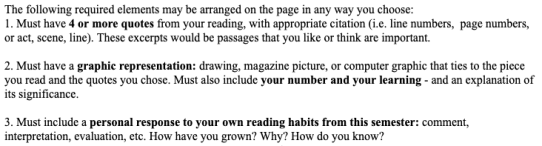
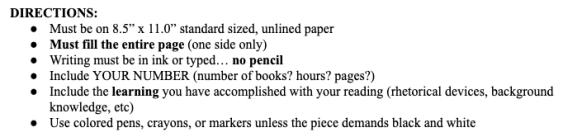
The requirements for the reading reflection one-pager were as follows:

Screen Shot 2019-05-15 at 2.02.03 PM

Screen Shot 2019-05-15 at 2.02.19 PM

I modified this assignment from one a colleague shared with me. It originally focused on one book that a student would read for independent reading, so when I modified it into a semester reading reflection for AP Lang, I was unsure, yet hopeful, about how it would turn out.

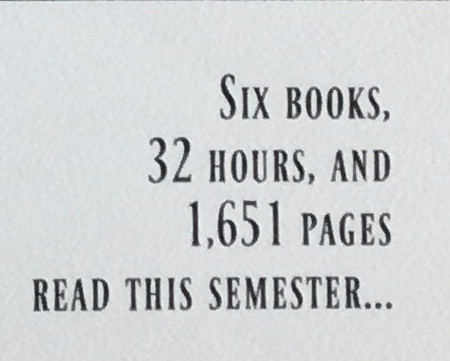
One of the big differences between doing a one-pager for a book vs a semester reading reflection is the idea of What’s Your Number? I told students they could use any unit of measurement they wanted: pages, hours, books, chapters, inches, pounds, it didn’t matter. It just needed to represent their reading for the semester, as it acknowledges the accomplishments!

I was so happy with the results.

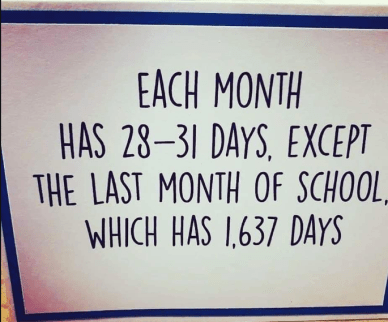
160B0158-C720-4490-ADB6-32737D731083

29AF46CA-2420-4C28-9393-CA90236D3C82

1653a15d-b59d-45de-91e1-8b6399b2d597.jpg


I plan to ask my AP Lang students to do this again in a couple of weeks, but to focus on either second semester or the entire year, whichever they like.

It’s a positive way to end the year. It’s a celebration of learning and reading and growing, and it puts a smile on all of our faces.

How else have you used one-pagers in your classroom? I’d love to read all about it!


Julie has been teaching secondary language arts for twenty years, spending the first fifteen in rural Central Oregon, and the last four in Amman, Jordan. She’s thrilled to report that she and her family moved across the world to Managua, Nicaragua this year, and are loving their new adventure.

Follow her on twitter @SwinehartJulie


Ending the Year Strong (without resorting to movies…)

I’m so tired. Aren’t you tired? I saw this meme today and really, nothing has ever felt more true.

Screen Shot 2019-05-14 at 9.29.01 PM

And we still have miles to go before we sleep…

For this post, I want to share some smart ways that the teachers I work with are ending the year strong, so they and students can stay awake.

StoryCorps

Rachel wanted her students to spend time storytelling before the end of the year. After the crush of testing, she wanted students to be engaged in writing about their own lives. We tried out StoryCorps.

Students brainstormed lists of people to talk to and used the StoryCorps app to generate questions. After they interviewed, they then talked about finding a powerful moment in the interview. Using the StoryCorps videos as their mentor texts, students are immersed in AdobeSpark, making their own videos.

Podcasts

In Emilyn’s (@Pena_WC) sophomore English class, students have just completed a round of book clubs reading novels in verse (read more about these in Julie’s post). They devoured the books and loved talking about them together. As a summative assignment, the folks at Teach Living Poets inspired us to have kids create a podcast modeled after Tracy K. Smith’s podcast “The Slowdown.”

Students chose a poem from their novel in verse, and in their group, they decided how to talk about the poem. Students have been thinking deeply about the poems and the way they exist in the larger text.

Once students publish, classmates will listen and sketchnote (If you want to know more about sketchnoting, check out Tanny McGregor’s book Ink & Ideas).

Your Year In a Book

I work with a wonderful teacher, Tiffany (@tiffwalters), who is always brimming with ideas. The best part of my job is when I get to support her in bringing her ideas to life. One day she came in and told me she was thinking about having her kids write about their sophomore year in the form of a book. But instead of the actual book, she wondered what would happen if they focused on the parts of a book: the Acknowledgments, the Author’s Notes, the dedication.

I was hooked! We gathered books that have those components (Internment by Samira Ahmed is a great mentor!) and Tiffany set them out for students to browse. They made lists of their noticings, and got to work.

Using Book Creator, students are creating books about their year, incorporating the editorial elements, and three original writing pieces that illustrate their year. The students are mining blog posts they’d written this year to revise and shape into reflective pieces.

The students are stretching themselves as writers and thinkers, and it will be amazing.

There are so many ideas like this happening in the schools where I work. In your schools too, I bet. I love how all these teachers are relying on the rhythm of workshop: looking at mentor texts, creating authentic audiences, writing, revising, and growing.

The great thing about these ideas too is that if you’re reading this post and thinking, “oh, I love that idea, but it’s too late in the year to try it,” bookmark this post and come back to it in August. Any of these ideas would be a great way to start the year too.

What are you doing to make the most of the last part of your year?

Angela Faulhaber is a literacy coach in Cincinnati, OH. She has 10 pages left in Internment by Samira Ahmed and is already missing the Layla. 

A “Quality” Mentor Text

We all know the value of a really effective mentor text: media reviews from A/V Club, The Player’s Tribune for authentic narrative, The Ethicist (credit Penny & Kelly) for opinion or argument, TED Talks (ala Moving Writers) for writing that “speaks” to an audience, Humans of New York for whatever you want it to be. And in a workday that allows little time for “browsing” of any kind, the more adaptable the mentor text, the better.

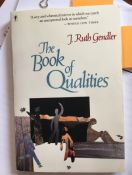
Shana has written about the use of Ruth Gendler’s Book of Qualities for QuickWrites. I wrote about this mentor text as part of a multi-genre project. (Like most good ideas used in my classroom, this one was bestowed upon me by my teaching partner, Mariana). And we’re using it again with seniors as part of their author study in Advanced Writing. Students are tasked with identifying themes and abstract concepts that feature in their author’s work and personifying one of these in a prose poem after Ruth Gendler’s qualitiescover“Qualities.” This year, I’m also using this mentor text to “assess” independent reading in RWW for sophomores.
First, I give them a copy of the Table of Contents and samples from Gendler’s Book of Qualities and ask them to choose one that connects to their book. Now if I were more efficient (ha!), I would have a copy of each page available, but no. So, that afternoon, I scan the pages necessary for each student to have a hard copy of Gendler’s take on the quality they matched with their own book. In theory, I’ll eventually have all of them scanned and organized in a properly labeled folder, right? Again, ha!

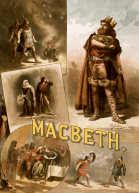
Anyway, the next day or so, they get a copy of Gendler’s prose-poem personification of the quality they identified. Their writing task is to revise Gendler’s piece to make it macbeth's robesspecific to their author’s work. Scaffolding is kind of built in: less confident writers can make more extensive use of Gendler’s structure; stronger writers can even start from scratch. Either way, this task requires VERY explicit modeling, so I model with a quality that links to a text we all read together. This year, the model quality is power, arising out of our film-and-soliloquy study of Macbeth (although I think it would work with any shared text, even a poem or short story or article). Essentially, I build in specific details that are specifically text-related. For example, Macbeth’s power is “dressed in borrowed robes,” at least at first. It doesn’t walk but rather “vaults” across an entire continent with a dagger in its hand. Power’s hands never get clean, so why not just drench them in more blood? Even students who persisted in their claim that they just don’t “get” Shakespeare had their “Aha!” moment in this discussion.

albatrossGendler’s clothing motif in her discussion of power is convenient, as clothing is a motif in the play as well. I just got lucky there. But students are still doing a version of literary analysis of theme and turning to the text for evidence. And it’s way more fun than that albatross of high school English classrooms, the Literary Analysis Essay.

What I love about this mentor text is its adaptability. It would work with any text, and students certainly don’t have to be limited to the “qualities” Gendler explores. They can CHOOSE to invent their own. Depending on how this goes with my sophomores, I might collect them and bind them into a class booklet, our own version of The Book of Qualities. 

Assessing Conferences Part 2: What We Can Learn When Teachers and Students Assess Writing Conferences

Wanting to affirm for myself that conferring really is a strength, wanting to determine ways I could continue growing this strength (that Harvard Business Review article “The Feedback Fallacy” keeps me thinking!!!), I decided to act on one of my steps from my last post about assessing conferences with student writers. 

Knowing that my AP students would be meeting with me for extended one-on-one conferences (it felt less disruptive to film since these occur outside of class time), I selected four on which to focus. When selecting the four, I chose two students with whom I felt confidence in the relationship (these two, in fact, typically sought extra time to confer over their writing) and two students with whom I felt less connected. I wondered: in what ways would my conferring look different?

Before filming, my instructional coach and I determined that I would examine number of questions asked and/or how questions were used, where I took steps to affirm or maintain that “love first” approach, and where I offered strategies. I chose these three lenses with the guidance of my instructional coach: I was worried about questioning my students to death, whether or not  I truly lived up to my love-first value, and the usefulness of the conference. 

Technical Aspects 

In terms of technical aspects, I filmed on my phone (I know, high-tech, right?! This means you can do it, too.). After each conference, my student scored it and I scored it; then I watched and transcribed it (imperfectly since it was mostly for me). Upon collecting each of the four videos, I shared them with my instructional coach so we could confer (ALL learners need conferring!!), and then I color- coded the transcript so I could look for patterns and other A-Ha’s (green for questions, pink for love-first/affirmation, orange for strategies). Of course, this is a limited data set; but it provided a manageable, pragmatic entry point.

This slideshow requires JavaScript.

My Noticing’s

  • With each of my students, I maintained the love-first affirmation (phew!). With my student with whom I perceive having the weakest connection, affirmation proved the dominant strategy. Interactions with that student, in particular, seemed to suggest that she left with heightened confidence, ready to continue revising.
  • With my students with whom the relationship is more connected, questions dominated.
  • Strategies tended to arise from the student or me near the end of the conference.

Instructional Coach Noticing’s/Suggestions

  • He reinforced with me that conferring is a powerful way that teachers connect with students through content.
  • Beyond the areas I examined, he noted appropriate pause time during the conferring, suggesting that students had space to think and to ask questions.
  • He observed that ending the conferences with the rating of it positioned it more around how the student felt at the end of the conference rather than the last moment being about the “to-do list.”
  • He suggested that when I confer with students during class time that I audio record and skip the video; this is a simple shift to make it seem less distracting or intrusive.

Learning and Further Wondering

  1. Awareness of the level of connectedness with a student should help steer the conference. Wonder: What’s a quick question I can use to prompt myself toward this each time I sit with a student? How can I use body language to help infer level of connectedness and comfort?
  2. Understanding the student’s level of self-efficacy should also impact the moves I make while conferring. Wonder: Would student tracking of this be beneficial?
  3. With students whom I feel confident in our relationship, I can challenge more. I can ask more questions and prompt them to determine solutions or next steps. Wonder: How can I accelerate the level of connectedness and/or student self-efficacy so that more of my students arrive at this point sooner as writers? What do I need to do more deliberately here? (Note to self: study the giants–Kittle, Gallagher, Murray, Graves, Elbow, etc.)
  4. With those same students, they may also–because that confidence in problem-solving is there–initiate their own solutions. Wonder: What are ways to keep track of where students generate their own solutions versus when they use those offered through mini lessons and mentors? After all, this is what I want my writers to be able to do for themselves. 
  5. Individual conferences–no surprise here–are an effective way to redirect students to mini lesson strategies. Wonder: Do I need to more directly prompt my students to consider what strategy might work?

What’s Next?

With more time, I’d act on the suggestion of my instructional coach to audio record some of my in class conferring (those three minute regular conferences). I’m curious to see what patterns emerge with a greater constraint of time.  This experience also has me pondering what else I should be recording…mini lessons? 

Reflecting on conferring confirms the power of it in the classroom (see Amy’s #3). Reflection emphasizes that conferring truly is the best differentiation. That conferring promotes problem-solving.That conferring grows confidence. That conferring shows the ultimate flexibility, allowing for responsiveness to each learner’s needs.

Kristin Jeschke supports awesome learners at Waukee High School in Waukee, Iowa. Though nervous about directing and starring in these short films, she discovered that they were not all that painful. Follow her on Twitter @kajeschke.

The Great Debate: Summer Reading

While there is still snow resting on the peaks of the mountains and skiers claiming they’ll ski until the Fourth of July, summer in SLC is approaching rapidly.  The sun is hanging around later and later, the trees are blossoming, and students are ansty. The end of the school year always comes with bittersweet excitement, reflection over what was accomplished and what was not, tons of hastily written ideas on post-it notes, and summer reading.

Summer reading was both an authentic and assigned part of my summer growing up, as I was always reading and read what was asked of me for the upcoming year.  Assigning summer reading has been a part of my teaching career, too. I understand the intention for students to fend off the “summer slide” by practicing reading skills that, perhaps when a text isn’t assigned, may dwindle.  Shared books also provide an entry point into learning at the start of the school year and the beginning of collective knowledge among classes.

But this year I am questioning it all.  

After nine months of promoting choice reading and working with individual students to develop reading identities, giving my students their summer reading requirement for next year’s class feels like a step back from work we’ve done.  Likewise, assigning books to the upcoming juniors feels out of step with the work we’ll do together next year.

Assigned summer reading titles doesn’t put the individual at the center.  Students are reading texts I curated before I have even met them. Who knows if they’ll enjoy one of the books? I wonder if I’m turning them further off from reading before we have begun or if they have the reading skills and stamina to be challenged, but also be successful.  

Additionally, students are reading texts meant to be discussed and shared in isolation.  This vacuum creates an independent literacy endeavor versus one shared within a community like the one we will strive to build all year.  If a student doesn’t read, for whatever reason, they start the year a little further outside that community. Learning should be inclusive, not the catalyst for creating an exclusive group.  On the flip side, I don’t want to bog student readers down with a task or assignment because authentic readers engage without assessment.

Within a school year, week, or day, we are familiar with student schedules.  I have an idea of what students are involved in academically and after school.  I don’t know these students, let alone their summer schedules. What is my place in dictating their three-month break?

The issues with required summer reading are evident when your classroom adapts the workshop model.  The solution takes work. We have to be so driven during the school year to create authentic readers, that the summer is viewed by students as a time to read more of what they want, a time to check books off their “to read” lists versus their “must read” list.  


IMG_1709

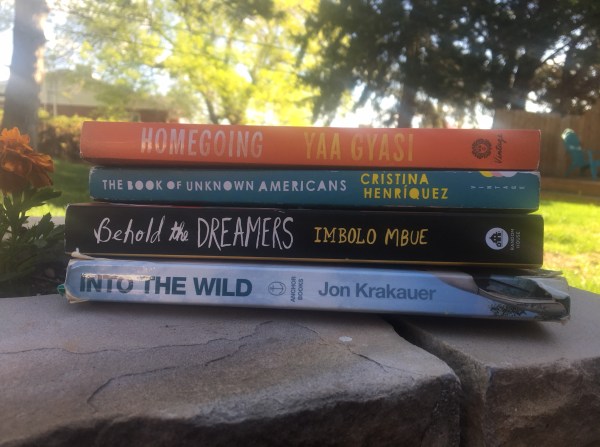
American Literature Summer Reading Selections:  We will all read Into the Wild as a study of independence and freedom, then students will select either Homegoing, The Book of Unknown Americans, or Behold the Dreams to read as inquiry into the changing American Dream.


I haven’t dismantled the system (yet).   My incoming juniors do have summer reading.  I hope one of the offered choices is THAT unique book that hooks a reader or makes them curious to come to class in August.

I hope my outgoing juniors have developed enough of a sense of who they are as readers and will engage with books of their choice this summer.  Before the year is out, we will complete our reading ladder reflections, share our favorite books of the school year, book talk, add to our “To Read” lists, compile a list of “must have” titles for my library, and during our final conferences, I will ask students what they plan to read this summer.  I will continue to invest in individual readers next school year so we can re-think and re-configure summer reading assignments.

From my Three Teachers Talk Community, I’d love to know how does your school or department handle summer reading?  What strategies do you have for making summer reading authentic and engaging?  What has been the result of your school doesn’t require summer reading?  What successful changes or modifications have you made recently to support authentic reading?


Maggie Lopez has a full summer reading schedule of sought after titles planned, like On the Come Up and Internment, as well as vegan cookbooks, travel books, and whatever else she can get her hands on.  You can follow her on Twitter @meg_lopez0.

On Slow Stylists and Teaching Writers

My hair and North Texas humidity are not friends. I can fix my hair in the morning, take one tiny step outside, and floop — it’s like the photo next to the word frizz in a picture dictionary.

I need help with my hair.

Not long ago, I had to find a new stylist. I’d seen my hair pro for going on 20 years — through short and kinda long and short again and kids’ friends and schools and graduations. I didn’t even know I had attachment issues until I called to make an appointment and learned Vivian had moved to another salon. They would not tell me where.

You may know how hard it is to find a new stylist. Overwhelming and risky come to mind. I just couldn’t deal with it — so I went cheap. I saw a random ad on line for “models” and took a chance on a “stylist-in-training”.

Photo by Markus Spiske on Unsplash

And it was good.

Well, it got good. First, I waited 35 minutes just to get in the chair. I learned why as Emily tentatively combed and cut in tiny snips. She was S.L.O.W. but cheerful, eager, and excited to put the skills she learned through lecture and video into hands-on real-hair practice. Emily’s “expert mentor” stood to the side, giving tips and clarifying process the whole time. Then, when Emily thought she was done with my cut, the mentor picked up the comb and scissors, checked each section for wayward hairs, and reviewed the moves Emily had just made to create my style.

Of course, this all reminded me of teaching writers.

Awhile back I wrote about slowing down and planning time for students to think and talk and question before we demand they get to drafting. I think planning time applies to other aspects of teaching writers as well.

Here’s three things I’m wondering–

  1. How can we plan time for more talk? Writers write well when they have a solid base of information from which to build their ideas. Purposeful talk can help our writers grow in knowledge, recognize bias, and engage in conversation that pushes thinking. Listening and speaking often receive short shrift in ELA classes. We can change that. We can help students get their hands and heads into real-life practice as they talk about issues, news, and attitudes that fuel their writing.
  2. How can we plan time for more questions? When writing, questions often lead to answers. I teach asking questions as a revision strategy:  Students read their peers’ writing and can only respond with questions that prompt the writer to add more detail, include examples, develop thoughts more fully, etc. This takes practice, but it’s the best approach I’ve found so far in helping students question their own writing. (See Start with a Question for more on how questions aid writers.) We can give tips and clarify process — and help students work together to improve their writing — when we spend a little time helping them ask good questions.
  3. How can we plan time for more conferring? A few years ago, I asked my students how best they wanted me to help them improve as writers. These high school juniors overwhelmingly asked for more one-on-one. I was kind of surprised: Teens wanted to talk to me moreSeriously, they did. These writers understood they were all at different places with their language skills and writing abilities, and they knew the value of our conferences. Undivided attention, sometimes just noticing, even for a brief few moments, can make a world of difference to a writer. Sometimes we instruct. Sometimes review. Most often we just listen.

I left the salon that day 2.5 hours later — the longest I’ve ever spent in a salon. Time didn’t matter to Emily. She wanted to do well, truly practice her new skills, and create a cut she’d be proud of. I know we feel rushed and crushed in our English classes, but there’s a lesson here:  How can we slow down in order to maximize the time our students need to grow as writers?

In case you’re wondering, I like my cut, but I’m still battling Texas weather.


Amy Rasmussen loves working with student writers and their teachers. She thanks her family and friends for their time: generating ideas, reading drafts, proofing, editing, encouraging. And she thanks you for all you do for readers and writers everywhere. Follow Amy on Twitter @amyrass

Four Things I Wish I’d Known When I Became an English Teacher

I’ve got a lot to learn. Even after decades of reading, writing, and learning to be a teacher, I often feel the sinking feeling of inadequate. Every spring she floats to the surface, and sends a garbled message that makes me question:  Did I do enough to help my students?

Help them with what?

When I first started teaching high school English, I thought it was all about the books. I loved literature. I wanted them to love literature. How can they love it if I don’t help them see the complex beauty of well-crafted sentences and heart-achingly human plot lines? I was that teacher:  I taught books instead of readers. (Many of you have heard me speak about my Dickens’ debacle. Believe me, it was the worst of times.) Like many new teachers, I taught like I had been taught. I did not focus on the learner and her needs. I did not focus on the reader and his interest, ability, or anything that matters to growing readers. My focus squared fully on what I thought a high school English class should be:  classic lit (chosen by me), study questions (written by me), analysis essays (prompts by me), and me helping my students “understand” what they had just read. (Not even considering that they may not have read the assigned pages at all.)

Last week I celebrated with family as my daughter and her husband graduated from

Jennaand RyanUSUgraduates

Jenna and Ryan Anderson

Utah State University. We watched close to 2,000 graduates in two different college commencement ceremonies walk the stage and into the next part of their life’s journey. Many of those graduates intend to be teachers. It’s a beautiful thing, really. New blood, new energy, new passion in a very demanding career. I hope it doesn’t eat them alive.

It won’t — if they are better prepared than I was.

That’s what kept hopping through my head as I watched so many young people shake hands and clasp diploma covers — evidence of their academic accomplishment:  Has their education prepared them for the realities of teaching? Will those going into ELA classrooms teach books or teach readers? It’s a lot of years later, do they know more than I did? Of course, I know next to nothing about USU’s College of Education, although according to the Dean, they are highly ranked. That’s not the point.

So what is the point?

I’ve still got a lot to learn. But if I can help speed dial the learning for other English teachers, I’ll do it. Here’s four things I know for sure:

We must–

  1. be literacy teachers — not just literature teachers. (I first heard Kelly Gallagher say this at a conference years ago. This shift in perspective changed me. Readicide is still a go to resource.)
  2. be purposeful in developing readers and writers, and let that be our guide as we plan, prepare, and present lessons. (I thank God for Penny Kittle. Write Beside Them sparked my move into authentic writing instruction. It’s the only professional book I’ve read more than once. Also, Book Love.)
  3. be inclusive in all aspects of our teaching from the resources we choose to the attitudes we take and how we talk and act and advocate, and how we work to create relationships, break down barriers, fight injustice. (In the past couple of years, I’ve learned a lot from Cornelius Minor about having an inclusive mindset. His book We Got This would be a good gift for new teachers, for every teacher.)
  4. be reflective, yes, but more vital to meeting the needs of all learners, be responsive. (That’s the intricate simplicity of the workshop model of instruction:  We meet the needs of individual students in the moment of their struggles and their strengths.)

You and I both know there’s so much more. The whole teaching gig can be so overwhelming. (Thus, one reason I’ve relished in my gap year.) If nothing else, I hope all ELA teachers, new and not-so-new, will focus on themselves this summer: Read a lot. Write a lot. Think a lot. That’s really all it takes to master #1.)


Amy Rasmussen lives, writes, paints, and gardens in North Texas. She’s taught all levels of high school English, except AP Lit, and now she’s seriously thinking about middle school — or college. She facilitates readers-writers workshop training wherever she’s invited and loves to see ideas percolate and passions ignite as teachers sit in the seats as learners, internalizing the philosophies and routines of RWW. For more info on trainings, check out the 3TT PD page.

So Many Great Reasons to try One-Pagers!


I’m always trying to find valid, fun, and interesting ways to assess different reading standards without assigning essays or quizzes. This year, in addition to conferences, graded video discussions, and “short story clubs” (instead of book clubs), I’ve assigned one-pagers to my students.

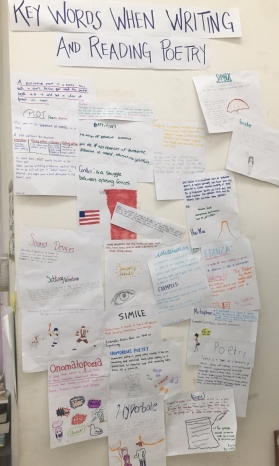
Most recently, I assigned a one-pager to my grade seven students. We have been studying poetry for the last several weeks, reading, writing, and talking about it. We developed a list of words we should use in order to raise our discussions to a more academic level, and my students created a word wall with that list.

When it came time for a summative assessment over the poetry we’ve studied, I decided to assign a one-pager.

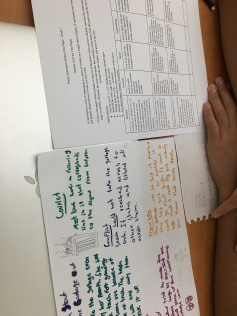
A one-pager is exactly what it sounds like: one page of illustrations and information which demonstrate the student’s understanding or reflection of whatever the topic and learning that has been studied and practiced in the previous unit. With seventh graders, I allow them to make their one-pagers larger than the typical A4 size paper, so sometimes their “one-pagers” end up more like “three-pagers”, but the idea is that they are a cohesive unit, and taped together as one large captioned illustration rather than a series of pages that are stapled together in the corner like an essay might be.

Before assigning the summative assessment, I assigned a practice one-pager. All three of my seventh grade classes practiced with Shel Silverstein’s Sarah Cynthia Silvia Stout Would not Take the Garbage Out. It was a big hit. It’s funny and chock-full of poetic devices. Plus, it’s relatable to seventh graders and has a nice lesson at the end.

We spent a couple of work sessions practicing, talking, coloring, writing and generally having a nice time learning and reflecting on what we have learned. During the third work session, I asked my students to self-assess their practice one-pagers, using the rubric, and writing on the back of their papers what they think they earned in each of the three categories.

The rubric covered three standards, so students weren’t overwhelmed by small pieces and tasks. There are requirements for this assignment, but still a lot of room for individual choice and creativity.

This extra day of working with the practice poem paid off. I overheard students having their own “ah-ha” moments, checking the word wall for definitions and ideas, and talking to each other about things like couplets and alliteration. The conversations were really fun to overhear.

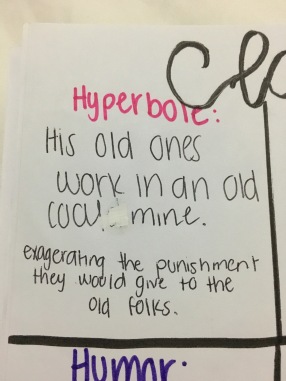
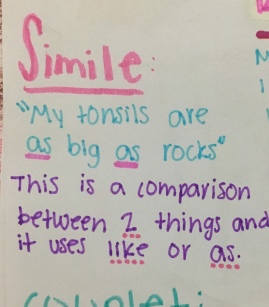
When it came time to complete the summative assessment, my students were ready. Each class was given a different Shel Silverstein poem: Cloony the Clown, Clarence, or Sick. Each of these poems contains several of the poetic devices we studied, and were written by a familiar poet. The final products were knock-out. Below I’ve included a few samples.

This is one of the many ways I’ve used one-pagers as a tool for learning and as a tool for assessing. I’ll share more later, and I look forward to hearing about how you use them in your own classes!

Julie has been teaching secondary language arts for twenty years, spending the first fifteen in rural Central Oregon, and the last four in Amman, Jordan. She’s thrilled to report that she and her family have moved across the world to Managua, Nicaragua this year, where a new adventure has begun.

Follow her on twitter @SwinehartJulie

What I’ve read in 2019, So Far!!!

I’m not finding a lot of reading time this year. Maybe it’s graduate school. Or maybe it’s that I’m just really lazy. I’m up to 14 books in 2019. I’d say that’s a pretty respectable number, but what strikes me is the quality of books I’ve been able to enjoy as winter has moved into spring, then into summer, then back into spring, then summer, and on and on, ad nauseum…

Amazing Books that Everyone Should Read Right Now!!!

40519254Shout by Laurie Halse Anderson

Speak was one of the books that sent me, several years ago, on this YA journey.  Shout is Anderson’s memoir-in-verse that inspired her to write Speak. Every girl needs to read this book, and so does every boy.

img_5084For Every One by Jason Reynolds

A book everyone needs to read to themselves and to each other. We need more books just like this.  Some might breeze through this book book in a hour or less. Others might savor every page, basking in the wisdom of Reynolds.  This book is a mentor text gold mine.


On the Come Up by Angie Thomas

GREATEST YOUNG ADULT NOVEL I HAVE EVER READ!!!! Must I say more? I will. This book’s protagonist, Bri, let’s the reader see an authentic young adult attempting to find herself in a world she doesn’t totally understand.  I’m an adult that doesn’t understand this world and yet…wisdom abounds. I can’t even…

Sequel Successes and Follow Up Fun!!!

The Vanishing Stair (Truly Devious, #2) by Maureen Johnson

img_5411I loved Truly Devious for so many reasons.  Massive and mysterious Gothic mansion setting? Check! Plucky and intelligent teenage sleuth? Check! Fast paced narrative that weaves in authentic “teenager sounding” dialogue? Check! This sequel is a win for everyone involved and I can’t wait for the final book in the series!!

img_5412

Odd One Out by Nic Stone

I have a nasty habit of moving about 80(ish) pages into a book and then losing interest. I let myself stray to far from this book for too long. When I book talked this book for my students, I noted how it wasn’t so much about a love triangle, it was more of a love circle. The confusion about how we are supposed to feel about ourselves feels authentic, even to this old man.

img_5419Two Can Keep a Secret by Karen McManus

I enjoyed her first book, One of Us is Lying, but this one missed me, somehow.  The plot twist was interesting, but predictable, and I struggled to keep up with the constantly switching points of view.  Me not liking this book may reflect more upon the reader than the writer and I HATE that I didn’t like this book, but reading it wasn’t particularly enjoyable. Others will love it and I will not be a person that denounces it based solely on my own discomfort.

Fun Books that May not be for Everyone

Bull by David Elliot

A book in verse that retells the story of the Minotaur. I didn’t realize how much a book could make me feel uncomfortable, both linguistically and contextually.

We Were Liars by E. Lockhart

If you love twist endings, or are far more intuitive than I am, you will love this book. An examination of total mental meltdown through the eyes of our current generation of teenagers, this book has many layers.

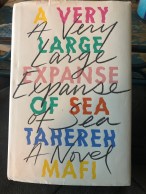
c79cbe95-7c09-4d7e-b25e-f4d26b880aa0-7652-0000007733788706_file-1A Very Large Expanse of Sea by Tahereh Mafi

Another book I let gather dust on my nightstand. The story of Shirin and Ocean.  A girl who clings to her faith in the face of bigotry, while at the same time exploring forbidden love.  Excellent lesson for us all.

The Assassination of Brangwain Spurge by M.T. Anderson

This was a weird, wild book. Don’t believe the words or the pictures, both can lead you astray in this fantasy story about clashing cultures and an unpredictable friendship.

Guilty Pleasures

img_5345Wolf Pack (Joe Pickett, #19) by C. J. Box 

A guilty pleasure, a wheelhouse book.  When I can’t get wait to get to another Jack Reacher story, Joe Pickett is the next best choice. I could see our junior and senior boys loving the easy escapism this book provides.  Like a romance novel for readers with beards.

Verses for the Dead (Pendergast, #18) by Douglas Preston and Lincoln Child

Aloysious X. L. Pendergast is a lone wolf FBI investigator with a mortician’s wardrobe and the gaunt, pale skin to match.  He solves the bureaus most bizarre cases using a combination of inductive reasoning and the focus of a Tibetan monk.  I will never pass on an offering from Preston and Child because they, so deftly, mix intrigue with well crafted prose.

Adrift (Corps Justice – Daniel Briggs #1) by C. G. Cooper

My wife has been trying for at least a year to convince me to read free e-books from Amazon Prime.  This book had an interesting concept, not unlike the books I love from Lee Child. A former soldier finds himself caught up in the middle of a small town turf war and, while he didn’t light the fire, he is more than willing to put it out.  Not that I’m a master of the written word, but having crafted a sentence or two, I can sympathize with an author when I see he or she needs a good editor.


Charles Moore can’t wait to see what the Battle of Winterfell does to his beloved Westeros. He’s trying to be a diligent reader, but he’s not trying as hard as he could be.  He enjoyed seeing the whole family together for the first time in a long time over the Easter Weekend and he’s ready for grad school to be over for the semester.