Category Archives: Community

5 Middle School-Friendly Fiction Books About 9/11

I was still a teenager in 2001, and an immature teenager at that.  On 9/11 I wrote a poem in my diary about watching people jump to their deaths on television.  By September 13, 2001, I was back to writing in my diary about getting the silent treatment and missing allowance money.  I didn’t have a way to process 9/11 back then. 

So it’s no wonder to me that I seek out middle school-friendly books about 9/11, because a middle school book about 9/11 is exactly what I needed when I was… you know… in middle school.

And, interestingly, all of these books emphasize the importance of connections to others in the face of tragedy — not just our family and close friends, but also those neighbors we never talk to, the strangers in our lives, and the people we don’t even know we know.  


Some notable 9/11 fiction books for teen readers include:


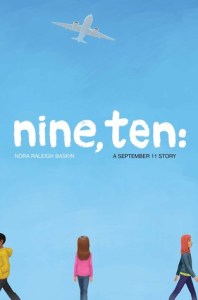
  1. Nine, Ten by Nora Raleigh Baskinnineten

Baskin’s lyrical, concise book follows four different young teens in the hours leading up to the terrorist attacks on the United States.  The emphasis here is on the importance of community rather than the tragic events, and our characters are removed from Ground Zero.  Given the brisk pacing, the age of the characters, and the gentle treatment of the terrorist attacks, this book is probably a best fit for readers in grades 5-6. However, the topic gives this book significant crossover appeal to a middle school or even a high school classroom.


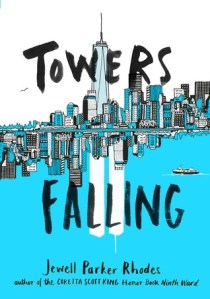
  1. towers-falling  Towers Falling by Jewell Parker Rhodes

This book begins in present-day Brooklyn and works backward, as our main character Deja attempts to understand her father’s emotional fragility.  While younger readers will probably be surprised to discover Deja’s connection to the 9/11 attacks, older readers will be able to make reasonable predictions about where the story is heading from the generous hints Jewell Parker Rhodes gives us along the way.  I appreciate this book not only as a 9/11 book, but also as a book that brings in diverse characters, homelessness, PTSD, Islamophobia, and other social issues.  Recommended for grades 5-7.


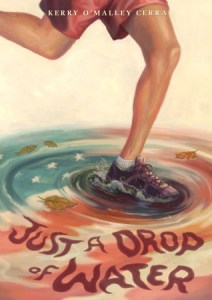
  1.  Just a Drop of Water by Kelly O’Malley Cerrajust-a-drop-of-water

Before 9/11, Floridian Jake Green’s only cares in the world seem to be  becoming captain of
the eighth grade track team and his grandfather’s war medals.  But 9/11 affects everybody, even in this sleepy town, and all of a sudden Jake’s best friend’s father is taken into FBI custody.   Cerra presents a traditional middle school friendship novel introduces tough topics like the unfair detainment of innocent Muslims and the role of war in international relations.  Recommended for grades 6-8.


  1. memory-of-things  The Memory of Things by Gae Polisner

On the morning of September 11 Kyle Donohue evacuated Stuyvesant High School, blocks away from the World Trade Center, and walked home to Brooklyn
with a large group of refugees.  On the way he sees a girl with angel wings who seems lost and confused and brings her to his apartment.  This dual perspective story (Kyle’s narrative is straight prose, the girl’s narrative is fractured poetry) is wholly immersive in 2001 period details and is more about people than politics.  Recommended for grades 7+


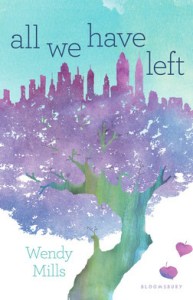
  1. All We Have Left by Wendy Millsall-we-have-left

Hand this book to the reader who wants to be INSIDE the towers as they come falling down.  Readers go back and forth between the story of Jesse, who is 2016 was only 2 years old when her older brother Travis died in the World Trade Center, and Alia, who in 2001 was one of the last people to see Travis alive.  This book is heavy, but its messages of healing and redemption make it palatable to a wide range of readers.  You’ve been warned: bring tissues.  Recommended for grades 7+.


Amy Estersohn is a middle school English teacher in New York.  Her taste in music is very 2001.  Visit her on Twitter @HMX_MSE

8 Ways Listening Leads to Learning

not-listeningWe teachers often talk too much. Research on listening suggests that adults spend an average of 70% of their time engaged in some sort of communication; of this average, 45% is spent listening compared to 30% speaking, 16% reading and 9% writing. I would argue that this data does not represent teachers in the classroom. We tend to talk more than we listen.

I wonder how many of us have thought of teaching as communication.

Think about this definition of communication: “Two-way process of reaching mutual understanding, in which participants not only exchange information, news, and ideas and feelings but also create and share meaning. In general, communication is a means of connecting people or places.”

Now, think about how much richer our classroom environments could be if we planned, prepared, and presented our lessons through this lens of communication — with the goal of reaching mutual understanding, exchanging information, ideas and feelings, and creating and sharing meaning. To do so, we must listen more than we speak.

What about the time, we may ask, what about the content knowledge we must impart?

When we exchange our need to talk with our students’ vital need to have us listen, we

  1. transform our teaching by looking for ways to invite students into conversations
  2. better utilize the time we have with our students, meeting their needs in one-on-one and small group discussions
  3. deliver information in new ways, other than students listening to lectures or taking notes from slide presentations, or completing worksheets
  4. break down walls many adolescents have built against school and against authority — they know we see them as the unique individuals they are, and they respond
  5. provide opportunities for students to learn from one another so we may listen as they share with one another
  6. help students discover and take ownership of their needs, both personally and academically — talk often works as a lead into deeper thinking
  7. facilitate communication that leads students to take on the characteristics and behaviors of readers and writers — or in a biology class as scientists, or in a history class as historians.

Fostering room for more listening is the first move into creating a culture of conferring.

Does it make us vulnerable? Yes! and facing our vulnerability is where our growth as teachers takes root, taps into strategies that nurture our learners, and eventually blossoms into the instruction and learning experiences we want for all students.

How do you make room for listening in your classroom? Please share in the comments.

Amy Rasmussen lives in north Texas and teaches AP English Language and English 3 to the Fighting Farmers at Lewisville High School. She adheres to the words of Emerson: “We aim above the mark to hit the mark,” and Jesus Christ: “Love one another.” Imagine a world if we all love more than we think we can. Follow Amy on Twitter @amyrass.

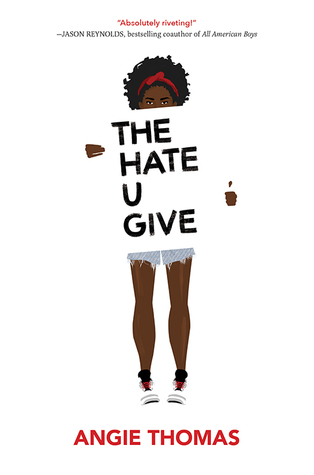
Booktalk this now: THE HATE U GIVE by Angie Thomas

The story behind the story.  I received an early review copy of this book when I attended the ALA Mid-Winter meetings in January and asked extra-nicely at the HarperCollins booth if there were extras.  


(Pro tip: Check to see if there are any ALA meetings happening near you and block those days off on your calendar now.  Free books.  Lots of them.)


I started reading it about 6:10 AM over breakfast before leaving for school.  By about 6:50 AM I was reluctant to leave the house and get to school.

thehateugive

The book talk. I told students that this was the rare book that made literally want to drop everything and read.  Starr is at a spring break party when gunshots go off and she and childhood friend Khalil leave the party by car in search of safety.  Police pull Starr and Khalil over and end up killing Khalil in what might be a case of mistaken identity.


Why do you think the cops had reason to be suspicious of Khalil?  I asked.


Students responded:

Well, he’s a teenager and the people who were at the party were teenagers too.

He was near the scene of the crime when it happened.

Was he speeding away when cops pulled him over ?  (The book makes it clear: he wasn’t speeding.)

Was he black?


That’s when I covered up all but the first letters of the acrostic so students could read the title down the page: The Hate U Give or THUG.  


“Ohhhhhhh,” students said.  “Khalil was probably stereotyped because he looked like a thug.”


Building empathy and understanding for the Black Lives Matter movement.  While this book covers a lot of tough teen topics, be ready for readers to proke, prod, and question its support of Black Lives Matter.


Be ready for readers to say, “What about all the cops that keep everybody safe?  You can’t be anti-cop.”  And “I don’t understand why Black Lives Matter people have to make it about black people.  What about white people who just want everybody to get along?”  Thomas pre-emptively responds to these readers by giving this book a strong moral core, where there are supportive police officers, kind family members, a grassroots nonviolent community organization, and a terrific white boyfriend along with some villain characters of both races.  


Starr is a teenager of the moment.  She’s a tumblr addict, she wants you to know that she considers Beyonce a cousin, she nae-naes and hits the quan.  She embodies contemporary teens in general and contemporary black teens in particular.  In 25 years she’ll appear fuddy-duddy, just as her Jodeci and Juvenile-loving parents are right now.


Patience and stamina.  The action happens in the first few dozen pages, and what follows is reaction and rebuilding.  This book felt more slowly paced to me than readalike All-American Boys by Jason Reynolds and Brendan Kiely.  Some readers, particularly middle school readers, might find the pace discouraging, so if you include this in a classroom, I’d recommend that readers find a book partner to talk about the book as they read.  


Where to buy it.  You can buy signed copies from Lemuria Books in Jackson, Mississippi.  The book goes on sale tomorrow!


Amy Estersohn is an English teacher in New York.  There are as many seasons of Survivor as there are books in her To Be Read pile.   Follow her on Twitter @HMX_MSE

Feel Good Friday

It’s been a looooooong week.

We had parent teacher conferences on Monday night. Monday night. It felt a little cruel and usual at the time. Then it just felt like this week might never end.

But end it has. Here we are..FRIDAY!

I feel like celebrating, because this, my friends, has been a week when feel good moments snuck up on my classroom when I was almost too sleepy to notice.

Such as…

Logan is a self proclaimed sports man.

His dad teaches PE here at Franklin and coaches our wildly successful football team. I believe Logan said not long ago that he “lives for sports.” But this week, it seems, he’s been living for books.

So far this year, Logan has completed four books ranging from Redeployment by Phil Klay to Sky on Fire by Emmy Laybourne. He is currently eating up Dark Matter by Blake Crouch, so much so that he enthusiastically book talked it this week before he even finished it.

Last class period, before the bell rang, I let Logan know that he needed to run to guidance and clear up a little confusion around signing up for AP tests. To my heart’s delight, Logan said the following words:

“Can I go after reading time? I want to read first.”

Amen.

img_0269

Logan devouring Dark Matter 


Priyanka stopped by my desk only moments ago.

association“Mrs. Dennis, do you remember emailing me about my one pager this week? You asked how I was liking The Association of Small Bombs.”

“I do! I was wondering how it’s going. You’re the first to read it and I was so excited to get that free copy at NCTE.”

“I LOVE it. You know how sometimes you aren’t sure what the theme of a book is? Like, you have to work to find it? This book’s theme IS THE COVER! All of these intricate stories and characters coming together. I can’t put this down.”

“Making you think, hmmmmm?”


Nathan was struggling to read at the start of the year.

Not his thing, he told me. Then…he found Suzanne Young’s The Program series. He couldn’t put it down and flew through all three books.

Then he launched into A Dog’s Purpose by Bruce Cameron. He finished it in class today.

img_0266

This was Nathan at the end of class. A fellow student asked him if he was ok.

“It was just…SO good.”

A few moments later, Nathan was at the bookshelf returning the text. And I observed, “Nathan, you look like a man without a country. You ok?”

“Mrs. Dennis, I just found out this book has a sequel. I wanted to read The Kite Runner next, but…a sequel. I want to read that now too!”

“How about I give you The Kite Runner while you wait to get the next Cameron book and you read that quick over the long weekend. You won’t be able to put this that down either.”

“Oooooo…good idea. Yeah, can you get me a copy?”

(Clapping excitedly in her head, Mrs. Dennis sprints next door to get a copy of The Kite Runner. He’s reading!!) 


We are fighting fake news in our classrooms.

Today, the posters I had made of the IFLA’s infographic on how to vet sources and avoid getting duped by fake news got delivered. I’m geeking out over these posters.

img_0267


Lastly, this just made me laugh out loud.

apple-2


Happy Friday, everyone!

What made you smile this week? Please share in the comments below! 


Lisa Dennis teaches English and leads a department of English superheros at Franklin High School near Milwaukee. Fridays make her happy, but so do books that smell old, buffets that include ice cream for dessert, and infographics made into classroom posters. 


#BookLove and #BookPride

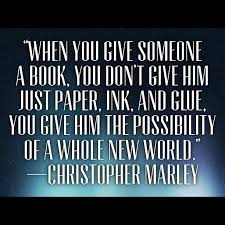
give-books

Angel slept with Trash in his hand for almost the entire first semester.

I hope you caught the italics in that last sentence, but nevertheless, Andy Mulligan’s tiny novel was his first choice for the semester, and Angel would not put it down until he finished.  No, he didn’t even put it down when he dozed off.

We battled the whole first semester.  It was a whispering battle which I tried to handle delicately. I nudged him during reading time.  I conferenced with him.  I suggested new books that he might have found more interesting.  In our conferences, he would say, “Mrs. Paxson, I’m just not much of a reader.”  It wasn’t the usual tone of determination and resistance I heard coupled with this sentence.  I have the occasional student gripping the desk or running in the other direction for fear the Love of Reading will catch them.

That wasn’t Angel.

Instead, he shook his head and hung it with disappointment–even embarrassment.  It was as though this wasn’t something he thought, but something he was told.

He finished Trash at the end of the first semester and started The 5th Wave over the break.

When we came back this semester, I noticed Angel kept leaving his book at home, and picking up Noggin’.  He said two things that caught my attention at the beginning of the semester.

First, he asked me, “Mrs. Paxson, you mean it’s okay if we switch books?”  I emphatically said, “OF COURSE you can switch books!  Your reading life is too important to read what you don’t like.”  It seemed like he was afraid to mess reading up, to defile it or do it wrong in some way.

Second, when I asked the class what they’ve noticed about reading throughout the year, he reluctantly raised his hand, saying, “You know, I’ve actually noticed I read a lot faster now.”

A few weeks later, I extended an opportunity to my ever-drowning sufferers of Senioritis.  I proverbial life-preserver was an opportunity to drop a low daily grade if they had accomplished at least three reading challenge squares.

Again, reluctantly, Angel walked up with a half-finished Noggin’, and asked, “If I finish this book and one more, a total of three, I can have a grade dropped, right?”  This imperfect teacher had some doubts, considering Angel’s history of finishing books and also considering the tendency for seniors to game an opportunity like this.  I said “yes,” but made sure to clarify a few points.

About three days and an equal amount of frantic e-mails later, Angel came into class having finished his books.  He was so eager to talk to me about his ‘feat that he begged for a reading conference.  He beamed from ear to ear as he said, “This book looks old, and it IS. My middle school teacher recommended it to me and I threw it under my bed and never read it.  I pulled it back out and I couldn’t stop reading till I was finished.”  He spoke of the book .  Second, when I asked him about his second book, Noggin’, he detailed the story and the surprise ending with such confidence and nuance, I had no question he read and LOVED the book.  After our conference he said, “Don’t worry, I’ll send you a summary of the books so you don’t think I cheated and didn’t read.”  I explained to him that the conference was all I needed.

Besides, didn’t he give me so much more than he would achieve in a summary?  Angel showed me an enthusiasm, a drive to learn, and a new-found fervor to read that would not quickly fade, but would likely grow in the years to come.  Angel showed me Book Love.

angel

I asked Angel one more question as we walked back to the bookshelf to find his next read. Me: Hey, have you ever read three books in a matter of months before?

Him: (Trying to hide a smile of pride) No ma’am, I haven’t.

Me: Feels pretty amazing, right?

Him: Yes, it really does.

Jessica Paxson is an English IV and Creative Writing teacher in Arlington, TX. She also attempts to grapple with life and all of its complexities and hilarities over at www.jessicajordana.com. Follow her on Twitter or Instagram @jessjordana.


Why Conferring Matters

Conferring is the interaction missing from many of our students lives.

Consider this:  the current generation thrives on one-on-one attention. They do not remember a time before social media, and many live much of their lives online via their smartphones. They turn to instantaneous interactions that have a direct impact on how they feel about themselves:  Snapchat, Vine, and Instagram over Facebook, which they are abandoning in droves because “it’s for old people.”

Our students crave immediate feedback. They seek personal communication — and they need it.

Think of the implications of this virtual-reality world on long-term relationships and problem-solving. We have already seen how it impacts our students in the classroom: short attention spans, skimming versus sustained reading to name a couple, not to mention the addiction to notifications.

Our students need to experience and understand the importance of eye contact, facial expressions, and body language, and how these physical features create non-verbal communication. They need to interpret and explicate tone.

The students in our classrooms today are different from Millenials. Anyone born after 1995 earns the new title of Generation Z, also called iGen, Centennials, Founders, and my favorite title: Gen Edgers.

As a whole, these students use technology as their primary source of communication — to validate, and to feel validated.

They also value genuine relationships, loyalty, and honesty and are increasingly more careful than the previous generation with the friendships they form online. They want to know their voices matter and that they are okay just being themselves instead of being the perfectly-phrased word count they must craft online.

Our students need opportunities to share thoughts, feelings, ideas, and knowledge in non-threatening situations through real face-to-face conversations.

Conferring opens opportunities to meet the needs of our students at the core of their longing.

When we invite students to talk and affective filters lower. Students relax. They respond.

When teachers confer with genuine interest in the well-being of the child, we grant students permission to be their genuine selves. Research on the brain shows that “positive comments and positive conversations cause a chemical “high,”” and with less pretense and stress, students experience more learning.

Conferring gives students the chance to share their stories; and besides creating trusting relationships, conferring allows us to meet them where they are and help them advance in knowledge and skills from there.

On-going regular conferences ensure that every student receives the one-on-one interaction and instruction they deserve. Peter Johnston reminds us that every student has a personal history that affects our ability to help them advance in their literacy skills.

Through conferring we learn the cultural and personal backgrounds that shape our learners, along with the experiences that shaped them in the past as readers. Both are important factors. By asking questions that invite students to recall their learning histories, we initiate future learning.

Conferring also sparks critical thinking, creativity, and curiosity.

No matter the teaching style — be it an English class where the teacher makes the choices about books and writing topics, or a workshop inspired classroom where students choose what they read and write, or even a classroom of another content area — when conferring becomes a norm, students proactively engage in learning, which results in more growth, independence, and mastery of content and concepts.

Our students learn to ask questions, ponder responses, and seek for interesting ways to show they are learning. Differentiation happens naturally.

Imagine the opportunities students may create and the innovative energy they will have in the future if they experience this kind of learning in their secondary schools.

The children in our classrooms are part of the fastest growing force in the workplace and the marketplace. Their influence is changing companies, marketing styles, and consumer habits.

This generation wants to make a difference in the world. They are pragmatic, self-aware, goal-oriented, and self-taught via YouTube. They’ve grown up “dealing with too much vs. too little information their entire lives.”

They will soon become our peers standing in voting lines, our colleagues standing near the copy machines, maybe even our bosses, or perhaps the officials that govern our cities and our states.

As adults we must provide each child with the education that prepares them for the future they are moving into.

We cannot keep teaching the way we have always taught with one-size-fits-all lesson plans and instructional models. We cannot keep making all the choices about books and reading or essay topics.

We must talk to our students one-on-one about what matters to them personally. Our future, and theirs, depends on it.

And for the teacher who worries about time, conferring provides a means of easy and accurate formative assessment, which saves valuable time spent grading:  time teachers may spend planning effective lessons or conferring with more students.

When done with fidelity, conferring improves the effectiveness of our teaching. I don’t know one teacher who doesn’t want that.

Please share your thoughts on conferring in the comments. What are your conferring routines?

Amy Rasmussen lives in north Texas and teaches AP English Language and English 3 to the Fighting Farmers at Lewisville High School. She adheres to the words of Emerson: “We aim above the mark to hit the mark,” and Jesus Christ: “Love one another.” Imagine a world if we were to all aim higher to love our fellow man. Follow Amy on Twitter @amyrass.

What Will You Read Next?

I’m always on the lookout for ways to keep moving my readers forward. To stave off the lethargy that unrelenting mid-forties temperatures and 17 weeks of gray skies (winter makes me hyperbolic) can leave in a classroom. The novelty of a new year, with its resolutions and fresh semester, has succumb to the bleak midwinter pall of third quarter and we need something that says, “If that groundhog claims six more weeks of winter (rat-face that he is), we’re going to need a plan…and a good book or two.”

Well, thank goodness I have an unhealthy addiction to Twitter (Ummm…Cornelius Minor just started following me last night. I’m going to need to step up my game. Significantly).  Years ago, it was Pinterest, but that was back when I had time to scroll and save ‘Best Brunch Recipes to Feed a Hangry Crowd’ and ’19 Ways to Burn Booty Fat’ (not to say I couldn’t still use both).

My scrolling these days, however, is far more literary in focus and professional in nature (19 Ways to Burn Booty Fat for Educators – Conferring as Cardio). Seriously though, Twitter has led me to countless quick write topics, mentor text ideas, blogs to follow, inspirational quotes, professional development opportunities, booklists, laughs, collegial exchanges, and pedagogical articles to stretch my practice. #TrachersWin, #LoveToLearn, #StrongThumbs, #TwitterScrollingSavesLives.

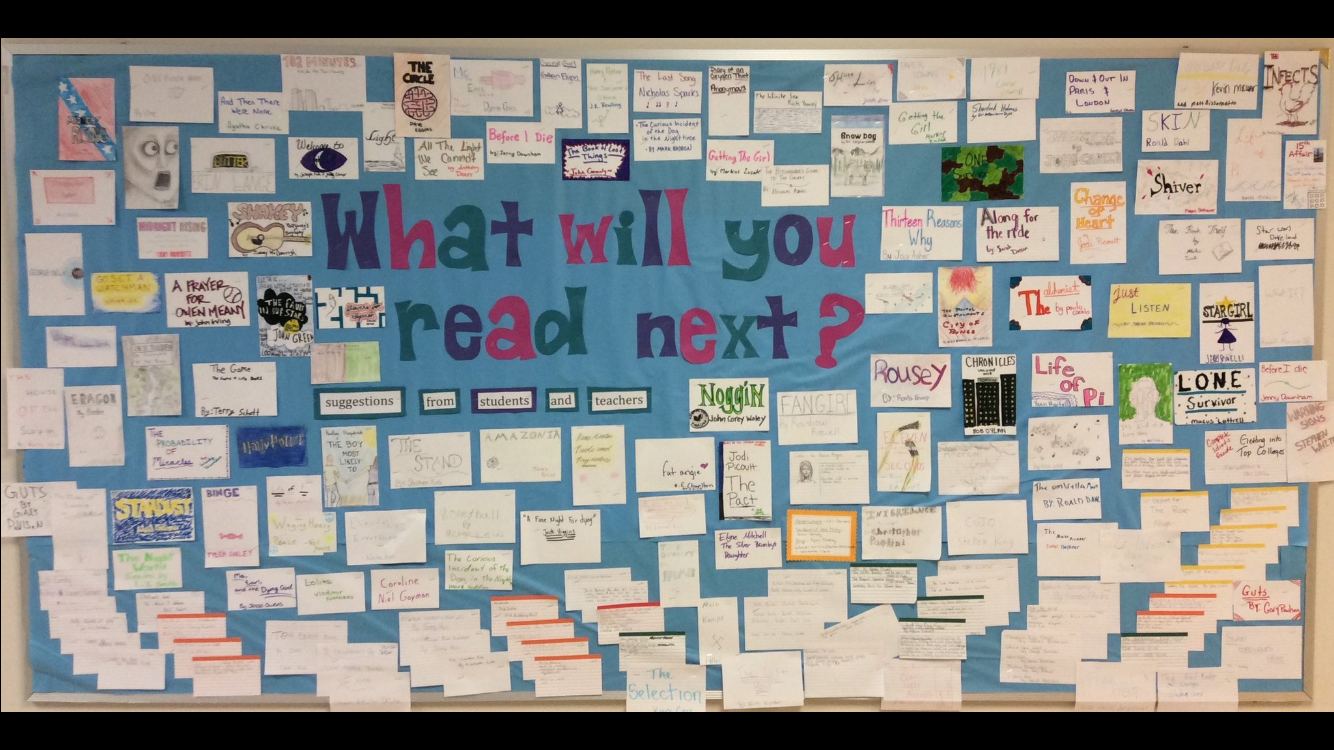
A few days back, Penny Kittle posted this photo:

I quickly screenshotted the image to replicate in my room. This visual reminder of where we’re headed (another book and/or a swing toward spring) will provide the push forward we need. Get it on the wall!

My students needed something to set their sights on, so I asked them to take a look at their ‘I Want to Read List’ and choose what their next reading would be. This wouldn’t just be a goal to finish our current texts, but would also give us something to look forward to.

I encouraged students to take this as an opportunity to challenge themselves outside what they have been consistently reading, either in complexity or genre, and select a book they were excited to get their hands on.

Each student then took an index card, on which went the name of the book, the author, and the date they plan to start this next text.


My aide, an artistic genius, drew the book that would be the center our our display (It even has dozens of book titles written on the first page – I LOVE it, Hailey!) and started arranging the ‘Next Text’ cards around it. The whole back wall of my classroom is going to be a sea of texts we can look forward to.

I’m loving my current read (Shout Out: #3TTTBookClub – Jodi Picoult’s Small Great Things), but I too will be adding a card: In Cold Blood by Truman Capote.

(A freak and serious arrest of my artistic development in the second grade prevents me from sharing my card with you. Please imagine it’s simplistic beauty and that might help me create something wall worthy)


Let’s Get Excited About Where We Are Heading! What Will You Read Next? Please leave your text choices in the comments below. Happy Friday. 


Lisa Dennis spends her school days teaching AP Language and Honors/Pre-AP Sophomores, while also leading the fearless English department at Franklin High School, just outside Milwaukee, Wisconsin where she lives with her husband Nick, daughter Ellie, and beagle Scout.  She is a firm believer that a youthful spirit, a kind heart, a big smile, and a good book can ease most of life’s more troublesome quarrels. Follow Lisa on Twitter @LDennibaum.

Books Can’t Be Bullied

Books: “They don’t get tired and give in, they don’t rearrange their words to soothe their reader’s ego or get a better position on the shelf, and they can’t be bullied”  – Josh Corman for Book Riot.

I’m not going to get political here. I promise.

I’m quite frankly exhausted by, though no less involved in, politics these past few weeks, but when I saw this quote, I knew I needed to explore it. It does (fair warning) come from a pretty politically charged piece that you can seek out and read, if you like, but I first saw this quote completely out of context and feel that it’s a powerful statement in and of itself.

The push and pull of it intrigues me.

I first pictured a book: proud, immovable, and cool. Spine bent ever so slightly, tantalizing a reader with the ideas inside, like the love interest in a dark romance who reads Goethe in tiny coffee shops and spells color with a “u”:

I’ve got what you need, but I’m in charge here. We go at my pace. Turn my pages to see where I will lead you. You aren’t the first and you won’t be the last. 

Aloof in the face of need, careful not to promise too much. If you come to this book looking for fulfillment, it won’t permit you to find it. Too easy. It’s not about you. It’s about the message.

I can also see this book as a soldier on the front lines, battling to retain pride in its themes. Beat down by two star Amazon reviews, milk spilled across its pages, and the misrepresentation of translation, reprinting, and censorship. Not desperate, but insistent:

See me. See what I really am. What I have to offer. I am not what you purport me to be. I am not what others say I am. Think. Judge for yourself. 

But what does any of this mean for our classrooms?

For my students, It means we are going to write about it. I want to know what they think. What identity this quote suggests books have, and thereby what role in our lives? What impact?

See, in an age that not so subtly suggests that books are made better by individual interpretation, I would argue we sometimes give ourselves too much credit.

I might go so far as to suggest that we need books to be a bit immovable these days.

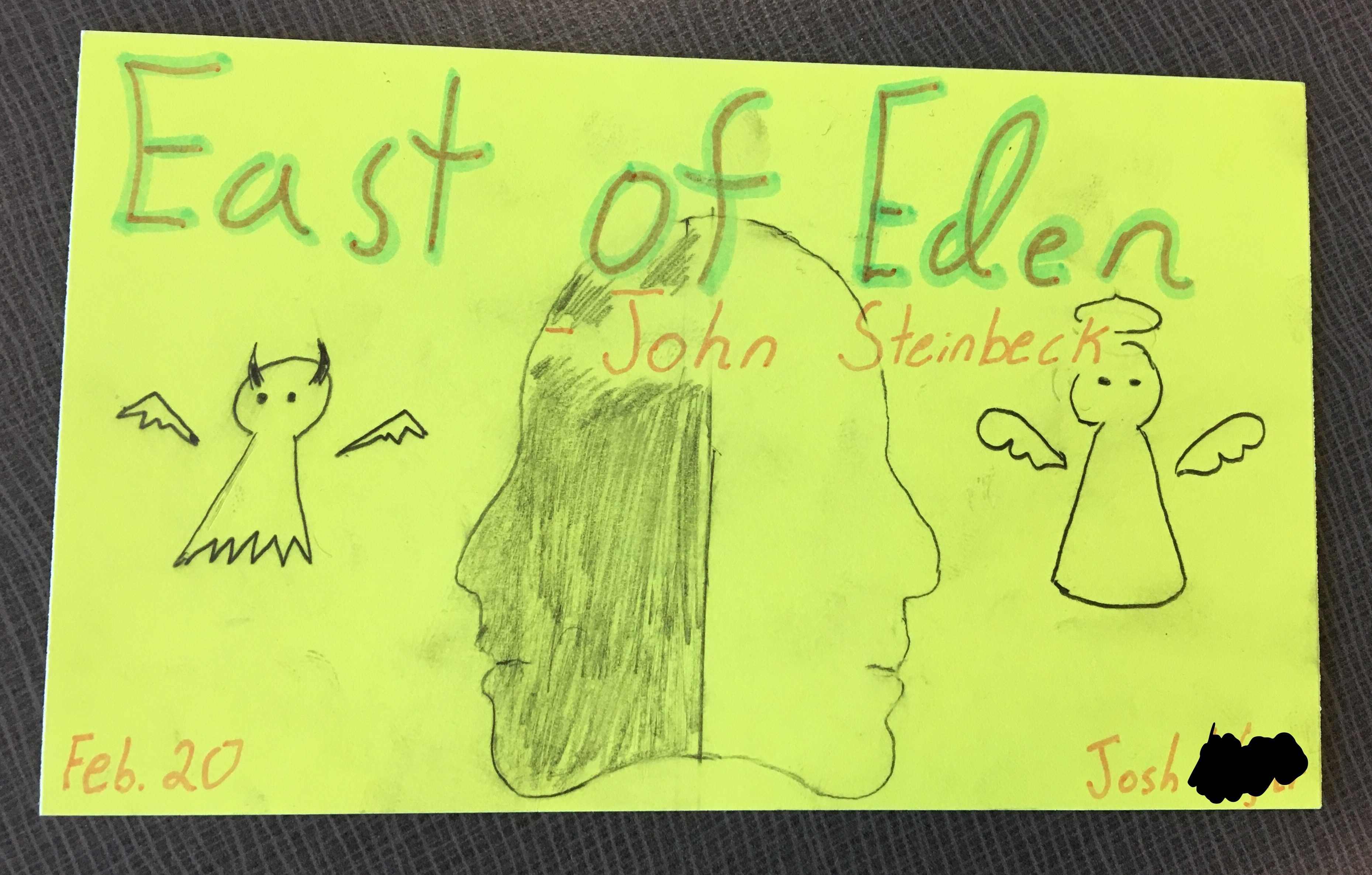
It’s not all about us. What we like. What we need. What we get out of an experience.  Of course, authors need to make money to keep writing books, but on the back of my copy of East of Eden, Steinbeck is casually smoking a cigarette and weaving a tale of good and evil. Is there really so much room for interpretation there? Should there be?

Yes, we, and our students, benefit immensely from challenging conventional thought and learning to build meaning from difficult texts through personal connection, but at the end of that journey, the book remains. The nuance may be up for debate, but the message, perhaps not.

Books offer us a place to see that which does not grow old. The words are pressed between the pages, meaning what they did when they were published. It is we who change and must work to balance how perception influences theme.

Tweets scroll past in soundbites on the screen. Facebook spins and updates with a thousand new ideas with every pull of a thumb. Books remain what they always have been. They cannot be bullied to change with the times. They are timeless, and as such, essential to our survival in the era of eight second attention spans.

So as we bring ourselves to a text, we must be willing to meet it halfway.

It’s not about you, or not only about you.  It’s about the two of us. Book and reader. We can only succeed if we work at this together. 

What better lesson for these times, political or no, than to meet in the middle and align our unchangeable past with the possibilities that carefully crafted ideas can suggest for our future? A book, afterall, still needs a reader.

Let’s produce millions of resilient readers, hungry for truth, who will open books and listen, because a book is always ready to talk, and frankly, we could all stand to listen a lot more than we do.

I’d love to hear your reflection on the quote. Please feel free to join the discussion below in the comments. 

Lisa Dennis spends her school days teaching AP Language and Honors/Pre-AP Sophomores, while also leading the fearless English department at Franklin High School, just outside Milwaukee, Wisconsin where she lives with her husband Nick, daughter Ellie, and beagle Scout. She is a firm believer that a youthful spirit, a kind heart, a big smile, and a good book can ease most of life’s more troublesome quarrels. Follow Lisa on Twitter @LDennibaum.


Looking to the Future: Students as Changemakers

As teachers, we have a unique opportunity, and I would say responsibility, to see our students not only as the beautiful (challenging, curious, and occasionally perplexing) people they are, but also as the adults we want them to be: consumers of information, thoughtful citizens, empathetic neighbors, considerate collaborators, creative problem solvers, and kindhearted souls.

Specifically as English teachers and workshop practitioners, we lay a foundation for these futures with classrooms rooted in a sincere passion for reading, writing, speaking, and listening. We advocate for our students through literacy, because their futures depend on a capacity to actively engage with the human condition.

P. David Pearson,  founding editor of the Handbook of Reading Research and professor of Language and Literacy and Human Development at the Graduate School of Education at the University of California, Berkeley, said that “a teacher’s job is always to bridge from the known to the new.” We work each day with students whose experiences, beliefs, passions, and preferences vary as widely as our own, but together we take what is fixed and challenge it to stretch, bend, and grow.

In the process, we end up with countless stories of students falling back in love with reading, challenging their opinions through talk with fellow classmates, digging into their writing to push past self imposed limits of where words and expression can take them. I shared a quote from Barbara Kingsolver with my students the other day, specifically for diction analysis, but probably more importantly for talk:

“Art is the antidote that can call us back from the edge of numbness, restoring the ability to feel for another.”

We discussed the far reaching definition of “art” (including literature and composition) and the suggestion in this line, art not only speaks to us, but heals us and build empathy within us. Several students throughout the day noted the need for this type of beauty in our current politically turbulent times.

“Congress should have a book club,” one student suggested.
“The whole country needs a book club,” another chimed in.
“Yeah, make them talk about feelings and stuff like Mrs. Dennis does.”
“Well,” I smiled slowly, “if they used our small group discussion rubrics for assessment, they would have to provide text evidence for their opinions, politely disagree with other members of the group and support their contrasting ideas with more evidence when necessary, and work to show leadership skills by actively engaging all members of the group. Sounds like a good place to start for all of us.”

See, even high school students know that art can be the mirror we need to lift up in order to carefully consider our actions and how those actions impact others and the community at large.

It is with this in mind that I share a few brief stories to further inspire your commitment to and passion for the work we do. Students that internalize the power of words, communication, and concentrated energy for making the world a better place become living mentor texts that we desperately need in order to motivate current students to keep pushing, keep questioning, and keep believing in their own capacity to make a difference.


Sam Kraemer was my student twice, and was the type of kid you’d like to fill your whole classroom with: thoughtful, inquisitive, charming, hard-working, funny, and smart. Having made the decision to be a newscaster in the sixth grade, Sam now finds himself as the weekend anchor for the 5:30 and 10:00 o’clock news at NewsCenter 1 in Rapid City, South Dakota, a position he was promoted to after less than a year on the job as a reporter. sam-2

Sam recently came back to school to visit and, of course I could believe the confident young man standing before me, but what struck me was the depth of understanding he already had about the role he is playing in this world. Having asked him where this passion for reporting came from, he said firmly, “the storytelling.”

samHe knows that his reporting efforts can show “the American people what is actually going on” and  that “the world is a better place when facts are clearly established and people have the right to think for themselves. I guess I just enjoy my role in presenting info & stories for people to use in that thinking process.”

How often do we all preach about the importance of clear and careful thought? And here is a young man, in an age when journalists have become a group too often mistrusted and maligned, whose believe in the power of educating the opinions of others, makes my heart swell.

Sam goes on: “A lot of people don’t have time to follow government closely, pay attention to how things happening nationally or internationally affect them, or even know about crime/incidents just down the street for them. Through ample & clear communication, I can be that trustworthy source of information. I can present the facts — not with opinion, but with context — for the viewer to consume and formulate an opinion on.”

What more could we want from our kids than for them to realize that their role in the future matters? That writing and storytelling and communication that ensues matters.

 As Sam concludes, “I know I can share relevant information that either gets people thinking or even spurs action. And that right there is how I try to make the world a better place.” (Shared with me like all of the convictions that truly make a difference in the world, via Facebook message at 3:15 a.m. Classic).

Here is one of Sam’s recent broadcasts. A piece, where as he says, that presenting both sides of an issue with national implications,  “let [his viewers] decide whose argument had more merit.” Fair and balanced news reporting? Sign me up.


Sarah Matuszak graduated from Franklin in 2012 and to say she was passionate doesn’t do her soaring spirit justice. A deep thinker with a kind heart, Sarah finds herself as a paramedic in North Dakota and recently took her “constant obsessive preoccupation with sarahthe world’s bleeding” to Standing Rock. Having worked with the United States Army, firefighting, and in law enforcement, Sarah says that “being a paramedic comes close to what sets my soul on fire, but I’ve found that activism is where I belong. I use all the skills I’ve learned from those aforementioned fields, and apply them to activism.”

Now, just as we’ve all encouraged our students to do, Sarah has taken her passion to print with an article for The Huffington Post detailing her position on and work at Standing Rock.

When she published her piece, “December 5th Is Not the End Of Standing Rock,”  Sarah posted it to Facebook and tagged me. Years ago, right before she took the AP Language test, I gave Sarah a note of encouragement, telling her that I not only knew she had no reason to be nervous for the test, I also knew I would see her writing in the New Yorker someday. Little did I know, she would keep the note all these years and dedicate her first published piece to me.

sarah-3

sarah-2

To say that Sarah is invested in the betterment of our planet, would be to shortchange the depth of her character and the depth of her commitment to humanity. Sarah was destined to take her educated opinions and make the world think about them long before she ever walked into my classroom, but the encouragement she received along the way, meant something. And just as she says, “firsthand experience makes it real,” seeing the potential of our students makes their dreams that much more real too.


Austin Bohn spent some time with me in the classroom last year. He inspired several of my students to challenge themselves, specifically Bennett Dirksmeyer. I wrote about it in a post about students inspiring students. Both young men credit our shared class IMG_0123experiences, and the books and essays they’ve read as a result, with teaching them how to think. Bennett, I’ll be writing about again in a few years when he becomes the first President of the United States to listen more than he talks, but Austin is already putting his passions to good use through writing.

His two published pieces appear on Medium, an app designed for “readers on the go.” Both selections, “New popularity for unpopular opinions…and new a responsibility for the unpopular” and “Dissonance of the Day: Is Twitterspeak Orwell’s Newspeak?” use Austin’s charismatic voice and probing curiosity to challenge readers’ thinking. In fact, I just went back and reread his piece about Twitterspeak and his insights from last January on Orwell’s 1984 are feeling eerily familiar as the novel is once again a bestseller in our age of alternative facts and fake news.


Our students listen.
Our students internalize our enthusiasm.
Our students have big dreams, and we can give them mirrors in the form of books, time to write, and safe places to develop and share their ideas, that allow them to see themselves more clearly.

If we’re lucky, they turn those mirrors around and hold them up to the world, so we can see each other more clearly too.


How do you encourage your students to be changemakers? Share some stories in the comments below of students and former students who are out there making a difference! 


Lisa Dennis spends her school days teaching AP Language and Honors/Pre-AP Sophomores, while also leading the fearless English department at Franklin High School, just outside Milwaukee, Wisconsin where she lives with her husband Nick, daughter Ellie, and beagle Scout.  She is a firm believer that a youthful spirit, a kind heart, a big smile, and a good book can ease most of life’s more troublesome quarrels. Follow Lisa on Twitter @LDennibaum.
Writing Heals. Writing Assignments Do Not

Last week I learned a valuable truth:  Even when we think they are not listening, sometimes students get it.

Let me back up.

The week before last I attended a department meeting where our district ELA coordinator shared the National Writing Project’s Case for Good Instruction, information I learned at my National Writing Project Summer Institute in ’09. It details the differences between When Writing is Assigned and When Writing is Taught. The discussion around me was interesting and peppered with excuses. I left wondering how teachers would answer these questions if they were on a quiz. How would you?

In your ELA class, do students:

  • have opportunities to create topics that matter to them?
  • understand audience and purpose for papers because they are specifically identified in assignments?
  • see you spending time teaching writing skills and strategies?
  • get writing models, assignments, and strategies to guide each of the different writing tasks?
  • reflect on significant growth — or lack of it — in specific writing skills?
  • hear words of encouragement cheering them on to revise, edit, and improve — and to correct drafts and then resubmit?
  • think about what they write through brainstorming, free writing, role-playing, discussion, or other prewriting activities?
  • celebrate what they, and you, write and make efforts to display and publish it?

I think the biggest excuse we give for leaning on assignments rather than acting on instruction is TIME.

“I can’t let students choose topics because they don’t know what to choose.”

“I can’t teach this novel if it takes so long to write a paper.”

“I can’t do my research paper if I give them time to resubmit. It already takes so long to grade the finished product.”

Maybe you are right. Maybe we have to give up things that we think are best practices for things that are better practices.

Student choice in writing topics is better practice.

Writing instruction with effective models, strategies, time to talk, and time to write are better practices.

Helping students revise, edit, and improve their writing during the writing process with a keen sense of audience and purpose are better practices.

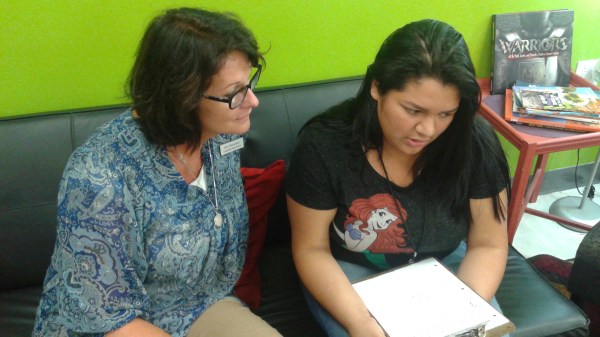
conferringwithjulyssaOur students need time. They need our time. They need our attention and our careful consideration about the things that matter to them. We may have to let some things go in order to give our students what they need.

We learn valuable truths when we do. Last week my students performed (or presented) their poetic arguments. We spent weeks choosing topics, watching video performances, analyzing lyrics for structure and craft, thinking, drafting, talking, revising, studying models, reading each other’s writing, giving feedback, practicing mini-lessons on concrete details and using abstract language to create jaw-dropping imagery.

We were a community of writers, united in a task uniquely our own.

And that is the difference between When Writing is Assigned and When Writing is Taught.

During all that time, I didn’t think Stephanie was listening. She sat at her table, barely talking, sometimes writing, always sad. Then right before Christmas break I sat down and we talked. She showed me her draft, and it scared me. I knew she’d been depressed — her grandmother died at the beginning of the year, and the light left Stephanie’s eyes. I listened to her share her sorrow, her anxiety, the weight of her world , and I gave her my cell phone number with the promise she would call if her boots got too heavy. Thankfully, they didn’t.

Every one of my students who presented their poems sparkled with pride as they faced their classmates, even the ones whose knees knocked in fear. They wrote from their hearts about issues that matter to them personally. They wrote the most important arguments about mistaken perceptionholding grudges, self-hate and self-love, parental control and uncontrolled parents, lying and how we’re programmed to labelBlack Lives Matter and dying white privilege. They wrote about better education and the stress of getting educated, absent fathers, loving fathers, and parentless children and alcoholics who should have put down that drink at 21.

They wrote about sticking together.

And they wrote about self-destruction and depression and monsters. So many of them wore grooves in the floor with the spikes that hold them in place until the sadness drags them down under. They broke my heart.

writing-heals-quote

Writing to heal is better practice.

Please enjoy Stephanie’s poem. She calls it “Smile.”


Many students chose video presentations over live performances. I published several this morning on the 3TT Facebook page. Take a look.

Please share your thoughts on teaching writing. Leave a comment.


Amy Rasmussen lives in north Texas and teaches AP English Language and English 3 to the Fighting Farmers at Lewisville High School. She adheres to the words of Emerson: “We aim above the mark to hit the mark,” and Jesus Christ: “Love one another.” Imagine a world if we all love higher and harder than we think we can. Follow Amy on Twitter @amyrass.