Have you ever recommended a book or done a book talk on a book you haven’t read? I know I have. Always, of course, with the caveat that I haven’t read it yet, but still. I have two examples of how this has backfired, one with minor consequences and another that could have gone terribly wrong.
 This year, I recommended Concussion to an athlete in my AP class, for his independent reading. I did so based on the subject matter and its popularity. AJ is loathe to pick it up during independent reading, but at this point (because it’s AP and they use their independent reading for analysis) it’s not practical for him to start something new and still be able to complete the rhetorical analysis work.
Effectively, what my faulty recommendation has done is to reinforce for this student that books are just a part of an academic life that one has to endure to reach a broader goal (AP college credit). Not only did I confirm that reading has nothing to do with his interests or identity, I hit the trifecta by reinforcing for him that teachers are clueless and wasting an opportunity to build his literacy skills. Indeed, I may have set them back. Maybe I should have recommended Junior Seau: The Life and Death of a Football Icon, which appears (appears is key) to explore the same issue but in a much more narrative and less esoteric way than Concussion. Plus, one of my footballers from last year read it.
But using previous student experiences with a text to recommend it forward is, at best,  imperfect. Last year, a student was looking for “something edgy” and was willing to try transitioning into fiction from her obsessive poetry reading. So, I recommended a short story collection that a former student with similar interests had found on her own and loved, and which I subsequently added to our classroom library: Heartbreaker by Maryse Meijer. This current student took my recommendation, read her 20 minutes per night and diligently recorded her progress in her reading log, finishing it before we had a chance to conference. But when she handed it back to me she said, “Ms. Maguire, this book might not be for everybody.” She then went on to describe scenes of exhibitionism and lesbian prison sex.
I have become more reluctant to recommend to students books that I have not read myself. For 3TT readers, though, I’ll still take the risk. Here are a few titles I have recently added to our classroom library. Full disclosure: the first two I have read in their entirety; the third, about half.
This Way Home, Wes Moore and Shawn Goodman: This YA novel came out in 2016, but I only came across it recently, browsing the BookOutlet web site (which offers fantastic deals btw). Many students in my district are familiar with The Other Wes Moore, the true story of the divergent trajectories of two African American boys on the same block with the same name. This Way Home tells the fictional story of Elijah, who has pro-basketball aspirations but must cope with a dilemma brought on by the local gang’s interest in his neighborhood team. I HAVE read this one, so I can confidently say it is high-interest for striving readers.
Delicate Monsters, by Stephanie Kuehn: This novel by the author of the award-winning Charm & Strange, which I haven’t read yet, is darker than I expected, and from the very beginning. The -isms that this novel touches on are SO numerous: racism, classism, voyeurism, alcoholism, to name a few. Also included are bipolar disorder, bullying, suicidal ideation and suicide, gun violence, adultery, sociopathy, even Tourette’s and Munchausen’s-by-Proxy. And there is no happy ending. For anyone. Personally, I’m down with the darker, the better. But to recommend for students? Probably more on an individual basis than a book talk. But speaking of book talks, this next one could work.
Pride, by Ibi Zoboi (author of America Street): This YA novel is a retelling of Pride & Prejudice, set in present-day Brooklyn. I’ve read the first few chapters, and I’m hooked 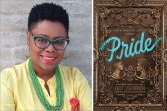 (this from a reader who has little patience with the precious world of Jane Austen). What compels me to bring this text into our classroom, though, is the author’s response to a review in WSJ: the review suggested that the book would have limited appeal due to its “heavy use of slang,” ie, Afro-Haitian dialect. If I can do my job right, we might be able to examine excerpts of the text in conjunction with the WSJ review and the social media responses it generated, as we enter our second quarter focus on text analysis.
Sigh. Second quarter, really? Where did first quarter go? And there’s one of the main reasons books get recommended without them having been read, convoluted passive voice intended. I think in the writing of this post I have reminded myself–and I hope, you–to rein in the guilt, for not doing more, for not doing it all. I just asked my 11-year-old child for 5 more minutes to finish this post, and he patiently waits in his room for me to join him so we can continue reading together D’Aulaires’ Book of Greek Myths.

 Earlier this week we observed
 The reading arc of a school year is a lovely thing to witness, but an even more enjoyable journey to participate in. We begin the year falling in love with reading: a first quarter of high-interest, riveting works that match each reader where he or she is. The first days of school are filled with YA, novels in verse, pithy nonfiction, and short-but-powerful texts.
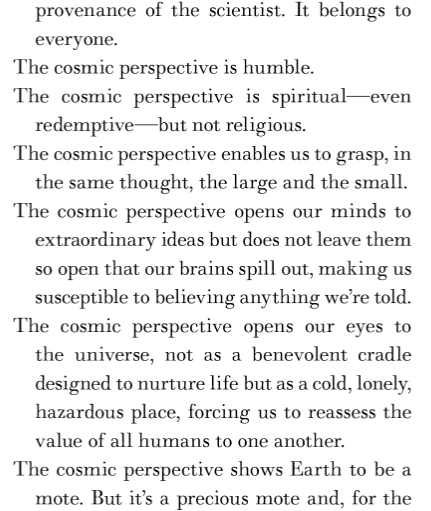
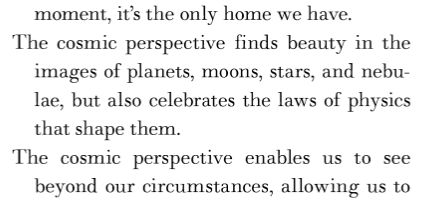

 As we plan instruction for the second quarter, we must center our students’ reading and writing experiences on the highest purposes of those endeavors, and not remain too focused on the skills, structures, and rubrics we often get caught up in. We must not fall into the trap of sharing a passage such as this one with students solely to practice craft study, asking our students to replicate Tyson’s structure without appreciating what he’s trying to say to us by crafting it.



 My cleaning ensued – painfully, I might add, as my technician was unnecessarily rough, and I wanted to ask her if she remembered that a person was attached to those teeth, but I found it too difficult to ask such questions with someone’s hands in my mouth. I waited for the post-cleaning check-up with the dentist, knowing the only question I had for him was about the dark staining I’ve been experiencing lately despite my careful brushing and (sometimes) flossing regimen.
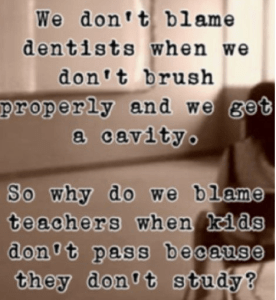 expect him to congratulate me on the steps I’d taken for my overall health in giving up on sodas, and I didn’t expect him to have sympathy for how hard that habit must have been to break, and I didn’t even expect him to think logically about how much less acid was wearing away at my enamel now that I don’t drink soft drinks, but I also didn’t expect to feel as though I had done something so very wrong.
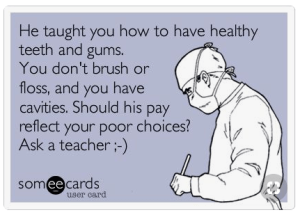 My teeth will continue to stain, I guess. I’ll brush with baking soda once a week to combat that. But I’ve gained better health and energy. I’ve lost the migraines I used to get when I drank colas all the time. And if we allow our students to read what they want and need to read, they might lose content knowledge of some of the classics that we read (or fake-read) in high school, but they will gain an authentic love of reading. They will find connections with characters in their books. They will connect with each other as they enthusiastically discuss their books. They will feel empowered and in control of their lives as readers. Their reading levels will improve. And yes, the test scores will follow.
 But, as ever, reading is the great escape.
 Murder-Mystery
 The Word Exchange was completely, compulsively, un-put-down-able. Alena Graedon is a new author for me, and her tale of a world that loses its grip on language once a massive tech company monopolizes and commoditizes words was, for me, perfectly timed–I’ve been a little unsettled lately by my observations about how addicted to technology everyone is, and how afraid I am of what it’s doing to my students, and could potentially do to my children. This book spurred me to action in terms of deactivating my Facebook and Instagram accounts and making a conscious effort to leave my phone in another room–to make space to just be, and be bored, and have time to think and wonder and ponder.
 The Power by Naomi Alderman was just wonderful. It had all the elements of a gripping adventure story, along with a powerful message about what corrupts us. In this novel, women develop an electrostatic power and a society shifts from patriarchal to matriarchal in the space of a few generations as a result. The effect of women suddenly becoming more physically powerful than men leads to widespread revolution in everything from interpersonal relationships to world leadership. It’s beautifully written, too.
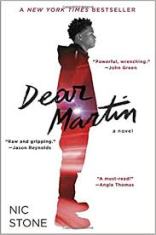 Dear Martin was a book I’d been recommended a thousand times, it seemed, but after reading so many books that felt similar–The Hate U Give, Long Way Down, etc., I just couldn’t pick it up–but I’m so glad I finally did. Nic Stone crafts this novel as a series of letters from young Justyce McAllister to Martin Luther King, interspersed with transcripts of news reports and first-person narrative. It’s complex and thoughtful and plausible and readable and powerful. I loved it.
 Teaching Books


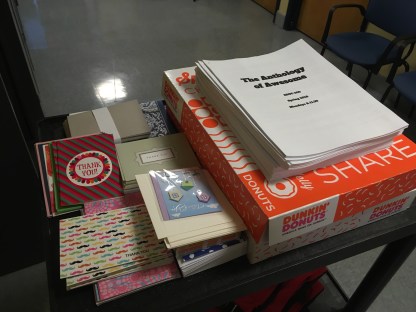

 students’ names and personalities. For my future teachers, I created our ideal school, in which we’d all teach and get to work together forever. In past years, I simply wrote a letter of well-wishes to my kids, and included each student’s name and a little compliment toward them all.


 Three Teachers Talk