Category Archives: Books

It’s Monday. What are You Reading?

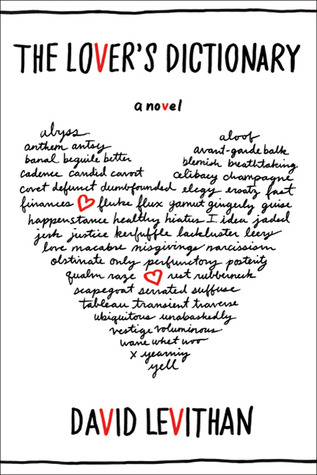
Mon Reading Button PB to YAI just want you to know that I love love stories. I especially like to read about love as we get closer to my Favorite Holiday– Valentine’s Day! So, with that in mind, I asked my sweet school librarians to find me David Levithan’s book The Lover’s Dictionary. I found it on my desk this morning. I know nothing about this book except:

1) It has an awesome cover.

2) It is written with page headings like dictionary entries.

3) It has me hooked with this on page 3:

abyss, n.

There are times when I doubt everything. When I regret everything you’ve taken from me, everything I’ve given you, and the waste of all the time I’ve spent on us.

9279177

It’s Monday What Are You Reading? 1-21

Mon Reading Button PB to YA

LAST WEEK: 

ReachedI really hate books in series! Sure, kids love the familiar characters and stories lines, and I guess they are helpful for kids who don’t know what to read. If they find a series they can just hop from book to book through the series making safe moves from book to book. But seriously, come on, they none the less are so annoying! Reached, the third book in the series was released November of 2012, while the first book, Matched was released November of 2010, so for the last two years I have been agonizing over these characters – worried about their safety, their families, their society. I think what is most annoying about a series is that most of the time they suck you in unsuspectingly. When I sat down to start reading Matched I was instantly drawn to the characters and the fascinating story of a society in the future where everything is seemingly perfect. As I read, I committed to Cassia, Ky, and Xander and their quest for truth when – BAM! – as if from out of no where, the final page of the book turned with still so many questions left hanging in the balance! I vividly remember thinking, “WHAT! This book is going to be part of a series?!?!” So one can imagine my delight when the third and final book was released in November. I could hardly wait to dive right back into where the story left off with Crossed, the second book. I think for me it isn’t so much the hatred of books in a series, but more an impatience with having to wait for closure. Thankfully, Ally Condie does a wonderful job of tying up all the loose ends as she confronts head on some very tough questions about a society that strives for perfection. Not sure how I thought this series would come to a close, I was beyond amazed with the twists and revelations. A must read, the most poignant theme for me from this series is that no mater who you are or where you are from, a basic necessity for all human-kind is to understood.

THIS WEEK: 

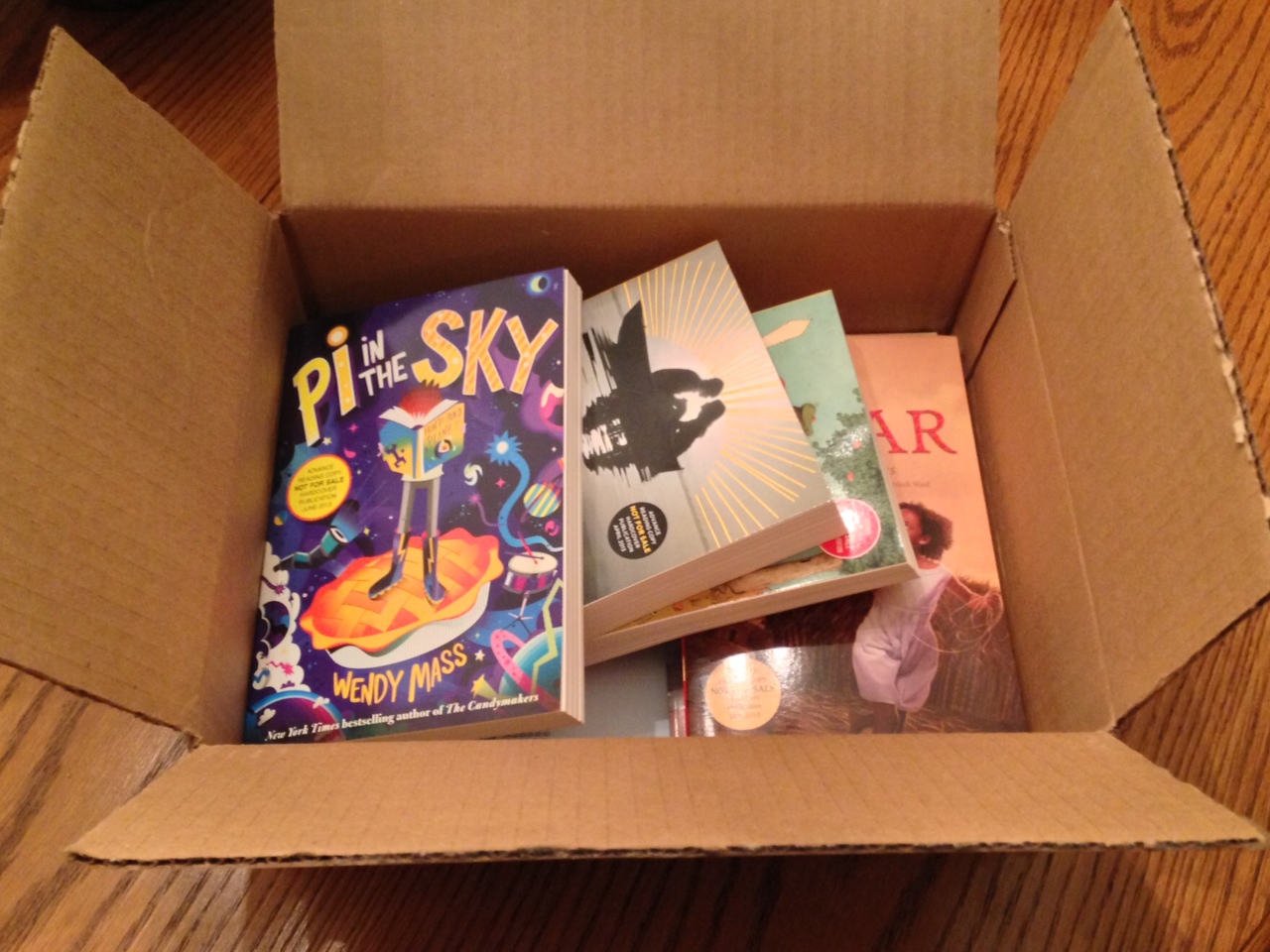
photo-4What  is more exciting than getting a package in the mail? Getting a box of books in the mail that’s what! Friday, I was surprised to see a package on the door step. When I opened it I was so excited to see several new books that I was strongly tempted to cancel my weekend plans just so I could stay home and read. This week my reading plan is pretty much set out for me as I intend to start working through this box of goodness! Of course, I will start with Pi in the Sky authored by one of my all time favorites, Wendy Mass and then move on to the others. Unfortunately, the rest of my to be read pile will just have to wait.

Thank to Jen and Kellee for hosting this meme!  To see what others are reading, or even to participate, be sure to check out their blog Teach Mentor Texts 

Whew! It’s (Still) Monday! What Are You Reading?

Heather and I talk a lot about our work, and we talk a lot about what to write on this blog. We set goals. We schedule posts. Sometimes we do okay, and sometimes we simply (or not so simply) let the demands of school and home and family get in the way of what we really want to do here. In an attempt to DO BETTER, we are going to join the It”s Monday! What Are You Reading? meme.

If you look at the Book Journey blog, you can see the original idea, but really, it’s all about sharing books and outlining a weekly plan for reading. Our stacks of To-Be-Read Piles rival any of yours, but this is a little different. We’re actually going to commit to what we are reaching to read during any given week. By doing so, we can show our students that readers have a plan. Readers know what they will read next. It’s not just a willy-nilly wandering through the stacks of a library. (My students think this is the same as having a plan.)

Our friends over at Teach Mentor Texts host their own version of It’s Monday! What Are You Reading? with their focus on #kidlit — book reviews and suggestions for children’s literature from pictures books to all things YA. We’re going to tag along here for a while.  So. . .

Mon Reading Button PB to YA

I love dystopian novels:  Fahrenheit 451, 1984, The Handmaid’s Tale, and this is a genre that lots of teens enjoy reading. Of all YA books, I’ll choose dystopian over any other. Three of my favorites, all of which are the first in a series (added bonus with kids and reading) and have been around awhile:

Delirium by Lauren Oliver

Matched by Allie Condie

Divergent by Veronica Roth

This past week I read the ARC of Revolution 19 by Gregg Rosenblum. Interesting. Not quite 13667361as engaging as some others. The concept is I-Robot–ish. Robots have taken over society in an attempt to save humans from themselves. The character development was pretty good:  three siblings and a couple of friends. I guess the thing that weakened the appeal was the dialogue. I thought it was boring–real as in what kids actually say to their parents and one another but boring. Overall, I give it three of those five gold stars.

This week I am reading another ARC:  The Different Girl by Gordon Dahlquist. I am not positive it’s dystopian, but I have a pretty good idea based on these last few sentences from chapter one:

15721645“We heard Irene and stopped whispering. She came in, turned out the light, and bet over each of our cots in turn. First Isobel, then Caroline, then Eleanor, then me, leaning close to my face and whispering. ‘Go to sleep, Veronika.’

Then she pushed the spot behind my ear, with a click, like always, and I did.”

What’s next? I plan on tackling the pile of dystopian books I haven’t read yet. Some students are helping me sort and categorize the book shelves in my classroom. For now, we have labels taped around the whiteboard rails around the room and stacks of books beneath them. The dystopian stack is the tallest right after Teen Angst. I’d rather not tackle that stack for a while, but that’s just me rebelling against the teen angst I deal with every single day.

I’d love to know your favorite dystopian reads. Please leave your book suggestions in the comments.

Who Needs Books?

I have a book addiction. I admit it. I am addicted to books. Of course, I read them, but I’ve come to the conclusion that I also collect them.

I think I need to stop.

Yesterday, I invited my colleague to bring her class to my room, where I could chat to them about books. I’d just returned from NCTE in Las Vegas where I shipped home five boxes of books I’d collected from the exhibition hall. Five boxes. I also had two tote bags full of the books I got at ALAN, special ones with author signatures.

Book Addict Heaven.

When my friend’s class arrived, I had them sit around my eight tables, which I’d piled high with 6 to 8 new books, mostly ARCs. First, I book talked a few of my favorite YA titles: Divergent, The Fault in Our Stars, Delirium. I asked these 9th graders what they liked to read. They told me, and I explored shelves and unopened boxes for books that would match interests. One kid asked for fantasy. Another asked for paranormal. Surprise endings? More copies of The Fault in Our Stars? Others like it?

I had each student choose one book from the stack on the table.

“Just one that you think might interest you.”

Then I set a timer and had them read for three minutes.

“Stop. What do you think? Do you like the narrator’s voice? Do you want to keep reading?”

Students could keep reading that book or choose another they thought looked more interesting. Again, they read for three minutes. We did four rounds of this. Each in-between-time talking more books, and what kids liked or didn’t like. The pace was quick.

I heard comments like:

“I read that one. It’s good.”

“Mrs. M. has that one on her shelf. I want a different one today.”

“If you liked that, you might like this.”

“I’ll finish this over the weekend, I hope I can come back Monday.”

I am pretty sure every student found a book to read–most found two. My friend created a sign out sheet that she’ll keep track of for me. I hope I get my books back, especially the signed ones, but it’s okay if I don’t. The books were free to me (I don’t even mind the shipping fee.) See, I love books; my bookshelves are bulging and cluttered, and the books my friend’s class took didn’t even make a dent. I really have become more of a collector than anything. Sure, my own students read books. We read and talk books all the time. But I only have so many students, and they can only read so many books.

Why do I have so many just sitting there? Wouldn’t they be of better use in the hands of other readers?

I had some interesting discussions with my students this week as we got started on a global issues project. We talked about literacy, and I shared these statistics:

  • More than eight million students in grades 4-12 read below grade level. Most are able to sound out words—the challenge isn’t to teach them to decode text but, rather, to help them comprehend what they read.
  • Only 31% of America’s 8th-grade students—and roughly the same percentage of 12th graders—meet the National Assessment of Educational Progress standard of reading “proficiency” for their grade level.
  • Among low-income 8th graders, just 15% read at a proficient level.
  • On average, AFrican-American and Hispanic 12th-grade students read at the same level as white 8th-grade students. (This one made my kids mad.)
  • The 25 fastest-growing professions have far greater than average literacy demands, while the fastest-declining professions have lower than average literacy demands.
  • Roughly 23% of high school graduates are not ready to succeed in an introductory-level college writing course.
  • About 40% of high school graduates lack the literacy skills employers seek.
  • Male and female students with low academic achievement are twice as likely to become parents by their senior year in high school compared to students with high academic achievement.
  • High school dropouts are 3.5 times more likely than high school graduates to be arrested in their lifetimes. (From Alliance for Excellent Education: http://www.all4ed.org/publications/FactSheets.html)
 Why am I holding on to books, if I know that reading can make a child’s life richer and more complete? Pretty selfish of me really.
I think it’s time I overcame my addiction, broke my book-collecting habit, and learned to share my books. No longer will I boast of having a great classroom library. I’d rather boast of having gifted books that helped create life-long readers.
Guess what my students are getting for Christmas? colleagues, too.
medium_6175154545

The Reluctant Reader

I know it’s not a contest or anything, but I bet that when I began teaching language arts I had read fewer books of any kind than any other language arts teacher in the history of public education.  I never liked reading as a kid, but I can vividly remember the first time I took my students down to our antique, two-sizes-too small library to check out books.  With the signatures on my diploma still wet, I was excited to begin working with my students on all of the great teaching strategies that I had learned in college to improve their reading skills.

Once we got to the library the students mechanically slipped into a chair at one of the tables in the room to await further instructions.  Eagerly I explained that they could pick any book they wanted to read; they didn’t have to read something just because I told them they had to.  I guess I was thinking I would get a standing ovation from the students because I had just liberated them from the reading tyrants that had enslaved their whole educational career, making them read boring and uninteresting books.  I was surprised when I received a series of moans and rolling of the eyes as students unenthusiastically got up to select a book.

As the students aimlessly roamed around the library I began to realize that they didn’t know what book they should pick.  What’s worse is I realized I did not know what to encourage them to read.  I, a non-reader myself, was a fraud. How could I recommend books when I hadn’t read any? Well, I’d read maybe 8 in junior high that I could tell them were great, or at least not half bad, but that was almost ten years ago.  Would these students actually find those books interesting? Read More 

If You Can Talk About a Book, You’re Not an Average Kid

I wish the library had a door that had one of those big misting foggers. You know, the ones at Six Flags in the summer where the water gently washes over all the sweat and grime of a hot day at the park? I’d like a mister to wash away all the negative feelings my students have about books–or at least dilute it, so I have a chance to baptize the kiddos into the wonder of the written word. So far they fight me like they are scared of water.

I don’t get it. My students are 14 years old. When have they ever been exposed to books enough to know that they hate them? Couldn’t be those evil slacking middle school teachers, could it? The ones some of my colleagues complain about: “What do they DO in middle school? These kids don’t know a thing!” Or, maybe the problem goes back to elementary: “If we don’t get this book read, we won’t get to play outside.” Hmmm.

Now, before teachers in lower grades than me get in a tizzy, let me be clear:  I KNOW you work your tired feet to the achy-breaky bone. I am sure at the end of the day, you are as weeping weary as I am. I am quite simply trying to figure this reading thing out. There has to be a reason why my freshmen hate books.

I’ve been giving this a lot of thought, and here’s what I think:

1. My kids only think they hate books. They don’t really hate them because they haven’t read enough to know if they like to read or not.

2. My kids think that reading is not cool. The experiences that they’ve had with books in the past have not been positive enough to make them risk the “nerd” factor in high school.

3. My kids will never love books if I (and teachers like me) don’t show them that there’s something to love between the pages.

4. My kids are lacking reading role models. Few in their families are readers, so they have no idea of what a reader does, or what she says.

This is where my job gets real. Real life can change for my kids, if I can get them to read.

How do I present scenarios that show the advantages readers have over non-readers? How do I introduce them to stories that mirror life and non-fiction that expands their world? Because their world is often the 10 square blocks in which they go to school, shop, play, and live.

First, I have to talk about books. I have to talk about books ALL THE TIME. Seems like for the past two years I’ve started off the year quite well. I line my whiteboard shelves with new YA titles and hold one up for a book talk every day for the first two weeks. Without exception, every book I’ve introduced is in a kid’s hand by the end of the day. Why do I stop? Why do I let the testing trolls make me think that practicing other skills is more important that independent reading? I must stop their incessant mutterings.

Next, I have to hold students accountable for their reading. I’ve tried Let’s Read the Most Books Contests between classes. They don’t care. I’ve tried threatening “If you don’t read, you’ll fail.’ They don’t care. I have to somehow change my idea of accountability. It’s not like I ever have to record a grade because a kid read a book. Wouldn’t it be better if I just found out that a child enjoyed reading it?

A teacher friend suggested I conduct Book Chats like she does. While the majority of the class reads silently, she asks one student at a time to come sit in the “blue” chair where she asks specific questions about the book they are reading. She says students clamor for the opportunity to have one-on-one time with her. I see the value in this. In my classes of 30 plus students, the teacher-to-student ratio prohibits much individualized talk. I bet I can learn a great deal about my students if I sit and talk with them. Maybe saying we’re talking about books is how I’ll give myself permission to take the time. And maybe through these conversations, kids will come to know that reading is cool because if you can talk about a book with a teacher, you’re not just an average kid.

Finally, I need to read more. Seems funny because I read ALL THE TIME. Ask anyone who knows me. I just don’t read the kinds of books that my students will get lost in: those urban settings with real-life teen scenarios. I work with teens all day, I don’t really want to read about their [drug, sex, gang, crime] lives outside of school.

But I will.

I will if it will help me match books to students’ interests. I will if it will help me show kids that books can help them solve their problems. I will if I can get kids to stop saying they hate books.

Honestly, I wish I would have had a teacher who loved books as much as I do. Maybe I did, but she never invited me to have a chat about reading. She never showered me with book ideas or helped me see myself through the voice of a character. I would have camped out in that blue chair and counted the minutes until we could talk.

Who knows? Maybe my plans are too simplistic. Maybe the classroom library I’ve built will continue to gather dust, and my head will get mushy with too many teen stories, but guess what? There is no magical misting device that’s going to wash away students’ negative feelings towards books. There’s nothing that’s going to convince them that books contain knowledge and learning and friends. If my students are going to have a chance at all of learning to love books, it’s going to have to be me talking about titles and chatting about characters.

I am up for the challenge, and it begins now: I’ve got 55 new YA books in the trunk of my car. It’s time to get reading!

Yes, You Can Do Workshop in an AP English Class

I sat listening to Donalyn Miller the author of The Book Whisperer talk about how she gets her students to read an average of 60 books a year. She talked about student choice in selecting books. She talked about reading herself in order to match books with kids. She talked about creating readers and not just teaching reading. I thought:  “Cool, but how do I do that with MY students?”

I’d just been assigned to teach AP English Language and Composition the next fall, and I was trying to get my thoughts aligned with the expectations from the College Board. At the same time I was in the middle of my three weeks National Writing Project summer institute, and I kept hearing that I must give students time, and more time, to read and write. My head swam.

At one point, I asked Donalyn: “This is all great, but how does student choice and all this reading work in an AP English class when the focus is on students passing the exam?” Honestly, I was put off by her response:  “It’s not all about the test. Is it?” Yes. Yes it is.

Or so I thought at the time.

It took me three years to figure out how to use Workshop in my AP English class, but I have. Mostly.

My Definition of Reading Writing Workshop:  Students do more work than me!

Weekly Schedule

Monday Tuesday Wednesday Thursday Friday
Flex Instruction/ Writing Workshop: Timed Writing Debrief

HW: blog post due

Reading Workshop:

Multiple Choice/Critical Reading

Direct Instruction/ Reading or Writing Workshop as needed Writing Workshop: Timed Writing


HW: blog comment due

Alternate Weeks:

Topic & Theme Flood/Vocab & Current Events

The table shows a typical week in my AP workshop classroom. Of course, there are always interruptions to my well-planned schedule.

Blogs:  Student Own and Class

One of the best instructional practices I have is mandating that my students create and post to blogs. Some kids truly take ownership and write more than I assign; some do the absolute minimum. Some refuse to blog at all. Those are the kids who miss out on the practice it takes to become an effective writer, and most of those do not get qualifying scores on the AP exam. My class blog is Citizen Scholars. You can see how I post prompts that students respond to either in the comments or on their own blogs. To see student sample blogs scroll down my blogroll and click on a few. Some are better than others: Joseph, Sarosh, and Simina’s are quite good. When I give students choice about what they write on their own blogs, I consistently get better writing.

In the fall of this past year, I had students find and read current events of their choice. On their blogs they had to write a response to something within the article they read. I scored their writing based on whatever skill we worked on in class that week, using a generic version of the AP writing rubric. Spring semester I tried something new: students were to move through the modes of writing. They got to choose their topics; one week they were to write a description, another week a compare/contrast, etc.

My students write more than I can ever grade. I might grade one in three blog posts, but the more feedback I give, the better the writing. Using Google Reader and the Flipboard app on my iPad is a simple way to read student blogs. I give feedback on sticky notes. Or, if you get your students using Twitter, they can tweet their blog urls every time they post. Again, using my iPad, I can read their blogs and leave feedback quickly via my own tweets and re-tweets of student blog posts.

Multiple Choice Practice/ Critical Reading

Historically, the part of the AP exam that my students do the worst is on the multiple choice section.  As a result, I’ve tried to include more targeted practice with critical reading. My goal is for students to complete 30 multiple choice practices per year. This is difficult (I think I got through 24 last year) but is proving to be worth it as students’ scores improve. Some variations on multiple choice practice (all can be done in small groups or with partners) include:

  • Students read and discuss the passage, finding rhetorical devices and explaining the effect they have on the piece
  • Students use question stems to write their own questions and/or answers for the passage
  • Students receive the multiple choice questions without the answer choices and must answer the questions in short essay format
  • Students receive only the answer choices and must compose the questions that go with them

When students engage in the “work” of reading, they are absorbed in what I called Workshop. The challenge for me was learning to trust that my students would find everything important within a passage. They surprise me every single time!

Direct Instruction/ Reading or Writing Workshop

I learned from Penny Kittle the value of using professional authors like Leonard Pitts, Jr. and Rick Reilly as mentors. Craig Wilson, USA Today columnist, and Mitch Albom are also favorites. These authors write about high interest, contemporary topics, and their writing is chalk full of the rhetorical devices I want my students to include in their own writing. Some weeks we read like readers–reading articles as we focus on content and comprehension. Some weeks we read like writers–analyzing articles as we identify and discuss the effects of the language the authors use to create their messages. Like Kittle, with students I create anchor charts that hang in the room, which detail the different techniques authors use in the majority of their pieces. In years past I’ve had students write process papers on topics of their choice, modeling the writing of one of our mentors. These are often students’ favorite pieces of writing.

Since time is so limited, students write their drafts outside of class. (Of course, I have to teach them the difference between a draft that they are ready to get feedback on from peers and their pre-writing that they quickly sketch during the period prior to mine. Drives me crazy.) In class, students read, evaluate, and give feedback on one another’s writing as I wander the room and conference with as many students as possible.

Conferencing is the key to creating better writers.

During my larger classes, it is difficult to conference with each student. I often post a sign up sheet with time slots for before or after school. Students may choose to meet with me for a more in-depth discussion about their writing. Depending on the student’s needs, I might make this additional conference time mandatory.

Book Clubs

Since I want my students to become lifelong readers, I try to introduce them to books that they will be compelled to read. The AP English Language exam, unlike the Literature exam, does not require students to be well-versed in any specific pieces of literature. It would be easy to delete full-length books from my syllabus, but in my heart I am still a literature teacher, so I want my students to read good books. I also agree with Penny Kittle:  students must be prepared for the rigorous reading they will have to do in college. If I can get students to spend time reading books they enjoy, perhaps they will be better prepared for the time demand of college reading.

I got the idea of student book clubs from a colleague in a neighboring district. She introduced me to the novel Extremely Loud and Incredibly Close by Jonathan Safron Foer (before the movie) and told me that once I read that book and felt the need to talk about it–because I would, I would understand how Book Clubs could work with my students. She was right. When students read something that is interesting and requires discussion, they will read (instead of Spark Note), and they will be more likely to read more.

My students read a minimum of four books outside of class (not enough, I know.) They choose titles from my short list. While this does not allow for complete student choice, it does allow for a little. I try to select books that have complex themes or subject matter yet are engaging enough that teenagers will find them interesting. Students meet in Book Clubs during class once a week for about three weeks to discuss their books. Then, our focus changes from reading to writing. Students continue to meet with their Book Clubs, but now the clubs become writing groups. Once the books are read, students must write process papers in which they address some aspect of the book they read and write an argument about it, using evidence from the books as their support. Many students find these essays difficult; they are very college-like in that students must “read the book and write a paper about it.”

I conduct many mini-lessons while students are writing these essays, i.e., structure of an essay, semi-colon and/or colon use, periodic sentences, embedding quotes, etc. Students know if I teach a mini-lesson, I expect to see evidence of mastery of that skill within their essays.

Topic & Theme Flood/ Vocab & Current Events

The topic & theme flood is something my team is going to try this year. We got the idea from a trainer from AP Strategies we’ve been working with for the past year. She suggested that since most students know so little about the world in which they live, we need to bring the world inside our classrooms more. Every other Friday students will engage in a discussion about a specific topic, e.g., integrity, belief, power, success. They will read a short passage that focuses on the topic, identify the theme, and then have to “hunt” via the web for current events that relate to that topic and/or theme. Then they will engage in some kind of activity wherein they share the articles that they find. We hope this will help build student background knowledge for the variety of passages that might appear on the exam, and build their knowledge of the events happening in the world around them. We plan to include vocabulary instruction that corresponds to our topics, but that is still a work in progress. Most recently we used a vocabulary list of SAT words, but we feel that focusing on words that would describe tone might be more beneficial–not sure how that will look yet.

_________________________________________________________________________________________________

While I do not have Workshop at an AP level all figured out yet, I love the challenge of trying. I know that students like to think, and they like to be busy in class in a way that forces them to figure things out. Workshop is the best avenue I have found for getting there. The best comment I heard all year came from Daniel, a genius of a kid with a knack for cutting up and getting under my skin. He said, “Mrs. Rasmussen, this is so hard. You make us think so much.”

Yep. Something is working.
It’s Monday! What are you Reading?


See this? These are the books I brought home to read this summer. The crate is full of YA literature, mostly early releases I picked up in the exhibit hall at ALAN in May. I probably left there with 100 books. I think I’ve read one. I also have a tall stack of ORCA Soundings, short edgy books for reluctant and slow readers, in that crate somewhere. I’ve read two so far, and yep, they are edgy. I think my hostile readers will love them.

I know if I want to get my students to read, I have to be a reader. But this is not how I want to spend my summer. I want to read me books:  mystery, adventure, romance…you know, reader candy, books that I devour quite simply for the sweetness of the story.

I do not think there is enough time in my summer days to do both.

In the bag on the right are my book resources for curriculum writing. There’s a whole shelf in my classroom empty because I may need these trusty friends. I am spearheading re-writing 9th grade curriculum to more effectively meet student needs as EOC/STAAR tests threaten to destroy us. (Okay, that’s over-statement, but still…our scores this spring were dismal.)  A favorite? I’ve become a disciple of Jeff Anderson and praise his book 10 Things Every Writer Should Know every chance I get. I’ll be using some of his ideas to coach teachers into conducting writer’s workshop with more fidelity. An ELA goal across my district.

See that book in the bag on the left–Instructional Coaching? That’s the title of my new job–Instructional Coach, and I’m reading it because I need to!  I am excited for the opportunity, and change always makes me eager to learn. I will be teaching two sections of English I on my home campus, and then I will be coaching English I teachers on my campus and the other three high schools in the district in the afternoons. I love that I get to keep working with students, and I love that I get to work with teachers. It’s a perfect marriage, and I think I’ll love it.

So much to read, so little time to read it. So occasionally I’ll claim to be a part of #bookaday, and I just signed up today for #summerthrowdown, although I won’t be too much help to Team Teacher. However, I will be reading. Every day I will be reading.

And I will read those YA books because I can read all the pedagogy books in the world, but if I can’t get my students to read…all the strategies in my toolbox won’t help a thing.

My Top 5 Gurus – Who Are Yours?

Thank you, Melville Publishing for picture....
These people, places, and collections of great knowledge have made me a better teacher.  They are my gurus, my distant teachers, and my life-savers when the screws are put to me in the classroom, and for the 987th time, when the students have “turned the tables” on me, as my new favorite artist Adele sings.  Thank you, gurus, for moving me.  Thank you for holding the mirror up.  Thank you for forcing me to look into the teacher I thought I was after 11 years and igniting a flame that has burned up the dross in my classroom on a daily basis.  What remains after such an intellectual bonfire amidst the students and myself are the ashes from which knowledge, compassion, inspiration, communication, and fellowship arise.  It truly is a “beautiful collision” (thank you, David Crowder).

#1. The Buck Institute for Education – This organization acts as my collective teacher, from its web resources to its handbooks in print to its well-trained educators, whose blogs and conference opportunities have inspired me to let project based learning completely change my life.  I love teaching because of what BIE has taught me.  Check out their website and their blogs for new educators in PBL.  Fantastic research and downloadable resources! (PBL Do-It-Yourself is a life-saver!)

#2.  Aimee Buckner – Her tried and true suggestions for using reader’s/writer’s notebooks in Notebook Know-How and Notebook Connections have given me many ideas that actually work.  I wanted to know how someone specifically used the notebooks in an authentic and real way, and she even included actual copies of posts from her kids!  It’s fantastic!

#3. Cooperative Catalyst – This is an amazing consortium of bloggers, writers, teachers, and others who write about education, trends, needs for change, pedagogy, social issues, etc.  I have found all sorts of new gurus here!  Posts are by various authors – thus, the “cooperative.”  It is said of this blog that the more voices that join, the deeper the discussion goes.  Many of the authors here can also be followed on Twitter.

#4. Don Tapscott – His books Growing Up Digital and Grown Up Digital have exceeded my expectations of what I thought I might learn about technology.  Not only did I learn about the digital natives I teach, or the “hand-held” generation who have never known life with a record player, 8-track, or rotary phone….  But through his work I learned about myself.  My modeling of appropriate use of technology and my role as a respectful contributor in the digital marketplace is equally important to what they can teach me about new tech and devices.  Follow him on Twitter, where the nuggets of wisdom just keep coming…. (@dtapscott)

#5. TED – Two words: pure awesomeness.  TED is so awesome it might actually make you go blind.  Watch videos, learn what’s out there, [if you have cash – ha!] go to a conference and get goodies (then tell me what they were!), or just download the talks.  This conglomeration of cutting edge technology, insightful and charismatic speakers, and world-changing ideas has really given me great classroom engagement pieces.  The videos are mind-blowing at times, sobering at others.  If you haven’t tuned in to TED, run, don’t walk, and start with this amazing video, with technology now a few years old: “The Sixth Sense.”  Follow TED on Twitter: @tedtalks, @TEDnews, @ted_com.

Now, to you: who are your gurus and distant teachers?  And who will you then teach “everything you know”?