Category Archives: Books

#FridayReads — A Book about Death to Teach Writing?

Last Saturday my niece and I attended the North TX Teen Book Festival.

Hundreds of teens stormed the book sales and stood in lines to get signatures from their favorite authors. Authors shared stories about their craft and their books while grouped in panels with interesting names like “‘Just a Small Town Girl’ Small towns — Big Stories,” and “‘The Book Boyfriend’ Sometimes Boys in Books are Better,” and “‘We’re Young and We’re Reckless, We’ll Take This Way Too Far’ Exploring mature situations in YA.

Raistlyn took notes. She is 14, a prolific poet, and is writing a novel.

Screen Shot 2016-04-26 at 9.09.01 PM

New books added to by to read next list.

For our last event of the day, we crowded in an overflowing room to listen to Holly Black, James Dashner, Sarah Dessen, Gayle Forman, Ruta Sepetys, Margaret Stohl talk about what it is like when books become movies. We oohed and aahed and laughed as they told of their experiences. (Margaret Stohl is funny!)

School busses lined the streets, and I cheered that so many teachers thought to bring their students. I did not. We were out of school the day before, and thanks to my poor planning, I never got around to getting a field trip approved.

I kicked myself after.

But I got a lot of great book recommendations, and my TBR tower is now named Eiffel.

I only bought one book. (Don’t tell. My husband and I have a bet to see who can resist 18883231buying books the longest.) I bought Denton Little’s Death Date by Lance Rubin because I heard the author talk with such excited wonder about this story and his experience writing it.

It’s the story of a boy who knows the date of his death. He knows because that’s the way it goes in his world — everyone knows the day they will die. Morbid, you say? Maybe.

But this is a comedy.

Hooked me. I need more books with laughs in my classroom library, and so far, this one does not disappoint. Here’s the excerpt I will share when I book talk this book:

Excerpt from Denton Little’s Deathdate by Lance Rubin p 66-67

I know different people and cultures have varying approaches to death, so in case you don’t know about the tradition of the Sitting, here’s the deal:  whilst waiting for death, you sit. You generally end up in a room of your house, probably the family room (ideally not the living room because the irony of that is too hilarious and stupid), where you’re joined by your immediate family and whoever else has been invited:  cousins, aunts, uncles, grandparents, girlfriends, best friends, and so on. Everybody communes and celebrates and waits for something to happen.

And something always happens.

Heart attack, stray bullet, seizure, fallen bookshelf or tree, stabbing, tornado, tumble down the stairs, strangling, drug overdose, fire, aneurysm. Not to mention the basics:  old age, cancer, pneumonia, other fatal illnesses. People have gone to great lengths to try and survive, but you just can’t. This guy, Lee Worshanks, in Pennsylvania, spent years working on what he called a Safety Room, the perfect place in which to spend his deathdate:  ideal temperature, rubber walls, dull-edged furniture, the works. When the Big Day rolled around, the room’s complicated security system somehow malfunctioned, and Lee found himself locked out. After hours of failed attempts to get inside his perfect room, he went a little nuts. He ended up electrocuted by some kind of circuit panel in the basement. So pretty much every possible variation on death in a house has happened to at least someone in the past few decades.

But you don’t know what the variation is, and you don’t know when in the day it will happen. That’s why the Sitting has always seemed insane to me. Who would ever want to be sitting in a room with their family for twenty-four hours straight? How is that anybody’s idea of a happy way to die?

Besides liking the narrator’s voice, I love how Rubin structures some of these sentences. This is a great passage to discuss syntax.  Look at that stand alone single sentence paragraph. Look at the lists and the use of the colon. And I love all those sentences that start with conjunctions. My students think that’s a grammatical error, and that leads to interesting discussions about why a writer might start a sentence with and or but or so.

I also love that example:  “This guy, Lee Worshanks, in Pennsylvania, spent years working on what he called a Safety Room, the perfect place in which to spend his deathdate. . .”

My students struggle with developing their ideas by using appropriate and convincing evidence. Here, right in a passage from a YA novel, is an example of an example I will use to illustrate examples with my writers. (My nerd factor is pretty high right now, isn’t it?)

Here’s the thing:  I loved attending that book festival with my niece. I loved listening to authors talk about their writing. I loved getting new ideas for books to share with my readers. And I really love that I found this one little passage in a pretty clever book about how we face and talk about death I can use with my students.

Reading is fun. Isn’t it?

*Note:  Did you know there’s a site that will predict the date you will die?

#FridayReads: Poetry as a Gateway into Reading

Before I started reading novels in verse, I had no idea how important they would be to the readers in my classroom. So many of my students who say they hate reading will read these books of poems that tell a story. (Chasing Brooklyn is one of the girls’ favorites. The Crossover, of course, is one of the boys’.)

This week, Sung, one of my quiet students from Myanmar, asked for a recommendation for her next book. She reads far below that of an 11th grader in an AP class, but she’s tenacious and determined to catch up to her peers. She and I have focused on her fluency since the beginning of the year when in our first conference I learned she could read all the words in a novel, but she understood little of the meaning. (Similar to my ELL student who read every word of The Great Gatsby last year without comprehending any of it. This was before I clued in to her need to save face with their peers.)

“I am reading,” Sung said, “but I don’t know what’s going on.”

I’ve heard this before, and I always celebrate when my readers let me in on this secret. (It takes guts to be vulnerable, especially at 16.) In talking with high school students who struggle with reading, I’ve learned they usually have no idea why. Most of them think they are slow or dumb — or they simply claim reading is boring or dumb because it’s easier to say that than admit reading is hard.

The hard part for me is teaching them to read. My degree is in literature after all, and my Masters in Secondary Ed did little to prepare me for the adolescent reading crisis I face every day. So I teach reading by getting students to read. I talk to them about their reading and get them talking to me about their thinking.

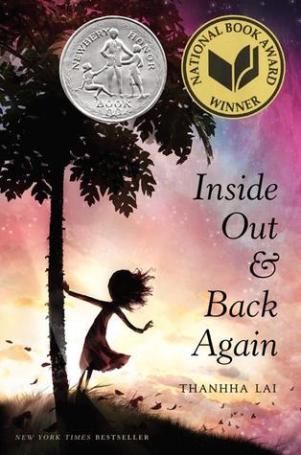
8537327Sung had just finished her 8th novel in verse, her favorite so far, Inside Out and Back Again. As I conferred with this reader, she told me she wanted to try something more challenging that was a ‘real’ novel. What she meant was a story with more words on the page. (Last year I caught one of my ELL students at the book shelf flipping through books. When I asked him why, he said he could tell if he could understand it depending on the “thickness of the words.”)
I walked to my “Explore: It’s Your World shelf” and pulled a few books I thought Sung might like:  Chains by Laurie Halse Anderson, In Darkness by Nick Lake, Copper Sun by Sharon Draper, Letters from Rifka by Karen Hesse, a book of short writings by various authors about human rights, published in association with Amnesty International, and several other titles I cannot remember now.

Then, I gave her time to explore.

A few minutes later, Sung held two books in her hands and quietly told me she wanted to read them both. She left the room with Karen Hesse’s award-winning book and the anthology of stories by writers like these: Paulo Coelho, Yann Martel,  Chimamanda Ngozi Adichie, Ishmael Beah, and more. These are not difficult books. They are not complex. They are way too easy by most high school standards. But they are exactly what this young woman needs to not only grow in confidence as a reader, but to grow as a citizen of her world.

And an interesting insight? Quite often it takes more inferencing skills to understand the story in a novel in verse than it does with a story written in prose.

_________________________________________________________________

For a list of other novels and verse, see this post.

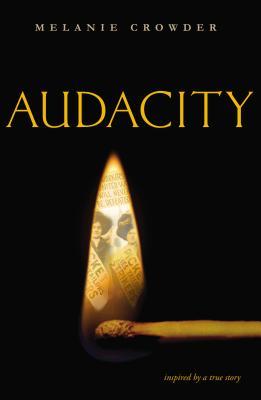
Here’s a highlight from my most recently read novel in verse, Audacity by Melanie Crowder. I think it will make a nice quickwrite at the beginning of the year as we build a reading community:

alight  22521938

I passed my Spelling

and Mathematics exams!


I hurry after work

to the free school

to check the schedule

for the next round:

Geography

History

And Trigonometry.


The thing that separates

rich from poor

in this world

is knowledge.

A person can rise up


if she can read

if she can think

if she can speak.


I cannot attend

every class

every lecture

but if I share what I learn

with the girls in my shop

in between bites

during lunch


ff Pauline shares

with the girl in her shop

in between bites

during lunch

it is as if we all

Were there together.


I see

these lunchtime lessons

spreading like fire

skipping from one box of tinder

to the next

across the shops

through the slums

until the entire city is alight

with small

fierce-burning flames.

Try it Tuesday: 15 Minutes to Make Time For Reading

My students don’t have time to read.  Just ask them. They’ll tell you.
In reflections, on their goal cards, to my face.

They’re sweet about it, mostly:
“I really wish I had more time to read, Mrs. Dennis. I’m just super busy.”
“The musical is just taking up all my time. I’ll get back at it soon. I promise.”
“AP tests are coming up and every time I sit down to read, I can’t stop thinking about the more important things I have to do.”

Ouch. That last one was like a swift kick to the shin. Or my soul.

But regardless of the reason, medium of delivery, or general sentiment, all of the excuses amount to the same end result: I need to keep reading at the forefront of every class period, or these kids are going to completely fall off the wagon.

As Amy alluded to yesterday in her post about personal reading challenges, we can’t always win the competition between getting our students reading and other homework, extracurriculars, or spring sunshine, but we can work to spark their interest and show them ways to make reading possible in their own lives.

Here’s what I tried at the end of last week and it took all of 15 minutes to create a buzz about setting goals, making time to read, and exploring a few new texts to capture student interest:

  1. I reminded my students how two hours of reading per week is the expectation, not just a cute suggestion. So, we started off a bit more serious. I reminded kids that I purposefully don’t give as much homework as I used to in order to help them have more time to read. We had an honest conversation (sort of one sided) about what it means to prioritize other things over reading and how it short changes their writing and their development as readers.I reminded them too that I’m busy, but I’m also a part of our classroom of readers. As specific examples can really help hit home a point (and including humor doesn’t hurt either), I shared with them that I read Columbine by Dave Cullen last week in six days (It’s honestly riveting. Unbelievably good), all while keeping my toddler entertained and alive, finding a few consecutive minutes to spend with my husband, trying to keep up with the recent release of Catastrophe on Amazon, preparing meals, doing laundry, cleaning up the house, and continuing to change their lives with my teaching each and every day (chuckle, chuckle).

    Then we took a look at this brilliant graphic from Tricia Ebarvia2 hours of reading

    I think it really helped kids to see that 2 hours of reading can be accomplished in a variety of ways depending on how they can work it into their schedule. I see my kids every other day on the block schedule, so I asked them to imagine establishing their 35 minute base either in resource period or through the 10 minutes we get to read at the start of each class.

  2. We then did a modified version of speed dating with booksMy district has really come through in recent weeks with a surge of funding for classroom libraries and as a result, I have a delicious variety of new and enticing titles.
    IMG_0684

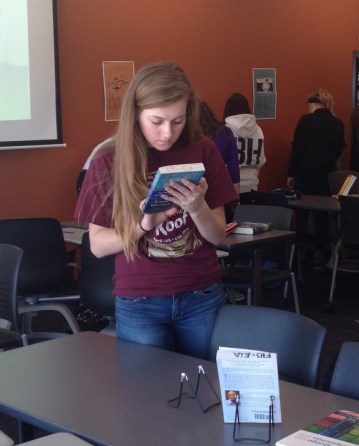
    Allison investigates Little Princes by Conor Grennan

    In place of our book talk, I asked students to take a “field trip” around the room and judge some books by their covers. Students were asked to take two or three books back to their seats based on interest in the title, a connection to the text (someone recommended it and curiosity was stirred), or any criteria that caught their attention. I asked students to spread the books out across the table and follow these simple steps:

    • Talk about the books! What do you know about any of the books on the table? Have you read it? Heard about it? Why did you bring a certain text to the table? Students chatted for 3 or 4 minutes and comments varied from “So many people are talking about this book” to “I picked it because the cover looked interesting.” Students were also making some great connections between authors. Several students picked up The Knife of Never Letting Go and The Crane Wife  because of previous experiences with Patrick Ness and one student specifically said she chose a text because it had a recommendation from John Green on the front.
    • Next, I asked students to choose a book from the table and read it for four minutes with a directive to look over the cover, search out accolades, read the back, and flip open the book to get a sample of the author’s style. When I called time, students who were interested in their books were asked to raise the book up over their heads so others could get a look.
    • The next round of reading went the same way, with students choosing books from their tables (either something they brought over or a text a peer put overhead).
    • For the final round, students could go swipe books from other tables. I told them to keep their eyes out for texts that had been put in the air by more than one person.
IMG_0689

I told them to act natural.

In 15 minutes we reconnected about making time for reading and explored our classroom library in search of a spark or two that could move us forward as readers. Students said they really enjoyed “shopping” for texts by looking at covers and then stealing books from other tables. They added to their “I Want to Read” lists, made some notes in their planners about scheduling time to read, and several books were checked out each class period.

15 minutes very well spent.


Try it Tuesday: Book Talks on the Big Screen

A few months back, my family was featured on a commercial for a local furniture store. We got paid handsomely to sit on a couch and look happy (easy) and cute (easy for my toddler). No dialogue. No acting. Just…sitting. It was well within my wheelhouse.

When the commercial ran, my daughter Ellie would race up to the screen in our living room, point excitedly, and exclaim, “LOOK! It’s ME!” Anytime she heard the telltale voice of the announcer, she would drop whatever she was doing and run to see if she was “in the television” again.

Her reaction was adorable (I’m biased), and pretty typical for a little kid who loves smiling for pictures and seeing herself in videos, but it would seem that as we grow, our perception of ourselves on screen tarnishes a bit. I mostly noticed how painfully true it is that the camera adds ten pounds. How cruel.  Thankfully, others often aren’t paying attention to such trivialities (I hope).

What’s important is the content.

In our classrooms, content takes many forms, but no matter the medium, we’re looking for the message to come through loud and clear. For example,  I teach my students when we work with speaking and listening standards that if we keep the message on pointe (Hurry in for the one day sale…) and organized (Hurry in today; it’s a one day sale), our audience will hopefully focus on the content (Wow, I could save serious bank on a sofa…todayand not our appearance (Hey, she looks like she packed on a few pounds. Ten. It looks like she packed on ten pounds). 

So, let’s consider what this means for readers workshop in our classrooms.

Book talks are central to a readers workshop. As such, many of us do them each and everyday. Amy and Shana recently discussed how and why they book talk in class, and one of the most useful quotes I took away from that post was when Amy reiterated the essence of a book talk, saying, “The best book talks are short, energetic, and introduce the book in some insightful or clever way.”

It’s simple: We want to hook our audience. The content is clear (This book is fantastic and you’ll love it too! ) and so is our mission (Read this book!).

With all this in mind, I’m going to ask you to come with me to a place that might make some of your a bit uncomfortable. However, in terms of risk-reward for the promotion of choice reading, this will be well worth the effort.

Let’s take our book talks to the big screen! 

Just as Ellie loved seeing herself on screen, students of the digital age delight in the visual medium. So, to add to our book talk repertoire, and even broaden the audience for books that delight our reading communities, here are three simple ways to switch up book talks in your classroom and keep things fresh and clever (personal screentime optional!). 


  1. Guest book talks caught on tape! Several months ago, I read and delighted in Jackie’s post on ways to stir up book talks. One of the suggestions I got rolling with was the guest book talk. Jackie insightfully wrote that “students need positive reading role models in all of their educators.” How true!

    I grabbed my phone and went down to Señora Ovalle-Krolick’s room. She had been speaking passionately just a few days before about Richard Wright’s Black Boy. I have yet to read this classic and I knew that her enthusiasm for the text would captivate my students. Before she could say no, I handed her the book and told her that I needed her passion. I asked her to tell me a bit about the book, her reading of it, and why she was recommending it. Her video, captured in one take, spoke beautifully about the text and her connection to it.

    Due to scheduling, it wasn’t possible to ask Alejandra to come to each of my classes, but with the video below, I was able to share it with all of my students. I’ve been working on my Social Studies neighbor next. He’s set to book talk via video next week. And all we need is my phone to get recording!

    https://www.facebook.com/lisa.n.dennis.7/videos/10154184296661549/?l=2213863947109559232

  2. Go big or go home – book talks on our school’s student newscast. Each week, the fantastic video production students at Franklin High School produce The Saber Roar. In recent months, I’ve helped an amazing student, Tasha Kappes, start a segment entitled Saber Reads. Students, teachers, and administrators (even a few from the district office!) have signed up to book talk some of their favorite selections!

    Here is Jessica Lucht, one of my amazing AP students book talking  The Young Elites by Marie Lu right around minute 2:45.

    In this episode, zip to minute 3:40 to see a book talk I did with my colleague, bestie, and partner in crime, Erin Doucette on Kristin Hannah’s The Nightingale. 

  3. Borrow brilliance from the internet. I learned about Reel Reading from Amy. Book trailers combine all of the elements of a great book talk, with the added bonus of moving pictures, music, and sometimes analysis or quotes.  In a post from several years ago, Amy’s students came through with some wonderful book trailers.Jackie talked about using book trailers in this post from last year, and I used a few of her links when I was feeling stuck in supplementing my own book talks recently.

    Just last week I wanted to book talk the Pulitzer Prize winning book The Road by Cormac McCarthy. I found the book trailer below the hooked several students with its haunting music and connection to the movie that was made from the book.

What ideas do you have for taking book talks to the big screen? What questions do you have? Please feel free to leave your comments and questions below! 

Reading Challenges for Growth, Connection, and Reflection

My students complete a reading ladder at the end of each quarter, during which they reflect on their reading from that nine weeks, write about the texts they read, and set goals for the following quarter.  When I read first quarter’s reading ladders, almost every student said one of their goals was to challenge themselves either with a book in a new genre or a more difficult length/writing style/topic.

So, I challenged them formally during second quarter to read a book outside their comfort zone, then write an essay that showed me that process.  I love Jak’s essay about his chosen challenge book–Cut by Patricia McCormick.  While this text is short and not full of especially difficult vocabulary, it challenged him because of its topic–self-harm and depression.  His essay is full of voice, text evidence, and text-to-self connections.  It’s a strong piece of writing that helped Jak reflect on his reading of this book, and is just one of many authentic alternatives to a traditional method of reading assessment.


img_1999

“A Challenging Cut” by Jak McMillen

Ready, Tropics? 1, 2, 3! LET’S GET TROPI—actually, let’s get dark for a moment. Let’s talk about Patricia McCormick’s Cut, a challenging and rough look into the mind of a depressed teen named Callie. Cue synopsis mode! To get into this mindset, Callie cuts herself. Never too deep, never enough to die, but just enough to feel the pain. Because she cuts, she’s been placed in Sea Pines, a treatment facility where everyone has a problem in one way or another. The only problem with Callie here is that she doesn’t speak, and for the most part refuses to throughout the book. Okay, synopsis mode over.

Now, Karnes, I’m assuming you have grown tired of the banter and have asked, “Well, how does this challenge you?” I’ll answer that shortly. In my essay earlier typed this year Of Mice and Misery, I cited one particular moment of my life that still affects me to this day, that of which being my father’s unfortunate passing. Now, my shell opens up more through this essay to share some of the past that I hold back.

Throughout my schooling years, I’ve found myself growing more and more tired of everyday tasks, even so far as just waking up and dressing myself. I could even use yesterday as an example: I had already felt like nothing more than dust the night before, which carried over to the next day. After coming back from MTEC the feeling was still there and unexplained, just as Callie’s feelings through the first parts of Cut. For me this is a culmination of years upon years of dark and harrowing thoughts of self-harm, and unfortunately at some points, even thoughts of suicide. Over the years of therapy some of these thoughts are still here. Now… I know that you probably didn’t want, nor did you need, to read that information, but I had to be relatable somehow, right?

41jIgmsYB+LAfter breaking her silence to her therapist, in their time between pages 122-125, Callie exposes her scars and tells what she uses. At one point in this segment, she says “Guess I’ll never wear a strapless ball gown,” from which I related in my own thoughts as feeling like I would never be good enough. Callie’s thoughts—as well as my own, but not in the book of course—were at most unexplained until later in the text. Cut took a vast amount of effort to read, and for this I praise McCormick for putting the amount of effort she did into writing this title.
When I read this title, it hit very close to home, and still does. I guess that’s why it’s such a challenge for me to read. Also, for the love of all that is holy, please do not take this as a cry for help or a sob story. I’ve moved on mostly and do not need any more sympathy than I’ve already received. Do know that it is much appreciated though! In closing I would like to say something Callie said once: “I may not want to get rid of my scars. They tell a story.”


How do you encourage your students to make personal connections to their reading?

What Janitors Can Teach Us About Getting Kids Into the Reading Zone by Amy Estersohn

guest post iconI love pop-psych self-help books.  I love books written by professors.  This book, by University of California professor Sonia Lyubormisky, happens to be both.  I love this book so much I bought a second copy because my first copy had too many post-it notes on it.

Lyubomirsky claims that happy people often achieve a state of “flow” and understand how to make flow happen.   We are in flow when we are absorbed in an activity that is not too challenging and not too easy for us.  In flow, we lose our sense of time completely: we are not bored, we are not anxious, we are not thinking about whether Trader Joe’s will have our preferred frozen meal in stock by the time we get there.  

IMG_0492If you’re like me, you read this description of flow and thought, “Oh, that’s just another word for the reading zone, only made more general for activities that aren’t reading.”
It’s easy to assume that flow experiences are reserved for avid tennis players, chess enthusiasts, artists, musicians, doctors, athletes, and others who have been able to live a lifestyle that caters to their interests.  However, research shows that even janitors can experience flow at work.  

“Other [janitors], in contrast, transformed the job into something grander and more significant.  This second group of hospital cleaners described their work as bettering the daily lives of patients, visitors, and nurses.  They engaged in a great deal of social interaction (eg. showing a visitor around, brightening a patient’s day), reported liking cleaning, and judged the work as highly skilled.  It’s not surprising that these hospital cleaners found flow in their work.  They set forth challenges for themselves– for example, how to get the job accomplished in a maximally efficient way or how to help patients heal faster by making them more comfortable” (Lyubomirsky 188-189).  Original research here.

Lyubomirsky believes that habits of mind like these are teachable and trainable.  Here’s what developing them can  look like during a reading conference:

The conference move: Critical Shopper

How I do it:  I’ll ask a student if she would recommend the book she is reading for a classroom library or book club set purchase.

How it supports “flow” or “reading zone”: It gives readers a reminder that reading can have a larger social purpose, and the more engaged they are in their reading lives, the better they can improve the reading lives of their classmates.

What I learn about the reader:  I learn about how a reader can engage critically with a text and can provide text-based evidence for a claim about whether a book would or would not make a suitable classroom library investment.


The conference move: Younger Sibling/Cousin

How I do it:  I ask a student what their younger sibling or cousin would say the book is about were he or she to read the book that the student’s currently reading.  Then I ask the student what he or she thinks the book is really about.

How it supports “flow” or “reading zone”:  It reminds readers that there are more ways than one to read a story, and that good stories beg to be shared with family, friends, and loved ones.

What I learn about the reader:  I learn about a reader’s ability to grasp themes and ideas in a text.  When I start off with, “What would your younger sibling say?” I expect the reader to give me plot summary and basic character traits.  Then, when I ask them for what they think the book is really about, it subtly lets the reader know that there are additional ways to answer this question.


The conference move: Goal-setting

How I do it: I ask students to set a goal, and I ask how I can help the student achieve that goal.

How it supports “flow” or “reading zone”: Just as the janitors who experience flow play an active role in setting their own goals, allowing a reader to set his goal gives him an additional purpose and meaning to his reading.

What I learn about the reader: I learn about a reader’s assessment of her own reading strengths and weaknesses.  Often the goal a student sets for herself is the same goal I would have chosen for her were I asked to make one.


The conference move: Remember when?

How I do it: I ask students to recollect a time when they were in “the reading zone.”  Sometimes I will use their reading log or my memory of their reading to jump-start this conversation.

How it supports “flow” or “reading zone”: By noticing and naming the characteristics that are associated with the reading zone — everything from body positioning while reading, the feeling of “Just one more chapter!”, the sensation of the pages flying by — we can celebrate the reading zone and try to make it happen more often.

What I learn about the reader: I learn about a reader’ self-awareness, and I learn what books got them in the zone, so I can recommend more books just like them!


Amy Estersohn teaches in New York.  Her classroom overlooks the parking lot where she learned how to drive.  She tweets about books at @HMX_MsE.

Books That Gave Me The Feels

I’m a big fan of all kinds of reading–sweep-me-away books, books that are dense and time-consuming, mysteries that puzzle me when I’m trying to fall asleep, books that break my heart, and more.

I think the teenage version of that whole entire category is “the feels.”

Books that are powerful, that grip us and force us to grapple with them, are what “the feels” are all about.  This is what I hope my students read for the rest of their days–far beyond the measly month or so they have left of high school.  I’m heartened by Emma’s recommendation list below–her blend of mystery, YA, and nonfiction that just rips at her heartstrings–because I know she’s already discovering books that give her the feels, and I hope she’ll continue doing so beyond our classroom.

img_1549-1Emma’s Top 10 List: Books That Gave Me The Feels
  1. Stolen by Lucy Christopher – 

This book is crazy good. It has the most twisted and unexpected plot line in the history of books. With kidnappers then romance it is just freaky good. It would keep basically any reader captivated. A mixture of romance and just plain old creepiness.

  1. Gone Girl by Gillian Flynn –

I love weird creepy things and this book is exactly that. It is an amazing mystery with a heart dropping twist that left me feeling sick to my stomach. If you are a disturbed human being like myself, this is a must read.

  1. 13 Reasons Why by Jay Asher –

The overall idea of this book is sort of hard to wrap your head around. Suicide is a sensitive subject and this book makes it very real, almost as if you are living through the events. It is an interesting way of telling the story.

  1.  The Hunger Games by Suzanne Collins –

Though cliché, this series is very good, and perfect for my list because it pulls out a lot of emotions. All the action and loss and real world situations that are incorporated make it a very good read.

  1. If I Stay by Gayle Forman –

very emotional book that weighs life and death. It is an interesting way of telling a romance story while keeping the reader on their toes the whole time for fear that it might end forever.51clOkezoKL._SX329_BO1,204,203,200_

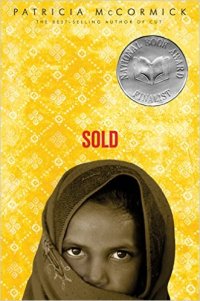
  1. Sold by Patricia McCormick –

More than anything this book is written beautifully, but the story is also very touching. The real life of a poor girl who gets put in situations out of her control is truly touching. It is a very easy read but very worth is because it is so touching.

  1. The Lovely Bones by Alice Sebold –

This book is good because it is told from the point of view of Susie, a girl who was murdered. It’s a cool way of an outsider point of view to the family who is struggling with their daughter’s death.

  1. The Fault in Our Stars by John Green –

On the more romantic side of my feels, this book ripped my heart out, along with every female heart in America. Illnesses are no joke and this book displayed the worst of circumstances, losing the one you love. It was a difficult book to read without crying.300x300

  1. Mere Christianity by C.S. Lewis –

On the complete opposite spectrum of any book genre. This book gives my Spiritual feels a tug. This isn’t a story with mystery or romance, it is just real life, telling you straight up how it is and I don’t know about you, but I’m a mess and when that is brought to my attention, the emotions start flowing. Plus, C.S. Lewis is a beast.

  1. 50 Shades of Grey by E.L. James 

I’ll start by apologizing for adding this book to my list but I don’t read many books so I don’t really have a choice. But hey, if awkwardness doesn’t give you the feels, what does? I can say with certainty that this novel will make you feel some type of way. Whether it’s good or bad, that’s up to you to decide.

“Plus, C.S. Lewis is a beast.” Don’t you just love that?!

What books give you and your students the feels?  Share in the comments!

#FridayReads: Required Reading “Our Students Want to Write”

Confession:  I buy a ton of pedagogy books. I rarely read them all the way through. I blame it on my blossoming OCD. I can only take in so many ideas before I run out of space in my head to hold them all long enough to use them.

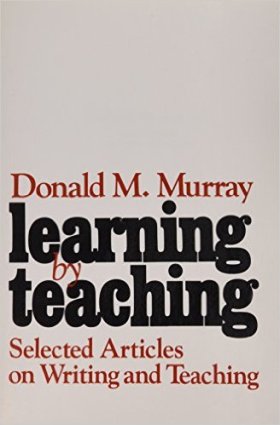
412bcpby4iol-_sx326_bo1204203200_That is not the case with this classic, suggested to me by my friend and mentor Penny Kittle, Learning by Teaching by Donald Murray.

I remember when Penny recommended it. She was in the DFW metroplex teaching a workshop, and I’d asked if we could meet up and talk about my writing. She graciously agreed, and we met at a Starbucks inside a Target. As always, Penny radiated positive energy. She told me about the work she was doing with Kelly Gallagher. I told her about my struggle trying to write a book, a book I am still trying to write.

I still cannot believe I had a writing conference — yet again — with Penny Kittle! (My first was during her class at The University of New Hampshire Literacy Institute the summer of 2013.)

At one point in our conversation, Penny paused and asked if I had read Don Murray’s book Learning by Teaching. I said no. At the time I hadn’t read any of his books, but I’d heard Penny talk about Murray with such affection, quoting him often. I knew this was a book I need to not just purchase, but one I needed to read. I’ve read and re-read and marked page after page.

Don Murray validates the moves I make in my workshop classroom, the moves I make

pageinMurraybook

My thinking while reading the essay “The Process of Writing” by Donald M. Murray


when planning instruction for my AP Language and Composition course. I have learned from those who learned from Murray, and his work reminds me again and again why teaching with student choice in mind works. Every time I feel like I fail, every time I get frustrated with the way an assignment flopped, or I didn’t reach a certain student what I’d hope to teach him, I turn back to this book of essays by Murray. (I did this recently after most of my students bombed an assignment, which was mostly my fault.)

Here’s an excerpt from Murray’s essay titled “Our Students Will Write –If We Let Them” published in North Carolin English Teacher, Fall, 1977. I probably break a copyright law by sharing, but I’ll risk it if it means freeing more writers. (See more about freeing writers in Penny Kittle’s piece “What We Learn When We Free Writers.”)

Our students want to write — but not what we want them to write.

Our students want to write of death and love and hate and fear and loyalty and disloyalty; they want to write the themes of literature in those forms — poetry, narrative, drama — which have survived the centuries. They want to write literature, and we assign them papers of literary analysis, comparison and contrast, argumentation based on subjects on which they are not informed and for which they have no concern.

We should see that their desire to write proves the vitality and importance of literature and literature-making in each generation, that language is central to the human experience, not just as a communications skill but as the best way to recall and understand experience. We tell our students the unexamined life is not worth living, yet we seldom allow those students to examine their lives firsthand through what is termed creative writing.

It is time that we, as a profession, not only support the reading of literature but the making of literature; that we encourage our students to write what they want to write and realize that what they want to write is more intellectually demanding, more linguistically challenging, more rhetorically difficult than the writing we usually require in the English class.

The biggest problem in the teaching of writing is ourselves. We do not encourage, allow, or respond to our students’ desire to write. We do not believe that our students can write anything worth reading, and they prove our prediction. Conditions will not improve until we realize that what we face is a teacher problem, not a student problem.

There are many important reasons to consider taking what is usually tolerated, at best, in the elective creative writing course and placing it at the center of the writing curriculum. Some of them are:

  • Writing about individual human experience motivates both the gifted and those we often consider disadvantaged. In fact, we may find that the disadvantaged aren’t in terms of experiences which can be explored through writing. Students who are not motivated by our lectures on the need for writing skills–they know the need does not exist in the lives they expect to live–still share the human hunger to record and examine experience. Students who are bored with papers of literary analysis or even incapable of writing such a paper at this state in their development may be able to write extraordinary papers based on first-person experience.
  • Students discover…that they have a voice, they have a way of looking at their own life through their own language. They discover and learn to respect their own individuality.
  • Through writing, the student increases his or her awareness of the world, and then works to order that awareness.
  • As students follow language towards meaning they extend and stretch their linguistic skills.
  • The experience-centered, doing nature of the writing curriculum will reach many students who are not comfortable with the analytical passive-receptive nature of the typical academic curriculum.
  • Creative writing gives students a new insight to literature. The study of literature is no longer entirely a spectator sport, but an activity which they can experience and appreciate.
  • The creative writing class may be the place where some students learn to read. Test results in many community colleges and other colleges of the second chance show that many students who test as not being able to read are also the best writers. They are able to read their own words and to perform the complex, evaluative techniques essential to revision. They learn to read by writing.
  • Students and teachers of creative writing rediscover the fun of writing. Art is, at the center, play, and perhaps that is the reason it is so little tolerated in the school. If it is fun can it be learning? Yes.
  • Finally, we should teach creative writing because it is more intellectually demanding than the study of literature or language as they are usually taught in the English class. This runs directly counter to the stereotype believe by most English teachers. IT is easier to complete a workbook on grammar, easier to tell the teacher what the teacher wants to know about a story than it is to use language to make meaning out of experience. The writing course is a thinking course, and it should be central to the curriculum in any school.

There is more. I believe Murray’s writing, like Penny’s books Write Beside Them and Book Love, should be required reading for every English teacher. I wish they would have been required reading in my education classes. For the first few years of my career, I struggled like many teachers I know with student engagement and learning while I taught literature instead of readers and writers. (Someday I’ll write about the Dickens I subjected my 9th graders to. It’s a sad sad tale of student, and teacher, woe.)

And someday I’ll finish this book I’m trying to write. I think Don Murray would want me to.

What books do you think should be required reading for all English teachers? I’d love to read your suggestion in the comments.


Mini-Lesson Monday: Identifying & Imitating Voice

Comedy is all about voice, and we’re gearing up to notice and imitate as much voice-filled comedy as possible in the next few weeks.  When thinking about how to help students identify and craft their own written voices, I thought of a lesson Amy and I shared in Franklin a few weeks ago.

721003Objectives: Using the language of the Depth of Knowledge Levels:  students will make observations about a writer’s craft, identifying patterns in sentence structure, punctuation, and word choice to help define voice.  Or, in the Common Core, students will interpret words and phrases phrases as they are used in a text and analyze how [they] shape meaning or tone.
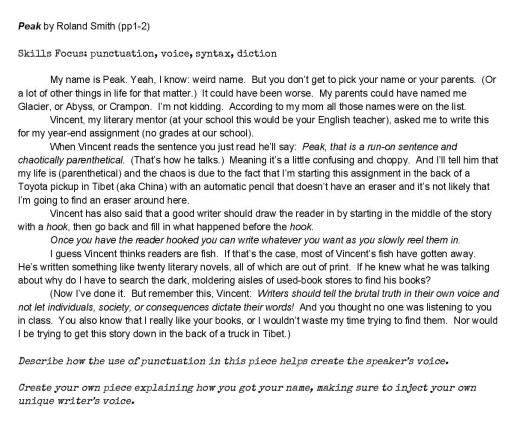
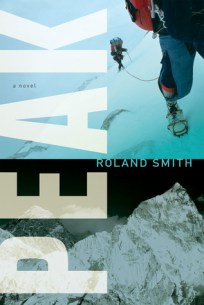
Lesson:  I’ll distribute copies of this excerpt from Peak by Roland Smith, which will serve today as both a booktalk and a mentor text.  I’ll introduce the piece as a book I loved, then segue into how it serves as an examplar of voice.

“Peak–that’s the main character’s name–is writing the whole book in the form of journals to his English teacher, so his voice is very conversational.  I found him pretty hilarious and sarcastic.

“Today we’re going to look at this excerpt from page one and try to see how Peak creates his writing voice.  Let’s all read this and annotate for craft–just notice HOW he’s saying what he’s saying.”

PeakVoiceLesson-page-001

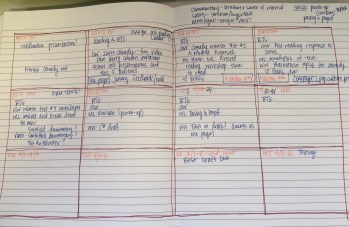
After a few minutes of student annotation, which I am doing alongside them on the document camera, I’ll ask students to share their noticings in their table groups.  “Share with your tables what you notice about Peak’s sentence structure, punctuation, and word choice,” I’ll say, writing those bold terms on the board.

Once students have shared in small groups, I’ll ask each table to share out what they noticed.  As a group, we’ll arrive at some conjectures about Peak’s use of:

  • parenthetical asides to the reader
  • occasional fragments amidst his varied sentence structure
  • relaxed jargon
  • rhetorical questions.

Once we have those key terms in our notebooks, along with great examples from the text, I’ll ask students to practice using these skills.

“In this case, using these writing moves create a writer’s voice unique to Peak.  We’re going to imitate this piece now by writing a quickwrite about how we each got our own names.  Write your piece imitating Peak’s style, and use those four writing moves as you do.”

Follow-Up:  We’ll all take about eight minutes to craft our name stories, imitating Peak’s voice, in our writer’s notebooks.  We’ll share them in our small groups, then use that quickwrite as a seed prompt for a possible comedy best draft as we move through the unit.

How do you help your students craft their writers’ voices?

YA Fiction That’s Funny and Full of Voice

After millions of snow days, my student teacher, Mike, and I are finally wrapping up our Siddhartha self-reflection unit and jumping into a new writing unit I’m really excited about–comedy!  We’ll study satire, sketch comedy, stand-up, commentary, and monologues for mentor texts, then work with our students to craft strong comedy writings that exemplify the skills of pacing, payoff, “punch-up,” and one other skill that I think is the most important:

Voice.

Writing voice, for me, is where humor, sarcasm, and personality come alive in a piece of writing.  “Voice,” Tom Romano writes, “is the writer’s presence on the page.”  Voice is the most elusive quality of writing to teach, I think, because it’s not really quantifiable and cannot be duplicated or imitated.  Each writer must craft his own authentic voice.

img_1738

Brainstorming the bare bones of a comedy unit

While discussing the very bare bones of our comedy unit, we brainstormed mentor texts, seed prompts, and writing skills.  After we hammered those out, Mike wondered about which books to booktalk for the unit.  “Nonfiction comedy is easy,” he said.  “Bossypants, Yes Please, Confederacy of Dunces.  But I’m not sure what to booktalk for fiction.”

“But YA fiction is so hilarious!” I exclaimed.  I started rattling off narrators who cracked me up.  Their writing voices were the perfect mentor texts for our students, who’d be focusing on crafting a humorous writing voice over the course of the unit.

“Looks like I know what I’ll be brushing up on for my weekend reading,” Mike remarked.  So here, in part, is a list of what I recommended to him–YA fiction that’s funny and full of voice.

The Absolutely True Diary of a Part-Time Indian by Sherman Alexie — This novel, paired with illustrations by the narrator, is loosely based on Alexie’s own upbringing somewhere between two identities–his poor Indian self who lives on the rez, and his striving-to-succeed “white” self who attends a better school up the road.  It’s infused with Alexie’s signature wry humor even against a pretty dark plot backdrop.

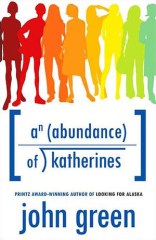
49750An Abundance of Katherines by John Green — This is, to me, the funniest of Green’s novels, although all of his narrators are pretty hilarious.  Colin Singleton has dated 19 girls named Katherine, and has been dumped by all of them.  If that’s not funny enough as it is, Colin is trying to write a mathematical formula for relationships and likes to find anagrams in random places.
The Disreputable History of Frankie Landau-Banks by e. lockhart — For me, Frankie is the female version of James Dean in Rebel Without a Cause.  Determined to subvert the male-dominated traditions at her private school, Frankie gets into all kinds of mischief, and I loved her headstrong voice.

American Born Chinese by Gene Luen Yang — This excellent graphic novel pairs multiple storylines, all of which are made hilarious primarily through dialogue and stylistic choices in Yang’s illustrations.  From antagonists so dumb they’re funny to Yang’s monkey alter ego, this is a humorous look at growing up different in America.

Anna and the French Kiss by Stephanie Perkins — I identified so much with the quirky narrator of this novel.  Forced to change schools right before her senior year, Anna is self-deprecating, sarcastic, and delightfully bewildered when she moves to the International School of Paris.  There’s also a great cast of hilarious supporting characters here.

Dumplin’ by Julie Murphy — I just loved Willowdean, the narrator of this terrific, important novel.  Most of her snide comments are made through internal monologues, but her interactions with her mom through dialogue are also quite funny, too.  Like Part-Time Indian, there are some heavier themes, but all in all I smiled throughout most of this book.

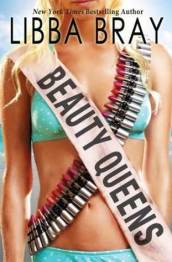
9464733Beauty Queens by Libba Bray — An all-girls’ Lord of the Flies, this book was fantastic for a variety of reasons.  The colorful cast of alternating narrators means there’s someone every reader can identify with, the interactions between those characters are often ridiculous and hysterical, and interwoven with it all is a series of broadcasts from a corrupt third party who are so evil it’s funny.

Noggin by John Corey Whaley — I finally read this book after it was stolen from my library countless times, and it’s hilarious from page one.  The story of a boy whose head is transplanted onto another teen’s body after he dies of cancer, Travis’ tale is at turns heartbreaking and hilarious as he tries to navigate the world five years after he last left it.  A fantastic series of supporting characters elevated the humor in this book for me, too.

Me and Earl and the Dying Girl by Jesse Andrews — For me, this was a more realistic version of The Fault in Our Stars.  I found Greg’s writing voice engaging and entertaining right away, and it made me read this book in one sitting.  His frequent addresses to the reader combined with his hilarious interactions with his friend Earl made Greg a favorite narrator of mine, and makes me eager for Jesse Andrews to write some more books!

Winger by Andrew Smith — All of Andrew Smith’s writings are hilarious at times, but for me Winger was the funniest.  Ryan Dean West is a scrappy fifteen-year-old making his way through freshman year at a private school, and his escapades with his rugby teammates, his crush, and his teachers made for a lot of laughs–up until I completely broke down in sobs for the last 30 pages or so of the book.  Still, Ryan Dean’s voice was so great that I couldn’t wait to devour this book’s sequel, Stand-Off.

What are some of the best-voiced YA books you’ve read that have cracked you up?  Please share in the comments!