Author Archives: Amy Rasmussen

A Book Talk and A Writing Lesson in One Easy Go

Since I try super hard to not work on the weekends, I wasn’t sure how I was going to be completely prepared for my lesson on Monday. I locked my classroom door on Friday, knowing I was short a mentor text.

Then, while sitting by the lake, enjoying the breeze and this novel a friend recommended, the text blurred my eyes, and I did the unthinkable: I crimped down the corner. Then I did it again and again and again.

I love it when the stars align, and the tools I need to teach writing appear in my own independent reading. I notice things and want to share them with students. And I know that they will see what I want them to see and understand why it matters because they see my passion in the discovery of something I want to show them. Studying author’s craft becomes easy when I share from the books I am currently reading.

Here’s a slice from Night Film by Marisha Pessl, a hauntingly beautiful book that’s written in multi-genre. (You want to check it out. I promise.)

The sagging green couch along the far wall was covered with an old blue comforter where someone had recently crashed–maybe literally. In a plate on the coffee table there was an outbreak of cigarette butts; next to that, rolling papers, a packet of Golden Virginia tobacco, an open package of Chips Ahoy!, a mangled copy of Interview, some emaciated starlet on the floor along with a white sweatshirt and some other clothes. (As if to expressly avoid this pile, a woman’s pair of black pantyhose clung for dear life to the back of the other beach chair.) A girl had kissed one wall while wearing black lipstick. An acoustic guitar was propped in the corner beside an old hiker’s backpack, the faded red nylon covered with handwriting.

I stepped over to read some of it: If this gets lost return it with all contents to Hopper C. Cole, 90 Todd Street, Mission, South Dakota 57555.

Hopper Cole from South Dakota. He was a hell of a long way from home.

Scribbled above that, beside a woman named Jade’s 310 phone number and hand-drawn Egyptian eye, were the words: “But now I smell the rain, and with it pain, and it’s heading my way. Sometimes I grow so tired. But I know I’ve got one thing I got to do. Ramble on.”

So he was a Led Zeppelin fan.

Oh, the details, the description, the diction, the syntax. You can see it, too, right?

If I want my students to become effective writers, I have to show them effective models. It’s as simple as that. It’s even simpler when I can show them models from books I’m reading. Then they get a book talk and a writing lesson in one easy go.

I love it when that happens.

Reel Reading for Real Readers: The Good Soldiers by David Finkel

20130207-190708My own sons love to read books on war. That’s the main reason I have so many in my classroom library.   My twin sons Zach and Chase both plan to enlist in the military after they serve two year missions for our church. Every once in a while they will come home from Barnes and Noble with a new book. Chase brought this one home just yesterday:

Every once in a while I come across a book that I surprise them with, and usually they argue over who gets to read it first. Good Soldiers by David Finkel is one of those books.

My sons were reluctant readers in middle school and most of high school. The majority of their teachers stuck to the required reading of classical literature and rarely talked about books other than those they were reading for class. Chase finally found books as a way to escape bullying, and Zach found he liked a lot of the books Chase was reading. They became readers on their own, which I am grateful for, but I still think “what if?” What if a teacher had taken the time to learn of their interests in the military, in war stories, in patriotism? What if a teacher had let them read where their passions lay? Maybe they would have had a much more enriching experience in high school English.

I haven’t read Good Soldiers yet, but Chase has. He read it in a day.

Good Soldiers Audio Book Review:

David Finkel reads an excerpt:

Stop Preparing Kids for College

I’d kindly like to request that if you are currently preparing kids for college you stop. STOP NOW! 

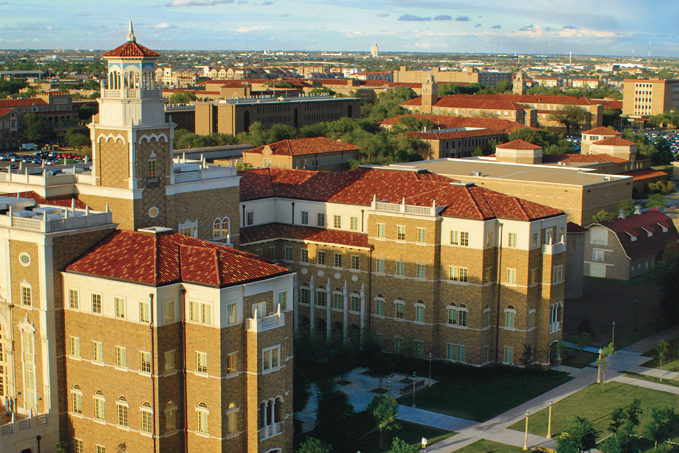
campus-arielFrom the time I was born I knew without a shadow of a doubt that I would be attending Texas Tech University for college. There were no discussion of other options, no thoughts of possibly going somewhere else. I simply knew that I would call the sprawling acreage in the middle of West Texas my home for the four years after high school. I was so certain of this decision that in sixth grade I insisted my parents have a  conference with my teacher when she refused to allow me to do my college research project on Texas Tech. She wanted me to, “broaden my horizons.” I told her you could actually see the horizon in Lubbock and it didn’t need broadening.

ttu

Of course, my senior year I proudly accepted an offer to become a Red Raider!

For me, the problem wasn’t about going to college. The problem was about what to do once I got there. I vividly remember being more than shocked that I would have to pick a major and degree plan during freshman orientation. I was just beginning to orient myself  to the idea of being five hours from my family that the thought of deciding what I was going to do FOR THE REST OF MY LIFE hadn’t even crossed my mind! It may sound ridiculous but I honestly had no clue I was going to have to make so many decisions so soon in my college career.

Looking back on my experience, and the experience of others, I’m wondering if “preparing kids for college” is really enough. When we perpetually talk about college, paying little regard to what happens before, during, or after college, are we really stopping short? There is an entire world outside of school life. As educators, we must equip our learners to be successful in a vast array of environments – both now and in their future. Might college be one of paths our learners take, yes – absolutely YES! But we can not continue to send a message that college is the end of the road when in reality it is just one pit stop on the journey.

I know my story isn’t unique. We know that, “as many as one in three first-year students doesn’t make it back for sophomore year,” (US News). Maybe we should exert our energy helping prepare kids for life and in doing so they in turn would be even more capable of being successful in college.

Needless to say, I ended up picking the major and degree plan with the shortest registration line, but that’s a story for another day.

The 21st Century Sandlot

This has to be one of my all time favorite movies. If you haven’t seen it, well you should question your cultural literacy!

smore2What does this have anything to do with my tech tip you ask? Well, aside from the name (Smore), not much. While browsing the interwebs the other day I stumbled upon an awesome newsletter that my sweet teacher friends at Cannon Elementary School sent out to their families (seen here: https://smore.com/yds4). Immediately I’m struck by the bright colors and awesome pictures of their learners engaged and excited about learning. I also loved their concise way they shared important information with their families. I don’t know about you, but I have little attention span for a lengthy email where you have to labor over every word just to decipher the point of the entire email. For me, the Smore flyer was awesome. I was able to get a brief glimpse into their classroom and if I were a parent I would know how to help my learner at home. — LOVE IT!!  And just in case you think it might be hard to use, it is not – I tried it! I literally spent ten minutes making an awesome flyer that I can now easily share with anyone!

Let me put it this way,
classroom newsletters will never be the same!

smore1

Go ahead – try it!
Then, let me know how you used it in your classroom!

Reel Reading for Real Readers: Behind the Beautiful Forevers

20130207-190708This one is still on my TBR list, but just reading this excerpt at NPR has made me think of the many ways I can use Behind the Beautiful Forevers: Life, Death, and Hope in a Mumbai Undercity by Katherine Boo in my English classes this year. Look at the sentence structure, the word, choice, the imagery, the power and beauty of the language. Oh, wow!

Many of my students know next to nothing about life outside of Carrolton, TX–or if they do, it’s the best exits to take for fast food and restroom breaks on their long drives from here to Mexico where they go to visit family. It’s not all their fault. They do not come from families of world travelers. They do not even come from families of readers.

One goal I have this year is to read more world literature myself. If I read it more, I will talk about it more, and I can hopefully get my students reading it more. There are so many wonderful stories, heartwarming and heart-wrenching stories, and I want my students to experience them.

Here’s Katherine Boo explaining her book. I just love her!

Digital Novices vs Digital Natives

“For today’s young people, using technology is as fundamental as reading was for their parents and grandparents. It underlies and supports everything they do.”

jisc_infonet

jisc_infonet

Marc Prensky tweeted that comment the same day I thought I’d pull every last gray hair out of my already aching head.

Fundamental? Oh, Marc, you do not teach my students. Getting them to use technology is laborious, tiresome, and one I’m-sorry-no-I-cannot-remember-your-password-either kind of torture.

Do I do it? YES. Every year I spend days teaching students how to create email addresses and use them appropriately. We create blogs and links to each other’s blogs, and we post various types of writing to them all year. We register for Twitter, and we use it for class discussions and for sharing information. This year my students will also be generating infographics and digital stories. And more. See? We use a lot of technology.

But it is not fundamental to my students. What I teach them is fundamental. All they know how to do is text their friends and watch YouTube videos. They have hundreds of dollars worth of smart phones in their teenage hands, but they don’t have a clue about how to use these devices for learning or anything close to productively–you know, like they might in a job or even in college.

Let’s talk about the digital divide. We already know that students in poverty have lower literacy rates as a result of the lack of books and reading in their early years. Vocabulary acquisition is tens of thousands of words behind their affluent peers. Now, we add the lack of access to and training with technology, and the gap grows gigantic. Digital literacy in our ever changing digital world is a have to.

I have to teach my students how to use technology. Heck, we transform our learning through our use of technology. But, please, can we stop making it sound like all teenagers will pick it up in a snap and a wink and be good to go?

It’s hard work to get them comfortable. Hard work that takes a lot of time and a lot of patience. Yeah, yeah, I know, the pay-off’s worth it, and I’ll keep at it. Every year I just have to remind myself to take it slow, provide lots of structure, and take good notes because I will have this conversation many times:

Me:  “Yes, I have your username right here. Could you pull out your phone and put it in your notes?”

Them:  “I have notes on my phone?”

Me (muttering maniacally):  “Yes, dear, and so much more.”

These things keep me awake at night.

So, I’m wondering. How do you deal with students who are supposed to be digital natives but are more like digital novices? And what more can we do so the digital divide doesn’t damage our already struggling populations?

Starting Close Reading with Mexican White Boy

Matt de la Pena is scheduled to speak at TAIR in Denton, TX on September 30. If things work out, he’ll be coming to my school to speak on the 28. I am excited for my students to hear Mr. de la Pena’s story. It is so similar to their own.

Mexican White BoyMexican White Boy is the first de la Pena book I’ve read. Ball Don’t Lie, We Were Here, and I Will Save You are rising on my TBR pile. I imagine my students might get at them first.

A passage from Mexican White Boy made me take note. It’s a great read aloud, but it’s also a great piece for a text study. It’s packed with literary and rhetorical devices and would be ideal for close reading for concrete vs. abstract details. Or, tone. Or, syntax, Or, all of them.

It all hits him as he stares at a half-finished love letter. No matter how many words he defines or love letters he composes or pieces of junk mail he reads aloud to his grandma while she waters spider plants potted in old Folgers coffee cans he’ll still be a hundred miles away from who he’s supposed to be.

He’s Mexican, because his family’s Mexican, but he’s not really Mexican. His skin is dark like his grandma’s sweet coffee, but his insides are as pale as the cream she mixes in.

Danny holds the pencil above the paper, thinking:   I’m a white boy among Mexicans, and a Mexican among white boys.

He digs his fingernails into his arm. Looks up to see if anybody’s watching him. They aren’t.

Sometimes he’ll just watch his family interact in the living room. The half-Spanish jokes and the bottle of tequila being passed around with a shot glass and salt. The laughing and carrying on. Always eating the best food and playing the coolest games and telling the funniest stories. His uncles always sending the smallest kid at the party to get them a cold sixer out of the fridge and then sneaking him the first sip when Grandma isn’t looking. But even when she turns around suddenly, catches them red-handed and shots, “Ray! Mijo, what are you doing?” everybody just falls over laughing. Including Grandma.

And it makes him so happy just watching. Doesn’t even matter that he’s not really involved. Because what he’s doing is getting a sneak peek inside his dad’s life (89-90).

My students will start the year with a study of narrative writing. Thanks, Mr. de la Pena for this accessible piece to get us started.

Do you have any similar short texts that you use for close reading? Please share.

Reel Reading for Real Readers: Pride and Prejudice

20130207-190708.jpgSome of my colleagues might think I am anti-classics, but this is assuredly not so. I just hate how we commit what Kelly Gallagher calls Readicide by reading them to death in English classes. Pride and Prejudice by Jane Austen is my all time favorite:  book and movie. The characters speak to me, and I’d know them on the street; I’ve read of them so many times. I even fantasize about living in turn of the century rural England. Well, maybe not fantasize, but I would like to travel to the English countryside someday.

Official Movie Trailer:  Pride and Prejudice

I want students to read this book. I do not want them to hate it. Therefore, I will talk it up. Quote some characters, show them this movie trailer, and offer a bribe or two if I have to: “I’ll bake you tiny cakes and bring you tea.” Whatever.

“My good opinion once lost is lost forever.” — Darcy, Pride and Prejudice

Do you remember that scene in You Got Mail? Meg Ryan’s character has praised Elizabeth Bennett and in subtle ways thrown down the challenge to Tom Hank’s character to read the book. He tries. For her. It’s the sweetest thing ever.

My daughters and I love all things Jane Austen. When the movie Becoming Jane came out, we were on a girls’ trip in Florida where the drivers love their horns, and we shook hands with a young man named Mr. Stubbs who was missing half a finger. The four of us walked into the movie theater, and we waltzed out humming the score and discussing literature. This mother’s perfect evening, surrounded by loving daughters who talk about books.

I’m all about building relationships with my students. By sharing my love of Pride and Prejudice with them– and why I love it, they will see a glimpse into me. The me outside the English class. The me who loves being a mom. Who goes to the movies. Who takes her girls to Florida on vacation. Who finds irony in people’s names.

If my students know me, I have a better chance of knowing them. Books and literature are so much more than reading material.

So, let’s play a bit here. What’s your favorite CLASSIC text, and why?

Students Want Simple Things from Teachers

"Love all, trust a few, do wrong to none." ~William Shakespeare

Our Compass Shifts 2-1Start slowly. Ease into it. Take the time to let them trust you. Breathe. Relax. Make sure they know that more than anything they matter. I’ve told myself these things every August as the new school year starts, but I don’t listen. Ever. I am always in a rush. Jump in. Get them working. Show them who’s in control.

No wonder the past few years have been rough:  I took too long to build relationships.

This week I’ve done it differently, and I can already tell a difference.

I have not done the get-to-know you bingo games, the list-your-favorite-things cards, the 2 true/1 lie, or the numerous other “relationship building” activities that rise in the back-to-school Google searches.

I have asked students to write. And I’ve written with them. And we’ve shared.

The first day of school I showed the beautiful video of Shane Koyczan’s poem “To This Day.” We didn’t talk; I simply asked students to respond. They wrote on note cards for five minutes and told me what they thought about name calling, bullying, loving the inner person. I then asked them to flip the card over and on the back tell me why they think I chose that poem, of all the millions of poems available, for the first day of school. They thought and wrote, and I set the expectation that we are a community of writers on the very first day.

I read their responses that evening, and I learned a few things, and a few things made me cry:  the death of a father this summer, the loss of a brother, and the abuse experienced by not one but two of my girls when they were younger. The hurt is still raw. I felt it in their words, and I am honored. They trusted me with their hearts the very first day.

Every day this week I’ve read a poem or a quote or a story, and I’ve asked students to write their thoughts in their notebooks. I wrote along with them. I modeled re-reading and revision. I shared my thinking, and I shared my words on the page. Then I asked if students felt comfortable sharing. Many did.

Yesterday we read the poem “Days” by Billy Collins. I did a quick mini-lesson on imagery and personification, and then I asked students to think about a day in their lives that, if they could, they would live over. Sad day. Happy day. Any day. Just choose one and write. We wrote for five minutes.

I shared first. Or, I tried to. I wrote about my mother, and I got so choked up in first period I could not speak. My students saw me vulnerable. They saw my hurt, and they poured out their sympathy. If there’s anything magical about my mother’s illness, this was it. The bond of our relationship cemented with my tears.My notebook Days

During 5th period, one of my girls volunteered to read her response. She began with something like “It was the day I saw my mother for the first time in three years. We hugged and laughed and cried.” Then she began to sob. The class stilled. Silence. Silence. And then soft snickers. I know students were uncomfortable; they are freshmen after all. I cautioned them about respect, and reminded them of the safe place we are developing as readers and writers–the place where we take risks and trust others to understand. I spoke gently but sternly as I made my way to my sobbing young woman and rested my hand upon her back. “Be kind,” I said, “and please be patient. Let me tell you about my experience in first period. I cried . . . because I miss my mother.” My tears spilled over, and this group of 14-year-olds saw my hurt, too, and we all grew as a community.

It’s Friday afternoon, the end of the first week of school. My feet ache, but I am happy.

Students want simple things from teachers:  kindness, patience, a listening ear. They want to share their hurts, fears, hopes, and dreams. They need to know we care enough to let them.

And, guess what? Students will WRITE when we give them the opportunity to write what they feel. I can do a lot of teaching with what they’ve started in their notebooks this week.

Best blessings all my teacher friends. I hope your school year looks to be as bright as mine.

If you have other ideas for relationship building, please share. I’d love to know what works for you.

Reel Reading for Real Readers: Columbine by Dave Cullen

20130207-190708By far the best book I read this summer was Columbine by Dave Cullen. As part of my class at #UNHLit13, I chose to read this book and study it for craft with three other teachers. Maybe that’s why it’s my favorite.

I’ve been in book clubs before, and I’ve had my students conducting literature circles for a long while now, but I’ve never experienced the power of studying a book like this one.  Maybe it was the subject matter. Maybe it was the amazing group of professionals who were invested in the process as much as I was. Whatever it was, Dave Cullen has crafted a masterful piece that moved me.

I want my students to experience this kind of emotion when they read a book. I also want them to see the art in crafting language. (I’ll use excerpts in mini-lessons throughout the year.)

These are the first clips I will show my students this year, and I guarantee my copy of Columbine will land in a student’s hand, and the waiting list will start out long. I better prep the school library to get their copy ready, too.