Author Archives: Amy Rasmussen

Writing as Punishment? Oh, the Nerve!

“As punishment I have my students write a response to an ethical question when they are done with their social studies test,” a colleague said during a recent professional development session.

I’d been asked to lead a discussion on writing in disciplines other than English, and I’d asked the attendees to share out the various types of writing they have students practice in their classes.

“That’s pretty much the only kind of writing I do in my class,” he said, “That’s why I’m here.”

I might have stuttered a bit as I caught myself from falling down. I guarantee my neck turned red as it does when I am frustrated.

PUNISHMENT?! Did I hear that right?

What does a writing teacher do with that?

Imagine if I sat in his history classroom and boasted that I punished students by making them learn the historical context of a text prior to reading it. Imagine if I made a disparaging remark about his content at all. The nerve.

Therein lies a big part of the problem with student writers. Many people, teachers included, think writing is boring, or too much work, or punishment.

Then, it’s left up to English teachers with a passion for the craft to push and prod and plead with students to put at least a tiny thought on the plain white page. Somewhere someone ruined that child for the written word, and we have to undo some damaging false notion.

Don Graves reminds us that children want to write before they want to read. I know this is true. My own children reached for their dad’s pen or the random crayon before they ever sat still long enough to read a book. The two-foot-tall art on the clean white walls of my brand new house was evident often enough.

Children want to write. We must protect that desire. Nurture it with freedom and ideas and time.

Shame on the teacher who ever makes writing a punishment.

And yes, in case you are wondering, I spoke my mind.

“I challenge you to never call writing a punishment again,” I said as he squirmed just a bit, “Students will write, and they’ll love writing. You have to be the model of what that means in your own classroom.”

I believe that with all my heart.

A Novel in Verse to Study Craft

I recently read my first Ellen Hopkin’s novel in verse — all 666 pages. I’d often wondered why some of my most reluctant readers, girls mostly, would stick with and finish Hopkin’s books. Now I know.

While the thickness of the book is intimidating, the number of words on each page is not. The poems are short and beautifully worded, using language that makes the storyline pop like a 3D movie.

Impulse is the story of three characters, all with distinct voices, portrayed in their own series of poems. The point of view shifts from character to character, which I love because that adds to the complex thinking students must do to understand what is happening in the story.

All three characters suffer from some of the worst abuses that can happen in the lives of individuals. All are in a facility trying to figure out themselves and their horrid lives — primarily as result of the actions of adults.

This morning while checking my Twitter feed I was reminded of the need to introduce students to books as mirrors and windows. Students should be able to see themselves within the characters they read about, and they should be able to see into the lives of others that they may never know. Sometimes books allow students to do both. Impulse is one of those books.

I think it would be interesting to use this poem from page 2 as an exercise in imitation. What four verbs might students choose to write into their four sentence poem?

The Thread

Wish

you could turn off

the questions, turn

the voices,

turn off all sound.

Yearn

to close out

the ugliness, close

out the filthiness,

close out all light.

Long

to cast away

yesterday, cast

away memory,

cast away all jeopardy.

Pray

you could somehow stop

the uncertainty, somehow

stop the loathing,

somehow stop the pain.

Why Are So Many Adults Threatened by Students Choosing Books?

The teacher-readers at Three Teachers Talk agree. The only way to promote, encourage, foster, nourish, and engage readers is to let them read. We thank The Reading Zone for this post. Our thoughts exactly.

thereadingzone's avatarThe Reading Zone

  • Flowers in the Attic
  • A Wrinkle in Time
  • As I Lay Dying
  • Mists of Avalon
  • Harry Potter and the Sorcerer’s Stone
  • The Hobbit
  • Little Women
  • Anne of Avonlea
  • the Bible
  • Cold Mountain
  • Angela’s Ashes
  • The Celestine Prophecy
  • Dreamland
  • Speak
  • The Hot Zone

A list of books you can find at garage sales or friends of the library sales?  Probably.  But the above-named books are also just some of the books I chose to read in high school.  They weren’t assigned books but instead were books that friends and I passed around.  Of course we read Hemingway, Salinger, Achebe, and Shakespeare in school.  Well, we “read” those.  I can tell you exactly which assigned books I read and which ones I “read”.  But the books I picked on my own and the ones my friends were all talking about?  Those I didn’t put down until I turned that last page.

I…

View original post 830 more words

PTSA Reflections: The World Would Be A Better Place If…

I love this line: “As I try to do with all assignments, I did the writing along with them.” This is a teacher who knows what her task is as an English educator and honors her students by walking the talk. If we expect our students to learn to write, take time to write, be willing to write — WE must write. We must write so they see our thinking, our struggle, our process. Because it’s in the process that all the learning happens. Thanks for sharing a slice of your pedagogy with us Mrs. Kelley.

Whitney Kelley's avatarAlong for the Write

The theme for this year’s PTSA Reflections competition is “The World Would Be A Better Place If…,” and I have assigned my students to write an original work for a ReadAround in class tomorrow.  As I try to do with all assignments, I did the writing along with them.  Below is my response to the prompt.

If “ifs” and “buts” were candy and nuts, oh what a Christmas it’d be.

My brother and I always said that when we were growing up, and it’s been running through my mind since we began the Reflections writing.  I think about the truth behind that little chant, and I have to shake my head that we had no idea what truth we were actually speaking in our naïve youth.  Quite honestly, at the time we liked being able to say the word “buts” without getting in trouble, and we also liked to taunt…

View original post 286 more words

Writing to Learn – Even in Math Class

“Writing is how we think our way into a subject and make it our own.”
William Zinsser, Author of Writing to Learn

Guest Post by Elizabeth Pauley, math teacher, Grapevine, TX

A few years ago, administrative leadership changes on my campus brought a whole new outlook into meaningful instructional practices. As a campus, we each read The Fundamental 5 by Sean Cain, and the participated in a year long book study as a faculty. The discussions brought forward by this book study were phenomenal. Educators began to reflect on their own teaching practices, realizing that we had lost sight of the most important part of our lessons…our students and their success!

The chapter that spoke the loudest to me was the one about writing critically. One may ask, “Why would you need to write in a math classroom, when all you work with are numbers? For me, I realized that if my learners were able to write about a given math concept they would be better able to internalize that concept and apply it in a variety of ways. As I read and reread the writing critically chapter, I made the decision to jump ship from the “traditional” math classroom and devote time each day to writing in class. Post-it notes became our best friends, as well as our exit tickets.

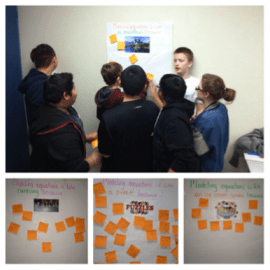
Untitled2At first, I started small. The first time I introduced a new math concept, I gave students 4 pictures & sentence stems to explain how they might feel about the concept.  Given 2 minutes to reflect and write their ideas, students proceed to the picture that best described their feelings on the designated chart. Students then shared with others who have a common connection. As a group, students prepared a statement about why this graphic was chosen. The insight I gain from both their written and oral conversations allows me better understand where I should take the instruction next.

By putting their thoughts as well as various mathematical processes into written language, students began to understand the abstract ideas commonly misunderstood by my learners. I was also surprised to find that rarely do I hit any resistance by my students, which I think is due to having writing being a daily part of our learning process.

Untitled

My desire for wanting to continue to develop a culture of writing in my classroom lead me to want to start a class blog, before I could expect my students to participate, I knew I would have to be familiar with the idea. This June I decided to embark on this new learning journey and begin our class blog (www.ourlearningjourneyinmath.blogspot.com). It’s a definite work in progress but I love the joy that writing brings to my life. I’m looking forward to this love of writing trickling down to my students this year as they begin to share their experiences in our learning journey!

Starting with the Ending

I am not one of those people who jumps to the last few pages to read how a book ends before I’ve ever started it. I do not understand those people. At all. I like to savor a good book, take it slow, breathe in and out the beauty of the language. OR, I like to devour it in one sitting, holding my breath and wanting more. So, it’s a little surprising that I’ve pulled the last paragraph of a book to use as a craft study.

I promise it gives nothing away. I also promise:  you may just shudder at the loveliness of the language like I do.

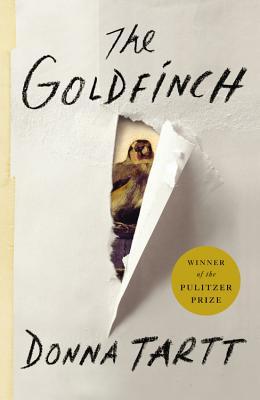
If you have not read The Goldfinch by Donna Tartt, you must. Find the time. It’s worth it.

I don’t know if I can motivate my students to read this lovely book though– it is thick with 771 pages, and the story itself is long, and there are times your love/hate relationship with the main character makes you want to shout the house down. But I’ll try. Because I love it.

This is why:

The Goldfinch by Donna Tartt P771

Whatever teaches us to talk to ourselves is important:  whatever teaches us to sing ourselves out of despair. But the painting has also taught me that we can speak to each other across time. And I feel I have something very serious and urgent to say to you, my non-existent reader, and I feel I should say it as urgently as if I were standing in the room with you. That life — whatever else it is — is short. That fate is cruel by maybe not random. That Nature (meaning Death) always wins but that doesn’t mean we have to bow and grovel to it. That maybe even if we’re not always so glad to be here, it’s our task to immerse ourselves anyway:  wade straight through it, right through the cesspool, while keeping eyes and hearts open. And in the midst of our dying, as we rise from the organic and sink back ignominiously into the organic, it is a glory and a privilege to love what Death doesn’t touch. For if disaster and oblivion have followed this painting down through time — so too has love. Insofar as it is immortal (and it is) I have a small, bright, immutable part in that immortality. It exists; and it keeps on existing. And I add my own love to the history of people who have loved beautiful things, and looked out for them, and pulled them from the fire, and sought them when they were lost, and tried to preserve them and save them while passing them along literally from hand to hand, singing out brilliantly from the wreck of time to the next generation of lovers, and the next.


Let’s just take it sentence by sentence. Then let’s choose a sentence we like and respond to it. That’s enough for now.


A Lesson in Craft: The Yellow Birds

If you have not read The Yellow Birds by Kevin Powers, go buy it and start reading it today. It’s that good. Maybe I loved it because Powers is a poet, and his poetry flows into the language on every page. Maybe I loved it because I have similar fears as the mothers portrayed in this book. At least one of my sons will join the Army in a year.

Whatever the reason, I love this novel, and I know many of my students will appreciate the beauty of it, too.

Many passages are worthy of study, but when I read myself into this one, I knew that the discussion around it in class would be powerful. What do you think students might discover about language by reading this?

I hadn’t know what I was doing then, but my memories of Murph were a kind of misguided archaeology. Sifting through the remains of what I remembered about him was a denial of the fact that a hole was really all that was left, an absence I had attempted to reverse but found that I could not. There was simply not enough material to account for what had been removed. The closer I got to reconstructing him in my mind, the more the picture I was tying to re-create receded. For every memory I was able to pull up, another seemed to fall away forever. There was some proportion about it all, though. It was like putting a puzzle together from behind: the shapes familiar, the picture quickly fading, the muted tan of the cardboard backing a tease at wholeness and completion. I’d think of a time when we sat in the evening in the guard tower, watching the war go by in streaks of read and green and other, briefer lights, and he’d tell me of an afternoon in the little hillside apple orchard that his mother worked, the turn and flash of a paring knife along a wrap of gauze as they grafted uppers to rootstocks and new branches to blossom, or the time he saw but could not explain his awe when his father brought a dozen caged canaries home from the mine and let them loose in the hollow where they lived, how the canaries only flitted and sang awhile before perching back atop their cages, which had been arranged in rows, his father likely thinking that the birds would not return by choice to their captivity, and that the cages should be used for something else: a pretty bed for vegetables, perhaps a place to string up candles between the trees, and in what strange silences the world worked, Murph must have wondered, as the birds settled peaceably in their formation and ceased to sing. And I’d try to recall things until nothing came, which I quickly found was my only certainty, until what was left of him was a sketch in shadow, a skeleton falling apart, and my friend Murph was no more friend to me than the strangest stranger.

Sometimes There’s This One Book

Before the first day of school this year, I learned that a student who was to attend our campus took her own life. She was 15. This would have been her 16th year. It should have been a shining time for her:  a junior in high school, a driver’s license, maybe her first job, and if her family was like mine, her first date (I had to be 16).

Her family, of course, is devastated. I didn’t even know this child, and I am devastated, as I am every single time I hear of the awful reality of suicide.

We have to do something.

I don’t know what, really. I do know that the world should be a hopeful place. I also know that so often adults refuse to act like it is. I am as guilty as the next guy of going through the motions, mirroring the depressive nature of my Bad Day. But I vow to stop.

I want to be an example of hope. I want to smile more. Love more. Laugh more. I want my students to see that I love my job. I cannot wait to get there. (That’s what being at a new school has done for me this year. I’ve let the negativity that I let nag at my soul so long go, and I feel new, reborn, liberated. Strange to use those words, I know, but they describe the “freeing” best.)

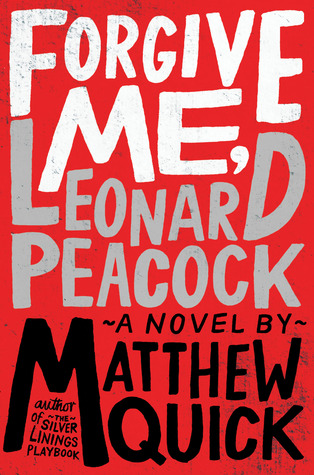
Recently, I read Matthew Quick’s book Forgive Me, Leonard Peacock, and it rocked my world. Seriously. You know when you read a book, and then it haunts you — like forever? This is one of those books for me. I am, and will be, a better teacher, friend, wife, mother, daughter, colleague, leader, consultant because I read this book.

Here is a bit that I will use in class. Maybe we’ll use this passage for close reading. It’s a good one for tone or sentence structure. Maybe we’ll use it to launch a class discussion about hopes and dreams and how to hold on to them. I don’t know yet. But there’s something important here — for us and our students. Read it. You’ll see what I mean.

Forgive Me, Leonard Peacock by Matthew Quick, p46-47

The whole time I pretend I have mental telepathy. And with my mind only, I’ll say– or think?–to the target, “Don’t do it. Don’t go to that job you hate. Do something you love today. Ride a roller coaster. Swim in the ocean naked. Go to the airport and get on the next flight to anywhere just for the fun of it. Maybe stop a spinning globe with your finger and then plan a trip to that very spot; even if it’s in the middle of the ocean you can go by boat. Eat some type of ethnic food you’ve never even heard of. Stop a stranger and ask her to explain her greatest fears and her secret hopes and aspirations in detail and then tell her you care because she is a human being. Sit down on the sidewalk and make pictures with colorful chalk. Close your eyes and try to see the world with you nose–allow smells to be your vision. Catch up on your sleep. Call an old friend you haven’t seen in years. Roll up your pant legs and walk into the sea. See a foreign film. Feed squirrels. Do anything! Something! Because you start a revolution one decision at a time, with each breath you take. Just don’t go back to that miserable place you go every day. Show me it’s possible to be an adult and also be happy. Please. This is a free country. You don’t have to keep doing this if you don’t want to. You can do anything you want. Be anyone you want. That’s what they tell us at school, but if you keep getting on that train and going to the place you hate I’m going to start thinking the people at school are liars like the Nazis who told the Jews they were just being relocated to work factories. Don’t do that to us. Tell us the truth. If adulthood is working some death-camp job you hate for the rest of your life, divorcing your secretly criminal husband, being disappointed in your son, being stressed and miserable, and dating a poser and pretending he’s a hero when he’s really a lousy person and anyone can tell that just by shaking his slimy hand–if it doesn’t get any better, I need to know right now. Just tell me. Spare me from some awful f******fate. Please.”


Note:  There are two footnotes in this passage. I left them off quite simply because I do not know how to format them in WordPress. Sorry, Mr. Quick.

A Feedback Protocol for Revision Workshop

I didn’t mean to make them cry, but that’s what soul writing can do to a person. (Soul writing is what my students and I coined as the type of writing that rips at our guts, makes pools fall from our eyes, and leaves us lurching toward the door to “take a little break.”) We are only into the third week of school, and I tried a new protocol for feedback; something I learned at The Frost Place Conference on Poetry and Teaching, directed by Dawn Potter.

Giving honest and critical feedback to one another is difficult for many of my students. So afraid of offering offense, they either do not say anything, or they do the proverbial pat-on-the-back and mutter “good job.” I tell  them that when they refuse to be honest in their feedback, it’s cheating. They cheat their friends out of ideas that can help them grow. And that is what we want in a community of writers — we want everyone to experience opportunities to grow.

The tears today watered some tender little seeds. All afternoon I gushed about it to anyone who who listen.

We sat in a circle around the large table in the center of my classroom. Many students came to class without their drafts*, so I sentenced them to the outer edges and advised them to get their brains and their pens working. I told them to write silently, but they might want to keep an ear tuned to the conversations happening in the middle. If they did, they learned more than they could have from any one-on-one conference with me.

First, I explained that giving feedback can be a bit tricky. We want to be honest, but if we do not deliver that honesty well, we can cripple our writer. (I use the word cripple because that was my own experience. I’d spent months drafting a chapter for my book. I’d finally finished what I thought proved to be a powerful piece of writing. Then I asked a friend, someone I trust, for feedback. She gave it to me: honesty cloaked in sweet little daggers. When I read her comments, all my ideas crumpled, and my focus limped right out the door. I didn’t write another word for six months.)

The “I wonder ____” protocol is really very simple:

Those who offer feedback:

  • Listen carefully as a classmate reads her piece.
  • Think about ideas that might help her improve it.
  • Offer feedback that allows for the writer to “play with the possibilities” (Dawn Potter) by putting the ideas you have that might help the writer revise the piece into statements that begin with “I wonder ___”.

Those who receive feedback:

  • Read the piece loudly and with clarity. (Repeat if necessary.)
  • Listen to the “I wonder” statements made by peers and write yourself notes.
  • Try to just listen (This is hard because we tend to want to justify why we wrote certain things).
  • Play with these various possibilities while revising.


I asked for a volunteer to read her writing. Eyes darted all around the table until Jessica read her draft.

Jessica went first:
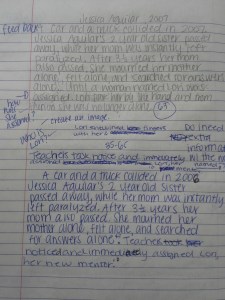
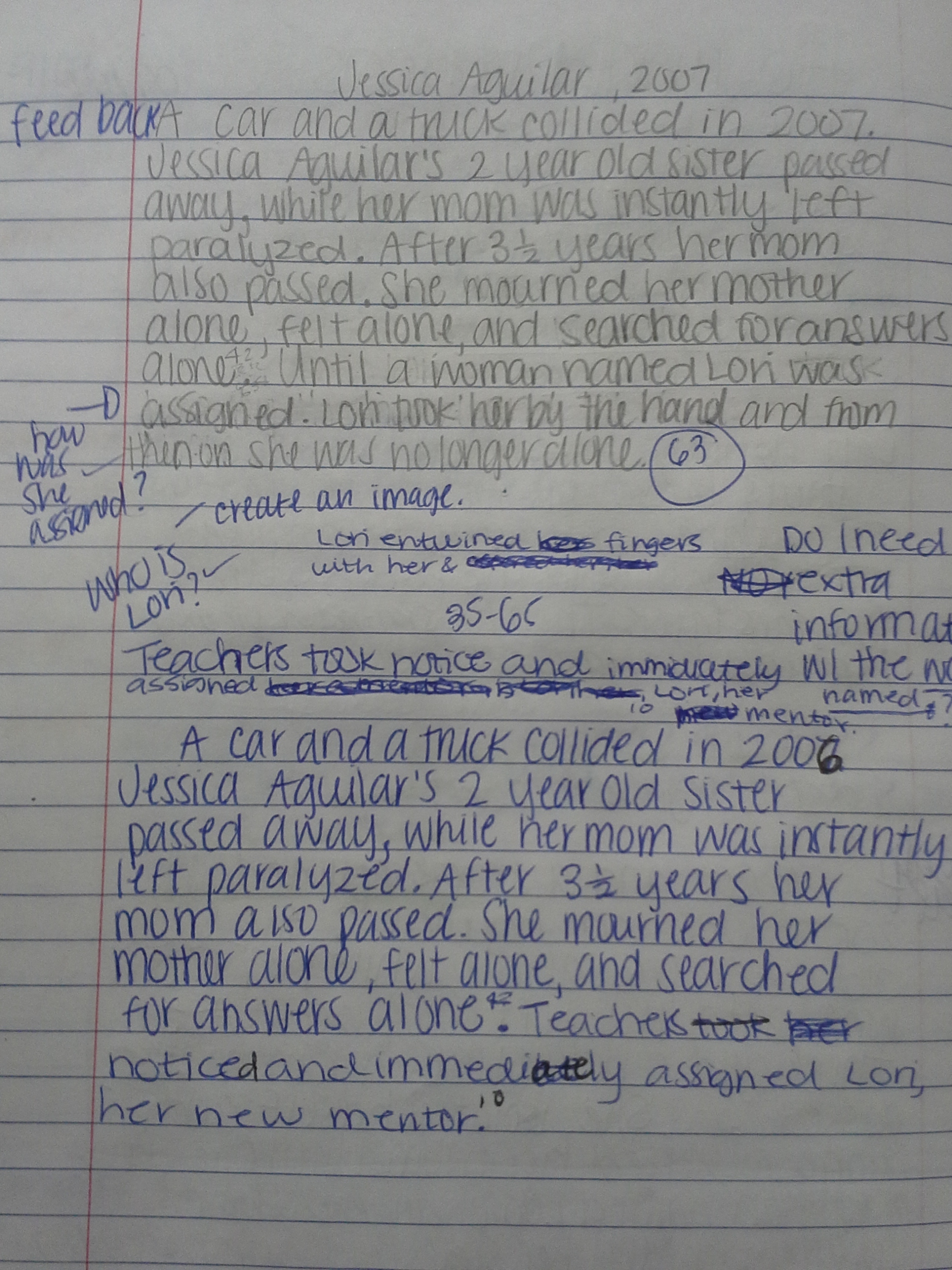
Jessica GoWorld story

Wow, right? She punched us right in the stomach, and we sat in silence. Finally, I said, “Okay, we’ve got some amazingly powerful stuff right here. How can we improve it?” and they looked at me like I had hornets on my head. I knew I better go first, or this feedback thing wasn’t going to work.

“I wonder if you need to tell us that Lori’s a woman,” I said.

Long pause.

“I wonder who ‘assigned’ her to you,” Mikaila spoke up.

“I wonder what she did that was so helpful,” Mariam said.

“I wonder how you survived,” said Daissy.

Jessica listened, answering a few questions, and taking a few notes on the comments her friends gave her.


And we were off . .


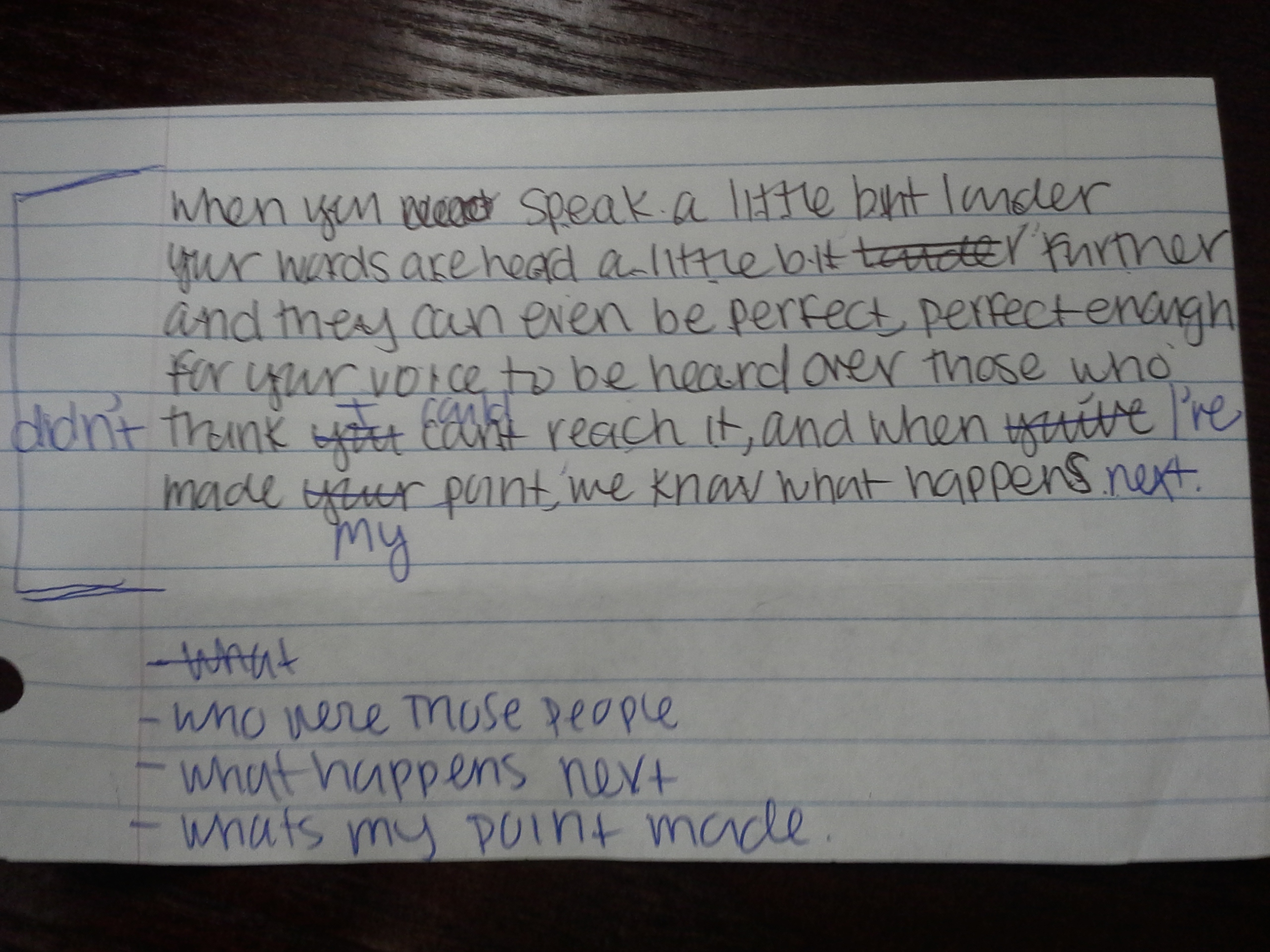
Daissy read next:
Daissy GoWorld story


“I wonder who ‘those’ are.”

“I wonder what the problem was.”

“I wonder what happens next.”

“I wonder what happened that made you change.”

And then Daissy could not remain silent any longer. She had to explain her stuttering, and how she’s worked so hard to overcome it, and how now wants to major in broadcast journalism and speak on live TV.

We forgot to preface our comments with “I wonder” when we all told her THAT is the story she needs to write.

revision corrections 2-7-12Feedback Magic happened with this “I wonder” protocol. And it happened in every class period, and so did the tears.

Students shared the honest writing from their hearts, and students gave honest feedback with tender and caring insight. Writing improved.

Even better? Imagine being in this kind of classroom with this kind of community of writers.

Heaven.


*Our mentor texts were VISA Go World commercials. I got this idea from an assignment I did at a class taught by Penny Kittle at the University of New Hampshire Literacy Institute. We watched several of the videos in class and discussed and analyzed the various structures of these very short, yet poignant, stories. Students were to watch and analyze a few more examples, transcribing the words to use as models for their own writing. Then they were to write their own, playing with word choice and syntax.

Sentence Imitation with We Were Liars

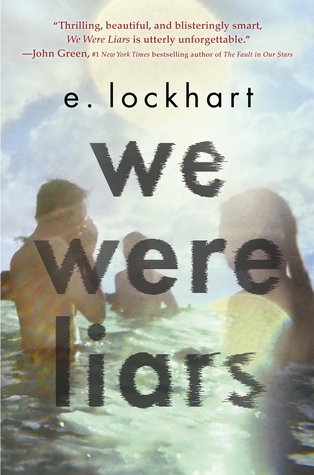
I listened to the audiobook, and liked the novel so much I had to go and buy it in hardback for my classroom library. The story still haunts me. (I read it soon after I read Jellicoe Road, and that story haunts me, too. These two books make an interesting pairing.)

The following is the beginning of chapter two in We Were Liars. It’s an compelling list of sentences that create the the basics of what we need to know about our protagonist. It will be an interesting passage to use for sentence imitation.

I wonder what my students will say about themselves.


We Were Liars by E. Lockhart P4

My full name is Cadence Sinclair Eastman

I live in Burlington, Vermont, with Mummy and three dogs.

I am nearly eighteen.

I own a well-used library card and not much else, though it is true I live in a grand house full of expensive, useless objects.

I used to be blond, but now my hair is black.

I used to be strong, but now I am weak.

I used to be pretty, but now I look sick.

It is true I suffer migraines since my accident.

It is true I do not suffer fools.

I like a twist of meaning. You see? Suffer migraines. Do not suffer fools. The word means almost the same as it did in the previous sentence, but not quite.

You could say it means endure, but that’s not exactly right.