Tag Archives: student writing

All it Takes is a Tutu and Some Focus

iballep002p1

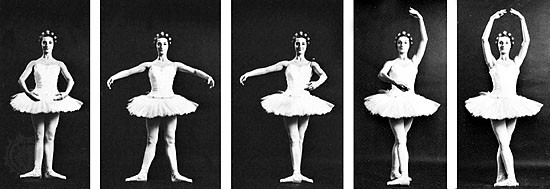
It’s been a month since I realized that my 2014-2015 school year was going to throw me for loops, spins, twists and twirls.  And while I am by no means a self-proclaimed ballerina; I’m smiling, pointing my toes, and pirouetting with the best of ’em.  Because when the music starts the core needs to be strong, the back straight, muscles tight, and breath steady.

As I stretch daily, as all practicing and proficient ballerinas do, I prepare to move in ways that are brand new; ways in which I never thought my body knew how to.  Legs outstretched, arms over extended, and of course…hair tightly wrapped in a bun – not one hair out of place.  Grace and elegance: the aspiration of all ballerinas.

Ballerinas and educators.

And while ballerinas make their every move seem effortless, the reality is that every motion is executed with deep thought and delivered with exact precision.  The bar is set wildly high and only the best of the best can gently thrust their leg onto that bar as fingertips reach for and surpass beautifully pointed toes while bodies align with a diagonally extended leg.

But, what about the ballerinas who approach the bar with a “Hrmph!” and a stubborn knee that won’t align with the rest of the leg and an unmaintained balance as a ‘steady’ foot is anything but?  And that sleek bun?  That bun has come undone and wisps of hair are continually getting caught on eye lashes and tickling cheekbones refusing to cooperate.  And no, you cannot move your hands from First Position for a moment’s reprieve.

Focus.

When we continue to throw on our tutus and ballet slippers and head straight into the studio before the sun has risen from its slumber: We are not giving up.  We are wrapping our bruised and bleeding toes accompanied by “Ouch!” and “Arghh!” but, we are not giving up.  We are placing even more bobby pins in our hair in hopes that today will be the day we are not tempted to twitch out of First Position.  Today, we stretch just a wee bit further in reaching for our little nubby toes.

As we wiggle and wobble…biting our lower lip oblivious to this false stability…we realize that our calloused hands are resting on those little nubs we’ve so desperately been trying to reach for weeks.  Yes, we are now touching our toes.  Wait.  What?  We did it?

I want to show you something.

Amazing isn’t it?  A young man in my Social Justice and Student Voice course was not willing to explore his 35-60 word biography (modeled after Visa Go World commercials) as it applied to his life.  But, he was willing to explore a puzzling injustice that he firmly believes has a feasible solution.  And his questions.  I could most definitely learn how to shape Essential Questions by conversing with this young man.

I’m still aiming for balance.

My knees are still a little bent.  My tutu is sometimes on backwards.  But, there’s hope!  While the majority of students were actively engaged in chronicling a moment in their lives, one student decided he needed to do things his way: focused, dedicated, and with a little pizzazz.  Is that not what the art of ballet truly encompasses?

As I continue to learn the intricacies of this art form, I take pleasure in exposing students to it as well.  We dance together…sometimes in beautiful unison and well, let’s face it, other times as if we’re all petit sauting to a different tune.  That day, this tenacious student decided to wear sneakers to ballet practice.  And, I’m so glad he did.


Making the Most of Summer

If you’re anything like me, based on the fact that August is just around the corner, your computer screen probably looks something like this:

Screen shot 2014-07-30 at 6.38.24 AM

Those 10 or so tabs contain articles, blogs, book recommendations, and more for me to mine for ideas.  Once I’m done perusing those, I’ll return to my very full writer’s notebook to sift through the myriad of quotes, lessons, and resources I’ve jotted down while attending various classes this summer.  After that, it all comes down to remembering what I learned and actually applying it in my freshly-waxed classroom.

Honestly, that’s always been somewhat of a struggle for me–managing to sift through those summer lessons and remember all of them well enough to apply them.  So, in order to make the most of this summer, I’ve decided to boil down the biggest takeaways of my three workshops here.

Takeaway from UNH Literacy Institute – “I am the sum of my mentors.”

For two years now, I’ve learned most of my daily classroom practices from Penny Kittle.  However, what I’ve really begun to pay attention to is that by reading Penny’s writings and taking her classes, I’m not just learning from her.  I’m learning from Don Murray, Don Graves, Kelly Gallagher, Louise Rosenblatt, Katie Wood Ray, Tom Romano, Teri Lesesne, Donalyn Miller, Alfie Kohn, Nancie Atwell, and many more.  Penny has expertly absorbed the ideas of all of those other teacher-writers, and seamlessly integrated them into her own philosophy and craft.  That is my goal–not to mimic Penny or any of those other teaching geniuses, but to meld all of their research findings into my own practice; to become the sum of my mentors, as Meenoo Rami says.  Of course, that’s easier said than done, but definitely worth the attempt–and the hefty credit card bill that comes after a Heinemann ordering spree.

IMG_3657

With that being said, there is one idea of Penny’s I’d really like to integrate into my classes this year–storyboarding.  This visual way to process a story’s plot is a gateway into analysis and evaluation.  If talk is rehearsal for writing, then to Penny, so is storyboarding–sketching out little comic-strip squares of events.  This was something that I couldn’t really wrap my mind around how to execute after just reading Book Love, but now that I’ve seen Penny do it, it makes perfect sense, and I can’t wait to try it out.

Another lesson for me came from the fact that I couldn’t grasp the concept of storyboarding without seeing it modeled.  That was another weighty reminder of the importance of my serving as a writing mentor, modeling process for my students.  If I am the sum of my mentors, so are my students–and I am perhaps their only mentor when it comes to being a good reader and writer.  This big responsibility reinforces the importance of staying informed on current research–without great mentors, I can never be a great teacher.  I need those teacher-writers to help me help my students.

Takeaway from Balfour Yearbook Advisers Workshop – “There are two kinds of writers–good writers and quitters.”

In addition to teaching English, I also teach Journalism and Yearbook.  I traveled to Dallas this summer for what I thought would be a boring jaunt through yearbook software and technology, but I was pleasantly surprised by being surrounded by amazing teacher mentors to learn from.  Lori Oglesbee, a Texas teacher and our keynote speaker, spoke about the fact that great journalism comes from strong writing.  She preached that all students, no matter what, can be great writers if we lead them to it.  Lori then proceeded to show us many examples of award-winning yearbook writing, and I grinned–here were mentor texts again!  I really saw the relevance of mentor texts across all disciplines.

Takeaway from ASNE-Reynolds Journalism Institute – “Good writing comes by studying good writing–period.”

IMG_3997

This lesson came in the form of an irreverent lecture by the delightful journalist and author of Radical WriteBobby Hawthorne.  An advocate of “writing for the reader, not the rubric,” Bobby spoke to us about the general lack of quality in student journalism writing.  School newspapers across the land are plagued with crappy writing, he preached!  (I learned that journalism, until very recently, was still laboring under pre-Graves and pre-Murray delusions about writing–no I, no emotion, no personality, no rule-breaking.)  Bobby advocated for throwing out all of our old notions about how to teach journalistic writing and just getting our students to find a story hidden in an event and tell it.  He felt strongly about the power of the narrative form, reminding me of more of Penny’s ideas from Write Beside Them.  And in fact, she agreed with him:

Screen shot 2014-07-30 at 7.52.11 AM

Bobby wasn’t the only speaker at the two-week Institute to urge we teachers of journalism to simply teach our students to find and tell stories.  I heard that message over and over again, from photographers to journalists to writers to teachers.  The power is in the story, they urged.  Find it, and good writing will come naturally.

So, I’ll approach this year with those takeaways in mind.  I’m excited to try the workshop model out on my journalism students, who will be starting a newspaper this year.  I’m curious about how my teaching of the reading and writing workshop will change in its second year.  And, I’m optimistic about having so many new mentors to act as the sum of my teaching.  I hope I’ll make the most of my summer and transform my teaching, as I do every year, by putting my writing and reflecting to work.

Now, THIS is a Candidate Bio

As co-sponsor of National Honor Society on my campus, I get to help determine membership and officers for the next year. It is that time of year.  My friend and colleague (the real sponsor) has been reviewing officer applications. She sent me this delightful piece, written by one of my current AP English students.

What follows is a clever, and entertaining example of the kind of writing students will do, if we give them the opportunity to be themselves on the page– no restrictions, no required form. Just time and space.

Michelle submitted this for her Officer Candidate Bio for NHS President. Read it and see if you get what she’s done here:

Dark Horse: I’ll serve you like a “Dark Horse”.

Happy: Because I’m “Happy”, clap along if you feel like NHS is the best.

All of Me: Cause “All of Me” will serve all of you.

The Man: Well, you can tell everybody, I’m “The Man”, I’m the Man, I’m the Man, Yes I am, Yes I am, Yes I am.

Say Something: “Say Something”, I’ll always listen to you.

Timber: It’s going down, I’m yelling “Timber”, you better move, you better serve.

Counting Stars: Lately I been, I been losing sleep, Dreaming about the things that we could be, But baby, I been, I been prayin’ hard, Said no more counting dollars, We’ll be counting hours.

I’ll Make a Man Out of You: Let’s get down to business, To defeat these hours, They did send me leaders, when I asked for flowers. You’re the greatest bunch I ever met, But you can bet before we’re through Mister, “I’ll Make a Leader Out Of You.”

Let It Go: “Let It Go”, let it go, Can’t hold it back anymore, Let it go, let it go, go ahead and serve even more.

Thrift Shop: I’m gonna pop some events, Only got seven days in a week, I – I – I’m hunting, looking for a come-up, This is super awesome.

I Will Always Love You: And I… will always help you, ooh. Will always help you.

Can’t Hold Us: Can we go back, this is the moment, This year is our year, we’ll serve ’til forever, So we put our hands up like the ceiling can’t hold us, Like the ceiling can’t hold us

Do You Want to Build a Snowman: “Do You Want to Build a Snowman”, then please vote for Michelle P.


It’s about the Process. C’mon Guys!

There’s this thing about students with attitudes. Sometimes I just do not deal well.

Last week while meeting with students one-on-one to discuss their improvement in class and their current writing piece, I felt a little beat up.

How is it that two students can ruin the euphoria I felt after conferring with everyone else?

First, N tells me that narrative will not fit anywhere in his piece.

“Why not?”

“Because of the topic,” he told me.

“And your topic is?” I said.

“Governor Perry,” he told me.

“You’re writing something like a bio of the governor. Why won’t narrative work anywhere?”

I do not remember the actual words, but what he meant was “ I do not want to spend anymore time on this writing.”

Later, A tells me that no matter what she writes I tell her it’s not good enough.

“What do you mean by that?”

“Because you always ask a question about what I wrote,” she told me.

“And why do you think by asking questions I’m telling you your writing isn’t good enough?”

“I’m just giving up,” she told me, completely avoiding my question.

I do not remember the actual words she said next, but what she meant was “I do not want to work any harder.”

Tough luck, kiddos.

Writing is hard. And writing well is even harder. Hemmingway quote

Too often my students just want to draft something roughly and turn it in for a grade. I’ve stopped even putting grades on papers, unless we are at the end of a grading period and the policy says I have to. So many students stop their process once that score sits on their page.

Here we are just starting our final nine weeks, and I must figure out how to do more with teaching writing process over writing product.

It’s an uphill stretch.

Students come to me with specific writing habits, and many are stalled on the hill, resisting the charge to be better. Since many of my kids have been in gifted and talented classes for years, they often think that learning comes easily. Maybe in some classes it does. But in my experience with English, too many teachers have not demanded growth through process and have been satisfied with students just turning in papers that will score an A. Mind you, not ALL teachers, but I can tell which teachers at the sophomore level value process over product and which do not, based on the attitudes and practices of the student when they come to my room their junior year. Or, maybe those sophomore teachers haven’t been able to change those bad habits either. I get that, too. Some of these students are stubborn in their know-it-all-ness.

I struggle with this every year:  You know the student who walks in the door at the beginning of the year and could make a 5 on the AP exam if she took it that week. Do you grade her on the struggle of the writing process and her improvement as a writer, or do you grade her on the writing she is capable of at the beginning of the year, even if it’s already an A?

I tend to want to see improvement in all my writers– even the ones who are already pretty good at it when they come to me.

But this year, maybe I haven’t emphasized that enough. I’ve written in front of them, shown them my struggle, used mentor texts, conferred with them individually, begged, prayed.

I pulled out Writing Down the Bones by Natalie Goldberg a while ago and read a few pages in the front of the book. I got my center back. I also got a few thoughts I may write on sticky notes and hand to N and A as they come to class tomorrow.

“You practice whether you want to or not.” p11

“You have to give yourself the space to write a lot without a destination.” p11

“It’s the process of writing and life that matters.” p12

“We must continue to open and trust in our own voice and process.” p13

“Writing is so simple, basic, and austere.” There are no fancy gadgets to make it more attractive.” p26

No doubt when I keep reading I will find more and more advice from Goldberg that will help me help my students. I love that about good writers who want to help others become good writers, too.

Where do you go to find your center? Who are your personal writing coaches?


Writers on Writing: Thanks, I Needed This

Wow. Just wow. Maybe this won’t be new news to you, but I just found this awesome site:

Writers on Writing  –A complete archive of the Writers on Writing Column from the NY Times.

I decide to read a few of the opening paragraphs. The first link I open is Geraldine Brooks from July 2, 20o1:

My writing desk is a tankard-scoured tavern table that once saw service in an 18th-century inn. When I look up, the waved and bubbled window panes of my study offer a view that has changed very little in the 200 years since the glass was set in place. A small paddock rises gently to an apple orchard, the trees laced with white blossoms. An elderly stallion flicks at flies with a long, supple tail.

At this time of year boughs of unfurling oak leaves hide the black slash of electric wires. And that’s helpful; for every morning, after I turn off the urgent chatter of news radio — its breathless headlines and daunting traffic reports — I make my way up to this little room and attempt to leave my own time behind.

Tell me that’s not a tiny literary treat?

And this one from Jamaica Kincaid, June 7, 1999. It’s hard to stop at just two paragraphs:

How do I write? Why do I write? What do I write? This is what I am writing: I am writing “Mr. Potter.” It begins in this way; this is its first sentence: “Mr. Potter was my father, my father’s name was Mr. Potter.” So much went into that one sentence; much happened before I settled on those 11 words.

Walking up and down in the little room in which I write, sitting down and then getting up out of the chair that is in the little room in which I write, I wanted to go to the bathroom. In the bathroom Mr. Potter vanished from my mind; I examined the tiles on the floor in front of me and found them ugly, worn out.

 I open more, Annie Proulx, Amy Tan, Scott Turow, Kurt Vonnegut, and they all have elements of story. Interesting. I was just part of a Twitter chat where the question rose:  Can non-fiction help us make life-long readers? Some responded yes, most responded no. Me? I think yes. Good non-fiction dwells in story. It sucks you in and spins you around and opens your eyes to thoughts, emotions, facts that you’d never considered before the telling. These short texts are evidence of that. And these short texts are about to become mentors in my writing class. Thank you, Literary God, I needed this!
images-2

Can’t Get Students to Write? Try These Mentor Texts for More Engagement


I had a dream the other night where I was in a conversation with my principal about student engagement. Of course, I’d just spent the day in Internal Rounds at one of the other high schools, specifically looking for and analyzing data that was supposed to show if students were engaged in their learning– not compliant, maybe committed,  and hopefully, taking ownership. In my dream I felt exasperated. I struggled, and I probably hit my husband in the head. I finally threw up my hands and said, “I can’t do it! You’ll have my resignation tomorrow!” and I huffed out the door.

What the heck?

Yes, student engagement. Those seem to be the buzz words I keep hearing lately. Well, those or student apathy, the ugly step-sister. I’d rather at least try to stay positive.

I teach 9th grade English. I try to teach students how to write. Sometimes I want to beat my head against the wall because I have so many kids who just don’t get into what I try to get them to do. I imagine this sounds familiar to some of you–at least I hope I’m not alone here.

In my search for ways to get students engaged, I’ve discovered a few texts that serve as friendly mentors to help me get my students to care about what they have to say and how they say it. These mentors have interesting text structures or themes–or, hey, they are short, which goes over well with my kids.

I shared a few of these during my presentation at TCTELA in Dallas last week. The Prezi posted two weeks ago called “Reading Writing Workshop in High School? Yep, the Shoe Will Fit” has images of the book covers, and the handouts have some excerpts and ideas from some of my favorite mentors: The Book of Awesome by Neil Pasricha, The Dictionary of High School B.S. by Lois Beckwith, Six Word Memoirs from SMITH Magazine, and  The Encyclopedia of an Ordinary Life by Amy Krause Rosenthal. I’ve used excerpts from all of these and have had great success in getting students to take interest and ownership of their writing. We read the mentor, analyze the author’s craft–specifically looking for the moves he makes, and then we write our own version or addition to that text. Sometimes I require certain devices like metaphors or alliteration or parallel structure or whatever; sometimes not. Always I allow for student choice in the subject matter. I get the best student writing this way.

At the end of that presentation at TCTELA, I asked the audience to contribute ideas for mentor texts that they’ve had success with in getting students to write. Take a look at these fun books; you’ll see the value in how these can work to give students choice in what they write, while you give them say in how they write it.

(Thanks, Goodreads.com, for the synopsis and book cover images.)

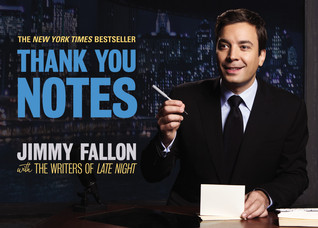
Thank you Notes by Jimmy Fallon

10505349
Thank you, slow walking family walking in front of me on the sidewalk. No, please, take your time. And definitely spread out, too, so you create a barricade of idiots. I am so thankful that you forced me to walk on the street and risk getting hit by a car in order to pass you so I could resume walking at a normal human pace.Jimmy Fallon has a few people and a few things to thank. In this brand-new book, the very first to come from his show, he addresses some 200 subjects in need of his undying “gratitude.” Each page will feature one note and a photograph of its recipient.
_____________________________________________________________________
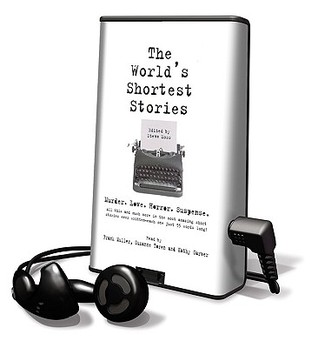
World’s Shortest Stories by Steve Moss
8791206
Murder. Love. Horror. Suspense. All this and much more in the most amazing short stories ever written each one just 55 words long! Consider for a moment 55 words. It’s an absurdly tiny number. No, it’s an impossible tiny number. It’s what O. Henry might have conjured up if he’d only had the back of a business card to write upon. You’ll find murder and suspense, horror and intrigue, love and betrayal, plus distant worlds and inner demons.
All in a measly 55 words.
_______________________________________________
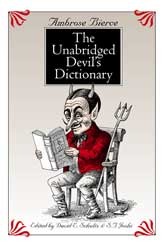
Devil’s Dictionary by Ambrose Bierce
49256
A virtual onslaught of acerbic, confrontational wordplay, The Unabridged Devil’s Dictionary offers some 1,600 wickedly clever definitions to the vocabulary of everyday life. Little is sacred and few are safe, for Bierce targets just about any pursuit, from matrimony to immortality, that allows our willful failings and excesses to shine forth.

________________________________________________
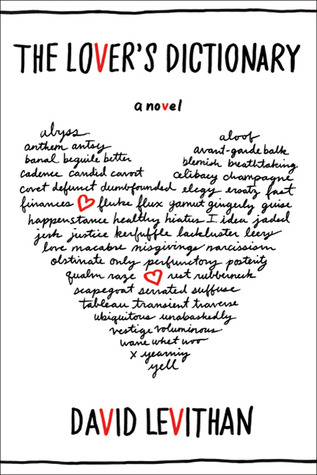
Lover’s Dictionary by David Levithan  [This one fits the list appropriately after the last one. I read this book in one sitting. It’s tender and sweet, and the cover is AWESOME!]
9279177
How does one talk about love? Do we even have the right words to describe something that can be both utterly mundane and completely transcendent, pulling us out of our everyday lives and making us feel a part of something greater than ourselves? Taking a unique approach to this problem, the nameless narrator of David Levithan’s The Lover’s Dictionary has constructed the story of his relationship as a dictionary.

_________________________________________________
Chicken Soup for the Teenage Soul by Jack Canfield, Mark Victor Hansen427920
This first batch of Chicken Soup for Teens consists of 101 stories every teenager can relate to and learn from–without feeling criticized or judged. This edition contains important lessons on the nature of friendship and love, the importance of belief in the future, and the value of respect for oneself and others, and much more.
_____________________________________________
Grammar Snobs are Great Big Meanies: A Guide to Language for Fun and Spite by June Casagrand
14106
What do suicidal pandas, doped-up rock stars, and a naked Pamela Anderson have in common? They’re all a heck of a lot more interesting than reading about predicate nominatives and hyphens. June Casagrande knows this and has invented a whole new twist on the grammar book–a laugh-out-loud funny collection of anecdotes and essays on grammar and punctuation, as well as hilarious critiques of the self-appointed language experts.

Do you know of any more fun texts to use as writing mentor texts? Please leave your suggestions in the comments.

We All Make Mistaks

How does this relate to the learning taking place in your class?

Or, does it?

20130115-203213.jpg

A Twist on Getting Students to Write

I will do just about anything to get my students to write, so when I happened upon this Project365 app, I quickly made the connection between photos and writing. I am going to try to do this myself:  take one picture for each day of the year. And, I am going to try to get my students to do it.
I’ve heard of teachers telling their kids to get out their phones, search through their pictures, and choose one to write about– it’s a cool idea.
Creating a

daily photo journal

just takes it to a new and higher level.

Just like so many of my New Year’s resolutions, I don’t know if I’ll be able to keep up with it (I’m already 14 days behind), but I want to try.
So, do you want to join me?
Get the app, and let’s do this!