Tag Archives: student engagement

Chaos

The beginning of each school year is always chaotic.  Sometimes it’s the overwhelming chaos that can feel debilitating.  Other times it’s that quiet chaos that only you know ensues.  At times it creeps up on us in silence, yet we know it’s found its way into our spiraling minds.  But always, it lives within our being because, quite simply, we are so wildly passionate about upping the ante with each and every group of students that crosses our threshold.  This year, I welcome the chaos.

I have complete and utter belief that the Reading Writing Workshop (RWW) is exactly what my students need.  Better yet, I know in my soul, that it’s exactly what they deserve for their lives; both inside and outside of room 382.

Both inside and outside room 382 students are starting their journeys through the RWW.

Students are starting to journey through the RWW: Inside and outside of room 382.

We have a promising year ahead full with mentor texts, writer’s craft, brilliant student generated ideas, ‘aha’ moments, and all of the unknown that we are willingly going to dive into – together.  But, I would be remiss if I pretended that chaos and uncertainty were not eagerly awaiting our arrival.

Between rolling out the RWW in its entirety last year, more summer classes at the lovely campus of UNH’s Literacy Institute, and a month in the Bronx writing with the NYC National Writing Project; I have been planning.  Incessantly.  Yet, I very quickly realized that all of my planning may be better utilized at some other time, in some far off distance, or at the very least, later in the year.

My plans are fantastic.  I feel it in my gut.

Yet I know they will be utilized and enjoyed when the time is…right.

You see, the beauty within the RWW is that the authentic and natural flow is magical.  Straight up, hands down – magic.  The luxurious task of choosing which piece of literature to start with when oh-so-many are enticing.  The creation of one’s Writer’s Notebook.  The roller coaster writing that sheds light on our own movement and development as writers.  The organic inquiry that surfaces.  All of it.  Every piece is essential.

So you can imagine that after rounding day three of educating, fully engulfed by a feeling of unease, I knew that all of my planning was by no means an effort to be mourned but most definitely an effort that needed reshaping.  As to not let the chaos (starting its crawl toward my vulnerability) completely immobilize me, I made a decision right then and there.  I was by no means going to shift my expectations.  Instead, I had decided to rework all ideas I had about what my students would find engaging.  Because the reality is, my new students are not the same students as last year.
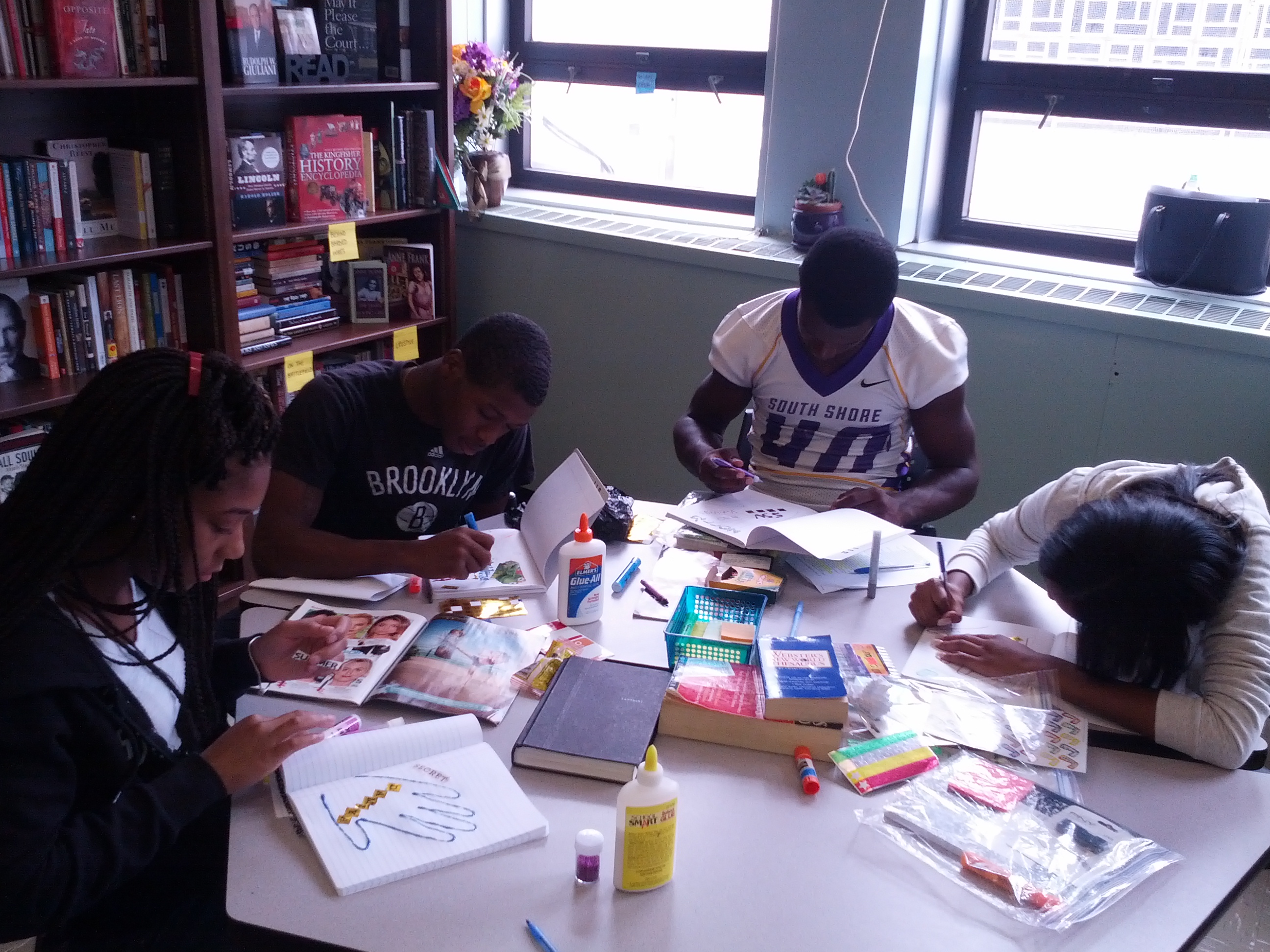
Students creating their Writer's Notebooks in ways that feel most authentic.

Students creating their Writer’s Notebooks in ways that feel most authentic.

Mystery books have flown off the shelves – for the first time ever!  Color is most often preferred when expressing themselves vs. the written word.  There is an untapped intellectual power among every young adult occupying each individual seat that is awaiting its own explosion.  Their passions have yet to be discovered within the context of our learning community.  And, not unlike years worth of previous students, they are incredibly focused and hardworking.

When students are not meshing with the material; when the sparkle does not twinkle in the corner of their eyes as they try to explore new found interests; or they have absolutely no questions…something’s wrong.  Very, very wrong.

I am responsible for guiding students through the beauty of the RWW to foster their own strength, perseverance, and dedication toward the development and growth that is inevitable to happen.  I feel the promise and hope.  I am no longer vulnerable nor am I even remotely entertaining the potentially consuming chaos.  Instead I am enjoying the exploration of new mentor texts while listening intently to the views and beliefs of my wildly intelligent learners.

Here’s to an invigorating year full of unforeseeable experiences, ideas reworked, and chaos debunked.


Mentor Texts Are Everywhere!

This time last year I was amidst a mad dash – a mad dash in seeking out, organizing, asking about, researching, contemplating, and gathering the ‘best of the best’ of mentor texts.  I had just learned what a mentor text was (text that, well, mentors!) and wanted to make sure I had a plethora to kick off the school year.  And, I did.  I had gathered so many I wasn’t even sure when, and in what context, I would be using them.  But, they were ready and I felt confident that I was too.

This year, it’s a bit of a different story.  After implementing the Reading Writing Workshop model in my urban oasis for the first time this past school year, I realized there is no longer a need to be dashing about.  Mentor texts are everywhere!  Literally.  They are in the morning’s newspaper.  They reside in the autobiographies I always find myself engaging in (and of course, loving).  Articles promulgating the Twitter circuit for the purposes of dissecting content and craft.  Classics, more modern, and everything in between became focal points of inquiry and investigation.  Students’ independent reading books shed light on crafty moves authors strategically choose to utilize.  On occasion, an excerpt from professional development texts deserved a public viewing (sometimes with scrutiny, sometimes not).  Nothing is off limits.

So, it is no wonder that as I have been reading a vast array of literature this summer; I have new mentor texts lined up for this coming school year that I am thrilled to explore with my students.  So, grab your Writer’s Notebook and flip to your Next-To-Read list.   I hope you not only fall in love with these pieces, just as I have, but they inspire you to think about what you’re reading and how you’d like to share them with the brilliant and inquisitive minds occupying your learning community.

Making Meaning with Texts: Selected Essays by Louise Rosenblatt was first introduced to me in this summer’s UNH Literacy Institute via Penny Kittle’s Book Love course.  This piece sent a buzz all throughout the campus as we were asked to read it for homework and come prepared to discuss it the next day.  Before the night was through, classmates were chronicling their amazement and joy with Twitter posts such as:  “Reading Louise Rosenblatt for homework and keep saying “Amen, sistah!” in my head. #unhlit14″.  So, you can only imagine how this Reading Theorist evoked an awakening in us all.

IMG_20140630_221534

It was when I came to this paragraph that I realized I had just stumbled upon an incredible mentor text; not only for myself as an educator, but for students as well.  What better way to expose students to the questioning and thinking behind our reading and writing than by sharing the source with them?  These questions are going to guide us through our reading (and writing) journeys this year.  We are going to study these questions, make sense of them, put them into practice; but, we are also going to really delve into why Rosenblatt has chosen these questions to guide us.  See, that’s where exploring craft and an author’s intention becomes our focal point.


battle 1

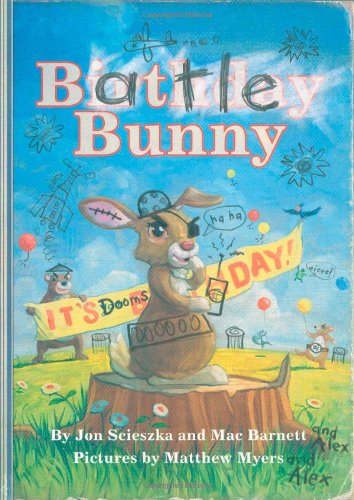
Battle Bunny by Jon Scieszka and Mae Barnett is a clever and witty piece that is sure to get students charged up about editing and revising.  How could it not?  This entire piece chronicles the the narrator’s (yes, the bunny) stylistic and creative writing journey.  The entire story is marked up, crossed out, reworded, and illustrated to show the power of the writing process.  It’s beautiful.

While I educate students ages 16-21, and this piece (I’m sure) was not intended for that audience, I believe this mentor text will be a lighthearted way to quell some of the fears that override their writers’ anxiety.  We know, many students are uncomfortable and afraid to revise, rework, or allow their time-intensive writing pieces to become ‘messy’.  Yet, that’s what produces the most profound writing.

battleI know this may be a risky move in my classroom.  Yet, I’m going to take a chance.  I anticipate shared laughter as we navigate this piece together.  I also plan to explore the bunny’s intentions and make it relevant for our work as writers:  Why did he feel the need to rewrite the story?  Do the illustrations add to the message he is portraying?  Do any of his original thoughts (verse his revisions) feel more powerful to you?  What intentional moves did he make in re-creating this story?  And on and on.

IMG_20140812_121342

Destined to Witness: Growing up Black in Nazi Germany by Hans J. Massaquoi is a piece I have not been without this entire summer.  And, although I’m finished reading it, I find myself flipping through the pictures over and over; it’s that profound. Massaquoi is a mentor of life, overcoming adversity, obtaining the (perceived) impossible, and what it truly means to be human.

Journalist by trade, Massaquoi takes such grace in his every word, sentence, and strategic ‘move’ that’s crafted.  This book encapsulates 443 pages of sheer brilliance and I want students to be exposed to this kind of writing because they too, have the ability to craft such beauty.

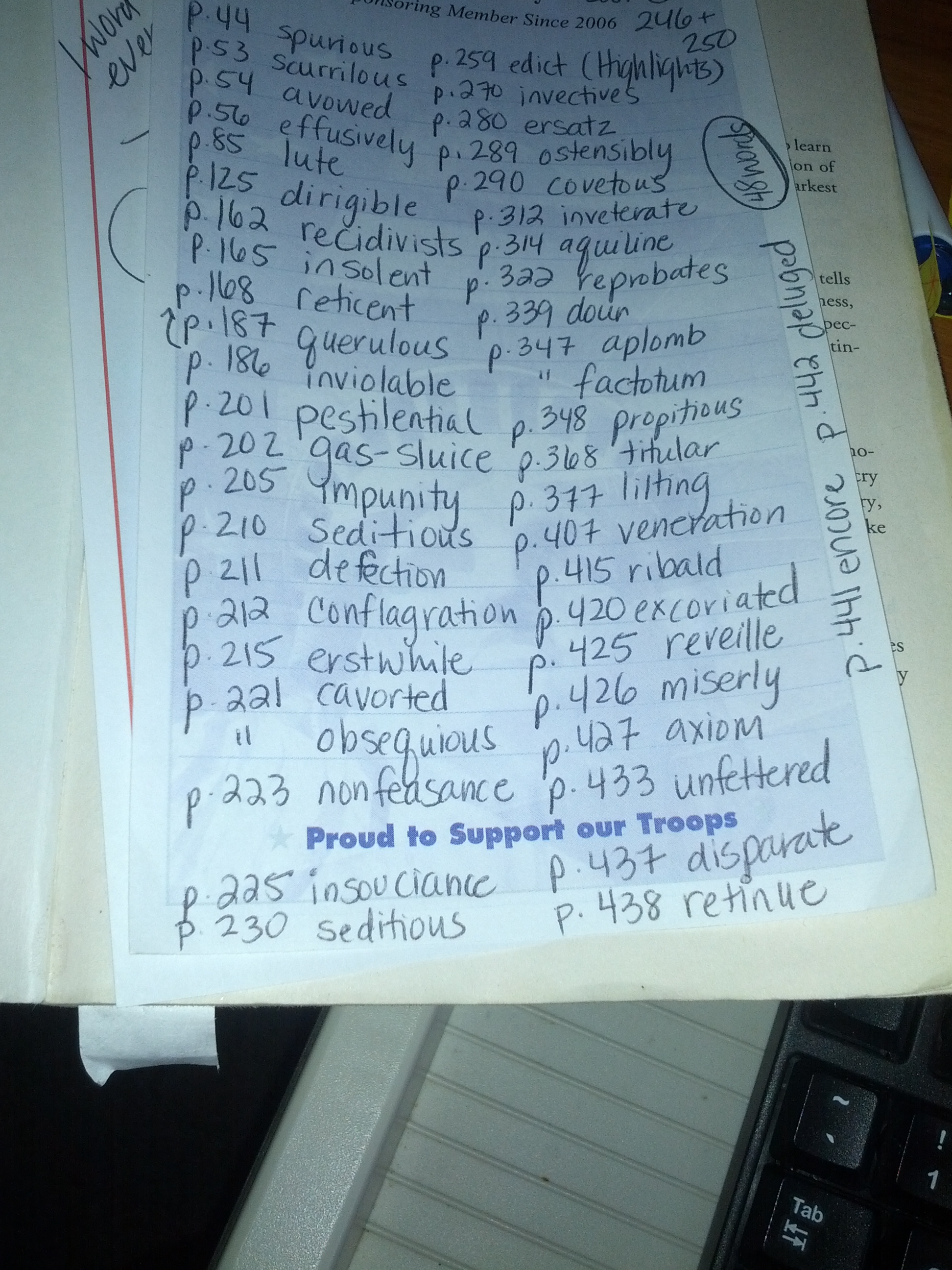
I also want them to catch a glimpse into my journey while reading this piece (note post-its) because I want to share what I found fascinating.  I want to explore some of the word choices (see my unknown word list) IMG_20140812_121513and talk strategy.  I want to use some of these words within my own vernacular and challenge students to do the same.  Most importantly, I want to show them that reading is a process; not one to shy away from.  And yes, sometimes it takes work, but overtime it becomes natural…and wildly fulfilling.

I can’t help but think, above and beyond the work I plan to do with this text, that the historical context won’t propel students in their study of history as well.  World War II and the Holocaust have rarely been depicted from the racial standpoint in which Massaquoi portrays.  This just may be a piece that peaks enough intrigue among students that they too will add it to their Next-To-Read list.  That’s my goal.


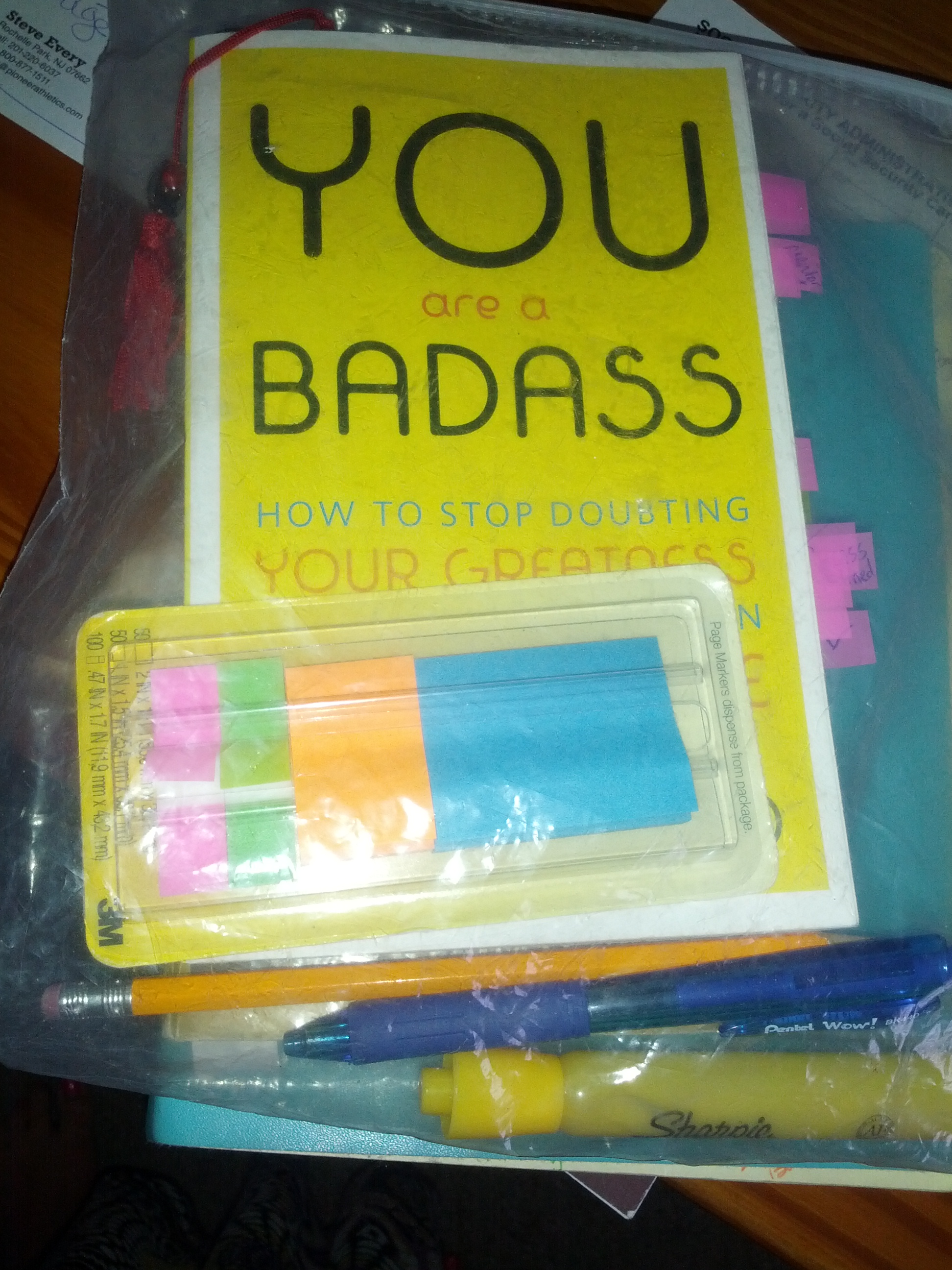
IMG_20140812_124058You are a Baddass: How to Stop Doubting Your Greatness and Start Living an Awesome Life by Jen Sincero has found its way into my Survival Book Kit and I love it!  I’m just past the first thirty pages, yet I have not stopped laughing.  Yes, out loud.

Sincero most definitely has a way with words.  She is edgy and a straight shooter for sure.  Yet, she is able to talk about really serious life-changing ideas in a way that feels ‘light’.  Not your typical self-improvement piece.

I want students to see how infusing humor among the serious can be oh-so-powerful.  Utilizing analogies to talk about the conscious and subconscious mind provides readers visuals…imagery.  A way to process this vitally important information that can shape their lives.  In only the most positive of ways.

I plan to choose the excerpts from this text skillfully.  I want students to have access to the content and the craft…as always.  I do foresee really rich one-on-one reading conferences with those that decide it’s time to make a change in their lives, or at the very least are up for a great laugh, and decide to take this piece on independently.

I hope my four have inspired you.  I really do.  I hope it will do the same for my students.  I encourage you to also share your favorites, here on this site.  As we all gear up for an incredible year to come, and we are swiftly shifting into our ‘going back to school’ mode, this is a wonderful time to start thinking about what we’re reading in a way that lends itself to the idea of being a mentor text.  Articles, books, poetry, graphic novels…all are welcome.


Tu Eres Mi Otro Yo

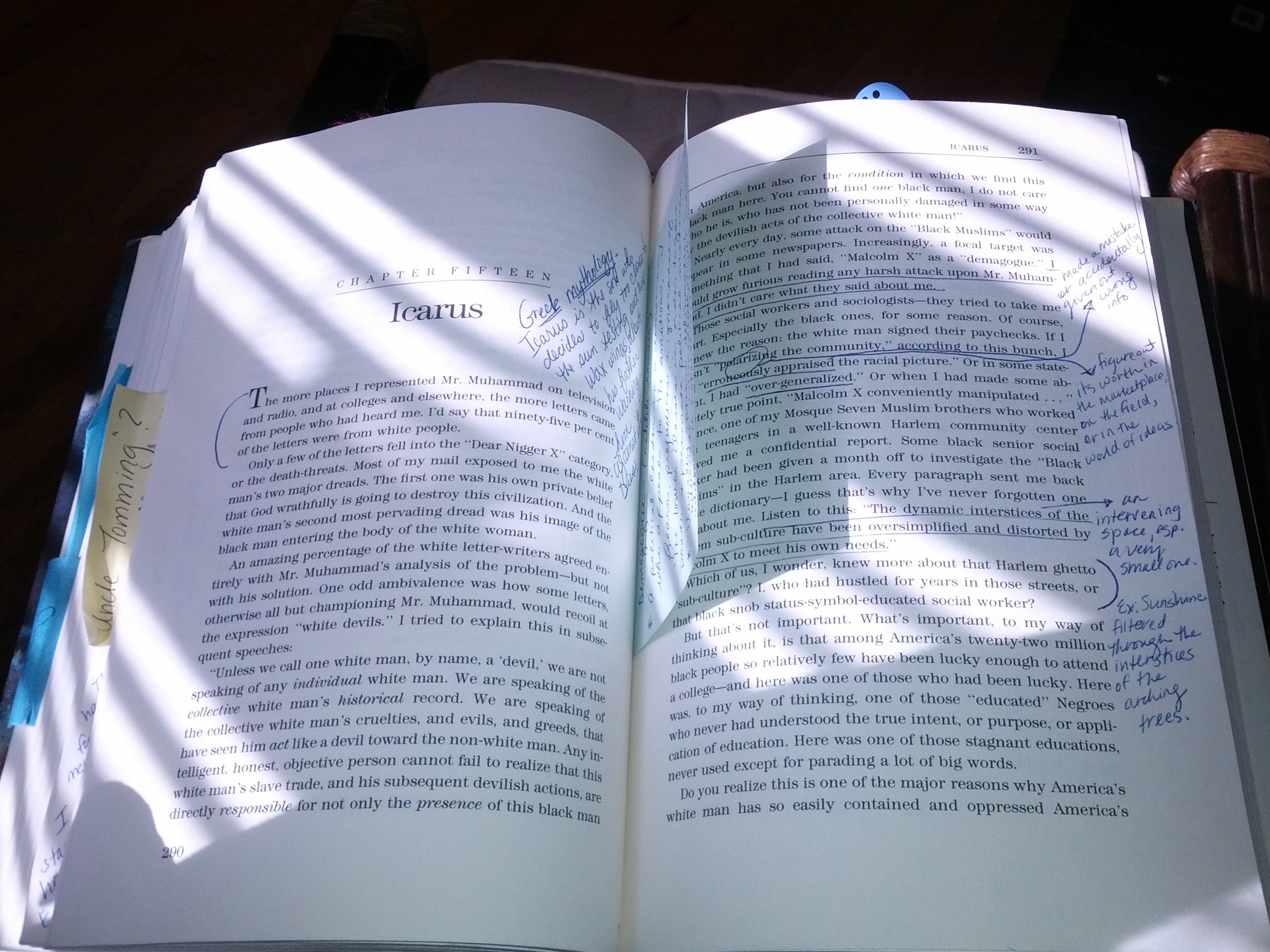
ocs While recently in the throws of February break rejuvenating away from the hubbub of the city in the quaint beach town of Montauk; Malcolm X and I were becoming intimate acquaintances.  We had been for quite some time, actually.  But it was here that I really started questioning him, his motives, and his overall sense of dedication to any cause he finds justified.  As I was making direct connections to my own beliefs and passions, my pen went haywire.  There was, by no means, enough blank space on the pages of this autobiography for my own thinking.  Out came the post-its.  The power button on the iPad came alive and my inquisition and deep thought went ablaze.  While X and I could not be more different human beings the ideal of commonality among passion elated me.

Later that very same day, I was introduced to Dr. Jeff Duncan-Andrade’s invigorating message that immediately added even more fuel to my already-burning fire.  From the moment I pressed play (thank you, Apple TV) I was captivated.  Jeff is an outstanding educator who believes there are three kinds of hope: material, critical and audacious.  He believes that our [urban] students are roses growing in concrete.  I mean, the city has always been referred to as the concrete jungle!  In order to really grasp the intensity and genuine love Jeff exudes with his message, you’ll have to watch for yourself.

There I was, hours away from the city and my students, yet never have I felt so connected.  X’s passion exudes from his autobiography; Jeff’s passion seeps through his pores as his care is so loudly presented; and my passion was turning up the waves in the ocean right outside my window.

On my drive back to work that first Monday morning after break, I made a promise to myself.  I promised to stay true to my passion and invite the new found passions I discovered to reside within me as well.  My focus was by no means on the road, it was zoomed in on Jeff’s mantra: Tu eres mi otro yo! (You are the other me!)  How could it not be?  How could I not be heading back to room 382 thinking, “Students, you are my reflection…you are what I see when I look in the mirror.  We are one.”?

As I headed into our building, my mind automatically trained itself on a female student that I have been working with for six months, but have yet to authentically connect with.  Today was the day that was going to happen.  The day had not begun, but I was sure of it.  I was sure of it because I was going to channel all of the passion, intensity, and love I gathered over the break and pour it all over this student.  I only hoped she wouldn’t mind!

As independent reading commenced I asked this student to join me with her new book, highlighter and pen.  It was a piece well below her reading level (as is typical of her reading selections), but the premise captured her attention immediately: females making decisions based on their desperate need for belonging among other female peers.  There’s no wonder.

X followed me to class that day, in many regards.  As I put my chosen piece of literature on the table, a ‘huh’ surfaced from this female student.  I opened to the chapter titled Icarus.  IcarusI asked her if she knew what the title meant and the following is the dialogue that surfaced:

B: Nope.

Ms. B.: Neither did I.  I decided I wasn’t going to go any further into this chapter until I understood what this name resembled.

B:  Huh.

Ms. B.: So, I took to the internet and realized Icarus is the name of a Greek mythical figure whose father warned him of not flying too close to the sun with the wax wings in which he created for him.  But, he did.  And he fell straight out of the sky.  Can you imagine?

B: Wow.  Huh.  That’s interesting.

Ms. B.: Isn’t it?  Then, check this out…(I flipped to the last page of the chapter.)  Read this last sentence.  (B does.) Do you see it?

B:  Whoa.  It connects to the title.  It explains what you just did.  (Smile)

And it was at this moment, that the gathered passion, intensity and love I poured all over this student started to work its magic.  Because here’s what happened next:

B: Ms. Bogdany, how do you know what to highlight though?  I never know what to say — I mean annotate.

This may seem like a simple (and potentially expected response) but after working with this student since September, this was the very first time she was confident enough to be vocal with her inquiry.  From there we opened her book (with much fervor) and highlighted a portion that she noted.  I asked her what it meant, and she started to explain it…and, in her book, I wrote down her thoughts.  I then asked her about her own ideas regarding this concept, and (with the longest response to date) she explained her insights about the decisions the main character is making.  So, again…I scribed.  We discussed.  I annotated.  She smiled.

Ms. B.: Do you see it now?

B: Hahah.  I do.  It…it makes you understand more.  Thank you.

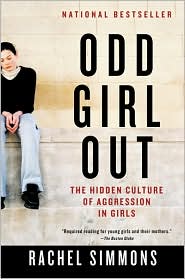
Before she left to resume this process solo, I pointed her in the direction of another female student who had just started reading:                                                                          Odd Girl Out

I explained the premise of this piece.  She raised an eyebrow.  I mentioned that when the other student was done, she may want to engage with it as it’s the same concept that envelopes her piece, yet it’s an informational, non-fiction piece.  This piece is more level appropriate for her.  Same concept, different genre, enhanced level.  We’ll see.

In the meantime, I noticed during the rest of our two hours together that day, B’s book kept finding it’s way back onto her desk; her highlighter was incredibly busy; and her pen was relaying her inner voice on those very pages that previously would have remained untouched.  And instead of refocusing her on the day’s lesson and activity; I whispered internally, “Tu eres mi otro yo.”

Day One Disaster?

Our Compass Shifts 2-1  Fact has it that my wonderful Personal Learning Network (PLN) was back in the swing of things well before the 2013-2014 school year started in the boroughs of New York City.  So, for the entire last week of August and into the beginning of September, I was watching magic take place all over the country through my computer!

I was with Amy @amyrass, in Texas, as she embarked on her first day of Writer’s Notebooks which brought tears to those who were starting their writing journey together; as honest writing so often does.  Shana’s @litreader themed library, standing tall against newly painted bright blue and green walls, inspired her students to embrace literature from the moment they walked into their West Virginia oasis.  Out in California, Emily’s @booknerdkim community of learners were so enthralled to be engaging in the Writing Workshop, that decorating their individual notebooks became a source of (very!) friendly competition.  I was taking note.  I was excited.  I was ready.

Or, so I thought.

Day One has arrived.  I am channeling the beauty of the work being done throughout the country and greeting my students with smiles and complete calm.  Yes, calm.  And yes, I myself am a bit in awe that “I” and “calm” have been partnered to describe the beginning of this journey.

Day One comes and goes in the blink of an eye, as it so often does, and I find myself sitting alone in my classroom with a wild mix of emotions.  I’ve taught my classes; students have left the building and are transitioning into their evening lives; and as I look around I notice…there are no traces left behind that any learning has taken place.  Chairs are pushed in, supplies are neatly organized in each table’s bin, and the floors are still glossy from this summer’s wax.  Did anything happen in here?

As I journeyed home that night, uncomfortable and uncertain, I was unsettled with how calm I remained.  As I reflected on the day I was consumed by the flat energy, the lack of bubbling conversation, the quiet minds, the mechanical smiles…  I couldn’t help but wonder that if I was the most prepared and ready to educate than ever before, how could Day One be so disappointing?  And, if I was this disappointed, I couldn’t imagine what students must be feeling.  Sigh.

Day Two comes, as it always does.   As I’m getting situated to begin the day, there is a knock on the door.  I look at the clock and it is 8:33a.m. – not time for class.  Surprised to see this student with a huge smile on his face peering through the tiny window separating us, I open the door.  There are no words, only actions.  He passes me, what seems to be a blank composition notebook.  I look at him with a puzzled look.  His smile grows.

“I wrote.  Here.”

As I walk back into the classroom alone, I open this Writer’s Notebook.  I happen upon pages of text…full pages, with words scratched out, abbreviations, acronyms, exclamation points, (unintentional) disregard for punctuation, grammar and spelling.   Yesterday, when asked, he thought he was being honest about not being a writer.  So, as I carefully maneuver through and reach the end, I am moved by how brave this student is.  He is courageous to explore his stream of consciousness – in writing- for the first time.  He is an evolving man full of character.  He is willing.  He is hungry.  He is fighting for more.  He shared this all with me. 

Mid-week students’ energy starts surfacing; hands are finding their way into the air in hopes of answering a question; the buzz (I so desperately missed) is starting to fill our community with a new excitement; and while this year is going to be unique (as all others are) we seem to be starting to find our groove.  This groove is calm yet exciting; quiet yet intellectually stimulating, and most importantly…it’s all ours to explore and share as a collective.

Day Five greets me (again!) before the start of the school day.  A student comes rushing toward me with an urgency that stops me in my tracks (hands full of bags, books, and dangling keys) as I’m just about to unlock the door to unload.

“Ms. Bogdany, I LOVE my book!  I was reading last night and shut off the TV so I could concentrate more.  My mom asked me why I was doing that.  She said, “You never shut the TV off to read.  What are you doing?!” I explained that I wanted to focus on my book because I’m really starting to like it.  I still want to read Jesus Land, but I’m going to finish this one first!”

Without interruption, and as we move over the threshold from the hallway to our shared learning space (where I finally put down everything I am carrying), this wonderful young woman continues.

“Yesterday, when I was on the bus, I was reading.  You know my boyfriend he’s in your other class.  When we got to his house he said, “You know we have to read for fifteen minutes.”  I told him of course I knew!  I took out my book, he took out his and we read.  It was awesome!”

I’m smiling, and in my head thinking “Forty-five minutes…forty-five minutes of reading, but we can start with fifteen!”  And just as the bell begins to sing, there is one last message this student wants to leave me with before she rushes to her class.

“You know, Ms. Bogdany, my twin siblings; they’re not good at reading.  I wasn’t either when I was young.  Actually, people told me my mom should pull me from school because I was never going to learn.”

Yes, people actually told her that.

“So, I know what they’re going through and I want to help them be better.  Tonight (Friday) we are going to sit as a family and read; I’m going to help them with their books from school.   I want to do this every week with them.”

My heart starts to swell.

“I’m scared though.  Next year I want to go away to college so who will help them get better?”

While I’m not sure I have the answer to this, and so many other questions, I do know that what seemed to be a disastrous Day One was really an illusion.  I recently heard someone say, “My mind shuts off and my soul takes over.” I made the mistake of allowing my mind to interpret quiet and calm for an educational atrocity.  Students are listening.  They are engaged.  They are passionate.  I am now taking solace in knowing I don’t always have to be swinging from rafters and tap dancing on tables to educate.  My soul truly believes in the power of calm.


Zombies and Test Prep–Who Knew?

Let me tell you about my Zombie Project.

It all started when I heard my husband and sons talking about that one episode of “The Walking Dead.”

“Oh, man, I didn’t expect that ending.”

“Sheesh, he got it out of the blue, didn’t he?”

“Merle just died. Died. And he was the tough guy.”

I didn’t have a clue what they were talking about, nor why they were so talkative. (I live with four men. It’s true: they usually use up their word allotment by lunch time.)

So, I slipped into my teacher hat and asked some book-chat type questions:  Tell me about this show that has you all riled up. Does this character remind you of anyone you know? Why do you think the show ended this way? Did the characters learn anything?

“Really, Mom?”

One thing led to another, and we were talking about how this zombie craze is a pretty good metaphor for our society.

Then, I talked to my friend Trista, and she told me she was doing this zombie project with her students.

Hmmm. I’m thinking.

Then, like a flailing limb, it hit me:  Standardized testing. Test prep. Zombies. Pretty good metaphor.

I teach English I to mostly non-readers. They are sweet kids with bright smiles and fun personalities, but they are below grade level when it comes to reading and writing. Many of them need a lot more help than I can give them. We have little time for one-on-one when my class size is 32.

Our state testing date is looming. I know I need my students engaged, and I need them thinking and reading critically, and I need them writing effectively. The Golden Question: HOW?

The creepy, undead, flesh eating answer:  ZOMBIES.

First, I made a list of the most pressing skills students needed to review, and then I became a zombie expert.

Did you know there are zombie poets and zombie poems?

Did you know there is an ongoing argument about which is more awesome zombies or unicorns? There’s even a Facebook page.

Did you know that a high school librarian, at a teacher’s request, can find 37 or so books that all have something to do with zombies?

Did you know that there are websites that “match” zombie-loving people to other zombie-loving people? and you can upload a picture and turn your image into a blood oozing zombie?

Really, now. Who knew?

So, I created this Zombie Project that included some pretty intense test prep and a whole lot of fun.

The video below is how I introduced it to my students. They watched it, and then on large poster paper at each table of four students, they did some silent thinking. I gave them each a different colored marker, and they had to write, based on the clues in the video, what they thought they’d have to do in the project.

You try it. Watch the video and see if you can come up with all the parts of the project. I’ll post more –handouts, articles, book lists, etc., as soon as I have a chance.

Mrs. Rasmussen’s Zombie Project

Spine Poetry: A Hit and a Bonus

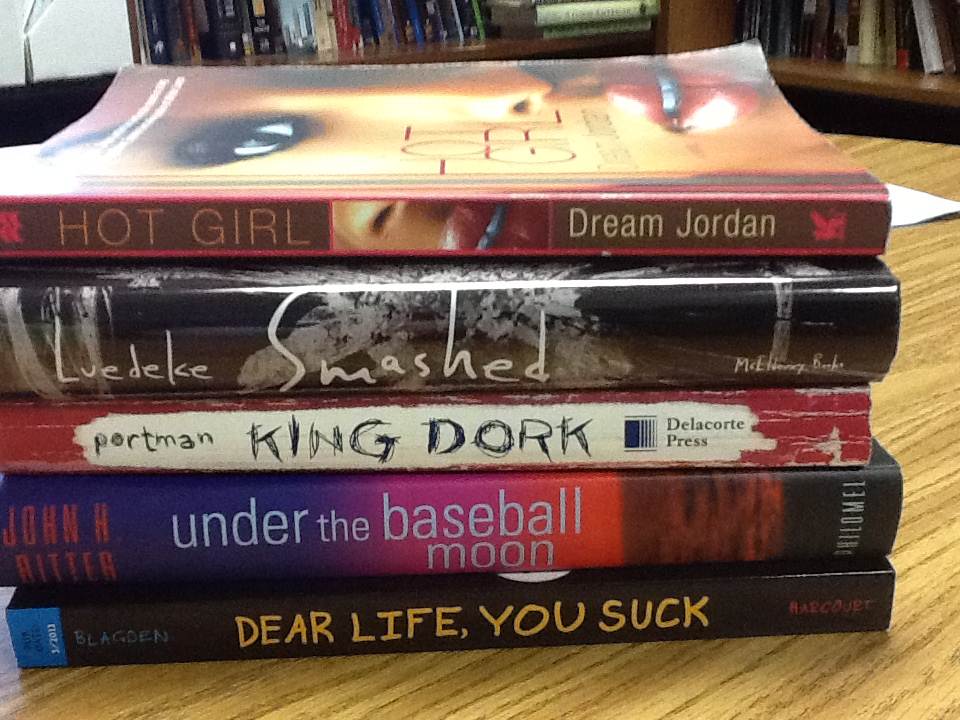
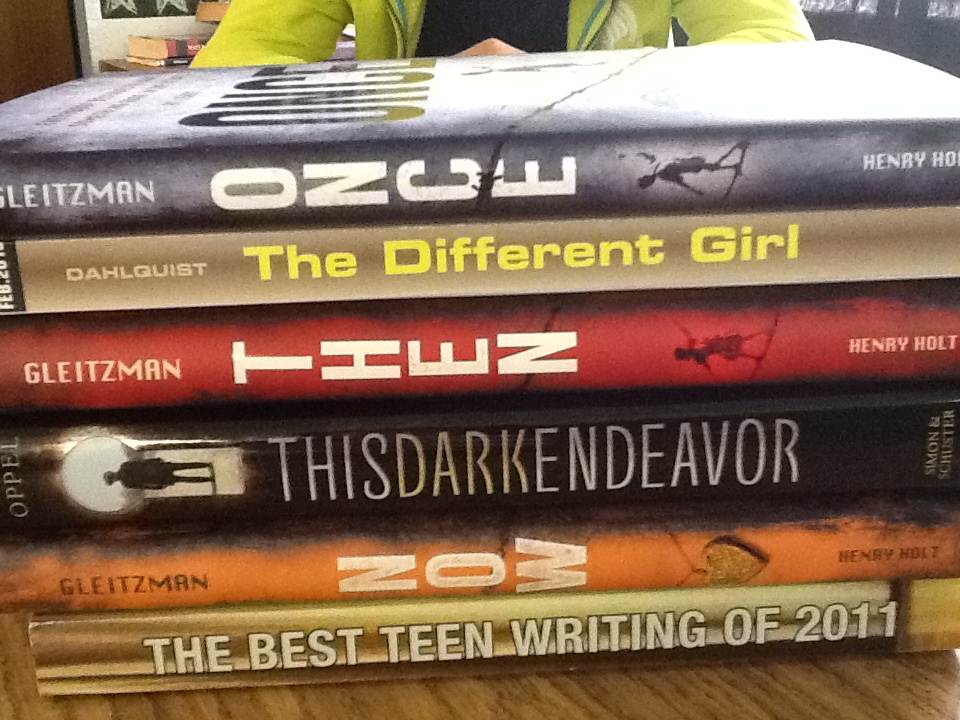
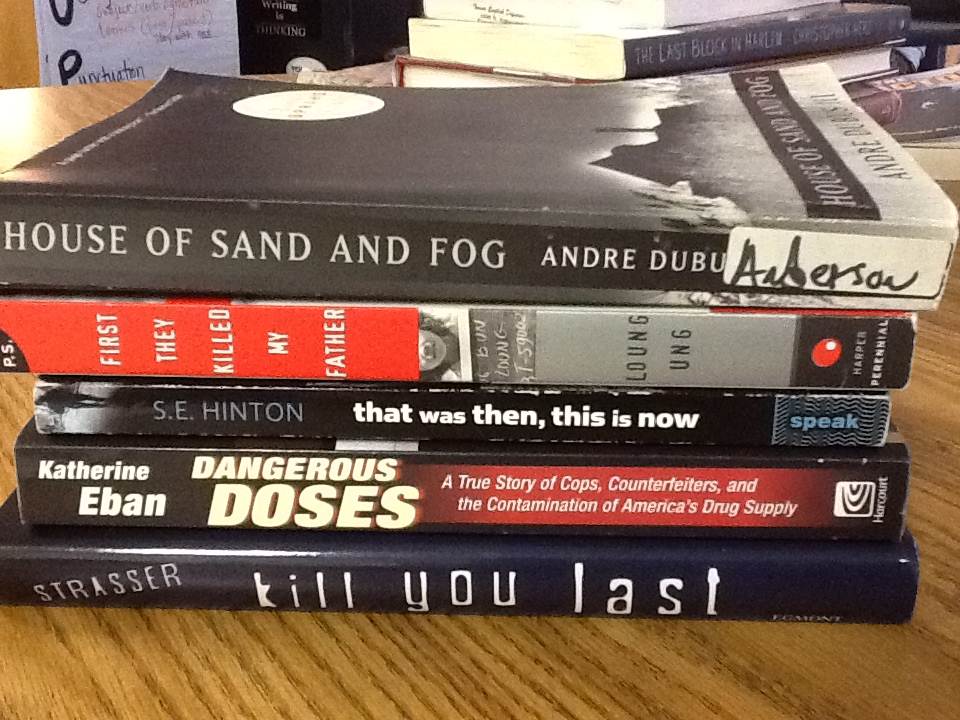
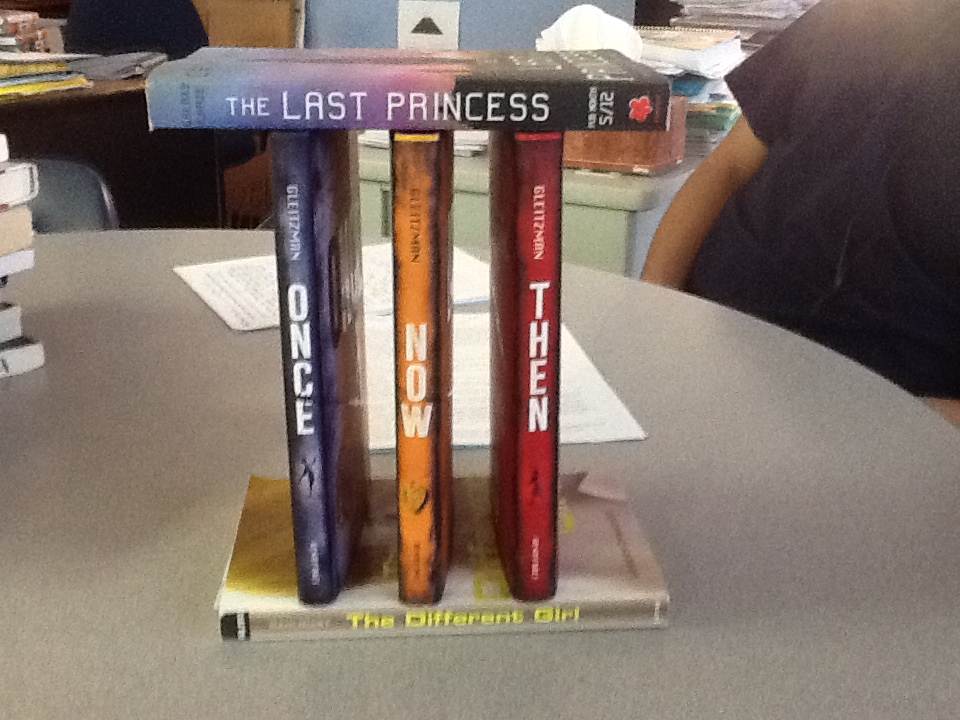
I didn’t carefully read this post Wanted: Any and All Book Spine Poems, but I took the idea and ran with it. Now, I need to let 100 Scope Notes know about our fun as we kick off National Poetry Month.

The Friday before spring break I needed something engaging to do with students whose hearts, minds, and souls were already on vacation. Classes were short, and we only had 35 minutes.

Creating spine poetry did a few key things:

1. Students had to read book covers–and, BONUS, some kids even checked books out from me after class.

2. Students had to think about words that would create topics and themes in order for their poems to make sense.

3. Students had to read their poems aloud, making sure that even without punctuation, their poems could be read with some kind of rhythm.

4. Students got a little introduction to the much more rigorous study of poetry we will do this month.

The Process:  I have eight round tables in my room. I took a big stack of random books from my classroom library shelves and stacked them on each table. I showed the one model in the link above, and told students to get to work.

  • Create a poem, using only the words on the spine of the books.
  • Your poem must make sense–if it has a theme, even better!
  • You must use at least five books.
  • Someone in your group must read your poem aloud to the class.
  • Let me know when you are finished creating, so I can take a picture of your stack of books to show the class.

Here’s what my 9th graders created. Some make me proud.

Picture1

Picture2Picture3Picture4Picture5Picture6Picture7Picture8

Scaffolding or Struggling, Sinking vs Thinking

So, when the school year started, I was all about scaffolding. I would do this, and my students would do that. I’d provide, build, prop, support until my students were writing their souls onto the paper. Good idea, right? Yeah, it worked about two weeks.

Then, I realized my students were bored. No matter how much I tried to get them interested in doing the learning my way, they were all about doing the learning their way:  they wanted me to “get them started” and then let them GO.

Since I am a control freak, this presented a problem. What if they did the work wrong? What if they didn’t learn the skill I needed them to learn? What if I couldn’t stay on the carefully crafted schedule I’d created?

Yep. That last question—see? There’s the problem. I wanted the learning to be about me. My schedule. My way or the highway. I had to learn to let go and let them.

My approach to writing instruction changed. Instead of pounding my students sweet heads with pre-writing strategies, although colorful additions to their writing notebooks, I started more carefully following the advice I’d learned from great coaches like Jeff Anderson, Penny Kittle and Cris Tovani.

One thing I changed:  I started using better mentor texts. I found pieces of writing that included the skill I wanted students to learn, pieces that were inflammatory or insulting—you know, writing that made students crazy with the need to respond? Pieces that made students think. We’d read these pieces together, and then I’d ask the students questions that helped them discover the writing skill in the piece. Inevitably, students will find what I hope they’ll find—if the mentor text is a good one.

For example, I just read this piece by Stephen King entitled “Tax Me, for F@%&’s Sake” that I plan on using in class one day soon. The title alone will make my students want to read it. (Careful–obviously, there is some salty language.) Take a peek:

What charitable 1 percenters can’t do is assume responsibility—America’s national responsibilities: the care of its sick and its poor, the education of its young, the repair of its failing infrastructure, the repayment of its staggering war debts. Charity from the rich can’t fix global warming or lower the price of gasoline by one single red penny. That kind of salvation does not come from Mark Zuckerberg or Steve Ballmer saying, “OK, I’ll write a $2 million bonus check to the IRS.” That annoying responsibility stuff comes from three words that are anathema to the Tea Partiers: United American citizenry.

And hey, why don’t we get real about this? Most rich folks paying 28 percent taxes do not give out another 28 percent of their income to charity. Most rich folks like to keep their dough. They don’t strip their bank accounts and investment portfolios. They keep them and then pass them on to their children, their children’s children. And what they do give away is—like the monies my wife and I donate—totally at their own discretion. That’s the rich-guy philosophy in a nutshell: don’t tell us how to use our money; we’ll tell you.

The writing devices in this excerpt scream to be discussed:  Hello? Tone, Dash–baby, Word Choice Wonders, Asyndeton’s a-list, Repetition-Repetition, and more!

If I trust my students to search, find, think, and discuss what makes this writing effective—they will. Then, not only can I encourage my kids to use devices like this in their own writing, I can craft questions that get them thinking about topics to write about. Voile! My mentor text is now an ideas generator.  

Questions like:  What kind of story might be titled “One Single Red Penny”? What topics emerge from these paragraphs? Why should you care about United American citizenry? What are some things you’d like people to “get real” about? What are some things you consider “annoying responsibility stuff”? What are some treasures your family passes down from children to “their children’s children”?

My students will get into these questions, and look at all the different types of writing they can produce just by thinking about these topics? Literary, expository, persuasive.

Thinking. Maybe that’s the deal here. When I provide too much scaffolding, my students do not have to think near as much as when I let them struggle through.

In the rear of my classroom, I have a wall painted with chalkboard  paint that says in colorful fancy letters: It’s TIME to think. Maybe it’s just me, but thinking equates to struggle, and I am pretty sure that’s where the learning is.