Tag Archives: Mentor Texts

Behind Barbed Wires

sticker,375x360.u1In honor of the recent Holocaust Remembrance Day, I find it befitting to share Room 382’s shelf comprised of pieces in which those, who experienced the nightmare, share their stories.  Each piece on this shelf is dedicated to bringing awareness, and hopefully shed light on how history truly can repeat itself, if we do not prevent it.

While this shelf hosts stories of tragedy, suffering, and insurmountable pain and loss; it serves a purpose. Aside from the devastating, these pieces share with us the true essence of humanity.  Often, this is the first time students are diving into this 80-year-old genocide and trying to make sense of it. Many times we can’t; and other times we are able to connect over the beauty that surfaced. It’s all very complex.

Elie Wiesel’s story (and bravery) is shared via his trilogy starting with Night then moving us through Dawn and eventually through the Day.  See what he did here?

Anne Frank shares her experience as a young woman budding into adolescence in a time where her beautiful spirit defeated the confines of her attic.  Various types of literature have been compiled so IMG_20150424_083609students (and all readers) can experience Anne’s story in various ways: her published diary, actual footage restored via the Anne Frank House (a gift from a friend’s visit to Amsterdam), the play, and many others.

Maus, an incredible two-part graphic novel, utilizes the “Cat and Mouse” metaphor to portray the Nazis
vs. the Jews during the Holocaust.  This two part series is detailed and brings to life the realities of the inner workings; the emotional turmoil yet amazing perseverance of those living through this moment in history.

Those are three pieces among many.  There are books here (and ones that are currently signed out) that chronicle voices of the children of the Holocaust, novels that use real-life situations yet tell a fictional story, perspectives from a Nazi’s Jewish wife, the bravery of a journalist who swapped places with a Jew to ultimately expose the hidden…

Students are typically surprised, fascinated, uncertain, saddened and sometimes hesitant when it comes to this shelf.  Understandably.  This shelf asks us to inquire and then sit with our findings.  Yet, the conversations and rich discussions that float around this shelf are beautiful; truly beautiful and strengthen our understanding of what it truly means to be human.

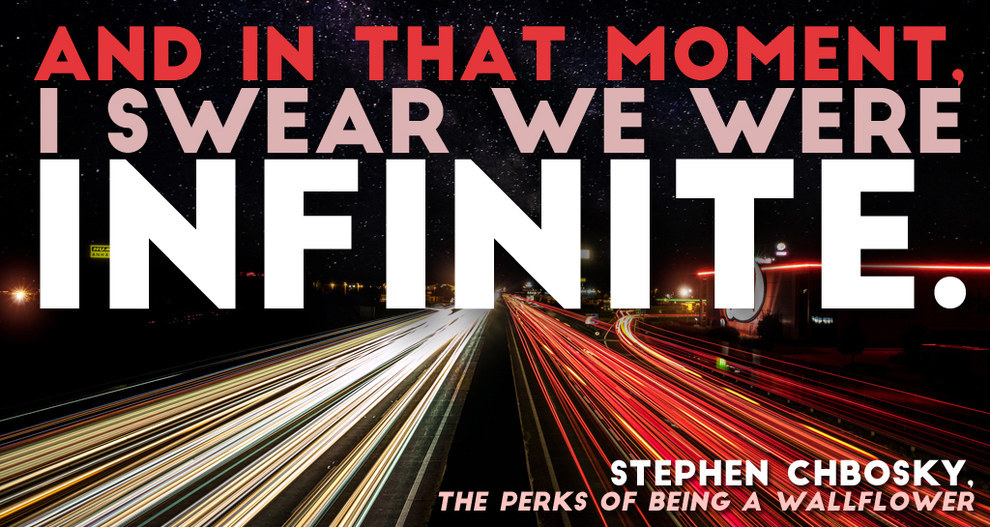


Oh, the Learning in One Well-Chosen Sentence

51 Most Beautiful Sentences -- Buzzfeed

First, we read like readers. We talk about meaning. We talk about the story if any students have read the book. Many have. The Perks of Being a Wallflower never stays on the shelf for long.

I see several students flip to the back of their writer’s notebooks and write the title on their To Read Next lists.

Next, we read like writers. “The writer does a few things interesting in this sentence. What do you notice?” I ask.

We talk about starting a sentence with and, which leads to a discussion about sentence structure. We talk about the word infinite, which leads to a discussion about the word moment.

“What? That’s a contradiction,” someone says.

“Uh huh,” I nod and listen as little conversations bubble up around the room.

Then, from the back, a student says, “Do you see the three we’s in that sentence? Do you?”

I cannot help but grin.

You see it, don’t you?

Oh, sentences. Lovely sentences. Oh, the learning in one well-chosen sentence.

I cannot even imagine how much I would have learned TALKING about sentences all those years ago instead of diagramming them.

Do you have a favorite sentence you like to talk about with your students?

This Buzzfeed article has 51 Beautiful Sentences. I mention this piece in my post tomorrow, too. And if you haven’t visited Notable Sentences for Imitation and Creation, you’ll want to find some time to read it.


©Amy Rasmussen, 2011 – 2015

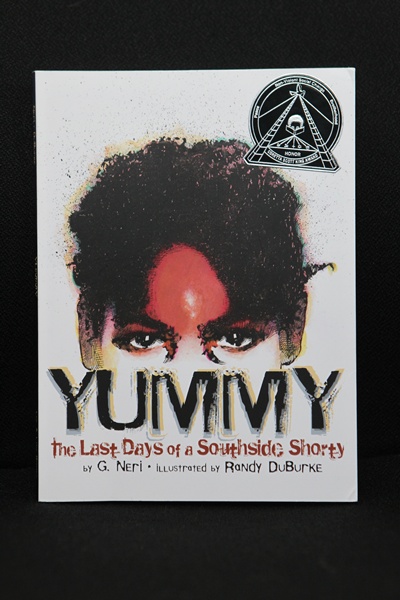
G. Neri’s Yummy


yummy

Synopsis

In this award-winning graphic novel, Robert “Yummy” Sandifer’s life becomes interwoven with other true events from a period in time where Chicago’s south side was running rampant with gang activity and violence. The year: 1994. Yet, its relevance still holds weight today in urban communities throughout our country. Unfortunately.

Narration and Writer’s Craft

Through third person narration, eleven year old Roger, guides us through the ongoings, thoughts, chaos, family ties, brotherhood, fears, ponderings, love, realities and insecurities most young adolescent males experience.

Roger lives on Normal Street.  He addresses what many readers are already thinking:  But I guess “normal” is different to different folks.

In studying craft, this one liner opens up dialogue, the use of language and repetition, and the importance of quotation marks in varying situations.  Throughout the entire story, you are greeted with on-point vernacular, literary devices, and a storyline that pulls at the heart strings.  (Just ask my students.)

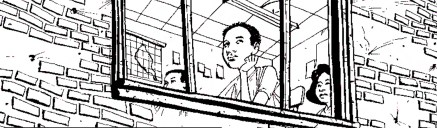
Additionally, the incredible illustrations allow us the luxury of experiencing Yummy’s journey through his eyes, Roger’s eyes, and the eyes of all of those that take part in the journey.

It’s pretty loaded.

 Essential Ideas and ThemesYummy: The Last Days of a Southside Short

This gritty exploration of Yummy’s life forces readers (of all ages) to question their own understandings of good and bad, right or wrong, yes vs. no.

It searches for truth.

It provides us with the inner-workings of [the downfall of] self-worth and naturally asks us to question it.

Ultimately, we are challenged to think on a macro level about society; why are so many of our youth feeling forced into a life where statistics are alarmingly glaring?


Yummy is a piece that everyone needs to read.  It’s important.  It’s relevant.  It affords us a window into the lives of so many of our youth.  No wonder it has won just under 30 honors and awards.  This is one piece of literature you cannot afford to miss.

For more books by G. Neri feel free to visit his website: http://www.gregneri.com

——-

Yummy Time

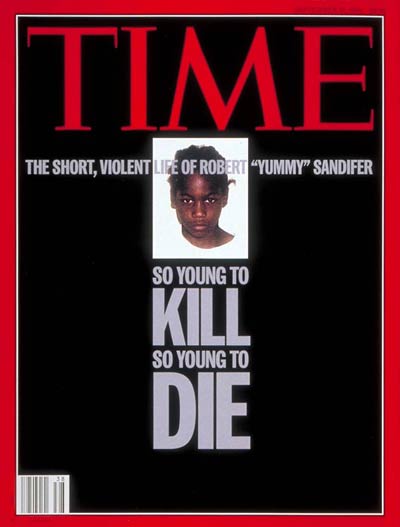
Here is the cover of TIME Magazine’s issue detailing the story of Robert “Yummy” Sandifer.  Tragic and important.

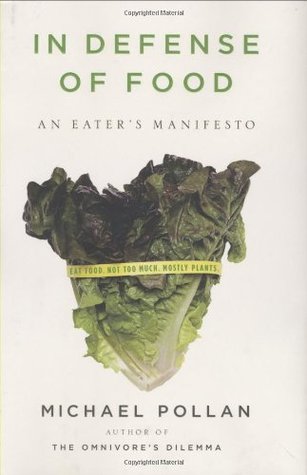
In Defense of Food: An Eater’s Manifesto

315425I grew up as a reader, but I was a steadfast reader of fiction only–especially series.  I remember receiving my PSAT score report in high school, which strongly suggested that I begin reading more nonfiction in order to improve my vocabulary and reading comprehension.

So, not being informed about the wonderful nonfiction tomes I now know about, I began to read the newspaper.  That probably contributed to my majoring in journalism, and now teaching that subject in addition to English.

But it wasn’t until I took Penny Kittle’s class at the UNH Literacy Institute in 2013 that I fell in love with nonfiction (pardon me, Mr. Lehman and Ms. Roberts!).  I read Malcolm Gladwell’s Outliers and was enamored of his use of narrative to help me understand seemingly disparate facts.  I quickly read all of Gladwell’s other books, then devoured the rest of the booklist from Penny’s class–The Emperor of All Maladies by Siddhartha Mukherjee, The Immortal Life of Henrietta Lacks by Rebecca Skloot, Behind the Beautiful Forevers by Katherine Boo, Zeitoun by Dave Eggers, and plenty more.

However, it’s not since Gladwell that I’ve found another nonfiction author whose collected works I’m dying to devour…until now.

I recently asked my students to brainstorm as many nonfiction genres as they could, then select three for us to focus on for this quarter.  One of their selections was a recipe.  I wanted to show my students lots of examples of writing about food, so I purchased Michael Pollan’s In Defense of Food: An Eater’s Manifesto and The Omnivore’s Dilemma: A Natural History of Four Meals.  I picked up In Defense of Food first, and was left defenseless.

This book rocked my world, and my worldview.  It’s a book about the food we eat, where it comes from, how it’s different than other cultures’ foods, and how it’s good and bad for us.  I learned about the wild inaccuracies of food science, the nutrient-depleting process of processing food, and the government’s allowance of all this because of their dependence on food marketers’ money.  I also learned about the evolution of America’s food culture–from farm fresh to TV dinner to fast food–and its deleterious health effects on our population.

So, after Pollan sufficiently freaked me out and made me swear to myself that I’d never eat any processed food again in my life, he presented a clear solution to my fretting and outlined some rules for eating healthily (the subtitled Eater’s Manifesto).  I learned how to shop smart, defy the American diet’s unhealthy customs, and consider my foods in the contexts of their meals, which can completely transform their nutritional value.

It wasn’t just the topic that fascinated me (admittedly, I love to cook)…it was the writing.  From knee-slappingly incredible food puns like “let them eat Twinkies” and “the silence of the yams” to his deft skill at citing other writing to support his own arguments, I was convinced.  The clear organization of the book mirrors his three basic rules about eating well, which he states in sentence number one:  “Eat food.  Not too much.  Mostly plants.”  The complex narrative he weaves makes perfect sense, but is incredibly layered.  Through it all, Pollan made his claims and supported them sturdily, leaving me not only swept up in a great story, but thoroughly knowledgeable about what real food is and isn’t in America today.

I can’t wait to bring this book to my students through book clubs, a reading challenge, or a craft study mini-lesson…so I’ll booktalk it tomorrow to my Funyun-munching students with as much fire and brimstone as I can manage, and hope they hop on the Pollan diet with me.

Choose to Become a Classroom of Writers

Note:  I enjoy emails with questions about my teaching practice. They help me clarify my thinking, and they often lead to new posts here. This post is Part I of my response to this question:

How does your district handle classes that are very content specific? For example, I teach Honors/Pre-AP American Literature. This is a sophomore (with accelerated freshmen course) that has a pretty traditional literary movement focus, which includes several of the classics (The Scarlet Letter, Huck Finn, Of Mice and Men, The Great Gatsby, The Things They Carried). And while I feel I have made great strides over the years in terms of student driven lessons, focus on discussion and annotation, skill vs. content based assessment, the one area I continue to struggle with as I look to workshop is how to facilitate the choice. 

Do you have a similar class in your district? Are any of these texts still used as whole class works? As options within specific unit studies? Or is the year open to student choice throughout? 

First of all, while my district ELA coordinator would love for all teachers to move to readers/writers workshop, and he has introduced that idea through various means, many teachers are not there yet and some are determined not to budge. Like many other issues related to change in schools, they nod their heads and keep doing what they’ve always done. We know that sometimes this is best for kids (I’ve done the nodding and door closing, too), and sometimes it is not, which is the case when it comes to continuing to make all the choices in English classes at the expense of student readers.

My own department manager reminds me often that we have to take our movement one step at a time. This is my first year on this campus, and while most everyone is making positive and impacting change. It’s slow, and I get antsy. I’ve been doing readers/writers workshop with my students for seven years now, and I still work on refining plans, lessons, mentor text selections, mini-lessons, and more. Truly, workshop is constant motion, which I am sure, if you practice it, you already know.

Recently, I was asked, “What is the one step that will give us the most movement as we continue this transition?” I paused for a moment, and then the answer focused clearly:

Become classrooms of writers.

Many high school English classes are literature laden. All the lessons revolve around specific texts, mostly whole class novels, and sometimes teachers spend five, six or nine weeks reading and discussing that one text. Sure, they might include other instructional practices and activities, but the most common mode of writing taught is analytical (the least likely of all the modes of writing students will use in their lives after English class. Teachers, when was the last time you wrote an analytical essay for your job?).

When we move to becoming classrooms of writers, teachers realize that if we want to practice other modes, read mentor texts, model the writing process, lead revision workshops, publish our best work, and truly live the lives of writers, we simply do not have time to devote class after class time to the study of one particular book.

A mentor once told me:  “You choose to do this, which means you choose not to do that.”Faulkner on reading

Say I choose to create a unit where my students write narratives (I always start the year with narrative because it is builds community, and contributes so much weight to other modes of writing. See tom Newkirk’s book Minds Made for Stories.) I prepare by gathering a variety of narrative texts of various lengths. I can use passages from an assortment of books in my classroom library, or I can pull passages from popular short stories, or classic novels. [See note on this at the end.]

Some passages I will use to teach leads. Others I will use to teach how authors deal with time. I may pull out specific parts and teach effective use of dialogue or character development, setting, whatever. [Gathering a variety of texts in different genres around the same theme is another way to approach the same type of reading then writing task I describe here. I’ll write about this soon.]

First, we read like readers. We practice comprehension strategies and discuss the meaning of the text.

Next, we read like writers. We deconstruct the text and discuss how the author makes that meaning.

In my AP class, we almost always talk about these texts via a Harkness discussion. Students do the thinking and speaking after I’ve done mini-lessons and modeled answering focusing questions. I’ve learned to trust that students will discover the elements and devices that I hope they will. Sometimes I have to prod, but they rarely never get there.

The skill I need to teach determines the reading passages I select. That’s an opposite approach to how I used to plan when my teaching was driven by various pieces of literature.

And now, I have time to talk about books, allow students to select books they’d like to read, and confer with students about their reading. They read tons more than they ever did before, and they become much more effective writers. Win/Win.

cool quote memes from our friends at http://www.TeachMentorTexts.com

Watch for Part II of my response soon.
 ©Amy Rasmussen, 2011 – 2015

My Top 3 Tips on How to Find #MentorTexts

Yesterday I met with a teacher-leader, and she said that one of her main concerns in implementing writer’s workshop into her classroom is finding the right mentor texts. I’ve heard other teachers say the same. Knowing what mentor text to use to teach which skill can be daunting for teachers just starting out using the workshop model.

Here’s my top three tips on how to find mentor texts to teach writing (and some reading):

1. Read. Read everything from novels to plays to news articles and food reviews. The more we read a variety of texts the more we will have little “aha!” moments when we realize how the whole text, or even a part of it, will work to teach our writers.

2. Tweet. Twitter is the place for educators. Join in, or just tune in, to an #engchat or an #elachat or a number of other chats on Twitter. See Cybrary Man’s Educational Chats Schedule. You are sure to find a chat suited to your needs. Educators use Twitter to share ideas:  mentor texts, strategies, links to blog posts that share mentor texts and strategies. If you need it, you can find it on Twitter. And if you cannot find it, tweet a question and someone is apt to find the answer for you.

3. Follow or favorite or sign up for RSS feeds. I find mentor texts in a variety of places. I watch for updates from Izzit.org, and Essay5W.com. I also visit MovingWriters.org Mentor Text Dropbox Project. On Twitter I follow @brainpickings and @voxdotcom and and @NewYorker and many other news sources.

(Bonus:  A source for texts, specifically to use for reading and practicing the Notice and Note signposts, is the Notice and Note Facebook Group when I found these links to video clips and short stories and poems that can be used to teach the signposts. Thanks @msetha23 for these docs.)

What about you, do you have any ideas or resources you are willing to share? Leave a comment.

©Amy Rasmussen, 2011 – 2015

The Classroom and The Cell

ClassroomCell-cover.jpg (320×512)

Yes, the title is as provocative as the text found inside the 177 pages crafted as a conversation between both activists; one serving a life sentence in Waynesburg, PA and the other an Ivy League professor sharing his knowledge with the educational elite.

If the title alone does not grab your attention, or at the very least, shed light on the dark realities of the school to prison pipeline; then find comfort in knowing that asha bandele’s fingerprints have touched this piece as well – as editor.

Abu-Jamal and Lamont Hill take on the discourse so many African Americans engage in, yet so few human beings have any insight unto – which instills a blindness to the indifference that still persists. Each chapter is dedicated to components of the African American experience that are real, raw, and in dire need of attention.

In bringing necessary awareness to the issues, concerns, and realities found within this piece, take a look at Marc Lamont Hill on the creation of The Classroom and The Cell.

Here’s an excerpt found within the first few pages: (Please note, due to the nature of the content, some chosen words are a bit colorful, yet essential.)

Mumia: When you talk about your lack of freedom, you’re talking about the golden chains that are on you.  They’re pretty as a [expletive], but they’re still chains.  I think it’s interesting that our people, of all the people in the world, chose chains as a fashion accessory.

Marc: Crazy right?  And we call our cars “whips!”

Mumia:  Damn! Whips and chains.  That ain’t a Freudian slip.  Ain’t no such thing!  We’re not even free in our language.  You dig what I’m saying?

This excerpt sets the tone for the entire piece; it’s no wonder that I have felt compelled and propelled to research both men in greater detail.  This is also the excerpt I read aloud to students when they ask what I’m reading.  And every time, without skipping a beat, students are viscerally moved by it.  They ask to sign it out; immediately.  Some students are so enamored by the text, craft, and connection that they find an urge to read other books also authored by these men.  Innately what happens next is stunning – author studies are being explored and students’ identities are being validated.

What titles do you and your students collectively enjoy that provide opportunities  for understanding cultural ideologies while fostering honest dialogue?

The Subtle Art of Breathing

You know when you’ve been hit…hard. Hit so hard you call up your favorite friend who you know will feel the impact as well and say, “Listen to THIS…”.  Or, when you dance into class so excited to share [with students] you don’t even wait until the bell has ceased ringing to start reading the opening line.  Or, in those wildly personal moments when you quietly take to your Writer’s Notebook and allow your heart to connect to words you never knew how to form yourself.

Welcome to The Subtle Art of Breathing.

There is so much power, resiliency, and breathtaking beauty found within every, single page of this compilation.  The way asha details the real, raw, and rendering experiences she, and those she writes about, leaves me awed.

She annihilates barriers with a writer’s craft that caterwauls to be reread over and over again: never to be forgotten. You cannot help but to highlight and underline and annotate and scribble ideas on post-its while making sure, before you leave the page, you have dog-eared it so you can find your way directly back to where you were hit….stopped in your tracks…changed.

Here’s an excerpt from asha’s brilliant piece titled Resolve :

against our childhoods

with their shifty foundations

and their creaking floors

our childhoods with their cobwebbed

corners and their rattling chains

I was 14 then, I think, maybe 15

You were 16, maybe 17

but that is not the important part

the important part is

you were my first love

It would not be fair of me to give anymore away.  But, you can imagine how asha traverses through time, not in ballet slippers, but with steel-toed boots tiptoeing her way through the most vulnerable moments of human existence: love.

A Book About Food?

IMG_20141216_210906You better believe that when Steven Spielberg and Oprah Winfrey collide (behind the big screen) an emulsion of magic erupts.  The One Hundred Foot Journey written by Richard C. Morais turned film was two hours and four minutes of robust richness, immaculate vastness, and intense human connection.  So, no…this book is not solely about food.  Although food, most of the time, tends to be the main character.  I love when authors and film makers do that!

Immediately following my trip to the theatre, was (obviously!) a trip to the bookstore.  Yes, at 9 p.m.  I wasn’t worried about the bookstore not being open but I hadn’t even thought to think that they would be out of the book.  I should have!

An immediate login to Amazon.com and my book was on its way — to be delivered a quick two days later (Thank you, Amazon Prime).  And it wasn’t long into the book when I came across this:

But this you must know:  the violent murder of a mother – when a boy is at that tender age, when he isIMG_20141216_205952 just discovering girls – it is a terrible thing.  Confusingly mixed up with all things feminine, it leaves a charred residue on the soul, like the black marks found at the bottom of a burned pot.  No matter how much you scrub and scrub the pot bottom with steel wool and cleansers, the scars, they remain permanent.

Did anyone else just witness the intense power of Morais’s carefully chosen craft?  Imagery, word
choice, symbolism…shall I continue?  When students ask me what I’m reading or why I’m even reading it; I turn to this page and let them read it for themselves…it’s already tagged.  Most times students’ responses start with a sigh followed by a “Wow” or “Whoa”.  Then the conversation begins.  And, just like what Spielberg and Winfrey have created, our conversations chronicle the richness of this sentiment, immaculate precision and craft of Morais, and the intensity of this reality.

What books have you stumbled upon that have hidden gems in them that you love to share with your students?

Please Don’t Ignore the Repetition: a Mini-lesson

My students are pretty good at noticing rhetorical devices in texts; they aren’t so good at analyzing what effect they have on meaning. Since we immerse ourselves in independent reading all year, and we read bookshelf after bookshelf of YA novels, I find that using bits from those books and then talking about why the author wrote the text that way helps when students need to analyze these devices in more complex texts. Somehow this practice takes their tentative and repetitive “for emphasis” away and makes their analysis so much richer. (Most of the time.)

Like this passage from Please Ignore Vera Dietz by A.S. King:

I wonder if I’d called the police back when I was ten or thirteen or fifteen, would Charlie be alive now. I regret it. I regret every minute I lived keeping that secret. I regret every time I didn’t talk to Charlie about it. I regret having parents who couldn’t try to help or seem to care. I regret not being reason enough to make them care more. I regret never saying what I was thinking, never saying, “But what if that was me? What if I marry some loser who hits me? Would you care then? Would you help?” And I regret not called the police that first day we met the pervert. Because I’m sure he had something to do with how Charlie was acting at the end. p264