Tag Archives: Craft Study

Getting Students Hooked on Poetry

“Poetry is boring.”

“What does poetry have to do with anything?”

“What does poetry even mean!?”

“I hate poetry.”

Poetry is a timeless form of writing, yet students struggle to see its relevance to their lives.  Further, they struggle to understand the themes and messages poetry attempts to communicate.  After weeks of asking them to read like writers, my students did begin to find some value in poetry, but they still didn’t like it.

Thus began my endeavor to present poetry as exciting, interesting, and most of all–fun.  What follows are three poetry activities my students were engaged and challenged by.

IMG_5382Spine Poetry

Creating book spine poetry is not a new concept–it can be found all over the internet.  I first got the idea to do this activity in last year’s UNH Literacy class with Penny Kittle.  Not only does creating spine poetry get students playing with language, it also exposes them to a wide variety of titles.

I modeled the creation of a spine poem for my students, stacking and re-stacking titles by John Green, Max Brooks, Jon Krakauer, Malcolm Gladwell, and more.  I modeled, with their input, until we had a poem that satisfied us.  I also showed examples of a variety of spine poems on the projector.  Then, students worked in groups to create their own spine poems, eventually writing their finished products in their writer’s notebooks after adding punctuation and a creative title.  I noticed many of them adding new titles to their what-to-read lists, too.

IMG_5332Cemetery Poetry

Edgar Lee Masters’ Spoon River Anthology is a wonderful collection of poems inspired by graveyard epitaphs.  Lives and legacies are explored in Masters’ work in a variety of styles.

I wanted to have students practice imitating this poet’s craft, as he is a master (pun intended!) of showing, not telling.  We have a beautiful old cemetery quite close to our school, and it was a gorgeous September day for a walk.  My students toted their writer’s notebooks to the graveyard and we read three of Masters’ poems together.  I asked students to wander the cemetery and find a gravestone that appealed to them, then imitate one of the poems we’d read, using that headstone as a subject.  My boy students especially loved this assignment–they were drawn in by the quiet atmosphere of the cemetery and its prevalence of Civil War graves.

IMG_5125Spoken Word Poetry

Shane Koyczan, Taylor Mali, and Saul Williams have soared to YouTube fame with their spoken word and slam poetry performances.  They are forceful presences on stage, and their-in-your-face styles often hook my students.

Sarah Kay provides a lovely contrast with her soft-spoken performances, her clear voice spinning tales of love, motherhood, and femininity.  We read “Point B”, pulled out its richest lines, and hung them around the room.  There were eight in total, and students responded freely to these beautiful words on post-it notes in a silent discussion.  They wandered the room, sticking their responses onto their favorite lines, and then responded to one another.  Their close readings gave way to analysis as they challenged each other, left questions, and cheered classmates on.  Weeks later, a student quoted a line from “Point B” in a discussion–this activity had seared “this life will hit you hard in the face” into her memory.

Stacking books into spine poetry, imitating poems about gravestones in a cemetery, and silently discussing spoken word poems transformed my students’ perceptions of poetry.  Words that were once lifeless on the page came alive.  This week, they reshape their own identities and wear new hats as poets and writers–hats that, thanks to our poetry fun, are not as unappealing as they once seemed.

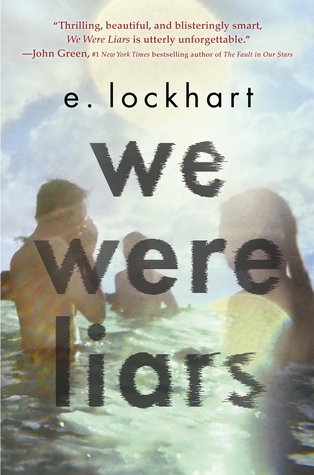
Sentence Imitation with We Were Liars

I listened to the audiobook, and liked the novel so much I had to go and buy it in hardback for my classroom library. The story still haunts me. (I read it soon after I read Jellicoe Road, and that story haunts me, too. These two books make an interesting pairing.)

The following is the beginning of chapter two in We Were Liars. It’s an compelling list of sentences that create the the basics of what we need to know about our protagonist. It will be an interesting passage to use for sentence imitation.

I wonder what my students will say about themselves.


We Were Liars by E. Lockhart P4

My full name is Cadence Sinclair Eastman

I live in Burlington, Vermont, with Mummy and three dogs.

I am nearly eighteen.

I own a well-used library card and not much else, though it is true I live in a grand house full of expensive, useless objects.

I used to be blond, but now my hair is black.

I used to be strong, but now I am weak.

I used to be pretty, but now I look sick.

It is true I suffer migraines since my accident.

It is true I do not suffer fools.

I like a twist of meaning. You see? Suffer migraines. Do not suffer fools. The word means almost the same as it did in the previous sentence, but not quite.

You could say it means endure, but that’s not exactly right.


What is the “soundtrack of your rebellion?”

I liked this book in a lot of ways, and I hated it in others. Maybe because my heart is too soft for all the heartache and suffering of these children. The mother in me couldn’t stand it. Maybe because my Christian heart couldn’t stand the hypocrisy of so many people calling themselves Christian, the parents included. My friend raved about how her students devour this book. It has left me unsettled, but I do think many students will like the emotion this book evokes. It’s just not my kind of emotion.

This is a passage that I think my students will be able to make a connection:

Jesusland by Julia Scheers P159

That day I realized I wasn’t immune to my father’s violence. For years, while my brothers were whipped and I was spared, I thought I had some kind of biological privilege — that my father wouldn’t harm his own genetic material. But in their absence, my father didn’t have anywhere to train the spotlight of his rage on but me.

So when my parents left for another missionary meeting in California and the nurse from my dad’s clinic who was staying with me caught Scott climbing out of my bedroom window one morning, I left home. If my father wanted to choke me over a forgotten milkshake, what would he do to me for losing my virginity?

I moved in with my brother Dan and his three roommates at Purdue and found a part-time job as a busgirl at the Howard Johnson’s Hotel on Highway 52. I biked to work, and to Harrison –an hour’s ride away–if I couldn’t find someone to drive me. I didn’t go to school if I wasn’t in the mood for it, and a couple of teachers threatened to flunk me before passing me with D’s.

Although I was dirt poor–I paid half of Dan’s rent, and frequently resorted to eating off the room service trays I was sent to collect from the hotel hallways–I was happy. I didn’t have to go to church, spent hours watching MTV, and didn’t need permission to do anything. I was free.

I listened to Van Halen’s “Running with the Devil” on my Walkman as I rode through the streets of Lafayette on my bike, rewinding the cassette tape again and again.

It was the soundtrack of my rebellion. That was me, running with the devil. Doing bad things and liking it.


I wonder how students would respond to this question:  What is “the soundtrack of [your] rebellion”?

Beautiful Sentences

Sometimes we just enjoy the beauty of the language. I don’t usually write in my novels, but I did mark “I love this sentence” in the margins when I read this book.

I do not know how many of my students will read this novel, although it is a Pulitzer Prize winner, I am not sure many students will be interested in the musings of a dying Calvinist minister as he writes letters to his young son. They might.

I will show them the lovely language.

Like this sentence on page 71 of Gilead by Marilynne Robinson:

“As you read this, I hope you will understand that when I speak of the long night that preceded these days of my happiness, I do not remember grief and loneliness so much as I do peace and comfort — grief, but never without comfort; loneliness, but never without peace. Almost never.”

Teacher friends, do you have favorite beautiful sentences that you share with students?

Writing as Imitation

Before you go judging me for referencing Weird Al in a sophisticated professional blog, please stick with me till the end – then you can judge me.

So, I’m sure most of you have seen the latest parody of Robin Thicke’s Blurred Lines by Weird Al. If not here it is for your viewing pleasure.

WORD CRIMES


Clearly, it is nerdy English teacher humor (as my husband would call it). And although it was funny, what actually intrigued me was a video of Weird Al that I stumbled upon after viewing his latest parody. The video was an interview that centered around his motivation as an artist and how he goes about composing his work. As I watched the video there was a brief part that struck me. See if you hear the same thing I noticed. (hint fast forward to 53 seconds into the clip)


See if you heard the same things I heard:

  • “It is sort of an exercise”
  • “I pretend like I’m them (the musicians) and I study their body of work.”
  • I pick it (the music) a part musically and figure out what are the little idiosyncrasies that make them tick stylistically.”

I know for many students the fear of the blank page is paralyzing. Just a thought, but what if we had learners imitate the writing of other great writers – even just as, “sort of an exercise.” I know I sure would be elated if I had learners carefully picking a part piece of writing in order to study stylistic elements and then turn around and try to use those same elements in their own writing. There is no question that Weird Al had to put a lot of work and thought into making the lyrics of his song parody work together just like the actual song and I’m confident that we would be pretty impressed with what our learners came up with if given the opportunity.

Not sure where to start? Don Killgallon has a great resource for any grade level that just might be what you need to try it out!


Sentence Composing for Elementary School

Sentence Composing for Middle School

Sentence Composing for High School