Tag Archives: Conferring

#3TTWorkshop — Teaching Students How to Thrive in Workshop

#3TTWorkshop Meme

We received the following request from our UNH-loving friend and inspiring educator Betsy Dye who teaches in Illinois. She got us thinking.

Betsy’s email:

What advice do you have for a teacher about introducing workshop to classes who are unfamiliar with it?  What are some of the effective ways to explain to students what they’ll be doing if they’ve never experienced a workshop classroom before?

While of course I’ve had students who have taken to and embraced the idea of workshop immediately,  I’ve had others who often fall into one or more of the following categories:

–students who have become so apathetic to what they’re doing because of no choice that they now prefer to be told exactly what to do which doesn’t require a lot of effort on their part
or
ninth graders who used to be enthusiastic readers and writers until middle school when whole class novels replaced independent reading and when whole class prompts were assigned for all writing and who’ve consequently lost their passion for reading  and writing
or
students who have been told they will have choices … but then have been pigeonholed when an actual assignment was given (‘you can write about anything you want as long as it happened in the 1700s in England’; you can read anything  you want as long as it’s a fictional historical novel’); these students don’t really trust me when I say I’m all about choice
or
seniors who have spent three years stuck in the whole class read/whole class discuss/whole class write essays cycle, and who have read only about 4 to 6 novels a year

I’ve also had a few colleagues ask how to get started and while I’ve been able to provide a few suggestions, I’d sure love some other input.

Amy:  First of all, I think asking ourselves how we get students, no matter their predisposition, to engage in a workshop-inspired classroom is something we should revisit often. Every year and every new group of students deserves our focus and best efforts so they have the best year of learning possible.

I have to remind myself that just because one group of kids understood and engaged well one year does not mean the incoming group of kids will the next. This year is a perfect example. I’ve wracked my brain, but I must have missed a core piece of the buy-in pie at the beginning of the year because many of the things that have worked in prior years have produced constant push back in this one. I’ve already got two pages of notes with what I want to do differently, or better, next year.

What advice do you have for a teacher about introducing workshop to classes who are unfamiliar with it?

Shana:  My strongest piece of advice is to make sure students know what they’re doing and why they’re doing it during each lesson segment in a workshop structure.  At the beginning of last school year, I had a student named Robert who was constantly angry with me for what he saw as workshop “catching him off guard.”  He didn’t know how to predict what we might do next after ten years of whole-class novel sameness.  He felt afraid that choice amounted to a trick, and that he wouldn’t be able to be as successful as he’d been in previous English classes.  

Robert reminded me that for many of our students, the workshop is wildly unfamiliar, and that for many teens, change is scary.  I had to be deliberate in my language, in our routines, and in my classroom organization in order to constantly reinforce for students what we were doing and why we were doing it.  I made sure to always have an agenda on the board, including a “what’s next” segment that showed how the day’s lesson related to the next class, and also made sure to review and preview during each day’s mini-lesson.  I found that once I reiterated to students that a day’s lesson was going to be used in a specific way, they began to make the connections between lessons that I only saw in my lesson design.

Lisa: Our district has been utilizing workshop for several years in the K-8 realm, but high school workshop is relatively new to our department, and completely new as the prefered delivery method. That said, I think the most important element to stress with teachers is that the enthusiasm they project has a huge impact on student willingness to buy in. This is true with or without choice, but when I am suggesting to my students that they be readers and writers, I need to model, live it, breath it, and love it.

Amy:  One of my first exposures to workshop instruction came from Marsha Cawthon who teaches in Plano, TX. She invited me to visit her classroom. Wow. The walls were painted deep inviting colors, and she’d moved out the ‘school-looking’ furniture and brought in home furnishings. The room welcomed something different. At that time, Marsha told me that when the room is different than what they are accustomed to — desks in rows and stereotypical school posters, etc — students know that the class and the instruction will be different. I started painting my walls, grouping my desks into tables, throwing a rug on the floor, and bringing in cast off furniture and book shelves.

Lisa:  Amy speaks about the impact the physical classroom has on this process. I think that makes a huge difference, too. Our enthusiasm shows in our classroom design. We as teachers know that we are selling a product. That means if we convey our enthusiasm through the way our rooms look, the level of excitement we project about a text through a book talk, and/or our sincere line of inquiry during conferences, students know if we really practice what we preach and use what we are selling. Let your enthusiasm for literature and writing, and in this case they are broad terms because they afford so many options, set the foundation for the year. Ask students a lot of questions, invest in their answers, and moving forward with confidence in what you have to offer them can, and in many cases will, empower them and change them for the better.  

What are some effective ways to explain to students what they’ll be doing if they’ve never experienced a workshop classroom before?

Amy:  Of course, I tell students on day one that the teaching I do and by extension the learning they will do will be different in my classroom. I know they don’t believe me. I teach 11th grade. Talk about kids that are set in their ways. Some checked out of school a long while ago, and they are just going through the motions. Most hope to go to college though — that’s a plus for the AVID program in which all of my students are a part of. I have taught 9th, and 10th grade before though — often the students at these younger grades are even harder to convince that workshop instruction differs from a traditional approach where the teacher makes all the choices in reading and writing. Sometimes kids do not want to make choices. It’s sad, but they are way too jaded already. I know everyone who’s taught for even a little while already knows this. So what can we do?

Rituals and routines. I think that’s at least part of the answer. We set up rituals and routines that we stick through like super glue, and we do not waver or change plans if at all possible. We practice, practice, practice until the routines become the norm. We help students recognize the moments that work and work well. For example, my students read at the beginning of every class period. The routine is set:  walk in the door, get out your books, begin reading. When I am on my game at the beginning of the year, and I welcome students at the door and remind them to sit down and begin reading, I have a much easier time than the daily reminder I end up resorting to. We save valuable reading and instructional time when we get right into our books. Then, when students read, I confer. This routine is the spokes in the wheel that keep my workshop instruction thriving. The more I consistently confer, the more students read and write in abundance and at high levels.

Lisa: I will echo what Amy says with wild abandon. Routine. Use the precious minutes for, as Penny Kittle says, what matters. Again, with our students entering high school with a workshop background, I think the biggest challenge for our official move to workshop next year will be for teachers to learn/grow through experimentation and for students to see what the accelerated expectations are at the high school level. Though, I think for all students, whether they have workshop experience or not, the routine provides a normalcy that quickly unifies the classroom. When students know what to expect every day (time to read, book talk, mini lesson, etc.), expectations have already been set. Then those routines can be built on to encourage consistent reading, deep analysis, focused revision of work, collaboration, and ultimately, the community of readers and writers forms.

Shana:  Again, we are in accord.  Routines and rituals are essential to the workshop.  Once those student-centered practices are made normative, and students know that their risk-taking within a workshop community will not result in punitive actions like bad grades, it is then that we can encourage the freedom and autonomy essential to advancement in a workshop classroom.  In addition to all this, I’ll say that after a few years teaching at my high school, my class established a reputation, and students entered the room trusting my practice rather than questioning it.  Students talk to one another about workshop classes, and those who’ve heard about the concept come in willing to try it out because they know the gist of what it’s all about.

How do you help inspire learning and engage those students who seem to prefer to be told exactly what to do?

Amy:  Everyone on the planet loves to have choices. This includes students who seem to be so apathetic they wait until we make the choice for them. Of course, Don Murray said something like this “Choice without parameters is no choice at all.” Sometimes too much choice looms too large for students. Lighten the load. Lower the stakes. Instead of saying “Read anything you want,” say things like “Why don’t you try a book from these interesting titles?” (and set down a stack of five or six) or “Let’s talk some more one-on- one. I bet I can make a reader of you yet.” This puts the challenge on you instead of on the student. Interesting how many non-responders will respond. Sometimes it takes awhile, but we can almost always win the challenge of engagement.

Shana:  I agree–all choice is no choice.  That’s why I like to consistently model what choice in literacy looks like.  When students see my example–I know the kinds of books I like, and I choose from within those genres, or I know the kinds of writing topics I’m interested in and write within those topic frames–they begin to understand what choice might look like for them.  Lisa’s colleague Catherine wrote about intentional modeling here, and I think that’s an essential part of the workshop.  When students see my passion for creating my own path of literacy advancement, they begin to see what theirs might look like, too.  Oh–and never relenting when kids ask for the easy path helps, too.  🙂

Lisa: What comes to mind immediately is how ironic that teenagers would ever want to be told what to do! In so many areas of their lives, like all human beings, we desire to forge our own path if we are truly given the resources and support to do so. Students often want to be told what to do when they are too afraid to take a risk or too trained to let other people think for them. Shana’s point about being a model is my strategy here too. Never be afraid to be geeky about your love of reading and writing.

Where I think I may have gone a bit wrong in the past is that I would try to translate my love of reading and writing through the texts that only I chose. This will hook some students, but without the ability to take a passion for reading and apply it to what they want to read, I was only ever hitting a few kids with each text. It’s like mushrooms. My husband, sweet as he is, has been trying to get me to like mushrooms for over a decade. Now, I do enjoy food, and I will gladly eat all day long, but I am never going to like mushrooms. In fact, when they appear, I am basically done eating (and yes, mushrooms just appearing is a real, hard hitting issue). Mushroom rants aside, we can’t take what we like and expect kids to invest.

We need to show them that we read and write, that reading and writing connects us to what it means to be humans (all humans), and we can all grow from it. Sometimes it takes a long, long, long time, but with the wide expanse of choice, we have a much better chance of reaching each and every student. And…bribe them. 😉

How do we reinvigorate a student’s passion for reading and writing?

Amy: I hesitate to lay all the blame on middle school, but I do think something happens during these years that can often dampen a love of reading and writing in our students. I remember reading a text by Alfie Kohn wherein he said something like “Just when students are old enough to start making wise choices, we take the choices away from them.” I know some would argue that sixth graders are not very wise, but I’d argue right back. Sure, they are. They are wise to the things they like to read and the topics they like to explore in their writing.

My twin sons had a workshop teacher in middle school — the only two of my seven children who did — I think it was seventh grade. Both Zach and Chase learned to like reading, something that did not happen in middle school. They also learned to write. They chose topics like football and winning the state championship like their older brother. They wrote hero stories about saving their friends as they imagined themselves as soldiers surrounded by gunfire. My boys are now close to 22. Chase has spent his first full week at Basic Training with the Army, and Zach plans on joining the Navy when he returns in a year from his mission in Taiwan. They are both masterful writers and eclectic readers. I owe a lot of thanks to that middle school teacher.

Lisa: Show them you care about what they care about, and you care enough to push them to care about a wider and wider world.  That means meaningful conversations (conferring), opportunities to explore student interests (choice writing/reading), passionately sharing your own ideas and insights (book talks, selection of mentor texts), and subscribing to the motto that variety is the spice of life.

I’ve read a lot in the past few months that I would have thought was out of my comfort zone. For example, I read my first graphic novel, Persepolis. Ahhh-mazing. I’ll be honest. I was judgey about graphic novels before, but now, I am hooked! Once hooked, I book talked the text and shared with students the story of how wrong I was about graphic novels. We talked then about books, genres, and experiences with reading that surprise us. I think it’s good for students to be nudged (shoved) out of their own comfort zones sometimes. At the same time, they aren’t going to jump back in the game without those experiences that come from a place of pure passion and joy. So…we must really get to know our kids, make suggestions that speak to them as best we are able, and then give them time. Time is precious to all of us, but to teenagers, it would seem, they have little to no time to read. We must make time for them in class (give them a taste) and then work with them to make the time (even ten minutes at a time) to keep coming back for more.

Shana:  Confer, confer, confer.  When we talk to kids and find out what they are passionate about, we can help them see the connections between their passions and literacy.  Further, we can introduce them to important links between success in their interests and how reading and writing can put that success within reach–my vocation-driven West Virginia students aren’t interested in the literacy skills that college might require, but they do care about being able to read or write a technical manual.

We can also help students discover new passions through reading–after reading Jon Krakauer’s Into Thin Air in tenth grade, I fell in love with Mt. Everest, and I still read anything I can get my hands on about it.

We’ll continue with part two of this discussion tomorrow. In the meantime, please add your comments. How would you answer Betsy’s questions? What did we leave out?

14 Days to Take It Up a Notch

I keep thinking that if I could consider myself an expert at conferring I might actually feel confident in writing a book about it. Then every once in awhile I hear a voice that tells me that the only way to become an expert at conferring is to write about it. Then another voice says, “Can anyone ever be an expert?”

I think about conferring a lot. I know that when I confer regularly with my readers they read more, and they read better. The same holds true for my writers. The more we talk about the moves they make and the meaning they want to convey, the more they take ownership of their work and confidently work at it.

But the consistency in conferring trips me up a lot.

This week I read in a student’s notebook: “I didn’t take the AP exam because my teacher didn’t make me feel like I was good enough. I know that is a terrible excuse to go off an emotion like that. But it also connects with the reason why I don’t do my homework. I get no educational support from anyone. I feel like I’m a nobody that just exists in school. That’s why I turn to music cause it makes me feel special and important.”

That burned. He knew I’d asked to read it. He wrote that for me.

I flip through the notebook and read poem after poem that reflects this student’s sadness, despair, and thoughts of hurting himself. Of course, I take it to the counselor.

I turn to my conferring notes and see that I’ve conferred with this student as much as my others, but he has never let on he was quite so unhappy. We’ve talked of academics, of books, of English things like reading and his writing. I’ve known he’d been depressed in the past. I thought he was doing better.

Now, I wonder. What if more of my students feel this way? What could I have done differently this year that would have let them know I care more about them as people than as English students?

I could have approached conferring differently, more purposefully, more personally. The irony? I wrote about the need to confer with fidelity here, and my first point is about our students’ need for personal attention.

I have 14 days left with my students this year. Surely not enough time.

I’m still going to try.

______________________________________________________________

And now for the rest of the story.


That evening I went to the bookstore thinking I would buy this boy a book. I was on the hunt for the YA novel Someday This Pain will Be Useful to You by Peter Cameron, a book I haven’t read yet — but oh, that title.

No copies available.

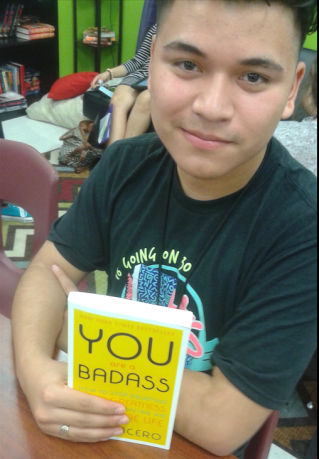
Then, I saw You are a Badass:  How to Stop Doubting Your Greatness and Start Living an Awesome Life.

Screen Shot 2016-05-13 at 1.19.08 PM

Diego:  “…when you feel like you have everything but you are never satisfied” that speaks to me.


Perfect.

The next morning, I scribbled a note inside the cover and called Diego into the hall to give it to him. I told him that I’d read his message and handed back his notebook. We talked a bit, and he assured me that he’d written those poems awhile ago, but he still felt lost at school. I assured him that he was not alone, he needed to believe that every adult in this school cares about him — that’s why we teach here, and the worst thing we could do is take it easy on him because life never will. I gave him the book and watched as he hurried back inside the room and quickly read my note.

I’ll take that smile.

Day 13.


Note:  When I snapped that photo of Diego, one of the girls nearby laughed and said: “Mrs. Rasmussen, taking it up a notch.”

“I’ll be writing about you next,” I said.

Student name and writing used with permission.


#FridayReads: Poetry as a Gateway into Reading

Before I started reading novels in verse, I had no idea how important they would be to the readers in my classroom. So many of my students who say they hate reading will read these books of poems that tell a story. (Chasing Brooklyn is one of the girls’ favorites. The Crossover, of course, is one of the boys’.)

This week, Sung, one of my quiet students from Myanmar, asked for a recommendation for her next book. She reads far below that of an 11th grader in an AP class, but she’s tenacious and determined to catch up to her peers. She and I have focused on her fluency since the beginning of the year when in our first conference I learned she could read all the words in a novel, but she understood little of the meaning. (Similar to my ELL student who read every word of The Great Gatsby last year without comprehending any of it. This was before I clued in to her need to save face with their peers.)

“I am reading,” Sung said, “but I don’t know what’s going on.”

I’ve heard this before, and I always celebrate when my readers let me in on this secret. (It takes guts to be vulnerable, especially at 16.) In talking with high school students who struggle with reading, I’ve learned they usually have no idea why. Most of them think they are slow or dumb — or they simply claim reading is boring or dumb because it’s easier to say that than admit reading is hard.

The hard part for me is teaching them to read. My degree is in literature after all, and my Masters in Secondary Ed did little to prepare me for the adolescent reading crisis I face every day. So I teach reading by getting students to read. I talk to them about their reading and get them talking to me about their thinking.

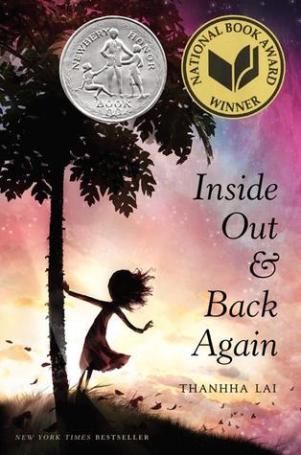
8537327Sung had just finished her 8th novel in verse, her favorite so far, Inside Out and Back Again. As I conferred with this reader, she told me she wanted to try something more challenging that was a ‘real’ novel. What she meant was a story with more words on the page. (Last year I caught one of my ELL students at the book shelf flipping through books. When I asked him why, he said he could tell if he could understand it depending on the “thickness of the words.”)
I walked to my “Explore: It’s Your World shelf” and pulled a few books I thought Sung might like:  Chains by Laurie Halse Anderson, In Darkness by Nick Lake, Copper Sun by Sharon Draper, Letters from Rifka by Karen Hesse, a book of short writings by various authors about human rights, published in association with Amnesty International, and several other titles I cannot remember now.

Then, I gave her time to explore.

A few minutes later, Sung held two books in her hands and quietly told me she wanted to read them both. She left the room with Karen Hesse’s award-winning book and the anthology of stories by writers like these: Paulo Coelho, Yann Martel,  Chimamanda Ngozi Adichie, Ishmael Beah, and more. These are not difficult books. They are not complex. They are way too easy by most high school standards. But they are exactly what this young woman needs to not only grow in confidence as a reader, but to grow as a citizen of her world.

And an interesting insight? Quite often it takes more inferencing skills to understand the story in a novel in verse than it does with a story written in prose.

_________________________________________________________________

For a list of other novels and verse, see this post.

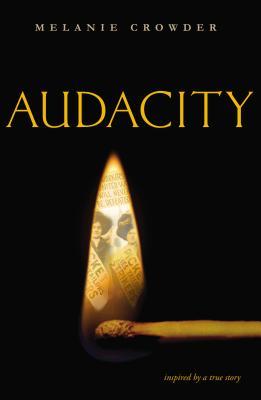
Here’s a highlight from my most recently read novel in verse, Audacity by Melanie Crowder. I think it will make a nice quickwrite at the beginning of the year as we build a reading community:

alight  22521938

I passed my Spelling

and Mathematics exams!


I hurry after work

to the free school

to check the schedule

for the next round:

Geography

History

And Trigonometry.


The thing that separates

rich from poor

in this world

is knowledge.

A person can rise up


if she can read

if she can think

if she can speak.


I cannot attend

every class

every lecture

but if I share what I learn

with the girls in my shop

in between bites

during lunch


ff Pauline shares

with the girl in her shop

in between bites

during lunch

it is as if we all

Were there together.


I see

these lunchtime lessons

spreading like fire

skipping from one box of tinder

to the next

across the shops

through the slums

until the entire city is alight

with small

fierce-burning flames.

#3TTWorkshop — Some Thinking on Feedback and How We Use It


Did you know there are 167 synonyms for feedback? reaction, response, answer, reply, assessment, comeback . . . criticism . . .

By definition, feedback in the business world means: Process in which the effect or output of an action is ‘returned’ (fed-back) to modify the next action.

In the mini-lesson I posted Monday, I mentioned that I’d asked my students to write for five minutes in response to this:  Think about your reading growth and improvement this year. Can you honestly say you are better now than you when you walked in the classroom in the fall?

TTT reader Leigh Anne commented:  “I love this idea. . . I do wonder though, what were some of their responses to how they grew as readers this year. I only teach 6th grade, but answering this question seems to be a struggle for them. I can’t image how junior AP students would answer it.”

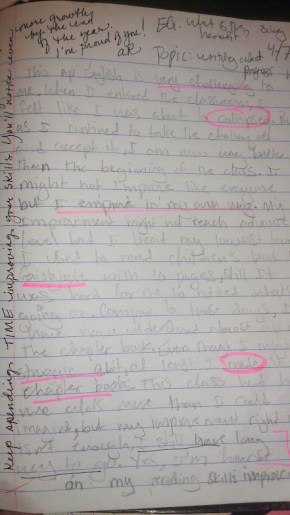
So I took snapshots of four students’ writer’s notebooks and transcribed what they wrote.

notebook response

For quickwrites, I ask students to write as much as they can as fast as they can as well as they can. Then, we always read over our writing and try to revise.

Before you read (in their own quickwrite language), I’d like to suggest that while this simple writing exercise served as self-evaluation for students and set up the personal reading challenge activity, more importantly, it served as valuable feedback for me. We spend an awful lot of time self-selecting books and reading them. One way I know if the investment in time is worth it is to ask my readers. As a result, I now know how my students feel about their progress, and I have ideas on how to “modify the next action.”

“This AP English is being challenging to me. When I entered the classroom, I felt like I was about to collapse. But as I continued to take the challenge and accept it, I am now way better than the beginning of the class. I might not improve like everyone but I improve in my own way. My improvement might not reach advance level but I beat my lowest level. I used to read children’s book, fairytale with 10 pages , still it was hard for me to notice what is going on. Compare to those days, I have now understand almost all the chapter books. This class had helped me more than I could imagine, but my improvement right now isn’t enough, I still have long way to go.” ~Sui

Next action:  Sui said she now understands “almost all the chapter books.” I’ll talk to Sui and find out what she thinks might help her understand all the chapter books. She may be able to tell me where she gets confused. If she does, I will be able to offer strategies and support so she will continue to improve.

“I haven’t done all the required reading in a timely manner, however, I have grown slightly as a reader. My pace has increased with some books, but also slowed down due to difficulty of certain books. That happens to everyone, hopefully, because it could just be me. I still have a focus issue with reading, but it has improved within the time frame of this year. I’m not where I should be as a junior in high school, but it could be worse.” ~ Cerin

Next action:  I’m curious to know if Cerin truly believes she might be the only one who has to slow down when reading more complex books — and I didn’t know she has “a focus issue.” I need to talk with Cerin and find out what she means by this and determine how I might help. I know she’s abandoned several books this year. Maybe she’s one of those expert fake readers, or maybe she still hasn’t found any books she likes enough to finish.

“Honestly, I can say that my reading has improved since the beginning of the school year. I can say this because before I lacked motivation when it came to picking up a novel. It might have had something to do with lack of interest with the topic. Also, I found myself skimming through the text and not critically annotating the pages, but now looking forward this semester my book is tattooed with my thoughts, and each word read one after another.” ~Unity

Next action:  First, I must tell this girl how much I love that “tattooed” bit! I know Unity spent a lot of time reading and annotating the non-fiction book she chose for our research mentors. She shows me here how proud she is of that, and I need to recognize and celebrate her efforts. Our next one-on-one conference may turn into a discussion on the notes she made in her book and why. I need to see her critical annotations.

“I can honestly say that I got so much better at my reading in English classroom. When I enter this year I could not tell if the book is non-fiction or fiction, but after Mrs. Rasmussen talked to me one on one I can tell which one is non-fiction and fiction. I am currently reading the book that is challenge on me but I really want to catch up with my classmate on reading skill and level. I improve so much this year and like reading now. I never like reading in my freshman year or sophomore because I thought reading is useless and it take all of my time. But now I like reading fiction book because I see myself in the book and it get into my head.” ~Siang

Next action:  Siang’s challenged herself for a while now. I need to be sure she is not stuck reading a book that bogs her down too much. She’s been frustrated with reading in the past, and she finally found success with some fairly easy reads. Fluency means comprehension, and that is where the story is. By saying she likes to read fiction, Siang is really saying she likes good stories. I need to make sure she finds another one.

_________________________________________________________________

Were all student responses quite so encouraging? No. These are juniors in high school after all. I’ll say this for them though: they are usually brutally honest when I ask them for this kind of response.

One student wrote that he has not improved as a reader this year, and he does not think he needs to. He feels like he’s as good as he ever needs to be. (I wish this was satire — we are in the middle of that right now.) Alas, it is not. This young man does the bare bones minimum to show he’s learning anything — just keeps his head above passing, goes through the motions. But his response is valuable feedback, too.

“Hey, kid, we have about seven more weeks of school. I’m not done with you yet.”

And that’s the thing, isn’t it? They enter our rooms, and we give them our all. In my case, my all gets charged by the hope I have. I hope my students will grow as competent, confident, intelligent, and compassionate citizens. They can energize the world.

I believe reading more and reading well is the fast track to all of that.

Please share your ideas on getting  — and giving feedback.

What Janitors Can Teach Us About Getting Kids Into the Reading Zone by Amy Estersohn

guest post iconI love pop-psych self-help books.  I love books written by professors.  This book, by University of California professor Sonia Lyubormisky, happens to be both.  I love this book so much I bought a second copy because my first copy had too many post-it notes on it.

Lyubomirsky claims that happy people often achieve a state of “flow” and understand how to make flow happen.   We are in flow when we are absorbed in an activity that is not too challenging and not too easy for us.  In flow, we lose our sense of time completely: we are not bored, we are not anxious, we are not thinking about whether Trader Joe’s will have our preferred frozen meal in stock by the time we get there.  

IMG_0492If you’re like me, you read this description of flow and thought, “Oh, that’s just another word for the reading zone, only made more general for activities that aren’t reading.”

It’s easy to assume that flow experiences are reserved for avid tennis players, chess enthusiasts, artists, musicians, doctors, athletes, and others who have been able to live a lifestyle that caters to their interests.  However, research shows that even janitors can experience flow at work.  

“Other [janitors], in contrast, transformed the job into something grander and more significant.  This second group of hospital cleaners described their work as bettering the daily lives of patients, visitors, and nurses.  They engaged in a great deal of social interaction (eg. showing a visitor around, brightening a patient’s day), reported liking cleaning, and judged the work as highly skilled.  It’s not surprising that these hospital cleaners found flow in their work.  They set forth challenges for themselves– for example, how to get the job accomplished in a maximally efficient way or how to help patients heal faster by making them more comfortable” (Lyubomirsky 188-189).  Original research here.

Lyubomirsky believes that habits of mind like these are teachable and trainable.  Here’s what developing them can  look like during a reading conference:

The conference move: Critical Shopper

How I do it:  I’ll ask a student if she would recommend the book she is reading for a classroom library or book club set purchase.

How it supports “flow” or “reading zone”: It gives readers a reminder that reading can have a larger social purpose, and the more engaged they are in their reading lives, the better they can improve the reading lives of their classmates.

What I learn about the reader:  I learn about how a reader can engage critically with a text and can provide text-based evidence for a claim about whether a book would or would not make a suitable classroom library investment.


The conference move: Younger Sibling/Cousin

How I do it:  I ask a student what their younger sibling or cousin would say the book is about were he or she to read the book that the student’s currently reading.  Then I ask the student what he or she thinks the book is really about.

How it supports “flow” or “reading zone”:  It reminds readers that there are more ways than one to read a story, and that good stories beg to be shared with family, friends, and loved ones.

What I learn about the reader:  I learn about a reader’s ability to grasp themes and ideas in a text.  When I start off with, “What would your younger sibling say?” I expect the reader to give me plot summary and basic character traits.  Then, when I ask them for what they think the book is really about, it subtly lets the reader know that there are additional ways to answer this question.


The conference move: Goal-setting

How I do it: I ask students to set a goal, and I ask how I can help the student achieve that goal.

How it supports “flow” or “reading zone”: Just as the janitors who experience flow play an active role in setting their own goals, allowing a reader to set his goal gives him an additional purpose and meaning to his reading.

What I learn about the reader: I learn about a reader’s assessment of her own reading strengths and weaknesses.  Often the goal a student sets for herself is the same goal I would have chosen for her were I asked to make one.


The conference move: Remember when?

How I do it: I ask students to recollect a time when they were in “the reading zone.”  Sometimes I will use their reading log or my memory of their reading to jump-start this conversation.

How it supports “flow” or “reading zone”: By noticing and naming the characteristics that are associated with the reading zone — everything from body positioning while reading, the feeling of “Just one more chapter!”, the sensation of the pages flying by — we can celebrate the reading zone and try to make it happen more often.

What I learn about the reader: I learn about a reader’ self-awareness, and I learn what books got them in the zone, so I can recommend more books just like them!


Amy Estersohn teaches in New York.  Her classroom overlooks the parking lot where she learned how to drive.  She tweets about books at @HMX_MsE.

5 Things I Need to Remember When Teaching my Writers

I know we’ve been posting mini-lessons on Mondays on this blog for awhile now, but today marks the first day of my spring break, and since my students and I just finished a fairly complex writing task, this is a good time for reflection.

don-graves-quoteMy AP Language students wrote arguments as spoken-word poems, and then performed them in class. (Or if they produced their poems digitally, which was an option for publishing, they projected them.)

Our process included reading and studying several poems. We watched YouTube videos of spoken word poems by Shane Koyczan, Harry Baker, Marshal Davis Jones and more. We analyzed structure, craft, and theme. We pulled out lines we felt held the weight of the poem and wrote responses to them, hoping to find inspiration for our own writing. We reviewed the elements of argument. We discussed the claims the poets make and how they use evidence (or do not) to support these claims. We spent workshop time thinking, writing, and revising our poems. And my student teacher Zach and I spent hours talking to writers about their writing.

I’ll share some of the amazing poems my students produced in another post. For now, here are some things my students reminded me I need to do better so they can do better in our next round of writing:

  • Topics matter. If I want my students to produce well-written texts, they must select well-chosen topics. Too often my writers choose topics they might have a passion for, but they know little about. This leads to vague superficial writing.

I need to take more time on the front end of the writing process to make sure all of my writers choose a topic that they not only care about, but that is specific enough to the task at hand. One resource that will help as we choose topics for other writing tasks is this tutorial from University of Arizona Libraries. I need to remember to slow down on the front end and help students select narrow topics.

  • Clear feedback matters. For this writing project, I only left feedback once on student drafts. It was not enough. Or it might have been — if students had read it. (Please tell me I am not the only teacher with this issue:  Students ignoring feedback.)

The best feedback is not when I leave comments on Google docs like I did for this project, but when I talk to them face-to-face and answer their questions. Students need to see my response to the work they have done. They need to see if I like it. They often misread, or don’t read, my tone in written feedback. I must remember to give them a balance of both — and a lot of it all along the way.

  • Sometimes more explicit instruction matters. In more than one conference, when I asked students why I didn’t see application of the mini-lesson in their writing, they said: “Oh, I thought that was just a suggestion.” Well, yes. But what’s the point of a mini-lesson — designed to help students write better — if they refuse to at least try it?

I know that we must teach the writer and not the writing, but sometimes without a little push to make specific changes, my writers just do not improve. I need to remember that with some students I must be more explicit in my instruction.

  • Accountability throughout the process matters. I was out of the classroom several days when students had writing workshop time to work on their poems. (Someday I’ll tell you about the standards revision work I’ve done with the TEKS Review Committee in Austin this year.) Although my student teacher was there, and my substitute — a former teacher and a sub my students know well — too many of my students clearly wasted the time given them in class to write. They are teenagers after all:  give them an inch and they take a mile. And they are major procrastinators. I think they are finally understanding that good writing takes time, but many are still not taking the time to produce good writing.

I need to do a better job at holding them accountable for working during workshop time. More exit slips. More sharing a favorite line or passage they’ve written that day. More purposeful formative assessment and personal evaluation of their writing processes.

  • Conferring (more) matters. The two days students shared their poems were exciting. So many were fantastic. So many clearly showed their understanding of how to write an effective argument — and how to be clever and creative with poetic elements as they did so. But quite a few did not.

As Zach and I discussed each performance and each poem, matching the writing to our rubric and assigning a grade, we became clearly aware of which students we conferred with the most and which students we did not. One of us would say: “She did exactly what we discussed in our conference,” or “That was something he and I talked about in his conference.”

The students we conferred with the most not only fulfilled the requirements for the assignment the best, they produced the most creative and convincing argumentative and poetic writing. And they knew it. Their confidence as they performed their poems was evident, and they rocked the house with their beautiful and inspiring poetry.

Taking the time to confer with every student — whether they want to talk about their writing or not — must be a regular part of the writing workshop. Too often conferring becomes optional when I get too busy or spread myself too thin. I must remember to schedule conference time into the lesson plans and hold myself responsible for making them happen — not once but several times for each student.

How do you know when your writing workshop is working?  Please share your ideas in the comments.

The Best Gift You Can Give Your Students

A few weeks ago, when I sat down to confer with Asia, she told me that she bought me a Christmas gift. She was really excited about it. “I’ve never bought a teacher a gift before!”

She’s a senior in high school.

img_0731

My scarf from Asia

I asked her why she’d never bought a teacher a gift before. She thought for a moment. “No teacher ever gave me respect automatically, like I deserved it.”

It breaks my heart that in twelve years of public education, this girl never felt that a teacher respected and cared about her.

“How did you know I respected you?” I asked her. A few other kids sitting with us answered this question too.

“You talk to us every day, like we’re adults, about our learning, and you really care what we say.”

We confer.

“You do all our assignments with us so we know they’re not busywork.” This from Shailyn.

I write beside them.

“You always expect us to know more than we do, and you don’t take BS excuses about why our work isn’t done,” Jocelyn said.

I have high expectations.

“You know exactly what your students are capable of,” Jocelyn further explained.

I know them, well, through frequent talk about their choice reading and writing.

“You just seem to really like me, and see me,” Asia finished.

A few days later, she eagerly presented her gift to me, and waited eagerly for me to open it.  It’s a lovely seasonal scarf much like the ones I always wear–a very thoughtful gift that, when I thought about her reason behind giving it and combined that with my pregnancy hormones, made me completely bawl.  I love it, because Asia gave me much more than just this scarf–she gave me proof that my teaching is important, if only just to her.


Readers and writers workshop is about more than just nurturing literacy skills–it’s about nurturing people, their thinking and creativity and confidence.  Conferring isn’t always about teaching into a standard–it’s often about just talking with another person about what’s in your mind, helping to flesh it out through talk before writing.  Writing beside your students isn’t just valuable because it’s modeling–it’s essential to creating a true community of learners committed to growing as readers and writers and thinkers.

This holiday season, give your students the best gift possible–respect, love, value, and the equal footing that comes with shared learning and the collaborative creation of knowledge.

#3TTWorkshop–Tackling the Challenges of Conferring

Three educators. Three states. Three demographics. All practicing Readers and Writers Workshop in our Secondary Classrooms. Read more about us here.

We are the Modern PLC, and every Wednesday, we share our behind-the-scenes collaboration as we talk about the most urgent moving parts of our classroom pedagogy.

This week’s conversation took root over a year ago in a hotel room at NCTE in Washington D.C.  As with many of our TTT get togethers, we threw out a question from our classrooms and began discussing our struggles, questions, and ideas.  This time it was Amy, asking about conferring.  The three of us mutually agreed that one of the greatest challenges we face as workshop teachers includes conferences, yet while they take time, practice, and diligence, they are one of the most necessary and rewarding components of the workshop classroom.

In this week’s conversation, Amy and Jackie discuss the the value of conferring within the reader’s writer’s workshop.  

Make sure to visit the first installment of our conversation, and please join the conversation in the comments!

How do you meet with every student when your class sizes have 30 or more students?13b04fad-66ef-4eca-83df-3f0c7412bd48

Amy:  I come back to that word — purposeful. If we plan to meet with students in conferences, and we craft lessons that allow for students to work independently for a time, we can meet with students one-on-one. Yes, when our classes are large, we may not get around to meeting with each of them as often as we like, but consider the alternative — never talking face-to-face with our students. The more I talk with my students about their needs and what would help them learn more in school the more they tell me they crave conversations with adults who will listen to the things they care about and believe in. They want adults to validate them.

Say we have a class of thirty students, and we only meet with each one of them three times in the semester — that is three times more one-on-one contact with a caring adult they would have had otherwise. Every bit of time matters.

I wrote a post with ideas for conferring with students when our class sizes are large here. My favorite is the bundle conference — no, I really like the one in the hallway. Really, any chance to talk to a reader about her reading is one I cherish.

Jackie: I am fortunate that I do not have classes over 30, but like Amy says, there are ways to reach such a large group of students.  It isn’t easy, but it’s possible.  I advise Writers Club and Government Club, so I know I can reach at least a couple students during that time.  I also have a handful of students who stay in my room during my prep, duty, lunch, or after school to work on homework and reading.  This means that I see anywhere between six to ten students in alternative settings where we can chat about books.  

I  also use workshop time to meet with table groups, which consist of four students each, just the right amount of students to chat about books while still gaining some more individualized attention.  Furthermore, as Amy mentioned, I rely on bundle conferences when discussing writing.  Just last week, I managed to conference with my twenty AP Literature students about their essays in just over an hour of workshop time.  Today, one of my students approached me after class, thanking me for the conferencing time and the additional one-on-one tutoring time during a study hall.  He said that he felt significantly more confident approaching his essay this past Friday after having such individualized feedback.

Amy:  I forgot to add — sometimes I schedule conferences with students. If I notice that I haven’t met with someone for a long time, or if I notice he’s stuck in the same book for too long a time, I’ll invite him to confer during lunch or after school. Personal invitations mean a lot to students who for whatever reason “I haven’t got a round to yet.”

Just last week I tapped Tony on the shoulder and asked that he meet with me during lunch. I’d noticed that he rarely checked out books from my classroom library, yet his record of his reading kept getting longer. I really thought this students was fake reading and calling it good, and since Tony has a lot of social capital I feared he was sending a negative message to his classmates. Tony sat with me for about five minutes during lunch tutorials. I asked about his reading, and he told me enough to know that he really was reading. He told me he thinks he needs to try harder books. So we talked about what books might interest him. I then asked if he knew how much of an example he is with his peers. His eyes started to glow and he smiled a little. “Yeah, I guess so,” he finally said. We talked about the kind of leader he wants to be, and when Tony left my room, we both felt better about what he is accomplishing in class this year. That is the kind of conference I love to have with students, and it provides the one-on-one attention often missing when students share classroom space and one teacher with twenty-nine other students.

What are your best conversation starters?

Jackie: Amy, I’m curious about your most successful conversation starters, particularly the ones you use with those tougher students who struggle to stay engaged.  I know that many of my struggling readers love learning from their reading.  They enjoy “getting something” out of their books, which means that I tend to talk to them about their hobbies and how it relates to their book.  One of my self-defined “non-readers” has been working on a hockey book since the beginning of the year.  I love hearing about what he has learned and why it is valuable to his only success as a hockey player.  I also enjoy hearing about why a student chose the book they did.  Their responses can be unexpected and even surprising.  It reinforces the fact that they have a choice in their education.

cdbf4b4e-bd86-48eb-8f05-004647b7396aAmy: I tried to keep track of what I say to start a conversation, thinking I’d realize I say something like Carl Anderson suggests in his book “How’s it Going?” Sure, sometimes I say that, but really, my conversation starter depends on the student. It changes all the time. The important thing to remember is to get our students talking about their reading experiences. Our role is to listen. If we do not listen, we do not have a chance to assess where our students might need help, where the gaps in comprehension are, or how we may encourage them to take risks and try something more challenging so they grow. We need to remember to let the student direct the conference. I still struggle with this sometimes.
Suppose I say: “Tell me what you’re thinking about this book.” Depending on the student, he’s likely to say “It’s good” or “It’s okay.” That just means I have to ask another question to get the student talking. But if I ask something specific about the student and/or the book, I can usually spark a conversation immediately. For example, I love to ask questions about book covers, especially if I can tell a student is about half way through the book.

I’ll say something like: “I can see you’re about halfway through. I wonder if you’ve thought about the book cover design at all. You know, most people judge a book by the cover. How well do you think the cover represents the book so far? Based on what you’ve read, why do you think that?” This lead works well for book titles, too. Of course, I want my students to talk about their books in a way that I know they are actually reading them, but more importantly, I want my students to be able to talk to me about what they are thinking about their books as they read. This is difficult for many students, but the more I encourage and validate and stay consistent with conferring, the easier it gets for them.

Jackie: You are right–there is no scripted answer to asking the right question, but as you said, some promote more discussion than others.  I also enjoy having students compare their current reading books to the ones they’ve read previously.  After picking up The Compound  at the urging of his friends, one student said, “I actually think Dopesick [by Walter Dean Myers] is better than this book.”  His willingness to state his opinion led the same friends who recommended The Compound to turn around and read Dopesick.

What do you do if you figure out a student isn’t reading during your conversation?

Amy:  I wish I didn’t have to answer this question. I wish I could say all my students read. Just isn’t true. I’ve written a few times already this year about how I still have non-readers. I mentioned it in my #FridayReads post last week. I’ve found the two major reasons my students tell me they do not want to read: 1. I’m too busy, 2. I don’t like reading. Not necessarily in that order.

When I discover in a conference that a student is stuck in his book — bored with it, or just flat out flipping pages — we talk. I try to get him talking about his passions.

Most of my boys love soccer. “Why do you love that sport?” I’ll ask, and usually, he will describe the friendships with the guys on the team, the love of being outdoors, the competition. I want him to show me emotion about something he loves.

Then, I’ll say something like:  “I don’t know much about soccer. I’ve never played. How can you help me love it?” And he’ll go off talking about exercise and health and having fun. I listen and nod.

Then, I’ll ask: “What do you suppose that has to do with reading?”

And sometimes he gets it, and he’ll say, “You mean like if I never read I may never know if I like it?”

Of course, then I pile him up with book choices and encourage him to try a book he thinks looks interesting. We talk about the importance of reading the first several pages, hopefully in one sitting, to give the author enough time to draw us into the story. And then I monitor this reader closely. I do not wait to talk with him in a week or two. I talk with him as soon as I see him again and ask what page he is on and if he likes the book. These are the students we tenderly nurse along until they can get up and run on their own.

Jackie: It’s funny that states away we use the same comparison.  I am constantly talking with my students about how reading is like exercising and how our brains are muscles that require nurturing as well.  I remind myself of this metaphor every time I go to the gym, everytime I try a new exercise class I loathe, and every time I look at the ridiculously jacked woman next to me who is jogging at my breakneck speed.  

Reading requires patience; we do not become readers overnight.  I think what shocks my students most though is my resilience to find a book they will enjoy.  I go through a similar process as you, Amy.  Asking what about the book is tedious or boring, helping them make time by offering my classroom before and after school.  I will stop at nothing to find a book that catches their interest, even if that means devoting shopping trips to that one kid who hasn’t read a whole book since the start of the year.  For those tougher kids, I know that one book can change them.  The trickiest and most exhilarating part is finding that book to transform their outlook.

Amy:  Tricky and exhilarating = absolutely. I love this work, and I know the value of students building stamina, growing in confidence, and challenging themselves into more complex texts. Of course, all those things happen as a result of regular and consistent conferring practices. Every time I feel like my reading workshop gets stuck, or kids are not reading like I think they should be, I pick up the notebook with my records and start conferring more. It might not work magic, but it’s close.


#3TTWorkshop — Conferring with Our Readers

Three educators. Three states. Three demographics. All practicing Readers and Writers Workshop in our Secondary Classrooms. Read more about us here.

We are the Modern PLC, and every Wednesday, we share our behind-the-scenes collaboration as we talk about the most urgent moving parts of our classroom pedagogy.

This week’s conversation took root over a year ago in a hotel room at NCTE in Washington D.C.  As with many of our TTT get togethers, we threw out a question from our classrooms and began discussing our struggles, questions, and ideas.  This time it was Amy, asking about conferring.  The three of us mutually agreed that one of the greatest challenges we face as workshop teachers includes conferences, yet while they take time, practice, and diligence, they are one of the most necessary and rewarding components of the workshop classroom.  

In this week’s conversation, Amy and Jackie discuss the the value of conferring within the reader’s writer’s workshop.  Part one of this conversation delves into why conferring matters and how we find time in our classrooms to sit down with each student one-on-one.

Please join the conversation in the comments and check back for the second installment tomorrow!

Conversation Starter:  Why must we confer with our readers?IMG_9734

Amy:  Conferring regularly is what makes a readers’ workshop classroom work. Simple as that. If a teacher says to me “I tried allowing students to read what they want, and it didn’t work — they still won’t read,” I know I have to ask something about how he confers with his students. How often? What do you talk about? How do you make them feel about reading?

I learned about the importance of conferring just like everyone else who makes reading workshop her pedagogy:  If I do not purposefully sit down and talk with students one-on-one and face-to-face on a regular basis, many of them will not read. They are too used to playing the game of high school English. They know how to flip the pages, move their eyes across the page, and lie to my face about how they liked, or did not like, a story. I teach 11th grade. Some students have done this for years.

The only way to create readers is to get them reading. The only way to get many students to even give reading a try is to talk with them in non-threatening conversations about their lives, about what they are interested in, and why this or that book might be something that matters to what they want to know or feel or do. Conferring is conversing about what matters to my students and talking to them as if they are already readers — until they begin to call themselves readers, too.

I also think this applies to every content area. If math teachers spoke to their students like mathematicians, and science teachers spoke to their students as if they were scientists, maybe we’d have many more students interested and invested in math and science. Every teacher should hold regular and consistent conferences with her students. Even if those students never come to like reading or math or science, they will become more engaged in the learning environment because the teacher has shown personal interest in the life of the learner. Face-to-face leader and learner conferences make for genuine and consistent engagement in the learning process. And teacher and student both benefit.

Jackie:  I love the process of conferring with students, particularly at the beginning of the year when students aren’t quite as used to having their teacher sit beside them just to chat.  Even now as I pull up my mini-folding-conferring chair, I enjoy the shift from awkward first interactions to excited chats about their reading.

Reading conferences aren’t just about accountability, although that is one of the many perks.  During these conferences I get a better sense of what books to recommend to students, how their past history affects their reading practices, what they’re coping with on a daily basis, and what they think about when they crack open a book.  As Don Graves writes about his most formative teachers in The Energy to Teach, “All of these teachers expected more of me and we had a strong personal connection that I did not want to disappoint them.”  Reading conferences allow me to connect with my students on a level that not only shows them that I am committed to their reading journey, but it that I am invested in their life and education.

Amy:  I love how you pull up a mini-folding-conferring chair! I used to have a single yellow chair that I invited students to come and sit in — the special chair. I had to leave it at my old school. I saw this nifty rolling stool at a thrift store and almost bought it. I could have rolled from table to table to confer. I talked myself out of it, but there are days a roll-about-the-room would be handy.

Jackie: It’s the best purchase I’ve made all year! Mine looks similar to this one.  What I love most about it though is I sit at the same height as my students, so I can easily set up next to their desk or join in group conversations.

When do you confer?

Amy:  I’d like to say I confer every day. In my heart I want to have a regular system, and on paper I do. In reality, so much administrivia gets in the way. When I am purposeful, I meet with one to three students every day during our independent reading time (usually 15 minutes.) I try to be consistent because I only see my students every other day. If I am not careful, weeks will go by without me talking to some of them.

I have a binder where I keep conferring notes, and I place sticky note reminders to help me remember to get back to certain students who need a quicker follow up time than me making it around the room again. I’ve also started charging my readers to be advocates of their follow up with me. It’s important that juniors in high school take ownership of their learning. If a reader and I discuss a certain skill, and she decides to complete X, I ask her to be the one to remember to come in and confer. Many of my readers remember, and they are the ones who are gain skills and mature as critical readers much faster. Sometimes these conferences happen between class periods or during lunch or at the end of class when students are working on their writing, and sometimes I let them slip into my normal conferring routine. I’ll never turn a reader down who wants to have a quick chat about her book or what she learned.

Jackie: I agree with Amy–my goal every year is to become better at conferring.  I want to make sure to meet with as  many students as possible, but as the year progresses I struggle with the administrative tasks.  That being said, I typically meet with two students within the ten minute reading time we have daily.  On block days when I allow for twenty minutes, I can get around to four.  

My freshmen enjoy the process of chatting about their books, their interests, and their reading.  They enjoy using new vocabulary we’ve learned in class, and I love picking their brain about writer’s craft.  I also try to focus on reflective questions with them so they look at their reading progress holistically.  With my AP Literature students, I focus more on their depth of analysis within their independent challenge books.  I also take this time to check their critical reading journals as well as to discuss whole class novels.

In terms of logistics, I have a cubby where I keep stacks of conferring forms paper-clipped together and sorted in alphabetical order by first name. At the beginning of every period during reading time, I pull out that class’ papers, clip them into my clipboard, and start with the last student I conferred with.  This allows me to quickly keep track of who I met with last and what we discussed.  

Sometimes I can’t keep track of everything and I will reflect back on my notes, jotting down conversations I know I had on Monday when I collected pages or during passing time.  Every minute offers a moment to conference, and while these conferences aren’t always formal, they show students that not only do I hear them but also I am interested in what they have to say.

Amy:  Most days I feel like I do more spontaneous conferences than planned ones. A students needs a new book, so we meet for a chat by the bookshelves. A student finished a book, so we chat for a few minutes in the halls. I almost wrote that these were my favorite kinds of conferences, but that’s not true — I like all conferences. I do like the joy I recognize so readily when my students start identifying themselves as readers though.

Do you have topic ideas you would like us to discuss? Please leave your requests here.

Mini-Lesson Monday: Sentence Boundaries and Adding Some Variety

Sorry, I forgot to record the book’s title.

Even the students in my AP English class struggle with correct punctuation and varying their sentences. In one-on-one conferences, I’ve started to remind them more often to pay attention to how the author of their self-selected books craft meaning. I used to get glossy-eyed blank stares, but students are beginning to understand that writers make intentional moves to draw us in, and keep us within, the pages of their books.

“As a writer, you must do that, too,” I remind them.

This lesson grew out of a conferring conversation with a student who told me:  “I just do not understand all the comma and semicolon stuff, but I have a pretty good idea of what I want to say in my writing.”

Objective:  Using the language of the Depth of Knowledge levels, students will recognize the sentence boundaries and the variety of sentence structures in their self-selected books. They will make observations about the author’s use of punctuation in these sentences, assessing the writer’s effectiveness in crafting meaning. Students will then use their author as a mentor as they apply their knowledge of sentence boundaries and sentence variety and create, revise, and rewrite sentences in their own pieces of writing. Finally, through peer-to-peer conferring, students will evaluate the accuracy and effectiveness of one another’s sentences.

Lesson:  Every student needs their independent reading book. If a student is reading a book of poems, or a graphic novel without many sentences, you will want to supply a stand in book for this lesson or ask the student to find a book she’s previously read.

Tell students that you’ve noticed in their writing that they are ready to make their sentences more sophisticated. Correctness is one way to do this. Varying the length of sentences is another way. Instruct students to turn to a random page in their books, say page 51. Ask them to read the page in search of one long sentence and one short sentence. Give students sentence stips or blank paper and have them write out the sentences they find in their books. They should spell and punctuate the sentences exactly like the author does.

sentence boundaries lessonNext, in small groups, ask students to discuss with one another the structure of the sentences. They might put all the short sentences together and compare them. Then they might put the long sentences together and look at how the authors use commas to separate ideas. Some students will know more about grammatical terms than others, and that is okay. The idea is to get students noticing how writers compose within the boundaries of standard English and to get them to understand how punctuation works to craft meaning. Ask questions that help them discover why boundaries and variety work to produce effective writing.

You may choose to have students imitate the sentences they chose from their books. Imitation is a useful tool for many writers.

Using self-selected books, not just to practice wide reading, but to teach students to read like writers, adds an important element to the workshop classroom. Our writing improves when we take the time to notice and apply the skills of professional writers.

Follow up:  Have students review a piece of their own writing. The writing can be in any stage of the writing process. They should study their writing to evaluate their use of sentence boundaries and variety. Encourage students to revise their writing as necessary, remembering to use the author of their books as their mentors.

Extension:  This lesson works to have students study leads, similar to what Jackie wrote about in the mini-lesson Pick up Lines and Leads. It also works to have students search their books for sentences that include imagery.


©Amy Rasmussen, 2011 – 2015