Tag Archives: book talks

Book Talks & How To Do Them–#3TTWorkshop


img_0331-1

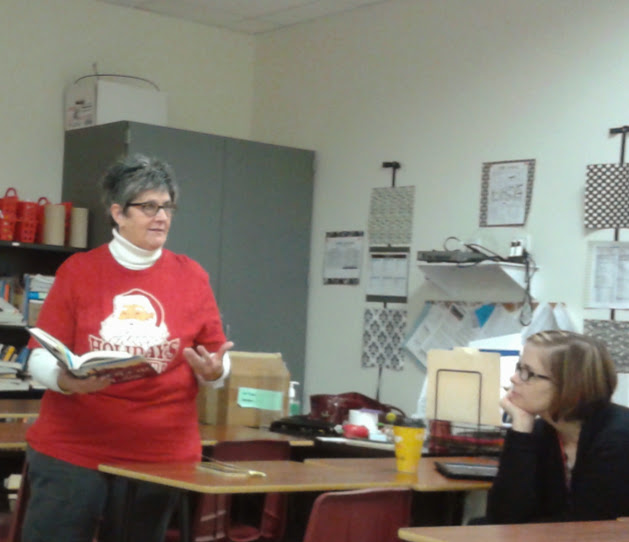
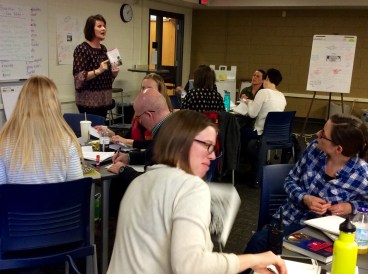
Amy booktalks during our visit to Franklin High School

Conversation Starter:  What’s a book talk and why do you do them?

Shana:  Booktalks are a structured way to fangirl about my favorite things in the world: books.  I do two booktalks per class, right after independent reading wraps up.  They’re a great way to transition from the relaxed reading mood of the classroom and move into the fast-paced work of critical reading and writing, but they’re also the number one change I’ve made to my teaching that has influenced how much I can get my kids reading.  Three years ago, I only did booktalks whenever the mood struck or whenever I got new books into my library, but now I do two a day, every day, no matter what–and it’s made an incredible difference.

Amy: You are an inspiration in consistency, Shana. I’ve done better at doing book talks this year than I have in the past. I try to do two a day as well — one non-fiction book and one fiction. I always seem to fall off the wagon at some point though. The demon, impending testing, pulls me to the dark side every year. I’m putting up a good fight this time around, and I have a plan to reinvigorate, not just my book talks, but the reading that’s happening in my room. Curiosity and intrigue: my goal for better book talks.

Is there a set protocol for a book talk — like length, reading a passage, etc?

Shana:  Just talking books is the biggest nonnegotiable for me.  While most days I do follow a protocol–one fiction, one nonfiction; 2-3 minutes per book; always share a passage, a brief plot teaser, and my own reading experience; try to mention a student who’s read the book–some days I just have to gush over a book that’s been recently returned, or a book I am reminded of during conference time, or some new items I’ve purchased.  Either way, I talk books every day, no matter what, which helps students become accustomed to exposure to new titles, adding books to their what-to-read lists, and hearing about trends in authors, genres, or topics.

Amy:  Remember at Penny Kittle’s Book Love class at UNH two years ago how she had everyone model a book talk? She set no guidelines other than modeling a few for us. After just a few turns, it became clear:  The best book talks are short, energetic, and introduce the book in some insightful or clever way. I try to do that.

When I read the books in my library, I look for passages for craft studies or beautiful sentences we can use as mentors. Sometimes I share those in book talks without doing the study — we just enjoy the language or listen to the voice of the narrator. I’ve started asking questions and trying to get my students to think about the topics the writers might address in the books. Just another way to get my readers to make a connection with writing.

The hardest books to book talk are the ones I haven’t read yet, but even those are doable when we show genuine excitement about the book. Why would I have a book in my library if I am not excited about students reading it? That’s a pretty easy sell in and of itself. It’s fun to get students to ask questions about the cover and to read the comments.

41drZBnWSzL._SY344_BO1,204,203,200_How do you decide which books to talk about within each unit?

Shana:  This is pretty easy for me since most of my units of instruction are themed.  For reading units themed around a topic, I find lots of books about that topic, or that contribute an alternate perspective to whatever central text we might be reading.  (Example:  While reading Siddhartha and thinking about coming of age and going on journeys, Outliers, Marcelo in the Real World, The Other Wes Moore, Paper Towns, and Their Eyes Were Watching God fit right into our unit.)  While in the  midst of a writing unit, I think about books that might serve as mentor texts in terms of topic or structure, or that are written by authors who serve as good mentors in general.  Other times, I have no rhyme or reason to my booktalks, because I simply MUST talk about a new book (like Dumplin’, which I just read and LOVED and had to booktalk randomly.)

Amy:  I structure my units more around genre than theme, so my book talks are more random than yours. Hey, maybe that’s the problem with my consistency!

My students and I talk a lot about aesthetic and efferent reading. I want them to understand the importance of making connections with the books they choose to read, and lately, I’ve seen that there is a real disconnect. Just because students choose books does not mean they are making personal connections to them. This is in part why so many of my students this year are having a hard time sticking with the books they choose. Because I know many are abandoning books so quickly, I’ve been working on getting students to talk a lot more about topics and how writers approach these topics. My hope is that my non-readers will find interest in learning about things, even if they are not interested in reading for the pleasure of it.

I’ve done several book talks this year around a topic; for example, depression, which is one of my 11th graders’ favorite topics to write about this year. Forgive Me, Leonard Peacock, Every Last Word, My Heart and Other Black Holes all flew out of my hands, and I had to get more copies.

Do you ever have students conduct book talks?

Shana:  Very occasionally, I do, when it’s really authentic.  When a student finishes a book and just raves about it during a conference, I ask them to share that enthusiasm with the class.  Last quarter, I asked all students to read a challenge book and then complete their choice of follow-up activities with the book–one choice was a booktalk, and the students who shared about the titles they loved did spark some interest in their peers.  However, those booktalks didn’t go over as well as the ones that arose from sheer exhilaration, so I think my future goal will be to limit student booktalks to spontaneous ones only.

Amy:  Like you, I rarely have students conduct book talks — at least the way I do. I’ve tried, but you are right, without the spontaneous excitement about the book, the other students just do not respond the same as they do when I conduct the book talks.

However, I do have students talk about books with one another. Most of the time it’s pretty informal:  Talk to your table mates about what you are reading. Sometimes it’s a little more formal:  Speed dating with a book, which is one of our favorite ways to share books.

What are some other ways you talk about books with your students?

Shana:  Basically, I bombard them with talk about books all the time.  When I see current or former students in the halls, I ask them what they’re reading.  When they come to visit me, I urge them to leave the room with a new book.  I make lots of segues in conversations from all topics to all books (mostly because this is just what I do in real life…ask anyone who knows me).  I also share with students all the time what I’m reading, and why they might like a given book.

Amy:  We are so much alike! I love to have former students borrow books, and I talk about books with every person who will listen — and some who don’t. I also try to get students to engage with me on Twitter, using the hashtag #FridayReads to share what they are reading each week. A few students set up accounts and we follow each other on Goodreads. I love those kids! I’ve also started a favorite quotes wall, and I’ve asked students to pull significant lines that lead to theme and/or beautiful sentences that show author’s craft. Getting students to pay attention as they read, noticing how writers use language to create meaning, leads to significant improvements in their own writing. Without fail, it’s my best readers who are also my best writers. If only more students would get that.

Do you have topic ideas you would like us to discuss? Please leave your requests here.

Mini-lesson Monday: Moving Past Identify

When my students and I talk about reading, we talk about writing.  If they pay attention to not just what the writer means in the words on the page, but how the writer crafts that meaning with words on the page, they move much quicker into the rhetorical analysis they must do on the AP Language exam in the spring.

But it is not easy. So many of my readers read below grade level. They struggle with fluency, so their reading is slow and laborious, and as a result, they miss out on much of the flow of the language that leads to constructing meaning as they read. If they cannot comprehend, how can they analyze craft?

They are pretty good at identifying devices and figurative language and the like though. They are pretty good at identifying structure. They’ve learned writers have different ways of approaching a topic, but they are not so good at discussing why. Why did the writer craft the text that way? What does that move do to further the writer’s message? What effect does it create? What is the tone?

So, this lesson came about as a way to help my students practice some critical thinking about how writers make choices with language — and as a bonus, introduce my readers to four new book titles.

Objective:  Using the language of the Depth of Knowledge levels, students will recognize a variety of structural and craft moves in fiction and non-fiction texts.  They will identify patterns and compare effectiveness through discussion. They will analyze the tone. They will summarize their discussion in their writers’ notebooks, and apply their understanding to future reading and writing assignments.

Lesson: Introduce three new titles as choices for independent reading by providing copies of the first few paragraphs of The Other Wes Moore, Nothing to Envy– Ordinary Lives in North Korea, and The Dog Stars. In small groups, giving each group one (or more of the passages depending on the time you want to take for the lesson) instruct students to read the passage and determine the structure and the craft moves the writer makes to begin the books. Ask:  Why do you think the writer chose to begin the book this way? What does that beginning do to capture the reader’s attention? Why might it be an effective way to do so? What is the tone of the passage? How do you know?

Help students recognize the effect of beginning a text with a passage of dialogue versus startling information versus first person narrative. What are the similarities? What are the differences? What structure do you find the most engaging? Why?

The Other Wes Moore by Wes Moore

Nothing to Envy, Ordinary Lives in North Korea by Barbara Demick

The Dog Stars by Peter Heller

Follow-up:  Students will apply their understanding to their independent reading books, and as homework will write a one-page response that analyzes the first few paragraphs of their books.

#FridayReads: 6 Ways to Stir Up Your Daily Book Talk

I’m not sure if it is because we are on the cusp of cold weather or that we just ended quarter one, but my students are dragging.  They rub their eyes more in the morning, carry in larger cups of coffee, and stoop a little lower in their chairs.

This lethargy seeps into even my strongest classes, which is why I like to change up my approach to book talks from time to time to re-energize students before they dive into their independent reading books.  Here are five ways I stir up my book talks.

  1. Musical Chairs: Music is naturally energizing and I love getting books in students’ hands FullSizeRenderquickly. This is “played” like typical musical chairs, the main difference is that students who sit in a chair also get to look at the book that has been placed on the desk behind them (I have separated desks and chairs so I face the chairs outwards).  The student left without a chair writes a “mini-book talk” on the board, which includes the title of the book they have read this year, the author, how many stars it would receive out of five, and a quick sentence to get readers interested.
  2. Group Book Talks: Getting students chatting about books is one way to ramp up energy at the start of class. My desks are grouped into fours, so students turn to their group members and book talk their current book (or a book they read prior).  Oftentimes there are repeat book talks from books I previously shared, but I reiterate the value of multiple perspectives and opinions.  What others notice as readers might be something I never thought to share.
  3. Guest Book Talks: I’ve spent years chatting with my favorite library staff about new YA books,FullSizeRender-3 but sadly it didn’t dawn on me to tap into their brilliance until this year.  Our phenomenal librarian Kathy Vetter book talked Between the World and Me by Ta-Nehisi Coates to my AP Literature students, and our AV and computer lab guru, Melissa Ciotti, book talked Little Brother by Cory Doctorow to my freshman classes.  By the end of their visits, all copies had been checked out of both the classroom and school libraries.  Next up, I have a PE teacher…and hopefully our principal! Students need positive reading role models in all of their educators.
  4. Speed Dating: I have mentioned speed dating with books multiple times before, but it is one of my favorite ways to get books off my shelves and into my students’ hands. I typically put the desks in a circle and have students rotate the books every minute or so, but I love Amy’s approach as well.
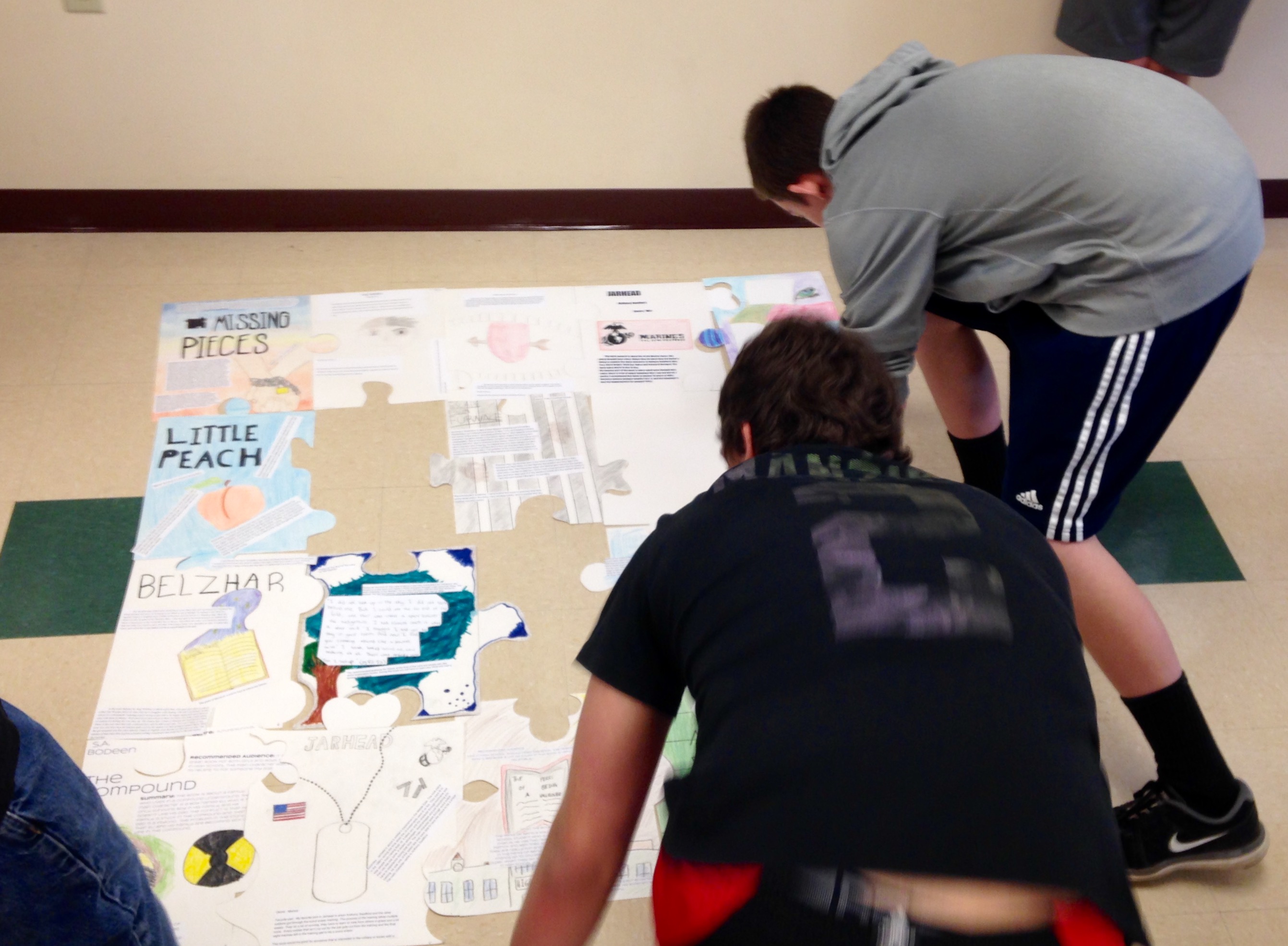
  5. Book Talk Puzzle: This is a longer project, but I love the final product.
    Students piece together their final book talk puzzle.

    Students piece together their final book talk puzzle.

    Students write out book talks on large puzzle pieces.  I have students discuss their favorite parts of the book and to whom they might recommend it.  Finally they draw their favorite scene, symbols, or images from the book.  Once the puzzle pieces are complete, we share our final products, build the puzzle, and put it on display for our peers.

  6. Book Trailers: I had my Advanced Composition students complete book trailers last year. The final films were phenomenal and provided excellent material for this year’s book talks.  I oftentimes play the film for my students then read an excerpt to expose them to the language.  There are some brilliant book trailers here and sprinkled across the Internet and TTT.

What do you do to change up your book talk schedule during the year? What are some unique ways you introduce your students to various titles?

Top Books for Reluctant High School Readers

IMG_2877“I’m not a reader.” I hear this multiple times during my first weeks of conferencing. The non-readers are easily identifiable; their body language alone speaks volumes of their disdain for books.

“You just haven’t found the right book,” I tell them, and they smirk, knowing they’ve heard that statement before.

The first week of school is a vital week of matching students with books, and while I itch to recommend titles, I hold back, giving my freshmen the independence and freedom they so desperately crave in high school. Too often students blindly accept recommendations without so much as a thought to the contents. They lack self-awareness when it comes to their reading interests or style, which is why those first two weeks are essential to not only organizing but also empowering them through choice.

Throughout the week, I book talk popular titles, engage in “speed dating” with books, and provide ample free time for students to explore our classroom library, but I also get out of their way. Instead of telling them what to read, I model ways to find a strong candidate, considering reviews, awards, contents, genres, and summaries.

While the majority of the class tends to quickly settle into their books, there are always stragglers who remain convinced they’ll never enjoy reading. These students sometimes grab the first book they see off the shelf, and oftentimes these books are too dense, difficult, or in some cases “boring.” That is okay! I settle into conferences with these students, getting to know their hobbies and eventually handing them two or three books that might pique their interest. In the end, they still choose what to read, but in the process they might require some initial guidance.

IMG_2870Regardless of who picks the book, the end result remains the same—to find a plot that envelops and consumes students, forcing them into the story. Here are some of my number one titles that tend to break down the shell of even the most reluctant readers.

Ready Player One by Ernest Cline

I’ve already had three students read this book, one of which is Leah, a gamer and self-identified non-reader. When I asked if she has ever had a favorite book, she thought for a second then said, “I think this one might be the only book I’ve ever really liked.”

The Compound by S.A. Bodeen

Adrian initially picked a sequel to a book he read last year. “You must have liked the first one then?” I asked.

“Not really,” he replied. “I just didn’t know what else to read.” The next day he picked up The Compound, which is full of the fast-paced suspense he craves.

Paper Towns and Looking for Alaskaand basically everything by John Green.

I chased Emily up the stairs for this recommendation. When I asked her which one sparked her interest in reading, she said she couldn’t remember which had sucked her in. She just knew that despite her protestations at the beginning of the year, by the end she “loved them both.”

The Eleventh Plague by Jeff Hirsch

Damion had only ever loved one book and he was bound and determined not to like any in my classroom; that is until he came across this futuristic, survival story. Upon sitting down beside him for a mini-conference last year, he looked away from his book briefly to say, “Ms. Catcher, I’m at a really good part and I can’t talk right now.”

Gone Girl by Gillian Flynn

“I’ve had people give me ‘dark’ books before, but they aren’t dark at all,” Sarah tells me. I hand her three options, one of which is Gone Girl. Three days later she tells me, “I’ve spent my whole life hating books, and you’re the first teacher who ever found one I actually liked.”

Unwind by Neal Shusterman

I book talked Unwind second this year. It’s a given crowd pleaser because of its twisted plot and graphic scenes. The fact that I only have one copy of my four originals is a testament to its popularity.

The Perks of Being a Wallflower by Stephen Chbosky

Carter claims he hasn’t read a book cover-to-cover since third grade, but he has fallen in love with Chbosky’s classic on teenage life. He said to me today, “Ms. Catcher, I love that this book talks about real things, things that are actually happening to us.”

“That book is only the beginning, Carter,” I said

What books do you recommend for reluctant readers?  Which titles are most popular in your classroom?

#FridayReads: What do Amy Poehler and Sherman Alexie have in common?

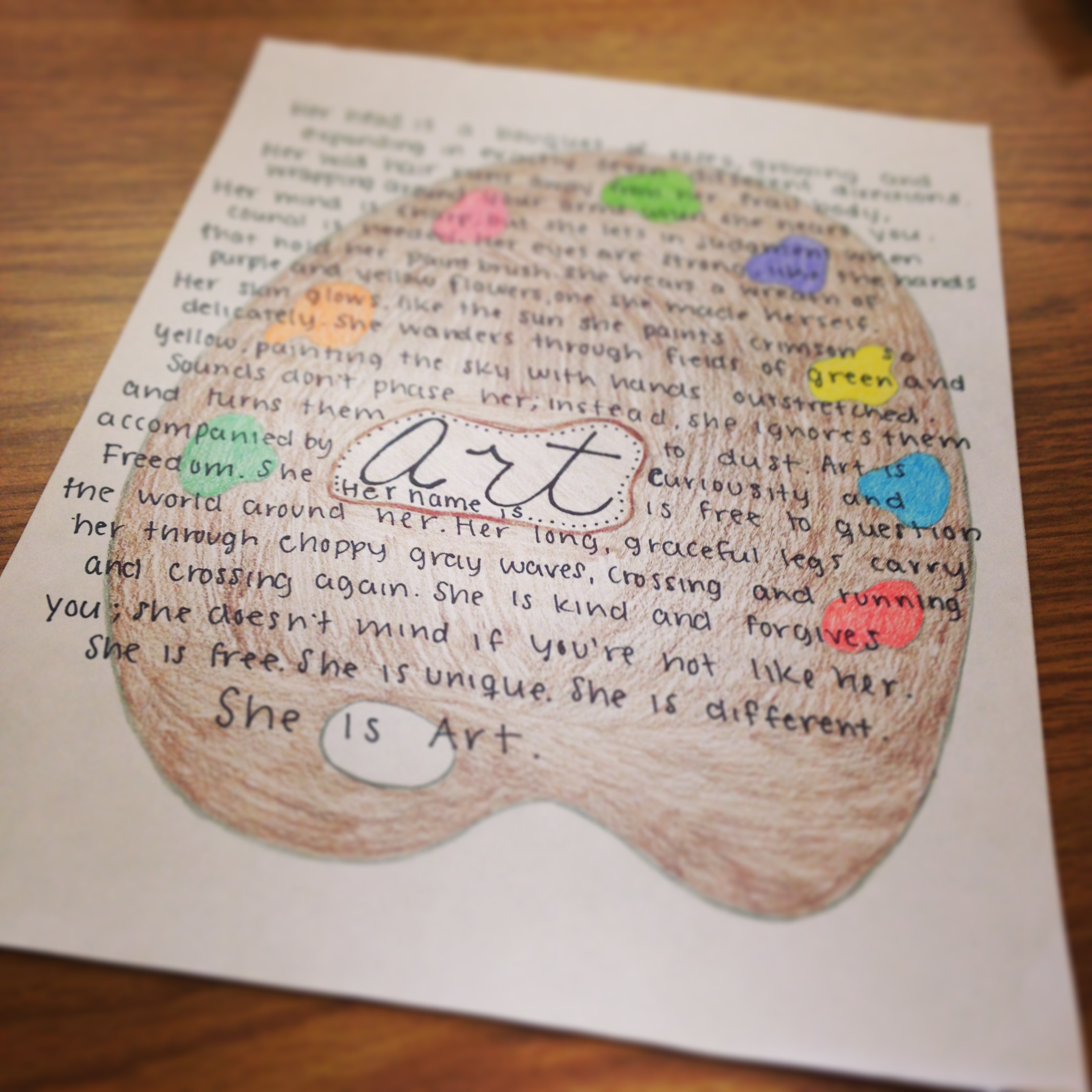
Personifying art--one piece from a student's multigenre project.

Personifying art–one piece from a student’s multigenre project.

Both my students and I love funky writing—the weird eccentricities of modern print where authors dabble with a variety of fonts, writing styles, photographs, and formats. There’s something about that departure from the norm that draws us in, holds our attention, and keeps us reading just to see what is on the next page.

In turn, when I began the multigenre project based on Tom Romano’s book Blending Genre, Altering Style: Writing Multigenre Papers, I knew I needed a new set of mentor texts to help guide my students’ writing. I loved sitting down to stacks of multigenre papers, and my students loved reading each other’s work. The problem was my students rarely had strong examples to guide them in developing the continuity that comes with one paper on one topic written through multiple genres. And so the search began.

This year, one of my new classroom shelves includes “multigenre books.” The benefits are twofold: students will become familiar with the multigenre concept before even being introduced to the project and they will see the unique ways a wide variety of authors diversify their work. The greatest part is that multigenre writing extends across a variety of literary genres.

Here are some highlights from my new collection:

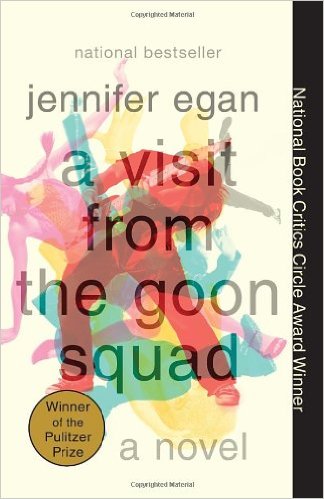
41HGJKFdW3L._SX327_BO1,204,203,200_51uJcmUm23L._SX322_BO1,204,203,200_A Visit from the Goon Squad by Jennifer Egan—Has an entire chapter in PowerPoint slides. How cool!

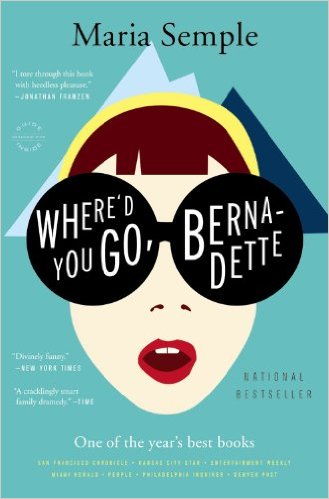
Where’d You Go Bernadette by Maria Semple—Amusing memos and e-mails illustrate character development and voice.

The Absolutely True Diary of a Part-Time Indian by Sherman Alexie – Hilarious doodles, caricatures, and cartoons. One ofmy all time favorite books!

Extremely Loud and Incredibly Close by Jonathan Safran Foer—Every year I have to assure a student that the red ink wasn’t a student’s bored graffiti; it really is part of the author’s the writing.

In the Company of Whispers by Sallie Lowenstein – Includes family letters and black-and-white photographs.

Eyes Wide Open by Paul Fleischman – Great use of infographics for research.

Why We Broke Up by Daniel Handler (author) Maira Kalman (illustrator)—Not only is it written in letter form, but the letters are about individual objects, all of which are accompanied by gorgeous illustrations.

The Art of Secrets by James Klise—Letters, articles, lists, and shifting perspectives keep you interested.

Encyclopedia of an Ordinary Life by Amy Rosenthal—Rosenthal not only wrote a memoir in encyclopedia entries, but she also made reading encyclopedia entries fun.

Yes, Please by Amy Poehler—There are two pages devoted to haikus on plastic surgery. What more is there to say?

Your turn! What multigenre books might you suggest? What are some new shelves you’ll be adding to your classroom library this year?

Glory O’Brien’s History of the Future by A.S. King

17453303John Green says that “A.S. King is one of the best Y.A. writers working today,” and who doesn’t trust everything John Green says?  (Except for when you trust him for 246 entire pages, and then your trust is shattered, and you ruin a book with your tears, but I digress.)

Having fallen madly in love with A.S. King’s writing during Everybody Sees the Ants, I have been waiting for my students to return Glory O’Brien’s History of the Future to my library so I could read it.  Without ever having booktalked it, its catchy cover caught students’ eyes and enticed them to dive right in.

Finally, yesterday, I spotted it on the shelf and took it outside in the sun with my class to begin reading.  Surrounded by seniors mere weeks before their graduation, I was in the perfect setting to immerse myself in Glory’s story, which takes place over two weeks bracketing her high school graduation.  She’s a photographer for the yearbook, keeping herself distant from her peers by hiding behind a camera.  Her only “friend” is her neighbor Ellie, who’s lived beside her ever since Glory’s mother committed suicide thirteen years ago.  Ellie doesn’t understand the worry Glory has that she’ll end up like her mother–and Glory is terrified of, dreading, trapped by, her own uncertain future.

That all changes after a wild night, after which Glory and Ellie can suddenly see the future.  Glory begins to record these transmissions, in which, upon eye contact with anyone, she can see the actions of their distant ancestors and descendants.  The glimpses of the future reveal a future American Civil War, the complete reversal of feminism, and a tangled web of people she knows mixed up in all of this.

“We were fed onto the stage like machine parts.  We were a conveyor belt of future.  We were an assembly line of tomorrow.  We were handed our diplomas and stood to face the audience and they were asked not to clap until the end, but some did anyway. … I stood and faced the crowd and heard a static of epic proportions.  Chatter of a thousand infinities all at once.”

Deciding to chronicle her transmissions through a scrapbook modeled after one of her mother’s creation, Glory writes her own “History of the Future,” and it’s bleak.  As the novel progresses, the darkness of the future becomes more certain, but so does Glory’s understanding of herself–a trade-off she’s not sure how to handle.

With beautiful language, dark humor, powerful lessons, and themes of mystery, love, redemption, friendship, and foreboding–all set against the backdrop of high school graduation–I can see now why this book is never on my shelves.  I’ll be happy as it continues to remain in the hands of teens getting a refresher on feminism, individuality, and the pursuit of happiness.

“Sounds so convenient, right? Me not having a mom and my dad being all great about it and stuff.  But it wasn’t like that.  The air was tense.  We still had no oven.  My cobbler still tasted like radiation, no matter how much ice cream I piled onto it.  I could feel the secrets in the soil here. … Something was about to sprout and grow from that soil.  I could feel it the same as I could see the mourning dove into infinity.”

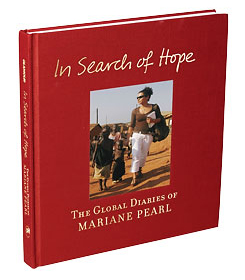
In Search of Hope

mariane pearl book coverI first fell in love with Mariane Pearl’s writing when I read her memoir: A Mighty Heart where she chronicles the events leading up to her husband’s murder in the Middle East.  It was devastating.  Tragic, really.  Yet, her voice sang from the pages even while sharing the most intimate moments associated with a murder that was so incredibly public.

So, to no surprise, when I came across In Search of Hope: The Global Diaries of Mariane Pearl,  I was thrilled. Pearl, a journalist for Glamour Magazine, took on the world – visiting twelve different countries. She was escorted through these countries by powerful women that are all on missions to bring positivity, safety, and change to countries that are broken.

Pearl visits with courageous women who share the most private details of their work – and passion.  She learns about a Cambodian sex slave’s liberation; Liberia’s presidency from the perspective of President Ellen Johnson Sirleaf (2006); an AIDs orphan turned healer in Uganda; a New Yorker who leads children needing guidance; how justice is getting a voice in Mexico…and so much more.

As you read these short stories full with dynamite photographs, writing that is powerful, and experiences that shed light on women fighting through the injustices associated with their countries, culture, and neighborhoods; you can’t help but to feel as though you are on a year long excursion around the world – one that authentically changes your core as a human being.

Students love this piece.  They are awed by the bravery of these women; Mariane for exposing truths that do not get adequate recognition and the women who are willing to risk their own safety in order to save others.  For every reader, Pearl puts life into perspective.

The richness found within these pages comforts you.  It makes you believe that anything truly is possible.  Well, because it is.  It provides students access to beautiful moments experienced within other cultures and propels them to reflect on their own morals and values – what are they really willing to fight for?

In Search of Hope is a piece that leaves you feeling compelled to explore.  Travel.  Find your own truth.  And when you do, write about it.

Keeping Them Reading: Speed Dating with a Book

Confession:  I have never been speed dating.

I just love the idea of it.

In 2012 I wrote about an activity we did in my AP English class that got everyone talking as we prepared for the AP exam. I hadn’t even thought about that, until I started to write about our latest foray into the talkative world of speed dating with books.

Neydy and LauraI know many teachers have tried some version of this activity. I want to add my voice to theirs:  this is a F.U.N. way to get students talking about what they have read and what they might want to read — both important factors in helping students of all ages develop their identities as readers.

How to Speed Date with a Book

As students entered my classroom, I asked them to

1) find a book from the shelves that they had read and liked enough to share with another person,

2) find a second book that they thought they might like to read — maybe they liked the cover or the title; maybe they had heard someone talk about this book. Didn’t matter.

Everyone needed two book.

Then, we tried this “speed dating” thing.

First, we formed two circles, one inside the other. One circle faced outward. The other faced inward.
Students stood in front of one another, and I with the easy job stood with the timer and the camera.

“One minute,” I said, “You’ve got to stay on topic, and talk about one or both of the books in your hand for one minute. Your goal is to ‘sell’ the other person on why they want to read these books.”

GO!

 We talked books for as many minutes as it took for every student to talk one-on-one with every other student. It was exhausting. And wonderful.

After we completed all our rounds, we set all of the books out on one table, and students picked up their writer’s notebooks and turned to their “What Shall I Read Next?” lists, adding any titles they might want to read during the last two months of school. Every student wrote down at least one book. Some wrote down several.

Why Talking About Books Must Be a Constant

I teach juniors in high school. Before this year, most of my students did not consider themselves readers. They have had to learn what it means to

a. like books,

b. like to read books,

c. like to talk about books,

d. know how to find books they like.

The moment I stop holding up books at the beginning of class, reading a bit, and encouraging them to give it a try, many they stop reading.

They are one year and a couple of months away from graduating high school, and they are Baby Readers, fledglings not ready to leave the roost and fly off on their own. (In more ways than one, I know.)

I don’t know if my readers will be strong enough to keep reading when they leave me the first week in June.

I hope so.

In the mean time, I will keep up the talk and keep up the expectations:

You must read if you are a student in my class.

You are a reader who reads every single day.


What are some activities you do to keep your babies reading?


©Amy Rasmussen, 2011 – 2015

Shelfie Saturday

sticker,375x360.u1


I love Monday mornings.

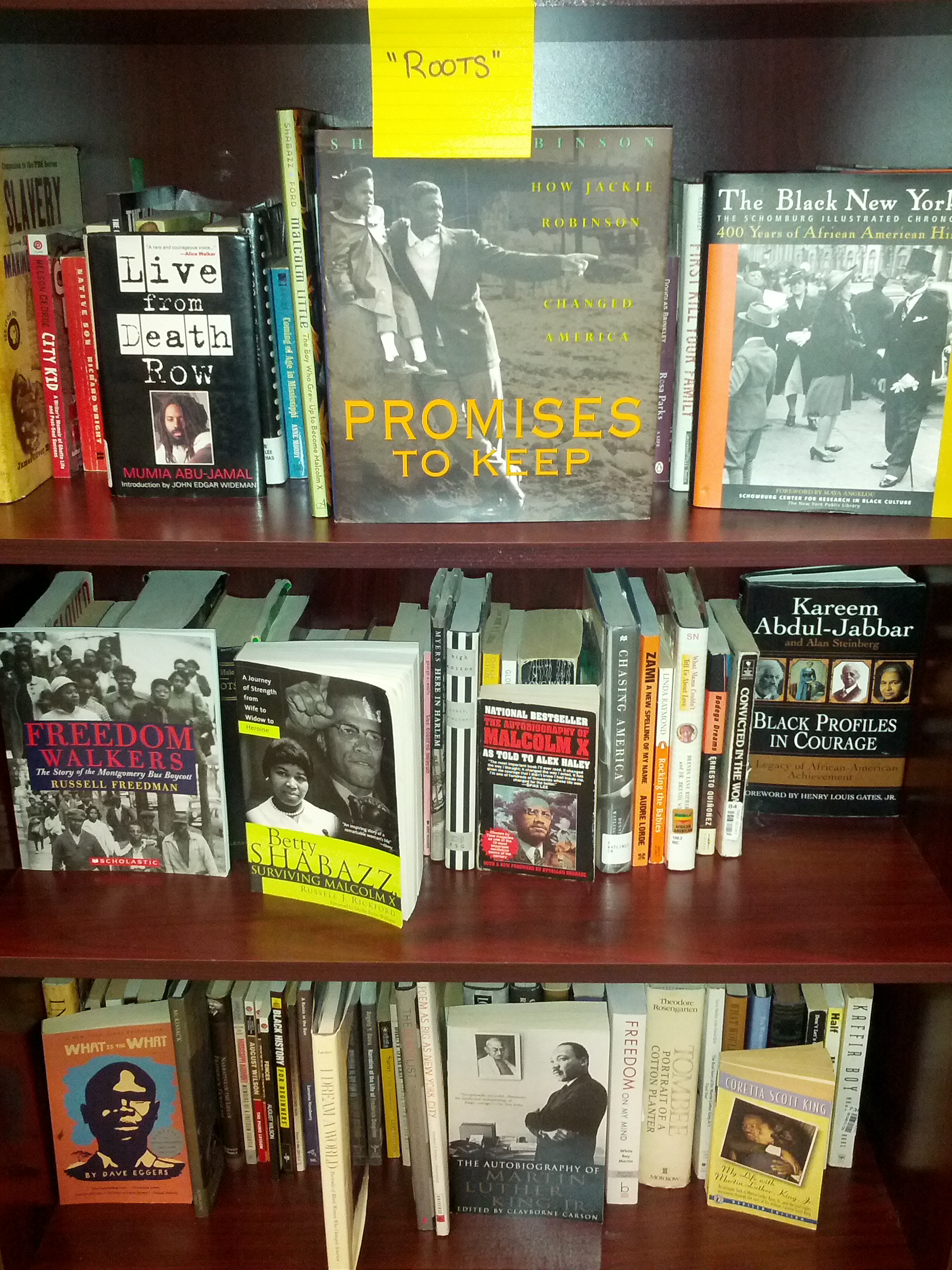
Monday signifies a new week, new possibilities, and new literature!  At the start of every week, I take time to display different books on each themed shelf.  This provides readers an opportunity to explore new titles on an ongoing basis.  Some books are brand new to Room 382 while other books have occupied our shared space for years; yet feel fresh and enticing when they are uniquely displayed.

Students (and guests) are continually gazing at our Francis Gittens Lending Library and enjoy, not only the vast array of literature to choose from, but how easily accessible it is to find what they are looking for. Gone are the days of ‘genre shelving’ and in are the days of ‘theme shelving’.  Whether students are just emerging into the world of literature or they are deeply rooted in their love for reading; our scholars need to feel supported.  By clustering books via theme, students (regardless of their comfortability with literature) know exactly where to go to get more of what they want!

Many students find their heritage fascinating and want to explore it beyond their current ideologies, beliefs, and familiarities.  So, they peruse the shelves in which they see themselves; racially, culturally, geographically, athletically, and so on.  They find comfort in exploring the lives and stories of those they’ve met before in history class or via conversations taking place within their homes.  They also take pleasure in learning more about who they are within the context of society, and on an even larger scale, within the world; simultaneously honing in on their more localized and individual existence.

All adolescents are searching.  They search for identity.  They seek to understand.  They thrive on building connections.  They strive to be enlightened.  And many times, students stumble upon exactly what they didn’t know they were looking for!  I love that.

Be it non-fiction, fiction, poetry, fantasy, science-fiction, auto/biography, graphic novels, screen plays, what have you; genre holds much less weight when the stories, characters, and settings transcend our students into a world full of exploration.

Here, our ever growing and ever evolving “Roots” shelves allow us to embark on a genre free yet culturally rich journey!

Some of our collective favorites include: Mumia-Abu Jamal, Jackie Robinson, Malcolm X, Betty Shabazz, Dr. MLK, Jr. and his lovely wife


Join the conversation by posting your own shelfies!  Share a shelfie with #shelfieshare and let us know if it’s a #classroomshelfie, #bookstoreshelfie, or other miscellaneous find.

Yes, You Can Get Teens Reading: One Senior High Campus Proves It

My department manager is wise, and I admire her leadership skills. She often asks, “What is your temperature?” to see how I am adjusting, coping, feeling, managing, dealing, doing with all that I must at my new school. Thankfully, although it’s my first year here, it rarely feels new anymore.

I like that Rhonda asks me questions about my readers and writers workshop classroom. She asks me to participate in discussions and professional development sessions. She validates me as an individual and as an teacher. I trust her, and I know she trusts me.

Trust is the greatest gift in the life of an educator.

We are an 11th and 12th grade campus. We are moving to a workshop pedagogy. Our district has changed the model of intervention by bringing in local National Writing Project consultants to write curriculum and train teachers. (I write about that in part in this post.) The ELA coordinator also hosted trainings with Penny Kittle and Donalyn Miller, two of the brightest minds in workshop, last summer. Every time we meet as an English team, we talk about some aspect of reading, writing, and workshop in our classrooms.

Suggesting that we might like The Color of Law by a homegrown TX author

Suggesting that we might like The Color of Law by a homegrown TX author

Teachers are trusted to get their students reading. At LHS in every English class, visitors see students reading during the first 15 minutes of the period. Teachers have had training on giving book talks and conducting reading conferences, and we’ve started building classroom libraries.

I got an email message today: “What’s the title of that book, Story of Angel, or something. My copy has gone missing.”

The Book of Life by Angel,” I replied. It’s a hot title in my classroom, too. I have to replace it every year.

Our students are reading, and behaviors are changing for the better.

I heard one teacher say to another, “I like how reading at the beginning of class helps my students calm down. We get started with ease because they know to come in and get their books out.”

To build a culture of readers, we must trust that students will read when we give them time to so. We must model what that looks like.

Sharing a love for the work of R. A. Salvatore

Sharing a love for the work of R. A. Salvatore

We must trust our teachers to be readers themselves. How can we talk about books to kids if we are not reading them? Children of all ages revere authenticity.

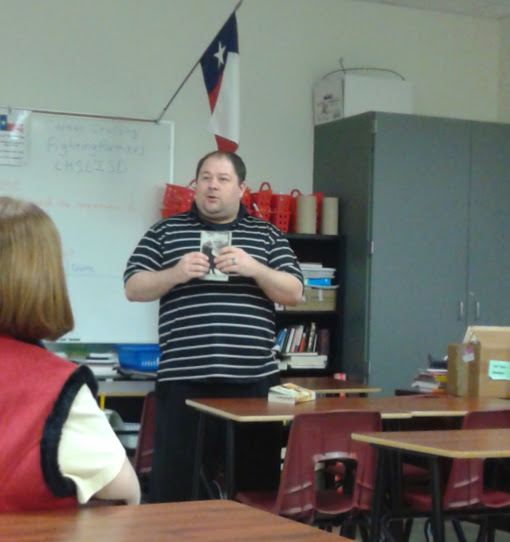
Each week when we meet in our department meeting, a teacher gives a book talk. They share a bit of the passion they have for an author or a book.

Jeremy shared his love of fantasy, and Jayne shared a bit of Dickens in her fun fake British accent then talked about a new book she enjoyed by a Texas author. Karen read from The Yellow Birds and The Things They Carried and talked about how they made a nice pairing, and, most recently, the baseball coach Mike talked about a book he loved. (I wish I could remember what it was, but I forgot to write it down.)

Administrators must trust that when visiting classrooms they will, and want, to see rooms of students silently reading. What better activity in a class designed to improve literacy skills than to see all students engaged in the practice of it?

Students come to trust that reading and books provide value to their lives because the adults in which they trust value it, talk about it, model it, and, if necessary, enforce it.

Too many teenagers claim to be non-readers. Ask them, if you haven’t. They will tell you truly.

They will also tell you when they experience a shift in that thinking. They are surprised — and grateful.

an excerpt from my student Joseph’s last independent-reading evaluation

©Amy Rasmussen, 2011 – 2015