On Poetry: A Guest Post by Charles Moore

PoetryQuote4_zpsa4587647.jpgI write a poem on my white board every day.  Students, teachers, and administrators can see it. It’s a practice I started sometime after the hurricane when I realized how much my students were reading poetry books as their self-selected reading and I thought maybe the kids and I could use another way to connect to language. 

Recently, in a response email to a recent blog post submission, Amy challenged me to write about the poetry that I briefly mentioned in “Part II. Continuing the Crusade for My Readers.”  She called on me to elaborate on the authors that I use in my “Poem of the Day” selections and why I mentioned those in particular.  This took some reflection because an obvious answer didn’t leap fully formed from my head. I think there are several reasons: 

It’s what the kids are reading. So many of the girls in my classes read “Milk and Honey” and Rupi Kaur’s more recent book of poems, “The Sun and her Flowers.” They buy the books themselves and a few weeks ago, members of our dance squad feverishly passed my poetry books around.  Many of those girls don’t even have me as their teacher. They take pictures of the entries that speak to them and re-read when they think they’ve missed something or they want to experience those feelings over again. 

This style of poetry appeals to me.  I like it.  I like to read the poems and consider my own experiences and feelings.  Maybe I’m entering my emotional teenage girl phase, but sometimes these speak to me as strongly as they speak to the kids. 

Like everyone, time is precious for me.  My schedule is particularly tight with my football periods and no real time to plan or collaborate with my teaching peers during the school day.  Like everyone else, I find time when I can and when I’m working on my lesson plans, I make sure that I’ve selected, ahead of time, the poem for each day.  Choosing poems is easy. I try to pick poems that might be meaningful to 12th graders and not too long that I can’t write them on the board.  I might find these poems in the poetry books I’ve already mentioned or even on Instagram.  I have to dig a little, but #poetry produces gold often enough. I recently purchased a compilation of the poetry of Langston Hughes and I have books by other poets on the shelf behind my desk.  My wife even purchased a book of poetry for my classroom when one of her co-workers recommended it.  

 Another place I can reach for poetry is into myself.  I can take what I see and mimic it.  Structure is easy to replicate, but the themes are more difficult. The “notes” app on my phone is full of little thoughts and lines and poems.

 I guess the natural question is, “What do you do with the poetry?” The answer: it depends.  Sometimes the themes of the poems tie into the themes that we see in our reading selections.  Other times, we use the poems to jump-start a quick write.  Most days, we take a second to look at the poem on the board, and move on.

No matter what, I can say that I give my students a window through which to view poetry every single day, and that, I think, is an important opportunity for them and for me. 

A list of resources I’ve pulled from recently: 

  •  Milk and Honey – Rupi Kaur 
  • The Sun and her Flowers – Rupi Kaur 
  • Born to Love, Cursed to Feel – Samantha King 
  • A Beautiful Composition of Broken – r.h.sin 
  • Identical – Ellen Hopkins 
  • The Princess Saves Herself in this One – Amanda Lovelace 
  • The Collected Poems of Langston Hughes – Edited by Arnold Rampersad 
  • How Lovely the Ruins: Inspirational Poems and Words for Difficult Times – Forward by Elizabeth Alexander 

Charles Moore teaches Senior English, coaches JV soccer and shuttles his 10 year old soccer playing son across town 2 days a week. Follow Charles on Twitter at @ctcoach.

#NCTE17 – Pearls of Wisdom From Those Far Smarter Than I

Have you ever attended professional development that reached into your soul and stirred things up so thoroughly, so deliciously, so deliriously, that you knew your teaching would never be the same?

I hope so. If not, consider packing your bags for #NCTE18 – Houston next fall. Or book some inspirational PD for your district. Or simply follow any of the heavy hitters on Twitter. Professional development is everywhere because sometimes all it takes is a few words to send you down the path of beautifully rich, and possibly practice changing, reflection.

Our students deserve teachers who see the classroom as an opportunity. Teachers who see them as deserving of unending work to help create the best opportunities for their learning. Teachers who see each day as an opportunity to build up readers and writers, as the most important work to be done in education.

The voices below, that I was lucky enough to drink in at #NCTE17 this year, speak of opportunity in every endeavor: The day to day, the conversations we have with kids, the responsibility we have to see beyond test scores, and things we can do to stay true to what we believe as educators.

Dave Stuart Jr. – Doing more isn’t doing better. Refocus your practice with a personal Everest/Mission Statement.

Mr. Stuart’s session focused on how to teach English and still have a life. Sounds lovely, doesn’t it? I’m still working on it, personally, but anyway, this sentiment stemmed from the idea that we often spend a lot of time doing things that don’t align with our true beliefs about what’s important in our classrooms. His suggestion to craft and publically post in your classroom a mission statement really hit home with me. I need to boil down my practice to stay focused on what is most important in my classroom, and a visual reminder will help me filter my stressors through what I’ve claimed is most crucial to the daily movements in our experience as a class. Often, what stresses me out most, for example, is returning emails. While important, I’m certain it wouldn’t be included in my mission statement for my classroom. Therefore, I need to set some limits to when and where I allow this work to take away from the work that will move my students forward as readers and writers. My Everest statement, so named because it’s really evident what the goal of climbing Everest is, will bring me back to readers, writers, and critical thinkers who use both their heads and hearts to guide not only our work but their lives. Work in progress.

Kylene Beers – If we raise test scores but fail to raise compassionate people, we have failed.

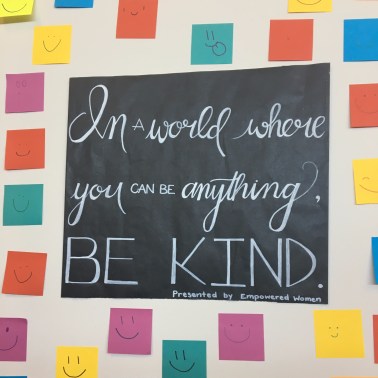
I thought the crowd in the theatre might come out of their seats at this suggestion. If there’s one thing anyone who has ever been acquainted with education understands, it’s failure, and we avoid it at all costs whenever possible. I’ve let this sentiment guide my IMG-8069work this week specifically as it’s Kindness Week here at Franklin High School. Student need does not end (or perhaps more importantly begin) with the test scores they generate throughout their time with us, but if I can influence their capacity to better care for and understand one another, I’ve really made a difference.

Linda Reif – End in the middle of a sentence. It makes getting into the thinking again much easier.

I often have my students end their quick writes by suggesting that they should take a moment and wrap up their thoughts. I’d never considered the subtle shift of having them stop mid-thought as an encouragement to go back and finish, expand, explore, and keep at those thoughts. A quick write is inherently incomplete in terms of the time given and the depth of process used, so why suggest to students that their work should be wrapped with a nice little bow? I head back to my writing often. It’s where some of my best work grows – from the hazy suggestions I started with, to the revisited and revised thinking. Ask students to come back to their work more often. They might be surprised at what comes of it.

Kelly Gallagher – Reflected on Nancie Atwell’s quote about American schools having an aversion to pleasure.

This suggestion made me laugh out loud. How painfully true, yes? How often have I struggled to let go of the control in my classroom? How often have I feared that exploratory writing would be at the expense of preparation for the work my students would do after they left me? How often have I worried that it would be a “waste of time”  IMG_7306.jpgto extend a discussion or let students read just a bit longer? Far too often. As a colleague of mine famously suggested years ago, “Big Bird can’t come to class every day,” but pleasure doesn’t have to be a throwback to elementary playground free-for-alls. It can be simple. It can be personalized. But it must also be considered a worthy goal of any daily lesson planning. What opportunity for joy, satisfaction, or pleasure am I organizing for my students today? If the answer is nothing, then I wouldn’t want to be in my room either.
Tom Romano – There is language inside of you…Be fearless in heading down the page with it.

Tom said this casually before we did some quick writing in his session on multigenre writing. While I filled two pages with notes on how to incorporate a multigenre project into my classroom, this simple sentiment really stuck with me. I’ve used it several times with my students since then because I love how it rephrases the idea that we have to outwrite our inner critic. This phrasing suggests that we are already full of valuable ideas! We need simply to give ourselves permission to let them out onto the page.

What seemingly simple sentiments have changed your teaching for the better? Please share in the comments below.


Lisa Dennis teaches English and leads a department of incredible English educators at Franklin High School near Milwaukee. Her personal mission statement is a work in progress but needs to involve equal parts readers, writers, thinkers, believers, and dreamers. Follow Lisa on Twitter @LDennibaum. 

Letting Go: An Experiment

CW

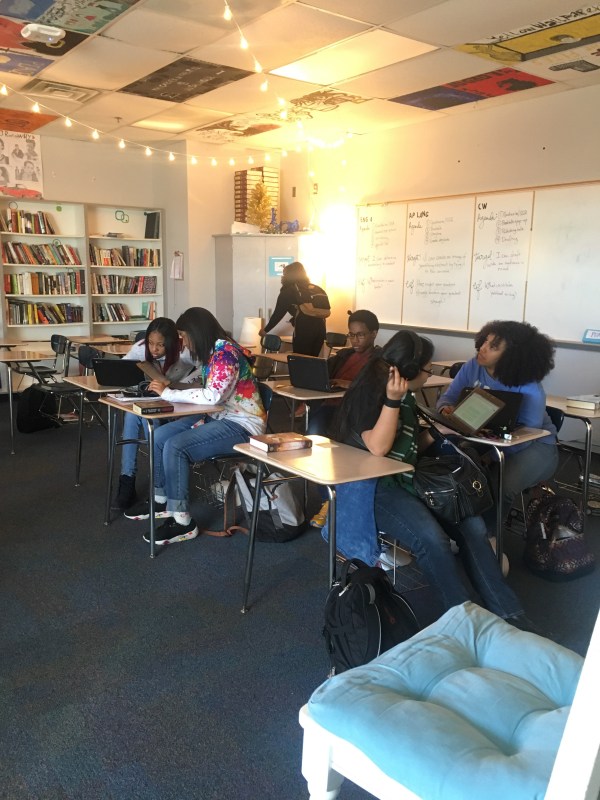
Please ignore my sad, disorganized bookcase.  Trust me.  I KNOW.

So, I guess I went gradeless this semester, but it was an accident.

I’m the luckiest teacher in our school because I get to be Yoda to the young-jedi-creative-writers of James Bowie High School.

Wait, let me re-write that, The luckiest teacher I am because Yoda I get to be… okay, I tried.

We have one section of Creative Writing at our school, and it’s my baby.  Don’t worry.  It’s not weird.

This semester was my third semester teaching this class, and I decided to go full-choice as an experiment.  You see, in prior semesters, my units were centered around modes of writing.  We worked on character development and dove into short stories, we focused on powerful connotation and tone and dove into spoken word poetry, we wrote personal stories that exposed our souls, shared them and became a family.  I watched as they supported each other, got to know each other, and tried to hide my excitement and shock when we could go from laughing to crying to intense work and focus.

However, the only thing missing was buy-in for every single mode of writing.  Even with choice of topic within the mode, it was inevitable that some students gravitated more intensely toward poetry, fiction, real-life writing, humor, etc.

At the beginning of the semester as I got to know my students, I asked them if they would rather our sections of writing be organized by mode or thematic topic.  Unanimously, they voted for topical organization.

Then, we brainstormed broad topics that would allow for a myriad of interpretations and modes of writing.  They came up with the following list:

  • Power
  • Turmoil
  • Control
  • Kindness
  • Grudges
  • Beauty
  • Music
  • Addiction
  • Open-mindedness
  • Fear

Within these topics, we found stimuli and mentor texts along the lines of the idea, talked, wrote, wrote, and talked.  I put together mini-lessons quite similar to those from my modes of writing approach.  What I found can be described in one sentence.

Free students result in free writing, and free writing is what will change our world.

This is along the lines of what Cornelius Minor said in the Heinemann Fellows session at NCTE: In order to have free students, we must have free teachers.

At first glance, freedom seems easy.  Of course we want to be free, who wouldn’t want to be free?!  But what I’ve learned is that freedom doesn’t mean the work, stress, and weight of it all goes away.  Actually, quite the opposite.  As a free teacher, I find myself still up at night because of the weight of it all.  If free writing will change our world, what’s the next step for me in supporting my writers in their freedom?

Here are a few of the amazing writings that resulted from this experience:

  • Students wrote about addiction, and surprised me at their jarring use of sensory imagery that described addiction from every angle.  They wrote about addiction to a substance, addiction to a person, addiction to a feeling or a conception of oneself, but they were all rooted in that visceral, physical experience of being tied to something with such fervor.  They also decided that for read-arounds, we all needed to speak in a British accent.
  • Alexis wrote about a blind person’s experience with beauty.  Here is a line from her piece:
  • Maddie has written about 20,000 words over the course of our class, and is in the process of world-building for a future novel.
  • Jerrell wrote a mega-creepy horror piece describing the relationship between a stalker and his victim through the mode of letters, social media, and other correspondence.
  • Mecca draws with everything she writes.
  • Terrianna finally worked up the courage to write her brother’s story, but more on that later.

I realized last week that my class was essentially gradeless.  Ironically, it was not a conscious decision, but simply a natural result of being so entrenched in the writing process that I forgot to grade!  There was also really no need.  This semester I’ve been in constant writing conferences, teaming up partners with strengths to match weaknesses, asking students to help me with my own writing struggles, etc.  To me, this is what an entirely engaged classroom looks like, and it also resulted in better writing.

Now, as I mentioned in my last post, all of my classes do not look like this, completely.

Here’s why letting go sometimes sounds easier than it actually is:

  • Sometimes you don’t have all the answers.
  • Sometimes things fail. (But shouldn’t we be showing our kids HOW to fail?)
  • Sometimes students have not been conditioned to invest in learning as a process rather than a way to check boxes.  (But, I mean, that HAS to change, right?!)

Sometimes images are better than words:

letting go

Creative Writing gives me grounds and hope for experimentation, and helps me to be brave and think outside the box in my other preps as well.  I hope that more time, talk, and investment in the real work of allowing students to be seen translates more intensely to my other classes in the Spring!

Have you ever happened upon a Happy Accident in your classroom?  Tell us about it in the comments!

P.S. For more about going gradeless, talk to Amy, or visit The Paper Graders’ blog!  I will be visiting in the next few days, and would love to chat about it with anyone!


Jessica Paxson teaches English IV, AP Lang, and Creative Writing in Arlington, TX.  She runs on coffee and exaggeration, and is overjoyed to be in a graduate program because that means she has access to a better library. Also, you can probably find her humming Christmas tunes over the sounds of her students’ pained groans.  They frequently describe her as “an annoyingly cheerful person who thinks all her students can change the world.”  Yep, pretty much.  

“Did you know Gucci has a book?” I do now.

“Hey, Miss, did you know Gucci has a book? I want to read it.”

“Really? You are telling me you actually want to read book?”

“Yeah, but only that one.”

I go to my computer, click on Amazon, and look for a new book by Gucci. I find:

Screen Shot 2017-12-04 at 4.28.59 PM

These cannot be the books Daniel is talking about. I know this kid. He was in my junior English class last year — part of the class with the tissue issue, and now I had him as a senior.

“How do you know Gucci has a book?” I asked.

“I saw it on his Instagram,” Daniel said, showing me his phone.

Dear Reader, you are ahead of me on this, aren’t you?

I admit to being on the edge of old. I had no idea before this conversation with this student that his Gucci was not handbags and luxury leather goods. Because Daniel tends to mumble, it took me a while to figure out he was referring to Gucci Mane.

Daniel’s favorite rapper had a new book.

So I bought it.

When I first met Daniel, we had trouble. He sat in the back of the room, fake reading, sleeping, tossing pencils, goofing off so others laughed. I moved him to the front, and he slid low in his chair and sulked. Every day. And every day when I conferred with readers, I leaned over Daniel’s shoulder and asked what I could do to help him want to be a part of my class.

Eventually, he responded. He told me he’d read Gary Soto’s books in 10th grade. I wasn’t sure I could believe him, fake-reading tough guy and all, but I passed him the two Soto books I have in my library. He read them both.

Then, he started reading Matt de la Pena’s books. Ball Don’t Lie took Daniel a long time to get through, but he finished it and started Mexican Whiteboy. I’m pretty sure he read four books that semester — more than he’d ever read in his 16 years.

In conferences I asked Daniel about his life outside of school. He told me he wanted to work on cars like his brother and that he took the bus to the career center after my class every day, so he could take courses in auto mechanics. Based on our conversations, I do not think another general ed teacher had ever talked to this young man about what mattered to him:  cars.

hattie-teacher-student-relationships

Source: Hattie, J. (2009). Visible Learning: A Synthesis of Over 800 Meta-Analyses On Achievement. Routledge.

In education, we hear about the importance of building relationships a lot, and my experience with Daniel is a testament to the power of taking the time to get to know a student. Because he knew I cared, Daniel started to care about his English class. He began asking for help and coming to tutorials. He started showing up in spirit and not just as a warm body slumped in a chair. He felt like he belonged.

Did Daniel excel? Not exactly. But he passed, which was something a bit surprising to both of us after his I’m-too-cool-for-school-to-do-anything rocky start.

Flash forward to this year. I moved to senior English, and Daniel got his original schedule changed so he could be in my class. He walked in my room the first day with the same too-cool attitude. (Appearances are everything, and I know this game.) Again, I gently started conversations.

When Daniel scored an A on his first essay, he pretty much called me a liar. On his

Reading Boot Camp by Todd Strasser

Reading Boot Camp by Todd Strasser

next essay, he told me he stayed up all night so his brother could help him, so he wouldn’t show up to class empty handed. When we did a project on careers, and he presented to the class, Daniel spoke with confidence and detail about the field of auto mechanics. He’s read at least two books this fall and a lot of articles in The Wall Street Journal. This past Friday he came to tutorials for an hour, so I could review what he needed to do to pass his last state exam so he can graduate this spring. I don’t know if he will, but I sure hope so.


There are thousands of young men like Daniel in our schools. I wonder if teachers have the time, resources, and energy to give them the attention they need. There are 28 students in Daniel’s class this year. There were 32 in his class last fall.

There is one of me.

I cannot help but think of the famous starfish story. You know the one that ends with “I made a difference to that one.” I know I’ve made a difference to Daniel. I still call him a punk. He still mumbles when he talks to me. But he knows I like him. I really like him. And he even let me interview him, so you can like him, too. (The smile at the end is the best part.)

Choice matters! If you are reading this post, you probably already believe that as much as I do. I hope you do. Daniel’s story is not unique. We make a difference to many young people just like him when we open spaces for talk, engage in real conversations about what matters to them, and allow for self-selected reading in our instruction.

I would love to hear the stories of your Daniels. Please share in the comments.

Amy Rasmussen teaches English IV and AP English Language at a large senior high school in North Texas. She spends a ton of money on books with the hope of helping every child develop as a reader. And while she does not listen to rap, she does learn a lot from those who do. Follow her @amyrass 

I Have a Newborn…and So Much Time to Read YA!

Karnes November 2017 (20 of 23)

Jane Elizabeth arrived on November 13! (See how much she sleeps?!

Ahhh, the second kid. The kid where you can take advantage of just how much a newborn sleeps, just how much free time your maternity leave affords you, and just how tired you can be. Way too tired to create anything sensible (sorry, NaNoWriMo), but definitely not too tired to consume something interesting.

Enter young adult literature.

(Well, re-enter, actually.)

I left the high school classroom about a year and a half ago, and since then I’ve only read a few YA novels. My purpose for reading YA used to be to inform my students about the latest and greatest in high-interest lit, but now it’s shifted. I’m as distracted as any perpetually tired, academically overwhelmed, hormonally imbalanced teenager, so now I’m the perfect audience for all the best YA.

Here are a few of my recent late-night, early-morning, even-while-in-the-hospital YA reads that I think you and your students will love, too!

30653853The Upside of Unrequited by Becky Albertalli – I so loved this book. I enjoyed everything about it asI read it in chunks at 2 am while feeding the baby. I loved the narrator’s voice, the hilarity of the supporting characters (whose ethnic, sexual, and gender “diversity” weren’t the main points of the story, but just a normal part of the fabric of the narrative, which I really appreciated), and the writing itself. If you or your students enjoyed the twins in Jandy Nelson’s I’ll Give You the Sun, the frank discussion of body image in Julie Murphy’s Dumplin’, or the awkwardness of Colin in John Green’s An Abundance of Katherines, definitely give this one a try.

51nDUibFLjL._SX328_BO1,204,203,200_Made You Up by Francesca Zappia – I chose this one strictly based on cover appeal–because it’s really a gorgeous cover–and ended up reading it throughout labor, finishing the last 20 pages a few hours after Jane was born. I was sucked in immediately by the plight of Alex, who’s seventeen and schizophrenic and never quite sure what’s real or made up in her everyday life. Every character, object, or experience had my skepticism as I read, and my wariness was heightened as I grew more and more attached to each development, worrying that it’d turn out to be fake. There are twists and turns worthy of Gone Girl in this book, but ultimately, it’s a fantastic YA read that’s more coming-of-age than suspense or mystery genre.

John_Green_Turtles_All_The_Way_Down_Book_CoverTurtles All the Way Down by John Green – Have you read this book yet? If you haven’t, is it at least pretty high on your TBR list? If it isn’t, have you been living under a rock!? John Green’s newest book–and his first release since The Fault in Our Stars–did not disappoint me. I purposely avoided reading anything about the book before I got my hands on it, and I was glad that I hadn’t been spoiled by spoilers. Its plot is driven by a typically slightly unbelievable Green-esque set of characters, circumstances, and adventures, but I’m always willing to suspend my disbelief for the likes of John Green, so I was undeterred. I quickly empathized with narrator Aza, who struggles with OCD, and appreciated Green’s sensitive exploration of mental health in the teen landscape.
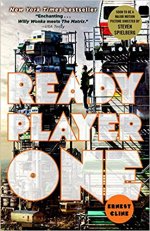
61d6DhRCBSL._SX322_BO1,204,203,200_Ready Player One by Ernest Cline – Jackie told me about this book years ago, and I’ve been meaning to read it ever since–and it was worth the wait. A true YA classic, it blends a dystopian reality with the sinister machinations of a true supervillain (in this case, an entire corporation) and unlikely heroes and plot twists throughout. If you like The Matrix, the 80s, video games, or any of the above, you’ll like this book. It’s a great piece of fiction, and I appreciated Cline’s restraint in not turning it into a trilogy or series. I loved it as a stand-alone book full of everything I like in a page-turner.

32930819The Jane Austen Project by Kathleen A. Flynn – This isn’t YA, but it’ll definitely be of interest to any of my fellow Jane Austen lovers out there (and if you are one, then you’ll notice my aptly-named newborn daughter, above). In the not-too-distant future, time travel is a reality and true Austen fangirl Dr. Rachel Katzman has been selected to visit 1815 and Jane herself. Her mission is to retrieve a lost Austen manuscript, diagnose the mysterious illness that ended Jane’s life far too early, and try not to alter history too drastically along the way. I loved this book for its historical accuracy, its constant allusions to Jane’s works, and the depth of emotion I felt from every character.
And, because all good readers have a plan, here’s what’s next on my library holds list:

  • Refugee by Alan Gratz
  • Artemis by Andy Weir
  • Little Fires Everywhere by Celeste Ng
  • A Short History of the Girl Next Door by Jared Reck
  • Long Way Down by Jason Reynolds
  • What She Ate by Laura Shapiro

What do you recommend for my next high-interest read? Please comment with some titles that will keep me awake through late-night feedings, a teething toddler, and my exhausted 8:00 bedtime!

Shana Karnes is now mom to TWO beautiful baby girls–Ruth and Jane–wife to a very patient husband, and teacher of thoughtful preservice educators at West Virginia University. She’s enjoying new mom-of-two life and surviving it thanks to the twin distractions of reading her students’ work and reading YA lit. Find Shana on Twitter at @litreader.

NCTE: A First-Timer’s Reflection

file3-1

I feel like I overuse the word “mind-blown” in my everyday life, and people who know me well are unphased when I hand gesture and raise the volume of my voice to describe whatever happened that elicited such a response.

But trust me when I say, this time IT IS NOT A DRILL.

My first-ever experience with NCTE can only be described in one–though overused by me–word.  You guessed it.

MIND.  BLOWN.  Okay, wait.  Two words, with necessary periodic addition for dramatic effect.

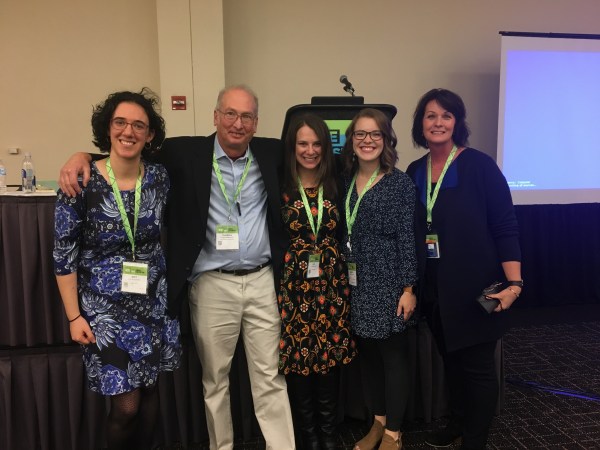
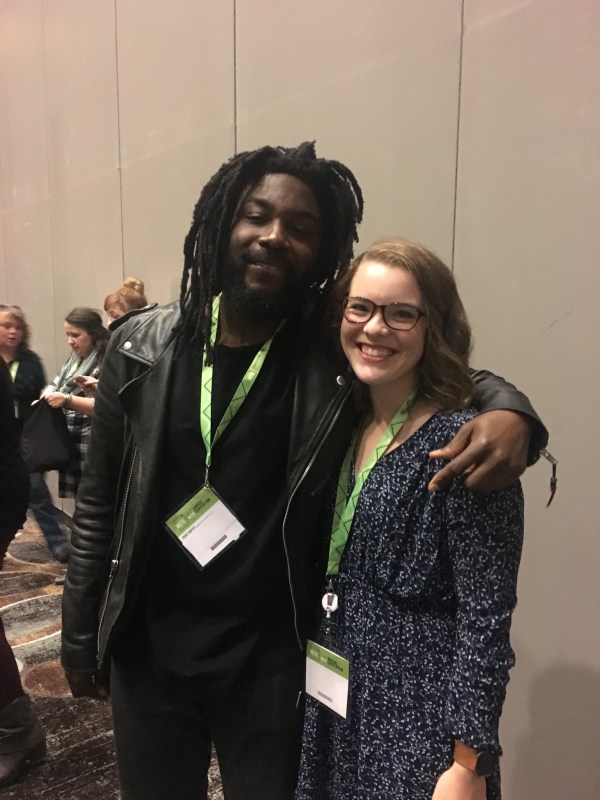
In order to fully communicate this mind-blown state, I should tell you that my NCTE experience began with sitting in the airport and seeing Jason Reynolds walk right in front of me as I froze like a teenage girl.

file-1

Then, I redeemed myself by attending a panel with Jason Reynolds and getting a picture.  I also awkwardly told him, “Hey, I saw you yesterday, but I tripped on my way over to you and got embarrassed and then sat down.” Good story, Jess.  He said, “Oh, you should’ve said something!” He’s probably used to crazies.

Anyway, aside from my intense awkwardness and wondering whether or not I should walk up to people I know from Twitter and say “hello”–like the friends I feel we are–, attending NCTE for the first time was an invaluable experience for a few reasons.

First, it helped validate that I’m–we’re–fighting the good fight.  To be honest, our profession is so steeped in what Carol Jago calls “literacy activities,” I sometimes wonder if I’m the only teacher just letting her kids read and providing space for them to write.  Anyone else?  Feeling like The Lone Ranger can also cause me to question: If this is different than the way almost everyone is doing it, is there a chance I’m wrong?  That insecurity causes many issues, one of which results in the frequent depletion of my chocolate stash.  However, NCTE took all that wondering away, and reaffirmed the Workshop Crusade during every session:

Kelly Gallagher said, “I am a teacher of literaCY, not literaTURE.”

Jimmy Santiago Baca, “In working with students who hate education, we need to make it look a lot less like education.”

He also said, “Make your classroom as individual as you can to affirm your own spirit.”  And I would argue, we need to do so in order to affirm the spirits of our kids, as well.

Second, as a result of an amazing session led by Tricia Ebarvia (who is my bestie, but doesn’t know it yet), Anna Osborn (who I want to be when I grow up), and Kate Flowers (who is not afraid to tell the truth of data), I obtained a litmus test that will challenge me for the rest of my teaching career.

Kate Flowers’ Rule of Assessment: Do no harm.

As I really let this three-word, doozy of a sentence sink in, I started running a list of what I would deem “assessments” from the past three months.  I teach three very different classes: On-level Seniors, AP Lang Juniors, and All-level Creative Writing.  I can honestly say the only class I can say I’ve “done no harm” in terms of assessment is Creative Writing.  Do I know where they are?  Absolutely.  Do I know their strengths?  Interests?  What they had for breakfast this morning?  What they dream about for their futures?  Absolutely.  Do they love and support each other as classmates?  To a fault.

So, the tough question is, why do I run my other classes any differently?  Truth: Because of assessments.  Because of administrative checkpoints.  Because I feel as though I have to justify community-building and students being seen to align with state and district standards.  Finally, because I have not completely let go of control.

Kate asked, “Is this about your need to control?  Or are you serving your students’ need to grow?”

This question also made me think: How many times do our educational practices do more to breed liars than learners?

Those questions should keep me busy for awhile.

Do no harm.

Finally, NCTE made me even more angry at the conversations that permeate the teacher work rooms, the hallways, the classrooms with doors closed and hands thrown up in the air.

I constantly hear, “My kids can’t do this, and they can’t do that.  Why have they not been taught this before?”

file1-1

Cornelius Minor said, “Your lack of understanding is not a symptom of something wrong.  It just means you’re in the right place.”

I am a teacher.  I’m not an assigner.  I’m not an assessor.  I don’t throw something against a wall, hope it sticks, and then blame the wall for not having been told to grab onto it because it will be useful in the future.

As I said in my portion of our Three Teachers’ talk, maybe kids have been told, but they haven’t been taught.

Overwhelm

So, my current plight is trudging through the constant overwhelm of asking people to be open to change, trying something new, doing things differently.  My volleyball coach ALWAYS reminded us of the definition of insanity–but he called it “stupid,” instead.  Insanity is doing the same thing over and over and expecting different results.  So I will continue to toss up the idea that we should let students show us who they are, and then plan a learning experience around that.  We might even set some learning in place that might help them discover a piece of themselves they didn’t know existed, or a person they were blind to before they knew their struggles were the same.

I remember what Tom Newkirk said, “Story is compelled by trouble.”  So maybe this is part of my story, maybe this is my trouble.  Maybe I was meant to push through the difficulty and the seemingly impossible–at least without a steady stream of caffeine and sarcasm–to get to what truly might save our world, beautiful words and the connections they fuse when we encounter them.


Jessica Paxson teaches English IV, AP Lang, and Creative Writing in Arlington, TX.  She runs on coffee and exaggeration, and is overjoyed to be in a graduate program because that means she has access to a better library.  She is currently twiddling her thumbs as she waits for the next books from Sabaa Tahir, Sandhya Menon, and Jason Reynolds.  Also, you can probably find her humming Christmas tunes over the sounds of her students’ pained groans.

#NCTE17 – A Story I’m Thankful For

Like Amy, my NCTE experience this year was a blur of the most magnificent proportions. I was able to share the experience with an amazing group of colleagues, survived flying on standby in a peculiar route from Milwaukee to Detroit to St. Louis, and wrapped up my planning about 72 minutes before 3TT spoke to a wonderfully supportive and inquisitive audience on Friday.

I have 7 pages of notes, in 5 colors, saw so many English Gods and Goddesses speak I lost count, sat down three inches from Cornelius Minor to plan a forthcoming 3TT Twitter chat (Ekkkk! Fangirl moment), got to room for three nights with my bestie like college roommates watching Hallmark Christmas movies, secured over two dozen books for students in the exhibit hall, spent time with my amazing co-bloggers from Three Teachers Talk, and deliciously foreshadowed Thanksgiving with a calzone of turkey, cranberries, pecans, stuffing, mashed potatoes, and gravy dipping sauce.

thanks1So, when we flew home on Sunday night, I got to bed at about 11:30 pm. Up at 5:00 am, Franklin had school through a half day on Wednesday. I then hosted Thanksgiving for 11 people on Thursday, managed a Black Friday marathon shop with my daughter Ellie (She’s four and up at 6 am anyway – might as well take advantage), cut down a Christmas tree on Saturday, and tried to be a teacher again on Sunday in order to tackle 70ish AP Language responses and plan for the coming week. Next week (I am so excited), we fly to Arizona to visit family for a long weekend.

thanks2

Spoiler Alert: I ended up at the chiropractor this past Tuesday. She said she was surprised I could turn my neck at all. “Do you encounter a lot of stress on a daily basis?” she asked. I almost choked and laughed in her face.

Needless to say, my notes from NCTE have waited patiently for me.

NCTE last year was such an incredible experience, I came back to my district and raved about the opportunities our department could reap if a group was able to go and fan out across the convention to sample the wealth of presentations that take place. I am so lucky to teach with such amazing English teachers and even luckier to get to travel with them to this event.

We plan to debrief with administration and our department in a few weeks. I promise to share some of the information and inspiration they gathered. We attended sessions from Writing MultiGenre Papers, to Having a Life as an English Teacher, to Arab Voices in the Classroom, to Using Self Assessment with Students, to “let’s listen to Linda Rief, Penny Kittle, Kylene Beers, and Robert Probst all from the same stage and try not to faint with the fatigue of trying to write down all of their brilliance.”

So, until I find a few minutes to sift through those notes and take in the depth of learning we all did, I humbly share with you the slides from my portion of the Three Teachers Talk presentation on reclaiming our voices as teachers and students through narrative writing.

In it, you will find:

  • Some embarrassing personal photos I used to open our presentation with an illustration of  my own story and how it illustrates the power of narrative to define me: who I am, what I do, and why that might be.
  • Supporting information on how narrative defines the human experience. 
  • Explanation of the Visual Biography assignment I used to have students tell their own stories to start the year.
  • A quick write to get students thinking and telling their stories “outside the box” with a reading from Hillary Jordan’s When She Woke. 
  • A final plea to see the value of student story in narrative writing as a way to know students, value their humanity, and give narrative a proper place next to argument and expository writing in our classrooms.

Amy wished us a happy December in her post earlier this week and shared her slides as well. We hope that December really does come soon. Tomorrow, maybe?  May it bring a few moments to breathe and reflect. When we do, we will be sure to shower you with all the #NCTE17 insights you could ask for.


Lisa Dennis teaches English and leads a department of incredible English educators at Franklin High School near Milwaukee. Last year her NCTE notebook pen of choice was the PaperMate Flair, this year she highly recommends the PaperMate Ink Joy pens.  Follow Lisa on Twitter @LDennibaum 

#NCTE17 — So Much to Remember, So Much to Do

Confession:  I do not have the energy to write this post.

NCTEStLouisI had an amazing learning experience at NCTE in St. Louis. I met Twitter friends for the first time face-to-face. I got to present with my amazing and faithful blogging buddies — and Tom Newkirk! I loaded my shoulder bag with loads of new books for my classroom library complements of the book vendors in the exhibit hall. I talked with some fascinating educators and attended fantastic sessions — all tattooed my heart with meaningful messages. I saw Linda Rief talk about her heart books and Nancie Atwell, Kelly Gallagher, and Penny Kittle advocate for choice reading and more talk and more diverse books and more time to read and write with students. I attended CEL and presented with my newfound friend, Sarah Zerwin, who is writing a book on going gradeless, my newest quest. I did not sleep much. Does anyone sleep much at NCTE?

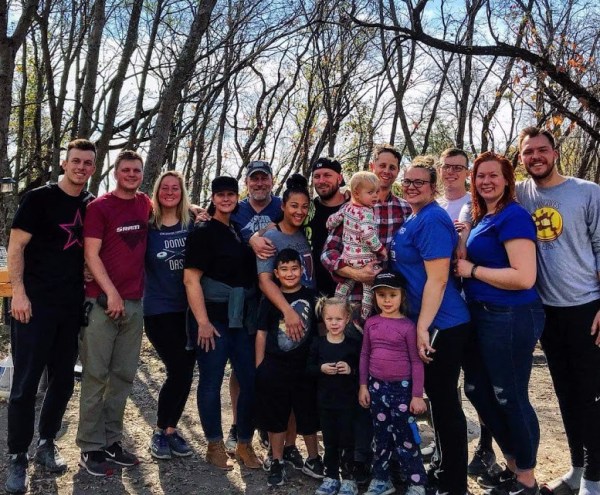
You’d think that after a week-long break I’d have caught up. Not so. Remember how I wrote about my family coming for Thanksgiving? They did. We laughed and ate and camped and ate.

And. It. Was. Awesome.

JennaRyanKellyDevin

My newly weds. Two daughters and two new son-in-laws.

HyrumMeZach2017

Hyrum, my soldier, and his twin, Zach

campingThanksgiving2017

On the 3rd day of camping, we are a motley crew but somehow still smiling.

But I am tired.

Yesterday I returned to school like I assume most every teacher in America did. The stack of papers needing grading shouted at me as I flipped on the lights. 111 emails flash danced in my inbox. One plant gave up its withered ghost, and four of my bookcases must have wrestled with the devil. Before the first bell, I sat at a table and breathed. Amazing what a few deep breaths will do.

So, yes, I have a lot to remember about NCTE. My notebook begs to be revisited, and when I get a minute or two, I will write a post that showcases the best of my learning at this inspiring convention.  In the meantime, since I did not preview my part of our presentation at NCTE like my writing partners did, I include it here. Most of my notes are in the slides, so maybe my message will make a little sense without my commentary. At least I hope so. Personally, I think our 3TT presentation was awesome! I learned so much from our journey into doing more with narrative. If you were not there, I wish you could’ve been!

Happy almost December, my friends. May your days be merry and bright right on up to the December holidays. Maybe then we will get some sleep.


Amy Rasmussen teaches senior English and AP Language at a large and spirit-filled high school just north of Dallas. She is the mother of six adult children and grandmother to five. She loves to read and write and share her love of reading and writing with anyone who will listen. She also loves to sleep and believes that good pillows make the best of friends. Follow Amy @amyrass and @3TeachersTalk.

Part II. Continuing the Crusade for my Readers — Guest Post by Charles Moore

If you read my post from three weeks ago you understand my plight. I’m fighting an important battle, and it’s a battle I can’t bear to lose. I strive desperately to move each one of my students towards a love of reading. Reading comes easy to some of them; it’s so hard for others.

It’s working. I’m seeing momentum build with my readers. Several of them came back from this weekend having read on their own!!!

Tree

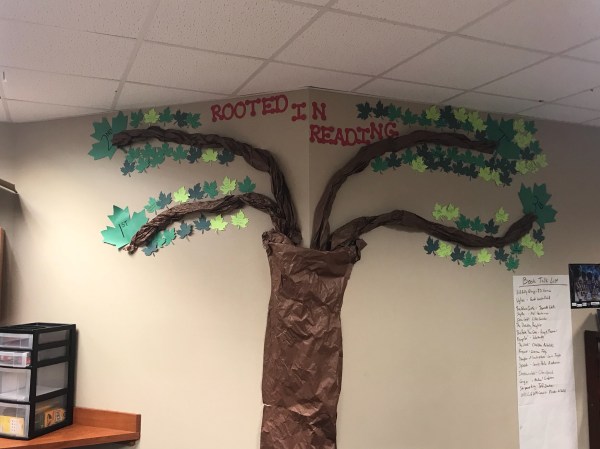
Our Rooted in Reading tree is growing!!!

So what, exactly, have I been doing?

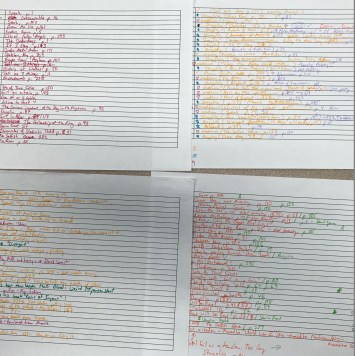
As previously mentioned, I had to find out where all my students were as readers. That took Conference Logsseveral weeks of tracking movement. I recorded their progress as often as possible and, most of the time, checked with them every day. Our gradebook software makes creating rosters super easy, and I made a page for each class that I use to take notes. For some kids, it’s just their page numbers and notes about how they feel about their current books. For others, my substantial readers, it’s a record of our conferences and their answers to thoughtful questions about themselves as readers. My goal is to have more of these types of conferences. Either way, it’s a daily map of the reading lives of each student.
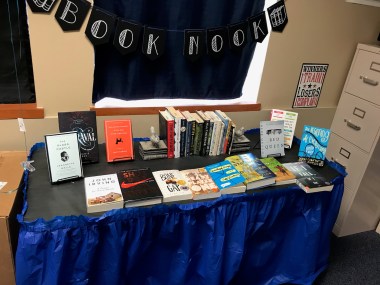
One thing I am not scared to do is move a kid out of a book that I put them in the day Book Nookbefore; even if that student was in a different book the day before that and another the day before that. The key to that whole process, thought, is my classroom library. It’s beautiful and I love it. I know it from top to bottom. It holds many books that I’ve read and so many books I haven’t read…yet. It’s crucial that I can take a book out of a student’s hand and hand them a new book on the spot. 

For instance, a baseball player, in my second period class, finished Scythe a week or two ago. He even buddied up with one of our Assistant Principals, and they talked almost daily about it. He moved into The Book Thief last week but didn’t connect with it and read 80 pages in 10 days. Friday, he “punted” that book and took home The House of the Scorpion and finished almost half of it this weekend. This story repeats itself over and over in my classroom.

We have to work to get students in the right book and just like with us, sometimes so much depends on what is going on in their lives and where they are emotionally.

I mentioned before how I’m talking books every day. Book talks allow them to plan for the next book and the one after that. I think it’s important that they have a list of books to read next, and the more they internalize this process, the closer they are to being a life-long reader. Of course, I’m here to guide them, but I want to see them seeking the books themselves.

Encouraging and supporting readers with my dedication to their reading lives is probably the most important part of this. Sharing my life as a reader with my students is crucial. They know how I loved Red Queen, and how I struggled with The Hate You Give.

I write poems on the board from Rupi Kaur, r.h. sin, and my own.

I show them the books I buy, and we conspire to keep it a secret from my wife.

Last week one of my students gave me We Should all be Feminists. She knows I have a daughter and I should take this kind of thinking into account in my life with her. I spent the next several days engaging with this student and her table group around the thoughts I took from the book. They know I read it, and that connection is authentic.

We spend too much class time each week on our independent reading for us to not be “readers.”

It’s my mission to guide them to the life of a reader, and I have to live it as much as I expect them to.

Clear Creek ISD June 2017 (1)

Charles Moore is the chauffeur to a 7 year old diva and loves coaching linebackers and teaching Senior English in League City, Tx. He can never finish a book because his students steal them. Follow Charles on Twitter @ctcoach

Combating The Same – Narrative Deserves Better

Reclaiming Narrative and Amplifying Our Voices_ Using Story to Invite Fearless Inquiry and Intellectual Challenge for Our Students and Ourselves

Once upon a time, in the chilly great North, a teacher needed to learn some new lessons.

Though far more skilled and confident than she had been at the start of her career, this educator was suffering from a well-known malady – The Same.

The Same is something that creeps up on us. In some cases, it’s welcome and even necessary for survival. In other cases, though the symptoms may seem innocuous, the lasting impact The Same can have in our classrooms makes it a chronic condition worth treating.

In this case, though The Same takes many forms, what was in need of attention was this teacher’s treatment of Narrative.

A well-intentioned sort, this young lady dutifully taught narrative once per year, as was the want of her friend The Common Core. CC suggested that students needed to know how to write a hook, how to transition between ideas, how to incorporate dialogue, and how to conclude the piece in a “meaningful” way. And so, this young educator went about her business. The business of “teaching” students how to tell stories.

But something was missing. Something was very wrong. Her students were…terrible at it. Their stories dry and lifeless – unbending retellings of birthday parties, first boyfriends (who were mean, mean, mean), and middle school drama involving lockers that don’t open and the mortification that comes with being separated from one’s bestie (boring, boring, boring).

I was not ok with what was happening.
“You should not do that,” I said. 

“Do, what?” she said. 
“That,”I said. 
Suddenly, the bell rang and we were more scared than before. We would never get out of here if Mr. Sanders saw us. We’d be in big trouble. The biggest trouble ever!

The Same had relegated her students’ stories to a checklist, and the results were simply awful. To write. To read. To teach.

What The Same had done was limit narrative. Put it in a box as something to bring out, take care of, and return neatly for the next year. Tell a story, was the charge, but nowhere in that charge was- Share yourself. Explore who you really and maybe how you got that way. Tell me something profoundly true and deeply felt. 

It was time to seek out The Change.


As Tom Newkirk suggests, we must  “rethink the way we position [narrative] in our curriculum.” Narrative, done well and valued for the deeply personal composition it can be, deserves to be more than an assignment. If we want students’ writing to soar, we need to see the value of their stories and the value in highlighting those stories throughout their work, regardless of the type of assignment they might face.

Narrative lets us play.

Narrative lets us peek into hearts and minds.

Narrative lets us shine a light on what’s only ever been private.

Yet, narrative teeters at the edge of the curricular abyss in countless high school ELA classrooms. And why not? We’ve got other fish to fry. Data-driven, framework-aligned, standardized fish. In an era where argument is king and expository is queen, narrative is often relegated to the position of traveling jester – cute to entertain for awhile, but far beneath us.

However, narrative speaks to what we have to say, where we find our roots, and how we are connected.

Narrative is who we are.

If we aren’t letting students explore who they are through their writing, both the low stakes quick writes and the behemoth argument research papers, then we are missing a great opportunity to support our students to in becoming better writers AND better people.

Reclaiming narrative means joining the conversation. Amplifying our voices means joining the conversation. And I can’t wait to extend the conversation on the power of narrative.

Meet me in St. Louis! Three Teacher Talk, with the amazing Tom Newkirk as our chair, will share our thoughts on the power of narrative and how it can transform the lives of our student writers. See you at #NCTE17 – Session C26 on Friday in room 274 at 12:30.


Lisa Dennis teaches English and leads a department of incredible English educators at Franklin High School near Milwaukee. She sincerely hopes that her layover in Detroit today doesn’t foil her NCTE dreams. Follow Lisa on Twitter @LDennibaum