Category Archives: Shana Karnes

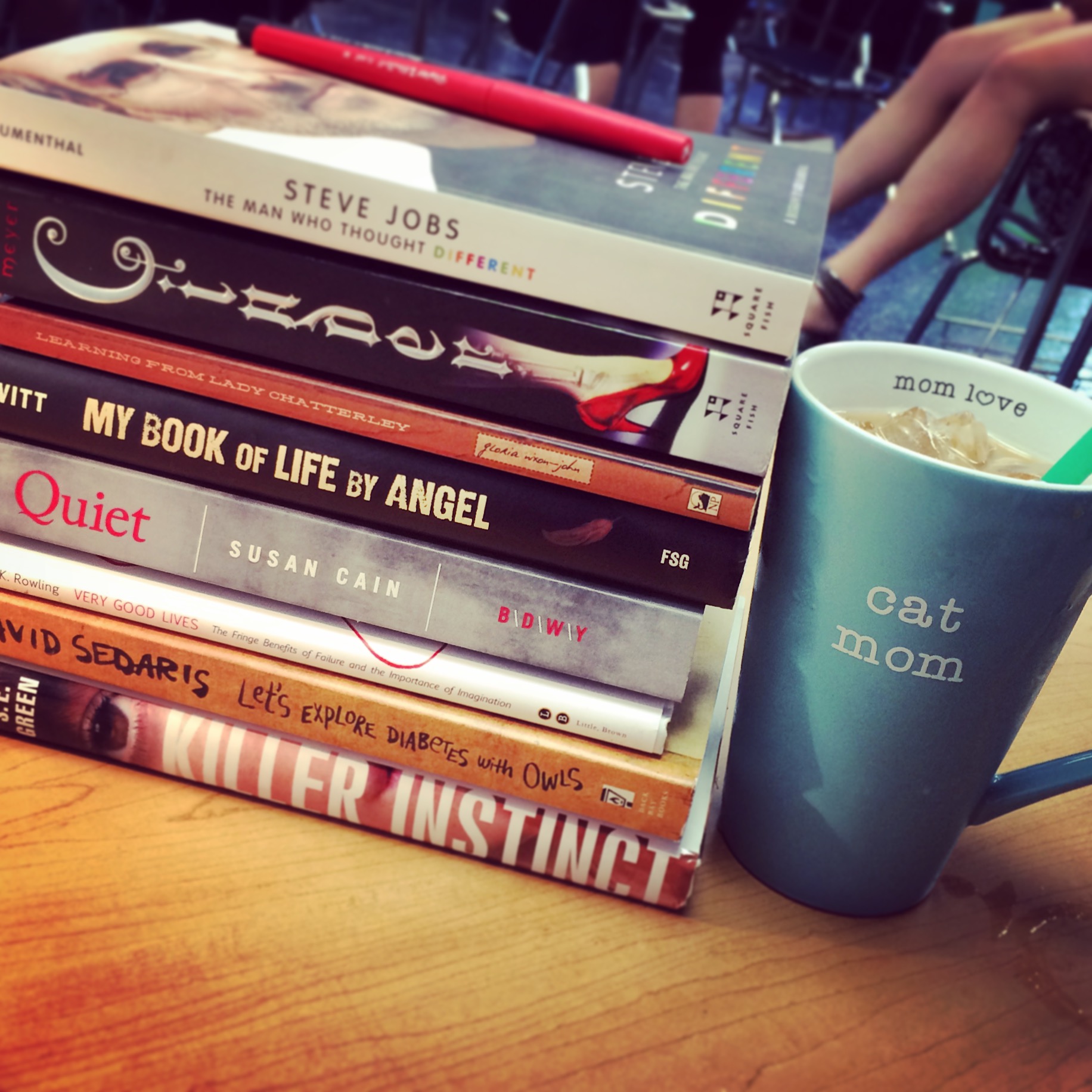
Shelfie Saturday: Nonfiction #ShelfieShare

shelfieAs a young reader, I was a library-only kinda girl.  I browsed the mystery, fiction, and teen sections looking for distinctive spines–ones that had a pink “Classics” sticker, or an orange “Award-Winner” sticker, or a blue “Librarian’s Choice.”  These little guides led me to Jane Austen, Matthew Quick, and John Grisham, whose spines were not only colorful with library stickers but also well-worn from the hands of readers.

The thing about those spines was that none of them were in the nonfiction section, which loomed large with encyclopedias, reference books, and lots of sections about science, technology, or car repair.  Being a middle schooler who didn’t know about the Dewey Decimal System, I had no idea how to find interesting biographies, beautiful memoirs, or fascinating historical accounts.

Now that I’ve begun to love nonfiction and learn a lot from it, I’ve tried to simplify the search for great true stories in my classroom library.  We have one Nonfiction shelf and two Memoir & Biography shelves.  I try to keep collections, histories, and statistics-into-stories books all together on the Nonfiction shelf, while I move the stories of people’s lives onto the M&B shelves below it.  Sometimes the titles that belong on the Nonfiction shelf wind up on the Award Winners, Unique Teens, or Death & Dying shelves–because I love to mix true and imaginary stories in our library when they share themes.

FullSizeRender

You can see that our shelf is varied–topics range from sports to how the mind works to humor.  Some authors are dominant–Jon Krakauer, Malcolm Gladwell, Daniel Pink–but others are one-hit wonders whose titles are very popular–Mary Roach, Michael Lewis, Dave Cullen.  Their respective Stiff, Moneyball, and Columbine are three of my library’s most popular titles.

Our nonfiction shelf is also the home of the “Best American” series, which includes topics such as science, travel, and sports writing, but also a collection of simply “essays” from each year.  This series is a fabulous way to find a huge variety of good nonfiction mentor texts when students are doing informational or persuasive writing–there is always something to match any student’s interest.

This shelf is an eye-level shelf for good reason.  Students who wouldn’t normally gravitate toward the nonfiction genre find their eyes caught by interesting covers, titles, or topics–such as Missoula and It’s Not About the Truth, both of which deal with college rape culture, or The Sociopath Next Door, which attracts all my Sherlock fans, or Lost in the Meritocracy, which gives both motivated and disengaged students much to consider.  Once students discover this shelf, they often move toward the Memoir & Biography or Award-Winners shelves, which contain more sophisticated nonfiction structures.

I encourage all teachers of literature to build up their nonfiction shelves–their titles have much to teach our students.

Glory O’Brien’s History of the Future by A.S. King

17453303John Green says that “A.S. King is one of the best Y.A. writers working today,” and who doesn’t trust everything John Green says?  (Except for when you trust him for 246 entire pages, and then your trust is shattered, and you ruin a book with your tears, but I digress.)

Having fallen madly in love with A.S. King’s writing during Everybody Sees the Ants, I have been waiting for my students to return Glory O’Brien’s History of the Future to my library so I could read it.  Without ever having booktalked it, its catchy cover caught students’ eyes and enticed them to dive right in.

Finally, yesterday, I spotted it on the shelf and took it outside in the sun with my class to begin reading.  Surrounded by seniors mere weeks before their graduation, I was in the perfect setting to immerse myself in Glory’s story, which takes place over two weeks bracketing her high school graduation.  She’s a photographer for the yearbook, keeping herself distant from her peers by hiding behind a camera.  Her only “friend” is her neighbor Ellie, who’s lived beside her ever since Glory’s mother committed suicide thirteen years ago.  Ellie doesn’t understand the worry Glory has that she’ll end up like her mother–and Glory is terrified of, dreading, trapped by, her own uncertain future.

That all changes after a wild night, after which Glory and Ellie can suddenly see the future.  Glory begins to record these transmissions, in which, upon eye contact with anyone, she can see the actions of their distant ancestors and descendants.  The glimpses of the future reveal a future American Civil War, the complete reversal of feminism, and a tangled web of people she knows mixed up in all of this.

“We were fed onto the stage like machine parts.  We were a conveyor belt of future.  We were an assembly line of tomorrow.  We were handed our diplomas and stood to face the audience and they were asked not to clap until the end, but some did anyway. … I stood and faced the crowd and heard a static of epic proportions.  Chatter of a thousand infinities all at once.”

Deciding to chronicle her transmissions through a scrapbook modeled after one of her mother’s creation, Glory writes her own “History of the Future,” and it’s bleak.  As the novel progresses, the darkness of the future becomes more certain, but so does Glory’s understanding of herself–a trade-off she’s not sure how to handle.

With beautiful language, dark humor, powerful lessons, and themes of mystery, love, redemption, friendship, and foreboding–all set against the backdrop of high school graduation–I can see now why this book is never on my shelves.  I’ll be happy as it continues to remain in the hands of teens getting a refresher on feminism, individuality, and the pursuit of happiness.

“Sounds so convenient, right? Me not having a mom and my dad being all great about it and stuff.  But it wasn’t like that.  The air was tense.  We still had no oven.  My cobbler still tasted like radiation, no matter how much ice cream I piled onto it.  I could feel the secrets in the soil here. … Something was about to sprout and grow from that soil.  I could feel it the same as I could see the mourning dove into infinity.”

Reflection, Rejuvenation, Rebirth

May and June always bring sunnier skies, feistier students, and more hopeful days.  Like Amy, I enjoy the last weeks of school, and often spend many of them feeling proud of my students, making big plans for the next year, and reading a ton in order to ramp up my booktalks.  This time of year is my time for reflection, rejuvenation, and rebirth.

ReflectionFullSizeRender

This spring, I’m excited that I have the opportunity to participate in a National Writing Project course, which is uniting me with other English teachers from my area.  Talking with them has helped to energize me even more so than usual at this time of the year, and some of their words have really helped me reflect.

First, my notebook musings during our first class led me to a powerful play on words–listening is at the heart of our teaching.  I’ve written before about the value of talk, but I’m thinking long and hard now about the power of listening…truly hearing our students’ hopes and strengths and worries and wonders.  I’ve paid special attention to emphasizing listening in my lessons these past few weeks, because I know I won’t get to hear these wonderful students’ words after the year ends.

Later in the NWP class, while assessing some of our students’ written products, we were asked to identify the skill we had been aiming to teach, and then evaluate how well our students internalized that lesson.  Claire, an elementary teacher, said that it was impossible to look for just one thing–“Writing is so…big,” she said.  I couldn’t agree with her more.  As I read my own students’ work, I saw themes of my own pedagogical beliefs running through their writing.  They were using beautiful language, inspired by our daily poem or craft-study quickwrites, in all of their writing–nonfiction too.  They were writing strong pieces thanks to the risks they felt safe taking in their choice of topic, genre, and style.  They were producing prolifically, writing long, short, funny, serious, sad, exciting, fiction, nonfiction, poetry, prose–everything.  Their portfolios are thick with creation.  Writing is big, indeed.

IMG_8049Rejuvenation

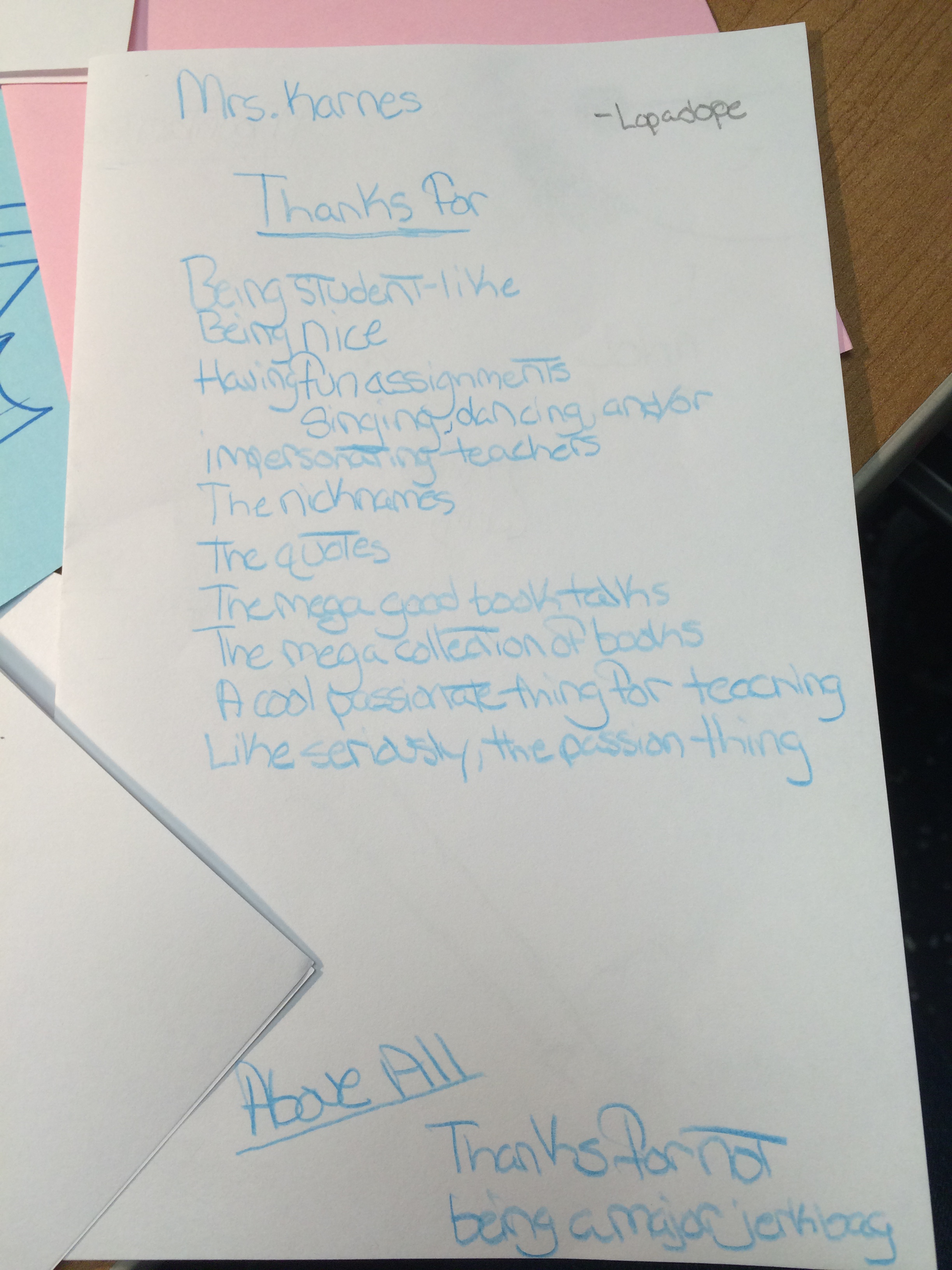
It’s Teacher Appreciation Week, and with that came some delightful thank-you notes from my students.  One student made a list of things he was thankful I did, and he repeated how thankful he was for my “cool passionate thing for teaching…like seriously, the passion thing.”  I recently read an article in the Chronicle of Higher Education that claimed the four properties of powerful teachers were personality, presence, preparation, and passion.  I like to think of passion as fangirling, which I do on a daily basis about books, student writing, authors, and all things bookish.  I’m never sure how much of that passion reaches students, but since this one specifically noted the “mega good booktalks,” I think it gets through to at least some kids.  This thank-you note really rejuvenated me, and now that I know my booktalks are working, I’ll keep at them with new gusto until June 12.

IMG_8027Rebirth

Continuing to revise and change my curriculum doesn’t stop because the year is nearly over.  I’m still wildly out of control on Amazon, buying titles as I get ideas for new units, themes, or genres (like the huge list of novels in verse I jotted down during our #poetrychat Monday night).  A new focus on science fiction, poetry, and nonfiction has been what I’ve noticed in my cart of late.  I am changing as a reader and a teacher, valuing those genres more than I once did, making a strong effort to transfer that new passion to my students.

My teaching philosophy is constantly shifting, evolving, being reborn.  Its biggest shift this year, I think, can be best summed up with a quote from another NWPer from my class last week.  While talking about meeting and learning from great teachers at NCTE, he said he felt like they were “the Wizards of Oz, but they were inviting me to peek behind the curtain.”  I love this analogy, because while great teaching may seem like unattainable magic, I now feel like I understand how to be effective.  I’ve studied living, breathing mentor texts like Penny Kittle, Tom Romano, Amy Rasmussen, Jackie Catcher, and Erika Bogdany, and am looking forward to learning from Tom Newkirk at UNH this summer.  In the past two years, I’ve been reborn as a teacher, whose confidence has grown as I’ve continued to strengthen my practice by dissecting and imitating the successes of others, just like my students do when we analyze mentor texts in class.

Springtime is a time for reflection, rejuvenation, and rebirth.  Nature is no different from my teaching as I think about this year and next, and about the beauty of its constant blossoming and change.  I know our last six weeks will fly by, so I’ll enjoy every moment of them before the luxurious summer begins!

What are you reflecting on this spring?  What has rejuvenated you as the year comes to a close?  What elements of your teaching will be reborn this year or next?  Share in the comments!

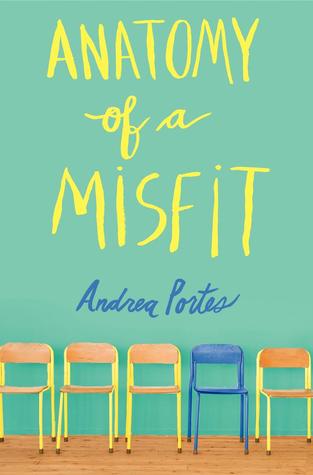
Anatomy of a Misfit by Andrea Portes

18340210This young adult novel was recommended to me by a fellow teacher of reading workshop who said it was immensely popular in her room. I downloaded it on my Nook and began to read it late one night before bed, and stayed up all night to finish.  I laughed on one page, clenched the covers in tension on the next, then cried, then laughed again, thanks to Portes’ masterful narrative skill.

The narrator, Annika, was a unique take on the typical YA protagonist, describing herself as the “third most popular girl in school,” whose Romanian father she calls “Count Chocula.”  Still, Annika finds herself in a number of classic YA conflicts–torn between two boys (Logan, who is unique and thoughtful, but social suicide, and Jared, who is magnetically attractive and popular) and torn between two friend groups (Becky Vilhauer and her evil “mean girls”-esque clique and the victims of that clique’s hurtful gossip).  Annika authentically struggles with these choices in a way I think most teenagers would, so this felt much more real than a John Green book, for example, to me.

As Annika’s unique voice kept me laughing and intrigued, the story grew darker, spiraling into a series of painful climaxes, as the book progressed.  While reflecting on one of these situations, Annika writes:

We tried to be less self-involved.  We tried to look up from our dumb obsessions and notice other people.  We tried to be open, for once.  We tried not to be just another vaguely racist family.  We tried to be enlightened.  We tried to be good.  We tried to be all of the things…we are not.

This beautiful excerpt reflects not just on Portes’ cut-to-the-quick analyses of common situations, but also her writing skill.  My students and I looked at that passage for craft and they created beautiful imitations filled with similar repetitive phrasings.

Portes’ beautiful language made me love this book, but I loved it even more when I read the afterword, which explained the inspiration for the book–Portes’ own high school experience.  Once you read the heart-wrenching conclusion, you’ll understand why I so vastly admire Portes’ blend of autobiography and gorgeous writing skill.


Four Ways to Formatively Assess in Workshop

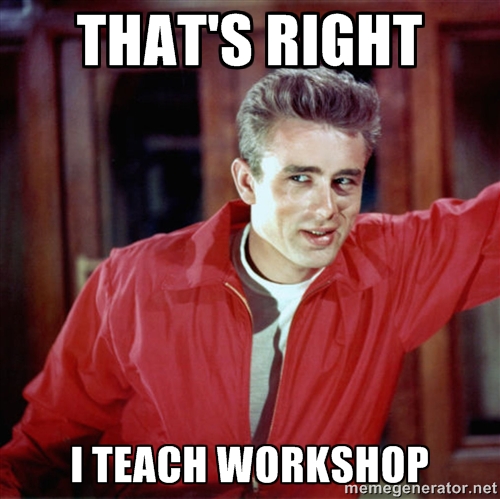
dtrfyguhujSometimes I wake up in the morning, thinking about what I’ll be teaching and learning that day, and feel like a rebel.  That’s right–I think to myself, feeling inexplicably cool–I teach workshop. Yeahhhhh.  Even though this is the most research-based, data-driven form of instruction I’ve encountered in my teaching career, a successful workshop is still such a rarity that I feel like I’m breaking all the rules by employing it every day.  I’m a rebel with a cause.

Still, when I stop feeling like James Dean and reality bites me in the butt, I know I need to be practical and follow the rules by putting some grades in the gradebook–once per week is the suggestion at our school.  If I had it my way, I’d go gradeless and celebrate the myriad acts of literacy within the confines of a classroom.  That’s not possible right now.  I needed another solution, and I think I found it in Amy, right here on this blog.  She writes powerfully about formative assessments in this post.  Her thinking mirrors mine:

I know when I am learning a new skill, I want to be able to practice–free from judgment–so that I might build some confidence before I am formally evaluated.  The same is true for kids.  We should give them opportunities to practice and build confidence.

One grade per week, when I’m grading to evaluate, is impossible.  We don’t master a different skill every single week.  Mastery requires practice.  So, I’ve focused lately on formative assessment for eight out of the nine-week grading periods, and summative for just one.  Here are the four categories I see formative assessment broken down into, and how I put them in the gradebook.

IMG_5605

Un-gradeable, amazing writing

1. Writer’s notebooks – I collect writer’s notebooks every two weeks, and students can receive up to 20 points per collection.  If all of our prompts and exercises are present, and I can see the student’s effort, he or she gets the full 20/20.  I also ask students to mark for me anything they’d like feedback on.  I check to see the status of their to-read, wondrous words (vocab), and cool craft (quotes) sections, but I also look for a telltale pink sticky note.  If I see one, I read the marked piece and write back–just feedback.

2.  Reading logs – Our reading logs are quite messy; you can see one example here.  There are arrows everywhere, new reading rates scribbled in, and tons of titles being read every week.  When students complete their reading goal of two hours per week–determined by individual reading rates–they get 10 points, every week.  Reading logs show me the big picture of a class’s progress, while conferences help me go deeper.  The reading log lets me know, at a glance, who’s soaring and who’s not–helping to give my conferences direction.

IMG_6904

Word play

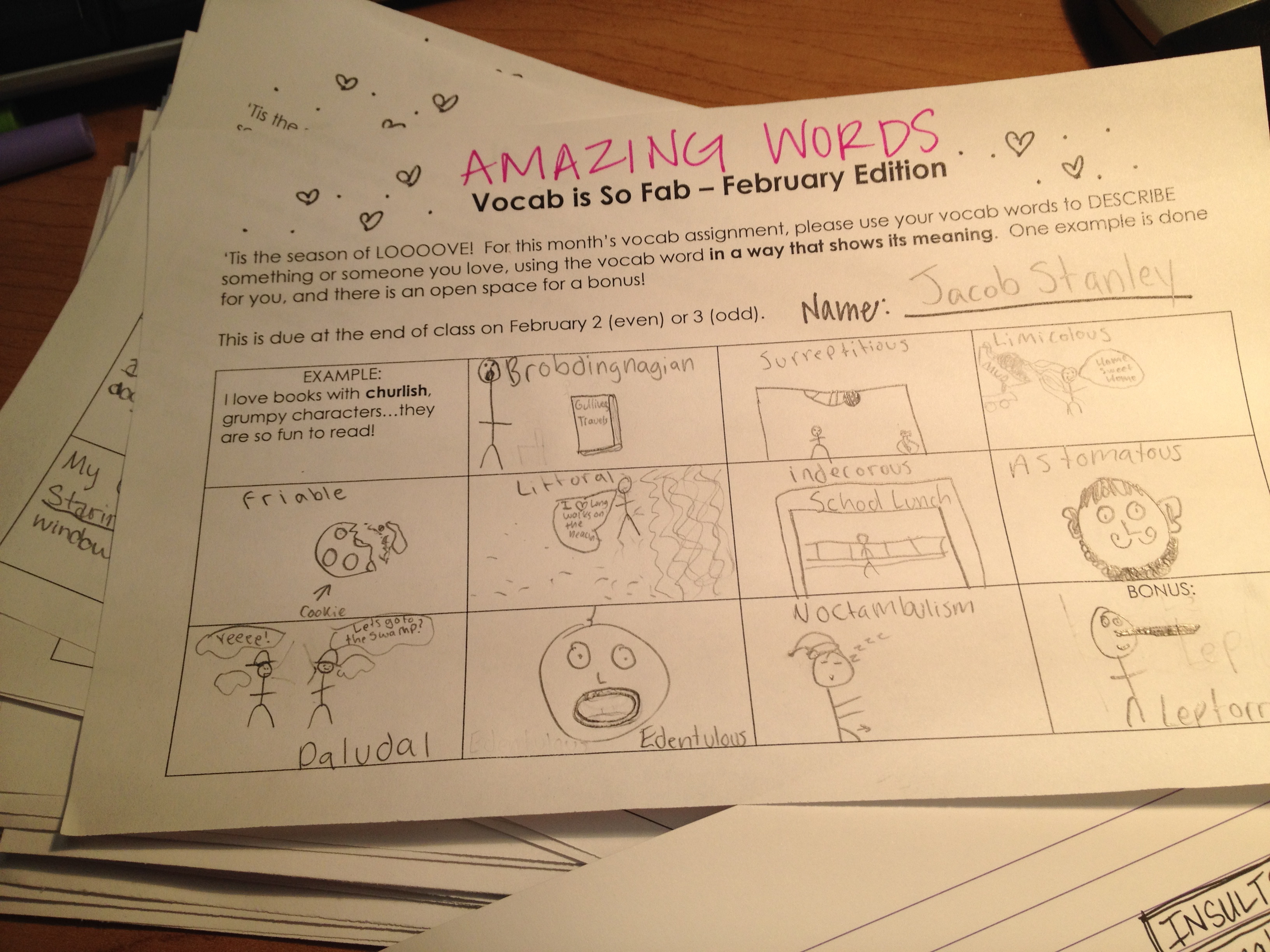
3.  Vocabulary – I still remember my orange Sadlier-Oxford vocab books from high school.  Those well-worn paperbacks were the source of many a cramped hand and a frantic fifteen minutes of homeroom before English class.  I know from personal experience that I don’t retain new words by completing fill-in-the-blank exercises–I learn by reading widely.  So, I ask my students to maintain a “wondrous words” section in their notebooks, writing down unfamiliar or unknown words as they read.  Then, I give them a different activity to complete with those words every two weeks.  The activities are worth 10 points each, and run the gamut from writing stories using the words to drawing pictures illustrating their meanings.

4. Honest self-assessments – When we finish a unit of any kind, usually about once a month–a writing unit, a reading unit, a book club, a challenge–I pass out a half-sheet with self-assessment questions on it.  I begin each half-sheet with a disclaimer:  “Be honest.  There’s no judgment here.  I just want to know why you were as successful as you were with this unit, and to know how I can help others be successful in the future.”  Students answer very truthfully, sometimes humorously so.  If their answers are thorough, they receive 15 points.

These four formative assessments total about 115 points per month.  With 9-week grading periods, students’ grades therefore are made up of about 2/3 formative assessments (230 points or so) and 1/3 summative assessments (100 points or so).  Well over half of the formative assessments are credit for the simple acts of doing the assigned reading and writing–no evaluation of those acts, just credit for the effort.  I value practice and process over product–and this grading system reflects that.

How do you handle grading, formative assessment, evaluation, etc.? Please share in the comments!

Shelfie Saturday

One of the foundations of a strong reading and writing workshop is providing students access to a wide variety of excellent mentor texts.  You may provide access to those books through your classroom library, school media center, or public library–but how do you know which books to purchase?  How do you predict which titles will be most popular with teens?  How do you know which authors will teach your students the most about writing?

sticker,375x360.u1We hope to offer you a few answers to these questions on Shelfie Saturdays.  Here, we’ll share shots of our classroom library shelves, bookstore tables, yard sale treasures, and more.  We hope these will act as examples of which books to buy, how to shelve them, and which ones to get into the hands of your readers.

So, to get us started, here’s one of my most popular library shelves–the Award Winners shelf.  This shelf houses winners of the Printz Award for Young Adult Literature, the Pulitzer Prize, the Man Booker Prize, the National Book Award, and more.  I also include nominees for all of those awards, as well as honorable mentions.  The genres are varied–YA, nonfiction, general fiction, even multigenre.  The books are at a range of difficulty levels–some have complex narrative structures, others are very long, and others are tough only because of their dense topics.

FullSizeRender[1]

I asked a few students why they liked this shelf so much.  Mylana said, “I want to challenge myself sometimes.  Whenever I read for fun I usually choose fiction, so I like to pick a nonfiction book that’s long but not boring.  I know I can find that on this shelf.”

I asked Garrett how he chose books on this shelf.  He said, “I pick books on this shelf because I hear about them on GoodReads or because they’re made into movies.  So I go to this shelf and pick the ones with the coolest covers.  The length is challenging, but if I get far enough in I won’t give up as a point of pride.”

Students gravitate toward The Goldfinch, Jellicoe Road, Grasshopper Jungle, The Round House, and Why We Broke Up more than any other texts on this shelf.  Again and again, I hear the same refrains during conferences regarding award-winning books–this book was hard, but I finished it because I just couldn’t put it down.  Award winners are shelved so for a reason–they’re the best writing has to offer in a given year, and are incredibly valuable teachers for the young readers and writers in my classroom.

Join the conversation by posting your own shelfies!  Share a shelfie with #shelfieshare and let us know if it’s a #classroomshelfie, #bookstoreshelfie, or other miscellaneous find.

The Value of Talk

Talk is one of the most powerful tools at work in my classroom.  Now, I’m talking about talknot discussion, sharing, peer editing, Socratic seminars, think-pair-share, or any other structured form of communication that might occur.  The simple act of letting our students just talk is invaluable, and we must create spaces in our curriculum for it to take place.  Here are three ways I encourage talk in my classroom.

Conferences – Reading and writing conferences aren’t just about assessment.  They’re also a valuable time for teachers and students to just talk to one another, getting to know each other as the humans that we are.  Creating a space for talk breaks down the teacher-student barrier, humanizes both parties, and by and large erases discipline problems in my classroom.  I begin every conference with a simple, “How are you today?”, and after genuinely listening for the child’s answer, direct the conference from there.  Some conferences, we don’t talk about books or writing–we just talk, because the student needs to.

IMG_6441

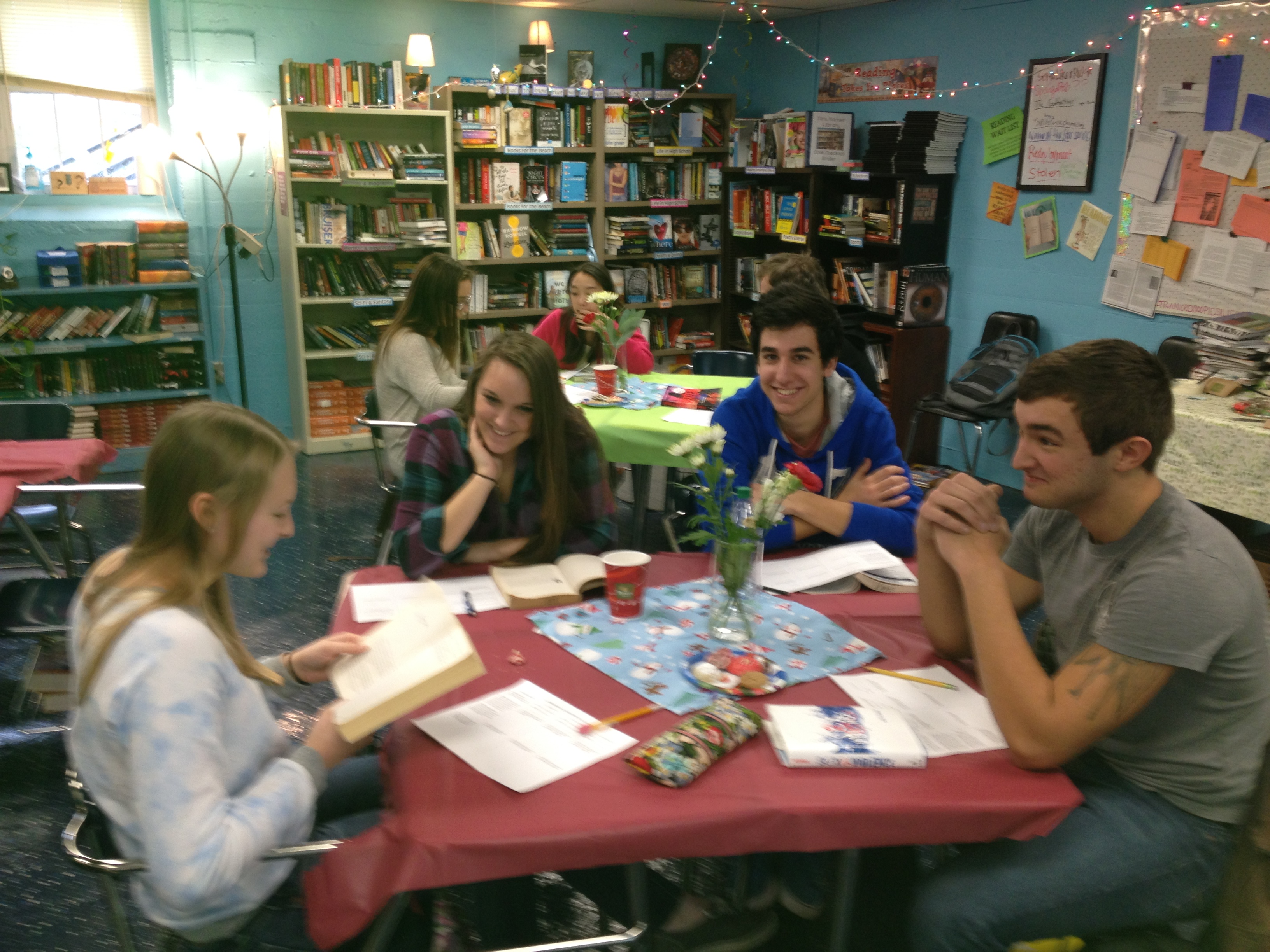
Students chat during the ‘Book Bistro’

Book Clubs – Not every book club meeting requires structure or an agenda to be valuable.  During this most recent unit, I simply asked students to keep the conversation going for 20 straight minutes.  They sometimes had to cast about for topics, but they always found something to discuss–mostly their books, but often text-to-text/self/world connections they’d made, which spun off into generalized, real-life conversations between kids who wouldn’t ordinarily find themselves chatting.  After finishing book clubs, Ana wrote, “I loved our book clubs because I felt like I got to know everyone better.”  She wrote other things about how she grew as a reader and writer…but she LOVED the unit because of the TALK that happened.

Root of the Writing Process – My journalism students consistently talk out their ideas at the very beginning of the writing process.  They chat in groups, usually starting with, “so what should I write about?”  It takes a few minutes, but enlightenment inevitably follows–the other day, Shay threw a few silly ideas out for Kenleigh about bathroom graffiti, but then they got serious about that as a story idea.  “You could call your piece ‘Signs from the Stalls,'” Shay said.  “AHHHH, that’s a great idea!!” Kenleigh enthused.  What kids like to talk about is often what they’d like to write about, and they need to talk to get to the heart of those topic ideas.

Talk builds community.  Talk is the tool that made my former student Emily say, “I felt like by the end of the year, everyone in the class became my best friend, including you.”

How do you see talk improving your classroom and its community?  What spaces do you create for talk in your classes?

March Book Madness for Choice Reading Books

Can you believe it’s already the middle of March!?  This school year is flying by…and so is the list of titles I’ve booktalked so far.  I’ve exhausted the bestsellers of YA, dystopian sci-fi, classics, books for the beach, war books, and sports books.  At this point in the year, I’m starting to booktalk new purchases, which means I’ve often not yet read them–which means that sometimes, the quality of my booktalk decreases.

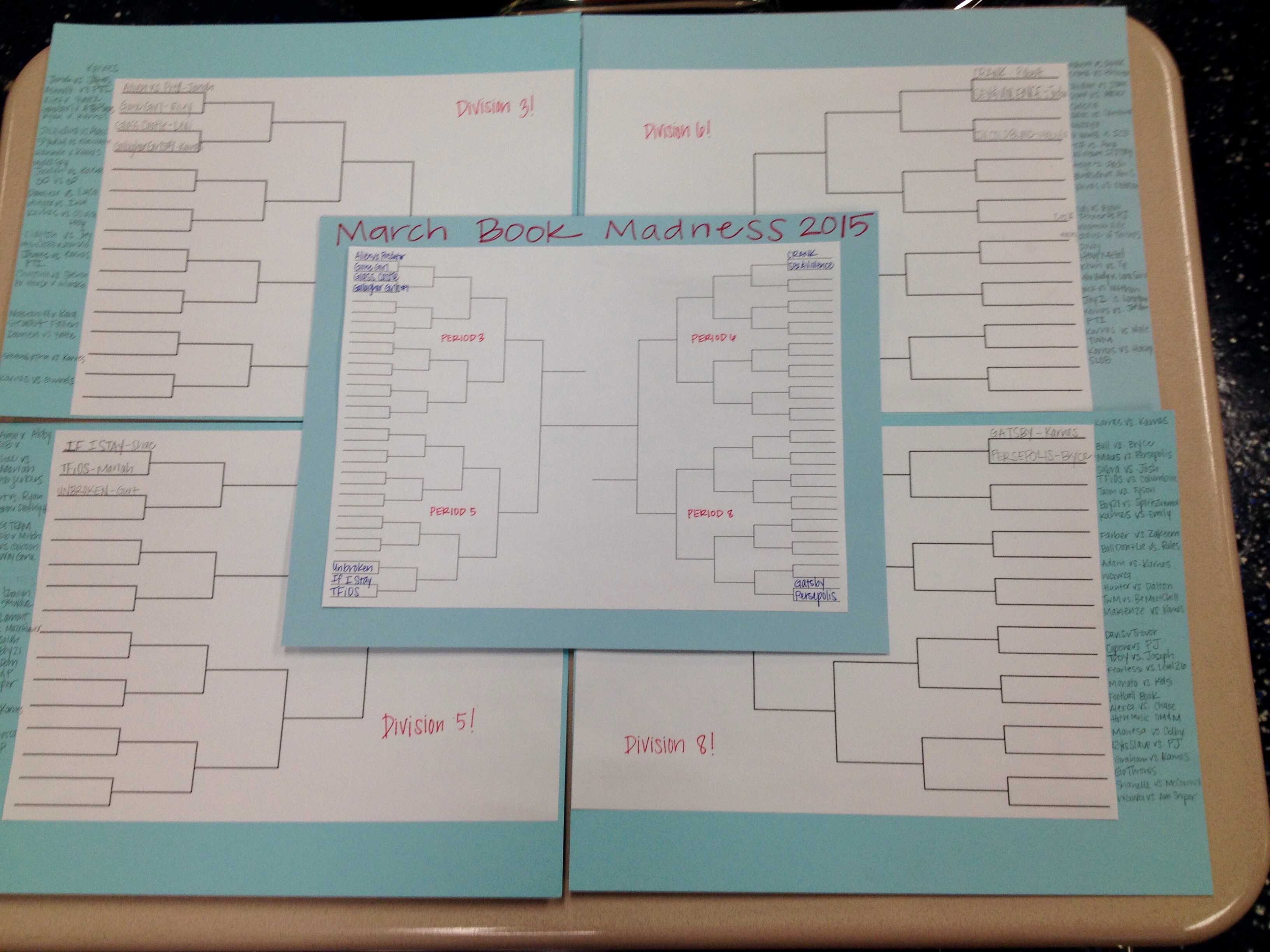
FullSizeRenderSo, because I want to shift the balance of not just grading from myself to my students, but also some of the teaching, I’ve turned to my own version of March Book Madness.  I heard about this competition from Tony Keefer’s Nerdy Book Club post, and I pitched it to kids, but they wanted to choose their own titles for the bracket.

So, blank brackets were printed, and to fill them, the guidelines were broad:  in each of my four English classes (which worked out well because they each get one corner of the bracket), students could choose a book and a partner to face off against.  Simple.

That was all I said, but as students began penciling in round one of the brackets, I was impressed mightily–they intuitively paired related books together, much like I do during booktalks.  Two boys in 8th period paired the excellent graphic novels Persepolis by Marjane Satrapi and Maus by Art Spiegelman.  Two girls in fifth period paired John Green’s The Fault in Our Stars and Gayle Forman’s If I Stay–two viral tearjerkers.  The Absolutely True Diary of a Part-Time Indian by Sherman Alexie will face off against Mexican White Boy by Matt de la Pena in sixth period.  And so on.

FullSizeRender (1)

Shae vs. Mariah in the Battle of the Tearjerkers…TFiOS vs. If I Stay

As book battles began, I laid out equally simple guidelines for voting.  Each student in a faceoff would give a short (1 minute) booktalk about their chosen text, and audience members could vote for one title based on any criteria–their own experience reading that book, the person’s booktalk, the presenter’s enthusiasm, the book’s stats on GoodReads behind the presenters, etc.

This modification to our daily routine–which is that students begin with reading, then hear my booktalks–has accomplished several wonderful things in our classroom.

First, students’ what to read lists, which had recently plateaued, are lengthening rapidly once more.  The sheer social capital of having a kid share his or her own reading experience of a book makes certain titles more tantalizing than I ever could.  Matthew Quick’s Sorta Like a Rock Star, for example, never quite flies off the shelves after I booktalk it.  It’s only after one or two kids read it and enthusiastically share it that it goes viral–and it does–year after year.  I see the same thing happening now during March Book Madness with lots of other books.  Kids are clamoring, suddenly, for several of the same titles.

FullSizeRender[1]Second, students are learning more about one another’s reading tastes.  They look at the brackets from other classes every day to see which books are advancing, and are sometimes surprised by who’s booktalking what.  “Huh…I didn’t know Jordan loved A.S. King too!”, I heard Hannah say yesterday.  “You read that book too!?  Wasn’t it awesome?!” Tyler said to Hunter, as he stood up with Ned Vizzini’s Be More Chill.  Despite my efforts to make their reading lives transparent with reading groups and notebook passes of book blogs, some of my larger classes haven’t quite unearthed the darkest corners of one another’s reading preferences.  MBM is fixing that quickly.

Third, this is not for a grade.  This is just a semi-structured celebration of books, with bragging rights as the purely intrinsic reward of the whole endeavor.  The five or so minutes we spend on this in class daily are a worthy time investment for the revelatory feel they bring to the start of our learning.  Kids are excited and upbeat after the two daily faceoffs, and excited to often add one or more of the four daily books discussed to their to-read lists.  The post-winter doldrums are quickly lifting…and the sunshine certainly isn’t hurting, either.

Is anyone else doing a version of March Book Madness?  How’s it going?  Please share in the comments!

In Defense of Food: An Eater’s Manifesto

315425I grew up as a reader, but I was a steadfast reader of fiction only–especially series.  I remember receiving my PSAT score report in high school, which strongly suggested that I begin reading more nonfiction in order to improve my vocabulary and reading comprehension.

So, not being informed about the wonderful nonfiction tomes I now know about, I began to read the newspaper.  That probably contributed to my majoring in journalism, and now teaching that subject in addition to English.

But it wasn’t until I took Penny Kittle’s class at the UNH Literacy Institute in 2013 that I fell in love with nonfiction (pardon me, Mr. Lehman and Ms. Roberts!).  I read Malcolm Gladwell’s Outliers and was enamored of his use of narrative to help me understand seemingly disparate facts.  I quickly read all of Gladwell’s other books, then devoured the rest of the booklist from Penny’s class–The Emperor of All Maladies by Siddhartha Mukherjee, The Immortal Life of Henrietta Lacks by Rebecca Skloot, Behind the Beautiful Forevers by Katherine Boo, Zeitoun by Dave Eggers, and plenty more.

However, it’s not since Gladwell that I’ve found another nonfiction author whose collected works I’m dying to devour…until now.

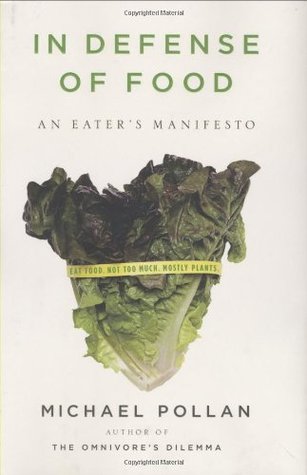
I recently asked my students to brainstorm as many nonfiction genres as they could, then select three for us to focus on for this quarter.  One of their selections was a recipe.  I wanted to show my students lots of examples of writing about food, so I purchased Michael Pollan’s In Defense of Food: An Eater’s Manifesto and The Omnivore’s Dilemma: A Natural History of Four Meals.  I picked up In Defense of Food first, and was left defenseless.

This book rocked my world, and my worldview.  It’s a book about the food we eat, where it comes from, how it’s different than other cultures’ foods, and how it’s good and bad for us.  I learned about the wild inaccuracies of food science, the nutrient-depleting process of processing food, and the government’s allowance of all this because of their dependence on food marketers’ money.  I also learned about the evolution of America’s food culture–from farm fresh to TV dinner to fast food–and its deleterious health effects on our population.

So, after Pollan sufficiently freaked me out and made me swear to myself that I’d never eat any processed food again in my life, he presented a clear solution to my fretting and outlined some rules for eating healthily (the subtitled Eater’s Manifesto).  I learned how to shop smart, defy the American diet’s unhealthy customs, and consider my foods in the contexts of their meals, which can completely transform their nutritional value.

It wasn’t just the topic that fascinated me (admittedly, I love to cook)…it was the writing.  From knee-slappingly incredible food puns like “let them eat Twinkies” and “the silence of the yams” to his deft skill at citing other writing to support his own arguments, I was convinced.  The clear organization of the book mirrors his three basic rules about eating well, which he states in sentence number one:  “Eat food.  Not too much.  Mostly plants.”  The complex narrative he weaves makes perfect sense, but is incredibly layered.  Through it all, Pollan made his claims and supported them sturdily, leaving me not only swept up in a great story, but thoroughly knowledgeable about what real food is and isn’t in America today.

I can’t wait to bring this book to my students through book clubs, a reading challenge, or a craft study mini-lesson…so I’ll booktalk it tomorrow to my Funyun-munching students with as much fire and brimstone as I can manage, and hope they hop on the Pollan diet with me.

Grading vs. Feedback

Let me be honest:  I hate grading.

Hate hate hate it.

I hate it, but you know what I love to do?  Read my students’ writing.  Talk to them about their reading.  Absorb the creative projects on display after they’ve completed a reading or writing unit.

So, if I love to listen to and read and wonder about their work, why do I hate to grade it?

The idea of reducing a piece of student work to a number, or assigning some arbitrary value to a reading conference, or trying to measure precisely the growth of a writer from one genre to the next is not only intimidating to me…it also seems a little ridiculous.  Unnecessary.  Trivial.  The beauty of a learner’s work is its creation, its completion, its courage.  It’s out there…for me to read, for their peers to see, for their creators to reflect on.

But, too many of my students only know how to think in numeric terms when trying to measure their own achievements.  Few are well-versed in knowing how to feel proud of finishing a tough book, or pleased with the revision of a piece of writing, or excited about the hard work that went into a project.  They don’t know how to authentically self-evaluate, because for years, they have relied too heavily upon someone else’s assessments of their work–mainly their teachers’.  I keep wondering how that’s fair.  I’ve had conversations recently with the lovely Amy about this, and Jackie wrote a great post about this same dilemma last October.

FullSizeRenderLast week, this tweet from the always-wonderful Kelly Gallagher helped to focus my wondering.  His words are not only true of writing, but of all other acts of learning as well.  A grade can’t improve a student’s skills.  Only feedback can do that–authentic, speedy, specific feedback.

So now, thanks to the combination of conversations with fellow teachers, Kelly’s words, and my own wondering, I know what I need to do.  I need to focus more on feedback and less on grading.  I know if I do less of the latter, I’ll free up time to do more of the former.

So, I’m pondering how to shift the balance.  I’d really like to return written drafts with my comments and questions, but no number or letter grade at the top.  I’d really like to have just one reading conferences without hearing the question, “what grade do I have in here?”  I’d really like for students to abandon the habit of looking to me for grades, and instead look within themselves to figure out how they’re doing.

Because I can’t entirely forsake grades altogether (we need to update our gradebook weekly), I’ll move my focus toward improving my feedback instead.  I’ll do this in three important ways:

During reading or writing conferences.  Until now, I’ve tried to stay fairly quiet during conferences in order to let my students do most of the talking.  Most of my talk is in the form of questions.  Now, I’ll shift to giving students more feedback–much more than the one or two statements I try to make at the end of a conference, which usually are to give suggestions about where to go in terms of goals and growth.  I’d like to comment more on my observations of students’ growth, strengths, weaknesses, and skills, so they can learn the language to begin evaluating themselves more effectively.

In writer’s notebooks.  Although I collect notebooks every two weeks, I don’t read everything my students write–I don’t have time, and shouldn’t–they should write much more than I could ever read.  Generally, I thumb through the pages, check that students have given a good faith effort in all of their various sections, and give a completion grade.  Now, I’d like for each student to flag one page in their notebook they’d like me to attend to–maybe a woefully short to-read list, a favorite quickwrite, or a particular reading reflection.  That way, they can decide what’s important to them, and I can give feedback accordingly…just comments and questions, mind you–without the pressure of a grade for reader or writer.

Through monthly “Meta Meetings.”  I’d like to sit down with each student about once a month and just have a whole-person conference…not a reading or writing conference.  Just a little checkup, to see how their brains and hearts are doing.  I adore alliteration, and I want these chats to encourage my students to be metacognitive…so I think I’ll title them Meta Meetings.  I’ll ask students a few questions about their strengths and weaknesses, and try to get to the heart of all the little bits of the language arts they’re curious about…strengthening their similes, or finding a system for keeping track of found vocab words, or writing metaphorical recipes (all questions I’ve had from students at random times).  I also think that during these meetings, I’ll get lots of awesome curricular ideas–what do my students want to learn how to do?  What things are they really wondering about that I might be able to help them discover?

What are your suggestions for improving feedback?  Shifting away from grades?  Providing more authentic evaluation?  Please share in the comments!