Category Archives: Writers

Mini-lesson Monday: Pickup Lines and Leads

709bdc7d84adf63af46e2d12dffae90eEvery book has a pickup line, a sexy statement right at the beginning that either draws you in immediately or leaves you wishing for the end.

I knew that first lines could either make or break a student’s date with a book, but I’d never thought of them as “pickup lines” until I read Thomas C. Foster’s How to Read Novels Like a Professor. We’ve all had that one awful date; I remember one sorry soul singing Coldplay’s “Green Eyes” to me: “And honey you should know/That I could never go on without you/Green eyes.” The problem was I don’t have green eyes; they’re unmistakably blue (and he wasn’t colorblind either—I asked).

So in the spirit of bad pickup lines…and some outright phenomenal ones, an early minilesson I teach is on leads in narrative writing, how to catch a reader’s attention, and how to miss it altogether.

Objectives: Using the language of the Depth of Knowledge levels, students will recognize a wide variety of opening sentences (leads) in writing. They will identify patterns and compare effectiveness through discussion. They will formulate their own leads, revising them, and finally applying their understanding to future writing assignments.

Lesson: To begin the lesson, I start with a list of opening lines from past students. The sentences are at least five years old and from a different district; they have no identifying details, and they range from outright hilarious to cryptic. Independently students pick their three favorite and three least favorite; they combine these within small groups. We then compile this list on the white board, noting which sentences show up multiple times. While I jot down their observations on the board, students discuss what drew them to the leads they liked and what made them dislike other leads. This provides us with a framework for what makes a lead strong and how we can model this in our own writing. If there is anything they have missed, I take the time to add it in at this point, backing it up with an example.

Following the discussion, I share Thomas Foster’s explanation of an opening page: “We’re being asked to commit a lot of time and energy to an enterprise with very little in the way of guarantee of what’s in it for us…The opening of a novel is an invitation to come inside and play. The first page, in this context, is not so much a guarantee as a promissory note: ‘Hey,’ it says, ‘I’ve got something good here. You’ll like it. You can trust me. Give me a whirl.’ And that’s why the very first line is so important” (How to Read Novels Like a Professor 21-22). I reinforce that we’re are creating this atmosphere for our own readers by convincing them that our story is worth their time and effort.

Finally, we turn to our own independent reading books, looking at the first line on the first page (or if they’d like the first line of any chapter). Students copy down the line in their writer’s notebooks, recognizing what about the lead makes it strong, weak, exciting, or lackluster. We come back together to discuss their findings once again before breaking into writer’s workshop.

Follow-Up: At the beginning of the year, students complete a snapshot narrative followed by a longer personal narrative. Using the mentor examples or the mentor lead from their independent reading book, students can explore multiple ways to write or revise the lead of their story. Based on this minilesson, they can also trade stories and provide peer feedback to one another

What are some narrative mini-lessons you use to kick off the year? Share in the comments!

#FridayReads: What do Amy Poehler and Sherman Alexie have in common?

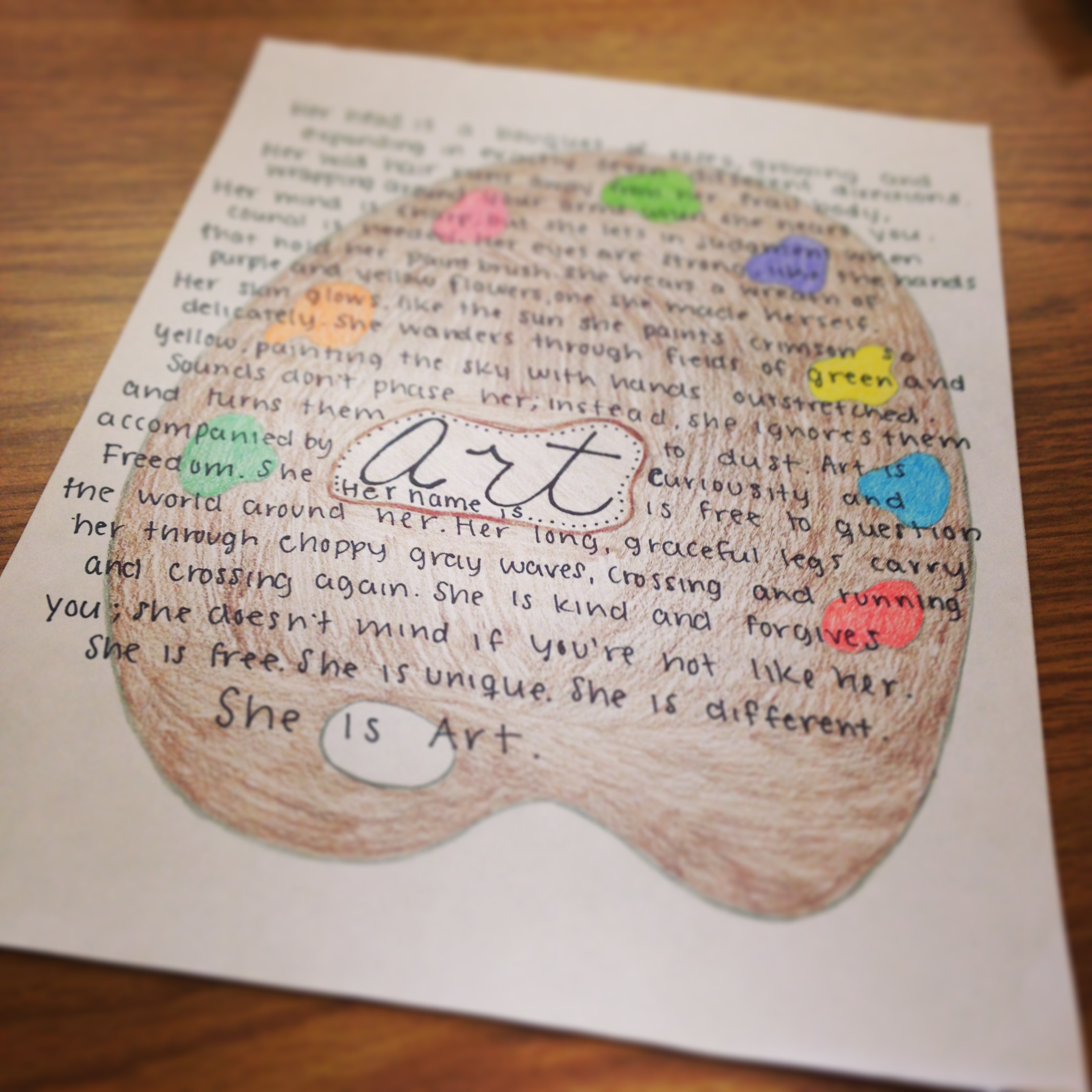
Personifying art--one piece from a student's multigenre project.

Personifying art–one piece from a student’s multigenre project.

Both my students and I love funky writing—the weird eccentricities of modern print where authors dabble with a variety of fonts, writing styles, photographs, and formats. There’s something about that departure from the norm that draws us in, holds our attention, and keeps us reading just to see what is on the next page.

In turn, when I began the multigenre project based on Tom Romano’s book Blending Genre, Altering Style: Writing Multigenre Papers, I knew I needed a new set of mentor texts to help guide my students’ writing. I loved sitting down to stacks of multigenre papers, and my students loved reading each other’s work. The problem was my students rarely had strong examples to guide them in developing the continuity that comes with one paper on one topic written through multiple genres. And so the search began.

This year, one of my new classroom shelves includes “multigenre books.” The benefits are twofold: students will become familiar with the multigenre concept before even being introduced to the project and they will see the unique ways a wide variety of authors diversify their work. The greatest part is that multigenre writing extends across a variety of literary genres.

Here are some highlights from my new collection:

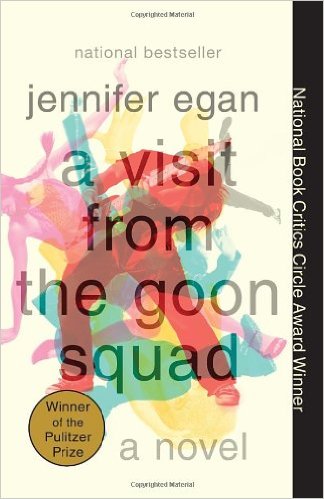
41HGJKFdW3L._SX327_BO1,204,203,200_51uJcmUm23L._SX322_BO1,204,203,200_A Visit from the Goon Squad by Jennifer Egan—Has an entire chapter in PowerPoint slides. How cool!

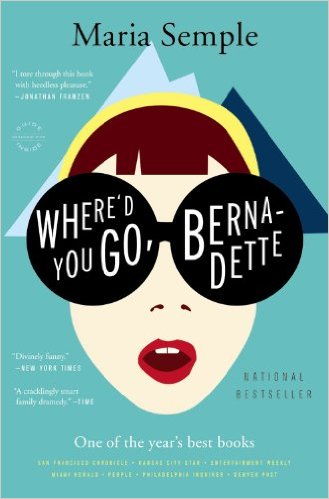
Where’d You Go Bernadette by Maria Semple—Amusing memos and e-mails illustrate character development and voice.

The Absolutely True Diary of a Part-Time Indian by Sherman Alexie – Hilarious doodles, caricatures, and cartoons. One ofmy all time favorite books!

Extremely Loud and Incredibly Close by Jonathan Safran Foer—Every year I have to assure a student that the red ink wasn’t a student’s bored graffiti; it really is part of the author’s the writing.

In the Company of Whispers by Sallie Lowenstein – Includes family letters and black-and-white photographs.

Eyes Wide Open by Paul Fleischman – Great use of infographics for research.

Why We Broke Up by Daniel Handler (author) Maira Kalman (illustrator)—Not only is it written in letter form, but the letters are about individual objects, all of which are accompanied by gorgeous illustrations.

The Art of Secrets by James Klise—Letters, articles, lists, and shifting perspectives keep you interested.

Encyclopedia of an Ordinary Life by Amy Rosenthal—Rosenthal not only wrote a memoir in encyclopedia entries, but she also made reading encyclopedia entries fun.

Yes, Please by Amy Poehler—There are two pages devoted to haikus on plastic surgery. What more is there to say?

Your turn! What multigenre books might you suggest? What are some new shelves you’ll be adding to your classroom library this year?

My Classes are Only 45 Minutes — How Do I Do Workshop?

It’s a movement, you know — this instructional practice called Readers and Writers Workshop. More and more educators are catching the vision and clarifying their focus as English educators. (There’s also a lot of nay-sayers, which I think means they are afraid. Let’s be patient with them.)

I received an email that asked a question that I wish I would have had answered for me years ago when I made the leap into choice reading and the workshop pedagogy. It’s important, so I knew it needed to be a post on this blog:

English I teacher asked:  I have a question for you about classroom routine. I felt I needed to ask someone who can answer with authority about this because there is significant resistance from teachers on my campus to the whole idea of workshop, especially from my department chair. For various reasons that I won’t bore you with, we need to do a “by the book” implementation. We will be under a lot of negative scrutiny no matter what we do, but things will go better if we are following some sort of precedent on certain details.

I’ve found specific information about block schedule and the frequency of in-class silent sustained reading, but I haven’t found anything for non-block schedules. We are non-block with 45 minute periods. I think I read on your blog that you used to use Workshop in a non-block schedule. When you did that, how often did you do the in-class reading?

I am glad you asked about non-block scheduling for workshop instruction. Yes, it is doable! I taught class periods of 50 minutes five times a week prior to moving to my current school. When I was first trying to figure it out, the best advice I got was from Penny Kittle. She told me:  “You choose to do this, which means you choose not to do that.” Here’s how I interpreted that:

If I have 50 minutes with my students each day. Every minute matters, so I must be intentional in the choices I make. 

I used to choose whole class novels and read at least part of the novels in class. I used to assign students guided questions to help their understanding of those novels. I used to give lists of vocabulary words and ask students to define, write sentences, create images. I used to give writing prompts and writing homework. I used to expect students to read and write outside of class without ever showing them the messiness, the thinking, the discovering of ideas and emotions and writer’s moves on the page. I used to make all the choices, and I expected my students to go along for the ride.

Some did. Many did not. It finally started to dig at me that many was so much greater than some.

I choose not to do any of those things now.

Now, my students and I choose to read books we find interesting, engaging, and important to our lives. We read, discuss, and write about how the ideas inside these books are windows to the world outside our own, and how they are mirrors into the joys, aches, and heartbreaks we see inside ourselves and within our families.

I wrote about 7 Moves in My Workshop Schedule a while ago. These moves are non-negotiable:  read, confer, talk, write, revise, share, mini-lesson. 

To make these workshop moves work, we must also include these tools as non-negiotables:  writer’s notebooks, mentor texts, high interest books.

As you begin to plan for your 50 minutes, think about this:  How can you ensure that all students read, write, listen, and speak in every class period? (These are best practices for English Language Learner’s, which in my experience means they are best practices for all students.)

You specifically asked about the frequency of in-class independent reading in a class period of 45 minutes.

Read every day. Every day. Every day.

If you want students to become voracious readers, time is the greatest gift you can give them. Students need to know that you trust reading as your ally. If you believe that through reading students will grow in fluency, stamina, vocabulary acquisition, comprehension… and empathy, which has been written about here Scientific American and here Psychology Today you must make it a priority. So how might this look in your classroom:
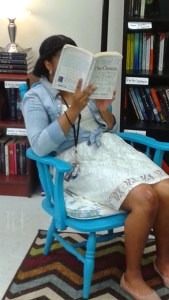
She asked for a book that would help her learn science and accomplish her reading goals. Students will challenge themselves if we let them.

She asked for a book that would help her learn science and accomplish her reading goals. Students will challenge themselves. Really, they will.

Read at the beginning of every class period — 10 minutes. You do not need a bell ringer or any other focusing task when students know that the expectation is to come in the room and get to reading. The first chapter in Steve Gardiner’s book Sustained Silent Reading offers some great information — and quotes Nancie Atwell on the importance of choice. Encourage and challenge students to read outside of school. Help them create goals, and them help them hold themselves accountable to reaching them.

Confer when students are reading. Make this a norm. Conferring moves readers workshop instruction forward. And students want and need us talking to them about their reading, about their thinking, and about their lives. One-on-one instruction happens here, and it is through this teacher move that belonging, identifying, coaching, challenging, and empowering happens.

When you create a classroom culture of reading, discipline begins to care for itself. It’s a matter of setting expectations and then being consistent with them. If I have a student who refuses to read, which happens at times, especially early in the year, I make sure she knows that she has that right, but she does not have the right to interfere with anyone else’s right to read. Sustained Silent Silence instead of Sustained Silent Reading gets boring after a while.

You’ve read, and you’ve conferred. Now, you make other choices about what to include in your instruction. These are ideas that work for my students:

Write about their reading. Now, I’m not advocating for dialectic journals or questions about plot and setting, but it is important that students become reflective about their reading. Find a balance here. We do not want reading to turn to work, and demanding that students write about their reading way too much may turn them off to reading.  Think about the books you and I read. How often do we have to write an essay about a novel we read?
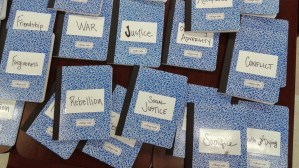
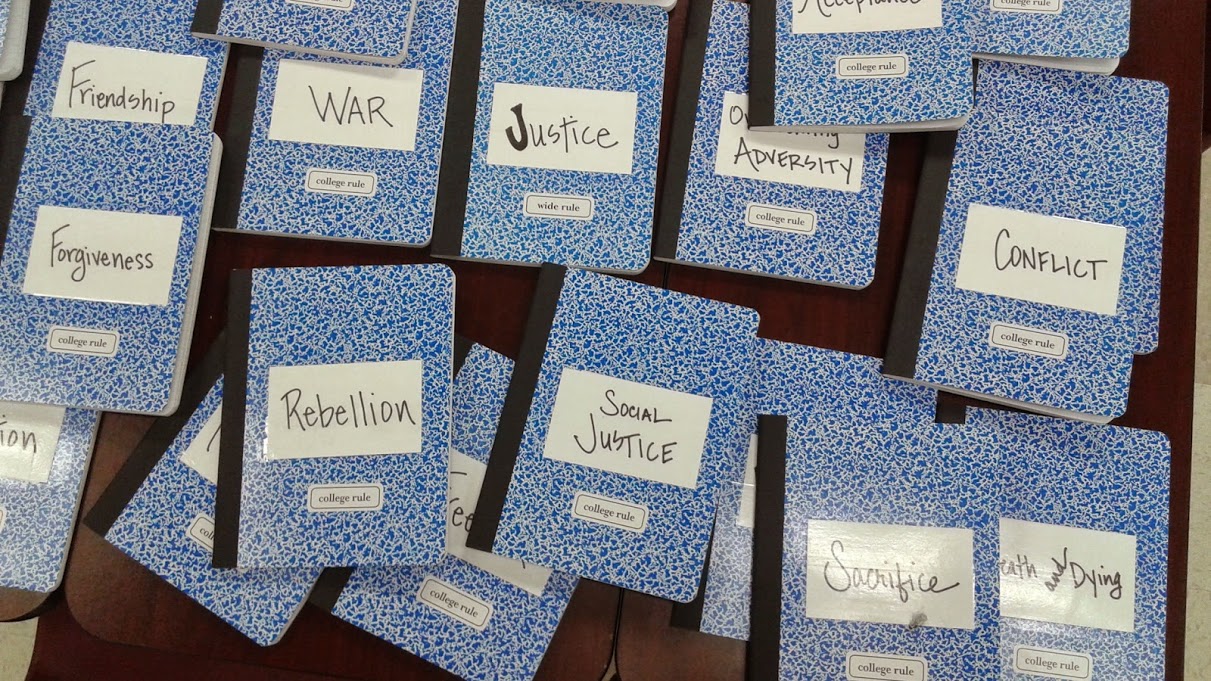
The topic notebooks in my classroom. We write in them about every three weeks. This is a fun way to share our thinking about our books.

Penny Kittle taught me about topic or “big idea” notebooks, and I’ve had a lot of success with these. (That link is to Penny’s Book Love handout, which has other great ideas for students to write about their reading.)

Teach skills in mini-lessons. I decide on mini-lessons based on two things: 1) my standards, 2) student needs based on what I learn in conferences.

Say I need to teach them about using the appeals in an argument, I may teach a mini lesson on logical appeal one day. Then I will ask students to do some flash research and find evidence of this appeal in either their independent reading, a news article, or an online text. We’ll share our findings and do a lot of talking — Why’d the writer use that appeal? How does it contribute to the argument? etc. Then, students will know I need to see them use that appeal in their own writing. We write (and confer) for the rest of the class period. Or, we share our writing in our writers’ groups.

Or, say I’ve conferred with half the class about their reading. I’ve found that half of those students are having trouble finding books with enough higher-level vocabulary to add to their personal dictionaries. I know I need to teach a mini-lesson on text complexity and what it means to challenge ourselves as readers. I may choose a few books with similar topics or themes and show my students a reading ladder:

Tears of a Tiger by Sharon Draper

Dopesick by Walter Dean Meyers

Homeboyz by Alan Sitomer

Tyrell by Coe Booth

The Absolute True Diary of a Part time Indian by Sherman Alexie

Letters to an Incarcerated Brother by Hill Harper

We’ll talk about why one book may be more complex than others. I might challenge students to read all of these titles and then tell me if I have the ladder right. (I may not, I haven’t read every one of these books, but I think I’m on the right track.) I’ll teach students about syntax and how that impacts text complexity as much, or more, than vocabulary. Then, I’ll challenge students to keep track of the complexity of the books they choose, not only by keeping their personal dictionaries up to date, but by adding codes to their reading lists. E – easy, C – comfortable, D – difficult. I show them my writer’s notebook and how this tracking helps me understand my reading habits.

Allow time to work. The greatest indicator that workshop works in my classroom is student engagement. When I allow students time to complete writing in class with me available to talk to and ask questions, they engage in the writing process more efficiently and effectively. I’ve let go of wanting a product, and now we enjoy the process of writing. We discover as we write. We revise because we know our writing improves as we revisit it. We share our writing because all voices in our classroom matter. The only way to accomplish these things is to build time to write right into the class schedule.

I wrote Choose to Become a Classroom of Writers a while ago. I still believe focusing on writing creates the smoothest transition to workshop instruction. Why? Because writers are readers first. Check out this post of 40 Inspiring Quotes about Reading from Writers. (Just a little proof.)

But that’s probably another post for another day.

Best blessings to you as you take off on this wonderful adventure with your students. Write any time: for support, for clarity, for whatever you might need. You’re blessing the lives of children. Our future –our society — needs educators like you.

Press forward (nay-saying department manager and all).

Warmly,

Amy

Dear reader, any advice you can offer our friend?

 ©Amy Rasmussen, 2011 – 2015

Mini-Lesson Monday: Read Like A Writer

B9qMI_GIMAEriTZEstablishing the structure of the readers and writers workshop is one of the things I’m most excited about for the beginning of the school year.  The way these early lessons are structured will make all the difference in the way students view our work, our time, and our goals as a team of learners.  As such, “reading like a writer” is one of the earliest mini-lessons I teach when we return to school.

Objectives – Using the language of the Depth of Knowledge Levels:  Make observations about how a writer conveys what he conveys; Apply what you learn to your own writing.  Or, from the Common Core:  Analyze how style and content contribute to the power, persuasiveness or beauty of the text.

Lesson – My students and I begin this lesson by discussing the notion of apprenticeship.  Many of them are studying a trade–electrical work, HVAC, autobody repair, etc.  They are able to quickly explain that an apprentice studies a master in order to learn how to master a particular set of skills.

I then share with students Katie Wood Ray’s excellent description of writing being a craft apprenticeship:  “Like any other craftspeople, professional writers know that to learn their craft, they must stand on the shoulders of writers who have gone before them” (Wondrous Words, pp. 10-11).

Next, I invite students to turn to their newly-selected choice reading books and open to the first page.  I work beside them, opening my own book.  “Usually when I start a book, I’m mostly paying attention to who the characters are, when and where the book is set, and all of those usual details,” I say, thinking aloud, modeling my process.  “Now, I want to re-read this first page of chapter one and pay attention to how this story is written, instead of what the story is about.  I want to learn from this writer.”

We re-read, and after a few minutes, I ask students to talk with their tables about what they’ve noticed.  After some time, I model once more my process.  “I’m just going to take one skill I noticed this writer using and try to name it.  This particular writer is using lots of repetition here on page one–see how the beginnings of all of these sentences look the same?”  I’m pointing to the writing, displayed on the document camera.  “I like how the repetition draws my attention to what comes next in those sentences–I think it might be important.  I’d like to use repetition in my personal narrative.”  I invite students to name one craft move that they might also use in their personal narratives, and to jot that skill down in their writer’s notebooks.  They use each other as resources if their own books didn’t offer anything they felt truly drawn to.

Follow-Up – Following the mini-lesson, we’ll move into writer’s workshop.  At the beginning of the year, we’re crafting personal narratives, and we’ll study a variety of mentor texts to help us understand the possibilities of what that genre might look like.  As we do, I’ll continue to reinforce the idea of reading like writers–apprentices to the craft of writing.

What are some of your earliest mini-lessons? Share in the comments!

Talking about the First Day of School

I keep changing my mind. Students begin next Monday, and I cannot decide what we should do first.

In years past, I copied the syllabus and various other “need-to-knows,” and students sat with blank stares and asked a few meager questions as we read through them together.

“Let them know on day one how difficult AP English is,” a colleague advised me several years ago. “That’s what I do. I let them know what they are in for.”

Before I knew better, I thought that was a good idea. Be firm. Be serious. Let them know that an advanced English class would take a lot out of them. Leave ’em shaking in their Converse.

How dumb. Imagine attending a professional development session where the instructor put on this show. We’d laugh — or leave — wouldn’t we? (I would. My friends already know how difficult a time I have sitting still.)

Shouldn’t our first day of school be inviting?

Think about elementary school, how kind the teachers were, how much they wanted us to feel welcome and special, beginning on Day One. I remember Mrs. McBee (1st grade), Mrs. Nelson (2nd), Mrs. Smallwood (3rd), Miss Dallas (4th), Mrs. Holland (5th) — every one of them smiled and laughed and made me feel important on the first day of school. They set a precedent for every day to come.

I want to be that kind of warm.

One year I thought I had less chill. I prepared my room by piling high-interest books on each table, and after a brief introduction, I told students my plan to help them love reading. I explained my expectations for their reading lives. They chose a book and read for two minutes, chose another and read, chose another and read. They did this reading carousel for several rounds, and I asked them to choose their first independent reading book. They did. I thought Day One a success because 7/8 of students left with a book that day.

They also thought I was crazy. Distant. Cold. Unapproachable. They told me this much later.

I realized my mistake. If you look at that paragraph above, you’ll see it:  all those “I’s” and “they’s”. Everything my students did on the first day of school had to do with what I wanted for them. I did not invite them to think, to explore, to discover, to talk to me about how they learned, or how they need to be taught.

Shana refers to “the language of control prevalent in teaching narratives” in her post Just Let Them Write: Boys and Autonomy.

I eat the language of control for breakfast, and rely on it for power all the way to dinner time. How dumb.

If I want my students to feel welcome, invited, inspired, to want to engage in the complex learning in our classroom, I must create the atmosphere and culture that welcomes, invites, inspires, and engages the moment they walk in the door. And I think it starts with conversation.

The first day of school — I think we are just going to talk. conversation bubbles various

We’ll probably read a poem, or two, and talk.

In the introduction to Dawn Potter’s new book The Conversation: Learning to Be a Poet, she reminds us of the value of talk:

“[Conversation] combines so many different kinds of reactions — wonder, worry, curiosity, opinion, delight, memory — and all work to expand confidence, emotional connection, intellectual growth, and civil engagement.”

Isn’t that the kind of community we want for our students this year — one that builds and sustains confidence, emotional connection, intellectual growth, and civil engagement?

I do.

©Amy Rasmussen, 2011 – 2015

3 Ways Notebooks Top Digital Writing

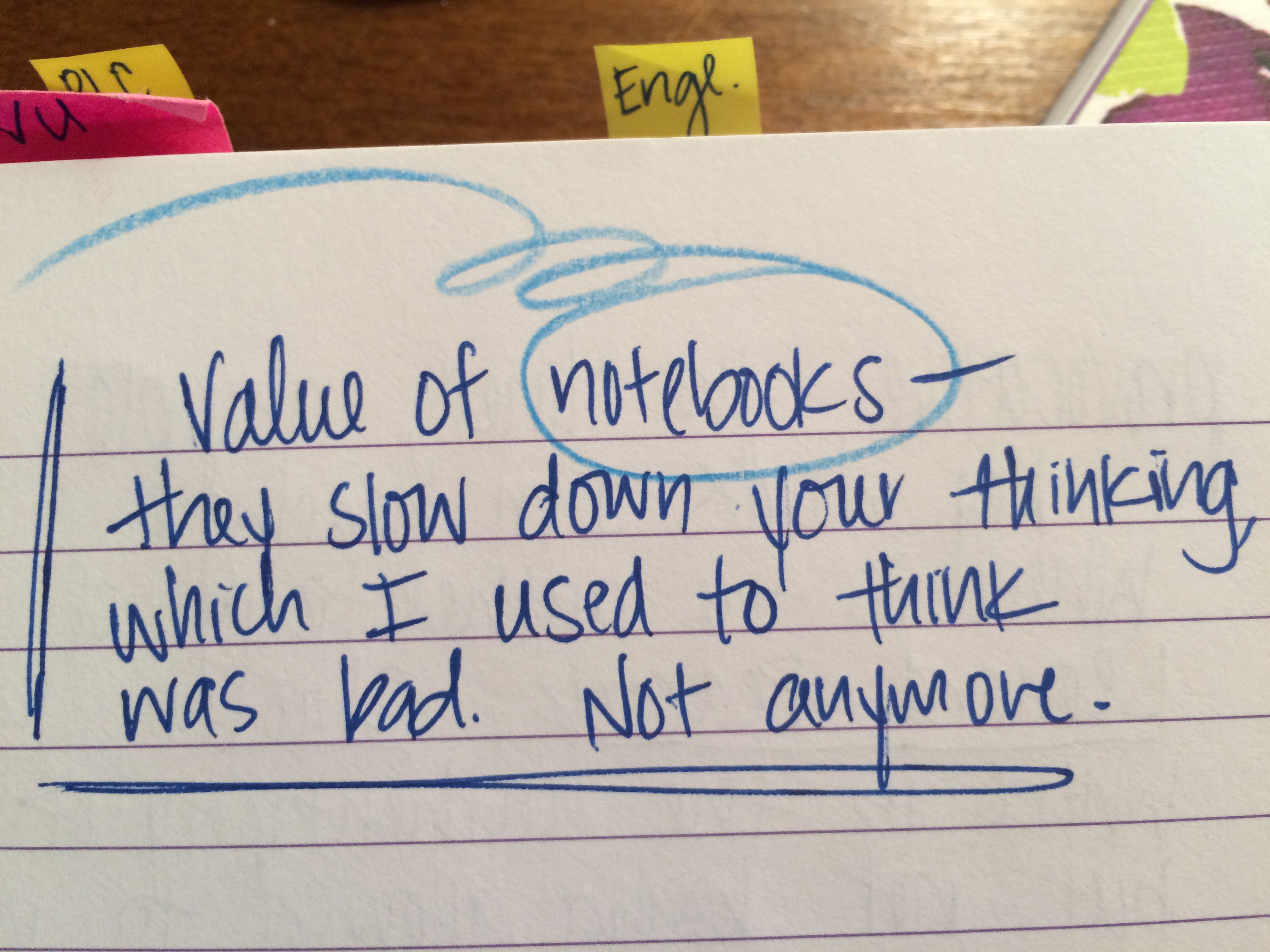
IMG_9111Has it already been two weeks since the last day of #UNHLit15?  Unbelievable.  Time is flying by, as it always does in the sweet summertime.  As I get older, I find myself wanting time to slow down…and that’s one of the perks of a writer’s notebook–it slows down a writer’s thinking.  At right is a note I jotted to myself during Tom Newkirk’s class two short weeks ago.  I’d been pondering the notion of length in my instruction–reading longer texts, writing longer pieces, sustaining an idea or a reflection for a longer period.  While brainstorming ways to do that, I realized notebooks were one way to add length to the thinking process.  They slow down a writer’s thinking, making it keep pace with the measured movement of a hand across a page, which is slower than the tapping of keys across a keyboard.  As Tom Newkirk writes in his credo, “I believe that slow reading runs counter to a media culture that stresses speed, distraction, and a loss of history.”  I believe the same thing of slow writing, in notebook form–it draws out thought in a way digital writing just can’t.

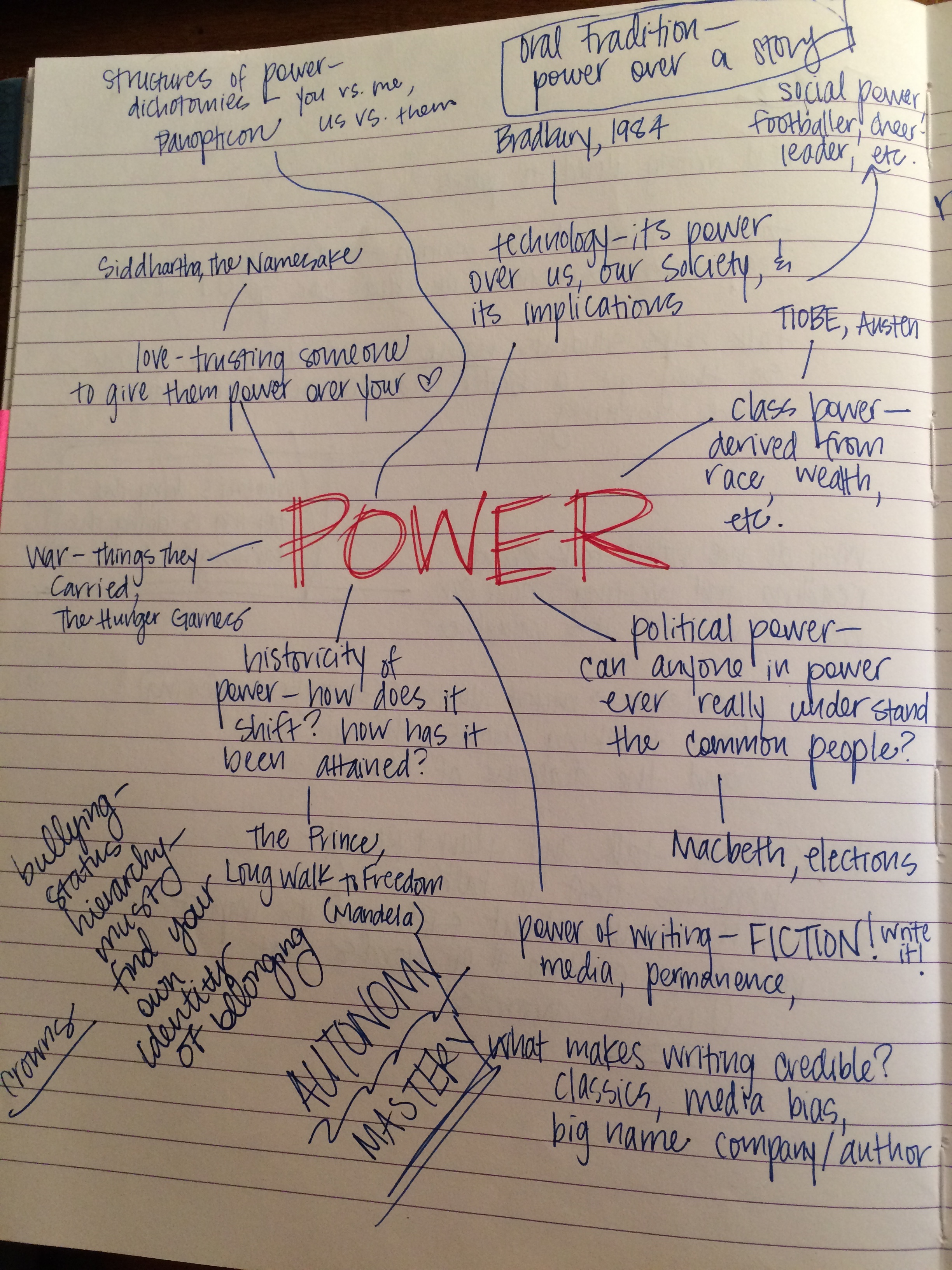
IMG_9110Notebooks also make thinking visual.  There is something about switching colors when revising, drawing lines to connect a tangled web of thoughts, or adding ideas to a pre-existing idea to show tangible growth that just can’t be done with a computer, voice recording, or video.  As I’ve pondered the theme of power–the overarching theme of my English 12 curriculum for this upcoming year–I’ve returned again and again to this page at my right, adding ideas, jotting inspirations, and connecting them to one another.  I’ve loved watching the page become more and more crowded, my thoughts finally spilling over onto the facing page before making it into my typed syllabus and curriculum map.  This visual map of my thinking is the most important part of my writing process, and without it, the typed pages I hand my students would lack coherence, focus, and quality.

Finally, notebooks illustrate volume in a way typed papers or blog posts just can’t.  Revisiting my old notebooks provides me a tangible location to mine ideas from–I can flip back to the summer of 2013 and find wild scrawls from my first class with Penny Kittle, or the fall of 2006 to see a plethora of hearts marking my budding courtship with my husband, or the spring of 2009 when I was frantically finishing my Masters thesis, evidenced by frantic scribbling and much crossing-out of ideas.  All of this evidence of my thinking takes up an entire bookshelf in my office, showing me proof that my thinking has evolved over time.  I want my students to feel that same sense of wonder and growth when they fill their second notebook by the end of our school year together.

Notebooks are a map, a timeline, a guide–to our lives, our minds, and our hearts.  They create a space for creative contagious concentration that is tangible and necessary, and which transcends the nebulous nature of digital writing.

3 Creative Resources to Ignite a Writer’s Notebook

As I mentioned in Contagious Creative Concentration: A Week in Reflection on Tuesday, there is so much to gain when we infuse creative outlets and ample time for students to stretch their minds during the learning process.  Amy’s posted comment, “I imagine I am guilty like many others of thinking: “If I only had the time.” Seems time is the enemy of creativity, or at least it is if we let her rule our lives. Thank you for this reminder about inviting creativity into the classroom. Coloring on the edges. I like that,” relates the learnings from the week at UNH’s Literacy Institute to the significance of infusing the Readers Writers Workshop model into our learning communities.

Jackie’s post from yesterday 3 Ways to Jump-Start Reluctant Writers also provides three concrete ways to joggle ideas for our student learners.  And to conclude our weeklong focus on the Writer’s Notebook, tomorrow Shana will be discussing more ideas on how to make them a (creative) staple in all of our classrooms.

So, as the four of us here at Three Teachers Talk continue to write and think and process through the importance of the Writer’s Notebook and our excitement towards implementing them on Day 1 of our new school year…we invite you to do the same.  Here are some resources to spark and intrigue learners of all ages and to support them in embracing their inner originality and individuality:

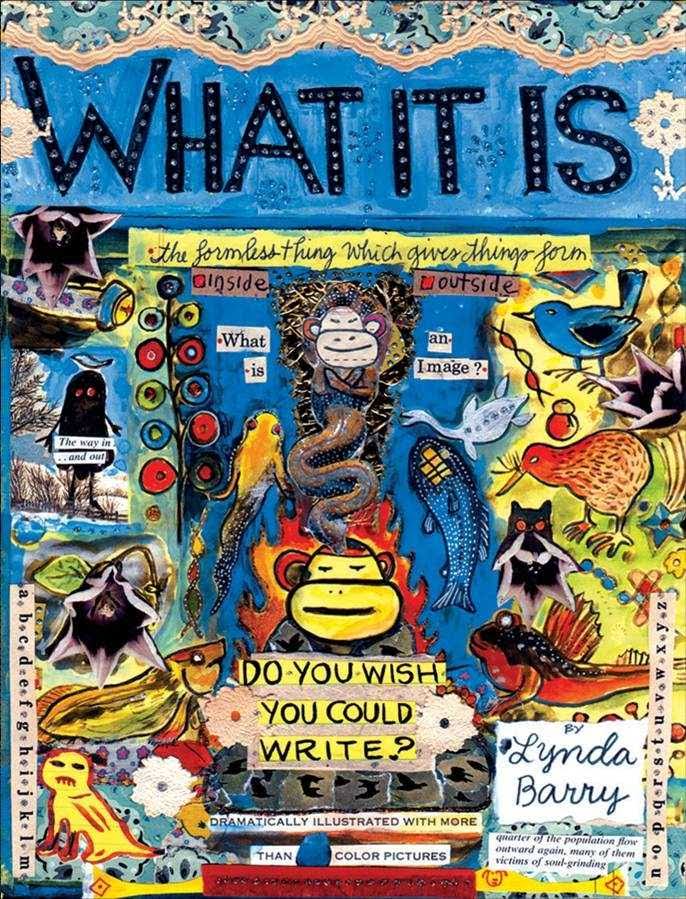
Lynda Barry’s works are phenomenal.  I suggest you hop onto her website to take a look at her thinking, pedagogy, and resources…and to also enjoy an interactive look inside her books. (Some pictured here.)

Syllabus

What it isPicture This


Mindful Coloring


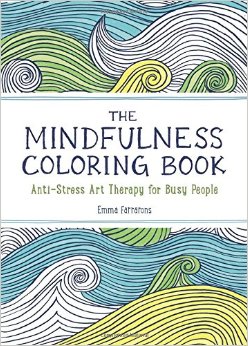
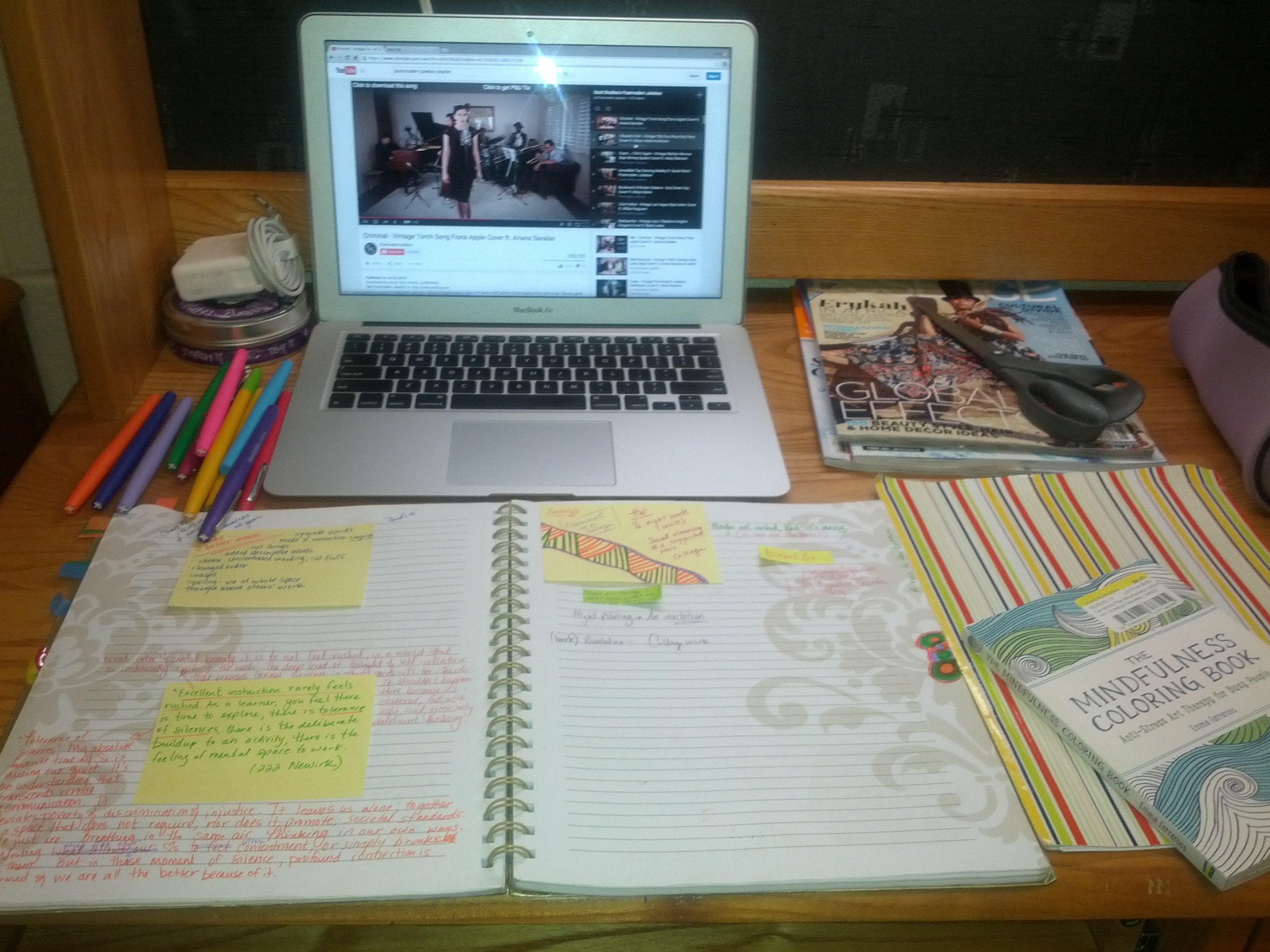
The Mindfulness Coloring Book is a coloring book that provides page after page of innovative visuals to be colored however the user so wishes.IMG_20150727_211908 While doing so, one’s stress decreases and focus increases.  Here’s a peek at how I utilized it while taking a graduate course this summer – in an attempt to balance the workload with an element of zen.


Art-of-Zentangle


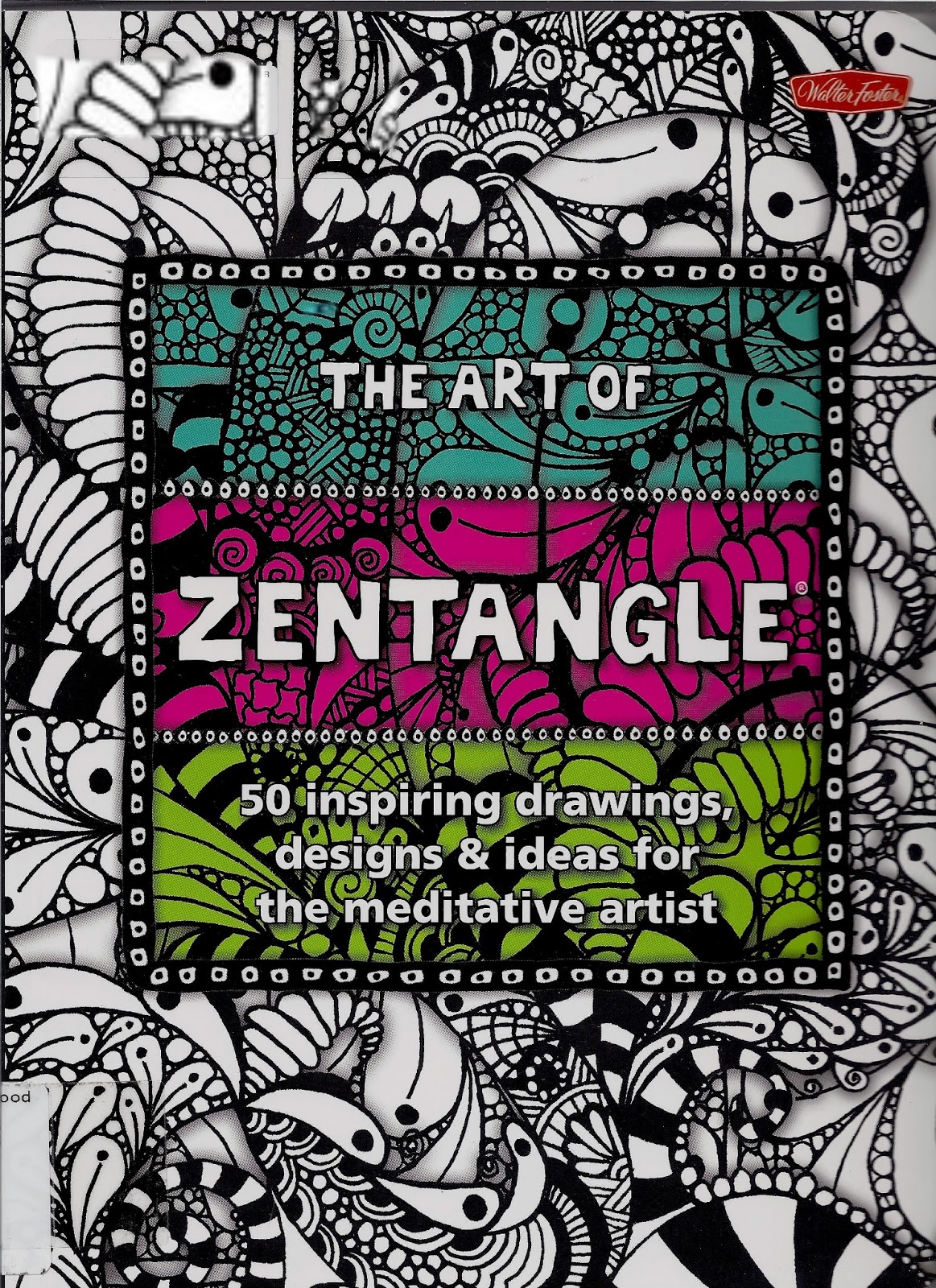
The Art of Zentangle explores the artistry and creativity for those looking for a bit of a challenge – as so many of our students are, yet it is incredibly accessible for doodlers of all levels.  There are a plethora of tutorials on youtube.com for you to start your hand at zentangling while also sharing the process with students.


I hope these resources have inspired you to think about lessening stress levels; providing students an outlet that ultimately drives their focus and concentration; and how to organically and authentically let students explore their inner-most thinking through the art of creating.  And, if you happen to find (or already know of) resources that students are thoroughly enjoying, please leave the titles and anecdotes in the comment section below.  The list of creative resources truly does go on and on!

3 Ways to Jump-Start Reluctant Writers

IMG_1703My younger sister Brittany is a phenomenal writer; in school, she excelled in all subjects, including English, but I never saw her struggle quite as much as when she was required to keep a writer’s notebook. For me, writer’s notebooks had always been liberating. I kept one in my spare time after having read Ralph Fletcher’s A Writer’s Notebook the summer before sixth grade. This was not the case for my sister though who, at the urging of her teacher, would write, “I do not know what to write” for ten minutes straight. Her teacher would tell her, “You’ll figure out what to write after a while,” but she clearly didn’t know my sister who is not only brilliant but also strong willed and persistent. In turn, when I told my sister I’d be integrating writer’s notebooks into my classes, she groaned, saying, “I hated those things.”

Brittany’s PTSD was reasonable. When used without encouragement or prompting, writer’s notebooks can become tedious and painful. Students can easily learn to loathe this tool that should otherwise be fun and stimulating. In turn, when my students explore their writing, I make an effort to help fuel their ideas and interests through a variety of writing activities and exercises that oftentimes help even the most particular writers.

  1. Prompt Board: At the beginning of the year, I ask students to write 3-4 pages in their writer’s notebooks. This helps students establish a writing routine and it helps me to learn about my students quickly. That being said, many students stall when it comes to putting pencil to paper. After running into this problem early on, I began posting five writing prompts per week on the side of my main white board. These topics included personal questions about students’ interests or extracurricular activities as well as sentence starters and fictional scenarios intended to lead into creative writing. I compiled the majority of these prompts off of social networks like Twitter and Pinterest, but I also use sentences from my book talks during the week as prompts as well. I post these prompts on my website in a separate section so students can always go back and revisit the prompts from past weeks.
  1. Ideas Shelf: Teens love thumbing through the pages of oddly shaped writing books. One of my most well-loved books is a cube shaped book called The Writer’s Block, which has “786 ideas to jump-start your imagination.” That being said, there are plenty of fantastic average size books that I store on an ideas shelf, which also includes 642 Things to Write About, Now Write: Nonfiction, Now Write: Fiction Writing Exercises From Today’s Best Writers and Teachers, and 100 Quickwrites by Linda Rief. When stuck, students gravitate towards this shelf. In addition, with the help of my Writer’s Club, I am hoping to add a jar of words, images, and prompts this year for students to pull from whenever they are struggling.
  1. Self-Guided Activities: As the adviser of Writer’s Club, I always have trinkets on hand Rory's Story Cubes for StADato help students put their pencils to paper. Some of my students’ favorite toys include Rory’s Story Cubes, which are dice with small pictures on them. Students can toss a handful of dice and incorporate the images into a story. I also have a collection of old skeleton keys I bought at a craft store. Tied to each key is a tag with a sentence starter that discusses where the key might have been found or what the key opens. Another easy activity involves collecting paint strips from your local hardware store and having students write stories involving the absurd color names on each strip.  Finally, I love utilizing found photography like the pictures from Miss Peregrine’s Home for Peculiar Children or old calendar images to get students thinking. I have a collection of small Dana Heacock calendar images, which are brightly colored drawings of New England scenery or objects.  These images oftentimes stir up students’ memories of childhood and lead to fantastic personal stories.

How do you help inspire your reluctant writers?  What methods do you use to jump-start their independent writing process?

Contagious Creative Concentration: A Week in Reflection

IMG_20150727_203430 (1)

Creative concentration is most definitely contagious!

This summer at the University of New Hampshire’s Literacy Institute while Shana, Amy, and Jackie were studying with Tom Newkirk in their plight to dig deep into the lives of males and their literacy (needs), I was across the hall studying with Penny Kittle (and other fabulous educators nationwide) in a course titled Contagious Creative Concentration.

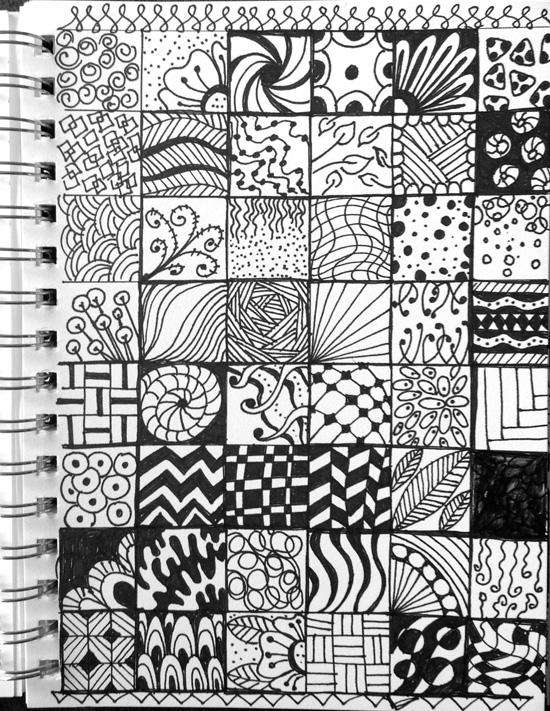
The ledges were lined with pieces exposing the truth about doodling, coloring, sketching and zendangling.  The truth is that while reading and writing is foundational to all literacy

The Art of Zendangles: Unique repetitive patterns infused with creativity and focus.

The Art of Zendangles: Unique repetitive patterns infused with creativity and focus.

movement, there is also much need for the art of creativity to be infused into the Readers Writers Workshop – regardless of grade level.  And while we had the opportunity to “play” alongside the rigorous workload we were collectively engaging in, there was a calm that permeated throughout the entire week.  There was color.  There was focus.  There was deep level of inquiry.  Yet, there was rarely a moment that colored pencils or adult coloring books were not being utilized during the process.

An article published in The Atlantic: The Cognitive Benefits of Doodling explores the benefits that enhance one’s performance.  The studies and stats are real – exposing educators everywhere to understand the importance of this type of creative play.

Two women writers who, not only holistically believe in the ideas outlined in the above article, but shared their knowledge and creative process with us during our time at #UNHLIT15 were Lee Ann Spillane @spillarke and Linda Urban @lindaurbanbooks.  Both published authors who embrace the creative process as a means (and a journey) to authentically design and originate their work.

Work in progress

Work in progress: My own thinking

While we were exposed to those who have been finding success throughout their personal creative journeys, we were also asked to think about utilizing collage work to demonstrate our own creative process.  (For educators who employ the format of the Writer’s Notebook suggested by Penny Kittle, it is dedicated to this element of creativity.)

Last March I posted Today We Draw chronicling the day students and I needed a break from the constant push and rigor of our daily work together.  At that time, I recognized the importance of breaking for us to explore a creative outlet, yet what I’ve learned this summer is that it is downright unfair to carve out days for creativity and exploration.  It needs to be a daily constant in all of our classrooms.  Students need to have the freedom to doodle on the corners of pages, zendangle on a post-it, or engage in some good old fashion fun equipped with a coloring book.

So, as I start to plan for the upcoming school year, I find it imperative to ensure that pencils (of all colors) are sharpened, coloring books are displayed, and doodling is not only encouraged but a constant in our community.

What are your thoughts wrapped around the idea of creativity (in all its forms) being invited into your classroom community?  What success have you had in doing so?  


Fart Jokes in 12th Grade

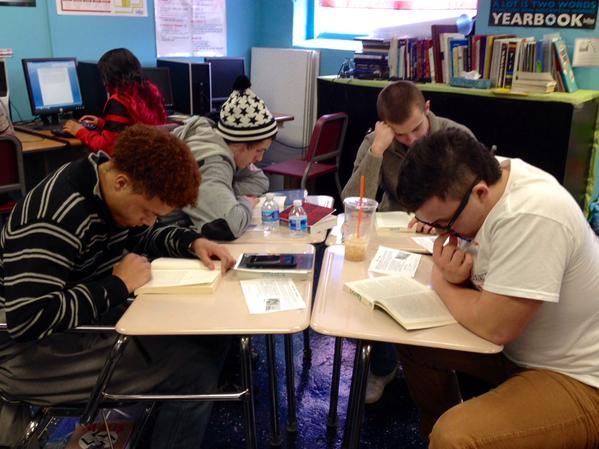
photo 2-2Three minutes into silent reading, someone farted. I have the band-aid colored desk-chair combos, which meant that one vibrating toot was magnified against the metal frame of the guilty student’s seat. The room stayed silent for half-a-minute and then erupted in laughter. The girls quietly chuckled, but there was no way the boys could settle back into their books, so we moved on to our minilesson and called it quits.

My boys can’t get enough of lowbrow humor. Their writer’s notebooks and fictional stories are full of crass humor—farts, sexual innuendo, embarrassing stories, and offensive humor. For years, I chalked up their obsession with these topics to immaturity. I love a good fart joke or sarcastic paper, but I never truly understand the point.

Newkirk argues that humor is a mode of exploration for students, particularly boys. Instead of chastising them for vulgar or lowbrow humor, teachers should capitalize on boys’ love for the weird, gross, and funny. He pointed out that classic literature is full of crass humor, citing Beowulf and Shakespeare as examples. Boys, he noted are inclined to read humorous literature and use these as mentors for their own writing.

Too often though, teachers either don’t understand boys’ humor or they fear that the silliness somehow undermines the assignment. This shouldn’t be the case. Just as we give girls the room to explore emotionally charged pieces about self-confidence or dating, we must also give boys the opportunity to investigate their own questions, which may very well include both humor and violence, as Shana discusses. In an excerpt Newkirk gave us from Boy Writers, author Ralph Fletcher notes that “some of the crass humor in their writing (burping, farting, dirty diapers) tries our patience, but many boys are simply making ‘text-to-text’ connections between their writing and the kind of humor they read in books.” These connections are invaluable when it comes to capturing the attention of our male students.

IMG_2367In turn, we must allow our boys a space to explore humor. Sometimes jokes are just funny, but other times, they soften heavy themes in literature. They open up deeper discussions that are otherwise inaccessible or uncomfortable. As Newkirk writes in Misreading Masculinity, “[Humor] provides a forum for negotiating and sustaining male friendships, and of making overtures to girls. It allows us all to laugh at the peculiarities of our bodies, as we escape, if only briefly, from our embarrassment at the sounds they involuntarily make and the smells they produce” (Newkirk 167). Will students toe the line between inappropriate and appropriate humor? Most likely. Will they take their jokes too far? Potentially. But learning is about testing our surroundings and studying voices to find our own. At the end of the day, I’d much rather my students explore their world through laughter than not, fart jokes and all.