Category Archives: Writers

What Should I Read Next? – How to Further Fuel Your Bibliophilic Ambitions

Hypothetically, this post will offer upwards of 387,993 book recommendations for your ‘To Read Next List.” Honestly, I’m terrible at math, so that number may be a bit hyperbolic, but I bet it got your attention. Realistically, you may be cursing me by the end, because summer is NOT going to be long enough to explore all of these texts, even the mere fourteen I’ll link up to below may give me a run for my money (not in number, but I already have a lengthy “to read” list!), but oh my, my, did I hit the book recommendation jackpot.

My gal Shana who texted me just a few days ago suggested a podcast that has quickly become my latest obsession. Shana knows what’s what. She’s up writing at 5:00 A.M. almost daily, has rearranged her extensive personal book collection in a color-coordinated bliss that reminds me of High Fidelity, and is moving her family to Wisconsin to be closer to me. Ok, she may be moving to Wisconsin because of her lovely husband’s medical career, but she will be in the same state as I am. In short, she’s all kinds of awesome and I trust her recommendations implicitly. When she told me I needed to listen to this podcast, because it reminded her of me, I was tickled.

My husband is likely glowering as he reads this, knowing he has been trying with little success to get me hooked on podcasts for nearly a decade, but Shana’s suggestion that I check out the What Should I Read Next? podcast with Anne Bogel has my book list laden with enough literary lovelies that I’m going to need to take a sabbatical.

what should i read

Ms. Bogel is the author of the hugely successful, and likewise entertaining, blog Modern Mrs. Darcy, that explores countless angles to life as a modern woman.

Readers Beware If you click on the above link, you will land down a delcious rabbit hole of reading guides for book clubs, summer book lists, links to works of major authors, not to mention over one hundred podcast episodes talking about books and reading. It’s a biliophiles delight for sure.

After listening to only one episode of her podcast,  I wanted to someday be able to claim to have known Anne Bogel for years and chatted with her about books over a big bowl of Chex Mix with Peanut M&M’S, and I had a list of fourteen books that I want to check out. That’s a book recommendation every four minutes in a fifty-two-minute podcast. (My list from the followup episodes I’ve digested is likewise lengthy).

On this episode (one of four I have listened to in just the past three days), Annie Jones, owner of The Bookshelf bookstore in Thomasville, Georgia, chats with Bogel about recommendations for summer reading and the joys and trials of reading for a living.

As my workshop teacher senses apparently never go off, I not only mentally cataloged a lengthy list of book recommendations, but some advice I wanted to share with my students next year as we set reading goals and look to the future of our reading lives in the 2018-2019 school year: Never allow your reading life to be bogged down by a number. Whether you feel overwhelmed because your goal is so lofty that you end up flying through books instead of relishing them, or you nervously look at your elbow partner’s number and yours is nowhere near the depth, breadth, or drive of his/her reading life, don’t get discouraged.

Reading is all about finding balance.

The balance of goals with other parts of our lives.
The balance of genres.
The balance of what we feel we should read vs. what we want to read.

So, without further ado, here are a few suggestions from episode 132, “The books we can’t wait to read this summer”:

  1. I’m a huge fan of historical fiction. Last Christmas break it was America’s First Daughter by Stephanie Dray and Laura Kamoie (and their latest, My Dear Hamilton). In episode 128, Tracie Haddock recommends I Shall Be Near to You by Erin Lindsay McCabe. A woman disguising herself as a man to fight in the American Civil War? I’ll raise the flag for that!
  2. I often feel like I’ve got to read what’s hot. Well, what about what was hot a few years ago? Jump back a few years and check out these biographies of some seriously awesome women. Abigail Adams by Woody Holton and Wrapped in Rainbows by Valerie Boyd.
  3. Looking for a super hot memoir?  Educated by Tara Westover fits the bill. I had a student scoop this one up, but I am going to make sure to get it back and read it myself over the summer.
  4. Looking for last year’s super hot memoir? Try The Sound of Gravel by Ruth Wariner.
  5. That Kind of Mother by Rumaan Alam was named one of the most anticipated books of 2018 by everyone from Buzzfeed to Vogue. A text classified as “Women’s Fiction” that’s written by a man and recommended by Celeste Ng. I feel like name-dropping, in this case, is what it’s all about.
  6. The Royal We by Heather Cocks is the ultimate Kate Middleton fanfiction. So…yeah. Beach read, anyone? This is a quick downhill on the Penny Kittle reading roller coaster for sure.
  7. Station Eleven by Emily St. John Mandel was one of my favorite reads this year and disappeared from my classroom the day I book talked it with the quote “Hell is the absence of the people you long for.” Post-apocalyptic symphony, pandemic flu, and multiple plotlines make this a truly powerful read.
  8. For musicians, lovers of music, and those that buy books based on their covers comes The Ensemble by Aja Gabel.
  9. A Place for Us by Fatima Farheen Mirza arrives in June and introduces Sarah Jessica Parker’s new imprint, SJP for Hogarth.
  10. Tangerine by Christine Mangan is a delicious Gone Girl type historical mystery. And to take it up a notch…
  11. Social Creature by Tara Isabella Burton is apparently the R-Rated version coming out this summer.
  12. The Hazel Wood by Melissa Albert will most definitely be in my classroom library next fall as a YA fairy tale about fairy tales.
  13. The Widows of Malabar Hill by Sujata Massey follows a young lawyer in 1920’s Bombay as she tries to execute the will of a man who leaves behind three young wives. This book is a multicultural adventure that introduces a sharp new sleuth for mystery lovers.
  14. Coming in July, The Incendiaries by R.O. Kwon which is a “powerful, darkly glittering novel about violence, love, faith, and loss, as a young Korean American woman at an elite American university is drawn into acts of domestic terrorism by a cult tied to North Korea.”

There is certainly something here for everyone, and the few episodes of this podcast that I’ve listened to would suggest that there is something for everyone at What Should I Read Next? too. It’s quickly become my go to as I twiddle my thumbs and wait for my Libby library holds to catch up with my ambitions.

Happy listening and happy reading, friends! Summer IS just around the corner.

What’s on your summer reading list? Have you read any of the books in the recommendation list above? What did you think? Please comment below!


Lisa Dennis teaches English and leads a department of incredible English educators at Franklin High School near Milwaukee. Her current read is A Gentleman in Moscow by Amor Towles and she’s eagerly awaiting her next Libby hold, Stephen King’s On Writing.  Follow Lisa on Twitter @LDennibaum. 

Vindication of Choice in the AP Classroom

Every May, my panic that I have not taught my students enough for the AP® Literature exam, pride and concern as I send my “little ducklings” to fly alone into the exam room, and eager anticipation of the memes flooding Twitter from the East coast testers (which I never, ever re-tweet), is quickly followed by the nervous energy of my students as they visit my classroom after the test.

Of course, human nature dictates that they want to relive every moment and consult with their peers about how they answered different questions, but my duty to the College Board prompts me to remind them not to discuss specifics about the exam itself. Instead, I urge them to talk through their feelings and reflect on what they might feel good about, such as writing 3 complete essays. Each year offers its unique triumphs and hair-pulling challenges. “The Juggler” poem a couple years back stumped even my most adept analyzers, but they did have fun crafting juggling metaphors for the remainder of their senior year. Thus, I have come to anticipate the perplexed reactions to one or more of the essay prompts on the exam. A safe question I often ask to avoid specific test-discussion is: what book did you choose to write about for the Q3 essay?

While I’ve learned that it is difficult to gauge how students actually performed on the exam based on their immediate self-assessment, I know that over-confidence – “it was easy” – is almost as bad as total pessimism – “I only wrote 2 of the 3 essays and the multiple choice was killer.” But that one question about book choice tells me a lot. It tells me about their overall confidence level, sense of preparedness, and even what level of enjoyment they experienced during the test. Yes, enjoyment. As my course moved away from a model in which I assign specific texts (so we can experience them together) and toward choice (so students can shape their own experiences, with support), my students have increasingly come back talking excitedly about which book they wrote about on the exam.

This year, because my students brought friends from different, more traditional, AP® classes with them to eat lunch in my room after the exam, I could hear the difference in the way they spoke about the books they referenced on that Q3 essay. My students said things like: “I thought I was going to write about Wuthering Heights because it fits so many prompts, but when I read the prompt, it screamed The Handmaid’s Tale to me. I’m so psyched that I got to write about that!” Another student enthusiastically described how he wrote the “best essay [he’s] ever written, and it was about Frankenstein.” Students went on to discuss the variety of books they wrote about, from The Art of Racing in the Rain to Les Miserables. Students from the other class sullenly and universally explained how they wrote about Beowulf because it was the text they had “been taught” the most thoroughly and therefore “knew the best.”

And there it was. A vindication of choice in the AP classroom. Scores will not be made available for a couple of months, so maybe all those passionless (and I’m going to guess, formulaic) essays about Beowulf will be strongly written and score higher, but what about the passion for reading? My students chose to read those rich texts, and when push came to shove during the exam, they chose to write about them because they saw the value in the book – not because someone told them of the book’s value.

Choice continues to be a source of contention in many English departments, but I cannot understand why. Choice does not mean that students cannot read from the canon. In fact, my students always choose both canonical and contemporary works “with merit” through the course. Teachers can set parameters for choice by offering text sets that connect by literary era, theme, heroic journeys, archetypes, and so on. Choice can be applied to shorter text selections instead of novels. So much has been written on why choice works by bigger fish in the English sea than me, so I will just leave you with this: my students were joyous when they spoke about writing the 3rd essay on a mentally exhausting, hand-cramping exam, and it is because they chose what to read and experienced the autonomy of deciding which of their books they felt they could write their best essay on. Since my goal is to create readers and writers, I could not ask for better evidence that choice helps them toward this goal.

Image result for book choice

Books instead of Bullets

SF StrongIn my short time here as a regular contributor to Three Teachers Talk, this was the latest I’d waited before composing a post.  Though, that’s not really true.  I had a post mostly written last week where I reflected on this year we had and looked forward to a new start next year at a new school.  It would have been similar to this recent and amazing post by Sarah Morris.

Then Friday happened- 10 lives gone and countless others changed forever.

I struggled this weekend with how this post was going to go.  I’m not looking for sympathy here because obviously the 10 families who lost loved ones or the kids who watched their classmates be gunned down in front of them are truly the ones deserving of our hearts.

Like so many not directly affected by this tragedy, though, I struggled.

I struggled to stay composed when a student quietly sat down next to me at 7:55 am and said, “Coach, did you see this?” His phone showed a social media post about students being shot a high school not too far from us.

FullSizeRI struggled because I realized how comfortable I am using the term “active shooter” in a text message to my wife at 8:11 Friday Morning. This was the text message I sent her after I pulled up a local news website to see if it was true or anther false alarm.

I struggled because when my student council president told me she was scared walking down the hall at 1:00 that afternoon, the only response I could muster was, “I am too, and I think its going to feel like this for a while.”

msd

I struggled remembering that I wore my #msdstrong t-shirt to visit the Sequoias at spring break hoping to send a little bit of support to those in Parkland, Florida who lived through this earlier in the semester.

(Side note: I was at exactly this point in writing my post when my student council president called and asked if we can sell t-shirts to help support Santa Fe High School.)

I struggled because when my babies, a 2nd grader and a 5th grader, got off the bus at 3:30, I felt obligated to sit them down and tell them that a boy at a local high school decided he needed to kill his classmates. I couldn’t hold back the tears and my daughter, in her innocence, asked if my school had had to go into a “lock down.” She’s very familiar with what that means.

I struggled early Friday evening when, sitting in a colleague’s living room, myself and several other teachers celebrated the retirement of a woman who gave 44 years of her life to this profession.  I looked at the teachers sharing stories and laughs, at the sleepy dog on the floor, and the nine month old baby that kept stealing everyone’s attention. I wondered how I could balance feeling thankful to have spent the last 11 years working with this amazing person and at the same time think about how thankful I was to be alive.  I felt thankful that my school wasn’t the one to lose lives that morning, and that made me feel horrible.

I struggled when, an hour and a half later I was sitting in a quiet backyard celebrating the upcoming graduation of two of the most amazing people I’ve ever known. They are twins and I got to be the boy’s position coach in football for four years and the girl is my previously mentioned student council president.  Their parents are amazing too and as I sat there visiting with them, I couldn’t wrap my head around how our society can produce these kids and also produce a mass killer less than 13 miles away.  He took the lives of  innocent kids, like these, that morning.  Kids who who had so much to look forward to and didn’t do anything to deserve death.

I struggled because, once again, I had to think about whether or not I would be able to protect my students if bullets flew at my school.  I asked my self the questions: Am I doing the best I can to stop this from happening again? Is there really anything I can do?  Is there anything anyone can do?

I struggled because I knew we can’t take up all the guns and I’m not sure, if asked, that I would give up mine.  We can’t eradicate mental health issues.  We can’t hold schools inside of solid-steel sealed boxes.

I didn’t just struggle. I also hoped.

I hoped that instead of turning inward, we can turn outward.  That maybe we can intervene in these students’ lives in ways that goes beyond dress codes, GPAs and graduation rates. Perhaps we can instill a sense of urgency in our young people, our future, that causes a change in them where instead of acting out their demons on one another, they look to each other for acceptance, love, or even just help. Maybe we can be more like the players and coaches of the Clear Springs Baseball Team who dedicated their game Friday night to Santa Fe.

I hope that even though I’m not sponsoring student council at my next school, I can help build on what we did this year.  I was lucky enough to be chosen to present at our district’s upcoming Character Conference on June 6th. I’m sure there will be presenters at Clear Lake High School that day who can help make change. I won’t technically be presenting, just facilitating what I think might be the only student presenters at the conference.   The student council officers of Clear Springs High School will share their stories of reaching out to our elementary feeder schools in an effort to build leadership and pass on the lessons they’ve learned to the next generation.  Maybe more students like them can make connections that help prevent massacres.

I hope more teachers and administrators realize that our students can do amazing things when we give them the space and the resources they need.  When we keep them free of the burden the adults choose to carry.  But the adults can help too.  I can’t think this would have happened if shooter had more access to books and less access to guns.  I can’t help but wonder if we treat our students with more gravitas then they just might tell us when they think something like this is going to happen and maybe we can have the chance to stop it.

I hope the teachers at my new school get used to a man (who’s been mistaken for a grizzly bear) telling other peoples’ babies that he loves them.  I hope I’m not the last person to tell them that.

Charles Moore is a teacher in League City, TX.  He is enjoys welcoming his kids off the bus with a smile and a hug every afternoon and making sure the dishes, laundry and other household needs are met before his wife gets home from work. The student council he sponsors will, hopefully, be selling t-shirts these next two weeks to support the Santa Fe community. Please email him if you are interested in helping and follow his twitter @ctcoach for more information.


Fitting It All In: The Think-Aloud Book Talk Combo

One of the questions I often hear about the workshop model (and truth: that I have often had myself) is how do I fit it all in?

We are “supposed to do” quick writes, independent reading, notebook work, small group discussion, whole-class discussion, think-alouds, read-alouds, writing along with students, conferring, anchor charts, building writing stamina . . . the list goes on.

Oh, and we need to do that while mastering assessment literacy, fostering positive relationships with students, offering timely and relevant feedback, developing units beginning with the end in mind, finding time to do our personal reading and writing, participating in our PLNs, developing collegiality with our coworkers, and staying current with our own professional development and practices.

It’s overwhelming to look at the list of “musts” and think that teachers are expected to do it all. The good part is that we don’t have to do it all every day. However, there are two things I find non-negotiable on a daily basis.

One of the non-negotiables is time in class for independent reading.

We do this every class period after the book talk. It’s predictable to my students that I will say “If either of these books sound like something you’d like to read, put them on your next reads list.” And then they start their silent reading.

book talk lists

Every book talk title is written on poster paper so that students can look back at them later.

The above exchange between teacher and students implies that we always have book talks, and that is in fact the case. But I find that book talks take more time than I want to take when I do them justice . . . three to five minutes can go by fast. I tried to speed them up, but I felt less engagement from my students, and fewer books were being checked out. So then I decided that instead of speeding it up, I’d try to incorporate some other “musts” into the book talk time, thereby getting “more bang for my buck” when I spend important class time.

I decided to try doing a cold read-aloud/think aloud as a book talk, sharing my thinking, questions, connections, and wonderings as I read the inside flap, discussed the cover, and read the first paragraph or so aloud.

I started with statements like, “I picked up this book because the cover caught my eye, and I don’t know anything about this book.” Or, “I am wondering about this book because I know it’s written by an award-winning author, and I’d like to know more.” Then I would deconstruct the cover, noting any awards and/or endorsements it might mention on the front or back cover, along with graphics, pictures, and blurbs.

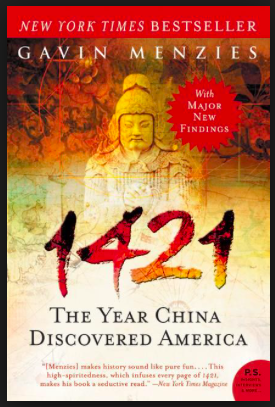
1421

1421 The Year China Discovered America by Gavin Menzies

Then I opened to the title page, checked the publication date, talked about the implications of the time during which it was published, mentioned any dedications, forwards, prologues, and prefaces.

1421 mapCharacter lists, timelines, family trees, and maps are also useful to talk to students about, and I would share my thinking as I went through these pages. (This is where the document camera is handy – projecting a larger image of some of these pages is quite helpful.)


Screen Shot 2018-05-02 at 6.17.49 PM

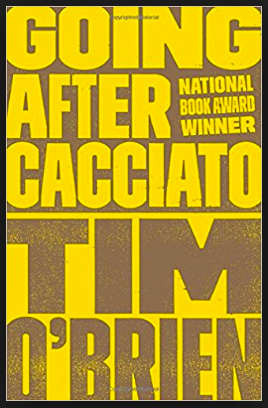
I read the first few paragraphs of Going After Cacciato by Tim O’Brian recently. I was able to explain to my students that while I know the author, I am not familiar with this particular text. I talked about what I know about the National Book Award since it is mentioned on the cover. I essentially just talked about what I can learn from the title, author, and cover before I even open the book.

My students liked the vulnerability I showed because I honestly didn’t know everything I should know about the book. But the exercise helped them to understand that they don’t need to know everything when picking out books, and that it’s okay to ask questions, be unsure, and to take risks.

Screen Shot 2018-05-02 at 6.17.12 PMAnother title I picked up was In the Long Run by Jim Axelrod. No one had picked it from the shelf all year, and it still sat there as a brand new book. I asked students what the cover could tell us, and we started to guess that it could be about marathons, cross-country running, or anything else. They didn’t realize that Axelrod is a journalist, but as we read the back cover together, we learned a lot. I had a student take it and read it that day.
Developing lesson plans has to be prioritized because the reality is that the kids will show up every day. When we prioritize book talks, we usually think we need to get ready for them, to prepare for them in advance. I assert that it’s not necessarily true each time we share books with our students.

It’s why I think the cold read-aloud/book talk combo is useful. Students have a window into the thinking of a “master reader” as we choose books and talk about them authentically.

***My one caution is that as teachers, we have to know a little bit about the book we are reading from (being careful not to learn too much in advance in order to stay authentic). But I will admit I recently had a small embarrassing mishap when reading the first few paragraphs of So Anyway . . . by John Cleese. Be forewarned.

Julie has been teaching secondary language arts for nineteen years, spending the first fifteen in rural Central Oregon, and the last four in Amman, Jordan. She’s thrilled to report that she and her family will be moving across the world to Managua, Nicaragua next year, where a new adventure will begin.

Follow her on twitter @SwinehartJulie

Where Do We Go From Here?: Rethinking Next Year

Today is my last day with my AP English Language students. They test tomorrow and then a variety of pre-senior activities keep them from my class for the rest of the week. For them, summer is right around the corner. One more day of class, a test, a few orientations and then freedom.

So, tomorrow, we will make the most of our time: reviewing any last minute questions, calming any overly stressed nerves, reminding them they’re prepared and ready, saying our goodbyes. In short, wrapping up this year. All in all, it’s been a good year, and I’m sad to see them go.

However, I’m almost a little happy to see them go as well. It would be weird if I wasn’t. Wednesday morning when they step into the gym to test, I’m going to step into my room and give myself three hours to just think about next year. Guys. I’m so excited to let loose all of my pent-up “this is how to make next year better than ever before” brainstorming energy.

pexels-photo-1043514.jpeg

I’ve been feeding that desire bit by bit with my PLC (like a valve letting off steam to keep from exploding writers notebook ideas everywhere). We’ve been slowly working our way through Kelly Gallagher and Penny Kittle’s 180 Days, and it has already started to influence some ground-level changes in our curriculums for next year – namely, a big step away from whole-class novels and more fully embracing student choice not just in their writing but in their reading as well.

Honestly, I think even without the push from 180 Days, we would have landed in this direction eventually. We’re all a little burnt out on the whole class novel. Too often the works are shared only from one perspective, the students aren’t really invested in the readings beyond receiving a grade, and the literature we teach doesn’t line up with the goals of our course. And, by my count, I’ve read Gatsby at least once a year for the last decade. This may be blasphemous, but that’s too much Gatsby.

We’ve been hesitant to move away from whole class novels entirely. After all, can a student make it in the “real world” without having read The Scarlet Letter? Those thoughts about how ‘we’ve always taught this book, so, we should just keep teaching it’ have dogged our conversations for years. However, we recognize that some of those novels aren’t that representative of our students or their interests.

So, we’re going to make a change, take the leap, see what happens.

First, we decided we wanted our units to revolve around books of choice; so, instead of trudging through a whole class novel, students would be asked to choose from a list of genres throughout the year. Right now, we know we want them to choose a modern work of fiction, something nonfiction, and a podcast. We’ll flesh out the rest of the requirements over the summer. We also decided that we don’t really care when the student reads their work of fiction or listens to their podcast. I think this part of their choice is important too. It recognizes and validates that sometimes students are ready for some texts at different times or that their schedules can accommodate different texts at different times. At every point throughout this process we want our actions and our assignments and our practices to validate our students’ voices and choices.

Then, we decided to let essential questions drive our units instead of the novel. In the past, we would just pencil in Gatsby and something vague about economy, gender, the American Dream (that ‘the’ has always been problematic to me, but that’s another conversation for a different day), and then move on. Now, we have a list of fourteen possible questions we could feasibly spend time answering throughout the year. Student choice in reading is nothing new. Our twist has been to ask our rising juniors what they want to talk about for next year.

We collated the fourteen questions into a Google form; then, we gave the form to the rising juniors and watched the results roll in. Here’s what we found:

Essential Question Average ranked score Ranking My random thoughts
Education: to what extent do our schools serve the goals of a true education? 3.36 5th I can’t WAIT to have this conversation with my magnet school nerd herd.
Community: what is the relationship of the individual to the community? 2.89 12th
Economy: what is the role of the economy in our everyday lives? 2.79 13th So surprised this wasn’t dead last.
Gender: what is the impact of the gender roles that society creates and enforces? 3.19 9th
Sports: How do the values of sports affect the way we see ourselves? 2.57 14th Thank goodness! I was NOT looking forward to discussing my intense dislike of LeBron 😉
Language: how does the language we use reveal who we are? 3.82 2nd Really surprised this was second – I have so many amazing essays in mind for this topic already.
Popular culture: to what extent does pop culture reflect our society’s values? 3.92 1st If we don’t use Childish Gambino’s “This is America” here, I will just be flabbergasted
Environment: what is our responsibility to the natural environment? 2.95 10th
Politics: what is the relationship between the citizen and the state? 2.92 11th
Work: how does our work shape or influence our lives? 3.31 6th
Science and Technology: how are advances in science and technology affecting the way we define our humanity? 3.5 3rd Yep, should have seen this ranking coming from a math and science magnet school
Government, Politics, and Social Justice: How do we decide what is fair? 3.6 4th Hmmm….are there any current YA novels or any current events that we could talk about with this question?? Gosh… YESSS!!!
Race and Culture: To what extent do these fulfill or limit us? 3.3 7th Surprised this one hit the middle of the pack
Arts and Literature: Are these still important? 3.2 8th This one too….

More and more, we want our class to reflect how much we value our students’ voices and choices. This is their space as much as it ours, maybe more so.Using this information, we can begin to plan our year, confident that students aren’t only reading books of high interest and value to them, but that those books are being read in service to answering questions that are important to them.

Sarah Morris teaches AP Language & Composition and Film as Literature in Murfreesboro, Tn. She has been bingewatching Buffy the Vampire Slayer and the title of this post comes from the musical episode “Once More With Feeling.” It’s a great episode ina great season (don’t @ me) and you can listen to the song here. She tweets at @marahsorris_cms.


3+ Ways to Help Writers Recognize and Celebrate Their Growth

The challenge?

I’ve always enjoyed our end-of-the-semester portfolio in College Prep Senior English. It’s where students typically celebrate their growth as writers. However, with a This-Is-the-Winter-That-Never-Ends leading to loss of instructional days compounded by fewer days for seniors in the spring, my colleague and I knew we couldn’t maintain the portfolio in its current form.

The solution?

So, we opted for celebration days for our writers to reflect on their writing journeys this semester. Their reflections will address the four key concepts of our course: process, purpose, audience, and collaboration. Inspired by Jennifer Serravallo’s The Writing Strategies Book and a few ideas of our own (sometimes constraints really do elicit creative problem solving!), we selected three ways to celebrate our writers, spread out over the last three classes. Each selection involves preparation and presentation (process and product, right?!).

Screen Shot 2018-05-09 at 10.34.19 PM.png

This chart contains the nutshell version of each day. On day 3, we’ll use FutureMe to have them craft their emails to their future selves. 

How will the celebrations go? Why will this matter, right now, in May?

Oh, I think that the students will benefit from feedback from an intended audience; I think they’ll laugh while they toast their pieces; I think making their process visible (as Shana discussed in Artifacts of Our Learning) will reinforce their learning; I think–given some of the relationships built in the classroom–that they’ll enjoy leaving their fellow collaborators love notes; I think that reflection at this threshold moment could help my seniors grasp the significance of their learning journey.

Why will this matter . . . in August?

I’m looking forward to this. Mostly. I’m also looking beyond it, thanks to Nathan. 

Through conferring with Nathan over the last two weeks, I realized that celebration–feeling happy about an occasion and engaging in fun related to it–is not enough. Nathan reminded me that my students also need recurrent recognition–admiration and respect for accomplishments. Yes, I recognize and celebrate strengths in student writing regularly via written feedback. Yes, I do recognize and celebrate application and growth while conferring. But not as consistently as I should. And, I’m certainly not doing a good job of prioritizing recognition and celebration as a whole class community of writers. If I recognized and celebrated successes more, would Nathan have said to me (while working on his final writing for the term), “Can you help me with this so I can produce the kind of writing you’re looking for?” Instead of the kind of good writing needed for the situation, he was still aiming to produce writing to please his teacher. What if I had shown greater recognition–with him while conferring–of progress before this moment? Would our impending celebration matter more? Yep. 

Through the rest of my conferences with Nathan, I tried to shift the conversation toward his audience. I pulled in mentor texts. I modeled some revisions I would make to voice and imagery. And over the next several days and a few conferences later, his piece began to transform, leading to this: “You know, Nathan, I think this has the possibility of being your best piece all year if you keep working at it.” I’m sure you might guess what I’m celebrating here: yes, Nathan sat up straighter, smiled wider, and, ultimately, revised more. He began really crafting. Later he reflected, “It’s like with the other pieces we really had to learn the basics. And this is getting into what really matters.” His words show his own recognition–his understanding and respect–for how his skills built in the course. There’s something to celebrate! And the genesis of this larger realization might be that small moment, that moment of affirmation.

Big celebrations are important. But life is made in the small moments. And, next year I want to consistently recognize and celebrate the good times (anyone else flashback to ’80’s weddings?)–big and small, in big and small ways.  

Next year I will . . . try to have students share lines from their notebooks more. I’ll probably need to schedule it!

Next year I will . . . try to make their successes visible. Maybe I’ll try Penny Kittle’s and Kelly Gallagher’s Beautiful Words Google Doc idea.

Next year I will . . . have my students reflect on and admire moments of growth during the celebrations portion of our weekly class meeting.

Next year I will . . .

It’ll be a dedication to celebration to last throughout the year (my apologies to Kool & the Gang.).

Kristin Jeschke’s life was made in the not-so-small moments of her children’s births. Happy Mother’s Day to mothers of all kinds, everywhere!  She also needs someone to get married soon so she can dance with her mom and her aunties to Kool & the Gang’s “Celebration.” Follow Kristin on Twitter @kajeschke. 

Do You Have A Date For Tonight?

You do now!

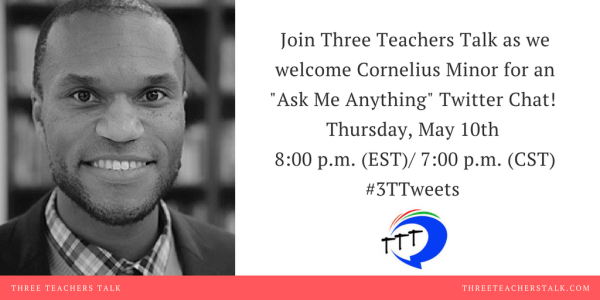
Join Three Teachers Talk tonight as #3TTweets with the incomparable Cornelius Minor. With his boundless enthusiasm, unparalleled generosity of spirit, and passionate drive in promoting equity across our nation’s schools, Mr. Minor will be tweeting with us tonight in an “Ask Me Anything” Twitter Chat!

If you missed our post with Mr. Minor, be sure to check it out!

Then, set a reminder for 8:00 P.M. Eastern tonight, jump on Twitter, search #3TTweets, and follow along, shout out, and/or ask your burning questions. We can’t wait to pick Corn’s beautiful brain and we hope you’ll join us.

3TT Corn Chat

How A Year of Readers/Writers Workshop Is Like Getting a Puppy

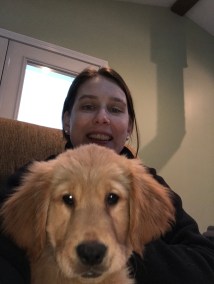
As I mentioned in my previous post, my family decided (on a whim and while I was away at a conference) to get a golden retriever puppy. Meet Abby!


IMG_4232

#puppyselfie


It had been many years (10 to exact) since we’ve had a puppy in our home so it was quite an adjustment (and in some ways, it still is). So as I snuggled on the couch with Abby recently, I was hit with the idea—starting your classroom in the workshop method is like getting a puppy.

  1. As you look at all the information, it feels very overwhelming.

Two days after Abby came home, we were lucky enough to get an evening appointment with a veterinary in town so we could start her off on the right foot. As we left the appointment with a folder full of papers (“Welcome to Puppyhood” packet, upcoming shots list, pamphlets on various tick and flea options, pet insurance fliers, etc.), my husband and I felt a bit overwhelmed by all the information.

Transitioning to a workshop approach can be information overload too– but in a good way. There are so many amazing resources here on 3TT and with amazing mentors like Atwell, Kittle, Gallagher, and Miller. Here are a few resources to start you off or to continue to inspire your journey.

7 Moves in My Workshop Schedule

My Classes are Only 45 Minutes — How Do I Do Workshop?

Back to Basics: The FUNdamentals of Teaching High School English

Every Teacher a Reader. Every Teacher a Writer.

  1. It can be tiring at first but gets better as you adjust.

Our first couple of weeks with Abby was exhausting! We were up two to three times a night plus many, many trips outside to avoid accidents in the house. I had no problem getting my steps in those few two weeks.

We do the same in our classrooms–we are writing alongside our students, conferring with students about their current reading and writing goals, modeling from the document camera, and circling the room so we can hear every small group discussion. I’m tired just typing that all. But– it does get better. Still tiring at times but so rewarding! The first time a reluctant reader finishes a book and asks for another suggestion or a student rushes into class bursting to talk about their narrative draft is worth all the self-doubt and sleepless nights of “Am I doing this right?”.

  1. Training is important– it’s never too soon to start.

We signed Abby up for puppy classes as soon as she had her rabies shot. We wanted the best for her and to have tools from experts so we could be the best puppy parents as we could be. Armed with training treats and a clicker, we’ve taught Abby how to sit and stay in such a short time period.

Training our students with workshop routines is also important– and I learned this one the hard way. Last school year I was so inspired by 3TT and the work of Nancy Atwell and Penny Kittle that I jumped first and thought later. By December, writer notebooks were left in lockers and I was struggling with keeping up with conferencing. By February, I was back to my old habits, unable to keep myself going because I just felt so overwhelmed.

This year I spent the first month establishing our routines for reading and writing in our classroom and have found more success in students bringing their items to class and their engagement in our task. We set the tone and purpose the whole month of September and it has carried forward, albeit not perfectly, the whole year.

  1. Take it all in because the time flies by.

While Abby is still a puppy, we already notice a change in her puppy face. She’s a lot longer and taller than the small puppy we held in our arms weeks ago. It’s sad to see her growing so quickly but we’re excited for what lies ahead of us this summer: hiking trips, swimming at the lake, and road trips that include stopping for ice cream.

The same thing happens with our students. They come to us with sometimes little to no experience with workshop teaching but leave at the end of the year with confidence, stamina, and a passion for reading and writing. Although we are in the time of year where the bags under our eyes are as heavy as our teaching bags, we know the finish line is in sight. Students we’ve laughed with, cried with, encouraged, and even nagged will leave our room ready for the next step. For some, that is a college campus or it could be just down the hallway with another colleague. Either way, we’ve done our part in helping our students think differently about not just reading and writing but the world we live in. There’s something magical about that.
Kristin Seed teaches 10th grade English in Massachusetts. Her summer reading book pile is growing out of control and she’s okay with that. Her plans for June 29th is to take a long walk with her puppy, Abby, and to read a book in one sitting. You can find her Twitter @Eatbooks4brkfst.

Guest Post – Chronicles in Conferring

4

I was so excited when Charles Moore asked me to write a guest post for The Three Teachers Talk community.  After meeting Amy Rasmussen and reading posts like Writing Heals. Writing Assignments Do Not and How to Confer Like a Ninja, I continue to learn solid strategies for engaging my students in authentic writing activities that matter to them.  I am an avid reader and writer; so, it is no surprise that my favorite part of this job is conversing with students about their own reading and writing lives!

In the past, my conversations with students tended to be informal and sporadic; I would only focus on the more traditional feedback like formatting, conventions, and organization. But, with no end-goal or clear means to measure if these conferences were improving my student’s abilities to really think like writers, I would often feel lost and underwhelmed.

3

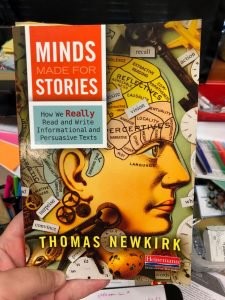
Luckily, I found some real direction after reading, Minds Made for Stories, by Thomas Newkirk and Writing with Mentors, by Rebekah O’Dell and Allison Marchetti.

Both books inspired me to weave together genuine writing advice with mentor texts the students could use as unique needs emerged during their writing journey.

I am so thrilled to share my experiences with other teachers because I love workshop now, and each day is a new opportunity to promote passion and purpose through writing. Charles Moore showcases some great resources for similar strategies in his post, Formative Assessment Works!!! 

A Look Inside My Classroom; Conferencing & Sharing Mentor Texts

Setting the Scene: Sarah, a music enthusiast, has been working on a song analysis essay for a few weeks and she started getting frustrated with her lack of progress. I met with her on several occasions, narrowing her choices in artists and songs, until she had a solid

2plan for her draft. Suddenly, she felt like “it just wasn’t going anywhere,” and she was ready to abandon the project entirely. I think we’ve all seen this before; it was a classic case of “I know what I want to say, but I don’t know how to say it.” She was also suffering from the mind-numbing effects of having more material than she could manage. What to do?
The Intervention: In response to Sarah’s crises and hearing similar angst from other students, I decided to have them all conduct a peer-to-peer conferencing activity. Students would read each other’s drafts and provided feedback that both praises the connections made and presses the writer to stretch a little more.

The Sharing Magic: Sarah decided to exchange her draft with another student who is really into writing poetry and has published several poems during Workshop this year. The two writers discuss, and Sarah is immediately rejuvenated by her partner’s comments and recommendations.  Her partner suggests that she use lines from the songs she has analyzed to write her own epic poem.

5

My Teachable Moment: As she is emphatically exclaiming her eureka moment, I turn to the bookshelf behind me and grab an annotated translation of Dante’s Inferno. I hand her the book, explaining how Dante created elaborate allusions in his poem that are illuminated by the translator’s detailed footnotes.

I never get tired of having moments like this with my students! Sarah now had a mentor text to help guide her through the treacherous depths of poetry composition and analysis.

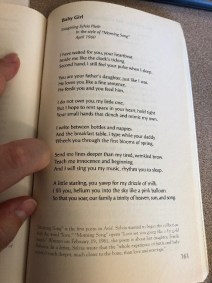
The next day I brought her a copy of  Your Own, Sylvia by Stephanie Hemphill.  A portrait of the poet’s life told in a collection of verse. Each poem includes insightful footnotes that Sarah could use as a model for her own writing.

1

The Final Act: I was so happy to see a copy of Dante’s Inferno and Your Own, Sylvia on the desk of a student who had spent the entire first semester fighting me to read anything other than mystery novels. Not only is she growing as a writer, she is also growing as a reader. Funny how it works like that.


Jenna Zucha teaches English II Pre-AP at Clear Springs High school. She is currently reading Trevor Noah’s Born a Crime and is looking forward to spending more time with her dog, Scout, and devouring her summer reading list! Follow her on twitter @MsZucha and There’s a Book for That

Pop Up Peer Editing Lab

I am always striving to have students meet the standard for writing volume Kelly Gallagher challenges teachers to assign students.  Gallagher argues that students should be writing FOUR TIMES the amount that teachers are grading.  Between quick writes, timed essays for AP, work-shopped poems, creatives pieces, blog posts, reflections, and topic journals, you’d think we would all come pretty close to that ratio.  And I bet most of us are.

A colleague who teaches history has been striving to also be a teacher of literacy (YES!) which has lead to great conversations and collaboration.   In the fall, as his students were drafting research papers, he said, “How do you do it? I can’t give them all the feedback they need.”

I chuckled to myself, thinking of all the paper-management survival tactics we English teachers have.  Then it dawned on me–I have classes of talented, capable writers, why not allow my junior and senior students give feedback to lower classmen?  Wouldn’t that be another form of workshop writing?

Thus the Pop Up Peer Editing Lab was born in Room 20.

Thankfully my school is service-minded, so students readily agreed to be the outsourced editors for teachers.  I let teachers know that we, the English students in Room 20, would be happy to help revise and suggest edits on any writing as a way to improve our skills as writers and give back to our school community.  All we requested from teachers was a bit of turnaround time and paper copies (I know–paper! Who knew that is what these digital natives would prefer!  When asked, many students echoed the belief I likely share with many of you:  paper feedback is more authentic and creates connections).  To date, my students have edited lab reports, history research, art analysis, even middle school writing, in addition to what we do during our time together.

And you know what, it is actually easier DONE than said.  Yep, you read that right!

I think of the Pop Up Peer Editing Lab like a pop up restaurant or store around Chicago, opening when demand is high before closing to move on to a new location, during which demand increases again.  To make this happen, I frame 10-20 minutes, depending on the writing type and how many drafts we have, where I can in our workshop schedule.  Some days this counts for our writing mini-lesson or writing time if we are between class drafts.

As a community of writers, we begin by reviewing the actual assignment students received and the rubric which leads to us generating a list of essential “look fors” and suggestions we are likely all going to make.  To workshop writers, this is like a reverse-mentor text where students are thinking of what an exemplary draft would look like and contain based on the rubric.  After students edit, I merely give the annotated drafts back to the teacher. Voila! As a colleague, I am helping my peers become literacy teachers while my students are helping their peers become better writers.

Peer editing, as we know, helps student writers to develop writing and revision skills through a different lens, taking on the role of an editor and teacher of writing.  The Pop Up Lab has been a useful formative assessment of writing skills for my students because they need to understand the content to teach it through feedback.


screenshot-2018-02-22-at-1-34-39-pm.png

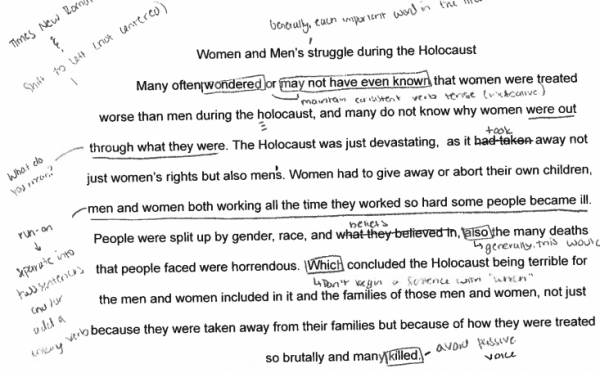
A Lab Editor’s suggestion to an ESL student which includes a notice of passive voice, something the Lab Editor Kelsey has been working on in her own writing.

Additionally, the Pop Up Lab edits have given me formative data about what students are noticing and the moves they’re making in their own writing to elevate it.  I often circulate multiple copies of the same draft, then compare the edits and note trends.  The trends help me determine mini lessons or concepts to review, as well as what is sticking with students from modeling and practicing in our notebooks.

We have played around with revision and editing using discipline-specific teacher rubrics, Kelly Gallagher’s RADaR model of revision from Write Like This, Bless-Press-Address from the NWP, Push & Pull, but many times students edit and suggest revisions based on our initial list and their own knowledge.  You could, of course, always ask teachers precisely what they want to get out of the outsourced feedback.  To build this community of peer editing, my upcoming goal is to collaborate on scheduling so my students and their peer writers can hold a conference, supporting talk around writing and revision while strengthening our writing community.

Would outsourced editing and revision suggestions work in your school?  How would you adapt this “pop up” college-style writing lab to suit the needs of your colleagues while challenging your students?

Maggie Lopez is almost done editing her English III, English IV, and AP Language & Composition students’ essays for the year, and just when she finally mastered reading each students’ timed essay handwriting.  Follow her as she moves to Salt Lake City to start a new adventure @meglopez0.