Category Archives: Lisa Dennis

Try it Tuesday: 3 Easy Ways to Get to Know One Another

“I’m pretty sure my students are going to know I’m a dork,” I said to my husband last weekend, “from day one.” 

I had been working on updating the pictures I include on my “Getting to Know Mrs. Dennis” PowerPoint (dork alert), and noticed how having a child has really brought out the dork I think I once tried to suppress. I’m sure my daughter, now only three, will delight in that fact someday.

I’d be lying to you if I said that I’ve lost my cool over the years. That becoming a mom turned me from Audrey Hepburn into Jill Taylor (90’s sitcom references only serve to solidify my dorkdom).  To be honest, I never really had the cool. I had the kind, the careful, the detail-oriented, the poofy hair, and the braces, but not the cool.

But cool isn’t me. Watching Stranger Things with a bowl of pretzels and a glass of milk is me. Reading The Nightingale at stoplights because I can’t put it down is me. Pretending to be a bear at the zoo to make my kid smile is me.

And this week, at school, I’ve been introducing my students to the real, dorky, punny, excitable, overly-optimistic me, and it’s going really, really well.

As I told one of my classes on our very first day together, “I’m going to push you all year to share yourself with this class, on paper, in discussions, through conferences. We need to build community in here so we all feel safe enough to share things that actually matter to us. And I’d be a hypocrite

photo6

Gentetically linked dorks. Poor kid.

if I preached that to you, but didn’t clue you in to the deeply dorkish, flawed, silly, person I am. I’ll be endlessly dedicated and passionate to our growth as readers and writers this year, and I’ll be looking for the same from you. To start, we need to get to know each other. I’m Mrs. Dennis and I promise to be real with you.”

Building community is why I teach. I want my students to feel that self expression can help make them more comfortable in their own lives and thereby help them connect to others, regardless of the differences they once perceived. In building community, it’s so terribly important to be honest (though considerate) and real (though appropriate), that I spend several class periods at the start of the year working to make that possible for my students.

Here are a few of the first day activities that have my students learning about this new community we’ve just created. I tell them on the first day that our class is about the study of what it means to be human, so we start with getting to know the humans around us, as understanding breeds trust and comfort (key components to any successful group, but especially in a workshop classroom).

  • Share Parts of Who You Are: Last week, I introduced myself to students with the PowerPoint linked here. It includes plenty of pictures, a few policies and expectations, and a lot of who I am. I try to incorporate the people I love, the fun I had over the summer, and some of the background that supports the joy I find in the classroom. I encourage students to ask questions, and this year we had a few laughs over the antics of my summer with a precocious three year old. Horribly embarrassing public tantrums are hilarious in the retelling, thankfully.
  • Encourage Students to Start Sharing Who They Are: I also took Amy’s advice and made time for decorating our writer’s notebooks. I shared some of the pictures and song lyrics I used to decorate mine. We discussed the power of making something their own and turning an ordinary notebook into something that they would hopefully look forward to writing in. I took song requests for work time, students laughed about my complete lack of artistic ability, and we had fun. Rigorous, no. Important, yes. But we followed up that activity with a quick write where students chose to respond to either a quote about conformity from Marcus Aurelius or a quote about the origins of cruelty from Lucius Seneca. They supported their viewpoints with an example from something they’ve read and current events. Boom. 
  • Keep Learning and Sharing Well Into the New Year: Over the years, I’ve done countless ‘get to know you’ activities. Three Truths and a Lie. Interview Questionnaires. Find a Friend. Scavenger Hunts (See below. It’s not pretty). This year, I combined a traditional questionnaire, a twist from a colleague, and a plan to use a little time each class period talking with kids about some silly things that make them tick. On day one, I wanted to get students writing. We have only 18 minute class periods that day, so time is precious. I had kids turn in summer work and get down to a quick write in their notebooks and chat with their classmates after drafting. To take attendance, I had students write their first names (as they would like me to call them) and last names on an index card. I collected the cards and then handed them back the next day to test my knowledge of students names. But I wanted more. I now plan to use the cards to learn about my kids and share some fun with them too. I had them flip the cards over and write:
    • Personal anthems (songs that capture your soul)
    • Spirit animal
    • Dream job when you were 5 and today
    • Book that speaks to your heart
    • Extracurricular passions

So far, I’m seeing smiles and enthusiasm, and hearing lots of discussion. Students are already talking about themselves as readers and writers. 

Not always so. In my first year of teaching, a colleague had me take my five classes of freshmen through a textbook scavenger hunt. They sat silently at their desks (model students) and searched their new textbooks for answers to the questions on the worksheet I’d run off for them on “fun” green paper. I’m bored just typing about it.

Thank the heavens and Fitzwilliam Darcy (Pride and Prejudice and Dorks – my forthcoming novel), I’ve grown to trust myself and the value I see in learning about my students and building relationships. The energy it brings to the start of the year has been incredible.


Mini-lesson Monday: Poetic Literary Movements

This year was a balancing act. Bridging the old and the new. The curriculum I’m used to and the possibilities of workshop. Along with that came plenty of challenges, but also plenty of opportunities to improve on what I know by learning more about what my students can create with choice.

This lesson is from my American Literature class (sophomores) and occurred this past April when we were studying Realism. Students had conducted some research on what thematic and stylistic elements characterized the Realist movement in America and I turned to poetry to make the 19th Century ideas come to life.

Objective/s: Using the language of the Depth of Knowledge Levels, students will analyze their Realism research and examples of Realist poetry in order to synthesize characteristics of the time period with original ideas in the form of Realist inspired poetry.

Lesson: Students came to class with notes they took on American Realism. I had asked them to research the major authors of the time period, famous works, common themes and stylistic elements of writing from that time, and the historical events that led to a shift away from Romanticism.

We started by taking a look at Stephen Crane’s “I Saw a Man Pursuing the Horizon.”

I saw a man

I modeled for students my own analysis, suggesting the elements of Realism I saw in the poem. The clash of Romantic thought and Realist. The futility Realists saw in trying to escape reality. The simple construction of sentences and relatively plain diction.

We then talked about connections to these realist ideas today. “Many of us are Romantics,” I said, “I think I’m one. But I bet many of you are Realists too. What does that look like in your life?”

I asked students to jot down some ideas in their writer’s notebooks of everyday events that speak to these same themes…what some would call the ordinary struggles of life. As I walked around and took a look at the ideas my students were generating, several jumped out at me:

  • Watching someone get bullied and not knowing how to help
  • Dealing with the hand you’re dealt
  • Unavoidable accidents
  • The ‘you’ no one would suspect

Holy poetry material! I shared aloud several examples of ideas I saw from their notebooks and then shifted to have them look at one more example to solidify the simplicity (and power) of realist diction and images.

“Now, I am of the opinion that some of the best poetry is exceedingly simple. The raw, honest truth of life, just like some of the ideas I saw when I walked around and peeked into your notebooks. Let’s take a look at one more example of realist poetry – a modern example.” I showed students  “The End,” a poem (no author found) I discovered when searching for examples of Realism:


The End

It didn’t come with a bang

or a big explosion.

It didn’t come with an inevitable apocalypse

or an armageddon.

It didn’t come with collision

or a war.

It didn’t end with a dying sun

or a waking moon.

It didn’t end in breached dimensions

or shattered realities.

It didn’t end with entropy.

It came when Existence stopped dreaming

And fell into a deep sleep.


Students read the poem silently a few times and I asked them to write down the lines that they felt were especially impactful, powerful, and/or moving. I then read the poem out loud and we discussed our thoughts on the lines they wrote in their notebooks.

Next up was time to explore. Students took their knowledge of Realism, their explorations of realist topics, and our discussion on the power of simple construction with simple ideas and set to work on their own realist poems in their notebooks.

Follow up: After students had time to work on their poems, I had them share at their tables. Each table elected one student whose poem they thought was particularly pointed and either that student stood to read it or asked someone else at the table to read his/her work. We always talk about taking pride and ownership in our writing to build community. Sometimes this means letting someone’s enthusiasm over the work of his/her peers fuel an energetic reading of the work as well. Kids love to read the work of their peers and I can see in the faces of the authors a pride often unmatched when they read their own work.

A few class periods later, I asked them to find additional poems with Realist characteristics. We used these as mentor texts for small group discussion and to compare with our own work.
Do you sometimes have to bridge the gap between old school and workshop? How do you make the old seem new again? Please share in the comments below.

Try It Tuesday: 11 Weeks to Regroup

In Wisconsin, we talk a lot about the weather. This may be due, in part, to the fact that it’s downright frigid, cold, and/or disturbingly chilly for (conservatively) seven months of the year. Block off October through April for likely snow (and as a special bonus, when I was nine years old, it snowed eight inches on May 10th), September and early May for possible winter jacket wear, and viola! Summer arrives and all residents are forbidden from complaining about heat. Ever.

must-see-imagery-wisconsin-summer-one-day

Thankfully, I find myself at the start of that all too brief period when summer is brand spanking new. In the last three days I’ve picnicked with my family, gone kite flying in the park, attended a Sam Beam concert, returned to running after a few weeks break, randomly decided to try yoga last night, cleaned out two closets, and finally had time to finish reading The Handmaid’s Tale (I am in love by the way. Mandatory reading for all progressively minded ladies and the men that love them, I think.  I’d never stand for being Ofnick, though I love my husband so, and that’s really the point of the dystopian adventure, yes? A quick bucket of ice water to the face in avoidance of complacency.)

Then, two nights ago, I picked up Hillary Jordan’s Mudbound and I cannot put it down. And you know what? I don’t have to. It’s summer.

But I digress. Over the past few weeks, the Three Teachers have been reflecting on the school year that was. Its trials, tribulations, successes, explorations, and even goodbyes (That’s four links to awesome posts, by the way. Enjoy!) And as we approached the end of the school year, and worked to reflect on so many experiences and experiments of thought, I noticed an underlying current of…weariness. Or rather, some well veiled (crippling) stress and (abject) exhaustion.

Now, don’t get me wrong. We love our work. We love our students, we love to read, we love to write, and we love to challenge ourselves and our craft. We love to blog. However, the reality is, it’s hard work and the four of us are tired (I love that Three Teachers Talk is really four teachers. Surprise! More bang for your workshop buck.) Between the four of us we have a wedding to plan, a new baby to attend to, a toddler to wrangle, grandbabies to dote after, and full time employment as teachers, readers, and writers. Any teacher on the planet will tell you – we love what we do, but sweet mother of mercy, can an educator get a nap up in here?

So here is my summer edition of Try it Tuesday:

I want you to rest.

I know it’s contrary to our nature. I know that just four paragraphs ago I detailed all that I’ve crammed into the last three days (It’s like my soul sensed a vacuum created by the absence of school and sucked up anything and everything to fill the sudden void. Panic! Panic!) I know many of us have conventions to prepare for, curriculum to refine, classrooms to organize, final exams to score, and some have relatively beleaguered personal lives that need attention (My daughter asked me this morning if we were going to sit down to eat our toast today or take it in the car. Sigh. This lesson in slowing down brought to you by a three year old.)  I also know we are dedicated to a fault. Please see the following…my beautiful English colleagues working on the day after school let out.

IMG_1516

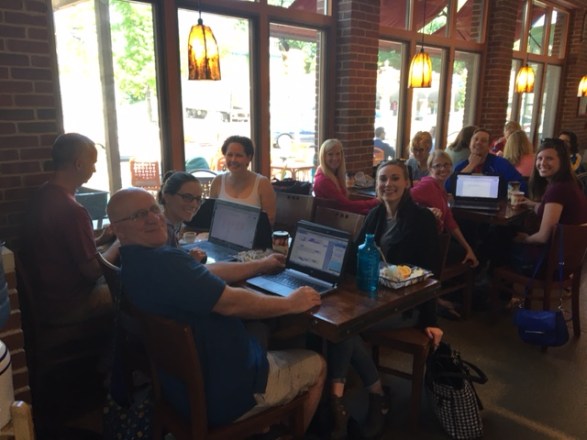
Exhibit A: This was day one of summer. Our entire team got together to finish up some district level curriculum work. They are all so sweet to look so pleased to be there.

The summer will be rich with opportunities, no doubt. Some of us will be blessed with opportunities to travel, attend workshops, dig into pedagogical texts, reflect on our craft, and excitedly (because teachers are downright adorkable) plan for next year.

But it can wait. A week? Two? I’m not sure. I’m betting it differs for everyone. But there is a reason we all get vacation at one time or another. Be it a stretch of summer or smaller breaks throughout the year, we all need to rest. In order to be our best selves when we return to the classroom, we all need time to recharge. I have eleven weeks, five of which already have one or more meetings in them. So right now…I’m going to take a few deep breaths and stare. At everything. Or nothing. Could be both. 

Don’t let anyone make you feel like you don’t deserve this break. Without it, I fear, many of us wouldn’t make it. Not for lack of trying, of course, but teacher burn out is horribly high with time away. And we all know the percentage of the coming weeks that we will (happily) dedicate to continued work as educators will be high anyway. Then, before you know it, we’ll be back at it.

IMG_1499

All quiet. For now.

So, take a bit of time for you. Catch up on Scandal or check out that Downton Abbey you’ve heard so much about (It’s over, you know, but I won’t tell anyone you’ve never seen it.) Pay someone to cut your lawn. Get in the car and drive with no real destination in mind. Sit next to the pool (Do you have one? Can I come over?) Sit down at a table to eat your breakfast, take more than 27 minutes for lunch, and demand that someone else make you dinner. Stare. 

IMG_1593

Heck, read a…wait. That suggestion’s a bit loaded.

Oh, alright. Read a book.

Read several.

I know I can’t stop you and why would I want to try?

I’m right there with you (Did I mention Mudbound is incredible?) 

Enjoy! You deserve it.

What are you doing to take a much needed break? Post your plans in the comments below!


Try It Tuesday – The ‘Secret’ to Workshop Success

At this point in the school year, teachers do a lot of counting. Counting days, counting essays left to grade, counting books missing from a classroom library (Seriously people, it’s not cool to steal from teachers. Your growing passion for reading is the bee’s knees, but my own kid may have to pay her way through college at the rate I spend on books for you. Might you return them? Please? Thank you). At graduation this past weekend, I found myself counting seniors I had taught and I began imagining all the opportunities in front of them. Interestingly enough, this year, I looked at those seniors and saw…books.

Zak raved about Ready Player One early this year. It was one of my first workshop successes.
Zoey emailed me over the weekend a few months back about The Girl on the Train.
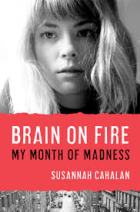
Jenna plowed through Brain on Fire recently, after Zoey’s recommendation.
Larissa swears that Walden will change your life.
Ellen blushed when she told me she absolutely loved The Sociopath Next Door.
I counted at least eleven kids that read and sobbed over A Monster Calls.

Birds singing and happy little clouds everywhere.

And now…for a moment of full disclosure in the opposite direction. As my department makes the transition to workshop, sometimes the numbers are overwhelming and scary. We are one of only a handful of high schools moving to this model in the entire country. The path before us is paved by K-8 workshop instruction, but the number of secondary schools already doing workshop is relatively limited. This makes the sheer volume of curriculum we’re creating staggering and models hard to find.

On top of those numbers we have extremely limited common prep time, surface level understanding of the best way to break up our 86 minute class periods most effectively, and hundreds of new classroom texts we are working to keep track of (not to mention read). All with three preps for most of my colleagues and a grand total of one hour of collaborative PLC time per week.

In short, this transition isn’t easy and it’s already had some pretty sobering/ugly/weep-worthy moments.

We’re wrestling with very real questions about how to hold students accountable for their skill progression, how to keep track of meeting student need most effectively, how to appropriately conference with all of our students in large classes throughout the school year, and how to balance a need for college/career readiness with our desire to afford students the choice that will fuel their passions for both reading and writing.

At the end of the day, and the end of school year in which we have all been working to

IMG_1112

AP Language Super Readers – Simrah discovered nonfiction, Louise (our school salutatorian) delved into the study of language, and Ellen and Kaley blew through Brain on Fire.

incorporate more and more workshop practice into our daily instruction (knowing we will be expected to operate in the workshop model to fidelity next year), we are tired. Tired, overwhelmed, and nervous.

However, the visual of an Escher-like hellscape I’ve just created for you, thankfully, isn’t the whole story. As I reflect back on this move to workshop, the overwhelming nature of the preparation involved ultimately pales in comparison to the positive feedback I’ve received from students.

I was sitting on the patio a few nights ago with my husband discussing the class-feedback forms my students had just emailed to me (What did you learn from this class? What did you enjoy? What should I work on for next year?) with the completion of our regular class work and impending exam week. I expressed to him how proud I was of the number of students who commented on reading more, enjoying writing more, and basically being more invested in English class than any other year I can remember.

It sort of dumbfounded me as I recalled the emails over the course of the year. The casual

IMG_1090

My 2A AP Language Crew – Dema read Black Boy after a book talk, Bennett read Ishmael and says it changed his life, and Larissa fell in love with American Classics.

conversations with kids that showed their deep thinking about topics they cared about. Countless peer to peer discussions with overheard snippets such as “Oh, I loved that book. You need to read it” and “Yeah, I just couldn’t put it down” and “This topic sentence is really good, but if you combine it with this idea, the paragraph will make more sense.”  The longer I talked with my husband, and the more I recounted the year in student snapshots, the more surprised I was to realize that my stories of the year had little to do with content I “taught” and everything to do with the students themselves – what they were doing with the content. The difference of 2015-2016 was choice and encouragement to be readers and writers. In short…workshop.

So with my recent numerical obsession (did you know it’s only two more sleeps until the last day of school?!), I compiled the following rundown of my first year of exploring the workshop model:


Workshop by the Numbers

1 – Teacher playing around with workshop. Discovering its benefits, its challenges, and its similarity to and differences from her current instruction. Exhausting in the way teachers love. Some call it masochistic. I call it professional development.

IMG_1100

We learned how to make paper cups on the last day with our seniors…a nod to the practicality of English class…then we read. 

3 – Teachers (Talk) who journeyed to the wild North during February to instruct the Franklin High School English department on the day to day of workshop instruction. Exhilarating.

11 – Colleagues opening their lesson plan books and starting almost from scratch to first play with and then make a full transition next year to the workshop model. Collaborative.

117 – Students who read for 10 minutes of every class period we shared, wrote and reflected during every period of second semester, and changed as readers and writers in ways I’ve not seen before in my 13 years of teaching. Thrilling.

180 – Days in the school year to remind students that they will grow as readers and writers with practice, passion, and a commitment to question, explore, and expand their views of the world. Daunting.

2088 – Hours of summer to read the 16,983 books on my “To Read” list (No time for love, Doctor Jones…or sleep for that matter). Delicious.


So many opportunities.

But now, I am going to be brutally honest once again. As previously stated, the move to workshop can be scary. It’s new. New to us, our students, and in a formal sense, it’s relatively new to secondary education altogether.

However, here’s the part that sort of sounds like cheating:

Though teachers, myself included, are very rarely afforded the opportunity to take it easy, there are few things easier than throwing open the doors on choice and seeing what happens. Of course, there are many systems that need developing in my classroom and so much of workshop requires routine and consistency, but the heart and soul of workshop is really

IMG_1116

1B AP Language and Composition – The seniors have left us, but this crew still has final projects to present

choice – choice, talk, and lots of writing – all of which mainly require simply being honest with, invested in, and responsive to student need. No, it’s not totally easy. It can’t be a free for all. It can’t be totally haphazard. But it can be trial and error. It can be learn as you go. It can be beautifully impactful.

To provide proof, here is a sampling of student reaction from my class-feedback form this year. I tried a lot of different things. I messed up a lot. We backtracked often. I sometimes forgot to book talk. I sometimes didn’t provide enough modeling or take the time to write every time they did, but we worked with choice, we wrote more, and we talked more than ever before.

Here are just a few reactions from my AP Language and Composition class:


Hello,
This year I really learned to be literate. AP Lang actually taught me that I can read books that I want to read and no matter what they are I can discuss them in a scholarly way because even if the book is something like poetry or a comic it is still a book. I’ve learned that all books have something to teach and that’s why they were written in the first place. I’ve read some amazing books this year and I’ve learned how to discuss my opinions on things using a higher vocabulary and assertions that are beyond the obvious. I’ve learned that you can look at anything in life a little deeper and you might just learn something. My tendencies to look deeper into things was fostered and practiced through books and reading so thank you Mrs. Dennis for helping me become a scholar. The first time you called us scholars I didn’t really think you were serious, but now I feel it. I feel like I want to spend my entire summer reading and I plan on trying to finish a large chunk of my I want to read page because reading truly and utterly makes one a better person. Reading makes you a better thinker, citizen and friend. Language is truly a beautiful thing. Also, you should know that coming into this class I was intimidated and almost dropped. English is not my strongest suit as I want to go into premed, but now I can be a poetic Doctor am I right??
Thank you also for always being a nice person and a smiling face to see in the morning.
Love,
Nimmi
Mrs Dennis,
I loved this class, a lot. I’ve never really felt like I’ve learned much from English classes, but in AP Lang this year, I’ve grown so much as a writer and a reader and a thinker. Part of that is the class itself, part of that is the practice work we’ve done throughout the year that forced us to think for ourselves (I actually like doing one pagers now), and a big part of that is you as a teacher. You made us want to be smart. I wouldn’t change a thing, and I think that I’ll probably look back on this class as one of the most valuable I’ve taken in high school. I’ll miss having you as a teacher next year!
Thanks for everything,
Maddie
Mrs Dennis,
I always thought becoming a man would require some sort of coming of age. Some sort of ‘killing the beast and dragging it home’ type situation…
I began this year as a boy and ended it as a man. Throughout the year I became increasingly disillusioned with being a dependent, in ideology and in living situation. I read books about Manliness, articles about what it “means” to be a man and looked far and wide for what the distinction was.
There is no amount of *physical contact*, “macho” rites of passage, or waking up one day transformed that made me into a man. Oddly enough, it was sharing my feelings that made me a man. The turning point was the day you told us “Feel free to share more feelings in your one pagers”.
“Sharing my feelings” translated to me having to figure out WHAT I felt and believed and WHY.
Instead of having some book tell me that I should be principled and have virtue (which is simple enough for me, and not only a manly thing) AP Lang and you made me feel like I had a SAY in my own life and thoughts. AP Lang made me no longer dependent on others for what I believe and why, giving me the ability to evaluate, challenge, qualify AND support things.
AP Language and Composition MADE A MAN OUT OF ME.
I am eternally grateful,
Bennett
Encourage everyone to read Walden, strongly encourage. It’s life-changing.
Continue teaching everyone to question ideas or anything at all; I think that was really fundamental in my growth as a student as well.
Larissa

And here, ladies and gentlemen, is the secret formula…

It’s no secret at all.

These are the simple changes I made to my daily practice. And though I have a lot of work to do in regards to running a true workshop classroom each and every day, the results this year have felt amazing. Give it a try!

  • Provide 10-15 minutes per class period for students to read books of their choosing. It’s time well spent. Best spent, actually. 
  • Conference with students during that reading time to better understand what, how, and why they read. This will assist you in recommending further reading and in determining mini lessons your students need to make them better readers and writers.
  • Have students write each and every day. Encourage them to write without stopping (building fluency), revise something every time they write (building capacity to internalize the writing process), share that writing (to build community), and take pride in that writing by choosing and developing ideas.
  • Use additional class time for more conferences with students around what they are reading and writing. Students can work individually, in pairs, or in small groups during this time, depending on the mini lesson for the day.

Of course, readers and writers workshop involves so much more, but this is where I started this year. This is what resulted in the student response above.

If my calculations are correct, I have roughly 25 years left in the classroom (holy, holy, holy). That’s 3000 students (conservatively) over 4500 days. Talk about an opportunity. Or rather, 4500 opportunities.

What books will they love?

What great stories will they tell?

Whose life will change by becoming a reader and a writer?

I can’t wait to find out. Because the secret to workshop success is no secret…it’s the students.

IMG_1352

3A Sophomores – Trevor said he read more than he ever has, Errin and I read Metamorphosis  together, Josh read (and loved) Moby Dick, and Lauren’s “To Read” list is two pages long. 

What moves have you made to workshop that have made a difference in your practice? Please feel free to leave your comments and questions below!


“Give me a speeding ticket…I am reading way too furiously to be within the law”

May can be a desperate time for teachers. We’re just…tired. Fall asleep on the couch after dinner, mainline coffee, bargain with the snooze button, barely recognize your own family, exhausted.

Just think, in the time that it takes to carry a human baby to full term (Baby Ruthie, I’m looking at you), most of us have carried somewhere around 150 (if you’re lucky) students through the year. To clarify this gestational metaphor – by carried, I mean taught. And by taught, I mean pushed. And by pushed, I mean (occasionally) dragged.

Amy wrote about it last week. The crack up. The point at which it all becomes too much and you start to question if you taught them anything. If they are better in any way. If you reached even one. If you’ve been talking to yourself for the last nine months. Because with the approach of graduation, and summer, and sweet, sweet freedom, the opportunities to make that difference seem to dwindle. Students are paying  less and less attention these days, to school anyway, and when coupled with the somewhat spent enthusiasm of teachers, the chances of academic magnificence begins to allude us. Which, unfortunately, makes us even more tired.

However, because we care, sometimes to our own detriment, we don’t give up. Amy, unwavering in her commitment to use every last moment, wrote about this too. It’s the moment where banging your head against the wall one last time means you break through instead of breaking down.

In my own effort to keep the spark alive, I have my students working on final projects that demand they keep reading and keep creating, right up to the end. Additionally, inspired by Shana’s brilliant use of former students as an engaging resource, I called in a heavy hitter.

Austin Bohn, graduate of Franklin High School in 2013, reached out to me a few months ago with the following email. What followed is an exchange of ideas that solidifies for me that our students often don’t truly see the impact that our classes can have on their lives, until after they’ve left us. Austin has always been inquisitive, insightful, and personable. As a college student, I see in Austin the exact type of young man that we hope our students become – thinkers who value where their reading lives can take them. 


Lisa, (because I get to call you Lisa now),

I just wrapped up a discussion post for my Philosophy 4336 course, “Applied Ethics for the Health Professions.” It was just one of those times when you feel as though you’ve hit all the right keys in just the right order. It reminded me of some of the reading and responding we used to do in your classroom. 
I’ve attached a short article and my—also short—post in response to it. In it, I draw on Saxton extensively so you’ll probably be able to navigate by just reading that one. There is another article (Connelly), but you’ll likely not need to read it unless you really want to. 
I hope that you’ll find it refreshing to read something from a former student, knowing you laid a great foundation that allows me to be able to crank these things out on a weekly basis. I really do appreciate your teaching—I’m only just beginning to grasp its value. You taught me how to think!
All the best,
Austin Bohn

Austin and I continued exchanging emails for several weeks, and when he expressed interest in coming to observe some of my classes and share ideas about college life, reading expectations at the collegiate level, and explore the possibility of teaching someday, I asked if he would like to come in and serve as a motivator for my AP classes,

IMG_0123

Austin book talking Ishmael 

post test. Austin had been in my AP class and knew well both the project that my students
are working on and the difficulty to focus when the end is so very near.

Two weeks ago, we made a plan for Austin to come in, share some of his insights and experiences as they relate to college level work, chat with students and provide ideas as they craft their final projects, and observe.

What turned out to be the added bonus, and one that’s already had an impact on my classes, was Austin’s book talk on Ishmael, by Daniel Quinn. I wasn’t familiar with the text, (a book that details a man’s encounter with a gorilla who has all and none of the answers about life), but the impassioned argument Austin made for reading the book and what it can teach you about thinking, struck a cord. Specifically, with another young man in my AP Language class.

Bennett Dirksmeyer is a thinker too. A quiet, careful, deep thinker. When he emailed me the day after Austin’s book talk and told me that he went right out and bought a copy of Ishmael,  I was excited for him. To be honest, whenever a book talk “works” I get a satisfied nerd-smile from ear to ear.

So, three days later, when I received the email below indicating that Bennett had already plowed through Quinn’s text, I was floored.

The email below made me cry. Like, A Monster Calls, breathless sobbing (not because I’m tired, or not only because I’m tired), but because this is what we all want. Out of workshop. Out of teaching. Out of life. Out of the end of a long, hard school year.

And no, I don’t mean we all want the email exactly (though I would be lying if I said that hearing a student’s gratitude doesn’t feel amazing), but we want students to grow in their thinking. Challenge themselves, push themselves, take risks, stay up late reading, and come away with new ways of processing this crazy life.

Here is what Bennett sent (with some enthusiastic bolding by yours truly):


Mrs Dennis,

I closed Ishmael at 3:35pm today. After reading, with unexpected vigor I might add, I began to wonder why I plowed through it so willingly. Throughout my reading I thought, and thought, “Why am I liking this?”, “What is making me do this?” It is an important text. It deals with issues leading to very serious implications. It deals with very political and personal questions with very divided answers. New-different-not my-ideas. Ideas I am not accustomed to.

The last book I truly read and loved and finished was Paper Towns by John Green. I read the text with so much vigor, surprising vigor, at that.

I felt that same vigor and that same ‘give me a speeding ticket because I am reading way too furiously to be within the law’-ness, and that same ‘I’m gonna have to stop and get an oil change

IMG_0223

Bennett – A “Pretty Cool Guy” 

for my head because the motor is running, but I’m not going to’-ality.

And I continued to wonder (sometimes aloud) – “What do I love so (expletive) much about this book?!”

I sat and thought about it.
And I thought.
And thought.

And it dawned on me.

I love this book. Not for its themes, or the author’s word choice, or the overall message contained between its covers. But for the reason that it caused me to start up that thing between my ears, and think.

I think I get it now.

And that’s pretty cool.

Thank You, for passing these skills on to me, so that I can do this with them.

I regret none of American Lit with you Freshman year (I read every word of The Scarlet Letter, and for me, that was scary-awesome), Brit/World Lit with Mrs Adelmann Sophomore year, and AP Lang with you this year. Thank you, you rock.

Books are cool.
I’ve always loved them.

But, now I appreciate them. And the pretty cool guy they’ve helped me become.

Bennett 


So let me try and instill (rejuvenate? invigorate? fuel?) a little hope in my worn and weary teaching partners around the world as this school year winds down and I know we could all benefit from a little love:

While we may be trying to merely survive until the end of the school year, to get through it in one piece in order to pick right back up and get ready for next year, teachers inspire. You, reading this, inspire students throughout the year. Even when we are tired, we inspire. With our passion for the written word, our desire to watch learners grow, and our commitment to allowing students choice in their exploration (with our guidance), we inspire.

Sometimes we are lucky enough to see it first hand, to hear about it, and literally embrace the students who let us know how they have been changed (I hugged Bennett on his way into class the next day. He seemed appropriately horrified). Other times, we never know for sure. But, as Quinn claims in Ishmael, we seek pupils to get them thinking, because careful thought can save the world.

The more we tell kids about the importance of reading, show them we are readers, put life changing books in front of them, and passionately share the experience through conferences and their written work, the more students we can reach on a deep and powerful level, because they know we care.

Yes, I’m tired. Really, really tired. But, Austin and Bennett (two pretty cool guys), have reminded me that all the work we’re putting in as a community of learners can really mean something. It can change, and maybe even save, someone’s world.

Most especially in May, when I might argue that many of us need it most.

What is helping fuel you at the end of this school year? Please comment below with your ideas on saving the world, one student (and teacher) at a time! 

#3TTWorkshop — Part Two Student and Teacher Buy In

This post is the continuation of a conversation from the previous post in response to an email we received from our friend an UNH colleague Betsy Dye.

How do we help students understand what we mean by choice, especially when they’ve been given ‘choice’ before in the form of ‘choose from this list of books or topics.’?

Shana:  Again, I think modeling is key here.  I show students my roller-coaster of reading, including the trashy romance novels I indulge in despite my Masters degree in literature.  I show them my pile of abandoned books, for “life’s too short to finish bad books.”  I show them classics that I sort of wish I’d read, but never have.  And then I show them my notebook pages of books I’m currently reading or want to read.

It also helps that I have students complete visual and written reading ladders each year, and I show new students the previous year’s ladders to illustrate individualized choice.  And again, here’s where the class reputation comes in handy as well.

Lisa:  ^This. Our stories as readers and writers are gold, especially to some kids who have no such models in their lives. My students laugh at my copy of Don Quixote on my desk. I started it in September. I am 200 pages in. I’ve read over a dozen books since I unintentionally stopped reading that tome, and I had to promise some of my juniors that I would finish it before they graduate next year, but I’ve covered a lot of ground by not allowing myself to get weighted down. Yes, we must press students to finish texts and not become kids that drop book after book without really pushing themselves, but we must also remember that when they do find the one, it can lead to the next one (especially with our gentle guidance) and hopefully many more to come.

In terms of writing, it’s more modeling and the application of the skill each and every day. Sometimes, it seems, it really comes down to endurance. Many kids only write when they have to, which causes them to sit in front of a screen, pound out the required pages, and move on. However, when they get into the habit of writing, when it becomes exploration instead of a narrowly focused task, it becomes less like completing your taxes and more like picking out what to wear. One you do not only do once a year with heavy sighs and confusion because you are basically out of practice and unwilling to do more than the required work. The other provides you with an opportunity to choose, express yourself, and build confidence.

Finally, the classroom library comes to mind. Variety here is key. Students need to see that they aren’t limited by the short list they might receive at the beginning of the year in other classes. If your library has options and you talk about those options often, they will believe. If you build it…they will come.

Amy:  I’ll repeat Shana:  Confer. Confer, Confer. The more we engage in conversations with our students about what we mean by choice and books and writer’s notebooks and everything else in the sphere of workshop, the more they will understand and take ownership of their choices. We must be willing to admit that choice is hard when they’ve never had it, or they’ve only had tiny tastes of it. So many students are afraid of being wrong, afraid of “the grade.” It’s through our conversations that we have the best chance of eliminating these fears and helping students trust themselves along the way.

How do we open the library shelves to our seniors and help them move beyond the four to six novels they’ve read each year for the three previous years?

Amy:  I’ll start with stating the somewhat controversial:  I doubt most of our seniors read

Screen Shot 2016-05-17 at 10.29.37 PM

Not my students’ actual conversation but still. 🙂

all the required novels teachers selected in those earlier years. Every year I ask my juniors how many books they read the year before. Some say they read only the required books. Some admit to starting but not finishing them. Some tell me they didn’t read those books at all. If we are going to make all the decisions about the books we choose for our students, we have to be okay knowing that not all of our students will read them.

Shana:  Ha–I know that kids don’t always read what’s assigned, because little goody-two-shoes me didn’t read what was assigned.  And I loved reading.  In fact, I read John Grisham under my desk while my teacher talked about Catcher in the Rye.  I tell students that story, and show them the many weather-beaten Grisham novels on my mystery shelf, and ask them about their guilty pleasure reads, or their life-changing reads, or their escape-from-reality reads.  [Amy:  or their Wattpad reads] All of those discussions start a conversation about the possibilities choice reading might offer, and we go from there.

Lisa:  I asked. They don’t read. They tell me sweetly, but still, they don’t read. Students I had as sophomores will gladly share with me as seniors all the ways they worked to convince me they read The Scarlet Letter, Uncle Tom’s Cabin, and The Adventures of Huckleberry Finn. 

Amy:  Lisa, I had students publicly confess to not reading a thing in my class in a Facebook group I had several years ago. Stabbed me right in the eye because at the time I had no idea they could be so sneaky — and smart — and still make high grades in my class without reading the same American literature books you mention. It’s like they subconsciously deny the canon!

Lisa:  So…how do we open our shelves and help seniors move beyond the books they never read? By offering up a wealth of books they can read, telling them to look through the books at home they’ve always meant to read, sending them to book recommendation lists, talking with them about what they might want to do after high school and suggesting books in that vein, having them talk with peers who have kept up with reading and have recommendations to share.

I had a student who graduated in 2013 come back to observe some of my classes this week. He book talked Ishmael to my AP students today, and I just received an email from a student saying that he went to Half Price Books and picked up a copy tonight. 

The power of suggestion is strong. If I am surrounded by people working out, I might consider getting off my couch. If I am surrounded by people complaining all the time, I start to complain too. If I am surrounded by readers, I am going to see what all the fuss is about. Many of our students want to read, but they need time. We can provide it. Many of our students want to read but need suggestions. We can provide those. Many of our students want to read, but only what they want to read.

Bingo. Let’s start there and build on it.

How do we help our colleagues get started with workshop?

Lisa:  By inviting Three Teachers Talk to provide professional development! No, seriously. It’s how my team in Franklin saw all the possibility that workshop holds and how to actually make it work day to day. So that comes down to support. Comparatively speaking, curriculum in a textbook is easy. Curriculum you’ve taught for fifteen, twenty, twenty-five years, provides comfort. Running off packets of study-guide questions isn’t too terribly difficult either. Building meaningful lessons from scratch is really hard work. I’ve lived it, and I’ve seen it happen at Franklin as we work to move our 9th and 10th grade classes to workshop. If we didn’t work at it together, it would be infinitely more difficult.

Shana:  Support is essential.  Whether it’s the kind of support one finds in a workplace colleague, or connecting with a like-minded friend via Twitter or a blog, workshop teachers are part of a community just as nurturing as the ones we strive to create in our classrooms.  It warms my heart and fuels my spirit to think of Lisa and Amy working on this craft in their Wisconsin and Texas classrooms, and it invigorates me on days I think I’d rather just run copies of a worksheet.  We’re all trying our best to craft strong, student-centered classrooms, and whatever guidance and support we can provide one another is a non-negotiable.  Pedagogical reading recommendations, webinars, and Twitter chats can all help our colleagues dive into workshop, and be buoys when we need them, too.

Amy:  Yes, to all that, and I can think of two other little things we can do to share this work with our colleagues:

1) invite colleagues to visit our classrooms. I am such a visual learner. When I see a strategy taught, over reading about a strategy in a book, I am much more able to use it successfully with my students. The same holds true for how workshop works. I read Nancie Atwell’s book In the Middle. It is a great book! But I could not imagine how I could make what she described work in my 9th grade classroom with 33 students. It wasn’t until I experienced writing workshop myself via the North Star of TX Writing Project Summer Institute that I got a vision of what workshop looked like.

Too often we teach like castaways on tiny islands, cut off from everyone else. Invite other teachers to walk through, sit a spell, engage in the same routines the students are doing. I think that is the single most powerful way to share the workshop philosophy with other teachers.

2) share student work, excitement, and testimonies. More than our own testifying to the power of workshop, it’s our students’ voices that move teachers. Do you remember the first time you watched one of Penny Kittle’s videos where she interviewed her students? Shana, I think this is the video we watched the summer we met at UNH. I love these boys.

Student voices = the sometimes needed push to fall over the cliff into this exciting workshop way to teach and learn.

Do you have topic ideas you would like us to discuss? Please leave your requests here or in the comments. Thank you for joining the conversation.

#3TTWorkshop — Teaching Students How to Thrive in Workshop

#3TTWorkshop Meme

We received the following request from our UNH-loving friend and inspiring educator Betsy Dye who teaches in Illinois. She got us thinking.

Betsy’s email:

What advice do you have for a teacher about introducing workshop to classes who are unfamiliar with it?  What are some of the effective ways to explain to students what they’ll be doing if they’ve never experienced a workshop classroom before?

While of course I’ve had students who have taken to and embraced the idea of workshop immediately,  I’ve had others who often fall into one or more of the following categories:

–students who have become so apathetic to what they’re doing because of no choice that they now prefer to be told exactly what to do which doesn’t require a lot of effort on their part
or
ninth graders who used to be enthusiastic readers and writers until middle school when whole class novels replaced independent reading and when whole class prompts were assigned for all writing and who’ve consequently lost their passion for reading  and writing
or
students who have been told they will have choices … but then have been pigeonholed when an actual assignment was given (‘you can write about anything you want as long as it happened in the 1700s in England’; you can read anything  you want as long as it’s a fictional historical novel’); these students don’t really trust me when I say I’m all about choice
or
seniors who have spent three years stuck in the whole class read/whole class discuss/whole class write essays cycle, and who have read only about 4 to 6 novels a year

I’ve also had a few colleagues ask how to get started and while I’ve been able to provide a few suggestions, I’d sure love some other input.

Amy:  First of all, I think asking ourselves how we get students, no matter their predisposition, to engage in a workshop-inspired classroom is something we should revisit often. Every year and every new group of students deserves our focus and best efforts so they have the best year of learning possible.

I have to remind myself that just because one group of kids understood and engaged well one year does not mean the incoming group of kids will the next. This year is a perfect example. I’ve wracked my brain, but I must have missed a core piece of the buy-in pie at the beginning of the year because many of the things that have worked in prior years have produced constant push back in this one. I’ve already got two pages of notes with what I want to do differently, or better, next year.

What advice do you have for a teacher about introducing workshop to classes who are unfamiliar with it?

Shana:  My strongest piece of advice is to make sure students know what they’re doing and why they’re doing it during each lesson segment in a workshop structure.  At the beginning of last school year, I had a student named Robert who was constantly angry with me for what he saw as workshop “catching him off guard.”  He didn’t know how to predict what we might do next after ten years of whole-class novel sameness.  He felt afraid that choice amounted to a trick, and that he wouldn’t be able to be as successful as he’d been in previous English classes.  

Robert reminded me that for many of our students, the workshop is wildly unfamiliar, and that for many teens, change is scary.  I had to be deliberate in my language, in our routines, and in my classroom organization in order to constantly reinforce for students what we were doing and why we were doing it.  I made sure to always have an agenda on the board, including a “what’s next” segment that showed how the day’s lesson related to the next class, and also made sure to review and preview during each day’s mini-lesson.  I found that once I reiterated to students that a day’s lesson was going to be used in a specific way, they began to make the connections between lessons that I only saw in my lesson design.

Lisa: Our district has been utilizing workshop for several years in the K-8 realm, but high school workshop is relatively new to our department, and completely new as the prefered delivery method. That said, I think the most important element to stress with teachers is that the enthusiasm they project has a huge impact on student willingness to buy in. This is true with or without choice, but when I am suggesting to my students that they be readers and writers, I need to model, live it, breath it, and love it.

Amy:  One of my first exposures to workshop instruction came from Marsha Cawthon who teaches in Plano, TX. She invited me to visit her classroom. Wow. The walls were painted deep inviting colors, and she’d moved out the ‘school-looking’ furniture and brought in home furnishings. The room welcomed something different. At that time, Marsha told me that when the room is different than what they are accustomed to — desks in rows and stereotypical school posters, etc — students know that the class and the instruction will be different. I started painting my walls, grouping my desks into tables, throwing a rug on the floor, and bringing in cast off furniture and book shelves.

Lisa:  Amy speaks about the impact the physical classroom has on this process. I think that makes a huge difference, too. Our enthusiasm shows in our classroom design. We as teachers know that we are selling a product. That means if we convey our enthusiasm through the way our rooms look, the level of excitement we project about a text through a book talk, and/or our sincere line of inquiry during conferences, students know if we really practice what we preach and use what we are selling. Let your enthusiasm for literature and writing, and in this case they are broad terms because they afford so many options, set the foundation for the year. Ask students a lot of questions, invest in their answers, and moving forward with confidence in what you have to offer them can, and in many cases will, empower them and change them for the better.  

What are some effective ways to explain to students what they’ll be doing if they’ve never experienced a workshop classroom before?

Amy:  Of course, I tell students on day one that the teaching I do and by extension the learning they will do will be different in my classroom. I know they don’t believe me. I teach 11th grade. Talk about kids that are set in their ways. Some checked out of school a long while ago, and they are just going through the motions. Most hope to go to college though — that’s a plus for the AVID program in which all of my students are a part of. I have taught 9th, and 10th grade before though — often the students at these younger grades are even harder to convince that workshop instruction differs from a traditional approach where the teacher makes all the choices in reading and writing. Sometimes kids do not want to make choices. It’s sad, but they are way too jaded already. I know everyone who’s taught for even a little while already knows this. So what can we do?

Rituals and routines. I think that’s at least part of the answer. We set up rituals and routines that we stick through like super glue, and we do not waver or change plans if at all possible. We practice, practice, practice until the routines become the norm. We help students recognize the moments that work and work well. For example, my students read at the beginning of every class period. The routine is set:  walk in the door, get out your books, begin reading. When I am on my game at the beginning of the year, and I welcome students at the door and remind them to sit down and begin reading, I have a much easier time than the daily reminder I end up resorting to. We save valuable reading and instructional time when we get right into our books. Then, when students read, I confer. This routine is the spokes in the wheel that keep my workshop instruction thriving. The more I consistently confer, the more students read and write in abundance and at high levels.

Lisa: I will echo what Amy says with wild abandon. Routine. Use the precious minutes for, as Penny Kittle says, what matters. Again, with our students entering high school with a workshop background, I think the biggest challenge for our official move to workshop next year will be for teachers to learn/grow through experimentation and for students to see what the accelerated expectations are at the high school level. Though, I think for all students, whether they have workshop experience or not, the routine provides a normalcy that quickly unifies the classroom. When students know what to expect every day (time to read, book talk, mini lesson, etc.), expectations have already been set. Then those routines can be built on to encourage consistent reading, deep analysis, focused revision of work, collaboration, and ultimately, the community of readers and writers forms.

Shana:  Again, we are in accord.  Routines and rituals are essential to the workshop.  Once those student-centered practices are made normative, and students know that their risk-taking within a workshop community will not result in punitive actions like bad grades, it is then that we can encourage the freedom and autonomy essential to advancement in a workshop classroom.  In addition to all this, I’ll say that after a few years teaching at my high school, my class established a reputation, and students entered the room trusting my practice rather than questioning it.  Students talk to one another about workshop classes, and those who’ve heard about the concept come in willing to try it out because they know the gist of what it’s all about.

How do you help inspire learning and engage those students who seem to prefer to be told exactly what to do?

Amy:  Everyone on the planet loves to have choices. This includes students who seem to be so apathetic they wait until we make the choice for them. Of course, Don Murray said something like this “Choice without parameters is no choice at all.” Sometimes too much choice looms too large for students. Lighten the load. Lower the stakes. Instead of saying “Read anything you want,” say things like “Why don’t you try a book from these interesting titles?” (and set down a stack of five or six) or “Let’s talk some more one-on- one. I bet I can make a reader of you yet.” This puts the challenge on you instead of on the student. Interesting how many non-responders will respond. Sometimes it takes awhile, but we can almost always win the challenge of engagement.

Shana:  I agree–all choice is no choice.  That’s why I like to consistently model what choice in literacy looks like.  When students see my example–I know the kinds of books I like, and I choose from within those genres, or I know the kinds of writing topics I’m interested in and write within those topic frames–they begin to understand what choice might look like for them.  Lisa’s colleague Catherine wrote about intentional modeling here, and I think that’s an essential part of the workshop.  When students see my passion for creating my own path of literacy advancement, they begin to see what theirs might look like, too.  Oh–and never relenting when kids ask for the easy path helps, too.  🙂

Lisa: What comes to mind immediately is how ironic that teenagers would ever want to be told what to do! In so many areas of their lives, like all human beings, we desire to forge our own path if we are truly given the resources and support to do so. Students often want to be told what to do when they are too afraid to take a risk or too trained to let other people think for them. Shana’s point about being a model is my strategy here too. Never be afraid to be geeky about your love of reading and writing.

Where I think I may have gone a bit wrong in the past is that I would try to translate my love of reading and writing through the texts that only I chose. This will hook some students, but without the ability to take a passion for reading and apply it to what they want to read, I was only ever hitting a few kids with each text. It’s like mushrooms. My husband, sweet as he is, has been trying to get me to like mushrooms for over a decade. Now, I do enjoy food, and I will gladly eat all day long, but I am never going to like mushrooms. In fact, when they appear, I am basically done eating (and yes, mushrooms just appearing is a real, hard hitting issue). Mushroom rants aside, we can’t take what we like and expect kids to invest.

We need to show them that we read and write, that reading and writing connects us to what it means to be humans (all humans), and we can all grow from it. Sometimes it takes a long, long, long time, but with the wide expanse of choice, we have a much better chance of reaching each and every student. And…bribe them. 😉

How do we reinvigorate a student’s passion for reading and writing?

Amy: I hesitate to lay all the blame on middle school, but I do think something happens during these years that can often dampen a love of reading and writing in our students. I remember reading a text by Alfie Kohn wherein he said something like “Just when students are old enough to start making wise choices, we take the choices away from them.” I know some would argue that sixth graders are not very wise, but I’d argue right back. Sure, they are. They are wise to the things they like to read and the topics they like to explore in their writing.

My twin sons had a workshop teacher in middle school — the only two of my seven children who did — I think it was seventh grade. Both Zach and Chase learned to like reading, something that did not happen in middle school. They also learned to write. They chose topics like football and winning the state championship like their older brother. They wrote hero stories about saving their friends as they imagined themselves as soldiers surrounded by gunfire. My boys are now close to 22. Chase has spent his first full week at Basic Training with the Army, and Zach plans on joining the Navy when he returns in a year from his mission in Taiwan. They are both masterful writers and eclectic readers. I owe a lot of thanks to that middle school teacher.

Lisa: Show them you care about what they care about, and you care enough to push them to care about a wider and wider world.  That means meaningful conversations (conferring), opportunities to explore student interests (choice writing/reading), passionately sharing your own ideas and insights (book talks, selection of mentor texts), and subscribing to the motto that variety is the spice of life.

I’ve read a lot in the past few months that I would have thought was out of my comfort zone. For example, I read my first graphic novel, Persepolis. Ahhh-mazing. I’ll be honest. I was judgey about graphic novels before, but now, I am hooked! Once hooked, I book talked the text and shared with students the story of how wrong I was about graphic novels. We talked then about books, genres, and experiences with reading that surprise us. I think it’s good for students to be nudged (shoved) out of their own comfort zones sometimes. At the same time, they aren’t going to jump back in the game without those experiences that come from a place of pure passion and joy. So…we must really get to know our kids, make suggestions that speak to them as best we are able, and then give them time. Time is precious to all of us, but to teenagers, it would seem, they have little to no time to read. We must make time for them in class (give them a taste) and then work with them to make the time (even ten minutes at a time) to keep coming back for more.

Shana:  Confer, confer, confer.  When we talk to kids and find out what they are passionate about, we can help them see the connections between their passions and literacy.  Further, we can introduce them to important links between success in their interests and how reading and writing can put that success within reach–my vocation-driven West Virginia students aren’t interested in the literacy skills that college might require, but they do care about being able to read or write a technical manual.

We can also help students discover new passions through reading–after reading Jon Krakauer’s Into Thin Air in tenth grade, I fell in love with Mt. Everest, and I still read anything I can get my hands on about it.

We’ll continue with part two of this discussion tomorrow. In the meantime, please add your comments. How would you answer Betsy’s questions? What did we leave out?

Try It Tuesday: Getting Smarter After the AP Test (Now, with More Reading!)

“I just feel smarter when I read.”

Kathy smiled a bit nervously as she sat chatting with me after school the other day. We were days away from the AP Language and Composition test, and Kathy was nervous. Talk super fast, plead questions with your eyes, five questions without time for a response, nervous. She had little reason to be, and yet, here she sat, absentmindedly fiddling with the corner of her notebook, talking through strategy, looking for reassurance. How many essays again? How much time to write? How many multiple choice passages? “Will I pass?”

Ahhh. There’s the question.“Will I pass?”

“Do you feel ready?” I ask.
“Sort of.”
“You’re nervous, aren’t you?”
“Yes.”
“Why is that?”
“This isn’t my best subject, Mrs. Dennis. It’s not how my brain works,” she says looking me square in the eye.

I smile and change the subject a bit.

FullSizeRender (1)

Kathy seemed tickled I was going to write about our conversation, but this smile is a usual occurrence.

“Remember when you read A Room of One’s Own?”

Kathy smiles back and confirms, “I loved it.”
I pause. Let her take the bait. “Why is that?” I ask carefully.

“Her personality reminds me of…me. She talks about women and changing their place in
society for the better. It’s powerful,” her smile grows.

“It’s pretty empowering, isn’t it? To see yourself in someone else. To connect like that.”

“It is,” she said leaning closer,”You know…I just feel smarter when I read.”

After a brief chuckle from both of us, I told her I was going to quote her. I scribbled down her heartfelt admission in my notebook and looked back to Kathy.

“You’re ready,” I said smiling. “More importantly…you’ve grown.”

Amy has written beautifully about AP test scores. About how the score isn’t everything and about  how growth in an AP class is about more than testing data. Kathy’s sentiment solidified for me that come July, the scores will be what they are. Influenced by a million factors out of my control. But what is in my control is to advocate to my students that reading and writing are not only the best test prep, but in my humble opinion, the best way to grow as a human being. We become better communicators, problem solvers, compassionate adults, and the list goes on and on.

I found this youtube video recently and I plan to show it to my students at the beginning of next year. It speaks perfectly to the power of reading and how, in Kathy’s words, it can just make you feel smarter.

With that, I move confidently in the direction of my AP Language students’ final project for the year. It’s usually met with shocked surprise (Wait? We’re actually doing something after the AP test?), but ultimately, some of the best projects my students complete all year come out of the final few weeks of school.

My AP Language class uses mentor texts from The Language of Composition, an FullSizeRender (2)anthology of essays arranged thematically, throughout the year to explore a variety of topics. Students read several essays (some classic and some contemporary), bring in pieces they locate to synthesize with the unit, and write several long and short pieces in relation to the thematic unit’s essential question. We then use a unit to mirror one of the specific skills related to the AP Language exam.

For example, at the beginning of the year, we study a unit on Education. To answer the unit’s essential question of To what extent do our schools serve the goals of a true education?, we work with:

  • Francine Prose’s “I Know Why the Caged Bird Cannot Read” 
  • Emerson’s “from Education
  • Additional choices from James Baldwin, Sherman Alexie, David Sedaris, and David Foster Wallace”

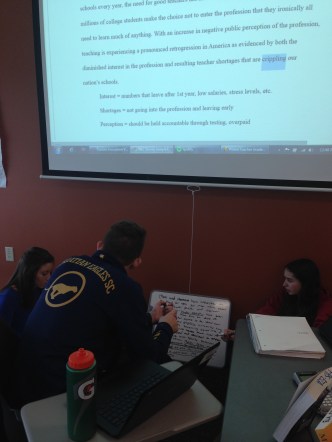
Students focus on argument in the unit (one of the three types of essays they will write for the exam, but I would argue, one of the most necessary skills for college and career readiness), so we look for how the authors craft their arguments and write about whether we would defend, challenge, or qualify the claims they make. We practice argument prompts during this unit, students find current event articles and IMG_0130give one-minute speeches in defence or challenge of the editorial perspectives, and ultimately have a panel discussion where students take on the persona of an author from the unit and must represent his/her views and synthesize those views with the other authors in the panel.
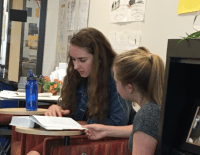
For their final projects, students team up to select a unit of interest from the text that we have not worked with together. Topics include a wide variety of interesting reads and students explore questions that keep them thinking, even after the AP test. For example:

  • Language: How does the language we use reveal who we are? 
  • Popular Culture: To what extent does pop culture reflect our society’s values? 
  • Environment: What is our responsibility to the natural environment? 

With over half a dozen chapters not utilized in our class study, there’s something there for just about everyone.

Students select a unit and are responsible for:

  • Reading the central essay – from authors like Barbara Ehrenreich
  • Reading the classic essay – from authors like Twain and Orwell
  • Choosing three additional essays to add to their experience

Then, the synthesis begins. Students must create their own addition to the unit that thirdanswers the essential question from their own perspective. In the past, I’ve had students present TED talks, create satirical videos to “sell” the topic, and write essays to add their own voices to the thematic study. Somewhere, either in the introduction
to their product or as a part of it, students must include the voices of the authors they read from the previously published works as well.

Next year…poetry. I am baby-stepping toward multigenre and I can’t wait to see what poems my students can write and find.

In the end, I hope my AP students, some of whom I have had two years in a row now, realize that our time together was spent not to prepare them for a test (not solely, anyway) but to help them become more informed and understanding citizens.

In other words…smarter.

How are your post AP students fairing? What sorts of fun are you having to wrap up the year? We’d love to hear about it in the comments below!


Try it Tuesday: Teacher Readers Share the Love

Love what you read and read what you love.

Is this not the life force behind workshop? Behind teaching English? Behind becoming a reader?

Personally, I’m pretty sure my love for reading started in utero. My parents (both educators themselves) read to me and read to me often. The first real memory of a book I have is Disney’s The Penguin that Hated the Cold. Pablo the penguin wanted out of the Arctic. I connected with his desire to swing in a hammock and travel the high seas in a bathtub.

 Next came The Boxcar Children. I used to run out into the backyard of my comfortable suburban home and pretend to be an orphan living in a boxcar. Logical, right?

Soon after, I was devouring the Little House on the Prairie books, the early  Baby-sitters Club books (only those before #100…sorry Ann M. Martin, a girl has her limits), and The Nancy Drew Mystery Stories.  I read under the covers with a flashlight, swinging from the tire swing in my backyard, and sometimes under the dinner table. I only drew the line at reading in the car. Still can’t do it. It makes me vomitous.

The common thread to this early reading, was my love of stories. I chose what I wanted to read and I read voraciously because I was in charge of where I could travel, the conflicts I could watch unfold, and the people I could meet through books. I know my dad wanted me to read more Robert Louis Stevenson, but that was a journey of his childhood. The journeys of my childhood were with Roald Dahl, Beverly Cleary, R.L Stine, and C.S. Lewis.

So where is the balance that we, as English teachers, can bring to our classrooms when it comes to teaching the books we love (or the books we think students “should” read), and our understanding that choice fosters a connection to what we read? A connection that can far outweigh the legitimate literary merit of works we would choose for our students? Where do cultural literacy and passion for literature meet?

Well…I don’t really know. Yet.

What I do know, is that I need to provide opportunities for my students to choose texts that appeal to them. But my job can’t end there. I then need to help them move to more complex and challenging works. Classics included.

How to do that…I don’t really know. Yet. But I am learning.

Here is what I do know – If I am going to build a community of readers, I need to be a reader. If I am going to build a community of writers, I need to be a writer. Lead by example and beautiful things are sure to follow.

Easy, right? Of course we, as teachers, are often readers. The beauty of language, the study of what it means to be human, and the opportunity to live countless lives through reading is what led me to the high school English classroom. But somewhere along the way, I started reading more student papers than novels. More formative assessments than poetry. More parenting books than bestsellers (though I will contend that Oh, Crap! Potty Training is a necessary text for parents with kids of a certain age – Shana, this is the book –  trust me ). But with the advent of workshop, I have read more in the past few months, since Amy and Shana came to Franklin High School for professional development work, than I had in longer than I’d care to admit. And as such, I am able to broaden my repertoire of texts and my students now see me reading. A lot.

In fact, the students at Franklin High School are seeing their teachers read more and more. Not that we weren’t reading before, but as fellow colleague and reader Catherine Hepworth wrote in her guest post, we are now, as teachers working within the workshop model, making our reading far more visible. As a result, I wanted to share some recent reads from my colleagues. Teachers who are fired up about reading, because we love it and want to share the love.


The English Teachers at Franklin High School highly recommend these recent reads:

DemianDemian by Hermann Hesse – recommended by Karin Adelmann

Demian is a coming of age novel. Sinclair, the protagonist, is trying to find his way to what is true and real as he encounters different mentors and situations. The book frequently challenges more conventional ways of thinking.


The Handmaid’s Tale 
by Margaret Atwood– recommended by Lisa Dennis handmaid

As a pretty progressive woman, I can’t believe I haven’t read this book until now. I work; I share a household with my husband; I cook but also know how to shingle a roof, I vote; I raise my daughter to trust herself and know her own mind. And yet, I’ve never read this cautionary tale full of sardonic humor and striking dystopian visions that suggests all that Artwood feared about 1980’s “Morning in America.” The Handmaid’s Tale carefully unfolds the story of Offred, a woman living in the fictional future world of The Republic of Gilead. In a world of declining birth rates, fertile women are assigned to existing families, solely to bare children. Through Offred’s memories of her life before, an American life most of us would recognize, the reader discovers the sharp contrast between the freedom we currently enjoy and the very real limits placed on life when that freedom is lost. Like so many great dystopian novels before and after it, The Handmaid’s Tale is a testament to upholding the values of personal freedom in the face of what life might be like if we forget how precious those freedoms really are. I can’t put it down.

me before youMe Before You by Jojo Moyes– recommended by Erin Doucette

I was hooked on this book from the first page. The book is set in England, so I really enjoyed the voice of the narrator as well as some of the words she chose to incorporate. Me Before You chronicles the sometimes confusing, frequently tumultuous, and always touching relationship between a funny, eccentric, secret-hiding Louisa and formerly adventurous, formerly ruthless, and currently angry, quadriplegic Will. Quirky, unqualified Louisa becomes his care-giver for the 6 months he has left before his pre-planned assisted suicide.

I loved this book. It make me laugh. It made me cry. It made me angry, but best of all, it really made me think about the impossibility of some of the choices we face and the importance of standing by the people we love.

Eleanor by Jason Gurley – recommended by Richard Gould

This is a story of a young girl, Eleanor, whose twin sister dies in a horrible accident. After that, the entire family crumbles. At the age of 14, Eleanor has an experience that she cannot explain, but it seems that someone is trying to contact her in an unimaginable way. As these experiences happen more and more often, Eleanor begins to see a way to repair all the damage to her and her family’s lives. I recommend this book for several reasons. Fist, it features two strong female protagonists. The writing is authentic and the Eleanorcharacters are complex and not without fault. The story delves into “other dimensions” and would appeal to any fan of existential writing. The book is organized through a series of flash backs, flash forwards and time travel, which can be a bit confusing if a reader is trying to quickly read the story; however, this is a book to be enjoyed slowly with frequent pauses to think, not only about the story itself, but about the reader’s own perception of reality. There is a bit of romance, but not too much as the story stays focused on the protagonists’ objectives. The conclusion is satisfying but is not obvious or formulaic. When all is said and done, this book stays with the reader for a long time after it is put down.

Not My Father’s Son by Alan Cumming – recommended by Catherine Hepworth

not my father's sonAlan Cumming, Scottish actor extraordinaire, presents us with two parallel stories about the men in his life and their influence on him. While he is preparing for and filming a genealogy show, he is learning about his maternal grandfather’s escapades in WWII, while at the same time dealing with his own abusive father. It is a very honest and open memoir about one particular moment in his life that is at the same time about his entire life. He is my favorite celebrity and a wonderfully talented writer. I especially enjoyed his memoir because it’s rare that a celebrity gives you this type of glimpse into their heart breaking childhood. When I finished reading, I wanted to rush to NYC and give him a hug.
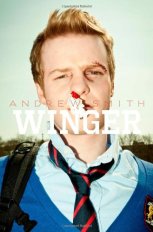
One More Thing: Stories and Other Stories by B.J. Novak – recommended by Amy Menzel one-more-thing

I like reading short story and essay collections because it mixes things up. It’s like what Mark Twain said about the weather in New England — to paraphrase, “If you don’t like it now, just wait a few minutes.” I can do that. And I’m pretty good at having the memory of Dory when reading story or essay collections. If I read something I don’t like, I forgive, I forget and I swim–I mean, read on. What I really like about Novak’s collection is his thinking. You might know of Novak from The Office fame. He wrote, directed, and starred in the hit sitcom. In this book, he uses his creativity to ponder some what if questions. “What if John Grisham’s publisher mistakenly published one his books with the place holder title of ‘The Something’?” “What if there was one man behind the creation of the calendar?” “What if there was a ‘Best Thing in the World’ Award?” I like how Novak thinks, and I really like that I get to follow his creative thinking in this collection.

WingerWinger by Andrew Smith – recommended by Leah Tindall

I absolutely loved this book because Smith uses real language, humor and other great writing techniques that will truly appeal to all teens, boys especially. I thought I would take about a month to read in between grading and planning. However, once I started on a Tuesday, I finished it the following Friday evening. I could not stop reading it! I laughed almost every page, and then I cried in the end! I began reading it aloud in a few classes and this inspired several of my students- 3 girls and 4 boys, to be exact- to read it! One of the boys I don’t even have as a student- I was talking to him about it in resource. He didn’t read any books last year and finished this book and loved it! P.S. I love Andrew Smith.

Ready Player One by Ernest Cline – recommended by Sarah Sterbin and Brandon readyWasemiller

Sarah says: I love reading books that are being made into a movie so I can compare them. Ready Player One is hitting the BIG SCREEN in 2017 (I’m really on top of my game). It was an awesome read about living in a world where you can “plug in” to the virtual world. I have recommended this to a lot of my students who are into video games (and those who, like me, like to be harsh critics on the movies based on books), but it is a great story for ALL to read!

Brandon says: This is a book that I could not put down, and when I did I was trying to figure out the next time I could dive back in. Ready Player One was all that I could talk about for the week that I was reading it, and I suggested it to colleagues, family members, and students. This book has everything. A mystery, an dystopian future, life inside of a video game, undying friendship, 80’s references, solid characters, and a real look at how much video games affect our life–and more importantly how they could RUN our lives in the years to come. There is no a single person that I would not suggest this book to. It is unlike anything you have read before, and I highly suggest it to everyone.

selectionThe Selection by Kiera Cass – also recommended by Sarah Sterbin

This books is a mash up of The Bachelor and Hunger Games. Dystopian feel while seeing the inner workings of a Bachelor type show (with some “ROYALTY”!) I have recommended this to a lot of my students who talk Bachelor/ette with me (guilty pleasure alert), and those who love reading Dystopian stories.

Brain on Fire by Susannah Cahalan – recommended by Brandon Wasemiller brain on fire

I grabbed up this book because I can be a window shopper when it comes to books, and I really liked the cover art on this novel. However, after I read the first page I was hooked, and spent much of my weekend reading through the entire thing. This is a book that takes you into pure madness and back again, and it is great for that reason. Going on a journey with someone as they go insane is a hard journey to take, but Susannah, a writer for the New York Post, brings her story to life. You will find yourself reading just ONE more chapter just to see if things get better.

challenger deepChallenger Deep by Neal Shusterman – also recommended by Brandon Wasemiller

I bought this book on Amazon because I saw that it had a five star rating, and really awesome art on the book jacket–I am so happy I did. The amazing quality that this book has is that it really makes you care about Caden, the main character, and the problems he is going through. Caden is in the real world, but also finds himself on a boat on its way to the deepest part of the ocean, Challenger Deep. You, the reader, are unable to help Caden who is starting to confuse dreams with reality. This book brought me back to the days when my grandma would read James and the Giant Peach to me and do all the different voices as she read, and like James and the Giant Peach, Challenger Deep is a journey of a young man who lives in one world, but escapes to another to work things out, but as a reader you worry that Caden will never come back. What if he is never “himself” ever again?

Columbine by Dave Cullen– Brandon’s passion for books cannot be contained. columbine

This was a book that I could not put down. Each chapter builds on the last, and you feel connected to the school, its students, and the tragedy that took place more than a decade ago. I never realized how much I did not know about Columbine. This book expertly tells the story of two very misguided young men, but more importantly, the teachers, administrators, students, and families that were all affected on that day and beyond. I would suggest this book to anyone looking for a great non fiction book, and a really solid look into what great investigative journalism looks like.


Thank you to the enthusiastic teacher readers at Franklin High School for sharing their recommendations. Each new text our students see us reading expands their field of choices and also lets them know that we truly, and gladly, practice what we preach. Because we love it.

What are you reading? What recommendations can you share? Can’t wait to grow our “to read” lists together with your suggestions in the comments below! 


Try it Tuesday: Thesis Statement Dissection

Buttering someone up is an idiom that has long made me smile. Perhaps it is my deeply rooted devotion to butter (the dairy state doesn’t play…you can’t live here if you dislike butter) or the visual of someone taking a stick of butter and applying it like deodorant, but either way, I buttered up my students the other day and it worked deliciously.

Basically, I slathered it on like this:

  • Remind students of how awesome they are at writing thesis statements because they have been doing it for years.
  • Have students apply their reviewed knowledge of quality thesis statements to their own papers in order to double check their awesomeness at this skill.
  • Elevate them to the role of “expert” in the area of thesis writing in order to have them make suggestions to their peers about clarity and depth of their awesome thesis statements. 

Underlying all of this was my firm knowledge, butter in hand, that many of their thesis statements were currently far from awesome. However, this certainly wasn’t because my students lacked the skills to clearly convey their ideas, it was most likely because they had procrastinated in writing their drafts, checked out to the warmer temperatures and sunshine, or hadn’t taken the time to really carefully reflect on what they had written in favor of working on something for just about any other class.

So basically, the issues of every paper written by a high school student in May.

In order to encourage some honest reflection and move their work forward, I employed the following strategy:

1. First, I shared with students a thesis statement I wrote to accompany an informative paper I was writing along with them. We talked about the different elements present in my sample and how they matched up with what students knew of writing complex thesis statements. One area we worked through together was my struggle with a negatively connotated word that was pushing my informative thesis statement in the direction of argument. Having students help me change the word, demonstrated what I was going to ask them to do in small groups shortly. (Much praise here and reminders of how awesome they already are at writing thesis statements.)

IMG_0611

Students work on their thesis statements in small groups, under the projection of the sample paper I wrote along with them

2.  Next, we reviewed the non-negotiable elements of effective thesis statements. I asked students to highlight their inclusion of those elements and/or comment on their papers with what was missing so they could return and revise. We included that an informative thesis statement needed to present non-debatable facts, organization of those facts into a logical roadmap for the paper, and inclusion of a “so what?” element to clarify purpose for their audience on the specific elements of the topic the paper would cover.  At this point, we circled back to my thesis statement and looked one more time with theses specific elements in mind. (Again, more buttering up in the form of high praise to their identification skills and encouragement to now apply that thinking to their own work)

3. I then asked students to spend ten minutes or so, writing their thesis statements on our mini whiteboards, revising as they went. They were to write notes on the side to indicate areas they needed help on or questions they had about the effectiveness of their statements.

4. With markers in hand, students then gathered in small groups, “presented” their thesis statements to their group members by reading aloud and asking questions, and then worked collaboratively to strengthen their sentences. (Before they got to work, I reminded them of how highly qualified they all were to assist others and how as a classroom of writers, each student could provide insight to his/her peers on improving the work)

Honest conversations around the room included such statements as:

“I see what you mean. That part made sense in my head, but it needs to move over here.”

“I like it, but I’m still asking ‘so what?’ Like, what’s your point about stereotypes?”

And my personal favorite, “Dude. That thesis is awesome. Can I steal that idea to have a dependent clause first? My audience needs to think about historical examples of Congressional corruption before they can really understand how bad it’s gotten.”

Dude. Did you just reference syntactical choices to more appropriately orient your audience for your paper? Mic drop.


While students worked in small groups, I was able to conference with several members of the class one-on-one. In addition, I noted a few kids I would need to pull into a small group during the following class period to continue guiding their work on these statements.

With the messiest looking whiteboards I have seen in quite some time, students returned to their seats and kept working on both their thesis statements and the necessary adjustments to their papers to reflect their revisions.

I could have easily reviewed the parts of an effective thesis statement and walked around to take a look at what kids had already written. But by helping students see each other and themselves as resources, most of the class improved their clarity and complexity significantly and my involvement was minimal.

In a community of writers, everyone is a resource. Sometimes it just takes a little grease, er butter, to get the parts moving and the collaboration started.

What are your ideas for helping students see themselves as writing resources in the classroom? Please leave your comments below! And, Happy Teacher’s Day!